

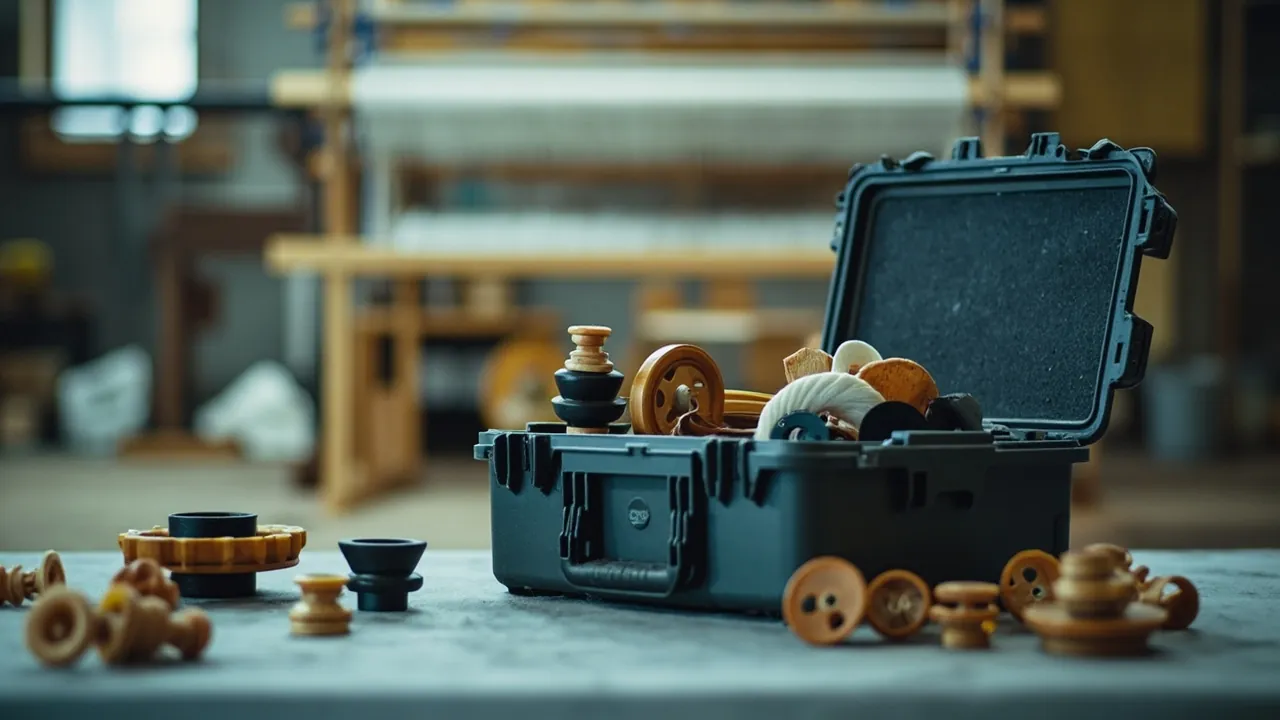
Spare parts management in textiles runs on a brutal arithmetic: an hour of loom downtime is usually measured in the thousands, and a crushed card clothing fillet or a bent spindle adds several more hours to that outage. Spares in spinning and weaving share three traits - high value, high precision, and fragile in ways that cannot be repaired on the mill floor. Once the teeth of card clothing are bent, the wire cannot be restored. Once a spindle is bent, it brings vibration and yarn quality drift. Once the mating face of a ring and traveller is scored, yarn hairiness rises. Once a sensor or servo drive takes on moisture or an electrostatic discharge, the fault usually has to be chased at the control cabinet level. The core task of a textile machinery parts case is therefore not "put the part inside" but keeping precision parts at factory accuracy and cleanliness through transport, storage and on-machine replacement - which requires a case that combines vibration damping, moisture and rust prevention, ESD control and part-specific forming.
Unlike a general tool box, a textile parts case faces an extremely dispersed material spectrum: from travellers and sensors weighing a few tens of grams to spindle assemblies, frames and card fillets weighing tens of kilograms. What they share is a fear of displacement; what differs is everything else - metal parts rust, electrical parts fear moisture and static, card clothing fears compression and tooth-direction distortion, precision shafts fear radial shock. Fitting all of that into one case is unrealistic. The correct approach is to build a classify, layer and split-case protection system, matching each part family to its own insert and sealing solution.
This article follows the three threads of card clothing, precision parts and electrical components, covering materials, structures, ingress ratings, ESD requirements, test references, insert design, on-machine replacement workflow, load-factor arithmetic and acceptance methods, so that mills, machinery builders, spare-part traders and system integrators can turn "the spare is still usable when it reaches the machine" into a purchasable, acceptable specification.
Table of Contents
- 1. Why Textile Machinery Spares Need Dedicated Cases
- 2. Six Damage Classes in Textile Spare Transport
- 3. Card Clothing and Carding Accessories: The Most Fragile High-Value Items
- 4. Precision Parts: Vibration, Fretting and Clearance Control
- 5. Rust and Moisture: The Humidity Window for Metal Parts
- 6. Electrical Components and Sensors: ESD and Cleanliness
- 7. Shell Materials and Structural Selection
- 8. Ingress Protection: Choosing Between IP65 and IP67
- 9. Environmental and Transport Test References
- 10. Insert Design: Forming Slots, Layering and Modular Bays
- 11. On-Machine Replacement and Downtime Reduction
- 12. Size Series and Load-Factor Optimisation
- 13. Gaskets, Hinges, Latches and Seals
- 14. Temperature, Salt Fog and Cross-Climate Transport
- 15. Cleaning, Maintenance and Service Life
- 16. Custom Development, Acceptance and Cost Structure
- Frequently Asked Questions
- Conclusion and Further Reading
1. Why Textile Machinery Spares Need Dedicated Cases
Mills have long shipped spares in timber crates with pallets, stretch film and rust-preventive paper. That approach is acceptable for a complete machine leaving the factory, but in spare supply, inter-plant transfers and on-machine replacement it has three clear weaknesses.
Weakness one: a timber crate protects against collision, not against micro-movement. Precision parts still move slightly inside a crate under transport vibration, and micro-movement scores mating faces, wears plating and changes preload. For spindles, rollers and precision bearings, the damage is often discovered only after assembly, through excessive vibration or yarn quality drift, and the diagnostic cost is very high.
Weakness two: timber is both a moisture source and a biosecurity issue. Wood moisture content tracks ambient conditions and releases moisture into the crate in a humid container. Cross-border shipments also require the packaging to comply with phytosanitary rules such as ISPM 15 heat treatment or fumigation, or the consignment can be refused. Both points are real costs on cross-climate ocean and export routes.
Weakness three: single-use packaging cannot support on-machine replacement. A mill spare store has to retrieve and fit parts within a night shift or a short stoppage window. A timber crate needs prying, unwrapping, counting and re-packing, which is slow and hard to reuse. A dedicated parts case supports open, extract, fit, and an empty case returned, with a slot mapping chart enabling fast reconciliation.
The judgement is this: the value of a textile parts case equals spare scrapping and repair avoided, plus downtime reduced, plus cross-border compliance and storage cost lowered, minus the purchase and amortisation cost of the case. For high-value items such as card clothing, spindles and precision electrical components, the return is usually direct.
In textile spare projects, Kexin New Materials usually defines the specification along three axes: part family, precision class and movement chain. Part family - card clothing and carding accessories, shafts and spindles, bearings and rings, frames and reeds, electrical components and sensors - determines insert geometry and contact surface material. Precision class determines damping design and allowable acceleration. The movement chain - in-plant turnaround, inter-plant transfer, export ocean freight, on-site breakdown response - determines shell strength, ingress rating and rust-prevention plan.
2. Six Damage Classes in Textile Spare Transport
Textile spare damage must be classified by failure mode rather than by whether something was dropped.
| Damage class | Typical appearance | Primary cause | Primary countermeasure |
|---|---|---|---|
| --- | --- | --- | --- |
| Tooth-direction distortion and tip crushing | Bent wire teeth, laid-over tips, carding quality fall-off | Stacking load, direct contact with hard objects, no tooth support | Tooth-direction cradles, soft contact surfaces, one-way stacking |
| Precision shaft bending and mating-face scoring | Runout out of tolerance, vibration after assembly | Radial shock, micro-movement in the case, insufficient support points | Multiple support points, axial location, damping layers |
| Rust and oxidation | Bearing raceway pitting, plating discolouration, speckling on mating faces | High humidity, condensation, salt fog, fingerprint contamination | Control to 45% to 55% RH, vapour-phase inhibitors, powder-free gloves |
| Electrical moisture ingress and insulation loss | Board corrosion, falling insulation resistance, intermittent faults | High humidity, condensate, moisture release from packaging | Sealed case, desiccant bay, humidity indication and logging |
| Electrostatic discharge damage | Latent chip failure, intermittent functional faults | Friction charging of inserts, human discharge, no earth path | ESD insert and earthing, ESD packaging, handling procedures |
| Surface contamination and cleanliness loss | Oil, fibre debris and dust on parts | Dirty case interior, shedding inserts, timber dust | Lint-free inserts, clean handling, routine case washing |
Among the six, ESD and rust are the delayed-onset classes. ESD damage can be latent: device performance degrades without outright failure, and the fault appears only in specific operating conditions after installation, making diagnosis extremely expensive. Rust is similarly hard to see at goods-in and typically shows as pitting two to eight weeks into storage. Both classes must therefore be controlled through process discipline and material selection, not through final inspection.
For how to build the underlying transport test path, see basic transport package testing and test intensity design and selecting and running ISTA transport test procedures.
3. Card Clothing and Carding Accessories: The Most Fragile High-Value Items
Card clothing is the most transport-damaged and least repairable accessory in the spinning process. Whether flexible card clothing, metallic wire, stationary flat wire or licker-in saw wire, its function depends on rows of dense teeth aligned in one direction. Once tips are crushed or laid over, carding performance drops immediately and yarn neps and short fibre content rise.
Three damage mechanisms apply to card clothing.
- Stacking load. In a stacked condition, the weight of upper layers acts directly on the tooth tips and lays them over. This is the most common cause.
- Tooth-direction friction. When clothing slides against another object, tips can catch and deform, especially at particular angles relative to the tooth direction.
- Hard contact. Timber packaging, metal tools and unwrapped edges crush tips under vibration.
The protective principle for card clothing is therefore tooth-direction forming, soft-surface contact and one-way loading. Practical engineering measures include:
- Tooth-direction cradle. The insert is slotted to the fillet width, the slot floor is a soft material, and the slot walls limit lateral movement, so the teeth always point up or consistently in one direction and never carry load.
- Coil mandrel. For coiled clothing, use a mandrel matched to the internal diameter so the coil cannot collapse and press its own teeth.
- Soft contact surfaces. Use flocking, microfibre or low-hardness EVA so hard materials never touch the tips directly.
- One-way stacking marking. The case must state teeth up and no inversion, and the structure should reduce mis-handling through an asymmetric envelope or colour coding.
- No co-loading with heavy parts. Card clothing must never share a compartment with spindles, bearings or tools. Mixed loading is the main situational cause of clothing damage.
| Item | Typical weight | Main damage risk | Insert solution | Handling note |
|---|---|---|---|---|
| --- | --- | --- | --- | --- |
| Metallic wire fillet | 2 to 15 kg each | Tip lay-over, tooth-direction distortion | Tooth-direction cradle plus soft slot floor | One-way stacking, no inversion |
| Flexible card clothing | 1 to 8 kg each | Needle bending, backing distortion | Flat cradle plus stop panels | Avoid pressing under load |
| Stationary flat wire | 3 to 12 kg each | Tooth-face crushing, mounting-face distortion | Formed slot plus mounting-face pad | Mounting face down on support |
| Licker-in saw wire, coils | 10 to 40 kg per coil | Coil collapse, teeth pressing each other | Mandrel support plus upright bay | Never lay flat and stack |
| Cylinder and doffer wire segments | 20 to 80 kg each | Wire-face crushing, roundness distortion | Custom cradle plus three-point support | Marked lifting points |
One field lesson: a significant share of card clothing damage happens at unpacking and on-site handling, not on the main leg. A clothing case should therefore support open-and-fit on the spot, minimising secondary handling. This is why we recommend a removable tray insert for clothing cases, so the whole tray can be lifted out and used directly as a carrying frame.
4. Precision Parts: Vibration, Fretting and Clearance Control
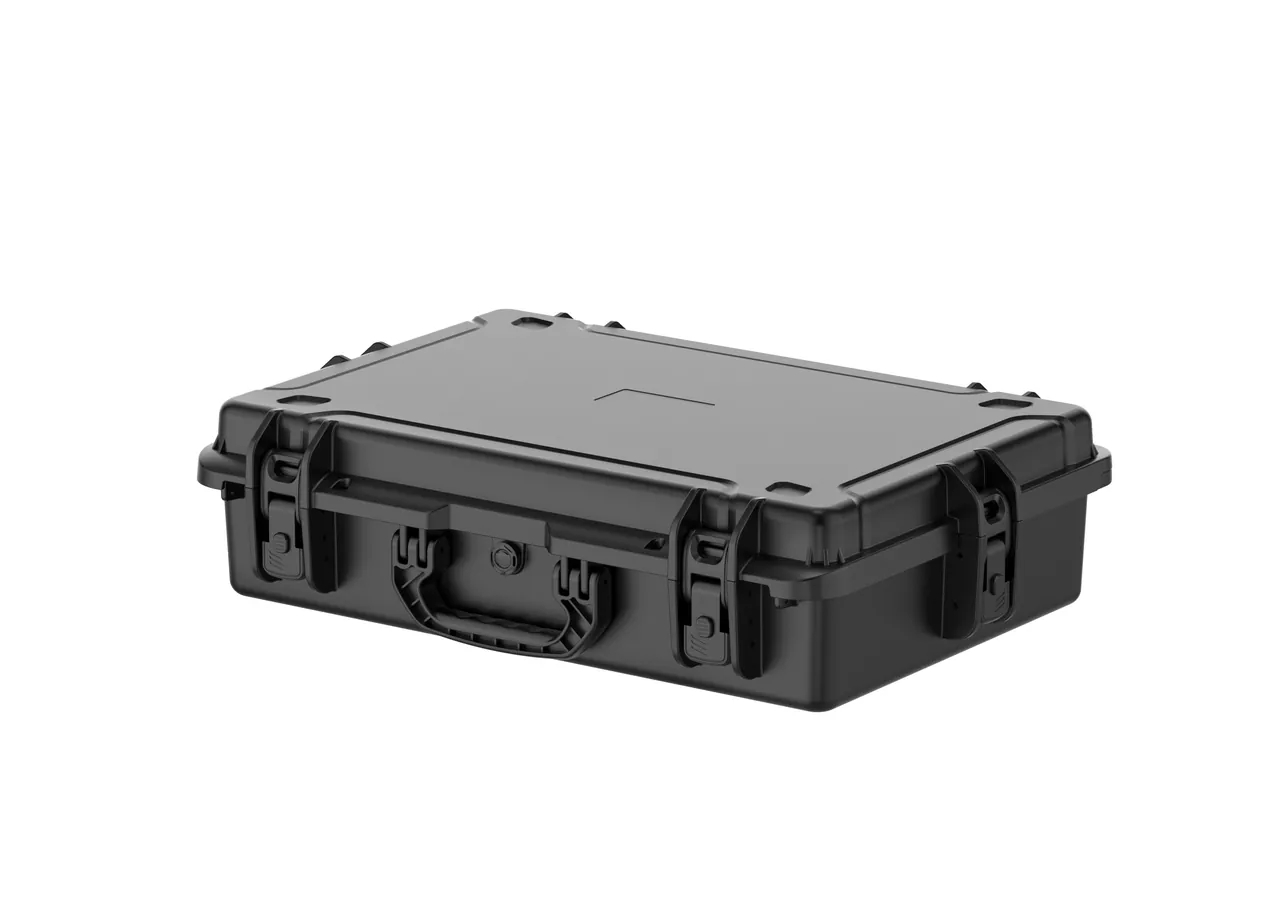
The protection priority for textile precision parts - spindles, rollers, precision bearings, rings, gears, cams, servo motor shafts - is not drop resistance but controlling micro-movement and shock from transport vibration. This follows the same design logic as precision instrument cases; see precision instrument protective case selection guide.
Concept one: allowable acceleration. Every precision part has an acceleration limit. Engineering practice describes this through fragility: the lower the fragility figure, the greater the cushioning travel required. Spindles and precision bearings typically fall in the 15 to 30 g range as an empirical indication, subject to confirmation against the specific model and manufacturer data, which places them at moderate fragility - demanding stronger cushioning design than general hardware but less than precision electronic instruments.
Concept two: fretting. Fretting is small-displacement, high-frequency, long-duration relative motion. It causes mating-face oxidation, plating wear and preload change, and the damage is usually discovered only after assembly. Three engineering measures eliminate it: full restraint through multiple location points, modest preload through elastic compression, and high-friction contact surfaces such as flocking or rubber facing.
Concept three: support point distribution. Shaft-type parts suffer most from "supported at both ends with the middle unsupported" or from single-point support. The correct approach is two to four support points along the length, positioned at structurally stiff locations such as shaft shoulders or flange faces, never on thin-wall sections or finish-machined mating faces.
| Protection objective | Engineering measure | Common mistake |
|---|---|---|
| --- | --- | --- |
| Limit shock peak | Cushion thickness matched to foam density | Thickening foam blindly, ignoring density and rebound |
| Eliminate fretting | Multiple location points, elastic preload, high-friction surfaces | Designing for "it fits" rather than "it is held" |
| Protect mating faces | Keep support points off mating faces, add soft sleeves | Supporting directly on finish-machined surfaces |
| Protect tooth and wire faces | Tooth-direction cradle, soft slot floor, one-way stacking | Sharing a compartment with heavy parts, stacked storage |
| Protect electrical interfaces | Individual wrapping plus pin protection caps | Exposed connectors touching other parts |
For more on shock and vibration cushioning design, see shock-absorbing protective case design and cushion liner design essentials. For foam selection and density matching, see protective case foam material comparison and EVA foam insert custom process.
5. Rust and Moisture: The Humidity Window for Metal Parts
Rust is the most widespread form of loss in textile spares and also the easiest to improve through packaging design.
Three conditions are required for rust: water or an electrolyte, oxygen, and active points on the metal surface such as scratches, fingerprints, salt or acid residues. Breaking any one condition suppresses rust. In engineering practice, water and active points are usually addressed together.
Target humidity. For carbon and alloy steels, 45% to 55% RH is the empirical safe band; above 60% RH with temperatures between 20 and 35 C, the corrosion rate rises sharply. Below 40% RH corrosion essentially stops, so for high-value bearings and precision parts, holding RH at 40% to 50% is the safer choice.
| Relative humidity band | Corrosion risk for steel | Recommended action |
|---|---|---|
| --- | --- | --- |
| Below 40% RH | Very low (corrosion essentially stops) | Target band for high-value precision parts |
| 40% to 50% RH | Low | Target band for precision parts and bearings |
| 45% to 55% RH | Low (safe for general metal parts) | General target band |
| 56% to 65% RH | Medium (watch in humid seasons) | More desiccant, shorter storage cycle |
| 66% to 75% RH | High (pitting begins) | Mandatory intervention; check sealing and VCI |
| Above 75% RH | Very high (rapid corrosion, plating discolouration) | Treat as non-conforming; segregate |
A combined rust-prevention scheme, normally three layers at once:
- Sealed moisture exclusion. Use an IP65 or better case to block moisture exchange. For IP rating meaning and test methods, see IP ratings for waterproof protective cases explained and the technical boundaries of IP67 protective cases.
- Vapour-phase corrosion inhibitor (VCI). Use VCI film, paper or bags so inhibitor molecules form a protective atmosphere within the sealed volume. VCI works best with a sealed case; used alone in a ventilated space its effect is limited.
- Desiccant humidity control. Provide a separate desiccant bay sized by net volume and target transit days. An empirical starting point is 150 to 300 g of silica gel for 25 litres of net volume over a 30-day control target, calibrated against leakage rate.
Three easily overlooked details:
- Fingerprints are the most common initiation point for corrosion. Human sweat carries salts and organic acids that form local corrosion cells on metal. Wearing powder-free gloves during assembly and packing is one of the cheapest and most effective rust-prevention measures available.
- Acidic packaging materials accelerate corrosion. Some recycled papers, sulphur-bearing rubbers and certain timbers release acidic or sulphur-bearing species. Inserts and wrapping materials should be selected as acid-free and low-sulphur.
- Saturated desiccant releases moisture back. Replacement intervals must be set from transit duration and the humidity profile of the route, not from a "pack once, use for a year" assumption.
6. Electrical Components and Sensors: ESD and Cleanliness
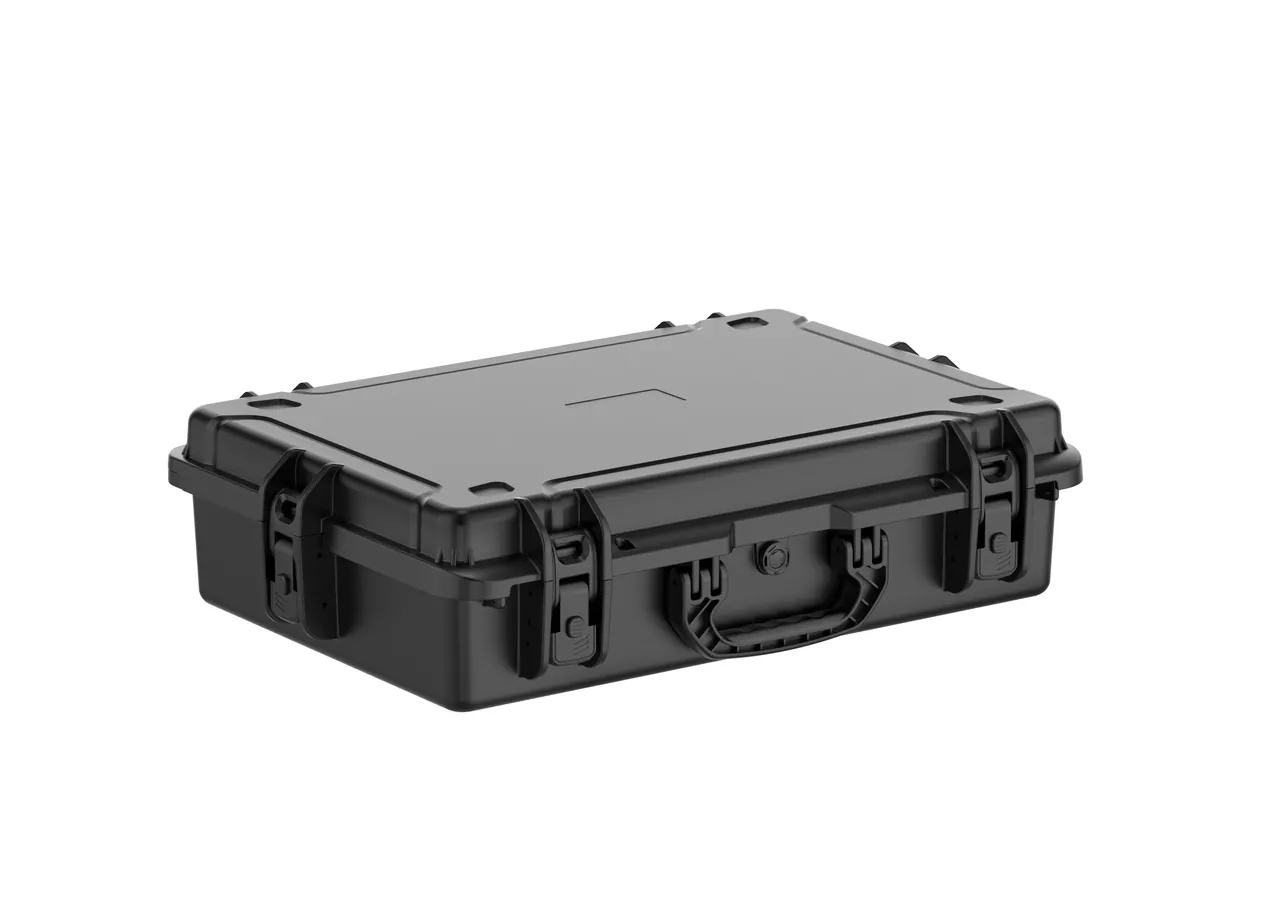
Electrical content on modern textile machinery keeps rising: servo drives, inverters, PLC modules, encoders, tension sensors, photoelectric detectors, valve islands and industrial cameras. These components have packaging requirements completely different from purely mechanical parts.
Requirement one: ESD control. Electrostatic discharge damages the gate oxide and internal interconnects of semiconductor devices, producing either outright failure or, more dangerously, latent failure. Latent failure means parameter drift without outright failure, with intermittent faults appearing only in specific operating conditions after installation, and diagnostic cost is very high. Key measures include:
- Inserts made from antistatic or static-dissipative materials, typically in the 10^6 to 10^9 ohm surface resistance range, with classification per the IEC 61340 series;
- A clear earthing path, covering earthed metal in the case, a conductive insert layer and operator wrist straps;
- Sensitive devices packaged individually in ESD shielding bags, kept closed until unpacking;
- Ambient relative humidity held above 40%, since static accumulates faster in dry conditions.
For ESD case structure and material selection, see ESD shielding protective cases.
Requirement two: moisture exclusion. Boards and connectors are moisture sensitive. High humidity causes insulation resistance to fall, contacts to oxidise and mould to grow - and yes, flux residue on a PCB is an excellent mould nutrient. Electrical compartments should therefore prioritise sealing and desiccant configuration, with humidity indication provided.
Requirement three: cleanliness. Photoelectric detectors, industrial camera lenses and encoder gratings are extremely sensitive to dust and oil mist. Their compartments should use lint-free, non-shedding insert materials, the case must be easy to clean, and it must never be co-loaded with oil-bearing parts.
Requirement four: mechanical protection. Connector pins, gratings and lenses are fragile, unrepairable structures requiring individual wrapping and protection caps. In the overall layout, electrical compartments should sit away from heavy parts so that stacking load does not reach them.
| Component | Main risk | Insert and packaging solution | Additional requirement |
|---|---|---|---|
| --- | --- | --- | --- |
| Servo drive, inverter | ESD, moisture, terminal deformation | ESD insert plus shielding bag plus formed slot | Earth path, humidity indication |
| Encoder | ESD, grating contamination, axial shock | ESD formed slot plus axial cushioning | Lint-free environment, oil-mist exclusion |
| Tension sensor | ESD, overload deformation, zero drift | ESD slot plus restraint avoiding preload | No preload, mark force direction |
| PLC module | ESD, moisture, bent pins | Shielding bag plus individual compartment | Pin protection caps |
| Industrial camera and lens | Dust, oil mist, lens scratching | Lint-free insert plus lens cap | Separate compartment; no oil-bearing parts in the case |
| Valve island | Moisture, foreign matter in air passages | Sealing plus port plugs plus dust caps | Air passage sealing marked |
7. Shell Materials and Structural Selection
Shell materials match general protective cases: injection-grade polypropylene (PP), PP copolymer and high-density polyethylene (HDPE), with aluminium-magnesium alloy and rotomoulded polyethylene used for large-capacity applications. The core selection trade-off is stiffness against toughness, weight and cost, but textile settings add their own priorities.
- PP homo- and copolymer. High stiffness, dimensional stability, smooth surface, good oil resistance; well suited to formed inserts for precision parts. Low-temperature toughness must be assessed for winter outdoor transfer and northern regions.
- HDPE. Tough, low-temperature resistant and drop resistant; suits heavy spares and outdoor turnaround, but lower stiffness means dense ribbing on large shells.
- Rotomoulded polyethylene. Suits large spares such as frames, reeds and rollers, with strong impact resistance, at the cost of weight and bulk.
- Aluminium-magnesium alloy. Best stiffness-to-weight ratio, suited to precision instrument type spares, at higher cost.
Six structural details deserve attention:
- Whether wall ribs run in the same direction as stacking;
- Whether a multi-point support base plate is provided for rigid support of heavy spares such as spindle assemblies and cylinders;
- Whether the lid-to-body mating face has a tongue-and-groove lip that raises torsional stiffness;
- Whether insert mounting points have moulded-in metal inserts, so repeated assembly does not strip threads;
- Whether forklift pockets or lifting points are provided, since large spare cases above 80 kg require mechanical handling interfaces;
- Whether caster and handle mounting points are reserved, which determines on-site turnaround efficiency.
Textile mills often also specify flammability requirements for materials in the plant. Case plastics and insert foams should be selected with reference to UL94 flammability classes such as V-0 or V-2, particularly where the case sits near electrical equipment or high-temperature processes. UL94 evaluates the burning behaviour of plastic materials under a small flame; ask the supplier for the corresponding grade test report, and verify that the material grade in the report matches the grade actually used.
For general and heavy-duty case selection logic, see general-purpose transport protective case selection guide and case casters and trolley handles.
On textile spare projects, Kexin New Materials normally starts with a classify-and-split-case plan: spares are grouped into three to five families by part type, weight band and protection level, each family is matched to one insert solution, and shell envelopes and latch interfaces are then unified. This controls tooling count while giving the floor a clear classification habit.
8. Ingress Protection: Choosing Between IP65 and IP67
IEC 60529 and the equivalent GB/T 4208 define enclosure ingress protection through the IP code. Textile parts cases need to be split into two requirement groups:
- Mechanical parts other than card clothing. The main need is dust and splash exclusion, and IP65 is usually sufficient.
- Electrical components, precision parts and card clothing. The main need is moisture exclusion, in some cases immersion protection, so at least IP65 with a desiccant bay is recommended, stepping up to IP67 for ocean routes and high-humidity regions.
Rating meanings are summarised below.
| Rating | Dust | Water | Typical suitable scenario |
|---|---|---|---|
| --- | --- | --- | --- |
| IP54 | Limited dust protection | Splash resistant | Dry indoor storage; generally not recommended for precision parts |
| IP65 | Dust-tight | Low-pressure jets from all directions | Indoor storage, covered docks, normal road transport |
| IP66 | Dust-tight | Powerful water jets | Open docks, short storm exposure |
| IP67 | Dust-tight | Short-duration immersion, typically 1 m for 30 min | Water pooling in containers, flood-season transfer, washdown areas |
What belongs in the specification is that an IP rating is a type-test conclusion, not a marketing adjective. Require a test report citing IEC 60529 or GB/T 4208 and verify that the reported sample size, gasket configuration and sealing method match the production version. Batch acceptance and sampling methods are covered in custom case acceptance and AQL sampling.
There is also a pressure-related practical issue with textile spares: on cross-climate routes or in air freight, the pressure differential across a sealed case makes it hard to open and fatigues the gasket. Fitting a pressure equalisation valve equalises pressure while retaining water ingress protection.
9. Environmental and Transport Test References
Textile parts case capability needs to be quantified. Four reference families are commonly used, plus an ESD standard.
| Standard | Scope | How it is used in textile parts case projects |
|---|---|---|
| --- | --- | --- |
| GB/T 4857 series | Basic tests for transport packages (vibration, impact, stacking, drop) | Verifies whole-case tolerance on road, rail and in-plant movement |
| ISTA series | Transport packaging test procedures, by mode and weight | Simulates the full distribution cycle, covering export ocean freight and inter-region transfer |
| ASTM D4169 | Performance testing of shipping containers and systems | Builds the distribution cycle profile (drop, vibration, compression) |
| MIL-STD-810H | Environmental engineering considerations and laboratory tests | Borrows its temperature, humidity, vibration, shock, mould and salt fog methodologies; a methodology reference, not a military certification |
| IEC 61340 series | Electrostatics and electrostatic protection | Classifies and verifies surface resistance of ESD inserts and packaging materials |
For the applicable boundaries of MIL-STD-810H and common misconceptions, see MIL-STD-810H environmental testing and protective case compliance. For distribution cycle profile design, see ASTM D4169 distribution cycle testing and case design.
Three additional validations are recommended for textile spare projects.
- Fretting test. Pack representative precision parts and vibrate according to the real transport spectrum, or the corresponding ISTA procedure, for two to six hours, then inspect mating faces for oxidation discolouration, plating wear and displacement marks. This test answers the question of whether restraint is sufficient in a very direct way.
- ESD verification. Measure the surface resistance of insert and packaging materials following IEC 61340 series methods, and verify continuity of the earth path. For compartments containing semiconductor devices, this verification should be completed before mass production.
- Salt fog testing where required. For export ocean routes or coastal mills, run accelerated verification following MIL-STD-810H salt fog methodology to judge whether plating and rust prevention are sufficient, cited as environmental test methodology rather than military certification.
It should be stated plainly that these standards and tests exist to create a repeatable, comparable and acceptable test language, not to attach a military label to a case. The correct wording to customers is "environmental testing was performed using the relevant MIL-STD-810H test methods", never "military certified".
10. Insert Design: Forming Slots, Layering and Modular Bays
The insert is the functional core of a textile parts case. Because the spare spectrum is extremely wide, the design logic has to be modular and breaks into seven steps.
Step one: build a spare classification matrix. Classify along three axes - part family, weight band and protection requirement - which normally yields four to six groups: card clothing, shafts and spindles, bearings and rings, electrical components, tools and consumables, and accessories.
Step two: define the insert form for each group. The typical mapping is shown below.
| Spare group | Insert form | Contact surface material | Key requirement |
|---|---|---|---|
| --- | --- | --- | --- |
| Card clothing | Tooth-direction cradle plus soft slot floor | Flocking or microfibre | One-way loading, no inversion |
| Shafts and spindles | Multiple support points plus axial location | Medium to low hardness EVA | Support points off mating faces |
| Bearings and rings | Individual formed slots plus elastic preload | Low-shedding EVA | No direct metal-to-metal contact |
| Electrical components | ESD formed slots plus shielding bag positions | ESD foam | Earth path, individual compartments |
| Tools and consumables | Layered trays plus tool positions | General EVA | Physically separated from precision parts |
| Accessories | Mesh pockets plus label positions | Lint-free cloth | Fast reconciliation |
Step three: define layering and load order. Heavy parts low, light parts high; precision and electrical parts away from heavy parts; card clothing in its own layer, sharing with no hard parts.
Step four: define restraint and preload. Use elastic straps, hold-down pads or foam bars to achieve light constraint with full coverage - enough to stop movement, never enough to leave a mark on a finish-machined surface. For removable divider approaches, see protective case removable divider systems.
Step five: define the extraction motion. On-machine replacement happens inside a stoppage window, so fewer motions are better. Support both whole-tray extraction and single-slot extraction.
Step six: define the identification system. Every bay should have a replaceable label position for spare number, machine model, position number and status, backed by a slot mapping chart, ideally printed inside the lid for on-site verification.
Step seven: define ergonomics. Heavy-part bays need lifting points, handle positions and an opening direction that avoids the "cannot get it out" problem.
On materials and process, die-cut EVA suits regular geometry, thermoformed or cast inserts suit complex curves, flocked facing suppresses dust and raises friction coefficient, and ESD foam serves electrical compartments. For custom insert tooling and prototyping workflow, see EVA foam insert custom process and the custom foam insert design guide.
11. On-Machine Replacement and Downtime Reduction
The ultimate value of a textile parts case shows up in downtime. Mill replacement jobs typically have four characteristics: short windows, sometimes only 30 to 90 minutes; a hostile environment with fly, oil mist and noise; a wide spread of operator skill; and spares that often have to be pulled at short notice. Case design therefore has to serve speed, accuracy and error resistance.
Speed. Opening the case should take fewer than three motions: unlock, open, lift out the tray. Two-action draw latches are preferable to combination locks, because entering a combination during a breakdown is pure efficiency loss.
Accuracy. Bays should map one-to-one to spares with unambiguous labelling. The slot mapping chart should give spare number, bay number and applicable machine model, which removes the high-frequency error of fitting the wrong variant.
Error resistance. Physical constraint should prevent mis-handling. A card clothing bay can use an asymmetric envelope so that reversed loading cannot be closed. Electrical bays use ESD inserts in a visually distinct colour. Heavy-part bays carry lifting markings that discourage manual lifting and the injury and damage that follow.
| Stage | Common time waste | What the case can improve |
|---|---|---|
| --- | --- | --- |
| Finding the spare | Rummaging in the store, model confusion | Slot mapping plus labelling plus colour zoning |
| Opening and extraction | Prying, unwrapping, counting | Quick-open structure, whole-tray extraction, easy reconciliation |
| On-site movement | No handles, no casters, unstable centre of gravity | Handles and casters, centre-of-gravity design |
| Pre-installation check | Secondary cleaning and rust removal needed | Lint-free inserts, VCI, clean packaging |
| Empty case recovery | No return process, item loss | Nesting design, seals and numbering, return checklist |
A field warning: empty case and insert recovery is usually the first part of a textile spare system to lose control. Permanent numbering on the case plus a closed-loop record covering issue, fitting and empty return is recommended; a seal point and a case number measurably improve recovery rate.
12. Size Series and Load-Factor Optimisation
Size design balances the breadth of the spare spectrum against tooling cost. Three principles apply.
Principle one: use both pallet and shelving as modular datums. With a 1200 x 1000 mm standard pallet and typical spare-part shelving depths of 500 to 600 mm as datums, base footprints of 600 x 400 or 400 x 300 mm work well. Heavy spare cases may use 800 x 600, but forklift access and shelf load rating must be assessed.
Principle two: set the size range from the longest and heaviest items. The longest textile spares are usually frames, reeds or rollers, which can run 1200 to 3000 mm, and the heaviest are typically spindle assemblies or cylinders at 30 to 80 kg. These two families should have their own cases and should not be mixed with other spares.
Principle three: limit the case type count. A mill's textile spare cases should be held to four to six types: three general spare cases in small, medium and large; one card clothing case; one ESD electrical case; and one long or heavy item case.
| Scenario | Typical contents | Relative load factor | Protection focus | Suitable use |
|---|---|---|---|---|
| --- | --- | --- | --- | --- |
| Timber crate and rust paper (baseline) | Mixed spares | 100% | No precision protection | Machine commissioning spares |
| General spare case, medium | Bearings, rings, springs | About 120% | Rust and fretting prevention | Daily spare store turnaround |
| Card clothing case | Fillets and coils | About 90% | Tooth-direction protection | Carding department spares |
| Electrical case | Boards, sensors, encoders | About 110% | ESD and moisture | Electrical spare transfer |
| Long and heavy case | Frames, reeds, rollers | By piece | Bending and shock resistance | Machine overhaul |
Key judgement: never sacrifice classification segregation for load factor. Putting card clothing and bearings in one case to raise load factor looks like saving case cost, but a single incident of tooth-direction damage typically costs more in repair or scrap than the entire case purchase. The right answer is a combination of classification-based cases, general case types and specialist case types.
13. Gaskets, Hinges, Latches and Seals
Hardware and gaskets determine long-term usability. Textile parts cases work in tougher conditions than most equipment cases - fly, oil mist, dust, vibration and frequent handling - so hardware requirements are higher.
Gaskets. Common materials are EPDM, silicone and foamed polyurethane. EPDM offers good weathering resistance at moderate cost and suits outdoor and ocean routes. Silicone covers a wider temperature range and suits cross-climate routes and hot workshops. Foamed polyurethane seals well but is less durable. In oily environments, confirm the oil resistance of the gasket material, because some rubbers swell and deform after prolonged contact with mineral oil. For material and compression-set judgement, see protective case gasket material selection.
Hinges. Full-width metal hinges, or twin hinges with metal pins, are recommended. Textile cases often run fully loaded at 40 to 100 kg, so hinges must carry greater bending and torsional load, and plastic hinges fail sooner under frequent use.
Latches and locks. A two-action draw latch for accidental-opening resistance, plus an optional key lock and a seal point, is recommended. In vibratory environments single-point latches work loose, so multi-point latches, or a centre lock with end fixings, are preferable. For customisation, see protective case lock customisation options.
Seals. At cross-party handover - spare store to workshop, head office to branch plant, supplier to customer - a security seal provides anti-tamper protection and liability apportionment. The seal point should be a metal or reinforced plastic eyelet. For overall hardware selection, see toolbox hinges, latches and sealing structures.
On maintenance, lubrication of hinges and latches, cleaning and replacement of gaskets, and washing and drying of cases all materially extend service life. See how to clean a protective case and protective case service life and replacement criteria.
14. Temperature, Salt Fog and Cross-Climate Transport
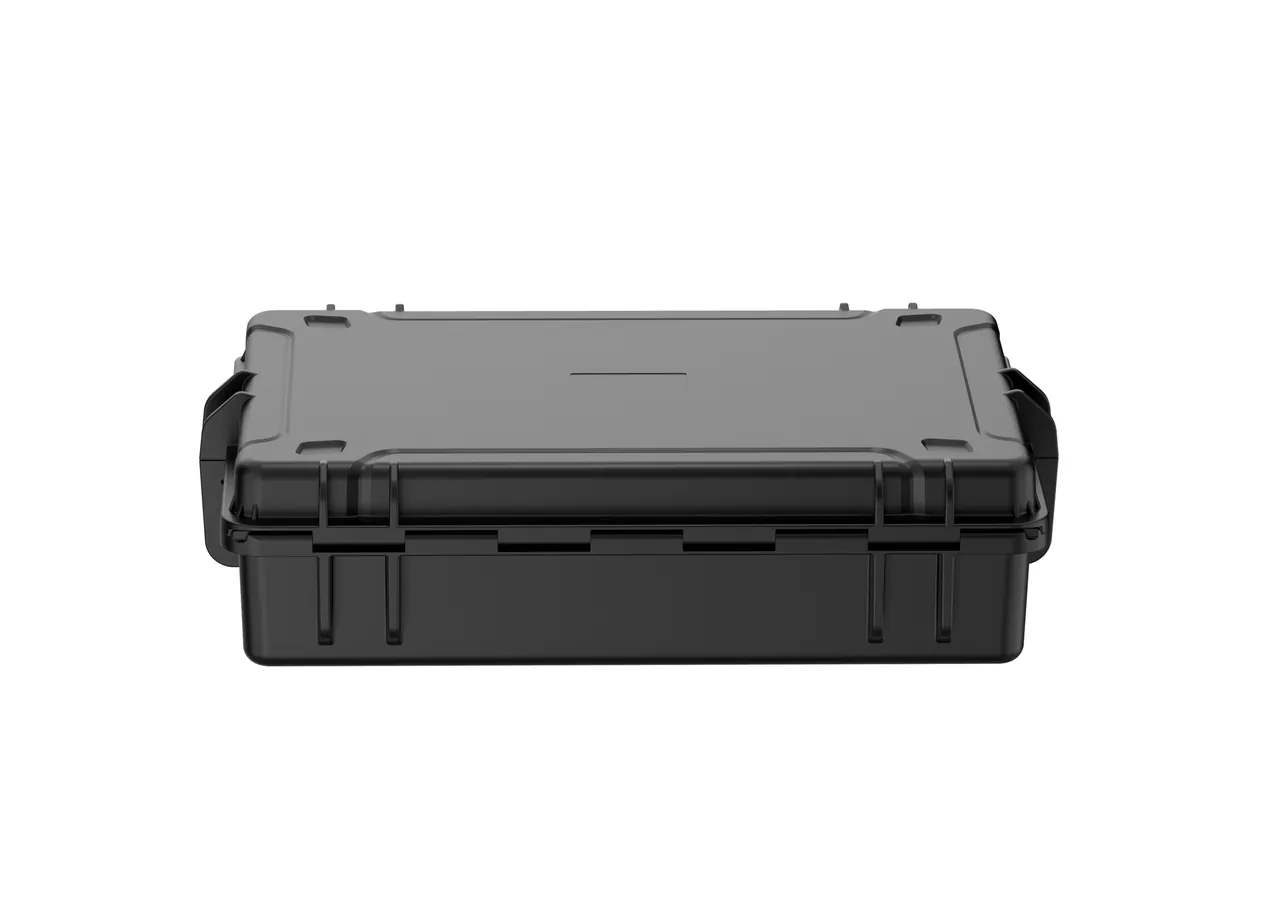
Textile spare parts regularly cross large environmental differences: from a winter outdoor dock in the north to a workshop in the humid south, from a dry inland warehouse to a high-salinity coastal port. This imposes three requirements on case and packaging.
Requirement one: thermal buffering and condensation control. When a case moves quickly from a cold environment into a warm humid one, such as entering a workshop from a winter yard, water vapour condenses on metal surfaces as liquid water. On bearings and spindles, condensation-induced pitting is often discovered only after assembly. Countermeasures include a pressure equalisation valve to reduce breathing intake, a thermal liner or phase-change material to slow the rate of temperature change, and process rules against opening cases immediately after extreme temperature transitions, allowing 30 to 60 minutes in a transition zone. For related design thinking, see extreme temperature protective cases and cold-chain food transport case temperature control design.
Requirement two: salt fog and corrosion. At coastal mills and on export ocean routes, chlorides markedly accelerate corrosion of plating and carbon steel. Countermeasures include raising the ingress rating to IP67, using vapour-phase corrosion inhibitors, selecting salt-fog resistant plating systems such as zinc-nickel or zinc-flake coatings, and fitting humidity indication so that a sealing failure is detected early.
Requirement three: mould and cleanliness. In hot humid conditions, organic residues inside a case - oil, fibre debris, flux residue - become mould nutrients. Countermeasures include thorough cleaning and drying before packing, lint-free inserts, routine case washing, and periodic inspection of inserts for mould spotting.
15. Cleaning, Maintenance and Service Life
The hygiene and cleanliness of a textile parts case directly affects spare precision and electrical reliability. Fly, dust and oil accumulating inside will contaminate mating faces and act as mould nutrients.
Daily cleaning. Wipe internal walls and inserts with mild detergent and a soft cloth. For oil contamination, use a cleaner compatible with the specific oil and avoid strong solvents, which can damage flocking, gaskets and ESD coatings. Empty the desiccant bay at each turnaround and check for caking or saturation.
Deep maintenance. Every 6 to 12 months, or every 50 to 100 turnarounds, check gasket compression set and oil resistance, hinge clearance, latch engagement, dimensional stability of the formed slots, and whether the ESD insert surface resistance is still inside the acceptable range, since ESD materials degrade with use and contamination.
Service-life judgement. Case life is assessed on structural integrity, insert protective capability, and cleanliness and ESD performance together. Scrapping criteria normally include through-wall cracks, broken ribs, cracked hinge mounts, gasket-groove deformation that prevents the original IP rating being met, slot collapse that lets parts move, loss of ESD performance, and inserts with non-removable mould spotting or oil saturation.
| Component | Inspection interval | Replace or scrap criteria |
|---|---|---|
| --- | --- | --- |
| Gasket | Every 20 turnarounds | Hardening, cracking, swelling, compression set beyond limit |
| Hinge | Every 50 turnarounds | Visible axial play, captive pin failure, deformation under load |
| Latch | Every 50 turnarounds | Reduced holding force, self-release under vibration |
| Formed slots | Every 30 turnarounds | Collapse, shedding, part movement |
| ESD insert | Every 30 turnarounds | Surface resistance out of range, coating wear |
| Shell body | Every 100 turnarounds | Through cracks, broken ribs, deformed gasket groove |
| Insert hygiene | Every turnaround | Replace immediately on non-removable mould or oil saturation |
Kexin New Materials supplies replaceable gaskets and insert modules, separating consumables from structural items and pushing whole-case replacement considerably further out. For inserts with mould spotting or oil saturation, we recommend replacement rather than deep cleaning, because mould spores and oil penetrate foam pores and are hard to remove completely, and the residue continues to affect cleanliness in the next cycle.
16. Custom Development, Acceptance and Cost Structure
A six-step process is recommended for textile parts case development.
- Requirement clarification. Spare list by part family, dimensions, weight and precision class; movement chain covering in-plant turnaround, inter-plant transfer, export ocean freight and breakdown response; environmental conditions including temperature, humidity, salt fog and oil; protection requirements including ESD class and rust-prevention class; labelling and traceability needs.
- Classification and solution design. Build the spare classification matrix, then determine case type count, insert solutions, ingress rating, ESD and rust-prevention plans, latches and accessories.
- Prototyping and verification. Insert prototyping should precede shell tooling. Use real spares to validate support point positions, restraint effect and extraction motion, with separate validation for card clothing and precision parts.
- Testing. Run stacking, vibration, drop and water resistance tests against a profile defined by GB/T 4857, ISTA or ASTM D4169; add fretting testing for precision parts, verify ESD performance per IEC 61340 series for electrical components, and reference MIL-STD-810H methods where needed, cited as environmental test methodology rather than military certification.
- Pilot production and field trial. Run four to eight weeks in one or two workshops or spare stores, collecting replacement time, spare arrival pass rate and recovery rate.
- Mass production and acceptance. Apply an AQL sampling plan to appearance, dimensions, insert accuracy, sealing, hardware function, ESD performance and marking.
On implementation, JUNZHJIA can support a project from spare classification planning through insert prototyping and ESD and rust-prevention solution design to mass-production acceptance, and can prepare fretting test, ESD verification and test document lists, so that fit-on-arrival moves from an operating assumption into an acceptable clause.
On cost structure, the total cost of ownership of a textile parts case should include at least the following.
| Cost item | Notes | Order of magnitude (empirical) |
|---|---|---|
| --- | --- | --- |
| Tooling and development | One-off, by case type count and insert solution | 8% to 18% (amortised by volume) |
| Case procurement | By quantity and configuration | 40% to 55% |
| Inserts and functional modules | Formed slots, tooth-direction cradles, ESD inserts, VCI consumables | 18% to 30% |
| Freight and recovery | Outbound and empty case return | 8% to 18% |
| Maintenance and spares | Gaskets, insert modules, rust-prevention consumables | 5% to 12% |
| Cleaning and verification | Washing, ESD re-testing | 3% to 8% |
For tooling cost amortisation and mould cost ranges, see custom protective case mould cost analysis; for supplier assessment, see how to choose a protective case OEM factory.
Negotiation tip: price differences between textile parts case offers come mainly from the insert solution, the ingress rating and the ESD configuration. Ask for itemised pricing across case, insert, functional modules and consumables, and agree gasket and ESD insert unit prices and replacement intervals in the contract, so that the TCO comparison is genuinely comparable.
Frequently Asked Questions
Q: We have shipped textile spares in timber crates for years. Why do we need dedicated parts cases?
A: A timber crate solves collision protection but leaves three problems unsolved. The first is precision protection: parts still move slightly inside a crate under transport vibration, and micro-movement scores mating faces, wears plating and changes preload. For spindles, rollers and precision bearings, the damage is typically discovered only after assembly, showing up as excessive vibration or yarn quality drift, and diagnosis is very expensive. A dedicated parts case removes displacement through multiple support points and elastic preload. The second is moisture and rust: wood moisture content tracks ambient conditions and releases moisture into the crate in a humid container, and cross-border shipments also require phytosanitary compliance such as ISPM 15 heat treatment or fumigation, with refusal risk if unmet. A parts case can achieve IP65 or better with a desiccant bay and vapour-phase corrosion inhibitors. The third is operating efficiency: a crate needs prying, unwrapping, counting and re-packing, and is hard to reuse, whereas a dedicated case supports open, extract, fit and empty return, with a slot mapping chart enabling fast reconciliation. In a breakdown window, that value is very direct.
Q: What goes wrong most often with card clothing in transit, and how do we prevent it?
A: The critical failure is crushed or laid-over tooth tips, which cannot be repaired on site and lead to scrap or a factory return. Three mechanisms apply: stacking load, where the weight of upper layers presses directly on the tips; tooth-direction friction, where relative movement catches and deforms tips; and hard contact, where timber, tools and unwrapped edges crush tips under vibration. Prevention can be summarised as tooth-direction forming, soft-surface contact and one-way loading. Tooth-direction forming means slotting the insert to the fillet width with a soft slot floor and walls that limit lateral movement, so teeth always point up and carry no load; for coiled clothing, a mandrel matched to the internal diameter prevents the coil collapsing onto its own teeth. Soft-surface contact means flocking, microfibre or low-hardness EVA so no hard material touches the tips directly. One-way loading means the case must clearly state teeth up and no inversion, with an asymmetric envelope or colour coding to reduce mis-handling. There is also one overriding situational rule: card clothing must never share a compartment with spindles, bearings or tools. Finally, a significant share of clothing damage happens at unpacking and on-site handling, so we recommend a removable tray insert so the whole tray can be lifted out and used as a carrying frame, reducing secondary handling.
Q: Why can precision spindles and bearings not travel in an ordinary tool box?
A: Because the protection objective is different. An ordinary tool box aims at "do not break it", while precision parts aim at "no fretting and no mating-face damage". Fretting is small-displacement, high-frequency, long-duration relative motion. It is invisible at goods-in but continuously wears mating faces and changes preload, finally presenting as excessive vibration or lost accuracy after assembly. The problem with an ordinary tool box is soft, unrestrained padding: the part spends the whole journey in a state of continuous micro-movement, which is the most harmful condition. A precision parts case works on three principles: full restraint through multiple location points that fix the part at a defined position; modest preload using elastic material to close clearances; and high-friction contact surfaces such as flocking or rubber facing that raise the static friction coefficient. Two further design points matter: support points should sit at structurally stiff locations such as shaft shoulders or flange faces, never on finish-machined mating faces; and support point count should be two to four along the length, avoiding the "supported at both ends, unsupported in the middle" condition. Cushion material selection also matters, and blindly thickening foam is counterproductive - density and rebound must be matched, because foam that is too soft takes a permanent set under sustained stacking load and loses its restraint function.
Q: What is the most effective way to prevent rust on metal spares, and what humidity should we target?
A: Rust requires three conditions at once: water or an electrolyte, oxygen, and active points on the metal surface such as scratches, fingerprints, salt or acid residues. Engineering practice normally addresses water and active points together. On humidity targets, the empirical safe band for carbon and alloy steels is 45% to 55% RH; above 60% RH with temperatures of 20 to 35 C the corrosion rate rises sharply; below 40% RH corrosion essentially stops, so for high-value bearings and precision parts, holding 40% to 50% RH is safer. A three-layer scheme is recommended. Layer one is sealed moisture exclusion using an IP65 or better case. Layer two is vapour-phase corrosion inhibition using VCI film, paper or bags, which form a protective atmosphere in the enclosed volume - note that VCI works best with a sealed case and has limited effect in a ventilated one. Layer three is desiccant humidity control in a separate bay sized by net volume and target transit days. Three details are easily overlooked: human sweat carries salts and organic acids that form local corrosion cells, so powder-free gloves during assembly and packing are essential; some recycled papers, sulphur-bearing rubbers and certain timbers release acidic or sulphur-bearing species, so inserts and wrappings should be acid-free and low-sulphur; and saturated desiccant releases moisture back, so the replacement interval must be set from transit duration rather than assumed.
Q: Why is ESD control so important for electrical spares, and what actually works?
A: Electrostatic discharge damages the gate oxide and internal interconnects of semiconductor devices, with two possible outcomes: outright failure, and the more dangerous latent failure. A device with latent failure has drifted parameters but has not failed outright, and the fault appears only in specific operating conditions after installation, so diagnosis is very expensive and sometimes results in repeated board replacement. An effective ESD programme needs four elements at once. First, materials: inserts made from antistatic or static-dissipative material in the 10^6 to 10^9 ohm surface resistance range, classified per the IEC 61340 series. Second, an earth path: earthed metal in the case, a conductive insert layer and operator wrist straps, since materials alone without an earth path are ineffective. Third, packaging method: sensitive devices in individual ESD shielding bags, kept closed until unpacking, with the operator earthed before opening. Fourth, environmental control: relative humidity not below 40%, because static accumulates faster in dry conditions. One further point: ESD insert performance degrades with use and contamination, so surface resistance should be re-tested periodically rather than assumed to last for the life of the case.
Q: Should we choose IP65 or IP67, and how much ingress protection do textile parts cases need?
A: Rate by spare category rather than applying one level across the plant. Mechanical parts other than card clothing mainly need dust and splash exclusion, and IP65 is usually sufficient. Electrical components, precision parts and card clothing need moisture exclusion as the core requirement, so at least IP65 with a desiccant bay is recommended, stepping up to IP67 for export ocean routes, coastal high-salinity environments or flood-season transfer. On ratings: IP65 is dust-tight and resistant to low-pressure water jets from all directions; IP66 resists powerful water jets; IP67 allows short-duration immersion under defined conditions, typically 1 m for 30 minutes. Two cautions apply. First, an IP rating is a type-test conclusion rather than a marketing adjective, so require a test report citing IEC 60529 or GB/T 4208 and verify that the reported sample size, gasket configuration and sealing method match the production version. Second, raising the rating has side effects: higher cost, greater opening resistance, more frequent gasket replacement, and a stronger breathing effect across temperature differentials and altitude changes that can make cases hard to open. For cross-climate or air freight routes we therefore recommend a pressure equalisation valve, which equalises pressure while retaining water ingress protection and avoids gasket fatigue and difficult opening.
Q: How much can a textile parts case actually improve downtime?
A: The improvement shows up in three stages. First, finding the spare. Parts packed in crates or cartons are usually stored by batch, and locating a specific ring variant can take ten minutes of rummaging, whereas a case with slot mapping and a labelling system supports direct location by machine model and position number, which typically accounts for most of the saving. Second, opening and extraction. A crate requires prying, unwrapping, counting and re-packing, with many motions and tool dependency, while a parts case is designed for unlock, open, lift out the tray in three motions, with handles and lifting points for heavy parts. Third, pre-installation preparation. Metal parts shipped in crates often need additional cleaning and rust removal before fitting, whereas a case with VCI and lint-free inserts supports fit-on-extraction. There is also an underestimated benefit in error prevention: physical constraint and colour zoning reduce the probability of fitting the wrong variant, and refitting a wrong variant usually costs more time than the original search. One qualification: the size of the improvement depends on the spare management process itself. A case is only a tool, and if the slot mapping chart, recovery process and numbering system are not put in place alongside it, much of the efficiency gain is lost.
Q: When specifying textile parts cases, how do we balance case type count against cost?
A: The core idea is a combination of classification-based cases, general case types and specialist case types, rather than one universal case. Three steps work well. First, build a spare classification matrix along part family, weight band and protection requirement, which normally yields four to six groups: card clothing, shafts and spindles, bearings and rings, electrical components, tools and consumables, and accessories. Second, set the case type count, preferably four to six: three general spare case types in small, medium and large to cover most mechanical spares; one card clothing case; one ESD electrical case; and one long and heavy item case for frames, reeds and rollers. Third, use interchangeable insert modules for multi-use shells, fixing the shell envelope and latch interface and adapting to different spare groups by changing the insert, which reduces tooling count substantially. Three points control cost: amortise tooling across the expected total volume and state that volume at quotation stage; give priority to reusing shell moulds and concentrate variation in the insert, since insert tooling costs far less than shell tooling; and write consumable unit prices and replacement intervals for gaskets and ESD inserts into the contract so maintenance cost cannot drift later.
Conclusion and Further Reading
The value of a textile machinery parts case ultimately rests on three tables: spare arrival pass rate, stoppage replacement time, and spare total cost of ownership. As long as the specification is defined along the three axes of part family, precision class and movement chain, protective capability, operating efficiency and compliance can be measured, accepted and continuously improved. If instead the case is treated as "a container that holds parts", no protective specification will stop the floor from abandoning it because parts are hard to reach or classification has broken down.
Three practical recommendations for procurement and engineering colleagues:
- Build the classification matrix before fixing case types. Card clothing, precision shafts and electrical components follow completely different protection logic, and mixed loading is the largest hidden cost.
- Make fretting prevention and ESD control inspectable acceptance items. Quantify fretting by inspecting mating faces after vibration testing, and verify ESD by measuring surface resistance and earth continuity per the IEC 61340 series rather than relying on a material datasheet.
- Write testing, consumables and recovery into the contract. Reference the GB/T 4857, ISTA or ASTM D4169 test profile and an AQL acceptance plan explicitly, agree gasket and ESD insert unit prices and replacement intervals, and establish a case numbering and recording mechanism for empty case recovery.
Kexin New Materials (Guangdong) Co., Ltd., under the JUNZHJIA brand, provides custom development, insert prototyping, ESD and rust-prevention solution design, gasket and hardware configuration, OEM/ODM manufacturing and volume supply of textile machinery parts cases, together with selection support, test-plan advice and batch acceptance assistance for textile mills, machinery builders, spare-part traders and system integrators.
Related Reading