

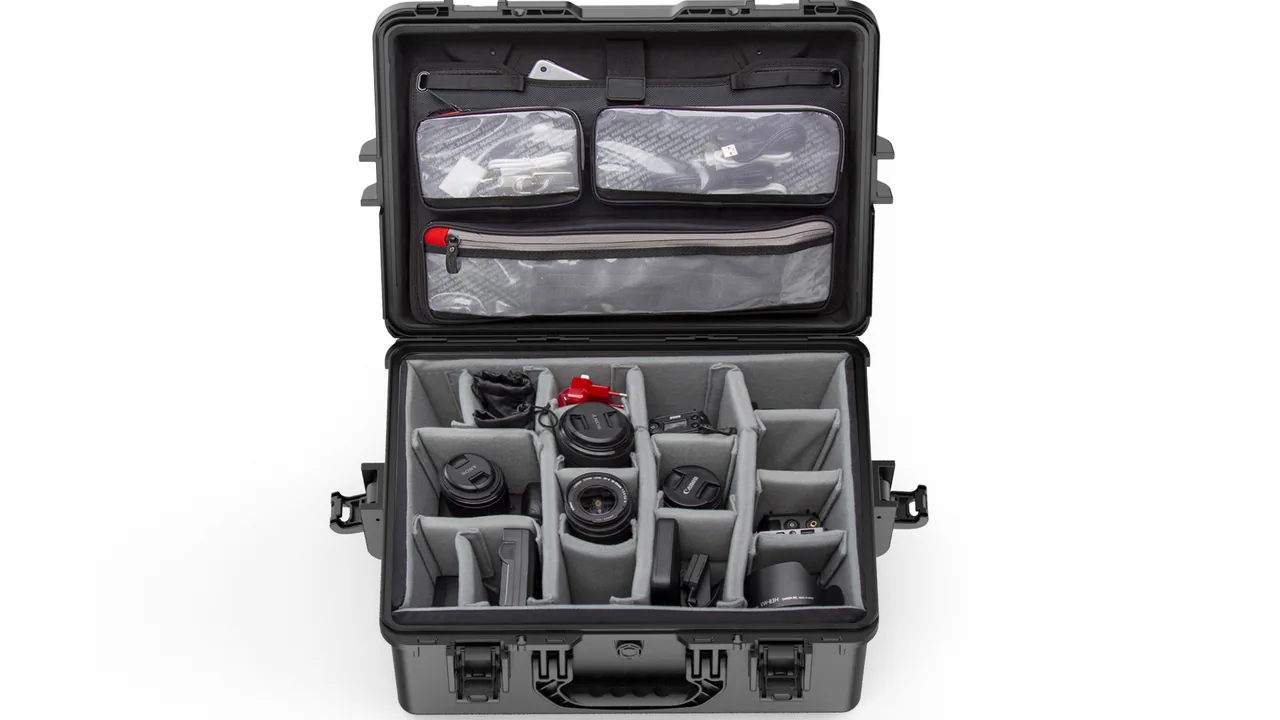
A phosphating line is a heavy corrosion duty pretreatment environment. Degreasing, pickling, activation, phosphating and passivation stages each carry a different bath chemistry, and acidic, alkaline and heavy-metal salt solutions coexist in one shop. The transport hazard for components is therefore not a single corrosion mode but cross corrosion between dissimilar residues, scale build-up in spray orifices, and leak risk at tank linings and weld seams after impact. JUNZHIJIA builds cases for phosphating line parts around one discipline: handle each medium separately, locate each precision class separately, and seal each cavity separately. Treat every residue to a storable condition first, then configure the insert around the geometric accuracy the part actually needs. For a phosphating line, corrosion resistance and residue control come first, impact resistance second.
This article moves through medium identification, component families, insert and case selection, chemical compliance, cleaning sequence and transport validation, with parameters and criteria that can be written directly into a technical agreement. MIL-STD-810H is cited only as a source of environmental test methods and does not constitute a military certification. Compliance points specific to phosphating are also covered: bath residue, heavy metal sludge, passivation agent control and wastewater requirements.
Contents
- Why phosphating line parts are harder on residue than anodizing parts
- Transport protection for immersion tank bodies and rubber linings
- Anti-scaling protection for spray headers, spray pipes and nozzles
- Corrosion-safe shipping for immersion heaters and plate exchangers
- Seal protection for circulation pumps, filters and sludge removal units
- Clean packing for dosing units, metering pumps and level instruments
- Distortion control for baskets, jigs and conveyor fixtures
- Phosphating sludge: two cleanouts that must happen before packing
- Inserts and cases: combining acid, alkali and moisture resistance
- Chemical compliance: bath residue, passivation agents and wastewater
- Cleaning, neutralizing and drying sequence before packing
- Transport validation, incoming acceptance and line recommissioning
- FAQ
- Conclusion and related reading
Why phosphating line parts are harder on residue than anodizing parts
Phosphating and anodizing are both wet surface treatments, but the chemistry is far more varied in a phosphating line. A conventional steel phosphating line has five or more independent tanks: pre-degrease, degrease, rinse, pickling on some processes, activation, phosphating, rinse, passivation and deionized rinse. The pH range spans strongly alkaline degreasing at pH 10 to 13 through to strongly acidic pickling and phosphating at pH 1 to 3, and phosphating baths normally contain zinc, manganese and nickel ions, while passivation may be chromium based or chromium-free zirconium and titanium chemistry.
That variety produces three transport risks that anodizing does not create.
Cross-contamination reactions. Alkaline degreaser residue meeting acidic phosphating residue forms salt precipitate or local neutralization. The reaction product typically attaches to internal walls as crystals or gel, looks like a mild water stain, and becomes the nucleation point for scale after restart.
Salt scaling. Phosphate salts dry into hard crystalline deposits, particularly in small orifices such as spray nozzles, where scale changes spray angle and flow distribution directly, which in turn makes coating weight uneven. Under transit vibration that scale can break free and migrate to other locations, becoming a moving blockage source.
Heavy metal sludge. Phosphating sludge settled at the tank bottom contains zinc, nickel and manganese and falls under hazardous waste rules. Shipping it inside the case contaminates the cavity and can create a compliance problem if it is not handled properly on arrival.
| Component family | Typical residue | Main transport risk | Priority action | Incoming recheck |
|---|---|---|---|---|
| --- | --- | --- | --- | --- |
| Tank body and lining | Phosphating and pickling liquor | Lining scratches, flange distortion and leaks | Neutralize, rinse, dry, add flange guards | No through damage, flange flatness |
| Spray header and nozzles | Phosphate salts, alkaline degreaser | Orifice scaling, pipe distortion | Rod out each nozzle, dry, plug pipe ends | Orifice size, spray angle, flow distribution |
| Immersion heater | Phosphating liquor | Tube scaling, insulation moisture | Chemical descale, dry insulation, protect ends | Insulation resistance, no tube dents |
| Circulation pump and filter | Sludgy bath liquor | Seal face wear, compacted sludge | Strip and clean, renew or preserve seals | Seal faces intact, hand turn smooth |
| Dosing and metering unit | Phosphating liquor, passivator | Metering chamber crystallisation, stuck check valves | Flush chamber, bag valve parts separately | Metering accuracy, check valve tightness |
| Baskets and fixtures | Bath liquor, phosphating sludge | Rod distortion, contact point rust | Desludge, rust treat, fixture by contour | Straightness, contact point condition |
Transport protection for immersion tank bodies and rubber linings
Phosphating immersion tanks are commonly carbon steel shells with rubber lining, sometimes glass flake or PVC sheet, and occasionally stainless steel or PP tanks. Each structure has a different transport sensitivity.
Carbon steel with rubber lining demands the most care. The bond between rubber and steel can debond from localized impact, forming a blister, and once bath liquor penetrates a blister the lining can strip over a large area in a short time. Transport requirements are therefore strict: load must land on steel stiffeners and external supports, never on the lining face; the lining must not contact any hard protrusion; and nozzles, overflow ports and connections should have soft covers so they cannot be pressed by neighbouring components in the same case.
Stainless steel tanks are more tolerant, but two details matter. Weld seams and heat affected zones exposed to chloride-bearing residue can pit, so full drying after cleaning is essential. And large thin stainless panels have low stiffness, so they need external support rather than internal tensioning in transit.
PP and PVC tanks are light and chemically resistant but become more brittle at low temperature. Avoid impact loading during winter handling, and allow the material to warm before inspecting it after unpacking. This is the same behaviour discussed in protecting components across extreme temperature ranges, with the part rather than the case being the material of concern.
Flanges and connections are the most fragile sealing features on an immersion tank. Cut a dedicated pocket for each flange and add protective plates on both faces so a guard absorbs the impact energy. Exposed threaded connections need thread protectors and a protective grease compatible with the downstream medium.
Anti-scaling protection for spray headers, spray pipes and nozzles
The spray system is the biggest structural difference between a phosphating line and an anodizing line, and it is the component family most often under-estimated and hardest to correct later.
The system comprises mains, headers, branches, spray pipes and nozzles. Nozzles typically have orifices from 0.5 to 3 millimetres with V-jet, fan or spiral internal passages. Phosphate residue dries there into hard crystals that progressively narrow the effective passage, ending in distorted spray pattern and insufficient local flow.
Protection points:
- Rod out and record every nozzle. Before packing, check each nozzle for passage with a soft probe or low pressure water and record the result. Where possible, run a single-nozzle flow test and keep the data.
- Dry thoroughly before capping. After draining, purge pipes and headers with dry compressed air until no visible mist leaves the outlet. Sealing while damp accelerates scaling.
- Plug pipe ends and nozzle sockets. This keeps dust out and prevents other parts from striking the socket.
- Never let a spray pipe carry load. Spray pipes are slender thin-wall tubes, and any mid-span support load bends them, shifting spray angles systematically after reassembly. Use multi-point saddles located at the pipe ends and stiffening rings.
- Box nozzles individually. Nozzles are small precision items, so give each type its own compartment in a small box with soft material that does not press on the orifice.
For spiral nozzles, also confirm the internal swirl core is not loose. A small shift in the core changes the spray cone angle and is hard to see visually, so check core tightness before packing.
Corrosion-safe shipping for immersion heaters and plate exchangers
Phosphating tanks are heated either by immersion heaters, using quartz, PTFE-sheathed, stainless or titanium tubes, or by an external plate exchanger with circulation.
Immersion heaters carry three transport risks. First, tube wall scaling: heater surfaces accumulate hard phosphate scale in service, and if that scale ships in place it can spall locally under vibration, creating thinned spots. Second, electrical insulation moisture: the terminals and ceramic insulators of a quartz heater are humidity sensitive, and moisture can leave insulation resistance low or cause a leakage trip after restart. Third, mechanical damage: quartz is brittle, PTFE sheathing scratches easily, and thin titanium tube walls dent. The transport sequence is chemical descale, noting cleaning agent compatibility with the tube material, followed by full drying, protective caps and desiccant at the terminals, and then axial fixturing with a soft outer sleeve. A heater tube must never serve as a support point or take side load.
Plate exchangers hinge on plates and gaskets. Gaskets compressed for long periods take a permanent set, so before long storage loosen the tie bolts to a free state and record the original clamp dimension for correct reassembly. Plates are thin, and their corners damage easily, so add corner guards and fit blind plates on connections.

| Heating or exchange type | Material characteristics | Pre-ship treatment | Required attitude in case | Incoming recheck |
|---|---|---|---|---|
| --- | --- | --- | --- | --- |
| Quartz tube heater | Brittle, sensitive insulation | Descale, dry terminals | Axial fixture, soft sleeve | Insulation resistance, no cracks |
| PTFE sheathed heater | Sheath scratches easily | Descale, inspect sheath | No hard contact, own compartment | Sheath intact |
| Stainless heater tube | Chloride pitting risk | Descale, dry | Multi-point support, no dents | No dents or rust spots |
| Titanium heater tube | Strong but thin walled | Descale, dry | No load, ends protected | Weld ends intact |
| Plate exchanger | Thin plates plus gaskets | Loosen tie bolts, record | Upright, corner guards, blind plates | Plates undistorted, gaskets intact |
Seal protection for circulation pumps, filters and sludge removal units
Circulation pumps and filters on a phosphating line convey sludgy liquor continuously, making them the highest wear and highest blockage components, and among the most frequently removed.
Circulation pumps are typically centrifugal or magnetic drive. Strip and inspect before shipping, focusing on mechanical seals and wear rings. Sludgy service opens wear ring clearance, and without a recorded measurement before removal it is impossible to judge whether performance dropped after reassembly. Measure and record wear ring clearance and axial float as a baseline. Remove the shaft for separate packing, or fixture the assembly axially to prevent bending under self-weight. Mechanical seal rotating and stationary faces should be removed as a pair and packed as a pair so the original lapped fit is not lost. Comparable split-packing practice for pump hardware is described in water treatment equipment component protection.
Filters. Phosphating line filters handle sludge removal and bath cleanliness. Filter media bags, cartridges and cloth in a heavy metal sludge state are contaminated items: remove them before shipping and manage them as hazardous waste rather than shipping them in the case. Clean housing passages thoroughly, particularly drain ports and differential pressure taps.
Sludge removal units include inclined plate settlers, hydrocyclones and filter presses. Hydrocyclone cones and liners are wear parts, so liners must not take impact in transit. Filter press plates are large and heavy, so ship them upright with full-face support to keep the plate centre from bending.
Clean packing for dosing units, metering pumps and level instruments
Dosing and metering hardware is the small-precision end of a phosphating line: small parts, high accuracy, and high sensitivity to passage cleanliness.
Metering pumps commonly add phosphating accelerators, neutralizers and passivators, and the crystallization tendency of these chemicals varies widely. Some passivators form sparingly soluble crystals once they lose water, which then jam check valves and make dosing inaccurate. Flush the metering chamber before packing and displace with a compatible cleaning liquid, removing check valves and balls for separate packing.
Dosing tanks and agitators. Tanks are usually PE or PP, so they fear scratches and low temperature embrittlement. Agitator shafts and impellers are cantilevered, so remove the impeller or add independent support instead of letting the shaft bend.
Level and inline instruments. pH electrodes, conductivity electrodes and level gauges are glass or membrane sensitive items, and here a common misconception matters: not all electrodes are stored the same way. Some reference systems must stay wet, others must be dry, so follow the manufacturer's instruction and label both the model and the storage state on the case. Instrument bodies get their own compartment, probes get protective sleeves, and cables coil at a large radius.
Judgement criteria for adding wheels and a trolley handle to instrument cases used in internal plant movement are covered in case wheels and trolley handle configuration.
Distortion control for baskets, jigs and conveyor fixtures
Phosphating baskets, jigs and conveyor fixtures are high count, frequently handled items in the category that still works after distortion but causes quality variation.
Baskets are usually welded frames carrying concentrated load. Transit risks are frame twist and lifting lug deformation. Ship a basket in its working attitude, normally horizontal, with full-face support and corner guards, and support lifting lugs separately rather than using them as extra load points.
Jigs and conveyor fixtures include hooks, support rods and work bars. Contact points on phosphating jigs directly affect conductivity and coating uniformity, which matters especially for parts that go on to electrocoating or further painting, so contact point corrosion and distortion both create quality problems. Fixture rods axially to avoid cantilever loading, and give slender work bars at least three support points.
Conveyor chains and carriages. These are long motion components, so secure them in sections to stop the chain swinging freely and wearing the carriage. Carriage wheels are wear items, so fit protective sleeves.
Phosphating sludge: two cleanouts that must happen before packing
Two cleanout tasks must be completed before a phosphating line component can be packed, and both are as much about compliance and safety as about packaging.
The first is removing phosphating sludge from tanks and piping. Phosphating sludge consists mainly of iron and zinc phosphates with zinc, nickel and manganese present. Under hazardous waste classification it belongs to the surface treatment waste category, and the removed sludge must go to a licensed disposal route. It must not ship inside the case, must not be mixed with general refuse, and must not be discharged to a storm drain.
The second is separating and handling filter media and sludge-bearing sediment. Bags, cartridges, cloth and settler sediment should be packaged into dedicated containers immediately on removal to prevent secondary dust and dripping. If disposal cannot happen immediately, store them in a bunded, rain-protected area with a logged register.
Only after both cleanouts does the process move to cleaning and neutralizing the component itself. One point deserves emphasis: residual sludge damages a case over the long term. Once it absorbs moisture it forms a concentrated salt solution that keeps attacking case metalwork and inserts, and it becomes airborne dust when the case is opened, creating an inhalation hazard for operators. The correct order is therefore desludge first, then clean, then neutralize, then dry. Skipping a step always surfaces later in another form.
Inserts and cases: combining acid, alkali and moisture resistance
Phosphating components face acidic, alkaline and salt-bearing residues at the same time, so the required chemical resistance range is wider than for a general equipment case.
| Case type | Chemical resistance | Typical IP rating | Suitable phosphating parts | Notes |
|---|---|---|---|---|
| --- | --- | --- | --- | --- |
| Rotomoulded or blow moulded PE case | Broad acid and alkali resistance, impact resistant | IP65 to IP67 | Tank fittings, spray pipes, large pump bodies | Confirm seal compound |
| Injection moulded hard case | Moderate chemical resistance, light | IP67 | Nozzles, instruments, electrodes, small tools | Insert must resist acid and alkali |
| Aluminium magnesium case | Poor against acid and alkali, needs interior protection | IP65 to IP67 | Electrical parts, instrument control boxes | Interior surfaces must be treated |
| Stainless steel case | Good corrosion resistance, heavy | IP65 to IP67 | High value precision parts, long storage | Higher cost, watch chloride pitting |
| Timber frame crate | Not sealed, not corrosion resistant | Not sealed | One-way shipment of large tank parts | Needs moisture bag and liner |
For insert material, closed-cell PE and EVA are the first choice, because they combine low water absorption with reasonable acid and alkali tolerance. Avoid open-cell foam, which absorbs moisture and becomes a carrier for corrosive media, and avoid metal-filled materials, which can form a galvanic couple with the protected part. Where a part will be in direct contact with bath residue, add a chemical-resistant film layer over the insert so the part is separated from the foam and the surface is easier to clean.
For seals, EPDM is preferred for its balanced performance against water, a range of acidic and alkaline media and ageing. Compression set, lid rigidity and latch cycle life all influence long term sealing, so reusable cases should have their seals inspected on a fixed cycle for hardening and distortion. Overall case life and replacement judgement are discussed in protective case service life and replacement interval.
Chemical compliance: bath residue, passivation agents and wastewater
Phosphating is one of the most closely regulated processes in surface treatment, and packaging and shipping need documented answers in three areas.
Bath residue and transport compliance. Components carrying liquid residue can fall under controlled goods rules in transport, especially acidic residue containing heavy metal salts. The assessment depends on the corrosive and toxic character of the residue, the quantity per package and the transport mode. General packaging, marking and documentation expectations are set out in general requirements for hazmat transport packaging. The most common deviation in practice is cleaning without drying: the small amount of remaining water is enough to form a corrosive liquid film inside a sealed case. Where a component genuinely needs to ship wet, for example certain electrodes that must stay moist, label the case with the liquid properties and the emergency response method.
Passivation agent control. Chromium six based passivation is restricted in the European Union under REACH, where relevant substances appear on the authorisation list, and comparable restrictions exist in several other markets. Export projects should confirm a composition declaration for the passivation system and retain supplier conformity statements in the technical file. Chromium-free passivation such as zirconium and titanium chemistry generally produces less corrosive residue, but that does not remove the need for cleaning.
VOCs and wastewater. Volatile organic compounds on a phosphating line come mainly from solvent-based cleaning agents and some additives in the degreasing stage. For air emissions the relevant Chinese rules are GB 37822 on fugitive control and GB 16297 on integrated pollutant discharge. Transport and unpacking should avoid using solvent cleaning agents in bulk in open areas without collection; solvent-wet rags and spent filter media are hazardous waste. For wastewater, phosphating lines normally discharge under GB 21900 for electroplating and metal surface treatment pollutants, or a stricter local standard, with GB 8978 as the integrated baseline. After a whole-line relocation, the segregation of wastewater streams such as chromium-bearing, phosphorus-bearing and acid-alkali streams must be restored correctly, because a single cross connection creates a serious compliance event. That segregation must be marked on the relocation drawing in advance.
Explosion protection and static. Most phosphating tanks operate at atmospheric pressure, so the main explosion risk comes from solvent vapour in the degreasing stage and from dust generated when powder-form chemicals are added. Packaging requirements include drying solvent residue thoroughly, opening and cleaning in a ventilated area with static dissipation provisions, using non-sparking tools, keeping ground continuity on removable conductive parts, and never shipping powder chemicals in the same case as protected components.
Cleaning, neutralizing and drying sequence before packing
The cleaning order for phosphating parts matters more than for general equipment, because different residues require opposite neutralization directions. Run nine steps and keep records:
- Desludge. Remove phosphating sludge and sediment from tanks, pipes and spray pipes first, managing it as surface treatment hazardous waste.
- Classify. Group parts by residue type into acid family from pickling and phosphating, alkaline family from degreasing, and neutral family. Different groups must never share a cleaning tank.
- Drain. Drain tanks, piping and heaters, recording the standing time.
- Neutralize. Neutralize acid residue with a weak alkaline solution and alkaline residue with a weak acid solution, emphasizing dead corners and tapped holes.
- Rinse. Do a final rinse with deionized or softened water; holding final rinse water conductivity below about 20 microsiemens per centimetre is a practical indicator that residual ions have largely been carried off.
- Dry. Purge with dry compressed air, prioritizing flange faces, tapped holes, nozzle orifices and pipe end welds. Quartz tubes and electrical terminals need a separate drying step.
- Descale. Descale heater tubes and exchanger plates separately, checking cleaning agent compatibility with the tube material.
- Protect. Apply a protective material compatible with the downstream medium to mating surfaces, fit thread protectors, and store electrodes as the manufacturer requires.
- Seal. Fit the insert, lock restraints, add desiccant and a humidity indicator card, and label the parts list, cleaning state, closing date and medium identification.
Step two is what distinguishes this flow from other surface treatment lines. Put degreasing residue parts and phosphating residue parts in one cleaning tank and the tank itself becomes a neutralization reactor producing precipitate, contaminating both batches at once.
Transport validation, incoming acceptance and line recommissioning
Specify verifiable transport performance in the purchase document:
- GB/T 4857 series. Vibration, impact and stacking methods widely used in domestic road transport, suited to whole-case validation.
- ISTA procedures. Suited to courier and less-than-truckload movements.
- ASTM D4169. A distribution-cycle based programme.
- MIL-STD-810H methods 514 and 516. Usable as method sources for vibration and shock, cited as environmental test methodology only and not a military certification.
Incoming acceptance runs along four lines: corrosion, cleanliness, geometry and function.
| Acceptance line | What to inspect | Pass criterion | Non-conformance action |
|---|---|---|---|
| --- | --- | --- | --- |
| Corrosion | Lining, welds, heater tubes, threads | No blisters, rust or through damage | Repair or replace, assess leak risk |
| Cleanliness | Orifices, passages, metering chambers | No crystals, sludge or oil | Rod out and reclean |
| Geometry | Flange flatness, spray pipe and work bar straightness | Within drawing tolerance | Deviation report |
| Function | Insulation resistance, tightness, metering accuracy, spray distribution | Meets technical agreement targets | Adjust or replace |
During recommissioning, add three confirmations tied directly to transport. Measure heater insulation resistance before energizing. Confirm spray flow and angle distribution before any parts enter the line. And verify wastewater stream segregation connection by connection. Sampling and disposition frameworks are described in protective case acceptance and AQL sampling and GB/T 4857 transport packaging testing.
Manufacturer capability. Kexin New Materials (Guangdong) Co., Ltd. is one of the manufacturers behind JUNZHIJIA protective cases and builds inserts to surveyed drawings for the specific dimensions and media exposure of phosphating immersion tanks, spray pipes and heating assemblies. OEM and ODM programmes, wholesale, agency and global supply are available, with insert material reports and case test documents provided under contract.
FAQ
Q: Is rinsing with clean water enough before packing a phosphating line component?
A: Clean water only removes soluble surface residue, and it cannot address the three problems specific to a phosphating line. The first is phosphate crystal, which is already attached as a hard deposit on nozzle orifices, passages and heater tubes. Water will not dissolve it, so the deposit needs the appropriate descaling agent, and that agent has to be compatible with the tube material or it creates new corrosion. The second is heavy metal sludge, which is not water soluble at all. Rinsing simply moves it to other surfaces, so mechanical desludging and collection come first, with the material managed as surface treatment hazardous waste. The third is cross contamination: alkaline degreasing residue meeting acidic phosphating or pickling residue forms precipitate, and if both part types share one cleaning tank or one batch of rinse water, the result is that both contamination streams are redistributed across every part. The correct sequence is therefore desludge first, then classify by medium, then neutralize each group separately, then rinse until conductivity meets target, then dry completely. Drying carries the same weight as neutralizing, because residual water forms a corrosive liquid film inside a sealed case that keeps attacking linings and threads, invisible at first and only surfacing weeks later as rust spotting.
Q: Why must spray nozzles be removed and boxed separately instead of shipping in place?
A: Nozzles can travel on the spray pipe, but only if the socket and orifice receive full protection, and that is difficult to guarantee in real packing, so removal and separate box packing is the recommendation. Nozzle orifices run from 0.5 to 3 millimetres, often with V-jet, fan or spiral internal passages, so any impact burr changes spray shape and flow distribution, and phosphating coating uniformity depends directly on spray uniformity. A nozzle left on the pipe faces three transit risks: collision with other components that strikes the socket, angle shift caused by a bent spray pipe, and packing material pressing on the nozzle face. Removing and boxing them lets each nozzle sit in a rigid box compartment sized to its type, with soft material that holds it without pressing the orifice, and it also makes it practical to record orifice passage condition one by one when building the file. For spiral nozzles, add a check that the internal swirl core has not loosened, because a small core shift changes the spray cone angle and is very hard to detect visually. Before reassembly, run a single-nozzle flow test so nozzle condition is confirmed with data rather than a visual guess.
Q: What is the most commonly skipped step before packing an immersion heater?
A: The most commonly skipped step is drying and protecting the electrical insulation, not descaling the tube itself. Most sites descale heater tubes carefully and then overlook the terminal block, ceramic insulators and lead wires of a quartz heater. Those areas do not touch bath liquor in service, but during removal and cleaning they are easily splashed, and if they are packed damp the relative humidity inside the case climbs quickly and condenses after a cross-climate voyage. The result is low insulation resistance on restart, or a protection trip as soon as power is applied. The correct approach is to dry the tube body first, then dry terminals and insulators separately, using anhydrous ethanol to assist dewatering where needed followed by a dry air purge, then fit protective caps at the terminals and place desiccant and a humidity indicator card in the case. Quartz heaters also need attention for brittleness: fixture the tube axially at the manufacturer's specified shipping position with a soft outer sleeve, and never let the tube act as a support point or take side load. On arrival, measure insulation resistance before energizing, and write that order into the recommissioning procedure.
Q: How should phosphating sludge be handled at teardown? Can it be boxed and cleaned on site later?
A: Boxing first and cleaning later is not advisable, both as a compliance matter and as equipment protection. Phosphating sludge consists mainly of iron and zinc phosphates with zinc, nickel and manganese, and hazardous waste classification places it in the surface treatment waste category, requiring disposal through a licensed route. Shipping it inside a case does not meet the transfer requirements and risks a spill during transport. From the equipment side, sludge that absorbs moisture forms a concentrated salt solution that keeps attacking case metalwork and inserts, and it becomes airborne dust when the case opens, creating an inhalation hazard for operators. The correct order is to desludge tanks and piping mechanically at the teardown site, collecting sludge and rinse water into dedicated containers; to package filter media such as bags, cartridges and cloth plus settler sediment immediately to prevent secondary dust and dripping; and where immediate disposal is impossible, to store them in a bunded, rain-protected area with a logged register. Only after desludging is complete do you clean, neutralize and dry the component itself, and only then does packing begin.
Q: How do case and insert materials for phosphating differ from other equipment cases?
A: The main difference is a wider required chemical resistance range, because one case may hold acidic, alkaline and salt-bearing residue parts at the same time. On the case side, PE rotomoulded or blow moulded bodies offer broad acid and alkali tolerance with good impact resistance, suiting tank fittings, spray pipes and large pump bodies. Injection moulded hard cases are lighter and suit nozzles and instruments, but their inserts must resist acid and alkali just as well. Aluminium magnesium cases are themselves not acid or alkali resistant, so using them on a phosphating line requires an interior corrosion treatment, otherwise splashed liquid causes pitting; they are better reserved for electrical parts and instrument boxes. On the insert side, closed-cell PE and EVA are the first choice for low water absorption and reasonable chemical tolerance. Avoid open-cell foam, which becomes a carrier for corrosive media once wet, and avoid metal-filled materials that can form a galvanic couple with stainless parts. EPDM is preferred for seals because its overall behaviour against water and a range of acidic and alkaline media is well balanced. For parts that will contact bath residue directly, adding a chemical-resistant film over the insert separates part from foam and makes cleaning easier.
Q: Which compliance items must be fixed at the planning stage when relocating a whole phosphating line?
A: At least four, because changing them later is expensive. The first is wastewater stream segregation. Phosphating lines normally separate chromium-bearing, phosphorus-bearing and acid-alkali streams, discharging under GB 21900 for electroplating and metal surface treatment pollutants or a stricter local standard, with GB 8978 as the integrated baseline. A cross connection creates a serious compliance event, so the relocation drawing must mark each stream and the connection must be verified after reassembly. The second is hazardous waste disposal. Phosphating sludge, sludge-bearing sediment and spent filter media belong to the surface treatment waste category, and cleaning, packaging, register logging and licensed disposal must be arranged before equipment is moved, never shipped with it. The third is passivation agent composition. Where chromium six passivation is used, confirm its compliance status in the target market, noting REACH authorisation requirements in the European Union, retain supplier composition declarations in the technical file, and evaluate a chromium-free alternative. The fourth is VOC requirements. If the degreasing stage uses solvent-based cleaning agents, GB 37822 and GB 16297 apply, and after relocation the exhaust system should pass a leak test and collection verification before production restarts.
Q: What gets missed most often at incoming acceptance on a phosphating line?
A: In practice, the items missed are those strongly tied to downstream process quality but invisible in appearance. Three stand out. The first is spray flow and angle distribution. A nozzle that looks intact may have internal passages altered by crystal, so confirm flow and spray pattern before any parts enter the line, using indicator paper or test panels to record distribution. The second is heater insulation resistance. A quartz tube and its terminals look completely normal after moisture exposure, and only measurement reveals the problem, and the measurement must happen before energizing, an order that sites frequently invert. The third is contact point condition. For parts that go on to electrocoating or further painting, corroded or distorted jig contact points cause quality defects, yet jigs are often treated as tooling rather than as a component requiring acceptance. Beyond these three, flange flatness and lining integrity also need dedicated checks, particularly rubber lining, where impact can create a blister that is easy to miss. Press and tap each area to confirm bonding rather than relying on a glance. Fixing these items in the acceptance sheet takes far less time than later troubleshooting.
Q: What explosion protection and static requirements apply to phosphating line component cases?
A: Most phosphating tanks operate at atmospheric pressure, so the main explosion risk does not come from the bath liquor itself but from two secondary sources: solvent-based cleaning agents used in the degreasing stage, and combustible dust generated when powder-form chemicals are added. The resulting packaging and shipping requirements are specific. First, components with solvent residue must be dried thoroughly and confirmed free of noticeable odour before sealing, so no flammable vapour space forms inside the case. Second, opening and cleaning should happen in a ventilated area with static dissipation provisions, using non-sparking tools, with operators in antistatic clothing and footwear. Third, removable conductive parts inside the case should keep ground continuity, and where a conductive insert is used the path from insert through case body to the external ground terminal must be unbroken. Fourth, powder chemicals must never ship in the same case as protected components, and dosing areas should have dust extraction. Fifth, solvent-wet rags and spent filter media are hazardous waste and must not ship in the case or be discarded casually. Where a component must ship wet, such as electrodes that require moisture, label the case with the liquid properties and the emergency response method so carriers and site staff can act correctly.
Conclusion and related reading
The design challenge for a phosphating line case is that it must satisfy two requirements that appear to conflict: eliminating acid and alkali residue while preserving precision such as flange flatness, nozzle orifice size and heater insulation. Three commitments reduce the risk to a manageable level. Desludge at the teardown site and manage the resulting hazardous waste through the correct route. Neutralize and rinse by medium group, with records. And locate and protect spray components and heaters as separate items, never as part of a general load. At incoming acceptance, treating spray distribution and heater insulation resistance as fixed inspection items saves far more time than troubleshooting after the line is running.
Related reading