

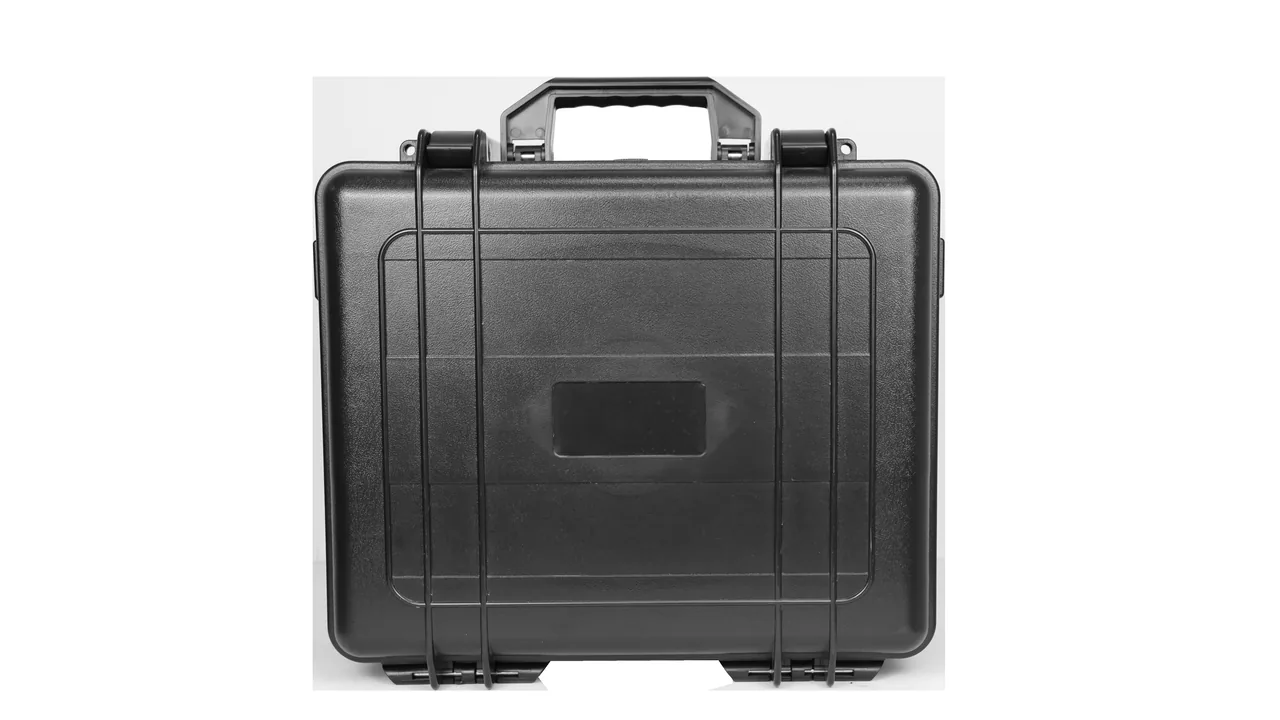
A poultry incubator is a machine that spends twenty-one days proving whether it is reliable. Once the eggs are set, the cabinet must hold temperature near 37.5 degrees Celsius, raise relative humidity in steps that follow embryo age, and turn the egg trays once every sixty to ninety minutes. Three things make that happen: temperature probes, humidity sensors, egg-turning motors with their reduction gearing, and the humidifying pans that determine moisture. When these parts travel from the factory to a hatchery, or come off a machine and go back for repair, they usually leave the protection of the assembled cabinet behind and cover hundreds or thousands of kilometres in a plain carton or a borrowed tote. JUNZHIJIA manufactures protective cases for livestock and hatchery equipment, and this article works from the manufacturer's side of the table, breaking down how incubator parts actually fail in logistics and setting out practical shell and liner solutions.
Why Incubator Part Failures Cost More Than Ordinary Machine Parts
The unusual thing about an incubator is that its output is not "does the machine turn" but "what is the hatch rate of this batch". A temperature error of a few tenths of a degree, or a humidity error of a few percentage points, is measured in whole batches of eggs rather than in individual components. That single fact separates incubator part protection from ordinary agricultural machinery packaging.
The first difference is metrological. A temperature probe is not a consumable; it is a measuring instrument, and its value comes from its factory calibration curve. Once a probe is squeezed, dampened or severely shocked in transit, the stress state of the platinum sensing element changes and the calibration curve drifts with it. That drift might be only 0.2 degrees Celsius at room temperature, but inside an incubator it becomes the temperature datum for an entire cabinet of eggs.
The second difference is moisture. Humidifying pans, water-level control valves and humidity sensors form a closed humidity loop, and contamination or scaling anywhere in that loop shifts the water output. Worse, the humidity sensor is itself a moisture-sensitive device, and it lives permanently in a high-humidity machine — a built-in contradiction that packaging must not make worse.
The third difference is electrical. Egg-turning motors, limit switches, control boards and displays are electrical parts that dislike damp, static and condensation. A sea container can swing more than twenty degrees Celsius between day and night, and the moisture inside condenses into liquid water at night, landing directly on unprotected motor end caps.
Those three differences together mean an incubator part case cannot be merely a sturdy shell. It has to deliver metrological preservation, moisture control, electrical cleanliness and mechanical cushioning at the same time, and still let parts be installed straight out of the box. This is where incubator cases part company with generic equipment cases and ordinary IP67 waterproof boxes.
In aftermarket data, arrival defects in incubator parts cluster around four causes: probe calibration curves that have drifted, humidity sensors whose response has slowed after chemical contamination or condensation, egg-turning gearboxes whose tooth contact pattern has changed after impact, and control electronics that have condensed moisture inside. All four share a defining trait — they are entirely controllable at packing time and almost irreversible after installation. Sending a probe back for recalibration consumes a hatching window, sensor zero drift cannot be corrected in the field, a changed gear contact pattern means a return to the factory for re-running, and electrostatic damage to a control board may only appear weeks later as an intermittent fault. The real value of a protective case is that it stops these irreversible failures before installation.

Four Exposure Points Along the Incubator Part Logistics Chain
To design a protective structure you first have to see where the exposure actually is. Incubator parts pass through four points on their way to installation, and the risk type is different at each one.
The first is in-plant movement and loading. The typical risk here is forklift impact and manual throwing — high energy, random direction. Protection at this stage depends on shell strength and external impact resistance: reinforcement ribs, heavy-duty hinges and adequate wall thickness.
The second is long-distance line-haul. The risk shifts from instantaneous impact to sustained vibration across a wide frequency band with most energy in the low frequencies. Sustained vibration is exceptionally good at loosening fasteners, fatiguing conductors and slowly displacing contents, so the liner has to constrain freedom in all three axes rather than just clamping downward.
The third is sea freight or movement between climate zones. Here the risk becomes temperature and humidity cycling. Container interiors can swing over twenty degrees Celsius between day and night; moisture condenses before dawn, evaporates by afternoon, and the repetition amounts to accelerated damp-heat ageing. Protection at this stage depends on the combination of sealing, desiccant and a pressure-equalisation valve.
The fourth is the customer's warehouse and pre-installation staging. Dust, oil, pests and careless manual handling dominate. What matters here is whether the case is properly re-latched and whether the liner has been tampered with. JUNZHIJIA prints a loading diagram and a reset reminder inside the lid, so even someone unfamiliar with the case can put everything back correctly.
Temperature Probes: Measuring Instruments, Not Ordinary Components
Two families of temperature probe are common on incubators: platinum resistance sensors, which offer high accuracy and good linearity and are usually placed at the cabinet's main control point, and thermistor or semiconductor sensors, which are cheaper and faster and are used for multi-point monitoring and alarm thresholds. For either family, the precondition of usefulness is that the factory calibration curve still holds on arrival.
There are three routes to transport failure. The first is mechanical stress on the sensing element. A platinum element is usually an extremely fine wire or thin-film structure encapsulated in a stainless sheath or glass tube. When the sheath takes a side load, the filler inside transmits that stress to the element and produces irreversible resistance drift. The second is damage to conductors and connectors. Probe leads are fine multi-strand wire, and the transition from sheath to lead is a stress concentration; repeated flexing breaks strands, while aviation plugs or crimped terminals loosen under drop impact, raising contact resistance and making the temperature signal fluctuate. The third is moisture ingress. Glass- or epoxy-encapsulated probes stored for long periods in warm humid air draw moisture along the encapsulation interface, lowering insulation resistance and shifting the reading.
Preserving the calibration curve matters just as much. Every probe is multi-point calibrated at the factory and issued with a calibration record or coefficients. If that record is lost, dampened or crumpled in the box, the hatchery has to send the probe out for recalibration — a cost far greater than the part itself. A protective case therefore has two jobs for probes: physically give them zero freedom inside the case, and keep the calibration documents in the same cavity as the probe body at all times.
JUNZHIJIA's approach to probe protection is separate cavity, layered placement and soft restraint. Probes never share a cavity with metal parts, so there is no direct contact at all; each probe sits in a half-round or V-shaped slot cut to its profile, with a soft pad at the base so the sheath bears load over an area rather than at a point; leads coil in a designated channel with a bend radius of no less than ten times the conductor diameter to prevent broken strands; and calibration documents go into a waterproof document pouch in the lid, matched one-to-one with the probe body.
Humidity Sensors and Humidifying Pans: The High-Humidity Paradox
The pairing of humidity sensor and humidifying pan is the most consistently underrated element of incubator part protection.
Capacitive humidity sensors dominate, and their sensing layer is a polymer film whose dielectric constant changes as it absorbs and releases water vapour. That film is extremely sensitive to chemical contamination: sulphides, chloride ions, organic solvent vapour and even plasticiser released by packaging materials react with the sensing layer and cause zero drift or sluggish response. This means a humidity sensor must never be packed in the same sealed cavity as rubber goods, foamed materials or oily tools.
The second weakness is condensation. If ambient temperature drops sharply in transit, moisture inside the case condenses on the sensor surface as a liquid film, and prolonged immersion damages the sensing layer structure. The sensor cavity therefore needs active moisture absorption rather than simple sealing. JUNZHIJIA places a replaceable desiccant cartridge and a humidity indicator card inside the sensor cavity; the card turns from blue to pink when replacement is due, letting the user judge the internal environment without any instrument.
The humidifying pan has a problem on the other side. Incubator pans are usually stainless shallow trays or engineering-plastic bodies, sometimes fitted with a heating element or ultrasonic atomiser disc. Their failures concentrate in three places: thin walls dent under compression, and dents hold water that scales faster; the ceramic element of an ultrasonic atomiser is extremely fragile and one drop ends it; and the seal at a heater fitting deforms permanently if left compressed in a dry state. In a protective case, therefore, a humidifying pan should stand upright or hang, its face bearing no load, the atomiser disc packed in its own soft box, and heater fittings capped.
We have also seen a very common scenario: a hatchery puts a removed humidifying pan, still holding residual water, straight into a case and ships it back. The water evaporates inside the sealed cavity, relative humidity climbs towards saturation within hours, and every sensor and electronic part in the same case takes on moisture. This is why the first rule in the packing procedure we issue to incubator customers is drain, blow dry, then load.
Egg-Turning Motors and Reduction Gearing: Low Speed Is Not Low Risk
The turning mechanism comprises a motor, a reduction gearbox, a drive shaft, limit switches and tray carriers. Its motion profile — low speed, high torque, intermittent — leads many people to assume it is insensitive to transport, when in fact the opposite is true.
Egg-turning motors are typically permanent-magnet synchronous or single-phase asynchronous units with an integral gearbox, and the gearbox is usually a worm drive. Worm and wheel surfaces are run-in to a close fit, and a drop impact shifts the worm axially, changing the contact pattern and producing noise and temperature rise in service. The motor shaft and gearbox input are normally keyed or grub-screwed, and impact loosens that connection, creating an angular error that shows up as incomplete turning and uneven tray tilt.
Limit switches are the metronome of the turning cycle. A mechanical limit switch has a contact travel of only a few tenths of a millimetre, so if transport compression changes its mounting angle, the turning stroke shifts with it. Too little turning leaves eggs in the same position until embryo and shell membrane adhere; too much lets eggs slide and knock against each other. Both deviations land directly on the hatch rate.
JUNZHIJIA's turning-mechanism cases follow three rules: fix the attitude, isolate the motor, box limit components separately. Motor and gearbox travel as one unit, fixed in their installed attitude so the transport load direction approaches the working load direction. A relief ring around the output shaft and shaft extension keeps the journal from bearing direct pressure, and a support block of moderate hardness beneath the worm housing spreads the motor's own weight. Limit switches, cams and adjusting screws get individual compartments, one part per compartment, never stacked.

Control Boards and Displays: Condensation Is the Silent Killer
An incubator control board integrates temperature acquisition, humidity acquisition, turning sequence control, alarm outputs and data logging. It is the machine's nervous system, and its transport damage rarely comes from mechanical shock — it comes from static and condensation.
The static source is the packaging itself. Ordinary bubble wrap and expanded polyethylene accumulate charge through friction, and if a control board is not packed in shielding, an electrostatic discharge can puncture a MOSFET gate or the input protection diode of a microcontroller. Damage of this kind often does not show up in factory testing; it appears weeks later as an intermittent fault, and the troubleshooting cost is enormous. JUNZHIJIA packs every control board in an anti-static shielding bag and specifies anti-static modified EVA or EPP for the liner, with surface resistivity held within the dissipative range.
Condensation arises from temperature difference. Parts shipped in winter from a cold region can suffer a reverse-sweat effect when opened in a warm, humid hatchery: the cold case meets warm moist air and moisture condenses instantly on cold surfaces. If a control board is bare inside at that moment, the condensate lands on the board and causes local short circuits or electrochemical corrosion. The answer is desiccant plus a humidity indicator card inside the case, together with a pressure-equalisation valve that lets gas exchange slowly so a large volume of moist air is not drawn in at the instant of opening.
How the board is fixed inside the case also matters. A board must not lie flat on the case floor; it should be raised on nylon standoffs or soft support blocks at its mounting holes so the component side spans free. Display glass goes face up, touching nothing hard, with a protective film if necessary.
Shell Material, Sealing and the Layered Moisture-Control System
Material selection for incubator part cases balances impact resistance, weight, weather resistance and cleanliness. JUNZHIJIA works with modified PP, ABS and PC alloy: PP offers toughness, chemical resistance and controlled cost, suiting bulky items such as humidifying pans and motors; ABS offers high surface hardness and dimensional stability for precision instrument contents; PC alloy excels in impact resistance for long routes with high temperature swings and many handling steps.
Sealing structure sets the ceiling on moisture protection. JUNZHIJIA uses a grooved silicone gasket on the mating face; when closed, the gasket is compressed into a continuous sealing line and the case reaches IP67, tolerating short immersion without leakage. A pressure-equalisation valve allows slow gas exchange while maintaining waterproofing and dustproofing, balancing the pressure difference caused by air cargo holds, high-altitude transport or seasonal temperature swings. One caveat is essential: IP67 only guarantees that water cannot freely enter, it does not guarantee that internal humidity will fall by itself, so desiccant inside the case is not optional. The two must be used together.
Moisture control is layered. The first layer is the gasket and the pressure-equalisation valve, blocking the route for liquid water. The second is replaceable desiccant, absorbing residual and slowly permeating vapour. The third is VCI vapour-phase-inhibitor material, forming a protective film on machined metal surfaces. The fourth is the humidity indicator card, making the internal environment visible. Each layer has its own job, and dropping any one of them will surface during a long sea voyage or cross-season storage.
Separate Sealing for the Probe Cavity and the Electronics Cavity
An incubator part case is divided by function rather than by volume, and that is a design convention JUNZHIJIA has settled into across livestock equipment work. The parts for one incubator fall into three mutually isolated zones: the metrology cavity, the electromechanical cavity and the wet-parts cavity.
The metrology cavity holds temperature probes, humidity sensors and calibration documents. Its core requirement is low humidity and cleanliness, so it carries a separate sealed cover as a second barrier, a replaceable desiccant cartridge and a humidity indicator card, and a waterproof document pouch in the lid. Liner material is chosen as anti-static EVA that does not release plasticiser, so the sensing layer is never contaminated by the packaging itself.
The electromechanical cavity holds egg-turning motors, reduction gearboxes, limit switches and control boards. Its core requirements are attitude fixing and static protection: motors fixed in installed attitude with a relief ring at the output shaft, control boards in anti-static shielding bags raised on nylon standoffs so the component side spans free. Oily parts removed from a machine should not be stored in this cavity.
The wet-parts cavity holds humidifying pans, atomiser discs, water-level control valves and line fittings. Its core requirements are residual-water isolation and fragility protection: pans upright or hanging with no face load, atomiser discs in their own soft boxes, fittings capped. A solid partition separates it from the metrology cavity so vapour cannot drift sideways.
All three cavities share one shell and one outer seal, but the internal environments are managed independently. This arrangement means that opening the case to count parts does not destroy every environment at once, and it lets a user judge cavity by cavity whether desiccant replacement is due.
Liner Forming Processes and What They Mean for Fit
The liner is the part of a protective case that actually does the work. JUNZHIJIA uses three main processes, each suited to different contents.
The first is CNC-milled high-density EVA, cut to the actual part profile. This gives the tightest fit and suits complex, precision-sensitive single items such as a complete turning motor assembly or a gearbox with a raised boss. The closed-cell structure absorbs high-frequency vibration and cushions instantaneous impact. The caveat is that density and hardness must be matched to part weight: too soft and the part shifts, too hard and the cushioning effect is lost.
The second is thermoformed EVA or EPP, pressed to shape in a mould. Batch consistency is good and production efficiency is high, making it suitable for standardised parts shipped in volume, such as egg-tray carriers and humidifying pans in fixed sizes. Ribs and recesses form in a single cycle, giving good structural rigidity, though a design change requires new tooling.
The third is a modular partition system, where the shell carries adjustable rails and insertable dividers so users can rearrange zones on site. This suits distributors holding many aftermarket part types in small quantities; flexibility is high and the trade-off is that fit is looser than a cut liner.
Whatever the process, the acceptance criteria are identical. With the case closed, the part must show no perceptible movement when the case is inverted and rocked side to side. Pressing on the liner must not leave a hard contact point at the mating face. Those two checks are simple, but they are what determines whether transport damage is actually eliminated or merely reduced.
Calibration Preservation: Probes That Arrive Ready to Install
For an incubator user, a probe that is "not broken" and a probe that is "still accurate" are two different things. The goal of calibration preservation is that a probe can be installed directly on arrival without being sent out for verification.
There are three routes. The first is physical preservation — the zero-freedom restraint and stress isolation described above, which head off calibration drift at the source. The second is documentary preservation: calibration records, coefficients and serial numbers matched one-to-one with the probe body, stored in the case and kept clean. The third is environmental preservation, keeping internal humidity low over the long term so the encapsulation interface does not absorb moisture. JUNZHIJIA fits a separate sealed cover over the probe cavity, creating a second barrier between the probe cavity and the rest of the case, so the dry environment inside survives even a brief full-case opening for counting.
For incubator OEMs shipping in volume, JUNZHIJIA recommends building the case as a machine-set kit: the probes, sensors, limit switches and small hardware for one machine laid out by assembly sequence, with a packing list inside. This shortens line-side kitting considerably and keeps part-number correspondence clear during aftermarket replacement.
Storage and the Return-to-Case Discipline for Removed Parts
Incubator use is batch-based. Setting is concentrated, and after hatching the machine often sits idle for weeks. That idle period is exactly when parts get removed, stacked and forgotten — and it is the peak season for moisture damage and knocks.
JUNZHIJIA recommends that hatcheries allocate a fixed case position for each removed probe, sensor, humidifying pan and limit switch, and return it to the case on removal rather than leaving it on a bench beside the machine. Parts go back into their original cavities so the liner fit is preserved, and probes and sensors are never mixed with oily tools. Desiccant stays in the case permanently, and the humidity indicator card is checked quarterly, replaced as soon as it turns from blue to pink.
For a machine idled between seasons, control boards and displays are best stored in the case in a cool dry place, out of direct sunlight, to slow ageing of the engineering plastic and degradation of the display polariser. Empty cases should be stored with latches released to the half-open position so the gasket is not left under permanent compression and does not lose its rebound.
It is worth a separate word on hatchery record-keeping. We suggest tying the case number to the part numbers inside on a card that travels with the case, recording the last packing date, the desiccant replacement date and the indicator card status. Staff turnover in hatcheries is often high, and a paper card is frequently more reliable than a verbal handover; when the same incubator is rotated between houses, the card lets the next person judge immediately whether the internal environment is still valid. JUNZHIJIA can leave a label area on the outside of the shell so customers can apply a QR or barcode and bring cases into an existing asset-management system. In large-scale hatchery operations this practice has repeatedly proven to reduce the hidden downtime caused by parts that cannot be found and conditions that cannot be described.
Hatch-Window Economics: Why Packaging Discipline Pays Back
It helps to price the problem, because incubator packaging decisions are often made by procurement staff who never see a hatch report.
Consider a hatchery setting 50,000 eggs per batch. A probe that arrives with 0.3 degrees Celsius of calibration drift shifts the whole cabinet's control datum. Depending on where the drift sits relative to the setpoint, the effect ranges from slightly long incubation to elevated late-embryo mortality. Even a one percent change in hatch rate is 500 chicks, and a chick that does not hatch still consumed twenty-one days of cabinet capacity, setting labour, and a share of climate cost.
A missed turning cycle is more direct. A limit switch whose mounting angle shifted by a fraction of a degree can shorten the turning stroke, and trays that stop short leave eggs in the same orientation for hours. Adhesion between embryo and shell membrane is the classic outcome, and it appears late in incubation when nothing can be recovered.
Then there is the downtime itself. A probe sent out for recalibration typically leaves the cabinet idle for days unless the hatchery holds a calibrated spare. A gearbox returned for re-running takes longer. Against that, the incremental cost of a properly designed case — a separate probe cavity, a desiccant cartridge, a pressure-equalisation valve, an anti-static bag — is a small fraction of one batch of eggs. Packaging discipline is not a cost centre; it is the cheapest insurance available against a failure mode that is invisible until it is expensive.
Transport Testing and Acceptance Points
A protective case should pass transport simulation before its design is frozen. Common bases are the GB/T 4857 series for basic transport-package tests, the ISTA series testing procedures, and the ATA 300 specification for international air transport, covering vibration, drop, stacking and pressure. When developing incubator part cases, JUNZHIJIA designs drop height and vibration spectrum around the actual loaded weight and centre of gravity, with particular attention to how the probe cavity and electronics cavity perform under extreme conditions.
Four points deserve attention at acceptance. First, liner fit against the part profile — insufficient contact allows movement. Second, seal integrity and compression — an aged or under-compressed gasket weakens the IP67 effect. Third, latch and hinge assembly strength, the weak link in any frequently opened case. Fourth, whether desiccant and humidity indicator cards are actually configured, because that determines whether users can execute the moisture-control system correctly. Beyond whole-case testing, JUNZHIJIA recommends a separate air-tightness check on the probe cavity, since its small secondary cover is opened and closed often and is the easiest leak path to overlook; in volume orders, liner slot dimensions should also be sampled against actual part profiles so that a minor part revision does not quietly reduce liner fit.
Why Choose JUNZHIJIA Incubator Part Cases
JUNZHIJIA, manufactured by Kexin New Materials (Guangdong) Co., Ltd., has long supplied custom protective cases for industrial equipment, precision instruments and livestock equipment. For poultry incubator parts, JUNZHIJIA does not supply a generic box; it supplies liner and structure designs built around the actual part profile, metrological character and transport conditions. From the separate calibration cavity for temperature probes to the dry protection cavity for humidity sensors, from the attitude fixing of egg-turning motors to the hanging placement of humidifying pans, from anti-static packing for control boards to whole-case IP67 sealing and pressure equalisation, every design detail answers a specific transport failure risk.
Drawing on engineering-plastic formulation, liner machining and sealing-structure design, JUNZHIJIA supports incubator OEMs, hatcheries and livestock equipment distributors with dependable protection. Whether the order is factory-fit packaging or standalone aftermarket spares, JUNZHIJIA can customise dimensions, liners and markings on demand, helping users cut transport losses and preserve probe metrological performance.
In practice, JUNZHIJIA starts by confirming three sets of information with the customer: the actual dimensions and weight distribution of the parts, the transport mode and approximate duration, and whether the parts will be staged on site before installation. From there the engineering team issues liner drawings and case specifications, then validates fit and sealing at the prototype stage. For OEMs, JUNZHIJIA supports a separate case specification file per machine model, so a later revision only requires changing the liner cut-outs while the shell tooling is reused, which controls long-term packaging cost. For distributors and hatchery users, JUNZHIJIA offers modular cases in standard sizes with replaceable liners, letting one case family cover several part categories and reducing the number of case variants held in stock.
Service does not stop at delivery. Where a customer is transitioning from cartons to protective cases, we normally recommend running one route as a trial: same parts, same route, one batch in the existing packaging and one in the case, with arrival inspection records compared side by side. The data that comes back — probe readings before and after, sensor response, evidence of condensation, liner condition — is what convinces a hatchery manager to standardise, and it also tells us whether the liner needs adjustment before wider rollout. Once standardised, the case becomes part of the maintenance routine rather than a one-off purchase, and the design lessons carry over to the next machine model the customer installs.
Frequently Asked Questions
Q: Why does a temperature probe lose accuracy in transit, and how does a protective case prevent it? A: There are three routes: mechanical stress on the sensing element, damage to leads and connectors, and moisture absorbed at the encapsulation interface. A platinum element sits inside a sheath, and when the sheath takes a side load the filler inside transfers that stress to the element, producing irreversible resistance drift. Probe leads have a stress concentration where sheath meets wire, so repeated flexing breaks strands, and aviation plugs loosen under drop impact, raising contact resistance and making readings fluctuate. Epoxy or glass encapsulation absorbs moisture over long humid storage, lowering insulation resistance. JUNZHIJIA answers this by cutting half-round slots to the probe profile with a soft pad beneath, so the sheath bears load over an area rather than at a point; by routing leads along a defined channel with a bend radius of no less than ten times the conductor diameter; and by placing desiccant and a humidity indicator card in the cavity. Physical restraint, lead discipline and moisture control together defend the calibration curve on three fronts at once, which is what allows a probe to be installed without a fresh verification run.
Q: Why can't a humidity sensor share a cavity with a humidifying pan? A: Because the two need opposite environments. A capacitive humidity sensor's sensing layer is a polymer film that is extremely sensitive to chemical contamination; sulphides, chloride ions and plasticiser released by packaging materials all cause zero drift or sluggish response. A humidifying pan, meanwhile, often holds residual water, and that water evaporating inside a sealed cavity drives relative humidity towards saturation within hours, condensing on the sensor surface and damaging the sensing layer under prolonged immersion. JUNZHIJIA therefore separates them: the pan stands upright or hangs in its own cavity with no load on its face and must be drained and blown dry before loading, while the sensor sits in a dry cavity fitted with a desiccant cartridge and a humidity indicator card whose change from blue to pink signals replacement. A solid partition between the two cavities keeps vapour from drifting sideways, and because the two cavities are managed independently, opening the case to count parts does not destroy the sensor environment.
Q: What problems do egg-turning motors and gearboxes suffer in transport? A: Turning mechanisms are low speed and high torque, and the risk is easily underestimated. It concentrates in three places. Worm drives are run-in to a close fit, so drop impact shifts the worm axially, changing the contact pattern and producing noise and temperature rise in service. The keyed or grub-screwed joint between motor shaft and gearbox input loosens under impact, creating an angular error that appears as incomplete turning and uneven tray tilt. And a mechanical limit switch has a contact travel of only a few tenths of a millimetre, so if its mounting angle is altered by compression, the turning stroke shifts with it. JUNZHIJIA fixes motor and gearbox as one unit in installed attitude, sets a relief ring at the output shaft and shaft extension so the journal never bears direct pressure, places a support block of moderate hardness beneath the worm housing to spread the motor's own weight, and arranges support points so the transport load direction approaches the working load direction. Limit switches, cams and adjusting screws get individual compartments, one part per compartment, never stacked.
Q: What should be watched for specifically when transporting humidifying pans? A: Humidifying pan failures concentrate in three places: thin tray walls dent under compression and the dents hold water that scales faster; the ceramic element of an ultrasonic atomiser is extremely fragile and one drop destroys it; and the seal at a heater fitting deforms permanently when left compressed in a dry state. In a case, therefore, the pan should stand upright or hang with no load on its face, restrained by the liner on all four sides but never clamped. The atomiser disc goes into its own soft box, separate from the pan body, and heater fittings are capped to keep debris out. JUNZHIJIA also stresses pre-packing preparation: a removed pan must be drained and blown dry before loading, otherwise evaporating residual water dampens every sensor and electronic part in the same case — the most common self-inflicted packing error we see at hatcheries. Keeping the wet-part cavity physically separate from the metrology cavity, with a solid partition between them, means even a mistake of that kind is contained rather than spreading across the whole case.
Q: What threatens control boards and displays most, and how does packaging respond? A: Not impact but static and condensation. Ordinary bubble wrap and expanded polyethylene accumulate charge through friction, and an unprotected board can suffer electrostatic discharge that punctures a MOSFET gate or a microcontroller's input protection diode; such damage often only surfaces weeks later as an intermittent fault after installation, and troubleshooting it costs far more than the part. Condensation comes from temperature difference: parts shipped in winter condense moisture instantly on cold surfaces when opened in a warm humid hatchery, and water on the board causes local short circuits or electrochemical corrosion. JUNZHIJIA packs every board in an anti-static shielding bag, specifies anti-static modified EVA or EPP for the liner, and configures desiccant, a humidity indicator card and a pressure-equalisation valve so gas exchanges slowly and a large volume of moist air is not drawn in at the moment the case is opened. Boards are also raised on nylon standoffs so the component side spans free and the display glass faces upward, touching nothing hard.
Q: Why does the probe cavity need a second barrier? A: Because counting and sampling during transit and storage are routine events. Once a case is opened in transit, the dry environment inside is broken, and if the probe shares a cavity with other parts, its encapsulation interface is exposed to ambient moisture at the same moment. JUNZHIJIA adds a separate sealed cover to the dedicated probe cavity, creating a second barrier between that cavity and the rest of the case, so the low-humidity environment inside survives even a brief full-case opening. This matters especially for metrological probes issued with calibration records, because calibration drift rarely happens suddenly — it accumulates through moisture absorption along the encapsulation interface, and the second barrier slows that accumulation to the point where a probe can be installed directly on arrival rather than being sent out for verification. The same cavity also holds the calibration documents in a waterproof pouch, so probe and record always travel together.
Q: What layers make up the moisture-control system of an incubator part case? A: JUNZHIJIA builds it in four layers. The first is a grooved silicone gasket plus a pressure-equalisation valve; when the case is closed the gasket is compressed into a continuous sealing line and the case reaches IP67, blocking liquid water while allowing slow gas exchange to balance the pressure difference from air cargo holds, high-altitude transport or seasonal temperature swings. The second is replaceable desiccant, absorbing residual vapour and vapour that permeates over time. The third is VCI vapour-phase-inhibitor material, providing a slow-release protective film on machined metal surfaces even if the case is briefly opened. The fourth is a humidity indicator card, making the internal environment visible so users can judge it without instruments. It is worth stressing that IP67 only guarantees water cannot freely enter; it does not guarantee internal humidity falls by itself, so sealing and desiccant must be used together, and dropping any layer will show up during long sea voyages or cross-season storage.
Q: For an incubator OEM shipping in volume, how should cases be kitted for efficiency? A: JUNZHIJIA recommends building a machine-set kit. The temperature probe, humidity sensor, limit switches, turning motor accessories and small hardware for one incubator are laid out by assembly sequence, with a packing list and part-number cross-reference inside the case. That gives four benefits. Line-side kitting time at the OEM drops markedly because nobody counts items individually; probes and their calibration records stay in the same cavity, so documents cannot be lost or dampened in transit; part-number correspondence is unambiguous during aftermarket replacement, which reduces wrong shipments and missed items; and the cavity layout itself becomes a checklist, so an operator sees at a glance whether a position is still empty before the lid goes down. For OEMs running several models in parallel, JUNZHIJIA can differentiate shells by colour or label to provide visual management without changing the liner structure, which cuts picking errors in the warehouse. Because shells are reusable across revisions, a later model change usually needs only new liner cut-outs while the existing tooling carries over.
Q: How should removed incubator parts be stored during idle periods? A: Incubators idle in batches, and that idle period is when parts are most exposed to moisture. JUNZHIJIA recommends allocating a fixed case position for every removed probe, sensor, humidifying pan and limit switch, returning each to the case on removal rather than leaving it on a bench, with parts back in their original cavities so liner fit is preserved. Desiccant stays in the case and the indicator card is checked quarterly, replaced as soon as it turns from blue to pink. A card recording the last packing date and the desiccant replacement date beats verbal handover where staff turnover is high. Control boards and displays are best stored in the case in a cool dry place, and empty cases with latches half-released so the gasket is not compressed. The next hatching season then starts with parts ready to install.
Related Reading
- Transport protection for livestock farming equipment parts
- Liner selection and vibration-damping design for precision instrument cases
- Transport protection points for sensor-type components
- Condensation control inside protective cases
- Transport protection for environmental test chambers
- IP67 protective case sealing principles and selection
- VCI liners for rust prevention in metal part storage
- Transport protection for agricultural machinery parts
- How a pressure-equalisation valve works on an equipment case