

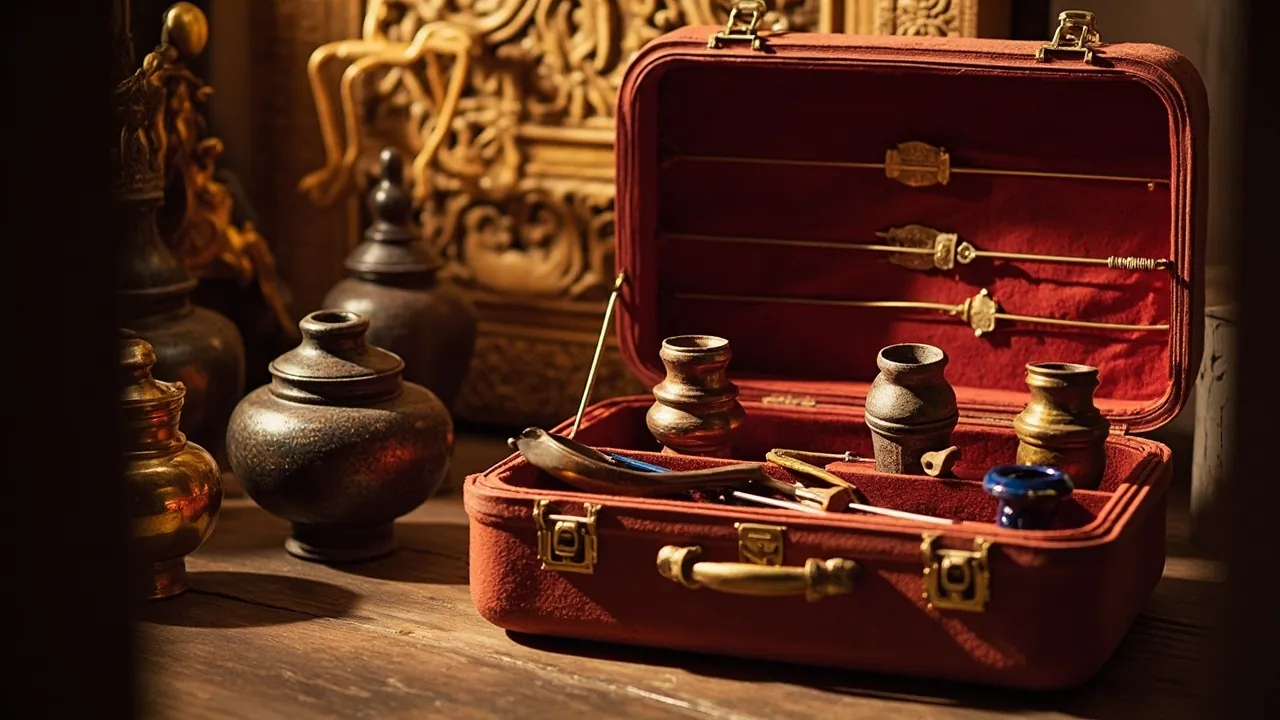
The problem a temple ritual equipment case solves is keeping censers, ritual implements, offering vessels and sutras intact in form, stable in material and clean in surface through relocation, travelling exhibitions, off-site ceremonies and long-term storage, so that they can be put back into use immediately on arrival. Temple ritual equipment differs from ordinary objects in one key respect: most of it is in active use, and its operating environment is closely coupled with its storage environment. A censer absorbs the heat and soot of daily incense burning, ritual implements take daily hand contact and striking, sutras are repeatedly unrolled and rolled at ceremonies, and textiles live for years with incense smoke and light. This means these objects are usually in some state of equilibrium from use before they are packed, and transport breaks that equilibrium: humidity change reactivates soot and residue, vibration displaces already loosened joinery, and temperature change redistributes stress between wood and lacquer.
Failure in this category has three characteristics. First, it is latent. A soot layer on a bronze censer, fine internal cracks in a wooden fish drum, slight embrittlement at the edge of a scroll are often not detectable at packing inspection, and the real change happens in transit. Second, it is cumulative. A small displacement in one move can be amplified in the next, and repeated temperature and humidity cycles age materials step by step until a threshold is crossed and visible damage appears. Third, it is irreversible. Cracking in wood, pitting in bronze, embrittlement in paper and mould on textiles generally cannot be returned to the original state.
The core of packaging design for temple ritual equipment is therefore not "packing things properly" but establishing a controlled microclimate and mechanical environment in which change is as small as possible and, crucially, detectable. That requires bringing material assessment, cleanliness state, relative humidity, sealing class, retention method and handling procedure into one scheme, rather than answering only the question of what size case everything fits into.
This article is written for guest managers, storekeepers and artifact custodians at temples and religious sites, manufacturers and wholesalers of religious goods and ritual implements, logistics and engineering service providers handling temple renovation, relocation and off-site ceremonies, and managers at related cultural institutions. It covers category composition and material sensitivity, censer and bronze treatment, vibration isolation for implements and percussion instruments, acid-free enclosure for sutras, textile and offering vessel protection, microclimate and humidity control, mould and pest prevention, sealing class selection, insert partitioning and retention, large object handling, transport test references, and packing and acceptance procedures. All figures are industry-typical or empirical ranges; condition assessments, custodian requirements and destination regulations always take precedence. JUNZHJIA can support temple ritual equipment applications with part-specific soft retention inserts, acid-free and low-migration padding configurations, microclimate humidity-control schemes, and OEM/ODM supply with inspection documentation.
Table of Contents
- 1. Why temple ritual equipment needs a dedicated case: from movable to usable on arrival
- 2. Category and material sensitivity map
- 3. Censers and incense utensils: bronze corrosion, soot and residue
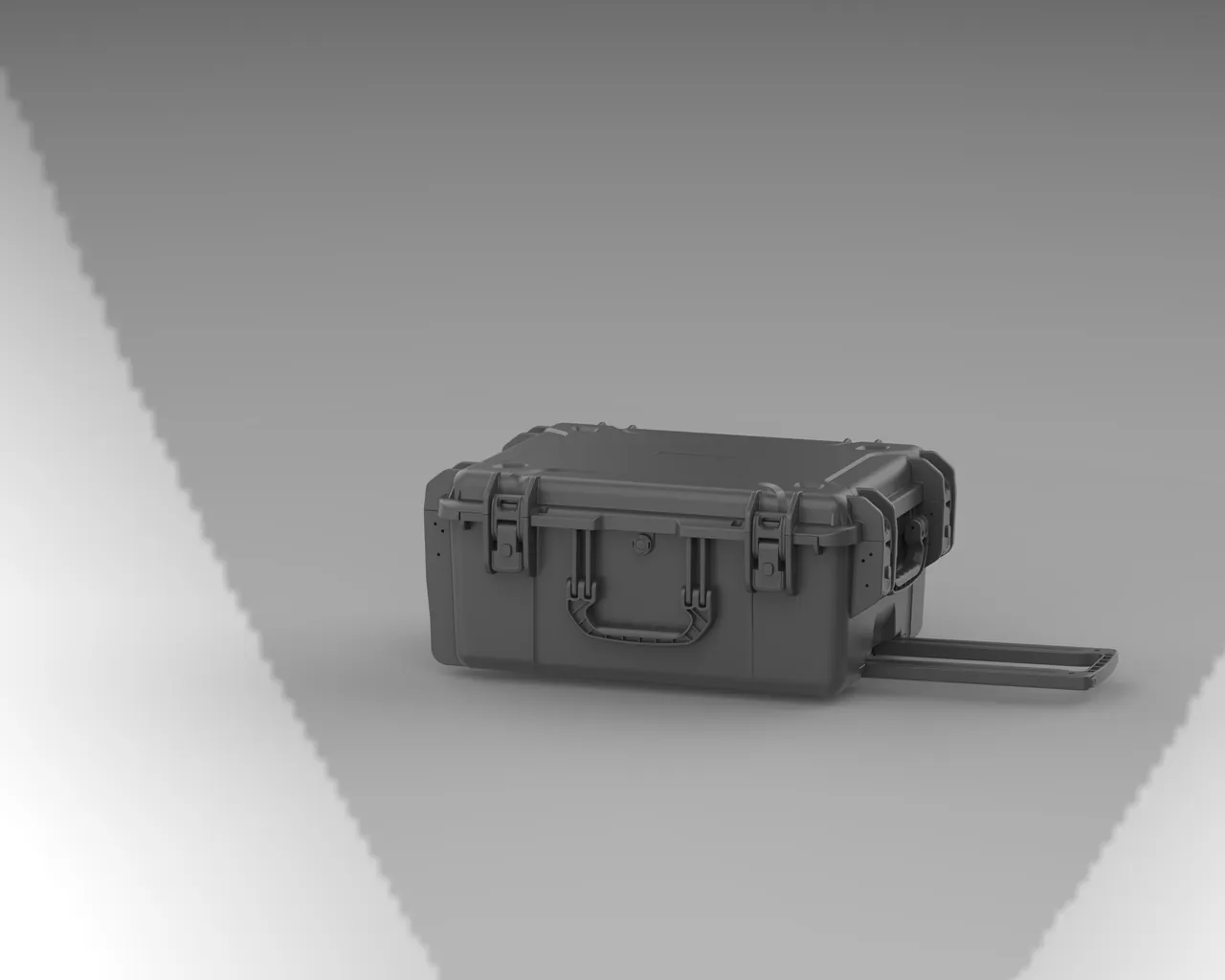
- 4. Implements and percussion instruments: vibration and isolation for drums, bowls and bells
- 5. Sutras and books: acid-free materials, rolling versus flat packing
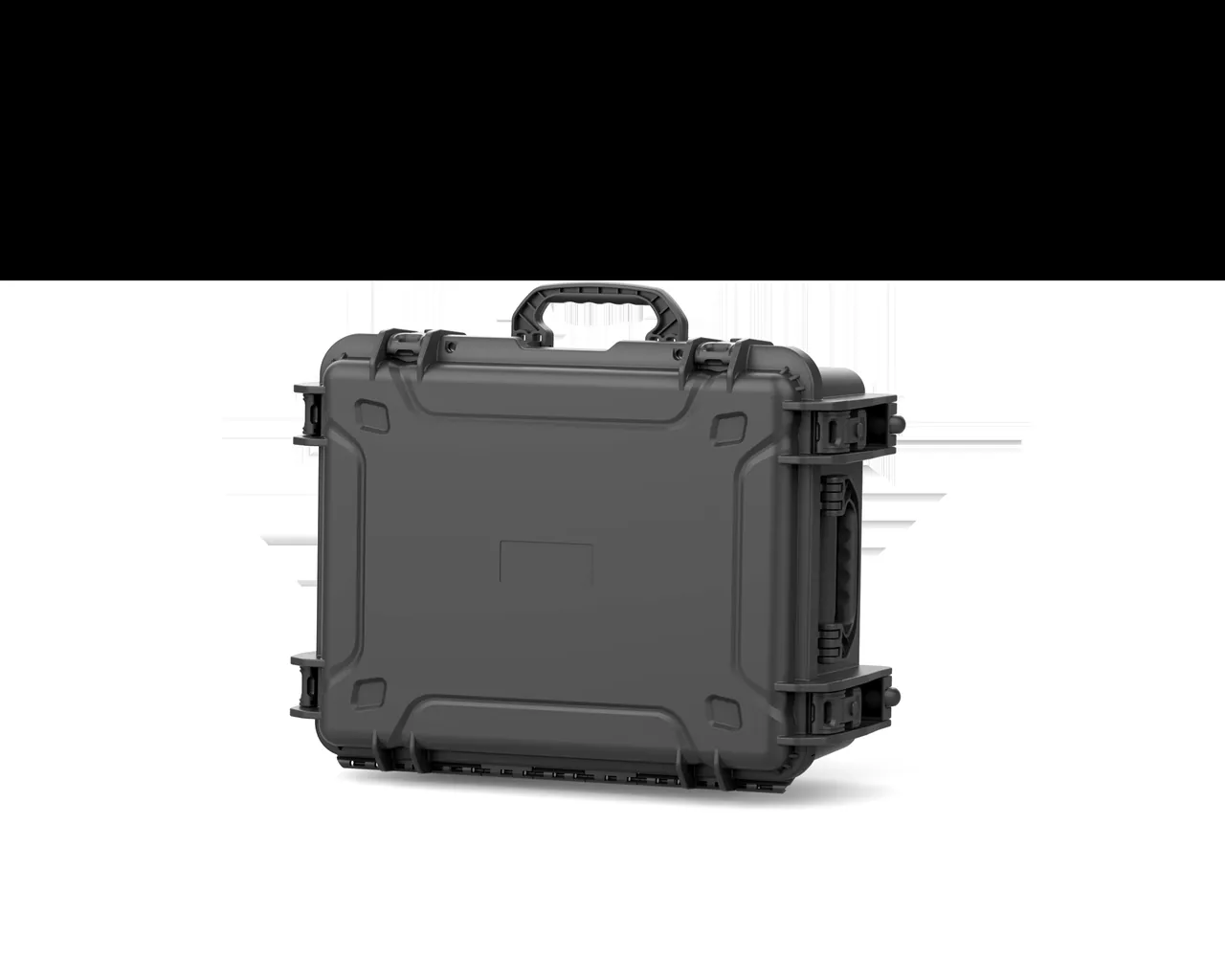
- 6. Offering vessels and lamps: glass, ceramic and oil protection
- 7. Textiles: banners, hangings, curtains and table covers
- 8. Microclimate and relative humidity control: buffering materials and desiccants
- 9. Mould and pest prevention: pre-packing treatment and in-transit monitoring
- 10. Sealing and ingress protection: IEC 60529, GB/T 4208 and IP65/IP67
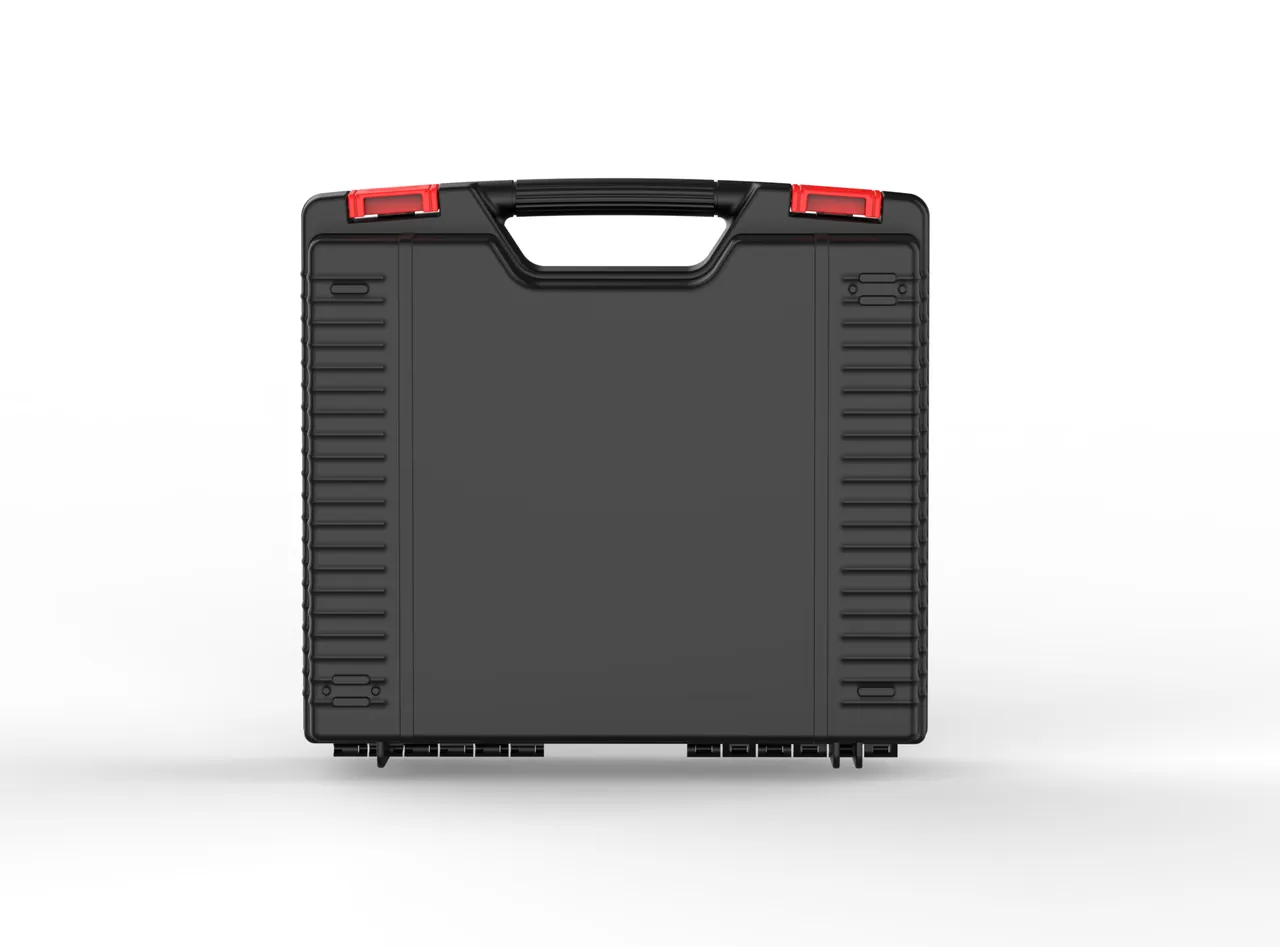
- 11. Insert partitioning and retention: brittle items versus heavy items
- 12. Large objects and long items: bells, drums and structural components
- 13. Transport and handling test references: ISTA, GB/T 4857, ASTM D4169 and MIL-STD-810H
- 14. Packing SOP, handling and goods-in verification
- 15. Procurement evaluation and the OEM/ODM customisation path
- Frequently Asked Questions
- Conclusion & Related Reading
1. Why temple ritual equipment needs a dedicated case: from movable to usable on arrival
In real temple relocation, hall renovation and off-site ceremony work, fitting everything in and being able to move it is often treated as the whole requirement. From an object protection standpoint, that is only the starting point.
First, the use history of temple ritual equipment determines where the weak points sit. A bronze censer in service for years has developed a composite surface layer of oxide, soot and oils. The stability of that layer depends on environmental conditions; once relative humidity rises or the surface contacts sulphur-bearing material, the metal beneath may continue reacting and show up as pitting and local blackening. A wooden fish drum struck daily may carry internal fatigue cracks invisible to the eye, and transport vibration extends them. A scroll repeatedly unrolled and rolled has edges more brittle than its centre, and bending stress at packing will fracture that zone first. The starting point for design is therefore not nominal dimensions and weight but use history and existing condition.
Second, objects in active use require a reversible scheme that can be reused repeatedly. Temple ritual equipment may be sent out and returned several times a year, and an over-complicated scheme will be simplified or abandoned by users. A good scheme has few handling steps, unambiguous return positions, no re-wrapping each time, and immediate countability on opening.
Third, the temple environment affects material selection. Halls where incense burns continuously have airborne sulphides and organic acids. Some sites are humid, and some have wide diurnal temperature swings. All of these affect the internal microclimate, so sulphur-bearing, acidic and high-outgassing materials should be excluded.
One principle repeatedly validated in practice: the packaging objective should move from transport safety to a maintained state with detectable change. The former asks only whether an object broke. The latter also asks whether a material-level change occurred across the journey, and whether that change can be detected in time.
The underlying principles are covered in shock-absorbing case design logic and protection logic for antique and collectible cases.
2. Category and material sensitivity map
Temple ritual equipment spans an enormous range, from prayer beads weighing a few grams to a bronze bell weighing tonnes. The table below maps typical materials, dominant sensitivity, principal failure modes and preferred protection by category, as a starting point for partition design and scheme classification.
| Category | Typical material | Dominant sensitivity | Principal failure mode | Preferred protection |
|---|---|---|---|---|
| --- | --- | --- | --- | --- |
| Censers and incense utensils | Bronze, brass, iron, ceramic, stone | Humidity, sulphides, soot residue | Pitting, blackening, surface layer loss | Surface cleaning and drying, sulphur-free isolation, humidity control |
| Candlesticks and lamp stands | Bronze, iron, wood, ceramic | Oil residue, humidity | Oil migration, metal oxidation | Degreasing, acid-free padding, individual compartments |
| Singing bowls, bells and gongs | Copper alloy, iron | Impact, humidity | Cracking, deformation, tone change | Individual suspension or soft retention, no mutual contact |
| Wooden fish drums and wooden implements | Hardwood, lacquered wood | RH fluctuation, insect attack | Cracking, lacquer lifting, insect damage | Stable RH, protection from light and heat, pest control |
| Drums and drum stands | Wood, leather, metal hoops | Humidity, tension change | Slackening or over-tensioning of the head, body cracking | Stable tension, avoid abrupt change, upright retention |
| Sutra books and scrolls | Paper, mounted textile | Humidity, acidic materials, insects and mould | Acid yellowing, mould, insect damage, blocking | Acid-free enclosure, humidity control, pest and mould prevention |
| Offering vessels and water vessels | Ceramic, porcelain, metal | Impact, localised stress | Chipping, cracking, leakage | Individual compartments, double soft restraint |
| Banners, hangings, curtains and table covers | Silk, cotton and linen, embroidery | Light, humidity, folding stress | Creasing, thread breakage, dye transfer, mould | Rolled or flat, acid-free interleaving, light protection |
| Prayer beads and small ornaments | Wood, seeds, bone and horn, jade | RH fluctuation, friction | Desiccation cracking, abrasion, loss | Compartmented trays, humidity control, set-based counting |
| Temple bells and large implements | Bronze, cast iron | Lifting stress, impact | Body damage, suspension structure damage | Purpose-built cradle, multi-point support, lifting plan |
| Beams, columns and building components | Wood, stone | Humidity, localised stress | Cracking, edge chipping, joinery damage | Support boards, full wrapping, item-by-item marking |
| Ritual utensils and stationery | Wood, metal, paper | Differential response of mixed materials | Joint failure, detached parts | Whole-object soft restraint, no point loading |
One important pattern follows: composite objects and paper-textile combinations are the highest-risk groups in temple ritual equipment. Composite objects fail because different materials respond to relative humidity at different rates, so joints are the first to show adhesive failure and displacement. Paper-textile combinations fail because paper and textile have similar sensitivity to humidity, light and contact materials, so once the microclimate goes out of control, damage occurs in both at once.
3. Censers and incense utensils: bronze corrosion, soot and residue
Censers are the most frequently used and most complex-surfaced objects in temple ritual equipment.
Soot and oil form a composite layer on a censer surface. Years of incense burning deposit soot particles that mix with hand oils, incense ash and the metal's own oxide layer to form a structurally complex surface. That layer may be relatively stable in its original environment, but two risks arise during transport: vibration displaces loose soot particles that then abrade the surface beneath, and rising humidity activates the hygroscopic fraction of the layer, driving localised corrosion underneath. Pre-packing treatment is therefore critical.
The treatment principle is to remove loose material and retain the stable layer:
- Remove loose soot and ash. Use low-vacuum suction with a soft brush on the interior and surface. Do not use water-based cleaning and do not use chemical agents.
- Remove oils and fingerprints. Wear clean powder-free gloves throughout. Chlorides and organic acids in fingerprints become localised corrosion origins.
- Dry completely. Any cleaning must be followed by complete drying before packing, particularly inside the bowl and in structural crevices.
- Do not intervene beyond the packaging scope. Whether a surface oxide layer needs stabilisation is a professional judgement. A packaging scheme should not include chemical treatment that could alter the object's state.
Residual heat in incense utensils is easily overlooked. A censer may have just been used before packing, with the body and ash still warm. Residual heat raises local humidity and causes condensation inside a sealed case, so the object must cool to ambient temperature before packing. A cooling confirmation step should be added to the packing record.
Retention should use conforming soft support. A censer typically has feet, handles and a rim, and none of these should carry dynamic load in transit. Support the main weight with a soft cradle conforming to the bowl body, restrain on four sides with soft material, and avoid concentrated load at the handles and feet.
4. Implements and percussion instruments: vibration and isolation for drums, bowls and bells
Implements and percussion instruments are the most collision-sensitive items in temple ritual equipment: they must not only survive intact, they must sound unchanged.
The main risks for metal implements such as singing bowls, bells, gongs and cymbals are mutual contact and localised stress. Most are thin-walled or edge-formed metal items, and a single hard contact can deform an edge or initiate a fine crack, either of which changes tone. The governing rules are therefore: each item in its own compartment, no mutual contact, compliant contact faces, and no concentrated load at edges or thin walls. Large singing bowls are best supported in a suspended or semi-suspended soft arrangement; small bells and cymbals belong in individual recesses with soft padding.
The main risks for wooden implements such as the wooden fish drum, clappers and wooden handles are RH fluctuation and impact. Wood swells and shrinks with relative humidity, and a drum struck over years may carry internal fatigue cracks that vibration extends. Hold relative humidity at 45 to 55 percent, avoid abrupt temperature change, use conforming soft support, and avoid concentrated pressure at the rim of the drum opening.
Drums need particular treatment. A drum comprises a wooden body and a leather head whose humidity responses are entirely different: the body swells and shrinks with humidity while the leather changes tension as it absorbs and releases moisture. Rising humidity makes the leather absorb moisture, expand, lose tension and drop in pitch; falling humidity makes it contract, increase tension and can even tear the head. Drum transport should therefore hold relative humidity stable in the mid band, avoiding sharp fluctuation and prolonged high temperature. A drum should not be laid flat under its own weight, since sustained self-loading alters the roundness of the body. Upright retention with axial restraint is preferable, with soft isolation between the stand and the body to prevent mutual compression.
Isolation between implements requires physical separation, not loose fill. Packing several implements into one space with loose fill is the most common error in this category: the fill redistributes under vibration, the objects migrate towards each other and eventually collide, and the fill may shed particles onto the surfaces. Rigid dividers and individual recesses achieving true physical separation are the correct approach.
5. Sutras and books: acid-free materials, rolling versus flat packing
Sutra books, scrolls and paper-based documents impose the strictest requirements on contact materials and microclimate.
Paper degradation is a chemical process. Cellulose hydrolyses under acidic conditions and oxidises under oxidative conditions, both yellowing the paper, embrittling it and reducing its strength, with moisture and temperature accelerating both pathways. Enclosure of paper objects therefore has two basic requirements: contact materials must be acid-free or buffered, and the microclimate must be stable with no frequent humidity fluctuation.
On material assessment, the frameworks used for archival and imaging enclosure materials are a useful reference. ISO 18916 addresses enclosure materials for imaging materials and provides methods such as the photographic activity test for assessing whether a material releases harmful substances. The same approach applies to selecting materials for long-term contact with paper, with the specific application determined together with the object's condition and the custodian's requirements.
The choice between rolling and flat packing depends on condition:
| Object type | Recommended form | Reasoning | Notes |
|---|---|---|---|
| --- | --- | --- | --- |
| Intact scroll in original roll | Maintain the original roll | Avoids introducing new stress by changing form | Core diameter must not be reduced, outer acid-free wrap |
| Single-leaf sutra or album leaf | Flat | Avoids creasing and bending stress | Limited stack height, rigid boards, acid-free interleaving |
| Mounted scroll and handscroll | Judge by mounting condition | Roll when the mounting is sound, flat when fragile | Image face inward, cushioning layer, fold clear of text |
| Already embrittled paper | Flat on a support board | Avoids any bending or unsupported loading | Handle by the board, never lift by one corner |
| Objects with rods or rollers | Maintain the existing structure | Avoids deforming rods under load | End retention separately, never suspend the roll |
| Bound sutra sets in multiple volumes | Upright or flat in compartments | Supports sequential counting and return | Compartment per volume, volume numbering, no stacking |
One easily overlooked detail is surface accretion. A scroll surface may carry incense ash, oil staining, old repair material or mould residue. Such accretion can detach and relocate under vibration, or reactivate as humidity rises. A qualified conservator should assess condition and carry out necessary treatment before packing. A packaging scheme is not a substitute for professional judgement.
The completeness of a sutra set needs structural support. The most common problem in handling multi-volume sets is volumes getting out of order. Fixed slots numbered by volume, with the volume range and total marked on the outside of the case, make any missing or misplaced volume immediately apparent.
6. Offering vessels and lamps: glass, ceramic and oil protection
Offering vessels and lamps include water vessels, offering bowls, candlesticks, lamp stands and various light fittings, in ceramic, glass, metal and wood.
The core risk for brittle items such as ceramic, glass and porcelain is impact and localised stress concentration. These materials absorb almost no energy, so the approach rests on two things: extending impact duration to lower peak acceleration, and avoiding localised stress concentration. In practice that means full wrapping rather than point contact; double soft restraint with a conforming inner layer and a resilient outer layer; individual compartments preventing mutual contact; and no loose fill as retention.
Oil is a specific problem for lamp items. Oil lamps and candlesticks may carry oil residue after long use, and in transit that oil can flow as temperature rises, contaminating adjacent objects or the insert. Two requirements follow: complete degreasing and drying before packing, and strict separation from oil-absorbing materials such as textiles and paper. Where complete degreasing is not possible, use a separately sealed compartment.
Leakage risk in water vessels and offering bowls should be assessed. If residual water is present, temperature difference can drive leakage. Drain and dry thoroughly before packing, and assess whether any cavity cannot be fully drained.
Handling convenience for offering vessels matters too. These items are retrieved frequently during ceremonies, so partition design should support one-handed retrieval and quick return, and should never require moving other objects to reach the target. This aligns with the principle that fewer handling actions mean fewer damage opportunities.
7. Textiles: banners, hangings, curtains and table covers
Textile ritual items include banners, hangings, curtains, table covers, cushion covers and various embroideries. They degrade through light, humidity, folding stress and their own weight.
Creasing and thread breakage are the most common damage. A textile folded under sustained pressure accumulates stress at the fold line, causing local fatigue and thread breakage, and a humid environment accelerates this markedly. The approach should be built on reducing folds and reducing compression:
- Rolling suits large-format textiles without rigid support. Use acid-free paper or inert film as the inner layer, keep the core diameter from being too small, apply even tension and avoid localised stretching.
- Flat packing suits smaller textiles, or those with embroidery or rigid ornaments. Interleave acid-free paper, limit the stack to three layers or fewer, and use rigid boards to spread the upper weight.
- Avoid long-distance hanging transport. A textile's own weight under vibration applies sustained tension along warp and weft, which can distort it.
Dye transfer and metal ornaments are two additional risks. Dark and light textiles in direct contact can transfer dye under humid conditions. On textiles with metal ornaments, an isolation layer should sit between metal and fabric, and sulphur-bearing materials must not contact the metal.
The temple environment compounds these effects on textiles. Textiles in a hall where incense burns continuously may carry soot and oil deposits that make them more hygroscopic and more likely to attract contaminants. Remove loose deposits by low-vacuum suction before packing and ensure complete drying.
Light exposure is an overlooked degradation factor. Visible and ultraviolet light embrittle fibres and fade dyes. Textiles in storage and transport should therefore be protected from prolonged sunlight through transparent case walls, or use a light-blocking outer layer.
8. Microclimate and relative humidity control: buffering materials and desiccants
Microclimate control is the most central part of temple ritual equipment transport.
Why stability matters more than the absolute value. For most materials, the damage is caused not by a particular humidity level but by rapid change and repeated fluctuation. Wood and bone crack under abrupt humidity change, textiles develop stress, metals undergo repeated condensation and drying cycles, and paper hydrolyses faster. The first objective of humidity control is therefore to reduce the amplitude and frequency of fluctuation, and only second to hold the average within a suitable band.
The value of buffering materials is often underestimated. Silica gel materials, acid-free boards and certain natural fibres absorb and release moisture, buffering ambient fluctuation. Their role is not to lower humidity but to slow the rate of change inside the case, so the object experiences a smaller excursion.
A humidity control scheme normally has four components:
- Setting the target band. Determine it from the most sensitive material present. Metal and textile items generally sit at 45 to 60 percent RH; wooden objects are best at 45 to 55 percent; paper objects should be held stable at 45 to 55 percent; drums, combining leather and wood, need the mid band with tightly limited fluctuation.
- Desiccant sizing. Calculate from free internal volume, transit duration and destination climate. Note that desiccant continuously lowers humidity, and for wooden and paper objects an excessive quantity can over-dry the contents, so slow-uptake products combined with humidity indicator monitoring are preferable.
- Humidity indicator cards. A combined card at 40, 50 and 60 percent RH allows a judgement at opening. Place the card where air circulates, and in a partitioned case place one in each main zone or provide connecting air paths.
- Temperature control. Temperature change drives humidity change. Avoiding direct sunlight and heat sources reduces the diurnal humidity swing inside the case.
Temperature and humidity coupling is discussed further in case design for extreme temperature environments, and pressure-related opening difficulty in pressure equalisation valve configuration.
9. Mould and pest prevention: pre-packing treatment and in-transit monitoring
Mould and pest damage are the least recoverable categories of loss for temple ritual equipment in long storage and long-distance transport.
Mould requires three conditions simultaneously: suitable humidity, suitable temperature and a usable nutrient source. The packaging stage directly controls humidity. Where internal relative humidity stays above roughly 65 percent, mould risk rises markedly, and high humidity plus condensation from temperature fluctuation amplifies it. Humidity control is therefore both physical and biological protection.
Pest risk comes from two directions. An object may already carry eggs or larvae that hatch in favourable conditions, and packaging materials, particularly timber outer cases, paperboard and natural fibre padding, may themselves carry or attract pests. Outer cases and insert materials should come from suppliers with fumigation or heat-treatment records, and materials should be confirmed clean and pest-free before packing.
Practical preventive measures include:
- Inspection and cleaning before packing. Focus on crevices, joinery, the interior of rolls and textile folds. Remove dust by low-vacuum suction rather than solvents that may leave residue.
- Complete drying. Ensure complete dryness before packing so moisture is not sealed into the case.
- Material selection. Prefer inorganic or inert materials as direct-contact padding, and avoid natural fibre materials that could serve as a pest nutrient source in contact with objects.
- A cautious approach to chemical treatment. Treatments carrying residue risk should be carried out by qualified personnel under the custodian's requirements. A packaging scheme should not include chemical treatment steps that could affect the object or its users.
- Monitoring in transit and on arrival. Fit a humidity indicator card inside the case, and where appropriate place temperature and humidity logging and pest monitoring devices in the use or storage environment.
One recommendation specific to temple settings: soot and oil deposits from continuous incense burning provide an additional nutrient condition for some pests and moulds. Removing loose deposits thoroughly before packing serves both appearance and biological protection.
10. Sealing and ingress protection: IEC 60529, GB/T 4208 and IP65/IP67
IEC 60529, with GB/T 4208 as the corresponding Chinese standard, describes enclosure protection with two digits: the first for solid foreign objects and dust, the second for water. IP65 means dust tight and protected against water jets. IP67 means dust tight and protected against short immersion. IP6X denotes the highest dust protection class.
For temple ritual equipment the selection logic runs as follows:
| Scenario | Main risk | Recommended class | Notes |
|---|---|---|---|
| --- | --- | --- | --- |
| Short transfer within a hall or temple | Dust, incense ash, minor impact | IP54 class is adequate | Focus on insert and retention, high sealing unnecessary |
| Intercity road transport | Dust, rain, humidity fluctuation | IP65 | Dust and water jet protection at reasonable cost |
| Ocean and multimodal freight | Deck humidity, rain, prolonged high humidity | IP67 | Long-term exclusion of external moisture |
| Long-term storage in humid regions | Mould, metal corrosion | IP67 plus humidity control | Sealing must pair with humidity control |
| Chains with sharp temperature swings | Condensation, pressure difference | IP65 or IP67 plus pressure equalisation valve | Accommodates sealing and ease of opening |
| High-volume packing of paper and textiles | Humidity fluctuation, pests and mould | IP65 plus humidity control plus scheduled inspection | High sealing needs scheduled inspection and desiccant replacement |
One principle must be stressed: an ingress protection rating describes the enclosure's protection against the outside, not the internal microclimate. An IP67 case excludes external moisture while locking internal moisture in. If objects or inserts carry moisture at packing, a highly sealed case becomes a mould incubator. For high-volume paper and textile consignments this matters especially: a high-sealing scheme must be paired with thorough pre-packing drying, sufficient desiccant, and a defined schedule for inspection and desiccant replacement.
11. Insert partitioning and retention: brittle items versus heavy items
Internal case design for temple ritual equipment is essentially about allocating objects of differing sensitivity to different mechanical and microclimate zones.
Retention for brittle items aims at low-stress constraint, not zero displacement. Industrial spares are often locked in place with rigid blocks and preload. Applied to brittle objects, preload and hard contact create localised stress and increase crack risk. The correct approach is: conforming support with the largest feasible contact area; soft restraint instead of rigid retention, permitting slight movement that dissipates energy through deformation; restraint points clear of weak features such as rims, narrow necks, thin walls and protruding handles; and control of acceleration rather than added rigidity.
Retention for heavy items must combine load carrying with displacement prevention. For censers, large implements and stone components, retention design outranks cushioning design. Key points include continuous support underneath to carry the weight and avoid point loading; retention both laterally and vertically so that the item cannot jump and land during emergency braking or a drop; and marking of lifting points and centre of gravity on the case.
Three sequencing rules apply when items share a case: heavy items low, brittle items central, soft items outward; rigid dividers between adjacent compartments; and no hard-to-hard direct contact within one compartment.
Partition design must map onto the manifest. Fixed slots by category, with the manifest reference and total item count marked on the outside of the case, are advisable. For sets such as multi-volume sutras or implement groupings, provide fixed positions with sequence numbers. A structured partition makes any missing or misplaced item apparent from the structure itself rather than relying on human memory.
One frequently overlooked design detail is the retrieval path. If reaching one object requires moving two others, operators will inevitably simplify the procedure in daily use, increasing damage probability. Walk the retrieval sequence with actual users at design stage and treat minimum handling actions as a design criterion.
Material and fabrication differences are covered in liner and case material comparison and custom insert fabrication and form-taking, and partition structures in removable divider system design.
12. Large objects and long items: bells, drums and structural components
Temple renovation and relocation involve large and very heavy objects beyond what can be cased, such as bronze bells, large drums, structural beams and columns, and stone carvings.
The protection logic for large objects is not the case but the lifting and support plan. Their handling is normally carried out with purpose-built cradles, support tooling and lifting plans. Key points include:
- Load path assessment. Large objects have defined load-bearing locations from their design, and handling must act on those locations, not arbitrary ones. A bell body for example is normally carried by its suspension structure, so assess whether that structure can take the dynamic transport load and build external support tooling to share it where necessary.
- Multi-point support with compliant contact. Support should be distributed over several points with compliant contact faces to avoid localised stress. Never allow metal to contact metal directly.
- Limit acceleration and tilt. Large objects have high inertia, so acceleration and tilt during lifting, transport and landing must be tightly controlled, with tilt indicator labels fitted for later assessment.
- Restraint against displacement. The transport vehicle or cradle needs a reliable retention and lashing plan, with protective padding at lashing contact points to prevent strap marks and coating damage.
- Process records. Lifting, transport and landing should have image records and handover signatures to define responsibility points.
The key requirement for long items such as beams, columns, poles and long-handled implements is bow control. Support at two or more points with spacing not too wide prevents the middle from sagging into a bow. Ends and joinery should be separately protected so they do not become load paths, and curved cradles matching the tube or section geometry are preferable to flat rigid supports that create line contact.
The key requirements for stone carvings and components are corner protection and edge chipping prevention. Stone is strong but sensitive to localised impact, so corners should be wrapped with thickened padding, large flat faces should not contact rigid supports directly, and handling should use specified lifting points and purpose-built tooling. For stone components with existing cracks or old repairs, a qualified person should assess before handling, with external constraint tooling added where necessary.
13. Transport and handling test references: ISTA, GB/T 4857, ASTM D4169 and MIL-STD-810H
Validation of temple ritual equipment transport has one special feature: risk cannot be fully cleared by testing substitute loads alone.
The four commonly used reference families are:
| Reference | Nature | Application to this category |
|---|---|---|
| --- | --- | --- |
| ISTA series | International transport packaging test procedures | Structural validation of the case, covering drop, vibration, compression and concentrated impact |
| GB/T 4857 series | Chinese basic transport packaging tests | Domestic and baseline export validation, and easier carrier communication |
| ASTM D4169 | Distribution cycle performance testing | Sequences assembled for a full distribution chain, suitable for multimodal routes |
| MIL-STD-810H | Environmental test methods | Provides temperature, humidity, vibration and shock method frameworks, cited as an environmental test reference, not a military certification |
Three execution recommendations. First, validate the structure with equivalent specimens: build ballast equivalents matching the actual objects in weight, centre of gravity and envelope, and run vibration, drop and compression testing with the same case and insert design to verify retention reliability. Second, cover the chain's temperature and humidity profile: ocean routes should include humid heat or temperature-humidity cycling, because mould, oxidation and paper embrittlement are humidity-driven rather than impact-driven. Third, lock the outcome into drawings and operating procedures: once the design passes, fix insert material and density, partition dimensions, desiccant specification and quantity, and sealing and latch part numbers, and re-validate if substitutions are later proposed. Test procedures are covered in ISTA transport test procedures and GB/T 4857 transport packaging essentials.
14. Packing SOP, handling and goods-in verification
Before packing:
- Complete a condition assessment and record it, capturing baseline images and noting pre-existing damage.
- Have qualified personnel carry out necessary cleaning and stabilisation; remove loose soot, ash and oil; ensure complete drying and cooling to ambient temperature.
- Confirm the case and insert are dry, clean, odour-free and pest-free, and check seals, hinges and latches.
- Verify the manifest against actual quantities, particularly volume and sequence numbers of set items.
- Prepare clean powder-free gloves, acid-free interleaving, inert padding, desiccant and a humidity indicator card.
During packing:
- Place items according to the partition drawing: heavy first, lower first, rigid first.
- Confirm each object contacts the insert over a conforming area, with no hard points, no unsupported spans and no excessive preload.
- Handle composite objects separately, avoiding contact between them; keep textiles away from metal, and wood away from oil-bearing items.
- Fit desiccant and the humidity indicator card by zone, and record the initial reading, packing date and packer.
After closing:
- Close latches to the specified torque, avoiding one-sided over-compression that locally crushes the seal.
- Fit a tamper-evident seal and mark the case with this way up, keep dry, do not invert and handle with care, marking the centre of gravity and lifting points where applicable.
- Log the case number, object list, image record and handover person.
During handling:
- Use the specified handling method. Single-point lifting, throwing and inversion are prohibited.
- Use purpose-built cradles and tooling for long items and large objects, working to the specified lifting points and angles.
- Use tilt indicator labels and, where fitted, temperature and humidity logging so conditions can be assessed afterwards.
On arrival:
- Inspect the outer case for deformation, damage and water staining, and check seals and tilt indicator labels.
- Read the humidity indicator card immediately on opening to judge whether the transit environment was abnormal.
- Allow acclimatisation. Where the destination climate differs substantially from the origin, let the case stand closed or partly opened for a period before removing objects.
- Check against the list and inspect each item, focusing on new oxidation and fingerprint marks on metal, new cracks in wood, integrity of lacquer and gold layers, drum head tension, textile fold lines, moisture and mould on paper, and the state of composite joints.
- Have qualified personnel confirm condition, complete the image record and sign acceptance.
- Clean and store packaging materials properly. For cases in long-term circulation, keep a maintenance record, covered in how to clean and maintain a protective case and protective case service life and maintenance.
15. Procurement evaluation and the OEM/ODM customisation path
Procurement evaluation for temple ritual equipment cases should be structured around six dimensions, each with evidence requested.
- Material compliance documents. Acid-free, low-sulphur and low-migration declarations; composition statements for direct-contact materials; flammability basis such as UL94 rating where applicable.
- Customisation and form-taking capability. Three-dimensional form capture for irregular objects, soft retention design capability, sampling lead time and batch consistency control.
- Microclimate capability. Method for setting the target humidity band, basis for desiccant sizing, humidity indication configuration and zoned air path design.
- Structural reliability. Design life and spare parts availability for hinges, latches and seals; pressure equalisation configuration; load-bearing and lifting structure for heavy cases.
- Batch consistency. Insert material density and hardness ranges, dimensional tolerances and incoming inspection plan, with criteria modelled on batch acceptance sampling.
- Service and confidentiality. Confidentiality requirements for unique objects, delivery and installation support, and user training.
On the OEM/ODM path, one efficient practice is to give the supplier an object list with material composition and use frequency. Whether each object is held long-term or sent out frequently, whether it is single-material or composite, and whether counting is required by set will determine the scheme far more than a dimensional drawing alone. JUNZHJIA can support temple ritual equipment applications with part-specific soft retention insert design, acid-free and low-migration padding configurations, microclimate humidity-control schemes, sealing and pressure equalisation structure selection, and OEM/ODM supply with inspection documentation.
Frequently Asked Questions
Q: What is the fundamental difference between a temple ritual equipment case and an ordinary industrial equipment case?
A: The difference is not strength but protection objective and material compatibility. An industrial equipment case exists to prevent functional damage, judged by whether equipment operates correctly. A temple ritual equipment case exists to maintain an object's existing state, judged by form integrity, material stability, surface cleanliness, unchanged tone, and an unremarkable microclimate record. Three specific differences follow. First, material compatibility requirements are stricter: direct-contact materials must be acid-free, low-sulphur and low-migration, because bronze blackens from sulphides, paper yellows and embrittles from acids, and textiles discolour from plasticiser migration. Second, microclimate control becomes a core specification, because degradation in wood, leather, paper and textiles is driven mainly by relative humidity fluctuation rather than impact. Third, the scheme must be reversible and suited to repeated use, because most objects are in active service and a cumbersome scheme will be simplified or abandoned. In addition, the continuous incense burning of a temple leaves soot and oil deposits that must be specifically removed before packing, a consideration that does not exist in industrial equipment case work at all.
Q: A bronze censer in use for years has a soot and oxide layer. Should it be cleaned off?
A: The principle is to remove loose material and retain the stable layer, and to leave the judgement to professional assessment. Three levels apply. The first level is what must be removed: loose soot, incense ash and oil, which absorb moisture and relocate under vibration to abrade the surface beneath. These should be removed by low-vacuum suction with a soft brush, never with water-based cleaning and never with chemical agents, and clean powder-free gloves should be worn throughout to avoid fingerprints becoming corrosion origins. The second level is what must be confirmed: whether the object is completely dry and cooled to ambient temperature, because residual heat causes local humidity rise and condensation inside a sealed case, and residual moisture becomes the origin of mould and corrosion. The third level is what requires professional judgement: among surface oxide layers, a stable, uniform and protective layer is part of the object's history and should not be removed on site, while unstable and actively developing corrosion products need assessment by qualified personnel to decide whether stabilisation is required. A packaging scheme should not include chemical treatment steps that could alter the object's state.
Q: Why do drums cause problems in transport, and how should they be handled?
A: A drum's structure makes it unusually sensitive to humidity. It comprises a wooden body and a leather head whose responses to relative humidity differ completely: the body swells and shrinks with humidity while the leather changes tension as it absorbs and releases moisture. Rising humidity makes the leather expand, lose tension and drop in pitch; falling humidity makes it contract, increase tension and, in severe cases, tear the head. The first task in drum transport is therefore to hold relative humidity stable in the mid band, typically 45 to 55 percent, with tightly limited fluctuation and no prolonged high temperature or direct sunlight. A drum should not be laid flat under its own weight, since sustained self-loading alters the roundness of the body; upright retention with axial restraint is preferable, with soft isolation between stand and body to prevent mutual compression. Before packing, confirm the head is sound with no pre-existing cracking or repair, and assess any such features separately. Transport testing should also emphasise temperature and humidity cycling, because for drums the humidity profile is usually more destructive than vibration and shock.
Q: Should sutras be rolled or laid flat?
A: It depends on the object's condition and cannot be generalised. An intact scroll already accommodates being rolled, and changing its form introduces new stress, so the original roll should be maintained with the core diameter unchanged, an acid-free outer wrap, and placement in an individual tube position or curved cradle to prevent rolling and compression. Single-leaf sutras and album leaves are better laid flat, avoiding creasing and bending stress, with acid-free interleaving, limited stack height and rigid boards to spread the load. Mounted scrolls and handscrolls need assessment by mounting condition: where the mounting is sound and provides support, rolling is feasible, but the image should face inward, a cushioning layer should be added, and folds must clear text and image. Where the mounting is fragile or the painting already shows cracking, lay it flat on a support board, avoiding any bending or unsupported loading. Paper that is already visibly embrittled must be handled on a board at all times and never lifted by a single corner. In every case, a qualified conservator should assess surface accretion such as incense ash, oil staining and old repair material before packing, since these can relocate under vibration or reactivate as humidity rises.
Q: Why is a higher sealing class not necessarily better?
A: This is one of the most common misjudgements in ritual equipment packaging. Under IEC 60529 and GB/T 4208, the two digits describe an enclosure's protection against solids and water. A higher sealing class keeps external moisture out more effectively, but it equally traps internal moisture in. If objects or inserts carry moisture at packing, a highly sealed case locks that moisture inside and establishes a stable high-humidity environment, directly raising the risk of mould, metal corrosion and paper degradation. This is especially dangerous for mixed consignments of paper, textile, leather and wood, because the suitable relative humidity band for all of these sits in the middle range, while high sealing combined with residual moisture keeps internal humidity high for a long period. The correct approach is to design sealing and humidity control as one system: complete cleaning and full drying first, then size desiccant from transit duration and destination climate, fit a humidity indicator card, and only then determine the sealing class. Short transfers within a hall or temple are served by IP54 class, intercity road transport commonly uses IP65, and only ocean freight and long-term humid storage warrant IP67. For high-volume paper and textile consignments, even a high-sealing case needs a defined cycle for opening, inspection and desiccant replacement.
Q: Why are composite objects the highest risk?
A: Because different materials respond to the same environmental change at different rates and amplitudes, and the difference concentrates at the weakest point, the joint. Take a lacquered wooden shrine with metal fittings. The wood swells and shrinks with relative humidity, the metal barely responds to humidity at all, and the lacquer layer shrinks at yet another rate. When humidity fluctuates, relative movement and stress develop between the three, and joints are the first to show adhesive failure, displacement and loosening. Where nails or pins are used, wood shrinkage also reduces their grip. A drum is another example: the humidity responses of wooden body and leather head are in opposite directions, so a humidity change alters both body dimensions and head tension simultaneously. Three responses apply. First, set the humidity target to the stable band that minimises differential response rather than the optimum for one material, typically 45 to 55 percent RH with tightly controlled amplitude. Second, restrain the object as a whole with compliant material rather than concentrating restraint on one material's components, especially avoiding load on protruding metal fittings or slender wooden members. Third, allow a slightly looser fit with added friction damping so joints do not carry additional shear from excessive restraint stiffness. Where an object carries earlier repairs, have a qualified conservator assess the stability of the repair materials first.
Q: Large objects such as temple bells and structural beams cannot be cased. How should they be protected?
A: The protection logic differs from casing and centres on the reliability of the lifting and support plan. Five points apply. First, load path assessment: large objects have defined load-bearing locations from their design, and handling must act on those, for example a bell body is normally carried by its suspension structure, so assess whether that structure can take dynamic transport load and build external support tooling to share it where necessary. Second, multi-point support with compliant contact: distribute support over several points with compliant contact faces to avoid localised stress concentration, and never allow metal to contact metal directly. Third, limit acceleration and tilt: large objects have high inertia, so acceleration and tilt during lifting, transport and landing must be tightly controlled within design limits, with tilt indicator labels fitted for later assessment. Fourth, restraint against displacement: the transport vehicle or cradle needs a reliable retention and lashing plan with protective padding at lashing contact points to prevent strap marks and coating damage. Fifth, process records: lifting, transport and landing should have image records and handover signatures to define responsibility points. For stone components with existing cracks or old repairs, a qualified person should assess before handling, with external constraint tooling added where necessary.
Q: How can a packaging scheme be judged genuinely effective? Are there quantifiable acceptance criteria?
A: Build criteria along two lines: structural validation and condition validation. For structural validation, use ballast equivalents matching the actual objects in weight, run vibration, drop and compression tests on the ISTA, GB/T 4857 or ASTM D4169 sequences with the same case and insert design, and confirm that retention holds, inserts produce no displacement or hard points, heavy items do not jump, and the test covers the chain's temperature and humidity profile, with humid heat or temperature-humidity cycling added for ocean routes. For condition validation, establish a before-and-after comparison mechanism: record baseline images, the initial humidity indicator reading and any pre-existing damage before packing; on arrival read the card, check against the manifest, and inspect item by item for new oxidation and fingerprint marks on metal, new cracks in wood, integrity of lacquer and gold layers, drum head tension, textile fold lines, moisture and mould on paper, and the state of composite joints, completing an image record and signature. The passing configuration should then be frozen into drawings and operating procedures, locking insert material and density, partition dimensions, desiccant specification and quantity, and sealing and latch part numbers, and re-validated if substitutions or cost reductions are later proposed. MIL-STD-810H can serve as the method framework for temperature, humidity, vibration and shock, cited as an environmental test reference rather than a military certification.
Conclusion & Related Reading
A temple ritual equipment case is fundamentally a systems problem: using engineering means to maintain an object's existing state. It is not judged by how robust the case is, but by whether objects still carry the form and material condition they had on departure: no new oxidation or fingerprints on metal, no new cracks in wood, intact lacquer and gold layers, correct drum head tension, no new creases or dye transfer in textiles, no moisture or mould on sutras, and no adhesive failure or displacement at composite joints. For censers and bronze items, the priorities are surface cleaning, complete drying and sulphur-free isolation. For implements and percussion instruments, they are individual compartments, no mutual contact and conforming soft support. For sutras and paper, they are acid-free materials and reduced bending. For textiles, they are rolling or flat packing with light protection. For large objects, they are load path assessment, multi-point support and restrained lashing. The shared baseline is acid-free, low-sulphur, low-migration materials, a stable and detectable microclimate, and a traceable process.
The implementation path has four steps. First, complete a condition assessment and item list, establishing material composition, use frequency and existing damage. Second, determine materials and the microclimate scheme, settling acid-free and low-sulphur materials, the relative humidity target band, desiccant sizing and indicator cards. Third, validate structural reliability, using equivalent specimens on ISTA, GB/T 4857 or ASTM D4169 sequences, with MIL-STD-810H methods for temperature, humidity and vibration where relevant. Fourth, establish packing, handling and goods-in verification SOPs, so that the scheme is executed and recorded on site. JUNZHJIA can support all four steps with part-specific soft retention insert design, acid-free and low-migration padding configurations, microclimate humidity-control schemes, and OEM/ODM supply with inspection documentation.
Related Reading