

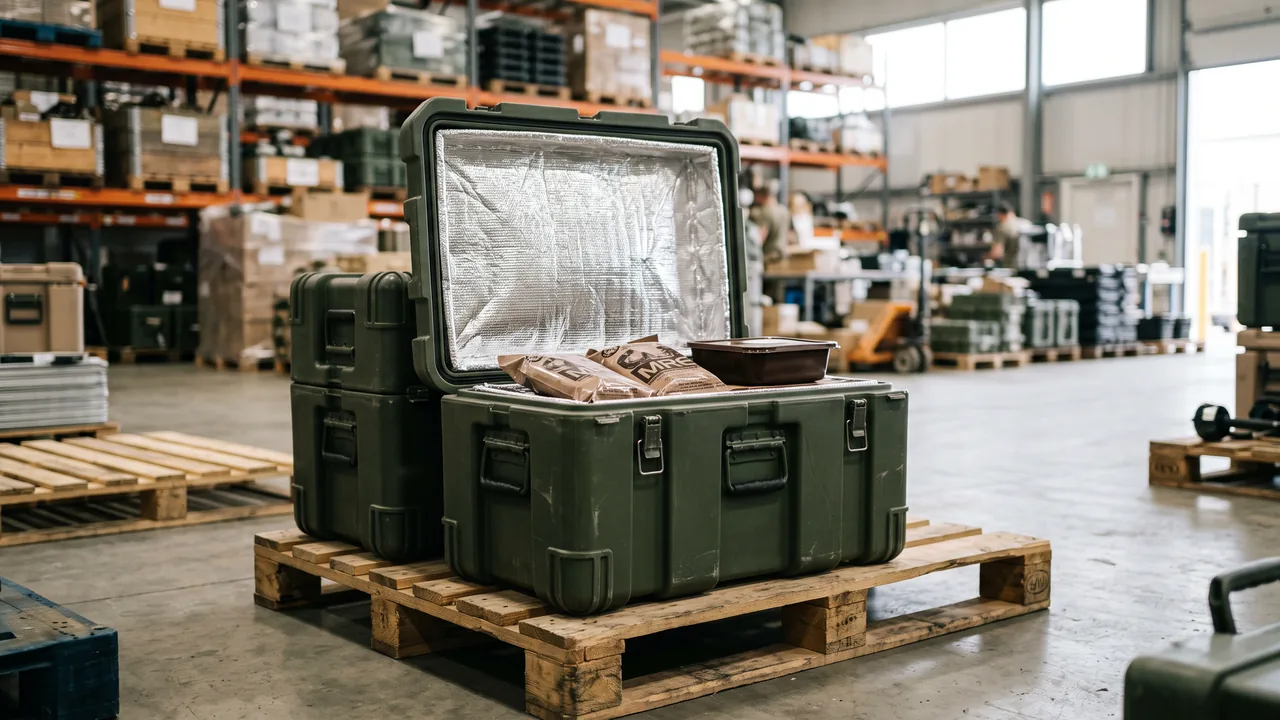
Crusher spares at quarries and aggregate plants are among the hardest cargoes in heavy industry to package: individual pieces are heavy, profiles carry tapers and teeth, the material is hard but low in toughness, and the delivery point is often a mine site with no paved road. The core conclusion compresses into one sentence: jaw crusher jaw plates, cone crusher mantles and bowl liners, screen media, and crusher bearings must travel in purpose-built cases designed around four rules, which are zero contact between tooth and cone faces, independent location for every single piece, load transfer along the case floor, and rust protection maintained throughout a mud and water environment, so that on arrival at the mine one lift puts the part in place with no fitting work. The practices seen in the field include binding two jaw plates tooth to tooth with steel wire rope, standing a bowl liner in a flatbed with only a timber chock, rolling screen mesh into a tight tube in a corner, and dropping new bearings still in their cartons into an open yard shed; on arrival the tooth peaks are crushed, the cone face carries score marks, the screen tension edge is permanently buckled, and the bearing raceways show false brinelling. The rework and downtime that follow cost far more than the spare parts themselves.
Equipment departments at aggregate producers, mine spare parts traders, and crusher OEMs all confront the same conflict. Spares carry high value, geometry is irregular, single-piece weight ranges from a few tens of kilograms to three tonnes, and the shipping route is usually a relay of factory loading, road vibration, open yard storage, and a second transfer at the mine. Ordinary wooden crates collapse under a luffing jib hook, general steel frames cannot stop tooth faces from striking each other, and packaging with no moisture control leaves whole patches of rust on machined faces after a single rainy season. This article works through four core component families, jaw plates, cone liners, screen media, and bearings, and sets out a complete plan covering rigging, liner cavities, case load paths, lashing, mud environment rust protection, and transport validation, with comparison tables for load bearing and protection parameters that procurement and engineering teams can lift directly into technical agreements and packing specifications.
Table of Contents
- Typical Failure Modes in Quarry Crusher Component Shipping
- Tooth Face and Mounting Face Protection for Jaw Crusher Jaw Plates
- Cone Face Protection for Cone Crusher Mantles and Bowl Liners
- Flatness Retention and Anti-Deformation Packing for Screen Media
- Rust and Vibration Protection for Crusher Bearings and Bearing Shells
- Lifting and Dedicated Rigging for High-Wear Metal Components
- Securing and Lashing for Heavy-Load Transport
- Rust and Moisture Design for Outdoor Mud and Water Environments
- Impact and Puncture Resistant Liner Selection
- Case Structure and Load-Bearing Capacity Design
- Sealing and Drainage for Mud and Water Environments
- Vibration and Shock Validation Methods
- Mixed-Load Zoning and Packing List Control
- Receiving Inspection and Pre-Installation Re-Check
- FAQ
- Conclusion and Further Reading
Typical Failure Modes in Quarry Crusher Component Shipping
Transport damage to crusher spares differs fundamentally from damage in other industries: parts are rarely broken, they are crushed or rusted. The first mechanism is contact damage on tooth and cone faces. When two jaw plates are stacked tooth to tooth, the tooth peaks become the only contact points and concentrate stress under vibration. Manganese steel work-hardens, but once a tooth peak is crushed there is no way back to the original interlocking tooth form, and the crushing efficiency and product size distribution suffer directly. The second mechanism is permanent distortion of curved parts from inadequate support. Mantles and bowl liners are large-diameter thin-wall cones, and if they rest on their rim edges only with the middle unsupported, long road vibration gradually introduces an out-of-round deviation. Once installed, the backing layer between liner and cone body varies in thickness, which produces uneven wear and abnormal vibration. The third mechanism is buckling of the screen tension edge. Woven mesh and polyurethane panels are tensioned at the edges by hooks or bolts, and if the roll diameter in transit is too small, the tension edge takes on a wavy buckle that cannot be flattened on site. The fourth is false brinelling and corrosion of bearings. A large spherical roller bearing that sits still while vibrating develops indentations where rollers meet raceways, and moisture during open storage first forms rust on raceways and cages; both show up after installation as noise and abnormal temperature rise.
Understanding these four mechanisms is the starting point for evaluating a quarry crusher spare parts case. The table below places the failure focus, protection action, and rigging requirements of the four core families side by side so each item can be checked individually.
| Component family | Typical size and weight | Primary failure focus | Individual protection | Rigging and fixation |
|---|---|---|---|---|
| --- | --- | --- | --- | --- |
| Jaw crusher jaw plate | 300-1500 kg per plate | Tooth peak crushing, wedge seat bruising | Timber or polyurethane tooth guards | Use the dedicated lifting hole or a pin; never sling wire around the teeth |
| Cone crusher mantle | 400-2500 kg per piece | Oval distortion of the cone face, chipping at the feed opening | Ring support inside, soft wrap outside | Stand on a profiled cone seat; never lay flat and stack |
| Cone crusher bowl liner | 500-3000 kg per piece | Score marks on the cone face, distorted bolt holes | Soft plugs in every hole, PE film on the cone face | Retaining rings top and bottom, locked axially |
| Screen media | 20-120 kg per panel | Buckled tension edge, stretched apertures | Lay flat or roll to large diameter, edge guards | Layered flat with dividers between; no sharp folds |
| Crusher bearings and shells | 50-600 kg per set | False brinelling on raceways, cage corrosion | Keep the original packing, add VCI film, locate radially | Limit axially and radially; never stack axially |
Tooth Face and Mounting Face Protection for Jaw Crusher Jaw Plates
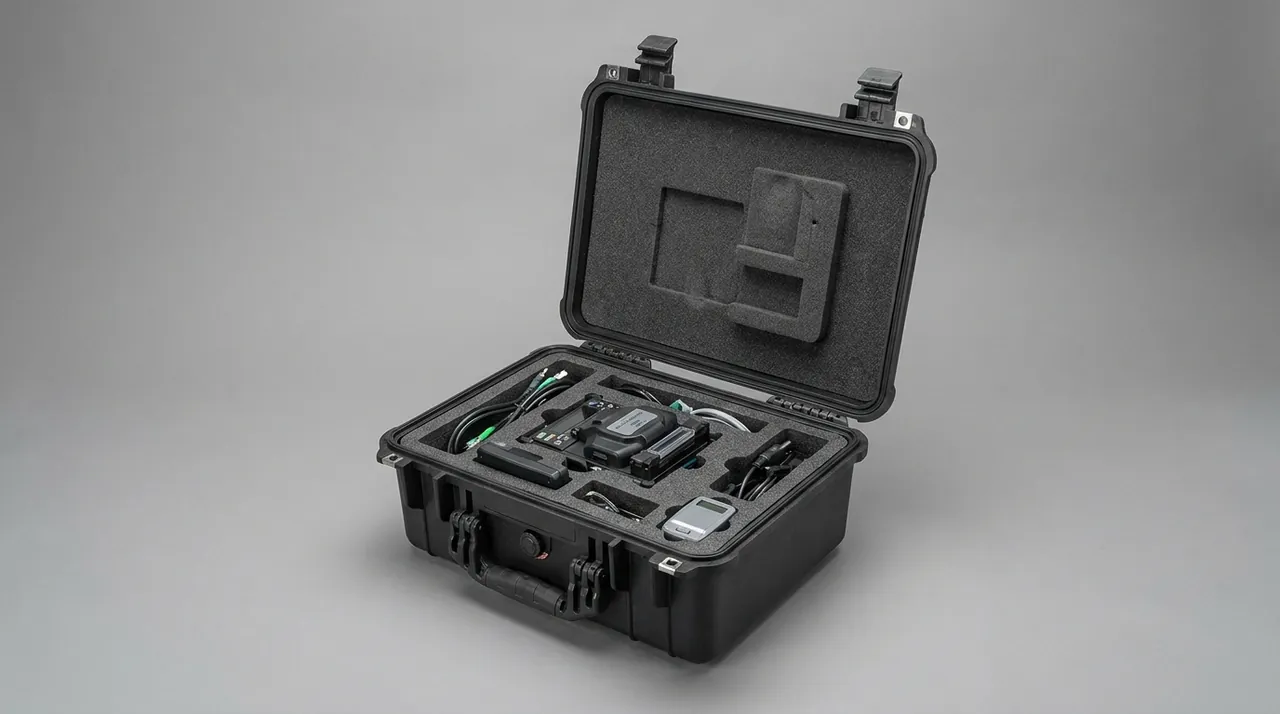
The jaw plate is the most critical wear part in a jaw crusher and comes as a fixed jaw plate and a moving jaw plate, usually cast in austenitic manganese steel to GB/T 5680 and supplied in chamber profiles such as trapezoidal, triangular, or corrugated tooth form. Its transport difficulty lies in being sensitive on two faces at once. The tooth face is the working surface that contacts rock, and crushing a tooth peak changes both the effective discharge opening and the nip angle. The back face mounts against the wedge and toggle seat, and a flatness deviation there lets the plate shift and work loose inside the frame.
The first action is tooth face isolation. Tooth faces of two plates must never touch directly. The correct method is a soft interlayer matched to the tooth profile. For trapezoidal and corrugated teeth, low-pressure polyethylene tooth guards can be pressed into the valleys, or a moulded polyurethane facing can be applied across the whole surface, with thickness set so the valleys fill without the peaks carrying direct load. Where a batch shipment is cost sensitive, plywood between eight and twelve millimetres thick, grooved to follow the valleys, can be clamped between the two tooth faces; the timber deforms first and acts as a sacrificial layer. Whatever method is used, rigid point-to-point contact between tooth faces is not acceptable.
The second action covers the mounting face. Jaw plate backs are normally milled or ground to seat against the wedge, so this face should point outward during packing, carry a PE protective film, and be kept off the case wall by soft blocks. The four corners are the most likely spots to be struck during lifting, so corner guards are worth adding. Bolt counterbores and wedge mounting holes should take soft plugs or short bolts so no other hardware can enter and distort a hole mouth.
The third action is a correct lifting method. Jaw plates usually leave the factory with a handling hole that must be preserved and used as the only lifting point. For sizes without one, a dedicated clamp with flexible jaw liners should grip the two long sides, and wire rope must never be passed around the tooth face, because the stress concentration from a rope hitch is enough to crush a tooth tip in a single lift. Where jaw plates travel with cone liners and other high-wear items, the general rigging rules in the crushing and screening wear-part case apply, and the governing principle is that rigging never contacts a working surface.
Cone Face Protection for Cone Crusher Mantles and Bowl Liners
The mantle and bowl liner are the core wear parts of a cone crusher, mounted on the moving cone body and the adjustment ring, and the gap between liner and substrate is filled with epoxy backing or a zinc alloy pour. Cone face accuracy therefore governs whether the backing layer thickness is uniform. These two families share a profile of large diameter, thin wall, and strong taper, with single-piece weight typically between 400 and 3000 kilograms, and the economics of transport protection depend entirely on whether the support design is sound.
The heart of the support design is a profiled cone seat. A mantle should stand upright on a seat matching its inner cone face, made from rigid polyurethane or laminated timber, with a contact wrap of at least 180 degrees so the liner's own weight spreads along the cone face instead of concentrating at a few points. A bowl liner is the opposite case: it stands upright inside a profiled outer ring, with a soft facing on the inner surface of the ring to prevent scoring the cone face. Neither liner may be laid flat and stacked, because lying flat leaves only the two generator lines in contact with the floor or dunnage while the middle spans unsupported, and road vibration gradually introduces permanent oval distortion.
Liner edges and bolt holes need dedicated treatment as well. If hardware strikes the bolt holes in a bowl liner flange during transit, the hole mouth burrs over and the bolts will not pass during assembly, so every hole should take a tapered soft plug that does not protrude past the flange face. The feed opening rim at the top of a liner is a thin-wall free edge with low impact resistance, so a rigid ring guard or an elastic edge wrap should be fitted. Machined cone faces should be coated with a thin rust-preventive grease and covered with PE film before packing, and the film needs to lie flat: a crease traps a pool of grease that becomes a localised corrosion spot during long storage.
For long ocean routes or repeated transfers, each liner is best given its own reusable upright cradle, with forklift pockets and lifting lugs on the cradle, so the liner never leaves its cradle between packing, forklift movement, and final positioning, which turns three separate lifts into one. This idea of a cradle that travels with the part parallels the approach in a ball mill liner transport case, except that cone liners demand far more contact continuity, and the wrap angle of the cradle must exceed half the circumference.
Flatness Retention and Anti-Deformation Packing for Screen Media
Screen media are the most frequently replaced items on an aggregate line and include 65Mn spring steel woven mesh, stainless steel woven cloth, polyurethane panels, and rubber panels. They share a profile of low weight but large area, low stiffness, and extreme sensitivity to flatness. Screening efficiency depends directly on the planarity of the tensioned mesh, and once the surface takes on a wavy buckle or a stretched zone, material accumulates in the low spots and both screening efficiency and throughput fall together.
Packing method for woven mesh depends on panel size and aperture. Small and medium panels should be laid flat in layers, with five millimetre cardboard or thin plywood between each layer, a rigid cover board on top, and a stack height preferably under 300 mm, because a taller stack makes the lower panels carry the weight above and buckle elastically. Where a large panel must be rolled, the roll diameter should be at least 400 millimetres, with a rigid core tube inside, and small tight rolls and sharp folds are not acceptable, since a fold creates permanent plastic deformation in the wire at that point. Each roll should be strapped at both ends so it cannot unwind during transport.
Polyurethane and rubber panels are somewhat flexible, yet their hook slots and bolt holes still deform under compression. They should be laid flat on soft support blocks, with edge guards over the hook slots, and bound as a stack with soft pads between strap and panel so the strap cannot press a crease into the surface. Where a metal frame is exposed, it needs rust treatment before packing, because panels regularly meet wash water and a corroded frame will separate from the polyurethane layer.
Screen media should not share a bay with jaw plates, liners, or other heavy items. Where case space forces a mixed load, place screen media on the top layer and separate it completely from heavy items with a rigid divider at least 1.2 times the stack height. A slotted tiered layout, as used in a vibrating screen component case, manages different panel specs in separate vertical slots, which uses space better and avoids the handling damage that comes from digging through a pile to reach a specific panel.
Rust and Vibration Protection for Crusher Bearings and Bearing Shells
Crusher bearings are large heavy-duty units, typically spherical roller bearings, cylindrical roller bearings, and tapered roller bearings, along with the bronze and babbitt shells used in cone crusher eccentric assemblies. The dominant risk in transit is not impact but micro-movement wear while standing still and corrosion in a warm humid environment. When a bearing sits still under continuous vibration, the contact patch between roller and raceway undergoes repeated minute elastic deformation that accumulates into brinelling, known in the trade as false brinelling. It looks similar to rust pitting but has a different cause and is irreversible, showing up after installation as cyclic vibration and temperature rise.
The key actions for vibration protection are to keep the original packaging intact, add external cushioning, and limit movement in both directions. Large bearings leave the factory with rust-preventive paper and a dedicated carton, and these should be preserved wherever possible, with cushioning added around them, rather than stripping the original packing and dropping the bearing into a generic cavity. Where a custom case is used, the bearing needs axial and radial stops so no clearance remains between bearing and case, preventing transport vibration from being amplified by the case structure and transmitted into the raceway. Bearings must not be stacked axially or allowed to contact other heavy parts, and one bearing per bay is the ideal arrangement.
Rust protection needs three cooperating layers. The inner layer is the factory rust-preventive oil film, which must not be wiped off. The middle layer is VCI film, wrapping the bearing together with its original packing and heat sealed so the inhibitor maintains a protective atmosphere in the enclosed space. The outer layer is desiccant plus a humidity indicator card, dosed by case volume at an experience value of eighty to one hundred and twenty grams per cubic metre, taking the upper end for long ocean voyages. Bronze shells and babbitt shells need separate thought, since copper alloys suffer selective corrosion in ammonia or sulphur bearing environments, while babbitt is sensitive to compression and should lie flat with the whole back arc supported on soft pads, never stood on edge or stacked.
Bearing inspection should happen immediately on opening, focusing on raceway indentations, cage distortion, and whether the rust-preventive wrapping has failed, with the humidity card reading recorded. Where false brinelling is suspected, measure radial clearance with a dial gauge and check rotational freedom before installation, and only proceed once operation is confirmed smooth. General guidance on desiccant dosing and humidity card interpretation for long ocean routes is set out under sea freight packaging requirements.
Lifting and Dedicated Rigging for High-Wear Metal Components
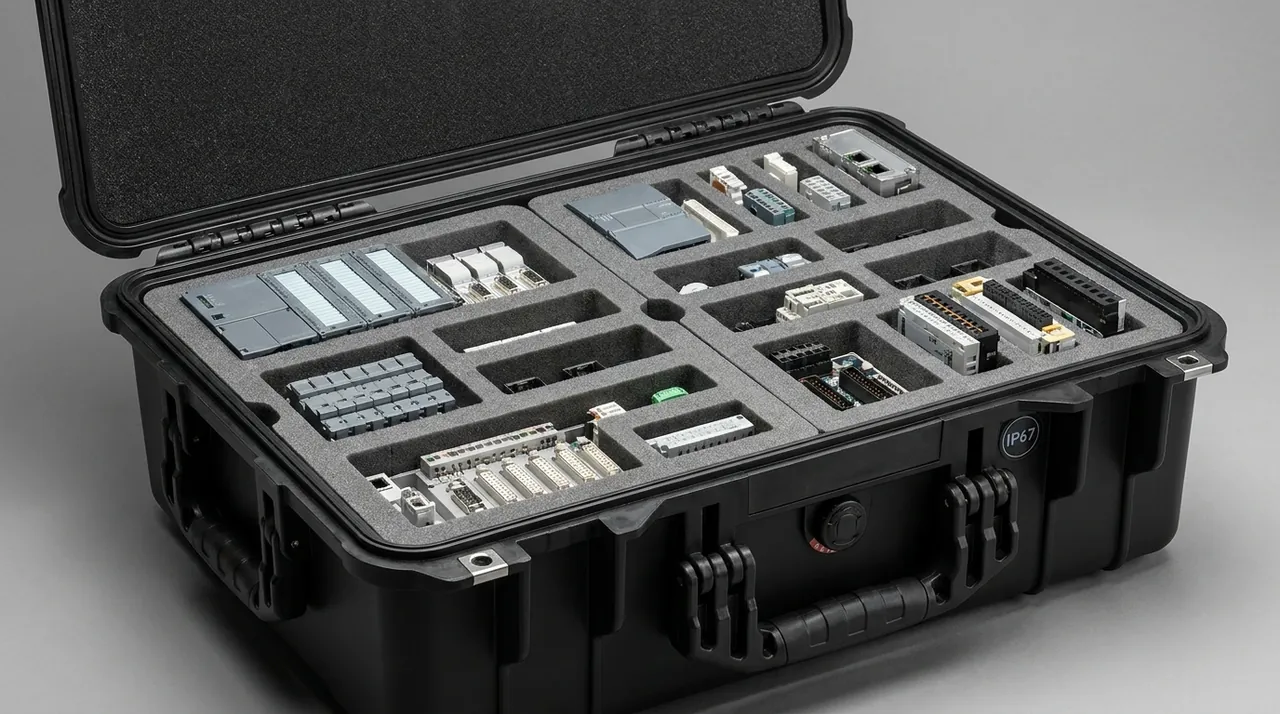
Lifting crusher spares is where safety incidents and component damage concentrate. A 1500 kilogram jaw plate or a 2500 kilogram bowl liner will injure people and almost certainly damage itself if the rigging is wrongly configured. Lifting design follows three rules: a clear relationship between lifting point and centre of gravity, rigging that never touches a working surface, and no single-point failure that leads to a dropped load.
For rigging selection, jaw plates and liners are best handled with flexible slings and shackles. Slings should be rated at a safety factor of at least six times component weight, and corner protectors are mandatory wherever a sling meets an edge. Where a handling hole is provided, pin lifting is preferred, with pin-to-hole clearance held within two millimetres so eccentric loading does not crush the hole wall. For large tapered liners with no handling hole, a dedicated lifting tool is advisable, such as a three-point internal spreader or a spreader beam fitted with a profiled saddle, so the cone face sees even loading throughout the lift.
Practices that must be avoided include passing wire rope directly around a tooth or cone face, using a single sling offset from the centre of gravity so the load swings, welding temporary lifting lugs onto a casting, since the welding heat input changes the local structure of manganese steel and high-chromium iron and creates a brittle zone, and allowing anyone to stand beneath the load path. Swing control also matters: a tag line held by a person on the ground keeps the load from striking the vehicle side or case wall, which is a common source of edge damage on liners.
Multi-point lifts should use a spreader beam rather than two crossed slings, because crossed slings generate horizontal force components that squeeze the component sides. Spreader beams must carry a rated capacity and inspection date plate and be crack-tested on a defined cycle. These requirements echo the rigging conventions used for large construction machinery parts such as a wheel loader component case, but crusher spares demand far more closely profiled tooling because the working faces cannot accept sling contact.
Securing and Lashing for Heavy-Load Transport
Crusher spares are heavy with a high centre of gravity, so the reliability of load securing directly determines transport safety. The design basis is an inertia check: road transport is normally assessed at 0.8 g longitudinal, 0.5 g lateral, and 0.5 g vertical acceleration, and the required lashing strength plus friction compensation follows from those figures.
Three securing methods are available. The first is friction-based securing, laying a high-friction pad such as rubber matting or anti-slip timber between component and deck to raise the friction coefficient. Rubber matting typically achieves 0.6 to 0.8, well above the 0.2 to 0.3 of steel on steel, so a ten millimetre rubber pad can more than halve the lashing force required. The second is positive blocking, placing timber or steel stops around the component so it meets a stop rather than striking the lashing strap directly; stops must be fixed to the deck's reinforcing beams, not merely nailed to boards. The third is strap securing with ratchet tensioners and high-strength webbing, with the strap angle to the horizontal held between thirty and sixty degrees, since steeper or shallower angles both reduce effective restraint.
After securing, three checks are mandatory. Verify that no strap touches a sharp corner without a protector. Verify that no strap crosses a working surface such as a tooth face or cone face, which must be avoided. And verify that the whole-vehicle centre of gravity projection falls inside the effective load area of the deck, with axle loads within limit. For a bowl liner standing upright, at least three circumferential restraints are needed so the liner cannot roll about its axis.
The same logic applies inside a case. Internal fixation should combine a rigid stop with an elastic preload: the stop carries inertia loads while the elastic pad removes clearance and absorbs vibration. A scheme that relies only on foam compression without a rigid stop does not hold up in heavy-duty use, because foam loses its preload after a few dozen vibration cycles and the component starts to move.
| Securing method | Suitable single-piece weight | Longitudinal inertia capacity | Risk to working faces | Re-tension interval | Note |
|---|---|---|---|---|---|
| --- | --- | --- | --- | --- | --- |
| High-friction rubber pad | Any | Medium | None | One-off | Keep the pad dry and clean |
| Timber blocking | Under 300 kg | Medium-high | Needs corner guards | Every load and unload | Must be fixed to reinforcing beams |
| Steel blocking | Over 300 kg | High | Needs soft facings | Every load and unload | Blocks require crack testing |
| Ratchet webbing strap | Any | High | Must avoid working faces | Every 200 km | Angle between 30 and 60 degrees |
| Through pin or bolt | Any | Highest | Protect hole mouths | Set once | For jaw plates with handling holes |
Rust and Moisture Design for Outdoor Mud and Water Environments
The open yard at a quarry is a corrosion accelerator. Daytime sun raises the temperature inside a case, night cooling condenses water vapour onto metal, and rain brings mud splash and ground water, so carbon steel can show whole patches of rust within weeks while high-strength bolts and pins seize in their threads. Mud adds a further complication: fine silt blocks case drain holes and breather valves, trapping moisture inside and creating a sealed humid chamber.
Rust design works across three levels. The first is protection of the part itself, coating all machined faces with rust-preventive grease plus a protective film, spraying non-machined surfaces with rust-preventive oil, and wrapping threads and pin bores with peelable coating or VCI tape. Manganese steel and high-chromium iron are reasonably corrosion resistant on their own, but the carbon steel wedges, bolts, and retaining rings that mate with them are not, and those need the most attention. The second is atmosphere control inside the case, using VCI film with desiccant to hold relative humidity below fifty percent, and including a humidity indicator card for reading at opening. The third is structural protection of the case, with support feet at least fifty millimetres high to lift the base off standing water and a removable silt trap in the base so mud does not reach the main cavity.
For long-term open storage, several additions help. Gaskets should be hydrolysis-resistant silicone or EPDM, since general nitrile grades harden and crack under prolonged heat and humidity. Exterior materials and coatings should resist ultraviolet light, because prolonged sun exposure embrittles many plastics. A breather valve with a hydrophobic membrane in the wall allows pressure equalisation while blocking liquid water, and the principle matches what is described under pressure equalisation valve selection, though mining use calls for a large membrane area and good resistance to clogging. Rust protection performance can be verified against the neutral salt spray method of GB/T 10125, typically requiring no red rust after forty-eight hours on machined parts, relaxed to twenty-four hours with no functional corrosion on structural items.
Impact and Puncture Resistant Liner Selection
Crusher spares place completely different demands on a liner than precision instruments do. The liner does not need very fine vibration isolation; it needs impact resistance, puncture resistance, and resistance to crushing. A jaw plate with sharp tooth peaks acts like a blade on a liner surface under vibration, and low-density soft foam is cut through quickly and loses its support function.
Selection starts by judging contact pressure rather than part weight alone. For heavy items over three hundred kilograms with sharp edges, such as jaw plates and liners, the liner should be built mainly from rigid material that provides location, with elastic material limited to a thin cushioning layer. A recommended arrangement is a rigid polyurethane block at 70 to 85 Shore A machined to the component profile to provide location and restraint, with rubber matting of eight to ten millimetres bonded to its face to absorb high-frequency vibration and prevent metal-to-metal contact. On tooth profiles and cone faces where localised bruising is not acceptable, a five millimetre cork composite sheet between block and component helps, because cork compressibility absorbs the small irregularities in the contact surface.
Medium and light items such as screen media, panels, and bearings can instead use closed-cell EVA or cross-linked PE cavities. Screen media cavities should emphasise area support rather than point support, with the cavity floor making full contact with the panel so the mesh cannot sag between supports. Bearing cavities emphasise enclosure, with closed-cell EVA forming a semi-enclosing pad so the outer ring sees even loading around its circumference.
One further caution concerns compressive fatigue of the liner. Foam loses rebound after sustained compression, and in heavy-duty use a thickness loss of more than ten percent can appear after a few dozen transport cycles, leaving the component loose inside the case. Heavy-duty case liners should therefore be modular, separating the fatigue-prone cushioning layer from the rigid locating layer so maintenance replaces only the cushioning. Density and compression set figures should be requested from the supplier, normally requiring permanent deformation after seventy-two hours at twenty-five percent compression to stay under five percent. A density and hardness comparison is available in the cushion liner selection guide.
| Liner arrangement | Hardness or density | Suitable components | Puncture resistance | Locating rigidity | Maintenance point |
|---|---|---|---|---|---|
| --- | --- | --- | --- | --- | --- |
| Rigid polyurethane block plus rubber | 70-85 Shore A | Jaw plates, cone liners | Excellent | High | Inspect block edges for wear |
| Laminated timber profiled seat | Rigid | Cone crusher mantles | Good | High | Replace after moisture exposure |
| Closed-cell EVA cavity | 45-65 Shore A | Bearings, panels, small parts | Moderate | Medium | Measure thickness loss periodically |
| Cross-linked PE pad | 25-45 Shore A | Screen mesh area support | Poor | Low | Keep away from sharp edges |
| Cork composite sheet | Medium | Tooth and cone transition | Moderate | Low | Consumable item |
| EPP foam block | 30-60 g/L | Medium castings | Good | Medium-high | Surface wears relatively fast |
Case Structure and Load-Bearing Capacity Design
A crusher spare parts case is not a general-purpose protective box. Functionally it is closer to a movable transport pallet and must satisfy load bearing, lifting, stacking, and sealing at the same time. Structural design starts from the load path: component weight should reach the forks or lifting beam through the pallet base, not through the case walls.
The base is best built as a steel-timber composite or a thickened honeycomb panel. A steel-timber composite base uses steel longitudinal beams under timber decking and an anti-slip layer, combining bending strength with a renewable wear surface, while a thickened honeycomb base is lighter and strong in bending for cases that cycle frequently. Standard forklift pockets belong in the base, with centre spacing set to common fork spacing, and local reinforcement at the pockets so repeated fork contact does not break through. At least four lifting lugs are advisable, each separately verified for 1.5 times total case weight, positioned on the base longitudinal beams and aligned with the centre of gravity projection.
Case walls and lid need only provide protection and sealing in heavy-duty use, and should not be counted as part of the load path. For very heavy components a split design of pallet base plus cover shell is recommended: the base is reused long term while the cover can be changed with component geometry and replaced individually if damaged, reducing whole-life cost. Cover and base join through gaskets and latches, with latch spacing under 300 millimetres and heavy-duty anti-loosening designs preferred; selection points are covered in the general specification for toolbox hinges and latches.
Stacking capability must be marked explicitly. Crusher spare cases normally must not be stacked, because the concentrated load of an upper case passes through the cover into the components below. Where stacking is unavoidable, load must transfer through reinforced corner posts, the permitted number of layers marked on the case, and the upper and lower cases kept to identical footprint so an eccentric stack cannot topple. The exterior must be marked to GB/T 191 with handling pictograms covering orientation, moisture protection, and the slinging attitude, alongside case number, part number, gross weight, and external dimensions as required by GB/T 13384 and JB/T 5000.13.
Sealing and Drainage for Mud and Water Environments
A quarry case must balance two conflicting needs: good sealing to keep mud and water out, and the ability to drain quickly whatever water does get in when the case is opened. In the definitions of IEC 60529, adopted nationally as GB/T 4208, IP66 means complete dust protection plus resistance to powerful water jets, IP67 adds short-term immersion, and IP68 covers continuous immersion under conditions specified by the manufacturer. For open yard storage at a mine, IP66 to IP67 is a pragmatic target: mines rarely submerge cases for long, but they do see storm rain, wash water, and mud splash, which IP66 covers, so upgrade to IP67 where the yard has standing water risk.
Three structural points matter. First, the gasket must close continuously. It forms an unbroken loop around the case mouth, moulded or hot-melt joined at the corners; a mitred square corner creates a leak path. Second, latch clamping force must be uniform, with latch count and spacing matched to the gasket section so compression stays between twenty-five and forty percent, since over-compression deforms the gasket permanently while under-compression loses the seal. Third, breathing and drainage must be separate routes: a membrane breather valve in the wall equalises pressure, while a drain plug in the base removes any water that enters, and the two must not share a channel, or silt will blind the breather membrane.
Wash-down convenience also belongs in the design. Mines commonly clean case exteriors with a high-pressure jet, and pressure above the design capability of the seal causes leakage, so exterior surfaces are best sloped or rounded to shed mud, with no water traps near the gasket. Note that an ingress protection rating describes dust and water only, not chemical or abrasion resistance. Fine sand in quarry mud is a slow abrasive on gaskets, so inspect the gasket surface for scuffing and hardening on a defined cycle, typically every twelve months or every twenty transport cycles.
Vibration and Shock Validation Methods
Transport validation for crusher spares emphasises structural integrity under heavy load more than general packaging does, because once securing fails, a multi-tonne component generates enormous secondary impact inside the vehicle. Validation should cover vibration, shock, and stacking loads.
Vibration validation follows the random vibration methods of the GB/T 4857 series, with the spectrum matched to actual road and unpaved mine haul road conditions. Mine haul roads produce higher vibration levels than urban distribution, particularly in the five to thirty hertz band where road excitation is strong and can resonate with an upright, high-centre-of-gravity liner, so the test should focus on whether stops have loosened and lashing force has decayed. Shock validation targets loading drops and emergency braking, with vertical shock converted from drop height to equivalent acceleration and horizontal shock simulated from a braking deceleration spectrum.
For international ocean and intermodal projects, a test profile built to the distribution cycle and assurance level of ASTM D4169 combines handling, stacking, vibration, and shock in one sequence, which exposes weak points in a securing scheme far better than single-item tests. Where a buyer requires environmental test methods to be cited, a validation plan can be built on the vibration, shock, temperature, and humidity methods in MIL-STD-810H; this only cites the test methods as a design basis and implies no military certification of any kind.
Acceptance criteria should be quantifiable: after testing, component movement within fifty percent of cavity clearance, stops still tight, lashing tension loss under twenty percent of the initial value, no through-penetration of the liner, and no new bruising or rust on machined faces. Where bearings are packed, add a rotational freedom check and a clearance re-measurement after the test to confirm no false brinelling. Commissioning arrangements, report content, and sampling ratios follow the general requirements of the transport testing procedure.
Mixed-Load Zoning and Packing List Control
Crusher spares usually ship as a complete overhaul kit for one crushing line, so mixed loading is the norm. Poor zoning causes two kinds of incident: heavy items shifting and striking lighter ones in transit, and a lifting sequence that forces the upper layer out before the lower layer can be reached, adding a second handling cycle and more chances of impact. Zoning follows three principles: centre of gravity in the middle, heavy items low, and the order of removal matching the order of assembly.
Five zones are suggested. The base heavy-load zone holds jaw plates and cone liners, each independently restrained. A middle rigid casting zone holds wedges, toggle plates, and main shaft sleeves. A dedicated soft-lined bay holds bearings and shells, with a rigid divider between it and every other zone so metal chips and dust cannot reach the raceways. A flat goods zone holds screen media in vertical slots in layers, positioned on the top layer and away from heavy items. A consumables zone collects bolts, pins, circlips, and washers in lidded compartment boxes with labelled specifications.
The order of removal should match the site assembly sequence. During a cone crusher overhaul, for example, crews normally change the bowl liner first, then the mantle, then adjust the discharge setting, so the bowl liner should sit where it can be reached first. Marking that sequence on both the packing list and a case-opening label noticeably reduces the number of times a case must be repacked on site. The packing list should record part number, description, material, single-piece weight, quantity, parent equipment tag, case position, and lifting method, issued in duplicate with one copy travelling and one retained. For export projects, list descriptions in both Chinese and English, and identify chemicals separately, since paints, cleaning agents, and adhesives must be judged against dangerous goods transport packaging requirements.
Receiving Inspection and Pre-Installation Re-Check
Receiving crusher spares cannot stop at counting pieces, because most damage is hidden and only appears when the machine is started. Inspection has three stages, with a final re-check before installation.
Stage one is receiving inspection. Before unloading, check whether deck lashing has slackened, whether blocking has shifted, and whether the case is damaged or leaking. After opening, read the humidity indicator card, count items against the packing list, and check tooth faces for crushing, cone faces for scores, screen tension edges for straightness, and bearing wrapping for integrity. Photograph everything, note anomalies on the receiving sheet, and leave them untouched: grinding a defect on site destroys the evidence that responsibility decisions rely on.
Stage two is the re-check before lifting into position. Between removal from the case and installation, the part faces one more lift and a short transfer, which is another opportunity for damage. Before lifting, confirm the handling holes are usable, rigging will not touch a working surface, and the liner cradle is sound. For cone liners, measure cone face roundness before positioning to confirm transport has not introduced ovality, using an internal micrometer across at least three sections with at least four directions per section.
Stage three is pre-installation condition confirmation. Bearings get a rotational freedom check and a radial clearance measurement, jaw plates get a back face flatness and wedge seat check, and screen media get an aperture dimension and tension edge straightness check. Writing these three checks into the overhaul work instruction turns them into a fixed routine. Bulk spares can be accepted on a sampling plan with sample size and acceptance criteria set on AQL principles, as described under custom case acceptance and AQL, but the core machine components, namely mantles, bowl liners, and main shaft bearings, should be inspected one hundred percent.
FAQ
Q: Why must jaw plates never be shipped stacked tooth face to tooth face, and how serious is tooth peak crushing?
A: Stacking tooth face to tooth face is the most common mistake in jaw plate transport, because the tooth peaks become the only contact points and carry the entire weight of both plates plus transport inertia concentrated on those tips. Manganese steel work-hardens under load, so surface hardness rises, but the cross-section at a tooth peak is tiny and local stress far exceeds yield, and once a peak is crushed there is no way to restore the original tooth form by grinding, because grinding also reduces tooth height and changes valley volume, which alters both the effective chamber opening and the nip angle. The practical effect can be quantified: with three to five millimetres of peak collapse, the actual discharge opening runs larger than the setting, the product size distribution shifts coarser, and material slides more and grips less inside the chamber, which reduces throughput and accelerates overall plate wear. The correct method is a soft interlayer matched to the tooth form. Options include low-pressure polyethylene guards pressed into the valleys, a moulded polyurethane facing, or plywood grooved to follow the valley profile. Timber deforms first and acts as a sacrificial layer. In every case, rigid point-to-point contact between tooth faces is unacceptable, and the interlayer should become the main load path once the case is closed, so its compression fills the valleys without putting direct load on the peaks.
Q: Should a cone crusher mantle and bowl liner stand upright or lie flat, and how should the support be designed?
A: Both should stand upright, and lying flat in a stack is never acceptable. Mantles and bowl liners are large-diameter thin-wall parts with a strong taper, so lying flat leaves only the two generator lines in contact with the support surface while the middle spans unsupported, and road vibration gradually introduces permanent oval distortion under the liner's own weight. During installation the gap to the cone body or adjustment ring is filled with epoxy backing or a zinc alloy pour, so an out-of-round cone face produces a backing layer of uneven thickness, which causes eccentric loading, abnormal vibration, localised early wear, and in some cases cracking. Upright support differs by part. A mantle sits on a profiled seat matching its inner cone face, made from rigid polyurethane or laminated timber with a wrap angle of at least 180 degrees, so its weight spreads along the face instead of concentrating at a few points. A bowl liner stands inside a profiled outer ring with a soft inner facing to prevent scoring. The feed opening rim on both parts is a thin-wall free edge and needs a rigid ring guard. Every flange bolt hole takes a tapered soft plug, because a burred hole mouth prevents the bolt from passing during assembly. Each liner is best paired with a reusable upright cradle with forklift pockets and lifting lugs, so it never leaves the cradle between packing and positioning and three lifts become one.
Q: Can screen mesh be rolled for transport, and is there a minimum roll diameter?
A: Rolling is acceptable, but diameter and technique are both constrained. Woven mesh is made from 65Mn spring steel wire or stainless wire, and rolling puts the outer wires in tension and the inner wires in compression. A roll radius that is too small drives the outer wires into plastic deformation so the mesh takes on a wavy buckle when unrolled, while the inner wires kink. The practical lower limit is a roll diameter of at least four hundred millimetres, with a rigid core tube inside so winding proceeds evenly along the tube surface rather than by hand-pulling and pressing. Sharp folds must be avoided, because each fold creates a permanent plastic hinge that cannot be flattened afterwards. After rolling, strap both ends so the roll cannot spring open in transit. Where panel size allows, laying flat in layers is the safer option: five millimetre cardboard or thin plywood between layers, a rigid cover board on top, and a stack height preferably under three hundred millimetres, since a taller stack makes lower panels carry the weight above and buckle elastically. Polyurethane and rubber panels should be laid flat on soft blocks with edge guards over the hook slots, and soft pads placed between strap and panel to prevent creasing. Screen media belong on the top layer, separated from jaw plates and liners by a rigid divider at least 1.2 times the stack height.
Q: After transport, a large bearing shows raceway indentations and rust. How do we tell them apart and prevent both?
A: The two defects look similar but have different causes and different remedies. The indentations are known as false brinelling, produced when a stationary bearing under continuous vibration accumulates repeated minute elastic deformation at the roller-to-raceway contact patch. They appear as evenly spaced depressions whose pitch matches the roller spacing, with smooth surfaces and no corrosion product. Rust forms through moisture corrosion instead, appears reddish brown, carries corrosion products, and commonly affects raceways, cages, and outer ring diameters. To distinguish them, examine the surface under magnification for corrosion product, or wipe with dilute hydrochloric acid and check for a remaining depression: rust leaves a shallow pit behind, while false brinelling keeps its original form. Prevention for brinelling is two-directional location plus cushioning, with axial and radial stops leaving no clearance between bearing and case so transport vibration cannot be amplified into the raceway; keep the factory packing and add cushioning around it rather than stripping it and using a generic cavity. Rust prevention needs three layers: the factory oil film left undisturbed, VCI film wrapped around the whole bearing and heat sealed, and desiccant at eighty to one hundred and twenty grams per cubic metre with a humidity indicator card. On opening, inspect raceways, cages, and wrapping immediately, and measure radial clearance and rotational freedom before installation.
Q: Mine roads are rough and storage is outdoors. What protection class and rust measures should the case use?
A: A quarry combines unpaved roads, heavy dust, muddy splash in the rainy season, and spares left in open yards, so IP66 to IP67 is the sensible range. In the definitions of IEC 60529 and GB/T 4208, IP66 gives complete dust protection plus resistance to powerful water jets, while IP67 adds short-term immersion; mines rarely submerge cases for long, so IP66 covers storm rain and wash water, and IP67 is the upgrade where the yard has standing water. The rating depends on structure, not the label. The gasket must form an unbroken loop with moulded or hot-melt corners, latch spacing must stay under three hundred millimetres to hold compression between twenty-five and forty percent, and the breather valve and drain plug must be separate routes, since sharing one channel lets silt blind the hydrophobic membrane. Rust measures work at three levels. On the part, coat machined faces with rust-preventive grease and film, and wrap threads and pin bores with peelable coating or VCI tape. Inside the case, use VCI film with desiccant to keep relative humidity below fifty percent. On the case, fit support feet at least fifty millimetres high so the base clears standing water, and add a removable silt trap. Performance can be verified against the neutral salt spray method of GB/T 10125, typically requiring no red rust after forty-eight hours on machined parts.
Q: For lifting a bowl liner of several tonnes, how should rigging and lifting tools be set up?
A: Lifting design must satisfy three rules: a clear link between lifting point and centre of gravity, rigging that never contacts a working surface, and no single-point failure that drops the load. Where a handling hole exists, pin lifting is preferred, with pin-to-hole clearance within two millimetres so eccentric loading cannot crush the hole wall. For large tapered liners with no handling hole, use a dedicated tool such as a three-point internal spreader or a spreader beam with a profiled saddle, so the cone face sees even loading through the lift. If flexible slings with shackles are used instead, the sling safety factor should be at least six times component weight, and corner protectors are mandatory at every edge contact. Multi-point lifts should use a spreader beam rather than crossed slings, because crossed slings create horizontal force components that squeeze the component sides; spreader beams must carry a rated capacity and inspection date plate and be crack-tested on a cycle. Passing wire rope directly around a tooth or cone face is prohibited, as is welding temporary lugs onto a casting, since welding heat input creates a brittle zone in manganese steel and high-chromium iron. Fit a tag line so a person on the ground controls swing, keep the load from striking the vehicle side or case wall, and clear the area beneath the load path.
Q: When spares for a whole crusher are mixed in one shipment, how should they be arranged for safety and easy retrieval?
A: Zoning follows three principles: centre of gravity in the middle, heavy items low, and the order of removal matching the order of assembly. Split the load into five zones. The base heavy-load zone holds jaw plates and cone liners, each independently restrained. A middle zone holds rigid castings such as wedges, toggle plates, and shaft sleeves. A separate soft-lined bay holds bearings and shells, divided from every other zone by a rigid wall so chips and dust cannot reach the raceways. A flat goods zone holds screen media in vertical slots in layers, placed on top and away from heavy items. A consumables zone collects bolts, pins, circlips, and washers in lidded compartment boxes with labelled specifications, since loose small parts travel like grinding media and score machined faces. Match the removal order to the site assembly sequence: in a cone crusher overhaul crews usually change the bowl liner first, then the mantle, then adjust the discharge setting, so the bowl liner belongs where it can be reached first, with the sequence marked on the packing list and a case-opening label to reduce repacking on site. The packing list should list part number, description, material, single-piece weight, quantity, equipment tag, case position, and lifting method, issued in duplicate. For export projects, provide bilingual descriptions, and seal chemicals separately with packaging judged under dangerous goods rules.
Q: How should crusher spares be inspected on arrival, and which items must be re-checked before installation?
A: Inspection cannot be limited to counting, because most damage is hidden until commissioning. Before unloading, check whether deck lashing has slackened, blocking has shifted, and the case is leaking. After opening, read the humidity card, then count items against the list, checking tooth faces, cone faces, screen tension edges, and bearing wrapping. Photograph everything and leave anomalies untouched rather than grinding them on site, since grinding destroys the evidence responsibility decisions depend on. The pre-installation re-check has three parts. Before lifting, confirm handling holes are usable, rigging will not touch a working surface, and the liner cradle is sound. For cone liners, measure cone face roundness across at least three sections with four directions, confirming no ovality. Bearings get a rotational freedom check and clearance measurement, jaw plates get back face flatness checks, and screen media get aperture and tension edge checks. Bulk lots may be sampled on AQL principles, but mantles, bowl liners, and main shaft bearings should be inspected fully.
Conclusion and Further Reading
Protecting quarry crusher spares means getting four things right at once: safe lifting, zero contact on working faces, load transfer along the base, and durable rust protection. Jaw plates keep their tooth form, cone liners keep their roundness, screen media keep their flatness, and bearings keep their clearance. JUNZHIJIA builds profiled cradles and heavy-duty pallet bases for jaw and cone crusher wear parts.
Further Reading