

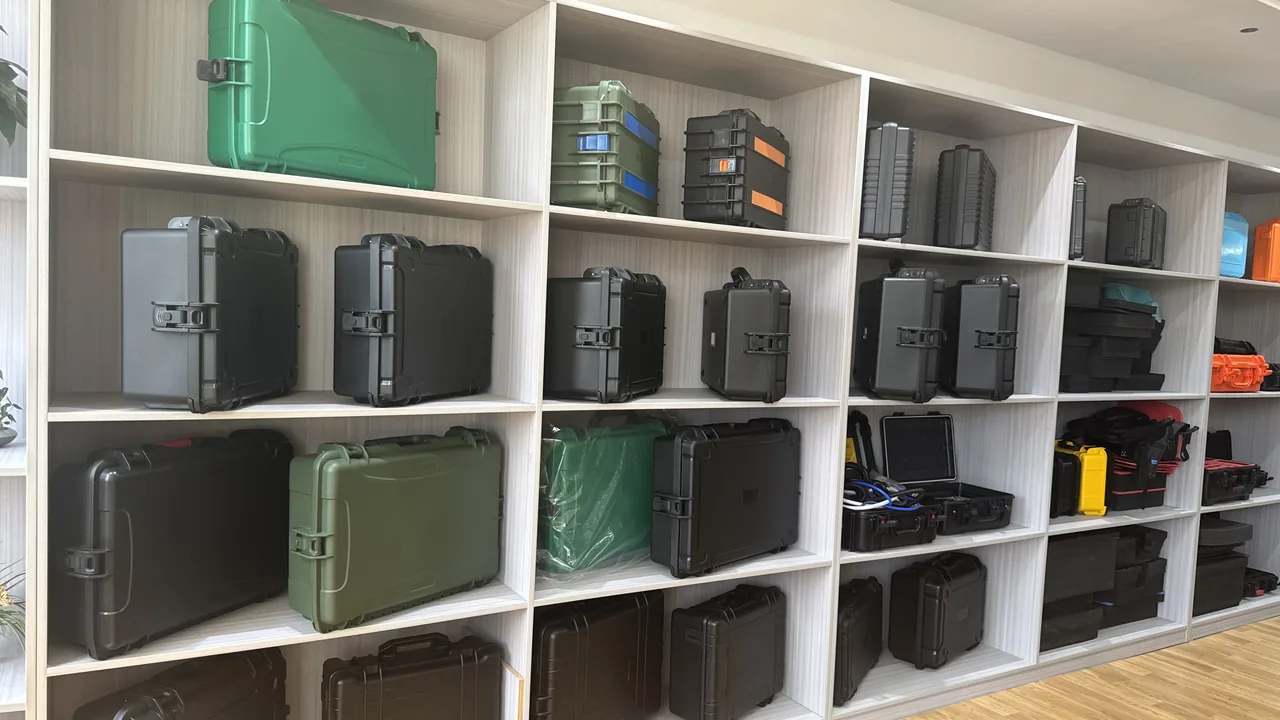
Wine is a poor traveller. A bottle that leaves the cellar sound can arrive with a cork pushed up, a label scraped, a neck snapped or a flavour dulled by heat and vibration, and none of those faults is obvious until the bottle is opened far from where it was packed. The loss is rarely the glass alone: a single bottle of an allocated or vintage wine can be worth more than the case that carries a dozen of them, so the packaging budget is best spent on the few things that actually fail. This article explains, from the real conditions of wine logistics, how a transport case should protect against breakage, bottle shock and temperature excursion, and where the common shortcuts quietly cost more than they save.
JUNZHIJIA takes a firm position on this category: the case must locate every bottle individually, damp vibration rather than pass it through, and keep temperature excursion within a band the wine can tolerate, without pretending to be a refrigerator. A case that does those three things is worth more than a heavier crate that still lets bottles touch and rattle. The case is a protective instrument, not a box with dividers, and it should be specified and tested as one.
Table of Contents
- 1. Why Wine Bottles Break and Age Badly in Transit
- 2. Bottle Shock: What It Is and How to Prevent It
- 3. Temperature Control on Long Routes
- 4. Foam and Dividers: Pre-Cut, Custom and EVA
- 5. Shell Selection: Rotomoulded, PP and Aluminium
- 6. Vibration and Shock on Road and Air
- 7. Humidity, Label and Cork Condition
- 8. Stacking, Palletising and Load Distribution
- 9. Cold-Chain and Seasonal Shipping
- 10. Documentation, Insurance and Chain of Custody
- 11. Collector and Auction Transport
- 12. Custom Foam Inserts and OEM/ODM for Cellars
- Frequently Asked Questions FAQ
- Conclusion and Related Reading
1. Why Wine Bottles Break and Age Badly in Transit
A wine bottle is a brittle, top-heavy cylinder with a narrow neck and a fragile closure at the top. In transit it fails in three distinct ways, and a case that addresses only one of them still loses bottles. The first is breakage from impact and point load: a bottle that touches its neighbour transmits shock directly through the glass, and a neck that bears weight cracks. The second is closure failure from vibration and thermal swing: repeated micro-movement loosens a cork, and heat expands the wine and pushes the cork up. The third is flavour damage, which needs no breakage at all: heat and light accelerate ageing, and vibration agitates sediment, so the wine arrives tired and flat compared with how it left.
| Failure mode | Cause in transit | Case response | Verifiable criterion |
|---|---|---|---|
| --- | --- | --- | --- |
| Breakage | Impact, point load, bottle contact | Individual location, no contact | Zero bottle-to-bottle touch |
| Closure push-up | Heat expansion, vibration | Temperature band, neck support | Cork protrusion within limit |
| Sediment agitation | Vibration, orientation change | Stable orientation, damping | No free movement in slot |
| Heat ageing | Temperature excursion, sun | Insulation, shaded load | Peak temperature logged |
| Label scrape | Case rub, stacking friction | Recessed label, liner pocket | Label intact on arrival |
A case that prevents all five is built around locating every bottle in its own pocket with the neck supported, not around making the crate thicker. The thickness of the wall is the least important variable; the location of the bottle is the most. A thicker wall that still lets bottles rattle protects the glass from the outside but does nothing for the wine inside, and the wine is the asset. The design loop is therefore: decide the bottle format, decide the route and its temperature band, then build the liner that holds each bottle still and the shell that survives the handling, in that order.
2. Bottle Shock: What It Is and How to Prevent It
Bottle shock, sometimes called travel shock, is the dulling of a wine's aromas and flavours after it has been moved, shaken and temperature-cycled. It is not a breakage and leaves no visible mark, which is why it surprises buyers who judge the bottle by its appearance. The mechanism is physical: vibration and sloshing disturb the wine and its sediment, and the wine needs days of stillness to re-settle and re-close its aroma profile. A case cannot stop the physics, but it can reduce the input sharply, and the difference between a wine that needs a week to recover and one that needs a month is the quality of the liner that held it.
The decisive design choice is to hold each bottle firmly so it cannot move or slosh within its pocket, and to keep the bottle in a consistent orientation so sediment stays at the bottom. A pre-cut or custom foam insert that grips the bottle body and supports the neck does this; loose fill or a generic divided grid does not, because the bottle still rattles. After arrival, the remedy is simply rest: the EVA foam advantages for toolboxes discussion of closed-cell cushioning applies here, and the practical advice to the receiver is to let the wine stand undisturbed for a week before judging it. A case that prevents bottle shock is not a luxury for fine wine; it is the difference between delivering the wine that was packed and delivering a tired version of it.
3. Temperature Control on Long Routes
Wine tolerates a range, not a point, and the danger is excursion and rate of change more than a steady mild temperature. A steady 18 C is far less harmful than swinging between 5 and 35 C over a day, because the swing drives the cork and the wine volume. The case cannot refrigerate, but it can slow the rate of change with insulation and by avoiding direct sun and heat sources in the load. For routes that will exceed the band, the case should be paired with a cold-chain service or phase-change packs in a separate, non-contact compartment so the bottles are buffered without freezing, and the insulation choice should be stated up front rather than hoped for.
The temperature profile of the route decides the design. A short same-city run needs only basic insulation; a cross-continent summer move needs reflective outer skin, thick insulation and documented handling. A temperature and humidity logger inside the case turns a later complaint about "tired wine" into data: if the curve stayed in band, the fault is not the case, and if it did not, the record shows where. That single piece of evidence settles most disputes between shipper, carrier and buyer, and it also feeds the next shipment's design, because the real route temperature is what the specification should be built around, not a generic assumption about the season.
4. Foam and Dividers: Pre-Cut, Custom and EVA
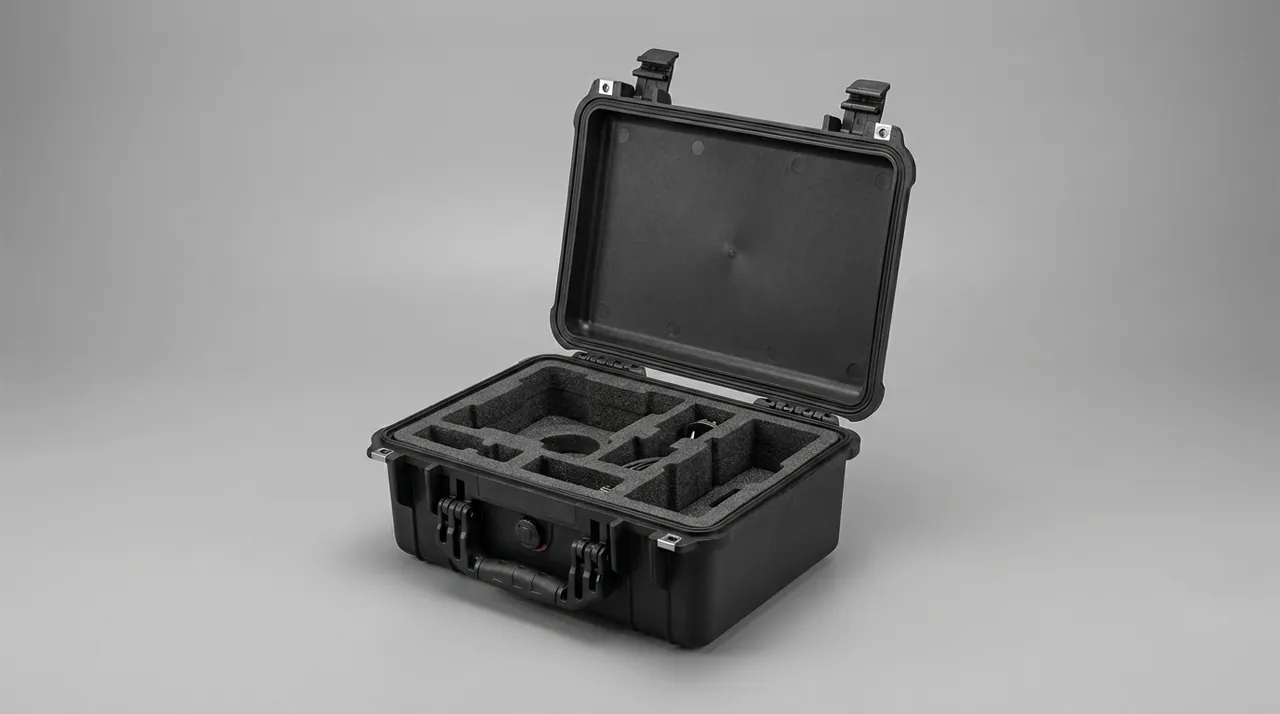
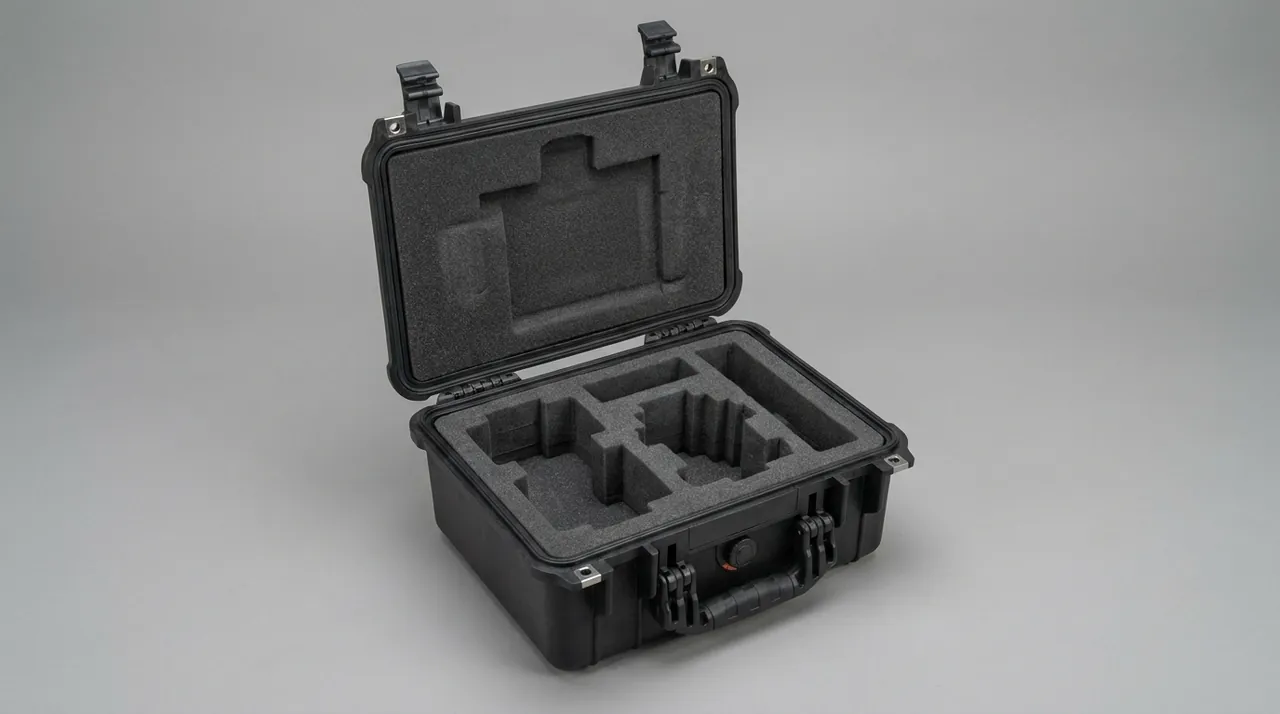
The liner of a wine case is where most of the protection lives, and the choice is between a generic divided grid, a pre-cut foam and a custom-milled insert. A generic cardboard or moulded grid keeps bottles apart but lets them rattle vertically and offers little cushioning, so it is a spacing device rather than a protective one. A pre-cut foam, discussed in the pre-cut foam case guide, holds bottles by shape and is a strong default for standard 750 ml formats, because it grips the body and removes most of the rattle that a grid allows.
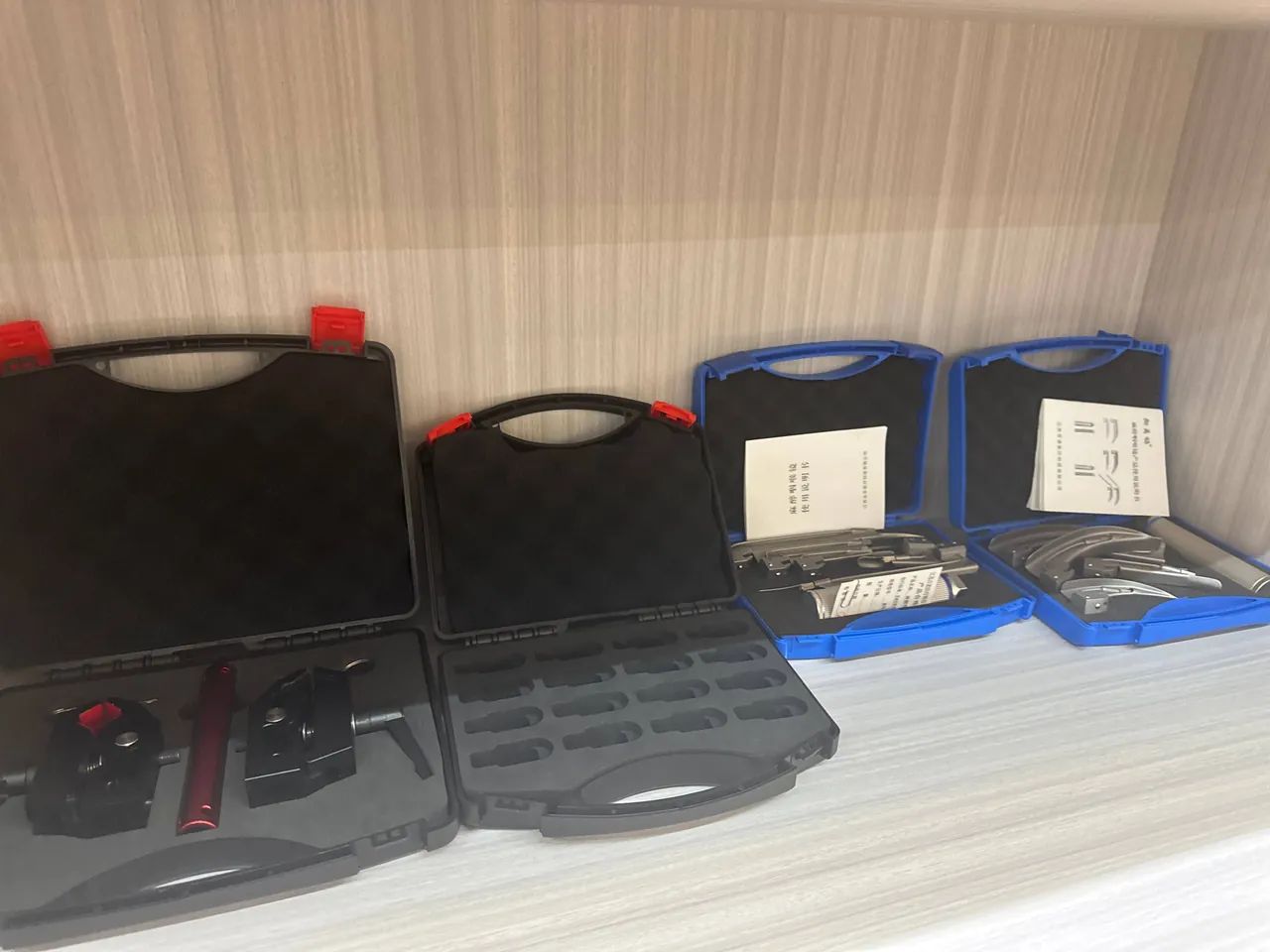
A custom-milled EVA or XLPE insert grips each bottle body and supports the neck, which is the choice for mixed formats, oversized bottles and high-value lots where no movement is acceptable. The trade is cost and lead time against zero tolerance for movement, and for a recurring format the custom insert becomes a repeatable, low-variance part rather than a one-off. Closed-cell foams such as EVA and XLPE are preferred because they do not absorb wine if a bottle does break, which keeps a single failure from becoming a soaked, acidic mess that attacks neighbouring labels and the case interior. Absorbent foam should be avoided for this reason alone, and a spare insert should be part of the order so a broken-bottle incident retires only the liner, not the whole case.
5. Shell Selection: Rotomoulded, PP and Aluminium
The shell decides how much abuse the case survives and how well it insulates. A rotomoulded case in LLDPE is tough, seamless and a reasonable insulator, and suits most wine logistics because it shrugs off drops and stacking while keeping its shape under load. An injection-moulded polypropylene case is lighter and cheaper but less impact-resistant and a poorer insulator, suiting short, gentle routes where the bottles are not exposed to rough handling or heat. An aluminium case is light, rigid and a good insulator but dents rather than flexes and costs more, suiting repeated air freight and collector use where the case itself is part of the asset.
| Shell | Impact | Insulation | Mass | Cost | Typical use |
|---|---|---|---|---|---|
| --- | --- | --- | --- | --- | --- |
| Rotomoulded LLDPE | Excellent | Good | Medium | Medium | General wine logistics |
| Injection PP | Fair | Poor | Low | Low | Short, gentle routes |
| Aluminium | Good, dents | Good | Low | High | Air freight, collectors |
| Plywood crate | Good | Poor | High | Medium | One-off heavy lots |
The shell should also carry recessed hardware and a drainable, cleanable interior, because a wine case that has seen a broken bottle must be washable before it carries the next lot. Smooth, non-absorbent interior surfaces and rounded corners make that cleaning fast and complete, and a shell with a documented stack rating lets the carrier load it without guessing. The shell and the liner are one system: a perfect liner in a shell that flexes under stack load still transmits load to the bottle necks, so both must be specified together against the real load.
6. Vibration and Shock on Road and Air
Road transport is a low-frequency, long-duration vibration; air freight adds drop, pressure and handling shocks. The case must absorb both. The liner does most of the shock work, but the shell and its corners take the structural load, so corner reinforcement and a stable base matter as much as the foam. The transport vibration testing basis sets how a packed case is verified, and the wine case should be tested with bottles, not empty, because the mass and centre of gravity change the result and an empty-case test passes conditions the loaded case would fail.
Stacking is the quiet risk: a case mid-pallet can see several times its own weight through a long journey, and a shell that flexes can transmit that load to the bottle necks. The case should state a maximum stacking tier and a centre-of-gravity mark, and the carrier should respect both. A neck that carries stack load cracks long before the glass body, so neck support in the liner is not a luxury but the load path that keeps the bottle alive under stacking. Shock and tilt indicators turn a dispute about handling into evidence, and they also change carrier behaviour, because a case that records rough treatment is handled more carefully than one that does not.
7. Humidity, Label and Cork Condition
Wine labels are paper and glue, and a damp or rubbing environment ruins them; for collectible bottles the label is part of the value. The case interior should stay dry, so desiccant or a humidity indicator card belongs in long or tropical routes, and the bottle pocket should recess the label side away from rub points. The cork also needs attention: a dry environment shrinks it and lets air in, while a wet one moulds the capsule, so a moderate humidity band is the target rather than the driest possible, and the band should be chosen with the route climate in mind rather than defaulted.
For long storage before sale, the bottles should sit neck-up or neck-down consistently per the shipper's preference, never on their side in a way that wets the capsule, and the case should allow a quick visual check of cork condition without unpacking every bottle. A transparent pocket or a labelled slot that shows the cork through a small window is a small feature that saves a full unpacking at inspection, and it protects the bottle from the handling risk of repeated opening. The case that treats the cork and label as part of the product, not an afterthought, is the one that delivers wine in the condition it was graded.
8. Stacking, Palletising and Load Distribution
A pallet of wine is heavy and top-heavy, and poor load distribution is how cases crush and bottles break. The case should interlock or at least sit square on the pallet, with the centre of gravity low and centred, and the pallet wrap should hold the cases, not replace a proper fit. Mixed-format lots need the heaviest and most robust cases at the base, not scattered, so the stack does not settle into a lean that loads one side of every case and eventually finds the weakest neck. The pallet plan is part of the case specification, not separate from it.
The case itself should carry a clear "this way up" mark and, for high value, a tilt indicator that records whether it was tipped. A tilt or shock indicator turns a dispute about handling into evidence, and it also changes carrier behaviour because the case now tells on rough treatment. The salt spray corrosion test is not relevant to wine, but the same logic of quantified, recorded acceptance applies: state the criteria, record the result, and the claim resolves itself instead of escalating. A wine claim is won or lost on the record, and the case is where most of that record is generated, from the condition note at packing to the indicator at delivery.
9. Cold-Chain and Seasonal Shipping
Summer and tropical routes are where wine fails most, and the answer is rarely a thicker case but a managed temperature band. For short exposure, reflective outer skin and insulation buy time; for long exposure, phase-change packs in a separate compartment or a cold-chain carrier is required. The packs must not touch the bottles directly, because a pack at freezing temperature against glass can crack it or freeze the wine at the contact point, so a barrier layer and a temperature gradient are part of the design. The band, the logger and the corrective action form the plan; a case that merely hopes for good weather is not one.
Winter brings the opposite risk: freezing wine expands and pushes the cork or breaks the bottle, so cold routes need insulation against the low end and protection from unheated holds. The same logger that records heat excursion records freeze risk, and the route plan should state the expected band and the corrective action if it is exceeded. For cross-border movement, the documents must travel with the case but be scannable without opening it, so a clear window or an external summary avoids repeated unpacking that risks the bottles. Seasonal shipping is a design variable like any other, and the case should be specified against the worst expected condition on the route, not the average.
10. Documentation, Insurance and Chain of Custody
High-value wine moves with paperwork, and the case is part of that chain. A unique case number, a packing list with bottle counts and lot identifiers, and a condition note at each handover turn the case into a tracked asset rather than a box. Insurance claims on wine are won or lost on this record: a photograph of the sealed case at each transfer, a signed condition note, and a temperature log are what separate a paid claim from an argument. The case is the physical anchor of that chain, because it is the object that actually moves and gets handled at every step.
The case should therefore carry a document pocket that stays with it and a space for the condition note, and the pocket should be waterproof so the paper survives a damp hold. For high-value movements the case number, packing list and condition note should be captured into a single scannable record such as asset QR-code tracking, so one read returns every field the claim needs. The chain of custody is only as strong as the weakest signature, and the case is where most of those signatures are collected, so the pocket, the number and the indicator together decide whether a dispute is resolved by evidence or by opinion.
11. Collector and Auction Transport
Collector and auction bottles are a different problem from commercial lots: the value is high, the formats are mixed, and the buyer expects the bottle to arrive exactly as graded. The case for this use is usually a custom-milled insert that locates each bottle by shape, supports the neck, and isolates it from every neighbour so that even a single rare bottle travels as though alone. Provenance and grade are part of the value, so the case should allow inspection without unpacking, and the condition note should reference the grade at packing, because the grade at delivery is what the buyer pays for.
For auction houses the case is also a presentation object: a clean, labelled, reusable case that the buyer keeps is part of the experience and reduces the chance the bottle is repacked badly after the sale. A reusable custom case, discussed in the custom foam inserts guide, pays for itself across several movements of the same high-value bottle and removes the riskiest step, which is the unknown repack at the buyer's end. The case that protects a rare bottle is the one that keeps it untouched from grading to opening, and that is achieved by design of the liner and the inspection window, not by extra padding alone.
12. Custom Foam Inserts and OEM/ODM for Cellars
The liner meets the shell in a way that must suit the bottle format and the handling. A custom insert is milled to the exact bottle profile so the body is gripped and the neck is supported, and for a cellar or club with a recurring format the insert is a repeatable, low-variance part rather than a one-off. The insert should be closed-cell and washable, and the case should accept a spare insert so a broken-bottle incident does not retire the whole case. The result is a case that performs identically on the hundredth use and the first, which is what a cellar or club operation actually needs.
JUNZHIJIA supports custom foam inserts and compartment layouts, dedicated tooling and OEM or ODM programmes for wine logistics, with cases manufactured by Kexin New Materials (Guangdong) Co., Ltd. The order should specify bottle format, orientation preference, expected route temperature band and stacking tier, because those four variables decide the insert profile, the shell choice and the insulation, and a case built to them protects the wine rather than just containing the glass. A first-article case is built and the loading posture confirmed before batch production, so the design is verified against the real bottle and the real route rather than against a generic assumption about how wine should travel.
Frequently Asked Questions FAQ
Q: Why not just use a standard cardboard wine box for shipping?
A: A standard cardboard wine box spaces bottles but does little else, and it is where most transit loss begins. The bottles rattle vertically because the divider offers no neck support, they absorb water if one breaks, and the cardboard gives almost no insulation against heat or cold. For commercial lots that is an accepted trade of protection for cost, but for allocated, vintage or high-value wine the failure mode is not only breakage: a box that lets bottles move also induces bottle shock, and a box that offers no temperature buffer lets the wine age on the road. A purpose-built case locates every bottle, supports the neck, cushions shock and slows temperature change, which is a different class of protection rather than a thicker version of the same box. The cost difference is small against the value it protects, and the difference shows up as breakage and bottle-shock rates, not as appearance. For any bottle worth more than the packaging, the cardboard box is the false economy.
Q: What is bottle shock and how does the case prevent it?
A: Bottle shock, also called travel shock, is the dulling of a wine's aromas and flavours after being moved, shaken and temperature-cycled, with no breakage and no visible mark, which is why it surprises buyers who judge by appearance. The mechanism is physical: vibration and sloshing disturb the wine and its sediment, and the wine needs days of stillness to re-settle and re-close its aroma. A case cannot stop the physics, but it sharply reduces the input by holding each bottle firmly so it cannot move or slosh within its pocket and by keeping a consistent orientation so sediment stays at the bottom. The pressure equalisation valve selection matters for sealed cases on the air leg, but for bottle shock the liner is the control. After arrival the remedy is simply rest: let the wine stand undisturbed for about a week before judging it, because a tired wine often recovers once it re-closes its aroma, and the case that minimises the shock input is the one that needs the shortest recovery.
Q: How should temperature be controlled on long routes?
A: Wine tolerates a range rather than a point, and the real danger is excursion and rate of change, so the design slows the rate rather than pretending to refrigerate. Basic insulation suffices for a short same-city run; a cross-continent summer move needs reflective outer skin, thick insulation and documented handling, and where the band will be exceeded the case should pair with a cold-chain service or phase-change packs in a separate non-contact compartment. A temperature and humidity logger inside the case turns a later complaint into data: if the curve stayed in band the fault is not the case, and if it did not the record shows where, which settles most disputes between shipper, carrier and buyer without argument. The IP65 IP66 IP67 difference matters for the case seal in damp holds, but the temperature band is set by the route, not by the seal. State the expected band, log it, and act on the result rather than assuming the weather cooperated, because the record is what protects both the wine and the claim.
Q: Pre-cut foam versus custom foam inserts, which should I choose?
A: It depends on format mix and value. A pre-cut foam holds standard 750 ml bottles by shape and is a strong default for volume shipments of one format, because it grips the body and is far better than a cardboard grid that only spaces bottles. A custom-milled EVA or XLPE insert grips each bottle body and supports the neck, and is the choice for mixed formats, oversized bottles and high-value lots where no movement is acceptable, because it is milled to the exact profile rather than approximated. The material should be closed-cell in either case, because it does not absorb wine if a bottle breaks, which keeps one failure from soaking neighbouring labels and the case interior, and absorbent foam should be avoided for this reason alone. A spare insert lets a broken-bottle incident retire only the liner, not the whole case, and for a recurring format the custom insert becomes a repeatable, low-variance part. Choose pre-cut for single-format volume and custom for mixed or high-value lots where movement is not tolerated.
Q: How should bottles be oriented and divided in the case?
A: Each bottle should sit in its own pocket that grips the body and supports the neck, with no bottle touching another, because contact is how shock transfers directly through glass and how necks break under stack load. Orientation should be consistent per the shipper's preference, neck-up or neck-down, never on the side in a way that wets the capsule, and the label side should be recessed away from rub points so the paper survives. A transparent pocket or small window that shows the cork without unpacking saves a full inspection at each handover, and it protects the bottle from the handling risk of repeated opening. The divider that merely spaces bottles is the weakest option; the pocket that locates and supports is the protective one, and the difference shows up as breakage and bottle-shock rates, not as appearance. The liner design should be confirmed against the actual bottle format before production, because a pocket that fits one shape may crush another.
Q: Can the same case be used for air freight and palletised shipping?
A: Yes, with the right shell and marking, and air freight actually favours a rigid, dent-resistant shell such as aluminium or a reinforced rotomoulded case because of drop and handling shocks and low-pressure hold conditions. The case must state a maximum stacking tier and a centre-of-gravity mark, because a case mid-pallet can see several times its own weight and a flexing shell transmits that load to the bottle necks. A tilt or shock indicator records rough handling and changes carrier behaviour, and the packing should be verified with bottles, not empty, since mass and centre of gravity change the vibration result. The MIL-STD-810H case compliance framing of test plans applies to how the case is verified, without implying any certification of the wine. The same case that works on a pallet works in a hold if it is marked, tested and locked, and the documentation travels with it but is scannable without opening.
Q: How are collectible or auction bottles handled differently?
A: Collector and auction bottles are treated as individual high-value items even inside a multi-bottle case, because the value is high, the formats are mixed, and the buyer expects the bottle exactly as graded. The case uses a custom-milled insert that locates each bottle by shape, supports the neck and isolates it from every neighbour, so even one rare bottle travels as though alone. Provenance and grade are part of the value, so the case should allow inspection without unpacking and the condition note should reference the grade at packing, because the grade at delivery is what the buyer pays for. For auction houses a clean reusable custom case is also a presentation object the buyer keeps, which removes the riskiest step: the unknown repack at the buyer's end, where most damage to rare bottles actually occurs. The gasket and O-ring material selection guides the seal that keeps the case closed through handling, but for collectibles the liner isolation is the protection that matters most, and it is achieved by design rather than by extra padding alone.
Q: What information is needed to order a custom wine case?
A: Four variables decide the design: bottle format, because the insert profile is milled to the exact bottle shape; orientation preference, because neck-up or neck-down changes the liner and the label protection; expected route temperature band, because that sets the insulation and whether cold-chain packs are needed; and stacking tier, because that sets the shell and corner reinforcement. Beyond those, state the route length, the mode mix of road and air, and whether the case must be reusable or single-use, because a reusable custom case for a cellar is built to a different tolerance than a one-off crate. With this information a first-article case is built and the loading posture confirmed before batch production, and the case ends up protecting the wine rather than merely containing the glass. JUNZHIJIA builds these cases with Kexin New Materials (Guangdong) Co., Ltd., and the order should also note any inspection-window or document-pocket requirement so the case supports the full chain of custody from cellar to buyer without repeated opening.
Conclusion and Related Reading
A wine transport case is not improved by a thicker wall; it is improved by locating every bottle, damping vibration and holding the temperature band. Design from the route and the format, and let the bottle rest before you judge it.
Related Reading