

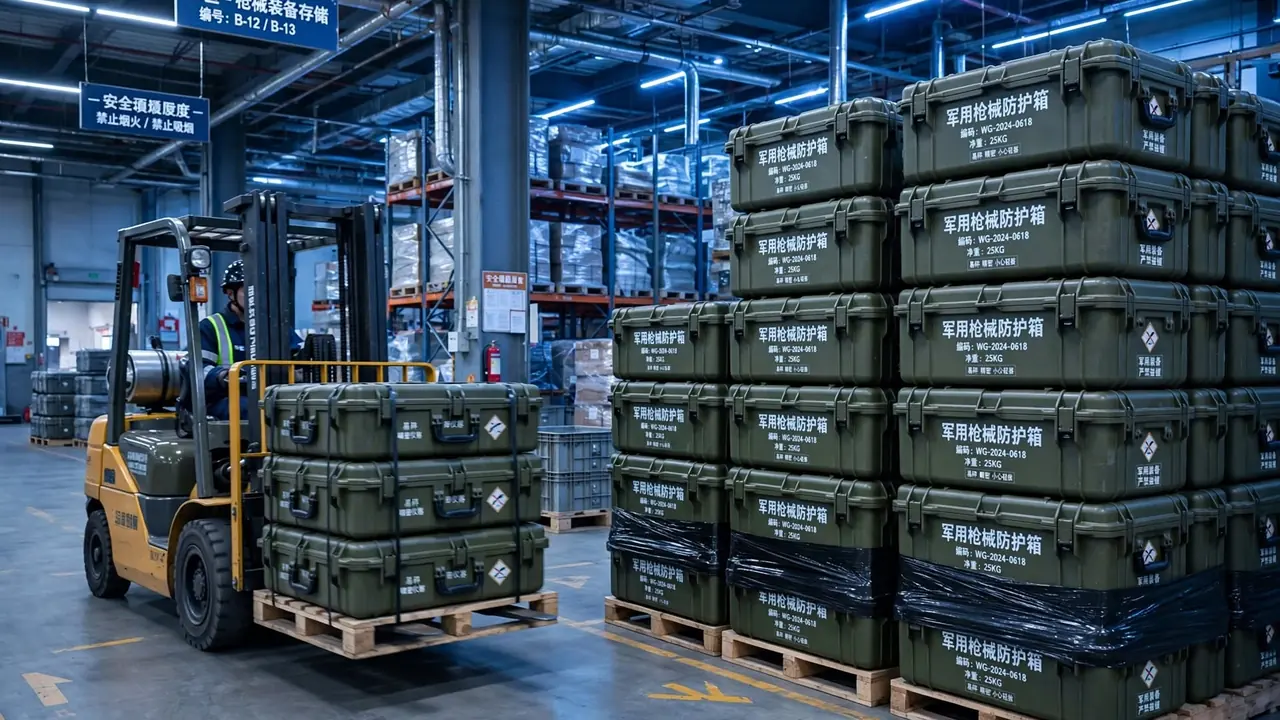
A Faraday cage case is a protective enclosure that forms a continuous conductive layer around a closed cavity, isolating the interior space from external radio-frequency electromagnetic fields. Its core value lies in passively blocking wireless communication, eavesdropping and electromagnetic interference so that classified equipment, sensitive electronic modules and high-value measurement instruments remain secure and functional during storage and transport. In real engineering the Faraday cage case is not a simple metal box; it is a system-level product that integrates conductive shell continuity, electromagnetic seam sealing, internal cushioning, equipment fixation and environmental adaptation. This article explains the principles of RF isolation, structural materials, sealing processes, rating standards, storage scenarios and maintenance methods, and gives actionable guidance for selecting, designing and using a Faraday cage case. For equipment that must satisfy both electromagnetic compatibility and information security, combine the advice here with the EMC shielding case guide and the EMI shielding case guide so that no single requirement is overlooked.
1. What a Faraday Cage Case Is
The Faraday cage case takes its name from the shielding principle demonstrated by the nineteenth-century physicist Faraday, and at its heart it is a six-sided closed conductive cavity. When an external RF wave strikes the shell, free electrons redistribute inside the conductor and induce opposing currents on the inner wall, cancelling the interior electric field and greatly reducing the magnetic field. As long as the shell keeps a continuous conductive path and every opening, seam and vent is electromagnetically treated, external RF signals cannot penetrate into the interior.
In engineering terms the difference between a Faraday cage case and an ordinary metal tool case is "EM sealing" rather than "water sealing". A normal case only needs to keep water out, whereas a shielding case must reach a specified decibel level of shielding effectiveness, for example attenuating RF fields from three centimetres to one metre in wavelength by sixty to ninety decibels. It is commonly used to store classified communication terminals, encryption modules, electronic detection parts, measurement reference sources and controlled RF components, acting as the physical barrier in an information-security transport chain and the last hardware line of defence against near-field reading before the lid is opened.
In form the Faraday cage case appears as all-welded metal hard cases, injection cases with an inner conductive liner, or flexible shielding bags with a rigid inner frame for portable use. Whatever the form, the core criterion for a qualified shielding case is whether a continuous conductive cavity is formed when closed, not whether it looks metallic. Buyers should ask suppliers to state the shell construction, seam treatment and shielding test frequency band to avoid ordinary metal boxes being passed off as professional shielding products. Material and shell trade-offs are discussed further in the aluminum vs plastic case guide.
2. How RF Isolation Works
RF isolation relies on three physical mechanisms: reflection, absorption and multiple reflection. The conductor surface first reflects most of the incident wave through impedance mismatch; the remaining energy is absorbed in the conductive layer as eddy-current loss and turned into heat; and multiple internal reflections further consume the residual field. The key parameters that decide shielding effectiveness are the conductivity and permeability of the material, the thickness of the shielding layer, and the skin depth corresponding to the incident frequency.
Skin depth is the depth at which an electromagnetic wave decays to about thirty-seven percent of its surface value inside a conductor. For good conductors such as copper and aluminium, skin depth is only micrometre-scale from megahertz to gigahertz, so an extremely thin continuous conductive layer gives strong shielding. But when the frequency drops to the tens-of-kilohertz low-frequency magnetic band, skin depth grows and a thin layer alone is insufficient; high-permeability material such as permalloy or extra thickness is needed to suppress the magnetic component. This explains why high-end Faraday cage cases use steel-aluminium composites or an inner high-permeability layer.
Understanding the principle helps correct selection. If the protected equipment mainly faces cellular, wireless-local-area and walkie-talkie bands, a normal conductive layer is enough; if it faces low-frequency magnetic fields or strong magnetic environments, a high-permeability layer and seam continuity are mandatory. Shielding is not the higher the better; over-design raises weight and cost, so match the shielding grade to the threat band. For lightweight cases that still need some shielding, the weight-reduction logic in the lightweight protective case guide is useful.
3. Typical Shell Structures and Material Choices
Mainstream Faraday cage cases fall into three shell families. The first is an all-aluminium or galvanised-steel stamped-and-welded body with strong conductive continuity and high shielding, suited to high-classification transport. The second is an engineering-plastic shell with inner conductive paint, vacuum metal film or plating; it is light but the coating must be complete with no pinholes. The third is a fabric shielding bag with a rigid inner frame, flexible and portable, mostly for temporary transfer and short escort.
Material choice balances shielding, weight and cost. Aluminium is excellent in conductivity and corrosion resistance and is the first choice for lightweight shielding; steel is cheap and more permeable, friendlier to low-frequency magnetic fields; copper has the best conductivity but is costly and dense, so it is mostly used for critical seam gaskets. Whatever the base metal, every joint should use continuous welding or conductive adhesive to prevent shielding collapse from gaps. Composite structures are explained more systematically in the composite material case guide.
For scenes needing both electromagnetic shielding and mechanical protection, the common solution is a "metal outer layer plus absorbing inner liner": the outer layer resists impact and RF, and the inner absorber further attenuates residual cavity field and absorbs radiation from the equipment itself. This structure is common in classified communication terminals and high-precision measurement transport, but it raises assembly requirements and must be verified as a whole at the sealing stage. Assemble by confirming shell continuity first, then fixing the liner, to avoid an accidental short between a conductive liner and the wall.
Cost drivers deserve a clear note. The single largest variables are shell material, gasket type and the number of filtered openings. A welded aluminium body with finger-stock seams costs more up front than a painted plastic shell, but its life-cycle cost is often lower because the conductive path does not depend on a coating that can scratch. When budgeting, ask for a breakdown that separates shell, gasket set, waveguide windows, filtered connectors and spare gaskets, so a low headline price does not hide missing items that you must buy later. The lightweight case logic in the lightweight protective case guide also helps weigh gram savings against shielding loss when aluminium is substituted.
4. Electromagnetic Treatment of Seals and Openings
Any opening on the case is a potential leakage channel; leakage scales roughly with the longest dimension of the opening, so a small round hole is better than a long slit. Ventilation needs are met by a honeycomb metal waveguide window, which leaks almost nothing below the cut-off frequency while still allowing air flow. Cable entries should use feed-through capacitors or filtered connectors so that wires do not carry interference into the case.
Seam sealing uses conductive gaskets, commonly beryllium-copper finger stock, conductive-fabric-wrapped foam, metal braid and conductive silicone. Finger stock has long life and good spring-back, suited to frequently opened lids; conductive silicone resists environment but its compression must be controlled. Locks, hinges and pressure-equalisation valves are high-leakage zones, so continuous gaskets and overlap treatment should surround them. The EMC shielding case guide at EMC shielding case guide gives a fuller method for cut-off frequency calculation.
In practice, opening treatment often sets the ceiling of total shielding. Many nominally high-shielding cases fail badly because of one unfiltered cable hole or one uncompressed lid seam. At design review, calculate the cut-off frequency and gasket compression for every opening, and measure with a field-strength meter on the first article so that every leak point is controlled rather than judging the whole by the shell material. For critical equipment, attach the opening list to the technical agreement and confirm each blocking method item by item.
5. Inner Liner and Equipment Fixation
The shielding case still needs cushioning because the stored equipment is mostly precision electronics or optics that transport vibration can damage. The liner is usually CNC-routed from open-cell polyethylene, polyurethane or anti-static EVA foam to fit the equipment contour, forming a matching cavity. If the equipment is static-sensitive, the liner surface should be treated anti-static with surface resistance in the ten-to-the-sixth to ten-to-the-eleventh ohm range. Liner design points are extended in the custom foam lining case guide.
Fixation must avoid damaging the shield. Equipment should not press hard against the metal wall and create local dents, nor hang loosely on ordinary nylon ties. Embedded routed slots and elastic straps are recommended so the equipment is constrained in all six directions. For parts with antennas, leave a groove matching the shape and keep the antenna tip away from the conductive wall to avoid tuning shift. Static-related liner rules are in the ESD shield case, whose surface-resistance and grounding requirements also apply inside a shielding case.
Liner and shield must be "no short, no float". If the liner is conductive and touches the shell, confirm this is intended, not accidental; if the liner is insulating, keep a buffer gap between equipment and wall. For mixed loads, use independent routed cells to separate and locate items, avoiding secondary damage from collision and speeding inventory at lid opening. For complex shapes, scan in three dimensions first, then program the routing so cavity tolerance stays controlled.
Liner thickness should follow the drop and vibration profile, not a fixed rule. A good starting point is to size the foam so the equipment sits at least ten millimetres from every wall and the cavity holds it with finger pressure but no rattle. Too thin a liner lets the equipment bottom out on impact; too thick wastes space and weight. Document the foam grade, density and routed depth in the one-case-one-file so a later re-cut matches the original. Where equipment has fragile connectors, add a relieved pocket and a retaining strap so the connector is supported, not cantilevered, during transit.
6. Locks, Hinges and Opening Life
The locks of a Faraday cage case must both secure physically and keep even compression of the conductive gasket when the lid closes. Butterfly latches, press latches and three-point linked locks are common; the three-point lock balances pressure around a long lid and reduces corner gaps. Hinges should be continuous metal piano hinges whose long overlap itself forms a conductive path, better for continuity than scattered hinges.
Opening life is evaluated by usage frequency. Finger-stock life can reach tens of thousands of cycles, while conductive foam loses spring-back after repeated compression and must be replaced on schedule. Locks and hinges in salt-spray and high-humidity environments need anti-corrosion treatment to prevent rust from breaking conductive contact. For high-reliability military and emergency use, follow the lessons in the military electronics case and write opening life into the specification.
To extend opening life, avoid violent opening and foreign objects in the seam. Before closing, confirm the gasket is not rolled or dirty; after closing, check every latch point is engaged. For frequently transferred cases, keep an open-cycle log and proactively replace gaskets before the rated cycles to swap "failure replacement" for "preventive replacement", keeping shielding stable and lowering security risk. Critical-post cases can set a forced-inspection reminder so someone re-tests seam resistance on schedule.
7. Shielding Effectiveness Grades and Standards
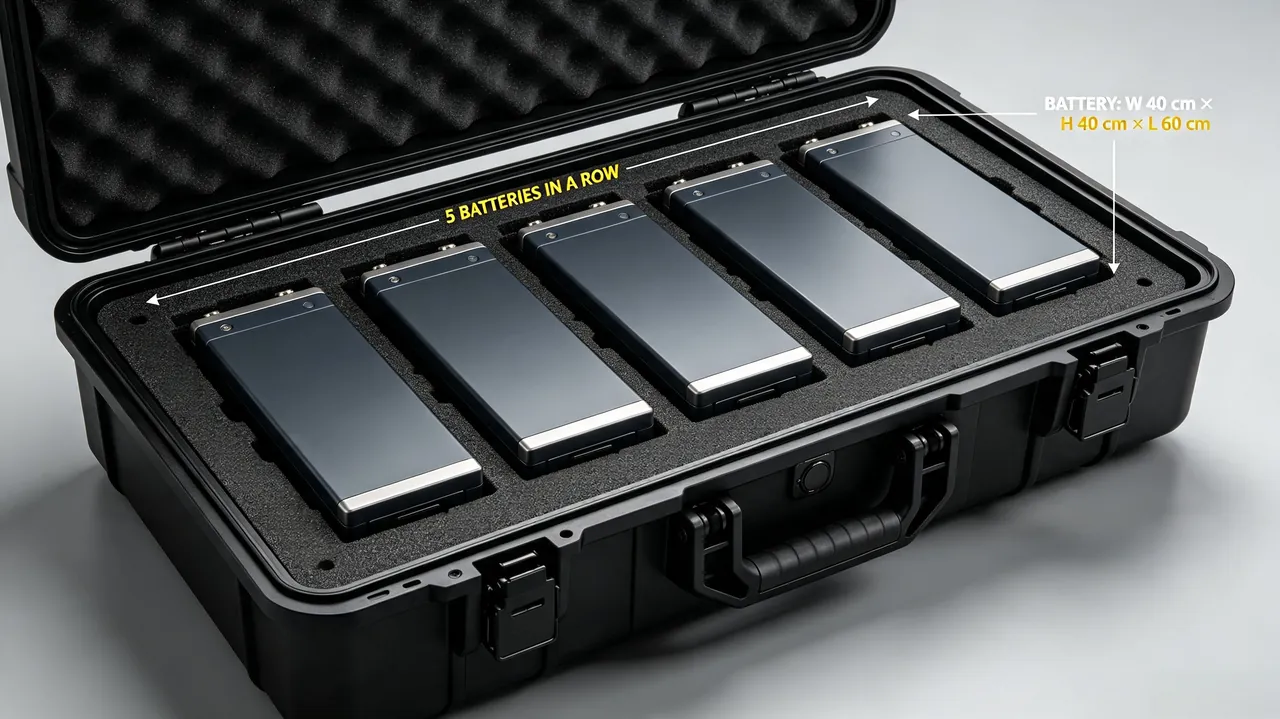
Shielding effectiveness is expressed in decibels; the higher the number the stronger the protection. Civil and industrial scenes often test to IEC 61000 series and IEEE 299; classified and military scenes refer to GJB series, MIL-STD-188-124 and relevant NATO storage rules. Ordinary office classified transport may need forty to sixty decibels to block casual eavesdropping, while high-classification terminals should exceed seventy decibels.
The test band spans kilohertz to several gigahertz, and the report should give an attenuation curve at different frequencies rather than a single number. Buyers should require a report from a CNAS- or CMA-accredited lab and a clear test setup including case open/closed state and gasket age. Higher grade is not always better; over-design raises weight and cost, so match the grade to the equipment's exposure risk and compliance needs. Overall EMC requirements are contrasted in the EMI shielding case guide, whose limits complement shielding tests.
When reading a report, focus on the "worst frequency point" not the "best". Strong performance at one band does not mean full-band compliance; the real threat may sit exactly at the low point. The technical agreement should therefore state "full-band minimum shielding not below a value" and keep the right to sample by worst frequency on arrival, preventing suppliers from hiding weak bands behind peak data. For batch equipment, combine first-article qualification with periodic sampling to ensure consistency.
8. Typical Scenes for Classified Equipment Transport
In security organisations the Faraday cage case moves encryption machines, key carriers, communication main boards and portable detectors so they cannot be remotely woken or near-field read en route. In field vehicles, temporary command posts and cross-region escort, the case works with lead seals and location tags to form a "physical shield plus process control" double line of defence.
Medicine and research also use them. Some implantable device samples, precision measurement references and quantum-sensor prototypes are extremely RF-sensitive and must be shielded in transport from nearby base stations and walkie-talkies. Industry uses the case as a temporary "quiet chamber" for sensitive controllers during debugging in strong EM environments. Transport protection for communication electronics is in the communication electronics protective case, whose shock and location methods also apply.
Beyond these, mobile key devices in finance and government, high-sensitivity receive front-ends in labs, and on-site forensic collection terminals all rely on the Faraday cage case to stay "un-wakeable and un-readable" in transit. Once near-field probed en route, such equipment can leak information or be tampered with, so the case is paired with full-process sealing and two-person escort. For cross-border scenes, evaluate road risk with the transport vibration testing cases.
A useful pattern is to treat the case as part of a chain of custody rather than a standalone box. At each handover, record the seal number, the case serial and the responsible person; on arrival, confirm the seal is intact before any field check. If the case carries a location tag, the tag itself should be outside the shielded cavity so it can report position without being a leak path, and its battery should be isolated from the inner equipment. This discipline matters more than the last decibel of shielding, because a perfectly shielded case with a broken seal still fails its security purpose.
9. Selection Difference from EMC Shielding Cases
Many users confuse "Faraday cage case" with "EMC shielding case"; the principles are close but the focus differs. The Faraday case stresses broad-band passive isolation of RF fields, especially secrecy and anti-eavesdropping; the EMC case more often means a container that suppresses the equipment's own outgoing radiation to meet EMC limits. Both rely on conductive continuity, but test criteria and certification differ.
Clarify the goal first: block external signals in (information secrecy), block internal radiation out (EMC), or both. The combined product meets both shielding and EMC limits on one shell with filtered ventilation and filtered power interfaces. If used only at rest in storage, weaken heat openings; if it must work powered, fit waveguide windows and filtered connectors. The detailed comparison is in the EMC shielding case guide, with a dedicated chapter on filtered-interface selection.
With limited budget, rank by "main threat": if anti-eavesdropping secrecy is core, prioritise external-signal blocking and physical sealing; if non-interference is core, prioritise shell radiation suppression and filtered interfaces. The two product families can sometimes be derived from the same shell platform by the same maker, differing only in gasket, opening and filter configuration, so stating the purpose avoids paying for unneeded capability. When modifying stock cases, assess the original gasket state before reuse.
10. Stacking, Piling and Transport Fixation
Batch transport needs piling stability. Corner reinforcement ribs and locating bosses let stacked load pass along the side walls instead of pressing the lid gasket, avoiding permanent deformation of the conductive gasket under long load. Keep pile height within the rated layers and use straps or pallet limits. General piling rules are in the protective case stacking guide.
Transport fixation follows "reduce vibration, prevent slip". After the inner equipment is located by routed foam, put the case in a tray with anti-slip pads; road transport cares about random vibration and shock, rail and air about low-frequency high acceleration. For shielding cases, straps must not press the lid seam and break the EM seal. Piling and transport safety are in the seal shock case, whose buffer pads and locating blocks can be borrowed directly.
For cross-city or cross-border escort, also plan the case position and buffering inside the vehicle. Place the case at the centre of a damped tray, fixed by locating blocks on all sides to avoid collision on hard braking. For long road transport, add an elastic layer between tray and floor to absorb low-frequency vibration. On arrival, re-test key seam resistance before opening, confirming shielding was not harmed, then enter the EPA or secure area. For valuable equipment, measure seam resistance before and after transport to form a comparison record.
Do not overlook the tray itself. A steel tray with welded corners keeps the case square under stack load, while a thin stamped tray can rack and twist the lid seam. For air transport, the tray should be sized to the unit-load-device footprint and secured with certified restraints; for sea transport, add desiccant and a vapour barrier because the container atmosphere can swing widely. The stacking discipline in the protective case stacking guide applies here too: keep the rated layer count and never rest a second case directly on the lid gasket of the one below.

11. Environmental Adaptation and Temperature-Humidity Control
Most Faraday cage cases are metal shells that easily condensate inside from day-night temperature swing, and condensation corrodes boards and gaskets. The fix is silica gel or adjustable humidity cards plus controlled opening frequency so internal humidity balances slowly. For high-humidity sea and tropical use, the shell needs salt-spray protection and the liner a mould-resistant material.
For temperature, a metal shell heats up markedly in direct sun; if the equipment has an upper working limit, add a thermal shroud or avoid direct light. High-altitude air transport pressure difference is eased by a pressure-equalisation valve, but the valve must carry an EM filter or it becomes a leak point. Co-design of temperature-humidity and protection grade is in the IP rating guide, treating shielding, water proofing and humidity control as one system.
In extremely cold or hot regions, also watch gasket low-temperature brittleness and high-temperature softening. Conductive silicone keeps elasticity at minus forty degrees Celsius, while some foam gaskets harden and lose spring-back when cold. Cold-region selection should specify low-temperature-grade gaskets and do a sealing re-check before winter to prevent cold-induced seam leaks. For tropical long storage, replace desiccant regularly and check coating weather resistance so salt spray does not accelerate shell corrosion.
Humidity control is not only about desiccant. A humidity card with six or more colour steps gives a quick visual state without opening the case to a gauge, and an electronic logger with a window lets staff read trend without breaking the seal. If the equipment inside has a lower humidity limit, set the desiccant quantity from the case volume and the expected transit days, then add a margin for hot, humid legs. Remember that opening the lid in a humid bay can dump more moisture in one minute than a week of slow diffusion, so plan openings for the driest available space and keep them as short as possible.
12. Verification and Arrival Acceptance
Arrival acceptance has three steps. Step one, appearance and continuity: with a milliohm meter measure the resistance from each point to the shell when the lid is closed, below the set threshold. Step two, gasket compression: after closing, visually confirm the gasket overflows evenly with no break. Step three, send for third-party shielding test if needed, keeping attenuation data at different frequencies.
Quick field checks use an RF source and field-strength meter, transmitting outside and receiving inside, to see if attenuation meets the grade. In routine maintenance, re-test key seam resistance quarterly and replace gaskets promptly when aged, finger stock deformed or paint peeled. Suppliers that provide model-specific test files and material certificates sharply lower acceptance risk, a compliance point stressed in the EMC shielding case guide. Archive acceptance records as the baseline for later re-tests.
To close the loop, put acceptance results into a "one case one file" record of purchase batch, arrival data, past re-tests, gasket replacement time and responsible person. Batch equipment units can sample a proportion for destructive or non-destructive re-test to verify consistency. When a batch shows a trend of declining shielding, trace material or process change, stop loss in time and push the supplier to correct. Critical-equipment cases can use a two-person acceptance check to avoid single-point error.
13. Maintenance, Life and Spare Parts
The life weak points of a Faraday cage case are usually the gasket and locks. Conductive foam is best replaced every twelve to twenty-four months or by open cycles; finger stock can be cleaned with anhydrous ethanol and a thin protective grease. Shell paint scratches should be re-sprayed with conductive paint promptly to keep continuity. Spare parts list should cover gaskets, lock cores, hinges and valve filters.
Long-stored cases should be vented every half month and desiccant dried regularly to avoid internal damp. Retired cases with residual sensitive information must be de-magnetised or have the conductive layer physically destroyed before scrap. Batch units should keep a "one case one file" of purchase, test, repair and calibration for full-life traceability. Combined protection and maintenance are also in the communication electronics protective case, whose maintenance cycle can be referenced.
Maintenance should enter budget and cycle management. Gaskets, desiccant and filters are consumables that should be stocked above the minimum to avoid shortage-driven sick use. Critical-post cases can set a "mandatory overhaul on expiry" mechanism where someone replaces gaskets on schedule and re-tests, ensuring compliant shielding at all times and turning passive repair into active support. For end-of-life gaskets, replace the whole ring rather than patch locally, preventing uneven compression and seam leaks from mixed old and new gasket.
FAQ
Q: Can a Faraday cage case completely block all signals? A: No, it cannot absolutely block everything. Shielding effectiveness in decibels represents the degree of signal attenuation, not zero penetration. A quality case can attenuate common cellular, wireless-local-area and walkie-talkie bands by more than sixty decibels so external devices barely sense the interior signal, but extremely low-frequency magnetic fields and untreated physical gaps may still leak. Correct selection matches the shielding grade and gasket plan to the threat band, and pairs the case with lead seals and process control as multiple layers rather than relying on a single box. After arrival, also measure the worst frequency to confirm full-band compliance before use, avoiding misleading by peak data. For very sensitive equipment, add physical sealing and full-process escort so hardware shielding and management measures close into a loop. Practically, treat the case as one layer in a chain: a perfect shield with a broken seal still fails its job, so verify the seal at every handover and keep lid openings short in humid bays. Re-test the seam resistance on a fixed schedule so slow gasket ageing is caught before it crosses the security threshold.
Q: Is a plastic shell with conductive paint reliable? A: It is reliable but depends on coating completeness and thickness. Conductive paint at micrometre scale already gives good high-frequency shielding, but pinholes, scratches or edge peeling form local leak points that sharply lower overall effectiveness. Engineering practice adds spray and overlap strips at vulnerable corners and avoids frequent friction. For high-classification scenes, prefer all-welded metal shells; conductive paint suits lightweight, mid-low-grade portable transfer. Either way, provide coating-resistance and shielding test reports and re-test periodically. For batch products, sample-check coating continuity by batch so individual boxes with uneven spray do not fail and quality variation is controlled at source. Keep in mind that paint is a surface film and can be worn by repeated lid operation or abrasive packing, so inspect the edges at every maintenance cycle and touch up before bare metal shows. Where the case must survive rough field handling, a metal shell with a separate conductive gasket is the more robust choice even if it weighs more, because the shielding does not depend on a coating that can be scratched away.
Q: Why use an anti-static inner liner? A: Because the encrypted modules, boards and sensors being transported are mostly static-sensitive, and friction or contact in transit can generate kilovolt electrostatic discharge that punches through devices or causes latent damage. The anti-static liner keeps surface resistance in a safe range and isolates equipment from the metal wall, protecting parts without affecting external RF shielding. The liner material, resistance and replacement cycle should be clearly specified, and the same practice applies in static-protective cases. Ground the liner and shell equipotentially and ground before opening to avoid discharge at the instant of lid opening. For multi-cell liners, test surface resistance cell by cell so the whole liner stays in the qualified range with no static blind spot. Note that anti-static is not the same as conductive: a liner that is too conductive can itself couple interference, so select the resistance band that matches the equipment class rather than the lowest number. Pair the liner with low-charging foam and avoid wool or nylon that builds static, and log the liner grade in the one-case-one-file so a later re-cut matches the original protection level.
Q: How to judge if supplier shielding data is trustworthy? A: Require a formal report from a CNAS- or CMA-accredited lab stating the test standard, frequency range, case state and gasket age. Beware of promotions that give only a single maximum with no frequency curve. On arrival, do a quick comparison with a field-strength meter; if the gap to the claim is too large, return or claim. In long cooperation, also agree periodic re-test and spare supply terms, and write the "full-band minimum" into the technical agreement to stop best-band hiding worst-band and control data distortion at source. For critical projects, ask the supplier to open the test-setup video to confirm the tested state matches the delivered state. A second guard is to specify the exact reference antenna and distance used, because shielding numbers shift with measurement geometry; without that detail two reports are hard to compare. Keep the accredited report with the purchase record and re-validate on a cycle, since a gasket that passes at delivery can drift after thousands of open-close cycles. Treat the report as a contract deliverable, not a marketing extra.
Q: Will a ventilated shielding case leak? A: Properly designed, no. The vent uses a metal waveguide window whose cut-off frequency is far above the use band, so air flows but RF is blocked, like a microwave oven window. The key is that the waveguide window is conductively welded to the shell and ordinary punched mesh is not used as a substitute. If the inner equipment must work powered, power and signal lines should also enter through filtered connectors, or the wires become an interference channel. At acceptance, probe near the outer side of the waveguide window for field strength and confirm no abnormal leak before judging the ventilation design qualified. For high heat load, enlarge the window but recalculate cut-off frequency so ventilation and shielding both hold. Remember that the window is only as good as its weld: a visually fine window with a discontinuous seam still leaks, so include it in the continuity-resistance check along with the lid gasket. If the equipment does not need to run while sealed, choose the unvented version and cool it only when open, removing the ventilation leak path entirely.
Q: Can a Faraday case be used as a normal water-proof case? A: Structurally they overlap but are not equal. A metal shielding case often also has some protection, but the EM gasket and the water gasket focus differently: the former on conductive continuity, the latter on liquid blocking. If water proofing, dust proofing and shielding are all needed, choose a composite product clearly marked with an IP grade whose gasket is also conductive, and verify openings block both liquid and wave. Do not assume a shielding case is necessarily water-proof; check the certification. When buying both, require separate IP and shielding reports from the supplier so one qualification does not substitute for the other. For outdoor long storage, also check the shell weather coating so UV does not accelerate gasket ageing. A useful check is to dunk-test the empty case and re-measure seam resistance afterwards; if the wet gasket reads higher resistance than the dry one, the conductive path was partly carried by a water film and the dry-state shielding may be overstated. Specifying both ratings in one document avoids that ambiguity.
Q: Does transport compression that deforms the case affect shielding? A: Yes, it does. Local shell dent changes conductive continuity, and lid-seam misalignment makes gasket compression uneven and creates gaps, lowering shielding. So in piling and lashing, let load pass along the reinforcement ribs and avoid point-pressing the lid seam; the transport tray should add anti-slip and buffer pads. On arrival, if shell deformation is found, first re-test continuity resistance and confirm compliance before use, or repair or replace the gasket. For critical equipment, measure seam resistance before and after transport to confirm with data that shielding was not harmed, controlling risk before lid opening. For repairable dents, straighten first then re-test; do not use a poorly straightened case. The same logic applies to drops: a corner impact that cracks the weld bead opens a leak path even if the lid still closes, so include a visual weld inspection in the arrival check and photograph any deformation for the record. Where cases are reused across many trips, set a maximum allowable dent depth in the specification.
Q: What to watch in long-term storage of classified equipment? A: Long storage needs dry environment, regular ventilation and desiccant replacement to avoid condensation corrosion; monthly check of lead seal and lock integrity with opening records; quarterly re-test of key seam resistance and gasket state. Store away from strong magnets and high-power RF sources, and stack vertically within rated layers. Keep a one-case-one-file for audit and traceability so the security chain stays controlled end to end. Retired cases with sensitive information must be de-magnetised or have the conductive layer destroyed before scrap to stop leakage through residual media, extending security management to the full-life end. Also log storage temperature and humidity and investigate any abnormal swing for impact on shielding or liner state. A practical routine is to assign each case a next-inspection date and block its use after that date until serviced, so a case is never opened in the field with an expired gasket. For cases that sit unused for years, re-validate shielding before returning them to service rather than assuming the last test still holds, because elastomer gaskets age even in storage.
Q: Which details are easiest to miss when purchasing? A: The easiest misses are gasket life, opening filters and third-party reports. Many quotes give only the shell price, excluding waveguide windows, filtered connectors and spare gaskets; some suppliers use theory instead of measured values. The technical specification should state shielding grade, test standard, spare list and re-test cycle, and require model-specific test files. For batch purchase, also agree first-article qualification and process sampling to lower systemic risk. Write opening life, low-temperature suitability and arrival sampling rights into the contract to avoid later disputes and security holes from missing details. For multi-year supply, require a material-change notification obligation so suppliers cannot silently swap gasket material and weaken performance. A further blind spot is delivery state versus test state: insist the supplied case is built exactly as the tested sample, with the same gasket part number and the same filtered connectors, and audit a unit from the production batch rather than a hand-built prototype. Closing these gaps in the contract is cheaper than discovering them after a leak.