

Boxknow
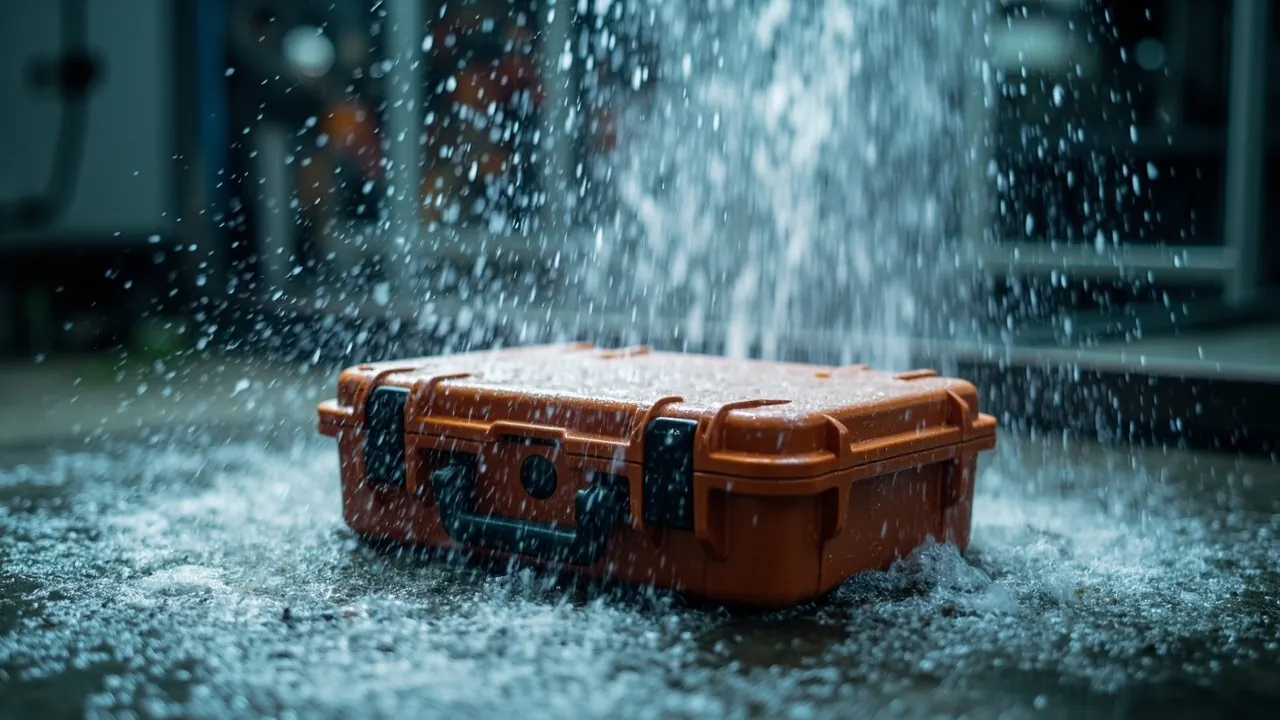
What Is IP69K? Test Conditions for High-Pressure Hot-Water Jets on Protective Cases
IP69K is a hot high-pressure water jet rating, not a stronger IP68. This guide gives the ISO 20653 and IEC 60529 / GB/T 4208 IPX9 conditions, around 80 C, 80 to 100 bar and 14 to 16 L/min at four jet angles, compares IP67, IP68, IP69 and IP69K, and covers seal material selection, failure modes and report review.
Read Article →
What Is a Tumble Test for Protective Cases? ISTA 1A versus 2A Explained
A tumble test accumulates impact in a rotating hexagonal drum, while the difference between ISTA 1A and 2A is the degree of simulation: 1A runs fixed-frequency vibration and drops, and 2A adds atmospheric conditioning, compression and random vibration. Includes an item-by-item comparison, weight bands, how 3A, ISO 4180 and ASTM D6179 fit, and a report checklist.
Read Article →
How Is ISTA Transport Testing Performed? Standard Drop and Vibration Procedures
ISTA transport testing follows four steps: choose the procedure, condition the specimen, run the sequence and issue the verdict. ISTA 3A covers single parcels, 3E covers unitised loads and 2A covers a known transport mode. The full sequence includes atmospheric preconditioning, drops, loaded and unloaded random vibration, compression and a final drop, with a selection method and report checklist.
Read Article →
Case Latch Cycle Life Testing: Opening Cycles and Fatigue Standards
A latch life figure is meaningless without its criterion and conditions. Covers three fatigue mechanisms, rig build-up, temperature, load, speed and angle conditions, four measurable pass criteria, reference standards frameworks and accelerated life conversion.
Read Article →
Low-Temperature Brittleness Testing for Protective Cases: Judging a Minus 40 C Falling Weight Impact
A low-temperature brittleness test measures the ductile-brittle transition to ISO 812, GB/T 15256, ISO 974 or ASTM D746 and derives the 50 per cent failure temperature Tb, while a -40 C falling weight impact judges structural, functional and sealing retention after a strike. Includes test conditions, driving variables, design measures and a report checklist.
Read Article →
What Does MIL-STD-810 Testing Cover? How Protective Cases Comply
A practical guide to MIL-STD-810H test methods for temperature, humidity, vibration, shock and salt fog, and how protective cases meet military-standard requirements through structure, sealing and material design.
Read Article →
How to Perform an Airtight Test on a Protective Case: The Pressure Decay Method in Practice
A practical guide to pressure decay airtight testing for protective cases: physics and formulas, ASTM D4991 and D3078, parameter setting, temperature and volume correction, method comparison and production line deployment.
Read Article →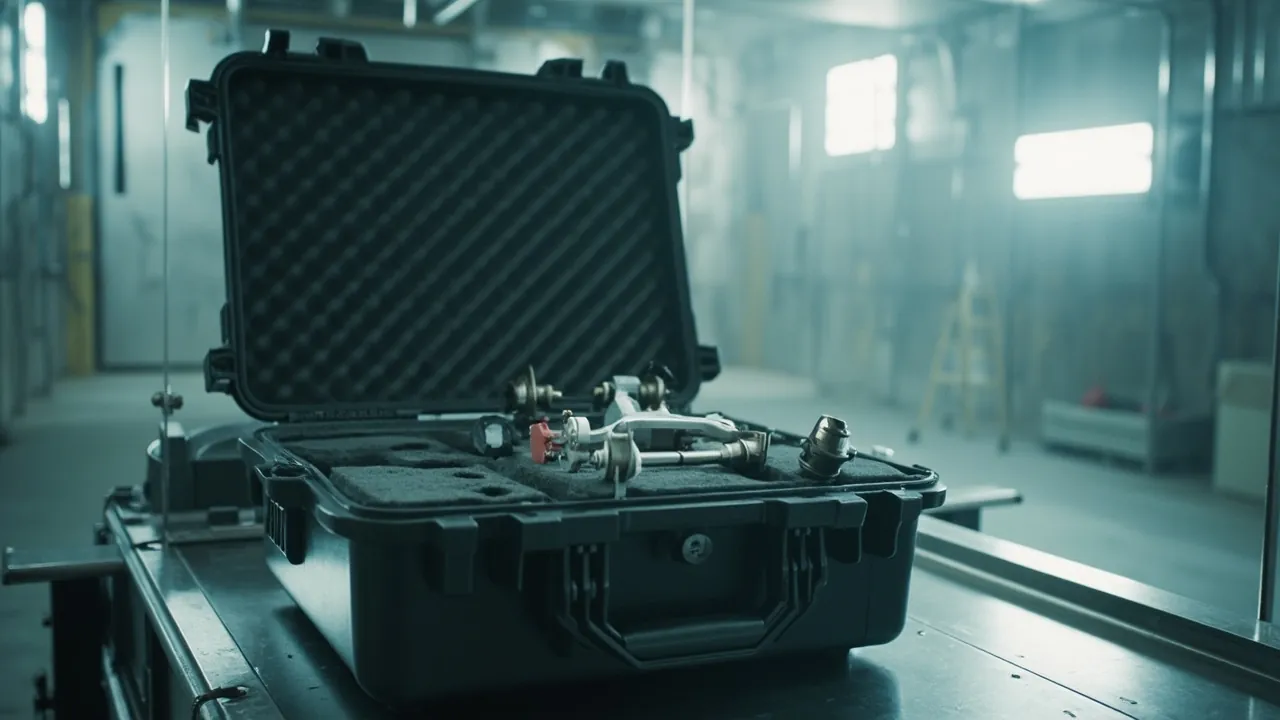
How Many Hours of Salt Spray Testing Does a Protective Case Need?
Salt spray duration follows from the target corrosivity category, the surface treatment of the hardware and the acceptance criteria: 24-48 hours inland, 96-168 hours general outdoor, 240-480 hours within 1-5 km of the coast, and 480-720 hours or more offshore. Includes ISO 9227, ASTM B117 and GB/T 10125 parameters, ISO 12944 categories, assessment methods and a report checklist.
Read Article →
How to Run a Stacking Load Test on Protective Cases: Verifying Warehouse Stack Height Capacity
A stacking test measures creep under sustained static load, not momentary compression. This guide gives the load formula, the roles of GB/T 4857.3, GB/T 4857.4, ASTM D642 and ISO 4180, three test methods, duration and conditioning, pass criteria, five failure modes and an acceptance checklist.
Read Article →
How to Read UL94 Flame Retardant Ratings: V-0 versus V-2
UL94 V-0 versus V-2 explained: vertical burn criteria, the cotton ignition dividing line, the HB to 5VA ladder, material-to-thickness binding, polymer selection and how to verify a UL94 report.
Read Article →
What Certifications Do Protective Cases Need for the US? FCC and California Proposition 65
A guide to US compliance for protective case exports, covering FCC rules, California Proposition 65, CPSIA and transport regulations, plus documentation and customs tips.
Read Article →
How to Run a UV Aging Test on a Protective Case: Xenon Arc and Outdoor Exposure
A practical guide to UV ageing validation for protective cases: xenon arc versus fluorescent UV, ISO 4892-2 and ASTM G155 parameters, duration conversion, outdoor exposure and assessment metrics.
Read Article →