

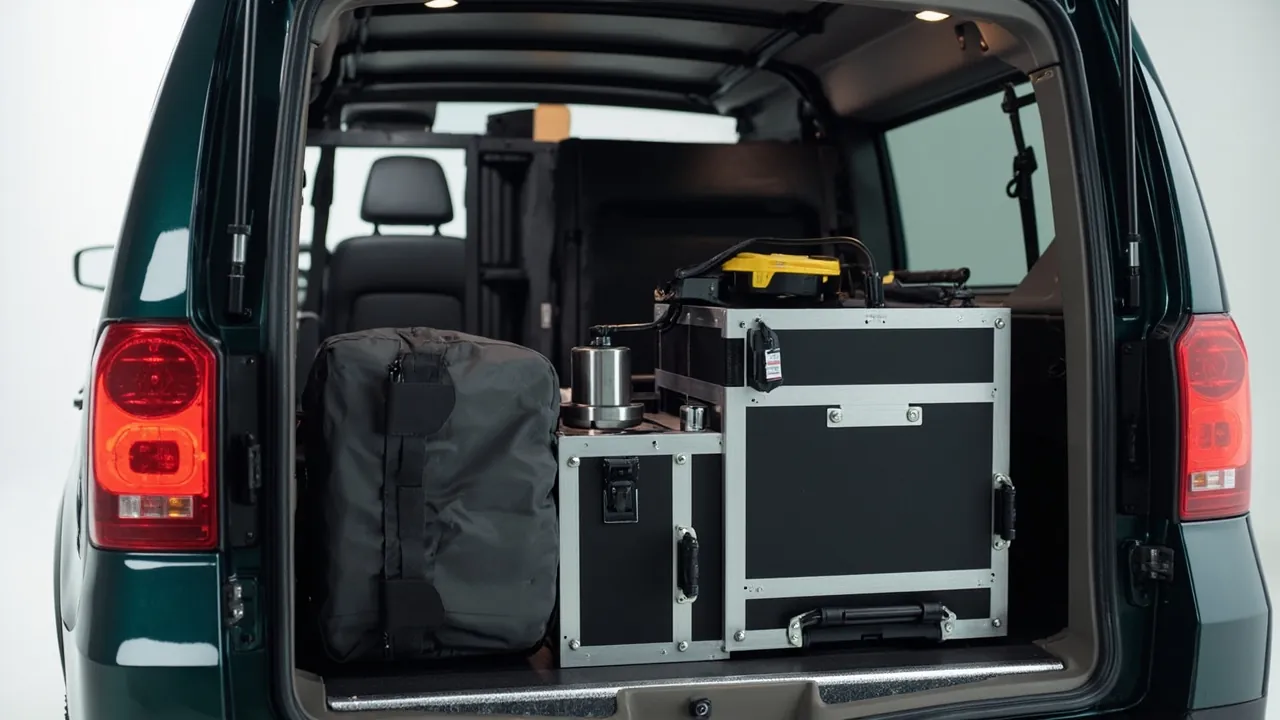
Pet grooming vans, mobile veterinary units, and boarding facilities move expensive, sharp, and often moisture-sensitive equipment between sites every single day. A purpose-built protective case is not a luxury for these businesses; it is the difference between a clipper that works on the next appointment and one that fails mid-groom. The right pet-service equipment case combines a washable sanitary liner, an IP-rated seal, shock-absorbing foam, and a latch system that survives thousands of open-close cycles, so grooming, veterinary, and boarding gear arrives clean, dry, and ready to use. This guide explains how to specify, source, test, and maintain cases for the three most common pet-service workflows, with concrete parameters and references to IEC 60529, GB/T 4208, ISTA procedures, and UL 94 so your procurement team can justify the spend with facts rather than opinions.
Pet-service gear has unusual failure modes. Grooming clippers and blades corrode when exposed to shampoo residue and humidity. Veterinary instruments such as scalpels, needles, and endoscopes suffer edge damage and contamination if they shift inside a case. Boarding kits accumulate hair, dander, and organic soil that becomes a hygiene risk unless the liner can be removed and sanitized. A generic toolbox or a soft bag cannot address all three at once. The cases described here are engineered around those three problems, and the rest of this article shows you how to match case specifications to each job.
Whether you run a single mobile grooming van or a regional boarding network, the principles below apply. We cover equipment categories and their vulnerabilities, liner and sealing technology, shock and vibration control, foam layout, chemical and flammability behavior, hardware selection, hygiene compliance, sizing and mobility, transit testing, customization options including OEM/ODM, acceptance inspection, service life and cost, and the procurement mistakes that quietly drain budget. Read the Table of Contents to jump to the section that matches your current buying decision.
Table of Contents
- 1. Why Pet-Service Equipment Demands a Purpose-Built Case
- 2. Equipment Categories and Their Failure Modes
- 3. Washable, Sanitary Liners for Grooming and Vet Use
- 4. Ingress Protection Rated to IEC 60529 and GB/T 4208
- 5. Shock and Vibration Management for Hand Tools
- 6. Foam Inserts and Dividers for Blades and Needles
- 7. Chemical Resistance and UL 94 Flammability Behavior
- 8. Hinges, Latches and Seals That Survive Daily Use
- 9. Cleaning, Disinfection and Hygiene Compliance
- 10. Sizing, Weight and Mobile Field Service
- 11. Stacking, Transit and ISTA Drop Testing
- 12. Custom Foam and OEM/ODM Options
- 13. Acceptance Inspection and AQL Sampling
- 14. Service Life, Cost and Total Cost of Ownership
- 15. Common Procurement Mistakes to Avoid
1. Why Pet-Service Equipment Demands a Purpose-Built Case
Pet-service businesses operate in conditions that defeat ordinary storage. A grooming van interior swings between warm, humid air from driers and cold morning starts. Shampoo, conditioner, and disinfectant overspray settle on every surface. Hair and dander are everywhere. Under those conditions a steel toolbox rusts, a fabric bag absorbs odors, and a plastic tote cracks at the hinge after a few months of daily loading. The cost is not only the replacement case; it is the clipper motor that corroded, the blade that chipped, and the missed appointment while you wait for a repair.
A purpose-built case approaches the problem from the equipment side. The interior is laid out so each item has a dedicated, labeled pocket that prevents contact and abrasion. The liner is a closed-cell material that wipes clean and does not trap moisture. The shell carries a gasket so the interior stays at a controlled humidity even when the exterior is wet. The hardware is rated for high cycle counts. None of these features is exotic, but together they remove the three failure modes that dominate pet-service field work: corrosion, edge damage, and contamination.
The business case is straightforward. A mobile groomer who loses half a day to a failed clipper loses more than the price of a case. A boarding facility that cross-contaminates between dogs faces liability far larger than any foam insert. Specifying a case deliberately, rather than reusing whatever bin was on the shelf, is one of the highest-return decisions a pet-service operator can make. The following sections translate that logic into measurable specifications you can put on a purchase order.
2. Equipment Categories and Their Failure Modes
Different pet-service workflows carry different gear, and each gear type fails differently inside a poor case. The table below maps the three main workflows to the items they carry and the dominant risk, so you can prioritize case features by what you actually transport.
| Workflow | Typical items | Dominant failure mode | Priority case feature |
|---|---|---|---|
| --- | --- | --- | --- |
| Grooming | Clippers, blades, shears, dryers, shampoos | Corrosion from residue, blade edge chipping | Washable liner, blade pockets |
| Veterinary | Scalpels, needles, endoscope, monitors | Contamination, instrument shift, shock | Sealed divider, foam cradle |
| Boarding | Leashes, meds, feeders, records, cleaners | Organic soil, odor, mixed-item abrasion | Removable sanitary liner |
Grooming clippers are the highest-value single item in most kits. Their motors dislike moisture, and their blades are hardened steel that chips if it strikes another tool. Veterinary field kits lean toward delicate and sterile items; an endoscope is expensive and easily scratched, and any instrument that touches a patient must not arrive contaminated. Boarding gear is lower value per item but higher in soil load, so the liner that holds it must come out and wash easily.
Understanding this split prevents the common mistake of buying one case style for everything. A grooming case wants open blade pockets and drainage; a veterinary case wants closed, sealed cells; a boarding case wants a liner you can throw in a washer. When you brief a supplier, lead with the workflow, not the dimensions, because the workflow determines the interior architecture more than the outer size does.
3. Washable, Sanitary Liners for Grooming and Vet Use
The liner is the surface your equipment actually touches, so it deserves more attention than the shell. For pet service the liner must be closed-cell, non-absorbent, and resistant to the cleaning chemicals you already use. Open-cell foams wick shampoo and urine and then harbor bacteria; they should be avoided in any case that carries patient-contact or food-adjacent items. A closed-cell ethylene-vinyl-acetate or polyethylene liner wipes dry and does not become a reservoir for odor.
Removability matters as much as the material. A liner that zips or lifts out lets staff sanitize it away from the shell, which is where hair and dander collect. After a boarding shift, the liner goes to a wash station while the shell is wiped down separately. This separation is the practical core of hygiene compliance and is why a fixed, glued-in foam is a poor choice for pet service even when it is cheaper.
For a deeper look at liner materials and how they compare on cleanability, see our guide to cushion and liner cases. The right liner is the one your team will actually remove and clean on a schedule, because a liner that is theoretically washable but never removed protects nothing.
4. Ingress Protection Rated to IEC 60529 and GB/T 4208
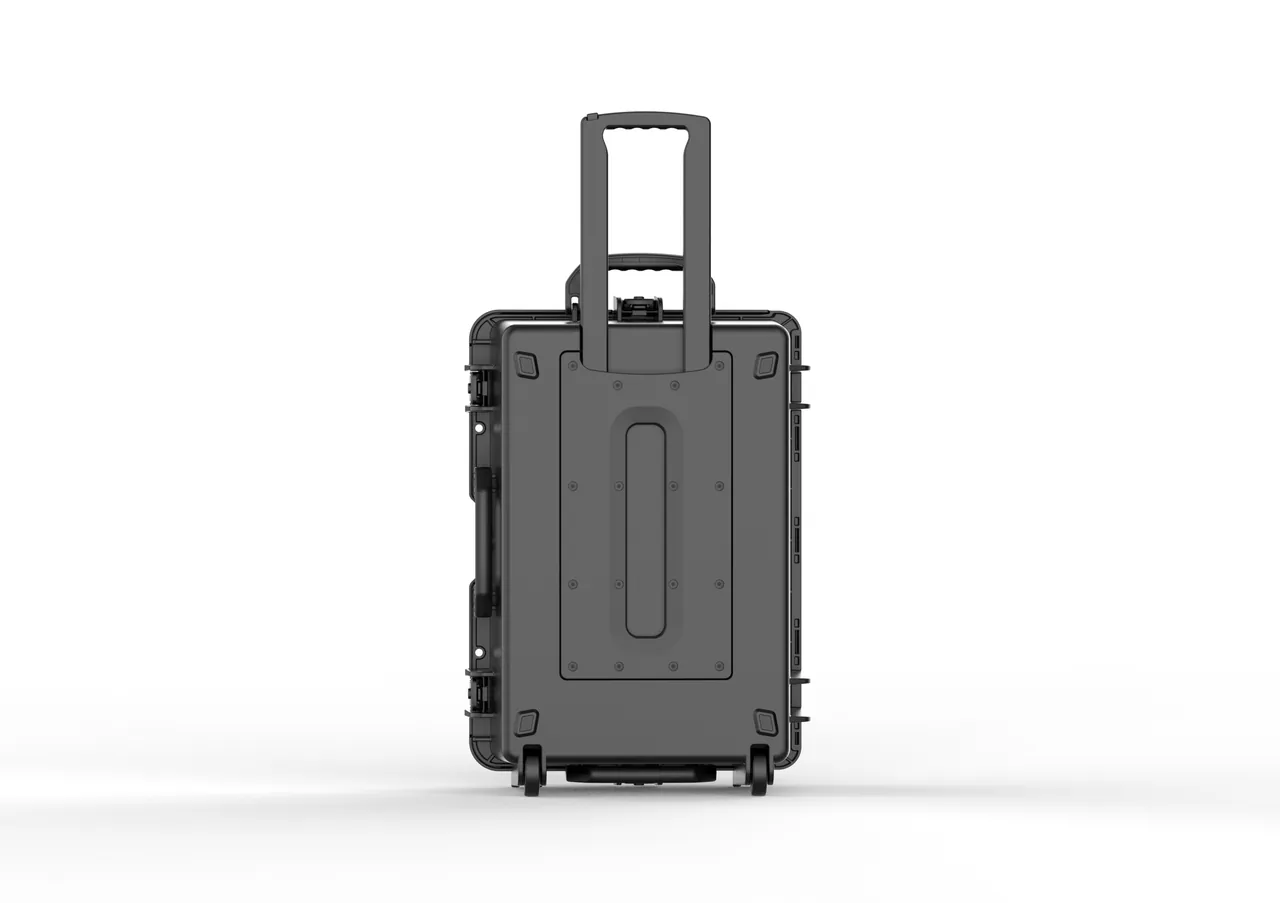
Ingress protection is the international language for how well a case keeps solids and water out. IEC 60529 is the reference standard, and GB/T 4208 is its Chinese national counterpart with aligned test methods, so a case marked to both gives you traceable proof rather than a marketing claim. The familiar IP code reads as IP followed by two digits: the first is protection against solids such as dust and hair, the second is protection against water.
For pet service, IP65 keeps out dust and low-pressure water jets, which covers wash-down and rainy loadouts. IP67 adds immersion protection to one meter for a short period, useful when a case is dropped in a wash bay or left on a wet tailgate. You rarely need more than IP67 for grooming and boarding, and chasing IP68 without a real use case just adds cost. Ask the supplier for the test report that names the standard and the exact code, because the rating applies to the assembled case, not the shell alone.
Sealing is only as good as the gasket and the compression of the latch. A gasket that is pinched or a latch that does not pull the lid tight will leak regardless of the stamped rating. The relationship between sealing and latch design is explored in our waterproof case and IP guide, which is worth reading before you compare quotes.
5. Shock and Vibration Management for Hand Tools
Clippers, dryers, and portable monitors do not like repeated shock. Every pothole on a grooming route is a small impact, and over a year those impacts fatigue clips, housings, and solder joints. The case reduces this in two ways: a rigid shell that distributes load, and an interior foam that decouples the tool from the shell so the impact travels through foam instead of through the device.
The practical target is simple to state and harder to fake: the tool should not move inside its pocket when you shake the closed case. If you can hear items rattling, the foam layout is wrong. Density matters; too soft and the tool bottoms out on impact, too hard and it transmits shock. For hand tools a medium-density ester foam with a precision-cut pocket is the usual answer, while monitors want a softer cradle with more standoff from the shell wall.
Vibration is a slower killer than shock. A dryer that rides bolted to the shell with no damping will, over months, work its own fasteners loose. Foam that wraps the device and isolates it from the wall prevents that creep. When you evaluate a case, do the shake test in the showroom, because it reveals foam quality faster than any specification sheet.
6. Foam Inserts and Dividers for Blades and Needles
Blades and needles are the items most likely to cause injury or contamination if they shift, so they get dedicated, fully enclosed pockets. A blade should sit in a cut pocket with the edge clear of any adjacent tool and clear of the lid when closed. Needles and scalpels belong in a sealed, labeled cell so they cannot migrate and so staff know exactly where the sharp is at all times. This is both a safety rule and a hygiene rule.
The divider system should be configurable, because pet-service kits change as services expand. A removable divider system lets you re-zone the case without buying a new insert, which extends the useful life of the shell. For guidance on designing inserts that hold sharp and delicate items, our custom foam inserts guide walks through pocket depth, clearance, and labeling.
Two cautions. First, do not over-pack; a pocket that is too tight distorts the blade or cracks the surrounding foam. Second, mark every sharp pocket, because in a busy van an unlabeled sharp is a liability. The small cost of engraved or printed labels pays back the first time a new staff member opens the case confidently.
7. Chemical Resistance and UL 94 Flammability Behavior
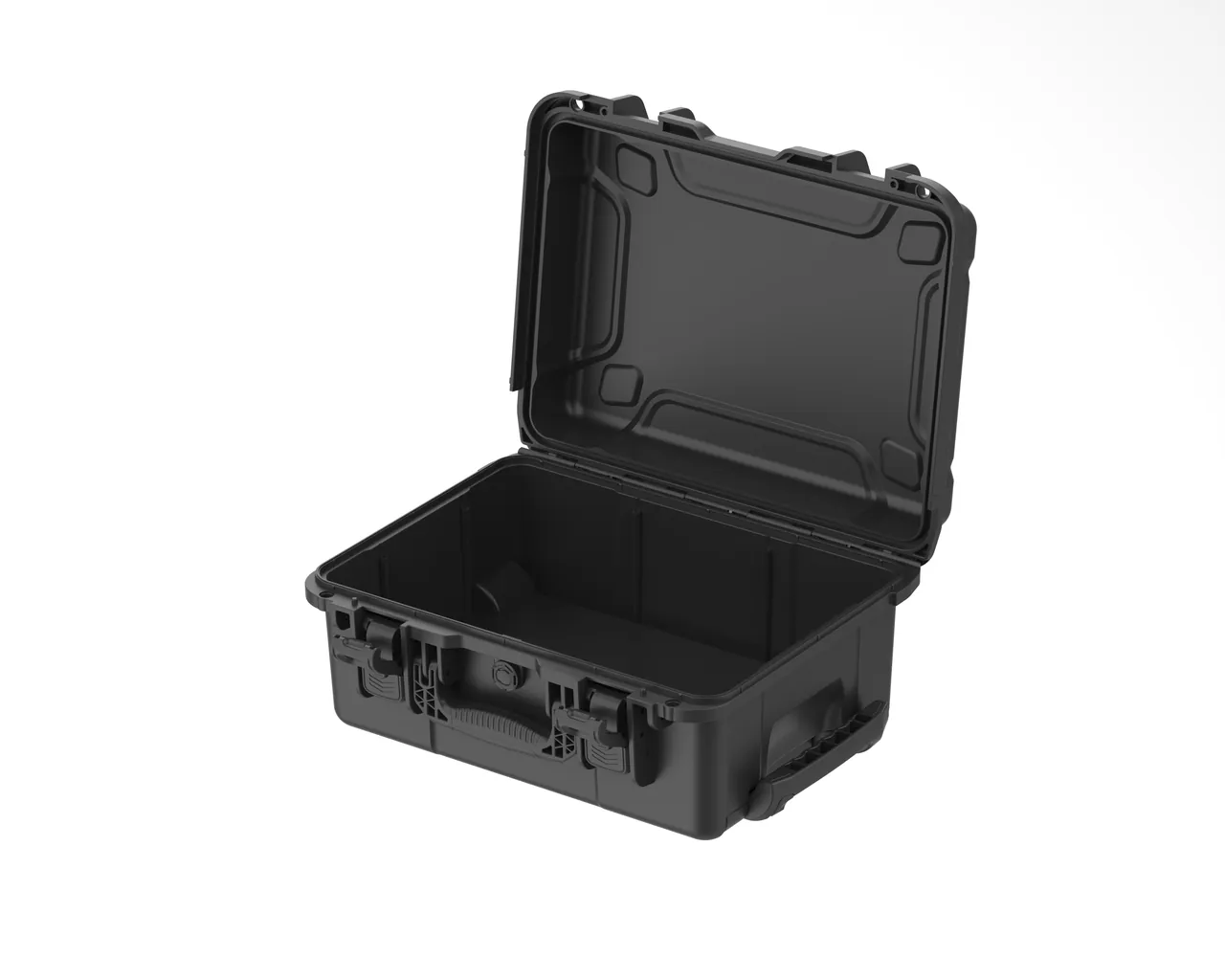
Pet-service cases live next to shampoos, conditioners, disinfectants, and sometimes alcohol-based sanitizers. The shell and liner should resist these without swelling or softening. Most closed-cell foams and copolymer shells handle typical grooming chemicals well, but solvent-heavy products can attack some adhesives, so tell your supplier which cleaners you use and ask for a chemical-resistance statement rather than assuming compatibility.
Flammability is the other material question. UL 94 is the widely used flammability classification for plastic materials, and a case intended for a vehicle interior benefits from a rated, slow-burning or self-extinguishing grade such as UL 94 HB or V-0 depending on thickness. This is not about passing a fire test in the field; it is about reducing the chance that a case near a heater or a battery bank becomes fuel in an already bad situation. Request the UL 94 grade on the material certificate and keep it with your compliance file.
None of this requires exotic materials. It requires the supplier to name the grade and stand behind it. A vague "flame retardant" claim is not the same as a stated UL 94 classification, and for a vehicle-based business the difference is worth a line on the purchase order.
8. Hinges, Latches and Seals That Survive Daily Use
Hardware is where cheap cases die. A pet-service case opens and closes dozens of times a day, rides in a hot vehicle, and gets yanked open with one hand while the other holds a dog. The hinge must be pinned and reinforced, not a living plastic tab that fatigues. The latch must draw the lid down with enough force to compress the gasket, and it must stay closed when the case is dropped or stacked.
This is exactly where the toolbox hinge, latch and seal system earns its place in a spec. A purpose-designed hinge-latch-seal assembly gives you a reinforced pivot, a positive-locking latch, and a continuous gasket channel in one validated package, instead of three parts sourced separately and hoped to fit. For daily-use pet service that integration matters more than any single rating, because the seal only works if the latch actually pulls the lid tight every time.
Specify stainless or coated hardware in wet environments, and confirm the latch can be operated with gloves on, because grooming and veterinary staff are rarely bare-handed. Replaceable latches are a plus; a case whose only failure is a worn latch should not be scrapped. Ask whether the hinge and latch are serviceable before you buy, and you will avoid the most common early replacement trigger.
9. Cleaning, Disinfection and Hygiene Compliance
Hygiene is the compliance backbone of pet service. Between clients, tools that touch animals must be cleaned and, where required, disinfected, and the case that carries them must not reintroduce contamination. The workflow is: remove the liner, wash and disinfect it, wipe the shell interior with a compatible sanitizer, let both dry fully, then reload. A case that cannot be taken apart for this step quietly undermines the rest of your protocol.
Our how to clean a protective case article gives a step-by-step routine and the chemical cautions that keep liners intact. The key points are to use a disinfectant your liner material tolerates, to avoid soaking a closed-cell foam past its seam, and to dry completely before closure so you do not trap moisture that later grows mold. Drying is the step most often skipped, and it is the one that defeats the whole system.
Document the routine. Boarding and veterinary operations increasingly need to show a cleaning cadence, and a case designed for fast teardown makes that cadence realistic rather than theoretical. A five-minute clean you can actually perform beats a perfect clean that never happens.
10. Sizing, Weight and Mobile Field Service
Mobile pet service is weight-sensitive. A grooming van is already heavy with a generator, a tub, and water, so the case must carry the kit without pushing the vehicle over payload. Weigh the loaded case, not the empty one, and keep a margin. A case that is perfect on the bench but too heavy to lift becomes a two-person job on site, which wastes the time the case was meant to save.
Size the case to the kit plus one expansion slot. Too small and you wedge items in, defeating the foam; too large and the foam must be built up with filler that migrates. For mobile grooming a mid-size case that fits clippers, shears, blades, and a dryer in one layer is usually right, with a second smaller case for consumables. Boarding kits can be larger because they are carried less often and weight matters less.
Wheels and a trolley handle turn a heavy case into a rollable one for long walks from the van to the client door. If your route includes apartment buildings or events, consider a case with a retractable handle and wheels, and read our notes on case wheels and trolley handles before choosing, because wheel quality varies widely and a failed wheel strands your kit.
11. Stacking, Transit and ISTA Drop Testing
Cases stacked in a van bounce and shift, so stackability and transit rating matter even for short hops. Look for cases with interlocking ribs or corners that keep a stack from sliding, and avoid stacking a heavy case on a case that holds delicate monitors. The real proof of transit survival is a drop-test standard rather than a claim of toughness.
ISTA procedures are the practical benchmark here. An ISTA 1A or 3A sequence subjects a packed case to drops, vibration, and compression that approximate parcel and mixed-mode shipping, and a case that passes gives you confidence for daily van transit even though the van is gentler than a parcel network. Ask for the ISTA test report and the drop height used, because drop height scales with case weight and a light case tested at a low height is not comparable to a heavy one tested higher.
For a full explanation of how these tests are run and what the results mean, see our ISTA transport testing procedure write-up. Pair the transit rating with the shock guidance in section 5, and you have a case that survives the route, not just the showroom.
12. Custom Foam and OEM/ODM Options
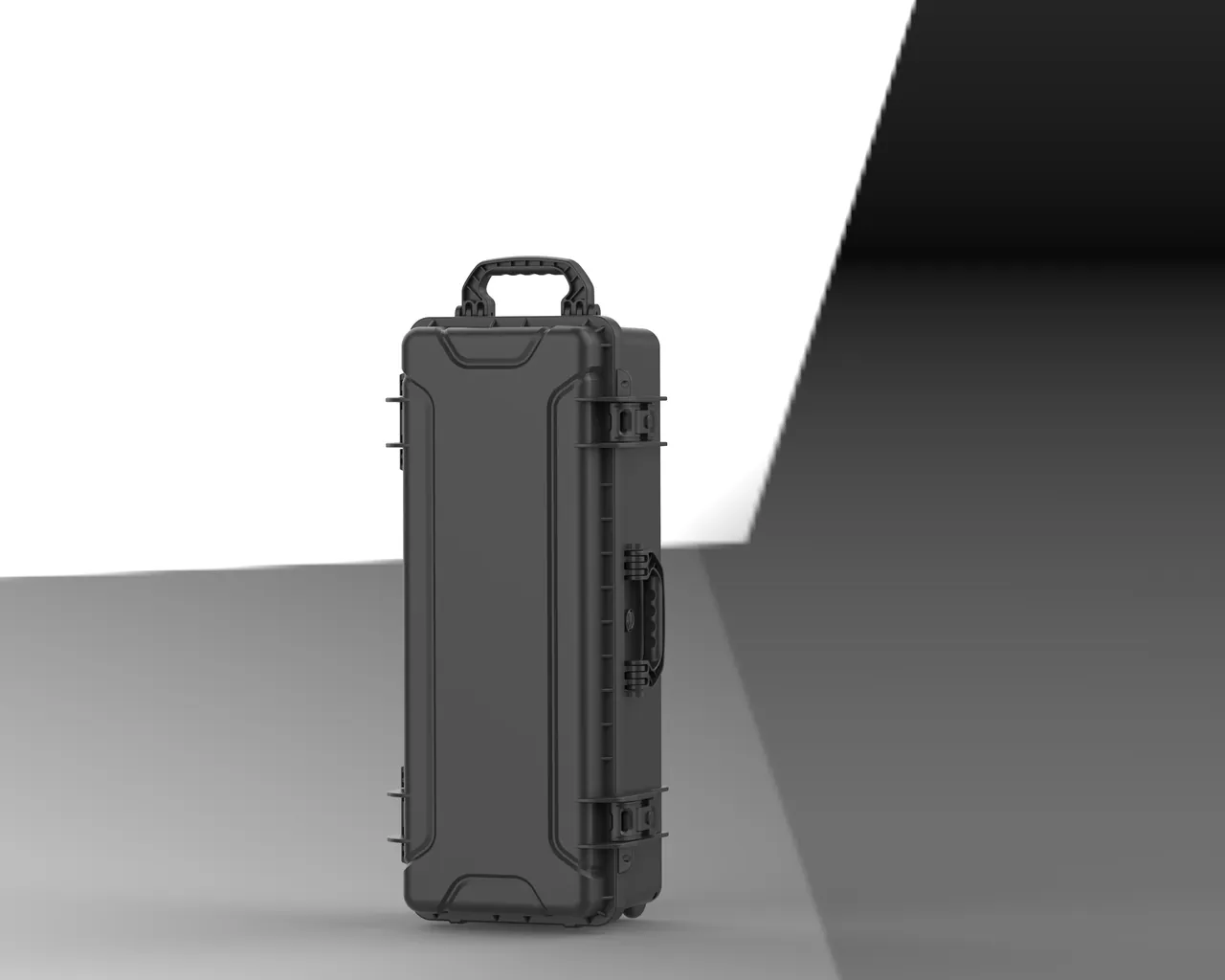
Off-the-shelf cases fit generic kits, but a multi-site pet-service operation benefits from standardization. When your clippers, blade sizes, and monitors are the same across vans, a custom foam layout that matches your exact inventory removes guesswork for every handler and speeds the open-reload cycle. JUNZHJIA supports custom foam inserts and OEM/ODM case production, so you can specify the shell, the liner grade, the pocket map, and the latch hardware as one coordinated package rather than assembling parts from different vendors.
The value of a coordinated build is consistency. Every van gets the same case, the same pockets, and the same cleaning routine, which makes training and audit simpler. JUNZHJIA can also supply the material certificates and test files you need for compliance, which is useful when a boarding or veterinary client asks for proof of hygiene-grade construction. For a broader view of working with a manufacturer, our how to choose a case OEM factory guide covers what to verify before you sign.
Custom does not mean expensive by default. A custom foam for a known kit is often cheaper than buying three generic cases to hold the same items, and it protects the gear better. The decision rule is simple: if your kit is stable and repeated across sites, standardize it; if it changes weekly, stay modular with a removable divider.
13. Acceptance Inspection and AQL Sampling
When cases arrive, especially in a custom batch, inspect them against a plan rather than trusting the carton. A reasonable approach is an AQL sampling check: inspect a stated number of units from the batch and judge the whole lot on that sample, with agreed accept and reject counts. Our custom case acceptance and AQL guide explains how to set the level and what defects to record.
Check the items that actually fail in the field. Confirm the gasket is continuous with no gaps at the corners. Confirm the latch closes with positive resistance and the lid sits flush. Confirm the foam pockets match the drawing and hold the tools without rattle. Confirm the shell has no flash, crack, or thin wall at the hinge. Photograph the first-article unit and keep it as the reference for the batch.
Record the standards evidence in the same file: the IP test report, the UL 94 grade, and the ISTA result if claimed. A case without its test papers is a case you cannot defend in a compliance conversation, and the cost of asking for those papers at acceptance is near zero compared with the cost of requesting them a year later.
14. Service Life, Cost and Total Cost of Ownership
Price is the wrong number to optimize. The number that matters is total cost of ownership: purchase price plus the value of gear you did not lose, plus the labor you did not spend fighting a bad case, minus the resale or reuse of the shell at end of life. A cheaper case that cracks its latch in six months and costs you a clipper is far more expensive than a robust case that lasts years.
| Cost factor | Cheap case outcome | Specified case outcome |
|---|---|---|
| --- | --- | --- |
| Replacement interval | 6 to 12 months | 3 to 5 years |
| Gear damage | Frequent blade and motor loss | Rare |
| Cleaning time | High, poor teardown | Low, fast teardown |
| Compliance evidence | None | Full certificates |
Service life depends on use, but a well-specified pet-service case commonly serves three to five years in daily mobile work. Our protective case service life article gives the wear indicators that tell you when to retire a case rather than risk the gear inside it. Tracking service life turns replacement from a surprise expense into a budgeted line, which is how professional operations actually manage fleets of cases.
15. Common Procurement Mistakes to Avoid
The mistakes are predictable. Buying on price alone ignores total cost of ownership. Buying one case style for every workflow ignores the liner and sealing differences between grooming, veterinary, and boarding. Skipping the shake test lets poor foam through. Accepting a vague "water resistant" claim instead of a stamped IP code removes your only proof. Forgetting to ask for the UL 94 grade and the ISTA report leaves you unable to defend the spec later.
Another frequent error is treating the liner as an afterthought. A beautiful shell with a glued open-cell foam will fail hygiene faster than a plain shell with a removable closed-cell liner. And do not overlook serviceability: a case whose latch cannot be replaced becomes waste when one part wears. For help spotting these issues before you pay, our identify genuine versus fake case guide lists the tells of low-grade construction.
Finally, standardize where you can. A fleet of slightly different cases costs more in training and spare parts than one validated model repeated across sites. Pick the spec once, document it, and reorder the same thing; the small discount of repetition is real, and the operational simplicity is larger.
Frequently Asked Questions
Q: What IP rating should a pet grooming case have? A: For mobile grooming and boarding, IP65 is the practical minimum because it keeps out dust, hair, and low-pressure wash-down spray, which covers the daily realities of a grooming van and a wet loadout. IP67 is the better choice when cases are exposed to immersion risk such as a dropped case in a wash bay or a case left on a rain-soaked tailgate, since it adds protection against temporary submersion to one meter. You rarely need IP68 for pet service, and chasing it only raises cost without a corresponding real-world benefit. Always ask for the test report that cites IEC 60529 and, for Chinese-sourced supply, GB/T 4208, because the rating must apply to the fully assembled case with its gasket and latch, not to the bare shell. A stamped code without a report is a claim, not evidence, and the report is what your compliance file should contain. Document the chosen code on the purchase order so the supplier and the receiver share the same acceptance basis from the start. Q: How do I keep veterinary instruments from being contaminated in transit? A: Contamination control starts with segregation inside the case. Place every patient-contact instrument in its own sealed, labeled cell so it cannot migrate and contact other items, and give sharp items such as needles and scalpels fully enclosed pockets that also protect the handler. Use a closed-cell, non-absorbent liner that wipes clean rather than an open-cell foam that wicks fluid and traps bacteria, and make the liner removable so it can be sanitized away from the shell. After each client, follow a documented clean-and-disinfect routine and dry the liner completely before reload, because trapped moisture is what later grows mold and defeats the system. The case is only one part of hygiene; the discipline of teardown, wash, dry, and reload is what actually protects the next patient, and a case designed for fast teardown makes that discipline realistic rather than theoretical. A logged clean-and-disinfect routine turns this control from a hope into an auditable part of patient safety. Q: Can the liner be washed in a machine? A: Many closed-cell ethylene-vinyl-acetate and polyethylene liners tolerate hand or gentle machine washing, but the answer depends on how the liner is constructed and bonded, so confirm with the supplier before you wash. Remove the liner from the shell first, because washing the assembled case can force water past the seam and into the foam, where it sits and grows mold. Use a disinfectant the material tolerates, avoid soaking past the bonded edge, and dry fully before returning it to the shell; incomplete drying is the single most common reason a washable liner fails in the field. If your operation needs repeatable sanitation, specify a liner grade and a seam method rated for your exact cleaner and wash temperature, and keep that specification with your compliance records so every reorder matches. Confirm the seam method and wash temperature with the supplier so the liner survives the cycle instead of failing at the seam. Q: What foam density is right for clippers and dryers? A: Hand tools such as clippers and shears want a medium-density ester foam cut into a pocket that holds the tool without rattle yet yields enough to absorb impact, so the device decouples from the shell rather than transmitting every pothole straight through. Dryers are bulkier and benefit from a softer cradle with more standoff from the wall so vibration does not work their fasteners loose over months of route driving. The test is practical: close the case and shake it; if you hear items moving, the density or the pocket is wrong, regardless of what the spec sheet says. Avoid foam that is so soft the tool bottoms out on impact and so hard it transfers shock, and remember that the right density is the one that passes your shake test with your actual kit inside, not a generic number from a catalog. Match the density to the actual kit during the showroom shake test rather than trusting a generic catalog number for the foam. Q: How often should a pet-service case be replaced? A: Replacement should follow wear indicators, not a fixed calendar, but a well-specified daily-use case commonly lasts three to five years in mobile grooming and boarding before the shell, gasket, or latch degrades enough to risk the gear. Retire a case when the gasket shows gaps at the corners, the latch no longer pulls the lid flush, the hinge develops play, or the foam pockets no longer hold tools without rattle, because any of these lets moisture or impact reach equipment you cannot afford to lose. Track service life across your fleet so replacement is a budgeted line rather than a surprise, and keep a first-article reference unit to compare against incoming batches. The cheapest time to replace a case is before it damages a clipper or contaminates an instrument, not after the failure forces an emergency purchase. Track the fleet by wear indicators so replacement becomes a budgeted line instead of a surprise that risks the gear. Q: Is a custom case worth it for a small grooming business? A: For a single van with a stable kit, a custom foam layout is often cheaper than buying several generic cases to hold the same items, and it protects the gear better because every tool has a precise pocket and the open-reload cycle is faster. The break point is kit stability: if your inventory is fixed week to week, standardize it with a custom insert; if it changes constantly, stay modular with a removable divider you can re-zone without buying new foam. Custom also helps if you later add vans, because repeating one validated case across the fleet simplifies training, spare parts, and compliance evidence. JUNZHJIA and similar manufacturers can supply custom foam and OEM/ODM builds, so the decision is less about size of business and more about whether your kit is worth protecting consistently, which for most grooming operations it is. For a stable kit the custom insert usually costs less than several generic cases while protecting the gear better. Q: What documents should I request from the supplier? A: Request the test and material certificates that back the claims on the quote: the IP test report citing IEC 60529 and GB/T 4208 with the exact code achieved, the UL 94 flammability grade of the shell material, the ISTA drop-test report with the drop height used, and the chemical-resistance statement covering the cleaners you actually use. Also ask for the foam and liner material specification and, for custom or OEM batches, the first-article drawing and an AQL acceptance plan so incoming inspection is objective. Keep these papers in a compliance file because a case without its evidence is a case you cannot defend when a boarding or veterinary client asks for proof of hygiene-grade construction, and retrieving certificates a year after purchase is far harder than asking for them at acceptance. Keep these papers in a compliance file because a case without evidence is a case you cannot defend during an audit. Q: How do I prevent blades from chipping inside the case? A: Blade chipping comes from contact and from bottoming out under impact, so the fix is pocket design plus clearance. Cut each blade its own pocket with the edge clear of any adjacent tool and clear of the lid when the case is closed, and give the pocket enough depth that a drop compresses foam rather than driving the edge into a hard surface. Label the pocket so handlers place the blade correctly every time, because a blade dropped loosely into a shared bin is the classic chip source. Use medium-density foam that yields on impact, and verify with the shake test that nothing moves when the closed case is handled roughly. Pair this with the washable liner guidance so residue does not sit on the edge and invite corrosion, because a chipped edge and a corroded edge are two ways the same poor layout ruins an expensive blade. Pair the pocket with the washable liner so residue never sits on the edge and invites corrosion after the job is done. Q: Should boarding cases be separate from grooming cases? A: Yes, in most operations they should be separate, because boarding kits are soil-heavy and lower value per item while grooming kits center on expensive, edge-sensitive tools, and mixing them forces a compromise liner that serves neither well. A boarding case wants a removable liner you can wash aggressively after a shift, with open zones for leashes, feeders, and cleaners, while a grooming case wants precise blade and clipper pockets with a sealed, moisture-rated interior. Running them as separate cases also supports hygiene, because the boarding liner can be sanitized on its own cadence without exposing grooming blades to the heavier organic soil. If space forces a shared case, at least use a removable divider to zone the two workflows and never let boarding soil contact patient-grade grooming or veterinary items, since cross-contamination is the risk you are trying to engineer out. Running separate cases also supports hygiene because boarding soil never reaches patient-grade grooming instruments in the same box.
Conclusion & Related Reading
Specifying a pet-service equipment case is really specifying against three failure modes at once: corrosion from residue and humidity, edge and shock damage to blades and instruments, and contamination from hair, dander, and organic soil. The case that solves all three pairs a washable closed-cell liner with an IP-rated gasket, a shock-isolating foam layout, and a hinge-latch-seal assembly built for daily cycles. Validate it with the shake test, the IP and UL 94 certificates, and an ISTA drop report, then standardize the spec across your fleet so training, spares, and compliance stay simple. For most grooming, veterinary, and boarding operations the total cost of ownership of a specified case is lower than the apparent saving of a cheap one, because the gear it protects costs more than the case that carries it.
Related Reading