

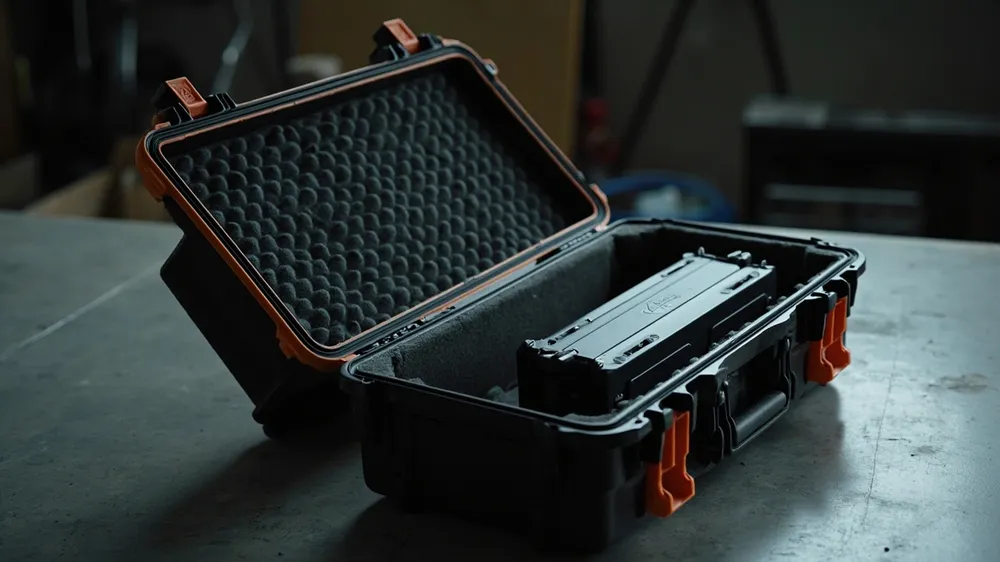
An e-bike battery is one of the most expensive and most delicate parts of the whole vehicle. A high-capacity pack runs from a few hundred to over a thousand watt-hours: long, heavy and thin-shelled. Whether it is store delivery, after-sales return, user long-haul carry or a factory sample, the cell needs a container that resists drops, holds it still and isolates terminals. In reality many e-bike batteries ship wrapped in bubble film inside a cardboard box — exactly the riskiest way. This guide covers how to design, choose and compliantly ship an e-bike battery case.
Why E-bike Battery Cases Are Harder
Versus small drone cells, e-bike batteries differ in three ways that drive the design:
- Long and flex-prone: most are slender bars; weak liner support lets bend stress damage internal cells and shell.
- Heavy: several kilograms per pack is normal; shell and liner must hold that without collapsing.
- Exposed terminals: many terminals sit outside the shell; touching metal in transit shorts them.
So the point is not "fit it in" but keep the long pack straight, weight supported, terminals isolated.
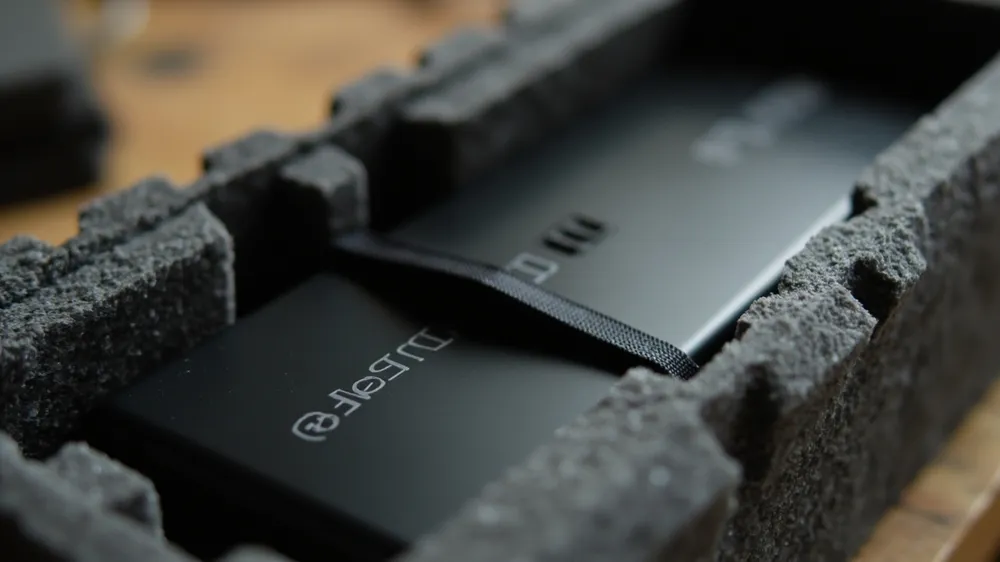
Shell: Rigidity First
| Option | Strength | Watch |
|---|---|---|
| Thickened PP | Light, tough, low cost, chemical resistant | Enough wall, add ribs on long side |
| PP / glass-fibre | Higher rigidity, bend resistance | Slightly heavier, cost up |
| ABS | Glossy, dimensionally stable | Moderate cold impact |
| PC or PC alloy | Outstanding impact | Costly, stress-crack risk |
For e-bike battery cases, thickened PP with internal ribs is the most practical: controls weight and cost while structural ribs cancel long-side bending. For systematic material trade-offs see drone case material selection; for shell strength see wall thickness and structural design.
Liner: Support the Bar, Do Not Let It Bend
A long pack most fears cantilever bending. The liner should follow the full length, not just pad the ends:
- Full-length support: cavity contacts the pack end to end, spreading bend stress.
- Local hardening: the more fragile connector end gets firmer foam or a stop block.
- Anti-shift: end and side restraints, a strap slot optional, no sliding in transit.
- Terminal pocket: terminals sit in a recess so the lid never presses them.
Liner precision that holds over time is in EVA thermoformed liner process and drone case foam insert design.
Terminal Isolation: Short Prevention Is the Floor
An e-bike short is dangerous because of high instant current. The case must:
- Insulate terminals: cap or tape before shipping, plus a contoured insulated cavity inside.
- Face terminals inward: away from the opening and metal parts.
- No bare metal: liner and walls expose no conductor that could bridge.
- Partitioned bays: if multiple packs per box, solid foam walls between them.
This is opposite to a tool case — metal tools can touch, battery terminals must not. For hardware selection avoiding accidental contact see hinge and latch durability design.
Transport Mode Comparison
| Mode | Use | Case focus |
|---|---|---|
| Local delivery | Store to user | Drop resistance, terminal insulation, Li-ion label outside |
| Courier / LTL | After-sales, cross-city | UN38.3 and docs, no mixed general goods |
| Car carry | User long-haul | No shift, away from heat, storage charge |
| Air | Overseas sample / urgent | Strict Wh limit, most large cells banned in passenger hold |
For cross-border documents see HS code and export documents; for trade terms and freight see Incoterms and freight options. Vibration effect on cells is in transport vibration testing.
Compliance: UN38.3 and Shipping Papers
Large lithium packs face stricter rules than small cells. Core points:
- UN38.3 test: the cell must pass; keep the report.
- Wh and count: per-cell Wh and per-box count are limited by mode; state clearly on the case.
- Li-ion label: outer box carries the handling mark with class noted.
- MSDS / transport appraisal: domestic courier and cross-border often require it; prepare early.
- No mixed load: lithium cells never ship with general goods or flammables.
For material compliance (e.g. EU export) see RoHS and REACH compliance; for flame class see UL94 flammability rating.
Cases for After-Sales and Returns
Return batteries may be suspect (swelling, leak). The case must be safer:
- Isolated: a suspect cell ships alone, never with good ones.
- Leak control: liner can add an absorbent layer; box base resists seepage.
- Clear marking: outer box notes "return battery / suspect anomaly" for special handling.
For sample and defect evaluation see supplier sample evaluation cases and pre-shipment inspection cases.
Custom Specification Checklist
| Element | State | If missed |
|---|---|---|
| Battery size | L×W×H, weight, Wh | Liner fails or lid presses terminals |
| Terminal position | Orientation, exposed? | Short risk |
| Transport mode | Local / courier / air | Docs missing, returned |
| Count | How many per box | Over limit, non-compliant |
| Environment | Temp, humidity, water? | Sealing vs venting conflict |
For writing the spec generally see how to write a case RFQ; for pricing and total cost see total cost of ownership.
Common Mistakes
First, bubble film plus carton — no rigidity, no terminal isolation, dangerous on drop. Second, long pack cantilevered — liner pads only ends, bends and damages cells. Third, bare terminals mixed — short cause and carrier rejection. Fourth, missing docs — large cells without UN38.3 and MSDS get returned. Fifth, sealed in sun — Li-ion hates hot sealed spaces.
In Summary
The e-bike battery case keyword is "straight, stable, isolated, documented": keep the long pack straight (full-length liner support), hold the weight without collapse (thickened shell with ribs), isolate terminals from short (cap plus partitioned bay), and move legally with papers (UN38.3, Wh marking, Li-ion label, MSDS). Do these four and the cell goes from fragile hazard to a part you can move at scale. To start, compile the real dimensions, weight, Wh and terminal position into one sheet for the factory and state the target transport mode — clear on this, the first sample is close to production.
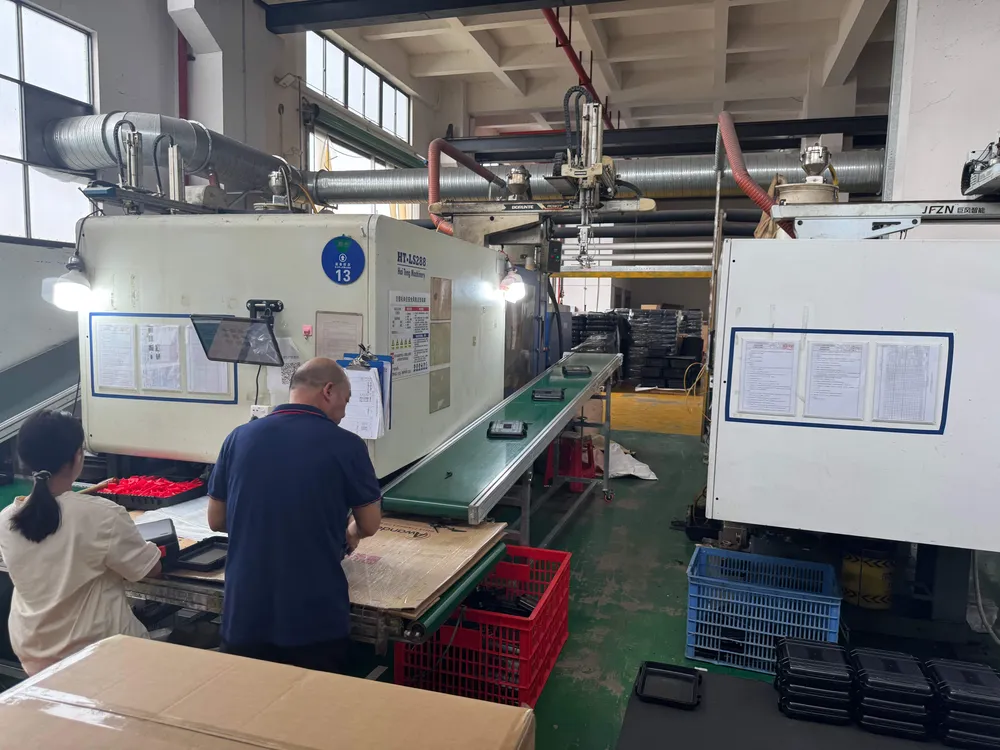
For co-storage of vehicle accessories see automotive vehicle tool cases; for material compliance and flame class see RoHS/REACH and UL94.