

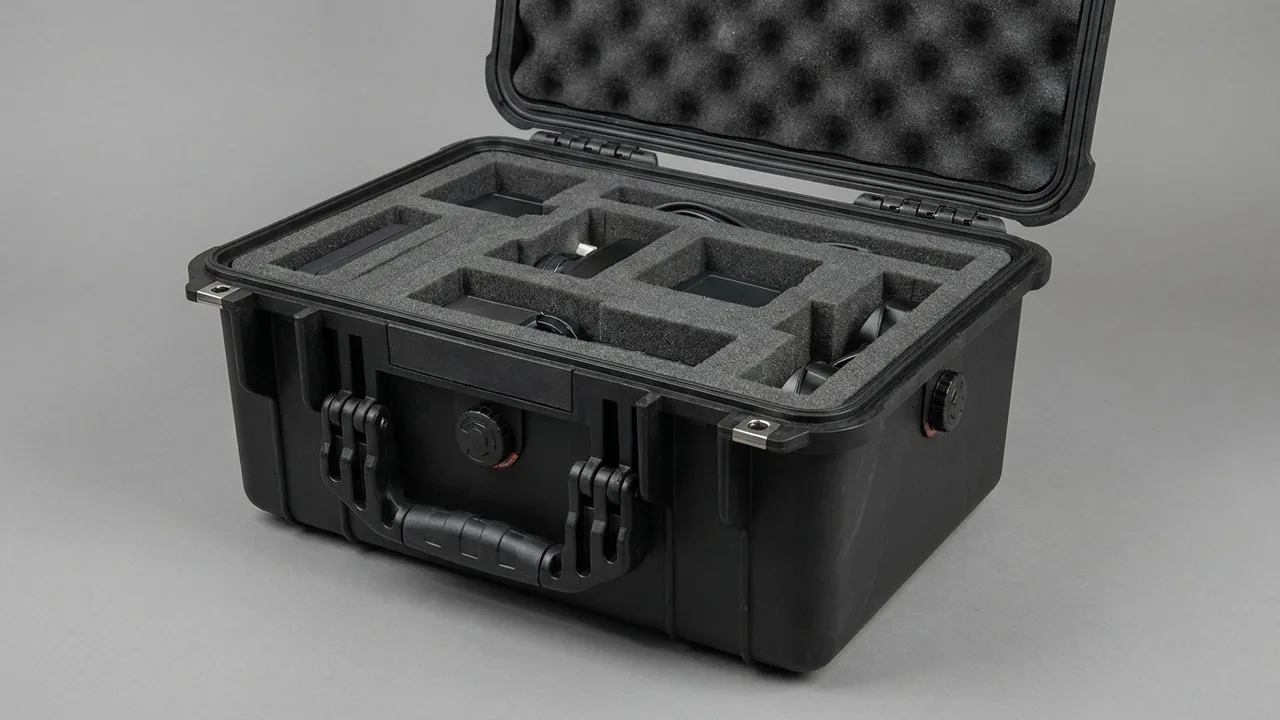
Component protection on a noodle line is not primarily a question of case strength. It is governed by two constraints that are specific to food factories: hygiene and surface finish. Sheeting rollers are typically ground and polished to a mirror-grade roughness of Ra 0.2 to 0.8 micrometres, so a scratch far too shallow to feel will be reproduced on every dough sheet and every strand that follows, persisting across several shifts as a visible, traceable defect. Slitting blades and comb cutters carry edges and teeth spaced as closely as 1.5 to 3 millimetres; the steel is hard and brittle, and a single point contact can chip a tooth. Dough sheet belts and forming dies are usually thin-walled, soft or coated, and they tolerate neither creasing, nor compression, nor dragging. Every one of these parts comes off the machine carrying flour and wet dough residue, and both packing and unpacking take place inside areas governed by GB 14881. The workable principle is to separate rollers, cutters, belts and dies into dedicated compartments, to finish residue removal and dryness verification before anything is packed, to restrain each item by rigid support, two-way limitation and non-contact on functional surfaces, and finally to hold internal humidity inside a safe band using a sealed enclosure and an adequate desiccant charge. Open-cell foam and textile linings must not be used inside the case, and no rust-prevention chemistry may be placed where it can contaminate a food contact surface. JUNZHIJIA builds custom protective cases of this class for food machinery.
In maintenance work and full-line relocation, noodle plant components are rarely destroyed by a single drop. Damage is usually the sum of three small failures: a hard particle inside the lining scores a roll face, which then prints onto dough sheets all day; the teeth of a comb cutter are pressed through foam until they reach a hard backing or the case wall, and one or two teeth chip, producing merged strands, breaks and inconsistent strand width after installation; a conveyor belt picks up an irreversible crease that develops into mistracking and a split splice. None of this is obvious at unpacking. It surfaces hours into production, or after a specification change, and the cost is a rejected batch of dough sheets plus the downtime of the whole line. This article works through component categories, cleaning and verification, insert and case design, sealing and moisture control, and handover inspection, so that the requirements can be written directly into a food machinery procurement specification.
Table of Contents
- Why noodle line components are doubly sensitive to hygiene and surface finish
- Sheeting roller sets: roll face, journals and bearing seats
- Slitting blades and comb cutters: no-contact rules and edge retention
- Dough sheet conveyor belts: creases, compression and mould
- Forming dies and extrusion heads: contoured support and flow passage protection
- Food-grade constraints: what GB 14881 and GMP demand from packaging
- Flour residue and cleaning residue: verification before packing
- Moisture and condensation: sealing class, desiccant and pressure differential
- Insert and case materials: wipeable, low-shedding, non-absorbent
- Structural strength, stacking and full-line relocation loading
- Vibration and shock control: restraining rollers and thin-wall parts
- Marking, shipping documents and receiving inspection
- Customisation flow, tooling investment and batch consistency
- Frequently Asked Questions
- Conclusion and Further Reading
Why noodle line components are doubly sensitive to hygiene and surface finish
The parts that travel separately from a noodle line fall into four families. Rollers cover break rollers, compound rollers, finishing rollers and sheet tension rollers. They are stainless steel bodies or alloy steel bodies with hard chrome plating, ground and polished, sometimes internally cored for cooling water with rotary joint connections, and commonly weighing between 100 and 600 kg per piece as an empirical range. Cutters cover longitudinal slitting rolls, cross-cut knives, comb cutters used for width control, together with their spacer washers and arbor shafts. Belts cover dough sheet conveyors, usually food-grade polyurethane or polyvinyl chloride belts on a polyester fabric carcass, and in traditional dried noodle plants also cotton or linen mesh belts with finger or lap splices. Dies cover extrusion heads, calibrating sleeves, corrugating rollers, block cutting knives and scraper blades on dusting units.
What unites these four families is that surface condition is transferred directly into product quality. Roll roughness, blade straightness, die orifice diameter and chamfer, belt face flatness, all of them reappear one to one on the product. A score on a roll becomes a groove in the sheet. A chipped tooth on a comb cutter produces a continuous merged strand. A burr on a die orifice creates a matt, torn surface on the extruded strand. Packaging food machinery components is therefore not really about surviving a drop. It is about preserving a surface condition.
The second shared characteristic is that residue is both a contaminant and a masking agent. Rollers, knives and dies come off the machine carrying flour, wet dough, oil and starch films. Inside a closed case these residues absorb moisture, cake and support microbial growth, and they hide fine cracks and chipped edges that already exist. In a warehouse environment flour dust also attracts stored product pests such as the Indian meal moth and the red flour beetle, which turns a packing case into a harbourage. This is exactly why GB 14881-2013, the national food safety standard for general hygienic practice in food production, requires packaging materials not to become a source of contamination.
The third characteristic is that both packing and unpacking happen inside food production areas. Cases pass through airlocks, they have to be wipeable inside clean zones, and they must fit the zoning discipline of an ISO 14644 cleanroom programme. A case that sheds particles, whose lining absorbs flour, or whose seal groove traps debris stops being a protective tool and becomes an entry point for contamination. This is why a noodle line component case cannot simply reuse a general industrial case design.
The table below sets out the typical failure modes of the four families against their packaging responses, and can be used as a starting point for a checklist-based design. Roller protection in a noodle plant shares some logic with roller protection on a calender line, as described in calender line roller and tension component protection, but the noodle line adds one constraint the calender line does not have: every functional surface is also a food contact surface.
| Component family | Typical failure mode | Direct consequence | Packaging response |
|---|---|---|---|
| --- | --- | --- | --- |
| Sheeting roller sets | Face scoring, journal bruising, body bowing, damaged rotary joint threads | Defect printed onto sheets, loss of bearing fit, runout out of tolerance | Nylon V-cradles under the journals, body left free, one part per chamber, no mineral-filled foam |
| Slitting blades and comb cutters | Chipped teeth, rolled edges, pitch drift, spacers out of sequence | Merged strands, breaks, uneven strand width, whole row scrapped | POM or PP tooth-slot plates, load at the tooth root, clearance at the tooth tip, transported on the arbor |
| Dough sheet belts | Creasing, edge compression damage, splice tearing, carcass mould | Mistracking, longitudinal cracking, splice failure, hygiene rejection | Winding on a large core, folding prohibited, interleaved film, sealed against moisture, away from light and ozone |
| Forming dies and extrusion heads | Orifice scoring or deformation, plated and insert damage, mating face impact | Change in strand profile and throughput, leakage, hard-to-clean surfaces | Orifice face upward or covered by a soft cap, guard over the mating face, contoured cradle support, no metal contact |
Sheeting roller sets: roll face, journals and bearing seats
Roller protection has to treat three zones separately. The roll face is the functional surface, where roughness and cylindricity determine the product. The journals are fit surfaces, usually ground to an h6 or g6 class tolerance, and once bruised or scored they can never return to the designed bearing clearance. The end features include rotary joint threads, keyways and coupling faces, which are thin-walled and easily chipped. Because the three zones fail for different reasons, their support and isolation arrangements must also differ.
Lifting is the most frequent cause of roller damage. The common shortcut in a workshop is to wrap wire rope around the roll body, which creates very high local contact stress at the rope-to-face interface; the hard chrome layer develops a dent or spalls, and the spalled area later appears as a repeating print on dough sheets. The correct method permits slings only under the journals at both ends, using soft-sleeved webbing or a dedicated journal lifting fixture, with a soft pad between sling and journal. Sling points must never be placed on the roll body. The same rule applies to short moves inside the workshop: a roller must not be rolled along on its face, and it must not be set down directly on concrete or a steel bench. It belongs on timber or polymer V-blocks that carry the journals.
For packing, a dedicated chamber per roller with a cradle at each end is the recommended arrangement. Cradle material should be nylon, polypropylene or ultra-high-molecular-weight polyethylene, all of which are softer than the roll face and the journal and therefore cannot act as a hard point. A V-shape or an arc wrapping 90 to 120 degrees of the journal lets the load transfer as a surface rather than a point. The body stays free, with at least 30 mm of clearance to the case floor, the walls and neighbouring parts so that transport vibration cannot produce contact. Long finishing rollers need more than a single span; as an empirical practice, add an auxiliary support every 600 to 800 mm, and make sure the auxiliary support lands on a rigid section rather than the middle of a thin hollow shell, where it would create a local dent.
Isolation of the roll face should be deliberately minimal. A single layer of non-woven fabric or food-grade polyethylene film is sufficient, applied without adhesive tape residue and without loose fibres. Mineral-filled foam must not be placed against the face, hook-and-loop fasteners must be kept away from the face, and nailed timber pallets, wood screws or exposed metal fasteners must not face the face. Upper and lower rollers that work as a pair should be cased separately, or at least separated by compartments, and their faces must never be left in direct contact; sustained contact under load leaves a banded pressure mark and a dulled patch. If the customer intends to lift the roller straight onto the machine from the case, leave a dedicated storage position for the lifting gear so that slings and hardware are not loose in the same cavity as the roller.
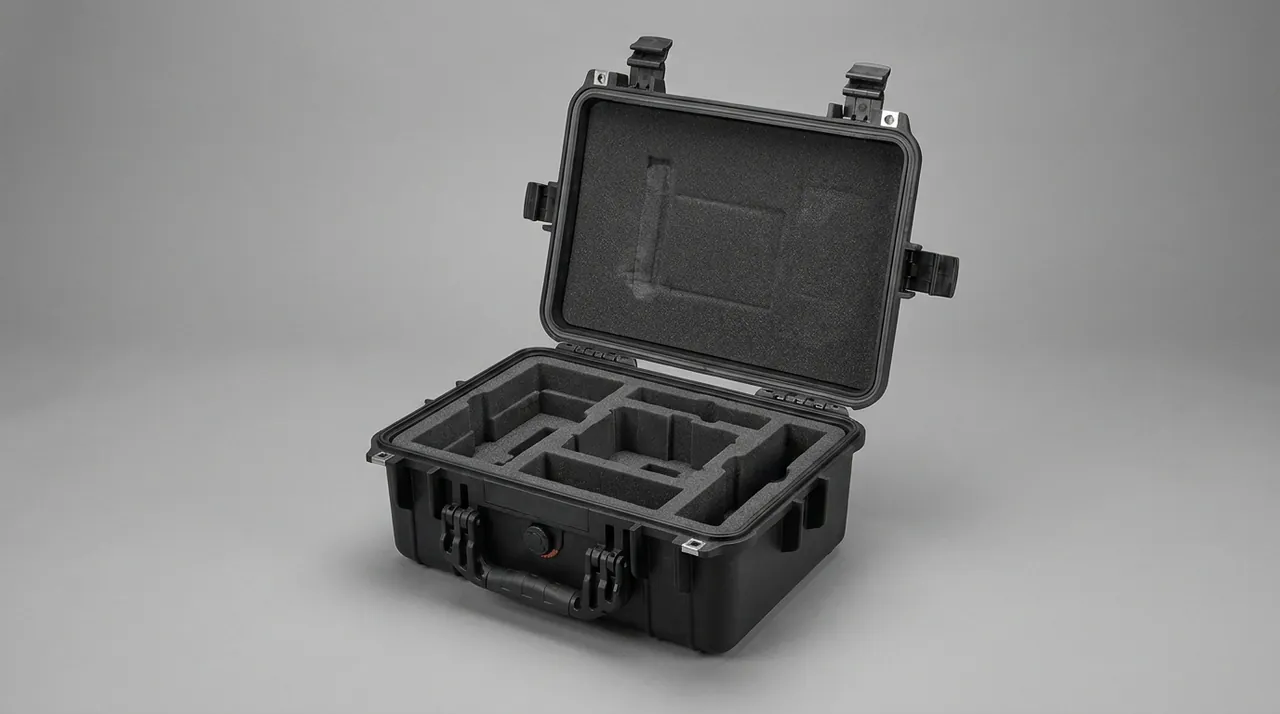
Two non-mechanical risks also apply. The first is corrosion: carbon steel journals and unplated end faces will rust in a humid season, and the answer is a low-humidity environment built from a barrier wrap plus desiccant, never a rust-prevention oil applied inside the food contact cavity. The second is plating blistering: a hard chrome roll that sees condensation together with dried dough residue tends to pit, and the pits propagate along the plating interface. The roll face must therefore be cleaned and thoroughly dried before it is wrapped.
Slitting blades and comb cutters: no-contact rules and edge retention
The slitting station determines strand width consistency and is one of the most sensitivity-critical points on the line. A typical arrangement mounts a number of hardened circular slitting knives and a comb cutter for width control on a common arbor, with spacer washers setting the knife pitch, and a lock nut clamping the stack at the end. Blades are usually alloy tool steel or stainless steel, heat treated to a hardness commonly between HRC 50 and HRC 58. High hardness means low toughness, and the tooth tips and cutting edges have almost no tolerance for point impact. Comb cutter tooth pitch is designed around the product specification and can be as fine as roughly 1.5 mm on thin noodle formats, and because tooth height is limited, an impact from any direction can chip a tooth or shift the pitch.
The most common mistake in cutter packaging is to wrap the toothed section in foam. It feels soft, but under stacking load and vibration the tooth tips compress the foam to nearly its limiting thickness and then reach the hard backing or the case wall. The foam springs back, the packing looks intact, and the chipping has already happened. The correct approach is tooth-slot location: a machined polyoxymethylene or polypropylene slot plate in which each tooth sits in its own slot, load is taken at the tooth root near the blade back, and the tooth tip keeps at least 5 mm of clearance from the slot floor and slot walls. A comb cutter travels as an assembly, lying on its arbor, with the arbor ends in bushed support blocks. The arbor must not be removed and the parts shipped loose.
Pitch preservation depends on the spacer washers, and a set of washers in the wrong sequence is one of the hardest problems to correct on site. Thread the washers onto an auxiliary rod in assembly order and pack them in the same chamber as the blade stack, with a slot map inside the case. Where washer count is high, group them in reclosable bags labelled with thickness and position number. Fit a protective sleeve over the lock nut so that thread damage does not prevent the stack from being reassembled.
Edge protection should use plastic or timber edge guards, one slot per blade, with edges facing consistently and never toward the case wall. Stacking is prohibited, nylon ties or wire must never be tied around an edge or a tooth, and magnetic lifting bases must not be used because they magnetise the blade and attract swarf. If an edge shows a burr or a white edge on unpacking, treat the blade as damaged and replace it. Field regrinding is not recommended, since hand grinding changes edge angle and straightness, and strand width consistency will visibly degrade. Cutter parts are small, expensive and easily mixed into the wrong box, so label each position and specification on the case itself.
Dough sheet conveyor belts: creases, compression and mould
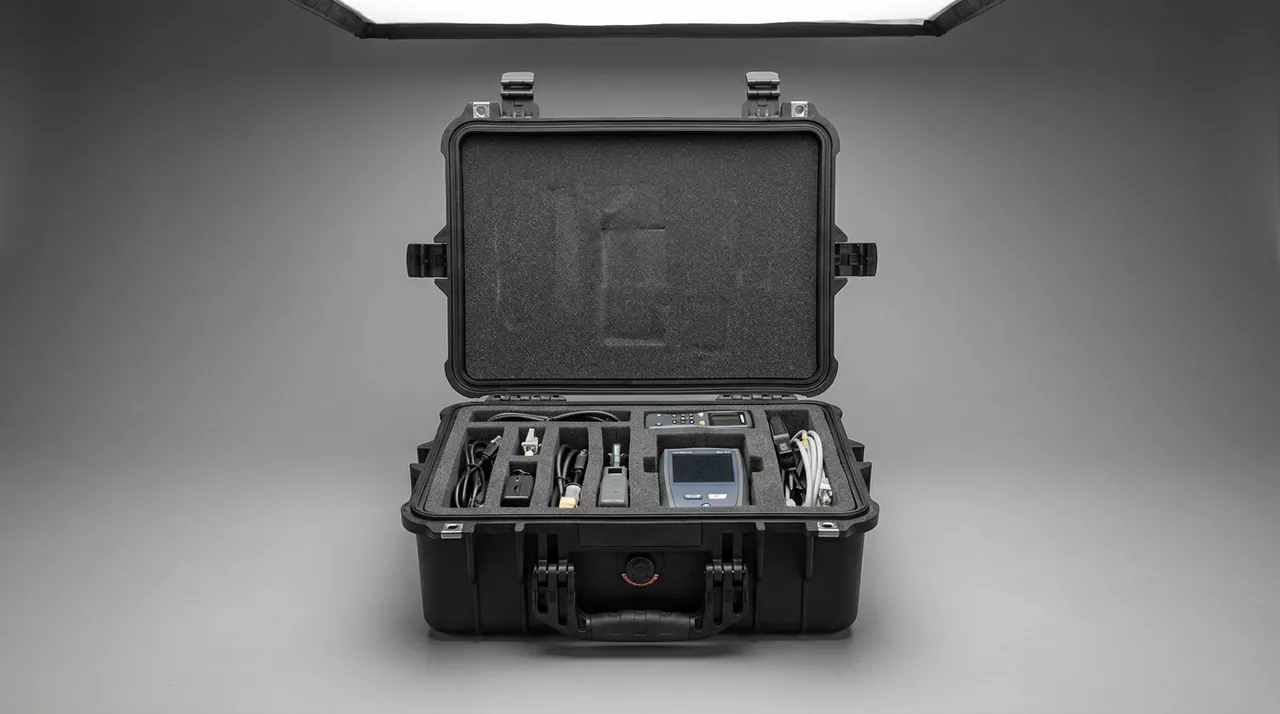
The dough sheet belt is the most underestimated component on a noodle line. Its failures are not immediately visible the way a chipped blade is; they appear after installation as mistracking, longitudinal cracks, splice failure and failed hygiene swabs. Belt bodies are usually food-grade polyurethane or polyvinyl chloride with a polyester fabric carcass, while traditional dried noodle lines may still run cotton or linen mesh. Three failure mechanisms need separate treatment. A crease is irreversible: the carcass fibres at the fold line are broken or permanently oriented, so that region will mistrack or crack in service. Compression damage comes from weight stacked on the belt or from contact with a hard edge, and shows up as edge notches and face dents. Mould develops after a fabric carcass absorbs moisture, particularly in a monsoon season or in sea freight, and once mould staining appears it cannot be removed by normal cleaning.
There are only two correct packing options: winding on a large core or laying flat with full width support. When winding, use a core at least 150 mm in diameter as an empirical minimum, increased according to belt thickness and carcass ply count. Wind in the direction of travel and mark "travel direction" and "working face" on the end of the roll. Interleave polyethylene film or kraft paper between wraps to prevent self-adhesion and plasticiser migration. Fit end discs to protect the cut edges from compression, and add a soft pad plus a label at the splice. Flat laying is acceptable only on a rigid pallet where nothing can touch the belt face, and even then no other component may be placed on top of it.
Environment matters as much as geometry. Storage and transit should sit in the 15 to 25 degC range with relative humidity around 50 percent plus or minus 10 points, as empirical targets. Keep belts out of direct sunlight and away from ozone sources such as variable frequency drives and motors, and do not co-pack with greases, solvents or plasticiser-rich materials. Mould prevention cannot rely on applying a fungicide to a food contact surface; the workable route is humidity control, meaning a sealed case with an adequate desiccant charge and a humidity indicator card inside, checked before the belt is removed. A belt that already shows mould staining or a musty odour should be rejected rather than returned to a food contact position. For cleaning agent selection, the material compatibility logic described in how to clean a protective case applies: confirm compatibility between the belt compound and the cleaning chemistry before any wet cleaning is attempted.
Forming dies and extrusion heads: contoured support and flow passage protection
Forming components share one property: the precision is inside the orifice or on the profile, so a part that looks perfect may be unusable. Taking an extrusion head as the example, orifice diameter, orifice chamfer and internal roughness together determine the cross-section and throughput of the extruded strand. Orifice inserts are often polytetrafluoroethylene or bronze, far softer than steel, and direct contact with any metal tool changes the diameter. Calibrating sleeves set the outer diameter of the strand, corrugating rollers set the wave form, and block cutting knives set the cut quality of the block. None of these can be repaired on site once bruised or scored.
Support should follow a contoured cradle with functional faces facing up or outward. An extrusion head should lie on a cradle whose profile matches its outer form, so that load lands on the flange or the housing rim rather than on the orifice face. If a head must stand upright, the orifice face should point upward under a soft protective cap, which may be a food-grade silicone cap or a polyethylene cover plate, with no grit trapped between cap and face. The mating face, which is the installation sealing surface, is a precision plane and needs a guard plate; it must not touch other metal parts. Calibrating sleeves and bush-type parts need internal plugs to keep foreign matter out, which would otherwise score the bore during installation. Dies must never be slid across a steel bench, and must never be stacked on top of one another.
The handover between cleaning and packing is the second risk point. Polytetrafluoroethylene and plated surfaces must not be cleaned with metal scrapers, wire brushes or sharp tools; use a soft scraper with warm water and a neutral detergent, allow a short soak only where the process permits, then dry thoroughly. Drying is verified by the absence of any visible water film or droplets, supported by contact temperature measurement confirming the part has reached ambient temperature. A residual water film inside a sealed case creates a local high-humidity pocket, which is the direct cause of orifice corrosion and mould growth. Where heads and calibrating sleeves ship as matched sets, keep one specification per compartment and label the compartment, so that parts cannot be mixed by appearance on site. Die packaging shares the contoured-support thinking described for glass mould component cases, but noodle dies add two requirements that must be designed separately: orifice protection and plated-surface protection.
Food-grade constraints: what GB 14881 and GMP demand from packaging
Once a packing case enters a food factory, its compliance status changes from industrial packaging to a food-contact-adjacent product. The consequences are specific and cannot be satisfied by appearing clean.
The first layer of constraint comes from production hygiene rules. GB 14881-2013, the national food safety standard for general hygienic practice, requires utensils and packaging materials that contact food to be non-toxic, corrosion resistant and easy to clean, and prohibits them from becoming a contamination source or a pest harbourage. Translated into case design, this means three things: the lining must not be open-cell foam or flocked fabric that absorbs flour and water; case and lining surfaces must be wipeable without narrow uncleaned gaps or blind cavities; and corrugated board, which absorbs moisture and shelters insects, must not be used as a divider.
The second layer comes from food contact material regulation. Where a lining or a protective sleeve sits against a food contact surface for an extended period, the material should be supported by a food contact compliance statement. In China this means GB 4806.1 for general requirements together with part standards such as GB 4806.7 for plastics and GB 4806.9 for metals. For European shipments the relevant framework is Regulation (EC) No 1935/2004 with (EU) No 10/2011, and for the United States the applicable provisions of FDA 21 CFR Part 177. These documents do not need to travel with every case, but they should be provided as a batch document on series deliveries.
The third layer comes from cleanroom zoning. Where components are unpacked inside a clean zone, the outer case surface must be wipeable in an airlock, the lining must not shed or generate dust when opened, and unpacking waste must be able to leave the clean zone quickly. ISO 14644 zoning usually separates the unpacking action from outer surface treatment, so the case design has to support a workflow in which the outer case never enters the higher cleanliness zone. That directly determines whether the case uses an inner tray and whether the lining is designed as a lift-out assembly.
The fourth layer comes from allergens and pests. Wheat, and therefore gluten, is a mandatory declarable allergen under Annex II of (EU) No 1169/2011 and under the US Food Allergen Labeling and Consumer Protection Act. A case whose lining has absorbed flour from a previous consignment becomes a cross-contamination risk the moment it is moved to a gluten-free line. Flour dust is also a food source for stored product pests. Cleanability of a noodle line component case is therefore not only a hygiene matter, it is a compliance matter.
| Food-grade requirement | Principal reference | Specific constraint on case and lining |
|---|---|---|
| --- | --- | --- |
| Not a contamination source, easy to clean | GB 14881-2013 | Closed-cell lining with wipeable surfaces; no corrugated dividers, no flocked fabric |
| Food contact material compliance | GB 4806.1, GB 4806.7, GB 4806.9, (EC) 1935/2004 | Material declaration and migration compliance documents; food-grade silicone or polyethylene for protective caps |
| Cleanroom zoning discipline | ISO 14644 framework | Wipeable exterior; lift-out lining; no dust generation on opening |
| Allergen cross-contamination control | (EU) 1169/2011 Annex II, FALCPA | Lining must not absorb flour; provide a verifiable cleaning verification method |
| Pest prevention | GB 14881-2013 | No harbourage gaps; avoid board and porous materials; seal structure that can be inspected |
| Cleaner and material compatibility | Manufacturer compatibility data | Detergents and sanitisers must not swell, crack or leach the lining |
Flour residue and cleaning residue: verification before packing
The first step in preparing food machinery components for packing is always cleaning, and the operative word in cleaning is verifiable. A judgement based on appearance postpones the risk until the machine is started.
The cleaning sequence should be fixed as dry methods first, wet methods second, drying last. Dry methods cover compressed air blow-down and soft brushing, focused on the places that hold flour: roll face texture, tooth slots, die orifices, threads and mounting holes. Blow-down air must be dry and oil-free, and pressure should stay within a range that cannot damage plated surfaces. Wet methods apply only where the process permits, using warm water with a neutral or mildly alkaline detergent, avoiding strong acids, strong alkalis and chlorine-bearing products in prolonged contact with stainless steel. Rinse with potable water afterwards so that detergent residue does not remain. Drying is the final step and the one most often skipped.
Verification should work on three levels. Visual inspection uses clean white and black cloths wiped across critical surfaces to reveal powder traces, oil films and colour changes. Tactile checks confirm the absence of grit and of any sticky film. Where appropriate, an ATP bioluminescence swab provides a quantitative check, judged against the threshold set in the plant's own standard operating procedure rather than a figure copied from another factory. dryness is confirmed by the absence of visible water film or droplets together with contact temperature measurement showing the part near ambient. If moisture is still present, extend the drying time or move to a dehumidified area; adding more desiccant cannot compensate, because desiccant removes water vapour from the air inside the case and cannot remove a water film sitting on a surface.
The places where residue concentrates are also the places most often overlooked: bearing seats, bolt holes, keyways, rotary joint bores. Blank them with protective plugs, but the plugs must be traceable materials such as food-grade silicone or polyethylene, and their quantity and location must appear on the packing list so that all of them are recovered after unpacking. They must never be left inside the machine. Wet dough residue is an excellent microbial growth medium and can develop odour and mould within tens of hours under favourable conditions, so the window between removal from the machine and clean packing should be kept as short as possible. This single practice often determines the final hygiene outcome more than the choice of packaging material does.
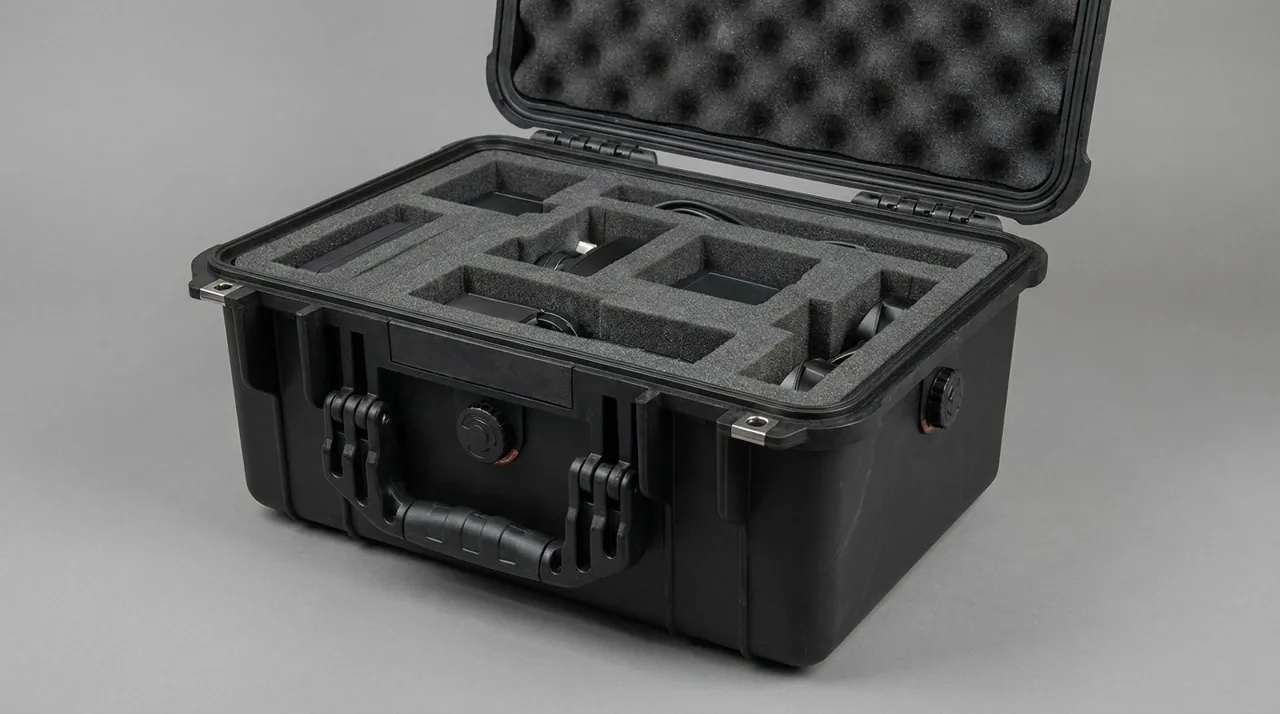
For projects involving off-site modification or long-term storage, attach a cleaning and drying record to the shipping documents, stating the method used, the verification approach and the person responsible, so that the receiving site can cross-check at unpacking. JUNZHIJIA can design lift-out insert trays so that the entire lining can be taken to a wash bay, cleaned and refitted, which reduces the cleaning burden on the case itself.
Moisture and condensation: sealing class, desiccant and pressure differential
Flour is hygroscopic, flour residue is hygroscopic, and a hard chrome roll face pits readily under condensation. Moisture design for a noodle line case therefore serves two objectives at once: protecting the component and preventing the interior from becoming a microbial environment.
Sealing class should match the scenario rather than be maximised. Under the classification of IEC 60529 and GB/T 4208, in-plant movement and short distribution runs are well served by an IP54 to IP55 combination. Sea freight, open yard storage and locations exposed to spray call for IP55 to IP66, where IP6X means complete dust protection and IPX5 to IPX6 means resistance to water jets. Only where the case may be briefly immersed is IP67 required. Raising the class has two side effects: unpacking and maintenance become harder, and the pressure differential problem between inside and outside becomes more pronounced.
Pressure differential is the most frequently overlooked item in food plant scenarios. A packing area can exceed 30 degC in summer, while the ambient temperature during winter transport can fall below zero. The air inside the case cools and contracts, creating negative pressure that draws moist outside air through micro-gaps in the seal, and condensation forms directly on the component. The remedy is a pressure equalisation valve using a hydrophobic breathable membrane, which allows gas exchange while blocking liquid water. The valve must be installed in a chamber physically separated from food contact surfaces, so that its body and membrane cannot become a cleaning dead spot or a pathway for flour dust. This needs to be agreed with the insert designer before final assembly.
Size the desiccant by volume, not by feel. Where the case is well sealed and each component is first enclosed in a barrier bag, an empirical estimate is 30 to 50 g of silica gel desiccant per 20 litres of free air volume inside the case, calculated at roughly 20 percent moisture uptake capacity. Double this for sea freight, a monsoon season or long-term storage, and pair it with a humidity indicator card or an electronic temperature and humidity logger for process confirmation. Two prohibitions matter here. Vapour phase corrosion inhibitor film and rust-prevention oil must not be used inside the food contact cavity. Calcium chloride type desiccants that exude liquid as they absorb should also be avoided in direct contact with components, since the exudate contaminates food contact surfaces and is extremely difficult to clean. Where carbon steel journals genuinely need corrosion protection, place that protection in a chamber isolated from the components and separated by a barrier layer. Seal and pressure design choices are discussed further in pressure equalisation valve selection and in the structural comparison of IP67 protective cases.
Insert and case materials: wipeable, low-shedding, non-absorbent
Material selection for a food machinery component case reverses the usual order of judgement used for general industrial cases. A general case is assessed on cushioning performance first. A food case is assessed on cleanability and non-absorbency first, and only then on cushioning.
Three selection rules can be used directly to review a supplier proposal. First, closed cell beats open cell. Open-cell polyurethane foam is cheap and easy to shape, but it absorbs flour and water and cannot be wiped, and the flour and moisture inside its pores become a substrate for microorganisms and a harbourage for insects. It should not be used in food scenarios. Closed-cell polyethylene or EVA foam does not absorb liquid and can be wiped, which makes it the better cushioning layer. Second, rigid and removable beats integrally foamed. Machining polypropylene, high-density polyethylene or ultra-high-molecular-weight polyethylene into rigid carriers, with tooth-slot plates, V-cradles and roll cores all load-bearing as rigid parts and closed-cell foam used only for local padding, delivers both locating accuracy and the ability to remove the parts for separate cleaning. Third, washable beats textile. Where soft wrapping is genuinely needed, choose a removable and launderable food-grade coated fabric sleeve, and state the wash temperature and replacement interval. Flocked and brushed-fabric linings have no place in a food environment.
The case itself should satisfy three conditions: smooth surfaces with few gaps, cleanable hinges and latches, and a replaceable gasket. Food-grade silicone is the preferred gasket material because of its wide temperature range and its ability to survive normal cleaning and sanitising temperatures, with EPDM as an alternative. The gasket groove profile must be reachable from both the inside and the outside of the case so that it cannot form a narrow gap where flour cakes and hardens. Hinges and latches are the parts most prone to flour build-up, and concealed or removable designs are worth considering; the structural options are compared in toolbox hinge, latch and seal selection. Internal ribs should be minimised, and where they must exist, they should have generous radii at the corners so that blow-down can clear them.
Ageing and chemical compatibility also need confirming before a series order. Closed-cell foam takes a compression set under sustained load, which eventually destroys the locating function. A lining in long-term contact with detergent and sanitiser may swell or harden. At first-article approval, ask the supplier for a compatibility statement covering the lining material against the plant's usual cleaning chemistry, and track the lining replacement interval in the maintenance record.
Structural strength, stacking and full-line relocation loading
Weight distribution on a noodle line is extremely uneven. A sheeting roller can weigh several hundred kilograms, while comb cutters, spacer washers and seals are far lighter. Case design must be based on the heaviest component while still giving light parts their own compartments, where they cannot be crushed alongside a heavy neighbour.
For load carrying, the base platform and lifting points should be designed with a multiple safety factor against the heaviest component, considering both static and dynamic conditions, and the base should include forklift and pallet handling features. Stacking design should not rest on experience alone; validate it using the stacking and vibration test methods in the GB/T 4857 series, as set out in GB/T 4857 transport packaging testing and marking, to fix both test items and acceptance criteria. Where a full distribution cycle needs to be simulated, an ISTA or ASTM D4169 programme is appropriate, described in ISTA transport testing procedures. The core acceptance criterion for stacking is that, within the movement range allowed by the insert, component displacement stays inside the design limit and the lining shows no non-recoverable collapse.
Loading follows the rule of heavy items low and on the case centreline, light items high and in separate compartments. Cutter cases and die cases must never be stacked on top of a roller case, and cutter parts should never carry a concentrated load from above. Full-line relocation projects also need to preserve assembly relationships: the roller set of one sheeting machine, and one comb cutter together with its spacer washers, should travel in the same case and share a slot map, so that components from several machines cannot be confused after mixed packing. Lifting and handling markings follow GB/T 191 and GB/T 13384, covering this-way-up, keep-dry, do-not-roll, centre of gravity and lifting points, with forklift entry marked on both sides. Oversized rollers should have a dedicated lifting beam and lifting point sleeves, and the lifting instructions should ship with the case.
Vibration and shock control: restraining rollers and thin-wall parts
The harm that transport vibration does to food machinery components is not a single shock but long-term fretting and cumulative displacement. Rollers develop fretting marks between journal and cradle. Thin-wall and plated parts develop a dulled surface. Cutter parts gradually creep until a tooth tip reaches a hard wall and makes contact. The control logic is limitation first, cushioning second, rather than wrapping a component in something soft.
Three points define the limitation design. Support points must land on rigid sections — journals for rollers, the flange rim for dies, the fitting end for pipework — and must never sit on a thin shell or a plated surface. Preload should be moderate: excessive clamping force leaves marks in plating and soft surfaces, while insufficient force fails to limit movement, so verify at first-article fitting using displacement marks or a paper tape method. All degrees of freedom must be closed, including vertical, lateral, longitudinal and rotation about the axis, and rotation matters particularly for cylindrical roller bodies that would otherwise fret continuously against their cradles. A practical shop-floor criterion is that after packing, the case can be inverted, laid on its side and gently shaken without any perceptible relative movement of the component inside the lining.
Cushioning material selection should look at the compression curve rather than density alone. Closed-cell polyethylene has a relatively flat compression curve and suits sustained loading. Materials with very low resilience relax progressively under long stacking and eventually allow the locating function to fail, so adding thickness is not a substitute for choosing the right material. For electronic accessories such as speed encoders, temperature sensors and drive modules, determine shock and vibration test conditions using the approach described in choosing protection structures based on MIL-STD-810H environmental test methods, noting that the standard is used here only as a source of environmental test methods and does not represent any military certification.
One scenario deserves separate attention: full-line relocation. Components removed on site rarely get proper cleaning and restraint, so unwashed parts, temporary small parts, tools and spares all end up in the original case. Precision parts travel with tools, spacers are lost, and seals are crushed out of shape. Prepare a dedicated field packing kit for relocation projects, containing tooth-slot plates, V-cradles, blanking plugs, desiccant, humidity indicator cards, cleaning tools and a packing checklist template. The site team then works through the checklist item by item instead of relying on individual experience.
Marking, shipping documents and receiving inspection
Marking follows GB/T 191 for pictorial marking for handling of goods and GB/T 13384 for general technical conditions for packaging of mechanical and electrical products, and covers at minimum this-way-up, keep-dry, do-not-roll, centre of gravity and lifting points. For food machinery components, add two project-specific marks: "clean component, wipe the case exterior before opening" and "food contact surface, no rust-prevention oil and no chlorine-bearing cleaners". Forklift and lifting orientation should appear on both sides, and oversized items should show centre of gravity height.
Shipping documents should be standardised into a fixed list: a packing list with component name, number, quantity and installation position; a case slot map showing where each item sits; the cleaning and drying record; the food contact material declaration and material description; a spare parts list covering gaskets, blanking plugs, desiccant specification and replacement interval; lifting and unpacking instructions; and an acceptance form. The document set used for oven and dryer components in bakery oven component transport protection is a useful reference for organisation, but a noodle line case must additionally carry an allergen cleaning verification record, which is specific to a food environment.
Inspection should use sampling with clearly defined check items. Sampling plans can follow the approach in AQL acceptance for custom protective cases to fix sample size and acceptance level. Unpacking checks should cover at least: whether the lining has shifted, whether components show visible movement in their compartments, gasket indentations or notches, latch operation, desiccant colour change, humidity indicator card status, and the presence of flour residue or odour inside and outside the case. If any item fails, re-inspect the whole batch and trace the lining and packing records for that batch. Unpacking inside a clean zone should also follow a fixed sequence: wipe the outer case in the airlock, remove the insert tray, then open the inner barrier bag in the designated area, so that outer surfaces never carry contamination inward.
Customisation flow, tooling investment and batch consistency
Customising a noodle line component case is really the act of translating a component list into a repeatable packaging scheme, so the starting point is not case dimensions but the component list and tolerances. A recommended flow is: provide the component list, two-dimensional drawings or physical measurements, and identify for each item the functional surfaces, fit surfaces and weak features; the supplier proposes the case and compartment layout; one sample case is built and put through a trial fit plus a transport simulation; first-article approval is given; a pilot batch follows; and series production starts after the pilot is validated. For high-value items such as sheeting rollers, first-article approval should include a lifting and placement rehearsal rather than a static fit alone.
Tooling investment needs to be discussed early. Tooth-slot plates, V-cradles, contoured supports and roll cores attract one-off tooling cost if they are injection moulded or vacuum formed; machining them from engineering plastic stock avoids tooling cost but raises unit cost. The balance point usually depends on annual volume and the number of component variants, and the comparison logic in custom case mould cost and amortisation can be applied. When selecting a supplier, the review items in how to choose a protective case OEM factory are useful, with particular attention to whether the supplier can produce food contact material documentation and can run a first-article trial fit.
Batch consistency is the most easily overlooked factor in food projects and the most likely to stop a line. If the same insert model arrives with a different hardness from batch to batch, the limitation effect drifts; if foam density varies, the collapse after long stacking varies too. The order should specify lining material and hardness range, dimensional tolerances on critical slots, recorded gasket material lot numbers, and a method for comparing pilot and series batches. During use, re-check the insert's compression set on a fixed cycle. JUNZHIJIA can design V-cradles, tooth-slot plates and roll cores against the specific dimensions of sheeting rollers, comb cutters, dough sheet belts and forming dies, and can supply food contact compliance documents, first-article trial fits and packing specification templates, with manufacturing and delivery handled by Kexin New Materials (Guangdong) Co., Ltd.
Frequently Asked Questions
Q: A sheeting roller has a light scratch on the face. Is it still usable, and what matters most in transit? A: Whether it can still be used depends on where the scratch sits, how deep it is and in which direction it runs. A shallow transverse score inside the working sheeting zone is reproduced one to one onto the dough sheet and the strands, creating a repeating defect, and should normally be judged as requiring repair or downgrade. A shallow mark in the non-working end region has a far smaller effect. Repair means stripping the plating, rebuilding or re-grinding and re-polishing back to the original roughness, which is slow and expensive, so the transit objective should be that no scratch ever occurs. Three risks dominate: pressure marks from wire rope or hard lifting gear touching the face; long scores produced when a hard particle in the lining or wrapping, such as mineral-filled foam, grit or a metal fastener, frets against the face under vibration; and paired rollers left face to face, which leaves a banded pressure mark and a dulled patch. The practical arrangement is V-cradles under the journals, a free-standing body, one roller per chamber, a single non-woven or food-grade film wrap, and a cloth check of cradle and lining surfaces for foreign objects immediately before loading.
Q: Why should the teeth of a comb cutter never be wrapped directly in foam? A: Because foam lets the tooth tips travel until they reach a hard backing. Foam feels soft, but under stacking load and sustained transport vibration it compresses to nearly its limiting thickness, after which the tooth tip contacts the hard backing or the case wall, and that is where chipping occurs. The foam springs back, the packing looks untouched, and the damage is permanent. Foam also traps metal swarf and abrasive dust between the teeth, which becomes a contamination source after installation. The correct method is a machined polyoxymethylene or polypropylene slot plate in which every tooth sits in an individual slot, load is taken at the tooth root close to the blade back, and the tooth tip keeps at least 5 mm of clearance to the slot floor and walls. The blade row lies on its arbor, with both arbor ends in bushed supports, and the lock nut carries a protective sleeve. If a flexible material is required as an outer cushion, it belongs outside the slot plate, never against the teeth.
Q: Can a dough sheet conveyor belt be folded for packing? A: It should not be, and in practice folding should be prohibited. A crease is irreversible damage to a belt: the carcass fibres at the fold line are broken or permanently oriented, so that region will mistrack in service and will progressively develop longitudinal cracks or a splice failure. The correct options are winding on a large core or laying flat across the full width. When winding, use a core at least 150 mm in diameter as an empirical minimum, increased according to belt thickness and carcass ply count; wind in the travel direction and mark the working face; interleave polyethylene film or kraft paper to prevent self-adhesion and plasticiser migration; fit end discs to protect the cut edges; and add a soft pad plus a label at the splice. Flat laying is acceptable only on a rigid pallet where nothing can touch the belt face. If a belt already carries a hard crease or shows mould staining, reject it rather than returning it to a food contact position.
Q: Does the lining of a food machinery component case have to be a food-grade material? A: It depends on whether there is direct contact. Where a lining or protective sleeve sits against a food contact surface for an extended period, it should be supported by food contact compliance documentation: in China GB 4806.1 general requirements with part standards such as GB 4806.7 for plastics and GB 4806.9 for metals; in the European Union Regulation (EC) No 1935/2004 with (EU) No 10/2011; and in the United States the relevant provisions of FDA 21 CFR Part 177. Where the lining is a load-bearing carrier separated from the food contact surface by a barrier bag, the emphasis shifts from material compliance to non-absorbency, low shedding and wipeability, which means closed-cell materials and no open-cell foam or flocked fabric. In either case, vapour phase corrosion inhibitor film and rust-prevention oil should not be used inside the case, because they contaminate food contact surfaces and are extremely difficult to clean. State the lining material, the barrier layer construction and the batch document list in the technical agreement.
Q: Can a VCI rust-prevention bag be placed inside the case to protect the journals? A: Placing VCI material inside the food contact cavity is not advisable. Vapour phase corrosion inhibition works by volatilised chemistry forming a protective atmosphere, and that chemistry deposits on every exposed surface in the cavity, including roll faces, tooth tips and die orifices. For food machinery this means chemical residue, and it is very hard to demonstrate removal by normal cleaning. Three alternatives work better. First, enclose carbon steel features such as journals and keyways in a barrier bag with food-grade desiccant inside, creating a low-humidity micro-environment. Second, move the corrosion protection into a chamber physically isolated from the component, separated by a barrier layer, and make sure no cross-contamination occurs when the wrap is opened. Third, specify stainless steel, or apply a protective treatment to carbon steel that is compatible with food contact. If the plant process genuinely requires VCI, the user and the quality function should assess the risk and make the decision, and the packaging file should record that decision in writing.
Q: How does flour residue affect packing and transport, and how should cleaning be verified? A: There are three effects. First, contamination and masking: flour residue hides fine cracks and chipped edges, which makes unpacking inspection meaningless. Second, moisture absorption, caking and microbial growth: wet dough residue can develop odour and mould within tens of hours at favourable temperatures. Third, allergen and pest risk: the gluten in flour is a mandatory declarable allergen under Annex II of (EU) No 1169/2011 and under the US Food Allergen Labeling and Consumer Protection Act, and flour dust attracts stored product pests such as the Indian meal moth and the red flour beetle. Cleaning should follow dry methods first, wet methods second, drying last. Blow down tooth slots, die orifices, threads and mounting holes with dry, oil-free compressed air, then brush with soft bristles. Use wet methods only where the process permits, with warm water and a neutral or mildly alkaline detergent, followed by a potable water rinse. Verify on three levels: white and black cloth wipes checked for powder and oil traces, a tactile check for grit and stickiness, and where appropriate an ATP bioluminescence swab judged against the plant's own procedure threshold. Dryness is confirmed by the absence of any water film or droplets and by the part reaching ambient temperature.
Q: Does a noodle line component case need IP67, and is a pressure equalisation valve necessary? A: Most scenarios do not need IP67, and the class should match the actual storage and transport conditions. Under IEC 60529 and GB/T 4208, in-plant movement is covered by IP54 to IP55; sea freight, open yard storage and spray exposure are covered by IP55 to IP66, where IP6X denotes complete dust protection and IPX5 to IPX6 denotes resistance to water jets; and IP67 is needed only where brief immersion is possible. A pressure equalisation valve is often necessary, and the reason is not water ingress but differential pressure. A packing area can be hot in summer, while transport and ambient winter conditions are cold, so the air inside the case cools, contracts and creates negative pressure that draws moist outside air through micro-gaps in the gasket, producing condensation on the component. Two cautions apply when fitting the valve. It should be installed in a chamber that does not communicate with food contact surfaces, so that it cannot become a flour pathway or a cleaning dead spot. And its membrane should be inspected periodically, because once dust blocks it the valve no longer equalises pressure.
Q: What are the risks of mixed packing old and new rollers, fixtures and tools during a full-line relocation? A: Four risks dominate. First, mismatching: worn and new rollers have different runout, and a comb cutter whose spacer washers are out of sequence directly damages strand width consistency. Second, precision parts and tools damage each other, and scores and chipped teeth are often only discovered at the far end. Third, uncleaned parts carry flour, wet dough and rust flakes onto clean components in the same case. Fourth, records are lost, so nothing can be judged serviceable or scrap. Prepare a dedicated field packing kit with slot plates, cradles, blanking plugs, desiccant, humidity cards, cleaning tools and a checklist template. Case by machine number, keep each machine's roller set, blade stack and spacers together under a shared slot map, pack tools separately, and sign the checklist for cross-checking at unpacking.
Conclusion and Further Reading
Protecting noodle line components means treating surface condition as the product itself. Rollers need journal support with a free body, cutters need slot location with free tooth tips, belts need large-core winding with humidity control, and dies need contoured support with plugged orifices. JUNZHIJIA designs washable linings, cradles and slot plates against a component list, so the whole scheme can be written into a specification and replicated.
Further Reading