

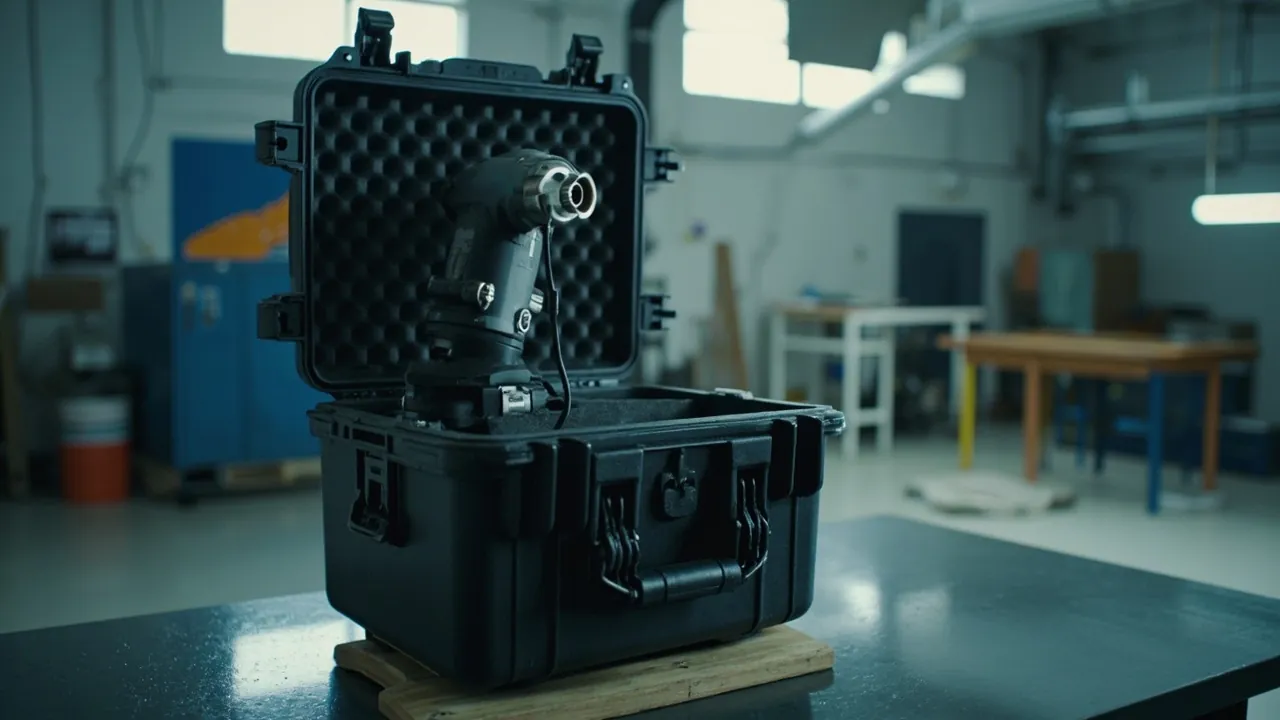
In bakery equipment spare-parts logistics, the first thing to fail is rarely structural strength. It is the combination of moisture, sugar and fat residue, and impact. Heating elements and terminal blocks lose insulation resistance once damp, temperature controllers and thermocouples drift out of calibration once struck, and door gaskets lose their sealing effect once compressed beyond recovery. The design direction for a bakery equipment case should therefore be moisture first, temperature-control components in isolated cavities, food-contact surfaces shielded from contamination, and heavy oven parts positively located. The conclusion: ovens and temperature-control components should be split across five families - electrical, temperature control, heating, structural and food contact - with sealing plus desiccant controlling humidity, contoured inserts limiting movement, cleanable food-grade materials handling contact surfaces, and performance verified against the GB/T 4857 and ISTA test series. JUNZHJIA supplies this class of case with custom inserts, OEM/ODM programmes and volume production to bakery equipment manufacturers, food machinery suppliers and export traders.
A second characteristic of bakery spares is that the plant environment is itself damp. Around ovens, proofers and combination steam ovens the relative humidity stays high, washing and rinse-down operations are frequent, and the spare-parts store is often right next to the production floor. This means a spare part is exposed to moisture from the moment it enters the store, not only while in transit. Bakery equipment also uses large amounts of stainless steel and galvanised parts, so the risk of galvanic corrosion from dissimilar metal contact is higher than in general machinery. This article gives protection grades, insert materials, sealing levels, cleanliness requirements and test references by component category, with comparison tables, an acceptance method and a FAQ section for equipment engineers, quality staff and procurement.
Table of Contents
- 1. Three Conflicts Specific to Bakery Oven Spares: Moisture, Impact and Hygiene
- 2. Bakery Oven Component Families and Protection Grades
- 3. Oven Body and Door Assemblies
- 4. Temperature-Control Components: Controllers, Thermocouples and PLC Modules
- 5. Heating Elements: Tubular Heaters, Burners and Steam Systems
- 6. Conveyor Belts and Wire Mesh Belts
- 7. Fans and Air Duct Components
- 8. Hygiene Protection of Food-Contact Surfaces
- 9. Moisture Strategy for High-Humidity Bakery Plants
- 10. Insert Materials for a High-Humidity Plant Compared
- 11. Sealing, IP Ratings and Washdown Environments
- 12. Bakery Case Test References and Compliant Wording
- 13. Bakery Spares Acceptance and Customisation Workflow
1. Three Conflicts Specific to Bakery Oven Spares: Moisture, Impact and Hygiene
Protective packaging for bakery spares has to satisfy three pairs of conflicting requirements at the same time.
The first conflict is between sealing and dryness. To keep sugar dust, flour and rinse water out, the case must be sealed. But sealing also locks in whatever air humidity was present at closing time, and when the temperature falls that vapour condenses on metal surfaces. For heating elements, terminal blocks and PLC modules this condensation is more dangerous than external water ingress, because it happens internally and is hard to detect. The answer is not to abandon sealing but to combine sealing plus desiccant plus a humidity indicator card, and to close the case in a dry environment.
The second conflict is between location and brittleness. Temperature controllers, thermocouples, glass viewing windows and ceramic insulators all fear impact and need firm location, yet they are brittle or thin-walled and cannot be clamped. The correct approach is support and locate, never squeeze: the cavity carries the part and limits the direction of movement without applying additional pressure.
The third conflict is between food contact and packaging material. Components that touch food directly or indirectly - rack supports, mesh belts, oven cavity parts, air deflectors, mixing tools - cannot use packaging materials that shed debris, absorb moisture or contain migratory additives. Wood, felt and open-cell foam are all unsuitable; closed-cell, cleanable, low-outgassing materials should be used, with verifiable cleaning records.
Only when all three conflicts are resolved at once is a case fit to be called a bakery equipment parts case. Addressing only one of them, for example by adding thicker foam, is not merely ineffective but can introduce a new risk in the form of foam crumbs contaminating food-contact surfaces.
2. Bakery Oven Component Families and Protection Grades
Grading by electrical sensitivity, food-contact status, stiffness and weight is more relevant to the bakery industry than grading by weight alone.
| Protection grade | Typical components | Dominant failure mode | Cleanliness and hygiene requirement | Insert and packaging strategy |
|---|---|---|---|---|
| --- | --- | --- | --- | --- |
| B1 Electrical and control | Temperature controllers, PLC and IO modules, inverters, thermocouples, humidity sensors | Insulation loss from moisture, ESD damage, calibration drift | Moisture and static control | Anti-static bag plus isolated cavity plus desiccant |
| B2 Heating element | Tubular heaters, heating plates, infrared heaters, burner assemblies, electrodes | Cracked ceramics, damp terminals, bent tubes | Moisture and impact control | Contoured cavity plus end sleeves plus terminal protection |
| B3 Food contact | Rack supports, mesh belts, air deflectors, oven cavity liners, mixing tools | Scratching, deformation, residue contamination | Highest; must be cleanable and low-outgassing | Cleaned then bagged, closed-cell insert plus barrier film |
| B4 Structural heavy | Door assemblies, oven frames, fan scrolls, drive shafts | Distortion, coating damage, crushed gaskets | Impact control | Hard stops plus elastic support plus local reinforcement |
Three operating principles follow from the grading.
Principle one: keep B1 and B2 apart. If the terminals of a heating element share a cavity with a control module, any moisture or debris affects both sides at once. More importantly, ceramic insulators on heating elements generate fine particles under vibration, and those particles can create a short-circuit hazard once they reach a control module.
Principle two: give B3 its own case or at least its own cavities. The cleanliness of a food-contact part is *verifiable*: it is clean when packed and should still be clean when unpacked. Mixed loading with structural parts destroys that verifiability, because machining residue, coating flakes and packaging debris all migrate onto the food-contact surface. This is also a point frequently questioned in food-industry audits.
Principle three: solve B4 with stiffness, not cushioning. The requirement for doors and frames is that they must not distort, and the answer is location plus support rather than thicker foam. No cushioning layer prevents a 40 kg oven door from displacing under inertia.
For B1 components, contoured inserts are the core measure: mill the cavity from a 3D scan or template, with cavity depth at 1/2 to 2/3 of component height so nothing escapes when the case is turned over. For the full workflow see the custom foam insert guide and custom EVA foam insert process.
3. Oven Body and Door Assemblies
The oven door is among the most easily damaged parts of a bakery oven for three reasons: it carries a glass viewing window, it carries a gasket, and it is usually a large, thin sheet-metal weldment that warps easily.
The glass viewing window needs the most protection. Points to observe: the cavity must be fully relieved in the glass region so no hard object can touch the glass; a removable protective panel can be fitted outside the glass; and a double-glazed door, common on premium ovens, should be restrained as a unit and never disassembled for transport, because once the interlayer seal is broken the door loses both thermal performance and cleanability.
The door gasket, commonly silicone or glass-fibre braid, takes a permanent set under compression and then fails to seal. Points to observe: do not apply sustained pressure to the gasket when packing; if the door must be restrained, support it at a stiffer region of the door frame rather than at the gasket edge; and for doors with the gasket already fitted, add a protective pad outside the gasket and mark the case as not to be compressed in the gasket area.
Door hinges and locks are moving interfaces that cause door misalignment and poor closure once struck. Fit protective sleeves and avoid leaving the door half open inside the case.
Oven frames and outer panels are B4 grade. Their failure modes are warping and coating damage. Use hard stops to control displacement and full-face elastic support on the base, and where a surface is painted or enamelled the contact face must use soft padding rather than a hard block pressed against a visible surface.
For ovens with a steam function, also consider the steam generator and pipe connections inside the cavity. These connections, often threaded or clamped, leak once struck. Fit caps and restrain them separately.
4. Temperature-Control Components: Controllers, Thermocouples and PLC Modules
Temperature-control components are the high-value, small-volume, moisture-fearing group in bakery equipment, and the part where this article most strongly recommends isolated cavities, moisture control and static control.
Controllers and instruments usually carry a display and a button panel. Failure modes include a cracked display, a button panel indented by a hard object, and damp internal circuitry. Give each item its own cavity, face the display up or to the side with nothing touching it, and keep cavity depth below case height so the panel carries no pressure. A removable protective film over the display is worth fitting.
Thermocouples and temperature sensors are slender and their probes contact the medium being measured. The failure modes are a bent probe and a damp terminal block. Place the probe in a long channel matched to its diameter with voids at both ends, fit a dust and moisture cap over the terminal head, whether plastic or cast aluminium, and keep the calibration label on calibrated sensors under seal.
PLC and IO modules and inverters are classic static-sensitive devices that also fear moisture. Seal them in anti-static shielding bags, use anti-static flame-retardant insert material, do not let modules touch ordinary foam directly since ordinary foam can carry static, cap terminals, and include desiccant and a humidity indicator card. Where the project requires it, use a full anti-static insert solution (see anti-static and flame-retardant insert solution).
One easily overlooked detail: control modules are usually parameterised and configured at the factory. Strong impact or static in transit can lose or shift parameters. Supply a parameter backup or parameter list with the case and verify key parameters at unpacking. This is especially valuable on export projects, where the original configuration file is often unavailable on site.
For control spares held in long-term storage, manage them as sealing plus desiccant plus periodic indicator-card checks rather than simply placing them in a spares cabinet.
5. Heating Elements: Tubular Heaters, Burners and Steam Systems
Heating elements combine live electrical parts, ceramics and terminals, and each fails for a different reason.
Tubular heaters, including finned types, fail by tube bending, fin collapse and damp terminals. Support the tube at multiple cradles with spacing derived from allowable deflection, practically L/1000; keep the fin field free of compression so that load passes through the end ceramic heads or the flange; and fit insulating sleeves and moisture caps to the terminals. On U-shaped or W-shaped heaters, the bend radius must not touch the case wall.
Ceramic insulators, including heads, beads and bushings, are brittle and fear impact and local compression. Match the cavity to the ceramic outline with soft padding at the contact face, support and locate rather than clamp, and separate multiple ceramics with soft dividers so they cannot strike each other.
Burner assemblies used on gas ovens contain ignition electrodes, flame detectors, gas valve trains and nozzles, and their protection requirements match those for industrial burner spares: one cavity per nozzle and valve, clean packaging, ports plugged, and spark gaps that must not shift.
Steam system components, including steam generators, steam injection pipes and steam traps, carry water connections and some have already passed hydrostatic testing. Cap the pipe connections to keep foreign matter out, support pipe runs at multiple cradles, and keep test labels on tested components while protecting the connections from impact.
On quantifying dampness: the insulation resistance of electrical components is very sensitive to humidity. If the relative humidity inside the case stays high, a water film forms on insulating surfaces and insulation resistance falls, which in service shows up as leakage or tripping. This is why the packaging of heating elements and control modules must target humidity control first and impact resistance second.

6. Conveyor Belts and Wire Mesh Belts
Tunnel ovens, baking ovens and cooling lines use large quantities of metal mesh belts, chain belts and PTFE belts. The transport difficulty with this family is that the parts are long, heavy and must not deform locally.
Metal mesh belts are available in many specifications, for example 24-strand and 36-strand, and although they look flexible they are very sensitive to local indentation. Once the spiral structure is flattened, the belt tends to track off-centre or even jam in service. Wind the belt onto a mandrel for transport, with a winding diameter that is not too small, to avoid permanent curvature; fit soft sleeves at the ends; and where the assembly is bulky, use a crate or steel frame case with soft padding at all contact faces.
Chain belts and slat chains fail by link deformation and pin damage. Pack them in segments with each segment separately restrained, never coil a chain loosely and then place a heavy item on top, and for chains that have already been lubricated, keep the grease away from other components by giving the chain its own cavity.
PTFE belts and food-grade conveyor belts are B3 food-contact items that also fear scratching and folding. Wind them onto a sufficiently large core, apply a barrier film to the surface, never fold or heavily compress them, and keep debris-shedding materials out of the case.
One rule is directly tied to baking: the surface condition of a mesh belt or PTFE belt directly affects product release and appearance. Once the surface is scratched or dented, the marks transfer to the product. The packaging standard for these parts should therefore be stricter than for general machinery, and acceptance must treat no new surface scratches as a separate check item rather than folding it into a general visual assessment.
For belts that circulate with the equipment, a removable divider system allows compartmentalised restraint (see removable divider system design).
7. Fans and Air Duct Components
Hot air circulation is the core process element of a bakery oven, and the condition of the fans and ducts directly determines temperature uniformity.
Fan scrolls and impellers fail by scroll distortion, which changes air flow, and by loss of impeller balance, which causes vibration and noise. Restrain the impeller separately and never leave it loose in the case; control scroll displacement with hard stops and use elastic support on the base; and for balanced impellers keep the balance label and protect the blades from impact.
Air ducts and deflectors are usually thin sheet parts that warp easily. Stand them on edge or lean them, support with area-contact saddles, separate thin sheets with soft dividers, and for ducts with adjustable dampers fix the damper in one position with a mark so it cannot rotate in transit.
Motors and pulleys sit at the intersection of electrical and mechanical parts. Motors fear moisture and impact; pulleys fear impact because a damaged groove causes uneven belt wear. Give the motor its own cavity with moisture protection and fit a groove protector to the pulley.
A second risk for duct parts is internal residue. Duct interiors are hard to clean thoroughly, and if metal chips or coating flakes remain inside they are blown into the oven cavity in service and contaminate food. Purge duct parts before packing and mark them as requiring a second purge before installation.
8. Hygiene Protection of Food-Contact Surfaces
This section addresses the point most often questioned in bakery industry audits: how is the clean condition of a food-contact surface demonstrated from factory to site?
First, the compliance boundary must be clear. Food contact materials and articles must meet the requirements of the applicable national standards, for example the GB 4806 series on food contact materials and articles. The requirement targets the food-contact components of the equipment itself, such as the migration behaviour of stainless sheet or the safety of coatings and plastics. The case and insert are transport packaging; they are not food contact materials and cannot substitute for the component's own compliance evidence. Write this into the technical agreement to avoid any confusion of responsibility.
With that boundary established, the role of packaging is to maintain the clean condition the component had when it left the factory. Measures include:
- Pack immediately after cleaning: once washing and drying are complete, pack promptly rather than leaving parts exposed to plant air.
- Contact material choice: use closed-cell, low-outgassing, cleanable materials for the inner layer; never wood or felt; and for stainless parts keep carbon steel tools and chips away to avoid iron contamination.
- Contamination isolation: pack food-contact and non-food-contact items separately, and separate stainless from galvanised and carbon steel parts to avoid galvanic corrosion.
- Traceable records: supply a cleaning record with the case, covering washing method, drying method, inspection result, operator and date, so that cleanliness is traceable. In supplier audits under HACCP this is normally seen as a positive.
- Hygienic design awareness: where possible choose packaging that is easy to clean, with smooth surfaces and no crevices that trap dust or flour, and avoid textile materials that are hard to clean. This follows the same logic as hygienic design in equipment.
For food-contact parts held in long-term storage, use sealing plus desiccant plus a humidity indicator card plus periodic re-inspection, and reconfirm cleanliness at re-inspection rather than assuming it is still acceptable.
On the relationship between cleaning, fat residue and spoilage, the general approach used in food storage and distribution applies (see cold chain and food distribution protection); the core logic is the same, namely to block the conditions that allow microorganisms and corrosion to develop by sealing and controlling humidity.
9. Moisture Strategy for High-Humidity Bakery Plants
Moisture control is the most underestimated element of bakery spares packaging and also the one that causes real losses, because the loss appears late: a spare sits in the store for three months, looks perfect when opened, and then fails an insulation test or a control board check after installation.
The strategy has four layers.
Layer one is case sealing. Sealing blocks exchange of external moisture. Choose the level by exposure: IP65 for in-plant movement and indoor storage, IP67 for ocean freight, open yards and rainy-season long haul. Gaskets are commonly silicone or EPDM with compression at 20 to 30 percent, and they need periodic inspection and replacement. For seal structure detail see toolbox hinge and latch sealing structure.
Layer two is internal desiccant. Sealing only prevents leakage in; it does not make anything dry. Desiccant quantity is set by free volume, sealing level, transit duration and destination climate, with a practical value of 20 to 50 g of silica gel per 20 L of free volume and the upper end for ocean freight or humid destinations. For cases opened repeatedly, provide a quickly replaceable desiccant compartment.
Layer three is state indication. The humidity indicator card is the cheapest and most valuable element of the whole strategy: it lets whoever opens the case judge moisture exposure by eye instead of by experience. Include a card in every case and record its initial state.
Layer four is pressure equalisation. On multi-climate routes, sharp temperature change creates a pressure differential that can force the gasket into the case or bulge the shell. A pressure equalisation valve allows gas to exchange slowly and equalise the differential while blocking liquid water and dust; for principles and selection see pressure equalisation valve configuration. It is essential for air freight and high-altitude transfer.
Two specific situations also deserve attention. First, when a case moves from a cold environment into warm humid air, opening it immediately causes condensation on cold components; let it stand indoors until close to room temperature before opening. Second, the insert material itself can become a water source: open-cell foam, felt and wood absorb moisture and release it when the temperature falls, so sealed cases should use closed-cell materials.
10. Insert Materials for a High-Humidity Plant Compared
The table below gives insert and packaging material guidance for bakery equipment spares.
| Material or form | Cleanliness and cleanability | Cushioning and support | Moisture behaviour | Suitable components | Cautions |
|---|---|---|---|---|---|
| --- | --- | --- | --- | --- | --- |
| Closed-cell precision-milled EVA | High, surface can be wiped clean | Good support, moderate cushioning | Good, does not absorb water | B1 controls, B2 heating elements | Needs desiccant; inspect periodically in humid conditions |
| Anti-static flame-retardant EVA or PE | High | Good support | Good | B1 PLC modules, inverters | Requires UL94 evidence |
| High-density closed-cell PE blocks | Medium to high | Strong support | Good | B4 doors, frame pads | Must not touch visible surfaces |
| Self-skinning PU foam | Moderate | Excellent conformity | Moderate | Irregular parts, saddles | Control density consistency |
| Nitrile or CR foam | Medium to high | Excellent cushioning | Good | Oily parts, drive components | Higher cost |
| Food-grade silicone pad | High, cleanable | Good cushioning | Good | B3 food-contact isolation | Confirm material compliance evidence |
| Low-density PE pearl foam | Low, sheds debris | Fair cushioning | Fair | B4 void fill and gap packing | Keep away from food-contact parts and heaters |
| Felt or non-woven | Low, sheds fibres, absorbs moisture | Weak support | Poor | Not recommended for this family | Becomes an internal water source |
| Timber support blocks | Low, sheds debris, absorbs moisture | Strong support | Poor | Internal support in frame cases | Never touch food-contact or stainless parts |
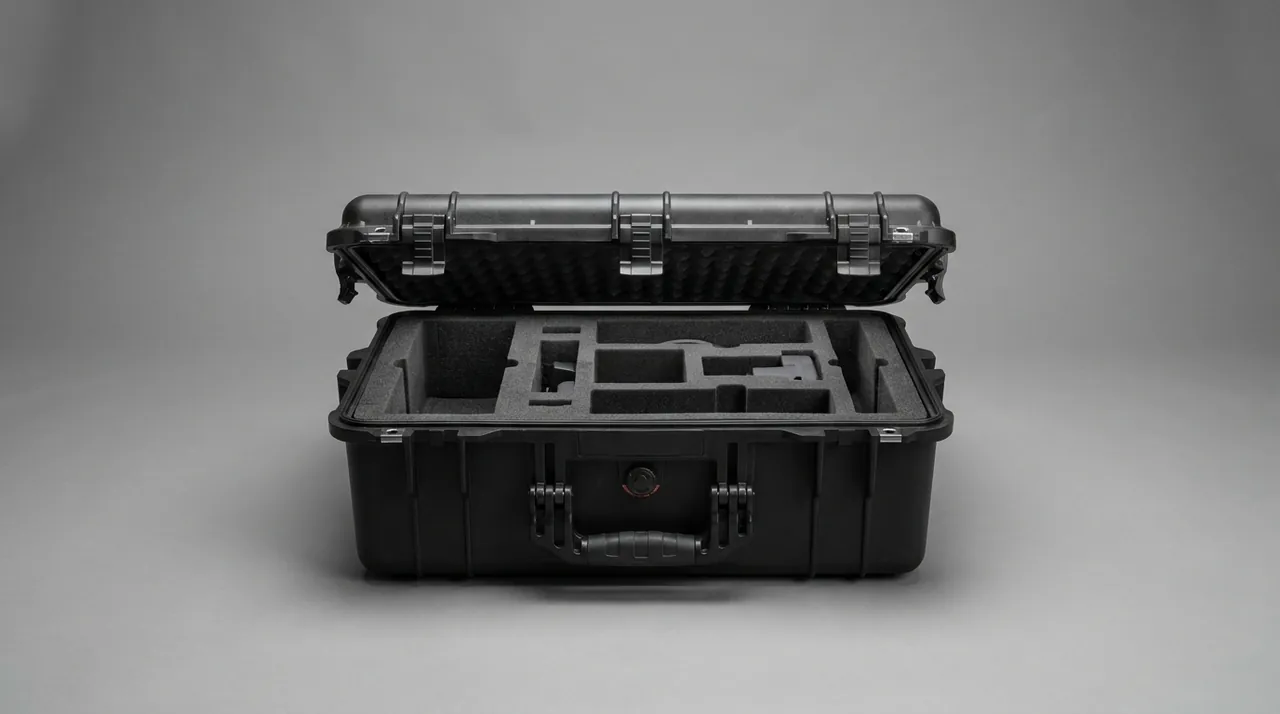
The selection principle can be summarised as choose material by hygiene grade and cavity form by stiffness: first exclude debris-shedding, moisture-absorbing and migratory-additive materials according to whether the part touches food or is electrically sensitive, then set the cavity structure by stiffness and weight. For B3 food-contact parts it is better to spend more on material than to accept contamination risk. For detailed comparisons of materials and structures see case foam material comparison and cushion liner case structural solutions.
11. Sealing, IP Ratings and Washdown Environments
Case protection levels are defined by IEC 60529, and the identical Chinese standard is GB/T 4208. Bakery equipment spares cases typically involve three levels, chosen by actual exposure rather than by a higher-is-better instinct.
| Rating | Meaning | Typical scenario | Configuration |
|---|---|---|---|
| --- | --- | --- | --- |
| IP65 | Dust tight, protected against water jets | In-plant movement, indoor storage, covered road transport | Silicone gasket plus desiccant plus humidity indicator card |
| IP66 | Dust tight, protected against powerful water jets | Near washdown stations, heavy rainfall exposure | Reinforced seal plus tightened latch layout |
| IP67 | Dust tight, protected against temporary immersion | Ocean freight, open yards, rainy-season long haul, intermodal | Reinforced seal plus pressure equalisation valve plus desiccant |
Two common misconceptions need clarification.
Misconception one is that IP69K must be better. IP69K describes protection against high-temperature high-pressure water jets and targets equipment enclosures that require clean-in-place or clean-out-of-place. It is stronger jet protection, which is not the same as being better suited to long-haul transport; long-haul transport is more concerned with dust exclusion, immersion resistance and pressure differential capability. Where a project genuinely involves washdown of the case in the plant, a design with the appropriate capability can be considered, but the decision should rest on real need rather than on a higher number.
Misconception two is that a high sealing rating removes the need to manage humidity. As noted, sealing only blocks exchange and does not lower internal humidity. A sealed case must have desiccant and a humidity indicator card, which matters especially in a humid bakery plant.
Washing also introduces new failure paths: high-pressure water can force open a latch that is not fully closed, drive water into the gasket groove where it collects, or carry dust into the cavities. Where a case must be washed in the plant, consider drainage paths and removable inserts at design stage, and dry it to procedure before closing. For everyday cleaning see how to clean and maintain a protective case, and for gasket replacement intervals over the service life see protective case service life assessment.
12. Bakery Case Test References and Compliant Wording
Whether a case is strong enough and dry enough should rest on test evidence rather than on feel.
For transport testing, three families are common: the GB/T 4857 series covering vibration, impact, stacking and drop methods, the foundation for transport packaging verification in China; the ISTA series, organising test sequences around the distribution environment for export orders and intermodal routes; and ASTM D4169, using a distribution cycle plus assurance level approach for high-value large items. For bakery equipment spares, complete at least vibration, impact and stacking; for cases carrying control modules, add a post-test functional check covering appearance, terminals and indicator card state; and for food-contact parts, add a post-test cleanliness re-check. For methods see GB/T 4857 transport packaging testing and ISTA transport testing procedures.
On environmental test references, where a project needs one, MIL-STD-810H may be used as a reference for environmental test methods such as temperature and humidity, vibration, shock and salt fog. It is not itself a military certification and does not constitute product certification. External documents must state this precisely to avoid any misreading as military grade. This matters especially with food-industry customers, where an overstated claim directly damages supplier qualification.
Regulatory and standards awareness requires three clear boundaries.
First, the case is transport packaging and is not a food contact material. Food contact materials and articles must meet applicable national standards such as the GB 4806 series, and those requirements target the food-contact components of the equipment. A case cannot substitute for the component's compliance evidence and should not be declared as a food contact material.
Second, the case is transport packaging and is not a pressure vessel or pressure part. Where bakery equipment includes a steam boiler or pressure components, the design, manufacture and inspection of those parts must follow the applicable regulations and standards, including GB/T 150 for pressure vessel design, TSG 21 for fixed pressure vessels, and awareness of GB/T 16507 for boilers. The case takes no part in that.
Third, food safety management system requirements address equipment and processes. HACCP and similar systems deal with hazard analysis and critical control points; the role of a case is to maintain the clean, undamaged condition of equipment components and thereby support the controls the plant has established. Define the hygiene requirements and acceptance method for packaging in the technical agreement so they can be brought within supplier management.
Flame retardancy and material compliance: where a case is used in a location with fire requirements or the shipment involves air freight, the insert material can be required to provide UL94 flame-retardant evidence such as UL94 V-0, agreed in the technical agreement in advance.
13. Bakery Spares Acceptance and Customisation Workflow
Acceptance should follow a four-check, one-measure flow, in which the moisture check and the cleanliness check are specific to this industry.
Check the packaging for oven steam condensate and staining: rupture, distortion or water staining on the outer case, paying attention to damp marks left by steam-injection or oven washdown, and confirm seal integrity with no condensate in the latch channel. Check moisture: whether the humidity indicator card has changed colour; if it has, open immediately and run component-specific checks, measuring insulation on heater elements and control modules and inspecting metal parts for corrosion or steam-pit staining.
Check cleanliness: whether cavities contain debris, fibres or dust; whether the barrier film on food-contact parts is intact; whether plugs have come loose.
Check the appearance: verify drawing numbers and quantities against the packing list; inspect door glass and gaskets, heater ceramic heads, belt surfaces, and control module displays and terminals.
Check the state: verify calibration labels and seals on thermocouples and instruments; verify labels on parts that have passed hydrostatic or leak testing; verify whether a PLC parameter list accompanies the shipment.
Measure the critical items: sample insulation resistance on heating elements and control modules where the project requires it, check belt and PTFE surfaces for new scratches, and sample door flatness.
For volume orders, incoming inspection of cases and inserts can follow an AQL sampling plan (see custom case acceptance and AQL sampling): appearance defects at general inspection level II with AQL 2.5, and defects affecting protective performance such as missing gasket, misaligned cavity, non-conforming anti-static performance or failed latch at AQL 0.65 or under tightened inspection. For food-contact projects, add an insert cleanliness sampling item and a material compliance document check.
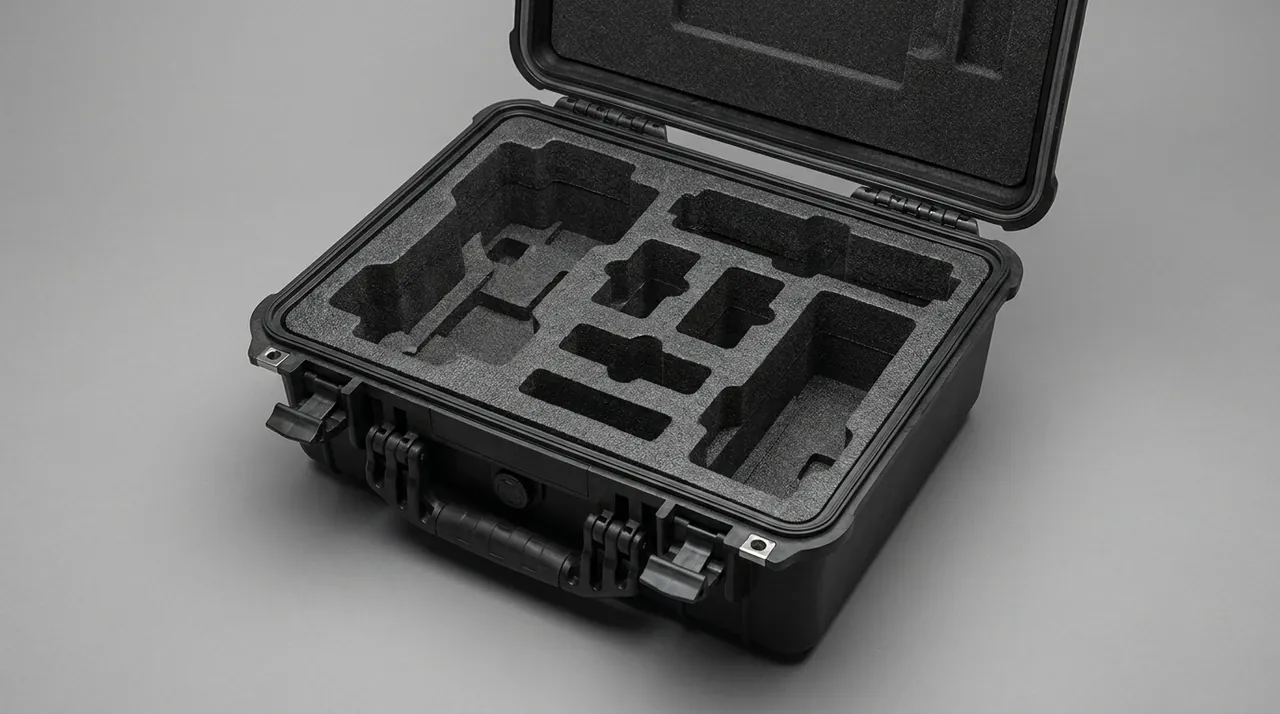
The OEM/ODM flow typically runs: requirement clarification (component list, food-contact status, electrical sensitivity, dimensions and weights, transport mode and destination climate), grading and case-splitting plan, insert and clean-packing design, sample case trial fit with cleanliness confirmation, test verification, volume production, and delivery with identification. At sample stage, confirm three things in particular: whether control components can be handled smoothly, whether food-contact parts stay clear of every contamination source throughout, and whether the moisture strategy can be verified on site. JUNZHJIA supports the sample stage with insert drawings, clean-packing work guidance and trial-fit feedback, supplies seals and hardware configured to each oven and temperature-control component, and returns trial-fit records plus clean-packing documents with moisture-control notes.
For cases intended for reuse across projects, use a standard shell plus changeable insert strategy: the shell and hardware are common while inserts are component-specific, which is especially economical for bakery equipment makers with many models and scattered batch sizes. Where tooling is involved, evaluate mould amortisation first (see protective case mould cost analysis). When selecting a supplier, also look at insert material consistency so that protective performance does not vary between batches (see identifying genuine versus counterfeit protective cases).
FAQ
Q: Why does moisture control rank above impact resistance for bakery equipment spares?
A: Because failure in this family comes more from moisture than from impact. Bakery equipment uses large numbers of electrical and control components, including temperature controllers, PLC modules, inverters, thermocouples and tubular heaters, and their insulation performance is very sensitive to humidity. When relative humidity inside a case stays high, a water film forms on insulating surfaces, insulation resistance falls, and in service the result can be leakage or tripping. What makes this worse is the delay: a spare can sit in the store for three months, look perfect when opened, and only fail after installation, at which point neither traceability nor rework is practical. Impact damage, by contrast, is normally visible at unpacking and can go straight into a claim. The engineering recommendation is therefore to treat sealing plus desiccant plus a humidity indicator card plus pressure equalisation as standard configuration for bakery equipment spares cases, and to close cases in a dry environment. Note that sealing is not the same as drying: sealing only blocks exchange, and if the air inside is humid at closing time that moisture is locked in and condenses when the temperature falls.
Q: Why must control modules and heating elements be stored in separate cavities?
A: Two reasons. The first is humidity and electrical safety: if the terminals of a heating element share a cavity with a control module, both sides are affected at once when moisture enters, and an insulation failure can appear after energisation. The second is debris risk: ceramic insulators on heating elements generate fine particles under transport vibration, and although these particles are weakly conductive, once they reach the terminal area of a control module they can create a creepage path or cause poor contact. Ceramic particles are also hard and will scratch module surfaces and displays. Keep the B1 electrical and control grade separate from the B2 heating element grade, either in different cases or at minimum in different cavities separated by a solid divider rather than foam alone. In addition, control modules are usually static-sensitive and should be sealed in anti-static bags with anti-static flame-retardant inserts, while heating elements need focus on terminal moisture protection and ceramic impact protection. The insert materials and processes the two families need are different, and mixed packing usually does neither well.
Q: How can oven door gaskets be protected from being crushed in transit?
A: The core principle is not to apply sustained pressure to the gasket. Oven door gaskets are commonly silicone or glass-fibre braid, and their sealing depends on elastic compression; once compressed beyond the elastic range for a long period they take a permanent set, and after recovery they no longer mate with the door frame, which shows up as heat loss, steam loss and higher energy consumption. Four practices follow. First, if the door must be restrained, choose a stiffer region of the door frame as the support point and never place a support at the gasket edge. Second, fully relieve the glass viewing window area and let nothing hard touch the glass; a removable protective panel is worth fitting. Third, fit protective sleeves to the hinges and locks and avoid leaving the door half open in the case, since a half-open door puts a bending moment on the hinges. Fourth, mark the case as not to be compressed in the gasket area and note the door orientation on the packing list so carriers and handlers can see it.
Q: How can the clean condition of food-contact parts be demonstrated?
A: Use three elements together: traceable records, physical isolation and arrival re-checking. On records, supply a cleaning record with the case covering washing method, cleaning medium, drying method and duration, inspection method and result, operator and date. This turns cleanliness from a verbal assurance into a verifiable fact and is normally seen as a positive in supplier audits under HACCP and similar systems. On physical isolation, seal food-contact parts in barrier film or clean bags before packing and store them separately from non-food-contact items; use closed-cell, cleanable, low-outgassing material for the inner layer, with no wood, felt or open-cell foam. The case itself is not declared as a food contact material; it is a means of maintaining the component's clean condition. On arrival, first check whether the barrier film is intact and whether cavities contain debris or fibres, then sample surface condition. Note that the food-contact compliance of the component itself, such as material migration behaviour, must be evidenced by the component manufacturer under standards such as the GB 4806 series, and a packaging case cannot substitute for that.
Q: Is a humidity indicator card really necessary, and how much desiccant should be used?
A: The humidity indicator card is the cheapest and most valuable element of the whole moisture strategy and is strongly recommended. It turns the question of whether moisture has entered from a subjective judgement into something visible: whoever opens the case simply compares the colour band to judge whether the protection has expired or moisture has been absorbed, whereas judgement based on appearance often only reveals the problem once corrosion or an insulation failure has already occurred. Desiccant quantity depends on free volume, sealing level, transit duration and destination climate, with a practical value of 20 to 50 g of silica gel per 20 L of free volume and the upper end for ocean freight and humid destinations. If one shipment is split across several cases, calculate per case rather than for the total, because cases are opened at different times and a shared allowance cannot be verified on site. Use the card and the desiccant together: once the card enters the warning band, replace the desiccant and inspect the gasket. For cases opened repeatedly, provide a quickly replaceable desiccant compartment so that each opening does not introduce fresh moisture.
Q: How should IP65, IP66 and IP67 be chosen, and is IP69K better?
A: Choose by actual exposure, and do not default to the highest rating. IP65 is dust tight and protected against water jets, suitable for in-plant movement, indoor storage and covered road transport. IP66 is dust tight and protected against powerful water jets, suitable near washdown stations or where heavy rainfall exposure occurs. IP67 is dust tight and protected against temporary immersion, typically 1 m for 30 minutes, suitable for ocean freight, open yards and rainy-season long haul. On IP69K, one common misconception should be cleared up: it describes protection against high-temperature high-pressure water jets and targets equipment enclosures that require clean-in-place; it is stronger jet protection, which is not the same as being better suited to long-haul transport. Long-haul transport is more concerned with dust exclusion, immersion resistance and pressure differential capability, which are delivered by the IP6X and IPX7 combination plus pressure equalisation. Where a project genuinely requires the case to be washed down in the plant, a design with the appropriate capability can be considered on real need, but choosing it merely because the number is higher usually means a heavier seal structure and higher cost without a matching benefit.
Q: Why are mesh belts and PTFE belts harder to pack than general machine parts?
A: Because they look flexible but are in fact very sensitive to local damage. A metal mesh belt is woven from a spiral structure; it looks soft yet is extremely sensitive to local indentation. Once a spiral is flattened, the belt tends to track off-centre or jam in service, and the deformation is usually not obvious at unpacking, only appearing once the equipment runs. PTFE belts and food-grade conveyor belts fear both scratching and folding, and their surface condition directly affects product release and appearance, so a scratch or dent transfers marks onto the product. Wind belts onto a core for transport with a diameter that is not too small, to avoid permanent curvature; fit soft sleeves at the ends; apply a barrier film to the surface; and never fold or heavily compress them. Where the assembly is bulky, a case or frame can carry it, but all contact faces need soft padding and the belt must never act as a load path. At acceptance, treat no new scratches and no new flattened points as separate check items rather than folding them into a general visual assessment.
Q: Does a bakery equipment spares case need transport testing, and which tests?
A: Yes. Three families of reference are common: the GB/T 4857 series covering vibration, impact, stacking and drop methods, the foundation for transport packaging verification in China; the ISTA series organising test sequences around the distribution environment for export orders and intermodal routes; and ASTM D4169 using a distribution cycle plus assurance level approach for high-value large items. Complete at least vibration, impact and stacking. Two component-specific re-checks deserve particular attention in this industry. The first is a post-test functional check: inspect control module appearance and terminal condition, check whether the humidity indicator card has changed colour, and sample insulation resistance where required. The second is a post-test cleanliness re-check: inspect cavities for newly generated debris from vibration and confirm that barrier film on food-contact parts is still intact. Where MIL-STD-810H is cited as an environmental test method reference, for example for temperature and humidity, vibration, shock or salt fog, state in the document that it is not a military certification and does not constitute product certification.
Q: What else should export projects consider for bakery equipment packaging?
A: Three categories are worth confirming in advance. The first is wood packaging and phytosanitary requirements: many countries require fumigation or heat treatment of solid wood packaging, and using crates, timber pallets or timber support blocks adds processing steps and waiting time, whereas a rigid plastic case with fumigation-free pallets simplifies the flow. Note also that timber support blocks themselves shed debris and absorb moisture, which is unsuitable for food-contact and electrical components in any case. The second is documentation and precise compliance wording: export projects usually need a packing list, component numbers and identification, and where the equipment contains a steam boiler or pressure components, the manufacturing and inspection documents for those parts should accompany the shipment. At the same time, the documents should state accurately that the case is transport packaging, is not a food contact material, and cannot substitute for the component's compliance evidence or, where gas is involved, the equipment's explosion protection certification. The third is climate adaptability: for ocean freight and humid destinations aim for IP67 with a pressure equalisation valve and sufficient desiccant, and consider the stability and cleanability of insert materials at high temperature and humidity. Write these requirements into the technical agreement item by item and complete sampling before dispatch.
Conclusion & Related Reading
The design logic of a bakery oven equipment parts case can be summarised in four lines: control humidity with sealing plus desiccant rather than thicker foam; isolate electrical, heating and food-contact components in separate cavities rather than mixing them to save effort; control deformation with location and multiple supports rather than clamping; and demonstrate cleanliness with traceable records rather than verbal assurance. Add transport testing, humidity indication and unpacking verification, and both the arrival condition and the installed reliability of bakery equipment spares move from luck to records.
Three boundaries should be stated. First, the case is outer transport packaging and is not a food contact material; food contact materials and articles must be evidenced by the component manufacturer under standards such as the GB 4806 series. Second, the case is transport packaging and is not a pressure vessel or pressure part; where equipment includes a steam boiler or pressure components, those parts must follow applicable standards and regulations including GB/T 150, TSG 21 and GB/T 16507. Third, MIL-STD-810H serves only as an environmental test method reference and is not a military certification; where fire requirements or air freight apply, UL94 flame-retardant evidence can be required for the insert material.
JUNZHJIA (Kexin New Materials (Guangdong) Co., Ltd.) supplies oven and temperature-control component cases to bakery equipment manufacturers, food machinery suppliers and export traders, with custom inserts, moisture-control concepts, anti-static inserts, clean-packing concepts, OEM/ODM programmes and volume production, and can issue case-splitting plans, per-line packing specifications with insert-layout drawings, moisture-control notes and clean-packing inspection records for oven and temperature-control components.
Related Reading