

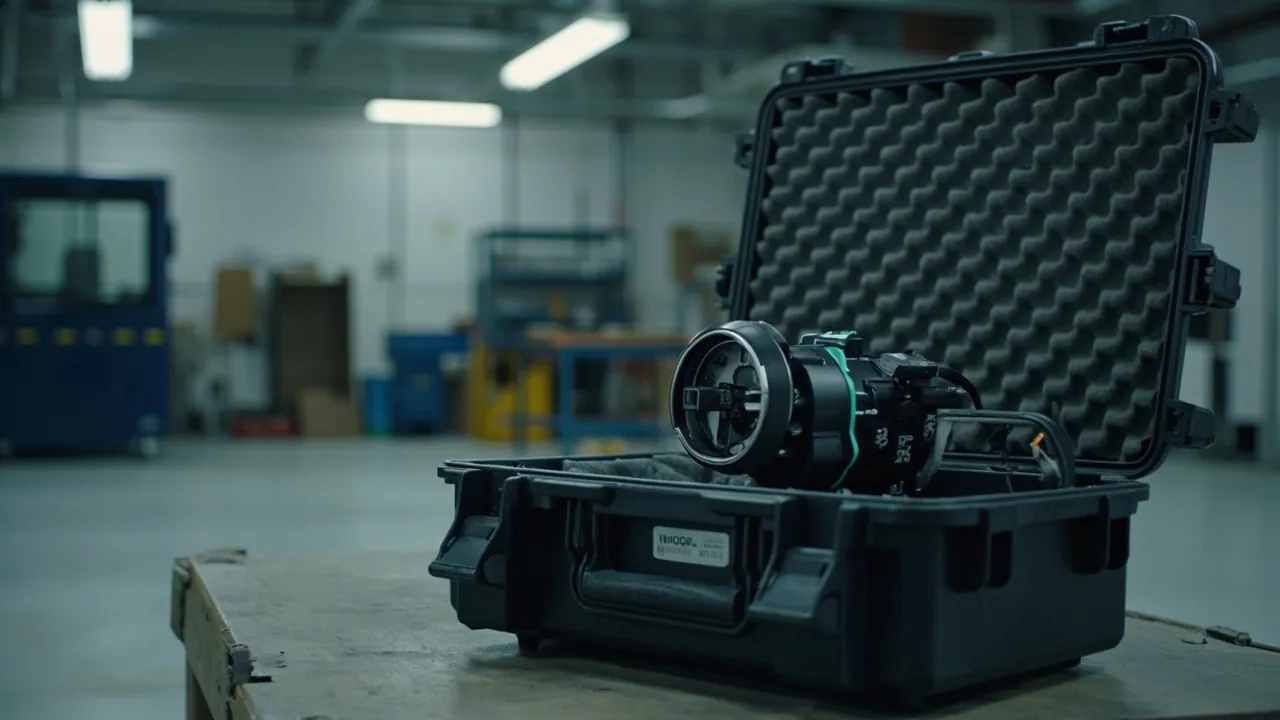
In dough processing equipment spare-parts logistics, two damage sources are consistently underestimated: flour dust and moisture. Flour dust reaches bearings, guideways and mating faces, absorbs moisture, cakes into a sticky mass and then acts as an abrasive paste. Mixers and dividers work in an environment of water and flour, their spares sit in high-humidity plants, and both metal corrosion and loss of insulation on electrical parts are therefore significantly more likely than in general food machinery. The design direction for a dough equipment case should therefore be dust exclusion, moisture control, cleanliness and precision location. The conclusion: mixing and dividing components should be split across four families - food contact, precision moving interface, electrically sensitive and structural heavy - using closed-cell cleanable inserts, one bag per item, sealing plus desiccant, and verification against the GB/T 4857 and ISTA test series. JUNZHJIA builds exactly this family of case for pasta and dough machinery makers, bakery equipment suppliers and export traders, covering custom inserts, OEM/ODM programmes and volume runs.
A second industry characteristic is that the spares combine heavy items and precision items. A mixer agitator, bowl and gearbox are heavy components weighing tens to hundreds of kilograms, while divider blades, pistons and metering mechanisms demand mating accuracy in millimetres or fractions of a millimetre. The two families fail in completely different ways: heavy parts fail through lifting impact and distortion, precision parts fail through mating-face damage and contamination. Put them in one case with the same restraint and the result is the heavy part crushing the precision part and the hard part abrading the soft one. Splitting and grading is therefore the first principle of packaging for this equipment. What follows is organised the way a dough plant actually buys: part family first, then the grade it falls into, then the insert and moisture decisions that follow from it. Engineering, quality and purchasing each get a section they can use directly, and the comparison tables can be quoted straight into a technical agreement.
Table of Contents
- 1. Dough Processing Spares: Why Dust and Moisture Control Beat Impact Resistance
- 2. Dough Equipment Component Families and Protection Grades
- 3. Mixer Components: Agitators, Bowls and Drives
- 4. Divider Components: Dividing Blades, Pistons and Turntables
- 5. Dough Conveying and Shaping Components
- 6. Flour Residue and the Cleaning Process
- 7. Bearings, Seals and Lubrication Protection
- 8. Stainless Steel and Food-Contact Compliance
- 9. Moisture Management in a High-Humidity Flour Environment
- 10. Flour-Environment Insert Materials and Cleanliness Compared
- 11. Sealing, IP Ratings and Clean-in-Place Environments
- 12. Dough Equipment Test References and Compliance Boundaries
- 13. Dough Equipment Acceptance, Sampling and Collaboration
1. Dough Processing Spares: Why Dust and Moisture Control Beat Impact Resistance
Three engineering facts set the frame.
First, the delayed damage from flour dust is far greater than the immediate damage. Flour is fine and highly airborne, and it reaches bearings, linear guideways, gear meshes and clearance fits. Once inside, it is an inert particle while dry, but after absorbing moisture it becomes sticky and glues particles onto mating faces, creating an abrasive paste effect that accelerates wear. Worse, the damage is delayed: there is nothing unusual at installation, and only after a period of running do temperature rise, noise or loss of accuracy appear. The objective of packaging is therefore not to keep a spare off the floor but to ensure that the spare arrives in the same clean condition it left the factory in.
Second, the effect of moisture on electrical parts and corrosion is amplified in a dough plant. Mixing and dividing rooms are permanently humid, washing is frequent and floors are often wet. Electrical parts such as control modules, inverters, level sensors and load cells lose insulation resistance once damp; carbon steel and galvanised parts corrode; and stainless parts pit in the presence of residual chloride-containing detergent. The sealing and desiccant strategy for the case must therefore match the real exposure rather than assuming indoor circulation.
Third, heavy and precision parts fail differently and cannot share one restraint method. The problem with an agitator and bowl is usually distortion and lifting impact, solved by location and stiffness. The problem with a dividing blade and piston is mating-face damage and contamination, solved by relief and cleanliness. In a mixed load the self-weight and shifting of the heavy part acts directly on the precision part. Split the load by protection grade or at minimum separate the cavities.
Taken together, the evaluation criteria for a dough processing case should be dust exclusion, humidity control, traceable cleanliness and graded restraint capability. Cushioning is required, but it is not the main contradiction.
2. Dough Equipment Component Families and Protection Grades
Grade by food-contact status, precision of the moving interface, electrical sensitivity and weight or stiffness.
| Grade | What falls into it | How it fails in service | Cleanliness and moisture demand | Packing approach |
|---|---|---|---|---|
| --- | --- | --- | --- | --- |
| M1 Food-contact precision | Dividing blades, cutting blades, metering and forming rollers, discharge nozzles | Edge or forming-surface damage, and any contamination at all | Highest; nothing that sheds, nothing containing silicone | One item per bag, relieved cavity, separate edge plate |
| M2 Precision moving interface | Pistons, guideways, linear bearings, gears, cams, metering mechanisms | Mating-face scoring, dust ingress, corrosion | High; no dust whatsoever | One cavity per item, soft location, protective shaft sleeves |
| M3 Electrically sensitive | Control modules, inverters, load cells, level sensors | Insulation loss once damp, ESD damage, calibration drift | Humidity and static control together | Anti-static bag, isolated cavity, dedicated desiccant |
| M4 Structural heavy | Agitators, bowls, gearboxes, frames, guards | Distortion, lifting impact, coating damage | Moderate | Hard stops, elastic base support, full-face bearing |
Four operating principles follow.
Principle one: keep M4 away from M1 and M2, or at least in separate cavities. This is the single most important rule for dough equipment packaging. Agitators and bowls weigh tens of kilograms and above, and any shifting delivers impact to precision parts; their machined surfaces and coatings also generate debris that contaminates food-contact parts.
Principle two: give M1 its own case or cavities and keep its cleanliness verifiable. Dividing blades and forming rollers touch the dough directly, and the condition of their edges and forming surfaces determines weight consistency and appearance; once contaminated with dust or a hard particle they produce continuous defects in service.
Principle three: give M3 its own cavities with static control. Load cells and level sensors are precision elastic or optical elements that fear overload, impact, moisture and static. Use isolated cavities and anti-static packaging (see anti-static and flame-retardant insert solution).
Principle four: solve M4 with stiffness, not cushioning. The requirement for bowls and frames is that they must not distort, and the answer is full-face support and hard stops, not thicker foam.
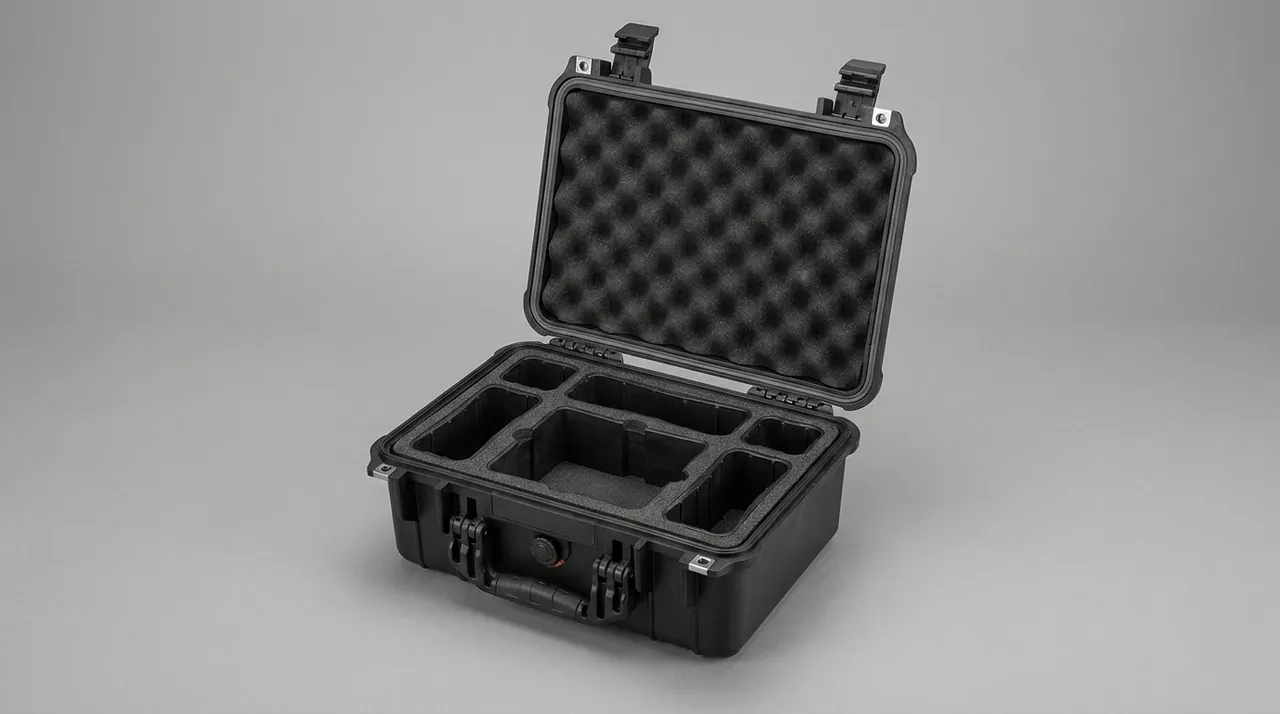
For M1 and M2 components, contoured inserts are the core measure: M1 needs full relief at the edge and forming-surface regions, while M2 needs relief at mating faces and support at journals or outer diameters. Set cavity depth between half and two thirds of the part height, which is what stops a component lifting out if the case is ever turned over in transit. For the process see the custom foam insert guide and custom EVA foam insert process.
3. Mixer Components: Agitators, Bowls and Drives
The core mixer components are heavy, large and rigid, and their failure modes centre on distortion of large mating surfaces and lifting impact.
Agitators, whether hook, spiral or dual-motion types, are usually cast or stainless welded parts: heavy and complex in shape. Failure modes include blade impact distortion, which changes the mixing path and affects gluten development and uniformity; damaged shaft taper or keyway, which affects assembly concentricity; and scratched coating or polished surfaces. Fit protective sleeves over the shaft end and keyway and never use the shaft end as a support; use a relieved cavity at the blade region so no hard object touches the blade faces; support the whole component on two or three points referenced to the axis, with area contact rather than line contact at the saddles; and for balanced or matched agitator sets, keep the markings and pack them as a unit.
Bowls, including mixing and tilting bowls, are usually large-diameter thin-walled stainless parts that fail by ovalisation and internal scratching. Use the stiffer rim and base regions as support points and never use the wall as a support face; place no hard object, including tools and fasteners, inside the bowl; use soft contact material where the inner surface is polished or coated; and if stacking is unavoidable, which is generally not advised, use a form-fitting separator.
Drive components, including gearboxes, couplings, pulleys and shafts, sit between M2 and M4. They fail by bearing damage from side load on the output shaft, damaged coupling mating faces, and damaged pulley grooves that cause uneven belt wear. Zero side load on the output shaft is a hard requirement; restrain the gearbox as a unit and never let a free shaft end carry weight; fit a groove protector to the pulley; and for gearboxes already filled with oil, observe the sealing and the attitude so oil does not run into a non-working position.
Frames and guards are M4 structural parts that fail by warping and coating damage. Control displacement with hard stops, use full-face elastic support on the base to spread the load, and always add soft padding where a visible surface is contacted.
Lifting and handling is the most easily neglected step for these components. Provide lifting points on the case that align with the internal support frame and mark the centre of gravity and a lifting diagram on the case exterior, so that nobody rigs from an unsuitable point and distorts the component.
4. Divider Components: Dividing Blades, Pistons and Turntables
Divider accuracy determines weight consistency, and its spares are archetypally precision plus food contact.
Dividing and cutting blades guarantee weight accuracy through their edges. Failure modes are edge impact, which causes incomplete cuts, dough sticking and weight deviation, and edge corrosion. Fit removable protective plates or soft sleeves over the edge; store one blade per cavity and never stack several together, since workers habitually lay them flat and stack them; provide dedicated edge relief grooves in the insert; mark the blade orientation on the case; and for edges that have been reground with a recorded allowance, supply the grinding record with the case.
Pistons and metering chambers are a precision pair with clearances often in the hundredths of a millimetre. They fail through scratched mating faces, which cause leakage and weight deviation, and through dust ingress, which causes sticking. Store the piston and chamber together in one cavity and label the pairing, because poor interchangeability is a common problem; fully relieve the mating faces so no hard object touches them; use non-shedding insert material; and confirm silicone requirements with the project.
Turntables and indexing mechanisms fail through loss of indexing accuracy, which misaligns cuts, and through damaged mating faces. Support the turntable on an annular or area-contact saddle, protect the locating elements of the indexing mechanism such as locating pins and toothed discs, and restrain the assembly as a unit while keeping the adjustment markings.
Guideways and linear bearings are M2 grade and acutely sensitive to dust. Flour dust that gets in causes sticking of the rolling elements and scoring of the rail. Give each item its own cavity with a dust sleeve, remove dust thoroughly before packing, provide a debris trough in the cavity floor, and for preloaded carriages keep the preload marking and never let a carriage run off the end of its rail.
Baffles, guide plates and discharge nozzles are M1 food-contact parts, often curved. Relieve the curved surface, bag each item individually, and never share a cavity with a hard component.
For complete divider assemblies, meaning blade, piston and metering chamber together, use restrained as a unit, separable by component: the assembly is fixed as a whole to preserve the pairing, while each sub-component has its own cavity for individual replacement on site.
5. Dough Conveying and Shaping Components
Conveying and shaping components determine dough flow and forming quality, and their spares are mostly long, thin or made of food-grade material.
Dough belts, incline belts and divider discharge belts are M1 food-contact items, and they fail at two places only: a crease or a scratch. A dough belt usually carries a fabric carcass, so a single hard fold leaves a permanent crease that later shows up as belt tracking drift or local dough accumulation; the discharge belt surface on a divider decides whether dough sticks. Practice: roll the belt back in its original winding direction, with a core diameter not less than 150 times the belt thickness; interleave clean barrier film between laps and never lay two belt surfaces directly against each other; when laid flat, put nothing hard on top. Belts are the softest item in the case and will be abraded by anything that shifts against them, so stow them where they carry no pressure at all and label the belt orientation and core number on the case. Treat no new creases or scratches and no exposed carcass as two separate acceptance items.
Shaping and sheeting rollers fail through damaged roller surfaces, which cause uneven dough thickness, and bearing damage. Fit soft sleeves over roller surfaces and protective sleeves over shaft ends, never use the roller body as a load-bearing point, and for rollers with rubber or PTFE coverings avoid long-term compression that deforms them.
Dough conveyor chains and divider drive chains fail at the inner link plates and the outer pins. Once a link has been stretched or a plate bent, a difference of a few tenths of a millimetre is enough to cause belt tracking drift and uneven pitch when the chain goes back on the machine. The method is therefore split by assembly run and restrain each run on its own: cut the factory chain into the lengths actually used on the machine, tie both ends of each run and tag it with the run number and a direction arrow. Never coil a whole chain and stuff it into a corner, because chains are flexible and any compressed spot becomes a permanent kink that is the first source of noise in service. Chains that carry grease go into their own cavity so grease cannot creep onto adjacent food-contact parts; where a customer requires oil-free delivery, switch to a dry rust-preventive wrap and say so on the case exterior.
Dough guide-roller chutes and pusher chutes are usually long aluminium extrusions or folded sheet parts, and the two defects that turn up on arrival are overall warp and a raised high spot on the mounting datum. The trouble with this family is that it cannot be measured but will not fit: a few millimetres of warp shows up as belt drift or a sticking pusher, and the first suspect on site is always the motor or the gearbox. Packing points: support along the length at three or more positions, with the saddle bearing on the machined mounting face rather than pressing on the thin web; on chutes longer than 1.5 m add an adjustable mid-span jack so self-weight deflection is taken out; and where a chute carries a rubber or wear strip, face it upwards and leave it fully unsupported so it takes no compressive load.
Flour hoppers, receiving troughs and discharge pipes are thin sheet weldments, and two defects cause the most trouble: a local depression next to a weld, and a dried film left on the inner wall by cleaning liquid. The first comes from the sheet being propped at a single point; the second from closing the case before the part is properly dry. Practice: support a hopper on its flange or turned edge so the walls hang free, and where necessary add a temporary brace across the mouth to hold the form; protect each pipe section at the ends and fit a soft ring to the mouth so it cannot be knocked oval; apply a peel-off clean film to the interior and attach a card to the case reading remove the film before washing. Stainless parts are never trued with a timber block and never share a cavity with carbon steel.
Above 2 m in length, a dough chute or belt frame should stop being treated as an insert problem and become a frame problem: build a steel inner frame that carries the load in bending and torsion, and let the outer shell do nothing but shield and seal. Separating load bearing from weather protection is what keeps long thin-walled parts straight, because the shell can then be a lightweight clamshell instead of a structural beam; see cushion liner case structural solutions.
6. Flour Residue and the Cleaning Process
Cleanliness is not "a wipe at packing time" but a traceable process chain. For flour and dough residue on dough processing equipment, establish a work instruction along these steps.
- Dry before wet: the order cannot be reversed. Strip loose flour and dry dough crumbs with clean compressed air and a soft brush first, and only then bring in water. Starting with a wash turns flour into paste on the spot and it sticks into weld toes and internal corners, so the cleaning labour multiplies rather than falls.
- Wash by zone: sort the parts into three groups according to whether they can be wetted at all. Bare stainless structures can be scrubbed in warm water with a food-grade detergent; parts containing electrical components are wiped with a damp cloth under controlled water volume; and assemblies containing bearings, guideways or a gearbox are a no-water zone, wiped externally only, because once cleaning liquid reaches a moving interface it emulsifies the grease and wear accelerates from that point on.
- Critical areas: treat dough residue in internal corners, threads, blind holes, keyways and assembly clearances separately, because these are the places where residue most easily remains and most slowly dries.
- Dry thoroughly: this is the most frequently skipped and most critical step in this industry. Residual liquid inside a sealed case becomes a starting point for corrosion and microbial growth. Blow dry with clean compressed air, allow to stand, and use low-temperature drying where necessary.
- Inspect: combine visual and tactile inspection, concentrating on internal corners and clearances; for edges and forming surfaces, inspect under raking white light for any residual film.
- Cap every opening: blank discharge mouths, flange ports, keyways and oil passages as soon as the part is dry. The caps themselves must be clean; silicone plugs pick up flour in a dough plant, so a silicone-free elastomer or a hard cover with a pull tab is preferable, and it must come out in one piece at unpacking with no residue left behind.
- Bag one by one: M1 food-contact parts and M3 electrical parts each go into their own bag with the air pressed out, bag mouths facing the same way so the operator can pull them in number order.
- Load and write it down: wipe each cavity once before loading, then log the component number, cleaning and drying method, inspection verdict, packing date and operator. That log is the only document that can later establish what condition the goods were in when they left.
The packing area is itself a protective measure. Airborne flour settles on a freshly cleaned part and undoes every step above. The packing area should therefore be separated from mixing, dividing and flour-dosing operations, ideally as its own room held at slight positive pressure, with floors and benches that wipe clean and no ledges where flour collects. Operators wear lint-free, oil-free gloves and change them on a schedule, and cutting, grinding and film tearing are banned inside the area. Where the plant cannot spare a separate room, at minimum mark out a dedicated zone, blow the bench down with clean compressed air before each packing run, and schedule packing for the shift with the least dust in the air.
One safety boundary should be introduced here. Flour dust can present an explosion risk at particular concentrations and ignition energies, and dust explosion management in flour plants is normally implemented under dust explosion safety regulations such as GB 15577, together with standards for explosion-protected electrical equipment such as the IEC 60079 series and the GB/T 3836 series. Those requirements address workplace dust explosion management and the explosion protection performance of equipment itself. A packaging case is transport packaging, is not explosion-protected equipment, and cannot substitute for any explosion protection certification. Packaging design can nonetheless support site management, for example by avoiding dust generation in the packing area and avoiding packaging forms that accumulate dust. State this precisely in the technical agreement to avoid any confusion of responsibility.
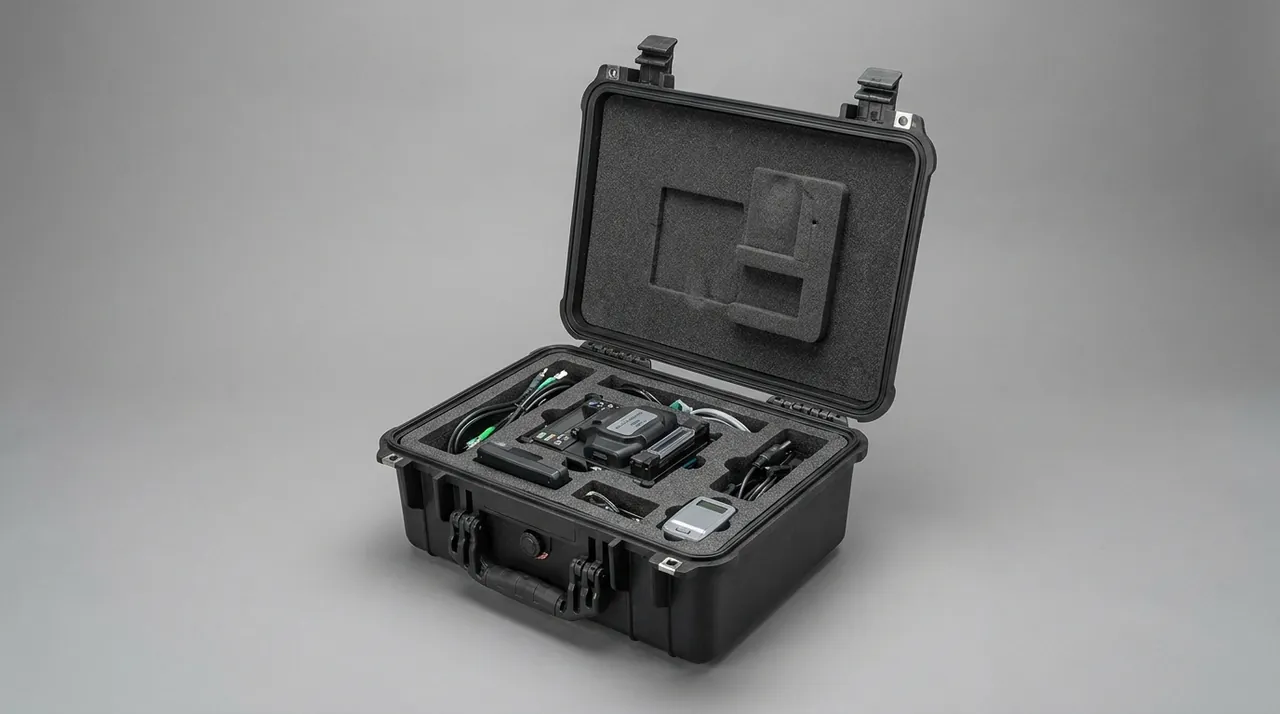
Whether an insert keeps a part clean comes down to whether the insert sheds. The test is simple: does the material release particles or fibres under compression, friction and humidity cycling. Timber sheds chips and takes up water, felt sheds fibre, open-cell foam swallows flour into its pores and releases it later, and low-density pearl foam crumbles under compression by itself. Dough equipment cases call for closed-cell EVA or high-density PE milled inserts, with a replaceable clean barrier film over the edge and forming-surface regions; the film is renewed on a maintenance cycle rather than left in place until it is visibly soiled. Material comparisons are in case foam material comparison.
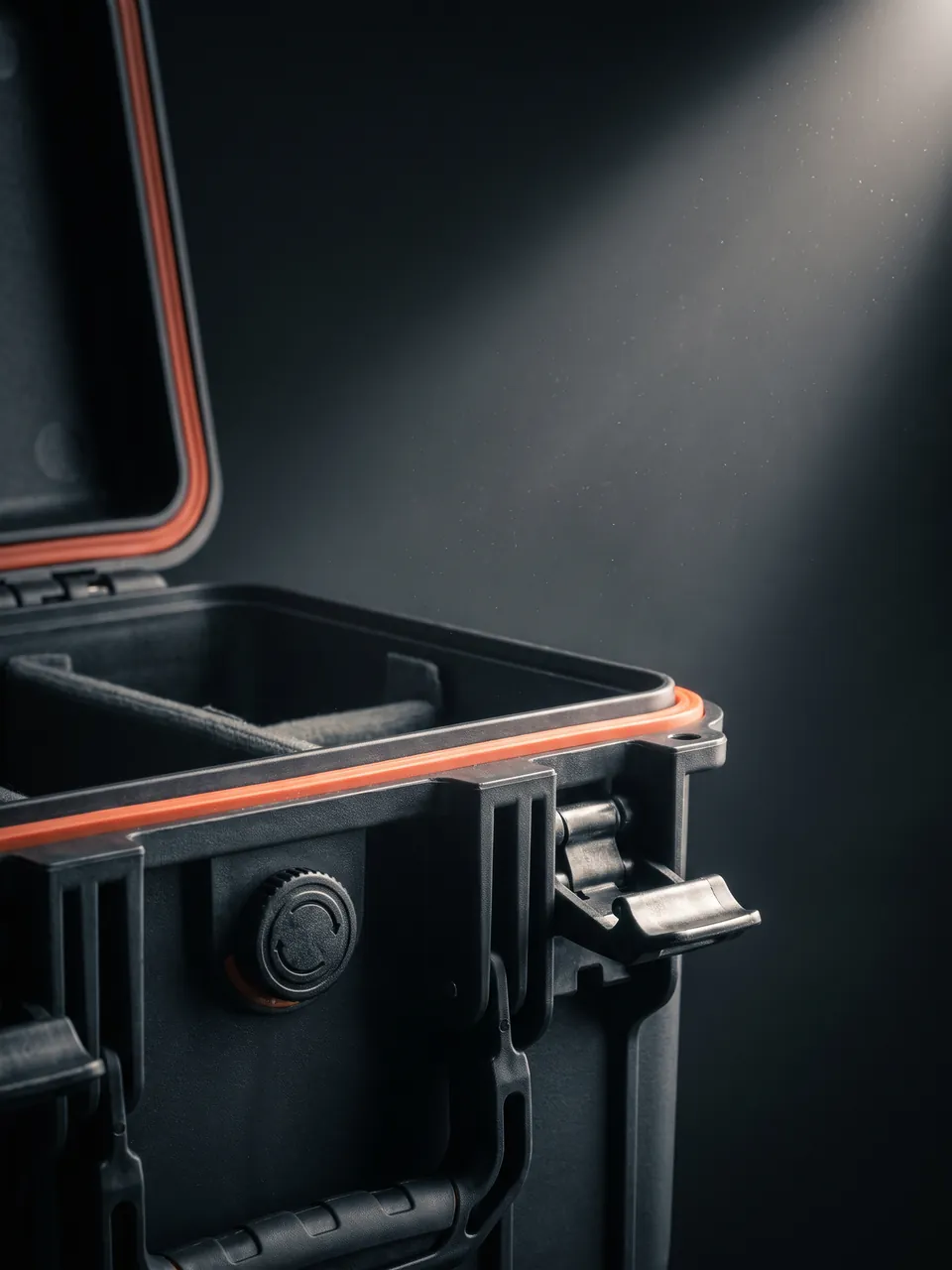
Choosing the right insert is only half of it; the case has to keep up. Three surfaces need wiping before every reuse: the interior walls, the latches, and the channel the gasket sits in. That last one is the classic dough-plant failure and it is easy to miss, because flour collects in the channel and turns sticky once it takes up moisture, propping the gasket up so the case still latches shut while the leakage path has already opened. Make wall, latch and channel a fixed pre-reuse routine, and after long storage check above all whether the gasket still springs back. Clean the channel with a soft brush and a barely damp cloth, never with a sharp tool. Procedure: how to clean and maintain a protective case.
7. Bearings, Seals and Lubrication Protection
The moving interfaces of dough processing equipment operate permanently in an environment of flour and water, which makes bearings, seals and lubrication state a packaging priority.
Bearings and bearing housings fail through dust ingress, which causes early wear; cleaning liquid ingress, which destroys the grease; and impact, which dents the raceways. Give each item its own cavity and never let a bearing take impact or side load; for shaft assemblies with bearings already pressed on, restrain the assembly as a unit and keep load off the bearings; confirm seals and shields are intact before packing; and fit temporary dust covers to open bearings.
O-rings, lip seals, oil seals and food-grade seals are consumables, and their four enemies are compression, folding, moisture and the wrong neighbouring material. One seal per bag, laid flat in a shallow pocket, never folded and never stacked under weight. Rubber parts must not sit against oil-bearing or plasticiser-bearing materials, and storage temperature matters because heat ages elastomers even without any load on them. The one that bites hardest in a dough plant is mistaken identity: nitrile, fluoroelastomer, silicone and EPDM look alike and differ sharply in heat, oil and chemical resistance, so keep them in separate compartments with the material code printed on the label. Fitting the wrong elastomer to a food machine seal position is one of the most common failure causes in the industry, and packaging is where it is prevented.
Lubrication-related items, including grease nipples, oil lines, lubrication pumps and greases, need separate consideration: grease-bearing items in the same cavity as food-contact parts create a contamination risk. Pack lubrication items separately and mark the case exterior as not to be mixed with food-contact parts.
Gearboxes and reduction units are M4 heavy parts containing oil. They fail through side load on the output shaft, housing impact, and oil running out at the wrong attitude. Keep the factory attitude or the attitude specified in the manual; maintain zero side load on the output shaft; restrain the housing with full-face support plus hard stops; and for oil-filled units protect the sealing faces and the breather, which should have a dust cap.
Pneumatic and hydraulic components, including cylinders, solenoid valves and air preparation units, fail through bent piston rods, seal damage and dust ingress. Fit protective sleeves over piston rods, cap the ports, give each item its own cavity, and for components whose stroke or pressure has been set, keep the marking and note it on the case exterior.
8. Stainless Steel and Food-Contact Compliance
Dough processing equipment uses stainless steel for its contact parts, so compliance and protection priorities differ from general machinery.
Flour and dough touch the equipment contact parts directly, so the responsibility line has to be drawn first. Compliance for food contact materials and articles rests on the relevant parts of the GB 4806 series, and it governs the layer that actually meets the food: stainless steel is judged on metal migration, plastics and coatings on overall and specific migration, and rubber seals under their own requirements. The responsible party here is the component manufacturer, not the packaging supplier. A transport case and its insert never enter the food-contact scope, and they plainly cannot stand in for the component's compliance evidence. Put that sentence verbatim into the technical agreement so the two standard systems are not argued about together at acceptance.
With that established, packaging must handle three specific issues.
The first is surface protection and iron contamination of stainless steel. The corrosion resistance of stainless steel depends on its passive film; once a carbon steel tool or carbon steel chip scratches the surface and leaves iron contamination, that scratch becomes a pitting initiation site. Therefore: never let carbon steel tools touch stainless parts directly; never let timber support blocks touch stainless parts directly, since wood holds moisture and organic acids and may carry iron-bearing contamination; pack stainless separately from carbon steel and galvanised parts; and keep carbon steel grinding operations out of the packing area.
The second is pitting caused by residual chloride-containing detergent. Dough plants commonly use chloride-based detergents, and residual chloride destroys the passive film and causes pitting. Wash and dry thoroughly after cleaning, include a humidity indicator card so that moisture exposure is visible, and for stainless parts in long-term storage consider a chloride-free rust-preventive film.
The third is being able to prove the clean state, not merely assert it. Send a cleaning record out with the case: what was used to wash it, which detergent, how it was dried and for how long, who inspected it, what the verdict was and on what date, plus a clean-state label on the outside of the case. Auditors at bakery and pasta plants tend to treat this as a differentiator rather than a formality, because it is the only way to establish, weeks later, that the part was genuinely clean when it left.
Hygiene thinking belongs at the packing bench too. Given a choice, pick forms that wipe clean: smooth surfaces, no crevices that hold flour, no textile materials that cannot be laundered or replaced. A part that was spotless when it went in and grimy when it came out is a packaging failure even if nothing was dented. The related distribution practice for food plants is set out in cold chain and food distribution protection, and the underlying logic is identical: deny the deterioration mechanism its conditions by sealing and controlling humidity.
9. Moisture Management in a High-Humidity Flour Environment
Of everything in a dough spares programme, humidity is the item most often assumed away and the one that quietly costs money, because the damage keeps a low profile: the case sits in the store for a quarter, opens looking immaculate, and the part then gives bearing noise, a sticking carriage or a failed insulation test once it is running.
The strategy has four layers.
Layer one turns the case into a moisture gate. Relative humidity in a dough plant runs high all year, so the sealing level is not chosen by asking whether the goods are for export but by asking whether the spares will sit in the plant for a long time. The rule of thumb: if the spares may ever be parked near a washdown position or in the open yard, start at IP66; if they travel by sea, tranship in an open yard or run long-haul in the rainy season, go straight to IP67. Specify silicone or EPDM at 20 to 30 percent compression and agree a replacement interval, because gasket failure is gradual and by the time a crack is visible the case has already breathed in several cycles of damp air. Seal structure: toolbox hinge and latch sealing structure.
Layer two deals with the moisture already inside. A point that is widely misread: sealing governs whether outside air gets in, but the air trapped at the moment of closing already carries water, and so does the film on the component surfaces, which is more than enough to condense once the temperature swings. Desiccant is therefore not optional. Size it from free volume, using a working figure of 20 to 50 g of silica gel per 20 L, and go to the top of that range for humid destinations and long sea legs. In a flour plant, where the case is opened often, put a dedicated desiccant pocket in the insert so a change takes thirty seconds instead of a full repack.
Layer three makes moisture exposure visible. A humidity indicator card costs next to nothing against the value of the contents, yet it is what settles liability: if the card has changed colour at unpacking, the shipment or the storage period genuinely saw excess humidity and a component-specific inspection is warranted rather than a judgement call that it is probably fine. Fix the card where it is the first thing seen on opening, photograph the initial colour step before dispatch, and include a colour reference card. For customers running just-in-time lines, the initial step can also go into the packing log so it can be compared against the reading on arrival.
Layer four gives the pressure differential somewhere to go. Dough equipment cases are rarely small, and a large free volume means the differential built up in air freight, over a high-altitude road leg or across a hard day-night temperature swing can be enough to suck the gasket into its channel or bow the lid slightly; the better the seal, the more pronounced the effect. Fit a pressure equalisation valve so gas can migrate slowly while liquid water and dust stay out. Two selection points matter: the valve flow rate should suit the case free volume, and the valve position should be kept out of the direct path of hose spray. Principles and selection: pressure equalisation valve configuration.
Three situations specific to a dough plant belong in the work instruction. First, bringing a case in from the cold in winter: open it straight away and warm moist air condenses instantly on the cold parts, and flour then captures that film into a paste. Let the case stand in the plant until it stops beading before opening. Second, the insert can be the water source: open-cell foam and felt take up moisture and give it back as the temperature drops, so closed-cell material is a hard requirement for a sealed case and this is settled at insert selection, not later. Third, flour dust reworks the gasket channel: once dust is in the channel it turns sticky, the gasket sits proud on the next closure and the real protection level drops. Brush the channel and check gasket rebound every time a case comes back from a dusty area.
10. Flour-Environment Insert Materials and Cleanliness Compared
The table below is the one to copy into a technical agreement, because material choice is where most cleanliness arguments are actually settled.
| Insert material | Wipe-clean performance | Load-carrying behaviour | Water take-up | Best-fit parts | Watch out for |
|---|---|---|---|---|---|
| --- | --- | --- | --- | --- | --- |
| Precision-milled closed-cell EVA | Wipes clean; no open pores | Carries load well, absorbs moderate shock | Nil | Dividing blades, guideway carriages | Specify silicone-free and pair with desiccant |
| High-density closed-cell PE block | Wipes clean, edges can chip if machined square | Very stiff, excellent as a base | Nil | Bowl saddles, relief cavity bases | Keep off any food-contact face |
| Food-grade silicone pad | Washable and reusable | Soft, shock-dominant | Nil | Barrier between M1 parts | Ask for compliance evidence from the maker |
| Anti-static, flame-retardant EVA or PE | Wipes clean | Carries load well | Nil | Control modules, load cells, level sensors | UL94 evidence required |
| Nitrile or CR foam | Harder to wipe once oily | Best shock absorption of the family | Nil | Drive components, lubrication-related parts | Keep physically separated from food contact |
| Self-skinning PU | Skin wipes, cut faces do not | Conforms to complex shapes | Low | Irregular castings, one-off saddles | Density varies run to run; verify it |
| Low-density PE pearl foam | Not wipe-clean; sheds | Minimal | Low | Void fill only | Never adjacent to M1 or M3 |
| Felt or non-woven | Low; sheds fibre and takes up water | Weak | Poor | None in this application | Turns into a water reservoir inside a sealed case |
| Timber blocking | Low; sheds chips and takes up water | Strong | Poor | Frame-case internal blocking only | Must never touch stainless or food-contact surfaces |
The rule of thumb is pick the material from the cleanliness grade and the cavity shape from the stiffness. In practice you filter twice: first according to whether the part meets food or carries electronics, which eliminates anything that sheds, absorbs water or contains migratory additives; then according to stiffness and weight, which fixes the cavity geometry. On M1 and M3 items, paying more for material is always cheaper than carrying a contamination or static risk into the plant.
Build the stack in three layers: a rigid outer layer that carries the load, such as a pallet or steel frame; a middle layer of PU or EVA that absorbs energy; and an inner layer of clean barrier film or food-grade soft pad that touches the part. Energy is shed progressively along that path, which works better than thickening one foam layer, and it also lets the inner layer be replaced on its own when it gets soiled. Comparisons of materials and structures: case foam material comparison.
11. Sealing, IP Ratings and Clean-in-Place Environments
Case protection levels are defined by IEC 60529, and the identical Chinese standard is GB/T 4208. Dough processing equipment spares cases typically involve three levels.
| Rating | Meaning | Matching situation in a dough plant | Recommended configuration |
|---|---|---|---|
| --- | --- | --- | --- |
| IP65 | Dust tight, protected against water jets | Spares store and workshop are both indoors and the case is never hosed down | Silicone gasket plus desiccant plus humidity indicator card |
| IP66 | Dust tight, protected against powerful water jets | The case passes a washdown position or waits briefly in an open loading area | Silicone or EPDM gasket, denser latch spacing, dust covers over the gasket channel |
| IP67 | Dust tight, protected against temporary immersion | Sea freight, transhipment in a rainy open yard, intermodal transfer | Dual-stage seal, pressure equalisation valve, dedicated desiccant pocket |
Read the first digit rather than the second. The primary ingress on dough equipment is flour dust, not water, and dust passes through gaps far smaller than any droplet, so whichever water digit is finally agreed the solids digit must be 6. On this family of cases there is no exception.
One widespread misreading concerns clean-in-place and IP69K. IP69K is a statement about resistance to high-temperature high-pressure jets and it exists for equipment enclosures that get cleaned in place. It says nothing about long-haul suitability; what matters on a long route is dust exclusion, immersion resistance and the ability to survive a pressure differential, and those come from combining a 6 in the first digit with a 7 in the second plus a pressure equalisation valve. Where a customer genuinely hoses the case down on the production floor after taking parts out, design to that requirement on its real merits. Where that scenario does not exist, buying a higher jet rating buys a heavier seal package and a higher price for nothing that the route needs.
Washing a case also creates failure paths that did not exist before: a jet can pop a latch that was not fully home, push water into the gasket channel where it sits, or drive flour slurry into the cavities it was supposed to protect. If in-plant washing is a real requirement, settle drainage paths and removable inserts at design stage and never close a case that has not been dried to procedure. Comparison of water ratings: waterproof cases and IP ratings; gasket replacement and long-term care: how to clean and maintain a protective case and protective case service life assessment.
12. Dough Equipment Test References and Compliance Boundaries
Disputes over a dough equipment case are rarely about whether it is good, they are about what it is being judged against. Settle the test basis while the technical agreement is being drafted.
Sequence the testing as domestic basics first, then add depth to match the route. Domestic transfers are covered by the GB/T 4857 series, where random vibration and stacking are mandatory and the drop severity follows case mass; export and intermodal projects layer the appropriate ISTA procedure on top so the sequence mirrors the real distribution stages; for North American shipments of high-value goods, ASTM D4169 organises the sequence around a distribution cycle. This industry needs three extra re-checks on top, because a dough equipment failure usually is not a broken case but a contaminated or shifted one. One, post-vibration cleanliness: open up and look for new debris in the cavity floors and troughs, and for scuffed single-item bags. Two, post-vibration fit: check guideway carriages and divider blade actuating parts for movement, and check whether the insert has taken a permanent set and lost its locating ability. Three, post-preconditioning function: verify sensor and instrument calibration labels and repeat insulation measurements. Methods: GB/T 4857 transport packaging testing and ISTA transport testing procedures.
Where a project needs an environmental test reference, the method parts of MIL-STD-810H can be used (the full compliance boundary is set out in environmental test methods and protective case compliance); it is a test method reference only and is not a military certification. With food-industry customers, stating that plainly is worth more than any embellishment.
Working with dough equipment also means writing down four responsibility boundaries so that the packaging supplier, the equipment maker and the plant operator are not confused with one another.
First, food safety sits with the component, not the packaging. The parts that meet dough and flour directly, meaning dividing blades, forming rollers, discharge nozzles and stainless bowls, are evidenced by the equipment maker against the relevant parts of the GB 4806 series. The case and insert carry transport protection only; they never enter the food-contact scope and they cannot be offered as the component's compliance evidence.
Second, dust explosion control is a plant-and-equipment matter, not a case matter. Airborne flour can be explosive at particular concentrations and ignition energies, and the management system for that sits with the plant under dust explosion safety regulations such as GB 15577 and with the equipment itself under the IEC 60079 and GB/T 3836 series for explosion-protected electrical apparatus. A transport case is outside all of it and cannot stand in for any explosion protection certification; what it can do is avoid becoming a dust source, which is a design choice rather than a claim.
Third, anything that holds pressure is the equipment maker's scope. Mixing and cooking lines commonly include a steam-jacketed vessel and pressure piping, and those components are designed, built and periodically inspected under their own rules, which reach into GB/T 150 for pressure vessel design, TSG 21 for fixed pressure vessels and, on the boiler side, awareness of GB/T 16507. A case is external transport packaging: it holds no pressure and it takes no part in any of those compliance routes.
Fourth, system certification belongs to the plant, not the box. HACCP and comparable schemes operate through hazard analysis and critical control points, governing equipment, process and people. The packaging contribution is simply not to interfere: deliver an already-clean spare in a clean, undamaged and traceable state so that the existing controls survive the journey. What belongs in the technical agreement is therefore the hygiene requirement for the packaging and the acceptance method on arrival, not a demand that the case itself conform to a management system.
Flame retardancy and export packaging compliance are two separate conversations. Flame retardancy is driven by location and mode: a case parked in an area with fire requirements, or shipped under air freight conditions, can justify requiring UL94 evidence for the insert, commonly at the V-0 step, and that should be settled at sampling stage so the material is not swapped after volume production starts. Export packaging compliance is driven by phytosanitary rules: solid wood crates, timber pallets and timber blocking trigger fumigation or heat treatment, and moving to a rigid plastic case with fumigation-free pallets removes that queue while also eliminating three stainless-steel hazards, namely wood chips, moisture uptake and iron-bearing contamination.
13. Dough Equipment Acceptance, Sampling and Collaboration
Acceptance should follow a four-check, two-measure flow, in which the cleanliness check and the moisture check are specific to this industry.
Look at the case first for flour residue and dough adhesion: shell breakage, deformation or water staining on the outside, and especially flour dust on the gasket channel or dough-adhesion marks inside the cavities; whether each latch is fully engaged; whether the gasket is seated in its channel with no gap at the corners.
Look at the indicator card: read the colour step against the recorded initial value. Any change means the shipment or the storage period saw excess humidity, so open immediately and inspect by family rather than as a whole batch: insulation check on electrical parts, corrosion check on metal and bearings, and a travel check on the guideway carriages.
Look for what should not be there: flour, chips or fibre in the cavities, including the bottom of each pocket where residue settles; scuffed or opened single-item bags; and plugs or caps that have worked loose from bores and ports.
Check appearance and state: verify component numbers and quantities; inspect divider blade edges, forming roller surfaces, agitator blades and bowl bores for impact and scratches; verify sensor and instrument calibration labels and seals; verify whether the pairing markings for matched sets such as piston and metering chamber accompany the shipment.
Measure straightness or flatness: sample long guideways and shafts by taut line or surface plate with feeler gauge, and sample flatness on forming rollers and flat parts.
Measure fit and movement: check guideway carriages for smooth travel and absence of sticking, and check gearbox output shafts for free rotation without abnormal resistance.
For volume arrivals, set the limits at two different levels rather than one. Cosmetic and marking issues, such as shell scuffs, blurred inkjet codes and displaced labels, can be treated generously at general inspection level II with AQL 2.5. What must be tightened is everything that would defeat protection: a missing or badly lapped gasket, cavities that do not line up with the components, insufficient relief, insert surface resistance outside the specified window, and latches that do not engage. Those run at AQL 0.65, with tightened inspection where the batch justifies it. Two dough-specific checks are worth writing into the agreement: a blade edge relief check, using a feeler gauge or oblique white light to confirm clearance really exists at the dividing blade edge rather than merely looking clear, and a cleanliness swab check, wiping the cavity walls with white lint-free cloth and examining it for fibre and particle residue. Sampling method: custom case acceptance and AQL sampling.
A typical custom programme moves through seven steps: read the component list and clarify weights, dimensions, food-contact status, mating tolerance, electrical characteristics and route; produce the grading and case-splitting plan; design inserts and relief cavities; build a sample case and trial-fit it with a cleanliness check; verify by test; go to volume production; deliver with identification. At sample stage three questions decide whether the design is right. Can a heavy part be lifted out without ever bearing on a precision part? Do the blade edges and forming surfaces stay clear of every possible contamination source for the whole handling sequence? And can the plant verify the moisture strategy itself, or does it have to take the supplier's word for it.
JUNZHJIA (Kexin New Materials (Guangdong) Co., Ltd.) works this family the same way every time: the component list is first read as a grading table and then turned into drawings. At sample stage the drawings come with cavity and relief recommendations, clean-packing work instructions and trial-fit feedback, together with a check that edge relief and saddle positions are actually correct; at volume stage seals and hardware are supplied per model, with inspection records and packing documents issued to project requirements.
Most pasta and dough plants face the same arithmetic: few machine models but scattered batches, so one case has to carry five or six different spares over a year. The cheaper answer is not a new case per spare but a common shell, latch set and gasket with inserts that follow the component, because an insert change costs far less than a whole case and the shells can be bought together against an annual plan. Amortisation of tooling is worked through in protective case mold cost analysis. A supplier assessment should also look at insert batch consistency and how stable the moisture performance is run to run (see identifying genuine versus counterfeit protective cases); where selection is still at an early stage, the instrument case selection guide sets out a general evaluation method, and where a shipment has to travel as one case but be picked compartment by compartment, a removable divider system is the practical option (see removable divider system design).
FAQ
Q: Why is flour dust harder to protect against than ordinary dust, and how should packaging respond?
A: Because flour dust combines three difficult properties. First, it is fine and highly airborne, so it reaches bearings, linear guideways, gear meshes and clearance fits. Second, it becomes sticky once it absorbs moisture, so once adhered it cannot be removed by blowing air and it forms sticky cakes between mating faces. Third, once caked it acts as an abrasive paste that accelerates wear and scoring in moving interfaces. The damage is also delayed, which makes it worse: nothing looks unusual at installation, and only after a period of running do temperature rise, noise or loss of accuracy appear, by which point neither traceability nor responsibility allocation is straightforward. Packaging responds on four fronts. First, thorough removal before packing: strip loose dust by dry means using clean compressed air or a soft brush rather than starting with a water wash that turns flour into paste, then wash by material and dry thoroughly. Second, dust exclusion by the case: the first digit, 6, meaning dust tight, matters as much as water protection. Third, dedicated protection for moving interfaces: fit temporary dust sleeves to guideways, carriages and bearings, and provide a debris trough in the cavity floor. Fourth, the habit that decides the outcome: latch the case again the moment the part is out, because a case left open in a flour plant simply takes the dust back in, and brush the gasket channel as part of the same routine.
Q: What are the packaging priorities for mixer components such as agitators and bowls?
A: The priority is distortion and lifting impact prevention rather than cushioning. An agitator is usually a heavy, geometrically complex casting or stainless weldment, and it fails through blade impact distortion, which changes the mixing path and affects gluten development and uniformity, through damaged shaft taper or keyway, which affects assembly concentricity, and through scratched polished surfaces. A bowl is usually a large-diameter thin-walled stainless part that fails by ovalisation and internal scratching. Specific practices: fit protective sleeves over the shaft end and keyway and never use the shaft end as a support; use a relieved cavity at the blade and bowl-wall regions so no hard object touches them; support the whole component on two or three points referenced to the axis with area contact rather than line contact, since line contact leaves indentations; use the stiffer rim and base regions of a bowl as support points and never use the wall as a support face; and place no hard object, including tools and fasteners, inside the bowl. In addition, provide lifting points on the case aligned with the internal support frame and mark the centre of gravity and a lifting diagram on the outside, so nobody rigs from an unsuitable point and distorts the component.
Q: Why must divider blades and pistons be stored as a set with pairing marked?
A: Because their interchangeability is often limited and the pairing directly determines weight accuracy. A blade, a piston and a metering chamber form one metering system: the clearance between piston and chamber is often in the hundredths of a millimetre, and at the factory the parts are normally paired by actual dimension and tested as a set. If a piston from machine A is fitted to the chamber of machine B, even with nominally identical dimensions the real clearance difference can cause leakage or weight deviation, and such deviation is hard to spot during commissioning, typically showing up as product weight fluctuation. Blade edge condition likewise affects cut quality, and combining a blade with a mismatched mechanism can cause incomplete cuts and dough sticking. Recommendations: store set items in one cavity with the pairing number marked; give each sub-component its own cavity for individual replacement; supply a pairing list and test record with the case; and for edges that have been reground with a recorded allowance, attach the grinding record. This prevents mixing on site and gives weight-deviation troubleshooting a documented basis.
Q: Why is moisture control particularly demanding for dough equipment spares?
A: Because the operating environment and the components themselves both amplify the harm. On the environment side, mixing and dividing rooms are permanently humid, washing is frequent, floors are often wet, and the spares store is frequently next to the production floor, so a spare is exposed to moisture from the moment it enters the store and not only in transit. On the component side there are three sensitive groups. Electrical parts such as control modules, inverters and sensors lose insulation resistance once damp, which can cause leakage or tripping after energisation. Moving interfaces suffer because grease in bearings and guideways emulsifies with water and fails, causing early wear, while flour dust that enters and then gets wet cakes and jams carriages. Metal parts corrode, and stainless parts pit in the presence of residual chloride-containing detergent. Use sealing plus desiccant plus a humidity indicator card plus a pressure equalisation valve, with gasket compression at 20 to 30 percent and periodic inspection, and always dry components thoroughly before closing the case, since residual liquid inside a sealed volume becomes a corrosion initiation site.
Q: Why should dough equipment spares be split across cases, and what is the risk of not splitting?
A: Because these spares span the two extremes of heavy and precision, and mixed loading damages both. A typical case is an agitator or bowl of tens to hundreds of kilograms travelling with divider blades, pistons and guideway carriages whose mating accuracy is in the hundredths of a millimetre. There are three risks. First, the weight difference: the self-weight and shifting of the heavy part delivers impact to precision parts, indenting mating faces or chipping edges. Second, the stiffness difference: hard items act like abrasive paper on soft surfaces under vibration, particularly on coated or polished parts. Third, the cleanliness difference: machining residue, coating debris and handling debris from heavy parts contaminate food-contact parts, and that contamination is not always obvious at unpacking. Mixed loading also makes acceptance harder to zone, since heavy parts are checked for distortion while precision parts are checked for fit and cleanliness. Split by protection grade, or at minimum separate the cavities, and mark grade and component list on the case exterior.
Q: What easily overlooked requirements apply to bearings and seals?
A: Four are commonly missed. The first is marking and separating seal materials: nitrile, fluoroelastomer, silicone and EPDM differ widely in temperature, oil and chemical resistance, and mixing them up on site is easy, which makes mistaken seal selection a common cause of failure in food equipment; store by material and mark the material code. The second is seal attitude: O-rings and lip seals fear compression, folding and permanent deformation, so lay them flat in a shallow cavity, never fold or compress them, and keep cavity depth below the seal cross-section so the seal stays free. The third is bearing dust protection and attitude: bearings fear dust ingress and cleaning liquid, so confirm shields are intact before packing, fit temporary dust covers to open bearings, and restrain shaft assemblies with bearings already pressed on as a unit so the bearings take no impact or side load. The fourth is isolating lubrication items: grease, grease nipples and lubrication pumps in the same cavity as food-contact parts create a contamination risk, so pack them separately and mark the case as not to be mixed.
Q: How should IP65, IP66 and IP67 be chosen, and is IP69K needed?
A: Start from where the case will actually sit, not from the top of the range. Three questions usually settle it. Will the case ever be inside a washdown zone or spend time in an open yard? If never, IP65 is enough and it keeps the case light and cheap. Will it pass a washdown position, or wait outside under a monsoon or rainy-season sky? Then IP66, with the gasket channel shielded against dust so the seal is not propped open. Does it cross an ocean, tranship in an open yard or finish with a long rainy-season road leg? Then IP67, and it must be paired with a pressure equalisation valve, because a large sealed volume on a route with real temperature swings will otherwise pull the gasket into its channel or bow the lid. On this equipment remember that flour dust, not water, is the primary ingress: dust passes through gaps far smaller than any droplet, so the solids digit must be 6 regardless of which water digit you settle on. IP69K is a different question entirely. It describes resistance to high-temperature high-pressure jets and exists for enclosures cleaned in place; it does not make a case better suited to a long route, and if nothing in your process hoses the case down you are simply paying for a heavier seal package.
Q: Which transport tests should a dough equipment spares case undergo, and what should be checked afterwards?
A: Separate the mandatory items from the route-specific ones. Random vibration, stacking and a drop at the severity matching case mass are mandatory and can be run against the GB/T 4857 series for any domestic transfer. Everything else follows the route: layer on the appropriate ISTA procedure for export and intermodal work, and use ASTM D4169 to organise a distribution cycle for high-value shipments into North America. What actually decides whether a dough equipment case has passed is what you do after the rig: run four checks every time. One, open the case and examine the cavity floors and troughs for freshly generated debris and the single-item bags for scuffing, which is the earliest evidence of dust ingress. Two, read the humidity indicator card and check whether the gasket has moved out of its channel, which tells you whether the seal survived the vibration. Three, try the guideway carriages for smooth travel, turn the gearbox output shaft, and verify sensor calibration labels, so function is confirmed and not assumed. Four, look for permanent compression set in the insert; once it has lost its locating ability, an intact case no longer protects anything. If MIL-STD-810H is cited, note that it is only an environmental test method reference and not a military certification.
Q: What else should export projects consider for dough processing equipment packaging?
A: Three things are worth settling before the quotation rather than after. The first is wood: dough equipment spares are often trued with timber blocking, and solid wood packaging triggers fumigation or heat treatment in many countries, which adds both queue time and cost. Moving to a rigid plastic case with fumigation-free pallets removes that step and, just as usefully, eliminates wood chips and iron-bearing contamination from the packing, which matters most for dividing blade edges and bowl bores. The second is what the paperwork is allowed to say. An export shipment normally needs a packing list plus component numbers and identification, and where the line contains a steam-jacketed vessel or pressure piping, its manufacturing and inspection documents come from the equipment maker. Put three sentences into the agreement so nothing is misread at the far end: the case is transport packaging and not a food contact material; it is not explosion-protected equipment; and it is not a pressure part. Each of those compliance routes belongs to the component maker, the plant or the equipment itself. The third is climate and material fit: configure to IP67 with a pressure equalisation valve and enough desiccant for ocean freight and humid destinations, confirm that the insert will not soften or deform in sustained heat and humidity, and add a chloride pitting note for the stainless parts.
Conclusion & Related Reading
Four sentences carry the whole design logic. Clean the flour and dough out before anything goes in, because no case can compensate for residue. Separate heavy from precision by grading and splitting, because no amount of extra foam fixes a mixed load. Seal and use desiccant to beat the humidity, because the plant conditions will not change for your spares. Prove the clean state with records, because an assurance is not evidence. Lay static control, transport testing and arrival verification on top, and the condition of mixing and dividing spares on arrival stops depending on luck.
The boundaries reduce to one sentence worth remembering: where the flour goes, who carries the pressure, and who owns the certificate are all unchanged by adding a case. Written out, there are four. One, the compliance responsibility for anything touching flour rests with the component manufacturer under the relevant parts of the GB 4806 series, and a case never enters that scope. Two, flour dust explosion control belongs to the plant and to the equipment, under dust explosion safety regulations such as GB 15577 together with the IEC 60079 and GB/T 3836 series for explosion-protected electrical apparatus; a case takes no part and constitutes no explosion protection certification. Three, a steam-jacketed vessel or pressure piping is pressure equipment and is designed, built and inspected under its own rules, reaching into GB/T 150, TSG 21 and GB/T 16507. Four, MIL-STD-810H appears in this article only as an environmental test method reference and has nothing to do with military certification. Where a project involves a fire-rated area or air freight, UL94 flame-retardant evidence for the insert is agreed separately.
JUNZHJIA is the own brand of Kexin New Materials (Guangdong) Co., Ltd., and for pasta and dough equipment makers it does one job repeatedly: turn a long spare-parts list into a set of cases that can be traced back to a specific cavity. Deliverables cover grading and case-splitting plans, relief cavity insert drawings, moisture and anti-static configuration, OEM/ODM work and volume supply, plus seals and hardware matched per machine model.
Related Reading