

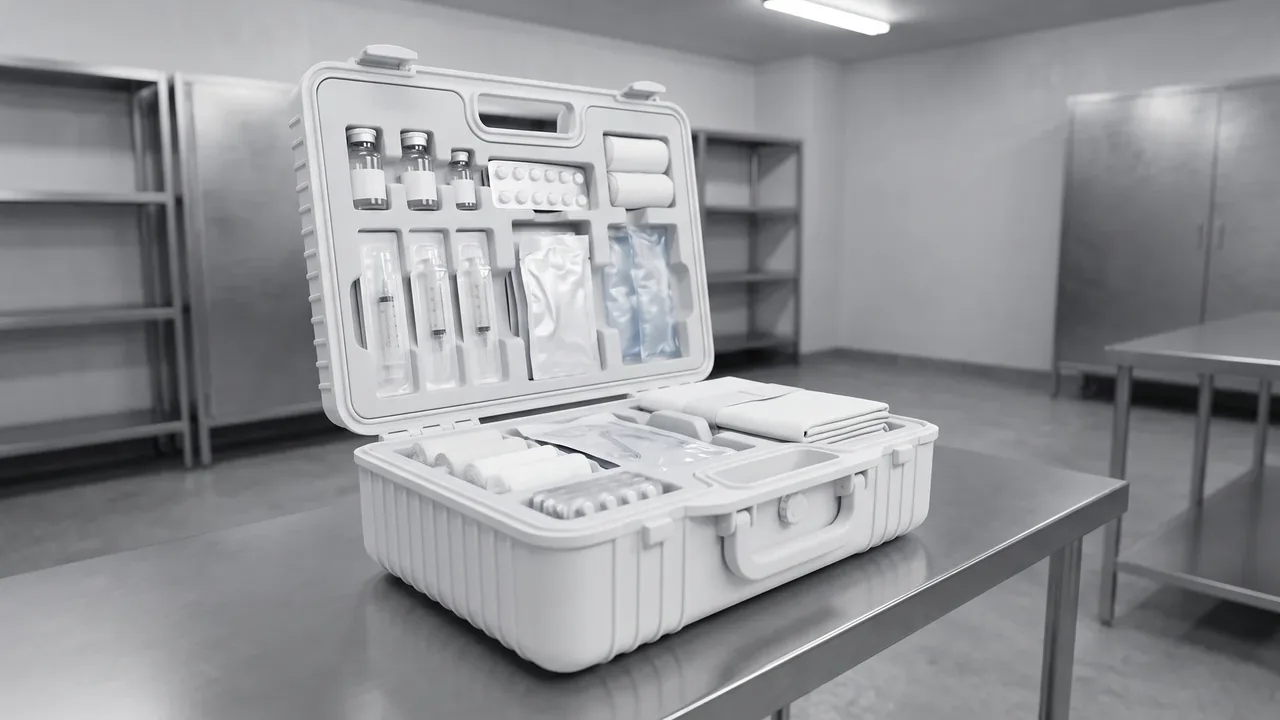
On oil and gas development sites, offshore platforms and refinery maintenance areas, tools, instruments and spare parts are exposed for long periods to a combined hostile environment of flammable gas, high salt spray, blowing sand and severe vibration. Selecting a dedicated operation case with explosion-proof certification context, IP67 sealing and heavy anti-corrosion coating is the most cost-effective way to protect well-site continuity and asset safety. This article breaks down the material selection, sealing structure, shock-absorbing liner, stacking hardware and certification system of oil and gas field operation cases, and provides actionable selection and maintenance plans so that construction contractors, well-site operation teams and refinery maintenance workshops can build a reliable tool storage and transport chain under complex working conditions and reduce instrument miscalibration and tool loss caused by poor storage.
1. Real Risks on the Well Site and the Protective Positioning of the Case
The well-site environment imposes a set of overlapping rather than single requirements on storage equipment. First, at the gas level, flammable vapors such as methane, hydrogen sulfide and light hydrocarbons are commonly present around wellheads, metering rooms and refinery units; if mechanical sparks or electrostatic discharge occur during tool handling, the surrounding mixture may be ignited. Second, at the corrosion level, the high chloride ion environment near offshore platforms, saline-alkali drilling areas and desulfurization units will cause pitting and weld failure of ordinary carbon steel cases within months. Third, at the mechanical level, the random vibration of wilderness roads, hoisting transfer and drop impact during equipment maintenance will cause precision instruments inside to lose calibration.
Therefore, the protective positioning of an oil and gas field operation case is not simply thickening an ordinary toolbox, but integrating four capabilities - explosion proof, anti-corrosion, sealing and shock absorption - into a container system that is stackable, lockable and traceable. It serves oil and gas construction contractors, well-site operation teams and refinery maintenance workshops, and is used to store and transport non-sparking tools, detection instruments, explosion-proof lamps and fragile spare parts. In the following sections we disassemble the engineering trade-offs between materials, seals, coatings and certification so that purchasers and equipment administrators can build a practical selection checklist.
On the explosion-proof context it must be clear that the case discussed here is a passive protective container. Its design and certification refer to the applicable clauses of hazardous area equipment directives such as ATEX and IECEx, and it is used to store and transport non-initiation tools and instruments used in operations. It is never involved in any preparation of explosives or hazardous operations. Relevant background can be found in the explosion proof case guide, which systematically explains hazardous zoning and shell selection logic and can be used as reference material before selection.
2. Case Material Selection: Engineering Trade-offs Between Stainless Steel and Coated Composites
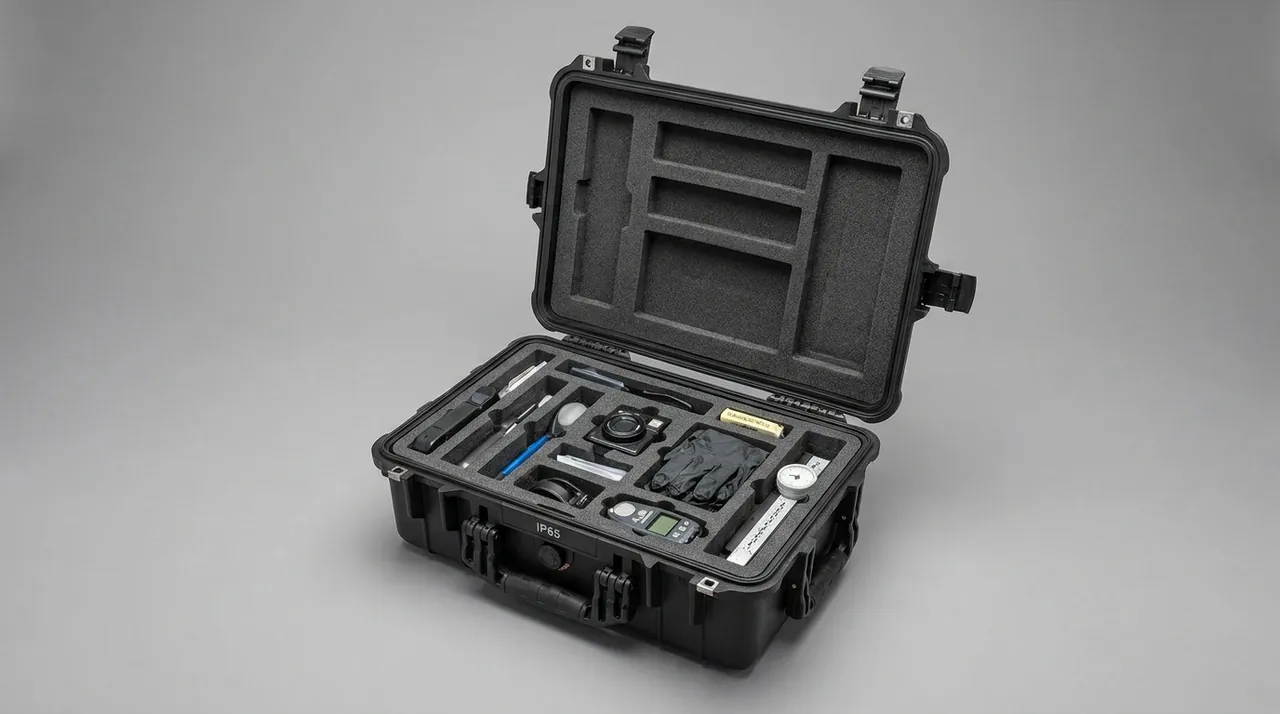
The shell material of an oil and gas field operation case directly determines the weight, corrosion-resistant service life and procurement cost of the whole case. The mainstream engineering options today are three: integral forming of austenitic stainless steel, integral injection molding or rotational molding of engineering plastics such as modified polypropylene and ABS blends, and carbon steel substrate with heavy anti-corrosion coating. Each has trade-offs, and the primary contradiction of the use environment should be identified first as weight, life or budget.
The stainless steel option is represented by 304 and 316L. Because 316L adds molybdenum, its pitting resistance in the chloride-containing environment of offshore platforms is significantly better than 304. Its advantages are long life, weldable repair and a surface that does not easily breed microorganisms, while its disadvantages are high unit price, large weight at the same volume and unfriendliness to single-person carrying and air freight tonnage. The engineering plastic option uses modified polypropylene or ABS blended with polycarbonate, maintains toughness in the range from minus 40 degrees Celsius to 80 degrees Celsius, and its self-weight is only about one third of stainless steel, with the natural characteristics of electrical insulation and no mechanical spark, which is very suitable as a base material for well-site explosion-proof storage.
The carbon steel plus coating option has the lowest cost, but places extremely high demands on coating integrity and repair craft; once the edge is chipped and the substrate is exposed, corrosion will rapidly expand inward from the wound and the repair cost will rise instead. For most oil and gas operation scenarios we recommend the composite idea of plastic shell plus metal reinforced frame plus local stainless steel fittings: the shell uses modified plastic to ensure light weight and no spark, the four corners and lock ears embed aluminum alloy or stainless steel reinforcement to bear stacking loads, and the internal tray and clamps use stainless steel to avoid metal chips from long-term friction with tools. This combination is compared more systematically in the corrosion resistant enclosure article, and it is recommended to evaluate it together with the corrosion grade of this well block.
3. Explosion-Proof and Anti-Static Shell Certification Context (ATEX/IECEx as Case Certification Background)
A premise must be clarified: the oil and gas field operation case is a storage and transport container rather than an explosion-proof electrical device, so the requirements of ATEX 2014/34/EU or the IECEx system for electrical equipment should not be directly applied to the case. However, the Zones 0/1/2 (gas) and Zones 20/21/22 (dust) hazardous divisions defined by these two systems remain a valid context and reference framework for judging which surface resistance and sealing grade should be used in which environment during case selection.
When transporting tools in a gas hazardous area, the case itself should produce no ignition source: first, the shell selects non-conductive, non-sparking engineering plastic or passivated stainless steel to avoid impact sparks between metal and metal; second, all movable metal parts inside (lock bolts, hinges, brackets) should be anti-static treated or replaced with non-metallic materials, so that the surface resistance is under control and a grounding braid safely releases static electricity accumulated during transfer; third, the edge of the lid opening and closing should be designed as a friction-spark-free structure, so that metal does not directly scratch metal when opening and closing, eliminating ignition energy from the source.
These requirements are highly consistent with the design principles of the anti-static ESD case, and both emphasize surface resistance control and grounding path. It should be reminded that if the site requires the case to enter the designated Zone 1 or Zone 2 together with tools, it should still be based on the equipment explosion-proof certificate and the on-site hazardous area assessment document. The case manufacturer can provide surface resistance and spark safety statements that comply with the applicable clauses of the IECEx system, but cannot replace the overall operation site explosion-proof compliance determination, and the responsibility boundary must be written clearly.
4. Anti-Corrosion Coating System and Salt Spray Testing
On offshore platforms, beach land-sea areas and sulfur-containing gas fields, salt spray and hydrogen sulfide are the two major killers of case life. A mature anti-corrosion scheme usually contains four layers: substrate pretreatment, primer, intermediate paint and topcoat. The key is not the coating thickness itself, but the interlayer adhesion and edge coverage. Sandblasting to Sa2.5 grade and retaining a certain fillet radius at edges and corners can significantly reduce early rust caused by coating thinning at corners. For welded parts, grinding and secondary pretreatment should also be done after welding to avoid the weld becoming a corrosion starting point.
The most commonly used method to evaluate anti-corrosion ability is the neutral salt spray test, according to the standard procedure of GB/T 10125 and ISO 9227, placing the sample in a continuously sprayed sodium chloride solution and observing the time when red rust appears. For well-site operation cases, empirically it is an acceptable baseline that after 480 hours to 1000 hours of salt spray, the key welds and lock ear areas show no obvious substrate rust; if the operation area is a marine splash zone, it is recommended to raise the target to more than 1000 hours, and attach the salt spray test report and batch traceability record at delivery for later audit and same-batch quality tracking.
In addition to salt spray, attention should also be paid to the powdering and peeling of the coating under ultraviolet aging. Well sites are exposed to sunlight all year round, and the weather resistance grade of the polyurethane topcoat and the coating's resistance to damp heat cycling should be written into the technical specification. For engineering plastic shells, although the body is salt-spray resistant, metal fittings still need independent anti-corrosion treatment; do not focus only on the shell and ignore the corrosion path of hinges and locks. A practical approach is to require the manufacturer to do salt spray separately for metal parts and submit corresponding reports instead of replacing key part verification with overall appearance qualification.
5. Sealing Structure and IP67 Protection Grade
The most frequent intrusion threats on well sites are rain, mud, sand and salt spray condensation, and the corresponding international common language is the IP protection grade specified by IEC 60529 (domestically equivalent to GB/T 4208). For oil and gas field operation cases, we recommend a baseline grade of no less than IP67: that is, dust protection (grade 6, complete prevention of dust entry) plus protection against temporary immersion (grade 7, no water ingress under 1 meter water depth for 30 minutes). In wellhead splashing, rainstorm operations and equipment flushing scenarios, IP67 can provide sufficient margin to avoid moisture failure of internal instruments.
The core of achieving IP67 is an elastically sealed strip with continuous cross-section and controllable compression. Commonly used materials include EPDM, silicone rubber and neoprene, and their differences lie in ozone resistance, oil resistance and temperature range. The sealing strip should be closed in a ring along the cover mouth without breakpoints; after the cover is closed, the lock provides uniform surface pressure so that the sealing strip reaches the designed compression rate. It must be emphasized that the IP grade is a system-level indicator, depending on the synergy of the shell, sealing strip, lock and pressure equalization valve, and looking at a single material alone is meaningless. Relevant background can be referenced in the IP67 and IP68 grade analysis, which details the grade definition and test conditions.
Before delivery, two simple verifications are recommended: first, invert the closed case and immerse it in shallow water and observe for 30 minutes whether there are bubbles seeping out; second, spray colored water mist around the cover mouth and then open it to check the dryness of the inner cavity. Such on-site quick checks can compensate for the cycle cost of sending to a third-party laboratory, but formal acceptance should still be based on the IP67 protection certification report from a qualified organization, and verify whether the test sample comes from the same process and mold as this batch.
6. Shock-Absorbing Liner and Impact Resistance Design
The vibration of well-site transfer comes from three aspects: the random vibration of pickup trucks on dirt roads, the impact of hoisting landing, and the continuous low-frequency disturbance from adjacent rigs and pump sets. Ordinary sponge liner can only buffer small drops. For precision pressure transmitters, gas detectors and torque wrench calibration parts, what is needed is structured shock absorption of point fixing plus multi-stage energy absorption. Loose filling alone cannot solve the problem of mutual collision and resonance amplification of instruments.
Engineering uses cross-linked polyethylene or EVA layered foam, milled by CNC according to the tool contour, so that each instrument is independently limited and does not collide with each other during transport. For heavier or more fragile equipment, elastic support columns or suspended trays can be added under the foam to let the impact energy be borne by the shell first and then absorbed twice by the liner. The design basis of such schemes comes from the load grading method in the protective case selection overview, and the corresponding energy absorption thickness and support structure are selected according to weight and fragility value.
In the verification stage, the drop procedure of MIL-STD-810H method 516.8 can be referred to, as well as the ISTA 3 series simulating the vibration and tipping of the actual distribution cycle. Empirically, after the fully loaded case is dropped once from a height of 1.2 meters in different postures, the shell should have no structural cracking, the liner no permanent collapse, and the instrument reading still within the allowable error band before it can be judged qualified. It should be explained that these are transportation environment simulation methods of the US military standard and the International Safe Transit Association, suitable for evaluating the container rather than the design life of the internal instruments themselves, and should not be confused.
7. Locks, Hinges and Stacking Structure
Oil and gas field operation cases are often stacked in groups on warehouse shelves, behind engineering vehicle compartments and on platform decks, so the anti-theft of locks and the stability of stacking are equally important. It is recommended to use a double-point or multi-point linkage lock structure, which can form surface contact between the cover and the case after closing, ensuring uniform sealing compression and resisting accidental opening during transport. The lock hole should support a padlock or a password lock to meet different security levels, and important wellhead tools should also achieve one case, one lock and one record.
The hinge is the short board of the opening and closing life. Embedded stainless steel shaft hinges or integral injection molded nylon hinges should be preferred to avoid exposed screws rusting to death in salt spray and causing the cover to fail to open. For large cases, it is recommended to add a limit strut to prevent the cover from suddenly falling and hurting people on windy or sloping sites. In terms of stacking, the four corners of the case should be designed with convex and concave interlocking stacking feet, so that the upper load is transmitted through the corner points rather than the cover surface, avoiding long-term stacking pressure causing cover creep deformation; relevant structural details can be found in the protective case stacking guide, which illustrates the stacking load transmission path.
Empirically, the number of stacking layers should not exceed the rated stacking height marked on the case. Because offshore platforms have rolling and deck load limits, the stacking height should be additionally reduced and binding straps added for fixation. In addition, the case should reserve forklift insertion holes or sling ring positions around it to facilitate mechanical transfer between the deck and the warehouse, reducing the drop risk caused by manual handling. For long-distance transport by vehicle, anti-skid and limit positioning should also be done in the compartment to avoid the case sliding and colliding with the brake.
8. Pressure Equalization Valve and Plateau/Temperature Adaptability
Well sites often span an altitude gradient from zero altitude at the coast to several thousand meters on the plateau, coupled with extreme working conditions such as well blowout emergency and winter supply guarantee. The pressure difference inside and outside the case will change dramatically with altitude and temperature. If the case is completely sealed, the plateau rise will cause the internal pressure to be relatively high, generating a bulging force at the moment of opening the cover, and repeatedly fatiguing the sealing strip over time; conversely, going down the mountain, the external air pressure rises and sucks the cover inward, making it difficult to open by hand and affecting emergency repair efficiency.
The solution is to configure a waterproof and breathable pressure equalization valve, whose membrane allows air molecules to pass through and blocks liquid water and dust, automatically balancing the pressure inside and outside the case. When selecting, it is necessary to confirm that the protection grade of the valve body is consistent with the case, and evaluate whether its ventilation flow can match the altitude and temperature change rate. Regarding the collaborative design of waterproof, dustproof and anti-corrosion, you can refer to the tri-proof case guide, which has a special chapter on valve selection and system integration and can be used as a supplementary basis for the temperature difference adaptability design of this well block.
In terms of temperature difference, from minus 40 degrees Celsius in Mohe winter to plus 70 degrees Celsius cover surface temperature under tropical platform sunlight, the shell material and sealing strip should pass the high and low temperature cycle verification. Engineering plastics become brittle at low temperatures and need to be equipped with cold-resistant modified grades; rubber sealing strips should verify their compression permanent deformation at low temperatures to prevent loss of rebound after freezing. Empirically, doing three cycles of opening and closing and immersion tests from minus 40 degrees Celsius to plus 70 degrees Celsius before delivery can cover the climate range of most well sites, reducing the probability of on-site opening difficulties and leakage.
9. Internal Partition and Custom Foam Liner
There are many types of well-site tools: from non-sparking tools such as explosion-proof adjustable wrenches and copper hammers, to gas detectors, multimeters and calibration blocks, to small parts such as joints and seals. Mixed loading will cause mutual bumping and inventory difficulty. The core of structured lining is one object one position, visible and clear, so that the correct tool can be obtained within seconds during emergency repair, reducing downtime caused by searching.
The customization process usually starts from the tool list and three-dimensional size, using layered foam to fix large parts at the bottom layer, small parts stored in flip mesh bags or partition boxes, and key instruments independently molded and limited. For the same vehicle serving multiple wells, a modular drawer-type liner can also be made so that the special tool packages for different well times can be quickly replaced. At this stage, JUNZHIJIA provides services of matching seals by model and CNC milled foam, which can help the operation team transform scattered tools into standardized operation units, reduce on-site search time, and support differentiated configuration by well time. More systematic lining methods are in the custom foam liner guide, which has complete instructions on layering logic and material selection.
It should be reminded that custom lining does not mean the more grids the better. A flexible margin of 10% to 15% should be reserved to adapt to temporarily borrowed instruments and consumables; at the same time, the liner material should preferably be a flame-retardant, low-dust closed-cell foam to avoid debris contaminating precision joints in confined spaces. For storing precision equipment such as portable gas detectors, a separate fixing belt and buffer cavity should be set to prevent the sensor from being displaced and impacted during transport.
10. Size Selection and Load Planning Method
Before selection, three tables of tool list, size and weight should be made. First count the maximum external dimensions of the tools that need to be stored and transported to determine the lower limit of the inner cavity length, width and height; then accumulate the total weight, and combined with the single-person carrying limit (empirically fully loaded not more than 25 kilograms for easy carrying) decide whether to divide the case or add wheels. For bulk spare parts transferred by vehicle, a transport case with rollers and a pull rod can be used to reduce labor intensity and avoid long-distance dragging in muddy well sites.
Size planning should also consider the transport carrier: engineering pickup compartments, helicopter baskets and platform elevator cargo lanes all have their own width and height limits, and the external dimensions of the case should reserve a safety gap of 5% to 10%. For petrochemical maintenance scenarios, it is recommended to divide the tool case by device area, so that each set of cases corresponds to a type of maintenance task, reducing cross-area handling and mis-bringing. In terms of load marking, the shell should clearly mark the maximum stacking load and uniform load of a single case to avoid on-site overload based on experience causing stacking instability.
A practical approach is to establish a standard case plus extension case system: the standard case is fixedly equipped with common tools, and the extension case is temporarily assembled according to special tasks (such as valve maintenance and instrument calibration). This can control the regular inventory volume and quickly dispatch in groups during special operations. When selecting, the on-board space of the vehicle and the shelf modulus of the warehouse should also be considered, so that the case size is compatible with the existing storage and transport facilities, avoiding the awkward situation of having nowhere to stack after arrival.
11. Certification Documents, Test Reports and OEM/ODM Delivery
Oil and gas field projects have strict requirements for traceability. When purchasing operation cases, three types of documents should be obtained: material certificate (such as the material sheet and grade report of stainless steel), performance test report (salt spray, IP, drop, vibration), and environmental declarations compliant with RoHS and REACH. These documents are the basis for subsequent audits, project acceptance and accident responsibility tracing, and missing any one may hinder the completion acceptance.
In terms of delivery mode, construction units often have two choices: standardized finished product quick supply, or OEM/ODM customization according to well-site working conditions. The value of the latter is that it can solidify enterprise color marking, asset number, hazardous area identification and special liner into the product at one time, reducing on-site secondary modification. JUNZHIJIA, in customized projects for oil and gas field customers, can provide the whole process from 3D modeling, sample confirmation to small-batch delivery, and attach a test ledger with the case, so that the seal batch and coating batch of each batch of cases can be traced, facilitating later batch maintenance and spare parts application. For the boundaries and intellectual property of contract manufacturing cooperation, you can refer to OEM/ODM custom protective cases.
It should be reminded that certification documents should focus on applicable clauses rather than the number of certificates. An IP67 report marked according to IEC 60529 and a salt spray report according to GB/T 10125 have far more engineering value than a pile of general drug supervision certificates irrelevant to the case. When purchasing, the manufacturer should be required to provide the corresponding test method and result interval for each key indicator, and require that the report sample and the delivered batch have the same process and mold, so as to ensure that the document truly reflects the physical quality level.
12. Daily Maintenance, Inspection and Spare Parts Management
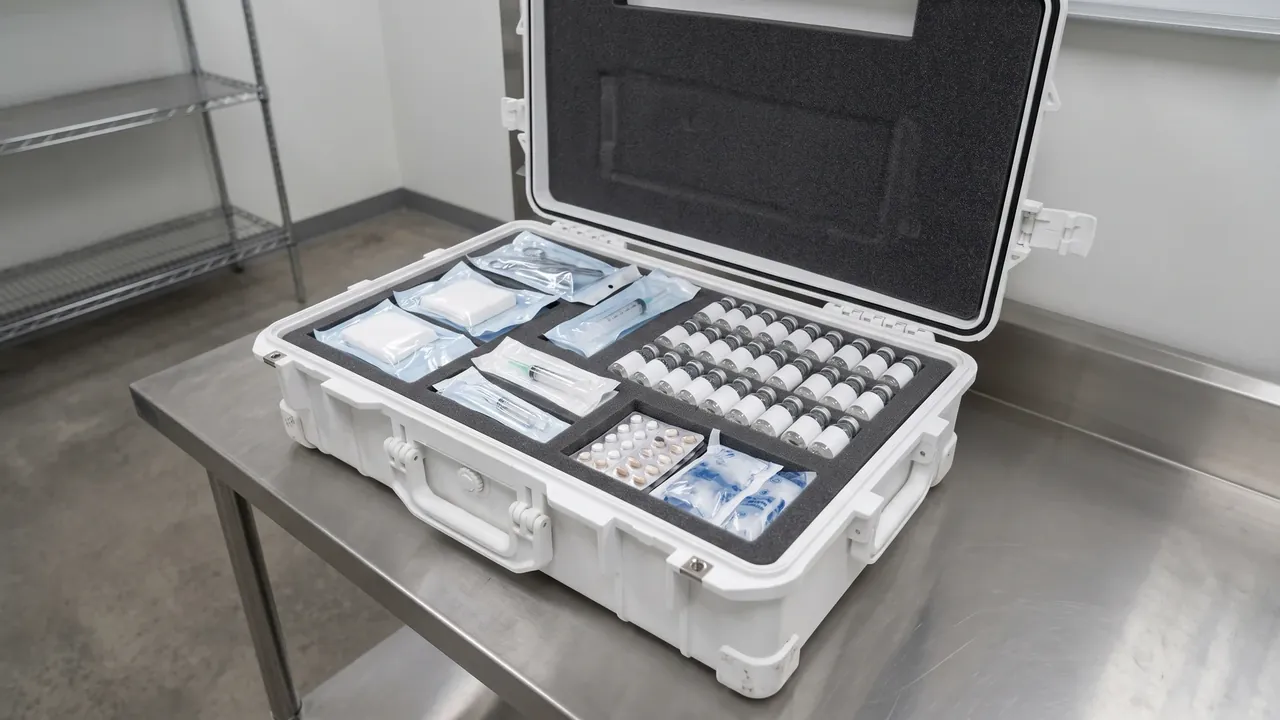
No matter how good the operation case is, it depends on maintenance. It is recommended to establish a three-level system of inbound and outbound inspection, quarterly maintenance and annual re-inspection. During inbound and outbound, check whether the sealing strip is embedded with foreign objects, whether the lock is smooth, and whether the identification is clear; quarterly maintenance uses fresh water to rinse salt, dry and then apply silicone oil to maintain rubber parts, and replace obviously aged O-rings; annual re-inspection re-does immersion quick check and salt spray weak point investigation to eliminate hidden dangers before failure.
In terms of spare parts management, three types of consumables should be routinely kept: sealing strips, lock springs and pressure equalization valve diaphragms, reserved at 5% to 10% of the number of cases. Aging of the sealing strip is manifested as surface cracking, loss of elasticity or permanent indentation. After discovery, it should be replaced in a whole ring instead of partially repaired, otherwise a leakage channel will be left. A more complete maintenance process is in the protective case maintenance guide, which has a item-by-item list of consumable replacement cycles and maintenance craft, suitable for direct inclusion in the team operation procedures.
Finally, the case should be included in the asset ledger, recording the date of each inspection, replaced parts and responsible person, and combined with QR code or RFID tags to achieve single-case traceability. When the case has structural cracks, corner stacking foot fracture or large-area coating peeling, it should be judged retired and recycled centrally to avoid on-duty with disease causing tool loss or water ingress accidents. Good retirement management is also important, which can control inventory and prevent failed cases from flowing into other operation surfaces and causing misuse.
FAQ
Q: What is the core difference between an oil and gas field operation case and an ordinary toolbox? A: The core difference lies in the systematic nature of protection capability and the traceability of certification. An ordinary toolbox usually only solves storage and portability, while an oil and gas field operation case used on well sites, platforms and refining areas must simultaneously meet a non-sparking shell under explosion-proof context, heavy anti-corrosion in high salt spray environments, IP67 level sealed waterproofing, and structured shock absorption during transport. It must also withstand stacking, hoisting and temperature differences, and be equipped with material certificates, salt spray and IP test reports for single-case traceability. For operation teams, this difference is directly reflected in whether instruments can maintain calibration at emergency repair sites and whether tools can avoid rust in wet and muddy conditions. Therefore, when selecting, you cannot just look at price and appearance, but should check key indicators one by one according to the gas zoning, corrosion grade and transport mode of this well block, upgrading passive storage into an active asset protection system. Only in this way can downtime and loss risks be truly reduced under harsh working conditions.
Q: Should the well-site environment choose 316L stainless steel or engineering plastic shell? A: This depends on whether the main contradiction is life, weight or budget. 316L stainless steel has outstanding pitting resistance in the chloride-containing environment of offshore platforms, long life and weldable repair, but its large self-weight increases single-person carrying and air freight costs, and the unit price is also higher. Engineering plastics (modified polypropylene or ABS blended with polycarbonate) have only about one third of the self-weight of stainless steel, are naturally insulating and produce no mechanical sparks, which is very suitable for explosion-proof storage, but under extreme loads and high-temperature exposure, reinforced frames and cold-resistant grades need to be selected. Most well sites recommend the composite scheme of plastic shell plus metal reinforced frame plus local stainless steel fittings: the shell is light and explosion-proof, the four corners and lock ears embed alloys to bear stacking, and the internal tray uses stainless steel to prevent friction metal chips. The actual selection suggests first clarifying the corrosion grade and handling mode, and then making the final decision based on the comparison conclusion of the corrosion resistant enclosure article, avoiding the hidden cost brought by blindly pursuing a single material.
Q: What do ATEX and IECEx certifications actually mean for the operation case? A: A boundary must be clarified: the operation case is a storage and transport container rather than an explosion-proof electrical device, and the mandatory requirements of ATEX 2014/34/EU or IECEx for electrical equipment cannot be directly applied. The real value of these two systems lies in the Zones 0/1/2 gas and Zones 20/21/22 dust hazardous divisions they define, which provide a judgment context for which surface resistance and sealing grade should be used in which environment during case selection. The case manufacturer can provide non-sparking shell descriptions, surface resistance control and grounding path designs that comply with applicable clauses, helping tools be transported safely in non-Zone 1 areas. However, if the site requires the case to enter the designated hazardous area together with tools, it must still be based on the equipment explosion-proof certificate and the on-site hazardous area assessment, and the case certification cannot replace the overall operation compliance. When purchasing, the manufacturer should be required to clearly mark the applicable clauses rather than generally claiming explosion-proof certification, so as to avoid acceptance disputes caused by unclear responsibility boundaries.
Q: Is the IP67 protection grade sufficient for the well site, and is a higher grade needed? A: For most well site and platform scenarios, IP67 already provides sufficient margin: it represents complete dust resistance and no water ingress under 1 meter water depth for 30 minutes, which is enough to deal with wellhead splashing, rainstorm operations and equipment flushing. Whether IP68 is needed depends on whether there are long-term submersion or deep-water hoisting requirements, such as subsea wellhead maintenance or long-term immersion in the tidal zone, in which case the target can be raised to IP68 and the test depth and time clarified. But it must be noted that IP is a system-level indicator, and looking at the grade number alone is meaningless, depending on the synergy of the shell, sealing strip, lock and pressure equalization valve; if the sealing strip ages or the lock pressure is uneven, no matter how high the nominal grade is, it will fail. Therefore, in addition to the grade itself, attention should be paid to the material and compression rate of the sealing strip and the uniform closing force of the lock, and the IP67 protection certification report from a qualified organization should be used as the acceptance basis, and regular immersion quick checks should be done to maintain the actual protection capability.
Q: How many hours of salt spray test should be required? A: The salt spray test duration should match the corrosion severity of the operation area, not the higher the better. According to the neutral salt spray procedure of GB/T 10125 and ISO 9227, for ordinary well-site operation cases, empirically it is an acceptable baseline that after 480 hours to 1000 hours of salt spray, the key welds and lock ear areas show no obvious substrate rust. If the operation area is located in marine splash zones, beach land-sea areas or high sulfur gas fields where corrosion is more severe, it is recommended to raise the target to more than 1000 hours, and submit reports separately for metal fittings to avoid replacing key part verification with overall appearance qualification. It should be reminded that salt spray hours are only a reference for accelerated corrosion and are not equivalent to actual service life in years; the real life also depends on coating repair and daily rinsing maintenance. When purchasing, the manufacturer should be required to attach the salt spray test report and batch traceability, and list weak points (welds, corners) as mandatory inspection items, so that the paper indicators can be transformed into on-site reliability.
Q: What is the process and precautions for custom foam liner? A: Custom liner usually starts from the tool list and three-dimensional size, using layered cross-linked polyethylene or EVA foam milled by CNC according to the tool contour, fixing large parts at the bottom layer, storing small parts in flip mesh bags or partition boxes, and independently molding and limiting key instruments, achieving one object one position and visible and clear. Modular drawer-type liners can also allow the special tool packages of different well times to be quickly replaced. JUNZHIJIA provides services of matching seals by model and CNC milled foam at this stage, helping teams transform scattered tools into standardized operation units. There are three precautions: first, reserve a flexible margin of 10% to 15% to adapt to temporarily borrowed instruments; second, the liner should preferably be a flame-retardant, low-dust closed-cell foam to avoid contaminating precision joints; third, set a separate fixing belt and buffer cavity for precision equipment such as gas detectors. A more systematic method can refer to the custom foam liner guide, landing step by step according to the layering logic and material selection, and avoiding the misunderstanding that the more grids the better.
Q: Why must a pressure equalization valve be equipped for plateau or large temperature difference well sites? A: Well sites often span from zero altitude to several thousand meters above sea level, coupled with extreme working conditions such as winter supply guarantee and well blowout emergency, and the pressure difference inside and outside the case will change dramatically. If completely sealed, the plateau rise will make the internal pressure relatively high, generating a bulging force at the moment of opening the cover and repeatedly fatiguing the sealing strip; going down the mountain, the external air pressure rises and sucks the cover inward, making it difficult to open by hand and directly affecting emergency repair efficiency. The waterproof and breathable pressure equalization valve uses a membrane that allows air molecules to pass through while blocking liquid water and dust, automatically balancing the internal and external pressure. When selecting, confirm that the valve body protection grade is consistent with the case, and evaluate whether the ventilation flow can match the altitude and temperature change rate. Combined with three high and low temperature cycle opening and closing tests from minus 40 degrees Celsius to plus 70 degrees Celsius, it can cover the climate of most well sites. The relevant tri-proof collaborative design idea is in the tri-proof case guide, which can effectively reduce the probability of on-site opening difficulties and leakage, and ensure that the emergency repair window is not slowed down by storage problems.
Q: How should daily maintenance and spare parts management of the operation case be implemented? A: It is recommended to establish a three-level system of inbound and outbound inspection, quarterly maintenance and annual re-inspection. During inbound and outbound, check whether the sealing strip is embedded with foreign objects, whether the lock is smooth, and whether the identification is clear; quarterly use fresh water to rinse salt, dry and apply silicone oil to maintain rubber parts and replace aged O-rings; annually redo immersion quick check and salt spray weak point investigation. For spare parts, routinely keep three types of consumables: sealing strips, lock springs and pressure equalization valve diaphragms, reserved at 5% to 10% of the number of cases. If the sealing strip cracks or has permanent indentation, it should be replaced in a whole ring instead of partially repaired. The case should also be included in the asset ledger, recording the inspection date, replaced parts and responsible person, and combined with QR code or RFID tags to achieve single-case traceability. When structural cracks, stacking foot fractures or large-area coating peeling occur, it should be judged retired and recycled centrally to avoid on-duty with disease. The complete maintenance list is in the protective case maintenance guide, which can be directly incorporated into the team operation procedures to standardize and trace the maintenance actions.