

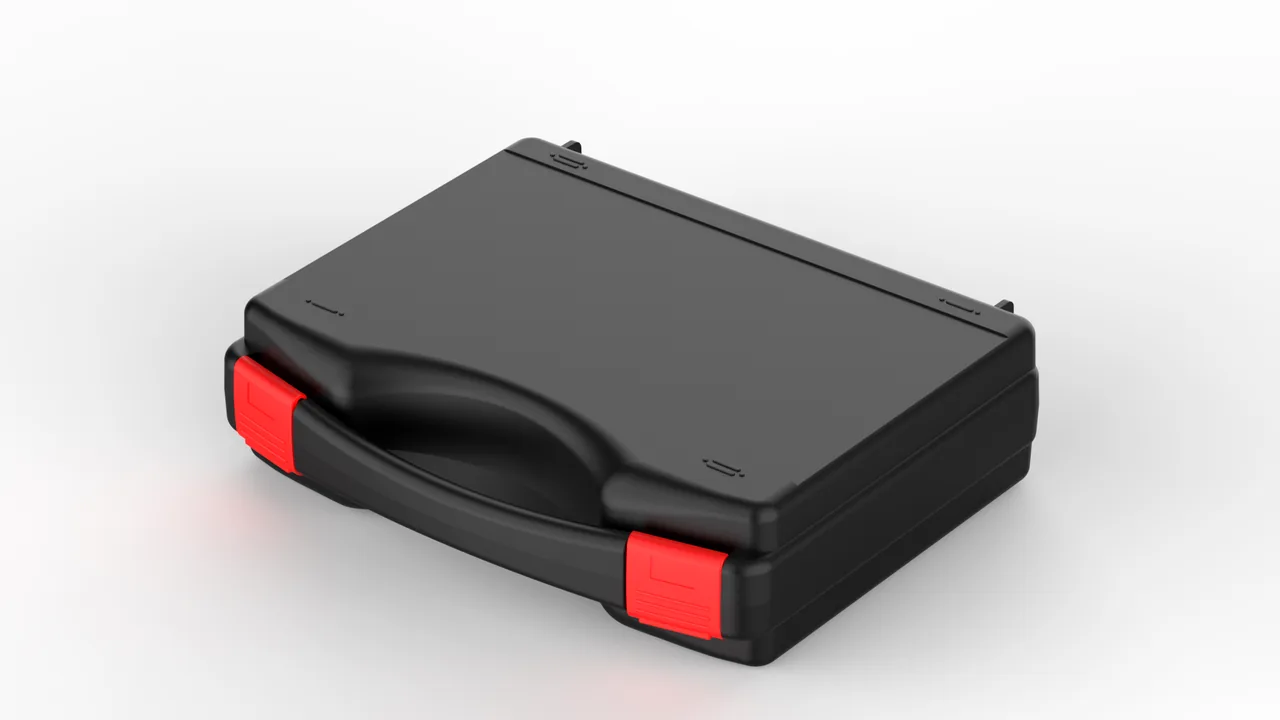
Equipment leaving a pesticide formulation plant usually carries a history. The cylinder of a bead mill still holds a tint from the last suspension concentrate batch, zirconia beads sit lodged in the slots of the dispersing discs, and the just-removed metering pumps of the filling machine expose mirror-finished stainless plungers. These components travel from formulation plants to repackaging sites, or from equipment integrators to overseas factories, crossing vibration, rain, salt fog and temperature swings. Their failure is often invisible: a cylinder goes slightly out of round, a valve seat takes a bruise the eye cannot resolve, a liner swells quietly in solvent vapour, and only after reassembly and eight hours of continuous running does the problem surface as off-spec particle size or drifting fill weights. Field adjustment rarely recovers that loss; only the packaging decision made before departure can buy it out.
Protection principle: protecting pesticide formulation equipment is not about wrapping metal in film. It means blocking the chemical attack of residual pesticide liquor, the abrasive impact of zirconia beads, micron-level distortion of precision fits, and the long-term ingress of humidity and salt fog inside a case system that is repeatable, testable and auditable. JUNZHIJIA treats cylinder support, media segregation, valve centering, solvent-resistant liners, sealing ratings and stacking loads as one parametric design tuned to pesticide formulation equipment, rather than reusing a generic toolbox.
Table of Contents
- Risk Profile and Protection Boundary for Pesticide Formulation Equipment
- Deformation Protection for Bead Mill Cylinders, Liners and Dispersing Discs
- Segregated Compartments for Zirconia Beads, Separators and Grinding Media
- Precision Fixturing for Filling Machine Metering Pumps and Filling Valves
- Support and Bend Resistance for Agitator Shafts, Shear Heads and Drives
- Corrosion and Swelling Control in Solvent and Emulsifier Systems
- Residual Pesticide Cleaning, Decontamination and Cross-Contamination Control
- Sealing and Pressure Equalization: IP65/IP66/IP67, IEC 60529 and GB-T 4208
- Cushion Liner Combinations: Parametric Selection of EPE, EVA, PE and IXPE
- Structural Details: Dividers, Latches, Hinges and Stacking Load
- Temperature, Humidity, Salt Spray (GB/T 10125) and Ocean Freight
- Transport Testing and Acceptance Criteria: ISTA, GB-T 4857, ASTM D4169 and AQL
Risk Profile and Protection Boundary for Pesticide Formulation Equipment
The pesticide formulation chain has a natural mismatch: heavy equipment, light packaging. Bead mills are the core of wet grinding, built around stainless steel or lined cylinders filled with zirconia beads, where high-speed dispersing discs generate shear and impact that reduce technical material to micron or sub-micron size. Filling machines dose suspension concentrates, emulsions and micro-emulsions, and the clearance between metering pump and filling valve often sits in the range of a few to a few dozen microns. Both share one trait: they are functionally precise but do not look fragile, so they are the easiest items to wrap in bubble film and load onto a truck.
The risks worth locking down at the design stage rank by consequence. First comes structural deformation: an out-of-round cylinder, a warped flange face, a bent shaft. Second is abrasive bruising, where zirconia beads become sandpaper inside the case and score bores and polished faces. Third is chemical attack, as residual solvents, emulsifiers and pH adjusters work continuously on liners, seals and coatings. Fourth is micro-environment failure, where humidity, salt fog and condensation accumulate over a long sea voyage. All four share the same signature: they begin in the workshop and erupt at the customer. The protection boundary must therefore start when the machine is shut down for cleaning, not when the case is closed.
Compared with crop protection spray equipment, formulation machinery follows chemical and pharmaceutical equipment logic more closely. The scenario breakdown in Agricultural Spray Equipment Transport Cases is a useful reference, but two extra dimensions must be added: abrasive media and residual pesticide liquor.
Deformation Protection for Bead Mill Cylinders, Liners and Dispersing Discs
The bead mill cylinder is the hardest component to accommodate. It is thin-walled, long, precisely finished on the bore, and frequently lined with polyurethane, ceramic, wear-resistant rubber or zirconia sleeves. The dominant threat in transit is not impact but bending and ovality caused by badly placed supports. A common error is to leave both ends hanging while the middle rests on a soft foam block. Over miles of road vibration, the cylinder sags under its own weight and inertia into a permanent waist.
The correct approach treats the cylinder as a precision beam. Both flanges become the primary load-bearing faces, seated in machined EVA or PE locating saddles that restrict radial movement. Two or three equal-height cradles along the middle section, faced with 5 to 10 mm of IXPE, add elasticity without creating hard points. Axial stops hold the cylinder end-to-end so braking cannot slide it into the case wall. Dispersing discs shipped with the cylinder must be removed and packed separately; a disc left on the shaft swings during vibration and grinds both the shaft bushing and the disc rim.
For cylinders with ceramic or zirconia liners, thermal expansion mismatch matters. If transit crosses a hot environment, and a summer container can exceed 60 degrees Celsius, the liner may slip inside the steel shell and fail to reseat on cooling. Mitigation means avoiding local heat build-up, keeping the case ventilated and adding insulation where necessary.
| Failure mode | Trigger | Countermeasure | Acceptance criterion |
|---|---|---|---|
| --- | --- | --- | --- |
| Cylinder waist bend | Both ends unsupported, single mid support | Flange saddles plus 2-3 equal-height cradles | Straightness deviation within 1.5x factory value |
| Warped flange face | Flange pressed onto a hard flat surface | Flange rebate location, no face loading | No measurable change in seal face flatness |
| Liner slip or blister | High temperature, no axial restraint | Ventilation, axial stops, insulation | No disbonding between liner and shell |
| Bore scoring | Residual beads moving in the case | Full bead removal plus soft bore cover | No new scratches on the bore |
| Disc distortion | Shipped on shaft, swinging | Separate compartment, ring support at rim | Disc rim flatness within tolerance |

Segregated Compartments for Zirconia Beads, Separators and Grinding Media
Yttria-stabilized zirconia beads are standard in reagent-grade and agrochemical grinding, with diameters from 0.3 mm to 2.0 mm, high hardness and a density near 6 g/cm3. After tear-down they can weigh from tens to hundreds of kilograms. Their greatest danger is not damage to themselves but becoming the grinding media inside the case: once they pile freely and flow with vibration, they polish neighbouring stainless steel, mirror surfaces and liners into powder, and at the case floor they can create a sanding effect that wears through liner faces.
Beads must be physically isolated from every other component. Use a dedicated compartment or a pail lined with EPE or a PE bag, and secure it away from the cylinder, discs and separators. If beads must share the case, keep at least 30 mm of cushioning between the bead charge and the equipment, and cut the flow path with a rigid divider. Never let beads collect underneath the cylinder. Separators, including separation rings, screens and dynamic separator rotors, are thin-walled precision parts and need centred, individual fixturing so screens cannot be crushed.
| Component | Material / trait | Risk | Compartment solution | Safe to co-pack with |
|---|---|---|---|---|
| --- | --- | --- | --- | --- |
| Zirconia beads | High density, high hardness | Grinds case, rolling impact | Dedicated pail plus liner bag | None, ship alone |
| Separator ring / screen | Thin wall, crushable | Deformation, clogged mesh | Centred clamp, open support | Similar small parts |
| Dispersing disc | Toothed rim, impact sensitive | Rolled rim, bent face | Ring support plus vertical location | Short shaft items |
| Grinding chamber end cover | Precision fit | Seal face bruising | Face up, soft pad isolation | Flange-type parts |
Residual acidic or alkaline media on bead surfaces encourage pitting and rust spotting, most visibly on steel beads. Confirm beads are cleaned and fully dried before packing; a moderate desiccant charge is acceptable inside the case, but avoid direct contact between desiccant and beads.
Grinding and milling equipment share much of this packaging logic. Ball Mill Liner Transport Cases covers load-bearing floors and liner protection in a way that transfers directly.
Precision Fixturing for Filling Machine Metering Pumps and Filling Valves
Filling components are the most precise part of a pesticide formulation line. Metering pumps, whether plunger, peristaltic or gear type, set fill repeatability; filling valves determine clean cut-off and drip behaviour. Their clearances often run in the micron range, so any axial shock, radial offset or bruised mating face shows up directly as fill-weight drift and dripping. The biggest mistake is to treat them as small items and toss them in.
The strategy is centre, restrain, separate the load path. A metering pump should be fixed vertically or in its as-built attitude, plunger up or per the maker's direction, so its own weight cannot creep the seal long-term. Machine an EVA pocket to centre the pump body with no rattle gap. Cap the inlet and outlet ports so foreign matter cannot enter the flow path. Filling valve parts, meaning valve bodies, spools, springs and seal seats, should be fixed so the spool carries no load.
| Component | Key risk | Attitude requirement | Fixturing | Suggested protection |
|---|---|---|---|---|
| --- | --- | --- | --- | --- |
| Plunger metering pump | Plunger bend, seal creep | Plunger vertical, unloaded | EVA centring pocket plus vertical support | Separate cavity plus desiccant |
| Peristaltic pump head | Tubing flattening | Tube removed or rollers released | Dedicated head cavity plus soft pad | Separate cavity |
| Filling valve set | Spool and seat bruising | Spool unloaded | Individual centring, divided cells | Divided cells plus dust cover |
| Flow meter / sensor | Zero drift, broken glass | Per marked orientation | Floating soft support | Separate cavity |
| Seals and gaskets | Ageing, deformation | Flat, unfolded | Flat tray | Keep from light and heat |
Note that filling components often ship with load cells, servo drives and flow meters, all of which need separate moisture and static control. For whole-line relocation, split the shipment into four groups, mechanical, precision, electrical and consumables, so the groups do not constrain each other. Pharmaceutical filling lines pose similar demands, as covered in Pharma Filling Line Equipment Transport Cases.
Support and Bend Resistance for Agitator Shafts, Shear Heads and Drives
Agitator shafts and shear heads have the largest length-to-diameter ratio and are the components most likely to look fine and wobble once installed. A two-metre stainless shaft supported only at both ends will, after a single pothole, take a deflection beyond its elastic limit.
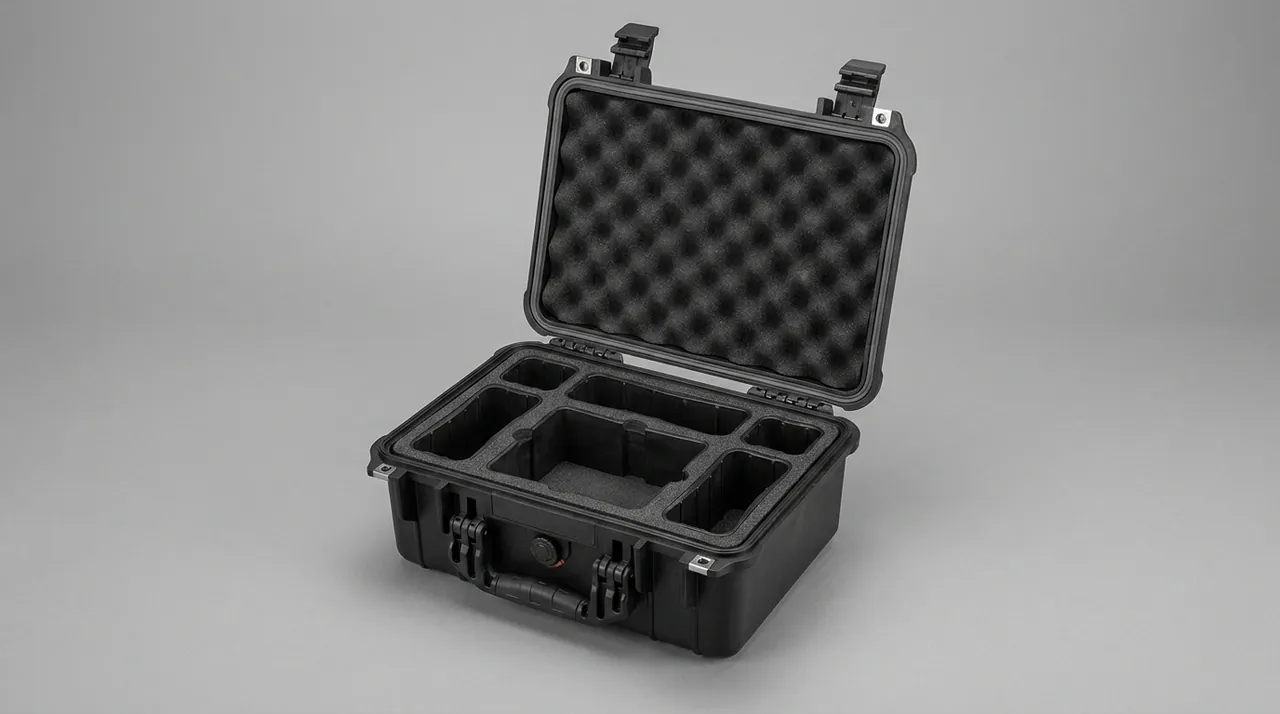
The basic method for long shafts is multi-point support, axial locking and rotation restraint. Space supports no more than one third of the shaft length apart, use soft V-blocks faced with IXPE or felt so no hard point marks the surface, and add end stops to prevent sliding. Where the shaft carries impellers or shear teeth, insert separators so blades cannot hook one another. Shear heads, meaning emulsifying and dispersing heads, have extremely tight rotor-stator clearances and must be fixed as an assembly, with no relative movement permitted between rotor and stator.
Drive components such as gearboxes, couplings, pulleys and bearing housings are heavy items and should bear on their centre of gravity. Support them on timber or high-density EVA, and never let an output shaft carry the load alone. Bare output shafts need a protective sleeve and an end restraint so lifting or stacking cannot apply side load. For small and medium bead mills or filling machines that must ship assembled, remove cantilevered parts first and downgrade the shipment from a whole machine to a body-plus-accessories kit.
| Long component | Max support spacing | Support type | Additional measures |
|---|---|---|---|
| --- | --- | --- | --- |
| Agitator shaft, 30-50 mm | One third of length | Three soft V-blocks | Axial stops, blade separators |
| Shear head assembly | Rigid as a unit | Base centring plus top restraint | Shims between rotor and stator |
| Gearbox | At centre of gravity | High-density EVA base | Output shaft sleeve |
| Coupling | One part per cell | Open support | Keyway protection |
Corrosion and Swelling Control in Solvent and Emulsifier Systems
Pesticide formulation plants handle highly complex chemistry. Emulsifiable concentrates contain xylene, toluene and methanol; emulsions and suspension concentrates contain anionic and non-ionic emulsifiers, thickeners and antifreeze; some products add pH adjusters. Even after cleaning, equipment surfaces and crevices can retain these media. They threaten packaging materials in two ways: corrosion and swelling.
For metals, the main forms are pitting and galvanic corrosion, especially when stainless and carbon steel share a case or where residual chloride is present. The threat to polymers is subtler. Plain EPE tolerates most solvents reasonably well, but prolonged contact with aromatics slowly swells it, softens it and robs it of rebound. In pesticide formulation packaging, liner materials must therefore be chosen against the contact medium, not merely against cushioning performance.
The rule is straightforward: the first layer touching the equipment should be a PE or IXPE sheet or film with better chemical resistance; the middle layer should be EVA for structural support; the outer layer should be EPE or halogen-free PE foam to absorb shock and cut weight. Where solvent residue is a real risk, add a solvent-resistant membrane between liner and equipment and run a coupon immersion test. The table below gives indicative foam compatibility with common pesticide formulation media; actual selection depends on immersion testing.
| Liner material | Aromatic solvent | Alcohols | Acid/base solutions | Emulsifiers / surfactants | Rebound retention |
|---|---|---|---|---|---|
| --- | --- | --- | --- | --- | --- |
| EPE | Moderate | Good | Good | Good | Moderate |
| EVA | Moderate to poor | Moderate | Good | Moderate | Excellent |
| PE sheet | Good | Good | Excellent | Good | Structural |
| IXPE | Good | Good | Excellent | Good | Good |
| Plain PU foam | Poor | Poor | Moderate | Poor | Crumbles |
Material choice for housings and valves matters just as much. Prefer chemically resistant high-impact copolymer PP or modified engineering plastics for the case body, and choose oil- and solvent-resistant silicone or fluororubber for gaskets rather than standard EPDM in aggressive solvent service. For strongly corrosive processes, follow the material logic in Chemical Reactor Parts Transport Cases and Petrochemical Valve Transport Cases, and make the media list a formal design input: fill the form first, then choose materials.
Residual Pesticide Cleaning, Decontamination and Cross-Contamination Control
Cleaning quality before packing determines both the corrosion severity in transit and the cleaning cost on arrival. Pesticide residue has three traits: it adheres strongly, with suspension concentrates and paste formulations clinging to cylinder walls and agitators; it is chemically mixed, carrying actives plus solvents and adjuvants; and it is sensitive, because cross-contamination between incompatible products can trigger flocculation, crystallisation or crop injury. How clean is clean enough must therefore be part of the packaging procedure.
Use a five-step flow: physical removal, solvent or aqueous cleaning, rinsing, drying and inspection. Physical removal uses soft scrapers and dedicated brushes to lift bulk residue first; never use a wire brush, which scores liners. Solvent cleaning targets oily residue, aqueous cleaning targets water-soluble products, and the two are selected or combined according to residue character. Rinse with deionised water to limit scale and ionic residue. Dry thoroughly, blowing crevices and threads with clean compressed air and using low-temperature drying where required. Finally inspect visually and by wipe test: a clean white cloth showing no tint and no residual odour passes.
Cross-contamination control runs along three tracks: cleaning, packaging and marking. Keep cleaning and packing stations physically separate, never share one wash tank across different products or equipment types, place a disposable clean liner or removable inner tub inside the case, and mark the outside with cleaned or awaiting-cleaning status plus the last contact medium. Some export destinations require cleaning records and residue test reports, so archive them in advance.
| Step | Common error | Consequence | Improvement |
|---|---|---|---|
| --- | --- | --- | --- |
| Physical removal | Wire brush or hard scraper | Liner scores, worse adherence | Soft scraper plus nylon brush |
| Solvent cleaning | Wrong solvent chosen | Stubborn residue or swelling | Select by medium |
| Rinsing | Tap water used | Scale and chloride residue | Deionised water rinse |
| Drying | Air dried only | Trapped liquid, rust | Compressed air plus low-temp drying |
| Marking | Cleaning status unclear | Cross-contamination, misuse | Status label plus batch record |
Sealing and Pressure Equalization: IP65/IP66/IP67, IEC 60529 and GB-T 4208
A protective case sealing rating is not a case of higher is better; it must match the transport route. IP ratings are defined by IEC 60529, with the Chinese equivalent GB-T 4208 applying essentially the same test methods: the first digit covers solids from 0 to 6, the second covers water from 0 to 9K. The three grades most common for pesticide formulation equipment are IP65 against water jets, IP66 against powerful water jets, and IP67 against temporary immersion.
The selection logic is simple: choose the rating by route, choose the construction by maintenance. For inland road transport in a covered trailer with controlled handling, IP65 is sufficient. For sea containers, open storage yards and possible heavy rain wash, choose IP66. Where short immersion, wharf lifting over water or extreme weather assurance is required, choose IP67. Be clear that IP67 does not mean continuous submersion; it is defined as temporary immersion under specified conditions, and buyers should not read it as a promise of underwater protection.
Sealing relies on the interplay of housing, gasket and latch pressure. Silicone gasket rebound and compression set are critical, with compression usually held between 25 and 40 percent. Latch count and distribution decide pressure uniformity, so long cases need centre latches or a double seal line. The hinge-side gasket is prone to shear and needs an anti-extrusion feature. Internal air pressure also shifts with temperature and altitude, and without a pressure equalization valve a case can be nearly impossible to open after a temperature swing, or the negative pressure can suck the gasket out of shape. For aging behaviour and material choice, see Case Seal Materials and Ageing Control; for valve choice, see Pressure Equalization Valve Selection Guide.
| Rating | Test condition | Typical transport scenario | Structural cost |
|---|---|---|---|
| --- | --- | --- | --- |
| IP65 | Nozzle water jet | Inland road, covered transit | Low |
| IP66 | Powerful water jet | Sea freight, open yard | Medium |
| IP67 | Temporary immersion | Wharf, water exposure risk | High, seal plus latches |
| IP69K | High-pressure hot water | Clean rooms needing washdown | Highest |
Cushion Liner Combinations: Parametric Selection of EPE, EVA, PE and IXPE
Cushion liners are the muscles of the case. Pesticide formulation components span a huge range, from tens-of-kilogram cylinders to gram-scale seals, from mirror-polished plungers to sharp-toothed dispersing discs, and no single material covers all of them. Engineering practice uses a composite approach with local machining. EPE is low density, resilient and economical, ideal for outer layers and void fill. EVA is denser, machinable and structurally strong, suited to locating saddles and load-bearing pockets. PE sheet is rigid and chemically resistant, good for dividers, inner tubs and first-contact layers. IXPE foam is fine, clean and uniform in cushioning, ideal against precision and polished faces. Do the impact calculation first, then assign materials by load-bearing layer, cushioning layer and contact layer.
Cushion thickness estimates follow component mass and allowable acceleration. As a simplification, at a given drop height the thickness required rises with impact energy and falls as the allowable g level rises. Leave 20 to 30 percent margin in practice and check the heaviest and the most delicate parts separately. Over-thick soft foam lets the part float inside the case and accumulate displacement under repeated vibration, while too thin a layer absorbs nothing and provides no real cushioning.
| Material | Density (kg/m3) | Rebound / durability | Chemical resistance | Typical use | Relative cost |
|---|---|---|---|---|---|
| --- | --- | --- | --- | --- | --- |
| EPE | 20-35 | Moderate | Moderate | Outer layer, fill | Low |
| EVA | 60-120 | Excellent | Moderate | Locating saddles, pockets | Medium-high |
| PE sheet | 500-950 | Structural | Excellent | Dividers, inner tubs | Medium |
| IXPE | 30-60 | Good | Good | Precision face contact | Medium-high |
| PU foam | 25-45 | Moderate, crumbles | Poor | General fill | Low |
Temperature also matters. Plain EPE and EVA harden and embrittle in the cold, so low-temperature shipments need cold-resistant grades, while high temperatures raise concerns about softening and creep. Quantified comparisons between material combinations are collected in Case Foam Material Comparison, and the test data there can be used directly in design reviews. For antistatic needs around electronic companion parts, add a conductive layer or use antistatic foam to prevent static accumulation from damaging sensors.
Structural Details: Dividers, Latches, Hinges and Stacking Load
If the liner decides whether the contents survive, the structure decides whether the case survives. Pesticide formulation equipment is medium to heavy, with gross case weights often between 50 and 150 kg, which places clear demands on structural strength. Dividers, latches, hinges and stacking features are the four critical points.
Dividers keep parts from damaging each other and route weight into the case floor rather than leaving the foam to carry it alone. Divider panels under heavy parts should reach the floor to form columnar support, never hang above foam. Distribute parts by mass tier, heavy low and light high, to keep the centre of gravity down. For latches, heavy cases benefit from wide metal latches or draw-latches with an anti-opening safety. Hinges should use metal pins with full-length or segmented reinforcement and be validated by open-close cycling.
Stacking capacity must distinguish static warehouse stacking from dynamic transport load. Static stacking means multiple cases in storage, where floor and lid must carry the upper weight without collapse; dynamic load adds the impact factor of road vibration. Publish a clear maximum stack count and total load, and add locating ribs on the lid to prevent shifting. For detailed structural design logic, see Case Stacking Structure Design.
| Structural part | Key parameter | Common failure | Verification |
|---|---|---|---|
| --- | --- | --- | --- |
| Divider panel | Floor-reaching, columnar | Hanging, buckling | Static load test |
| Latch | Balanced count and spacing | Local popping, seal loss | Cycle life plus pressure test |
| Hinge | Metal pin, reinforced base | Pin wear, base cracking | Life cycling plus load test |
| Stacking feature | Locating ribs plus load pads | Shifting, lid collapse | Static stack plus vibration test |
| Handle / lift point | Local reinforcement | Tearing | Pull test |
Temperature, Humidity, Salt Spray (GB/T 10125) and Ocean Freight
Export orders face a far harsher environment than domestic shipments. A container interior can exceed 60 degrees Celsius in summer, and day-night swings drive cyclical condensation, the familiar container rain. Chloride in marine air accelerates metal corrosion, and long sea voyages accumulate weeks of vibration. Together these demand long-term tolerance rather than a short-term pass.
Salt spray testing follows GB/T 10125, equivalent to ISO 9227, with neutral salt spray as the common condition; export equipment may call for 48 to 480 hours depending on route and customer standard. Be clear that a salt spray certificate proves corrosion resistance under the stated test and duration and cannot be extrapolated to every real environment. Combine the result with housing material selection, liner barriers, desiccant sizing and vapour-phase rust inhibition rather than relying on the certificate alone.
Humidity control rests on three layers: lower the initial moisture, absorb what remains and block ingress. Dry the equipment and liner before packing, place a correctly sized desiccant charge of silica gel, montmorillonite or molecular sieve, and choose a low moisture-vapour-transmission housing while minimising how often the case is opened. Size the desiccant from free air volume, packaging material moisture content, transit duration and target humidity, with a safety factor. Add a humidity indicator card so arrival checks are fast.
Transport Testing and Acceptance Criteria: ISTA, GB-T 4857, ASTM D4169 and AQL
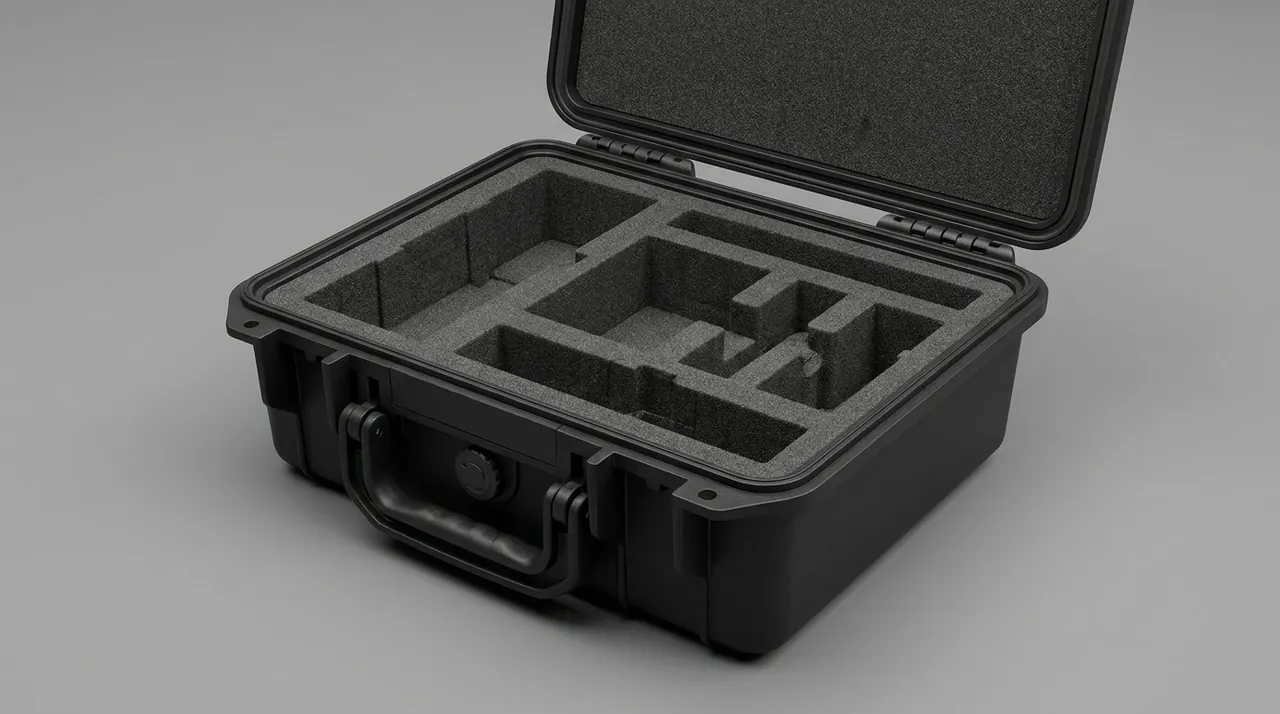
Once design is complete it must be validated by test, or every parameter remains an assumption. Three systems dominate. The ISTA series provides programmed tests for specific distribution scenarios. GB/T 4857 is the Chinese basic test method series for transport packages, covering vibration, impact, stacking and drop. ASTM D4169 offers a performance test design method built around the distribution cycle.
For heavy and precise products such as pesticide formulation equipment, cover at least random vibration, static stacking, drop by corner, edge and face, and climate preconditioning where applicable. After testing, perform a full unpack inspection: cracks in structural parts, permanent gasket set, crushed liner, displaced or scratched equipment, followed by powered or fluid function checks. Fix the acceptance standard in writing with clear pass, concession and reject criteria.
| Test | Reference | Example condition | Pass criterion |
|---|---|---|---|
| --- | --- | --- | --- |
| Random vibration | GB/T 4857 / ISTA | PSD profile, 1-2 h | No structural failure, no part movement |
| Static stacking | GB/T 4857 | 1.4-2.0x load, 24 h | Deformation recovers |
| Drop | GB/T 4857 / ASTM | Multiple corner, edge, face attitudes | Contents function normally |
| Salt spray | GB/T 10125 | NSS, 48-480 h | No functional corrosion |
| Climate preconditioning | ASTM D4169 | Temperature and humidity cycling | No condensation damage, desiccant active |
Batch acceptance can use AQL sampling across case appearance, dimensions, sealing, latch function and liner fit, with defect classes and dispositions written into the contract. For sampling plan and criteria design, see Custom Case AQL Acceptance, and for the full test flow, see ISTA Transport Testing Procedure and GB/T 4857 Transport Packaging Testing.
Frequently Asked Questions FAQ
Q: How do we keep a bead mill cylinder liner from deforming in transit after removal?
A: Liner deformation comes mainly from poor support and thermal stress rather than impact. Treat the cylinder as a precision beam: cut EVA or hard PE locating saddles for both flanges to restrict radial movement, add two or three equal-height cradles along the middle section faced with 5 to 10 mm of IXPE so there are no hard points and no unsupported span, and fit axial stops so braking cannot slide the cylinder into the wall. Mind the thermal expansion mismatch between liner and steel shell. A summer container can exceed 60 degrees Celsius, letting the liner slip inside the shell and fail to reseat, so keep the case ventilated, avoid local heat build-up and add insulation where needed. On arrival, check full-length straightness and inspect for disbonding; deviation from the factory value should stay within 1.5 times. Always remove dispersing discs and pack them separately so they cannot swing and grind the shaft bushing.
Q: Can zirconia beads and grinding media ship loose in the same case as the equipment?
A: It is strongly discouraged. Zirconia beads run about 6 g/cm3 in density with ceramic-grade hardness, and once they pile freely and flow with vehicle vibration they become a highly effective grinding medium, polishing neighbouring stainless faces, liners and coatings into powder and, at the case floor, generating a sanding effect that can wear through a liner. Pack beads in a dedicated pail or compartment lined with EPE or a PE bag, and secure it fully apart from the cylinder, discs and separators. If space forces co-packing, keep at least 30 mm of cushioning between the bead charge and the equipment, cut the flow path with a rigid divider, and never let beads collect under the cylinder. Confirm beads are cleaned and fully dried before packing, so residual acid or alkali cannot drive pitting in a humid environment. Because beads are high-value consumables, keep the packing list and weight record consistent with the goods to avoid customs queries.
Q: Why should filling machine metering pumps be packed in a separate compartment?
A: A metering pump sets fill repeatability, and its plunger-to-barrel clearance often sits in the micron range, making it highly sensitive to axial shock, radial offset and bruised mating faces. Packed with a cylinder or dispersing discs, the inertia of the heavy parts passes through the case under vibration; the plunger may bend slightly, or a seal face may take a bruise too small to see, and on the line the result is fill-weight drift and dripping beyond specification. Ship the pump in its own compartment, vertical or in its as-built attitude, plunger up so its weight cannot creep the seal long-term. Machine an EVA pocket to centre the body with no rattle gap, and cap the ports so foreign matter cannot enter the flow path. Filling valve parts should also be fixed with the spool unloaded; never stack complete valves, because springs fatigue under continuous compression and spool-to-seat contacts take a set. Separate electrical items such as load cells and servo drives as well, so vibration and moisture do not interact.
Q: Should a protective case use IP65 or IP67 sealing?
A: Derive the rating from the transport route rather than choosing the highest number. IP65 resists nozzle water jets and suits inland road transport in covered trailers with controlled handling. IP66 resists powerful jets and suits sea containers, open storage yards and routes exposed to heavy rain. IP67 withstands specified temporary immersion and suits wharf lifting, water exposure risk or extreme weather assurance. Be clear that IP67 is not continuous submersion; it is defined as temporary immersion under standard conditions and should not be read as underwater protection. Higher ratings drive tougher gasket materials, more widely distributed latches and a stiffer housing, raising both cost and weight. Sealing depends on housing, gasket and latch pressure working together: silicone gasket compression is usually held at 25 to 40 percent, and long cases need centre latches for uniform pressure. Because internal and external pressure differ with temperature and altitude, always fit a pressure equalization valve, or the case becomes hard to open and the negative pressure can deform the gasket.
Q: Does residual pesticide liquor really pose a corrosion risk to case liners?
A: Yes, and it is more insidious than most buyers expect. Pesticide formulations are chemically complex: emulsifiable concentrates carry xylene, toluene and methanol; emulsions and suspension concentrates carry emulsifiers, thickeners and antifreeze; some products add pH adjusters. Even after cleaning, media can remain on surfaces and in crevices. Metals may pit or suffer galvanic corrosion, while polymers may slowly swell, soften and lose rebound, and ordinary labels and tapes dissolve in solvent and then contaminate equipment surfaces. Choose the liner against the actual contact medium, not cushioning alone. Use a chemically resistant PE or IXPE first-contact layer, an EVA structural layer in the middle and EPE outside for shock absorption; add a solvent-resistant membrane and run a coupon immersion test where solvent residue is plausible. Specify oil- and solvent-resistant silicone or fluororubber gaskets and a high-impact copolymer PP or modified engineering plastic housing. Above all, clean and dry thoroughly before packing and treat the media list as a design input.
Q: How should foam liners be combined to balance cushioning and antistatic performance?
A: Start with the impact calculation, then assign materials by load-bearing, cushioning and contact layers. EPE is low density, resilient and economical for outer layers and fill. EVA is denser, machinable and strong for locating saddles and pockets. PE sheet is rigid and chemically resistant for dividers, inner tubs and first-contact surfaces. IXPE foam is fine, clean and uniform, ideal against precision and polished faces. Estimate cushion thickness from component mass and allowable acceleration: at a given drop height the thickness required falls as the allowable g level rises and grows with impact energy. Leave 20 to 30 percent margin and check the heaviest and most delicate parts separately. Over-thick soft foam lets parts float and accumulate displacement under vibration, while too thin a layer absorbs nothing. For antistatic protection around sensors, encoders and electronic companion parts, add a conductive layer or use antistatic foam, keep surface resistance generally between 10^6 and 10^9 ohms, and maintain a continuous grounding path through the case to avoid static damage.
Q: Which transport tests must a protective case pass to meet acceptance?
A: Cover at least four categories: random vibration, static stacking, drop and, where applicable, climate preconditioning. Run random vibration to GB/T 4857 or an ISTA programme with the specified PSD profile for one to two hours, then check for structural failure and part movement. Apply a static stack load of 1.4 to 2.0 times the rated weight for 24 hours to prove the floor and lid do not collapse. Perform drops by corner, edge and face in multiple attitudes, focusing on cushion margin around the heaviest component. Use ASTM D4169 for temperature and humidity cycling to verify condensation behaviour and desiccant effectiveness. For export products, run neutral salt spray to GB/T 10125 for 48 to 480 hours as agreed with the customer. After testing, unpack fully and inspect for cracked structure, permanently set gaskets, crushed liner and displaced equipment, then confirm powered or fluid function. Write pass, concession and reject criteria into the file beforehand.
Q: How can lead time be controlled for custom cases, tooling and OEM/ODM projects?
A: Lead-time risk comes mainly from requirement freeze and tooling rather than production itself. Freeze the inputs early: equipment list and weights, maximum envelope dimensions, transport route and climate, sealing rating, liner material and compartment plan, marking and documentation requirements. Next, separate reusable structures from parts that genuinely need new tooling; selecting the housing from an existing size family shortens the cycle dramatically, while only liner machining and special compartment work need individual design. Run samples and documents in parallel, preparing the test plan, acceptance criteria and packing list while the first article is confirmed, so validation and paperwork do not queue behind each other. Finally, leave buffer time for material inspection, trial fitting and test retesting, especially on export orders needing salt spray or long vibration runs. JUNZHIJIA structures custom case delivery as requirement review, sample confirmation, serial production and test validation, and writes change points and responsibility boundaries into the agreement so lead-time uncertainty is absorbed early.
Conclusion and Related Reading
Protecting pesticide formulation equipment means converging scattered risks into a verifiable case system. JUNZHIJIA supports custom and OEM/ODM delivery from requirement review and liner tooling through transport testing, with quality records from Kexin New Materials (Guangdong).
Related Reading