

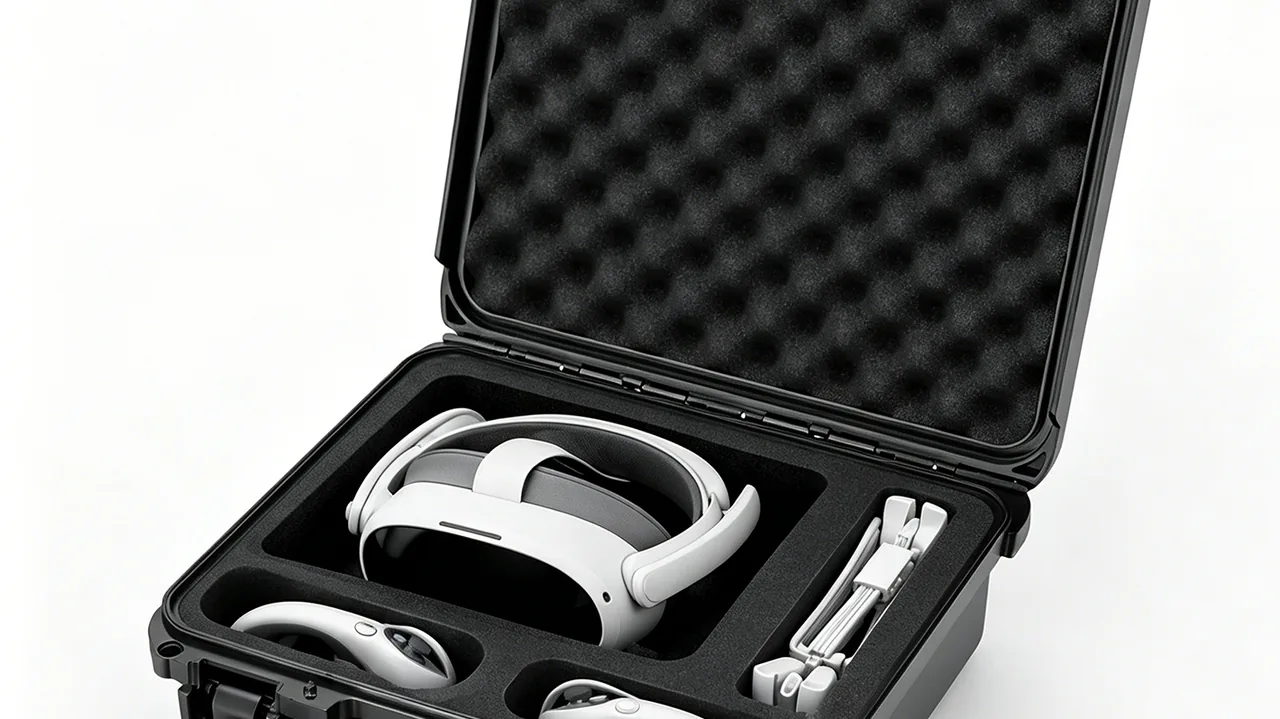
When cheese and dairy equipment parts are transferred between plants, shipped for export, or sent out for annual overhaul, the largest hidden cost is not freight but the hygiene re-validation and corrosion repair after arrival. The clear conclusion is this: cheese-vat agitators, curd knives, heat-exchanger plates, aging and curing racks, dairy pumps and valves, and homogenizer parts must travel in sanitary-grade protective cases whose body and liner materials are compatible with CIP cleaning environments, resist milk-acid corrosion, and control shedding under the ISO 14644 cleanliness philosophy, so they can enter dairy-room assembly directly after a long journey. Many dairies still ship in ordinary steel boxes or recycled wooden pallets; the result is agitator shaft seals caked with rust and wood splinters, heat-exchanger plate gaps packed with dirt, and pump-valve cavities contaminated by ambient dust, forcing CIP and SIP validation to repeat again and again while downtime costs far exceed a compliant case.
Engineering teams at cheese plants and independent creameries, together with OEM suppliers of dairy equipment, face a consistent contradiction. Parts are valuable, demand a strict surface finish, are mostly stainless steel yet still fear milk acid and pitting, and the transport chain spares none of the sea-salt spray, road vibration, or temporary-yard dust. Ordinary packaging neither resists corrosion nor controls shedding, let alone claims CIP compatibility. Once the sealing face of a heat-exchanger plate is crushed by a hard object, or a curd-knife edge chips, the whole batch of spares may fail hygiene acceptance. This article gives a systematic plan for six core dairy categories, covering material selection, CIP-compatible design, milk-acid protection, and transit compliance testing, ready to use directly when procuring or customizing a case.
Table of Contents
- Transit Hygiene Risks for Cheese and Dairy Equipment Parts
- Material and CIP-Compatible Design of Sanitary Cases
- Buffering and Rust Prevention for Cheese-Vat Agitators
- Edge Protection and Isolation for Curd Knives
- Anti-Deformation Packing of Heat-Exchanger Plates
- Support and Fixation of Aging and Curing Racks
- Clean Encapsulation of Dairy Pumps and Valves
- Precision Protection for Homogenizer Parts
- CIP-Compatible Materials and Milk-Acid Corrosion Defense
- ISO 14644 Cleanliness and Shedding Control
- IP67 Sealing and Transit Temperature-Humidity Management
- Gentle Buffering and Transit Compliance Testing
- Field Reading of Milk-Acid Corrosion and Passivation Handover
- Documentation Accompanying Exported Dairy Spares
- FAQ
- Conclusion and Further Reading
Transit Hygiene Risks for Cheese and Dairy Equipment Parts
Dairy equipment carries a higher hygiene threshold than ordinary food machinery because dairy products are nutrient-rich and breed microorganisms easily; any residual contamination on a part surface amplifies in later production. Transport-stage risks fall into four typical classes. The first is corrosion: dairy parts are mostly 304 or 316L stainless steel, yet weld heat-affected zones, shaft seals, and bolt holes can still pit in salt-spray environments, and milk-acid residue accelerates localized corrosion. The second is shedding contamination: ordinary cartons and open-cell sponge drop fibers that embed in heat-exchanger plate corrugations or pump-valve flow paths and resist flushing. The third is microbial hiding: if box seams and liner pores are not smoothed, they become carriers of bacterial biofilm. The fourth is hard damage: a chipped curd-knife edge or crushed heat-exchanger sealing face means direct scrap. Against these, selecting a cheese vat component transport case must put sanitary grade and corrosion resistance first. The table below sets out the failure focus and matching protection for each of the six component families.
| Component | Main failure mode | Material and surface | Liner and isolation practice | Sanitary point |
|---|---|---|---|---|
| --- | --- | --- | --- | --- |
| Cheese-vat agitator | Impeller impact, seal distortion | Polished stainless impeller plus rubber or mechanical seal | Moulded EVA cavity by impeller shape, shaft on V-supports | Dedicated soft cell for the seal, kept free of dust |
| Curd knife | Broken wires, chipped edge | Fine tensioned wires in a frame | Hard PP partition between sets, EVA groove location | Solvent clean and full dry before boxing |
| Heat-exchanger plates | Corrugation press marks, scratched sealing faces | Thin stamped stainless, low rigidity | Hard PP spacer per plate, corner blocks to limit travel | Rubber gaskets in a dark cell of their own |
| Aging and curing racks | Weld bending, caster damage | Welded stainless pipe frame, brittle welds | Support on main beams, casters removed and boxed | Silicone plugs in pipe mouths against dust and insects |
| Dairy pumps and valves | Soil in flow paths, cavity dust intake | Stainless or alloy paths, finish sensitive | Pump and valve bodies in separate cells with soft foam | Caps on inlets and outlets, sleeve on the stem |
| Homogenizer parts | Mate mixing, micro-chipping of hard faces | Carbide or ceramic cores, lapped in pairs | Paired parts bagged together with marked numbers | Seals kept dark and unloaded, pairing list enclosed |
Material and CIP-Compatible Design of Sanitary Cases
A sanitary protective case is best made from food-grade PP or HDPE by one-shot injection; these materials have low surface energy, do not adsorb milk scale, and tolerate wipe-disinfection with the acid-alkali cleaners common in CIP. The liner should prefer closed-cell EVA or PE foam, smooth, non-porous, and non-shedding, matching the low-particle-release philosophy of ISO 14644 for controlled environments. Metal parts such as edging and latches should use 304 stainless steel or engineering plastic to avoid rusting carbon steel contaminating the load. The box parting plane is precision-finished and paired with a continuous closed-cell seal strip, ensuring sealing while remaining wipeable after opening. All part-contact inner surfaces should have rounded transitions to eliminate cleaning dead zones, a principle continuous with the hygiene design of dairy equipment itself (GB 14881, GMP). Within the sanitary IP67 protective case system, CIP compatibility means the box itself must be cleanable and recordable like equipment, not a disposable consumable.
Buffering and Rust Prevention for Cheese-Vat Agitators
A cheese-vat agitator consists of a main shaft, impeller, and shaft seal; the impeller is usually polished stainless steel and the seal is rubber or mechanical, most afraid of impact and damp. In transit the impeller should be wrapped in food-grade PE film and seated in an EVA cavity molded to the impeller shape, the cavity hugging the curve to reduce suspended shake. The main shaft rests horizontally on a V-support whose contact face is lined with 5 to 10 mm closed-cell foam to avoid hard metal contact. The shaft seal gets its own food-grade silicone sleeve so it will not be compressed out of shape or inhale dust. All exposed stainless surfaces receive a thin food-grade rust-proof oil before boxing, or are wrapped in VCI vapor-phase paper, but VCI paper must not touch food-contact faces. JUNZHIJIA, when customizing agitator-class spares, molds against the customer's impeller 3D model and builds an independent soft compartment for the seal; the relevant custom foam insert guide gives molding ideas for rotary and irregular parts.
Edge Protection and Isolation for Curd Knives
A curd knife cuts the coagulum with extremely fine, highly tensioned wires; once the edge chips or deforms, the cut curd particles become uneven, directly hurting whey drainage and final texture. The packing core is "release the tension, isolate the edge." After removal, clean the wires and frame with food-grade solvent, dry thoroughly, then wrap the whole in food-grade PE film. When several wire sets sit side by side, separate each with a hard PP partition whose edges are chamfered to avoid scratching neighbors. The wire frame sits in an EVA groove whose depth covers the frame thickness plus a 2 mm allowance, preventing inter-frame collision from transit vibration. If wires are detachable, roll each singly onto a food-grade core at an experience-value tension of 2 to 4 N·m; too tight stretches the wire, too loose collapses the roll. On acceptance, first inspect with a magnifier for broken wires and notches, then test-cut curd to observe particle uniformity. Precision blades can reference the ISTA transport testing procedure for drop and vibration validation.
Anti-Deformation Packing of Heat-Exchanger Plates
Plate heat-exchanger plates are thin stainless stamped parts with shallow corrugations and weak rigidity, most afraid of stacked compression causing permanent deformation and crushed sealing faces. The correct method is "single flat placement, hard-plate isolation, height-limited stacking." Each plate gets food-grade PE protective film on both sides, then is sandwiched by a 3 to 5 mm hard PP spacer; plates are stacked one by one with total height kept within the box volume limit so the bottom plate bears no excessive pressure. Positioning corner blocks fix the four corners to stop lateral sliding that scratches corrugations. Rubber gaskets, if present, go to a separate small compartment kept dark to avoid pressure adhesion in transit. On arrival, first check corrugations for press marks and sealing faces for scratches, then reassemble by serial number. Regarding transport packaging vibration testing, the GB/T 4857 series can serve as a random-vibration judgment reference for plate stacks, confirming spacer cushioning is sufficient.
Support and Fixation of Aging and Curing Racks
Aging and curing racks are mostly welded stainless pipe frames; the whole is rigid but the welds are brittle and the casters fragile. Transport priorities are "even support points, casters off the floor, pipe mouths plugged." The frame lies flat or stands per case type, but support must land on main beams not cantilevers, avoiding bending at welds. Casters are removed into a separate box, or wrapped in foam inside the case and fixed below the frame; casters must never bear rolling load. All pipe mouths and joints are plugged with food-grade silicone to block dust and insects in transit. If a multi-tier rack is detachable, pack by tier number with an assembly drawing so arrival reassembly follows the drawing. JUNZHIJIA has provided custom case mold cost analysis for curing-rack class large parts; when the rack type is fixed and volume stable, per-piece cost after tooling amortization beats repeated generic corner guards. Polished frame surfaces get PE protective film before boxing to prevent scratches.
Clean Encapsulation of Dairy Pumps and Valves
Dairy pumps (such as centrifugal and rotary pumps) and valves (such as butterfly, check, and sampling valves) have flow paths that directly decide product hygiene, so internal cleanliness is the acceptance focus. Encapsulation has three steps. Step one, disassemble and clean: use food-grade detergent to remove residual milk scale from pump and valve cavities, rinse with pure water and dry. Step two, seal: plug inlets and outlets with food-grade silicone or PE caps, and sleeve the valve stem. Step three, compartment: pump body and valve body each get an independent small compartment, soft foam inside to prevent shake, and small parts like valve cores are bagged separately with labels. No product-contact face may touch VCI paper or rust oil directly. A humidity indicator card inside lets arrival staff read whether the box met a damp environment. Pump-valve transit also relies on reliable toolbox hinge latch seal; the seal strip material must resist cleaners and age slowly, keeping the box mouth dust-tight and moisture-proof long term.
Precision Protection for Homogenizer Parts
Homogenizer core parts include the homogenizing valve seat, valve core (often cemented carbide or ceramic), plunger, and sealing assemblies; precision is high and mating-face finish is strict. The seat and core are paired-lapped mates that must ship together un-mixed; in transit a food-grade PE bag seals the pair with a marked pairing number. The hard valve-core face is wrapped in soft foam to avoid micro-chips from metal impact. The plunger surface gets a thin food-grade rust oil then a silicone sleeve. Sealing assemblies (such as O-rings and diaphragms) fear pressure and sunlight, so they sit in a separate dark compartment, checked on arrival for flattening. The whole group enters the box with a pairing list for arrival verification. For such high-precision mates, the density-rebound curve selection in cushion liner selection is critical: too hard transmits vibration, too soft allows shift and mate-on-mate friction, so match foam to the part fragility value.
CIP-Compatible Materials and Milk-Acid Corrosion Defense
CIP (clean-in-place) is standard in dairies, and if a case is to be washed and cycled inside the plant, its materials must be compatible with common cleaners: alkaline such as NaOH solution, acidic such as nitric or phosphoric passivation liquid. PP, HDPE, and closed-cell EVA tolerate these media well, but not strong oxidizers or long high-temperature soaking, so box cleaning should use room-temperature or warm water with neutral-to-weak-alkali detergent by wiping. Check each medium against the material table below, so that "survives one wipe" is never mistaken for "survives long soaking."
| Cleaning medium | Typical conditions | PP / HDPE case body | Closed-cell EVA liner | Handling advice |
|---|---|---|---|---|
| --- | --- | --- | --- | --- |
| Neutral detergent | Ambient, routine wiping | Good tolerance | Good tolerance | Preferred method; rinse with pure water afterwards |
| Dilute NaOH alkaline | Warm, short contact | Good tolerance | Tolerated briefly | Limit contact time, avoid soaking |
| Nitric or phosphoric passivation liquid | Ambient, mainly for parts | Tolerated briefly | Soaking not advised | Used on stainless parts only, never on the case |
| Chlorine-based disinfectant | Ambient, occasional use | Ages the plastic over time | Accelerates aging | Avoid where possible; chloride residue drives pitting |
| Strong oxidizer | Hot, prolonged soak | Not suitable | Not suitable | Forbidden for case body and liner cleaning |
| Residual lactic acid | Damp, sealed, long dwell | Minor surface effect | Crevices absorb moisture | Parts must be cleaned and dried before boxing |
Milk acid (lactic acid) is weak, yet long residue in seams corrodes weld heat-affected zones, so parts must be thoroughly cleaned and dried before boxing, and the box must not hold open-pore moisture-absorbing materials. Stainless parts may receive passivation to raise corrosion resistance. On the material choice in seal and shock cases, the dairy scene emphasizes cleaner tolerance and weak-acid resistance rather than mere oil proofing; the selection logic differs slightly but the sealing principle is shared.
ISO 14644 Cleanliness and Shedding Control
The ISO 14644 series grades suspended particle concentration in controlled environments, and its "low-particle-release" idea applies equally to dairy transit liners. A sanitary liner should prefer closed-cell material, non-porous and non-fibrillating, shedding very few particles. A practical check is the "cloth-rub method": pull a clean white cotton cloth hard across the liner surface ten times and read the fibers caught against a baseline; a particle-count variant places a cloth of known cleanliness inside the case, shakes it under simulated transit, then tallies the released particles. Food-grade closed-cell EVA or PE foam clearly beats open-cell sponge and recycled cotton on shedding. At incoming audit, request a food-contact conformity statement from the liner supplier. Where low shedding must pair with some rebound, the EVA foam custom process lists density and hardness options matched to each part's fragility.
IP67 Sealing and Transit Temperature-Humidity Management
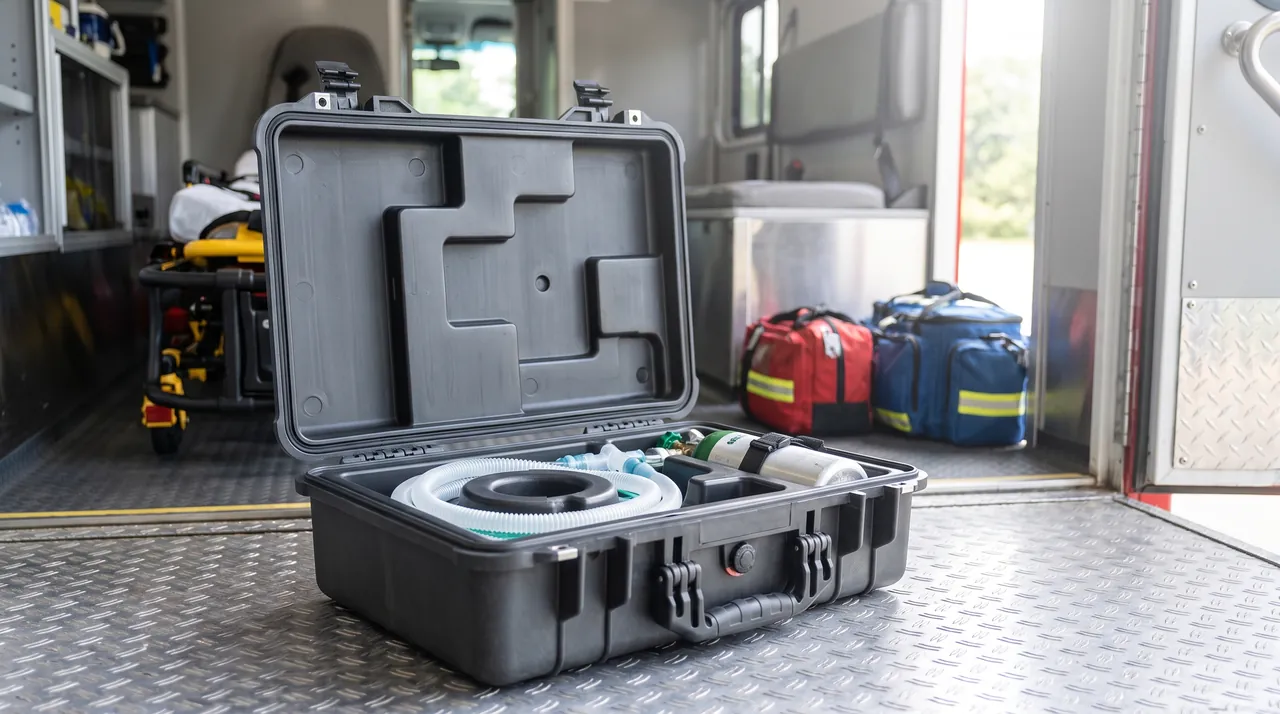
Dairy part transit also applies the IP67 dust-water class, defined by IEC 60529 (national counterpart GB/T 4208) as dust-tight and able to survive 1 meter immersion for 30 minutes. For dairy boxes, IP67's value is blocking container high humidity, salt spray, and dust intrusion, protecting agitator shaft seals and heat-exchanger plates from rusting or harboring bacteria through damp. Key points: a flat box parting plane, a continuous closed-cell foamed-rubber seal strip (Shore hardness 40 to 60 A), and 15% to 30% seal compression after latch closure. On temperature and humidity, dairy spares fear prolonged heat-humidity that breeds mold and microbes; fit a temperature-humidity recorder inside and export the curve on arrival to judge whether the dew-point condensation threshold was crossed. On real routes the box ambient often varies about 20 degrees C from noon to midnight, and whenever the case temperature sits below the dew point, condensate develops, which is why dry packs and tight sealing are applied together. A higher-spec waterproof IP case may carry a pressure-balance valve that absorbs the internal-external pressure shift produced when altitude changes.
Gentle Buffering and Transit Compliance Testing
Most dairy parts have polished surfaces and tight fit precision, so the buffering strategy should be "gentle not hard": prefer enough thickness with moderate-density foam to absorb vibration energy rather than rigid hard pads. Buffer design references GB/T 4857 (Packaging, Basic Tests for Transport Packages) and the ISTA protocol, setting an allowable acceleration threshold by part fragility (experience value 15 to 30 g by finish and precision) and back-calculating liner thickness and density. Common EVA density 30 to 45 kg/m3 gives light-to-medium gentle buffering, while 60 to 80 kg/m3 suits heavier plate stacks. The verification step advises three trials: a fixed-frequency sweep to expose resonance, a random-vibration run that reproduces mixed road and rail duty, and corner-edge-face drop work following ASTM D4169 distribution-cycle clauses with GB/T 4857.5 drop provisions. MIL-STD-810H is usable only as an environmental test-method reference; the product is not military-certified and that caveat must appear on the document. Before a batch ships, JUNZHIJIA can issue transport test report files to the precise standard the client specifies, so equipment makers can drop them into incoming-quality records.
Field Reading of Milk-Acid Corrosion and Passivation Handover
Corrosion on dairy parts rarely happens in one sudden event during transit. It is usually the end result of residual milk soil working inside a sealed, humid case over many days. Lactic acid is far weaker than a mineral acid, yet lactose and protein in milk scale ferment under microbial action and generate acid locally, holding a mildly acidic pH for long periods. Combined with chloride ions, this preferentially attacks the weld heat-affected zone of 304 stainless steel and produces intergranular and pitting corrosion. Because 316L contains molybdenum, its pitting resistance in chloride-bearing media clearly exceeds that of 304, which is why plates, pump casings, and valve bodies that stay in contact with milk are commonly specified in 316L. This single difference explains why two parts shipped under identical conditions arrive with very different surface damage.
Reading condition on arrival takes three practical steps. First, examine color. A uniform gray-white film usually described as white rust points to mild passivation-film damage and can normally be restored by wiping with citric or nitric passivation liquid. Brown rust patches or needle-shaped pits indicate real pitting, which requires grinding, re-passivation, and a wall-thickness check before the part can be released. Second, examine crevices. If milk-scale crust clings inside nozzles, bolt holes, or weld roots, cleaning before packing was incomplete and the parts must be re-washed rather than installed as found. Third, trace the chloride source. Chlorides often originate from residual chlorine-based cleaner or from rinse water that failed conductivity limits, so review the teardown and cleaning record and fix the process instead of blaming the freight leg.
Protection and passivation must be sequenced before the lid closes: clean the part fully, dry it, passivate it, rinse with pure water, dry again, and only then box it. The case interior must hold no chloride-bearing material, and neither VCI paper nor corrosion-inhibiting oil may touch a food-contact face. For long transit or humid routes, add desiccant together with a humidity indicator card so internal relative humidity stays below the level at which condensation begins. To grade how aggressive a transit environment really is, the salt-spray classification logic of GB/T 10125 can set an internal acceptance limit, but salt-spray results only compare relative resistance and cannot be converted directly into field service life. JUNZHIJIA ships a corrosion-reading card with dairy spare programs, listing common rust appearances beside the matching corrective action, so warehouse staff can decide on the spot whether a part can be stocked or must be reworked.
Documentation Accompanying Exported Dairy Spares
For exported dairy equipment spares, the paperwork carries as much risk as the case itself. A single missing material declaration can hold an entire consignment at destination customs or at customer acceptance. The base document set contains a part list with serial numbers, a pairing list for lapped mates such as homogenizer seats and cores that must be marked as pairs, cleaning and passivation records, and a cleanliness declaration signed by the person who packed the case. Wherever a part carries a food-contact face, attach a food-contact material conformity declaration, for example to the GB 4806 series, EU Regulation (EC) No 1935/2004, or the relevant sections of US FDA 21 CFR. Declare the material grade by grade rather than writing one vague line that says food grade, because a customer quality department will send a generic statement straight back for rework.
Packaging and marking deserve the same early attention. If the case uses a wooden outer crate or a wooden pallet, confirm before export that it has been heat-treated or fumigated and marked in line with ISPM 15, so wooden-packaging quarantine never holds the shipment at port. The case itself should be silk-screened with the client drawing number, batch number, and serial number, ideally alongside a QR or barcode, so the receiving warehouse can scan it into stock and trace it through the plant. Where the buyer applies incoming sampling, agree the sampling plan and acceptance rule while the contract is still open, using an AQL approach so that disagreements are settled commercially rather than argued over at the loading dock.
Finally, documents must be independently cross-checkable against the physical goods. Every serial number on the list should match a label found inside the case, and every test summary should state the sample number, the test item, and the date it was performed; paperwork that looks copied from a template but cannot be matched to hardware quickly loses its credibility with auditors. JUNZHIJIA can assemble the export document pack against a client template for dairy spare projects and archive the liner drawings and bill of materials alongside it, which helps the customer file the pack in the equipment technical dossier and keeps cavity and seal specifications consistent when spares are reordered later for the same machine.
FAQ
Q: Why does dairy equipment shipping emphasize sanitary grade rather than ordinary industrial protection? A: Dairy products are nutrient-rich and breed microorganisms easily, so any residual fiber, dust, or corrosion product on a part surface amplifies into a hygiene event in later production, which is why dairy machinery carries a higher hygiene threshold than ordinary food equipment. Ordinary industrial cases often use recycled material or untreated plastic that releases odor, sheds fibers, and traps dirt in seams impossible to clean, failing CIP validation outright. A sanitary case demands box and liner materials that are washable, low-shedding, cleaner-tolerant, and rounded and seamless per the hygiene design of GB 14881 and GMP. When shipping high-finish parts like cheese-vat agitators and heat-exchanger plates, only a sanitary case guarantees direct entry into clean assembly on arrival, sparing repeated flushing and microbial swab tests. Long term, a recyclable washable sanitary case amortizes far below disposable wooden or carton boxes, with controllable state each cycle, forming the baseline investment for dairies to lower compliance risk. Track the case count per route as well, because a program that loses boxes quietly raises cost even when every individual case performs exactly as specified.
Q: Heat-exchanger plates are very thin; how do we avoid crush and deformation in transit? A: Plate heat-exchanger plates are thin stainless stamped parts with shallow corrugations and weak rigidity, most afraid of stacked compression causing permanent deformation and crushed sealing faces, so the correct method is "single flat placement, hard-plate isolation, height-limited stacking." First apply food-grade PE protective film to both sides of each plate, then sandwich it in a 3 to 5 mm hard PP spacer, stack plate by plate with total height within the box-volume limit so the bottom plate bears no excessive pressure. Positioning corner blocks fix the four corners to stop lateral sliding that scratches corrugations. Rubber gaskets go to a separate dark compartment to avoid pressure adhesion. On arrival, check corrugations for press marks and sealing faces for scratches, then reassemble by serial number. JUNZHIJIA uses the spacer idea from the custom foam insert guide for plate stacks, isolating each plate and validating spacer cushioning with GB/T 4857 vibration testing to ensure plates arrive undeformed.
Q: What does CIP compatibility actually mean, can the box be soaked in cleaner? A: CIP compatibility here means the case's materials and structure can withstand the clean-in-place environment common in dairy plants: specifically the box and liner tolerate cleaning media such as NaOH alkaline liquid, nitric or phosphoric passivation liquid, with smooth, wipeable, non-harboring surfaces that can be cleaned and recorded like equipment. To clarify, compatible does not mean long high-temperature soaking: PP, HDPE, and closed-cell EVA resist wipe-disinfection with neutral-to-weak-alkali cleaner at room or warm temperature, but not strong oxidizers or prolonged high-heat soaking, so the box should be wiped disinfected rather than boiled. Parts must be thoroughly cleaned and dried before boxing, and the box must hold no open-pore moisture-absorbing material to avoid milk-acid residue corroding welds. On material choice in seal and shock cases, the dairy scene values cleaner tolerance and weak-acid resistance over mere oil proofing; the sealing principle is shared but material emphasis differs. Document the cleaner concentration and contact time actually used, because a mix that is safe for stainless steel can still dull a printed label over hundreds of cycles.
Q: Homogenizer valve seats and cores are paired parts; how do we prevent mixing batches in transit? A: Homogenizer valve seats and cores are paired-lapped mates with strict mating-face finish; mixing batches directly destroys sealing and atomization, so transit must keep "original pair together, never mixed." First seal the pair in a food-grade PE bag clearly marked with the pairing number and machine number; wrap the hard valve-core face in soft foam to avoid micro-chips from metal impact; thin-coat the plunger with food-grade rust oil then sleeve it; store O-rings and seals in a separate dark compartment, checking on arrival for flattening. The whole group enters with a pairing list for item-by-item arrival verification. For such high-precision mates, density-rebound curve selection in cushion liner selection is critical: too hard transmits vibration, too soft allows shift causing mate-on-mate friction, so match foam strictly to the part fragility value to protect the lapped surfaces. Photograph the pair before packing and archive the image with the packing list, so a later mismatch claim can be settled from records rather than memory.
Q: What is the relation between ISO 14644 and a protective case, should ordinary plants care? A: ISO 14644 was originally a standard grading suspended particle concentration in cleanrooms, and its core "low-particle-release" idea is borrowed for transit-liner shedding control. Although dairy parts are not always assembled in cleanrooms, narrow spaces like heat-exchanger plate corrugations and pump-valve flow paths, once embedded with fibers or particles, resist thorough CIP flushing, so the liner must be low-shedding. The practice is to prefer closed-cell EVA/PE foam, non-porous and non-fibrillating; verify on site with the white-cloth wipe test or a particle-counting idea. Even ordinary dairies without cleanrooms should require the supplier's food-contact conformity statement for the liner and run a simple wipe test at acceptance. When rebound and low shedding must coexist, the EVA foam custom process offers selectable density-hardness recipes; evaluate material by part fragility, no need for cleanroom grade yet hold the low-shedding floor. Keep a baseline white cloth sealed inside the same box for a month and re-test it, because a liner that passes on day one but sheds after heat aging is not a low-shedding liner in real service.
Q: How do we guarantee dairy pump and valve cavities stay clean on arrival? A: Pump and valve flow paths directly decide product hygiene, so internal cleanliness is the arrival acceptance focus, and encapsulation has three steps. Step one, disassemble and clean: use food-grade detergent to remove residual milk scale from cavities, rinse with pure water and dry completely, never seal while damp. Step two, seal: plug inlets and outlets with food-grade silicone or PE caps, sleeve the valve stem, preventing dust and oil mist inhalation in transit. Step three, compartment: pump body and valve body each get an independent small compartment with soft foam against shake, and small parts like valve cores are bagged and labeled. No product-contact face may touch VCI paper or rust oil directly. A humidity card inside lets staff read whether the box met damp conditions. Pump-valve transit relies on reliable toolbox hinge latch seal; the strip must resist cleaners and age slowly, keeping the box mouth dust-tight and moisture-proof so cavities arrive ready for CIP validation.
Q: For OEM equipment makers ordering dairy cases in volume, what support can JUNZHIJIA provide? A: For dairy OEM and equipment suppliers, JUNZHIJIA assembles a document set that spans selection through delivery and is shaped so the client can place it directly into incoming-inspection and quality archives. The set usually holds EVA or PE liner drawings with a bill of materials derived from the customer's 3D part model, a food-contact material conformity statement or third-party test summary, IP67 seal compression and service-life notes, and transit test reports written to the exact standard the client cites, be it GB/T 4857, ISTA, or ASTM D4169. Export consignments can be backed with material declarations and hygiene-declaration documents. Each case may bear a silk-screened client drawing number and serial label for traceability on the floor. Through consulting on model-matched seals and OEM factory selection, JUNZHIJIA advises molded against generic cavities from batch size and part list, helping clients skip needless tooling spend on small runs while still hitting the sanitary grade and milk-acid corrosion-resistance targets dairies demand.
Q: How should the case itself be cleaned inside a dairy plant to meet hygiene requirements? A: A sanitary case earns its grade only when washed like the machinery it carries, since any residue carried over undermines the next load. After each return or arrival, first blow loose dust off the liner with compressed air, then wipe every inner and outer face with a food-grade neutral-to-weak-alkali cleaner and warm water, scrubbing the parting seam and seal groove where biofilm starts. Dry it in a clean room and avoid lengthy hot soaking that speeds plastic aging. Every six months verify the seal strip's compression rebound and change it once it hardens or cracks. Keep the empty case in a dry, shaded, off-floor location with no stray items inside, and crack the lid open during long idle periods. The routine in how to clean a protective case keeps the case in service for years, cutting per-use cost far below disposable packs and leaving the hygiene condition fully traceable and recorded.
Conclusion and Further Reading
Shipping cheese and dairy components safely means holding sanitary grade, milk-acid corrosion resistance, controlled shedding, reusability, and auditable compliance together. A sanitary case, a CIP-compatible liner, a sealed IP67 closure, and cavities built for each part, backed by documented transit testing, let arrived parts enter clean assembly and CIP validation without rework. JUNZHIJIA delivers such programs for dairy equipment makers, from one spare to a full campaign.
Further Reading