

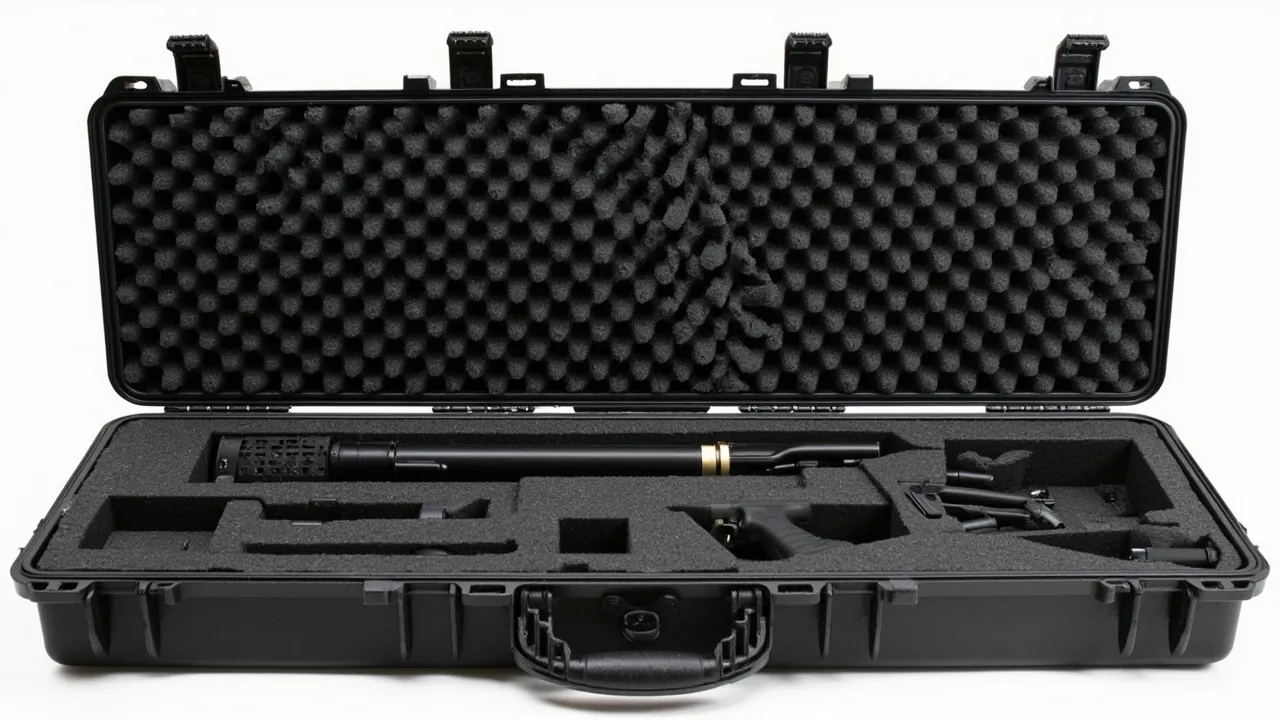
The core conclusion: the requirements for a qualified transport protective case can be reduced to four threads, namely it must latch securely, hold contents firmly, survive the journey, and remain traceable. At the latch level this means multiple mechanical latches combined with an anti accidental opening structure and a padlock provision, with the latch seat reinforced by ribs and metal inserts so that compression force is maintained over time. At the insert level it means cavities shaped to the actual contents, achieving held but not compressed, with closed cell foam absorbing shock and damping vibration. At the shell level it means an engineering plastic body, full perimeter sealing, ribs and stacking locators able to withstand shock, vibration, rain, dust and crush loads in transit. At the management level it means a prepared identification area and record position supporting case numbers, contents lists and responsible person traceability. Miss any one of the four and the protection chain breaks at its weakest link. One point deserves particular emphasis. How well a transport case protects its contents usually depends less on how hard the shell is than on whether the contents really do not move inside. The shell resists external energy; the insert prevents relative movement between the contents and between the contents and the case wall. The two are in series, not alternatives.
Compliance note: this article discusses only the box product technology itself, covering material, latch format, insert fixing, stacking and identification management as general engineering questions. It does not address the manufacture, modification, method of use or purpose of any regulated item, and it does not constitute compliance advice on transport, storage or security management. Any purchase and any use must strictly follow the laws and regulations of the country or region concerned, the applicable industry codes and the requirements of the carrier. Where licensing, declaration, segregation and handover are involved, rely on the formal documents issued by the competent authority and the carrier.
Table of Contents
- Transport Duty Cycle: What External Energy the Case Must Resist
- Requirement One: Latch Security, from Accidental Opening to Latch Seat Structure
- Requirement Two: Insert Fixing, and Why It Decides the Outcome More Than the Shell
- Requirement Three: Three Mainstream Insert Formats and Materials
- Requirement Four: Three Linked Structural Capabilities of Shell, Seal and Stacking
- Requirement Five: Identification, Records and Handover Process Control
- Common Mistakes, an Acceptance Checklist and Maintenance Intervals
- Frequently Asked Questions (FAQ)
- Conclusion
- Further Reading
Transport Duty Cycle: What External Energy the Case Must Resist
Before listing requirements, break the transport duty cycle down. The energy a case absorbs through a full journey falls into five categories, each calling for a different design response.
Shock, a single high energy event
Drops during handling, forward surge under hard braking and impacts when a stack collapses are all single high energy events. They act over a short time with high peak acceleration. The case responds in two ways: the shell spreads the impact energy over a larger area, and the insert compresses to lengthen the deceleration of the contents, lowering peak acceleration.
Vibration, low amplitude over long duration
Long distance road, rail and sea movement produce low amplitude vibration lasting hours or days. Vibration rarely causes immediate failure, but it produces cumulative effects: screws loosen, clamps shift, contact faces wear and insert material fatigues. The answer to vibration is not more hardness but damping, converting vibrational energy into heat rather than letting it circulate through the structure.
Crush and stacking, sustained static load
Multi layer stacking in warehouses and vehicle bodies keeps the lower cases under sustained load from above. Plastics creep, meaning deformation accumulates slowly with time under static load. Stacking therefore requires enough bending stiffness, delivered by ribs rather than by simply adding thickness, plus stacking locators so that upper and lower cases interlock and load travels down the side walls rather than being carried by the lid alone.
Temperature, humidity, rain and dust, the environmental load
Rain, high humidity, dust, salt fog and condensation from day to night temperature swings are environmental loads. They cause no mechanical breakage but produce corrosion, mould and material ageing. The response is full perimeter sealing plus a desiccant position plus weatherable materials.
Accidental opening and unauthorized opening, the human factor
This is the category most often overlooked. Jolting in transit, snagging on a conveyor and knocks during stacking can all pop open a poorly designed latch, while unauthorized opening is a management matter requiring a physical means at the case level. The two requirements are designed separately: accidental opening is prevented by the mechanical self locking of the latch and by recessed placement, while unauthorized opening is addressed by a padlock provision or an integrated lock.
Taken together, the requirements become clear: external energy is handled by the shell and the seal, internal relative movement by the insert, and the human factor by latches and process.
Requirement One: Latch Security, from Accidental Opening to Latch Seat Structure
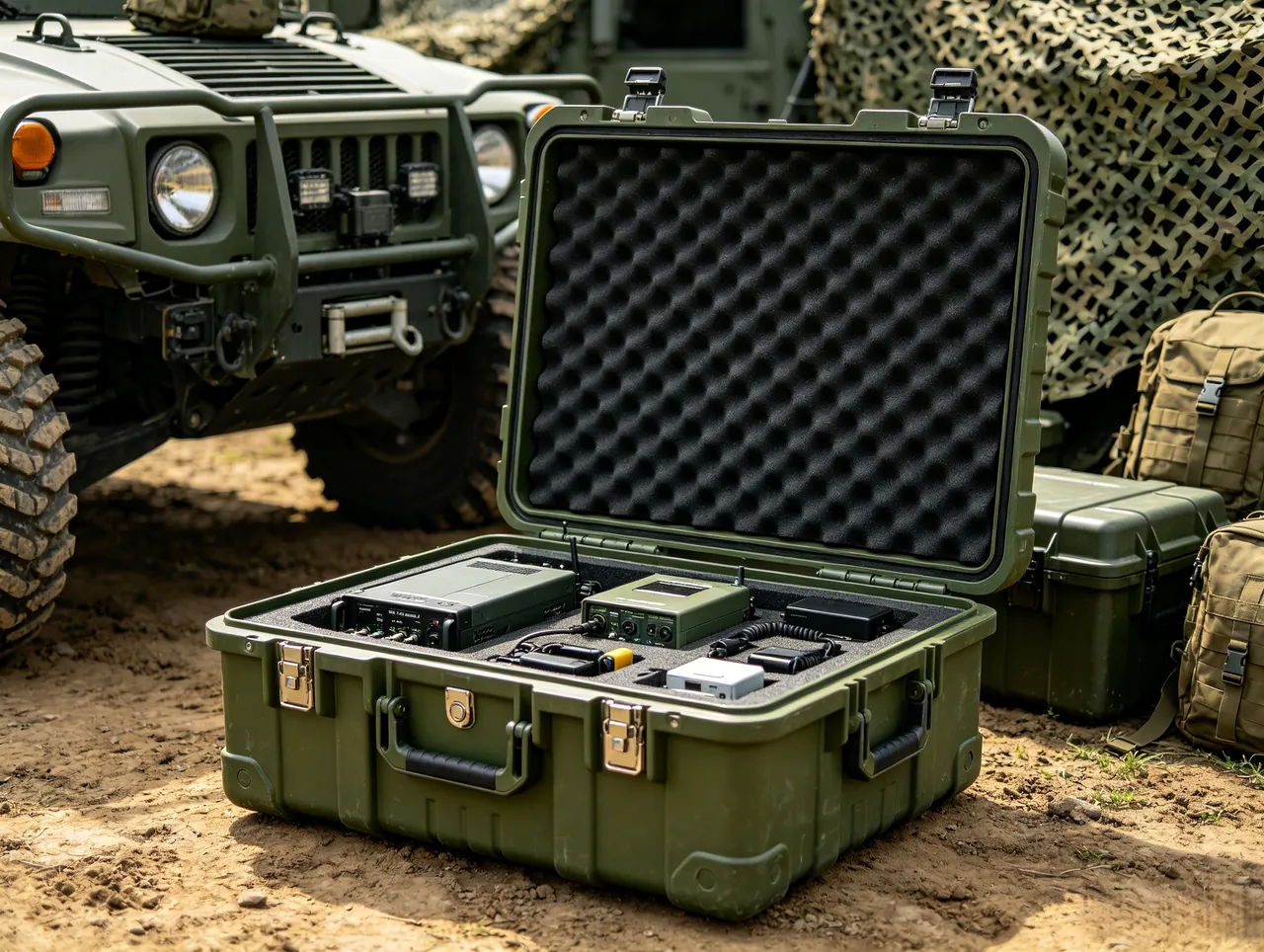
Latching is the most visible and the most underestimated requirement. Many people read having a lock as being able to lock it, but from an engineering standpoint a latch has to do three jobs at once.
Job one: deliver even sealing compression
As noted earlier, sealing depends on compressing the full perimeter gasket to a specified deflection, and the latches are the source of that force. Latch count and distribution are therefore a sealing parameter first and a security parameter second. The rule of thumb: at least two latches on a small case, four on a medium case, six or more on a large one, spaced evenly around the opening, with one at each end of the long side.
Job two: prevent accidental opening in transit
Three causes dominate: a protruding latch being struck, a latch without a self locking feature, and a latch working loose under vibration. The corresponding design responses are:
- Recessed placement. The latch body stays inside the case envelope so that conveyors, vehicle bodies and stacks cannot strike or hook it directly.
- Self locking structure. Closing produces a definite end of travel, audible as a click and felt as a resistance step, so the latch cannot creep open under vibration.
- Double action structure. Two consecutive movements are needed to open, making it markedly more resistant to accidental opening than a single action design and the preferred choice for transport.
Job three: provide a physical means against unauthorized opening
This requires a padlock provision or a lock hole. The design point is that the padlock provision must be part of the case structure, not an accessory added later. The common approach moulds a perforated lug into the latch seat or into the rim of the opening so that a padlock prevents the latch from being depressed. A more complete approach adds a sealing hole through which a single use seal passes, so that opening leaves visible evidence.
Note that any latch is a physical means at the box level. It raises the difficulty of opening and leaves evidence of opening; it does not replace legal and procedural management requirements. Where locking, segregation and handover of regulated contents are involved, follow the laws and regulations of the country or region and the carrier requirements strictly.
Latch seat structure: it decides whether compression lasts
The effect of a latch ultimately depends on what it is anchored to. Plastics creep, so a latch screwed straight into a thin wall will sink over a few months, compression force decays, and sealing and anti accidental opening performance fall together. The correct answer is a triple safeguard:
- Ribs in the latch seat area, spreading the local load over a larger area.
- Moulded in metal inserts. Metal nuts or studs placed in the tool mean the screws engage metal and can be removed and refitted repeatedly without stripping.
- A continuous load path. The latch seat, the side wall and the rim flange form one continuous path, avoiding stress concentration in thin wall areas that produces radial cracks.
For acceptance, close each latch and listen: engagement should be crisp with a clear self locking feel, consistent across the batch. After closing, try prying at the edge with a finger; there should be no perceptible opening. More detail is available in How to Choose a Protective Case Latch.
Requirement Two: Insert Fixing, and Why It Decides the Outcome More Than the Shell
This is the most important section. The real protection delivered by a transport case is determined largely by the insert, not by the shell.
One physical relationship: deceleration distance decides impact force
During an impact, the peak force on the contents is inversely proportional to the distance over which they are brought to a stop. The foam insert supplies that distance, compressing so that the contents decelerate over a longer time and displacement and peak acceleration falls. A hard case with no insert forces the contents to stop within a few millimetres, and the harder the shell, the more directly the shock is transmitted.
Three jobs the insert must do
- Suspend. Continuous cushioning is needed on all sides, including top and bottom; any face touching the wall creates a rigid load path. A buffer thickness of at least 20 to 30 mm in every direction is a reasonable starting point, more for heavy or delicate items.
- Restrain. There should be no perceptible movement inside the cavity. The acceptance test is to close the lid and rock the case gently: nothing should rattle or shift.
- Separate. A dividing wall must keep contents apart so they cannot knock against each other, particularly items of different materials and hardness.
The held but not compressed principle
This is where insert design most often goes wrong. Many believe that the tighter the cavity, the safer the pack. In practice over tightening causes three problems: difficult access, so users lever items out and tear the foam; accelerated compression set, because the foam sits permanently at high compression and loses resilience within months; and possible deformation or coating damage where precision or optical surfaces are held under continuous pressure.
The correct criterion is: once placed, the item does not move when pushed lightly, but it can be removed smoothly. Cavities are generally cut to the largest external dimension plus an assembly clearance of 1 to 3 mm, and for surface sensitive items the contact faces are radiused and relieved.
Centre of gravity control for insert and contents
- Heavy items low. Place the heaviest items in the lower part of the case to lower the centre of gravity and reduce tip over risk during handling and cornering.
- Centred weight. Avoid concentrating all heavy items at one end, which overloads a single handle.
- Symmetric layout. Keep cavities on the left and right broadly symmetrical so the case does not tilt naturally when carried.
Requirement Three: Three Mainstream Insert Formats and Materials
Comparing insert formats
| Format | Process | Conformity | Durability | Cost and lead time | Best suited to |
|---|---|---|---|---|---|
| --- | --- | --- | --- | --- | --- |
| Pick and pluck foam | Pre cut grid, cubes removed on site | Medium, stepped edges | Fair, edges tear with frequent access | Low, ready immediately | Changing contents, configuration still being settled |
| Pre cut foam, die cut or CNC | Knife tool or CNC cutting to a fixed list | High, accurate cavities | Good, one piece | Medium, needs a dimension list | Fixed list, high access frequency |
| Custom moulded insert | Hot press tooling or precision CNC cavity | Highest, can include finger access and layers | Best, controlled cushioning path | Higher, tooling required | Volume runs, standardized configuration |
| Divider system | Interlocking partitions | Low, restraint by partitions | Good, partitions wear well | Low, infinitely re adjustable | Small parts, many variants, frequent change |
Four parameters for material selection
- Density. Higher density absorbs more energy per unit volume but is harder and heavier. Transport inserts typically use medium to high density to balance support and cushioning.
- Closed cell versus open cell. Transport and outdoor duty require closed cell materials such as EVA, EPE, PE and EPP, because open cell materials such as ordinary PU sponge absorb water, which both destroys performance and delivers moisture to the contents.
- Compression set. This is the core indicator of insert life. Material with high set collapses after a while, contents loosen and shock protection fails.
- Damping behaviour. Suppressing sustained vibration depends on damping, not hardness. EVA and EPP differ in their damping behaviour, and long haul transport should treat damping as a selection criterion.
Further material comparison is available in What Foam Types Are Commonly Used Inside Protective Cases? and How to Choose Toolbox Internal Foam.
A three step selection routine
- Is the contents list fixed? If fixed, choose pre cut or moulded; if it changes, choose pick and pluck or dividers.
- How frequent is access? High frequency access calls for one piece pre cut or moulded inserts, avoiding the edge tearing typical of grid foam.
- Is this a volume run? For volume and standardized configuration, tooling cost for a moulded insert is amortized and the long term value is best.
For the parameters involved in a custom insert, see What Factors Matter When Customizing Protective Case Foam? and Case Dividers or Foam: Which Suits Better?.
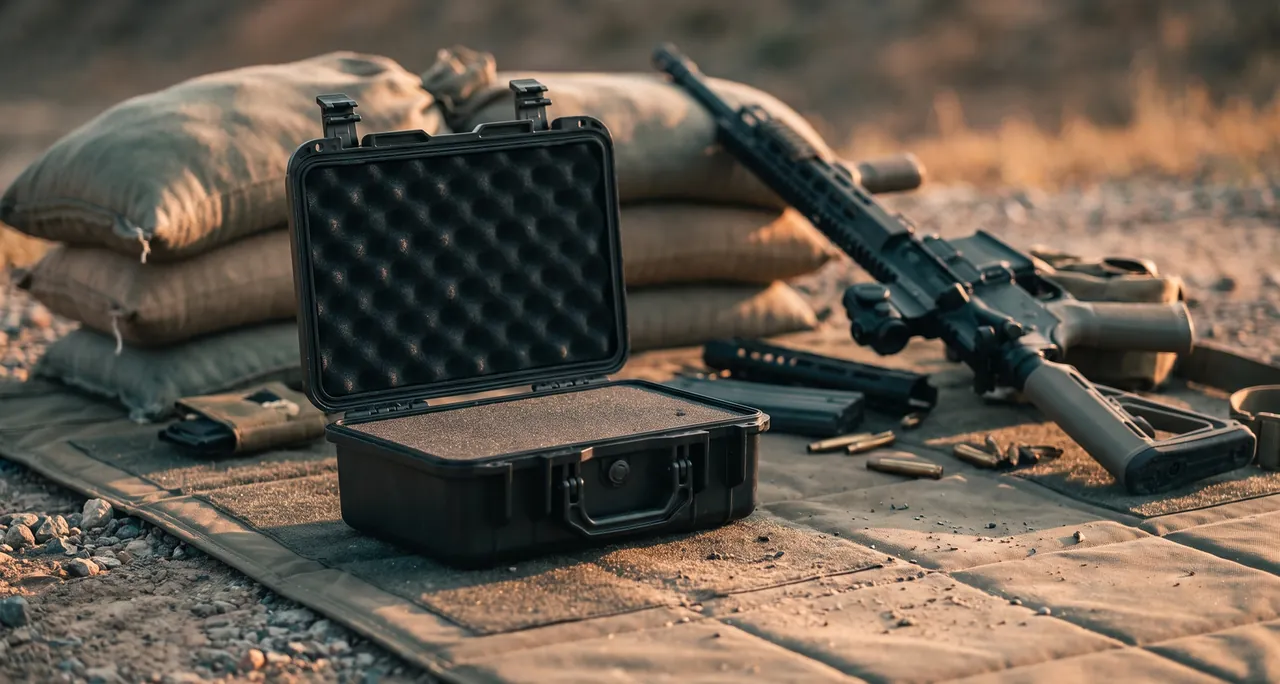
Requirement Four: Three Linked Structural Capabilities of Shell, Seal and Stacking
Beyond insert and latches, the case body itself must satisfy three structural requirements, or the gains from the first two will be consumed by the journey.
Shell: the basis of impact and crush resistance
Engineering plastics, modified PP and ABS and their alloys, are the mainstream shell materials for transport cases. Selection should consider:
- Low temperature toughness. Cold regions, winter transport and cold aircraft holds all amplify embrittlement. Modified PP generally behaves better at low temperature than unmodified general purpose resin.
- Creep resistance. Under stacking and long term locking, the shell must not slowly deform, or the opening goes out of shape and sealing and latching fail together.
- Rib layout. This is the most effective way to raise bending stiffness and the first thing to look at when judging shell design quality.
Sealing: more than keeping water out
In transport, sealing carries three meanings. First, rain and dust protection, so contents stay clean during open air handling and uncovered transport. Second, moisture protection, working with desiccant to hold internal humidity in a safe band and avoid corrosion and mould. Third, condensation control: when a case moves from cold into warmth, sealing slows the entry of humid outside air and buys time for acclimatization.
A full perimeter sealing structure with IP67 capability is a reasonable baseline for transport duty. Remember that an IP rating is a result obtained on a new product under standard test conditions, and long term effectiveness depends on gasket care and latch compression. See What Does IP67 Mean for a Protective Case and Where Does It Apply? and What Does the Sealing Ring on an Outdoor Case Do?.
Where air freight or high altitude road transport is involved, fit a pressure equalization valve so that a pressure differential cannot distort the lid or make it impossible to open. The principle and selection are covered in Why Does an Outdoor Case Need a Pressure Equalization Valve?.
Stacking: let the load travel down the side walls
When cases are stacked, the box must carry the weight above down the side walls to the ground rather than leaving the lid to take it alone. Two design features work together: mating ribs and recesses on the lid top and the base, and enough bending stiffness in the side walls. Anti slip feet on the base additionally reduce wear on the contact surface and improve stability on smooth vehicle floors. See Why Does a Protective Case Need a Stacking Structure? and Why Does a Protective Case Need Anti Slip Feet?.
Requirement Five: Identification, Records and Handover Process Control
Half the value of a transport case lies in physical protection and half in management control.
Three layers of case identification
- Case number. Every case carries a unique number tied to the record. Mark it in a durable position and by a durable process such as laser marking, silkscreen printing or a metal plate, so traceability does not disappear when a paper label wears off.
- Contents list holder. A card holder inside the lid or on an end face carries the contents list and inspection record, so counting does not require opening every case.
- Status marking area. Used for inspection date, responsible person and seal number, allowing quick verification at handover.
Seals and handover process
A single use seal is a low cost, high value management tool: the seal number is recorded on the handover document, and the receiver compares number and integrity to judge whether the case was opened en route. The case needs a prepared sealing hole, positioned near the latch so that opening necessarily breaks the seal.
Minimum record fields
A useful record should carry at least: case number, model and size, insert version, configuration list, responsible person, latest inspection date, gasket and latch condition, and the seal number range in use. These fields turn the question of which case is due for maintenance into something that can be queried rather than remembered.
Common Mistakes, an Acceptance Checklist and Maintenance Intervals
Six frequent mistakes
- Mistake one: judging the shell and ignoring the insert. A hard shell with an empty case is the most common wrong combination; it simply passes the impact straight to the contents.
- Mistake two: believing tighter cavities are better. Over tightening makes access difficult, ages the foam early and puts continuous pressure on precision surfaces. The standard is held but not compressed.
- Mistake three: checking that a latch closes but not what it is mounted on. A latch on a thin wall loses compression within months through creep.
- Mistake four: treating a padlock provision as a later add on. It should be part of the case structure; lugs fitted afterwards break easily.
- Mistake five: neglecting stacking. Cases colliding after sliding in a vehicle body happens more often than drops.
- Mistake six: treating a latch as compliance. A latch is a physical means only; legal duties and procedural requirements follow the laws and regulations of the country or region.
Incoming acceptance checklist
- Shell: no sink marks, flash or colour variation; all eight corners radiused.
- Sealing: after closing, check along the seam that the gasket is compressed evenly with no loose section.
- Latches: test each one for crisp engagement and self locking feel, consistent across the batch; padlock provision and sealing hole present.
- Hinges: open and close ten times with no play and no lid shift.
- Insert: cavity dimensions match the contents; items do not move when pushed lightly yet lift out smoothly; density and resilience meet specification.
- Stacking: stack empty cases and push the top one gently; no sliding, locators engaged.
- Identification: numbering, list holder and status area as specified; print adhesion verified by a rub test.
- Records: create the case record with number, configuration and inspection date.
Suggested maintenance intervals
| Item | Suggested interval | What to check |
|---|---|---|
| --- | --- | --- |
| Gasket | Quarterly or before every important shipment | Cracks, nicks, permanent flattening, tackiness, chalking |
| Latches and padlock provision | Quarterly | Compression consistency, loose screws, stripped inserts |
| Hinges | Quarterly | Play, lid shift, unusual noise |
| Insert | Every six months | Collapse, tearing, density change, whether contents have loosened |
| Stacking locators and feet | Every six months | Locator wear, missing feet |
| Identification and sealing hole | At every handover | Number legible, sealing hole intact |
| Full re inspection | Annually | All of the above, then update the record |
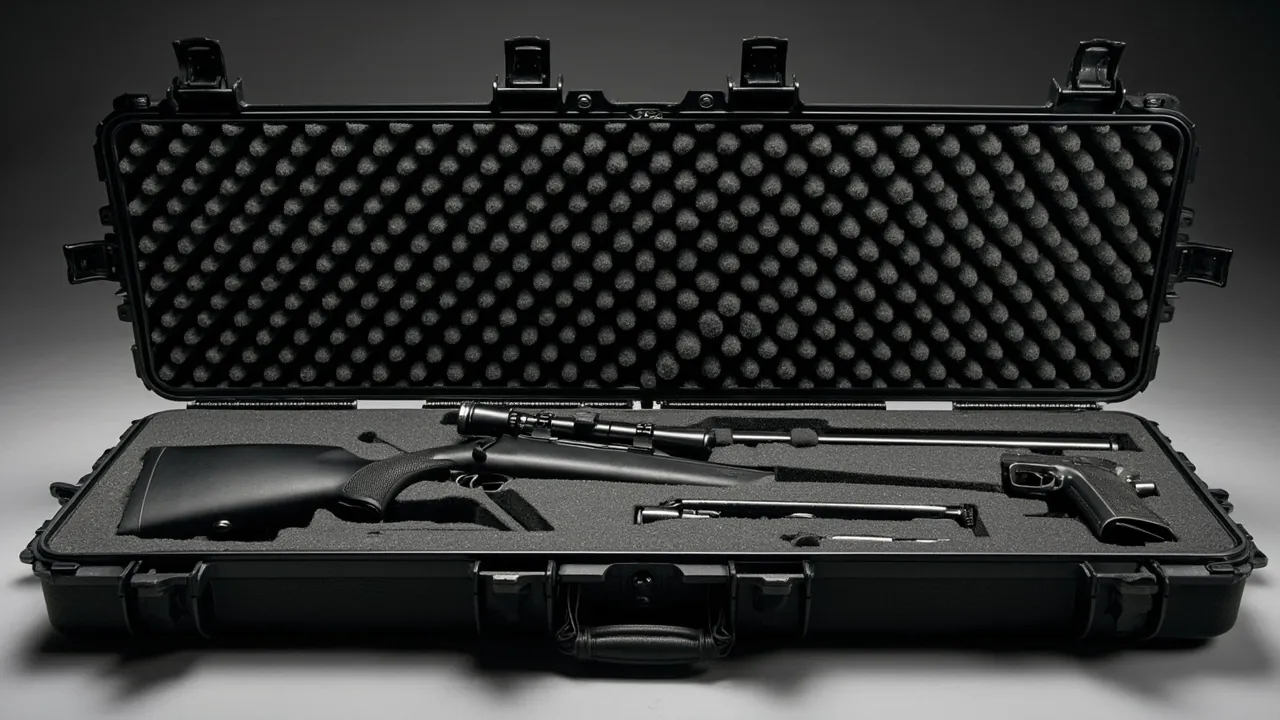
Frequently Asked Questions (FAQ)
Question: What is the most basic latch configuration for a transport protective case? Answer: Three things. First, latch count and distribution must satisfy sealing compression: at least two on a small case, four on a medium case, six or more on a large one, spaced evenly around the opening. Second, latches need a self locking feature and preferably recessed placement so that they cannot be struck or hooked open in transit and stacking. Third, where a physical anti opening means is required, provide a structural padlock provision or sealing hole rather than an accessory added later. The latch seat area must also have ribs and metal inserts so compression force stays stable.
Question: How tight should an insert cavity be to count as correct? Answer: The criterion is held but not compressed. In practice, the item does not move when pushed lightly, but it lifts out smoothly without levering or pulling. Cavities are usually cut to the largest external dimension plus 1 to 3 mm of assembly clearance, with radiused and relieved contact faces for surface sensitive items. Over tightening causes difficult access, accelerated compression set and continuous pressure damage to precision surfaces.
Question: Pick and pluck, pre cut foam or a custom moulded insert? Answer: Decide using three questions: whether the contents list is fixed, how often access happens, and whether this is a volume run. If the list changes often or the configuration is still being settled, pick and pluck is low cost and adjustable on site. If the list is fixed and access is frequent, pre cut or moulded gives better conformity and durability. For volume and standardized configuration, tooling cost for a moulded insert is amortized and long term value is highest. A middle path is a pick and pluck base with a custom pre cut top layer.
Question: Why is a pressure equalization valve emphasized for transport? Answer: Because a sealed case develops a pressure differential whenever internal and external pressure differ. Cargo hold pressure drops during climb, high altitude road transport and large day to night temperature swings all create a differential, showing up as a lid that is hard to open or a case that bulges outward, damaging the gasket, hinges and latches over time. The valve uses a micro porous membrane that passes gas while blocking liquid water and dust, equalizing pressure without losing the sealing rating, so it should be standard wherever air freight, high altitude or wide temperature swings are involved.
Question: What is the difference between a padlock provision and a sealing hole, and are both needed? Answer: They solve different problems. A padlock provision is a reusable physical anti opening means suited to everyday management and routine movement. A sealing hole works with a single use seal, and its core value is that opening leaves evidence, which suits handover verification: the receiver compares the seal number and its integrity to judge whether the case was opened en route. The ideal arrangement provides both, the padlock provision for routine locking and the sealing hole for important handovers.
Question: How can collision risk between cases be reduced on long haul multi case transport? Answer: Four actions. First, choose cases with stacking locators so that ribs and recesses interlock and prevent sliding. Second, check that anti slip feet are complete, improving stability on smooth vehicle floors. Third, stack heavy cases low and light cases high and control the total stack height. Fourth, restrain the load with straps or bulkheads so that cases and vehicle act as one. Before departure, confirm that strap paths do not press directly on the latches.
Question: If the insert collapses with age, must the whole case be replaced? Answer: No. The insert is a replaceable consumable and the shell remains serviceable; simply renew the lining to the original case model and specification. Three points matter when replacing: keep the same density, since too low gives inadequate support and too high shortens cushioning travel; keep the same material system, so a closed cell system is not swapped for open cell sponge; and re measure the cavities, since any change to the contents means new dimensions are needed. This is also the practical value of choosing a manufacturer with insert and lining manufacturing capability.
Conclusion
The requirements for a transport protective case can be condensed into one actionable purchasing and acceptance statement. The latches must compress and must not open: multiple latches evenly distributed, self locking and recessed, with a latch seat carrying ribs and metal inserts, plus a structural padlock provision and sealing hole. The insert must hold without compressing: cavities shaped to the contents, continuous cushioning on all sides, acceptance by the test of no movement under a light push but smooth removal, and a closed cell material chosen with compression set and damping in mind. The shell must survive: engineering plastic with ribs, full perimeter sealing to IP67 capability, stacking locators and anti slip feet, plus a pressure equalization valve for air freight and high altitude. And management must be traceable: case number, contents list holder, status marking area and a record, all four in place. These four sit in series, and a gap in any one leaves a hole in overall protection. The two most commonly underestimated are the insert and the latch seat: the first decides whether the contents really stay still, the second decides whether sealing and anti accidental opening performance still exist a few months later.
To repeat the note: this article discusses only box product technology, covering material, latches, insert fixing, stacking and identification management. It does not address the manufacture, modification or method of use of any regulated item. Any purchase, transport and use must strictly follow the laws and regulations of the country or region and the carrier requirements.
KeXin New Materials (Guangdong) Co., Ltd. was founded in 2014 and is located in Zhongshan, Guangdong, with a factory of about 18000 square meters, more than 80 machines and more than 100 employees, and a range covering more than 150 specifications. Its protective case line is marketed under the JUNZHJIA brand within the global kexinMaterials brand. The line has IP67 capability and can undergo environmental suitability verification with reference to MIL-STD-810H. The company is certified to ISO9001, meets REACH, California Prop 65 and RoHS requirements, holds more than 20 utility model and design patents, and provides one stop OEM and ODM customization from product design and tooling to injection moulding, logo printing and insert manufacturing. For bulk enquiries, specification sheets or customization cooperation, please use the contact page or enquiry form on this site.
Further Reading
- How to Choose a Protective Case Latch
- What Factors Matter When Customizing Protective Case Foam?
- What Foam Types Are Commonly Used Inside Protective Cases?
- Case Dividers or Foam: Which Suits Better?
- What Is Pick and Pluck Foam in a Protective Case?
- Why Does a Protective Case Need a High Strength Hinge?
- How Does an Outdoor Case Improve Equipment Transport Safety?
- Why Does a Protective Case Need a Stacking Structure?
- Why Does a Protective Case Need Anti Slip Feet?
- What Does IP67 Mean for a Protective Case and Where Does It Apply?