

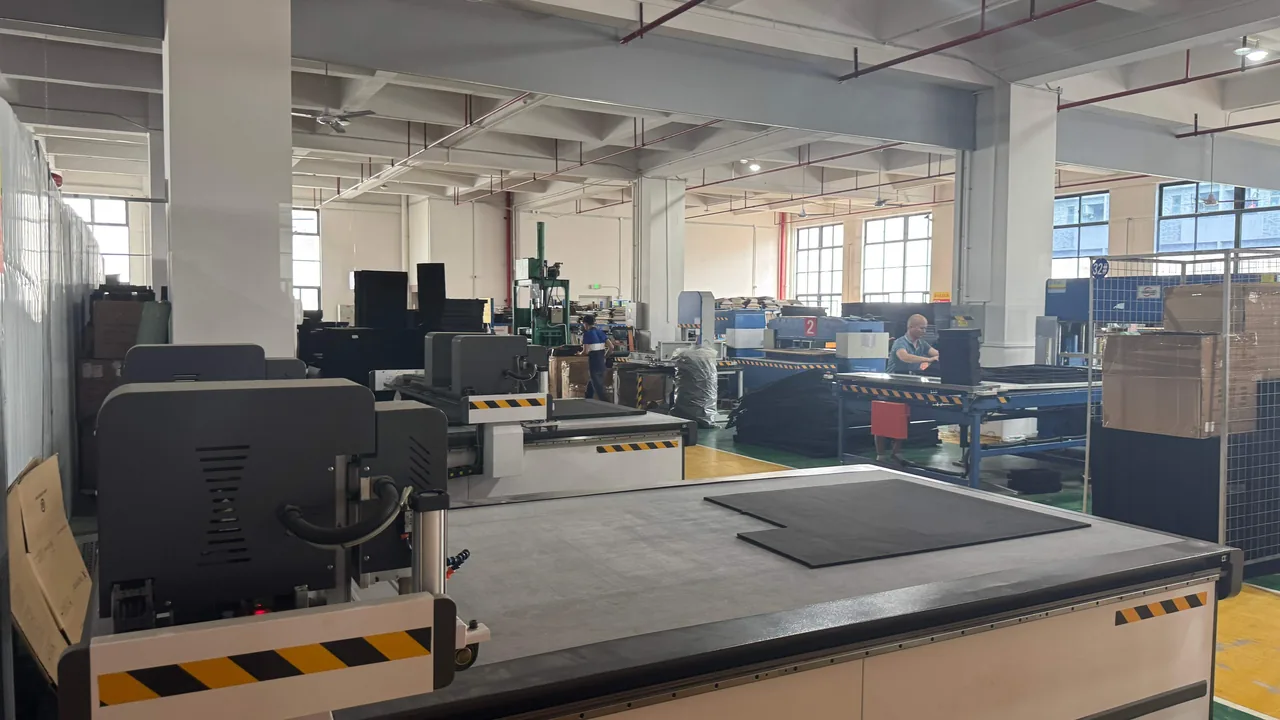
A mushroom farm's logistics chain is far longer than most people assume. Mother cultures are expanded in a sterile room, planting spawn travels to the bagging hall, substrate bags move from the filling line into the sterilizer, then into the inoculation room, then into the spawn-run and fruiting rooms, and finally the harvested mushrooms enter cold storage. What is genuinely valuable along that chain is not the steel frame or the pipework but two states, cleanliness and climate stability, and transport is exactly where both are easiest to destroy. A dented inoculation gun bore no longer supports reliable aseptic work under a laminar-flow hood; a door gasket that takes a permanent set in transit forces replacement of the whole seal; a drifting environmental sensor makes the cultivation parameters of an entire batch unreliable. A mushroom equipment case must therefore solve five problems at once, namely moisture, mould, corrosion, vibration and controllable cleanliness. The JUNZHIJIA approach is to divide the interior by component, match the liner to the risk, and set the sealing class by the transport route.
Mushroom equipment also lives in an environment that is both wet and chemical. Grow-room relative humidity sits at 85 to 95 percent all year, with misting layered on during pinning and fruiting, while room disinfection uses oxidizing agents such as sodium hypochlorite, hydrogen peroxide and peracetic acid applied by wiping, spraying and fumigation. A case must therefore tolerate chemical attack on top of damp. When stainless parts, precision sensors and circuit boards meet water vapour and disinfectant mist together, the resulting faults appear intermittently and are invisible at goods-in. Moving protection requirements forward into purchasing and packing costs far less than repeatedly replacing guns, gaskets and probes in the grow room.
Table of Contents
- Why Mushroom Farms Need Dedicated Equipment Cases
- Inoculation Components: Guns, Hooks and Laminar-Flow Hood Internals
- Sterilization Components: Door Gaskets, Steam Valves and Gauge Sets
- Substrate and Bagging Equipment: Mixing Shafts, Augers and Collars
- Grow-Room Climate Components: Humidifiers, CO2 and Humidity Sensors
- Contamination Control: Hard Constraints from Green Mold Prevention
- Disinfectant Corrosion: Hypochlorite and Peracetic Acid Attack
- Case Materials and Structure: PP, ABS, PC and Rotomolded PE
- Sealing, Pressure Equalization and Condensation
- Cushioning Liners: EPE, EVA, IXPE and Contour Partitioning
- Latches, Hinges, Stacking and In-House Transfer
- Spawn and Germplasm Cold Transport: Low-Temperature Brittleness
- Test Verification, Acceptance Criteria and Selection Checklist
- Frequently Asked Questions FAQ
- Conclusion and Related Reading
Why Mushroom Farms Need Dedicated Equipment Cases
A complete production line divides into five stages. Substrate preparation uses mixers, bag fillers, neck formers and collar applicators. Sterilization uses pressure autoclaves or atmospheric stoves with baskets, racks and steam valves. Inoculation uses laminar-flow hoods, inoculation boxes, guns, hooks, scoops and flame rings. Spawn run and fruiting use humidifiers, high-pressure misting, chillers, carbon dioxide and humidity sensors, and ultraviolet lamps. Harvest uses picking crates, graders, dryers and cold storage. What these items share is that each is light, expensive and accuracy-sensitive, so the loss in transit is rarely a smashed part; it is a part that still works but is no longer accurate.
Rework and scrap cluster into five patterns. First, deformation and corrosion of inoculation tools: thin-wall stainless bores and hooks are pressed by heavy items or rubbed against hard parts, and the resulting scratches are attacked by chloride in disinfectants until they pit. Second, permanent compression set of door gaskets: silicone or EPDM seals stay compressed for weeks, lose rebound, and produce leak paths that are hard to locate. Third, zero drift of sensors: capacitive humidity elements absorb vapour or dust and read systematically high, while dust in the optical path of a CO2 sensor shifts the reading outright. Fourth, ageing and embrittlement of plastics: collars, filter caps and crates exposed to ultraviolet and ozone crack on the first drop. Fifth, moisture damage to electrical parts: control boards, solenoid coils and drives misoperate or fail.
These patterns share one timing signature: they almost never appear on the day of arrival, surfacing only when contamination rates climb, a sterilization cycle fails to hold pressure, or grow-room parameters drift across the board.
Inoculation Components: Guns, Hooks and Laminar-Flow Hood Internals
Inoculation has the least tolerance for error of any step. The window under a laminar-flow hood lasts only minutes, with a flame ring maintaining a local sterile field while operators transfer material between spawn bottles and bags. Once a tool shows burrs, pits or rust it becomes a contamination source, and once the passive film on its surface is broken, no later disinfection fully restores it. Gun bodies are usually 304 or 316 stainless steel, some using aluminium to cut weight, while hooks and scoops are slender stainless rods; some equipment adds quartz tubes or glass windows. What these materials share is weakness against point loads, scratches and chlorides, so the priority is not a thicker shell but converting every contact point into area contact.
| Typical defect | Main cause | Effect on production | Countermeasure |
|---|---|---|---|
| --- | --- | --- | --- |
| Bore deformation | Sharing a compartment with hard parts, stacking load | Restricted flow, uneven inoculation quantity | Vertical contour slot, plastic mandrel in the bore |
| Scratched surface | Burrs in the case, bare metal tools, tight straps | Passive film broken, pitting starts | Soft padding throughout, no metal clamping tools |
| Clogged flame ring | Dust and debris in fine gas ports | Unstable flame, no sterile field | Dust caps, purge and plugging record before packing |
| Damp HEPA filter | High ambient humidity, internal condensate | Filter paper strength and efficiency loss | Foil laminate bag with desiccant, equalization valve |
The hood's HEPA filter must not be squeezed. Filter paper strength depends on the pleated structure, and damp paper loses fibre strength further, so after a temperature cycle that produces condensate a filter can be effectively dead while still looking perfect. Pack it separately, support both ends with rigid caps, limit all four sides with low-density foam, enclose it in a foil laminate bag with desiccant, and fit the case with a hydrophobic equalization valve.
Sterilization Components: Door Gaskets, Steam Valves and Gauge Sets
Mushroom sterilization falls into two families. Pressure autoclaves typically run at 121 to 126 degrees Celsius and 0.10 to 0.15 MPa for spawn and part of the substrate, while atmospheric stoves are large and cheap and handle bulk bags over long cycles. In both cases the packaging threat is not pressure itself but three classes of component whose state is irreversible: door gaskets, valve trim and instruments.
The door gasket is the part most easily damaged in transit. Silicone gaskets are elastic and mature in steam service, but their compression set is strongly affected by temperature and time under load. EPDM resists steam and hot water better and deforms less, which is why many machines use it. PTFE-clad seals have a low friction coefficient and do not hold soil, suiting frequently opened doors, but they cold-flow and must not be bent to a small radius. The worst way to ship a gasket is to leave it mounted on the door: the whole seal stays compressed for weeks and the permanent set never recovers.
| Gasket material | Heat and steam resistance | Set tendency | Transport and storage notes |
|---|---|---|---|
| --- | --- | --- | --- |
| Silicone (VMQ) | Good, proven in steam | Medium, time and temperature dependent | Lay flat or hang at a large radius, avoid light and ozone, never store compressed |
| EPDM | Very good in steam and hot water | Low to medium | Avoid mineral oils and grease-based cleaners |
| PTFE clad | Very wide range | Manifests as cold flow | No small-radius bends, no sharp objects, store flat |
The steam valve set includes safety valves, stop valves, steam traps and fittings, whose shared risks are set-pressure drift and port contamination. A safety valve holds its set pressure through spring preload, which sustained vibration can change, and once the lead seal is broken the valve must be recalibrated. A steam trap has small internal clearances, so scale and packing debris jam the trim, causing poor condensate discharge and wetter steam that degrades sterilization. Gauges need protection from dial impact and stem bending, so support the body, cap the connection and separate them from heavy valve parts. Baskets distort easily when stacked, and a distorted basket topples bags and creates dead zones; the practice described in Agricultural Machinery Parts Cases: Tillage & Harvest Spare-Part Protection applies directly.
Substrate and Bagging Equipment: Mixing Shafts, Augers and Collars
The bagging stage holds the fastest-wearing equipment on the line and the parts most likely to leave hidden defects after transport. Mixer shafts, auger flights, bearing housings, the feed screw and bag-clamp of a filler, the neck former punch and the collar feed track all belong to the class where fit accuracy determines output. A slightly bent flight degrades bag-weight consistency, and a slightly bent shaft makes the bearing run hot and vibrate.
| Component | Sensitive feature | Transport risk | Protection point |
|---|---|---|---|
| --- | --- | --- | --- |
| Mixer main shaft | Slender, runout-sensitive | Bending under unsupported load | Multi-point support, sleeves on keyway, horizontal axis |
| Auger flights | Welded thin plate | Flattening and impact change the pitch | Individually wrapped, dividers, no vertical stacking |
| Filler feed screw | Tight clearance to the barrel | Barrel squeezed oval and jamming | Inner and outer support, cover plate, dust plug |
| Collars and filter caps | Thin-wall plastic | Crushing, UV and ozone ageing | Bag by count, stand upright, light-blocking wrap |
Collars and filter caps are consumables unique to mushroom farming. A filter cap contains a membrane that must pass air but not microorganisms, so a creased or damp membrane lowers filtration efficiency and the bag becomes prone to localized contamination during spawn run. Treat these items as consumables rather than machined parts: bag them by count, leave a little slack so they do not press on one another, stand each bag upright in its own mid-case compartment away from heavy items, and block light, because polypropylene ages faster under combined ultraviolet and ozone exposure.
Grow-Room Climate Components: Humidifiers, CO2 and Humidity Sensors
Fruiting management depends on reproducing climate parameters exactly, and that reproduction is delivered by sensors and actuators. The atomizing disc of an ultrasonic humidifier is a thin piezoelectric ceramic that dislikes impact and scale, while a high-pressure mist nozzle has an orifice measured in tens of microns, so a single dust particle can cause blockage. The humidity-sensing layer of a capacitive sensor must contact vapour but never liquid water. The optical path of a CO2 sensor dislikes dust and sustained vibration, while chillers and fan coils combine precision parts with heavy ones.
| Component | Failure mechanism | Symptom on arrival | Countermeasure |
|---|---|---|---|
| --- | --- | --- | --- |
| Atomizing disc | Shock, surface contamination | Reduced mist, uneven atomization | Separate compartment, foam restraint, protective film |
| Mist nozzle | Particle blockage, body impact | Local dead zone, water volume deviation | Cap the orifice, control cleanliness, never share with metal swarf |
| Humidity sensor | Liquid water, dust, salt deposits | Humidity reading systematically high | Breathable membrane, sealed bag with desiccant |
| CO2 sensor | Vibration displacement, dust in the optical path | Reading drift, slower response | Damping liner, separate compartment, dust barrier, settle before power-up |
One easily overlooked detail is that the sensor and the humidifier belong to the same system yet have opposite packaging needs. The humidifier tolerates moisture and even works in a wet environment, while the humidity probe's sensing element fears liquid water, so sharing a compartment lets residual moisture reach the sensor pack. Group sensors in their own dry compartment with desiccant and an indicator card, and mark the packing list so the crew lets them settle for two hours before power-up. Vibration design for precision sensing elements is treated further in Sensor Transport Cases: Precision Sensor Element Protection.
Contamination Control: Hard Constraints from Green Mold Prevention
Mushroom production is extremely sensitive to contamination. Green mold, orange bread mold, Penicillium and bacterial blotch can spread from a local infection to an entire batch of bags within a short time. The battle is not fought only in the inoculation room and the grow room, because packaging itself is an underestimated contamination pathway. Timber packaging grows mould and sheds particles in damp conditions, paper labels and liners absorb moisture and become mould carriers, and open-cell foam traps dust and spores and cannot be wiped clean.
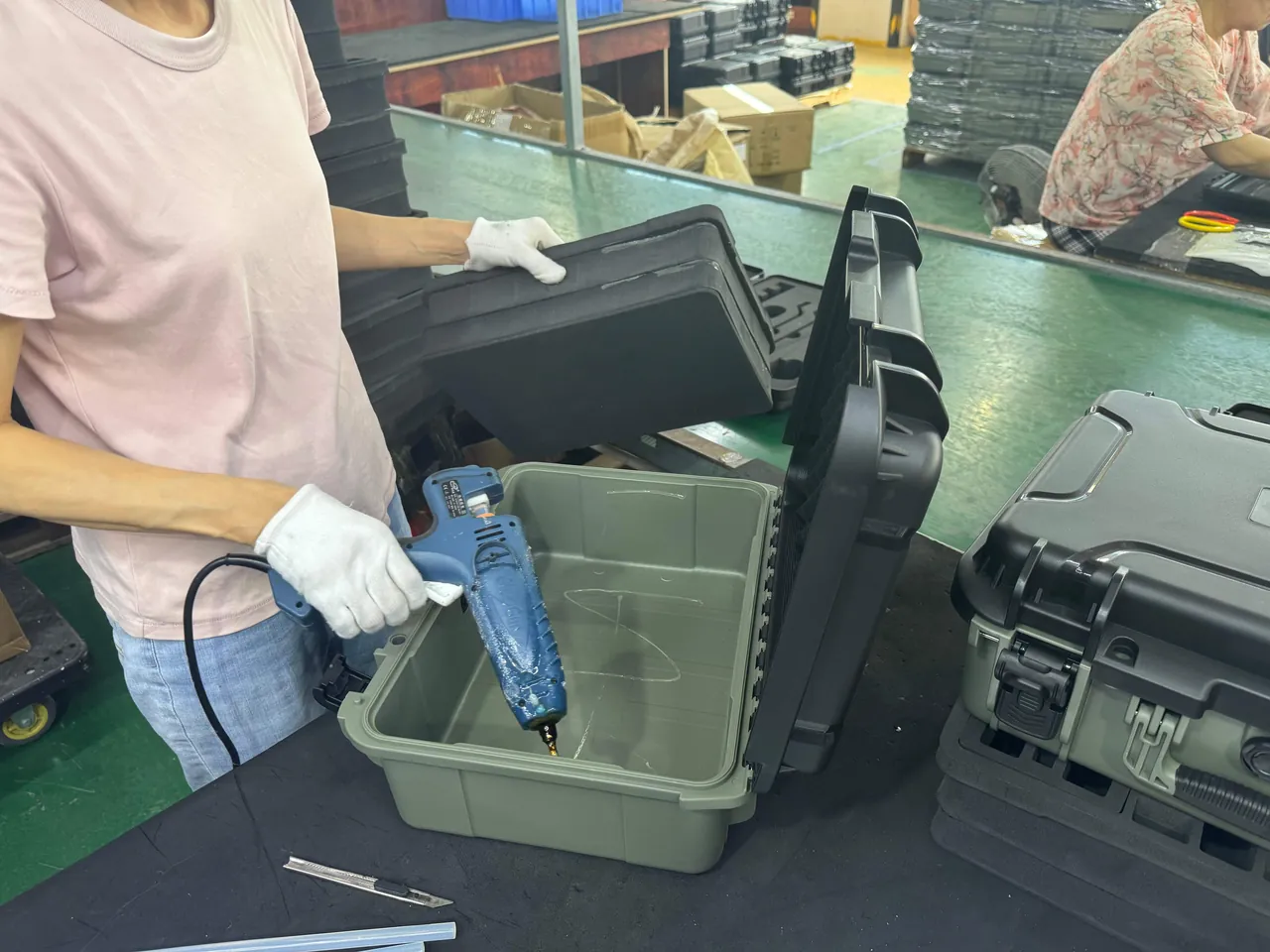
Packaging therefore carries four hard constraints: no shedding, no outgassing, wipeable and disinfectable. Avoid timber and paper, specify closed-cell liners that tolerate wiping with alcohol or dilute disinfectant, use synthetic labels or engraving, and avoid dead corners inside. Where equipment must enter an inoculation or growing room, use double wrapping with peel-open sequencing: complete the inner wrap in a clean environment with desiccant, then peel the outer wrap outside the grow-room door. This mirrors the logic used for cleanroom filters, described in Cleanroom Equipment & Filter Cases: HEPA Filter & Instrument Protection. Mushroom rooms are disinfected far more often than ordinary cleanrooms, so the exterior must also tolerate repeated wiping; the methods and prohibited solvents are covered in How to Clean and Maintain a Protective Case: Cleaning Taboos by Material.
Disinfectant Corrosion: Hypochlorite and Peracetic Acid Attack
Mushroom rooms are commonly disinfected with sodium hypochlorite, hydrogen peroxide, peracetic acid, chlorine dioxide and quaternary ammonium compounds. These agents attack a case along two paths: environmental stress cracking and oxidative ageing in the plastic shell, and chloride pitting and coating destruction in the metal hardware.
Polypropylene and ABS tolerate most disinfectants reasonably well, but at locations with residual internal stress, such as near injection gates and latch roots, prolonged contact with an oxidizing agent under load produces fine cracks that gradually propagate. Polycarbonate is sensitive to alkaline agents and cracks readily. Rotomolded polyethylene resists chemicals well, though prolonged high-concentration peracetic acid still frosts the surface. On the metal side, stainless steel depends on a passive film, and the chloride released by sodium hypochlorite is a classic trigger for pitting, while carbon steel and zinc-plated parts simply rust.
| Medium | PP | ABS | PC | Rotomolded PE | Stainless hardware |
|---|---|---|---|---|---|
| --- | --- | --- | --- | --- | --- |
| Sodium hypochlorite | Good | Fair | Poor | Good | Sensitive to chloride |
| Peracetic acid | Fair | Poor | Poor | Fair | Sensitive |
Three engineering responses follow. Select material by contact frequency, relaxing the requirement for cases used only outside the grow room and specifying chemical-resistant material with 304 or 316 stainless hardware and passivation for frequent indoor use. Reduce exposure by keeping the exterior free of slots that trap residue. Write corrosion resistance into a verification clause, where salt spray testing ranks surface treatments but remains a screening tool only.
Case Materials and Structure: PP, ABS, PC and Rotomolded PE
| Material | Chemical and disinfectant resistance | Impact | Weight and cost | Typical application |
|---|---|---|---|---|
| --- | --- | --- | --- | --- |
| Polypropylene | Good | Medium, brittle when cold | Light, low cost | Ambient grow-room transfer, consumable boxes |
| ABS | Fair to good | Good | Medium | General equipment cases, watch stress cracking |
| Rotomolded PE | Good | Very good, good cold toughness | Heavy, high tooling cost | Large and heavy parts, cold chain, outdoor transfer |
Four structural lessons belong in the technical requirements. Rounded corners beat square ones, because outside radii reduce stress concentration and inside radii are easier to wipe. Ribs must work as a system, with floor and side ribs forming a grid so load travels to the perimeter and stacking load passes through the walls to the floor. Thicker is not automatically better, because added wall thickness brings weight and cooling-shrinkage risk, so thicken load-bearing zones locally. Finally, consider operator access, because grow rooms are cramped and lid angle, handle position and stacking tiers must be checked against the actual passage. Sealing classes are discussed in What Is an IP67 Protective Case? Core Protection and Selection, and sizing trade-offs appear in What Is the Relationship Between Protective-Case Wall Thickness and Strength?.
Sealing, Pressure Equalization and Condensation
A mushroom equipment case faces a demanding combination: a grow room at 85 to 95 percent relative humidity with temperature swinging between 16 and 24 degrees Celsius on one side, and a cold store at 0 to 4 degrees with container interiors above 60 degrees in long-haul transit on the other. The first problem this span creates is not water ingress but condensation and pressure differential.
Sealing class is described by the IP code under IEC 60529, corresponding to GB/T 4208. For mushroom equipment, IP65 suits grow-room transfer and ordinary short haul, while IP67 covers short immersion and suits rain, washdown or long humid sea freight. The rating is nevertheless a property of the whole system, set by gasket material and compression, split-line accuracy, latch clamping distribution and equalization valve sealing, and any single poor fit defeats it. Gasket material must balance temperature, disinfectant and compression set: silicone is stable across a wide range and rebounds well, EPDM resists water and steam better, and FKM has the strongest chemical resistance at higher cost. Whatever the choice, the groove and gasket must give reliable contact without over-compression.
The pressure equalization valve is small and often omitted, yet decisive in humid and cold-chain scenarios. Temperature change creates a pressure differential inside a sealed case; with a large swing the lid becomes hard to open, the gasket flattens, or the seal is momentarily sucked open and leaks. A hydrophobic valve uses a waterproof breathable membrane to equalize pressure slowly while blocking water and dust, and its parameters include airflow, cracking pressure and membrane chemical resistance, as set out in How to Choose a Pressure Equalization Valve for a Protective Case: Breathable Membrane Specifications. Internal humidity control combines desiccant, an indicator card and structural ventilation, with desiccant sized to the free volume and storage period. Because its capacity is finite and long sea freight often exceeds two or three months, the plan must name the replacement point and the responsible person.
Cushioning Liners: EPE, EVA, IXPE and Contour Partitioning
The liner locates and protects the contents while the shell carries the external load, so the two must be designed together. Mushroom equipment varies widely, because guns are slender, sensors are light, baskets are large and mixer shafts are long and heavy, so one liner material across all of them makes no sense.
| Liner material | Cushioning behaviour | Rebound and durability | Cleanliness | Suitable parts |
|---|---|---|---|---|
| --- | --- | --- | --- | --- |
| EPE | Soft, long stroke | Moderate rebound, thins over time | Closed-cell, wipeable, no shedding | Light to medium parts, auxiliary cushioning |
| EVA | Adjustable hardness, good formability | Good rebound, excellent durability | Closed-cell, wipeable, smooth | Precision parts needing contour slots |
| IXPE | Thin and tough, fine surface | Fairly good rebound | High cleanliness, no shedding | Thin-wall parts, strict surface requirements |
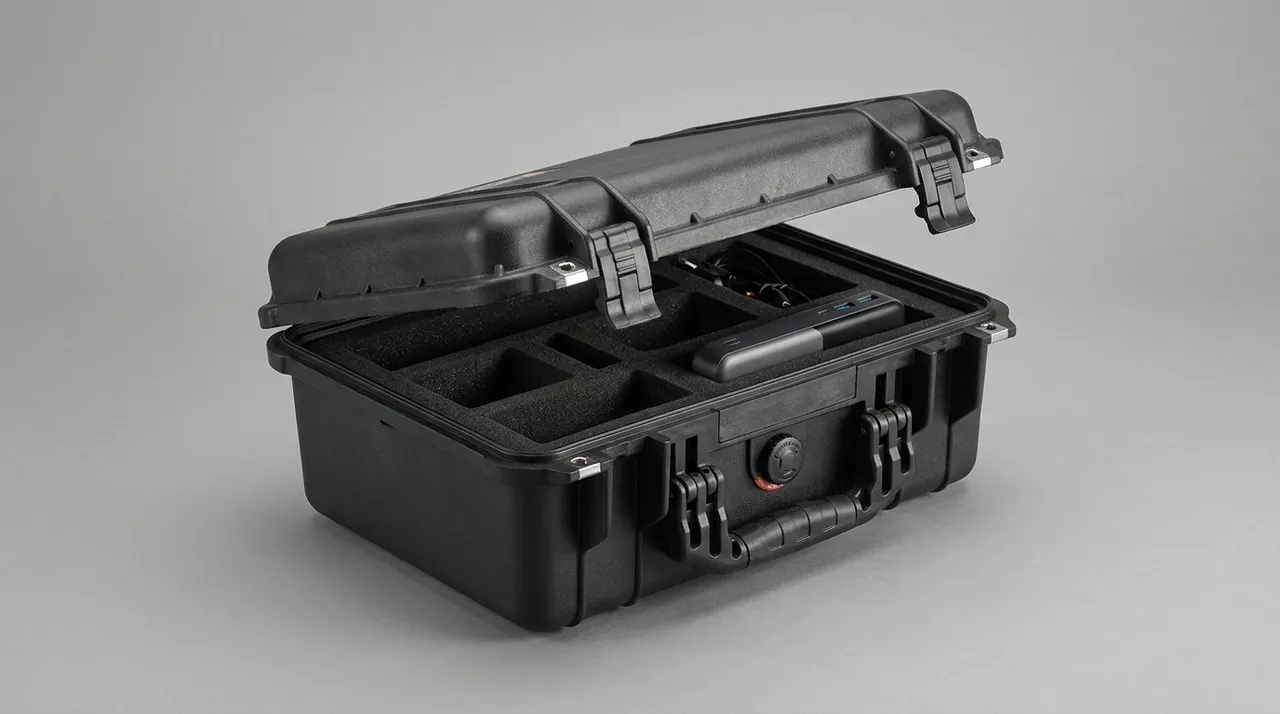
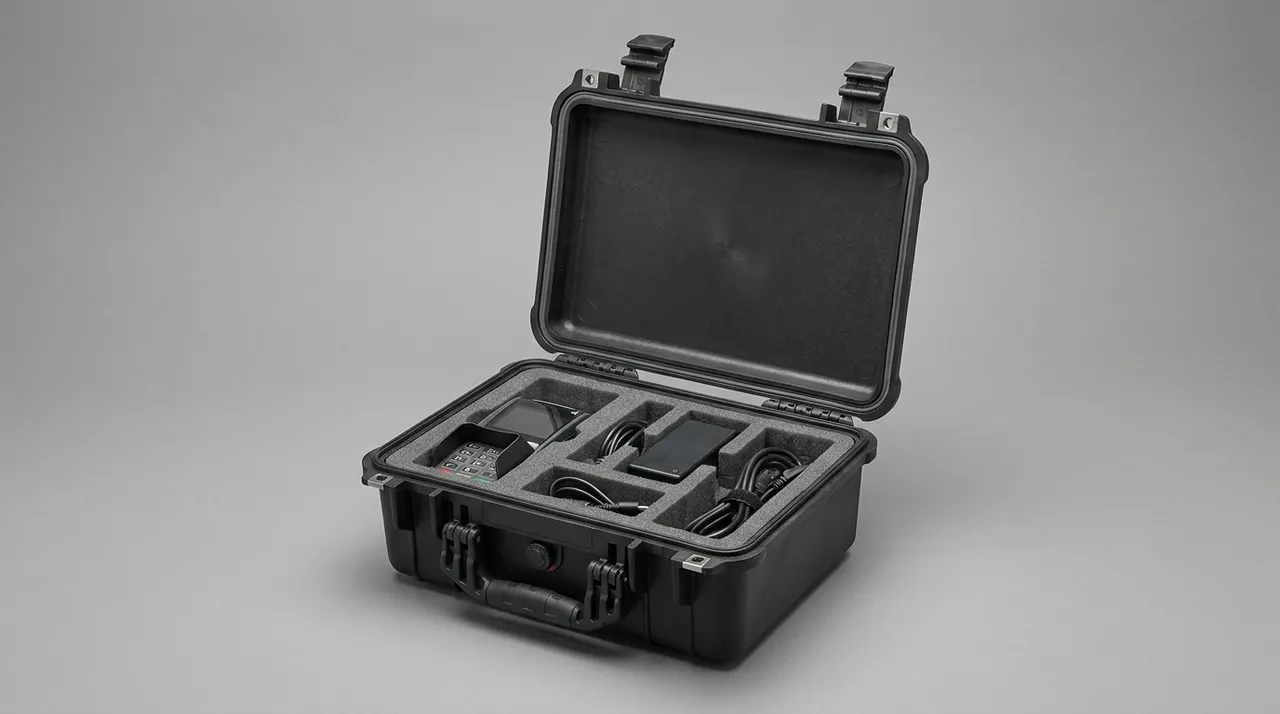
Partitioning is the step most worth investing in. Divide by two dimensions at once, cleanliness class and weight class: inoculation tools and filters go in the cleanest independent compartment, sensors get their own vibration-damped compartment separated from heavy items by at least two foam layers, the door gasket lies flat on its own, and auger flights and long shafts are supported at several points. The payoff is that unpacking needs no searching, and removing one item never removes support from another. Foam comparison is covered in What Foam Should a Protective Case Insert Use? EVA vs EPE vs XPE vs PU Compared. Higher density is not better, because very dense foam absorbs almost no energy and passes shock straight through, so thickness and density should be back-calculated from permitted acceleration and allowable compression.
Latches, Hinges, Stacking and In-House Transfer
The working rhythm of a mushroom site is high-frequency short haul: plant to site, bagging hall to sterilizer, sterilizer to inoculation room, inoculation room to grow room. Distances are short but handling cycles are many, so latch and hinge fatigue life becomes a shorter board than sealing class.
Latch selection has three points. Clamping force must be distributed symmetrically, because a single latch point on a long case leaves the gasket under-compressed far from the latch. Closure must have a positive feel and a feature against accidental opening. On hinges, pin material and fit clearance matter, because a worn pin loosens the lid and reduces gasket compression. Durability design is covered in What Do the Hinge, Latch and Gasket on a Toolbox Actually Do?.
Stacking and transfer belong in the plan as well. The floor should have forklift pockets or pallet slots and the lid should have stacking locators, and the case should be marked with the maximum stacking tiers and unit mass so that a site does not over-stack to save space. For internal transfer, use a trolley with contour supports rather than sliding precision items on a flat cart, because the vibration of rolling is unkind to sensors and optical parts. Where a case cycles between cold store and ambient, rotomolded polyethylene keeps toughness well, while PP and ABS need cautious assessment.
Spawn and Germplasm Cold Transport: Low-Temperature Brittleness
Spawn is the most valuable and most fragile asset a mushroom business holds. Mother, stock and planting spawn need low temperature during short transport to slow metabolism and ageing, while germplasm conservation involves lower temperatures and longer periods. This adds two requirements to a case: materials must not crack when cold, and the internal temperature must be logged and traceable.
| Low-temperature scenario | Temperature band | Main risk | Material and structure advice |
|---|---|---|---|
| --- | --- | --- | --- |
| Short refrigerated spawn transfer | 0 to 8 degrees Celsius | Temperature swing, condensation | Insulated liner with data logger, hydrophobic equalization valve |
| Medium and long cold-chain transfer | 0 to 4 degrees Celsius | Low-temperature brittleness, power loss | Rotomolded PE shell, low-temperature gasket, temperature alarm |
Low-temperature brittleness is a seriously underestimated risk. Polypropylene loses impact toughness near minus 20 degrees Celsius and ABS also embrittles, so a drop can crack rather than deform, whereas rotomolded polyethylene retains toughness. Gaskets need the same assessment, because ordinary silicone hardens when cold and loses compression. Fixing culture tubes deserves particular care: test tubes and cryovials dislike both impact and sway, so use a drilled foam rack with clearance between tubes and cushioning between rack and wall, keep the rack upright and fit a tilt indicator, since a tilted tube can let liquid contaminate the mouth. Graded temperature control for formal germplasm conservation is described in Seed & Germplasm Storage Cases: Low-Temperature Conservation & Transit, and the cold-chain interface for fresh mushrooms appears in Cold-Chain Food Transport Cases: Fresh & Frozen Temperature Control.
Test Verification, Acceptance Criteria and Selection Checklist
Protection cannot be claimed through parameters; it has to be verified by testing. Verification divides into three groups: whole-case transport performance, material and environmental testing, and dimensional re-check of the components themselves. They serve different purposes and cannot substitute for one another.
The basis splits along the same lines. Whole-case performance uses the GB/T 4857 series for drop, stacking, random vibration and shock, together with the ISTA series, while multi-leg combinations can cite ASTM D4169. Dust and water protection is confirmed against the IP code of IEC 60529, corresponding to GB/T 4208, and corrosion schemes are ranked with neutral salt spray testing. Packaging marks follow GB/T 191 and GB/T 13384, and liners and plastic parts are self-assessed for flame retardance against UL94.
It should be stated clearly that acceptance criteria are not limited to whether the case survived: for an inoculation gun measure coaxiality and bore dimensions before and after transport, for a sensor let it settle then verify calibration and compare zero drift, for a door gasket check compression set and surface cracking, and for the liner check displacement, collapse or a rise in moisture content. These criteria belong in the purchase technical agreement with defined items, severity levels and pass limits.
| Selection check item | What to confirm |
|---|---|
| --- | --- |
| Component list | Classification and quantity of tools, filters, gaskets, valve trim, sensors and consumables |
| Cleanliness requirement | Whether the case enters an inoculation or grow room, whether double wrapping is needed |
| Sealing class | Basis for choosing IP65 or IP67, equalization valve specification, lid-opening difficulty |
| Case material | Ranking of chemical resistance, cold toughness, weight and cost |
| Liner and partitioning | Material, density, compartment plan, locating clearance, removal sequence |
Three misconceptions are worth flagging. The first is assuming that a humid environment demands a completely sealed case; without an equalization valve a sealed case develops a pressure differential as temperature changes, which makes opening difficult and can flatten the gasket, so the answer is sealing plus an equalization valve. The second is packing sensors and humidifier parts together, when their moisture requirements are opposite. The third is using a timber case to cut cost, even though timber grows mould in a damp grow room and is usually removed before entering a clean area.
Frequently Asked Questions FAQ
Q: Grow rooms stay above 85 percent humidity. Can an ordinary plastic box cope, and what protection class does a case need?
A: The useful distinction is between a humid environment outside the case and water entering it. Grow-room humidity surrounds the case, so an ordinary box usually stays dry if the lid stays closed; what decides whether it copes is its structure and sealing, because a tote without a gasket admits water during misting, washdown or condensation drip, while a gasketed case keeps its interior as an independent microclimate. On class, IP54 dust and splash protection is adequate for short transfer inside a room with no misting. Where micro-mist, floor washdown or weather exposure occurs, specify IP65. Where rain pooling, short immersion or long humid sea freight is possible, specify IP67. Bear in mind that an IP rating is a property of the whole system, determined by gasket material and compression, split-line accuracy, latch clamping distribution and the pressure equalization valve, so a stated number without structural detail proves nothing. Humid air plus temperature swing also produces condensation and pressure differential, so fit a hydrophobic equalization valve and size the desiccant to the cavity volume rather than guessing.
Q: Inoculation guns and hooks are stainless steel, so why do they rust in transit, and how is it prevented?
A: Stainless steel usually rusts because the passive film was destroyed and chloride or free iron is present. Three paths dominate in transport. The first is mechanical scratching: burred metal parts inside the case, bare metal tools and hard particles in packing materials leave linear scratches where the passive film breaks and pitting begins. The second is iron contamination: carbon steel debris, flakes from zinc-plated parts or even grinding dust landing on the surface forms a micro-cell in damp conditions, producing rust spots around the iron particles that develop into pits. The third is chloride: the sodium hypochlorite, chlorine-based cleaners and chlorine-based label adhesives used in grow rooms attack stainless steel at higher residual stress locations such as formed bends and welds, causing pitting and crevice corrosion. Prevention has to be systematic. Use stainless tooling throughout and deburr every edge. Keep grinding work away from the tools. Switch protective film to polyethylene or polyester so no chlorine-bearing film touches stainless steel. Dry the surface immediately after cleaning so no residue remains.
Q: Why should an autoclave door gasket never be shipped still mounted on the door?
A: Because the dominant failure mode of a gasket is compression set, and shipping it mounted keeps it compressed the entire time. A gasket is designed to seal by compression, but it needs working compression rather than weeks of continuous compression during storage and transport. When silicone or EPDM stays under load with temperature cycling on top, rebound falls away, showing up as local flattening, uneven thickness and fine surface cracks. The change does not leak immediately, but it makes the pressure-hold test lose pressure during the heating ramp, and the leak path is hard to locate, so the seal is usually replaced as a whole. The correct approach is to remove the gasket before dispatch and either lay it flat or hang it at the large radius the maker specifies, avoiding folds, because rebound at a crease never recovers. Keep the storage place out of light and away from ozone sources such as motors and welding work. Spare gaskets shipped with the machine should go into separate sealed bags with desiccant and be marked with batch number and storage life so the site can judge whether they are still in date.
Q: Humidity and CO2 sensors read incorrectly after arrival. What causes the drift?
A: Sensor drift usually has one of three causes, and most are invisible on the day of arrival. The first is moisture in the sensing element: the humidity-sensing layer of a capacitive sensor must contact vapour and never liquid water, so condensate inside the pack or a large temperature swing before opening makes the reading systematically high and slow to recover. The second is contamination of the optical path: a CO2 sensor depends on its internal light path, and dust or packing debris entering it shifts the reading and slows the response, which a visual check at unpacking cannot detect. The third is mechanical displacement: sustained vibration can shift optical parts slightly relative to the detector, showing up as a whole-scale zero offset. The countermeasures are to group sensors in their own dry compartment with desiccant and a humidity indicator card, keep them away from water-bearing components, damp the liner and separate them from heavy items, and note on the packing list that they should settle for two hours before power-up and zero verification.
Q: Grow rooms are disinfected with sodium hypochlorite and peracetic acid. Will that corrode the case and the hardware?
A: Yes, and both corrosion paths run at the same time. For the plastic shell, oxidizing agents accelerate ageing, and at locations with residual stress such as near injection gates and latch roots they trigger environmental stress cracking, which starts as fine cracks and propagates under handling load. Polycarbonate is especially sensitive to alkaline agents and some solvents and cracks readily. Rotomolded polyethylene is broadly more tolerant, though prolonged high-concentration peracetic acid still frosts the surface. For metal hardware, the chloride released by sodium hypochlorite is a classic cause of pitting and crevice corrosion, and the passive film stainless steel relies on is broken down when chloride and residual stress combine, while carbon steel and zinc-plated parts simply rust and lose their coating. Three responses help. Select material by contact frequency, relaxing the requirement for cases used only outside the grow room and specifying more chemical-resistant material plus 304 or 316 stainless steel with passivation for frequent indoor use. Reduce exposure, keeping the exterior free of slots and grooves that trap residue and rinsing and drying after each disinfection.
Q: What should a case for low-temperature spawn and germplasm transport take into account?
A: Two things dominate: low-temperature toughness and traceable temperature. On toughness, polypropylene loses impact strength noticeably near minus 20 degrees Celsius and ABS also embrittles, so a drop can crack them outright, whereas rotomolded polyethylene retains toughness and is the preferred choice for cold-chain and low-temperature scenarios. Gaskets need the same assessment, because ordinary silicone hardens when cold and loses compression, so a low-temperature compound should be specified. On traceability, place a temperature data logger inside the case so the full transport profile can be reconstructed, which is essential when responsibility for spawn viability has to be established. Culture tubes and cryovials must be fixed against sway and tilting: use a drilled foam rack or a purpose-built tube rack, leave clearance between tubes, cushion between rack and wall, keep the whole rack upright and fit a tilt indicator label. For very low temperature transfer, pre-cool the case before loading to avoid frost and condensation, add a dry inner bag with desiccant, and keep ice crystals and condensate away from labels and tube-mouth markings.
Q: Should the liner be EPE or EVA, and how should partitioning be arranged?
A: The deciding factors are component weight, permitted acceleration and surface requirement, not material price. EPE is softer with a long cushioning stroke and low cost, but it thins after repeated compression, so it suits light to medium parts and auxiliary shell cushioning. EVA has adjustable hardness, forms well and beats EPE on rebound and durability, which makes it the main material for contour slots and suits precision parts and inoculation tools. IXPE is thin, tough and finely surfaced, which suits thin-wall parts and components with strict cleanliness demands. Polyurethane foam absorbs energy well but its open-cell structure traps moisture and dust and powders over time, so it is not recommended where equipment is stored for long periods. Partition along two dimensions, cleanliness class and weight class: keep inoculation tools and hood filters in the cleanest independent compartment, give sensors a separate vibration-damped compartment, lay the door gasket flat on its own, support auger flights and long shafts at multiple points, and stand bagged collars and filter caps upright with removal clearance.
Q: What customisation and documentation support does JUNZHIJIA offer for mushroom farming equipment?
A: JUNZHIJIA provides transport protection cases tailored component by component for mushroom production lines. Structurally, we calculate cavity size, wall thickness and reinforcement from the actual use scenario, set base, forklift pockets and lifting points from the maximum stacking tiers and transfer method, and design lid opening angle and handle position against clean-area and grow-room passage dimensions. For liners we supply contour inserts in EPE, EVA and IXPE, with vertical slots for inoculation tools, end-face support for filters, a vibration-damped compartment for sensors, a flat stowage position for door gaskets, and fixed positions for desiccant and indicator cards. On protection we offer IP65 or IP67 sealing, hydrophobic equalization valves, and the clean bags, foil laminate bags and consumable kits needed for double wrapping and peel-open unpacking. Documentation includes packing lists, liner layout drawings, removal sequences, flame-retardance self-assessment and sealing class verification records, and we can coordinate third-party transport testing to the standards a customer specifies. Wholesale, agency and OEM/ODM cooperation are supported, with spare-part kits configured per project.
Conclusion and Related Reading
A mushroom equipment case delivers the cleanliness, accuracy and calibration state that components still need on arrival. Protect that state with sealing, desiccant, contour liners and disciplined unpacking, and write it into purchasing and packing clauses.
Related Reading