

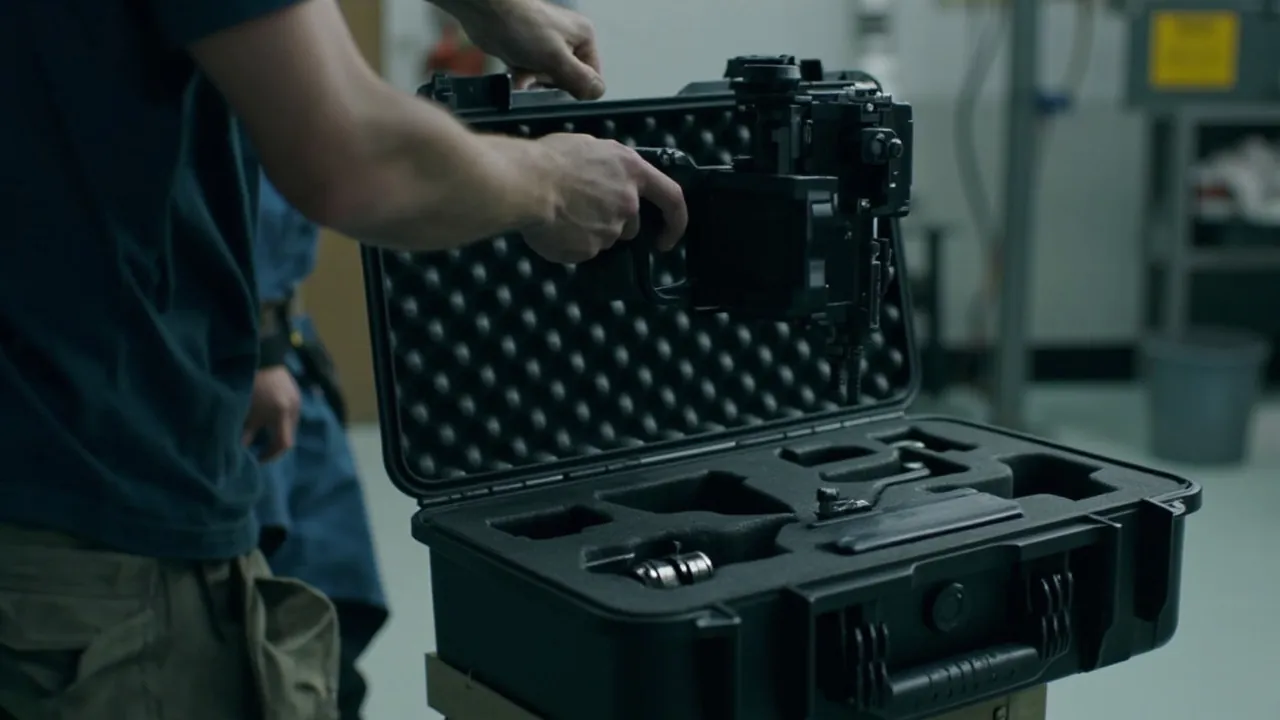
Pallet shuttles and roller conveyors form the backbone of modern high-density warehousing and production-line logistics. Shipping their components shares one common characteristic: the load includes precision electromechanical parts, long structural frame sections, and components that carry stored energy. Shuttle travel wheel sets, lifting mechanisms, laser or ultrasonic distance sensors, battery packs and charging modules; conveyor rollers, sprockets, drive motors, photoelectric switches, and frame sections - damage to any one of these shows up directly as tracking deviation, inaccurate pallet placement, line jams, or a safety incident. The conclusion is clear: pallet shuttle and roller conveyor components require a combined scheme of vibration-damped location, zoned isolation, and compliant packaging for energy-carrying parts, solving mechanical precision, electrical safety, and transport vibration at the same time.
The transport pain points are specific. Rollers are slender bodies of revolution with high-precision galvanized or rubber-coated surfaces, and stacking or bundling them easily damages the roller face; once a dent or out-of-round condition appears, conveyor operation develops periodic runout. A complete shuttle or shuttle body is a heavy mobile machine, and its wheel sets and guide mechanism are vulnerable to shock. A lithium battery pack falls under dangerous goods rules, and non-compliant packaging can block carriage or create a safety incident. This article is written for high-density warehouse integrators, logistics equipment manufacturers, conveyor line suppliers, and project delivery teams. It sets out component grading, case and insert design, vibration isolation schemes, battery packaging compliance points, standard validation methods, and on-site unpacking and reassembly practice - and explains how JUNZHJIA supports custom inserts and OEM/ODM production.
Table of Contents
- 1. Why Shuttle and Conveyor Components Need Vibration-Damped Cases
- 2. Component List and Sensitivity Grading
- 3. Failure Modes: Roller Face Damage, Wheel Wear, Battery Safety and Control ESD
- 4. Size and Weight Boundaries: Long Frame Sections and Whole-Machine Shipping
- 5. Case Structure and Material Selection
- 6. Insert and Vibration Design: Solving the Roller Line-Contact Problem
- 7. Dedicated Packaging and Compliance for Lithium Batteries and Charging Modules
- 8. Sealing and Ingress Protection: An IEC 60529 and GB/T 4208 View
- 9. Rust Prevention, Cleanliness and Packaging Material Compatibility
- 10. Transport Vibration and Shock Validation: GB/T 4857.23 and ISTA
- 11. Stacking, Lifting and Heavy-Load Handling Awareness
- 12. Labelling, Traceability and On-Site Unpacking and Reassembly
- 13. OEM/ODM Customization Workflow and Acceptance Rules
- 14. Maintenance, Reuse and Service Life Management
- Frequently Asked Questions
- Conclusion & Related Reading
1. Why Shuttle and Conveyor Components Need Vibration-Damped Cases
High-density warehousing and production-line logistics equipment operates with high cycle frequency and high positioning accuracy. Shuttles travel back and forth inside racking aisles, and roller conveyors run continuously at high takt. Any geometric deviation introduced in transport is amplified by high-frequency duty.
General industrial packaging solves whether an item gets lost or broken. This equipment class needs the question answered differently: will it track badly, will it rattle, will it jam. The gap appears in three concrete dimensions.
First, roundness and surface integrity of bodies of revolution. Rollers, sprockets, and travel wheels are all rotating parts. Roller face damage or out-of-roundness creates rotational imbalance, which produces periodic vibration and noise during conveying. Once a rubber coating is scored or delaminates, replacement is the only option.
Second, kinematic pair fit and preload. Shuttle wheel load, guide wheel clearance, and lifting cam phase relationships are all factory-set. Sustained vibration can loosen fasteners and change clearances, requiring on-site readjustment.
Third, live components and electronic parts. Lithium battery packs are sensitive to shock, crushing, and short circuit and fall under dangerous goods rules. Control boards, photoelectric switches, and encoders are sensitive to ESD and moisture. The packaging logic for these two families differs fundamentally from that for mechanical parts.
Practical note: the most time-consuming part of conveyor commissioning is usually not installation but finding the source of vibration. Roller face damage and out-of-roundness from transport are common root causes, and troubleshooting costs far more than packaging investment.
For integrators delivering multiple projects in parallel, the parts case also serves as standardised tooling. The same conveyor or shuttle model reuses the same case type and inserts across projects, simplifying storage and circulation. Reuse assessment methods are described in protective case service life and reuse years.
2. Component List and Sensitivity Grading
Score each part on three axes - precision sensitivity, shock fragility, and environmental or safety sensitivity - to build the packing decision basis.
| Component | Typical material / structure | Critical sensitivity | Environment / safety | Recommended protection |
|---|---|---|---|---|
| --- | --- | --- | --- | --- |
| Conveyor roller | Steel, stainless, or rubber coated | Roller face roundness, shaft ends, bearings | Corrosion, contamination | Vertical divider slots plus shaft sleeves |
| Sprocket and chain | Alloy steel | Tooth flanks, links | Corrosion | Separate cavities plus anti-rust paper |
| Drive motor and gearbox | Cast aluminium or iron | Shaft extension, flange register | Moisture | Flange cover plus moisture barrier bag |
| Photoelectric switches and sensors | Electronic components | Lens face, cabling | ESD, moisture | Small-part box plus ESD bag |
| Shuttle body | Steel structure with wheels | Wheel load, guide clearance | Corrosion | Conformal inserts plus body lashing |
| Travel wheel set | Alloy steel or polyurethane | Outer ring roundness, coating | Scoring | Individual slots plus soft bedding |
| Lifting mechanism and cam | Forged or section parts | Phase, mating faces | Corrosion | Combined rigid and soft location |
| Lithium battery pack | Cells plus BMS | Crush, puncture, short circuit | Dangerous goods | Insulating dividers, short-circuit protection, compliant marking |
| Charging module | Electronics plus heat sink | Heat sink face, connectors | ESD, moisture | Isolated cavity plus ESD packaging |
| Frame section and legs | Section steel | Straightness, joint faces | Corrosion | Long-material case plus multi-point support |
| Guide rail and wear strip | Extrusion or engineering plastic | Sliding surfaces | Contamination | Separated cavities plus end guards |
| Control cabinet module | Sheet metal plus electricals | Panel, terminal blocks | Moisture, ESD | Moisture barrier bag plus damped base |
Two conclusions emerge. Rollers and frame sections dominate physical protection, while batteries and control parts dominate safety and compliance. The two families typically need different case types and should not be mixed.
3. Failure Modes: Roller Face Damage, Wheel Wear, Battery Safety and Control ESD
Roller face damage and ovalisation. A roller is a thin-walled slender body of revolution with low radial compression resistance. Stacking pressure or impact against a hard object produces dents in the roller face and, in severe cases, an oval cross-section. Each rotation then produces one impact, resulting in periodic conveyor vibration and noise and accelerated bearing wear.
Shaft end and bearing housing damage. The shaft ends are the mounting fit surfaces. Once struck or deformed, assembly runs eccentric and the belt or chain tracks badly.
Travel wheel and guide wheel damage. Polyurethane-coated wheels can delaminate under shock. Metal wheel outer rings can be indented, disturbing wheel load uniformity.
Fastener loosening and clearance change. Under sustained random vibration, bolts without locking provision can loosen, changing travel wheel clearance or lifting phase and forcing on-site readjustment.
Lithium battery safety incidents. Lithium batteries are sensitive to crushing, puncture, short circuit, and high temperature. Poor packaging can trigger internal short circuit and thermal runaway, which is why these parts must be managed under dangerous goods rules. The underlying logic is discussed in hazmat transport protective case compliance.
ESD damage to control boards and sensors. ESD damage does not always appear immediately; it may only surface when the equipment is powered up, making root-cause tracing difficult.
Safety note: for shuttle components with batteries, the energy state and transport mode must be defined before delivery, and the packaging design must include insulating isolation and short-circuit prevention. This is not optional.
4. Size and Weight Boundaries: Long Frame Sections and Whole-Machine Shipping
Conveyor frame sections. Common lengths of 2,000 to 6,000 mm make these long frame parts. Protect joint end faces and mounting holes above all. Long-material or frame cases with multi-point support are recommended.
Conveyor rollers. Length usually matches frame width, from 500 to 1,400 mm, with diameters from 50 to 110 mm. Pack vertically in divider slots rather than horizontal stacks under load.
Complete shuttle machines. Mass often reaches several hundred kilograms to over one tonne, requiring body lashing, lifting point design, and a damped base.
Battery packs and charging modules. Heavy and classified as dangerous goods, they should use separate cases, separate marking, and separate restraint.
| Component | Size / length | Recommended case | Location method | Vibration requirement |
|---|---|---|---|---|
| --- | --- | --- | --- | --- |
| Frame section | 2-6 m | Long-material frame case | End-face joint location plus multi-point support | Medium |
| Roller | 0.5-1.4 m | Vertical divider slot case | Shaft ends in locating bores | High |
| Complete shuttle | About 1-1.5 m class | Whole-machine case or frame plus lashing | Wheel set stops plus base lashing | High |
| Battery pack | Medium to large | Dedicated dangerous goods case | Rigid stops plus insulating dividers | High |
| Motor and gearbox | Small to medium | Precision parts case | Flange register plus clamping | High |
| Sensor and control module | Small | Isolated cavity case | Conformal slot plus ESD bag | Very high |
5. Case Structure and Material Selection
Rotomoulded HDPE cases. Seamless, impact resistant, low-temperature capable, with mature sealing designs, suited to battery packs and control modules that are sensitive to safety and the environment; they can be configured with waterproof IP-rated structures.
Injection-moulded PP cases. High accuracy and batch consistency, suited to roller divider cases and sensor cases, and convenient for line-side use and stacking.
Aluminium frame cases. High stiffness and demountable, suited to whole machines and frame sections that need frequent on-site unpacking and reassembly.
Steel-timber or steel-plastic hybrids. High load capacity for frame sections and whole machines, with attention to timber moisture content and export phytosanitary compliance.
Selection order: define load and stiffness from mass and length, then define sealing and safety class from the component nature (mechanical, electrical, or battery), then decide repairability from circulation frequency.
6. Insert and Vibration Design: Solving the Roller Line-Contact Problem
Roller packaging has a classic difficulty: contact between a cylindrical surface and a flat surface is essentially line contact, which produces high contact stress, and the roller rolls very easily. Laying rollers on plain foam lets them roll and collide during transport, guaranteeing roller face damage.
Three proven solutions exist.
Option one: vertical divider slots. Build a vertical rack with indexed holes inside the case so rollers stand upright with their shaft ends entering locating bores. Roller faces never touch each other. This gives the highest location accuracy and suits small and medium diameters.
Option two: horizontal half-round slots. Rout half-round slots in foam to match the roller diameter so each roller lies horizontally in its own slot. The half-round profile creates a large contact area and low stress, suiting medium and large diameters.
Option three: shaft-end suspension. Using the shaft ends at both ends, suspend rollers from a perforated rack so the roller face touches nothing at all. This suits rubber-coated and mirror-finish rollers with the highest surface requirements.
Insert material selection must balance hardness, rebound, compression set, and cleanliness; a comparison is given in case foam material comparison. For operations with frequent model changes and many roller diameters, modular replaceable divider plates let one case serve many diameters.
Vibration design points. As a slender body of revolution, a roller has a low first bending natural frequency and couples easily with the low-frequency band of transport vibration. Provide low-stiffness elastic supports beneath the rollers and keep support spacing dense enough - empirically no more than one third of roller length - so the roller does not develop bending resonance under vibration.
7. Dedicated Packaging and Compliance for Lithium Batteries and Charging Modules
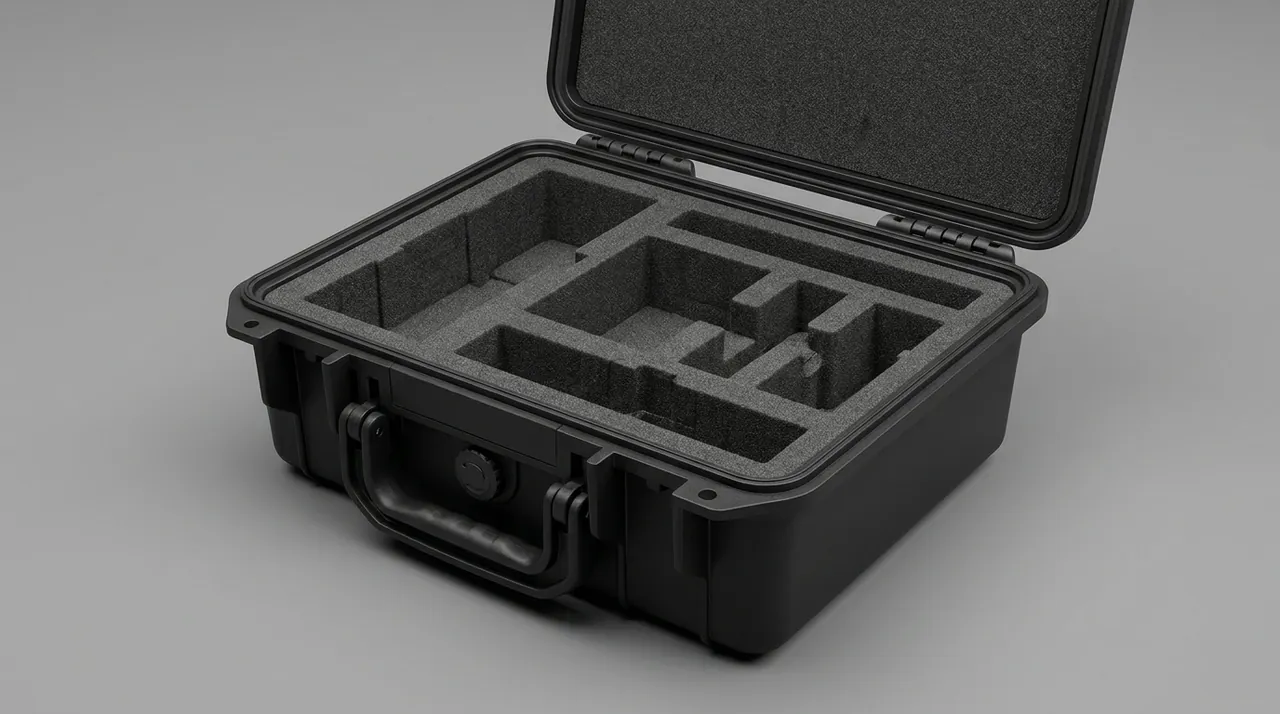
Battery pack packaging is the compliance red line for this equipment class and must be designed separately.
State of charge management. Industry practice is to bring batteries to a reduced state of charge before transport to lower thermal runaway risk. The specific level must follow carrier and destination regulations.
Insulation and short-circuit prevention. Terminals must have insulating sleeves or caps, and insulating dividers must separate battery packs from each other and from metal case parts. No metal items that could bridge terminals may be present in the packaging.
Mechanical protection. Rigid stops limit movement and cushioning layers absorb shock, preventing crushing and puncture. This part shares logic with general mechanical packaging but with stricter requirements.
Thermal considerations. Avoid prolonged high-temperature sun exposure, and design the packaging so local heat accumulation cavities do not form.
Marking and documents. Apply the required dangerous goods markings and supply the necessary accompanying documents. Confirm the specific compliance path with the carrier and a compliance adviser.
| Protection item | Requirement | Implementation |
|---|---|---|
| --- | --- | --- |
| Short-circuit prevention | Terminals not exposed | Insulating sleeve or cap |
| Insulating isolation | Separated from metal parts | Insulating dividers and liners |
| Mechanical protection | Against crush and puncture | Rigid stops plus cushioning |
| Marking | Complete dangerous goods marking | External case marking plus documents |
| Records | Traceable | Batch number and factory test records |
Compliance reminder: lithium battery transport is governed by multiple regulations, and packaging class, marking, and documentation requirements vary by mode (road, sea, air) and destination country. This scheme provides an engineering implementation path; the final compliance determination must be confirmed by the carrier and qualified compliance personnel.
8. Sealing and Ingress Protection: An IEC 60529 and GB/T 4208 View
IEC 60529 and the equivalent national standard GB/T 4208 define how IP ratings are judged. Recommendations for shuttle and conveyor parts cases:
| Scenario | Recommended rating | Notes |
|---|---|---|
| --- | --- | --- |
| In-plant circulation and short haul | IP54 | Dust focus |
| Domestic long-haul road | IP65 | Dust tight plus jet-water resistant |
| Export sea freight and open storage | IP67 | No ingress after temporary immersion |
| Battery pack case | IP67 recommended | Combines moisture and water ingress protection |
The three critical sealing components are the gasket, latches, and hinges. Roller and frame cases are large with long openings, and increased sealing perimeter length significantly raises the difficulty of flatness control. Large cases therefore usually need more latches and a multi-point clamping structure. The relevant structural design is discussed in case hinge and latch sealing structure.
9. Rust Prevention, Cleanliness and Packaging Material Compatibility
Corrosion risk for rollers and frame sections concentrates at shaft ends, bearing housings, mounting holes, and joint end faces. Protection combines anti-rust oil film, VCI vapour-phase protection, and desiccant.
Material compatibility is easily overlooked. Some foam materials retain acidic residues or plasticizers from production, and long-term contact with galvanized or rubber-coated surfaces can cause corrosion or coating ageing. Ask the supplier to declare material composition and compatibility, and run a small-scale contact test where necessary.
Cleanliness control. Roller assembly is extremely sensitive to foreign matter, so insert machining debris must be completely removed. Vacuum-clean CNC-routed foam after cutting and keep the packing area clean.
Cleaning practice is covered in protective case cleaning and care.
10. Transport Vibration and Shock Validation: GB/T 4857.23 and ISTA
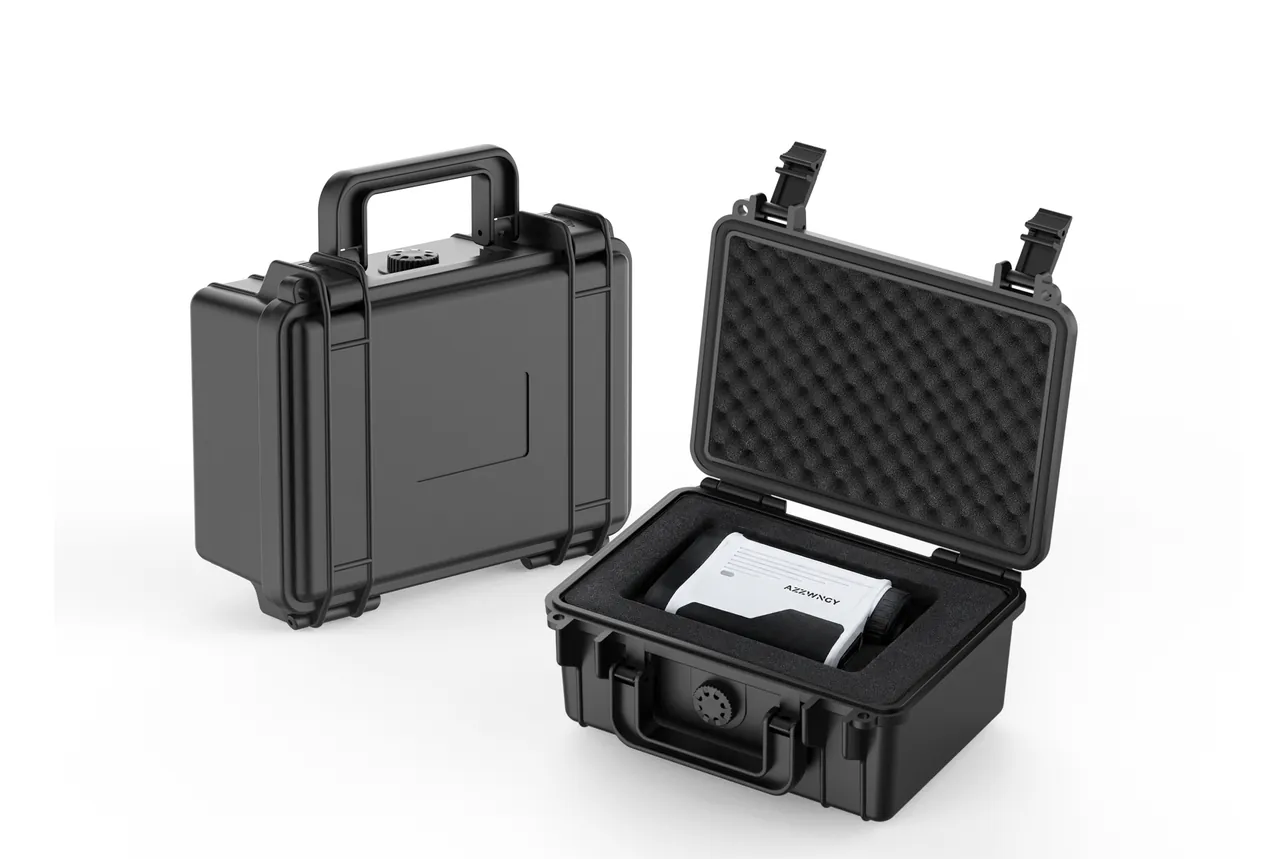
The GB/T 4857 series is the national framework of transport package test methods, and GB/T 4857.23 specifies random vibration methods as the core means of verifying whether inserts and roller location remain stable. The system is explained in GB/T 4857 transport packaging standard explained.
The ISTA series approaches this from the distribution chain with Series 1, 2, 3, and 7 programs. For door-to-door delivery of logistics equipment components, ISTA 3A and 3E are a reasonable reference; see choosing ISTA transport test procedures. For battery-containing components requiring full distribution cycle simulation, see ASTM D4169 distribution cycle testing.
| Test | Reference standard | Example condition | Failure of interest |
|---|---|---|---|
| --- | --- | --- | --- |
| Random vibration | GB/T 4857.23 / ASTM D4728 | Road spectrum scaled to distance | Roller rolling, insert collapse |
| Drop | GB/T 4857.5 / ISTA 1A | Height set by mass | Case cracking, shaft end deformation |
| Stacking | GB/T 4857.3 / GB/T 4857.4 | Load and duration per stack | Case creep, roller compression |
| Conditioning | GB/T 4857.2 | High humidity and temperature cycling | Seal ageing, condensation |
| Combined environmental | MIL-STD-810H (test method reference only; not a military certification) | Temperature, humidity, vibration, shock combined | Combined fitness |
MIL-STD-810H provides a systematic environmental test methodology. It must be stated clearly that citing it is a test method reference only; it does not represent a military certification, nor any defence procurement qualification. Compliant wording is discussed in MIL-STD-810H case environmental testing explained.
11. Stacking, Lifting and Heavy-Load Handling Awareness
Lifting design. Whole-machine and long-material cases should have four symmetric lifting points with rated load marked, with local reinforcement around the points. Battery-containing cases must be lifted without violent swinging to prevent internal battery movement.
Forklift handling. Provide standard fork pockets and mark insertion direction on the side. Very long cases must use twin forks or a spreader.
Stacking limits. Determine stack height from top-surface load capacity and base creep behaviour, and mark it prominently. Battery cases should not be stacked beneath heavy items as a rule.
Personnel protection. Mark a lifting exclusion zone, provide safety footwear and gloves, and appoint a single signal person. Heavy packaging failure is single-event and irreversible.
12. Labelling, Traceability and On-Site Unpacking and Reassembly
The labelling system should cover project number, case number, component name and quantity, gross and net weight, stack limit, lifting marks, tamper evidence, dangerous goods marking (for battery cases), and a prompt to check the shock indicator before opening.
A site unpacking and reassembly procedure should include five steps:
- Check before opening. Inspect the shock indicator and humidity indicator card to determine whether out-of-limit shock or moisture exposure occurred.
- Photograph for evidence. Record before, during, and after opening to form an acceptance record.
- Remove in sequence. Follow the packing list order so parts are not disturbed and knocked together while searching.
- Inspect before reassembly. Check roller faces, shaft ends, wheel sets, terminals, and fastener condition, and stop installation if anything is abnormal.
- Return the empty case. Put inserts, dividers, and fittings back and log them for circulation reuse.
For projects requiring open-case sampling, build the rules on the approach described in custom case acceptance sampling with AQL.
13. OEM/ODM Customization Workflow and Acceptance Rules
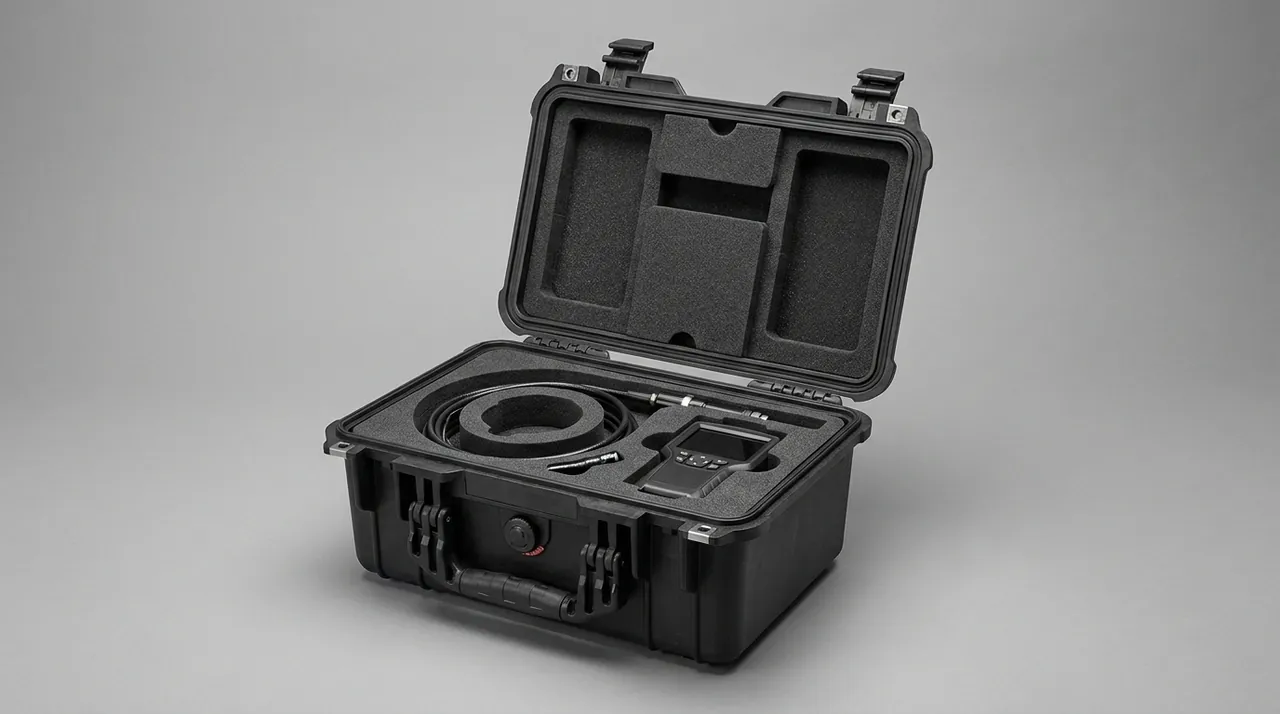
A customization workflow has six stages: requirement intake (component list, drawings or physical scanning, transport route, annual volume), concept design (case structure, insert layering, vibration and insulation design), prototype validation (first-article trial fit, clearance checks, drop and vibration pre-testing as required), pilot run, volume supply with batch traceability, and iteration.
Supplier evaluation should focus on structural design capability, insert machining accuracy, ability to supply test documentation, and delivery reliability. The methodology is set out in how to choose a protective case OEM factory. JUNZHJIA is manufactured by Kexin New Materials (Guangdong) Co., Ltd. and supports high-density warehouse integrators, logistics equipment manufacturers, and OEM/ODM customers with integrated services from structural design and insert customization through volume delivery. Seals and hardware can be matched per model, and supporting test documentation can be provided for tendering and acceptance.
14. Maintenance, Reuse and Service Life Management
Cleaning and maintenance. Wipe inserts with a soft cloth and mild detergent; avoid solvents that attack gaskets. After every reuse cycle, inspect gaskets for compression set and ageing. Periodically lubricate and check hinge and latch fasteners.
Additional checks for battery cases. After each reuse cycle, verify that insulating dividers are intact, terminal sleeves are present, and no metal foreign objects remain inside. Any failure disqualifies the case from battery transport.
Life management. Keep a case-number register recording usage counts and repair history, and set mandatory inspection points by cumulative cycle count. Wheels and trolley handles on wheeled cases are wear parts; configuration and replacement are covered in case wheels and trolley handle configuration.
Frequently Asked Questions
Q: Why can't conveyor rollers be bundled and shipped like ordinary steel tubes?
A: The core reason is that a roller is a precision item, not a structural item. Roller faces are galvanized, stainless, or rubber coated, and surface roughness and roundness directly govern conveying smoothness. Bundled shipping causes three classes of damage. First, roller faces contacting each other or the bundling straps produce dents and scores. Second, stacking pressure ovalises thin-walled rollers, so each rotation produces one impact and the line develops periodic vibration and noise. Third, shaft ends and bearing housings get struck, causing eccentric assembly and tracking deviation. Rollers are also bodies of revolution, and contact between a cylindrical surface and a flat surface is essentially line contact with high stress, while the roller rolls easily, so plain foam cannot restrain it. The correct approach is vertical divider slots, horizontal half-round slots, or shaft-end suspension, so each roller is independently located with its face touching no hard object, with support spacing dense enough to prevent bending resonance.
Q: What special requirements apply to shipping a complete pallet shuttle machine?
A: Whole-machine shipping follows different logic from loose components, with three priorities. First, mass and inertia: shuttle machines often weigh several hundred kilograms or more than a tonne, and acceleration plus road bumps generate large inertial forces, so rigid stops must limit body movement with straps or clamping as secondary restraint - foam wedging alone is not enough. Second, wheel sets and guide mechanisms: these are precision fits with factory-set wheel load and clearance, so the packaging should prevent the wheels from bearing load or receiving side impact, ideally with the body carried on its base frame rather than on its wheels. Third, lifting and handling: the whole-machine case needs symmetric lifting points with rated load marked, and forklift work should use twin forks or a spreader to avoid twisting the case. If batteries are part of the machine, apply dangerous goods insulation and marking requirements. Whole-machine cases are large and heavy, so stack layers must be strictly limited and clearly marked.
Q: How should a lithium battery pack be protected inside a parts case?
A: Battery protection logic differs entirely from mechanical parts, focusing on short-circuit prevention, crush prevention, puncture prevention, and heat. Specific measures include: first, terminals must have insulating sleeves or caps and must never be left bare; second, insulating dividers separate packs from metal case parts and from each other; third, no metal foreign objects that could bridge terminals may be present, so all metal fittings are packed separately; fourth, rigid stops limit movement with a cushioning layer to absorb shock and prevent crushing or puncture; fifth, reduce state of charge before transport per industry practice to lower thermal runaway risk, following carrier and destination regulations; and sixth, apply dangerous goods markings and supply the required documents. Note particularly that lithium battery transport is governed by multiple regulations with different requirements for road, sea, and air modes, so this scheme provides an engineering implementation path while final compliance determination must be confirmed by the carrier and qualified compliance personnel.
Q: How should roller inserts be designed to fix rollers without compressing the roller face?
A: The key is converting line or point contact into large contact area at low contact stress. Three proven options suit different cases. Vertical divider slots use an indexed vertical rack so rollers stand upright with shaft ends entering locating bores and roller faces never touching, giving the highest location accuracy and suiting small to medium diameters. Horizontal half-round slots rout half-round profiles in foam matched to roller diameter so each roller lies in its own slot, where the half-round profile creates a large contact area at low stress, suiting medium to large diameters. Shaft-end suspension uses the shaft ends to hang rollers from a perforated rack so the roller face touches no support at all, suiting rubber-coated and mirror-finish rollers with the highest surface requirements. Whatever the option, keep support points dense - empirically support spacing should not exceed one third of roller length - to avoid first-mode bending resonance under transport vibration. Also verify foam compatibility with rubber coatings.
Q: How should the sealing class be set for roller and frame section cases?
A: Set it from the worst condition in the transport and storage chain. For in-plant circulation and covered short-haul delivery, IP54 is usually sufficient with dust as the main concern. For domestic long-haul road transport, IP65 is recommended for dust tightness and jet-water resistance. For export sea freight, open storage, and quay transfer, IP67 is recommended. If batteries are included, keep the whole case at IP67 or better, combining moisture protection with protection against external water ingress. One engineering difficulty is easily overlooked: roller and frame cases are large with long openings, and increased sealing perimeter length makes flatness control significantly harder. Simply enlarging the gasket section does not solve this; you need more latches, a multi-point clamping structure, and higher case stiffness to control deflection. The judgement basis comes from standardised IEC 60529 and GB/T 4208 testing, but real performance depends on gasket material and compression, latch distribution, and case stiffness acting together, so validate a production case as a complete unit.
Q: What specific harm does transport vibration cause to rollers and shuttle components?
A: Four main categories. First, for slender bodies of revolution such as rollers, the low first bending natural frequency couples easily with the low-frequency band of transport vibration, roughly 5 to 20 Hz, causing rollers to flex and jump inside the case and then strike each other or the case wall. Second, for inserts, sustained vibration causes foam compression fatigue and collapse, opening clearance in previously snug slots so components begin to migrate; damage often occurs in the second half of the journey. Third, for fasteners, bolts without locking provision can loosen, changing shuttle travel wheel clearance or lifting phase and forcing on-site readjustment. Fourth, for cables and connectors, vibration causes pulling and abrasion leading to intermittent contact. For validation, domestic projects should use GB/T 4857.23 random vibration testing, while international projects can reference ASTM D4728 and ISTA Series 3 programs. Where a specific resonance is suspected, GB/T 4857.7 fixed-frequency testing can be used to confirm the amplification factor before changing the insert design.
Q: What procedure should on-site unpacking and reassembly follow?
A: Standardise it into five steps. First, check before opening: inspect the shock indicator for triggering and the humidity indicator card for colour change to determine whether out-of-limit shock or moisture exposure occurred, since this becomes the basis for quality traceability. Second, photograph for evidence: capture before, during, and after opening to create a complete acceptance record that supports responsibility allocation. Third, remove in sequence: strictly follow the packing list so parts are not disturbed and knocked together while searching for one item. Fourth, inspect before reassembly: check roller faces, shaft ends, wheel sets, terminals, and fastener condition item by item, record any abnormality immediately, and stop installation rather than "trying it first." Fifth, return the empty case: put inserts, dividers, straps, and accessories back and log them for reuse in later projects. Where a project requires open-case sampling, build the decision rules on AQL sampling methods. It is also worth photographing the completed repack at the end of a project, so the next site team sees exactly how the case should be loaded.
Q: What extra requirements apply to reusing and managing battery-containing cases?
A: Three main extra requirements. First, dedicated post-reuse inspection: beyond routine case and gasket checks, verify that insulating dividers are intact, terminal sleeves are present, and no metal foreign objects remain inside. Failure on any one item disqualifies the case from battery transport. Second, marking management: battery cases need clearly visible and durable dangerous goods markings, and worn or missing markings must be replaced immediately rather than transporting anyway. Third, segregated storage and transport: battery cases should not be stacked beneath other heavy items, should be transported without violent swinging or prolonged high-temperature sun exposure, and should not be stowed in the same compartment as combustible materials. In addition, flag battery cases separately in the cumulative cycle register so mandatory inspections can be scheduled on a stricter interval. Note that lithium battery packaging and transport requirements are governed by multiple national regulations that change over time, so management procedures should stay synchronised with the carrier.
Conclusion & Related Reading
Protecting pallet shuttle and roller conveyor components in transit means solving three things at once: locking in the precision of bodies of revolution, safeguarding components that carry stored energy, and controlling the handling risk of heavy-load units. Roller face roundness, shaft end fit, wheel set clearance, and terminal insulation are assets that cannot be restored cheaply on site. Get five things right - separated cavity location, vibration-damped support, controlled sealing, rust and contamination prevention, and battery compliance - and the parts case stops being a cost line and becomes both a delivery quality assurance and a safety compliance safeguard.
The selection path condenses to one sentence: first split the design by component nature (mechanical, electrical, battery), then define sealing and vibration class from the transport route, and finally define labelling and reassembly procedure from the way the project is organised. For high-density warehouse integrators and logistics equipment manufacturers needing custom inserts, OEM/ODM volume supply, or supporting test documentation, JUNZHJIA provides integrated support from structural design through volume delivery.
Related Reading