

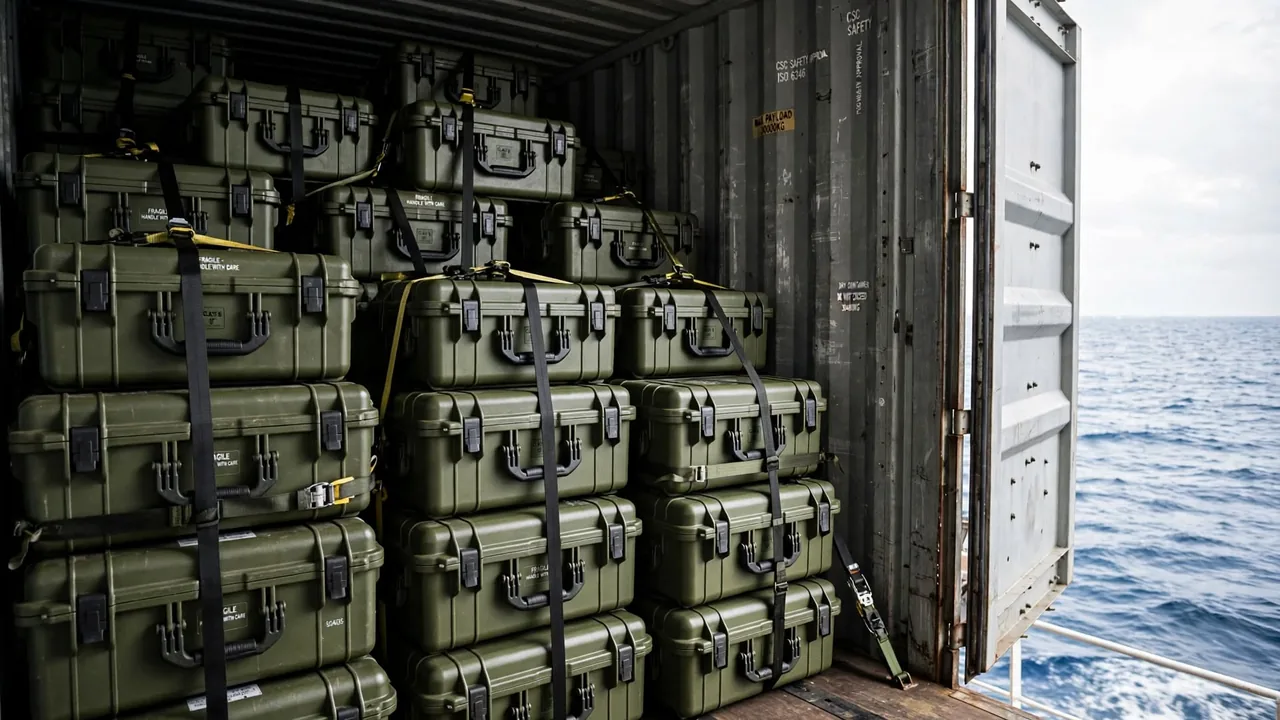
A port terminal is a heavy-duty site where salt spray, high humidity, mechanical shock and constant handling overlap for years at a time. Terminal maintenance crews, port authorities and shipping agents need to move torque wrenches, hydraulic tools, thickness gauges, sensors, seals and spare fittings between berths, quay cranes and gate houses every single day. In a terminal where salt spray, humidity and heavy impact coexist, the operation case must unify corrosion resistance, IP67 sealing and heavy-load structure into one package to keep quayside tools and spares reliably stored and transported. This article walks through material choice, sealing, reinforcement, damping, stacking, latches, certification and maintenance, and gives actionable points for specification and procurement.
1. Application Scenarios and Positioning of the Terminal Case
A port terminal operation case is a heavy-duty protective container built for quayside and storage-yard conditions, and it is fundamentally different from an ordinary plastic toolbox used in an office or workshop. A common toolbox focuses on basic organization, while an operation case must simultaneously meet four demands: resistance to salt corrosion, protection against water immersion, tolerance of drops, damping of vibration and the ability to stack in multiple layers. At container terminals, bulk cargo wharves, liquid chemical berths and cruise piers, crews face air carrying sea-salt particles, condensation from day-night temperature swings, continuous vibration from quay crane and gantry operation, and collision risk during forklift and trailer transfer.
From the user perspective, a port authority mechanical team uses the case to house large torque tools and hydraulic jack spares; a terminal maintenance crew loads it with gate sensors, limit switches and cable joints; a shipping agent often packs onboard spares and measuring instruments into such cases to rotate with containers during customs clearance and transshipment. In other words, this case stores and transports quayside tools, sensors and spare fittings for terminal maintenance crews moving between berths, which is the most typical use description.
Compared with a broader marine port protection solution, the operation case emphasizes single-workstation portability and stackability; compared with a quay crane parts case, it covers multi-trade shared tools and spares rather than one large component. Defining this positioning is the prerequisite for later material and configuration choices.
At the project stage, list the items to be stored first: dimensions, weight, whether the shape has sharp corners, and whether the item fears moisture or salt, then determine internal clear dimensions, load ceiling and liner form. Many field failures are not caused by a weak case itself but by unclear early lists, leaving the liner unable to secure tools so they knock together in transit. Treating "list first, case second" as a process rule sharply reduces later rework and loss.
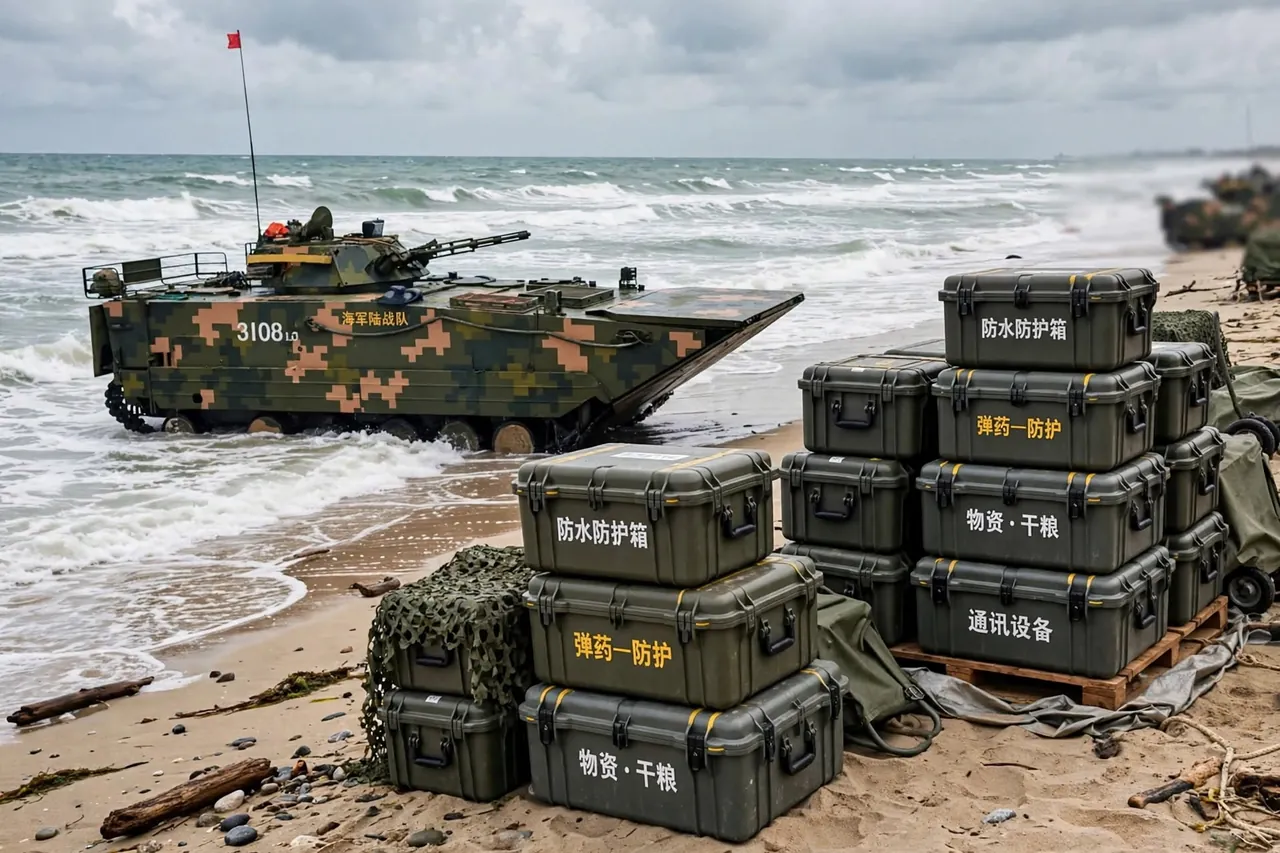
2. Salt Spray Corrosion Mechanism and Material Logic
The core of salt spray corrosion is the chloride ion. Sodium chloride particles carried by sea wind settle on metal surfaces and, under moist conditions, form an electrolyte film. Chloride ions are small and highly penetrative; they destroy the passive film on stainless steel and aluminum alloys, inducing pitting and crevice corrosion. The terminal site also has high humidity and day-night temperature differences, so nighttime condensation keeps surfaces wet for long periods and further amplifies the corrosion rate. If exposed metal parts of a case are not protected, visible rust spots can appear within a single sailing season.
The first principle of material selection is therefore to minimize the area where "active metal directly contacts salt spray." An engineering plastic shell itself is non-conductive and does not rust, which is an effective way to push corrosion risk outward; even when a metal shell is adopted, surface treatment such as powder coating, electrophoretic deposition or dacromet, or selection of high-molybdenum stainless steel such as 316L, is needed to improve pitting resistance. Hinges, latch tongues and rivets are small but often the first points where corrosion breaks through, so they must be included in the corrosion-resistant consideration at the material stage.
It must be stressed that corrosion resistance does not mean "never rusts," but rather keeping the corrosion rate within an acceptable range over the designed service life. The industry typically quantifies this ability by the hours of continuous salt spray testing, which is expanded in section ten. From an engineering view, material selection should consider base material resistance, surface treatment and sealing isolation as three lines of defense, rather than relying on a single method.
For port procurement, "maintainability" should also enter the material logic: a case whose surface can be locally repaired, whose latch can be replaced alone, and whose seal can be re-pressed, often has a lower total life-cycle cost than a once-only corrosion-resistant but unmaintainable solution. This is also the philosophical divide between a heavy-duty operation case and a cheap toolbox.
3. Coating versus Stainless Steel Material Comparison
On the material route, port operation cases commonly fall into three categories: engineering plastics (mainly copolymer PP, ABS and PC blends), surface-coated carbon steel, and stainless steel (304 and 316L). Each has its boundary of application, and there is no absolute superiority.
Engineering plastic cases are light, inherently non-rusting, insulating and free from electrochemical corrosion with salt spray. With an anti-ultraviolet coating they can be used long term in open storage yards, making them the first choice for most terminal tool storage. Their weakness is a lower rigidity ceiling than metal, and under extreme heavy loads the deformation must be compensated by reinforcement ribs.
Stainless steel cases are best in 316L; the molybdenum element improves resistance to chloride pitting, suiting wharves with very heavy salt spray and those needing to carry heavy hydraulic tools. 304 costs less but resists pitting worse than 316L. The price of stainless is greater weight and higher cost, and if it contacts other active metals in seawater it can still suffer galvanic corrosion, so insulating pads are needed during installation.
Surface-coated carbon steel sits between the two, isolating salt spray through a thick-film epoxy or polyurea coating, but once the coating is damaged by transport knocks, the damage point quickly becomes a corrosion source, so the requirement for coating integrity maintenance is higher. For the trade-off between stainless and plastic outdoor toolboxes, a systematic comparison is available for reference.
Selection advice: judge with a matrix of total tool weight, budget and handling frequency. Light-to-medium tools with high-frequency rotation choose engineering plastic; heavy hydraulic tools with low-frequency but high-load choose stainless; medium load with both cost pressure and some corrosion requirement can consider coated carbon steel with a periodic recoating system. Any choice should put "field maintainability" on equal footing with initial cost.
4. Sealing Structure and Achieving IP67 Protection
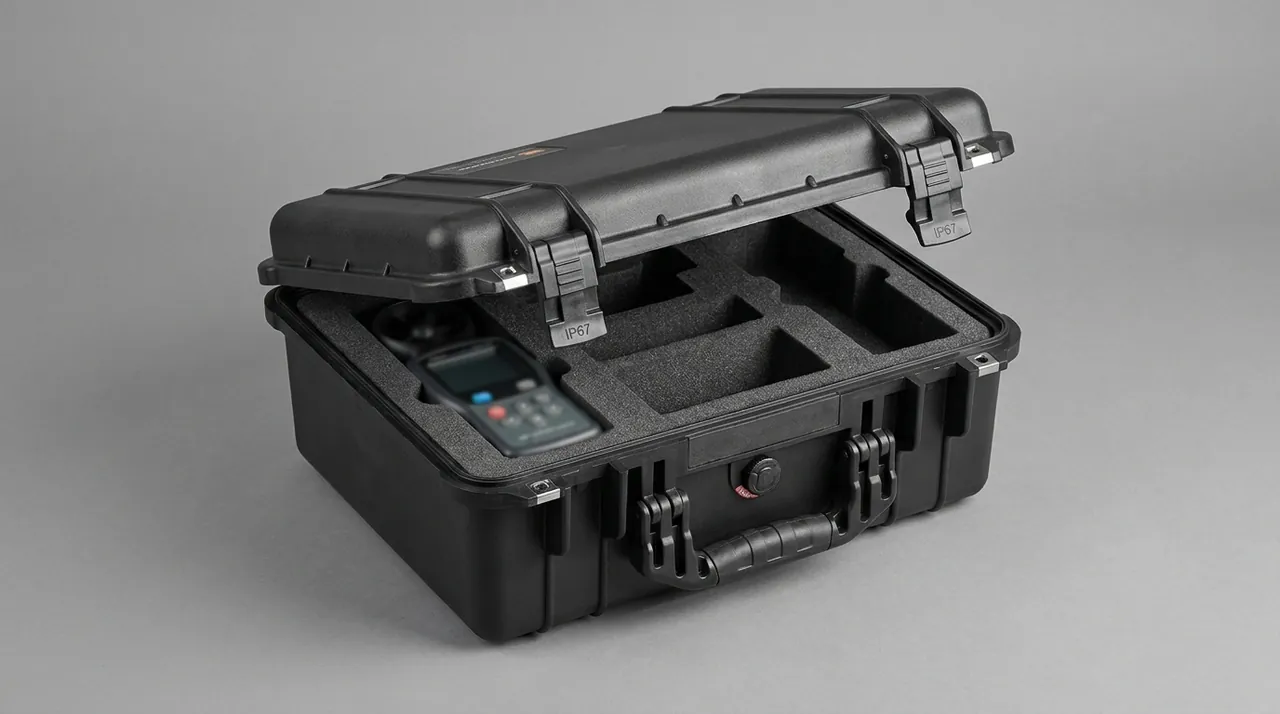
The IP protection rating is defined by IEC 60529 (the national equivalent GB/T 4208). IP67 means "dust protection level 6, that is, complete prevention of foreign objects and dust ingress; water protection level 7, that is, resistance to short-time immersion at typical values of one meter depth for thirty minutes under normal temperature and pressure without water ingress." For a terminal operation case, IP67 means that even in heavy rain, washing or accidental falling into water, the tools and electronic sensors inside remain dry.
The key to achieving IP67 is a continuous elastic gasket in the closing groove and uniform compression force. Common gasket materials include EPDM (ethylene propylene diene monomer rubber) and silicone, both of which resist ozone, aging and have good resilience, suiting long-term outdoor use. The gasket cross-section often uses a hollow or foamed structure, forming line contact sealing when the lid is pressed; groove depth and compression amount need design, as insufficient compression leaks and over-compression accelerates permanent gasket deformation.
Another often-overlooked detail is pressure balance. When a case is dragged from a cold store or air-conditioned warehouse to a scorching storage yard, the internal air expands with heat; if completely sealed, positive pressure builds at the lid seam and can push water into the gap. Adding a breathable yet water-blocking pressure equalization valve (ePTFE membrane) balances internal and external pressure difference while blocking water and dust. For waterproof toolbox performance in rainy outdoor work, further field behavior can be understood.
It should be reminded that IP67 is "immersion resistant" rather than "deep-submersion proof," and the case should not be left soaking in seawater for long periods in terminal scenes. The gasket is an aging part, so a replacement cycle based on use frequency is recommended, with an immersion spot-check before each rainy season to ensure the protection level has not silently failed due to material aging.
5. Reinforcement Ribs and Corner Reinforcement for Heavy Load
Port operation cases often bear two types of load: the static pressure of heavy internal tools, and the shock from stacking and drops. A thin-wall case will bulge or even crack under heavy load; the solution is not to blindly thicken the whole wall (which would greatly increase weight) but to adopt a structural design of reinforcement ribs and local thickening.
Reinforcement ribs distribute as criss-cross convex ribs on the inner or outer shell wall, gaining significant rigidity with minimal material increment, equivalent to adding a "skeleton" to the case. For models carrying hydraulic tools and heavy spares, corresponding rib positions on the bottom and top are also arranged so that when stacked in multiple layers the load transmits along the rib lines rather than pressing on the flat thin wall.
The four corners are the first to receive force during a drop, so high-end cases add metal or reinforced TPU corner guards at the four corners, dispersing impact energy to the corners rather than the crack-sensitive edges. Corner guards also protect the case from being directly cracked by forklift pushing and trailer bumps. Drop tolerance usually references the drop procedure of MIL-STD-810H method 516, determining drop height by case weight class, which is a typical experience-value verification means.
Consistent with the structural design thinking of the heavy-duty protective case series, the terminal case also emphasizes "structure before material": with the same wall thickness, whether the rib layout is reasonable decides the load ceiling. During procurement, press the four walls and bottom of the case by hand to feel the rebound and deformation, and combine the manufacturer's structural drawing to judge whether the rib distribution covers the main force paths.
6. Damping Liner and Shock Buffer Design
The outer shell resists external impact, while the internal damping liner secures tools, absorbs vibration and prevents mutual knocking. The largest source of internal damage at a terminal site is often the continuous low-frequency vibration from quay crane and trailer movement, not a one-time drop. Long-term vibration makes unfixed wrenches and sensors slide and collide inside the case, causing precision instruments to lose accuracy.
Liner materials commonly include EVA foam, polyethylene (PE) foam and polyurethane (PU) molded foam. EVA has good resilience and can be die-cut to tool contours; PE foam is more pressure-resistant and less prone to collapse; PU suits precise positioning of irregular shapes. For standard tools, pre-cut grids or Pick-and-Pluck foam can be used, where the user tears out the tool shape; for dedicated workstations, custom die-cut liners based on the tool list are recommended, with each tool having its own recess so it stays still in transit.
Vibration resistance verification can reference the ISTA 3 series transport tests (such as ISTA 3A, 3E), simulating random vibration spectra of road, rail and container sea freight. Liner schemes passing such tests can protect precision thickness gauges, sensors and electronic probes with greater confidence. For custom foam insert selection, the tool hazard level can be further refined.
A frequently ignored principle of liner design is: heavy items at the bottom, light precision items at the top, with isolation between layers to avoid heavy pressure directly transferring to instruments. At the same time, leave some redundancy so that later tool additions do not require redoing the whole liner. A good liner is not only protection but also an on-site management tool of "see at a glance when counting, accurate when taking."
7. Latches, Locks and Anti-Tamper Anti-Misopen Structure
Terminal yards have high personnel flow and scattered workstations, so the case latches and locks must prevent accidental popping open during transport while also addressing theft and misopening. A common scheme is a stainless steel butterfly latch with dual lock points; when closed, both sides receive force simultaneously, so it will not loosen on one side on bumpy roads. The latch tongue and latch seat use interference fit, with a clear closing feel judged by sound and touch.
For theft and unauthorized opening prevention, a padlock hasp or seal hole can be added at the latch, and when the maintenance crew leaves the post they use a wire seal or disposable lock to secure it; upon return, checking seal integrity shows whether it was opened. For spares cases requiring air transport or cross-border transshipment, TSA-certified locks can be selected so customs can inspect without damaging the case.
The latch is a high-cycle life part, and the number of open-close cycles directly relates to field reliability. Manufacturers usually run thousands of open-close cycles as experience-value testing; during procurement, request the cycle test record or relevant standards for hardware life. For latch and lock hardware selection, a detailed review of material and life is available as a technical appendix reference.
A trap to beware is the misconception that "the lock is strong but the case is pried": if the wall is thin and corners weak, a thief can completely bypass the lock and directly damage the shell. Therefore lock strength should match shell strength; heavy cases should locally thicken at the shell-lock connection and add rivet arrays, making the lock point part of the whole-case structure rather than a weak add-on.
8. Stacking Structure and Containerized Terminal Transfer
The essence of terminal operation is "containerization." The operation case must stack stably in multiple layers to form a unified logistics unit with pallets, containers and racks. Stacking relies on the top groove of one case interlocking with the bottom convex rib of another, so that upper and lower cases interlock horizontally and will not side-slip even when a trailer brakes hard.
Stacking design needs two considerations: one is the single-case stacking load ceiling, that is, the total weight of several cases stacked above that the bottom case top can bear; the other is the stacking height limit, as too high raises the center of gravity and lowers trailer stability. The industry typically gives "recommended stacking layers" as experience values, for example light-load cases can stack more layers and heavy-load cases fewer, specifically determined by combining single-case gross weight with bottom rib strength.
To prevent misaligned sliding, high-end models set locating posts or guide chamfers at the four corners, naturally aligning during stacking so a single person can quickly stack neatly. Consistent with the case stacking structure topic, stacking stability ultimately relies on "geometric interlock plus sufficient contact area" rather than mere friction.
In containerized transfer, multiple cases should first be fixed on a pallet, then secured to the container wall with straps or anti-slip pads to avoid overall displacement damaging the inner wall during sea freight. For stacking and pallet planning, practical advice on pallet loading and center-of-gravity distribution can be referenced, combining single-case stacking ability with whole-pallet stable strapping.
9. Wheels, Telescopic Handles and Quayside Maneuver
From the tool room to the berth is often several hundred meters, and carrying a heavy case entirely by hand is inefficient and back-breaking. Heavy operation cases usually configure two to four heavy-load wheels and a retractable handle, combined with side handles and a top lift beam, forming a "tow plus carry" compound mobility. Wheels mostly use polyurethane (PU), which is wear-resistant, shock-absorbing and friendly to steel plate roads, and will not shatter on bumps like hard plastic wheels.
Wheel and handle load capacity must match the case gross weight. Terminal pavements commonly have steel plate seams, speed bumps and scattered gravel; too small a wheel diameter easily jams, so a larger diameter with deep-groove tread is recommended. The handle should have dual-direction locking so it will not accidentally retract while towing. For case wheel and trolley handle configuration, a special note on terrain adaptability and life is available.
Ergonomics also matters: handle height should fit most maintenance personnel, side handles need soft wrapping to avoid cutting the hand, and total weight (including tools) is best kept within a range a single person can lift short distances and two people can carry long distances. Too heavy forces on-site violations, instead increasing accident and drop risk.
Note that wheels and handles are protruding vulnerable parts that may be scraped in automated sorting or forklift-dense zones. In design, wheels should be individually replaceable and handles retractable flush with the case, avoiding protrusions becoming collision weak points. For pure stacking storage scenarios, a wheel-less version can also be chosen to save cost and height.
10. Salt Spray Test and GB/T 10125 Certification Points
Salt spray resistance cannot rest on verbal promises; it must have verifiable test data. Domestically, GB/T 10125 "Corrosion tests in artificial atmospheres - Salt spray tests" is commonly used as the basis for neutral salt spray (NSS): place the sample in a sealed chamber, continuously spray a sodium chloride solution at experience-value concentration, control temperature and settlement rate, and after a number of hours take it out to check corrosion.
Common assessment durations are forty-eight, ninety-six, two hundred forty and four hundred eighty hours, with longer duration representing higher corrosion-resistance design requirements. Judgment usually focuses on: whether the base material shows pitting or rust layer, whether the coating blisters or peels, whether the sealing interface leaks due to corrosion, and whether the lock still opens normally. It must be emphasized that these are "typical-value or experience-value" ranges, and the specific pass line should be agreed in the procurement technical agreement rather than applying a single number.
The salt spray test should be combined with the IP67 immersion test and drop test to form a complete evidence chain. For example, first expose to the GB/T 10125 duration of salt spray, then immediately do IP67 immersion and functional open-close checks, to show that "sealing remains effective in corrosive environment." For salt spray corrosion testing methods and salt spray test hour selection, consult the respective topics and write the test parameters into acceptance clauses.
During procurement, also require the manufacturer to provide a test report with CMA or CNAS qualification, and verify that the sample state (whether coated, whether containing metal parts) is consistent with actual supply. Be wary of reports that "only test small samples but not the whole case," because the weakest point of a case is often at the lock seat, rivets and corner guards, so a whole-case salt spray test is more convincing.
11. Custom Liner, OEM/ODM and Matching Service
Terminal workstations have complex tools, and standardized liners rarely fit at once, so custom die-cutting by tool list is the norm. The custom flow is usually: field-measure the three-dimensional size of tools, confirm hazard level (sharp corners, heavy objects, precision parts), design layered layout, prototype confirmation, batch production. A good customization not only secures tools but also prints the counting sheet inside the lid, making take and return clear at a glance.
At the OEM/ODM level, case color, silk-screen marking, lock brand and wheel specification can all be unified per the port authority visual and management standard. For example, use color to distinguish cases of different berths or trades, use QR label to link asset ledger, realizing "one case one file" asset tracking. For custom foam lining guide and OEM/ODM custom protective cases, combine with this section as a reference framework for the technical agreement.
JUNZHIJIA can provide matching service of gaskets by model in this step, matching the corresponding cross-section and hardness gasket for different batch cases to avoid compression deviation from mixed use; at the same time, it can provide salt spray, IP67 immersion and drop test documents at delivery, facilitating the port authority to include the case into a unified equipment acceptance archive. For shipping agents needing long-term stock, JUNZHIJIA also supports mold and inventory planning by annual usage, reducing lead time of urgent reorders.
It should be reminded that customization is not the more complex the better. Excessive layering and redundant compartments increase cost and assembly time, instead reducing field acceptance. It is recommended to follow the principle of "enough, easy to count, easy to repair," focusing customization on high-risk tools (heavy, sharp, precision instruments), and using tear-grid foam for the rest. The JUNZHIJIA engineering team usually gives simplification advice during prototyping, balancing protection level with field usability.
12. Daily Maintenance, Inspection and Life Management
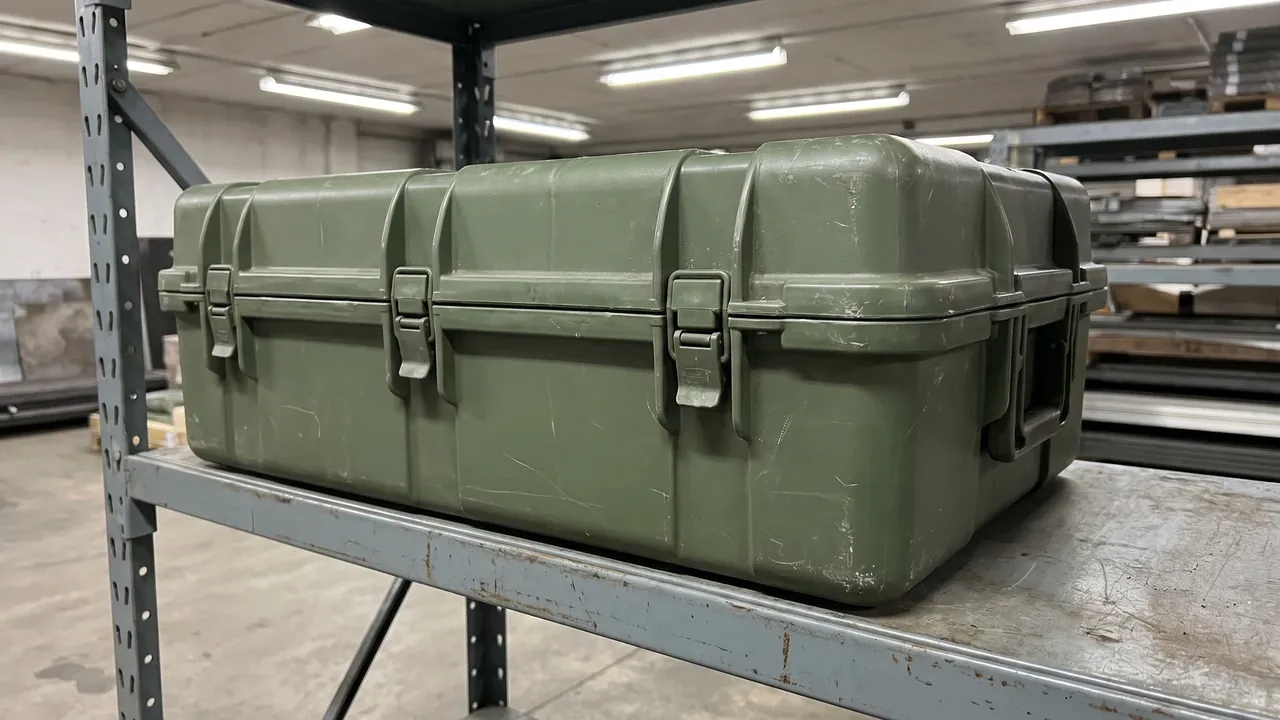
No matter how good the case, it needs maintenance. The terminal site should establish a three-level system of "pre-shift check, monthly service, annual overhaul." Pre-shift check focuses on whether latches are locked, whether the gasket is caught with foreign objects, whether wheels are jammed; monthly service rinses salt residue on the case surface with fresh water, wipes dry with a soft cloth, then checks the gasket for cracks and the latch tongue for rust; annual overhaul replaces aged gaskets, lubricates locks and rechecks corner wear.
Salt residue is an accelerator of gasket aging. After each seaside operation, be sure to rinse salt particles in hinge and lock-seat gaps with fresh water, and never use a high-pressure washer directly on the sealing groove, to avoid forcing water in and washing away grease. For protective case maintenance guide and protective case cleaning guide, systematic step lists are available as SOP attachments for the crew.
Spare parts management is equally key: keep gaskets, latch tongues, rivets and a replacement wheel in stock to minimize the time of "case idle waiting for parts." It is recommended to build a case ledger recording purchase date, salt spray grade and cumulative handling cycles for each case, and uniformly retire any case reaching the experience-value life threshold, avoiding sudden failure during critical operations.
Finally, life awareness. An engineering plastic case in a salt-spray open environment has a typical experience-value life of several years, specifically depending on exposure intensity and maintenance frequency; a stainless case lasts longer but needs galvanic corrosion prevention. Including life management in the asset ledger, with periodic spot checks, keeps the port terminal operation case always in a "trustworthy heavy-duty storage and transport state."
FAQ
Q: What is the real difference between a port terminal operation case and an ordinary toolbox? A: The most fundamental difference lies in the designed load and environment positioning. An ordinary toolbox is mostly used in workshops or homes, focusing on basic storage, with thin shell, weak seal and almost no salt-spray design, while a terminal operation case targets the combined conditions of salt spray, high humidity, heavy mechanical shock and frequent handling, and must simultaneously meet five capabilities: corrosion-resistant material, IP67 sealing, reinforcement rib structure, damping liner and stackability. From the consequence view, an ordinary case left in the open terminal for one sailing season may show rust, lid-seam leakage and internal tool dampness, whereas the operation case uses engineering plastic or stainless shell, continuous elastic gasket, corner guards and interlocking stack ribs to push corrosion and shock risk outward. If procurement only compares price, it is easy to buy an ordinary case as an operation case, and the repeated field damage and tool loss far exceed the case price difference. Therefore the first handle to distinguish is whether it has verifiable salt spray and IP67 immersion reports, rather than whether it looks like a "sturdy box."
Q: How should the case material be selected reasonably in a salt spray environment? A: Material selection should use a matrix of three factors: total tool weight, budget and handling frequency. For light-to-medium tools with high-frequency rotation, engineering plastic cases are first choice because they are inherently non-rusting, light, insulating and free from electrochemical corrosion with salt spray, and with an anti-UV coating they serve open yards long term. For heavy hydraulic tools with low frequency but high load, 316L stainless is recommended; the molybdenum improves chloride pitting resistance, at the cost of greater weight and higher price, and insulating pads are needed during installation to prevent galvanic corrosion. For medium load with both cost pressure and some corrosion requirement, thick-film epoxy or polyurea coated carbon steel can be considered, but a periodic recoating system must accompany it because once the coating is damaged the point quickly becomes a corrosion source. Whatever the route, the corrosion resistance of small metals such as locks, hinges and rivets must be included in the overall consideration to avoid the barrel effect of "big parts resist corrosion, small parts rust first."
Q: What does the IP67 protection rating actually mean at a terminal site? A: IP67 is defined by IEC 60529 (national equivalent GB/T 4208); the dust level 6 means complete prevention of dust ingress, and the water level 7 means resistance to short-time immersion at typical values of one meter depth for thirty minutes under normal temperature and pressure without water ingress. For a terminal, this means the case can resist heavy rain washing, accidental high-pressure washer spray and accidental falling into water, keeping internal torque wrenches, sensors and electronic probes dry. But it must be clarified: IP67 is "immersion resistant" rather than "deep-submersion proof," and the case should not be left soaking in seawater, because the electrochemical corrosion of salt water and gasket aging will silently weaken protection. Achieving IP67 relies on the continuous elastic gasket in the closing groove and uniform compression force, often with an ePTFE pressure equalization valve to offset internal-external pressure difference from temperature changes. At acceptance, request the manufacturer's immersion test record and do a field spot-check before the rainy season to confirm the sealing level has not dropped due to material aging.
Q: Can the operation case be stacked in multiple layers, and is there a height limit? A: Yes, it can be stacked in multiple layers, and stacking ability is one of the core advantages of the terminal case over ordinary toolboxes. Stacking relies on the top groove of one case interlocking with the bottom convex rib of another, so that upper and lower cases interlock horizontally, and with four-corner locating posts or guide chamfers they will not side-slip even when a trailer brakes hard. But stacking must have an upper limit: on one hand it is limited by the single-case stacking load, that is, the total weight of several cases above that the bottom case top can bear; on the other hand it is limited by stacking height, because too high raises the center of gravity and lowers trailer stability, especially inside a sea freight container. The industry typically gives recommended stacking layers as experience values, with light-load cases stacking more layers and heavy-load cases fewer, specifically determined by combining single-case gross weight with bottom rib strength from manufacturer data. In practice, first fix multiple cases on a pallet, then secure with straps to the container wall to prevent overall displacement.
Q: How is the internal damping liner customized according to the tool list? A: The standard flow of custom liner is "list first, layout second, die-cut last." Step one field-measures the three-dimensional size of each tool and marks the hazard level: sharp-corner items such as bolt cutters, heavy items such as hydraulic pumps, and precision items such as thickness gauges and sensors need layered isolation. Step two designs layers, with heavy items at the bottom and light precision items at the top, and isolation between layers to avoid heavy pressure. Step three selects material; standard tools can use tear-grid Pick-and-Pluck foam to shape by themselves, while dedicated workstations use EVA or PU custom die-cut by list, with each tool having its own recess. A good liner not only prevents collision but also prints the counting sheet inside the lid for clear take and return. It should be reminded that customization is not the more complex the better; excessive compartments increase cost and assembly time, so focus on high-risk tools and use flexible foam for the rest, leaving redundancy for later tool additions.
Q: What maintenance do latches and locks need in daily use? A: Latches and locks are the most frequently opened and most easily failed parts, and maintenance focuses on rust prevention, anti-jam and anti-loosen. Pre-shift check should confirm whether the latch is locked on both sides and whether the latch tongue has rust; monthly service rinses salt particles in the lock-seat gap with fresh water and dries, then applies a little neutral grease to the latch tongue and hinge, avoiding high-pressure washers that wash away grease and force water into seams. The latch is a high-cycle life part, and open-close count directly relates to reliability, so check periodically by experience-value cycle and replace when rebound softens or lock point wears. To prevent accidental opening in transit, heavy cases should use stainless butterfly latch with dual lock points, and when leaving post secure with wire seal or disposable lock; upon return, checking seal integrity shows whether it was opened. Selection should also ensure lock strength matches the shell, with local thickening and rivet arrays at the lock-seat connection so the lock becomes part of the whole-case structure.
Q: How many hours of salt spray test is considered qualified? A: There is no single universal pass line for salt spray test duration; it should be agreed in the procurement technical agreement. Common assessment tiers are forty-eight, ninety-six, two hundred forty and four hundred eighty hours, with longer representing higher corrosion-resistance design requirements. The test follows the GB/T 10125 neutral salt spray method, placing the sample in a sealed chamber and continuously spraying sodium chloride solution at experience-value concentration, controlling temperature and settlement rate, then after time checking whether the base material pits, the coating blisters, the sealing interface leaks and the lock opens normally. It must be emphasized that these are "typical-value or experience-value" ranges, and the pass judgment must combine the sample state (whether coated, whether containing metal parts) consistent with actual supply. The safest approach is to combine the salt spray test with IP67 immersion and drop test into a complete evidence chain, and obtain a report with CMA or CNAS qualification, while being wary of reports that only test small samples but not the whole case.
Q: Can test reports and certification documents be provided for port authority acceptance? A: Regular supply should provide a complete set of verifiable acceptance documents, which is also the prerequisite for a port group to include the case into the equipment archive. Typical documents include: the salt spray test report per GB/T 10125, the IP67 protection level verification per IEC 60529 (GB/T 4208), the drop test record referencing MIL-STD-810H method 516, and the ISTA transport vibration test report; if flame-retardant scenes are involved, a UL94 level note can be added. The documents should be issued by a testing body with CMA or CNAS qualification, and the sample state must be consistent with actual supply. JUNZHIJIA can match gaskets by model at delivery and provide the above salt spray, immersion and drop test documents together, facilitating the port authority to archive and accept directly; shipping agents purchasing in batch can also require the report template written into the contract appendix to avoid settlement delay from later reorders.
Q: Are the wheels and handle actually durable at a terminal site? A: The durability of wheels and handles depends on three factors: material, load matching and road adaptability, and cannot be broadly called "durable" or "not durable." Terminal pavements commonly have steel plate seams, speed bumps and scattered gravel; too small a wheel diameter easily jams or even shatters, so a larger diameter with deep-groove tread polyurethane (PU) wheel is recommended, which is wear-resistant, shock-absorbing and friendly to steel plate roads. The handle should have dual-direction locking so it will not accidentally retract while towing, and the height should fit most maintenance personnel. Structurally, wheels and handles are protruding vulnerable parts that may be scraped in forklift-dense or automated sorting zones, so design should ensure wheels are individually replaceable and handles retractable flush with the case, avoiding protrusions becoming collision weak points. For pure stacking storage with almost no towing, a wheel-less version can also be chosen to save cost and stacking height. During procurement, reserve a safety factor by case gross weight and request the wheel load and road-condition test record from the manufacturer.