


Protecting port crane spares means dealing with three overlapping pressures at once: heavy individual parts, a severe salt-laden environment, and high circulation frequency. Together these make the design logic for port machinery spare cases completely different from general industrial cases. Spreader twistlock mechanisms, pins, rigging, hydraulic cylinders and high-pressure lines weigh tens to hundreds of kilograms each, so stacking and lifting are risks in themselves. Ports, terminals and yards sit in a marine atmosphere where salt spray and high humidity are permanent. And maintenance windows for port equipment are usually compressed by the operating schedule, so spares circulate constantly between the central store, the maintenance workshop and the berth, with every opening and repacking an exposure.
The real losses usually are not crush damage, but "it will not fit" and "it will not last". Once a spreader pin or twistlock mating surface corrodes or takes an impact, assembly becomes difficult, motion sticks, and wear accelerates. A single scratch in cylinder rod plating causes seal failure and leakage. Particulate entering a hydraulic valve or pipe bore causes spool sticking and system contamination, and cleaning up system contamination is extremely expensive, often requiring a full circuit flush and even an oil and filter change. All of these share one characteristic: goods-in inspection passes, commissioning may pass, and then the problem accelerates quickly under the combination of high-cycle duty and salt spray. When a port crane stops, the loss is counted in hours, so the requirement that a spare be usable first time is far higher than in general industrial settings.
Port machinery has one further special feature: the specification and certification context is complex. Port cranes and container handling equipment are generally governed by national safety regulations and industry standards for lifting appliances, and exported equipment may also involve classification society rules, such as the DNV rule framework covering lifting appliances and offshore operations. In container handling specifically, the ISO container standards define the dimensions, strength and handling interfaces that spreader and twistlock designs use as their interface basis. Spreader and rigging items are safety-related components whose load-bearing structure and pin condition directly affect operational safety. The task of transport packaging is not to substitute for those rules but to deliver spares that still meet the geometric, surface and cleanliness requirements of their technical specification. Judgement and release of safety-related components must be performed by qualified personnel against that specification.
This article is written for port machinery manufacturers and maintenance providers, equipment management departments at terminals and container yards, port machinery spare-parts traders and exporters, and the procurement and logistics teams of third-party lifting equipment inspection and service organisations. It covers transport protection for spreader and twistlock mechanisms, wire rope and rigging, hydraulic cylinders, pumps and motors, hydraulic pipework and fittings, and electrical and sensor components, including failure modes, heavy-load support and retention, salt spray and humidity configurations, standards references, a selection comparison table, a packing SOP and goods-in verification. All figures are typical industry values or empirical ranges; drawings, technical specifications and destination regulations take precedence. JUNZHJIA provides part-specific partitioned inserts, heavy-load cradles and retention structures, salt spray protection and humidity-control configurations, and OEM/ODM support with test documentation for this category.
Table of Contents
- 1. Three pressures on port machinery spares: heavy load, salt spray and high-cycle circulation
- 2. Category map and failure mode comparison
- 3. Spreader and twistlock mechanisms: structures, pins and wear surfaces
- 4. Wire rope, shackles and rigging: bend radius and corrosion protection
- 5. Hydraulic systems: cylinders, pumps, motors and accumulators
- 6. Hydraulic pipework and fittings: cleanliness and plug discipline
- 7. Electrical and sensor components: load cells, limit switches and encoders
- 8. Load bearing and retention design for heavy transport
- 9. Salt spray and open port environments: ISO 9227 and material selection
- 10. Sealing and humidity control: IEC 60529 and GB/T 4208
- 11. Transport test references and the lifting equipment standards context
- 12. Packing SOP and goods-in verification
- 13. High-cycle circulation, reuse and spare parts store management
- 14. Procurement evaluation and the OEM/ODM path
- Frequently Asked Questions
- Conclusion & Further Reading
1. Three pressures on port machinery spares: heavy load, salt spray and high-cycle circulation
The first pressure is heavy load. Port machinery spares are mainly structural and hydraulic items with large unit weight, irregular geometry and offset centres of gravity. That makes load bearing and restraint, not cushioning, the core of the scheme. Cushioning absorbs impact energy; load bearing determines how weight and stacking pressure are transmitted. A common error is to build a thick cushioning layer for a heavy item without defining an explicit load path, so the weight presses on the foam, the foam collapses, retention fails, and the part shifts inside the case and strikes other items. For heavy parts, weight must travel through cradles, blocks or case structure to the base; foam only distributes contact stress and absorbs impact.
The second pressure is salt spray. Ports, terminals and yards sit in a marine atmosphere with high chloride concentration, high humidity and frequent wet-dry cycling. On a steel surface with a water film and chloride ions, corrosion can initiate within days. Evaluation usually follows the ISO 9227 neutral salt spray test, with exposure duration used as a comparative measure of corrosion protection levels. For port machinery spares, corrosion protection is not a nice-to-have; it determines arrival usability. Spreader pins, twistlock mating surfaces, cylinder rod plating, wire rope strand gaps and bolt threads are all high-risk locations, and once corrosion affects a mating surface or running fit, the part is usually unusable.
The third pressure is high-cycle circulation. Port spares travel repeatedly between the central store, the terminal workshop and the berth, and are often opened and handled by non-specialist staff. This has two consequences. Case wearing parts such as gaskets, latches, hinges and casters fatigue far faster than in one-way export scenarios. And the risk of wrong assembly and omission rises sharply, because a missed transport locking device, a pin from the wrong crane model, or a mixed batch of O-rings all lead to downtime.
A terminal observation: the three most frequent causes of arrival disputes on port machinery spares are, in order, whether the degree of corrosion is acceptable, discovering at assembly that the part does not fit, and leakage shortly after commissioning. Those three causes point at corrosion protection, geometric protection and cleanliness, which are exactly the three things transport packaging can control.
For the underlying mechanics see shock and vibration damping case design and cushion liner structures.
2. Category map and failure mode comparison
| Category | Typical weight class | Vulnerable points | Main failure modes | Preferred protection |
|---|---|---|---|---|
| --- | --- | --- | --- | --- |
| Spreader frames and structures | Very heavy, hundreds of kg and up | Weld nodes, connection holes, machined faces | Machined face damage, structural distortion | Dedicated cradle, multi-point support, defined lifting points |
| Twistlock mechanisms and cones | Medium to heavy | Mating surfaces, threads, locking faces | Corrosion and impact on mating surfaces, sticking | Compartments, oil coating, axial retention |
| Pins and bushes | Medium | Outer diameter, fit clearance | Scoring, corrosion, clearance change | Compartments, rust prevention, no sharp points |
| Wire rope and rigging | Heavy | Strands, core, termination | Crushing, scoring, corrosion | Reel support, termination protection, crush prevention |
| Shackles, hooks and rings | Medium to heavy | Load faces, pin holes, threads | Notches, distortion, corrosion | Compartments, load face protection, rust prevention |
| Hydraulic cylinders | Heavy | Rod plating, bore wall, sealing faces | Rod scoring, bore contamination, leakage | Rod sleeve, port plugs, axial retention |
| Hydraulic pumps and motors | Medium to heavy | Shaft extension, splines, ports, internals | Shaft damage, internal contamination, corrosion | Shaft protection, port sealing, clean packaging |
| Hydraulic valves and manifolds | Medium | Spool and bore, sealing faces, ports | Particulate seizure, leakage, corrosion | Original packaging, port plugs, clean compartments |
| Accumulators | Medium to heavy | Bladder or piston, charging valve, ports | Bladder damage, port distortion, pressure risk | Handle per pressure vessel rules, port protection, attitude fixing |
| Hydraulic pipes and hoses | Medium | Pipe ends, cones, threads, hose cover | Deformed ends, cone damage, cover damage | End caps, support rack, bend control |
| Control cabinets and drive modules | Medium to heavy | Boards, terminals, heat sinks | Moisture ingress, terminal loosening, board vibration | Moisture control, anti-vibration, ESD, compartments |
| Load cells and limit switches | Light | Elastic body, strain gauges, cabling | Zero drift, cable fatigue, impact damage | Compartments, anti-vibration, cable restraint |
| Encoders and speed sensors | Light | Code disc, shaft, cable | Disc damage, shaft damage | Compartments, shaft protection, anti-vibration |
| Brakes and friction pads | Medium | Friction face, springs, hydraulic cylinder | Friction face contamination, spring set | Flat individual stowage, dividers, no oil contact |
| Bolts, pins and fasteners | Light | Threads, fitted surfaces | Thread damage, mixed parts | Lidded compartment boxes, numbering, weight checks |
Three rules emerge. First, heavy items are protected by structure and precision items by compartmentalisation. Spreader structures, cylinders and wire rope reels fall into the structural load-bearing category, while pins, twistlocks, sensors and encoders fall into the compartmentalised protection category. Second, running fits fear rust and internal cavities fear dirt. Pin and twistlock mating surfaces and cylinder rod plating are most vulnerable to corrosion and scoring, while pump, valve and motor internals are most vulnerable to particulate and must be clean-packed with every port sealed. Third, safety components fear unclear judgement. Spreader load-bearing structures, shackles, hooks and wire rope are safety-related, so any doubtful damage needs a defined assessment and record rather than a decision to fit it and see.
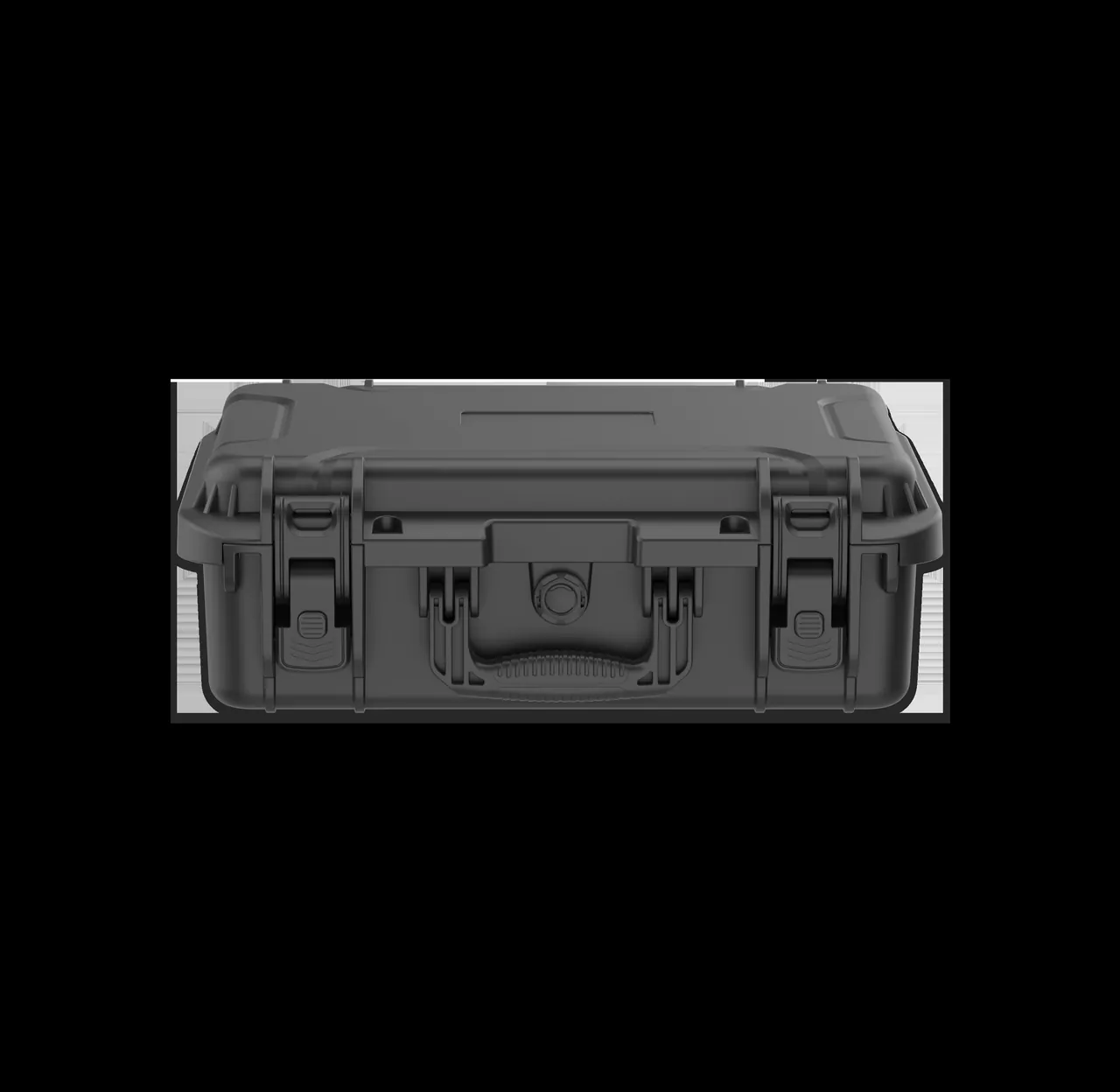
A note on terminology and specification. In practice, terms such as port equipment case, crane parts case, spreader transport case, port machinery case and hydraulic component case are used interchangeably, yet their protection priorities differ. A spreader transport case holding frames and twistlocks must solve heavy-load support, mating surface corrosion protection and mechanism locking. A hydraulic component case holding cylinders, pumps and motors must solve rod protection, port sealing and internal cleanliness. A port equipment case holding controls and sensors must solve moisture, vibration and static discharge. And a port machinery case for day-to-day terminal maintenance must also deliver usability and mistake-proofing under high-cycle use. If an enquiry only says "crane parts case" without specifying category and cleanliness class, the supplier can only quote a generic scheme.
3. Spreader and twistlock mechanisms: structures, pins and wear surfaces
A spreader is a critical component of ship-to-shore cranes and yard cranes, and its spares are usually a combination of structural and moving parts. Protection focuses on mating surfaces, machined faces and locking moving components.
Twistlock mechanisms and cones. Twistlocks are the load-bearing and locking elements of a container spreader, and their mating and locking faces determine both locking reliability and motion smoothness. Three transport risks dominate. Mating surface corrosion, which increases operating resistance and can prevent full locking. Impact damage to mating surfaces or threads, which makes assembly difficult. And the mechanism shuttling freely inside the case, which produces fretting wear between pin and bore. Practice is separate compartments, oil coating on mating surfaces, thread protectors, the manufacturer's transport locking devices where supplied or equivalent restraint through the insert where they are not, and axial retention.
Pins and bushes. A pin has a high-precision outer diameter and fears both scoring and corrosion, while bushes mate with pins at small clearances, so any particulate affects assembly. Practice is oil coating, separate compartments, inserts with no sharp points, axial retention, and strict separation from fasteners, washers and tools, which is the most common mixed-loading error on the shop floor. Bush bores can be closed with protective plugs.
Spreader frames and structures. Frames are heavy and irregularly shaped, and the main risks are damage to machined faces such as connection holes, flange faces and rail faces, plus structural distortion. Practice is a dedicated cradle bearing load on non-machined faces or the designated support points, protector plates over machined faces, clearly marked lifting points to prevent site staff slinging from arbitrary locations, and multi-point support to eliminate unsupported spans and single-point loading. Frame items usually need a transport fixture designed together with the case, and the packaging scheme should be developed alongside the lifting plan.
Rails, rollers and guides. These have demanding surface requirements and slender shapes, so they fear bending and impact. Support them to prevent unsupported spans, fix them individually, protect the surfaces, and keep them out of cavities shared with heavy items.
4. Wire rope, shackles and rigging: bend radius and corrosion protection
Wire rope. Wire rope is a safety-related component, and the main transport risks are crushing and kinking from a bend radius below the minimum, which causes permanent plastic deformation and strand damage; scoring and abrasion, which significantly reduces load capacity; and corrosion, because the gaps between strands are ideal sites for water and chloride ions to lodge. Practice is to use a reel sized to the rope diameter with a coiling radius no smaller than the specified value, a reel with adequate stiffness that is securely fixed and cannot roll, protective covers over terminations such as poured or swaged ends and thimbles with separate support, moisture-barrier or VCI packaging over the whole reel, and no stacking of heavy items on top of the reel.
Shackles, hooks and rings. These are load-bearing elements and are vulnerable to notches and distortion from impact. One important caution: any notch, crack or obvious distortion on a load-bearing element may constitute a safety risk; it must not be dressed away with grinding, and the item must not be put into service while the assessment is unclear. Practice is separate compartments, protection over load faces, thread protectors, oil coating against corrosion, and documentation to support identification and release.
Slings, rigging and synthetic rope. Synthetic slings are sensitive to light, oil and moisture: ultraviolet light degrades the fibres, oil penetrates and cannot easily be removed, and moisture encourages mould growth and reduces strength. Practice is light-excluding packaging, separation from oils and greases, dry conditions, and recording production dates and shelf life.
Acceptance discipline for safety components. Spreader load-bearing structures, shackles, hooks, rings and wire rope are safety-related. Goods-in verification should record item by item: part number, batch, appearance state, whether protective components are in place, and any corrosion or impact. Photographic records should be retained. Any defect must be documented in writing and handled against the technical specification. The packaging task is to prevent new damage being introduced in transport, not to replace safety component inspection and release.
5. Hydraulic systems: cylinders, pumps, motors and accumulators
Hydraulic components have the highest cleanliness requirements in the port machinery spare range, and the core principles are protect the plating, seal the ports, control cleanliness.
Hydraulic cylinders. The failure path is very clear: scoring of the rod plating causes seal failure and leakage; particulate entering the bore causes bore scoring and seal wear; foreign matter at ports contaminates the system. Practice is to fit a protective sleeve over the rod, or retract it into the cylinder and lock it as the manufacturer requires; plug every oil port, connection and breather; fit protector plates over joint and flange faces; compartmentalise the assembly with axial retention; and never use the rod or a port as a lifting or load-bearing point.
Hydraulic pumps and motors. The shaft extension or spline is a precision feature vulnerable to impact, the ports admit foreign matter, and internal cleanliness directly determines life. Practice is a protective sleeve or cap over the shaft extension, every port sealed, original packaging retained where available, separate compartments with anti-vibration padding, and no shared cavity with small metal parts. For sea routes, consider internal rust prevention such as the manufacturer's specified preservative oil or VCI materials, with the specific measure following the manufacturer's technical documentation.
Hydraulic valves and manifolds. Valves are among the most particulate-sensitive components in a system. The safest approach is to keep original packaging until installation, plug every port and connection, use separate compartments with non-shedding insert materials, and keep valves away from other metal parts. Manifolds are often heavy and need explicit load-bearing and lifting provision.
Accumulators. Accumulators are pressure vessel components and involve two special dimensions. The compliance dimension: the charged state, pressure and marking requirements for an accumulator in transport may be governed by dangerous goods or pressure vessel rules, and must follow the equipment technical specification, the applicable transport regulations and the carrier's requirements, confirmed by qualified personnel. Nothing in this article constitutes a compliance conclusion. The physical dimension: the bladder or piston is a thin-walled element vulnerable to compression and impact, and the charging valve and ports are vulnerable to impact. Practice is to transport in the attitude and charged state the manufacturer specifies, protect ports and the charging valve, fix the unit individually against rolling, and avoid high-temperature exposure. For the underlying decision logic see hazmat transport case compliance.
Brakes and friction components. Port machinery brake spares include friction pads and springs. Friction pads are extremely sensitive to oil contamination, which changes the friction coefficient, and springs suffer compression set under sustained load. Practice is flat individual stowage, dividers between layers, no shared cavity with oils or hydraulic parts, and no stacking weight.
6. Hydraulic pipework and fittings: cleanliness and plug discipline
Pipework protection looks simple but is in fact one of the higher-rework categories in port machinery spares, and the causes are almost entirely about pipe ends and cleanliness.
Rigid and high-pressure pipes. Pipe end cones and threads are the most easily damaged features: one impact damages the cone or deforms the thread, causing leakage after assembly. Practice is protective caps or plugs matched to the pipe diameter, thread protectors, support racks or contoured inserts to eliminate unsupported spans, dividers between adjacent pipes so they cannot strike each other, a bend radius no smaller than specified, and clean, sealed bores.
Hoses and hose assemblies. The main risks are cover damage, internal contamination and fitting damage. Practice is caps on every end, a coiling radius no smaller than specified, avoidance of prolonged tight bending and flattening, protective sleeving over the cover against abrasion, and first-in-first-out with production dates recorded, because hoses carry a shelf-life limit.
Fittings, flanges and seals. Sealing faces on fittings and flanges, whether cones, faces or O-ring grooves, are vulnerable to impact and scoring, so they need separate compartments and protection. O-rings and seals should be packed in the free state, kept away from light and heat, kept out of contact with oils and greases, and managed by shelf life; see case seal material selection.
Cleanliness discipline in practice.
- Seal the moment you open. Any pipe or component should be plugged the instant the factory seal is broken, with no period of open storage.
- Non-shedding inserts. No paper chips, crumbled open-cell foam or wood wool.
- Separate small metal parts. Bolts, washers and clamps go into lidded compartment boxes.
- Clean work surfaces. Open and assemble on a clean bench, wearing clean gloves.
- Correspondence marking. Number both ends of every pipe to correspond with the system diagram and prevent wrong connection.
7. Electrical and sensor components: load cells, limit switches and encoders
Electrical and sensing components on port machinery are numerous and comparatively inexpensive, yet they are a frequent source of downtime.
Load cells and limit switches. Load cells, usually strain-gauge type, have an elastic body and strain gauges that are sensitive to mechanical shock, which produces zero drift and loss of accuracy. Limit switches have mechanical parts vulnerable to impact and dust accumulation. Practice is separate compartments, anti-vibration padding, cable restraint to prevent repeated flexing and tension, and moisture control. Load cells should keep their original packaging and never be dropped.
Encoders and speed sensors. The internal code disc, whether optical or magnetic, is a precision part vulnerable to shock and contamination, and the shaft is vulnerable to impact. Practice is a protective cap over the shaft, separate compartments, anti-vibration packaging, and no prolonged open storage in humid areas.
Control cabinets and drive modules. The main transport risks are moisture, which corrodes boards and degrades insulation, terminal loosening, and board vibration. The countermeasures are a moisture line of sealing, desiccant and humidity indicator cards with a pressure equalisation valve where needed; a vibration line of surface-contact support, separate compartments and secondary connector fixing; and an ESD line of ESD packaging and handling discipline, as described in ESD shielding case design. Drive modules are often heavy, need explicit load-bearing provision, and must not be carried on their heat sinks.
Cabling and drag chain systems. Cables and drag chains on port machinery are wearing items whose main risks are sheath scoring, damp cable ends and excessive bend radii. Practice is a coiling radius within specification, sealed cable ends, ties that are not over-tightened, and no contact with sharp edges.
8. Load bearing and retention design for heavy transport
Port machinery spares are predominantly heavy, so the quality of the load bearing and retention design determines whether the whole scheme works.
Four principles of load bearing design.
- Define the load path. Weight must travel through cradles, blocks or case structure to the case floor and the ground. The scheme should be able to answer the question of who finally carries the weight of this part.
- Multi-point support, no unsupported spans. Long items such as rails, pipes and pins need multiple support points to avoid single-point loading and bending.
- Low, centred centre of gravity. Heavy items should sit close to the case floor with the centre of gravity as central as possible; an offset centre of gravity requires explicit marking and targeted restraint.
- Executable lifting. The case and insert design should account for site lifting and forklift handling, covering lifting points, fork pockets and base skids, so that nothing arrives that cannot be lifted out.
Four principles of retention design.
- Two-directional restraint. Limit both lateral movement and vertical lift. Cylindrical items such as pins, cylinders and pipes need particular attention to axial freedom.
- Soft interface. Place compliant padding between structure and part to avoid hard-to-hard contact, with thickness sized by load calculation rather than by feel.
- Protection of protruding features. Rods, pipe ends, shaft extensions and protruding pins are the most likely impact targets and need relief cavities or protective sleeves.
- Verifiability. Retention effectiveness should be measurable; specify hand-push displacement as a criterion, for example no more than 2 mm empirically, and re-measure after testing.
Stacking and loading. Follow heavy-below-light and large-below-small. Heavy-part cases should carry a no-top-load marking and be positioned low or in a dedicated zone in the load plan, with anti-slip and lashing measures between cases. Note in particular that heavy-part cases such as spreader structures and cylinders must never be stored long term on top of cases holding hydraulic valves or sensors.
Insert material selection. Heavy cavities suit high-density foam such as high-density XPE or IXPE, moulded EPP cradles, or engineering plastic and timber cradles. Precision cavities suit closed-cell, non-shedding materials with a non-woven wrap. Clean hydraulic cavities can be enclosed in a moisture-barrier bag. See case foam material comparison and the custom foam insert design guide.
9. Salt spray and open port environments: ISO 9227 and material selection
Marine atmospheric corrosion is characterised by high chloride concentration, high humidity and frequent wet-dry cycling. Metal, plating and coating performance in salt spray is usually assessed against the ISO 9227 neutral salt spray test, with exposure duration commonly used as a comparative measure of protection level. For port machinery spares, protection should be designed in three layers.
Layer one: the surface state of the part itself. Machined surfaces normally leave the factory with protection applied, and the packaging task is to extend rather than undermine it. Do not remove factory rust-preventive packaging. Where inspection requires opening, recoat with the manufacturer's specified oil. For unpainted steel and cast iron, focus on machined and fitted surfaces. And for plated items such as chrome-plated cylinder rods, avoid abrasives or aggressive acids and alkalis that damage the plating.
Layer two: the internal packaging environment. Desiccant and VCI materials together hold the internal environment at a low corrosion rate. The advantage of VCI is reaching grooves, bores and crevices an oil film cannot cover, which is particularly valuable for hydraulic internals and twistlock mechanisms. Its limitation is that suitability varies between metals and platings, so selection must follow the material supplier's technical data and compatibility verification.
Layer three: the case and its hardware. Hinges, latches, telescopic handles, caster axles and rivets are the first items to fail in a salt-laden environment. Choose corrosion-resistant materials such as stainless steel, anodised aluminium or zinc-plated plus coated steel, raise the surface treatment level, and watch for galvanic corrosion at dissimilar metal contacts. Gaskets also age under salt spray and ultraviolet exposure, so use weather-resistant materials; see case seal material selection and case hinge, latch and seal selection.
Flammability of case materials. Where the customer or the installation site imposes flammability requirements, UL94 provides the standard test method for flammability of plastic materials. It must be clear that UL94 rates the material itself; it is not a certification of the finished case and does not replace site fire requirements. The applicable rating follows the customer specification and procurement documents.
10. Sealing and humidity control: IEC 60529 and GB/T 4208
Humidity is the common precondition for both corrosion and insulation degradation in port machinery spares. For hydraulic, electrical and sensor items, humidity control matters as much as vibration control.
Condensation: more realistic than water ingress. A well-sealed case cannot vent internal moisture, so condensation forms on metal surfaces as the temperature falls. In ports and sea freight, where large temperature swings combine with high humidity, condensation is close to the norm. Three countermeasures apply. Size desiccant from the case free volume, the hygroscopicity of the packaging materials, the transit duration and the target humidity. Fit a humidity indicator card and enforce the discipline of reading it before opening. And for routes with large temperature differentials, fit a pressure equalisation valve that passes air but not water; see pressure equalisation valve selection.
Choosing an IP rating. IP ratings are defined by IEC 60529, with GB/T 4208 as the Chinese equivalent.
| IP rating | Dust | Water | Suitable port machinery spare scenario |
|---|---|---|---|
| --- | --- | --- | --- |
| IP54 | Limited dust protection | Splash resistant | Store rooms, covered short transfers |
| IP65 | Dust tight | Jet resistant | Terminal stores, dusty yards, domestic road transport |
| IP67 | Dust tight | Temporary immersion | Open storage, sea freight, coastal terminals, wash-down areas |
For domestic scenarios IP65 is a reasonable baseline, while open storage, sea freight and coastal terminals suggest IP67 with a pressure equalisation valve. One caution: an IP rating addresses water and particulate entering from outside, not internal condensation, so IP rating plus desiccant plus VCI plus a pressure equalisation valve is a combined system. Gaskets are wearing parts belonging on the spare parts list with defined replacement criteria; for life assessment see protective case service life.
Desiccant quantity and replacement. Size from four factors: case free volume, meaning internal volume minus part and insert volume; the hygroscopicity of packaging materials, since paper documentation, open-cell foam and cardboard all absorb moisture; transit duration, where 30 to 45 days by sea far exceeds a domestic short haul; and target humidity together with destination climate, taking more conservative values for tropical and coastal conditions. Every opening of a high-cycle case admits new moisture, so desiccant must be replaced each cycle. For maintenance methods see protective case cleaning and maintenance.
11. Transport test references and the lifting equipment standards context
"Solid enough" is not an acceptance statement. An acceptance statement reads: passed this test sequence under this standard, with this set of acceptance criteria.
ISTA. The International Safe Transit Association grades procedures by package form and weight. Port machinery heavy items usually ship as case-packed heavy goods or palletised loads, so ISTA 3E for unitised loads and ISTA 3B for less-than-truckload are common; small spare cases may follow ISTA 3A or 2A. The value of ISTA lies in sequencing: preconditioning, shock and drop, vibration, temperature and humidity, then re-inspection, forming a complete chain. See ISTA transport testing procedures.
GB/T 4857. The Chinese series of basic test methods for transport packages covers vibration, shock, stacking, dropping and compression and is the most frequently cited standard family in Chinese tenders and acceptance documents. See GB/T 4857 transport packaging in practice.
ASTM D4169. This standard assigns test intensity by distribution cycle and is widely used for packaging validation for North American export markets. See ASTM D4169 distribution cycle testing.
MIL-STD-810H. Its vibration, shock, temperature-humidity and low-temperature methods are often cited for environmental test design. It must be stated clearly that referencing MIL-STD-810H is a reference to environmental test methods only; it does not mean the product holds any military certification. See MIL-STD-810H environmental test compliance.
The lifting and container handling standards context. The transport chain for port machinery spares normally involves three standards contexts. First, the rules governing lifting appliances themselves: the design, inspection and maintenance of port cranes and container handling equipment are generally subject to national safety regulations and industry standards for lifting machinery, and exported equipment may additionally involve classification society rules, such as the DNV rule framework published for lifting appliances and offshore operations. Second, container handling standards: the ISO container series defines container dimensions, strength and handling interfaces, which spreader and twistlock designs use as their interface basis. Third, sea freight and cargo safety: packaging, securing and lashing must satisfy carrier and port safety requirements, and where regulated goods are involved, the International Maritime Dangerous Goods Code. It must be clear that these rules govern equipment design, inspection and operational safety. The transport packaging task is to ensure spares arrive in the state required by their technical specification, and nothing here constitutes a compliance conclusion against any of those rules. Arrival judgement and release of safety-related components must be performed by qualified personnel against the technical specification.
Suggested test matrix.
| Test type | Common standards | Example parameters | Significance for port machinery spares |
|---|---|---|---|
| --- | --- | --- | --- |
| Random vibration | ISTA 3E/3B, ASTM D4169, GB/T 4857.23 | PSD, duration | Pins, sensors, fasteners |
| Shock and drop | GB/T 4857.5, ISTA | Drop height, peak acceleration | Machined faces, ports, case corners |
| Stacking | GB/T 4857.3 | Load, time, temperature and humidity | Case compression, insert collapse |
| Temperature-humidity cycling | MIL-STD-810H method 507 | Temperature range, cycles | Condensation, moisture in electrical items |
| Low temperature | MIL-STD-810H method 502 | Temperature, duration | Elastomer and gasket hardening |
| Salt spray | ISO 9227 | Concentration, duration | Pins, plating, case hardware |
| Water ingress | IEC 60529 / GB/T 4208 | IPX5 / IPX7 | Open storage, wash-down areas |
On functional and condition checks. Validation cannot stop at whether the case survived. After vibration and temperature-humidity testing, check for insert collapse or fracture; whether retention is still effective by measuring displacement; whether critical surfaces show new contact marks or rust, covering rod plating, pin mating surfaces and machined faces; whether port plugs and protective caps are in place; whether accumulators and pressure components sit in the correct attitude; the humidity indicator card; and packaging integrity, including seals, protective components and markings. Acceptance criteria should centre on whether the spare still meets the geometric, surface and cleanliness requirements of its technical specification.
On documentation. The contract technical annex should state the test items, standard numbers, sample quantity, loading condition including actual mass, acceptance criteria, issuing laboratory, and responsibility for corrective action and retest. Export customers also need clarity on third-party laboratory reports and English versions, and where safety components are involved, on release documentation and traceability requirements.
12. Packing SOP and goods-in verification
Packing SOP, formatted to be posted as a work instruction.
- Verify the scheme. Confirm part number, drawing number, quantity and insert revision; confirm transport mode and transit duration; confirm whether accumulators, oil-bearing parts or regulated goods are involved and their compliance route; confirm lifting and forklift provisions.
- Incoming inspection. Check appearance, original packaging and rust-preventive state, and whether port plugs and protectors are in place. Photograph for the record. Record rust-preventive treatment and charged state where accumulators are involved.
- Clean and protect. Remove dust, chips, moisture and fingerprints. Recoat with the manufacturer's specified oil, focusing on mating surfaces and plated items, and avoid abrasives or aggressive chemicals that damage plating.
- Clean sealing. Plug hydraulic components and pipework at the same moment the factory seal is broken, and confirm every port, connection and pipe end is sealed.
- Pre-fit the insert. Install cradles, retention blocks and compartment boxes to drawing. Confirm nothing is misplaced or missing. First-article trial fitting should be recorded.
- Place heavy parts. Use suitable lifting equipment and lift from the marked points; never lift from one point and never drag. Confirm machined faces, mating surfaces and plating contact nothing hard.
- Retain and secure. Fit top clamps and axial and radial retention. Banding straps are secondary only and must be routed over corner protectors, never across cylinder rods, pipe ends or plated surfaces. Confirm hand-push displacement stays within the practical limit of about 2 mm.
- Precision and electrical items. Sensors, encoders and valves keep original packaging in separate compartments. Boards use ESD packaging. Connectors get secondary fixing. Cable ends are sealed and restrained.
- Seal and dry. Size desiccant from free volume, packaging hygroscopicity, transit duration and target humidity, add a humidity indicator card, fit a pressure equalisation valve and VCI materials for open storage or sea routes, check the gasket, and close latches evenly.
- Mark and record. Apply centre of gravity, this way up, keep dry, do not invert, no top load, precision item and clean item markings. Mark lifting points and forklift positions. Photograph the packed case, file it, and record the seal number and handover time.
Goods-in checklist, to be signed item by item.
- Case exterior: cracks, deformation, moisture and salt spray traces; latches and hinges intact; seal number matching;
- Humidity indicator card: colour within range, checked before opening;
- Insert and VCI: no collapse, fracture, contamination or shedding; VCI materials still effective;
- Spreader items: no corrosion or impact on twistlock mating surfaces and threads; no scoring on pin outer diameters; transport locking devices in place;
- Structural items: no impact damage on machined faces such as connection holes, flange faces and rail faces; no distortion or cracking; lifting point markings intact;
- Rigging: no crushing, scoring or corrosion on wire rope; reel undistorted; shackles, hooks and rings free of notches and distortion;
- Hydraulic items: no scoring on rod plating; all port plugs present; no signs of internal contamination; no shaft damage;
- Pipework: no damage to pipe end cones and threads; protective caps in place; bend radii and coiling acceptable;
- Accumulators: correct attitude; charging valve and port protection intact; any anomaly assessed by qualified personnel where pressure components are involved;
- Electrical and sensors: no moisture traces; connectors fully seated; cable ends sealed and restrained;
- Quantity and numbering: counted compartment by compartment against the packing list;
- Documentation: test reports, packing photographs, seal records, rust-prevention and VCI usage records and release documents complete.
Field practice: use a three-point comparison. Record the key state before packing, including appearance photographs, dimensional or plating condition records for critical surfaces, and rust-prevention treatment records. File packing photographs together with desiccant and VCI usage records after closing. Re-measure the same items on arrival. For safety-related components such as spreader load-bearing structures, shackles, hooks and wire rope, arrival records should be retained item by item with a written assessment, rather than a glance and a decision to fit.
Pre-installation preparation. On arrival and before installation: remove all packaging and clear the work area; remove every transport locking device, plug and protective cap, since a missed item causes abnormal operation or leakage; strip the rust-preventive layer as the manufacturer requires, noting that some oils need a specific solvent and that running oil should be applied immediately after cleaning to prevent flash rust; clean mating surfaces and check for attached debris; re-measure critical dimensions and fit clearances; confirm part numbers, batches and release documents; and have safety-related and pressure vessel work performed by qualified personnel against the technical specification.
13. High-cycle circulation, reuse and spare parts store management
The typical life of a port spare parts case is repeated circulation rather than a one-way export, which makes management design more valuable than material upgrades alone.
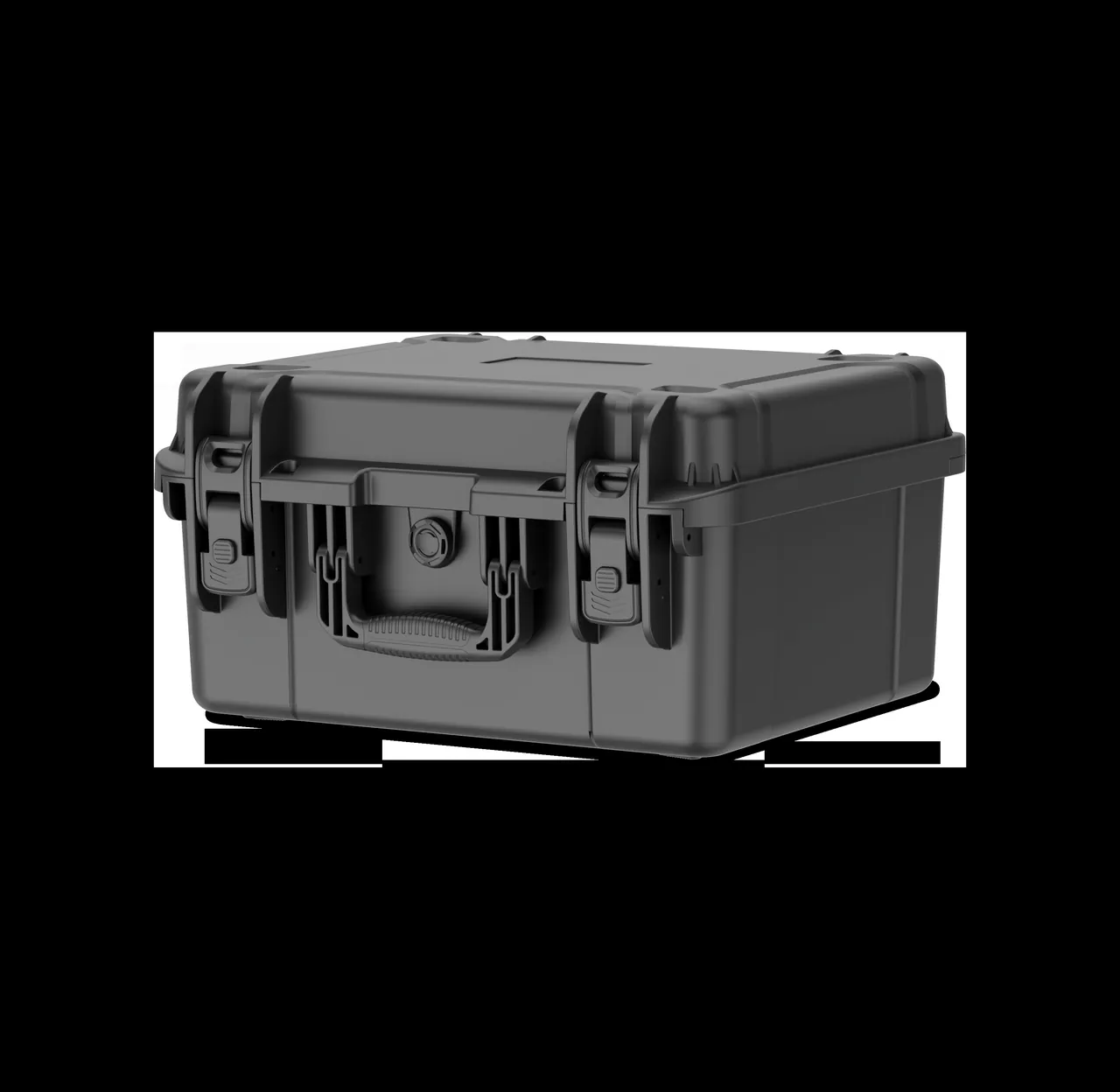
Four special requirements for circulation use. First, usability first: cases should have casters and telescopic handles for handling efficiency, inserts should be mistake-proof so only the correct model and attitude will fit, and a work instruction with a checklist should be printed inside the lid; see case wheels and trolley handle selection. Second, durability first: frequent opening accelerates gasket and latch fatigue, so choose low-compression-set gasket materials and high-life latches, and bring gaskets, latches and casters into a preventive replacement plan. Third, mistake-proofing first: spares for different crane models, such as different spreader sizes or different cylinder pressure ratings, can look similar, so compartments, numbering and colour coding must prevent wrong assembly; turn critical actions such as removing transport locking devices and reading the humidity indicator card into checklists. Fourth, track segregation: new parts, repaired parts, items awaiting inspection, released items, clean hydraulic items and structural items should use separate case pools to avoid cross-contamination.
Six points of spare parts store management.
- Environment: stores should be dry and ventilated and out of prolonged sunlight, and away from strong magnetic sources, which matters especially for sensors and electrical items;
- Attitude: store cylinders, accumulators and wire rope reels in the specified attitude, never inverted and never laid flat under load for long periods;
- Stacking: follow the marked stacking limit, and never store heavy-part cases on top of precision-part cases long term;
- Shelf life: gaskets, O-rings, hydraulic hoses, moisture-barrier bags and desiccant all have shelf-life or age limits, managed by first-in-first-out with age records;
- Cleanliness: open and unpack hydraulic components in a clean area, never in the yard or in the open air;
- Re-inspection: before re-despatching after long storage, recheck the humidity indicator card, gaskets, retention state and rust-preventive layer.
Reuse criteria, six items. Before reuse, inspect the case for cracks, deformation and delamination, focusing on corners, the base, caster mountings and the area around fork pockets; the gasket for hardening, cracking, debonding and permanent compression set; latches and hinges for reliable closing with even force distribution; the insert for collapse, fracture, contamination and shedding; compartment boxes for damage and missing cells; and casters and handles for wear, load capacity and locking function. Any failed item must be replaced before reuse, with criteria discussed in protective case service life. Note in particular that a case previously used for damp, oil-leaking or contaminated items must have all inserts and gaskets replaced and be cleaned and assessed for residue, with quality department sign-off, before carrying hydraulic components, valves or sensors again.
Log and identification system. Keep a log covering case number, use count, purpose, inspection records and desiccant and VCI replacement records, and use colour coding and labels as the first line of defence on site. For lock and seal options see case lock customization options.
14. Procurement evaluation and the OEM/ODM path
Port machinery spare cases are a heavy-load-dominant category in a salt spray environment with frequent circulation and safety-related content, so procurement strategy should focus on structural load-bearing capability, corrosion and humidity control capability, and documentation completeness.
Seven supplier evaluation dimensions.
- Part capture and structural design. Can the supplier produce a load-bearing cradle and zoning scheme from physical parts or 3D data, and specifically solve three problems: an explicit load path for heavy parts, no hard point contact on machined faces and plating, and relief cavities for protruding rods and pipe ends.
- Heavy-load and lifting compatibility. Case compression and impact resistance, corner and base reinforcement, lifting point and fork pocket design, and the load rating of casters and telescopic handles.
- Rust prevention and humidity control. Ability to integrate VCI and rust-preventive oil systems, size desiccant from free volume, packaging hygroscopicity, transit duration and target humidity, and fit humidity indicator cards and pressure equalisation valves.
- Sealing and salt spray configuration. Gasket weather resistance, hardware surface treatment level, dissimilar metal isolation, and the ability to offer IP rating schemes with supporting test records.
- Cleanliness control. Clean packaging schemes for hydraulic components, supply of plugs and protective caps, non-shedding insert materials, and supply of clean and VCI bags.
- Compliance and documentation. Material declarations, test reports and English-language documents, packaging and marking schemes where accumulators or regulated goods are involved, and traceability documentation for safety components.
- Capacity and delivery flexibility. Port maintenance windows are fixed, so delivery stability is a real risk. For quality and sampling rules see custom case acceptance and AQL sampling.
The standardise-the-case, customise-the-insert strategy. Port machinery spares vary enormously in size, from spreader frames to sealing rings, and fully custom cases are uneconomical. The practical approach is to cover most of the size range with three or four standard case types, for example precision parts cases, general parts cases, heavy parts cases and heavy-duty cradle cases, and adapt each with a custom insert. This amortises tooling cost while preserving flexibility as equipment models change. For tooling cost structure see case mould cost analysis, and for general case formats see portable transport box selection.
Enquiry checklist. A practical enquiry should include the spare parts list with part numbers, names, unit weights, envelope dimensions, quantities and centre of gravity positions; whether items are clean hydraulic items, safety components or pressure components; whether original packaging is retained; rust-prevention and cleanliness requirements; lifting and forklift constraints; transport mode and route including transit duration, whether open storage applies and whether sea freight is involved; destination climate; target IP rating and whether a pressure equalisation valve is needed; whether VCI and desiccant supply is required; circulation count and scenario; marking, sealing and record-keeping requirements; whether third-party reports, English documents and traceability documentation are required; and annual volume with delivery rhythm. The more complete the input, the closer the scheme comes to being ready for production. For supplier selection see how to choose a protective case OEM factory.
JUNZHJIA works in this category as follows: accept 3D data or physical parts, produce a load-bearing cradle and partitioned insert scheme with retention recommendations, rust prevention and VCI recommendations, a desiccant sizing calculation and a sealing scheme, confirm with a first-article trial fit, then move to volume production with sampling and supply material declarations and test documentation alongside. For long-term supply customers we maintain model and part-number dossiers so repeat orders reuse the existing scheme, and for customers with high-cycle terminal circulation we can provide a preventive replacement plan for gaskets, latches, casters and inserts, and help set up the case log system.
Frequently Asked Questions
Q: Why can transport protection for port crane spares not simply copy the approach used for general industrial parts?
A: Because port machinery spares stack three pressures at once, while general industrial parts usually face only one or two. The first is heavy load. Spreader frames, hydraulic cylinders and wire rope reels weigh tens to hundreds of kilograms each, with irregular geometry and offset centres of gravity, which makes load bearing and restraint the core of the scheme rather than cushioning. A common error is to fit very thick foam for a heavy item without defining a load path; the weight presses on the foam, the foam collapses, retention fails, and the part shifts inside the case and strikes other items. This is why heavy weight must travel through cradles, blocks or case structure to the base. The second is salt spray. Ports, terminals and yards sit in a marine atmosphere where corrosion on steel with a water film and chloride ions can start within days, and spreader pins, twistlock mating surfaces, cylinder rod plating, wire rope strand gaps and bolt threads are all high-risk locations; once corrosion affects a mating surface or running fit the part is usually unusable. The third is high-cycle circulation. Spares travel between the central store, the workshop and the berth and are often opened by non-specialist staff, accelerating wear on case components and raising the risk of wrong assembly and omission. Together, these three pressures require explicit load-bearing structure, targeted corrosion protection and mistake-proof management design.
Q: What matters most when shipping spreader twistlock mechanisms and pins?
A: Three classes of problem matter most: mating surface corrosion, impact damage, and free shuttling of the mechanism. A twistlock is the load-bearing and locking element of a container spreader, and its mating and locking faces determine both locking reliability and smoothness of motion. Once a mating surface corrodes, operating resistance increases and full locking may not be achieved, and this often is not obvious during a manual check but shows up under load and vibration after installation. Impact damage to a mating surface or thread makes assembly difficult, and thread damage also affects preload. Free shuttling is the most insidious: if twistlocks and pins are not restrained for transport, case vibration makes them reciprocate against their mating surfaces, producing fretting wear and changing fit clearances. The corresponding practice is separate compartments, one item per cavity; oil coating of mating surfaces as the manufacturer requires; thread protectors; use of the manufacturer's transport locking devices, or equivalent restraint through the insert where none are supplied; and axial retention along the pin axis to prevent shuttling. On arrival, check mating surfaces and threads for corrosion and impact, pin outer diameters for scoring, and confirm transport locking devices are in place, recording each item.
Q: Why is "seal it" repeated so often for hydraulic cylinders and pumps?
A: Because a hydraulic system is a closed clean system, and any particulate that enters circulates with the oil and causes cascading damage. Specifically, particulate scores cylinder bore walls, wears seals and seizes spools, and in severe cases contaminates the whole circuit, with cleanup costs including a circuit flush, oil and filter replacement and possibly component replacement, far exceeding the price of the spare itself. Sealing is critical because there are many contamination routes once a port is open: transport dust, packaging material debris, fingerprints and perspiration during handling, and debris generated by other metal parts rubbing under vibration can all enter ports, connections and pipe ends. The discipline should therefore be to seal the moment the factory seal is broken, with no open storage period. Three further points matter equally. Cylinder rod plating needs a protective sleeve or retraction and locking as the manufacturer requires, because one scratch causes seal failure and leakage. Pump and motor shaft extensions or splines need protective caps because they are easily damaged. And internal rust prevention should follow the manufacturer's technical documentation, with VCI materials suitable for sea routes. Finally, hydraulic components should never share a cavity with fasteners, tools or washers, and insert materials must be non-shedding.
Q: What is special about protecting and accepting wire rope, shackles and hooks?
A: What is special is that these are safety-related components, so protection must not only prevent damage but also keep damage assessable and traceable. For wire rope the main risks are crushing and kinking, scoring and abrasion, and corrosion. Crushing and kinking usually come from a bend radius below the minimum and represent permanent plastic deformation that significantly affects load capacity, while the gaps between strands make wire rope corrode faster than other steel parts because they trap water and chloride ions. Practice is a reel sized to the rope diameter with a coiling radius no smaller than specified, a reel with adequate stiffness that is securely fixed and cannot roll, protective covers over terminations such as poured or swaged ends and thimbles with separate support, moisture-barrier or VCI packaging over the reel, and no stacking of heavy items on the reel. Shackles, hooks and rings fear notches and distortion from impact, so use separate compartments, protect load faces, fit thread protectors and apply oil against corrosion. One acceptance discipline matters here: any notch, crack or obvious distortion on a load-bearing element may be a safety risk, and it must not be dressed away with grinding or put into service while the assessment is unclear. Record part number, batch, appearance and whether protective components are in place, retain photographs, document any defect in writing, and have qualified personnel assess and release.
Q: Hydraulic pipework looks like a simple item, so why does it account for so much rework?
A: Because pipework failures almost all come from pipe end cleanliness and cone condition, and those two points are exactly what gets overlooked. The pipe end cone is a sealing face, so one impact damages the cone and causes leakage after assembly, thread impacts cause deformation that affects tightening and sealing, and particulate inside the bore contaminates the oil once the system runs. Three problems recur. First, pipes span unsupported, especially slender pipes or bundles of pipes with no intermediate support, so vibration bends them repeatedly until permanent deformation occurs. Second, adjacent pipes have no dividers and strike each other, damaging surfaces and pipe ends. Third, pipe ends are sealed only with tape or a paper plug that falls off in transit, which amounts to shipping with an open end. The practice is to fit protective caps or plugs matched to the diameter with thread protectors, use support racks or contoured inserts with multiple support points to eliminate unsupported spans, place dividers between adjacent pipes so they cannot touch, keep bend radius within specification, and keep bores clean and reliably sealed. Hydraulic hoses differ slightly: the cover is vulnerable to damage, the interior to contamination, and the fittings to impact, and hoses carry a shelf-life limit requiring first-in-first-out with production dates recorded. Number both ends of each pipe to correspond with the system diagram to prevent wrong connection.
Q: Port machinery electrical and sensor components are small and inexpensive. Do they justify a dedicated packaging design?
A: Yes, because they are a frequent source of downtime, and downtime is measured in hours. A load cell, usually strain-gauge type, has an elastic body and strain gauges that are sensitive to mechanical shock, so one drop or impact can cause zero drift and loss of accuracy, and this drift may look acceptable during a static check, only becoming visible when weighing is actually off. Limit switch mechanisms are vulnerable to impact and dust, encoder code discs are precision parts vulnerable to shock and contamination, and encoder shafts are easily damaged. Control cabinets and drive modules are mainly vulnerable to moisture, terminal loosening and board vibration. The packaging design has three lines. The moisture line: sealing, desiccant and humidity indicator cards, with a pressure equalisation valve where needed, because moisture corrodes boards and degrades insulation. The vibration line: surface-contact support, separate compartments, anti-vibration padding, and secondary connector fixing, with cables restrained against repeated flexing and tension. The ESD line: ESD packaging and handling discipline to prevent latent device damage. Sensors and electrical items should also be stored away from strong magnetic sources, and drive modules, often heavy, need explicit load-bearing provision and must not be carried on their heat sinks. Designing these into the packaging costs far less than one unplanned shutdown.
Q: How should the IP rating be chosen for a port spare parts case, and what matters for open storage?
A: IP ratings are defined by IEC 60529, with GB/T 4208 as the Chinese equivalent. For store rooms and covered short transfers, IP54 is usually sufficient. Terminal stores, dusty yards and domestic road transport suggest IP65. Open storage, sea freight, coastal terminals and locations near wash-down areas suggest IP67. Open storage raises four specific considerations. First, condensation is more realistic than water ingress: a well-sealed case cannot vent internal moisture, so condensation forms on metal surfaces as temperature falls, and the combination of large day-night temperature swings and high humidity in a port makes condensation close to the norm, which is why desiccant sized by calculation, a humidity indicator card and a pressure equalisation valve belong in the scheme alongside the IP rating. Second, salt spray attacks case hardware: hinges, latches, telescopic handles, caster axles and rivets are the first to fail, so raise material or surface treatment levels and watch for galvanic corrosion at dissimilar metal contacts. Third, ultraviolet ageing affects gaskets and plastic parts under prolonged open storage, so choose weather-resistant materials. Fourth, stacking and drainage: confirm compression strength against the worst-case stacking condition before open storage, and avoid water pooling on the case top. Finally, an IP rating addresses water and particulate entering from outside, not internal condensation, so IP rating plus desiccant plus VCI plus a pressure equalisation valve is a combined system rather than a set of alternatives.
Q: We buy spreader structures, hydraulic components and electrical items together. How can packaging and circulation costs be controlled?
A: The core approach is to standardise cases, customise inserts, layer the protection, manage zoning, number for traceability and run a reuse regime. First, divide cases into three or four standard types by internal volume and load rating, covering everything from spreader structures down to sensors and sealing rings, so standard cases absorb size diversity and no tooling is needed per item. Second, customise inserts per part number or part family; because the cavity is common, inserts remain interchangeable and upgradable. Third, layer the protection by sensitivity. Spreader pin mating surfaces, cylinder rod plating and pipe end cones require oil coating plus VCI plus humidity control plus mechanical protection. Structural machined faces are mainly a mechanical protection problem. Standard and fastening parts can use bulk rust-preventive packaging. Fourth, zone and segregate: clean hydraulic items in their own humidity-controlled cavity, electrical items ESD-protected in separate compartments, rigging and structural items separated. Fifth, build a part-number packaging dossier with envelope data, centre of gravity position, insert drawing number, packing photographs and test records, so repeat orders reuse the existing scheme. Sixth, cost the circulation items, because gaskets, desiccant, VCI materials, inserts, seals and casters are all wearing or consumable, and a single small component failure can damage an entire case of spares.
Conclusion & Further Reading
The essence of port crane spare protection is managing three variables at once: weight, corrosion and cleanliness. The geometry and surface state of spreader pin and twistlock mating surfaces, the integrity of cylinder rod plating, the cleanliness of hydraulic internals, the condition of pipe end cones, the accuracy of machined faces on structural items, and the notch-free condition of load-bearing rigging components. None of these give a clear verdict at an arrival inspection, yet all of them surface under the combination of high-cycle terminal duty and salt spray, as sticking motions, leakage, system contamination, weighing drift and premature wear, and each exposure means downtime.
A port machinery spare parts case should therefore be designed along three parallel chains. Load bearing: dedicated cradles, multi-point support, two-directional retention and defined lifting points to handle weight and stacking. Environment: rust-preventive oil, VCI materials, desiccant, humidity indicator cards, pressure equalisation valves and salt-spray-resistant hardware to control corrosion and condensation. Management: zoning, track segregation, numbering, seals and three-point comparison to turn cleanliness and safety component condition into auditable data. All three are required; a missing link degrades the other two.
The implementation path compresses into five steps: define each part's vulnerable points, cleanliness class and safety status, design the load-bearing cradle and partitioned inserts, configure the rust prevention, VCI and humidity system, close the loop with transport testing plus critical surface and cleanliness checks, and sustain long-term performance through numbering, logs, reuse inspection and preventive replacement. Doing these five things is what keeps the "will not fit on arrival, will not last in service" risk to a minimum.
If you need a load-bearing cradle and partitioned insert scheme for specific spares, heavy-load retention recommendations, rust prevention and vapour-phase corrosion inhibitor configurations, a desiccant sizing calculation, or a complete packaging scheme including salt spray and humidity requirements, provide the parts list with unit weights and envelope data, centre of gravity positions, the transport route and the circulation scenario to JUNZHJIA. We will capture the parts, produce drawings and arrange a first-article trial fit, delivering a packaging scheme that can go straight into production.
Further Reading