

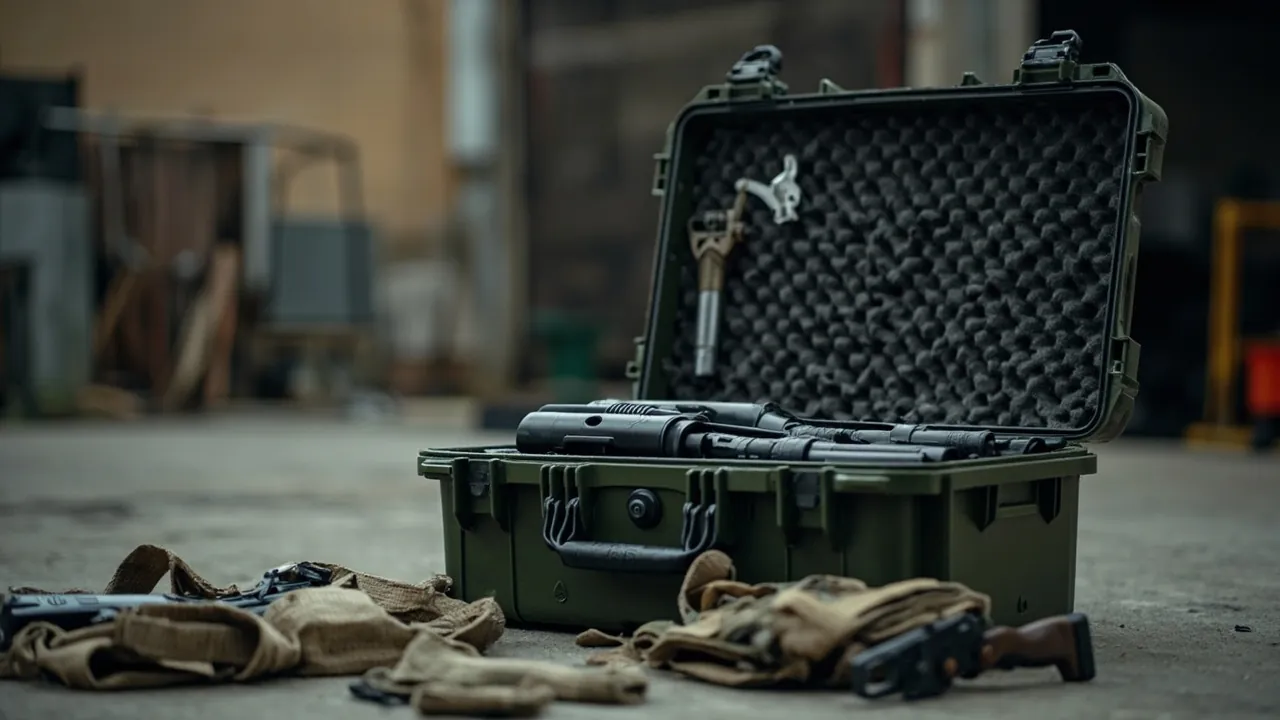
Bottom line first: a 45-liter tactical storage box can carry a complete 72-hour survival load for one person, built around six categories of gear and one tiered packing logic. Those six categories are water and purification, food (high-calorie no-cook items such as MRE rations), first aid and medication, tools and energy, communications and navigation, and shelter and warmth. Whether a box is big enough is not measured by how many items fit, but by whether it can hold all six categories under four engineering constraints: sealing, load bearing, stackability, and portability. Treat a tactical box as an oversized backpack and you will make two mistakes: piling the load past 30 kg until one person cannot lift it, and mixing moisture-sensitive food and medicine with muddy tools until contamination ruins both. This article gives an executable packing list, a tiered provisioning model, box selection parameters including IP rating, IK impact resistance, stacking static load and transport test references, and the customization points that matter for B2B bulk procurement.
The real difficulty in outdoor provisioning is never "I cannot afford the gear." It is compatibility between systems: does the water filter fit inside the box, do the desiccant packs get replaced on schedule, does the foam liner absorb water and grow mold in a humid climate, does the seal still hold after the box rides a roof rack over washboard roads. None of these problems are visible at the purchasing stage. They only surface in use. So this article avoids the "top ten miracle gadgets" format and instead ties gear, box, and scenario together in an engineering sequence: first what to pack, then what to pack it in, then how to pack it, maintain it, and buy it in volume.
Table of Contents
- Bottom Line: What Problem Does a Tactical Storage Box Actually Solve
- Dividing the Load: Tactical Box Versus Outdoor Backpack
- A Tiered Provisioning Model: 72 Hours, 7 Days, 30 Days
- Category One: Water and Purification
- Category Two: Food and the Logic of Storing MRE Rations
- Category Three: First Aid Supplies and Medication
- Category Four: Tools, Lighting, and Energy
- Category Five: Communications, Navigation, and Documents
- Category Six: Shelter, Warmth, and Sleep Systems
- The Standard Loadout Table: What Goes in a 45 L Tactical Box
- Box Selection: Sealing, Impact, Stacking, and Transport Standards
- Packing, Rotation, and Maintenance Procedures
- Bulk Procurement and Customization: A B2B View
- Frequently Asked Questions
- Conclusion and Further Reading
Bottom Line: What Problem Does a Tactical Storage Box Actually Solve
Think of a tactical storage box as a lockable, sealed, stackable, transportable rigid container, and the difference from a backpack becomes obvious. A backpack solves on-body mobility. A box solves base stockpiling and vehicle transfer. A full outdoor operation usually has three phases: concentrating gear before departure, moving it by vehicle or pack animal, and deploying it at camp. A backpack performs poorly across all three: it is carried but small, and it hates compression and moisture. A box is large, sealable, and stackable, but you cannot carry it far on your back. The correct answer is therefore not either-or. The box handles storage and transfer; the backpack handles mobility and immediate access.
That division of labor drives the packing logic directly:
- The box carries bulk, moisture-sensitive, compression-sensitive, batchable items: rations, bottled and purified water supplies, spare clothing, sleeping bag, first aid kit, backup power.
- The pack carries high-frequency, life-critical items: the day's food, a personal water bottle, a headlamp, a small trauma kit, documents and cash, map and compass.
- Overlap items are duplicated: water, fire, light, and first aid each appear twice, once in the box and once on your body.
From an engineering standpoint a box must also meet four conditions, none optional:
- Sealing. Humidity, rain, and water crossings are normal outdoors. Under IEC 60529 and its national counterpart GB/T 4208-2017, a box holding food, medicine, or electronics should reach IP65 or better, and where submersion is possible IP67 (commonly stated as 1 m for 30 min). Design details are covered in waterproof design for outdoor cases.
- Impact resistance. Vehicle vibration, drops, and handling knocks are the leading failure sources. Impact resistance can be referenced to the IK scale in IEC 62262 / GB/T 20138, while transport performance references ISTA 2A and 3A or the GB/T 4857 series.
- Stackability. Camp space is limited, so boxes must stack three high without collapsing or crushing the contents below.
- Portability. Keep a single-person load under roughly 20 to 25 kg. Above that, switch to a wheeled case or split into two boxes.
In one sentence: the value of a tactical box is not that it holds a lot, but that after holding a lot it still seals, stacks, moves, and can be searched.
Dividing the Load: Tactical Box Versus Outdoor Backpack
Many people lose the provisioning argument by using a box as a backpack. The physical limits are completely different, and understanding them saves a great deal of pointless purchasing.
| Dimension | Tactical Storage Box (rigid) | Outdoor Backpack (soft) |
|---|---|---|
| --- | --- | --- |
| Typical capacity | 25 to 80 L (45 L class is common) | 30 to 80 L |
| Protection mode | Sealed, compression-resistant, lockable | Water-repellent, body-hugging carry |
| Compression | Unaffected, benefits from stacking | Vulnerable, contents crush under load |
| Humidity | Long-term protection if rated correctly | Penetrates over long exposure |
| Mobility | Vehicle, pack animal, short carry | Long-distance carry |
| Primary role | Stockpile, transfer, camp storage | On-body mobility, day trips |
| Failure modes | Seal aging, latch release, shell cracking | Fabric tear, zipper failure, wet-out |
The table makes clear that the two are complementary rather than interchangeable. The practical recommended combination is:
- Primary box (45 L class, IP67): full 72-hour stockpile, kept in the vehicle or at camp.
- Secondary box (25 L class, IP67): tools, energy, and backup consumables, stacked on the primary box.
- Carry pack (30 L class): 24-hour mobile load, replenished from the primary box.
This "two boxes and one pack" structure is more reliable than a single 80 L backpack. A backpack that is dropped, rained on, or crushed will suffer; a box with an intact seal is almost unaffected inside. For more on how outdoor protective cases differ from ordinary storage boxes, see outdoor case versus storage box.
A Tiered Provisioning Model: 72 Hours, 7 Days, 30 Days
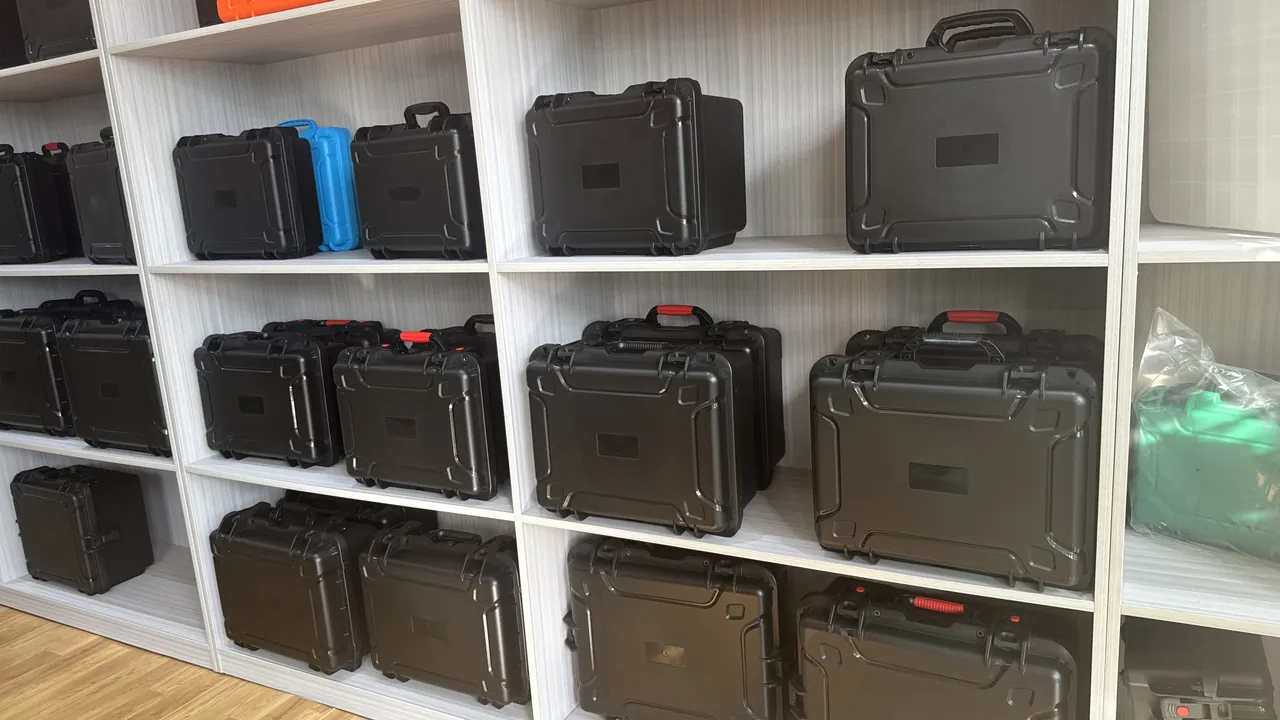
The core variable in provisioning is time. The 72-hour, 7-day, and 30-day tiers have fundamentally different supply structures. The 72-hour tier relies on what you carry plus the primary box. The 7-day tier relies on the boxes plus resupply. The 30-day tier relies on stockpiles plus rotation. Blur the tiers and you end up overloaded for short trips and short-handed for long ones.
| Tier | Objective | Main containers | Water | Food | Key constraint |
|---|---|---|---|---|---|
| --- | --- | --- | --- | --- | --- |
| 72 hours | Emergency evacuation, being stranded briefly | Primary box + carry pack | 3 L per person per day | No-cook, high calorie | One-person portable, fast to launch |
| 7 days | Unscheduled field stay | Primary + secondary boxes + pack | 3 to 4 L per person per day plus purification | Mixed rations and dry goods | Needs purification and fuel |
| 30 days | Long station or post-disaster waiting | Multiple stacked boxes plus reserve | Purification first, storage as buffer | Staple plus rations plus sides | Needs rotation cycles and storage conditions |
Four differences separate the tiers:
- Water changes form. At 72 hours you carry finished water. At 7 days you begin to depend on filters or tablets. At 30 days purification is the overwhelming primary source and storage containers are only a buffer. Water is the hardest item to reduce in outdoor loads, and 1 L weighs about 1 kg, so over the long run you must convert "carrying water" into "making water."
- Food calorie density requirements rise. Short trips tolerate food chosen for taste. Long trips demand calorie density and shelf life first. MRE rations became the standard precisely because they store at ambient temperature, need no cooking, and deliver a stable calorie count per unit.
- Tool depth increases. At 72 hours you need a multi-tool, headlamp, and fire starters. At 30 days you need repair tools, spare seals, spare cells, and purification consumables.
- Stacking becomes necessary. A 30-day load often exceeds one box, so stackable structure becomes mandatory. Load bearing and stability design is discussed in high-strength case structure.
One easily missed rule of thumb: inside the box, order supplies by consumption sequence, with the most used on top or on the outside and the least used pressed to the bottom. This is the reverse of packing order, so plan it before you close the lid.
Category One: Water and Purification
Water is the first thing to go wrong outdoors. Packing it has three layers: storage, purification, and disinfection.
Storage layer. Use rigid or thick-walled reservoirs, because soft bladders get squeezed by other contents and leak. A good default is two to four one-liter bladders or collapsible bottles per box, plus one five- to ten-liter collapsible container for camp water collection. Water containers must never be stored touching food directly; give them a separate compartment.
Purification layer. Choose by reliability and consumable supply. The common options have distinct boundaries.
| Method | Principle | Strengths | Limits | Suitable tier |
|---|---|---|---|---|
| --- | --- | --- | --- | --- |
| Hollow-fiber filter | Physical pore retention | Fast flow, no chemical residue | Damaged by freezing, clogs, needs backflush | 7 days and up |
| Ultrafiltration or ceramic | Physical retention, cleanable | Reusable, long life | Heavier, slower flow | 7 to 30 days |
| Chemical tablets | Halogen oxidation | Very light, near-zero volume | Long wait, poor taste | Backup at all tiers |
| UV pen | Ultraviolet inactivation | No taste change | Battery dependent, needs pre-filtering | Short-trip supplement |
Critical engineering note: filters are destroyed by ice expansion if residual water stays inside below 0 degrees Celsius. In winter the filter must ride in a body-worn pack for warmth and be drained completely after use. Writing this into team procedures prevents a large share of "the cartridge cracked before we reached camp" failures.
Disinfection layer. Tablets and disinfectant are extremely light backups. Whatever the primary method, chemical disinfectant should always be in the box. Purification consumables carry expiry dates and must enter the rotation list.
From the box's perspective, water and purification supplies place their demand squarely on sealing. Once the seal fails, filter media can support microbial growth and tablets can absorb moisture and lose potency. Give the water and purification zone a resealable dry bag inside the box, creating a double barrier of box seal plus bag seal.
Category Two: Food and the Logic of Storing MRE Rations
The goal of food packing is a balance among calorie density, shelf life, and no-cook usability. MRE (Meal, Ready-to-Eat) rations became the industry baseline because they satisfy all three at once: ambient long-term storage, open-and-eat convenience, stable calories per unit, and pressure-tolerant packaging. For B2B use, MREs also have the management advantage of being easy to issue and count by day.
Food by tier:
- 72 hours. Staples are MREs or high-calorie bars, at two to three rations per person per day plus two high-calorie snacks, with one "comfort food" item such as coffee, tea, or candy for psychological recovery.
- 7 days. Add freeze-dried main meals, instant noodles, nuts, and dried fruit to reduce flavor fatigue from a single food type.
- 30 days. Requires staples such as rice, flour, and beans plus side dishes, but this exceeds single-box packing and becomes a stockpile system with its own storage requirements.
Four engineering constraints on food storage:
- Temperature. MRE shelf life is nominally referenced to a moderate condition around 21 degrees Celsius; every step up in temperature shortens real shelf life noticeably. Boxes should not sit long-term in a hot vehicle cabin. National standards for prepackaged food require storage conditions to be declared on the package, and procurement should follow the declared conditions.
- Humidity. This is where a rigid box earns its keep. Even pressure-tolerant packaging softens cardboard, corrodes metal cans, and loosens labels under prolonged high humidity. A sealed box rated IP65 or better, combined with desiccant, holds internal relative humidity low for a long time.
- Compression. MRE pouches tolerate pressure, but freeze-dried food bags tear easily, so place them high in the box or protect them with a divider.
- Odor crossover. Seasonings, coffee, and medicine carry strong odors and must be separated from staples, and especially from first aid medication.
Using desiccant. Silica gel is the usual choice but must be replaced or regenerated on schedule. A humidity indicator card inside the box makes the decision visible at a glance: place one card where it can be read on opening. A working rule of thumb is one to two small desiccant packs per 20 to 30 L of internal volume, with shorter replacement intervals in humid seasons. Desiccant and indicator cards are consumables and belong in the spare parts list when you plan custom foam and accessory selection.
What not to do: do not store opened cans long-term, do not cook inside the box, and do not seal warm food inside, which introduces a large amount of water vapor that will condense.
Category Three: First Aid Supplies and Medication
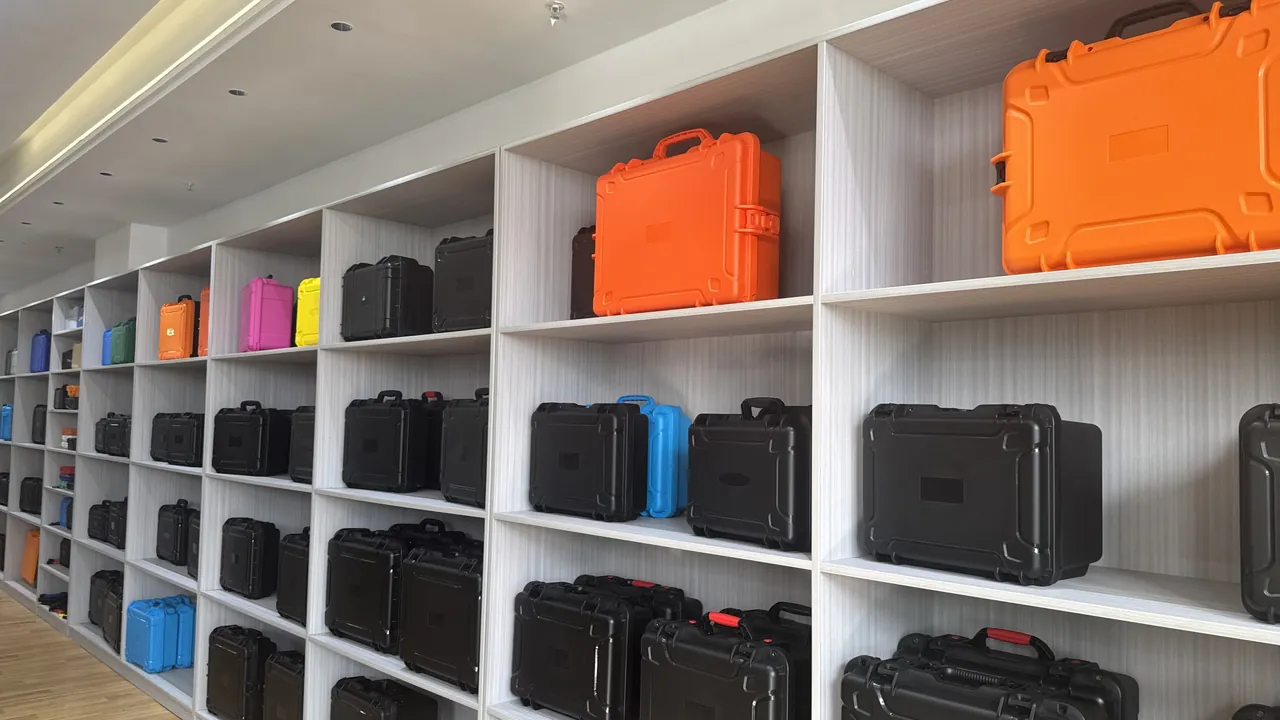
First aid is the one category in the outdoor list that must be quantifiable, position-fixed, and inspected on schedule. A disorganized kit is effectively no kit in an emergency. Organize it in four layers: bleeding control, wound care, common medication, and personal prescription.
| Layer | Typical contents | Suggested quantity (one person, 72 hours) | Note |
|---|---|---|---|
| --- | --- | --- | --- |
| Bleeding control | Hemostatic dressing, elastic bandage, tourniquet | 1 to 2 each | Tourniquet requires training |
| Wound care | Sterile dressings, alcohol pads, iodine swabs, bandages | 4 to 6 dressings, 10 pads | Watch expiry dates |
| Bandaging and splinting | Gauze roll, medical tape, triangular bandage, splint | 1 to 2 each | Triangular bandage is multi-use |
| Common medication | Analgesic, antihistamine, antidiarrheal, oral rehydration salts | Three-day supply | Keep original packaging and leaflet |
| Personal prescription | Prescription drugs, chronic medication, allergy rescue | As needed, seven days | Sealed separately, first access |
Three hard rules for medication storage:
- Original packaging plus leaflet. Never strip tablets loose to save space; being unable to identify a drug and its dose at a critical moment is a serious risk.
- Dark, cool, dry. Medication is sensitive to temperature and humidity, so store it in the most stable, driest part of the box, normally a middle layer not touching the walls. Box sealing directly determines how fast medication degrades, consistent with the long-term moisture logic discussed in understanding the IP67 rating.
- List expiry dates. Keep a paper inventory inside the box listing each drug, quantity, and expiry, and set a six-month inspection reminder.
One commonly forgotten addition: training and documents. First aid supplies only work as well as the user's training. Include a concise response card covering burns, bleeding, fractures, heat stroke, and hypothermia, plus local emergency contacts. This is not a gear problem but a packing problem: the list must have a slot for it.
Compliance note: carrying prescription drugs and injectables, especially across borders, is governed by local regulation. Teams should confirm destination rules before travel. Nothing here is legal advice.
Category Four: Tools, Lighting, and Energy
Tools and energy share the trait of having many metal parts, plenty of dust, and a tendency to knock against other contents, so they place the highest demand on internal separation.
Tools:
- Multi-tool or knife (one carried, one spare in the box)
- Small repair set: screwdriver bits, pliers, zip ties, paracord (a little of each is enough)
- Three independent fire options: windproof lighter, ferrocerium rod, waterproof matches
- Repair consumables: waterproof tape, patch material, needle and thread, quick-set adhesive
Lighting:
| Type | Purpose | Packing advice | Note |
|---|---|---|---|
| --- | --- | --- | --- |
| Headlamp | Primary light, hands free | One carried plus one in box | Essential, with spare cells |
| Flashlight | Point lighting, signaling | One in box | Choose a dimmable model |
| Camp lantern | Area light | One in box | Can run on a battery pack |
| Chemical light stick | Emergency signal, backup light | Two to four in box | No battery dependency |
Energy:
- Batteries. Standardizing on one cell format across devices dramatically simplifies spare management. Lithium cells lose capacity noticeably in cold, while alkaline cells hold up relatively better in cold but weigh more, so choose by trip temperature.
- Power bank and solar panel. Portable power capacity is measured in watt-hours, and air transport has clear watt-hour limits for lithium batteries (commonly stated as up to 100 Wh in carry-on). Check these before packing and shipping. Related transport requirements are covered in compliance requirements for lithium battery transport cases.
- Fuel. If you carry a stove, fuel must be packaged separately, kept away from ignition sources, and never stored with food. Canisters gain pressure when hot, so never leave them long-term in a sun-exposed vehicle.
Layout advice. Put tools on the bottom or in a dedicated compartment, lighting and energy on top for quick access, and fire starters and fuel in isolated compartments. Metal tools and batteries need cushioning between them so long-term vibration does not damage cell casings or terminals, a point explained in more detail under internal foam types for cases.
Category Five: Communications, Navigation, and Documents
What unites this category is that failure immediately restricts your options, so the packing rule is redundancy plus independent power plus waterproof enclosure.
- Communications. Phone (primary), two-way radios (within the team), satellite communicator (in no-signal areas) or emergency radio. Every device needs its own independent charging plan and waterproof enclosure.
- Navigation. GPS device (primary), paper topographic map plus compass (non-negotiable), cached offline maps. Electronic navigation must always be paired with a paper backup, because devices fail from water, dead batteries, or drops.
- Documents. Copies of identification, insurance information, emergency contacts, a trip plan left with a home contact, and cash in small bills.
Triple protection for documents. Paper inside a dry bag, inside a rigid waterproof box, fixed in a known position inside the box. Identification should not sit in the outermost layer where rain hits it the moment the lid opens.
A practical design move. Concentrate all "information" items in a removable inner pouch so that grabbing that one pouch during a rapid evacuation removes every critical document at once. This modular thinking is expanded in how to choose a tactical storage box.
On the box environment for electronics. What electronics fear most is not water but condensation from rapid temperature swings. As a box bakes in the sun by day and cools at night, the internal air contracts and creates negative pressure that pulls outside moisture in: the breathing effect. A box with a waterproof pressure-equalizing valve largely mitigates this. The principle is covered in pressure valve design for outdoor cases.
Category Six: Shelter, Warmth, and Sleep Systems
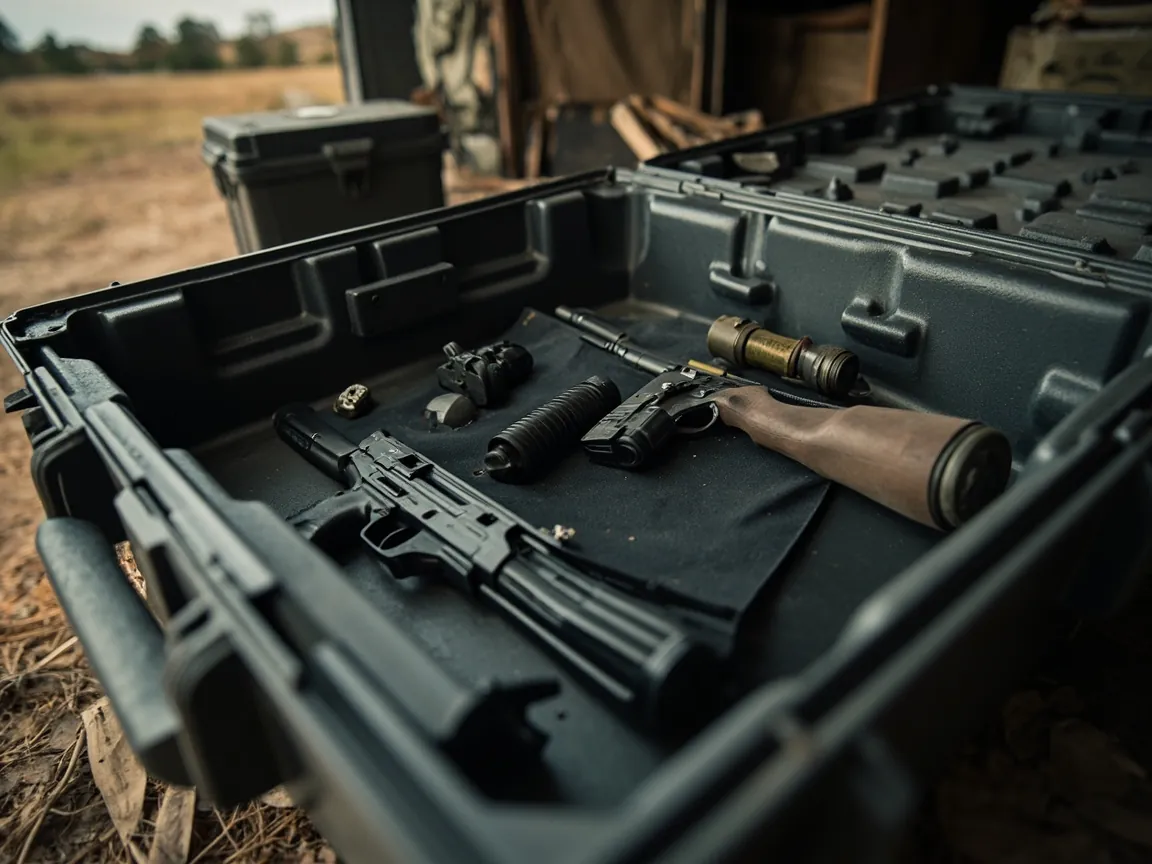
This category decides the absolute survival floor, yet it consumes the most volume. The packing rule is compress, isolate, and prioritize access.
Core items:
- Emergency blanket or bivvy. Small, light, cheap, and the highest value-for-money life-safety item in the kit. Keep two fixed units in the box.
- Sleeping bag. Rated by lowest usable temperature, compressed into a stuff sack and placed along one side of the box. The bag must stay dry; once wet its insulation collapses, so it needs its own waterproof bag.
- Sleeping pad. Blocks conductive heat loss to the ground and is more effective than an extra layer of clothing.
- Spare clothing. A complete dry base layer sealed in a waterproof bag. Wet clothing is the leading cause of hypothermia, so dry clothes matter far more than "changing outfits."
- Rain gear and shelter. A lightweight tarp or rain shell that doubles as shelter and a water collector.
A loading insight. Group warmth and shelter items on the same side or layer of the box and mark it on the outside. Being able to find them by touch in the dark during a hypothermia emergency is a design-level benefit.
Volume trade-offs. If capacity runs short, protect the emergency blanket, dry clothing, fire, and water first, and let comfort items go. Survival provisioning is ordered by securing the floor on body temperature and water before raising the ceiling on comfort.
The Standard Loadout Table: What Goes in a 45 L Tactical Box
The table below gives an executable 72-hour, single-person loadout for a 45 L, IP67-class tactical box. Adjust quantities for team size, season, and terrain.
| Zone | Item | Quantity | Working weight | Note |
|---|---|---|---|---|
| --- | --- | --- | --- | --- |
| Bottom | Tools and repair consumables | 1 set | 1.5 to 2.5 kg | Metal, needs cushioning |
| Bottom | Spare batteries and power bank | 1 set | 1.0 to 2.0 kg | Separate compartment |
| Middle | MRE rations and energy food | 6 to 8 units | 4.0 to 6.0 kg | No-cook, pressure tolerant |
| Middle | Filter and purification tablets | 1 set | 0.5 to 1.0 kg | Freeze-sensitive, insulate |
| Middle | First aid kit | 1 unit | 1.0 to 1.5 kg | Fixed quantity and position |
| Top | Spare clothing (sealed) | 1 set | 1.0 to 1.5 kg | Own dry bag |
| Top | Lighting and fire starters | 1 to 3 each | 0.5 to 1.0 kg | High frequency access |
| Side | Sleeping bag and pad | 1 set | 1.5 to 3.0 kg | Compressed, laid along the side |
| Side | Water bladders and bottles | 2 to 4 | 3.0 to 4.0 kg (full) | Separate compartment |
| Lid | Emergency blanket and rain gear | 2 each | 0.3 to 0.6 kg | Most accessible |
| Lid | Document pouch | 1 unit | 0.2 to 0.5 kg | Removable as one unit |
Total estimate: roughly 15 to 24 kg fully loaded, within the range one person can carry short distances and two can carry longer ones. Past 25 kg, reduce the load or switch to a wheeled case.
For how to verify the strength of the box itself, see how to judge high-strength case structure and reinforcement ribs and wall thickness.
Box Selection: Sealing, Impact, Stacking, and Transport Standards
What to pack is the first layer; what to pack it in is the second. Break box selection into five verifiable parameters.
1. Ingress protection (IP).
- No submersion, rain and dust only: IP65 minimum.
- Possible submersion or long placement on standing water: IP67 (commonly 1 m for 30 min).
- Key requirement: do not write only "IP67" in a technical agreement. State "IP6X + IPX5 + IPX7" explicitly, or cite IEC 60529 / GB/T 4208-2017 with the test conditions. The full reading is in understanding the IP67 rating.
2. Mechanical impact (IK).
Under IEC 62262 / GB/T 20138, graded by impact energy in joules. Vehicle and frequent-handling scenarios should look for IK07 or better. This describes shell resistance to knocks and is orthogonal to IP; neither substitutes for the other.
3. Stacking and static load.
Camp storage often needs two or three layers. Stacking capacity depends on lid and base compression design, corner support ribs, and wall stiffness, not merely wall thickness. Ask suppliers for typical stacking static load values (for example, a distributed load held for a stated duration with deformation within an acceptable range), and note that real capacity falls as temperature rises.
4. Transport test references.
| Test | Common standards | Note |
|---|---|---|
| --- | --- | --- |
| Shipping container performance | ASTM D4169 / ISTA 2A, 3A | Combined distribution hazards |
| Vibration | ASTM D999 / GB/T 4857.7 | Simulated vehicle vibration |
| Drop | ASTM D5276 / GB/T 4857.5 | Simulated handling drops |
| Environmental | Relevant MIL-STD-810H methods | Temperature, humidity, salt fog, shock |
| Salt fog corrosion | ISO 9227 | Coastal and chemical environments |
| Plastics weathering | GB/T 16422 / ISO 4892 | Long-term outdoor UV aging |
5. Structure and accessories.
Latch count and placement (a compression point at the middle of each long side is mandatory), hinge type, seal material and replacement interval, whether a pressure valve is fitted, and whether corners have reinforcement ribs. Industrial shells become brittle in cold and crack more easily when dropped, so low-temperature impact performance should be confirmed separately at procurement (for example, by asking for documentation covering MIL-STD-810H Method 502 low temperature combined with Method 516 shock).
Quick selection by use:
| Use | Recommended capacity | Recommended IP | Key accessories |
|---|---|---|---|
| --- | --- | --- | --- |
| Vehicle emergency box | 45 to 60 L | IP67 | Stacking ribs, two-person handles, pressure valve |
| Camp stockpile box | 60 to 80 L | IP65 to IP67 | Dividers, label panels |
| Personal tool box | 20 to 30 L | IP67 | Foam liner, single-hand handle |
| Energy and spares box | 25 to 45 L | IP67 | Flame-retardant liner, separate compartments |
| Document and electronics box | 15 to 25 L | IP67 | Pressure valve, anti-static liner |
Packing, Rotation, and Maintenance Procedures
Packing order, bottom up:
- Heavy and metal items in the bottom center, near the box's geometric center, to lower the center of gravity during carrying.
- Compression-sensitive items such as freeze-dried food and electronics on top.
- High-frequency items in the top layer or outer side.
- A cushioning layer at both the very bottom and the very top, using removable liner foam.
- Any liquid that could leak sealed on its own.
Rotation schedule, recommended for written team procedures:
| Category | Inspection interval | Replacement trigger |
|---|---|---|
| --- | --- | --- |
| Food and rations | 6 months | Within one quarter of expiry, swollen or torn packaging |
| Medication | 6 months | Approaching expiry, discoloration, moisture |
| Purification tablets and consumables | 6 months | Caked from moisture, expired |
| Batteries | 6 to 12 months | Abnormal voltage, swollen or leaking casing |
| Desiccant and indicator cards | 3 to 6 months | Indicator discolored, desiccant saturated |
| Seals | 12 months or by condition | Hardened, cracked, compression set |
| Fire starters and fuel | 12 months | Lighter leaking, matches damp |
Four maintenance rules:
- Clean the seal and flange after every use with a soft cloth and water. Never blow it out with compressed air, which drives dust deeper into gaps.
- Never apply petroleum-based lubricant to seals. Most rubber ages faster; use a silicone grease approved as compatible by the supplier.
- Close the latches promptly after opening so the lid is not blown open by wind and does not take on water or dust.
- Do not pack to the absolute limit for long storage. Leave a little space and open the box periodically for ventilation and inspection.
Bulk Procurement and Customization: A B2B View
For rescue organizations, security services, outdoor operators, and emergency reserve units, the loadout list must be replicated at scale, so procurement logic differs completely from a personal purchase. Four manageables matter most:
- Standardized box specifications. Consolidating to one or two capacity sizes is what enables stacking, shelf storage, and rapid inventory. Every extra size adds management and training cost.
- Custom liners. EVA or PE contour cutouts matched to the list turn "searching for an item" into "reading an empty slot." That speeds access and also lets a visual sweep reveal missing gear immediately. The design basis is covered in key factors in custom foam inserts.
- Labeling system. Silk-screen or label the outside with unit, serial number, purpose, issue date, inspection interval, and a contents QR code. Serial numbers and a registry are the foundation of fleet management.
- Documentation and testing. Bulk projects generally need supplier documentation on ingress protection, impact, materials, and flame retardancy, plus a commitment for spares such as seals, latches, and liners.
In wholesale, distribution, and OEM/ODM projects for protective cases and tactical storage boxes, JUNZHJIA can provide specification consolidation, custom liners, printed labeling, and spare parts programs, along with the corresponding technical documentation and test data, helping customers turn a packing list into a replicable, auditable supply system.
Frequently Asked Questions
Q: How much can a tactical storage box hold, and is 45 L enough?
A: 45 L is the common capacity for a single-person 72-hour load. It holds roughly six to eight rations, one purification setup, a first aid kit, one set of spare clothing, lighting and fire starters, a sleeping bag and pad, and two to four liters of stored water, with a typical total weight of 15 to 24 kg. Whether it is enough depends on three variables. First, season: winter warmth gear adds significant volume and may push the load to capacity or require 60 L. Second, whether you rely on purification: if you carry finished water the whole way, water alone fills the box. Third, whether you carry electronics and energy gear, since power banks and solar panels take a lot of room. The method is simple: list the load against the standard table in this article, weigh it, and then choose capacity. Do not buy the box first and try to cram. If a single box exceeds 25 kg and one person cannot carry it, the correct answer is two stacked boxes, not a larger single box.
Q: How long do MRE rations last, and how do I tell if one has spoiled?
A: MRE shelf life is nominally referenced to a moderate condition around 21 degrees Celsius. The higher the storage temperature, the more the usable life shortens, so storage condition is the key variable rather than a single number. Judging spoilage comes down to three checks. First, whether packaging is swollen, leaking, or oddly scented; swelling usually means internal gas production and the item should be discarded. Second, whether a heated main meal pouch shows marked discoloration, oil separation, or off odor. Third, whether accessories such as crackers or drink powder have caked or absorbed moisture. Always defer to the production date and storage conditions printed on the package rather than a remembered shelf life. In packing terms: keep rations in the temperature-stable middle layer, avoid long storage in a sun-baked vehicle, inspect for approaching expiry every six months, and rotate first-in-first-out so newer stock sits at the bottom and older stock is consumed first. A sealed box rated IP65 or better plus desiccant markedly slows cardboard softening and metal corrosion, but it cannot rescue food that has already expired.
Q: What is most often missing from a first aid list?
A: Three things. First, personal prescription and chronic medication. Teams often prepare generic supplies and overlook individual needs, and a single missed dose can end an operation; pack seven days of personal medication per member, sealed separately and labeled, in the most accessible position. Second, the quantity of bleeding-control dressings. Many kits carry only a bandage or two, while significant bleeding requires adequate dressings and elastic bandages; too few equals none. Third, the response card and contacts, covering initial management of burns, bleeding, fractures, heat stroke, and hypothermia plus emergency contacts and local rescue numbers. People assume they will remember the steps, but in cold, fear, and fatigue a readable card is far more reliable. Beyond that, keep all medication in original packaging with leaflets, maintain an expiry inventory, and inspect every six months, replacing on schedule.
Q: Will food and medicine in the box be ruined by moisture?
A: They can be, and sealed box performance is precisely the core value of a rigid case over a backpack, provided the seal genuinely works. Moisture has three entry paths. First, direct ingress from seal failure. Second, the breathing effect from day-night temperature swings, where contracting internal air creates negative pressure that draws moisture in. Third, condensation from packing items that still carry moisture or heat. There are three matching countermeasures. First, choose a box rated IP65 or better and IP67 where needed, and require the corresponding test reports. Second, choose a model with a waterproof pressure-equalizing valve, where a microporous membrane balances pressure while blocking liquid water, markedly reducing the breathing effect. Third, ensure food and equipment are dry and at ambient temperature before sealing, never closing the lid over warm items. In addition, silica gel desiccant plus a humidity indicator card is the cheapest effective supplement: one to two small packs per 20 to 30 L, with shorter replacement intervals in humid seasons. Remember that seals are consumables and degrade with age if uninspected.
Q: Is lighter always better for an outdoor load?
A: No. Lightweighting has an impassable floor: water, warmth, and first aid cannot be cut. What should actually be reduced is three things. First, comfort redundancy such as excessive spare clothing, too much cookware, and gear kept only because it "might" be used. Second, packaging weight: strip cardboard, promotional packaging, and rigid retail cases before departure for a noticeable saving. Third, duplicated function such as three knives or four light sources. A simple test: if losing an item would make it impossible to hold body temperature, obtain drinking water, or control bleeding, it cannot be cut for weight. There is also a counter-indicator in practice: keep the load within what one person can carry short distances, roughly 20 to 25 kg. Overstuffing a box to save weight and then closing the lid with insufficient seal compression actually destroys protection, which is the worst possible trade.
Q: Will a box left in a vehicle deform, and will the contents spoil?
A: A closed vehicle cabin in summer can reach temperatures far above ambient, and prolonged heat affects both the box and its contents. For the box, common thermoplastics lose stiffness as they approach their softening range, so stacking more readily produces creep deformation, and the compression of latches and seals changes. For contents, food shelf life shortens markedly, batteries present a safety risk, and medication can lose potency. Practical measures: do not leave boxes containing food, medicine, and batteries in a sun-exposed cabin long-term. When vehicle storage is unavoidable, choose a lighter-colored, more heat-tolerant shell and place it out of direct sun. Inspect periodically, focusing on shell warping, hardened seals, and any off odor from contents. For how materials behave at temperature extremes, see material selection for outdoor cases, which covers temperature ranges and selection logic for engineering plastics.
Q: How many boxes should one person prepare?
A: In most cases, two boxes plus one carry pack is the most practical combination: a 45 L class primary box holding the full 72-hour stockpile of food, water, first aid, clothing, and shelter; a 25 L class secondary box holding tools, energy, and backup consumables; and a 30 L class pack holding 24-hour mobile and life-critical items. The reasoning: splitting weight across two boxes keeps each one individually carryable and lets you take only one when the scenario calls for it; the secondary box stacks on the primary to save space; and the pack handles the last stretch on foot. For teams, a good pattern is one primary box per two to three people plus one carry pack per person, since food and purification equipment can be shared, which significantly reduces total weight. Buying a single large box tends to end one of two ways: too heavy to carry, or endlessly rummaged through. Both reduce real usability.
Q: Where do B2B bulk purchases most often go wrong?
A: Four places. First, non-standard specifications. Different batches in different sizes cannot stack, cannot be shelved, and cannot be trained on consistently; lock one or two sizes and key dimensional tolerances into the framework agreement. Second, mismatched liners. When box and liner come from different suppliers, dimensions and materials often fail to line up, producing loose slots or hard closing; tender the box and liner as one integrated project with a physical contents list. Third, documentation that does not match the delivered goods. The most common defect is using a base-model report to endorse a customized unit; any difference in structure, cutouts, or seals warrants separate confirmation. Fourth, spare parts running dry. Seals and latches are consumables, and if the supplier cannot supply matching spares over the long term, the service life of the entire fleet shortens sharply. Put spare supply intervals and pricing mechanisms in the contract, and include labeling and a contents registry template in the delivery scope.
Conclusion and Further Reading
Back to the original question: what goes in a tactical storage box for outdoor survival? The answer is not a list of items but a logic that matches six categories, water, food, medical, tools and energy, communications and navigation, and shelter and warmth, against three demand tiers of 72 hours, 7 days, and 30 days. The list is only the output. Four things actually decide the outcome: whether the box seals well enough to preserve food and medicine, whether it is strong enough to survive vehicle vibration and drops, whether it stacks to save camp space, and whether it is light enough for one person to carry. Putting items inside is easy. Turning the whole system into something replicable, auditable, and maintainable is where the engineering value lies.
Three executable recommendations. First, set the list and the weight before setting capacity and specifications, and use desiccant plus a humidity indicator card as everyday evidence of seal performance. Second, write the rotation schedule into procedures: food, medicine, batteries, desiccant, and seals each have intervals, and replacement should not depend on memory. Third, treat box, liner, labeling, and spares as one integrated project in bulk procurement, locking specifications and documentation to keep downstream management costs under control. In wholesale, distribution, and OEM/ODM projects for protective cases and tactical storage boxes, JUNZHJIA can provide box selection, custom liners, printed labeling, and spare parts programs matched to a customer's packing list, along with the corresponding technical documentation and test data, helping institutional buyers turn a loadout list into a supply system that runs for years.
Further Reading