

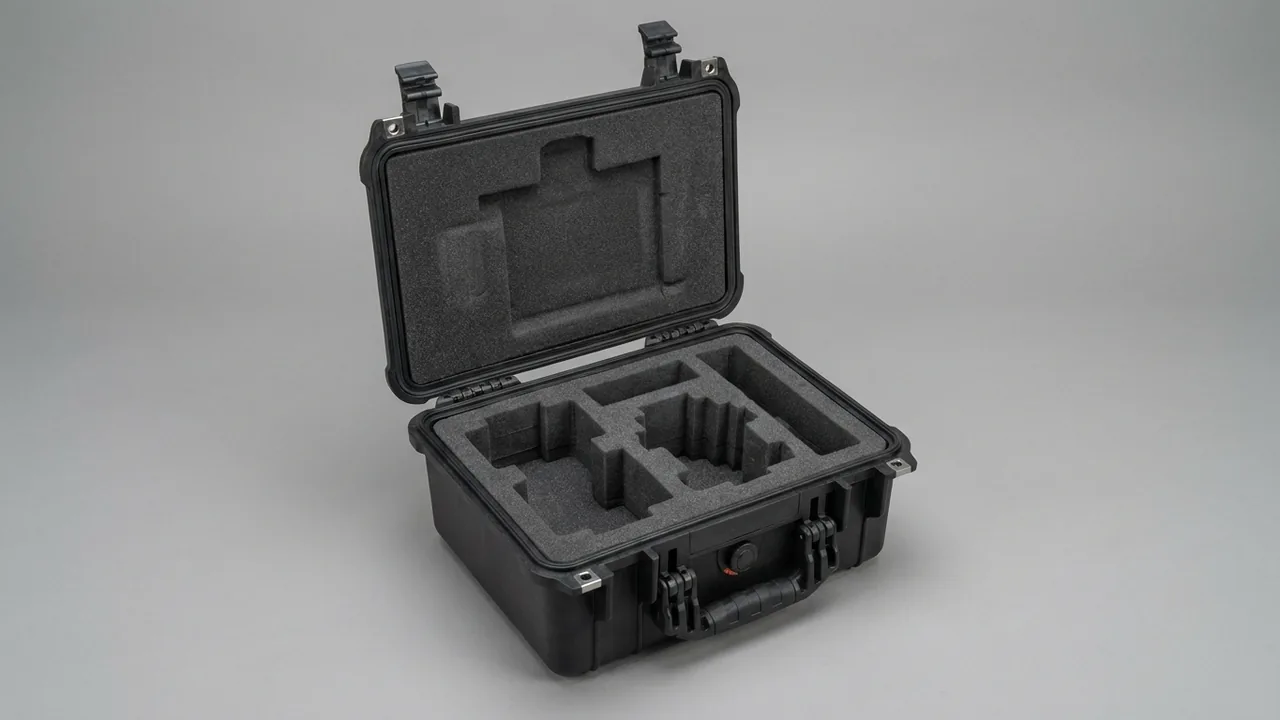
When biscuit production lines are relocated between plants, shipped overseas, or sent out for scheduled overhaul, the most overlooked loss comes from contamination and mechanical damage to spare parts and critical components during transit. The clear conclusion is this: forming-machine rolls, tunnel-oven mesh-belt sections, depositor and nozzle heads, sandwiching-machine parts, rotary cutting knives, and embossing moulds must travel in dedicated protective cases that meet the hygiene requirements of GB 14881, GB 50687, and GMP, combined with IP67 sealing and a low-shedding liner, so they can enter clean assembly directly after a long journey. Many factories still stuff bare parts into ordinary wooden crates or recycled cartons; on arrival the roll surfaces are covered with wood splinters, the mesh belt is jammed with metal dust, and the nozzles carry residual oil. The cleaning and re-inspection cost often exceeds the purchase price of a professional case.
Engineering and maintenance teams at biscuit factories, together with service departments supporting OEM equipment makers, face a recurring dilemma. Spare parts are valuable, irregularly shaped, and demand tight surface precision, yet they must survive the rough environment of ocean freight, road transport, and repeated handling. Ordinary packaging cannot keep out dust and water, let alone avoid shedding fibers, cross-smell, or absorbing grease. Once carton fibers contaminate the food-contact face of a roll, or a tunnel-oven mesh-belt section rusts inside a humid container, the entire batch of spares may be judged unusable. This article presents a complete plan for six core equipment categories, covering material selection, liner design, sealing class, and transit compliance testing, so you can avoid detours when procuring or customizing a protective case.
Table of Contents
- Typical Failure Modes in Biscuit Line Component Shipping
- Material and Hygiene Design of Food-Grade Cases
- Isolation and Fixation of Forming-Machine Rolls
- Anti-Deformation Packing of Tunnel-Oven Mesh-Belt Sections
- Precision Liner Protection for Depositor and Nozzle Heads
- Rust Prevention and Clean Packaging for Sandwiching Machines
- Edge Protection and Cushioning for Rotary Cutting Knives
- Low-Shedding Storage for Embossing Moulds
- Selection and Verification of Low-Shedding Liners
- Grease Protection and Cross-Contamination Control
- IP67 Sealing and Transit Temperature-Humidity Control
- Vibration Buffering and Transit Compliance Testing
- Mixed-Load Zoning and Packing Lists
- FAQ
- Conclusion and Further Reading
Typical Failure Modes in Biscuit Line Component Shipping
A biscuit production line links forming, baking, sandwiching, and cutting stations in series, and each station holds precision parts of considerable value. During transfer and return shipment, the most common failures do not come from violent collision but from slowly accumulating contamination and micro-damage. The first type is fiber and dust contamination: ordinary corrugated cartons shed paper dust under vibration, and once that dust adheres to the food-contact face of a forming roll, later cleaning rarely removes it completely. The second is moisture-driven rust on metal belt sections; tunnel-oven mesh belts are usually stainless steel weave, yet in salty, humid container environments the joints and pivot pins can still develop pitting. The third is residual oil inside nozzle cavities: if depositor heads and nozzles are not sealed on removal, they absorb ambient oil mist in transit and the first production batch after reinstallation may show oil spots. The fourth is edge chipping, because rotary cutting knives and embossing moulds have hard but brittle edges that fracture on mutual impact. Understanding these four failure modes is the starting point for choosing a biscuit line component transport case. The table below places the failure focus of each of the six component families beside its handling action, so a buyer can check them item by item.
| Component family | Primary failure focus | Individual protection | Fixation method | Hygiene note |
|---|---|---|---|---|
| --- | --- | --- | --- | --- |
| Forming-machine rolls | Roll-face scratching, shaft-end impact | Low-shedding PE film, one wrap per roll | Moulded EVA cavity by roll diameter, side by side in separate compartments | Roll face must never touch carton or timber directly |
| Tunnel-oven mesh-belt sections | Sagging between supports, joint pitting | Roll section by section or lay flat on support beams | Support pitch no greater than 400 mm | Wipe salt residue and dry before installation |
| Depositor and nozzle heads | Cavity oil intake, profile impact | Silicone plugs at inlet and outlet plus carved cavity | Detachable divider tray for multi-bore sets | Check brass parts for foam corrosion compatibility |
| Sandwiching-machine parts | Steel rust, conveyor-belt creasing | VCI wrap on metal faces, PE enclosure for hopper | Metering-pump gear in its own small cell | VCI paper must not touch food-contact faces |
| Rotary cutting knives | Edge chipping, burring | Back-to-back with a soft isolation strip, strapped as a group | Vertical insert rack for large diameters | Inspect edges with a magnifier at acceptance |
| Embossing moulds | Fibers in deep grooves, groove-floor dents | Blow out powder, then PE film per mould | Hard PP partition between each mould | Smooth PE film inside the lid cuts shedding |
Material and Hygiene Design of Food-Grade Cases
The case body and liner of a food-grade protective case must satisfy the hygiene requirements for food-contact surfaces, anchored on GB 14881 (General Hygienic Standard for Food Production), GB 50687 (Code for Design of Clean Room in Food Industry), and the GMP general principles. The main body is best made from modified PP or an ABS blend engineering plastic; these materials emit no toxic substances and present a smooth, non-harboring surface. For large mesh-belt-section cases requiring higher rigidity, a PP honeycomb panel frame with aluminum alloy edging keeps weight manageable while resisting impact. The inner liner and food-contact face should prefer EVA or PE foam that has passed food-contact material testing, avoiding sponges of unknown recycled content. Mold parting lines and corners should be rounded to reduce cleaning dead zones. Within the design system of a food-grade IP67 protective case, the first principle of a hygiene-grade box is "no dead corners, wipeable, non-absorbing," which is fundamentally different from ordinary industrial boxes that only pursue waterproof sealing.
Isolation and Fixation of Forming-Machine Rolls
Forming-machine rolls set the thickness and emboss the biscuit dough, with roll faces typically chrome-plated or laser-engraved at micron-level precision. The transport priority is "faces must not touch, the body must not shift." The method is to wrap each roll face in a low-shedding PE film, then seat it in an EVA cavity molded to the roll diameter and shaft length, leaving an 8 to 12 mm cushion layer above and below. Two or more rolls must never stack; they should lie side by side in separate compartments with partition walls no thinner than 15 mm. Shaft ends receive food-grade silicone sleeves to prevent the metal from scratching neighboring parts. Fixation uses nylon straps rather than metal clamps, avoiding clamp seizure from salt-spray rust during sea freight. JUNZHIJIA, when customizing roll-class spares, re-machines the cavity against the customer's roll-diameter tolerance band (typical value plus or minus 0.05 mm) to guarantee zero contact on the roll face. The relevant custom foam insert process follows a standard molding workflow, and rolls are a classic rotary-body molding scenario.
Anti-Deformation Packing of Tunnel-Oven Mesh-Belt Sections
Tunnel-oven mesh-belt sections usually consist of several stainless-steel woven belt lengths and guide rails; the assembly is flexible and tends to sag between supports. Packing must reject the "both ends cantilevered, middle compressed" posture. The belt section should lie flat on in-box support beams, with support spacing recommended not greater than 400 mm so the belt carries load evenly. For detachable belts, roll each length onto a food-grade plastic core at an experience-value tension of 3 to 5 N·m; too tight stretches the mesh, too loose collapses the roll. The inner wall is lined with 5 to 10 mm closed-cell EVA to absorb transit vibration. Rails and pivot pins go into independent small cells to avoid rolling impacts. On humidity: if white salt stains appear at belt joints on arrival, they are mostly residue from evaporated condensate during transit and should be wiped with pure water in a clean room and dried before installation. Regarding transport packaging vibration testing, the GB/T 4857 series gives reference conditions for fixed-frequency and random vibration.
Precision Liner Protection for Depositor and Nozzle Heads
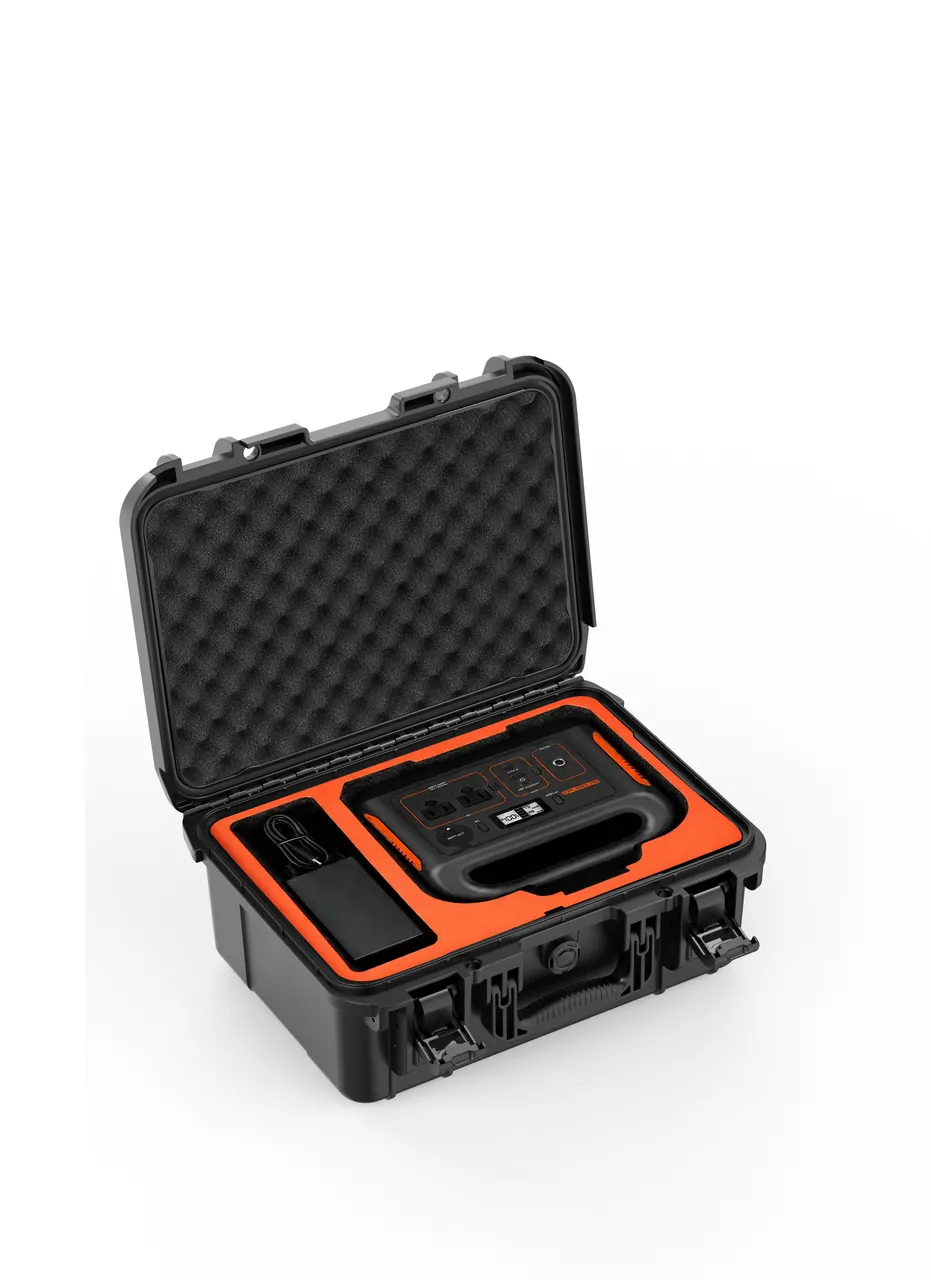
Depositor heads, piping nozzles, and extrusion heads determine the flow and pattern of biscuit dough, so any interior scratch shows directly on product appearance. These parts need dual protection: "inner seal plus outer cavity." First, food-grade silicone plugs seal the inlet and outlet to block dust and oil mist during transit; second, a CNC-carved EVA or PE foam cavity wraps the exterior, and the tighter the cavity fits the nozzle profile, the less it shakes. For multi-spec nozzle sets, a detachable divider tray is advised, with each bore getting its own slot whose inner wall is brushed to lower shedding. Nozzle bodies are often brass or stainless steel; brass parts need compatibility checks against some foams, and JUNZHIJIA includes a corrosion-indicator card with nozzle-class spares so arrival condition can be read at a glance. For a more systematic cushion liner selection, compare the density and rebound parameters of different foams.
Rust Prevention and Clean Packaging for Sandwiching Machines
A sandwiching machine includes hoppers, scrapers, conveyor belts, and metering pumps, presenting both food-contact faces and driven metal parts. Rust prevention focuses on exposed metal: before boxing, all steel parts receive a thin food-grade rust-proof oil, or are wrapped in VCI vapor-phase rust-prevention paper, but VCI paper must not touch food-contact faces. If the conveyor belt is food-grade PU or silicone, roll and stand it upright to avoid permanent creases from long flat pressure. The hopper interior is sealed in a PE bag with most air removed to reduce inner-wall condensation. The metering-pump gear is precise, so it gets its own small compartment filled with soft foam. Before closing the lid, place a humidity indicator card and desiccant (typical usage 50 to 80 g per cubic meter of box volume); a red card signals the box entered a high-humidity environment in transit. For toolbox hinge latch seal selection, the moisture-proof latch sealing parts apply equally to sandwiching-machine cases that rely on reliable lid seals.
Edge Protection and Cushioning for Rotary Cutting Knives
Rotary cutting knives slice the continuous dough sheet into shape; the edge is high-frequency hardened, hard yet brittle, and afraid of chipping and knocking. In the box, every knife must have "edge inward, back-to-back isolation": two knives face each other with a 3 to 5 mm soft isolation strip between edges, then strap them as a group; never let edges touch each other or hit the hard wall. The rest of the blade sits in an EVA groove whose depth covers the blade thickness plus a 2 mm allowance. For large circular rotary knives, use a vertical insert rack with independently molded slots to avoid stacking pressure. On acceptance, first inspect the edge with a magnifier for chips and burrs, then verify with a scrap-dough test cut. Such precision blades also suit the ISTA transport testing procedure, where drop and vibration validation confirm the liner cushioning is adequate.
Low-Shedding Storage for Embossing Moulds
Embossing moulds define the relief pattern on biscuit surfaces; the mould face has deep grooves and fine texture, and is most afraid of embedded fibers and dust that are hard to clean. Storage follows the same principle as rolls but emphasizes low shedding even more: the liner must be a closed-cell, non-pilling foam; ordinary open-cell sponge sheds and is forbidden. Before boxing, blow residual powder from the grooves with compressed air, then wrap each mould individually in food-grade PE film. Where several moulds share one bay, drop a machined PP divider between them and radius every edge, so a neighbour's relief face never gets grazed. A smooth PE film on the inside of the lid further reduces fiber shedding on open-close. JUNZHIJIA has delivered drawing-based molded liners for embossing and roll-class customers through the custom foam insert guide; the core lesson is that cavity fit matters more than material thickness, and better fit means less shedding and shifting.

Selection and Verification of Low-Shedding Liners
Low-shedding is the metric that separates a food-grade case from an ordinary industrial one. By shedding risk from low to high, liner materials rank roughly: closed-cell PE/EVA foam < polyurethane closed-cell board < open-cell sponge < recycled cotton. Prefer closed-cell materials, whose surface shows no pores and no fibers. Verification can reference the particle-counting idea used in cleanrooms: following the particle-concentration grading philosophy of ISO 14644 for controlled environments, place a test cloth of known cleanliness inside the box, simulate vibration, then count the shed particles. A simpler field check is the "white-cloth rub": draw a clean white cotton cloth firmly across the liner surface ten times, then compare the visible fibers caught before and after; a proper food-grade liner shows essentially none. At incoming audit, buyers usually ask for a liner conformity statement tied to the relevant GB 14881 hygiene clauses. Where a part needs both low shedding and a degree of rebound, the EVA foam custom process lists selectable density and hardness recipes to match.
Grease Protection and Cross-Contamination Control
During maintenance, biscuit-line parts often carry residual vegetable oil, cream, or machine lubricant. If these greases are cased together with food-contact faces in a sealed box, cross-contamination and odor transfer follow. The protection strategy has three layers. Layer one is individual sealing: every food-contact face is independently packaged in PE film or a food-grade bag. Layer two is zoning: rigid PP partitions separate "cleaned food-contact parts" from "oily driven parts" inside the box. Layer three is adsorption: place food-grade oil-absorbent cotton or small activated-carbon packs inside to capture escaping oil vapor. Note that lubricated parts must not contact VCI paper directly to avoid reaction; separate them with a PE film. For OEM makers shipping to multiple countries, grease packaging must also satisfy the destination customs hygiene declaration for food-related packaging. On the design of seal and shock cases, oil isolation is a required subject for hygiene-grade boxes.
IP67 Sealing and Transit Temperature-Humidity Control
The IP67 class, defined by IEC 60529 (the national counterpart GB/T 4208), means "dust-tight (level 6, complete prevention of dust entry) and protected against short immersion (level 7, no water ingress at 1 meter for 30 minutes)." For biscuit-part cases, the core value of IP67 is not immersion but blocking the high-humidity air, salt spray, and dust inside containers. Three details decide whether the class is really met: the box halves must meet on a flat face, the gasket must be a closed-cell rubber cord that stays elastic, and the latches must squeeze that cord by a controlled fraction — around 15 to 30 percent of its free height, at a hardness near 40 to 60 Shore A. On the climate side, biscuit spares dislike long spells of heat and damp, so place a data logger in the box and read its curve after arrival to see whether the load ever crossed the dew-point threshold. Field experience shows container interiors can swing roughly 20 degrees C between day and night; the moment box temperature drops below dew point, condensate forms on surfaces, which is why a sound seal and desiccant must work as a pair. A more advanced waterproof IP case can include a pressure-equalization valve that compensates for the pressure gap caused by changing altitude during air or mountain transit.

Vibration Buffering and Transit Compliance Testing
Random vibration and repeated drops in transit are the main external forces damaging parts. Cushion design should follow GB/T 4857 (Packaging, Basic Tests for Transport Packages) and the ISTA series, setting an allowable acceleration threshold per fragile part (typical experience value 20 to 40 g depending on brittleness) and back-calculating liner thickness and density. The common practice uses a rebound or cushion curve: EVA density 30 to 45 kg/m3 suits light to medium loads, while 60 to 80 kg/m3 suits heavy yet brittle rolls and die moulds. The validation stage recommends three trials: a fixed-frequency sweep to locate resonance peaks, a random-vibration profile that mimics mixed road and rail conditions, and corner-edge-face drop tests built on ASTM D4169 distribution-cycle clauses together with GB/T 4857.5 drop provisions. As an environmental test-method reference, MIL-STD-810H may be cited, though the case itself carries no military certification and this must be stated. Ahead of a volume shipment, JUNZHIJIA can prepare transport test reports against the exact standard the customer names, letting OEM plants lodge them straight into incoming-inspection files. The combination below works as a standard validation set for a biscuit spare case.
| Test item | Reference basis | Validation purpose | Setting approach |
|---|---|---|---|
| --- | --- | --- | --- |
| Fixed-frequency vibration | GB/T 4857 series | Locate structural resonance | Sweep, then log liner displacement and part acceleration peaks |
| Random vibration | ISTA series, ASTM D4169 distribution cycle | Reproduce mixed road and rail duty | Choose severity from real mileage and route surface |
| Corner-edge-face drop | GB/T 4857.5 | Prove cushioning margin under handling knocks | Pick drop height from gross case weight, corners and edges first |
| Immersion and dust | IEC 60529 / GB/T 4208 | Confirm the IP67 seal really works | 1 meter for 30 minutes, plus a negative-pressure hold check |
| Material flammability | UL94 | Assess burning behavior of plastics | Test case body and liner materials separately |
| Enclosure impact | IK rating | Quantify shell resistance to knocks | Set the class from the worst on-site impact scenario |
| Environmental testing | MIL-STD-810H | Provide temperature-humidity and vibration test methods | Method reference only; the product is not military-certified |
| Salt-spray reference | GB/T 10125 | Compare corrosion resistance between metals | Results compare relative performance only, never field life |
Mixed-Load Zoning and Packing Lists
An overhaul spare kit for a biscuit line often travels several parts to a box: rolls, nozzles, moulds, drive parts, and standard hardware together. Mixed loading is not itself the problem; unclear zoning is. Once a cleaned food-contact part shares a compartment with an oily drive part, all the earlier cleaning and wrapping is wasted. Zone by three axes: hygiene class, material, and fragility. Zone A holds cleaned food-contact parts such as forming rolls, depositor heads, and embossing moulds. Zone B holds non-food-contact metal drive parts such as sprockets, bearing housings, and couplings. Zone C holds lubricated items, grease, fasteners, and hand tools. Separate Zone A from Zone B with a hard PP partition at least 15 mm thick and chamfer its edges; if Zone C carries grease or chemicals, add an outer sealed bag so oil vapor cannot migrate into Zone A.
The first loading rule is a low, centered center of gravity. Gross weight per case should stay within an experience value of 25 kg, heavy parts sit on the box floor, and the center of gravity should not exceed one third of the internal clear height, otherwise the inertial moment during tipping shears the liner. The second rule is location rather than filling: wherever a moulded cavity can locate a part, never substitute loose foam chips, which migrate under vibration and shed dust that then becomes a contamination source. The third rule is verifiability. Include a packing list naming each part, drawing number, serial number, pairing relation, compartment number, packer, and date, and label the wall to match each compartment, so arrival staff can check cell by cell and catch missing or mismatched items at the box rather than at the assembly station.
For export consignments, add English descriptions, material codes, and net weights to the packing list so customs clearance and incoming inspection can share one document and avoid transcription errors. Note that zoning cannot replace individual protection: zoning prevents cross-contamination, while individual wrapping prevents surface scratches, and a sound program does both. When configuring cases for biscuit-line suppliers, JUNZHIJIA issues a loading drawing from the customer spare list, marking each cell size, partition thickness, and strap position, so different shifts build the same layout and the job can enter the site SOP and traceability record. Where two similar parts differ sharply in fragility, the drawing should carry "no stacking" and height-limit marks so the floor does not improvise extra layers.
FAQ
Q: Must a biscuit-line protective case really be food-grade, or can an ordinary industrial case substitute? A: From a compliance and risk standpoint, any container that transports or temporarily stores parts touching finished biscuits or dough should meet the hygiene requirements for food-contact surfaces, anchored on GB 14881 and the GMP general principles. Ordinary industrial cases are often recycled material or engineering plastic without food-grade surface treatment; they can release odor, shed fibers, and accumulate dirt in seams that are hard to clean. If you only ship external driven parts that never touch food, a short-term ordinary case is tolerable, but once a food-contact part enters the same box, cross-contamination risk rises sharply. The safer path is to standardize on food-grade cases with closed-cell EVA or PE foam liners. This satisfies hygiene audits and lets parts enter clean assembly on arrival, saving the labor and downtime of secondary cleaning and re-inspection. Over time, a professional reusable case beats disposable cartons on total cost because its reuse rate is far higher and its hygiene state stays controllable.
Q: Tunnel-oven mesh-belt sections are very long and will not fit a standard case, what then? A: Extra-long irregular belt sections truly cannot fit a standard box, so the industry practice is "sectional disassembly plus modular case sets." First detach the belt length by length, roll each onto a food-grade plastic core at controlled tension, and pack into several standard cases or custom long cases; rails and pins go to independent cells. If a client insists on integral transport, order a lengthened case of PP honeycomb panel with aluminum edging and internal evenly spaced support beams no farther than 400 mm apart to prevent sagging. Locate the belt so both ends rest on a beam rather than overhanging free air, because a cantilevered end will whip in transit and fatigue the mesh at the first support. Either way, attach a packing list and serial-number labels inside, and reassemble against the list on arrival. JUNZHIJIA supports custom case mold cost analysis based on belt pitch and total length; once volume reaches a threshold, the amortized tooling cost drops sharply and becomes cheaper than repeatedly using generic cases.
Q: How exactly do we verify a low-shedding liner, and what does factory acceptance look at? A: Accepting a low-shedding liner usually relies on two workable methods. The first is the white-cloth wipe test: take a clean white cotton cloth and wipe the liner surface firmly in one direction ten times, then compare visible fibers and debris before and after; a food-grade liner should show essentially no loss. The second references the particle-control logic of ISO 14644, placing a test cloth of known cleanliness inside the box, simulating transit vibration, then counting shed particles by size with a particle counter and requiring no significant new large particles. In addition, the liner material itself should provide a food-contact conformity statement or third-party test summary. Note that open-cell sponge and recycled cotton carry high shedding risk and are unsuitable for food-contact parts; closed-cell PE and EVA foam are safer, with no exposed pores and little fiberization, and combined with the cavity fit from the custom foam insert guide they further reduce friction shedding from shifting.
Q: Is IP67 truly necessary for biscuit parts, or is it over-engineering? A: For biscuit parts, IP67 matters less for "water immersion" and more for "dust rejection and moisture resistance." Ocean and road containers routinely hold high humidity, salt spray, and dust, and ordinary box gaps let these contaminants in, causing roll and belt rust plus nozzle oil absorption. The IP67 defined by IEC 60529 (national standard GB/T 4208) requires complete dust protection and short immersion survival; as a transit case it mainly delivers dust-tightness and spray resistance. The key is a continuous closed-cell seal strip plus latches with enough clamp force, not merely the rating label, and the strip should be checked for compression rebound rather than trusted on its printed shore value alone. If the route is short and permanently dry-clean, IP54 or IP65 may suffice; but for cross-border shipping, repeated handling, and outdoor staging, IP67 is a cost-effective floor. Paired with internal desiccant and a temperature-humidity recorder, it prevents condensation and mildew far more cheaply than post-arrival cleaning rework.
Q: How do we stop depositor heads and nozzles from inhaling oil mist and dust in transit? A: Nozzle cavities are extremely fine; once they inhale ambient oil mist or dust, the first production batch after reinstallation may show oil spots or blockage, so an "inner seal" is mandatory. Steps: after removal, clean the cavity with food-grade solvent and dry thoroughly, then seal the inlet and outlet with food-grade silicone plugs that fit the profile with no gaps; wrap the exterior in a CNC-carved EVA or PE foam cavity whose fit to the nozzle profile controls shake. Multi-spec nozzle sets should use a detachable divider tray with one slot per bore, the slot wall brushed to lower shedding. Brass nozzles need compatibility checks against some foams, and a corrosion-indicator card can sit in the box. On arrival, first pull the plugs and inspect cavity cleanliness, then blow out with compressed air before installation. The cushioning of such precision parts can reference the density table in cushion liner selection. Keep the plugs and a spare set with the part, because a plug lost on the floor is the fastest way to repeat the same contamination the inner seal was meant to prevent.
Q: What problems most often occur with rotary cutting knives and embossing mould edges in transit? A: Both categories most fear edge chipping and mutual impact. Rotary cutting knives are high-frequency hardened: hard yet brittle, so if edges touch directly or hit a hard wall they develop chips or burrs that show up on the cut biscuit shape. Embossing moulds have deep grooves and fine texture, most afraid of embedded fibers that resist cleaning, and a hard impact on the groove bottom distorts the relief. Protection points: knives must face edge-inward, back-to-back with a soft isolation strip, then strap as a group, never letting edges touch; large circular rotary knives use a vertical insert rack with independent slots; moulds get individual PE-film wrapping, hard PP partition separation, and a smooth PE film inside the lid to cut shedding. On acceptance, first magnify the edge, then test-cut scrap dough, and record the knife serial number and inspection result on the receiving sheet so a later complaint can be traced to the exact shipment and handling step. Vibration validation can follow the ISTA transport testing procedure to confirm liner cushioning survives drop and random vibration.
Q: How should we configure desiccant and humidity cards, and in what amount? A: Desiccant and humidity indicator cards are standard in food-grade transit cases to fight condensation from container day-night temperature swings. Desiccant dosage scales with box volume, with an experience value of 50 to 80 g per cubic meter; for long transit or hot-humid routes raise it toward 100 g per cubic meter. Prefer food-grade silica gel or montmorillonite desiccant to avoid leakage risk from calcium chloride types. Place one or two humidity cards where they are visible and not fully blocked by liner; reading the card color is the first action on opening, and red means the box met high humidity or water in transit and the relevant parts need re-inspection. Desiccant should sit in breathable small bags fixed in place so it cannot scatter and contaminate food-contact faces. In OEM batch plans, JUNZHIJIA writes desiccant dosage into the work instruction for consistency, a concept also seen in cold-chain food case humidity management.
Q: For OEM equipment makers ordering cases in volume, what documents can JUNZHIJIA provide? A: For biscuit-line OEM and equipment makers, JUNZHIJIA builds a documentation pack that starts at part assessment and ends at delivery, laid out so the buyer can file it straight into incoming-inspection and quality records without reformatting. A typical pack opens with EVA or PE cavity drawings plus a bill of materials traced to the 3D model the customer supplies, then adds a liner conformity note for food-contact use or a third-party test abstract, seal-compression and service-life data for the IP67 closure, and transit test reports written to whichever standard the buyer names, such as GB/T 4857, ISTA, or ASTM D4169. Export orders can be backed by material declarations and hygiene paperwork. Cases can be silk-screened with the buyer drawing number and a serial label for floor traceability. On the consulting side, model-matched seals and OEM factory selection helps the client weigh a molded cavity against a generic one from batch size and part mix, so small runs do not absorb tooling cost while hygiene and sealing targets still hold.
Q: How should the case itself be cleaned and stored to keep its hygiene grade? A: A food-grade case stays hygienic only if it is cleaned like the equipment it carries, because residue from the last load directly affects the next. After each return or arrival, blow loose dust and crumbs off the liner with compressed air, then wipe the inner and outer surfaces with food-grade detergent and pure water, spending extra time on the parting seam and the seal groove where residue hides and mold grows. Let the case air-dry in a clean room; direct sun ages the plastic, so keep it shaded. Check the seal strip for compression rebound twice a year and replace it once it hardens or cracks. Store the empty case dry, shaded, and off the floor with nothing unrelated inside, and leave the lid ajar when it sits idle for a long period. The procedure detailed in how to clean a protective case keeps a case in service for years, lowering per-use cost well below disposable packaging while keeping its hygiene state auditable.
Conclusion and Further Reading
Protecting biscuit-line components in transit means balancing verified hygiene, mechanical protection, reusability, and auditable compliance. A food-grade shell, a low-shedding liner, a sealed IP67 closure, and part-specific cavities together with documented transit testing let arrived spares move straight into clean assembly. JUNZHIJIA builds such programs for biscuit-line suppliers, from a single spare to a full batch.
Further Reading