Home / Boxknow / Cycling & Bike Gear Cases: Carry the Computer and Tools
Cycling & Bike Gear Cases: Carry the Computer and Tools
Published 2026-09-05
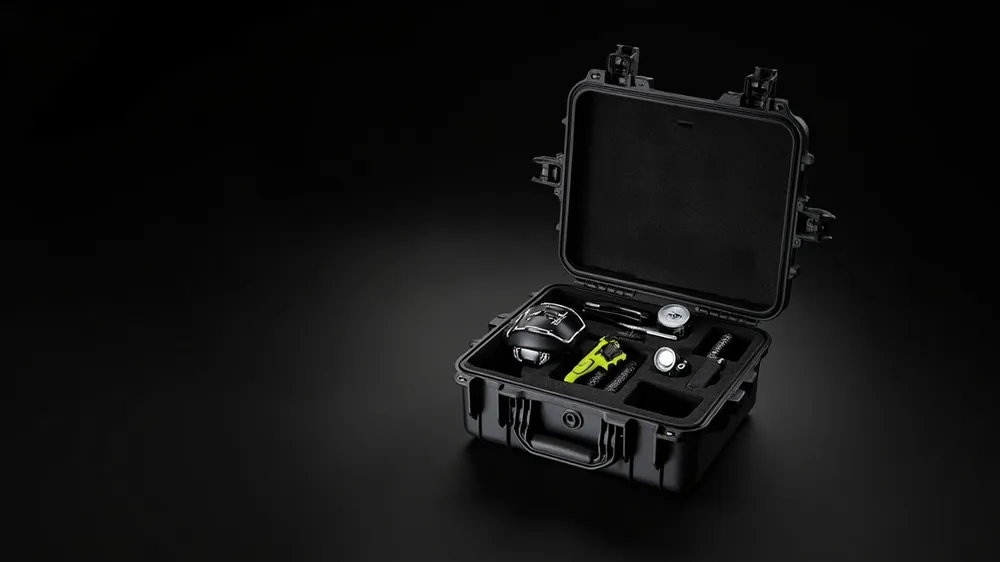
Cycling gear is 'precise and easy-to-lose' kit. A bike computer screen fears crush, a multi-tool's edges scratch, and lights and spares scatter. A soft bag resists dust but not drops; bare gear is both damaged and lost. A qualified bike case fixes the computer, separates tools, absorbs shock and protects gear through trunk and train tosses. This guide covers choice and use from a rider's view.
Three Kinds of Bike Risk
Computer loss: screen and card fear crush and drops.
Tool scratch: edges scratch other items.
Lost parts: small spares scatter and vanish.
Priority: computer care > tool separation > spare capture.
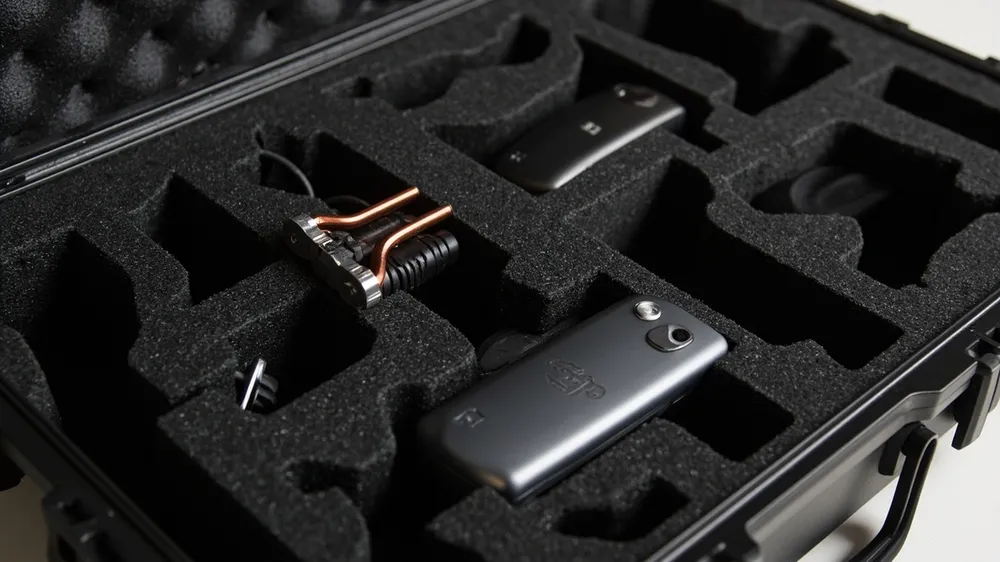
Cutouts fix the computer and isolate each tool from crush.
The computer screen is the risk point and must float in a hard cavity, not crushed. The idea follows drone foam design floating; the cavity method is in custom foam. In transit the computer is fixed alone and the screen gets a guard.
First, screen bottoms out cracks the computer. Second, tools crushed scratch. Third, spares scatter lost. Fourth, no metal pin loosens after thousands of cycles. Fifth, recycled resin, see virgin vs recycled. Sixth, no humidity control grows mold.
Summary
The key to a cycling and bike gear case is 'care for the computer, separate tools, capture spares, wheel it': floating cavities protect the screen and card, separate slots keep tools from scratching, small slots stop spares vanishing, and metal latches survive ride bumps. At order time, write the kit list (with computer model) and travel mode as clauses, then ask the supplier to show material and test proof. With the habit of 'computer floating in place, tools alone, spares in slots, dust off after return', bike gear stays sharp across many rides. For floating and separation, cross-read drone foam design and custom foam guide.
Bike cases reuse the same rigid discipline as tool boxes.
Q1: How to stop computer crush? A: Screen floats in a hard cavity, not bottoming; idea in drone foam design.
Q2: Separate the tools? A: Each tool in its own slot, see custom foam.
Q3: Take it on the train? A: Carry or check per rules, hard case in hard vs soft.
Q4: Need wheels? A: Wheeled saves effort with many parts, see wheeled case.
Q5: How to size? A: Measure the longest item and spare count, see how to size.
What is the essential difference between a cycling equipment case and an ordinary shipping box?
The essential difference is the value and load sensitivity of the contents. An ordinary shipping box only has to survive without coming apart, while a cycling equipment case carries carbon frames, wheelsets and components. Carbon fiber fears point shock and concentrated clamping, wheelsets fear lateral runout and spoke-tension change, and electronics fear moisture and static, so the case must solve surface-contact support, compartmentalized fixing, shock protection and scratch prevention, and be validated by drop and vibration testing rather than relying on a cardboard box and foam.
What should be watched when transporting a carbon fiber frame?
Carbon fiber fears point loads and concentrated clamping, so avoid gripping tube shapes with hard clamps in transit and instead use soft surface-contact supports with a larger contact area, and never stack several frames so that one is locally compressed. Also avoid hot car trunks and prolonged ultraviolet exposure, and provide relief at critical areas such as the seat tube and bottom bracket. Validate drop and random vibration per the GB/T 4857 or ISTA procedures, covering corners and the weakest frame areas, and agree the acceptable damage range.
How should wheelsets be fixed for transport?
Wheelsets deform and lose spoke tension when squeezed, so use separate wheel slots or wheel bags in divided compartments and never stack two wheels against each other. Fix by constraining both ends of the hub rather than pressing on the spokes, and fit rotor protection plates on disc wheelsets to prevent rotor deformation and oil contamination. For high-end carbon rims, cut the liner slightly larger than the rim with a cushioning allowance and limit axial movement so bumps cannot drive the rim into the case wall.
What validation does a complete bike in a case need to satisfy?
Air freight and parcel sorting impose drop and vibration conditions clearly more severe than ordinary road transport, so validate the whole package per the ISTA or GB/T 4857 series, stating drop height, drop orientations, vibration level and duration, and split the criteria into a package layer and a complete-bike layer. Also check the carrier dimensional and weight limits, and confirm oversize or overweight cases in advance so that non-compliant packaging does not lead to refused shipment or surcharges. Keep the validation report with the shipment so that a damage claim can be supported with data rather than opinion.
How should electronics such as computers, power meters and electronic shifting be protected?
Electronics are ESD-sensitive and moisture-sensitive, so give them separate compartments and anti-static bags, and use a dissipative liner with a grounding terminal. Batteries must follow transport requirements, avoiding short circuits and crushing, and their terminals should be insulated. For magnetic power meters and sensors, keep them away from magnetically sensitive parts. After arrival, run a functional self-check to confirm that transport has not loosened connections or shifted calibration. Store the electronics in the driest part of the case with a desiccant pack, and never let a loose cable or tool share their compartment, because a single knock on a screen or connector can be as costly as a frame repair.
What should be watched for disc brakes and rotors in transit?
Rotors are thin and prone to deformation and oil contamination, so fit dedicated protection plates or separate packaging and keep them away from hard objects; calipers and hoses should not be compressed or kinked, to prevent leaks or air ingress. Before shipping, confirm the pads are secured and the hose is not under tension. A bike with a hydraulic system should not be stored upside down for long periods, which reduces the risk of air bubbles entering the lines, and the brake feel should be checked before the bike is ridden.
How should the case be configured for air travel and parcel shipping?
Use a hard shell case with a custom liner, with the frame, wheelsets and components separately compartmentalized and fixed. The case should have a drop-resistant structure plus widened handles and casters for airport and courier handling. For very long frames, choose an extended case type and reinforce both ends. Add a checklist card and numbering for counting and handover, and where frequent shipping is expected, prepare replaceable hardware and reinforced corners to extend case life. Weigh the loaded case before the first trip and record it, since airline and courier limits are enforced at check-in and an overweight case is refused regardless of how well it is packed.
What should be checked most carefully when accepting a cycling equipment case?
Check that the frame support is surface-contact, that the wheelset fixing constrains both hub ends and that the liner relief is correct on the first article. Then verify representative drop and vibration items, liner dimensional consistency and hardware strength on sampled units, and for configurations with electronics spot-test static dissipation and grounding continuity. Also verify material certificates, test reports and the sampling plan, and write critical metrics into the technical specification so that verbal promises can be verified. Ask for one sample packed exactly as it will ship, because a case that performs well empty often behaves differently once the frame and wheels are loaded.