Home / Boxknow / DJ & Stage Event Cases: Move the Gear Without a Scratch
DJ & Stage Event Cases: Move the Gear Without a Scratch
Published 2026-09-05
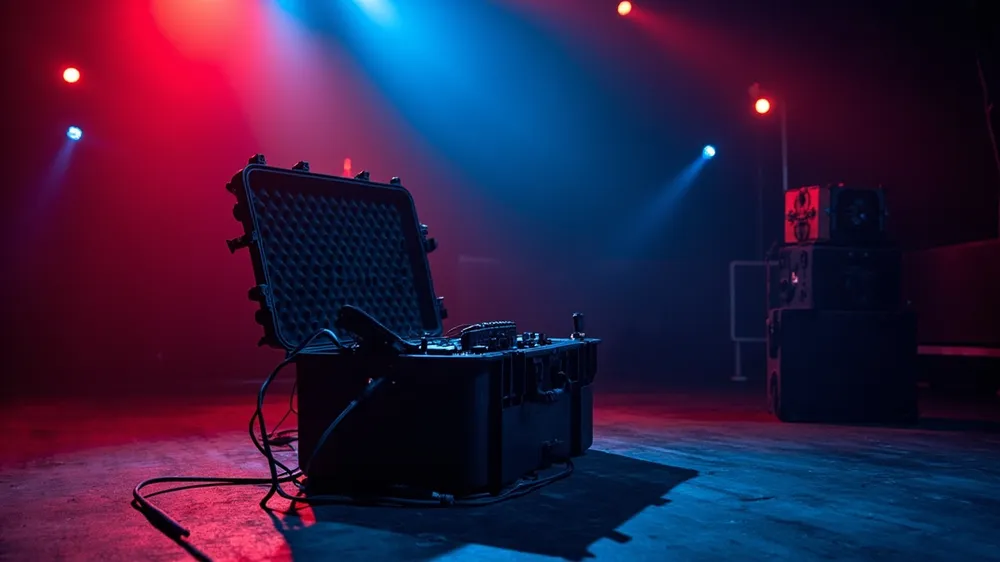
DJ and event gear is 'precise and scratch-prone' kit. A controller has knobs and faders, wireless mics fear crush, cables tangle and light lenses scratch. A soft bag resists dust but not drops; bare gear is both damaged and show-delaying. A qualified event case fixes the controller, separates mics, manages cables and protects gear while wheeled between venues. This guide covers choice and use from a stage view.
Three Kinds of Event Risk
Controller loss: knobs and faders fear crush and drops.
Mic loss: wireless mics fear crush and damp.
Cable mess: tangled cables waste the show.
Priority: controller care > mic separation > cable order.
Cutouts fix the controller and isolate mics and cables from crush.
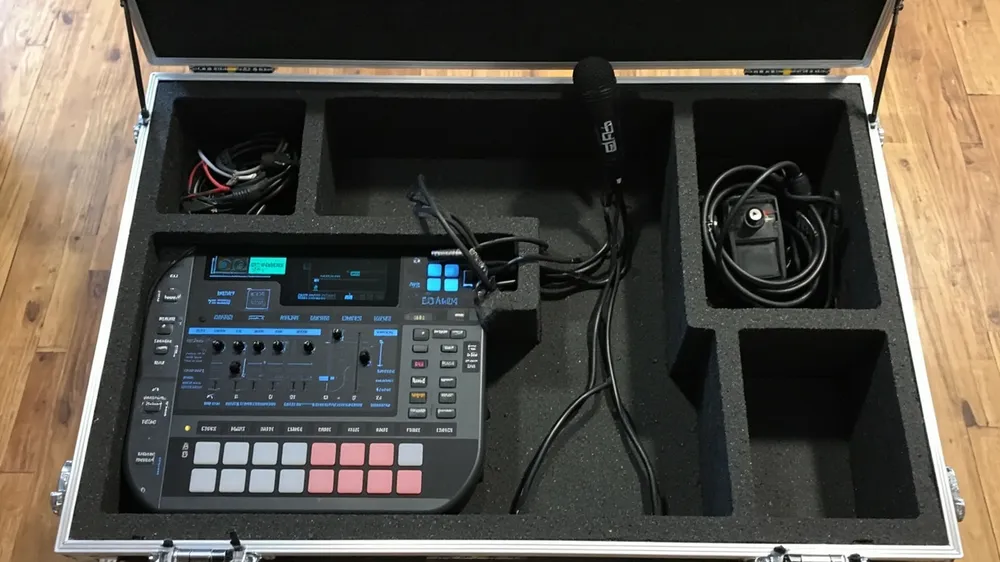
The controller panel is the risk point and must float in a hard cavity, knobs not bottoming out. The idea follows instrument case floating; the cavity method is in custom foam. In transit the controller is fixed alone and faders get a guard.
Mic Separation and Cables
Wireless mics and cables each need a home. Methods:
First, panel bottoms out breaks knobs. Second, mics crushed together. Third, cables tangled delay the show. Fourth, no metal pin loosens after thousands of cycles. Fifth, recycled resin, see virgin vs recycled. Sixth, no weight tag hurts the back.
Summary
The key to a DJ and stage event case is 'care for the controller, separate mics, order cables, wheel it': floating cavities protect knobs and faders, separate slots keep wireless mics from crushing, cable trays coil cables tidy, metal latches survive venue bumps, and wheels save carrying. At order time, write the kit list (with mic and light counts), cable spec and travel mode as clauses, then ask the supplier to show material and test proof. With the habit of 'controller floating in place, mics alone, cables in trays, dust off after return', event gear stays sharp across many tours. For floating and separation, cross-read instrument case and drone foam design.
Event cases reuse the same rigid discipline as pro cases.
Q1: How to stop controller crush? A: Panel floats in a hard cavity, knobs not bottoming; idea in instrument case.
Q2: Separate the mics? A: Each mic in its own slot, see custom foam.
Q3: Order the cables? A: Cable tray coiled, see broadcast case.
Q4: Need wheels? A: Wheeled saves effort between venues, see wheeled case.
Q5: How to size? A: Measure the longest item and mic count, see how to size.
What is the difference between a DJ and stage equipment case and an ordinary flight case?
The essential difference is the high value of the payload and the frequency of handling. An ordinary flight case is mostly used for static storage and occasional transport, while a stage equipment case carries DJ controllers, mixers, players, lighting fixtures and cables through repeated loading, stacking and vibration on tour. Besides shock, moisture and dust protection, it must therefore solve panel relief, independent compartments, quick-release design and replaceable hardware, and be validated by vibration and drop testing so that it stays reliable after many moves.
How should DJ controllers and mixers be protected in transit?
The panel of a controller or mixer concentrates faders, knobs and buttons, which are most vulnerable to local compression and rubbing. The liner should relieve the panel as a whole so that the chassis sides or base take the load, faders and crossfaders should have protective caps or separate cushioning, and units should be in independent compartments and never stacked on each other. For an all-in-one controller, use a cut EVA liner that suspends the unit and limits horizontal movement so faders and knobs are not struck on rough roads.
How should lighting fixtures such as moving heads and par cans be fixed for transport?
The yoke and lens of a moving head are vulnerable, so lock the yoke or engage the transport lock in transit and provide relief in front of the lens and optics to prevent compression and impact; detach brackets and rigging hardware and pack them separately so the body is not twisted. Par cans and wash lights are relatively robust, but the lens should still not touch hard objects. Every fixture should take its load through the base with movement limited, preventing stacking from cracking a lens or deforming a housing.
How should cables and connectors be stored so they do not damage equipment?
Provide dedicated cable channels and coil cables to their minimum bend radius so they are not kinked, and fit protective caps or soft separation on connectors to prevent pin deformation and oxidation. Store signal and power cables separately to reduce interference and tangling. Cables should not share a compartment with equipment, because transport vibration will scratch housings and pulling will damage connectors. For multi-core and specialty cables, add number labels so they can be quickly reconnected on site. Use removable dividers so the layout can be changed for a different rig, and keep a spare set of the most-used cables in a marked pocket for fast replacement.
What needs special attention in high-frequency touring use?
Touring means many handling cycles and high stacking, so favor quick-release latches and replaceable hardware to avoid scrapping a whole case when a latch fails, and provide stacking features and casters so one person can move it. Validate vibration and drop per the ISTA or GB/T 4857 series, focusing on corners and latch positions, and split the criteria into a case layer and an equipment layer so the case is still reliable after repeated handling. Label each case with its contents and owner so a truck load can be counted in minutes, and schedule an annual hardware inspection before the busiest season rather than during it.
What protection rating does an outdoor performance scene need?
Open-air performance must cope with rain, dust and temperature swings, so IP65 or better is recommended; for heavy rain or possible wading, IP67 is advised, meaning fully dust-tight and able to survive immersion at 1 meter for 30 minutes. Ratings are judged per GB/T 4208, equivalent to IEC 60529, so require a test report with a defined sampling plan. Also place desiccant and a humidity indicator card inside so equipment does not take on moisture in a sealed, humid case.
How should ESD and power be handled for electronic equipment?
Controllers and players with chips are ESD-sensitive, so use a dissipative liner with a grounding terminal and bag the equipment in an anti-static bag before it goes into the case. Store power supplies and batteries in separate compartments to prevent short circuits and crushing, and insulate the terminals; capacitor-based spares should be discharged as required before shipping. Where on-site power is needed, reserve a power position and cable channels inside the case to reduce repeated handling and connector wear. Wear an anti-static wrist strap when opening the case in a dry venue, and avoid laying circuit boards on synthetic carpet or plastic sheeting during a quick changeover.
What should be checked most carefully when accepting a stage equipment case?
Check that panel relief is correct, that the equipment takes its load through the base or sides and that latches and handles are reliable on the first article. Then verify representative vibration and drop items, liner dimensional consistency and hardware corrosion resistance on sampled units, and for configurations with electronics spot-test static dissipation and grounding continuity. Also verify material certificates, test reports and the sampling plan, and require a replaceable-hardware list for long-term maintenance and on-site emergency replacement. Test one case fully loaded with the real rig, because an empty case can pass a drop test that a loaded one would not survive.