

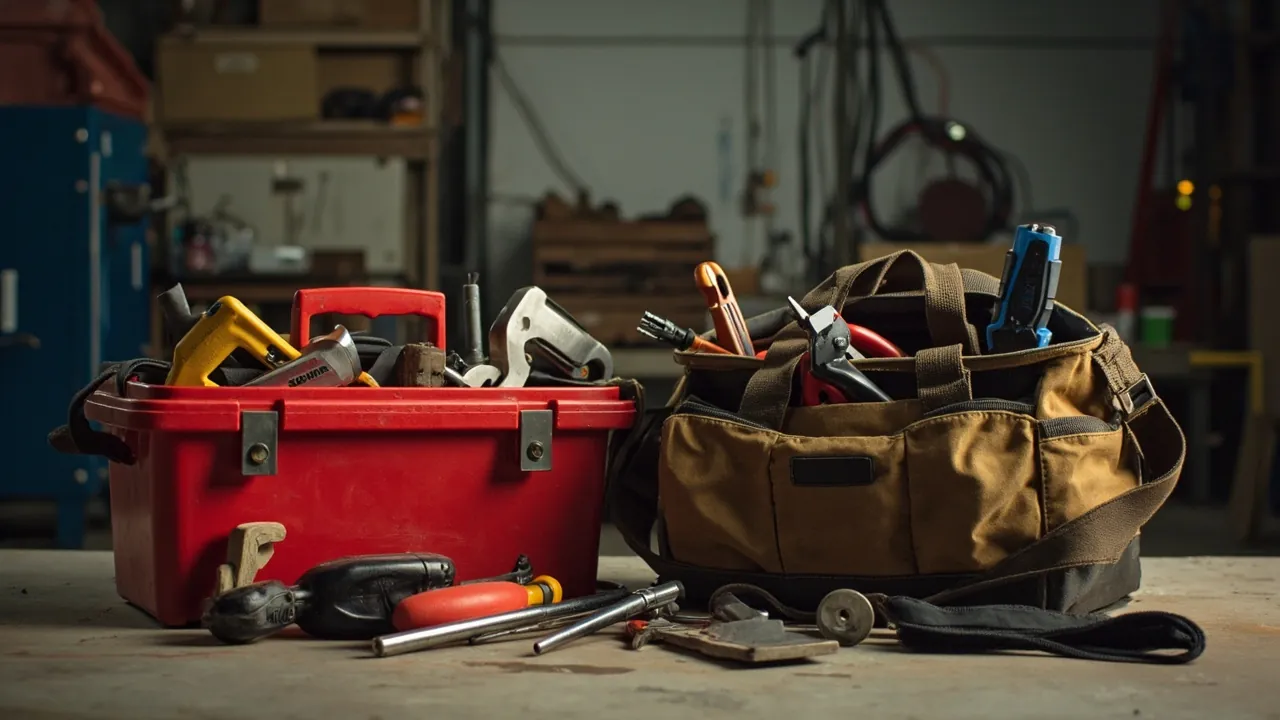
Verdict first: although both segments shop for a "hardware toolbox", they are buying two fundamentally different products. A household might open its case a dozen times a year, so what matters is consolidating loose tools, occupying minimal space, and staying shut when children are around. A professional electrician opens and closes the case dozens of times a day, often climbs ladders with it, and works in dust and damp; what matters there is reliability over tens of thousands of hardware cycles, insulation discipline for live working, and a layout that lets the right tool be found under time pressure. Apply one shared checklist — is it big, is the plastic thick, is it cheap — and the outcome is predictable: households get something too heavy and too fussy that ends up gathering dust, while crews get cases whose latches fracture within months and whose insulated tools are stored alongside sharp steel.
This article is written for buyers configuring at scale: property management companies, fit-out contractors, outsourced power maintenance firms, appliance brand service networks, and wholesale distributors supplying household tool kits. We break selection into eight blocks — duty scenario, safety boundary, sizing arithmetic, material trade-offs, organisation logic, ergonomics, hardware service life and whole-life cost — and provide a fill-in requirement template plus comparison tables you can drop into a tender document. One warning from experience on bulk programmes: when household-grade parameters are copied directly onto cases destined for field crews, return rates climb measurably. Treating the two populations separately from the outset is not pedantry; it is the cheapest available quality insurance.
Table of Contents
- Start with the verdict: two requirements masquerading as one product
- Scenario breakdown: five typical home tasks
- The professional electrician's duty profile: live work, ladders, high cycle counts
- Twelve dimensions compared in one table
- Safety boundaries: insulated tools, IEC 60900, and what the case contributes
- Sizing: deriving required volume from the tool list
- Material trade-offs: households optimise for weight, professionals for weather resistance
- Organisation logic: trays, custom foam and modular combinations
- Load, carrying and ergonomics: someone has to climb a ladder with this
- Latches, hinges and sealing: when dust matters more than rain
- Budget structure: purchase price is only part of whole-life cost
- Implementation: five steps from requirement sheet to purchase order
- FAQ
- Closing remarks and related reading
Start with the verdict: two requirements masquerading as one product
The divergence begins because the two groups are resolving different constraints. Grasp this and every subsequent trade-off resolves itself.
The household constraint set is low frequency, tight storage, and non-professional users. A typical home reaches for its toolkit somewhere between ten and a few dozen times annually; the rest of the time the case occupies scarce real estate in a store cupboard, balcony cabinet or garage wall rack. Anyone in the family may open it, so intuitive layout beats fine-grained layout — if users have to hunt, they stop using the case. There is also child safety to consider, which means the closure should resist a curious toddler. Everything points toward: light weight, compact dimensions, obvious organisation, lockable, modest price.
The electrician's constraint set is high frequency, hostile environments and traceable responsibility. Assuming thirty open-close cycles a day across roughly 250 working days, that is about 7,500 cycles a year and more than 22,000 over three years — already at or beyond the design life of many consumer-grade latches. Environments include shells under construction (dust, cement debris, wet patches), basement distribution rooms (humid, sometimes corrosive atmospheres, condensation on temperature swings) and outdoor switchyards (sun, rain, freezing winters). More importantly, the work involves live circuits: whether tools are insulated, whether insulation is intact, and whether an ordinary tool might be grabbed by mistake as an insulated one are all matters of personal safety and corporate liability. That points toward: heavy-duty hardware, impact-tolerant structure, an explicit ingress rating, insulation-aware organisation, and serviceability under repeated disassembly.
A useful analogy: the household case is closer to a storage product, assessed on furniture-like criteria; the electrician's case is closer to work equipment, assessed on personal-protective-equipment-like criteria. Confusing the two is the root cause of most bad purchases. A structured comparison of the two product families is available in industrial versus household toolboxes.
A third difference is routinely overlooked: batch size and replacement logic. Households buy once and replace on failure. Bulk buyers must think about spare-part availability across a three-year horizon, model continuity, and within-lot consistency — including colour consistency, which matters far more than expected when a company's visual identity is applied to hundreds of units. Contracts should therefore state hardware supply years, whether seals can be ordered separately, and the tolerance for batch-to-batch colour variation.
Scenario breakdown: five typical home tasks
Before assigning parameters, list what people actually do. Five scenarios cover almost every household need.
One, everyday small repairs. Changing a lamp, tightening a hinge, assembling flat-pack furniture, hanging pictures. Tools involved are typically a screwdriver or multi-bit driver, a hammer, an adjustable wrench, electrical tape, spare screws and wall plugs. Volumes are small and the cost of a missing item is low, but the demand for immediate access is absolute — this is where badly organised cases get abandoned.
Two, appliances and consumer electronics. Removing a monitor base, swapping a router, adjusting bicycle brakes. The required items are small precision bits, pry tools and cable ties: physically tiny, wildly varied, and the easiest category to lose.
Three, seasonal maintenance. Washing air-conditioner filters, oiling window tracks, leak-checking gas joints with soap solution. These jobs are rarely performed but absolutely required, which makes consolidated storage and clear labelling the dominant requirement.
Four, small decoration projects. Wallpapering, fitting curtain rails, building basic shelving. These temporarily introduce drills, spirit levels and tape measures, so the case needs short-term expandability through removable trays or external pouches.
Five, emergency reserves. With home preparedness awareness rising, torches, whistles, compact window breakers and extinguisher check sheets increasingly share space with tools. Their one requirement is a fixed home that daily clutter will not displace.
Distilled into technical requirements, four statements follow: no high ingress rating is necessary (up to IP54 is ample); partitions must be clear and fixed; weight should be low (empty mass typically in the 1.5 to 3 kg band as a typical value); and a hand grip beats a shoulder strap. Where cases serve as premium gifts in home-decor packages, surface quality also earns weight — often underrated in channel programmes.
The professional electrician's duty profile: live work, ladders, high cycle counts
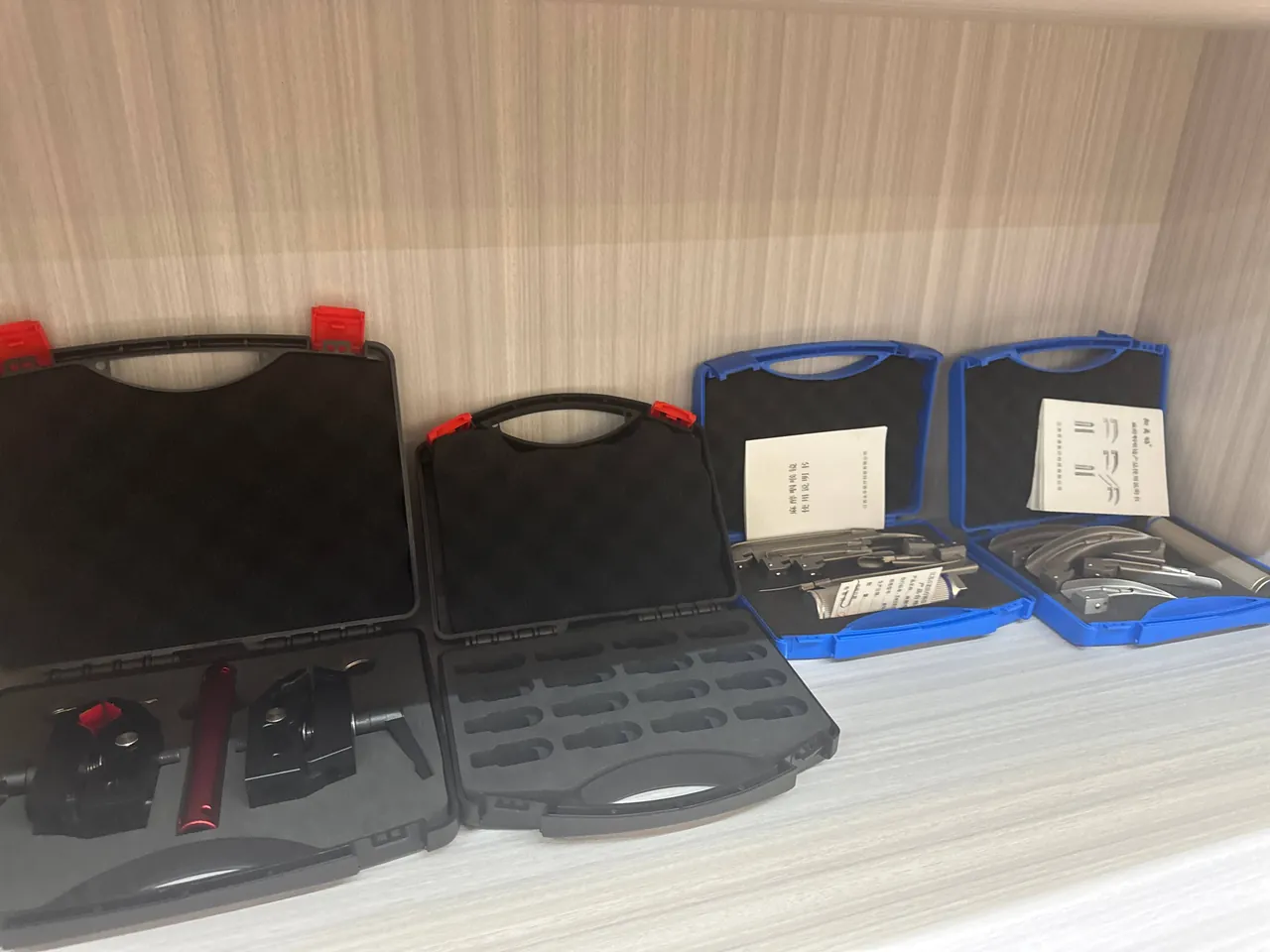
Three parameters separate professional behaviour from domestic behaviour: frequency, environment and liability.
Frequency makes hardware fatigue the principal contradiction. As computed above, 22,000 cycles over three years is routine. Consequently a professional case must treat latch reciprocating fatigue, hinge pin wear and resistance to brittle cracking in snap features as core acceptance items. Request evidence: reciprocating cycle data, drop data and low-temperature drop data. It is common practice to set thresholds somewhere in the several-thousand to ten-thousand cycle band as a typical starting point, adjusted by the acceptable cost of a field failure.
Environment dictates structure and ingress rating. The three settings already named — rough building sites, distribution rooms, and outdoor switchyards — jointly demand IP54 as a floor, IP65 whenever outdoors is routine, corrosion-resistant hardware, and resin with UV stabilisation plus low-temperature toughness. Note that in fit-out dust, dust is frequently more damaging than water: it contaminates multimeter sockets, settles on insulated tool surfaces where it can support unwanted conduction paths, and abrades hinges and threads. The reasoning is explored further in what dust protection actually delivers.
Liability dictates zoning and labelling. This is the deepest difference and the one most often missed. Insulated tools must be stored apart from uninsulated ones for three reasons: an insulation layer abraded or cut by a sharp steel edge may no longer protect; mixed storage breeds the habit of grabbing whatever is nearest; and incident review requires a defensible physical boundary when reconstructing tool condition. Product consequences follow — zones with a clear identifier (visible colour boundary for the insulated zone), fixation that prevents transport collisions, a contents card or silhouette printed inside the lid for rapid stock checks, and space for periodic inspection records. Where fleets carry many tools across varied job types, modular organisation is the natural answer; the design principles are set out in modular internal structures.
Twelve dimensions compared in one table
The table below places both populations in one coordinate system and doubles as a scoring sheet during bid evaluation.
| Dimension | Home user | Professional electrician | Why they differ |
|---|---|---|---|
| --- | --- | --- | --- |
| Usage frequency | A dozen times a year | Tens of thousands of cycles a year | Determines whether hardware fatigue is primary or secondary |
| Primary metric | Intuitive storage, low weight | Reliability, safety | User expertise differs |
| Size and mass | Compact, empty mass ideally under 3 kg | Medium to large, heavier acceptable | Home storage is scarce versus sites needing one trip |
| Organisation | Fixed bays plus tray | Reconfigurable bays plus insulation separation | Tool count and variety |
| Ingress rating | No mandatory requirement | IP54 floor, IP65 outdoors | Dust and rain exposure |
| Hardware | Plastic latch acceptable | Metal pin plus reinforced nylon, fatigue data required | Cycle count gap |
| Shell material | Light PP or ABS | UV-stabilised PP or PC alloy | Outdoor exposure and low-temperature handling |
| Temperature range | Indoor ambient | Typically -20 °C to +60 °C | Winter outdoor work |
| Load and carrying | One-hand lift | Shoulder carry, ladders, sometimes two-person | Ergonomic priority |
| Labelling | Optional | Insulated versus standard mandatory | Liability requirements |
| Expected life | Five years with no intervention | Three to five years with replaceable hardware | Wear accumulation |
| Purchasing focus | Unit price, appearance | Whole-life cost, parts availability | Replacement logic |
One practical warning: resist inventing a compromise that serves both. Compromises disappoint everyone — too expensive and heavy for households, too fragile for crews. The correct response is two separate SKUs: a domestic line (light, inexpensive, attractive) and a professional line (dependable, maintainable, safety-zoned). Distributors who adopt this structure generally see margin improve, because the professional line generates recurring parts and repeat orders rather than a single transaction.
Safety boundaries: insulated tools, IEC 60900, and what the case contributes
This section needs care because it touches human safety. Establish three facts.
First, insulation performance belongs to the tool, not the box. Insulated screwdrivers, pliers and strippers are insulated by their own dual-layer construction, governed internationally by **IEC 60900, *Live working — Hand tools for use up to 1000 V a.c. and 1500 V d.c.* That document specifies dimensions, insulation material and thickness, dielectric test voltages and durability marking — commonly a dual-colour scheme where a different-coloured intermediate layer is exposed once the outer layer is damaged, acting as a retirement signal. A toolbox cannot convert an ordinary tool into an insulated one.**
Second, the case decides whether an insulated tool stays insulated. Insulation fears three things: cutting and abrasion, solvent attack, and prolonged deformation under load. If insulated pliers share an open compartment with files, blades or saw blades, transport vibration grinds the outer layer; left in a truck bed where summer surface temperature can climb far above ambient, some polymers age prematurely. A professional case must therefore provide soft-contact fixation (milled EVA or EPE slots), physical separation from steel tools, and storage guidance avoiding permanent direct sunlight.
Third, inspection is a system, not a feature. Pair procurement with three procedures: pre-stow inspection for exposed dual-colour indication and cut damage; monthly inspection by eye and hand for hardening, cracking or tackiness; and clear assignment of annual dielectric testing responsibility, which normally sits with the safety department while the case merely supports it. Print the procedure on a label inside the lid — vastly more effective than burying it in a manual.
A practical recommendation: give each crew either two cases or one case with unambiguous separation — one marked "insulated tools only", the other for general tools, consumables and instruments. If budget permits a single case, at minimum apply "insulated tools in the upper tray, ordinary tools below" with colour separation. Write this explicitly into the specification; retrofitting it later is painful. The underlying principle — tools must not touch each other — is shared with precision instrument storage, discussed in shockproof cases for precision tools.
Sizing: deriving required volume from the tool list
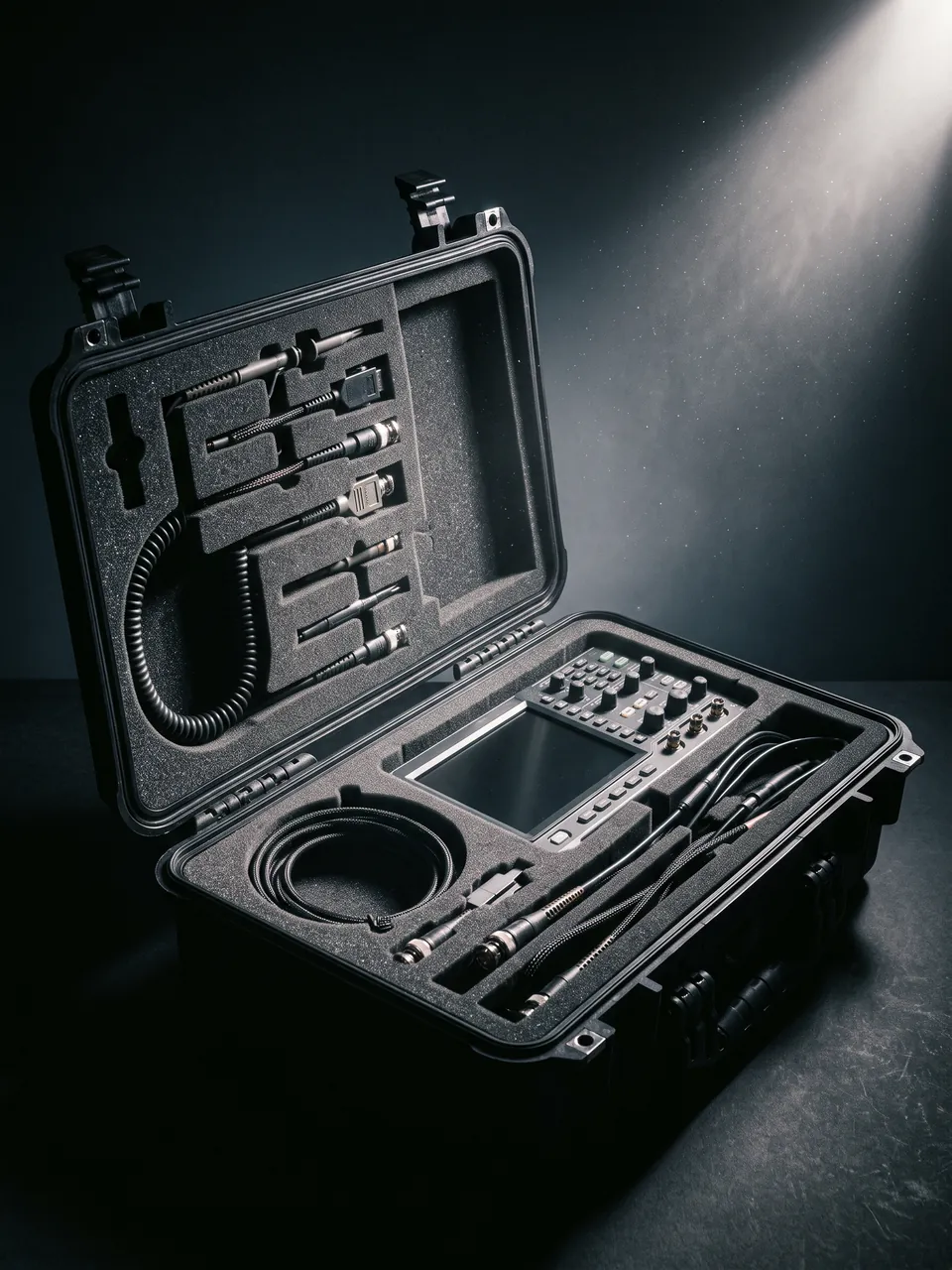
Whether domestic or professional, volume must be derived from the tool list rather than by buying a box and packing it tight. Five steps follow.
Step one, list. Classify every tool as "always carried", "frequently used" or "occasionally used", and record overall dimensions in millimetres plus mass. Most people discover at this stage that their holdings are far larger than imagined — which is precisely how the wrong box gets bought.
Step two, compute base volume. Sum the "always carried" volumes as V1, then add frequently used tools at seventy per cent and occasional ones at forty per cent (empirical coefficients reflecting that not everything travels at once). Required volume Vreq ≈ V1 + 0.7 × V2 + 0.4 × V3.
Step three, apply a fill factor. Irregular shapes, wall thickness and insert thickness all consume space, so multiply Vreq by a fill factor of 1.4 to 1.8 (typical values: lower for small regular items, higher when bulky irregular items such as drills or levels are included). The result is the required internal usable volume.
Step four, cross-check external dimensions. Internal volume and outer envelope are separated by wall thickness, ribs, protruding handles and wheel assemblies, so internal volume usually represents only sixty to seventy per cent of the gross envelope (typical value). Always verify against the manufacturer's stated internal dimensions.
Step five, validate ergonomics and transport. Domestic cases must lift one-handed and fit their intended shelf bay; professional cases must pass through doorways, operate one-handed from a ladder, and remain movable when full. Widely applied practical guidance: keep frequently carried loaded mass at or below roughly 15 kg, beyond which wheels or splitting the load into two cases become preferable. More detailed workflows appear in how to choose toolbox size and toolbox capacity calculation.
| Item | Household starter set | Professional electrical set |
|---|---|---|
| --- | --- | --- |
| Always carried (examples) | Multi-bit driver, claw hammer, adjustable wrench, long-nose pliers, tape measure, utility knife, voltage tester | Insulated screwdriver set, insulated long-nose and diagonal pliers, wire stripper, multimeter, voltage tester, adjustable wrench, ladder accessories |
| Always-carried volume (typical) | Around 2.5 L | Around 6.5 L |
| Frequently used (examples) | Hex key set, cable ties, electrical tape, spare screw box | Electrician's knife, cable cutter, crimping tool, wrench set, compact torch, label printer |
| Recommended internal usable volume | Roughly 5–7 L | Roughly 14–20 L |
| Recommended loaded mass ceiling | 6 kg | 15 kg |
| Wear while climbing ladders | No | Yes, prioritise shoulder strap and one-handed opening |
Material trade-offs: households optimise for weight, professionals for weather resistance
Material selection is a balance across five variables: weight, stiffness, weathering, low-temperature toughness and cost.
Household: weight first, adequate weathering. Cases live indoors, so ultraviolet exposure, thermal cycling and rain are minor threats and the emphasis stays on weight and price. Standard injection-moulded PP or ABS dominate: PP is lighter, tougher and cheaper, suited to general storage; ABS is stiffer with better surface quality, taking fine textures or gloss finishes, and fits premium gift packaging. The trade-offs are covered in PP versus ABS toolboxes. Glass fibre reinforcement is normally unnecessary domestically, since it adds mass for benefit rarely needed indoors.
Professional: weathering and low-temperature toughness first, weight negotiable. Field cases face summer sun and winter cold, so two specifications matter most: heat deflection temperature (HDT, per GB/T 1634 and the ISO 75 family) and low-temperature brittleness. A reasonable working gate is HDT at or above 80 °C with a low-temperature brittleness threshold at or below -20 °C (typical values; harsh regions should tighten them), because dark shells in direct sun reach surface temperatures far above air temperature, while northern winter sites may fall well below freezing. These requirements usually point to UV-stabilised PP, glass-filled PP, or PC/ABS blends.
There is a subtlety with filled materials: glass fibre lowers shrinkage and improves dimensional stability, yet increases warpage tendency through non-uniform fibre orientation, which can leave the sealing face non-planar. Alongside the resin grade, therefore, request an explicit flange flatness tolerance for professional lines.
| Material | Empty mass impression | Drop behaviour | Weathering | Low temperature -20 °C | Best fit |
|---|---|---|---|---|---|
| --- | --- | --- | --- | --- | --- |
| Standard injection PP | Light | Good, tough | Fair, needs UV masterbatch | Good in copolymer grades | Home and light DIY |
| ABS | Medium | Good | Fair, prone to yellowing | Watch for embrittlement | Upper domestic, small precision items |
| UV-stabilised PP | Light | Good | Good | Good | Entry professional outdoor duty |
| Glass-filled PP | Slightly heavier | Excellent, though fibre bloom is a risk | Good | Good | Heavy-duty and large-format cases |
| PC/ABS blend | Medium | Excellent | Fair | Good | High-impact professional cases |
| Metal, aluminium or stainless | Heavy | Excellent structurally, but dents | Needs surface treatment | Highly conductive, feels cold | Specialised heavy loads or vehicle mounting |
A dedicated treatment of the metal question sits in plastic versus metal toolboxes. Briefly: unless there is a specific heavy-load, mounted or fire requirement, plastic wins for hand-carried duty, because a metal case of equal volume typically weighs two to three times as much — and crew members, not specifications, carry that difference every day.
Organisation logic: trays, custom foam and modular combinations
Organisation shows the clearest split between the two audiences, and is the stage most often reworked after delivery.
Option one: fixed dividers plus a lift-out tray. Typical for households — an open lower compartment with a compartmented tray that lifts clear. Cheap, universally usable, and reconfigurable by the owner at will. The drawback is that tools migrate and collide during transport, dulling edges, knocking instruments out of calibration and abrading insulated surfaces over time. Acceptable where precision is not critical and travel distances are short, which is exactly the domestic case.
Option two: custom-milled foam inserts (EVA or EPE). Slots routed to match each tool give every item one home. Benefits are instant visual stock-taking (shadow management), zero tool-to-tool contact during transport, and immediate detection of missing items. Costs are higher unit price, retooling whenever the tool set changes, and reduced volume efficiency because foam occupies space. This suits core insulated tool sets and precision instruments; the differences between the two foam families are set out in EPE versus EVA foam.
Option three: modular combinations (boxes, rails, hook-and-loop systems). Independent small bins or movable partitions can be rebuilt per job type. Best flexibility and reuse — one shell covers many tasks — at the price of requiring user discipline and a meaningful initial configuration effort. This fits maintenance teams handling varied work orders, which is the territory of modular internal design.
Our composite recommendation for fleet buyers is: professional lines should combine a fixed core with a modular periphery — secure the mandatory insulated tools and multimeter in foam, and organise consumables, terminals, screws and labels in removable bins. That protects safety-critical items while preserving adaptability across sites.
One overlooked area deserves attention: the inside face of the lid, usually the least utilised surface in the whole box, yet ideal for work instructions, tool inventories and monthly inspection records. Specify a document pocket or transparent card slot there; the cost is trivial and the utilisation is high.
Load, carrying and ergonomics: someone has to climb a ladder with this
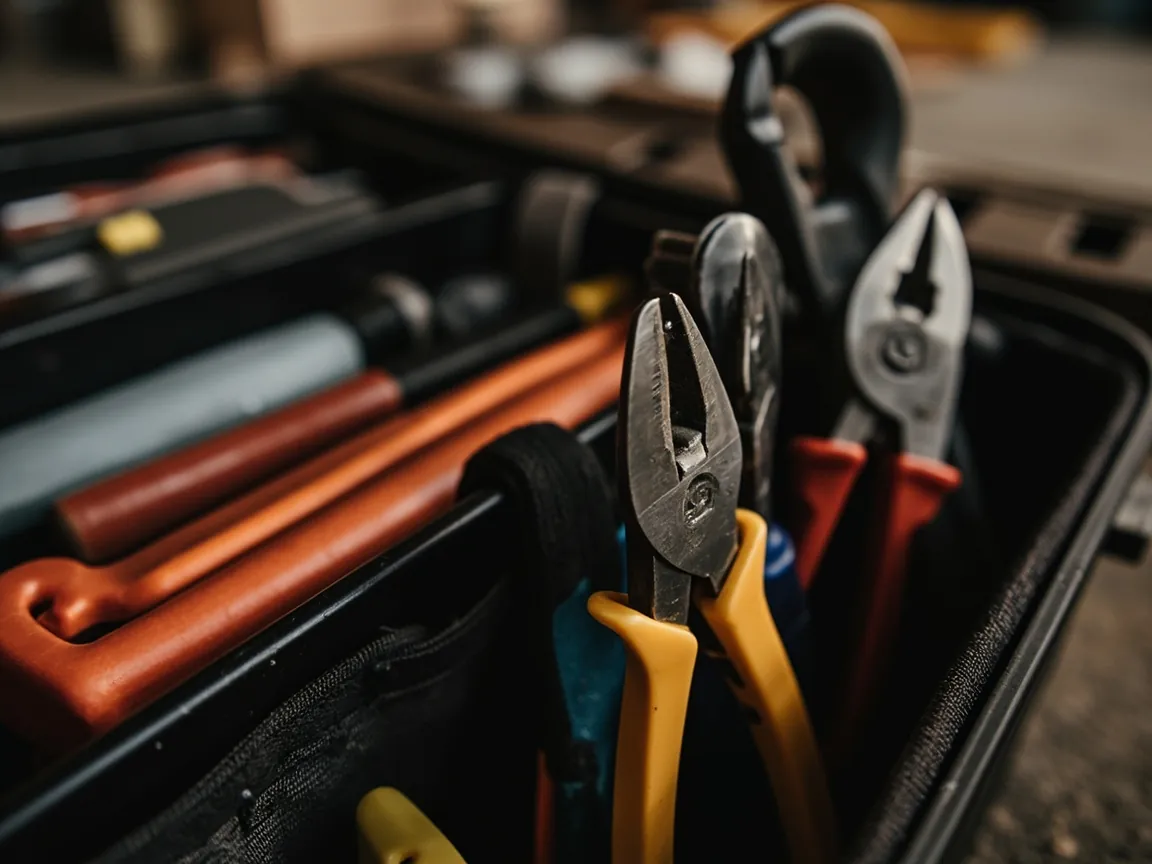
Weight is too often read as a number, when in practice it answers a single question: can this case reach the place it is needed?
Start with the limit. Occupational lifting limits vary by jurisdiction, but common practice is to keep single-person frequently carried loaded mass at roughly 15 kg or below, beyond which wheels or splitting the load become preferable (typical value, to be reconciled with local occupational health rules and lift frequency). Critically, the burden is loaded mass — shell plus contents — not empty weight, and many datasheets emphasise how light the empty case is.
Three carrying modes follow.
Hand carry is universal but mass-sensitive. Domestic grips need enough width to avoid cutting into the hand — a single-hand grip width of not less than roughly 90 mm is a reasonable working figure as a typical value. Professional grips additionally need glove clearance: in winter, bulky gloves make a narrow grip almost impossible to hold.
Shoulder carry frees both hands and is essential for ladders and stairwells, but it depends heavily on strap width, since narrow straps under load cause discomfort that makes users abandon them. It also introduces dynamics: a shoulder-borne case swings with the body, imposing additional inertial loading on the latches, so closure security must be higher. A practical approach is a clip-on harness where the shell hangs from attachment points rather than permanently loading strap tension.
Towed movement suits long distances on one floor. Consider that wheels add mass and volume, and on typical site surfaces plastic wheel wear and axle strength are frequent failure points; the detailed analysis is in industries served by trolley toolboxes. Where work happens on stairs, scaffolding or narrow corridors, wheels become a liability rather than an asset.
Two further ergonomic details matter: whether opening requires two hands (electricians on ladders usually have one free, favouring gravity or rotary latches openable single-handed), and whether the case stands stably, with adequate flat base area and non-slip feet so it does not slide on a sloping floor. Specifications rarely include these, yet field feedback concentrates on them.
Latches, hinges and sealing: when dust matters more than rain
Hardware separates the two categories more sharply than anything else, and it is where warranty costs concentrate.
A sensible domestic configuration is simple plastic or light metal latches, a single pair of hinges and no meaningful seal. Given low cycle counts and benign surroundings, anything more is over-engineering. One exception applies: if the case will live in a damp basement, garage or on a balcony, provide at least basic splash protection and a drainage path, because once water gets in, rusting tools stain the interior permanently.
Mandatory for professional cases: a secondary lock to prevent accidental opening in transit, metal latch pins with glass-filled nylon claws, one-hand operable gravity or rotary latches, full-length hinges with dust caps, and a continuous, properly specified gasket. Secondary consideration — opening noise. Loud metallic snapping is tolerated on a construction site, but complaints follow quickly when crews work in occupied homes, hospitals or schools; this appears surprisingly often in property-management tenders.
Grade sealing by environment: IP54 for predominantly indoor work in distribution rooms, plant rooms and occupied premises; IP54 to IP65 for frequent presence on unfinished sites and in basements; IP65 for permanent outdoor switchyard duty and wet-season emergency repair. Understand the rationale clearly: the value of IP65 here is often dust more than water. In renovation dust, contamination of instruments, terminals and insulated surfaces is more frequent than rain exposure. Further discussion is in what dust protection delivers.
Finally, replaceability. After one to two years the parts most likely to need changing are latch bodies and hinge pins. Before ordering, confirm whether these are mounted with standard fasteners or permanently riveted, whether they can be ordered individually, and for how many years. Three questions in a procurement questionnaire cost nothing compared with an emergency retrofit later. Structural detail is covered in hinge, latch and seal selection.
Budget structure: purchase price is only part of whole-life cost
The most common mistake in bulk purchasing is awarding on unit price. Over a three-year horizon for professional fleets, the real structure looks approximately like this (typical values, varying with scale):
| Cost element | Household case, one-off purchase | Professional case, three years | Notes |
|---|---|---|---|
| --- | --- | --- | --- |
| Purchase price | 100% | 100% | The only visible cost |
| Hardware replacement, latches and hinges | Rarely occurs | 5%–15% | Scales with cycles and environment |
| Gasket replacement | Rarely occurs | 3%–8% | Mandatory for outdoor cases |
| Tool damage, calibration drift, chipped edges, insulation wear | Very low | 10%–30% | Amplified sharply by poor organisation |
| Downtime and reissue cost | Very low | 5%–20% | A failed latch stops work |
| Premature scrapping and re-buying | Very low | 0%–25% | The most expensive consequence of bad selection |
The lesson follows directly: for professional duty, purchase price often represents only fifty to seventy per cent of three-year total cost (typical value), with the remainder buried in replacement, downtime and early scrapping. That explains the counter-intuitive outcome where a case costing thirty per cent more is the cheaper choice across its service life.
Three recommendations follow. First, evaluate on three-year total cost rather than unit price. Second, require suppliers to list wearing parts with prices, because a free first batch of spares is not a supply commitment. Third, classify every return by cause — seal failure, latch fatigue, breakage, other — since six months of that record becomes the strongest possible evidence base for the next selection round.
Implementation: five steps from requirement sheet to purchase order
Everything above condenses into one executable routine.
Step one, write a duty statement. One sentence covering *who, in what environment, how often, over what distance, carrying what*. Those five answers determine every parameter that follows. Template: "Distribution maintenance crew covering 10 kV switchyards and residential plant rooms, roughly forty open-close cycles per day, stair climbing plus short vehicle hops, insulated tool set and multimeter always carried."
Step two, list the tools and compute volume. Apply the five-step calculation to obtain required internal usable volume, then shortlist models, checking against the manufacturer's internal dimensions rather than external ones.
Step three, write the technical specification. Minimum content: target ingress rating; material requirements including UV stabilisation, low-temperature brittleness and, where batteries travel inside, UL94 flame class; hardware material and expected fatigue life; organisation approach (foam, modular, tray); labelling requirements (insulated-zone colour separation, inventory card slot); and ergonomic requirements (single-handed opening, shoulder strap, wheels or not).
Step four, request samples and documentation. Obtain physical samples for drop testing, cycling, load testing and, where claimed, ingress verification, alongside material certificates, hardware specifications and any third-party test report. The decisive action at this stage is giving samples to real operators for two weeks; the gap between laboratory numbers and field reaction is usually larger than expected.
Step five, freeze the standard and the spares. After model selection, lock colour codes, print positions, accessory list with order numbers, supply years and the change-notification obligation. Working with OEM/ODM-capable suppliers such as JUNZHJIA, logo, colour scheme and insert layout can all be resolved at first-article stage, avoiding a second development cycle later. Foundational product reading is available in what a toolbox is and common toolbox types and selection.
FAQ
Q: What is the single biggest difference between a home toolbox and an electrician's toolbox? A: On the surface it looks like robustness, but in substance the ordering of design priorities differs. Households rank intuitive layout, lightweight, cheap, durable in that order; professionals rank reliability, safety zoning, maintainability, portability in that order. That reordering determines nearly every parameter. Take ergonomics: domestically the question is whether any adult can lift it one-handed; professionally it is whether an electrician wearing insulating gloves can open it with one hand from a ladder. Take organisation: domestically the goal is "obvious the moment you open it"; professionally the goal is "physically separating insulated from uninsulated stock and spotting missing items at a glance". If you need one sentence: domestic cases solve "where do things live"; professional cases solve "are things available and safe every single time". Never attempt to cover both populations with one SKU in a bulk programme.
Q: Must an electrician's toolbox carry an IP rating, and is IP54 enough? A: Decide from the environment, not the job title. Primarily indoor — distribution rooms, customer premises, offices — IP54 suffices, since it handles splashing and ordinary dust. Frequent work on unfinished sites, in basements or outdoors during the wet season calls for IP65, because in those places dust is more destructive than rain: it enters meter sockets, settles on insulated surfaces where it can create unwanted conduction paths, and abrades hinges and threads. An easy field test: after a month, how thick is the dust film on the outside? If it has to be wiped off before you can see the shell colour, go to IP65. Note that any claimed IP rating must be backed by a third-party report number and the governing standard (IEC 60529 or GB/T 4208-2017); four words saying "dust proof, water proof" cannot be inspected against. Also remember that IP testing reflects a new product in type-test condition, so seals still need maintenance for the rating to mean anything in year three.
Q: Is it acceptable to keep insulated tools in an ordinary toolbox, or does that compromise safety? A: It does not immediately invalidate them, but prolonged storage alongside ordinary steel tools measurably raises the odds of insulation damage. Insulated tools derive their performance from a dual-layer construction defined by IEC 60900 for hand tools used on systems up to 1000 V a.c. or 1500 V d.c.; the case contributes nothing to that capability. What it does affect is durability, and insulation fears three enemies: cutting and abrasion from sharp edges, certain solvents, and accelerated ageing at elevated temperature. When insulated pliers ride in an open compartment against files, blades and saw blades, every kilometre of vehicle vibration grinds the outer layer, and that layer carries the dual-colour indication most users rely on to judge whether the tool may still be used live — typically designed so that damage exposes a contrasting intermediate colour as a retirement signal. Recommendation: give insulated tools their own foam-supported slots, physically separated and clearly labelled, then run monthly checks for colour-layer integrity, hardening and cracking. That last part is a management system, not a product feature.
Q: What size toolbox suits a household, and will buying bigger simply encourage hoarding? A: The recommended rule for domestic use is internal usable volume equal to roughly 1.3 to 1.5 times the current tool holdings (typical value), rather than the amount you might eventually accumulate. Your instinct is correct: larger cases attract low-value clutter, search time rises, and eventually the toolkit becomes a junk drawer and gets abandoned. The calculation: sum always-carried tool volumes, add seventy per cent of frequently used and forty per cent of occasional items, then multiply by a 1.4 to 1.8 fill factor, giving required internal usable volume. For an ordinary household set — screwdrivers, claw hammer, adjustable wrench, long-nose pliers, tape measure, utility knife, voltage tester, small bit set, tape, spare fastener box — the result typically lands between 5 and 7 L of internal volume. Adding a compact drill requires another 2 to 3 L. One practical check people forget: measure the shelf bay; external dimensions must fit the intended storage location, so take a tape to it before ordering.
Q: Is a heavier professional toolbox automatically tougher? A: Not necessarily. The correlation between mass and toughness is far weaker than intuition suggests. A heavy case may use thick steel plate, which is genuinely tough; it may equally just have excessive wall thickness from poor design, making it heavy and brittle simultaneously. Actual impact resistance comes from three things: material toughness (PP and PC families generally outperform standard ABS at low temperature), energy-absorbing structure (generous corner radii, rib distribution, buffering bosses), and the lid's ability to recover after a blow. There is also a hidden cost to mass: crews stop carrying what they cannot comfortably lift, and tools then are not at hand during urgent work, which reduces both efficiency and safety margin. A better approach is to set loaded mass at or below 15 kg as a hard gate and simultaneously require drop-test data — commonly performed with rated payload across corner, edge and face orientations at several heights — rather than comparing weights on a page.
Q: Can a broken latch be replaced on its own, and what should be checked before ordering? A: Whether that is possible depends entirely on structural design, which has to be confirmed before purchase. There are two approaches: modular designs where latch bodies and hinges mount on standard fasteners into prepared bosses, allowing replacement with a screwdriver, and riveted or integrally moulded designs where a damaged latch condemns the entire case. Professional fleets must insist on the first, and the contract should state that hardware will be available for a defined number of years and orderable by drawing number. Additionally confirm: fastener specification, so later lots are not threaded differently; minimum order quantity and lead time for spares, because the silent killer is discovering replacements take two months; and whether special tools are needed, with a plain screwdriver preferable on site. Ordering spares equal to five to ten per cent of unit volume alongside the first delivery almost always pays for itself on larger programmes.
Q: How can training programmes or service networks control budget without buying junk? A: Concentrate spending on the parts that determine service life and economise elsewhere. Three specific tactics. First, the shell may be downgraded — say from PC/ABS to UV-stabilised PP — but never skimp on latches, hinge pins or gaskets, since these generate nearly all warranty returns. Second, minimise customisation and non-standard features: standard colours, standard sizes and generic trays cut tooling cost and lead time sharply, leaving branding to be handled by printing or labelling. Third, validate with samples rather than parameter sheets: ask each candidate for two units and run one identical test sequence — drop, five hundred open-close cycles, loaded static storage, and a spray check where a rating is claimed — then compare after two weeks; this routinely outperforms reading ten specification sheets. Adopt the rhythm ten pilot units first, gather a month of feedback, then scale the order; this matters most when the network runs to hundreds of locations. JUNZHJIA supports small-batch sampling and OEM branding so you can validate before committing volume.
Q: Does a toolbox always need wheels? Plenty of workers still carry theirs by hand. A: Do not default to wheels; judge by travel distance and ground conditions. Wheels pay off in one narrow scenario — long distances on a single level — typified by large factories, flat workshops and airport concourse maintenance. In three situations they are a liability: stairs and scaffolding, where they cannot roll and only add mass; stacked loading in vehicles, where wheels consume volume and smear cargo areas; and gravel or sandy sites, where grit jams axles and scores the treads. Two practical failure modes deserve monitoring: wheel-bracket bolts loosening under vibration and tread wear on rough surfaces. If wheels are chosen anyway, insist on locking washers, order replacement wheel sets, and add bracket torque checks to the inspection list. The working rule: consider wheels only where single-trip distance exceeds roughly 50 m over predominantly smooth ground; otherwise invest in the carrying harness and stackability instead.
Closing remarks and related reading
To answer the title directly: how do you choose a hardware toolbox? It depends entirely on who receives it. Households need storage that is comprehensible, movable and child-resistant; electricians need equipment that survives tens of thousands of cycles, excludes dust, protects insulation and can be opened one-handed on a ladder. Applying one standard to both audiences produces compromise that pleases nobody.
Four actions for fleet buyers. One, write the duty statement before shortlisting models — who, where, how often, how far, carrying what. Two, derive internal usable volume from the tool list and verify against internal rather than external dimensions. Three, write spare-part availability for latches, hinge pins, gaskets and wheels into the contract. Four, pilot ten units before committing scale, letting operators use them for a month. On programmes of this kind JUNZHJIA typically starts from the duty statement and tool list, then delivers insert layout, labelling scheme and a wearing-parts list together, with colour and print customisation handled during OEM/ODM development.
Related reading