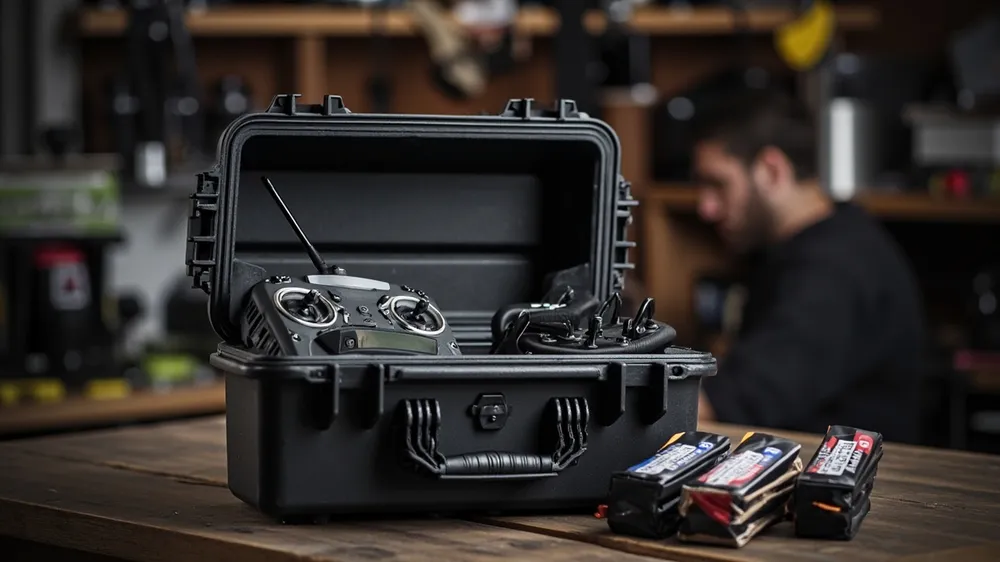
An RC plane or car is a 'flying precision toy'. The airframe, the car, the transmitter, the LiPo packs and spare parts are both delicate — props and shafts fear drops — and dangerous: a crushed or punctured LiPo can catch fire. A soft bag resists light bumps but not drops, and mixed batteries are a hazard. A qualified RC case absorbs impact, separates batteries, fixes parts and survives being carried to the field. This guide covers choice and use from a hobbyist's view.
Two Kinds of RC Risk
- Crash damage: props, shafts, gimbal fear impact.
- Battery hazard: a crushed LiPo ignites.
- Lost parts: small spares scatter easily.
Priority: battery separation > cushion > fixing.
Hard Protection Specs
| Spec | RC case delivery | Verify |
|---|---|---|
| Battery sep | each pack its own cavity | see drone battery case |
| Cushion | airframe floats | see foam design |
| Fixing | pick-and-pluck foam | see pick-and-pluck |
| Shell | modified PP, light and tough | see wall thickness |
| Hardware | metal pin, lockable | see hinge and latch |
Battery Separation: LiPo Must Not Be Crushed
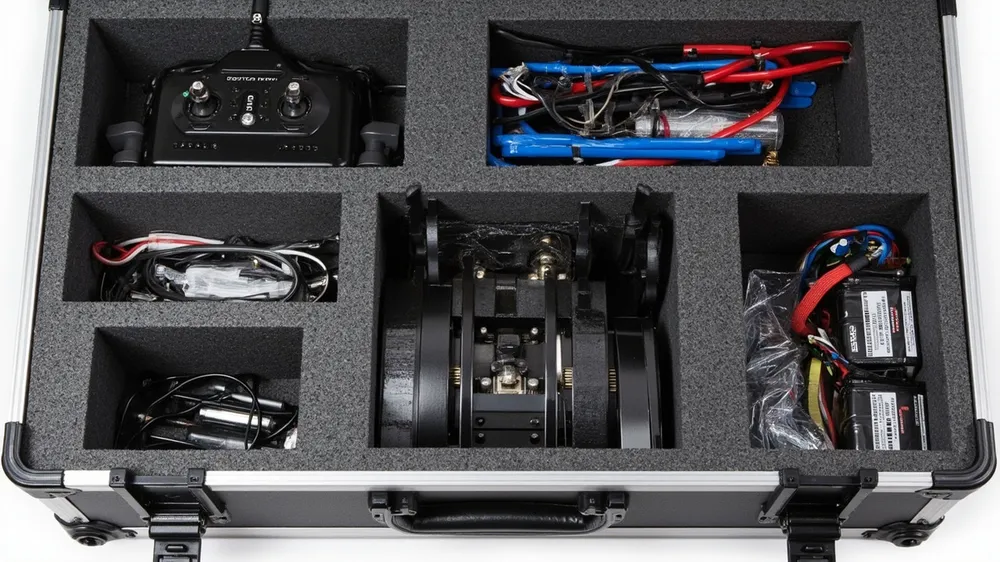
The LiPo is the hazard source; each pack needs its own cavity, hard isolation, no mutual pressure. The logic is in drone battery case and e-bike battery case; the cavity method in custom foam. In transit, discharge packs to a safe level; never ship fully charged over long distance.
Cushion and Fixing
- Pick-and-pluck: tear out a fitted cavity on site, see pick-and-pluck guide.
- Suspension: float the fragile parts, see drone case foam design.
- Temp range: material resists temperature swing, see cold brittleness.
Hardware and Travel
Latches and hinges need metal pins, see hinge and latch durability. Wheeled models in wheeled case guide; valve in equalization valve; hard vs soft in hard vs soft bag.
Transport and Field
The case rides in cars and at the field edge. Vehicle vibration in transport vibration testing; stack height in warehouse stacking. Sizing in how to size a case.
Custom Spec Sheet
| Element | Write it | If omitted |
|---|---|---|
| Gear list | airframe/transmitter/battery count | won't fit |
| Battery | LiPo count and spec | mixed hazard |
| Spares | prop/tool slot | scatter |
| Travel | self-drive/air | wrong lock |
Write the RFQ and negotiate in how to write a case RFQ and how to negotiate price.
Pitfall List
First, mixed batteries: LiPo under pressure ignites. Second, plain foam: the airframe must float. Third, no metal pin: loosens after thousands of cycles. Fourth, recycled resin: see virgin vs recycled. Fifth, fully charged long haul: big hazard. Sixth, loose small parts: lost props.
Summary
The key to an RC case is 'battery separation, cushion, fixing, finish': each LiPo in hard isolation removes the fire risk, a floating cavity protects props and shafts, pick-and-pluck foam fixes the transmitter and small spares, and metal latches survive frequent opening. On the ground, write the gear list (with LiPo count and spec), the spare slot and the travel mode as clauses, then ask the supplier to prove material and testing. With the habits of 'discharge packs to safe level, float the airframe in place, shade at the field, clean on return', models stay intact across many flights. For battery separation and suspension, revisit drone battery case and drone case foam design.