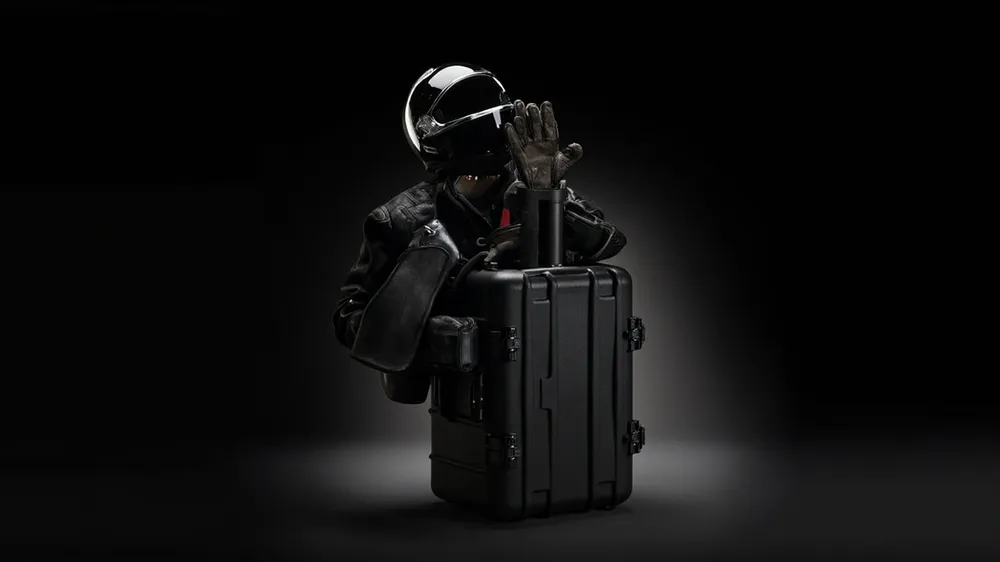
A motorcycle helmet and riding kit are 'expensive and delicate' gear. A good lid costs thousands, and gloves, jacket, locks and tools pile up and scatter, often strapped to the bike or stuffed in the trunk where wind, rain and crush can scratch them. A soft bag resists dust but not drops; a bare helmet gets shell dents. A qualified riding gear case suspends the helmet, separates the kit, controls moisture and protects the visor and finish through bike vibration. This guide covers choice and use from a rider's view.
Two Kinds of Riding Damage
- Shell crack: the helmet fears drops and crush.
- Visor scratch: the shield and shell scratch easily.
- Kit scatter: gloves and locks get lost.
Priority: helmet float > separation > moisture.
Hard Protection Specs
| Spec | Riding case delivery | Verify |
|---|---|---|
| Helmet float | shell floats off wall | see foam design |
| Separation | gloves/locks own slots | see custom foam |
| Shell | modified PP, light and tough | see wall thickness |
| Hardware | metal pin, lockable | see hinge and latch |
| Mil-spec | MIL-STD-810H optional | see mil-spec |
Helmet Suspension: Keep the Shell Off the Shock
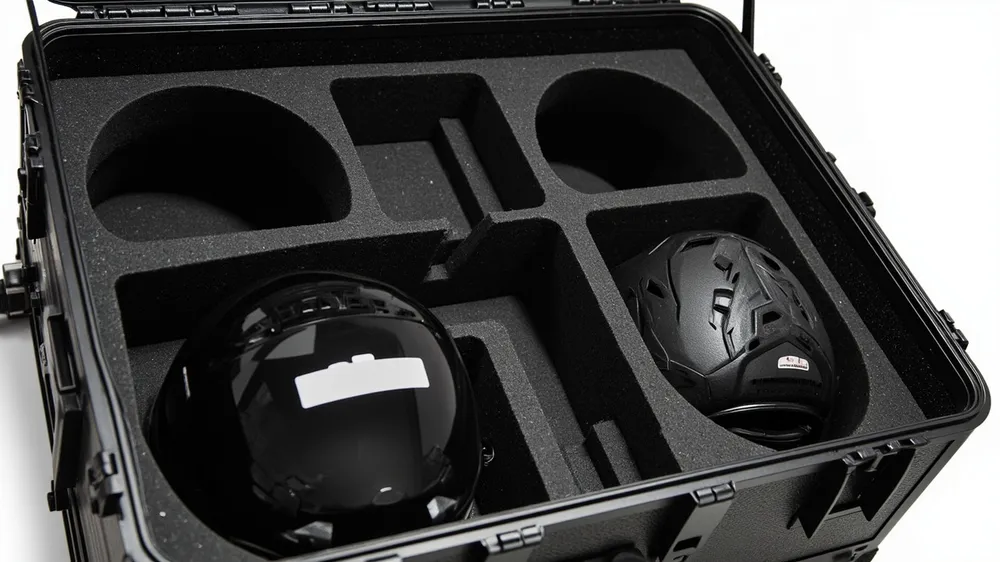
The shell is the fragile core; the cavity wraps only the rigid rim and leaves the shell floating. See the suspension logic in drone case foam design; the process in EVA thermoforming. Add soft liner on the visor side to avoid scratches.
Separation and Moisture
- Moisture slot: reserve a desiccant position in the liner.
- Airflow: never seal for long, see condensation control.
- Temp range: material resists temperature swing, see cold brittleness.
- Weathering: see UV outdoor weathering.
Hardware and Strapping
Latches and hinges need metal pins, see hinge and latch durability. Strap mounts in hard vs soft bag; check-in in TSA travel case.
Transport and Trunk
The case straps to the bike or rides in the trunk. Vehicle vibration in transport vibration testing; stack height and moisture in warehouse stacking. Sizing in how to size a case.
Custom Spec Sheet
| Element | Write it | If omitted |
|---|---|---|
| Helmet type | full/modular size | won't fit |
| Kit | gloves/locks list | scatter |
| Travel | strap/check-in | wrong lock |
| Weather | often rained on | rusty parts |
Write the RFQ and negotiate in how to write a case RFQ and how to negotiate price.
Pitfall List
First, plain foam: the shell must float. Second, no moisture control: liner molds. Third, no metal pin: loosens after thousands of cycles. Fourth, recycled resin: see virgin vs recycled. Fifth, no soft liner: visor scratches. Sixth, no moisture control: long-haul damp.
Summary
The key to a riding gear case is 'helmet float, separation, moisture, finish': a contoured cavity suspends the shell, own slots hold gloves locks and tools, a desiccant slot and airflow steady the liner, and metal latches survive strap bumps. On the ground, write the helmet type (full/modular), the kit list and the travel mode as clauses, then ask the supplier to prove material and testing. With the habits of 'float the helmet in place, seat the kit in slots, shade the bike, clean on return', riding gear stays like new across many rides. For suspension and separation, revisit drone case foam design and custom foam guide.