

Boxknow

How Important Is Sealing in an Ammo Storage Box? The Effect of Humidity on Stored Ammunition
Sealing is the one capability that cannot be retrofitted. This guide covers four moisture entry paths, degradation mechanisms, relative humidity and dew point, flat versus groove seals, IP rating boundaries and desiccant management.
Read Article →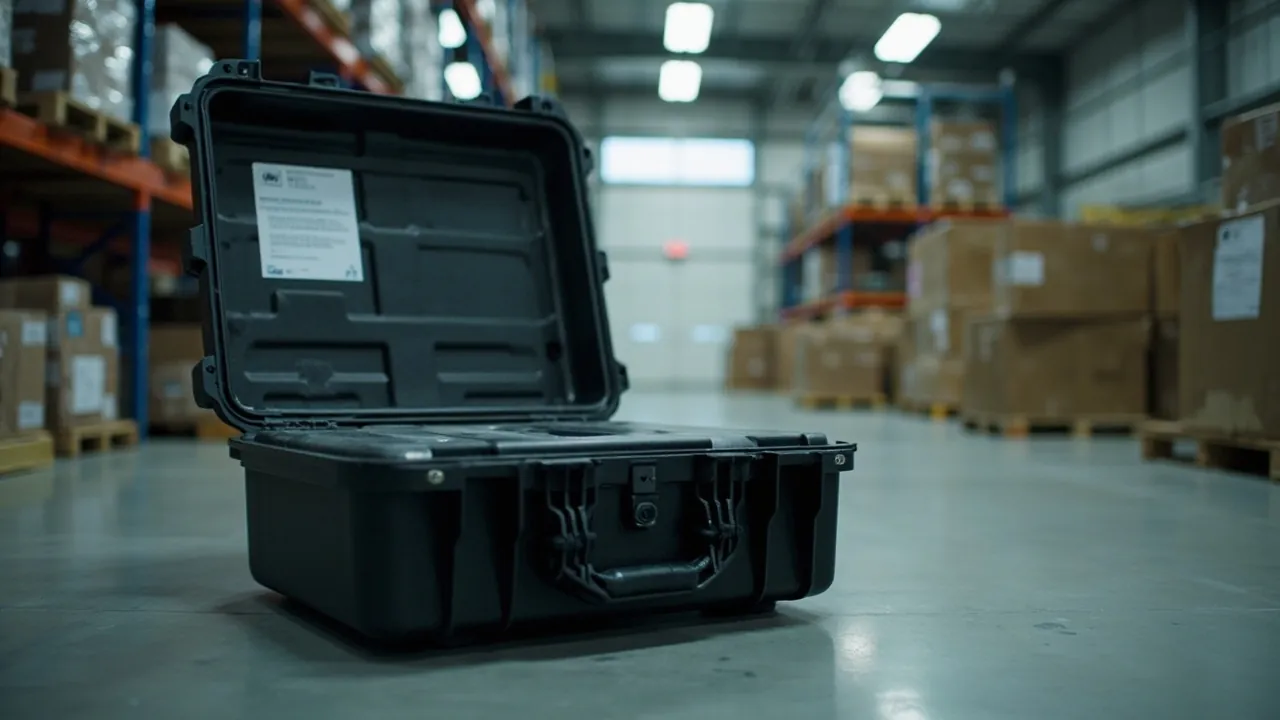
What Certifications Does an Ammunition Transport Box Need? Shock and Vibration Standards
There is no universal certification for a transport box; a standard set must be matched to the application. This article explains the MIL-STD-810H method framework, A-A-59779 box specification, ASTM D4169, ISO 4180, ISTA 1A/2A/3A, the GB/T 4857 series, IEC 60529, UL94 and ISO 9227, with a certification matrix and testing workflow.
Read Article →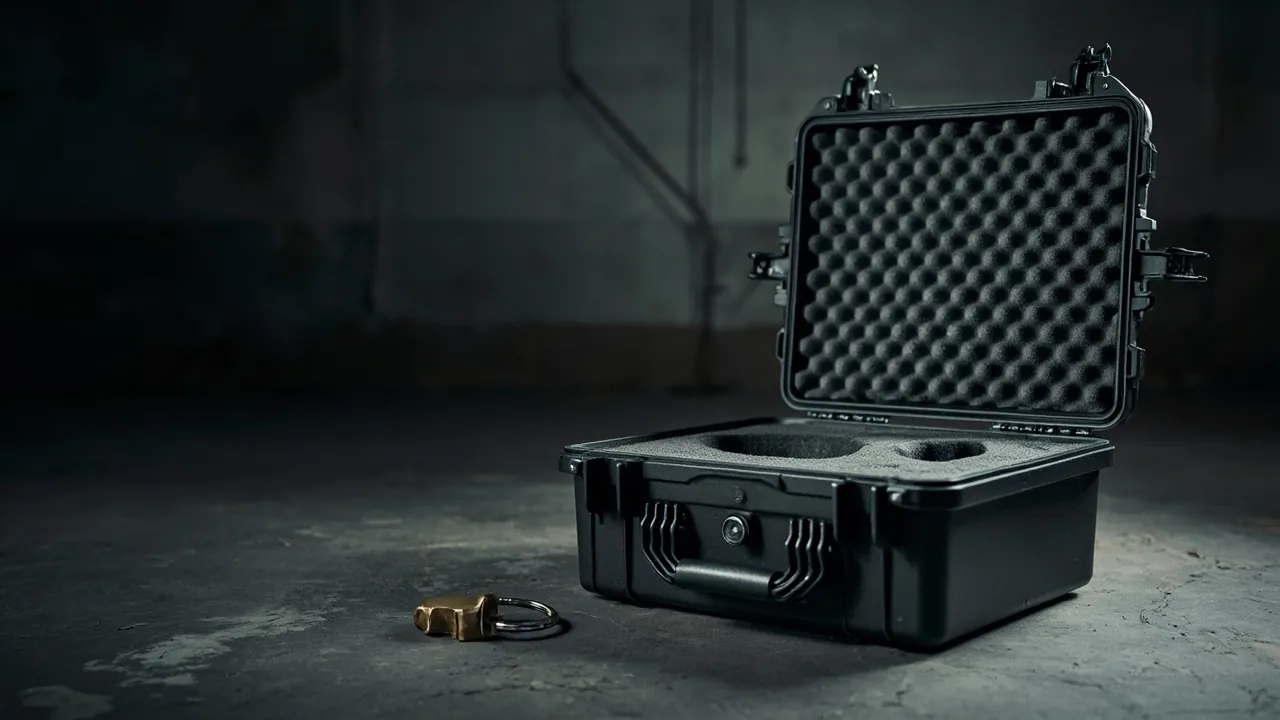
What Safety Design Does a Firearm Storage Box Need? Lockable Structure, Foam Liner and Drop Testing
Five engineering safety features for firearm storage cases: lockable dual-point structure, pry-resistant latches and hinges, locating foam liners, low-temperature corner drop verification, and sealing for long-term storage.
Read Article →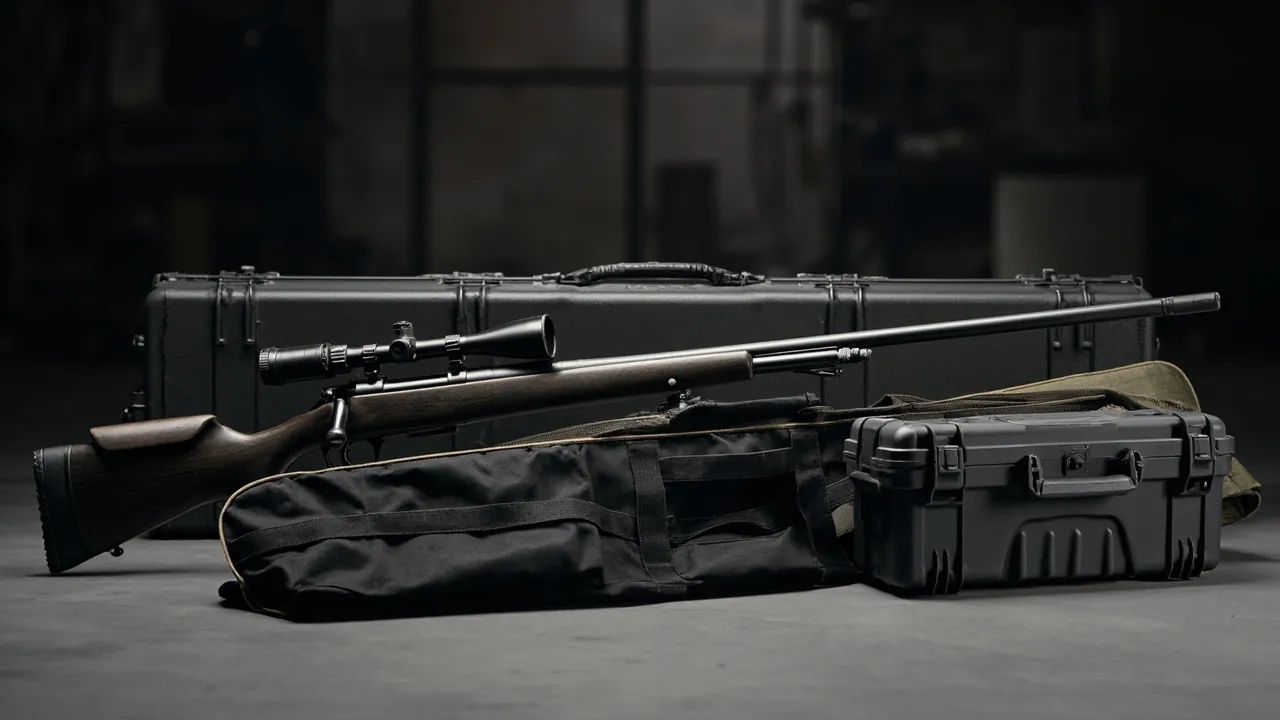
Gun Case vs Ammo Box: Different Design Logic for Storage and Transport
A gun case is designed for shape, an ammo box for volume. This article compares the two across design intent, shape ratio, lining system, latch layout, sealing focus, handling and stacking, with a lookup table, a selection decision path and the boundaries of a multi-purpose case.
Read Article →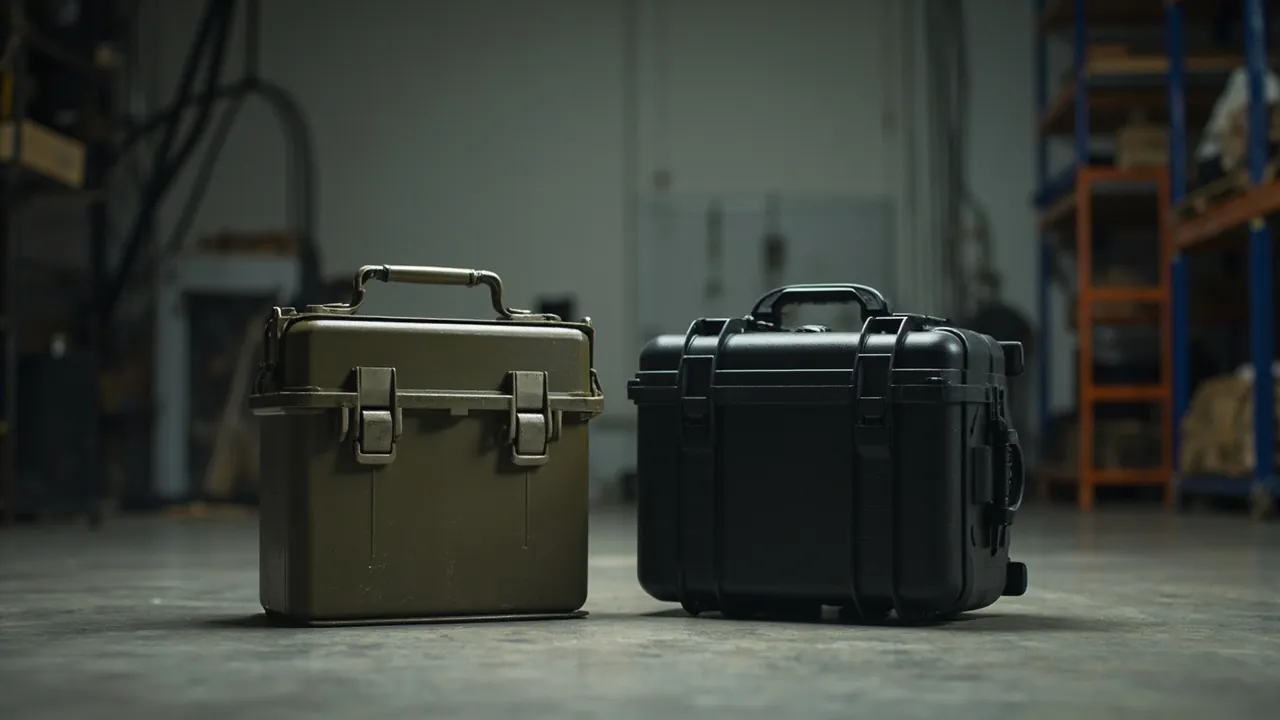
The Evolution of Military Ammo Boxes: From WWII Steel Cans to Modern Plastic Tactical Cases
The four technical transitions of the military ammo box: wooden crates to steel, size standardization, the shift to plastics, and verifiable ingress and transport testing, with era and material comparison tables.
Read Article →
How to Choose Locks for a Military Ammo Box? Triple-Padlock Design and Anti-Theft Assessment
Triple-padlock design links box latch, hasp and staple, and independent padlock in series. Six selection parameters, EN 12320 and ASTM F883 grading, four attack types and defenses, a five-level risk model, salt fog and freeze-thaw protection, plus inspection routines.
Read Article →
Can Military Ammo Boxes Be Stacked? Load Capacity and Stacking Safety Rules
Stack height equals long-term allowable load times safety factor divided by gross weight per box. Three criteria, compression, stability and creep, a layer formula, a weight-based lookup table, static stacking standards GB/T 4857.3, ISO 2234, ASTM D642 and D4169, and a five-step procedure.
Read Article →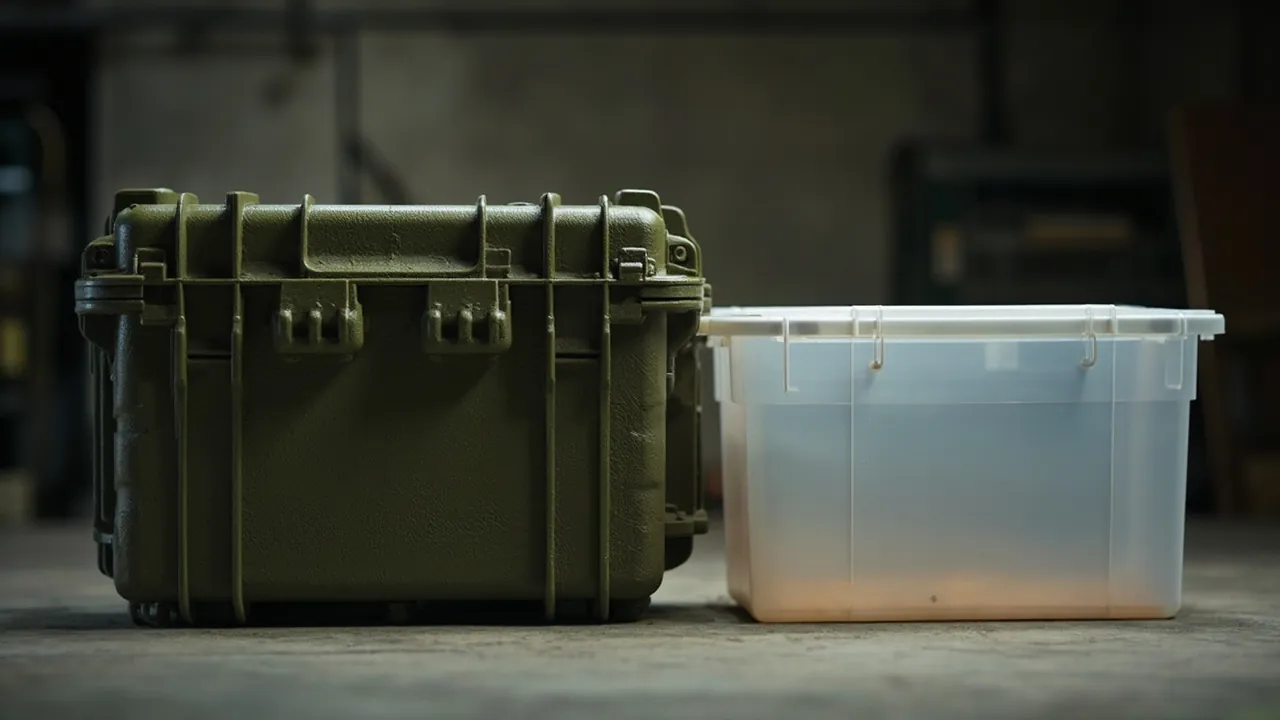
Military Ammo Box vs Ordinary Storage Box: A Full Comparison from Material to Sealing
Military-spec cases and ordinary storage boxes differ in four fundamentals: material, sealing, structure and verification. This guide compares HDPE and steel bodies, grooved versus flat seals, IP65 and IP67 boundaries, stacking creep and ASTM D4169 transport compliance, with acceptance clauses you can paste into a technical agreement.
Read Article →
Why Military Steel Ammo Cans Suit Long-Term Storage: The Metal Material Explained
Steel cases suit long-term storage through near-zero vapour permeability, seam-free shells and negligible ambient creep. This guide covers cold-rolled, galvanised and stainless grades, phosphating, electrocoat and powder systems, ISO 9227 salt spray and ISO 4628 rust grading, VCI plus desiccant strategy and acceptance clauses.
Read Article →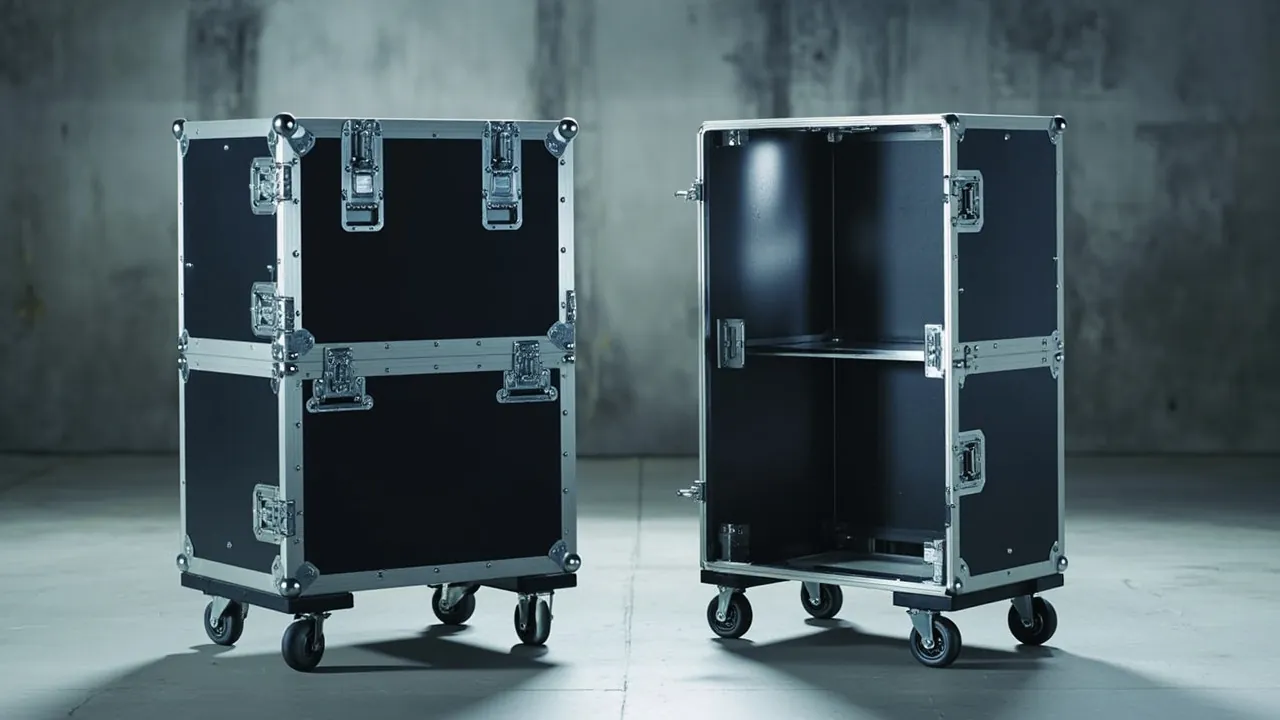
Material Evolution of Military Storage Boxes: The Lightweight Path from Steel Plate to Engineering Plastics
Weight, corrosion resistance, and manufacturability drive the material story. Steel, aluminum, HDPE, PP, ABS, PC, PA and composites compared, plus the lightweighting math, corrosion and sealing evolution, standard systems, and a selection matrix.
Read Article →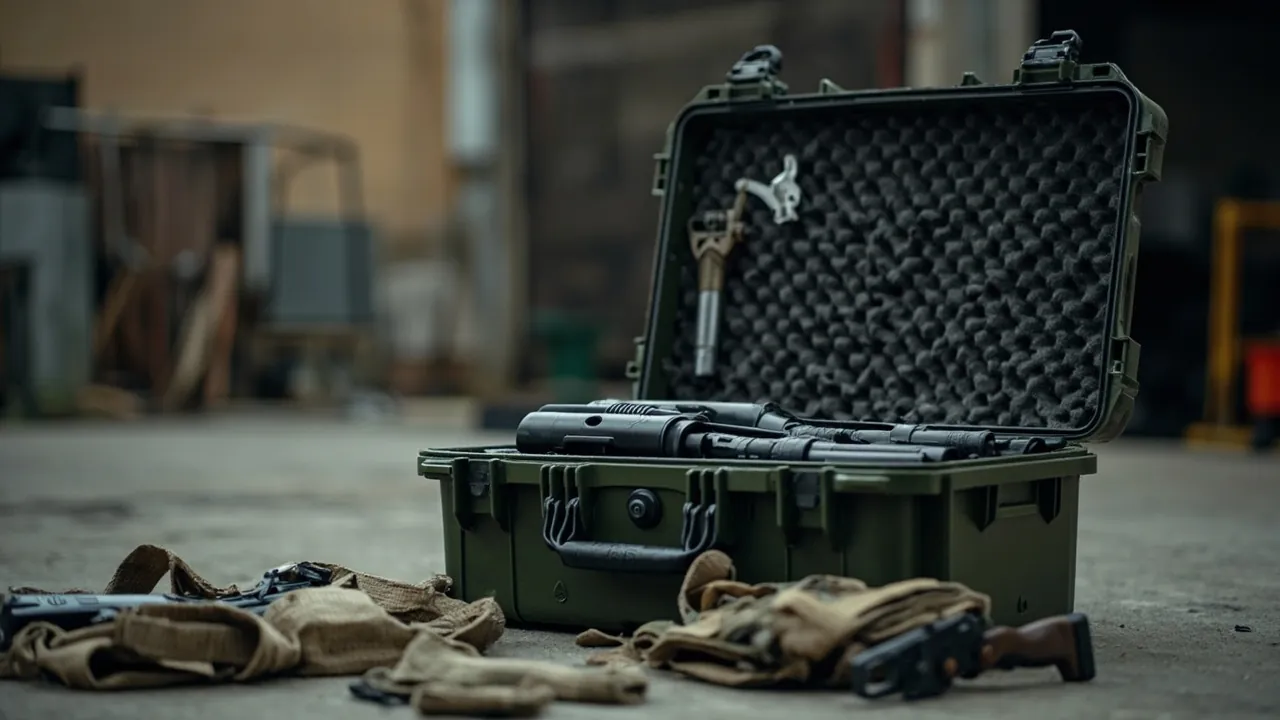
What Goes in a Tactical Storage Box for Outdoor Survival? An MRE-to-First-Aid Packing List
A 45 L tactical storage box can carry a complete 72-hour solo survival load. Packing lists for water, MRE rations, first aid, tools and energy, plus a tiered 72-hour/7-day/30-day model, IP67 and IK selection parameters, and B2B customization.
Read Article →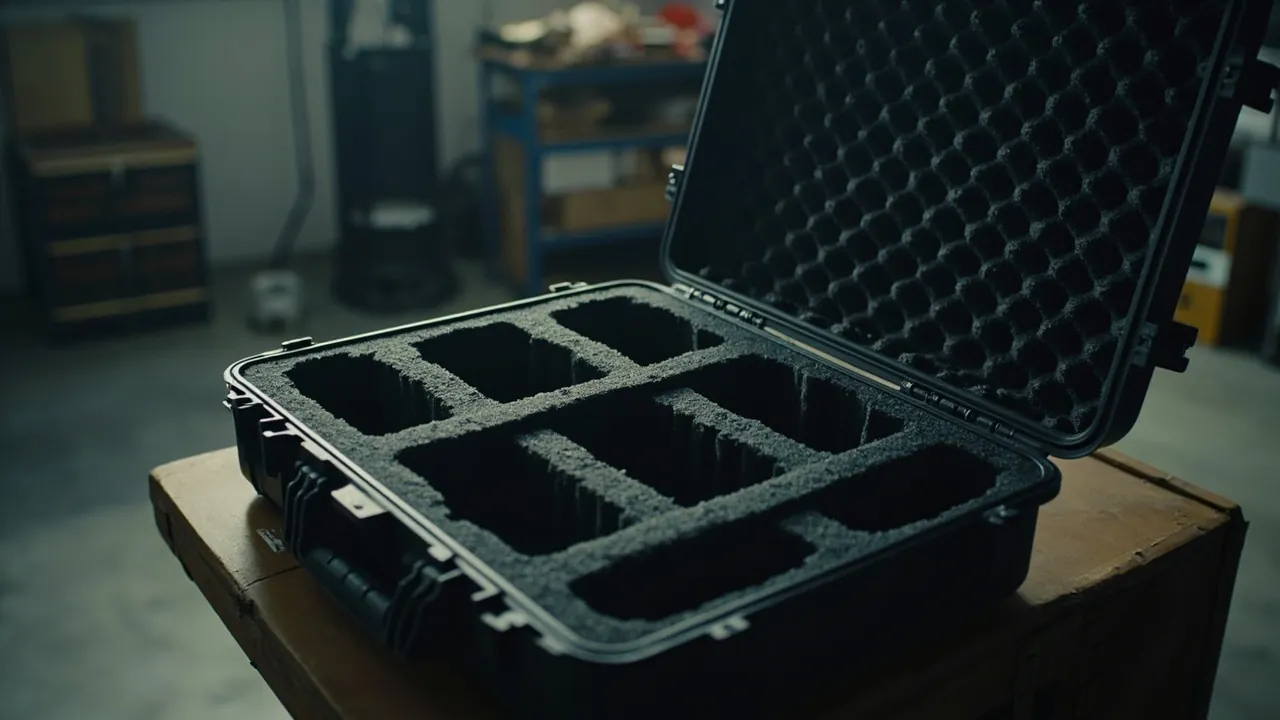
How Should a Tactical Gear Box Be Laid Out Inside? Techniques for Pre-Cut Foam and Removable Dividers
The core of tactical case layout is three-axis constraint plus zoned access. This guide covers contents inventory, a six-step pre-cut foam design, density and cushion curve parameters, divider design and hybrid strategies.
Read Article →