

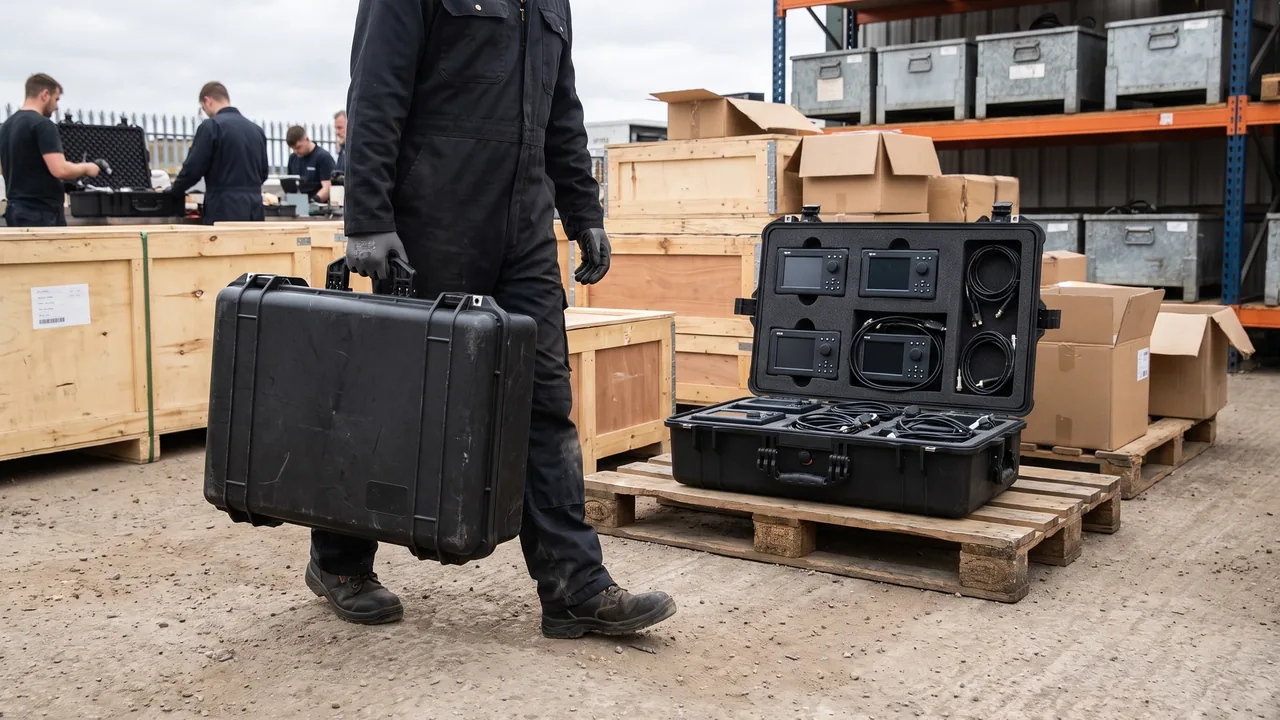
A power inspection instrument case is a dedicated protective container built for grid operation, power patrol teams and live-working crews. It stores and transports insulation resistance testers, clamp meters, partial-discharge detectors, infrared cameras, voltage detectors and insulated tool fittings. The case itself is not live-working equipment; it is a physical barrier that isolates precision instruments and insulated tools from rain, dust, oil mist, drop impact and electromagnetic interference during transit and storage. For grid operators, specifying a qualified inspection case is the first line of defense that moves instrument integrity and tool availability upstream to the transport stage, and it is the lowest-cost way to cut the risk of missing or false field readings.
1. Product Positioning and Use Scenarios for Power Inspection Instrument Cases
The core positioning of a power inspection instrument case is "transport and storage container", not a measuring instrument and certainly not a live-working tool. Its entire value lies in separating the protected objects from a harmful external environment: inside a substation yard it consolidates infrared cameras, partial-discharge sensors and insulated fittings so they are not stepped on or bumped near terminal boxes; on distribution-line patrols it rides in a service vehicle across rural roads and mountain paths, resisting continuous vibration and grit; in cable tunnels and utility galleries it blocks moisture and dripping water; on mountain towers it helps crews reach equipment quickly in the open field. It must be repeated that the case only addresses storage protection and never replaces the insulation performance of gloves, operating rods or voltage detectors, nor any live-work safety procedure. In specifications, write one sentence of intended use: this case stores and transports insulated hand tools, meters and testers for grid inspection crews. Scenario-based selection is covered in the grid inspection case and power inspection equipment case articles.
From an asset view, the case is shared team equipment and should enter the tool ledger. Each case maps to a fixed instrument set, counted together with its liner and checklist at shift handover, preventing loss and enabling traceability. For live-working crews, keep the insulated-tool bay physically separate from the electronic-instrument bay to reduce the chance of metal probes scratching insulation. The exterior should carry an asset number, owner and next seal-check date. High-visibility orange or fluorescent color aids quick location in grass, tower shadows and night response.
By task shape, cases split into three types: a light single-patrol type holding a clamp meter, thermometer and voltage detector; a comprehensive team type holding several meters plus insulated tools; and a dedicated detection type holding partial-discharge, infrared and data-terminal combinations. External sizes must obey vehicle cargo and rack limits. Prioritize the instrument case selection guide and treat scenario, instrument list and transport mode as three input variables rather than comparing shells in isolation.
2. Engineering Selection of Case Material and Structural Strength
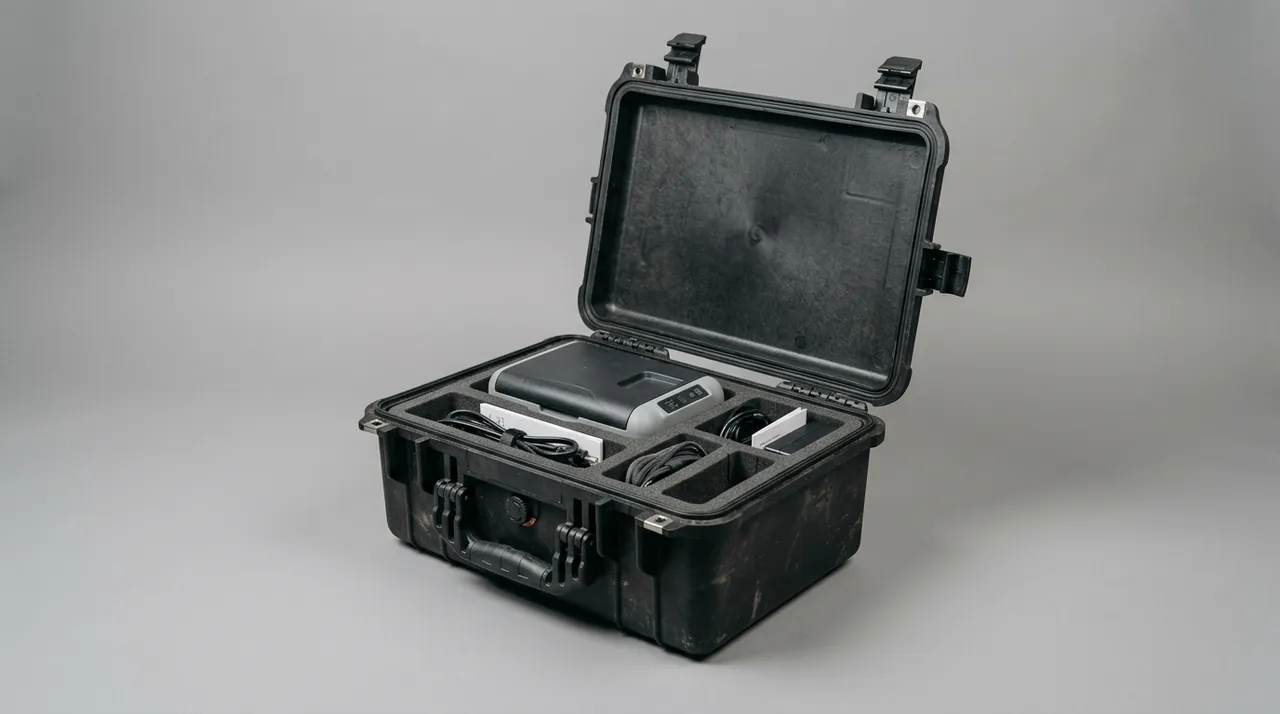
Mainstream power inspection cases use injection-molded engineering plastic shells or modified copolymer PP/ABS alloy shells; some heavy-duty models use PP modified with glass-fiber reinforcement to balance rigidity and low-temperature impact resistance. Wall thickness is typically 3.0 to 5.0 mm, with reinforcing ribs and impact corners at loaded edges so the shell does not crack structurally under vibration or accidental drops. Metal cases have higher absolute strength but rust in wet and salt-spray environments and give no electromagnetic isolation, so outdoor grid patrols prefer polymer shells. The shell material should pass UL94 flame rating, typically V-0 or V-2, to lower fire-spread risk in a service-vehicle cabin.
Structural selection must account for loaded weight and one-hand ergonomics. As a rule, empty case plus instruments should not exceed 18 kg; above that, fit wheels and a trolley handle and pull rather than carry, reducing strain and drop probability. Corner radii should not be too small; round corners lower stress concentration and avoid scratching people and vehicle trim. Surface hardness can be described by pencil or Shore hardness typical values, meeting daily scrape without exposing substrate. For long outdoor use, add UV stabilizers to prevent embrittlement and yellowing under plateau and coastal sun.
Climate zone drives material modification. Northeast and high-altitude cold zones raise PP low-brittle proportion to avoid winter shell cracks; coastal humid and salt-spray zones add salt-spray and mildew resistance; southern hot-humid zones watch heat-deflection temperature to prevent softening under cabin sun. Material grade should appear in delivery documents for same-batch reorder and spare traceability. For drop-risk scenes, evaluate environmental adaptability against the method in MIL-STD-810H case compliance.
Shell-to-lid fit precision sets the sealing base. After closing, the peripheral gap should be even with no visible twist or local loose press. Injection gates and parting lines should be trimmed flush to avoid cutting the seal. Large lids need mid supports to prevent sag. Acceptance combines static load and dynamic drop typical tests, recording shell deformation and gasket rebound for the archive.
3. Dielectric-Safe Liner and Compartment Zoning
The liner is the functional core, serving fixation, zoning and cushioning. A dielectric-safe liner uses closed-cell EPE or cross-linked EVA foam whose volume and surface resistivity suit insulation isolation, absorbing no water, shedding no debris and not corroding metal probes. Zoning uses CNC-routed or thermoformed cavities so each meter and each insulated tool sits in its place, avoiding collision and scratches in transit. For live-working crews, insulated operating rods, voltage detectors and ground clamps should share a separate bay from electronic instruments, preventing hard items from crushing screens and reducing scratches that weaken insulation.
Liner color should contrast with the shell so defects are obvious. Foam density balances hardness and rebound: too soft fails fixation, too hard makes access hard and dents instrument edges. JUNZHIJIA offers custom liner service molded to the instrument list, designing modular bays from user-supplied outlines and quantities so one shell fits different instrument batches. The custom liner attaches to the shell with flame-retardant adhesive or clips, never loose or rattling, and must not release corrosive gas onto probes.
Zoning logic follows "heavy low, light high, fragile center, frequent front". The insulation tester and clamp meter go in the mid main bay; thermometer and voltage detector in a front quick-access bay; rod fittings and ground clamps in a long dedicated bay. For LCD instruments, soft contact around the cavity avoids screen pressure. The liner itself should meet flame and low-smoke requirements, typically referencing UL94 foam grades. More liner process detail is in the custom foam insert guide.
Liner life is not synchronous with the shell. Under repeated press and thermal cycles foam slowly settles; when fixation play exceeds a typical threshold (visible instrument shake) recut or replace it. Keep a replacement record per case, merged with gasket checks. For multi-crew shared models, make liners quick-release so bays can be re-planned per task without scrapping the whole case.
4. IP67 Sealing and Dust-Water Protection Path
IP67 is defined by IEC 60529 and GB/T 4208: dust-tight (level 6) and survivable under 1 m water for 30 minutes (level 7) without ingress. The path relies on a continuous lid gasket, the compression structure between lid and shell, and the closing force from latches. Gaskets are commonly EPDM or silicone; EPDM resists ozone and weathering, silicone spans a wider temperature range. Section is hollow tube or tongue, with 15% to 30% compression balancing seal and open-close life.
After closing, verify by negative-pressure or immersion sampling; a typical value keeps internal humidity rise below an agreed threshold. Clarify that IP67 is a transit-storage rating for the case, not a license for instruments to work underwater; instrument environment follows its own IEC 61010 limits. For coastal, riverside and rainy crews, prefer a fully molded continuous gasket to avoid joint seams as ingress paths. Gasket corners should be radiused to prevent local stress cracks.
Seal performance decays as the gasket ages. Daily checks press the gasket for rebound and visually scan for missing material, cracks and permanent flatness. Before closing, clear grit and grass from the gasket groove; foreign objects cause local leaks. For cabin-pressure changes (air freight, altitude), the lid may suction or bulge; consider a pressure-equalization valve per the case pressure equalization valve idea, but confirm the valve does not lower the protection grade in live-work scenes.
Another ingress source is hinge and lock holes. Design dust caps on hinges and water plugs on locks. Avoid long gasket contact with mud; after short immersion, open and air-dry before sealing. For a leaking case, check the gasket first, not the shell; gasket replacement is in the seal ring replacement guide. The engineering meaning of ratings is further in IP67 protective case and the IP rating guide.
5. Anti-Vibration Cushioning for Meters
Instruments ride through rural roads, mountain paths and cable tunnels where continuous random vibration drives zero drift and solder fatigue. The case attenuates in two stages: an elastic layer between shell and liner, then a soft contact layer inside the instrument cavity, so acceleration reaching the instrument is reduced twice. Cushion material must avoid components that stress-corrode the instrument housing and must rebound after repeated compression. Transport vibration can be evaluated against ISTA and GB/T 4857 thinking; a typical value is 2 to 3 hours of simulated road spectrum without structural looseness.
For instruments with mechanical pointers or optics, add restraint straps and anti-shift panels to stop sliding on hard braking. Bottom anti-slip feet cut cabin sliding and secondary impact. For meters with lithium batteries, the cushion must not squeeze the battery bay and should leave heat and pressure-relief space; battery transport follows its own rules. Quantify by logging accelerometer data at a fixed cabin point and comparing to the factory test summary against a typical spectrum.
Cushioning must also avoid resonance. Some meters are sensitive at specific frequencies; a low-stiffness shell may amplify vibration at the speed-excited frequency. Raise wall thickness, add internal damping, or re-orient the instrument so its sensitive axis avoids the main vibration direction. Ask the maker for a vibration test summary at delivery for the ledger. When stacking cases, put elastic pads between layers so upper weight does not hard-transfer to lower instruments.
Maintenance: damp foam loses rebound and grows mold; take it out to air-dry. If foam powders on the surface or collapses at a touch, it has reached life and needs replacement. For high-frequency, bad-road crews, make vibration protection a priority spec rather than only shell material. General transport-vibration methods are in the ISTA test guide.
6. EMC Shielding and Static Protection
Substations, switchyards and cable tunnels carry strong electromagnetic and RF fields; stable readings depend on keeping external interference out. The case can embed conductive fabric, metallized film or a sprayed conductive layer in the shell sandwich to form a Faraday-cage shield that attenuates radiated interference; shielding effectiveness is stated as a typical value in dB with the tested frequency band in the document. Inside, ESD bags or anti-static liner protect static-sensitive modules such as data-acquisition cards, handled per anti-static discipline.
Strictly separate: EMC shielding protects the instrument reading, not the external field; field safety still comes from procedure and insulated tools, and the case gives no human protection against external fields. The shield must make continuous electrical contact with the lid, or the opening leaks. For complex EM scenes, fit a continuous conductive gasket on the lid and check the lap has no paint barrier when closed. Shield process detail is in the EMC shielding case guide.
Static protection is also discipline. Discharge body static before access, never leave terminals bare, coil cables to avoid induction loops. If the liner is marked anti-static, verify its surface resistance sits in the anti-static not conductive band to avoid short risk. For calibration-sensitive parts, the case should give enough isolation to cut magnetic coupling. EMC and static should both enter the delivery acceptance sheet as preconditions of field usability.
Shielding adds weight and cost, not always needed. Match the instrument immunity grade to the field interference grade: if the instrument already meets high EMC immunity and the measuring point is far from live equipment, a standard case suffices; if continuous close measurement in a switchyard core is required, a shielded type is worth more. Pairing the two grades avoids over-specification.
7. Latches, Locks and Stacking Structure
Latches and locks decide closure reliability on rough roads. Common stainless or plastic-overmolded latches give single-point closing force enough to resist self-opening from vibration; important assets add a numbered lock or TSA-type lock for asset and handover control. The latch pivot should be rust-treated to avoid sticking outdoors. Lid-and-shell locating pins must align on close so the gasket is not forced and damaged. Lock and hinge holes need dust caps to avoid grit outdoors.
Injection-reinforced stacking bosses and limit ribs at the four corners let same-size cases stack stably; limit single-stack height to avoid tipping, typically no more than 4 layers or an agreed total height. Stacking faces should be flat with anti-slip pads to stop mutual shift. Ergonomic handles on both sides; heavy models add a telescopic trolley handle and quiet wheels for long site transfer. Handle-to-shell connection needs pull-out strength validation, typically several times the empty-case weight in impulse.
Stacking also touches the vehicle. Fix cases in the cargo bay with straps through handles or into limit slots anchored to the cabin, so the whole stack does not slide on sharp turns. For multi-case sets, use same size and direction so the center of gravity aligns and tip-over drops. More stacking engineering is in the protective case stacking guide. Match case numbers to stack order so tasks are reached without moving the whole pile.
Lock asset value is often underrated. Each case gets an independent lock number; keys or codes enter the team key cabinet and are checked at handover. For live-working crews, locking also stops unauthorized access to insulated tools. Damaged locks are replaced same-spec immediately, never wired shut, to avoid transit opening. Latch life is measured by open-close cycles; at threshold, replace the whole row.
8. Temperature-Humidity Control and Anti-Condensation
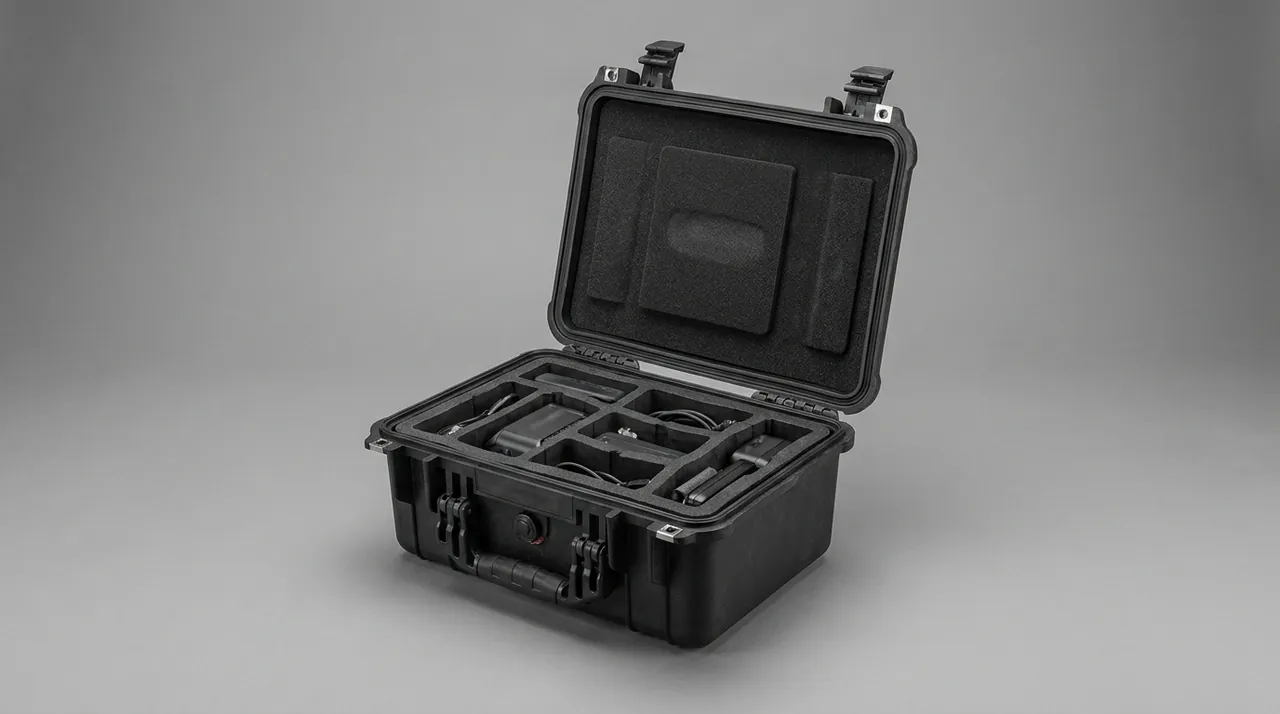
Some electronic instruments and batteries are temperature sensitive; a summer cabin bakes, a northern winter freezes. The case can hold phase-change cold packs or an insulation sandwich to slow temperature rise, and if needed a low-power thermoelectric module with separate supply. Anti-condensation controls moisture exchange: the gasket blocks outside humid air, liner desiccant cards absorb residual water, and resting in dry air before opening cuts condensation. LCD and lens instruments must air-dry naturally before power-on, never bake.
Temperature zones follow the instrument maker storage range; a typical value keeps long-term storage below 60 degrees Celsius. Beyond that, LCD ages, batteries swell and foam powders faster. An external humidity indicator card signals over-threshold. Reagents or calibration items needing cold get a separate insulated bay marked, not mixed with ordinary instruments. Coastal and plum-rain crews replace desiccant on schedule with dated records. Related thinking is in the active temperature control case guide.
By design, anti-condensation also controls internal temperature difference. Taking a cold case from outside and opening at once lets warm humid air condense on instruments; rest at near-ambient first. After rain, wipe the shell surface before closing so water is not carried in. Before long sealing, dehumidify and add desiccant to extend instrument life. Condensation risk peaks in coastal and plum-rain zones; beyond desiccant, add drain channels so minor ingress runs out not pools at the bay bottom. Wet instruments are never powered; send to metrology for dry and calibration.
9. Sizing and Capacity Planning
Start from the instrument list: dimensions, quantity, weight and fragility, then convert to liner volume with 15% to 20% margin. Common external sizes span 400x300x150 mm to 600x400x250 mm, covering one to three persons for a day. Follow "heavy low, light high, fragile center, frequent front" so the center of gravity nears the geometric center for stable carry. For multi-task crews, use same-series shells with different liners so external size stays uniform for racks and stacking.
Distinguish external size from usable internal volume; wall, ribs and liner eat space, so plan instruments at 80% to 85% of usable volume to avoid overfill that prevents closing or crushes parts. Long tools (rod fittings, ground reels) get a dedicated long bay, never bent. Weight planning matters too: keep single loaded case within ergonomic limit, else split or pull. Capacity method is in the toolbox capacity calculation article.
Size must obey transport limits. Companion cases must clear cargo doors and fixed racks; air or rail carry follows baggage size. For pole-climb light kits, a small waist bag plus a main case left in the vehicle. Non-standard external sizes raise fixing difficulty and sway; seriesize common sizes so different crews swap racks and straps, lowering management cost.
A checklist card inside the lid lists name, model, quantity and owner for handover count and traceability; print waterproof and laminate it. Check before and after each task. For multi-case sets, the card states case number and pairing so they are not split beyond restore. Final size confirmation should use a real-fit sample, not drawings alone, to avoid volume overestimate that prevents closing.
10. Certification Standards and Test Documents
Require standard-conformance documents from the supplier. Structure and environmental adaptation can be assessed by MIL-STD-810H methods for drop, vibration, high-low temperature and damp heat; transport packaging by ISTA procedures; protection grade by IEC 60529 and GB/T 4208 IP code; flame by UL94; material ecology by RoHS and REACH declarations. Clarify that these standards mostly address the case's own protection; instrument safety still follows its own IEC 61010 limits, never conflated.
Acceptance verifies three points: continuous gasket with no break, consistent latch closing force, and liner fit with no play against devices. On documents, obtain shell material grade, flame grade and IP test report compilation for archive and audit. For shielded cases, also get shielding effectiveness typical value and tested band; for anti-static liner, surface resistance band. JUNZHIJIA can deliver the shell material, flame and IP test report compilation so each case enters the asset ledger and periodic check.
A standard number is not performance; the report method and conclusion must match the use scene. An IP67 report should state depth and time, a drop report height and attitude, a vibration report spectrum and duration. The spec should use "typical value" wording, never fabricated numbers. For batch buy, sample to a third party by the same method to close the loop. More transport-test thinking is in the ISTA test guide.
Certification also touches export and ecology. If the case exports with equipment, material declarations must meet destination RoHS and REACH to avoid customs block. Flame grades may be labeled differently per market; documents should be bilingual or cross-referenced. For dual-use scenes, GJB case requirements can supplement. File management: build an electronic record per case linking model, batch, test report and maintenance, making the whole life auditable.
11. Custom Liner and OEM/ODM Service Notes
When a standard liner cannot fit special instrument shapes, go custom. The flow is usually: user supplies 3D drawing or physical unit, maker samples the liner, fit is confirmed, then volume tooling. Custom must state material (EPE/EVA/PU), density, color and flame grade, and settle mold ownership and IP clauses. OEM/ODM also confirms logo process (screen, hot-stamp or nameplate), batch trace and minimum order. JUNZHIJIA supports one-file-one-case custom liners from the grid user equipment ledger and can embed an asset QR plate inside the lid so each case maps to a fixed instrument set.
The contract should state acceptance sampling (such as AQL) and spare lead time to avoid later shortage. Sampling needs real-instrument fit confirming access force, fixation play and screen clearance. For mixed-model crews, use interchangeable insert liners so one shell fits different tasks via insert swap, lowering repeat buy. Mold cost should state split and MOQ threshold for cost math.
OEM/ODM also confirms delivery rhythm. Sampling, first-volume and reorder lead times are stated separately so equipment refresh stays on track. Color and marking are controlled to avoid batch color shift hurting site recognition. For powered models, the shell reserves a label window and warning slot. General custom liner material comparison is in the custom foam insert guide. On IP, the user-supplied instrument outline data must state confidentiality and prohibition scope to prevent leakage.
Custom is not bigger or fuller. Over-zoning lowers space use and flexibility; follow "frequent fixed, occasional adjustable", routing high-frequency instruments to carved cavities and low-frequency parts to adjustable inserts. Deliver with a liner layout drawing and spare list so maintenance can recut alone. For multi-crew rollout, run the customization flow in one benchmark crew first, then copy, avoiding large-scale rework from one-shot custom.
12. Acceptance, Maintenance and Lifecycle Management
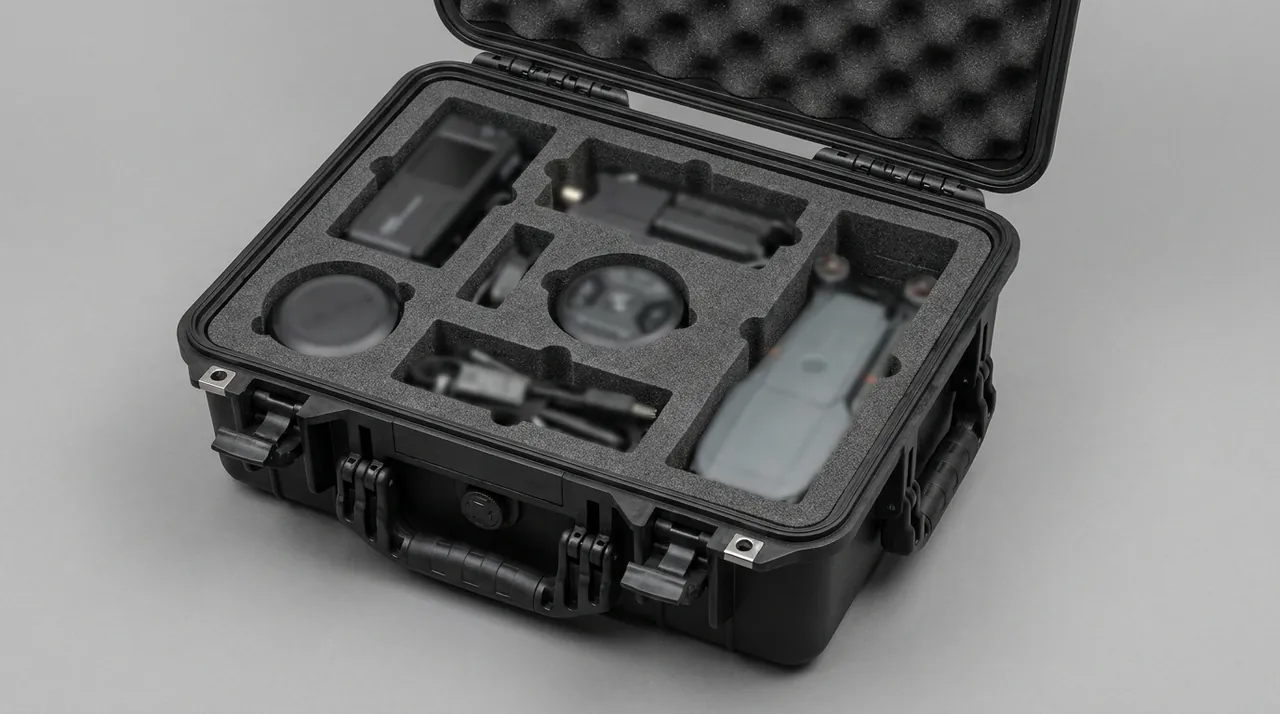
Delivery acceptance covers four items: appearance, closure, seal and liner - shell and lid no cracks, gasket no missing material, latches smooth, liner no debond. Monthly maintenance: wipe shell with neutral cleaner, brush gasket groove grit with a soft cloth, check latch screw torque; replace gasket if hard, cracked or permanently flat, typically evaluated every 12 to 24 months. Long storage should be half-open, shaded and off-ground to avoid gasket stick and liner damp.
Case life can exceed 5 years; the key variables are gasket aging and hinge wear. Failed parts come from the case repair and spare parts channel, including same-spec latches, gaskets and handles. One-file-one-case records each dispatch, anomaly and check, extending asset life. At life end, the shell recycles and the liner is sorted by material per ecology rules.
Maintenance also watches markings and lists. Repaint a fuzzy asset number, reprint a lost checklist, remake a broken QR plate. For locks, sync key or code change to the ledger to avoid handover chaos. A structurally cracked shell is retired, never used to hold precision instruments. Clean without strong solvent to avoid dissolving shell and gasket. Link maintenance to instrument calibration cycle for a team equipment health view.
Retire by standard: shell deformation hurting seal, gasket beyond recovery, liner heavy powdering or hinge failure - any one triggers retirement. Retired cases downgrade to non-precision storage or become spare sources. The key is managing the case as an asset equal to instruments, not a disposable. General cleaning and maintenance methods are in the protective case cleaning maintenance guide.
FAQ
Q: What is the difference between a power inspection instrument case and live-working tools themselves? A: The two are completely different and cannot substitute for each other. A power inspection instrument case is a storage and transport container whose job is to isolate insulated hand tools, testers and meters from rain, dust, vibration and electromagnetic interference while they move and wait. The case itself conducts no current and insulates nothing, and it takes no part in any live operation. Live-working tools such as insulating gloves, operating rods, voltage detectors and ground wires are the equipment that is actually used on the job and whose own insulation grade protects personnel. The case solves the problem of instruments and tools arriving intact and usable; field electric-field safety still rests on the tools' insulation grade and the work procedure. In procurement, write the case under "tool storage equipment" rather than "insulation protective gear" so responsibility and acceptance are not confused. On site, the case and the insulated tools should be ledgered and checked separately, with the case responsible only for transport protection.
Q: Does an IP67 rating mean the instruments can work underwater? A: No. IP67 is the protection grade of the case under IEC 60529 and GB/T 4208, meaning dust-tight and survivable under 1 m water for 30 minutes without ingress. It rates the sealing ability of the box as a container, not the water tolerance of the instruments inside. Whether an instrument can work wet or submerged follows its own safety standard, typically IEC 61010 environmental limits, and most patrol meters are not rated for underwater use. The practical meaning is that if the case is dropped in water or flooded, the meters inside stay protected for a short time, buying rescue and drying time - not that you can measure while submerged. On finding a flooded case, lift it out, open and air-dry in shade, verify insulation and readings, then decide whether to use it; never power on directly. Treat IP67 as transport redundancy, not a work-environment permit. When specifying, ask the supplier for the immersion depth and duration recorded in the IP test report, and keep that document with the asset file so field crews know the real limit rather than a printed label alone.
Q: Why use EPE or EVA liner instead of ordinary sponge? A: Ordinary sponge is mostly open-cell polyurethane that absorbs water, sheds debris and powders easily, and it is hard to guarantee insulation and flame metrics, so it is wrong for precision meters and insulated tools. EPE (cross-linked polyethylene foam) and EVA (ethylene-vinyl acetate) are closed-cell: they absorb no water, shed no debris, rebound well, and their volume and surface resistivity suit dielectric isolation while meeting UL94 flame grades with low smoke and low toxicity. More important, they can be CNC-routed or thermoformed into cavities that match instrument shapes for reliable fixation and easy access, which ordinary sponge cannot do precisely. For live-working crews, closed-cell material also stops water pooling in the bay and dampening insulation. Specify foam density, hardness and flame grade from the maker, and write "no debris, no moisture, formable, flame-retardant" as four hard requirements to prevent substitution. On receipt, perform a simple tear and water-drop check, and keep a labeled sample of the specified foam in the file so future reorders can be matched visually and by datasheet rather than by memory.
Q: Does the case need EMC shielding, and does it affect external field safety? A: Whether shielding is needed depends on the field and the instrument immunity, and neither is decided by the case affecting external field safety. In strong-interference scenes such as switchyard cores and cable tunnels, precise readings suffer from radiated noise, so a conductive layer in the shell sandwich forming a Faraday cage attenuates outside interference and stabilizes readings. But be clear: shielding protects the instrument inside and changes no external field, and it gives operators no electric-field protection; field safety still comes from insulated tools and procedure. In design the shield must lap continuously with the lid or the opening leaks; if the instrument already has high immunity and the measuring point is far from live equipment, a standard case is enough. Match the instrument immunity grade to the field interference grade to avoid over-specifying shielding that only adds weight and cost. Document the tested frequency band and typical attenuation in decibels with the case file, and train crews to close the lid fully before any measurement so the shield is actually engaged during use.
Q: How do we plan case size and quantity from team tasks? A: Plan from the instrument list: count each instrument's size, quantity, weight and fragility, convert to liner volume with 15% to 20% margin, and keep single loaded case under 18 kg. A single patrol uses a 400x300x150 mm light case; a team task uses a 500x350x200 mm case; a partial-discharge, infrared and data-terminal set uses a 600x400x250 mm case. By quantity, follow "one task one case set" with uniform external size for racks and stacking. Long tools get a dedicated long bay, never bent. Size must also obey cargo door and baggage limits; air carry follows baggage specs. A checklist card lists name, model, quantity and owner for handover. Confirm by real-fit sample, not drawings, to avoid volume overestimate that prevents closing or crushes instruments. Revisit the plan each season because instrument sets change; a short quarterly review keeps the case count aligned with real load and avoids both shortages on busy days and idle boxes that merely occupy vehicle space.
Q: After the gasket ages, can we replace only the gasket instead of the whole case? A: Yes, and replacing only the gasket should be preferred over scrapping the whole case. The gasket is a wear part; aging shows as hardening, cracks, permanent flatness or lost rebound, and at a typical threshold (evaluate every 12 to 24 months) it should be replaced. The key is a same-section, same-material continuous gasket, molded or bonded as one ring to avoid joint seams as ingress paths, installed at 15% to 30% compression so the lid presses evenly. After replacement, do immersion or negative-pressure sampling to confirm seal recovery. Replacing only the gasket is economical and ecological; the shell and liner usually serve several more years. Note the gasket model must match the case; do not substitute a visually similar part, or local loose press still leaks. The process is in the seal ring replacement guide, and spares come from the maker or repair channel. Keep one spare gasket per case size in the storeroom so a field discovery of aging never waits on a purchase order, and log each replacement with date and batch to build a service-life trend for the whole fleet.
Q: How are custom liner tooling lead time and minimum order usually set? A: Custom liner usually follows "supply 3D drawing or physical unit, maker samples, fit confirmed, volume tooling". Sampling lead depends on material and equipment schedule; first-volume and reorder lead times are written separately in the contract; minimum order is set by mold-cost split, where small quantity raises unit cost and large quantity spreads it. The contract must state material (EPE/EVA/PU), density, color and flame grade, plus mold ownership, IP clauses and confidentiality scope to prevent instrument-shape leakage. Acceptance uses AQL sampling, and spare lead time is set alone to avoid later shortage. Sampling needs real-instrument fit confirming access force, fixation play and screen clearance. For mixed-model crews, interchangeable insert liners adapt one shell to different tasks, lowering repeat buy. Run the flow in one benchmark crew first, then copy, to cut large-scale custom rework risk. Ask the maker for a written sampling lead, a first-article inspection report and a reorder window, and treat the mold as a controlled asset so a later color or liner change does not require a full new tooling investment.
Q: Can the case travel by air or high-speed rail with the patrol person? A: Whether it can accompany the traveler depends on external size and carrier baggage limits, not case performance. A 400x300x150 mm light case often fits carry-on or cabin-baggage size, while a 600x400x250 mm team case usually exceeds carry-on and must be checked or freighted. Either way, if the case holds lithium-battery meters, follow lithium-battery transport rules and check the no-check-in limit separately. The case's own IP67 and cushioning help against checked-baggage handling, but checking risks loss, damage and delay, so important instruments should travel with the person plus insurance. Before travel confirm the checklist is complete, locks sound and gasket intact, and rest at destination for temperature-humidity balance to avoid condensation. For crews crossing cities often, split a "carry-on light kit" from a "checked comprehensive case" to balance mobility and load. Check the carrier rules before each trip because baggage limits change, and pack a printed checklist in the lid so security and handover both confirm the contents without opening the case in unsuitable conditions.