

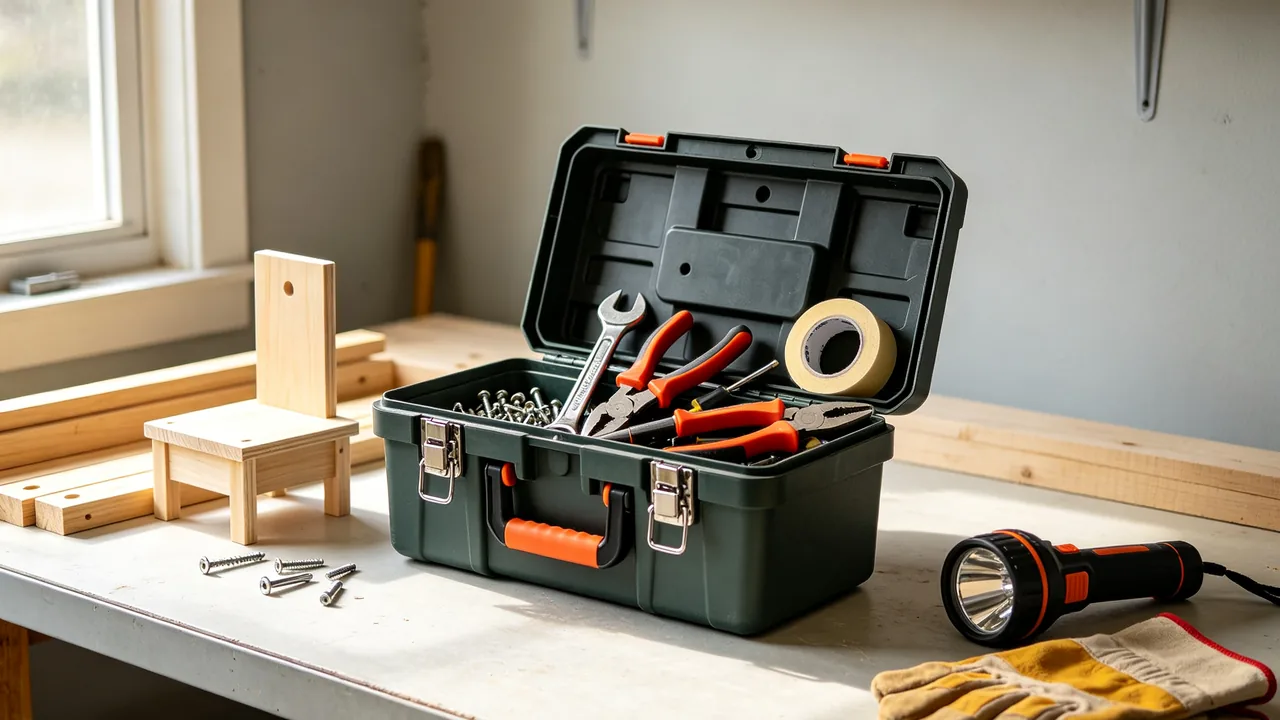
Sauce production lines -- for chili paste, salad dressing, ketchup, compound condiments and hotpot base -- routinely need to move high-value components such as agitator paddles, wall-scraping paddles, high-shear emulsifier heads, filling valves, pistons, stainless pipe fittings and rotary pumps between plants, ports and climate zones during maintenance, line relocation, overseas plant construction and spare-parts allocation. JUNZHIJIA holds that the core challenge of transporting these components is not "shock resistance" but "corrosion resistance, hygiene protection, sealing-surface protection and residue spoilage prevention" -- only by treating the case body, liner, seal and cleaning procedure as one integrated system can arrival-without-rework be achieved. This article targets procurement and maintenance engineers at sauce equipment makers, EPC contractors and food factories, and systematically reviews material selection, cavity liners, salt-spray protection and packing-marking workflow, ending with a ready-to-use selection table.
In practice, transport failures happen in overlooked details: a high-shear emulsifier head whose precision mating face is scratched by an adjacent metal spare loses its particle-size distribution after reinstallation; a PTFE seal on a filling valve swells from prolonged contact with residual chili oil and leaks on arrival; stainless pipe fittings develop pitting in a humid, salt-laden container and fail food-grade acceptance; viscous sauce residue ferments inside a sealed case and contaminates the next batch of spares. Bubble wrap alone cannot solve these. For the broader cold-chain hygiene baseline, see the cold-chain food case.
Why Sauce Line Components Need Dedicated Cases
Sauce line core components combine "precision" with "heavy contamination". Agitator and wall-scraping paddles are large with thin edges that curl on impact; emulsifier heads rely on a tiny rotor-stator gap for homogenization, and any mating-face damage destroys emulsification; filling valves and pistons demand tight seal tolerances where a grain of dirt means leakage; stainless fittings and pumps are all about surface integrity and food-grade cleanliness. Mixing these in a wooden crate or woven bag almost guarantees mutual scratching, cross-contamination and uncontrolled arrival condition.
A dedicated case turns transport from a random event into a repeatable controlled process. JUNZHIJIA designs separate cavities per component class so each spare has a fixed position and buffer, preventing collision in transit, and uses food-grade liner materials with a cleanable interior wall to lock hygiene risk at the source. Users who already deployed the aseptic filling line case can treat this scenario as the natural upstream extension of spare-parts storage.
Commercially, a sauce line costs millions and a single emulsifier head or filling valve spare can be worth tens of thousands; the hidden cost of transport-induced rework or scrap far exceeds the case price. Making the case part of the spare-parts standard is the most overlooked cost-cutting step for contractors and OEMs.
A useful rule of thumb for procurement: budget the case as roughly one to three percent of the spare's value, then compare that against the freight, customs and production-stop cost of a single ruined emulsifier head. When the line is a single continuous cook-and-fill train, one missing or damaged valve can idle the whole shift, and the downtime bill dwarfs any case saving. JUNZHIJIA therefore frames the case not as packaging but as part of the spare's protective equipment, owned and tracked like a tool rather than discarded after one trip.
Salt and Acid Corrosion Risk and Case Material Selection
Sauce media commonly contain salt, organic acids (acetic, citric, lactic), capsaicin oil and sugars; residue on a component surface is a persistent local corrosion environment. 304 stainless performs well neutrally but can pit and suffer intergranular corrosion in high chloride (soy sauce, pickled paste, salty sauce) and low-pH acetic environments; 316L, with molybdenum, has a higher pitting resistance equivalent number (PREN) and suits bodies exposed long-term to high salt and acid. A painted carbon-steel case rusts first at hinge and latch coating breaks.
The table below compares common case and liner materials for selection:
| Material | Neutral salt spray | Organic acid | Food grade | Recommendation |
|---|---|---|---|---|
| --- | --- | --- | --- | --- |
| 304 stainless case | Medium | Good | Excellent | Valve bodies, pump shells |
| 316L stainless case | Good | Excellent | Excellent | First choice for salt/acid residue |
| Engineering plastic (PP/PE) | Excellent | Excellent | Excellent (certified) | Liners and small parts, light |
| GRP fiberglass case | Excellent | Excellent | Fair | Heavy large parts, seal edges |
| Painted carbon steel | Weak (rust at chip) | Weak | Fair | Dry clean spares only, avoid sauce |
JUNZHIJIA asks clients for a "media composition sheet" (salt, pH, alcohol, oil) before recommending base material and liner. For a filling valve touching chili oil and acetic acid, 316L base with a food-grade PE bladder beats a generic carbon-steel case. This media-driven logic mirrors the oil-and-acid material thinking in the food packaging machine case.
Beyond the base metal, the liner chemistry matters equally. A liner that leaches plasticizer or odor will taint a sensitive sauce even if the case body is stainless, so JUNZHIJIA specifies liners with a food-contact declaration and avoids recycled-content foams in any cavity that touches a food-zone part. Where the spare will sit for months in a distribution hub, the liner is also selected for low compression-set, so it still clamps the part after long static load rather than relaxing and letting it rattle against the wall during the final delivery leg.
Agitator and Wall-Scraping Paddle Edge and Bushing Protection
Agitator and wall-scraping paddles are typical consumables of the sauce kettle: thin vulnerable edges curl easily, the elastic scraper is sensitive to kettle-wall gap, and the bushing and keyway are the life of fit precision. In transit, overlapping or free-swinging paddles develop invisible burrs that cause uneven scraping and metal-particle contamination after installation.
Three protection points: first, profile-cut EVA or IXPE foam slots let each blade sit alone with its edge suspended away from the wall; second, food-grade silicone caps seal the bushing and keyway against dust and condensate; third, long paddle shafts need two-point support to avoid bending stress from vibration. For a compound-condiment client, JUNZHIJIA built a paddle case with twin arc cradles at the base and a compression strap on top, keeping a 1.8 m shaft displacement under 3 mm on rough truck routes.
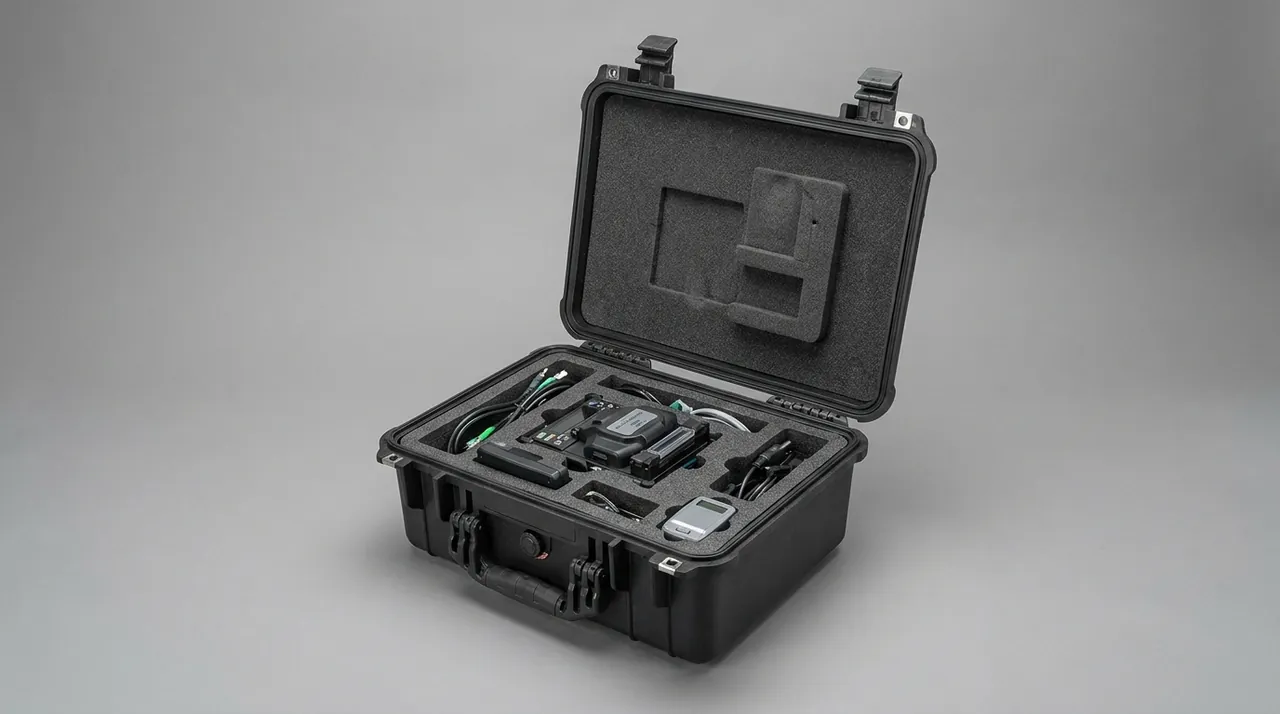
For whole paddle assemblies with variable-frequency gearmotors, balance the center of gravity: motor end down, paddle end up, with a limit boss inside the lid to cut overturning risk. Buffer selection details are extended in the cushion liner case.
Emulsifier Head Precision Sealing Face and Rotor-Stator Protection
The high-shear emulsifier head is the key to stable emulsification and preventing oil-water separation in sauce; its rotor-stator gap is measured in tenths of a millimeter. Transit fears two things: hard-object impact that widens the gap and ruins particle size, and sealing faces (mechanical seal or O-ring) fouled by dried residue that is hard to clean before installation and leaks in operation.
JUNZHIJIA isolates the emulsifier in its own cavity, inserts a food-grade cork or IXPE spacer between rotor and stator to avoid metal contact, fixes the mechanical seal rotating and stationary rings with a dedicated clip to prevent axial play, and bags O-rings and gaskets separately with labeled specifications. The interior stays dry with food-grade desiccant keeping relative humidity below 45%, slowing residue oxidation and skinning.
Imported heads often ship with calibration records and gap reports; the case reserves a document pocket so "component plus certificate plus spare" travel together and are checked on arrival. Similar precision-face protection is discussed for the dairy processing parts case.
Filling Valve and Piston Anti-Jam and Seal Protection
Filling valves and pistons decide sauce dosing accuracy. Sauce is viscous and particle-laden (chili bits, sesame, pulp); residue dried at the valve seat and piston ring causes jamming and metering error, or scores the seal face and scraps the valve. So the pre-transport "clean-dry-isolate" three-step routine is more important than in-transit buffering.
The table below lists key control points for valve and piston transport protection:
| Step | Risk | Practice | Acceptance |
|---|---|---|---|
| --- | --- | --- | --- |
| Clean | Dried residue jam | Disassemble, food-grade detergent rinse, air knife | No visible residue |
| Dry | Condensate rust | 60 C hot-air circulation, pack hot | Cavity dew point <= -20 C equiv |
| Seal isolate | O-ring swell | Remove seal, bag, label material | Spec traceable |
| Position | Valve stem bend | EVA slot vertical fix, limit travel | Travel < 2 mm |
Piston rings and PTFE seals are sensitive to grease and solvents; JUNZHIJIA marks the case "no lubricant co-storage" and uses silicone-free food-grade isolation film on contact faces. For capsaicin-oil sauces, cleaning must be thorough -- capsaicin penetrates seal micropores and resists water; use food-grade alcohol or degreaser. For a systematic seal and latch plan, see the toolbox hinge latch seal.
Stainless Pipe Fittings and Rotary Pump Transit Fixing
Stainless fittings (elbows, tees, hygienic clamps) and rotary pumps are the backbone of sauce piping and transfer. Fittings look tough but their polished interior (Ra <= 0.8 micron) harbors dirt once scratched and resists sterilization; clamp seal grooves deform under pressure and micro-leak. Pump rotor-casing gaps are also precise, and exposed shafts need impact protection.
The strategy is "soft contact, hard constraint": fittings inserted one by one into EVA tube racks bored to outer diameter, with elastic retaining rings at both ends to stop rolling; clamps bagged separately with food-grade plugs to keep interfaces clean; whole rotary pumps bolted to embedded nuts via foot holes, with anti-impact caps on shaft ends. JUNZHIJIA adds a middle cradle for long-shaft pumps to prevent resonance fatigue.
Note that sauce lines use clamp quick-connect; ship a spare set of food-grade silicone gaskets because old ones lose elasticity after disassembly. For broader pump fixing, the oilfield pump case offers vibration-fixing ideas (mind the media difference; borrow structure only).
Food-Grade Hygiene Requirements and GB 14881 Compliance
The national food-safety standard General Hygienic Specification for Food Production (GB 14881) sets baselines for equipment, tools and packaging materials; the case, as the spare's temporary garment before arrival, must also be non-contaminating, cleanable and non-toxic. In design terms: liners and interior walls must avoid recycled or odor-releasing materials, preferring PE, PP or EVA with food-contact declarations per GB 4806; interiors must have no dead corners, with rounded corners for wiping; no peeling paint or glue labels inside -- use laser engraving or embedded tags; cleaners, lubricants and spares are zoned to avoid cross-contamination.
JUNZHIJIA issues a food-contact compliance statement and third-party test summary (typical values) for liner materials in food projects, and can adjust liner color and marking to the client's HACCP plan to distinguish "clean-ready" from "to-be-cleaned". For plants running both aseptic and sauce lines, the cleanliness grading and ISO 14644 thinking in the aseptic filling line case complements this scenario.
Viscous Residue Cleaning and Drying Workflow
Viscous sauce residue (especially gelatin, starch, sesame-paste bases) is the main transport contaminant. Standardize cleaning in five steps: disassemble, pre-scrape, soak in food-grade detergent, high-pressure water or air-knife rinse, hot-air dry. The key is "drying" -- residual moisture reacts with air in a sealed case, accelerating stainless pitting and molding.
JUNZHIJIA reserves a "cleaning-compatible" interface: the case washes as a whole, inverts to drain, and a hydrophobic interior coating sheds droplets; it ships with food-grade desiccant and a humidity indicator card so the receiver sees at a glance whether it is damp. For oily residues like chili paste and hotpot base, the detergent needs degreasing power, with food-grade alcohol as a second wipe if needed. Cleaned parts should be packed in a clean zone to avoid re-contamination.
One operational detail that pays off: label the case with the cleaning date and the technician initials at the moment of packing. A case that arrived looking clean but carries no cleaning record forces the receiver to assume the worst and re-clean anyway, erasing the time saving. JUNZHIJIA's QR tag makes this automatic -- the scan shows when and how the part was cleaned -- so the receiver's goods-in check becomes a verify, not a redo, and the spare re-enters the line without an unplanned wash cycle.
Emphasize that residue cleaning is not a "before shipping" afterthought but a standard teardown action. Many plants "pile first, wash later", letting residue dry for weeks and multiplying cost. Binding cleaning into the SOP with the case marks mature spare-parts management. Cleaning methods are also covered in the protective case cleaning guide.
Custom Liner: EVA Cavity and Anti-Static Sponge
Generic foam cannot fit the varied shapes of sauce components; the custom liner is what makes the case work. JUNZHIJIA uses per-part molded cavities: 3D scan or drawing modeling captures the contour, then CNC-carved EVA/IXPE foam lets each part "snap" into its own cell. Cavities give three direct benefits -- anti-collision, anti-misassembly and easy counting.
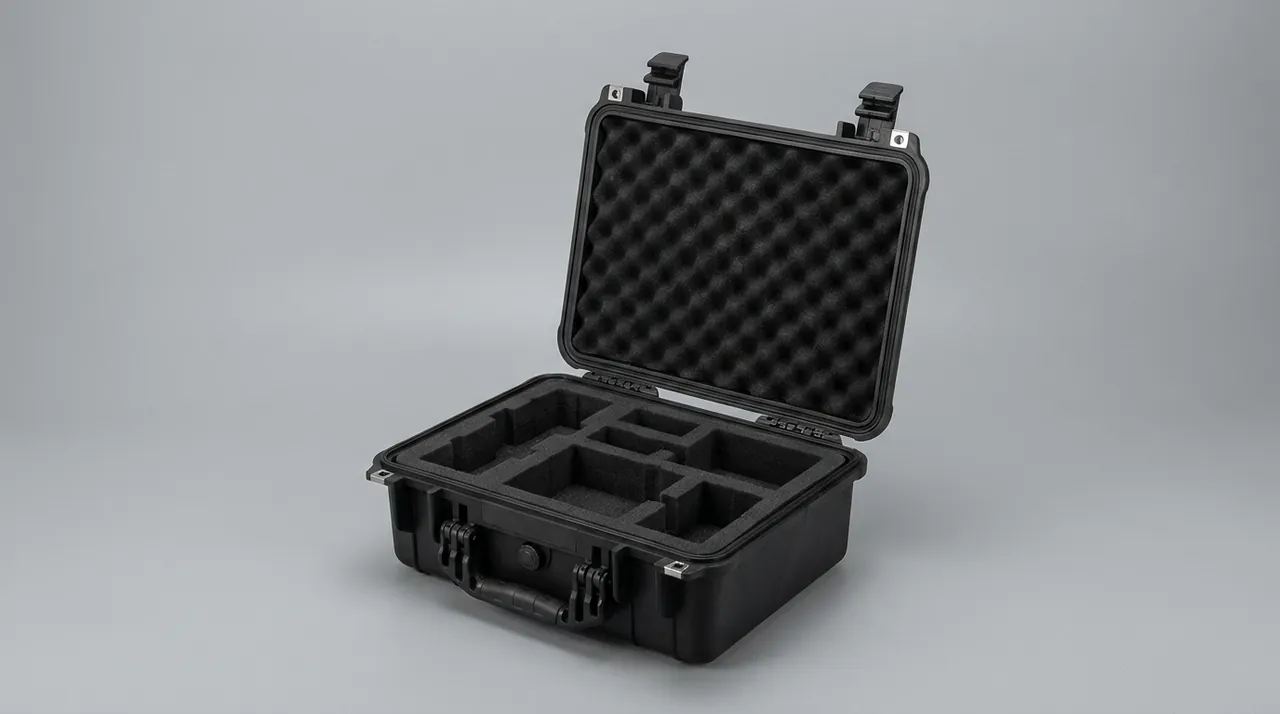
For parts with electronic sensors (valve level probes, emulsifier PT100), the liner adds an anti-static sponge layer (surface resistance 10^6-10^9 ohm) to avoid ESD damage, with wire grooves so leads are not crushed. Food-grade foam needs a non-extracting, odor-free declaration. The full molding process and cost structure are extended in the EVA foam insert process and foam material comparison.
JUNZHIJIA ships a "liner layout drawing" and parts list so field staff can place parts correctly without the manual -- vital for contractors shipping mixed models.
Lid Seal Structure and IP Protection Grade
Sauce cases cycle through humid ports, containers and cold stores, so the lid seal decides internal dampness. Under IEC 60529 / GB/T 4208, JUNZHIJIA typically recommends IP67 for sauce spares: short immersion to 1 m without water entry, enough for container condensation, rain and dock washing. The seal uses embedded EPDM or silicone foam tape with compressed locking around the lid to form a continuous watertight line.
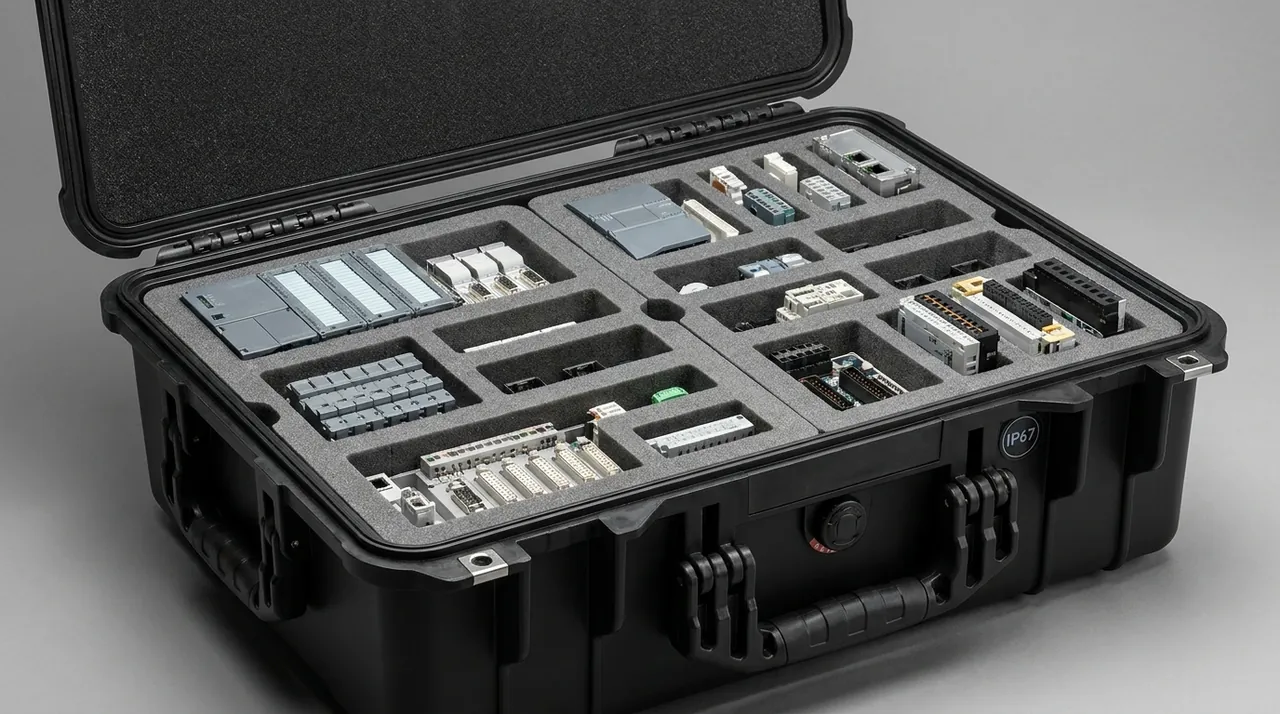
Latches and hinges also need food-grade corrosion resistance so they do not rust shut in salt spray. JUNZHIJIA uniformly adopts stainless quick locks and the seal-tape section standardized in the toolbox hinge latch seal, ensuring the tape is replaceable without scrapping the whole case. For air-freight altitude or sharp temperature swings, add a case pressure equalization valve to balance differential pressure and stop the tape from being sucked flat or blown open.
Salt Spray Test and Surface Passivation (GB/T 10125)
Sauce media contain chloride; metal case parts (especially latches, hinges, embedded nuts) in humid salt-laden containers face salt-spray corrosion. JUNZHIJIA validates key metal parts under GB/T 10125 neutral salt spray (NSS): typical targets are 316L parts 480 hours without red rust, carbon-steel parts 240 hours without base corrosion after dichromate or paint. Note that salt spray is an accelerated environmental assessment, not a life warranty.
For stainless bodies, passivation (nitric or citric acid) before transport rebuilds the dense chromium oxide film and improves pitting resistance; embedded interior parts prefer 316L over 304 to cut weld heat-affected-zone intergranular corrosion. JUNZHIJIA can attach a salt-spray typical-value report for client QA archives. For stricter environmental test methods, see MIL-STD-810H compliance (method reference only, not military certification).
Transit Vibration Buffering and Isolation (ISTA / GB/T 4857)
Random vibration from road, rail and sea is the main cause of part fatigue and seal loosening. JUNZHIJIA designs buffering per ISTA and GB/T 4857: determine buffer thickness from part mass and fragility (G value), then use layered foam (high-density base, medium cradle, low-density facing) to absorb different impact bands. For low-frequency-sensitive items like emulsifier heads and filling valves, add limit walls to constrain travel within tolerance.
In projects, JUNZHIJIA does drop and vibration typical-value verification on key case types (one-corner-three-edge-six-face drop, random vibration sweep) and writes results into the acceptance report. Note buffering is not "thicker is better" -- over-thick foam creeps and collapses under sustained vibration, losing restraint. Transit packaging test procedures are extended in the ISTA transport test procedure and GB/T 4857 transport packaging test.
Temperature-Humidity Control, Molding Prevention and Packing Marks (GB/T 191)
Sauce cases crossing climate zones face condensation and mold from temperature-humidity swings. JUNZHIJIA recommends food-grade desiccant (silica or montmorillonite) with a humidity indicator card; for electronic-bearing parts add moisture-barrier bags and oxygen absorbers; choose a hydrophobic interior to reduce beading. For hot humid routes, consider the passive insulation thinking of the extreme temperature case.
Packing marks start traceability. Under GB/T 191, the case should clearly show "fragile", "this way up", "keep dry" and "center of gravity" pictograms, plus a label with part name, model, quantity, batch, clean status and consignee. JUNZHIJIA can embed a QR traceability tag inside the lid; scanning calls up the batch's cleaning record, material declaration and inspection summary, making "hygiene compliance" provable and auditable -- exactly what GB 14881 and HACCP audits watch. For food factories, this traceability is the audit focal point.
JUNZHIJIA OEM/ODM Capability and Selection Advice
JUNZHIJIA offers OEM/ODM cases to sauce equipment makers, EPC contractors and food factories: from single-part surveying, liner molding, base-material selection to salt-spray and transit test documents and food-contact compliance statements, delivered as a project package. Two typical modes: "line-standard case" shipped with the machine to lift delivery quality, and "spare-rotation case" for standardized overseas and after-sales allocation.
Selection gives a simple decision tree: does the part have a precision mating face (yes -> cavity custom case); is the media high salt and acid (yes -> 316L base + food-grade bladder); does it carry electronics (yes -> anti-static liner + moisture bag); is transit sea-crossing (yes -> IP67 + salt-spray verification). Stack these four for an initial plan, then JUNZHIJIA engineers refine the liner layout and test grade. Clients already using the canning line case can share the same liner design spec for valve and pump protection, cutting management cost.
For plants running several sauce varieties, JUNZHIJIA recommends a modular family approach: one case footprint sized to the largest spare, with swappable liner inserts per product line, so the same outer case serves chili, salad and tomato lines by changing only the foam. This cuts the number of case types in the storeroom, simplifies operator training and keeps spares identifiable by insert color, which in turn supports the HACCP separation between allergen and non-allergen lines without maintaining wholly separate case inventories.
Common Questions FAQ
Q: How clean must sauce line components be before transport? A: The principle is "arrival-ready, with no deep re-cleaning required before installation". JUNZHIJIA defines three cleanliness levels so plants can match effort to risk. Level one demands no visible residue by eye and applies to appearance parts, guards and loose fittings that will be wiped anyway. Level two requires contact faces -- valve seats, seal grooves, rotor-stator gaps and piston rings -- to be free of oil film and particles; this needs disassembly, a food-grade detergent rinse and an air-knife blow, and it is mandatory for filling valves and emulsifier heads where a single grain causes leakage or off-spec emulsion. Level three adds a dry cavity with dew point equivalent at or below -20 C for long storage and sea crossing, preventing both rust and microbial growth. Oily, high-adhesion residues such as chili oil and hotpot base cannot be removed by water alone; a food-grade degreaser or alcohol wipe is required, because capsaicin penetrates seal micropores and later bleeds out as a leak. Critically, cleaning must be a standard teardown action written into the maintenance SOP, not a frantic chore before the truck arrives, otherwise residue bakes on for weeks and the cleaning cost multiplies while hygiene risk climbs.
Q: The emulsifier gap is tiny; how to avoid rotor-stator impact in transit? A: The core method is "isolate, limit, dry", applied as a package rather than any single trick. Isolation means inserting a food-grade IXPE or cork spacer between rotor and stator so the two precision surfaces never touch metal-on-metal during handling; even a microscopic nick widens the gap and shifts the droplet-size distribution that defines sauce stability. Limiting means fixing the mechanical seal rotating and stationary rings with a dedicated clip or collar to stop axial play, and giving the head its own sealed cavity separated from heavier spares that could shift and crush it. Drying means placing food-grade desiccant inside to hold relative humidity below 45 percent, which slows the oxidation and skinning of any trace residue and protects the seal elastomer. JUNZHIJIA builds the emulsifier cavity with inner-wall limit bosses and a form-cut cradle so the head cannot rotate or slide, typically holding arrival displacement within 2 mm even on rough intercontinental routes. Always ship the factory gap calibration report in the case document pocket and verify it on arrival; if the measured gap drifts, the cause can be traced to a specific transport stage and corrected before the head is reinstalled, avoiding an expensive line-side failure.
Q: Why does the PTFE seal on a filling valve swell and fail in transport? A: PTFE and many companion elastomer seals are chemically sensitive: residual chili oil, concentrated flavor extracts and edible alcohol left inside a filling valve react with the seal over days of enclosed transit, causing swelling, loss of elasticity and ultimately a jammed stem or a weeping seat once the valve is pressurized. The disciplined practice is "remove, wash, separate, label". Remove the seal from the valve body and bag it with its material grade and spec noted, because mixed spares of slightly different cross-section are a common source of wrong reassembly. Wash the valve body with food-grade detergent to fully degrease the seat and bore. Separate the seal into its own cell so it is never compressed against a sharp edge. Label the recommended replacement interval so maintenance swaps it on schedule rather than reusing a fatigued part. JUNZHIJIA marks the case interior "no lubricant co-storage" and lays a silicone-free food-grade isolation film over contact faces, since some release agents attack PTFE. On arrival, the receiving technician should inspect each seal for blistering, swelling or permanent deformation before any pressure test, instead of installing blindly and discovering the failure only when the filling line starts dripping product onto the conveyor.
Q: How to prevent scratches and contamination on polished stainless pipe interiors? A: Hygienic stainless fittings with interiors polished to Ra 0.8 micron or finer are unforgiving: a single scratch becomes a trap for sauce solids and a blind spot for CIP cleaning, and once colonized it is almost impossible to re-sterilize. The handling rule is "soft contact, hard constraint". Soft contact means each fitting is inserted into an EVA tube rack bored to its exact outer diameter, cradling the part without pressure points; elastic retaining rings at both ends stop the pieces from rolling into each other and knocking their polished faces. Hard constraint means clamps and gaskets are bagged separately with food-grade plugs driven into every open port to keep the interface clean and the seal groove undeformed. Elbows, tees and reducers sit in divided cells so their ends cannot collide. The case interior itself has rounded corners and a hydrophobic, wipeable wall that can be washed and drained as a whole between shipments. JUNZHIJIA also recommends shipping one spare set of food-grade silicone gaskets per case, because the original gaskets lose elasticity after repeated disassembly and clamping. Above all, never pack fittings in ordinary jute rope, straw or recycled paper, whose loose fibers and dust permanently contaminate the polished bore and fail the hygiene acceptance at goods-in.
Q: Should the case be 304 or 316L, and on what basis? A: The choice follows media corrosiveness, not price alone. 304 stainless is perfectly adequate in neutral, low-chloride service, but sauce is rarely neutral: soy sauce, pickled vegetable paste and salty seasoning pastes carry high chloride, while acetic, citric and lactic acids push the pH down. That combination of low pH and high chloride is the classic trigger for pitting and intergranular corrosion, so JUNZHIJIA upgrades exposed bodies to 316L, whose molybdenum raises the pitting resistance equivalent number and resists chloride attack far better. Before fixing the base and liner, JUNZHIJIA asks every client for a media composition sheet listing salt content, pH, alcohol and oil load; valve bodies and pump shells that will touch high salt and acid then receive a 316L case with a food-grade PE bladder, whereas only dry, clean spares may stay with 304. The same logic applies to small embedded metals -- latches, hinges and threaded inserts -- which are also specified in 316L to avoid weld heat-affected-zone corrosion at the most vulnerable points. Finally, those metal parts receive GB/T 10125 salt-spray typical-value verification before release, giving the quality team a documented baseline rather than an unverified assumption about field durability.
Q: Does the case need IP67, or is a normal waterproof case enough? A: The right rating follows the routing, not a blanket rule. For clean-zone, in-plant short hauls a modest IP54 keeps out handling dust and occasional splash, but sauce spares rarely stay that protected: they move through ports, stacked containers, cold-store thresholds and dock-pressure washing, all of which flood a weak seal. JUNZHIJIA therefore typically specifies IP67 under IEC 60529 / GB/T 4208 -- short immersion to 1 m with no water entry -- which comfortably covers condensation, driving rain and hose washing during multi-modal transit. A ordinary waterproof case fails here not because the number is wrong but because its tape section does not compress uniformly and its latch corrodes shut in salt spray, so the seal is compromised before the journey ends. Food-grade cases from JUNZHIJIA uniformly use stainless quick locks with a replaceable food-grade seal tape, so a aged tape is swapped in minutes without scrapping the whole case. When the route includes air freight at altitude or sharp diurnal temperature swings, a pressure equalization valve is added to balance the internal-external differential, preventing the tape from being sucked flat on descent or blown open in a hot hold.
Q: For sea crossing, how does the case resist salt-spray rust and mold? A: Sea crossing concentrates every risk, so the case must fight rust and mold on two fronts at once. Against rust, JUNZHIJIA builds latches, hinges and embedded nuts from 316L or gives them dichromate or paint treatment, then backs the choice with GB/T 10125 salt-spray typical-value verification -- 316L parts reaching 480 hours without red rust is a common internal target, while carbon-steel parts are qualified only after surface conversion. Stainless bodies are passivated before transport, either nitric or citric, to rebuild the dense chromium oxide film that resists pitting in chloride-laden container air. Against mold, the case carries food-grade desiccant with a humidity indicator card visible on opening, plus moisture-barrier bags and oxygen absorbers for any electronic-bearing spare, and a hydrophobic interior that sheds condensate instead of pooling it. The decisive control, however, is disciplined clean-and-dry before packing: fermented sauce residue sealed inside a warm container is the primary mold source, so residue must be removed at teardown, not discovered at arrival. JUNZHIJIA can embed a QR traceability tag in the lid so the receiver scans cleaning records and material declarations on the spot, turning hygiene compliance from a claim into auditable evidence for GB 14881 and HACCP reviews.
Q: What is the lead time and what documents does a JUNZHIJIA custom case include? A: A custom JUNZHIJIA case follows a defined pipeline so delivery is predictable rather than ad hoc. It starts with part surveying -- physical measurement or drawing modeling -- to capture exact contours, then moves to liner molding where CNC-carved EVA or IXPE foam is cut to give each component a snug, dedicated cavity. Base-material selection and case assembly come next, followed by salt-spray and transit typical-value verification on the prototype, and only then shipment. The document package shipped with the case typically includes the liner layout drawing and parts list, a food-contact material compliance statement prepared against GB 4806 with typical values, salt-spray and drop or vibration test summaries, and a material composition note for the QA file. In OEM mode the case can ship as standard fitment with the equipment, lifting the delivered quality of the machine, or it can be standardized as an after-sales rotation case across a spare-parts network. JUNZHIJIA can also tune liner color and marking to the client's HACCP plan and embed a QR traceability tag inside the lid so every field case stays traceable and audit-ready within the plant's food-safety system.
Conclusion
JUNZHIJIA sauce line cases turn four needs -- corrosion, contamination, seal and residue control -- into one repeatable, auditable system spanning 316L bodies, cavity liners and IP67 seals. Built for food-grade compliance and tuned to each sauce's salt-acid media, they keep agitator paddles, emulsifier heads and filling valves install-ready on arrival.