


The seamer roll head, can lifter and retort valves, baskets and temperature sensors of a canning line are frequently replaced and high value key parts. They are mostly stainless steel or surface coated, long exposed to steam, salt spray and cleaning agents, so in transit without proper protection they easily show pitting, coating spalling and sealing face rust. The core conclusion: a protective case for canning line seamers and retort parts must take corrosion resistance as the first task while holding the food hygienic baseline, so as to guarantee roll-on precision and sterilization effectiveness. This article follows the thread of canning line case, seaming equipment case, retort component case, canning equipment case and food machinery case to explain corrosion-safe transport design for seamer and retort parts, for equipment makers, food plant engineering teams and maintenance providers.
Canning line spares often move as loose items such as seamer roll heads, retort door seals and temperature probes. Once these rust or lose coating, the seamer causes leaking cans, and the retort may show uneven sterilization temperature and failing F0 value from stuck valves, directly threatening food safety. Ordinary cartons or bare transport let sea salt spray and condensate rust precision faces within days. Designing the case as a mobile rust-proof clean cabin is a key link in canning line cost control and food safety compliance.
Table of Contents
- Transport corrosion risk of seamer and retort parts
- Dual requirement of food hygiene and corrosion resistance
- Seamer roll head protection
- Retort component protection
- Main body material and corrosion selection
- Insert cushion and placement design
- Sealing moisture barrier and corrosion key
- Food contact material compliance
- Temperature humidity and salt spray response
- Handling stacking and fixation
- Environmental test and salt spray verification
- Receiving inspection and cleaning maintenance
- OEM/ODM and global supply
- Application scenarios and selection checklist
Transport corrosion risk of seamer and retort parts
The seamer roll head decides can sealing; its forming roll and pressure head surface finish directly relate to roll-on tightness. In transit, if the surface catches salt spray or condensate and is not treated, pitting may appear within days, causing capillary leaks in the roll seam. The can lifter and divider screw are mostly stainless; long moisture also rusts at scratches. Retort valves, basket rails and temperature probes stay in high-temperature high-humidity sterilization, and if the passive layer is damaged, transit moisture accelerates rust and sticks moving parts.
More hidden are coated parts: some seamer heads are hard chrome plated, and transit knocks spall the coating, losing wear resistance and making the spall a corrosion start. Therefore the protection logic of the food packaging machine case must upgrade for canning lines to corrosion-first, essentially different from a common equipment case that only talks impact.
From food safety view, the arrival state of seamer and retort parts should be verifiable: after opening, parts show no visible rust, the roll head mounts and achieves a qualified seam, retort valves move smoothly and probes read accurately, then release. The case creates that salt-spray-uneroded part state.
Dual requirement of food hygiene and corrosion resistance
Cans are direct-entry food, so seamer and retort contact surfaces must meet food hygiene. Standards anchor to GB 14881 the general hygiene standard for food production, GB 50687 and GMP thinking; contact material follows the GB 4806 series. Transport reliability uses GB/T 4857, ISTA and ASTM D4169 for quantification. We clarify that although MIL-STD-810H originates as a military standard, it is cited here solely as a method reference for temperature, humidity, vibration and salt spray tests, and the product holds no military certification.
Corrosion resistance and hygiene are not opposed: the inner bay uses non-porous wipeable stainless or food-grade plastic, the liner is low-outgassing non-shedding and non-reactive with metal; sealing moisture barrier blocks both salt spray and microbes. Structure borrows the easy-clean requirement of the cleanroom equipment case but adds rust proofing: the liner metal-contact face can carry anti-rust paper or VCI vapor corrosion inhibitor film.
For retort parts sharing the cavity with food containers, also note surface particulate, referencing the contact surface management of the food packaging machine case to avoid liner extractables contaminating can inner walls, holding the food safety baseline.
Seamer roll head protection
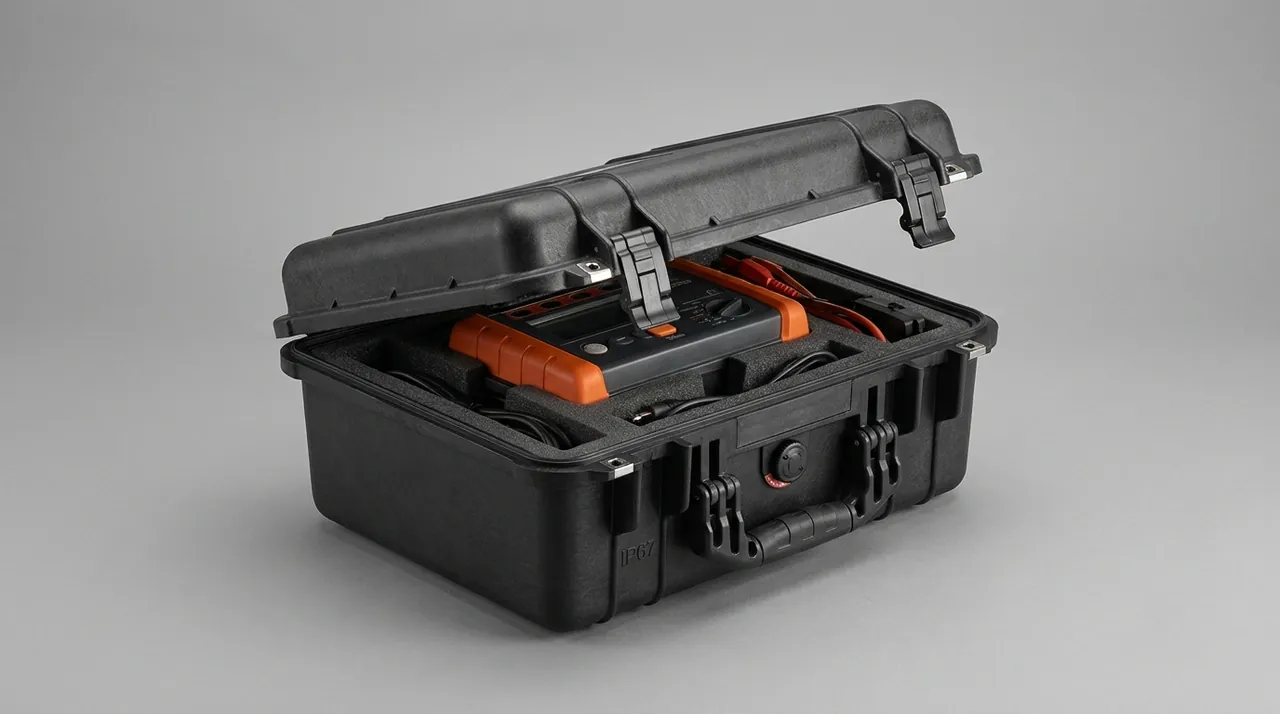
Seamer roll head transport centers on protecting the forming roll and pressure head finish. The liner uses CNC carved EVA grids, the head standing or lying with a dust-free sleeve, forbidding foam to press coating and roll faces directly; the forming roll hangs positioned by a soft contact layer to avoid roll-face mutual wear in transit. The can lifter and divider screw use stepped foam; flange faces get dust caps.
For hard chrome pressure heads, the liner contact layer carries VCI film or anti-rust paper, and desiccant inside absorbs moisture, blocking the salt spray erosion start. The roll head is heavy, so use 45 to 60 kg/m³ closed-cell PE foam for main support with an EVA thin layer at contact. Borrow the cavity design of the custom foam inserts guide: lock on placement, removal without wall scrape.
For cleaning ease, make the roll head liner a removable module so the main bay and liner are processed separately. Add a lint-free paper separator between part and foam to absorb trace oil. For long-idle heads, apply food-grade rust oil and seal per maker before transport, lowering risk.
Retort component protection
Retort valves, inlet-outlet steam, drain, basket rails and temperature probes are the focus. Valve sealing faces wrap in soft foam, metal knife-edge valves get a separate hard bay and never pressed; basket rails are long and bend-prone, use a full-length foam cradle against deformation; temperature probes such as PT100 are precision sensors needing an independent small bay with a hard shell sleeve, forbidding co-cavity with metal.
Retort door seals, silicone or FKM, fear pressure and scratch, so wrap in a hard shell sleeve and lay flat, forbidding folding. The structure references the precision valve placement thinking of the dairy processing parts case. The whole liner is modular for replacing one contaminated or aged cell.
All foam is low outgassing and non-shedding with volatile and extractable tests, because canning food safety tolerates zero foreign matter. Inside put desiccant and anti-rust paper to block rust from high-temperature high-humidity residue. Retort parts are mostly 316L or 304 but still need moisture proof, since sea transport salt spray breaks the passive layer.
Main body material and corrosion selection
Canning parts often face sea transport and humid inter-plant transfer, so the case needs corrosion resistance and rigidity. Modified PP injection cases have smooth easy-wipe surfaces and resist common cleaners, suited to seamer roll heads and valves. Rotomolded cases resist impact and form large basket bays but need a smooth anti-bacteria inner liner. Aluminum frame engineering plastic cases are light and rigid, suited to air-travel precision probes, but the frame needs anodizing or passivation against sea-wind corrosion.
Contact surfaces avoid recycled mix and provide a material declaration; the outer surface uses a cleaner-tolerant non-porous coating. Latches and hinges follow the hygienic approach of case hinge latch seal with passivated stainless hardware to reduce dirt traps and rust seizure. Cross-border wooden skids must meet ISPM 15 treatment with the IPPC mark.
The table compares three bodies in the canning scenario for weighing by part mass and transfer environment.
| Shell | Fits | Rust | Clean | Shock | Note |
|---|---|---|---|---|---|
| --- | --- | --- | --- | --- | --- |
| Modified PP molded | Roll head, valve | Excellent | Excellent | Medium | Grid custom |
| PP/PE rotomolded | Large basket rail | Excellent | Good | High | Liner smooth |
| Aluminum framed | Precision probe, air | Good | Excellent | High | Frame passivated |
Insert cushion and placement design
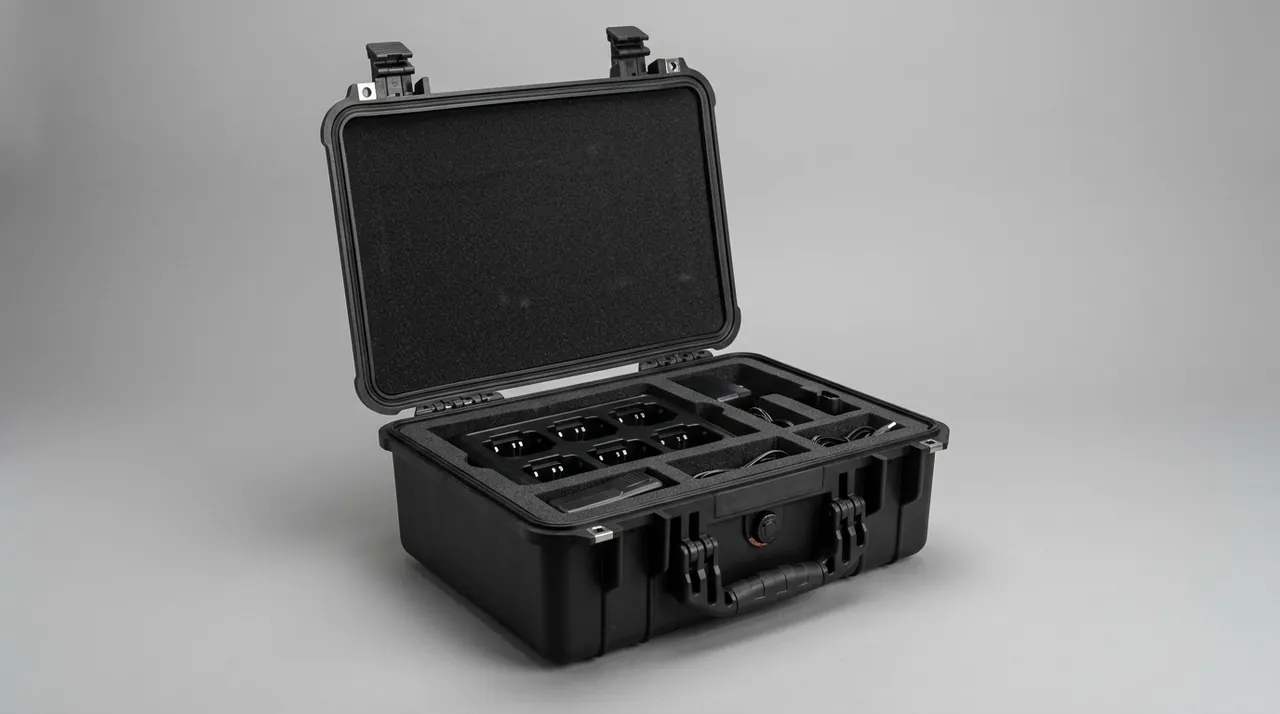
Canning parts take corrosion-first but cannot ignore impact, so the liner does multi-stage cushion: heavy parts like roll heads and baskets use high-density PE foam hard support, precision parts like probes and valve seals use gradient soft foam to decompress. Zoning uses removable modules, the main bay split into cells, each CNC carved to the model, achieving one cavity per object, heavy below light above.
Placement key is limiting displacement and isolating metal mutual wear: leave a small gap between liner module and wall with strap fixation against slide on hard braking; foam density hard enough to suppress vibration yet soft enough to avoid local bruise. Roll faces hang, probes get independent hard bays. The thinking sees the gradient cushion of the cushion liner case and the foam material comparison for low-outgassing non-shedding grades.
Zoning also aids traceability: each cell tags label and serial for instant check. For multi-valve orders, zoning prevents different specs pressing each other deformed, ensuring smooth action after install, the core of reducing canning line re-commissioning.
Sealing moisture barrier and corrosion key
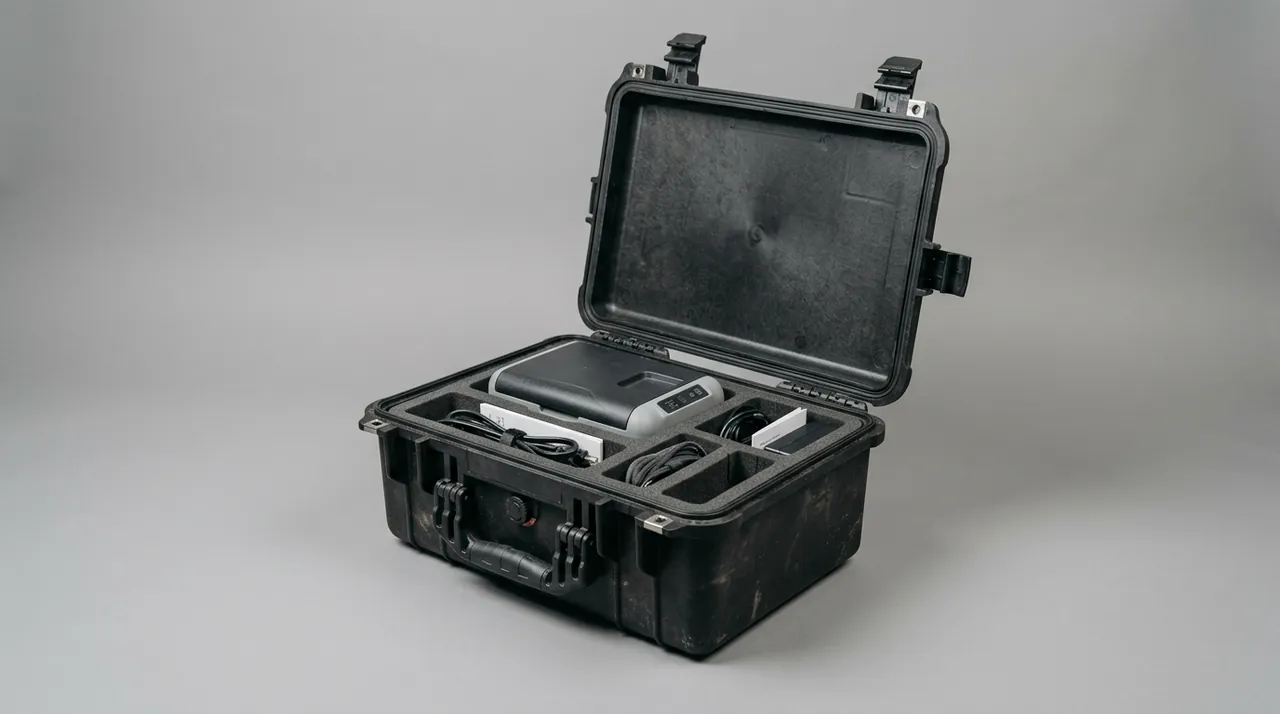
Canning parts most fear salt spray and condensate entering. Sealing uses a dual gasket: foamed silicone as the primary along the opening, plus a latch-driven compression gasket as secondary, meeting IP67 per IEC 60529 and GB/T 4208 for dust proof and momentary immersion. High anti-corrosion batches add a one-time moisture barrier bag inside with desiccant and VCI anti-rust paper.
The seal tolerates 75 percent ethanol and peracetic acid without releasing contaminants; it is replaceable. Air-tight moisture barrier besides blocking salt spray slows inner micro-environment change during temperature swings, buying buffer for metal parts. On seal selection see the IP67 protective case.
State clearly that IP is enclosure protection not sterility assurance; the case lowers corrosion medium entry probability, and final hygiene release still follows the user cleaning and sterilization flow. For canning equipment, sealing moisture barrier directly decides whether arrival rusts, the first physical barrier of corrosion resistance.
Food contact material compliance
Seamer roll heads and retort baskets directly contact food containers, so their transit contact surfaces, liners, sleeves and supports must meet food contact material safety. The domestic basis is the GB 4806 series such as GB 4806.7 for plastics and GB 4806.11 for rubber, requiring total migration, specific migration and sensory limits. EU exports reference (EC) No 1935/2004 and (EU) No 10/2011; US exports reference FDA 21 CFR.
In practice the case maker should provide a declaration of conformity and third-party test report, with test items and limits agreed in contract. For polymer foam and silicone, watch for sulfide, plasticizer or odor release. The compliance framework is also discussed in the beverage bottling parts case as a cross-category reference.
For parts directly contacting can inner walls, use food grade certified PE or medical silicone as the liner contact layer rather than ordinary sponge. Purchasers request batch material certificates at acceptance and file them for inspection and audit traceability, holding the food safety baseline.
Temperature humidity and salt spray response
Canning parts are double sensitive to salt spray and moisture: sea transport salt spray breaks the stainless passive layer; condensate starts pitting on coating; cleaner residue worsens corrosion. Countermeasures: a temperature humidity logger with alarm inside; a desiccant bay and VCI anti-rust paper between layers for humidity control and inhibition; a low-conductivity or insulated inner body to slow temperature change. For cross-sea transport, borrow the cold accumulation of the cold chain food case but prioritize humidity control.
Before transport, drain retort residual liquid and seal joints per maker; roll heads per requirement get food-grade rust oil and seal. Before opening, rest the case in a clean buffer room until temperatures equalize to prevent sudden sweat. The log is filed with the case as environment evidence; for valuable parts a Bluetooth logger exporting CSV lets the team study trends and draws transport validation into the supply chain.
Handling stacking and fixation
Canning cases forbid throwing and over-stacking; print upward, fragile, rain-proof and center-of-gravity marks. Stacking height follows GB/T 4857.3 stacking test load with a safety factor. Inside, leave a buffer gap between liner module and wall with straps for secondary fixation against slide on hard braking; multiple parts in one case put heavy below light above with partitions; roll heads lie with roll faces hanging and sleeved.
Air-travel precision probes must consider pressure change; configure a case pressure equalization valve to stop altitude pressure difference pressing salt spray air in or bulging the liner. Short inter-plant transfer has no pressure issue, but forklift and elevator bumps still demand hard liner constraint; visually confirm latch closure and liner seating before each transfer.
Environmental test and salt spray verification
Before finalization, run environmental tests to quantify reliability: referencing MIL-STD-810H as methodology only, not military certification, do random vibration, drop, high-low temperature cycle and damp heat; the corrosion item per GB/T 10125 neutral salt spray or cyclic salt spray verifies case hardware and liner inhibition effect. Then align with ISTA 3E/3H or ASTM D4169 for combined verification.
Focus on liner displacement, roll head roll-face appearance, valve sealing face, probe integrity and arrival rust. Validation samples take the worst-case configuration, fully loaded with parts at critical placement and placed in a salt spray chamber. After testing, do appearance and function sampling per the custom case acceptance AQL with grading. For food clients, transport validation can join packaging qualification and cleaning verification for a closed loop.
Environmental testing is a design confidence tool, not a substitute for per-shipment site management. Approved models still keep loggers and opening checks. Method detail is in the GB/T 4857 transport packaging test.
Receiving inspection and cleaning maintenance
Receiving is the last corrosion and damage control gate. Build a standard opening flow: open in a clean buffer, first check outer case and seal integrity, then verify accompanying documents such as material certificate, test report, temperature humidity record and salt spray or rust file, then visually and wipe-check surface. Roll heads use developer wipes or a magnifier on roll faces and coating; valves check sealing face for bruise and rust.
Sampling uses AQL with strict critical defects. Refer to the reprocessing rule of the protective case cleaning method; if liner shedding or contamination is found, replace and assess whether parts were affected. Archive all opening records, photos and dispositions.
Seamer and retort parts get functional recheck on opening: roll head manual turn, valve plate rebound, probe continuity. Isolate anomalies and notify the shipper using transport records to trace, avoiding injured parts installed causing leaking cans or failing F0. For critical roll heads, trial-run to a qualified seam on arrival as release evidence.
Reusable cases need a cleaning rust-care SOP: wipe the inner bay with lint-free cloth and 75 percent ethanol or an approved disinfectant; stubborn stains use food-grade cleaner, never strong solvents that corrode silicone. Foam rotates by contamination: washable types dry at low temperature, non-washable types replaced on schedule. Latches and hinges use the lubrication of the protective case cleaning maintenance to prevent rust seizure and shedding.
Maintenance cadence ties to transfer frequency: high-frequency cases get monthly appearance, seal and rust checks, quarterly seal tests; idle cases re-clean and replace desiccant and VCI paper before use. Keep one-case-one-file of cleaning date, owner and liner batch. Life references the experience value of protective case service life, assessed for scrap or liner renewal at end.
After cleaning, fully volatilize disinfectant residue; chlorine agents may corrode the stainless passive layer, so air dry and finish-rinse with pure water to avoid chloride pitting. Long-idle cases keep desiccant and anti-rust paper inside to block moisture rust, protecting the canning food safety baseline.
OEM/ODM and global supply
Seamer sizes and retort valve specs differ hugely across canning line brands, so generic liners rarely fit all. Familiar with hygienic transport requirements for food machinery, Kexin New Materials (Guangdong) Co., Ltd. custom-builds cases for canning line seamers and retorts under OEM/ODM and agency wholesale, serving the global market and providing food-contact material (GB 4806) compliance and corrosion-resistance test files under contract. The approach collects part 3D models, CNC carves a fitted foam cavity, and ships a part list and placement diagram with the case.
Equipment makers use OEM to include the case in the machine spare kit for unified shipment, improving delivery. Maintenance providers use ODM to standardize a case by common valve and probe models, lowering inventory complexity. Global supply lets overseas food plants get same-source liner spares, ensuring transport consistency. The flow references the custom foam inserts guide and how to choose a case OEM factory.
At contract level, specify material grade, food hygiene and corrosion grade commitment, test document list and non-conformance handling, turning hygienic corrosion-safe transport into a written guarantee, the focus of food plant supplier audits.
Application scenarios and selection checklist
- Canning plant spare: seamer roll heads and retort valves sit in cases, swap on stoppage, shortening MTTR.
- Line retrofit: old line retort baskets move cross-site with in-case placement avoiding secondary damage.
- Part return calibration: temperature probes and valves use the same case both ways for comparable state.
- Overseas project shipment: roll head spares exported with machines use aluminum frame cases with desiccant and VCI paper on sea.
- Food safety audit companion: complete material and corrosion files make the case visible evidence of supply chain hygiene.
The case value lies not only in no breakage but in always controlled hygienic rust-proof state, supporting canning line food safety and compliance narrative.
Before fixing a canning line parts case, check item by item: whether the part contacts food containers and the contact surface meets GB 4806 and hygiene; whether the liner takes corrosion-first with independent zoned washable cells and VCI anti-rust; whether the seal reaches IP67 and tolerates disinfectant; whether temperature humidity logging and desiccant anti-rust paper are configured; whether body material declares and avoids recycled mix while corrosion resistant; whether salt spray and random vibration verification passed; whether material and corrosion test files accompany; whether liner replacement and custom lead time fit maintenance; whether cross-border wood meets ISPM 15; and whether the supplier has OEM/ODM and global supply capability.
Mapping these ten to the standards above basically locks a qualified canning seamer and retort component case. If uncertain, cross-select using the hygienic transfer experience of the biscuit line case.
FAQ
Q: Why must canning seamer roll head transport take corrosion resistance first? A: The roll head decides can sealing, and the forming roll and pressure head finish directly relate to roll-on tightness. In transit, if the surface catches salt spray or condensate and is not treated, pitting may appear within days, causing capillary leaks in the seam and whole batches of swollen spoiled cans. More hidden, hard chrome pressure heads spall coating from transit knocks, losing wear resistance and making the spall a corrosion start. Therefore a canning parts case must put corrosion first: the liner metal-contact face carries VCI vapor inhibitor film or anti-rust paper, desiccant inside absorbs moisture, sealing reaches IP67 against salt spray, and the roll head hangs positioned by a soft contact layer to avoid roll-face mutual wear. This is essentially different from a common equipment case that only talks impact, because canning failure is often not a hole but an invisible rust point causing leaking cans. Arrival requires the roll head with no visible rust and a trial-run qualified seam for release; the case creates that salt-spray-uneroded part state, also the traceability demand of food plant audits.
Q: How to protect retort valves on long sea transport? A: Retort valves, inlet-outlet steam and drain, decide sterilization temperature uniformity and F0 value, so long sea transport needs multi-layer protection. First, the valve body enters an independent hard bay, the sealing face wrapped in soft foam, metal knife-edge valves never pressed, the plate at micro-open or maker specified posture fixed by a stop block. Second, cap the inlet with a dust-free sleeve and mark it. Third, put desiccant and VCI anti-rust paper inside to block salt spray, with double seal at IP67 against sea-wind moisture. Fourth, before transport drain retort residual liquid and seal joints per maker to avoid residue sloshing and corroding at sea. Valves are mostly 316L or 304, but sea salt spray still breaks the passive layer, so moisture and rust proofing cannot be skipped. On arrival, visually check the sealing face for bruise and rust, reinstall and do action test and temperature calibration to ensure even temperature and passing F0. Opening records and transport temperature humidity data archive as food safety traceability, avoiding injured valves causing incomplete sterilization.
Q: How to comply food contact material for canning equipment cases? A: Seamer roll heads and retort baskets directly contact food containers, so transit contact surfaces such as liners, sleeves and supports must meet food contact material safety. The domestic basis is the GB 4806 series, such as GB 4806.7 for plastics and GB 4806.11 for rubber, requiring total migration, specific migration and sensory limits; EU exports reference (EC) No 1935/2004 and (EU) No 10/2011, US exports reference FDA 21 CFR relevant chapters. In practice the case maker should provide a declaration of conformity and third-party test report, with test items and limits agreed in contract. For polymer foam and silicone, watch for sulfide, plasticizer or odor release, a framework also discussed in the beverage bottling parts case for cross reference. For parts directly contacting can inner walls, use food grade certified PE or medical silicone as the liner contact layer rather than ordinary sponge; purchasers request batch material certificates at acceptance and file them for inspection and audit traceability, holding the food safety baseline, the document chain food plant supplier audits value most.
Q: Does a seamer case need humidity control or cooling? A: Prioritize humidity control, avoid cooling. Canning parts fear salt spray and condensate rather than high temperature, so the transport goal is blocking moisture and salt spray erosion rather than cooling. In practice, put a temperature humidity logger with alarm inside, a desiccant bay and VCI anti-rust paper between layers for humidity control and inhibition, and a low-conductivity or insulated inner body to slow sudden temperature change; before transport drain retort residual liquid, roll heads per requirement get food-grade rust oil and seal. Only on very short cold-chain linked legs reference the cold chain food case for cold accumulation, and metal parts fear freeze cracking. Before opening, rest the case in a clean buffer room until box and ambient temperatures equalize to prevent sudden sweat and rust. The log is filed with the case as environment evidence; for valuable parts a Bluetooth logger exporting CSV lets the team study trends and draws transport validation into the supply chain. Humidity control directly decides arrival rust, the first physical barrier of canning equipment corrosion, and should enter the maintenance SOP and supplier acceptance file.
Q: How to treat wooden skids for cross-sea canning part shipment? A: If the case interior or outer skid uses wood, it must be treated per ISPM 15 the International Standard for Phytosanitary Measures, usually methyl bromide fumigation or heat treatment with the IPPC mark stating treatment and country code, or destination customs may reject or destroy the whole wood packaging, hitting long-lead canning spares especially hard. Pure plastic or aluminum frame cases are outside ISPM 15, but an added outer wooden box still needs treatment. The shipment file attaches the wood treatment certificate alongside the material declaration, and food plant supply chain audits often include wood compliance in biosafety assessment. For high value roll heads and probes, prefer an all-plastic or aluminum frame solution to fully avoid wood risk while cutting weight and freight; the aluminum frame needs anodizing or passivation against sea-wind corrosion. If heavy parts force a wood skid, confirm bark-free wood and clear marks, photograph before packing. Wood compliance is a detail but a hard gate for zero rejection in cross-border shipment, not to be overlooked.
Q: How to accept a delivered canning line case? A: Set a fixed opening routine before the case reaches the clean area. In a clean buffer, first inspect the outer case and seal for damage, then confirm the papers that traveled with it: material certificate, test report, temperature humidity record and the salt spray or rust file, and after that do a visual and wipe check of the surface. Roll heads are checked with a developer wipe or a magnifier on the roll face and coating, while valves are examined for bruise and rust on the sealing face. Use AQL with tightened critical defect limits, scored against the custom case acceptance AQL. Seamer and retort parts get a functional check on opening: turn the roll head by hand, confirm the valve plate rebounds and the probe reads continuity. When the liner sheds or shows contamination, change it and decide whether the part was affected, then store every opening record, photo and disposition. For critical roll heads, run a trial to a qualified seam on arrival as the release proof; isolate any anomaly and notify the shipper using the transit record to trace, so injured parts never reach the line and cause leaking cans or a failing F0. Moving acceptance past a surface look to a triple check of document, surface and function is the evidence chain food plant supplier audits expect.
Q: What is the lead time for OEM custom canning line cases? A: Lead time mainly depends on roll head and valve liner development: the supplier collects part 3D models, CNC carves a fitted foam cavity and samples; a simple valve grid samples in a few working days, a complex cavity with roll head hanging position and probe hard bay takes longer, and a new aluminum frame mold takes the longest. Familiar with food machinery hygienic transport, Kexin New Materials (Guangdong) Co., Ltd. undertakes OEM/ODM and agency wholesale serving the global market, and can provide GB 4806 food contact compliance and corrosion-resistance test files by contract, specifying material grade, hygiene and corrosion grade commitment, test list and non-conformance handling. Equipment makers should put the case into the machine project plan early to avoid unfinished liner at shipment; maintenance providers keep standardized valve and probe cases in stock for common models to cut emergency transfer wait. When negotiating lead time, also ask liner spare supply rhythm to ensure domestic and overseas transport consistency, the practical show of global supply capability concerning spare availability during canning line downtime.
Q: Can the case serve as a sterile holding cabinet for canning parts? A: Not equivalent. The case is positioned as a mobile hygiene cabin and transport barrier that lowers transit salt spray contamination and impact probability, yet its IP rating only describes enclosure protection and says nothing about sterility assurance, so after opening the part must still pass the workshop cleaning and sterilization flow before entry. If used for short in-plant holding, it should meet: wipe-disinfectable inner bay, rotatable liner, marked case for fixed management, and the storage environment itself reaching the corresponding cleanliness. For long holding, still use a validated clean cabinet and let the case return to transport and cross-zone roles. Quality files must state this boundary to prevent field misuse of transport protection as sterile packaging. Separating transport protection from clean storage duties controls both food safety and cost, mature practice in canning line operation.
Conclusion and further reading
Transport protection for canning seamer and retort parts is a pre-link of canning food safety reliability: right material, corrosion-first, held seal and kept records drive transit rust, impact and leaking-can risk to the minimum. Familiar with food machinery hygienic transport, Kexin New Materials (Guangdong) Co., Ltd. can develop such cases to demand, offering OEM/ODM customization, global agency wholesale and contract-period food-contact material (GB 4806) compliance and corrosion-resistance test files, a partner worth adding to the supplier list of equipment makers and food plant engineering teams.
Related reading