

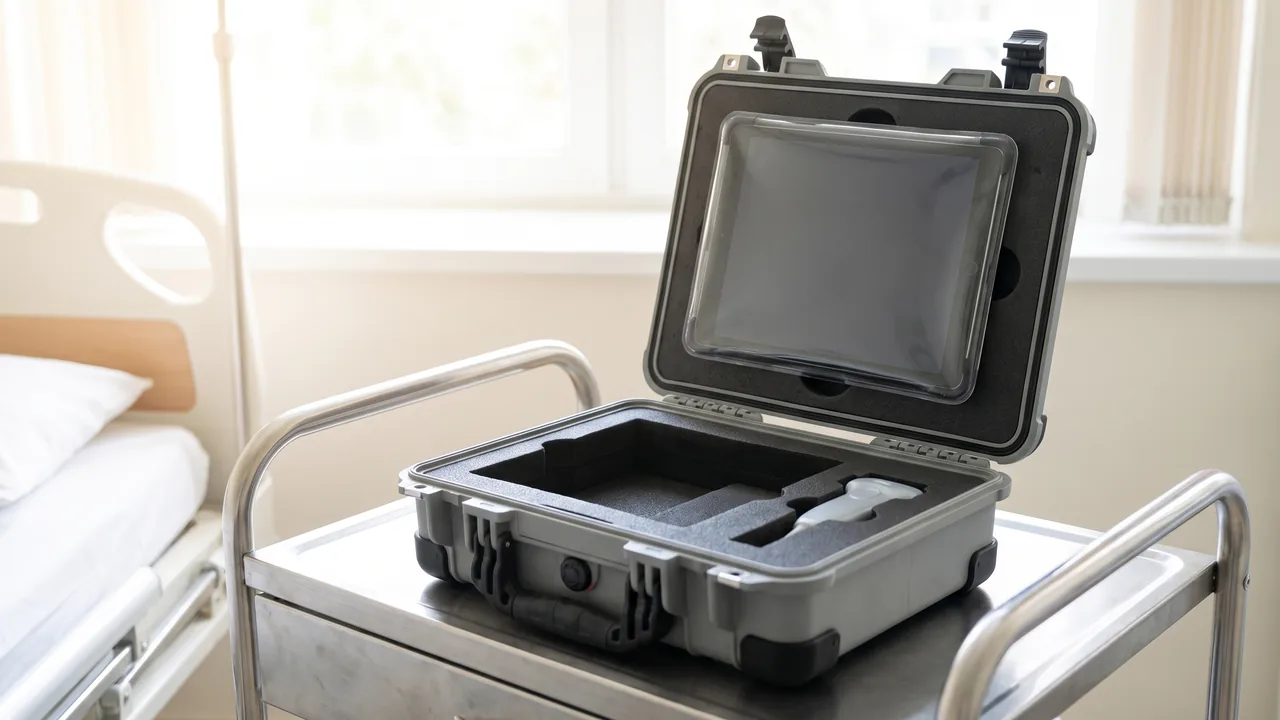
In temporary deployment, public-order patrol, major-event security and border-control tasks, cameras, recorders, encoders, power banks, cables and tripods must move quickly between sites. The clear conclusion is this: a qualified security surveillance equipment case is the key carrier that turns scattered deployment gear into a mobile, stackable, drop-and-water resistant standard unit, and it decides both on-site setup speed and equipment survival rate. This article focuses on the container itself: material, sealing, vibration damping, shielding, organization, stacking, locks, wheels, certification and maintenance, helping integrators and technical-protection teams make sound choices and turn mobile carry from a slogan into executable field capability.
1. Product Positioning and Use Cases
A security surveillance equipment case is a hard protective container designed for video capture and technical-protection gear. It consolidates camera bodies, zoom lenses, dome cameras, digital video recorders, optical transceivers, switches, batteries, chargers, video cables, network cables, tools and tripods into one standard unit, for mobile carry by temporary deployment teams, public-security technical units and security integrators between outdoor locations.
A typical workflow starts with packing and handover at the command center, then vehicle transport to the target zone, rapid on-site deployment of cameras and recorders per plan, and finally recovery and liner reset after the task. The case must resist water and dust to protect precision optics, cushion vibration from rough roads and drops, and give every item a fixed position to shorten access time. On site the case pairs with vehicle racks, mast brackets and portable power modules. It does not replace the surveillance system; it provides the physical base for the store-transport-deploy-recover cycle. Related logic appears in the law enforcement gear case guide and the command operations case guide. Note the case only stores and transports gear and gives no guidance on surveilling individuals; users must comply with local law and privacy rules. From an asset view, once deployment gear is packed into a standard case, each case becomes a numbered, countable asset unit that can be scheduled and traced across many missions. Compared with loose loading, the standard case enables pack-once and reuse-many, cutting the logistics lead time for each single task materially.
2. Shell Material and Structure Selection
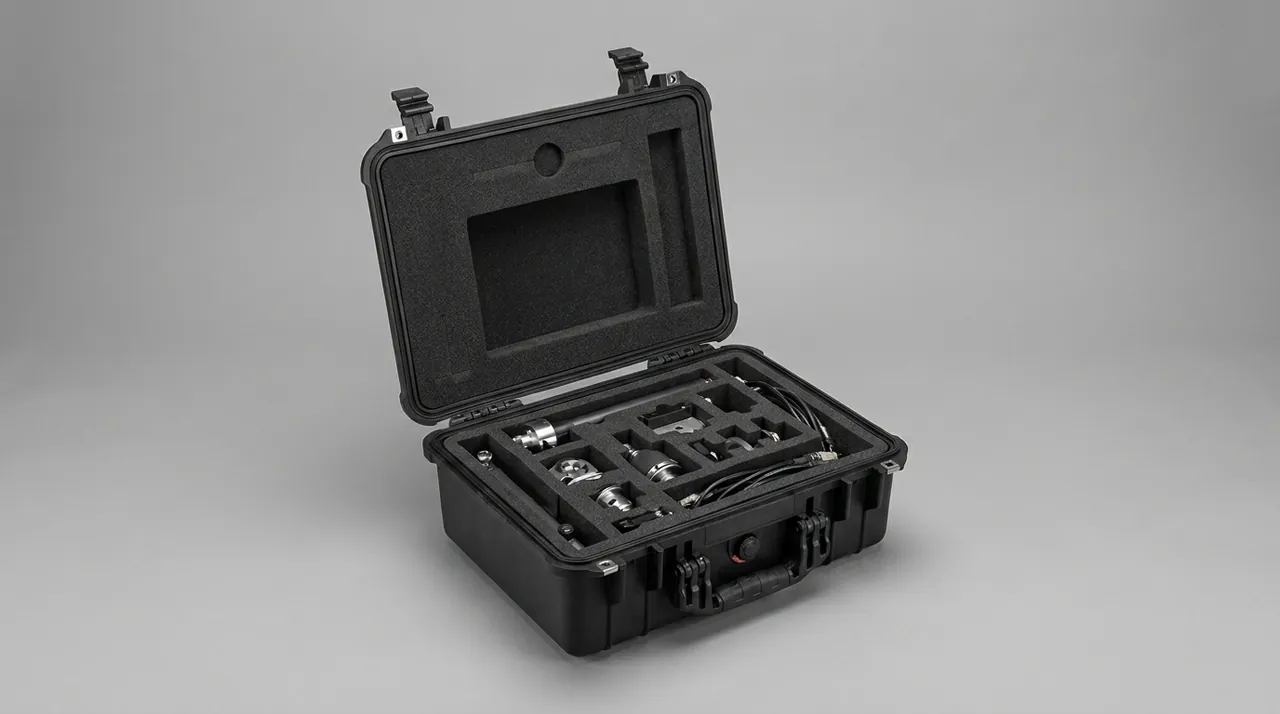
Mainstream shells fall into three families: modified polypropylene (PP) injection cases, acrylonitrile-butadiene-styrene (ABS) alloy cases and rotomolded polyethylene (PE) cases, plus aluminum-profile cases for heavy loads and shielding. PP injection cases are light, tough and cold-impact resistant, suited to small-to-medium gear units. ABS alloy cases are rigid with flat surfaces good for printing labels, suited to fixed posts that need a clean look. Rotomolded PE cases have uniform seamless walls and outstanding drop resistance, suited to rough field transfer.
Wall thickness usually ranges from 2.5 mm to 5 mm, with reinforced ribs at corners to raise bending stiffness. Press the lid with a finger; if it springs back with no permanent dent, material toughness is acceptable. For units stored outdoors long term, choose a UV-stabilized compound to slow yellowing and embrittlement. Aluminum cases are welded or riveted from profiles, strong and naturally shielding, but heavier and prone to permanent dents. A common mix is light PP cases at the front and aluminum cases for core room modules. See the aluminum vs plastic case guide for comparison. The table below gives experience-oriented choices among the three plastic shells for quick reference during procurement.
| Material | Wall (mm) | Best use | Care note |
|---|---|---|---|
| --- | --- | --- | --- |
| PP inject | 2.5-3.5 | Small front units | Avoid long sun |
| ABS alloy | 3.0-4.0 | Fixed neat posts | Avoid cold crack |
| Rotomold PE | 4.0-5.0 | Rough field move | Check corners |
When choosing between them, weigh not only the purchase price but also the repair path: injection cases with a cracked corner are hard to weld cleanly, while rotomold PE can often be patched in the field with a hot-air gun and a strip of the same material, which matters when the case must survive a whole deployment season far from a depot. The shell color also carries a function: a light color stays cooler under direct sun and is easier to spot in low light, while a dark case hides dirt on long urban posts.
3. IP67 Sealing for Dust and Water
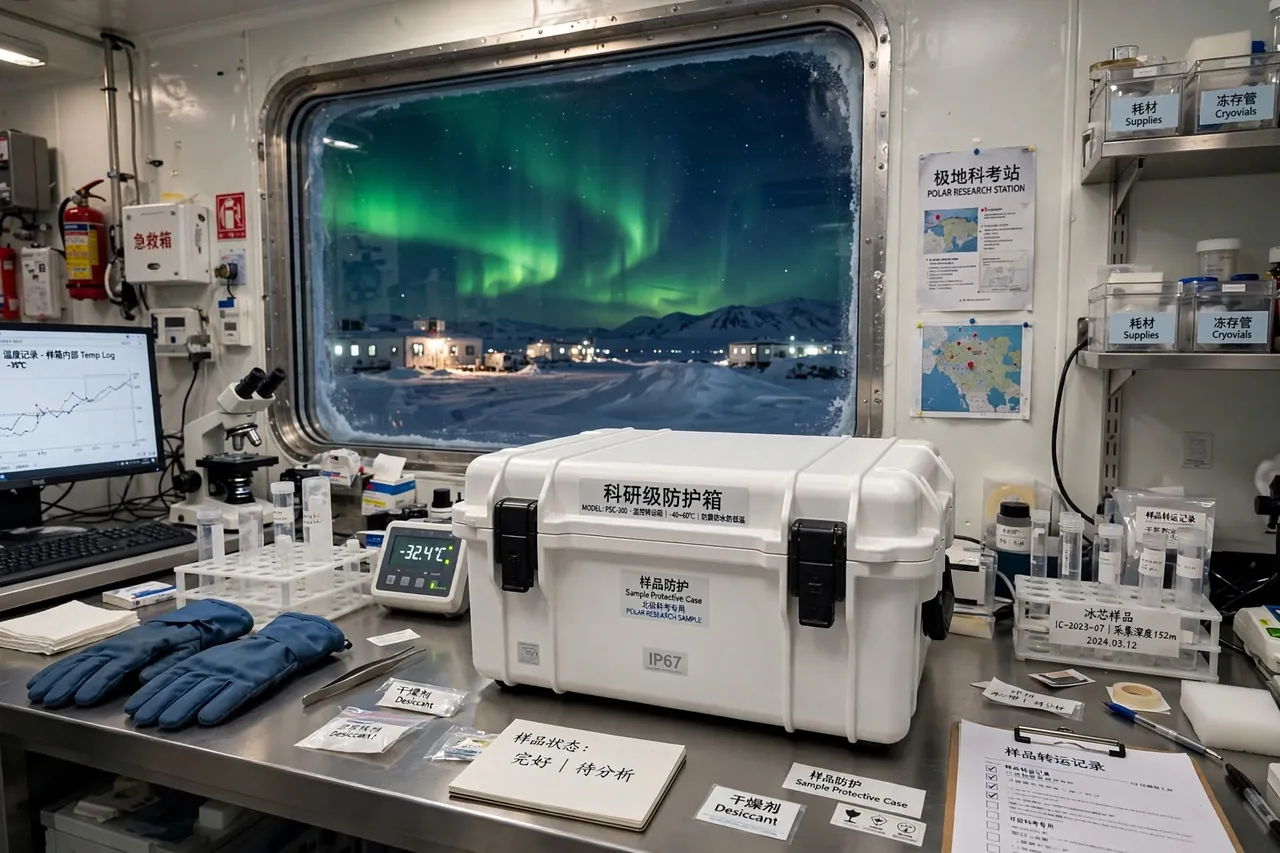
The core protection metric is the ingress rating. Under IEC 60529 and the national equivalent GB/T 4208, the first digit "6" means total protection against dust, and the second digit "7" means no water entry after immersion at one meter for thirty minutes under normal pressure. A case marked IP67 seals through an elastic gasket around the lid plus latches that compress it into a continuous band.
Gasket materials are typically expanded neoprene (CR) or ethylene-propylene-diene monomer (EPDM); CR rebounds fast with low compression set, while EPDM resists weather and ozone better. JUNZHIJIA, when building custom cases, matches gasket cross-section and compression to equipment weight and lid size so latches form an unbroken compressed seal with no local gaps that leak. Note IP67 is an immersion test, not a license for long dives or high-pressure spray; for persistent rain and splash confirm the gasket aging cycle and replace on schedule. Read more in the case seal materials guide and the IP rating guide. Before any water exposure, tighten the pressure-equalization valve and close every port cover. On transfers with large altitude changes, the equalization valve also releases pressure difference so the lid is neither sucked shut nor bulged open. Field crews should make valve checks part of the pre-deployment routine, because a clogged or painted-shut valve is a frequent cause of hard-to-open lids at altitude. A practical note is to keep the valve cap loose during flight and re-tighten only after reaching the stable site pressure, then record the action on the checklist card for the next operator.
4. Vibration Damping and Custom Foam
DVRs, optical lenses and pan-tilt units are vibration sensitive, so in-case damping decides post-transport reliability. Damping comes from two layers: the rigid shell and the cuttable cushion liner. Liner materials are cross-linked polyethylene (EPE) foam, ethylene-vinyl-acetate (EVA) foam and polyurethane (PU) sponge; EVA with controllable density and thermo-formable surface is best for locating slots.
Custom lining starts with 3D measurement of each item, then layout of minimum bounding boxes in CAD, cut by the rule that items never touch, heavy sits low, light sits high, and frequent items stay near the opening. JUNZHIJIA offers model-by-model EVA liner molding so cameras, batteries and cables each have a home and cannot shift in transit. For mixed-model teams, modular divider panels beat one-piece cut foam for flexibility. When cutting, leave clearance for handles and connectors so the lid never crushes cables. Experience suggests single-layer EVA of 15 mm to 25 mm, stacked to 40 mm under heavy gear. Liner care is in the custom foam lining guide. When gear is upgraded, only the relevant slot needs re-cutting rather than a whole new case, which lowers total life-cycle cost materially over several deployment seasons. A useful check before cutting is to lay all gear on a bench in its planned layout and take a photo, then give that photo to the liner maker as the reference instead of a bare dimension list; the photo reveals cable routing and handle clearance that a table of numbers often misses, and it prevents the common error of a slot that fits the body but traps the connector.
5. EMC Shielding and Surge Options
When a case holds cameras, wireless links, encoders and power together, internal electromagnetic compatibility (EMC) becomes a hidden risk: radio crosstalk can cause snow or dropped frames. Conductive foam and metallized-fabric liner facings cut in-case crosstalk; for system-level shielding, add beryllium-copper finger stock and conductive gaskets inside an aluminum case to form a continuous conductive cavity.
In lightning-prone open sites, the case does not replace a lightning rod, but it can reserve equipotential bonding points so internal chassis tie to the site ground through short leads, weakening induced surge energy on cables. Port covers should be metallized-shielded, with ferrite rings at cable entry. Keep shielding and sealing as separate evaluations: sealing guards dust and water, shielding guards signal purity, with different material systems. More in the EMC shielding case guide. For sensitive or high-value systems, treat shielding as a mandatory clause in the spec and do a near-field radiation spot check at acceptance to confirm the cavity is continuous with no leak path around hinges or latches. A cheaper first step for most integrators is to separate noisy transmitters from sensitive receivers by physical distance and route their cables on opposite sides of the case, which often removes crosstalk without any conductive lining and keeps the carry weight low for a case that must be hand-carried to a post.
6. Fast Deploy and Internal Organization
Temporary deployment is often won or lost in minutes, so internal organization must serve fast setup. Split gear into a deploy layer and a power layer: the deploy layer holds cameras, lenses, quick-release plates and cables; the power layer holds batteries, chargers and optical transceivers. A rigid separator keeps the heavy layer from crushing optics. Add color labels and numbers: each slot carries a bilingual name and serial, with a checklist card inside the lid for instant handover. For teams that change sites often, fix common combinations as standard modules such as dome module, bullet module and power module, so on site you assemble modules rather than place single pieces. The handover logic matches the emergency command case. Use flame-retardant straps inside the lid for manuals and small connectors. Before each pack-in, tick items on the checklist card so no valuable lens or battery is left behind, building a traceable handover record that auditors can follow later without ambiguity.
7. Stacking Structure and Transport Safety
Multiple cases are often stacked in vehicles and stores, and stacking stability drives transport safety. A qualified case has alignment bosses or limit ribs at the four top and bottom corners so stacked units interlock and resist side slip. Keep stack height under four times the case short edge, with the heaviest unit at the bottom. Secure the whole stack with straps or rails against sudden braking. For long hauls, simulate random vibration and drop per ISTA thinking to confirm liners and latches survive the experience spectrum. MIL-STD-810H method 516.8 drop is a common acceptance reference, with height and faces graded by mass. See the case stackability and pallet planning guide. At unloading, take the stack top-down one layer at a time; never pull the bottom case and cause the whole pile to collapse and injure personnel. Mark the center of gravity on the outer carton so handlers know which face should stay down during the whole move from warehouse to site. A related point often missed is the tie-down method: soft webbing straps spread load and protect the shell, while a tight ratchet chain can crush a corner and break the seal band without any visible external damage until water enters later. Mark the strap paths on the case base so every load repeats the same safe pattern, and train drivers to re-check tension after the first ten kilometers when the stack has settled on the suspension.
8. Latches, Wheels and Mobile Carry
Carry modes are handheld, shoulder and wheeled tow. Small units need twin handles; units over 20 kg should get a telescopic handle and quiet wheels to ease long transfer. Choose dual-bearing PU wheels for both cushioning and wear, with low noise on tile and asphalt. Latches should have an anti-accidental-open safety pin; high-value units can add a padlock hasp or TSA-approved lock for inspection without casual opening. For sensitive or high-value gear, fit an open-cover record sticker or one-time seal as handover evidence. Compare the case latch selection guide and the wheels and trolley handle guide. Keep the loaded center of gravity under the grip to avoid tipping; a single handle should drag no more than 18 kg, above which use two people or wheels. The telescopic handle should pass over five thousand extend-retract cycles, wheels over one hundred thousand revolutions; keep spare critical parts in the case for field replacement without waiting for a depot.
9. Temperature, Humidity and Condensation
Cameras and disks can condense or start slowly at temperature extremes. The case itself neither cools nor heats, but it helps through materials and accessories: desiccant cards or silica packs inside the lid keep relative humidity in an experience range; cold-region transfer can pre-place phase-change packs to slow internal cooling. The key risk is "cold case into warm room" condensation: after moving from sub-zero to indoors, water forms on walls and gear. The right move is to keep the lid closed until the case warms near room temperature, then open the pressure-equalization valve for slow exchange. General condensation control is in the condensation control guide. For precision modules that must stay at temperature, choose a case with an active temperature layer. In persistently humid sites, weigh desiccant monthly to judge failure and replace on schedule; after salt-fog exposure rinse the shell with fresh water, dry it and store in a ventilated place to prevent early corrosion of metal latches and hinges. A humidity log card on the lid aids maintenance traceability. A useful field habit is to keep one spare desiccant pack in a sealed pouch inside the lid pocket, so a saturated pack can be swapped on site within seconds instead of waiting for the next depot visit, which is exactly when humidity control matters most during a multi-day deployment.
10. Certification, Standards and Acceptance
The compliance baseline rests on several standards. Ingress rating follows IEC 60529 and GB/T 4208; transport and environment often cite MIL-STD-810H vibration, drop, humidity and salt-fog procedures; distribution reliability references ISTA 1A/2A/3A; flame class uses UL94 horizontal/vertical ratings on shell material; material ecology cares about RoHS and REACH limits. At acceptance build a three-document set: material declaration, factory inspection and third-party test report. JUNZHIJIA, on OEM/ODM orders, can supply matched gasket specs, liner material certificates and model-sorted test lists for integrator archiving and audit. Extend reading to the MIL-STD-810H compliance guide and the ISTA test guide. Reported values are typical or experience values, not permanent guarantees, and vary with use frequency, environment and maintenance. Spec writers should state batch sampling ratio and pass criteria, for example full visual check, gasket spot check, and at least one whole-case drop per year, so quality control closes as a loop rather than a one-time gate. For procurement at scale, keep two or three golden sample cases sealed in the store as the benchmark for incoming comparison and dispute arbitration, so a silent material or wall-thickness change in mass production can be proven rather than argued, a practice especially valuable in public-security and major-event centralized procurement.
11. OEM/ODM Customization and Test Files
Integrators often find standard cases cannot hold self-developed gear, so OEM/ODM is the better path. Customization starts with a gear list and dimension table: length, width, height, mass, protruding connectors and fragile points, then the case maker lays out liner and dividers. JUNZHIJIA supports model-by-model EVA liner molding from the customer BOM and prints bilingual labels, unit numbers and asset QR positions on the lid. Confirm test-file delivery in parallel: UL94 report on shell, gasket aging data, and whole-case drop and vibration records. These files are both acceptance proof and the baseline for later gasket replacement. For export, prepare RoHS, REACH and destination-market declarations. Custom and contract points are in the OEM/ODM custom protective cases guide. Write intellectual-property clauses clearly: liner mold ownership, drawing confidentiality scope and spare-part price, to avoid later lock-in. JUNZHIJIA can agree on mold return and long-term spare supply, protecting continuity if the case maker changes. Deliver a gear-to-slot map so new operators learn the layout fast. As a closing note, start the customization conversation early in the project, because tooling and first-article lead time, not the unit price, usually sets the real delivery date; a case ordered after the cameras are already bought will always arrive late for the first mission, while one planned alongside the gear ships ready to deploy.
12. Selection Checklist and Daily Maintenance
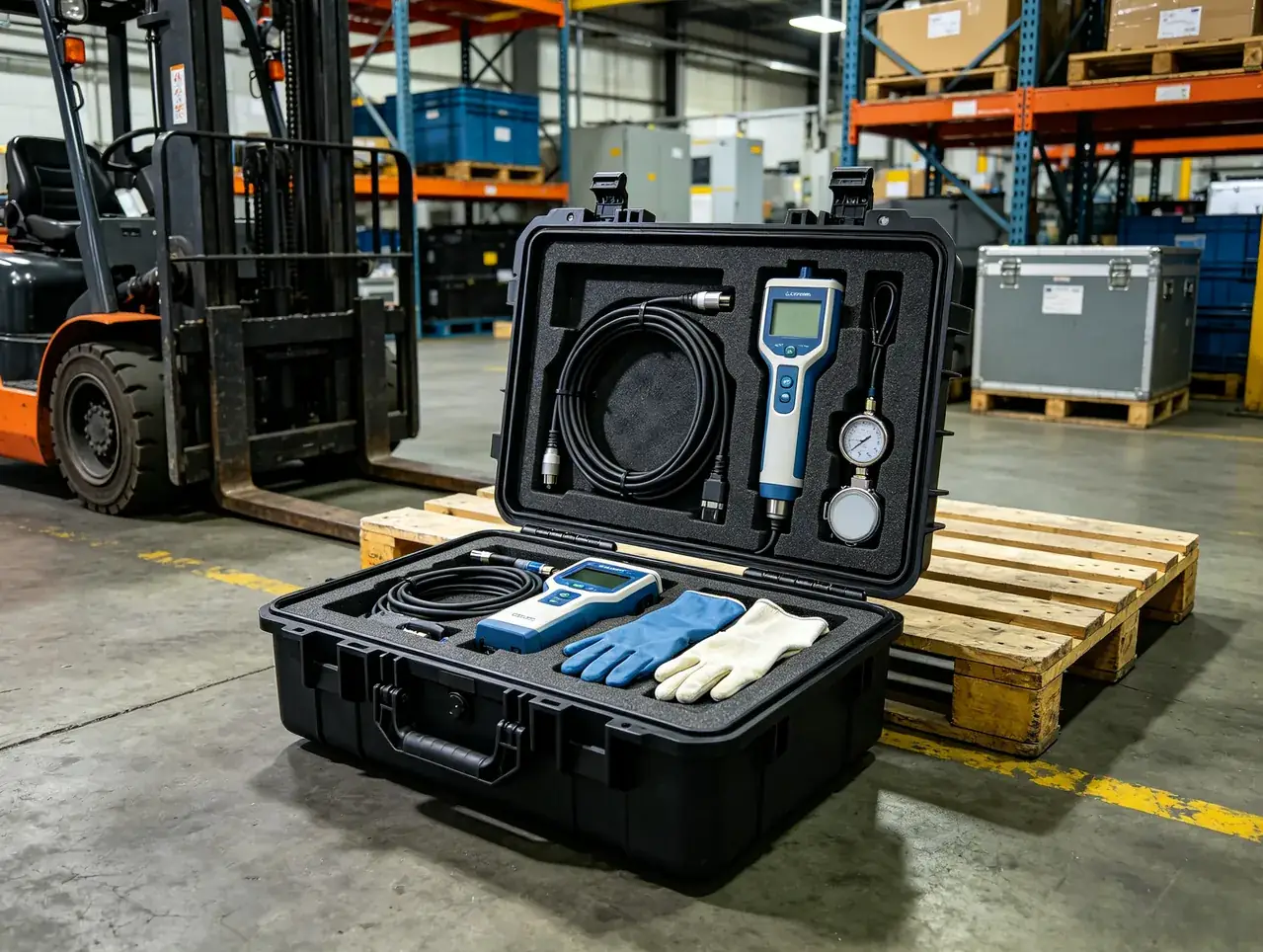
Here is a checklist for procurement and maintenance. First, size case load by total gear mass with a 20 percent margin. Second, pick protection grade by the harshest environment; outdoor long deployment needs at least IP67. Third, choose wheels and latches by transport mode. Fourth, choose liner thickness and material by sensitive parts. Fifth, request test files by compliance need. Only after these five are confirmed should you compare price, not before. Daily maintenance has four tasks: check the gasket monthly for cracks or flattening, do an empty-case water self-test quarterly, tighten hinge screws every six months, and replace desiccant and update the handover card yearly. Gasket replacement experience is two to three years, shorter in salt fog. Details are in the protective case maintenance guide. A cracked shell must be retired and repaired to avoid losing gear in transit. Good selection plus disciplined maintenance keeps a security surveillance equipment case at high survival rate across years of deployments, turning mobile carry into real field capability. All deployment work must stay within the law and privacy compliance; the case solves only gear storage and transport safety. A final practical tip is to rehearse the pack and unpack drill at the depot before the first real mission, timing it and writing the result on the case; this turns the checklist from a form into a trained habit, and the few minutes saved on site often decide whether a post is live before the event window closes.
FAQ
Q: What is the core difference between a surveillance equipment case and a normal tool box? A: The core difference is the precision of the protected object and the way it is used. A normal tool box stores tough hardware like wrenches and screwdrivers, with little need for dust-water proofing or cushioning. A surveillance equipment case carries precision optoelectronic gear such as cameras, DVRs, lenses and wireless links, and demands IP67 dust-water protection, custom EVA liner damping, EMC shielding and fast-deploy organization. The shell leans toward PP injection or rotomolded PE, with compressed gaskets and aligned stacking structure as standard. In use logic, a tool box is for storage, while the equipment case is a four-in-one standard unit for store, transport, deploy and recover. Integrators at temporary posts should choose a dedicated equipment case rather than adapt a general tool box, or risk transit damage to precision gear. The contrast also shows in law-enforcement gear case carry design, whose storage logic matches this article though the objects differ. The cost gap is justified by the value of the gear inside.
Q: What does IP67 mean in real deployment, and can the case stay submerged long term? A: IP67 under IEC 60529 and GB/T 4208 means total dust protection and no water entry after thirty minutes immersion at one meter under normal pressure. That is a lab immersion result, not a permit for long dives or high-pressure spray. In real deployment it covers heavy rain, ground water, vehicle wading and splash, keeping cameras and recorders dry. Long submersion or pressurized spray exceeds gasket design and may leak. Before exposure, lock latches, tighten the pressure-equalization valve and close every port cover, and replace aged gaskets on schedule. Experience says gaskets need check and replacement every two to three years, shorter in salt fog. Treat IP67 as short-time immersion protection, not permanent waterproofing, to manage risk correctly and protect field equipment. Do not place the case in conditions beyond its design envelope, because the rating describes a test, not a service promise for continuous underwater duty in the field. A practical habit is to log every wet exposure in the maintenance card, so the gasket replacement interval can be shortened proactively rather than after a failure is found during a live operation.
Q: Why is a custom EVA liner better than generic foam for gear protection? A: A custom EVA liner is molded slot by slot from each item's 3D size, so the gear floats and fits while transit vibration is absorbed evenly by foam, with no item-to-item collision. Generic foam or pick-and-pluck grid foam forms fast but with low slot accuracy and large voids, so heavy gear shifts and rubs neighbors. EVA has controllable density and a hot-pressable surface for labels and numbers, aiding both protection and handover. JUNZHIJIA supports model-by-model liner molding from the customer BOM, locating cameras, batteries and cables in layers. Custom layout also puts heavy items low and light optics high, matching center-of-gravity stability. For mixed-model teams, modular divider panels are the more flexible alternative. Overall, custom lining trades higher one-time cost for lower equipment loss rate, which pays back over time, and when gear is upgraded only the relevant slot needs re-cutting rather than a whole new case purchase. It also speeds training, because a new operator can learn the layout from the molded shape alone without reading a long manual before the first deployment shift.
Q: How should multiple cases be stacked safely in a vehicle? A: Safe stacking relies on three points. First, use the alignment bosses or limit ribs at the four corners of lid and base so stacked units interlock against side slip. Second, keep stack height under four times the case short edge, with the heaviest unit at the bottom to lower the center of gravity. Third, secure the whole stack with straps or rails so it cannot lunge on hard braking. Before transfer, simulate random vibration and drop per ISTA thinking to confirm latches and liners survive the experience spectrum; MIL-STD-810H method 516.8 drop is a useful acceptance reference. Do not wedge debris between cases, which causes local deformation. Unload top-down, never pull the bottom and cause collapse. Detailed planning is in the case stackability and pallet guide, which gives experience advice on pallet size, strap tension and center-of-gravity marking that can be applied directly without reinventing the method on each new mission. A simple rule of thumb is to never stack more than the tested height from the drop report, because doubling the stack also doubles the impact energy on the bottom case during a curb strike.
Q: Does the case need electromagnetic shielding, and when is it mandatory? A: Shielding is needed when the case holds cameras, wireless links, encoders and power together, because radio crosstalk can cause snow, dropped frames or control errors. A light fix is conductive foam or metallized-fabric liner facings to cut crosstalk; system-level needs beryllium-copper finger stock and conductive gaskets inside an aluminum case to form a continuous conductive cavity. In lightning-prone open sites, also reserve equipotential bonding points so internal chassis tie to site ground through short leads, weakening induced surge. Note shielding and sealing are two systems: sealing guards dust and water, shielding guards signal purity, with different materials. Sensitive or high-value systems should mandate shielding design; details are in the EMC shielding case guide for field reference, and at acceptance a near-field radiation spot check should confirm the cavity is continuous with no leak around hinges or latches that would defeat the shielding. A common mistake is to treat shielding as a material property only; in reality the assembled seam, not the panel, sets the real performance, so the whole case, not a coupon, must be the test object.
Q: Why does a case brought from cold outdoors to indoors condense, and how to avoid it? A: Condensation comes from a cold surface meeting warm humid air. After sub-zero transfer, the shell and gear are very cold; once carried into a warm room, air moisture condenses on those cold surfaces and may run into equipment through gaps. The right move is to keep the lid closed and let the whole case warm near room temperature, then slowly open the pressure-equalization valve for exchange before opening. Place desiccant cards or silica packs inside the lid to hold relative humidity in an experience range. Cold regions can pre-place phase-change packs to slow cooling. Never open immediately for speed, or condensate will touch lenses and disks. General control is in the condensation control guide; precision modules should use an active temperature-layer case that limits internal temperature swing within the equipment allowance, removing the cause of condensation at the root rather than only managing its symptoms after the fact on site. In practice, pairing the active layer with a humidity indicator card gives the operator a clear go or no-go signal before opening, which prevents a rushed decision from ruining a calibrated lens on a cold morning.
Q: How should a batch of new surveillance cases be accepted and inspected? A: Acceptance should close a three-document loop: a material declaration confirming shell PP/ABS/PE and liner EVA grade and flame class per UL94; a factory inspection recording appearance, latch force, gasket compression and empty-case water self-test; and a third-party report giving typical values for IP67, drop, vibration and salt fog. JUNZHIJIA, on OEM/ODM orders, can sort these files by customer model for archiving. On site, load standard gear and simulate handling drop, spray and short road run to confirm startup integrity. Remember reported numbers are typical or experience values, not permanent guarantees. After passing, build handover cards and asset numbers into the maintenance ledger for traceability and audit. At tender stage, state batch sampling ratio and pass criteria, for example full visual check, gasket spot check, and at least one whole-case drop per year, so quality control is a loop and not a single gate that is forgotten afterward. Keep two or three golden sample cases sealed in the store as the benchmark for incoming comparison and dispute arbitration when a supplier silently changes material or wall thickness in mass production.
Q: How often should the case gasket be replaced, and how to judge aging? A: Judge gasket aging by three signs: surface cracking, powdering or tackiness; failure to rebound after compression, leaving a permanent flat mark; or visible uneven gaps between lid and body after closing. Replace on any one. Experience replacement is every two to three years, shortened to one or two years in salt fog, strong UV or hot-humid environments. When replacing, choose CR or EPDM with the original cross-section, clean the old groove and bond evenly with skewed seamless joints. JUNZHIJIA custom cases ship with a gasket spec sheet for model-matched reorder. After replacement, redo the empty-case water self-test to confirm continuous closure. Maintenance details are in the protective case maintenance guide; never substitute ordinary rubber for weather-grade compound, or the gasket will fail outdoors in a short time and lead to a water-ingress incident that damages the expensive gear inside the case. When reordering, quote the original spec sheet number rather than a generic size, because a few millimeters of cross-section difference can break the compressed seal band and void the IP67 claim entirely.