

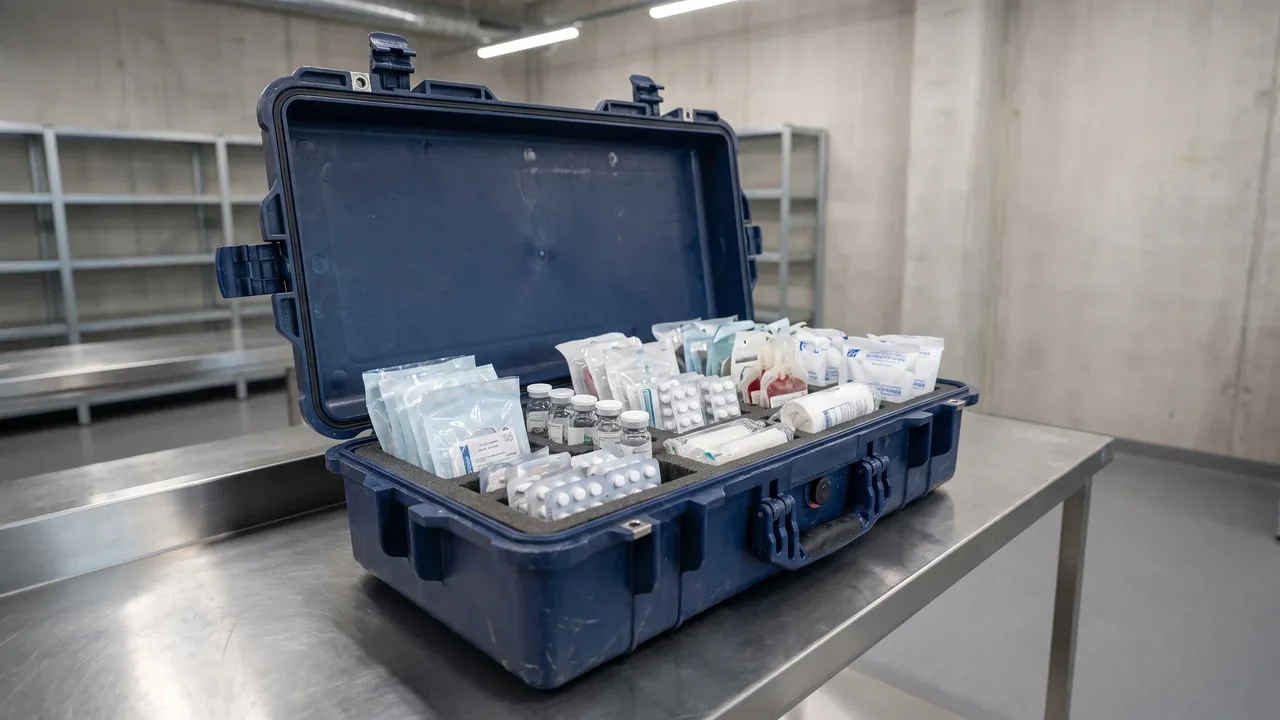
A law enforcement gear case is the core carrier that lets police equipment departments, SWAT detachments, and body-worn camera support units organize individual officer kits into a single, standardized, and protected package. We hold that a qualified officer kit case should not only pursue a tough shell, but must be built on four design fundamentals: sealed protection, zoned storage, fast access, and stable carry, so that the risk of lost, damp, or transit-damaged equipment is reduced at the source. In daily duties that pair communication, recording, protection, lighting, and restraint devices, the case carries the concentrated storage and cross-scene transport of those kits. This article explains procurement and acceptance criteria from the perspectives of shell material, sealing structure, liner zoning, shock and compression resistance, locks and stacking, pressure equalization, certification, custom fitting, and maintenance, helping equipment managers build quantifiable technical judgments during tendering, issue, and daily management.
1. Purpose and Use Scenarios
The core mission of a law enforcement gear case is to provide full-process physical protection for individual officer kits, from warehouse issue, vehicle carry, to on-site duty. Unlike an ordinary toolbox, it faces compound conditions such as outdoor rain, road dust, vehicle vibration, frequent opening, and high-temperature sun exposure, so protection and access efficiency matter equally. In the annual issue scenario of a public security sub-bureau equipment department, the case must uniformly hold a body-worn camera, radio, flashlight, defensive spray, restraint strap, first-aid pouch, and spare batteries according to role differences, realizing one case per officer and a traceable equipment list.
In mobile response tasks of a SWAT detachment, the case often transfers with assault vehicles, troop carriers, or helicopters, requiring drop and crush resistance while the liner fixes precision devices to avoid collision in transit. For the pairing scenario of body-worn cameras and individual kits, the case also performs a charge-and-return function: dedicated bays and cable channels let devices return to position and charge directly, reducing secondary sorting labor and errors. By usage frequency, cases divide into everyday carry cases, centralized storage cases, and mobile task cases. Everyday carry cases emphasize light weight and fast grab; centralized storage cases emphasize stacking and dustproofing on racks; mobile task cases emphasize impact resistance and modularity with vehicle tie-downs. Regardless of type, unify external module dimensions and lock specifications to ease cross-unit interchange and centralized management. A further benefit of standardization is lifecycle cost control. When every unit uses the same case footprint, spare liners, locks, and gaskets become interchangeable across the fleet, so the depot holds one spare pool instead of many. This also simplifies training, because officers rotated between teams meet the same layout and do not relearn where each item sits. Procurement should therefore weigh the small premium of a standardized platform against years of lower support cost, rather than optimizing only the first purchase price.
2. Shell Material: Engineering Plastic versus Aluminum Alloy
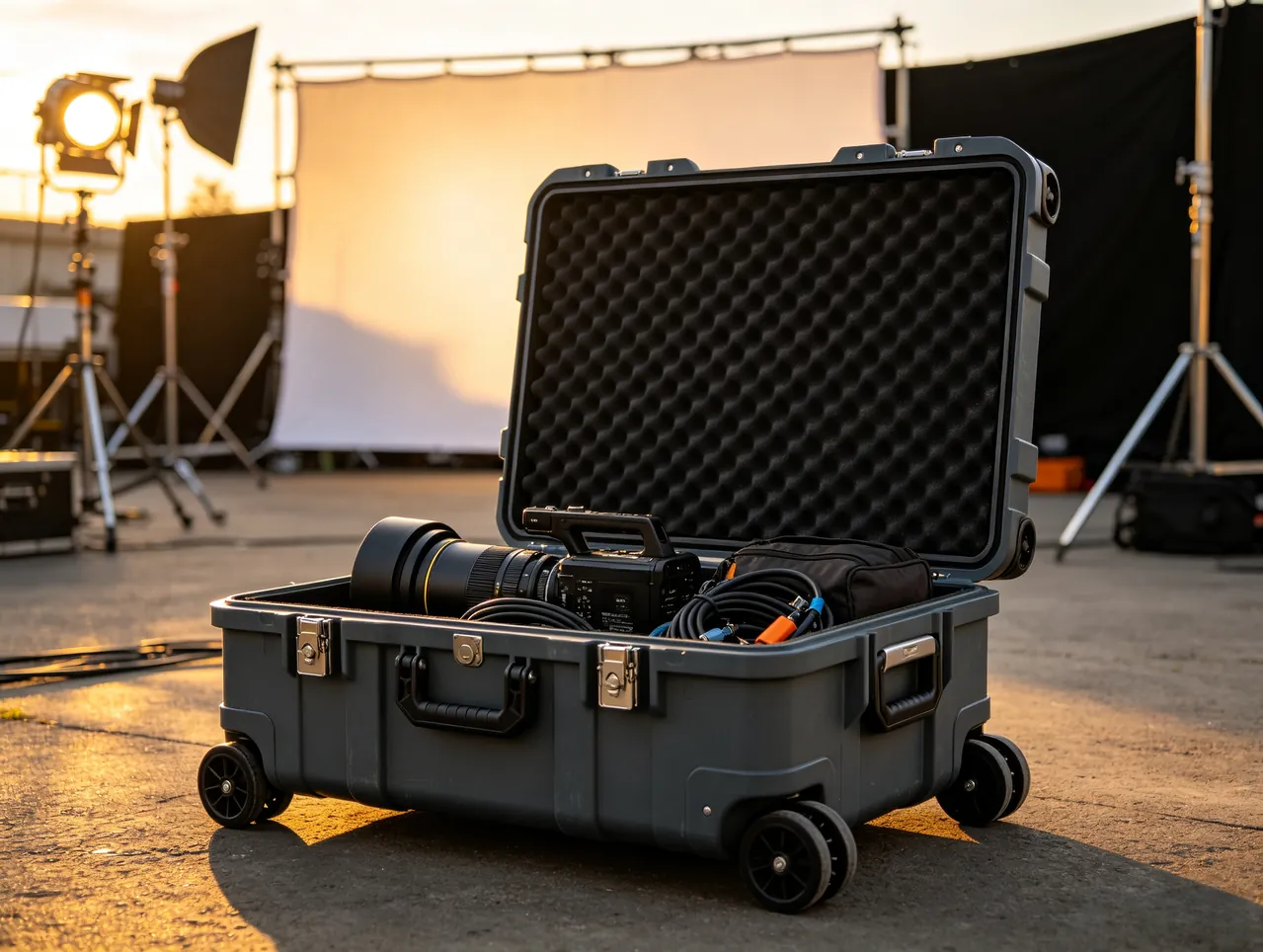
Mainstream officer kit case shells follow two routes: modified engineering plastic and aluminum alloy, each with boundaries. Modified engineering plastics such as modified PP, ABS, and PC alloys are made by injection or rotomolding, offering light weight, chemical corrosion resistance, low-temperature toughness, good drop resilience, and a one-piece seal rib that helps assure IP protection. The drawback is a lower rigidity ceiling than metal, requiring ribs and frames for large sizes. Aluminum alloy cases use high specific strength, deformation resistance, and heat dissipation, suiting large, heavy, or long-term stacked storage, but weigh notably more and need anodizing or powder coating in salt-spray environments to avoid pitting.
Between the two plastic processes, rotomolding yields thicker, seam-free walls suited to large rugged cases, while injection molding gives tighter tolerances and lighter weight for smaller serial cases. The choice should follow case size and expected drop energy rather than habit. Buyers should ask the supplier which process fits the target volume, because tooling cost and unit price move in opposite directions across the two methods, and a wrong match raises either upfront or per-unit expense.
From a carry perspective, engineering plastic cases are more popular at the front line: at equal volume they are typically twenty to thirty-five percent lighter than aluminum, easier for long backpack or vehicle entry; under sub-zero or sun-baked heat, the plastic shell is less likely to burn hands or condense inside. Rotomolded polyethylene cases have uniform wall thickness, no weld, and outstanding impact toughness, the classic "unbreakable" structure for mobile task cases. Note that plastic shells should use virgin resin with UV masterbatch; high recycled content causes yellowing and embrittlement after long outdoor use. Aluminum suits fixed centralized storage or cases needing electromagnetic shielding. When communication and recording devices share a case under strong RF interference, the metal shell gives inherent shielding that conductive gaskets can extend. For general duty without explicit shielding or heavy load, prefer engineering plastic to balance weight, cost, and protection. More discussion appears in protective case selection guide and protective case plastic materials.
3. Sealing Structure and IP67 Rating Explained
Sealing is what separates an officer kit case from an ordinary storage box. A qualified case should reach at least IP67 when closed, meaning dust level six (complete prevention of dust ingress) and water level seven (no water entry after thirty-minute immersion at one meter), per IEC 60529 and GB/T 4208. The core is a continuous elastic gasket on the lid-to-body joint and a latch-hinge layout that ensures even compression around the seam.
Common gasket materials are NBR, silicone, and EPDM rubber. NBR resists oil and costs less for general duty; silicone tolerates wider temperature and aging, fitting cross-region issue; EPDM excels in ozone and weather resistance for long sun exposure. All should be continuously molded with no splice break, forming a closed compression loop when the lid closes. Acceptance can use a simple spray test: simulate moderate rain on the seam for five minutes, then open and confirm no seepage. Clarify that IP67 means short-time immersion, not long-term submersion; the case is not a permanently submerged container. For frequent heavy rain, wading, or vehicle washdown, prefer double-rib or labyrinth sealing and inspect the gasket regularly for flattening, cracking, or permanent set. Gasket aging correlates with local UV and usage; a typical experience value is two to three years before evaluation and replacement. For deeper material comparison see gasket and O-ring materials and case seal materials.
Field crews should record the inspected IP grade on the case nameplate together with the test date, because a rating claimed on a brochure is not proof for the specific unit. Where duty crosses between indoor storage and outdoor rain, re-verify the seal each season rather than once at purchase, since compression set grows slowly and a case that passed at issue may weep after two humid summers. This simple log turns a one-time claim into a managed property. Beyond material choice, the seal compression set under long closure matters. A gasket that relaxes too much under constant lid pressure will not recover, so specify a compression-set value from the material data and verify it on samples. Also confirm the lid closes with even pressure across the whole perimeter; uneven closure leaves micro-gaps that defeat the rating even when the gasket itself is sound, and a simple feel test around the seam during acceptance can reveal such gaps early.
4. Liner and Cut-Foam Zoned Storage Design
Half the value of an officer kit case lies in its shell, half in its liner. A sound liner zones the body-worn camera, radio, batteries, flashlight, and restraint tools into dedicated slots, preventing transit collision and letting an officer grab by feel in emergencies. Main liner options are cut foam, pick-and-pluck foam, EVA thermoformed tray, and removable dividers. Cut foam CNC-carves equipment contours for high fit and cushioning; pick-and-pluck lets users tear grids for flexibility; EVA trays are flat, cleanable, and suit pouches needing frequent disinfection.
Zoning follows three principles: heavy at bottom, frequently used outside, hazardous isolated. Heavier spare batteries sit at the bottom near the base to lower the center of gravity; cameras, radios, and flashlights sit in upper or side pockets for instant grab; sprays and restraints get separate visible compartments away from electronics. Each slot should reserve a nameplate or QR position to link with asset management for one-item-one-code tracking. For standardized issue by model, liner contours must be molded strictly to the real equipment so every batch fits securely. Liner material itself needs flame retardancy and low emission. Given the sealed, hot-in-summer cabin environment, choose foam passing UL94 vertical burn and control VOC release to avoid odor corroding device surfaces. JUNZHIJIA can mold liners one-to-one from supplied equipment or 3D models, assuring fit and cushion margin per item, which markedly lowers transit damage. For liner process details see case foam lining guide and custom foam lining case guide. A practical tip is to color-code liner zones by function so officers locate items by sight under low light, and to keep a spare blank liner panel on hand so a changed equipment list can be accommodated without ordering a full new case. Color coding also speeds joint inspections, because reviewers immediately see whether every expected item is present in its marked slot.
5. Shock, Compression, and Impact Protection under MIL-STD-810H
During transport the officer kit case bears vehicle vibration, drops, and stacked compression. Impact resistance is often referenced to MIL-STD-810H environmental engineering and test methods, plus ISTA transport sequences. Note these standards give methods and procedures, not a fixed pass value, so tender documents should state executable clauses like "drop verification per MIL-STD-810H method 516.8 with drop height graded by case mass" rather than vaguely "complies with military standard." Structurally, impact resistance comes from shell toughness and wall thickness, rib topology, and secondary foam cushioning. Rotomolded polyethylene, with uniform weld-free walls, absorbs energy by plastic deformation on local impact and typically withstands everyday drops from one meter at multiple angles without rupture. Ribs should sit at stressed corners and base to form a skeleton; corners should be rounded to avoid stress concentration cracks.
Vibration protection depends on liner fit. If equipment has obvious play in its slot, long-distance vehicle vibration becomes repeated impact against slot edges, gradually loosening connectors or scratching screens. Acceptance should shake the loaded case gently to confirm no movement or rattling; add elastic straps or retainers when needed. For drop and vibration methods see drop test guide and ISTA transport testing procedure, useful when drafting test plans. When recording drop verification, capture the orientation sequence such as base, lid, and side faces, together with the post-drop inspection of seal continuity and latch function, because a case that survives one face may fail another. Keeping this record with the batch file gives auditors a defensible basis and helps compare suppliers on real performance rather than claims.
6. Locks, Hinges, and Stacking Structure
Locks and hinges are weak points for open life and custody control. Common police case locks are press latches, butterfly latches, twist latches, and padlock-ready hasps. Daily duty should use composite locks with anti-accidental-release and external police padlock capability, keeping the lid closed in motion yet lockable in storage. Latch cycle life should be an acceptance metric; a typical experience value is no less than five thousand open-close cycles without obvious looseness or sticking. Hinges should be stainless steel or thick polypropylene integral type, avoiding thin steel that snaps in cold; large cases need dual or multi-point hinges for even lid load. Corners may embed metal protectors or thick bumper edges to take impact first and protect the body. For lock comparison see case lock customization options and case hardware latch guide.
Stacking structure decides space efficiency in stores and vehicles. A qualified case sets interlocking ribs or locating bosses on lid top and base so stacked boxes neither shift nor collapse. Stack load must match allowable stack height; small cases typically stack three to four layers steadily, large heavy cases one to two layers with tie-downs. Avoid long-term heavy load on a case holding precision devices to prevent permanent gasket compression. For stacking load and warehouse planning see protective case stacking guide and stackable case.
A practical stacking rule is to keep the heaviest cases at the bottom and align the locating bosses so the load path runs through corners, not through latch faces. When cases ride in a vehicle, add a restraint strap around the stack and anchor it to a fixed point, because braking or cornering can walk an unsecured pile across the floor. Label the maximum stack height on the lid so temporary handlers do not over-load a fragile top case holding electronics.
7. Pressure Equalization Valve and High-Altitude Transport
When a case crosses altitude by road or flies as cargo, pressure difference sucks the lid shut and may reverse-pull the gasket. The standard solution is a pressure equalization valve using a waterproof breathable microporous membrane that auto-balances pressure above threshold while keeping IP rating. The valve typically uses ePTFE expanded polytetrafluoroethylene film combining waterproof, dustproof, and breathable traits. In plateau duty or unpressurized air cargo, the valve is nearly mandatory. Experience shows that from plain to over three thousand meters, or in unpressurized holds, sealed normal-pressure air makes the interior relatively bulge, causing hard opening and gasket distortion. With a valve, interior pressure tracks outside gently, protecting the seal and easing opening. The valve should sit high, away from the water-prone bottom, and be wiped clean of dust periodically to avoid clogging. Distinguish that the valve solves pressure difference only, not waterproofing; long wading still relies on main sealing. Choose a replaceable valve with a spare supplied for field recovery. For valve principles see pressure equalization valve guide and outdoor case pressure valve.
For multi-case loads moved by air, vent each valve once before sealing the aircraft container and again on arrival, so the pressure equalizes in steps instead of stressing the seal with one large jump. If a valve is suspected clogged, a quick check is to listen for a soft hiss when opening after altitude change; silence may mean the membrane is blocked and should be swapped. Keep the spare valve in the same shipment so the fix needs no return to base.
8. Standardized Layout for Individual Officer Kits
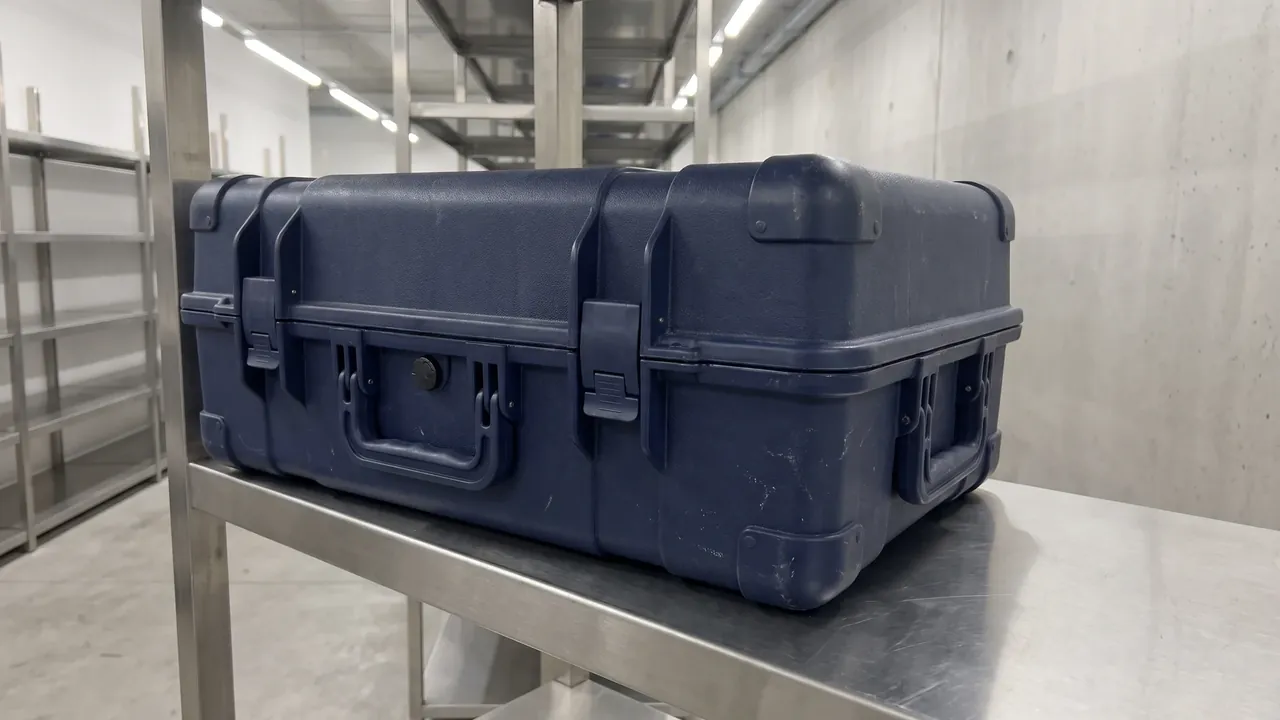
Standardized placement upgrades a case from "able to hold" to "easy to use." A mature officer kit case should show the full picture on opening, keep a fixed retrieval order, and provide a check table on return. Divide interior into six functional bands: communication-recording, lighting, protection, restraint, energy, and document. The first band fixes the camera and radio; lighting holds flashlight and warning stick; protection holds gloves and goggles; restraint holds straps and spray; energy holds spare batteries and cables; document holds ledger and operation cards. Within each band, sort by frequency: most used at the outer or top slot, less used inward. To cut errors, paste a color zoning diagram and equipment list inside the lid, color-matched to the foam, forming visual management. On return, officers check against the diagram to confirm no omission. For mixed units, use magnetic or pocket inserts on the lid to switch kits by task type.
Standardization also means one-case-one-code asset tracking. The exterior should reserve a weatherproof nameplate or laser-etched area recording unit number, issue date, and responsible person; slot-side QR codes link to the management system. This layout boosts duty efficiency and provides data for audit, inventory, and loss tracing. For systematic internal design see tactical gear box internal layout and removable divider system. A useful practice is to run a timed retrieval drill during training, measuring how quickly an officer can open the case and present each item in order. The drill exposes poor slot sequencing that looks fine on paper, and it turns the layout from a storage plan into muscle memory. Record the drill time per shift and use it as a continuous improvement metric for the kit design, revising slot order whenever the drill shows hesitation at a particular position.
9. Custom Liner and OEM/ODM Support Capability
Police equipment models are numerous, so standardized cases still need liner customization by real item, which is where OEM/ODM support adds value. A mature maker first obtains the equipment 3D size, weight distribution, and vulnerable parts, then designs layered foam and cushion gaps, builds a sample for review, and mass-produces after confirming fit and feel. For cross-year, cross-batch issue, keep a liner version archive so later supplement boxes match the first batch exactly. JUNZHIJIA can match seals by model and customize liners on one shell platform, deriving variants for different police equipment while controlling mold cost and keeping uniform appearance and module. In OEM/ODM contracts, specify IP ownership, mold entitlement, and locked spare-part pricing to avoid later binding. Require suppliers to provide liner flame-retardant and environmental test files plus overall sealing and drop reports for acceptance and audit. Customization must also consider maintainability: liners should clip or hook fix rather than permanently glue, so a worn block is locally replaced instead of scrapping the whole case. For changing task kits, removable liners with blank slots rebuild layout fast. For process, MOQ, and sampling see OEM/ODM custom protective cases and custom foam inserts guide.
10. Certification System: GB/T 4208, IEC 60529, UL94
A case's compliance rests on a traceable certification and test system. Protection grade uses GB/T 4208 (equivalent to IEC 60529) as the domestic authority; the first IP digit is dust, the second is water, and police cases should be no lower than IP67. Flame retardancy can follow UL94 for plastics and foams; non-metallic interior materials should reach V-0 or V-1 to lower ignition risk from cabin heat or accidental fire. For export or foreign-related projects, also consider IECEx, CE, RoHS, and REACH access requirements. Environmental adaptability can cite MIL-STD-810H high-low temperature, humidity, vibration, drop, and salt spray methods; transport packaging can cite ISTA series or GB/T 4857 stacking, drop, and vibration procedures. Emphasize that standards do not replace pass limits; buyers must turn methods into concrete indicators, for example "IP67 inspection per GB/T 4208 with records" and "UL94 V-0 burn test." JUNZHIJIA can supply batch-matched test files and material certificates for archiving and sampling. At acceptance, build a dual mechanism of arrival batch inspection plus annual sampling: batch checks seal, lock, liner fit, and appearance; annual sampling sends to third-party labs to recheck IP, burn, and drop, forming a long-term quality curve. For projects with environmental claims, request RoHS and REACH declarations covering restricted substances, since these affect both export eligibility and indoor storage safety. Pair every declaration with the corresponding batch number so a future complaint can be traced to a specific production run rather than a generic assurance. For standard mapping see GJB military standard case and military protective case selection.
11. Daily Maintenance, Gasket Replacement, and Life Management
A case is durable, but gaskets, locks, and liners are consumables needing life management. Daily care follows three checks: check gasket for flattening or cracking, check latch and hinge for looseness or noise, check liner for crumbs or slack slots. After each duty, wipe the shell and seam with a dry cloth to keep grit from embedding in the gasket and causing chronic compression marks; if exposed to seawater or de-icing agents, rinse with fresh water and dry to prevent salt corrosion of hardware. Gasket replacement correlates strongly with climate; under strong UV plateau or humid heat, aging is faster, with a typical experience value of two to three years for evaluation, and replace on permanent flattening, surface cracking, or lost elasticity. Replace with the same cross-section size and overlap the joint diagonally with no breakpoint. For aging and replacement see case seal aging and case seal ring replacement guide. Liner and shell life should be recorded separately; foam permanently collapses or powders and then needs replacement; a shell with cracks, broken latch ears, or obvious lid deformation should retire. Equipment departments can build one-case-one-file recording issue, repair, part change, and retirement to compute life-cycle cost. For systematic practice see protective case maintenance guide and protective case cleaning guide.
12. Procurement Checklist and Acceptance Points
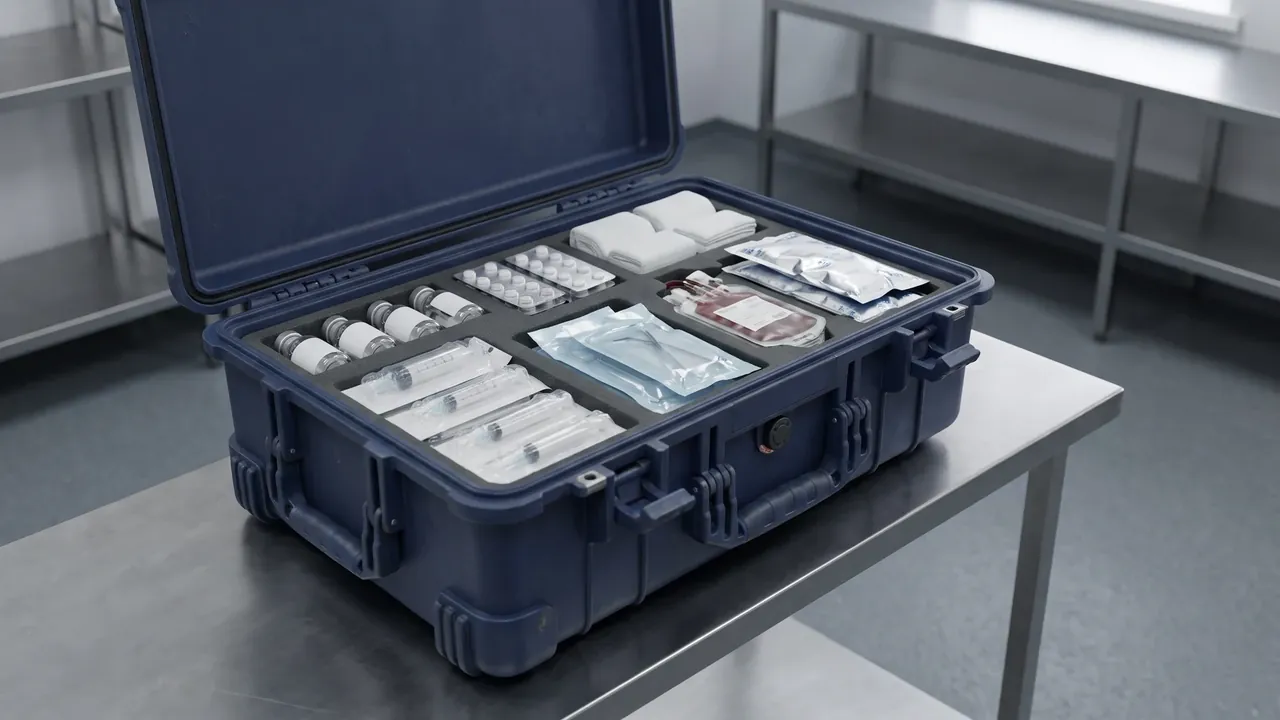
Drafting a case procurement specification should use a three-stage "scenario-indicator-verification" structure. The scenario states carry method, temperature zone, and equipment list; the indicator lists material, volume, mass ceiling, IP grade, flame grade, stack layers, latch life, and liner plan; the verification defines arrival inspection and third-party sampling methods and limits. This binds suppliers and eases later acceptance and audit. At acceptance, check item by item: first, verify case marking and nameplate against contract; second, spray the seam to confirm no seepage; third, shake the empty case to check liner fit and equipment fixation; fourth, open-close the lock at least fifty times for smooth action; fifth, verify liner contours match real equipment; sixth, check the gasket is continuous with no breakpoint; seventh, obtain material flame and IP test files. For bulk purchase, sample by ratio for drop and stack recheck. Finally, do not judge by unit price alone but by total ownership cost including spare price, liner replaceability, mold entitlement, and after-sales response. Related methods also appear in tactical hard case spec, tactical storage box selection guide, and protective case selection guide.
FAQ
Q: What is the real difference between a law enforcement gear case and an ordinary toolbox, and can a generic box replace it? A: The two differ fundamentally in design goal. An ordinary toolbox targets loose household or workshop storage, with generally weak sealing, impact, and stacking ability that cannot handle compound field conditions such as rain, dust, and vehicle vibration. An officer kit case is built around four abilities: sealed protection, zoned storage, fast access, and stable carry, usually featuring IP67 sealing, a continuous elastic gasket, a drop-resistant shell, customizable foam liner, and stackable structure. Directly substituting a generic box may seem to save cost short term, but equipment is easily damped, bumped, or lost in transit, and the lack of standard slots lowers on-site retrieval efficiency. We suggest specifying hard indicators like protection grade, liner plan, and latch life in the tender, then comparing on that basis rather than price or appearance alone. Units with existing generic boxes can retrofit sealing strips and custom liners, yet overall reliability still trails an integrated professional case. From an audit perspective, a professional case also supports one-case-one-code tracking that generic boxes rarely provide, which matters for accountability.
Q: What does IP67 specifically mean in police duty, and does it allow long-term submersion? A: IP67 per IEC 60529 and GB/T 4208 means "6" for complete dust exclusion and "7" for no water entry after thirty-minute immersion at one meter under normal pressure. It targets short-time immersion, heavy rain splash, or vehicle washdown, not long-term sinking or sustained water pressure. For frequent wading, prefer double-rib or labyrinth sealing with a healthy gasket and inspect the seam regularly for compression damage. Emphasize that waterproofing depends on the main seal; the pressure equalization valve only solves pressure difference and does not raise the waterproof grade. At acceptance, a shower simulating moderate rain on the seam for five minutes checks internal seepage as a simple arrival test. Remember that temperature swings also affect seal behavior, so record the test condition with the rating. Long-term submersion needs separate structural evaluation and should not be assumed covered by IP67. Always pair the rating with a documented test rather than a printed label.
Q: Should the liner be cut foam, pick-and-pluck foam, or an EVA thermoformed tray? A: Each fits different needs. Cut foam CNC-carves equipment contours for the best fit and cushioning, suited to fixed models pursuing one-item-one-slot standardization. Pick-and-pluck lets users tear grids for high flexibility and low start cost, good for pilot units with changing kits. EVA trays are flat, cleanable, and disinfectable for hygiene-sensitive duty, though cushion depth is generally less than thick foam. Choose by equipment count, change frequency, and cleaning need, and watch liner flame grade and low emission to avoid odor or ignition risk in hot cabins. In all cases, make the liner removable rather than permanently glued so a worn block is locally replaced, extending the whole case life and keeping total cost reasonable across years of service. Also consider the liner thickness against the case depth so lids close without compressing devices, which preserves both protection and ease of opening. When budgeting, compare the unit cost of each liner type against expected service life rather than the upfront price alone, because a durable liner often costs less per year than a cheap one replaced twice.
Q: How do we prevent internal equipment from knocking together in transit, and how to judge at acceptance? A: The key is liner fit and slot fixation. A qualified liner lets each item embed in a dedicated contour with reasonable cushion gaps and no obvious play; high-frequency items get elastic straps or retainers. At acceptance, shake the loaded case gently to confirm no movement or rattle, and that items do not shift or fall on opening. For precision devices like cameras and radios, check that screen and key faces point toward cushion foam to avoid hard contact. If an item has clear play in its slot, long-distance vibration becomes repeated impact that gradually loosens connectors or scratches surfaces. Therefore "shake without noise, retrieve without drop" should be the intuitive liner acceptance standard, and ask the supplier for a sample confirming fit before mass production to avoid later disputes over damage claims. Where routes are rough, request a short transit vibration trial to validate the layout under realistic conditions. Document the acceptance shake test in the delivery report so future audits can confirm the same standard was applied and any deviation is caught early.
Q: Is a pressure equalization valve necessary, and what maintenance does it need? A: For cases crossing altitude by road or flying as cargo, the valve is nearly mandatory; for plain-area short trips it may be omitted. Its principle uses an ePTFE microporous breathable film that auto-balances pressure above threshold while keeping IP protection, preventing the lid from being sucked shut or the gasket reverse-pulled. The valve should sit high, away from the water-prone bottom, and be wiped of dust periodically to avoid clogging the micropores. Note the valve solves pressure difference only and does not raise waterproofing; long wading still relies on main sealing. Choose a replaceable valve with a spare supplied for field recovery, so a damaged valve does not compromise overall protection and the case can return to service quickly without sending the whole unit back to the factory for repair. As a rule of thumb, any move above roughly three thousand meters or any air cargo leg justifies the valve. If the case is stored in a heated cabin, vent the valve occasionally to clear moisture that temperature cycling may trap inside the shell.
Q: How should locks and hinges be selected to stay reliable under frequent opening? A: Police cases should use composite locks with anti-accidental-release and external police padlock capability, keeping the lid closed in motion yet lockable in storage. Latch cycle life should be an acceptance metric; a typical experience value is no less than five thousand open-close cycles without obvious looseness or sticking. Hinges should be stainless steel or thick polypropylene integral type, avoiding thin steel that snaps in cold; large cases need dual or multi-point hinges for even lid load. Corners may embed metal protectors or thick bumper edges to take impact first and protect the body. In daily care, if latch rebound slows or hinges noise, lubricate or replace promptly to prevent sudden failure during duty. Quantify these requirements using the relevant latch and hinge durability guides when writing the specification, and keep a small spare kit of latches and hinge pins at the depot. Specify the lubricant type in the maintenance manual so field crews use a compatible product and avoid swelling rubber or plastic parts during routine service.
Q: How often should the case gasket be replaced, and how to tell it has aged? A: The gasket is a consumable whose replacement cycle correlates with local UV intensity, temperature, humidity, and open frequency. Under strong UV plateau or humid heat, aging is faster; a typical experience value is evaluation every two to three years. Three intuitive replacement signals are: permanent flattening with lost rebound; surface cracking, crumbling, or stickiness; and seepage at the seam during the spray test after closure. Replace with the same cross-section size, overlapping the joint diagonally to ensure continuity with no breakpoint that would leave a leak path. In daily care, clean seam grit after each duty to prevent chronic compression marks on the gasket, thereby extending effective life and keeping IP protection stable across the service period without surprise failures in the field. Store spare gaskets away from direct sun so they do not age before installation. Maintain a replacement schedule tagged to each case ID so no unit silently passes its service window, and train depot staff to spot early cracking during routine cleaning before it becomes a leak.
Q: How can vague "complies with military standard" language be turned into acceptable technical clauses? A: Standards mostly provide methods and procedures rather than fixed pass values, so "comply" must become executable indicators and verification. For example rewrite "complies with military standard" as "drop verification per MIL-STD-810H method 516.8 with drop height graded by case mass and records issued," write IP as "IP67 inspection per GB/T 4208 with test file provided," and flame as "non-metallic interior per UL94 reaching V-0." Build a dual mechanism of arrival batch inspection and annual sampling: batch checks seal, lock, liner fit, and appearance; annual sampling sends to third-party labs. The contract should also specify IP ownership, mold entitlement, and locked spare pricing to avoid later binding. Thus vague slogans become accountable, auditable hard constraints that suppliers must meet and document, and a sensible sampling ratio keeps verification cost under control. Attach the referenced standards as appendices to the tender so bidders quote against the same texts and disputes over interpretation are reduced.
Q: Can communication-recording devices and protective supplies share one case without interference? A: Yes, with zoned isolation and control. Divide the interior into six bands: communication-recording, lighting, protection, restraint, energy, and document. Put communication and recording devices in upper or side pockets for fast grab; sprays and restraints get separate visible compartments away from electronics to avoid accidental trigger or contamination. The energy area's spare batteries should be cased separately from devices to prevent short circuits; the document area's ledger and list support return checks. Zoning prevents physical interference and eases audit and loss tracing. If strong RF interference and device sensitivity exist on site, consider a metal shell with conductive gasket for some shielding, but for general duty an engineering plastic case already meets isolation needs without added weight or cost penalties from metal construction. Keep heavier bands low to lower the center of gravity during carry. Review the band plan whenever the equipment list changes so the layout stays matched to current kits and no device is left without a dedicated, labeled slot that officers can find by feel.