

Overview of Damage Risks for Boom Components in Transit
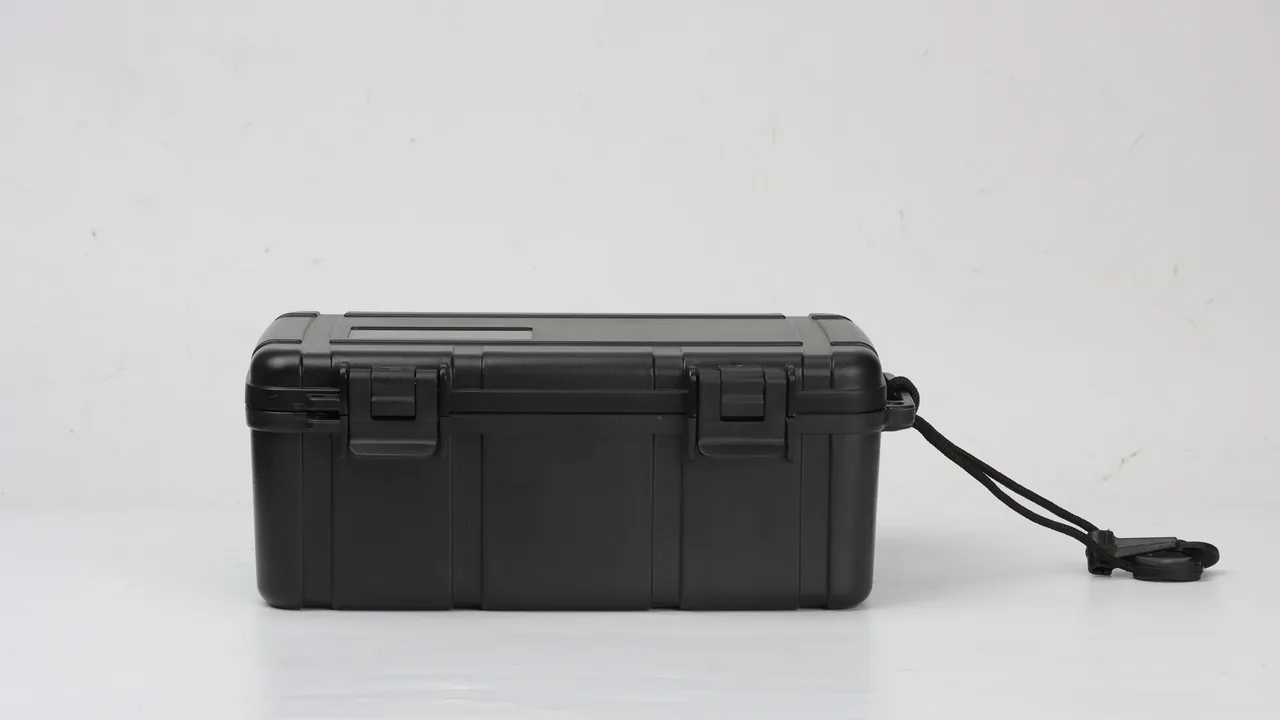
Self-propelled boom sprayers and trailed crop-protection machines rely on long, slender boom assemblies to deliver uniform coverage across the field. These booms are among the most fragile yet most overlooked items moving through manufacturing, after-sales service, and cross-regional transfer. A typical boom is built from multiple truss sections, folding arms, hydraulic cylinders, and end-mounted atomiser nozzles, often spanning more than thirty metres when fully extended and shipped in a folded or dismantled state. That slender cantilever geometry makes the assembly vulnerable to bending, impact, contamination, and moisture during forklift handling, highway vibration, warehouse stacking, and ocean freight. For an original equipment manufacturer, a single distorted truss or a clogged nozzle discovered before delivery can stall an assembly line and trigger customer claims. For service networks and farming cooperatives, the readiness of spare booms directly decides whether the spring spraying window opens on time. From the perspective of a protective-case manufacturer, this article analyses the failure mechanisms of four critical component groups, namely boom trusses, atomiser nozzles, diaphragm-pump membranes, and pressure sensors, and presents the compartment, liner, and sealing solutions used to neutralise those risks. Broader agricultural parts protection ideas are covered in our agricultural machinery parts case and agriculture spray equipment case articles.
Why Boom Trusses Bend and Distort
Practitioners judge whether a truss has taken a permanent set by straightness rather than by eye. In the deployed position, a tensioned wire or laser reference is run along the full span and the greatest deviation from that datum is measured; once the departure exceeds roughly one part in a thousand of the length, spray overlap and missed strips become obvious enough for an operator to notice. A deviation of that order often corresponds, on the shipping skid, to nothing more than a few millimetres of wall depression or a hairline at a weld, which no visual inspection will ever catch. That is why packaging targets should be written as a maximum permissible deflection through the journey rather than as a vague requirement that the part look straight on arrival, because the only reliable way to hold a thousandth of the span is to control the bending moment that creates it in the first place.
A boom truss is essentially a slender thin-wall aluminium or carbon-steel square-tube beam with a triangular cross-section, engineered to hold a straight spray trajectory in the field rather than to resist bending moments. During in-plant transfer, loading, and unloading, booms are often laid horizontally or leaned against a wall. Without a rigid cradle, the self-weight generates a sustained bending moment at the cantilever end, and over time this produces a permanent deflection invisible to the eye yet sufficient to spoil spray-width consistency. A more hidden risk comes from forklift prongs and rough handling: when the truss is supported at a single mid-point with both ends free, the aluminium wall can yield locally near the weld. Ocean containers add another hazard, because daily temperature and humidity cycling relaxes residual stresses, and if the boom leans against hard objects, the folding pivot pin holes wear oval from micro-motion. We begin every project by mapping the centre of gravity and support spacing of the boom, then apply the resonance-avoidance principles described in our transport vibration testing cases to set cradle intervals that minimise deflection from the outset.
Anti-Bend Cradle Designs for Boom Trusses
Cradle spacing cannot be fixed by rule of thumb, because it depends on the section stiffness and the self-weight per metre of the particular boom. A simple beam model gives a useful first estimate: for a given section, doubling the support span increases self-weight deflection roughly eightfold, which is why tightening cradle intervals from 1.5 metres to 1.2 metres looks like a thirty-centimetre adjustment yet buys a disproportionate amount of bending margin. When we lay out a solution for a specific boom, we ask the customer for wall thickness and section dimensions, back-calculate the critical span from measured data, and then arrange saddles within the usable internal length of the case rather than reusing a fixed template. For after-sales networks that must cover several boom models with one case, we build the saddles on a laterally sliding rail so assembly staff set and lock the position for the day's model instead of commissioning a separate mould for each variant.
To counter the slim-and-bend-prone nature of booms, the first line of defence inside the case is a rigid anti-bend cradle. We mould curved saddles from high-density polyethylene or glass-fibre-reinforced engineering plastic in one piece, with a curvature matched to the boom square-tube outer wall so that contact changes from a line to a surface and local pressure spreads along the whole tube. The saddles are placed along the case length at intervals no greater than 1.2 metres, ensuring no cantilever segment exceeds its critical span. For sectional folding booms, the case adds location clips that secure the folding pivot points, preventing alternating bending from self-induced sway during transit. To stop the cradle from sliding against the boom, the contact face is laminated with a layer of closed-cell EVA foam that both cushions and increases friction. In practice, for extra-long booms we also fit a slide-out aluminium inner frame: the boom is first fixed to the frame and then pushed as a unit into the case, effectively giving the slender part a second shell. Foam selection details are discussed further in our EVA foam liner advantages guide.
Why Nozzles Clog and How to Protect Them
Nozzle clogging has different causes in service and in transit, and the two deserve separate treatment. In service, blockages are mostly deposits from chemical residues and water hardness, a mix of chemical and physical scaling. In transit, the dominant offenders are abrasive debris, paper fibres, fragments of packaging material, and dried chemical film that was never fully flushed out. The transit variety is often the more troublesome, because a fragment carried into the orifice lodges in the narrowest part of the spiral channel and resists even reverse flushing with clean water. Inside our clean compartment we deliberately avoid corrugated board and low-density sponge, both of which shed fibres, and use one-piece moulded or thermoformed parts instead, with a dust-filtering non-woven layer bonded to the inside of the lid to trap particles falling in during repeated opening.
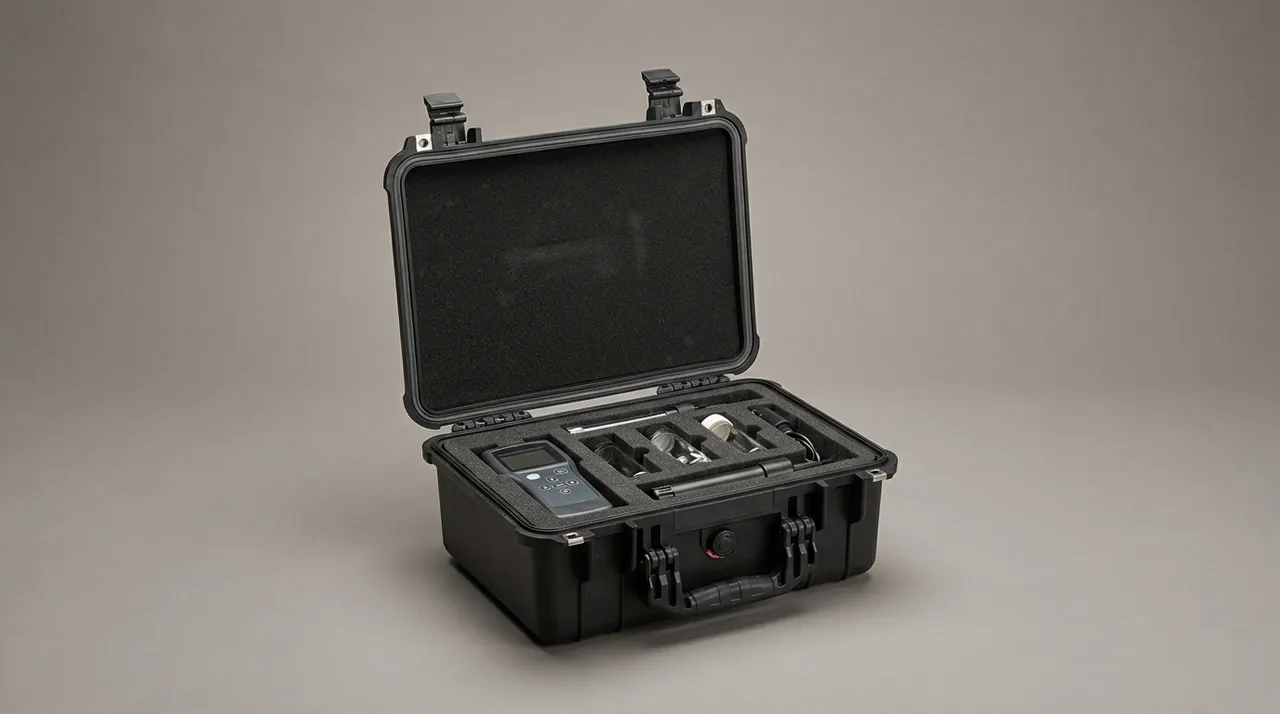
Nozzles are the final executors of spray-system accuracy, and their internal spiral channels and orifice diameters are often only fractions of a millimetre. On the farm, pesticide suspensions, foliar fertilisers, and hard-water scale readily remain inside the orifice, and once in the transit chain those residues dry into blockages that are extremely difficult to clear. The greater danger in transit is not the nozzle body itself but the chemical stains around it contaminating adjacent precision parts, plus the chipped orifice edges caused by bare nozzles knocking against each other inside an open crate. Our approach is to unscrew the nozzles from the boom end and place them in a dedicated clean compartment. The compartment wall is made of anti-static smooth PP, with individual honeycomb slots for each nozzle so they remain physically isolated. A small desiccant pack keeps relative humidity below forty percent, suppressing the re-wetting and caking of chemical residues. For a dedicated treatment of nozzle-class parts, the clean-isolation thinking in our burner nozzle case is a useful reference.
Clean Compartmentalised Packing for Atomisers and Nozzles
Cleanliness in packaging is a quantifiable property rather than a marketing adjective. The internal passage of a nozzle or atomiser sets the maximum particle size that may pass, so a single hard particle near that size can lodge against a swirl plate after assembly and create a persistent bias in the spray pattern. Material selection therefore favours low-outgassing, non-shedding grades with a controlled surface resistivity, and the tooling for any new liner is approved only after a cleanliness verification run. Export projects add another layer of constraints, since the liner compound must also satisfy restricted-substance limits so that the packaging itself does not become a compliance liability. These requirements may sound distant from transport protection, yet they serve the same end goal: from the moment the case is opened, nothing should be sitting in the orifice that does not belong in the spray liquid.
Atomisers, with their air-liquid mixing chambers, swirl plates, and strainers, share the spray tip family but are even more delicate, often carrying detachable stainless swirl plates and silicone seals that are both crush-sensitive and contamination-sensitive. We design a two-layer clean pod: the upper layer holds the atomiser body, semi-encapsulated by a thermoformed EVA recess; the lower drawer-style box stores swirl plates, strainers, and spare seals, each cell limited by a foam pressure pad. A sealed partition separates all clean pods from the main boom-cradle bay, eliminating the migration of metal debris or anti-rust oil from the truss surface. Importantly, the clean pod openings use transparent flip lids so service staff can visually count parts without opening the case, reducing dust ingress from repeated handling. For irrigation spray ends that also demand cleanliness, the nozzle-fragile logic in our irrigation pump case is worth borrowing.
Vulnerabilities of Diaphragm-Pump Membranes
Membrane damage has a distinctly delayed signature, which makes it one of the most frequently misattributed failures in after-sales claims. Indentation and crease stress are wholly invisible during incoming inspection, and the pump still builds normal pressure in the first hours of operation. Failure tends to appear only after ten or more hours of work, once the membrane has flexed repeatedly under alternating load and finally tears at the weakened spot. At that point the field diagnosis normally blames pump quality or chemical attack and never traces the root cause back to a journey completed months earlier. When we review return data with agricultural machinery manufacturers, we pay particular attention to these short-service failures, align them with the packaging record for the same batch, and test whether a relationship exists between the pack design and the failure mode so that the next revision can break the pattern.
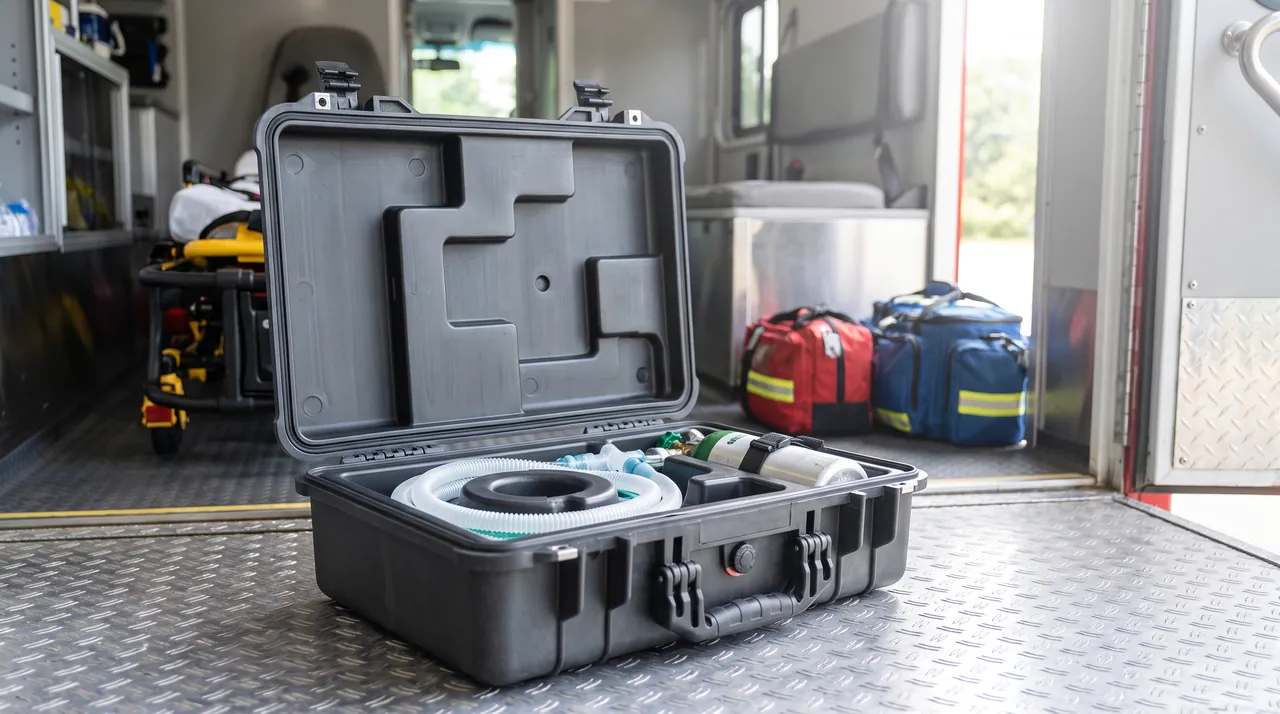
The diaphragm pump is the heart of the sprayer, and its rubber or thermoplastic-elastomer membrane looks soft and harmless at rest yet is extremely sensitive to compression, creasing, and ageing. Membrane failure in transit stems from three causes. First, if the pump head is laid flat and stacked after dismantling, the membrane sustains uniform pressure over time and develops plastic indentation that later thins and perforates. Second, spare membranes rolled for storage acquire stress-whitening at the bend, sharply shortening service life. Third, warehouse heat or proximity to solvent vapour accelerates membrane swelling. We give the diaphragm pump its own flat bay in the case, with the pump head held upright so the membrane plane stays vertical and unloaded; a VCI vapour-corrosion inhibitor tab is placed in the bay to protect metal parts and stabilise the micro-environment that slows membrane ageing. Pump-class membrane packing is also covered in our dedicated diaphragm pump case article.
Shock Isolation and Separation for Diaphragm Membranes
In-plant transfer and long-haul cross-regional transport impose fundamentally different vibration inputs, and a single cushion spec rarely suits both. In-plant movement is dominated by short bursts of high-frequency forklift chatter, while long road journeys deliver low-frequency, high-displacement random vibration. Low-frequency input is the harder test for pump fixation, because buffering momentum scales with displacement amplitude, and a five-millimetre margin can be consumed in a single long-haul episode. We therefore distinguish the two scenarios when specifying a case: short in-plant shuttles can use a single EVA base with surrounding foam walls, whereas cross-regional and export routes call for bidirectional retention above and below the pump head so the unit returns to its datum after each excursion instead of creeping progressively until it bears hard against the wall. The extra top plate looks marginal, yet it suppresses the cumulative drift that causes most long-distance fixation failures.
Beyond avoiding compression, the membrane must be physically isolated from other heavy parts in the case so that metal edges cannot strike the pump housing during transit jolts. We use a floating fixation: the pump head sits on an EVA cushion base at the case bottom, surrounded by adjustable foam walls that leave about five millimetres of buffer margin in both vertical and lateral directions. For after-sales scenarios where several pump heads travel in one case, a corrugated composite partition is inserted between units, its surface covered with an anti-static film so the silicone seal ring does not attract dust. We also fit plastic blanking caps on the pump inlet and outlet flanges to keep foreign matter from entering the flow path and adhering to the back of the membrane. It should be stressed that cushion design must be validated against the random spectrum suggested in our transport vibration testing cases rather than by merely stacking foam from experience.
Precision Protection for Pressure Sensors
Zero drift in a pressure sensor has one frequently overlooked cause, namely assembly stress. If the sensor is clamped hard in the case, the metal housing deforms slightly and passes that strain into the internal bridge circuit; the deformation relaxes once the case is opened, but the bridge has already taken a permanent offset. The first principle of instrument-grade packing is therefore not to clamp as tightly as possible but to limit movement without preloading the body. When we design a finger slot, we hold the single-side clearance between slot and sensor outside diameter to between 0.2 and 0.5 millimetre, enough to stop rattling while preventing clamp force from reaching the housing. If sensors then go into long-term storage after arrival, we advise re-measuring zero output each quarter so that slow ageing is clearly separated from a one-off shock event, which keeps responsibility easy to assign.
Modern sprayers widely fit pressure sensors to close-loop regulate flow, and such sensors are stainless housings embedding semiconductor strain gauges with very high sensitivity despite a small range. Drop impact in transit can break the internal bridge solder or shift the zero point, while a humid environment oxidises the connector and causes signal jumps. We apply instrument-grade protection to pressure sensors: first insert the sensor into a custom EVA finger slot with a tolerance within 0.5 millimetre so it does not rattle; then place the whole unit in a moisture-proof box with silica gel, and position that box in the upper light-part zone of the case away from heavy items. Because the sensor is a classic precision instrument, its packing follows the same three principles as our precision instrument case: low shock, low humidity, and anti-static.
Cushioning and Moisture Control for Pressure Sensors
For the moisture requirement of pressure sensors, we integrate a reusable colour-change silica pack inside the light-part moisture box and fit an IP67-grade silicone seal on the lid, so even if the whole case is rained on or splashed on a deck, internal humidity stays safe. On cushioning, the sensor box is wrapped in a slow-rebound polyurethane foam that absorbs high-frequency micro-vibration and prevents fatigue failure of the sensitive bridge. Every connector is capped with a dust- and moisture-proof cover, and a pin-definition label is affixed inside the case for quick field wiring. For sensors moving as separate spares, the standardised approach in our sensor transport case of a moisture box plus buffer slot is recommended. We also screen-print a fragile-instrument handling mark on the pod exterior and suggest tilt and shock indicators on the case outside, so any out-of-limit event in transit is visible at receiving and the unit is prioritised for re-inspection before fitting.
IP67 Sealing and Whole-Case Environmental Protection
Sealing grade and cushioning design compete with each other, a trade-off many buyers overlook. Thicker walls and a heavier gasket certainly improve water resistance and impact performance, but case weight rises with them, increasing both manual handling load and drop energy so that a new risk is introduced while an old one is addressed. We resolve the tension through structural zoning: load-bearing regions gain rigidity from reinforcement ribs, non-structural regions keep thinner walls to control mass, and the gasket uses a dual-run design to buy redundancy so that the case retains basic protection even if one run is damaged. The approach also pays off in serviceability, because a single aged gasket run can be replaced in the field instead of scrapping the whole case after a few seasons of use.
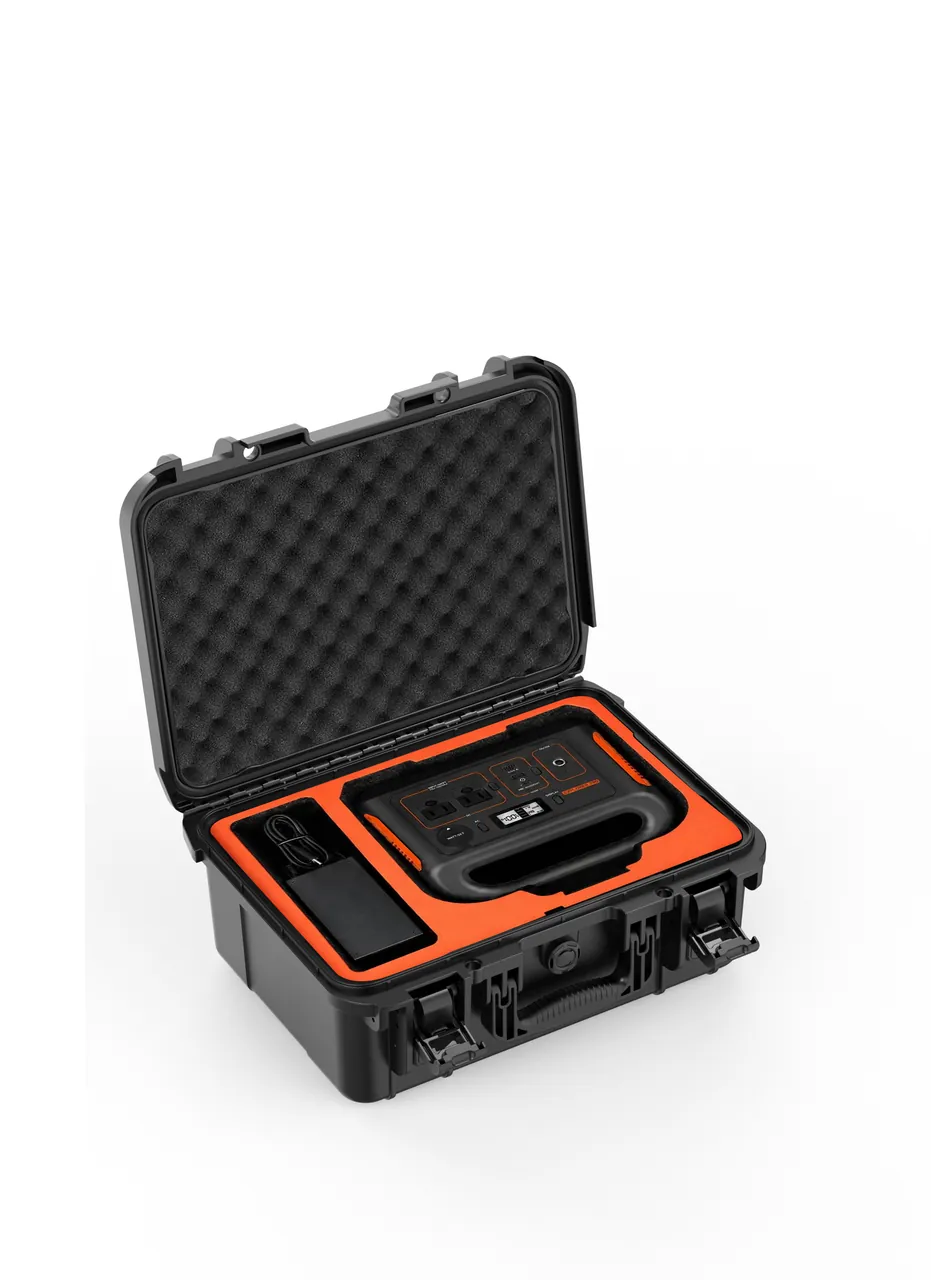
Boom components often sit for weeks in open yards, farm sheds, or ocean containers, so the environmental sealing of the whole case is critical. The case shell uses modified PP engineering plastic, with dual silicone gaskets between lid and body and an automatic pressure-equalisation valve to balance internal and external pressure during air freight or high-altitude transit, preventing the lid from being sucked in or blown open. Verified by an independent lab to immersion testing, the whole case reaches IP67, surviving thirty minutes submerged at one metre without water entry. For scenarios where the case is temporarily stored beside wet field ridges, this sealing directly protects the clean compartment and electronic sensors. The systematic sealing rationale is detailed in our IP67 protective case and pressure equalisation valve guide.
EVA Liner and Multi-Compartment Structure Design
The liner of our boom-component case is not a simple foam pad but a modular design built on three principles: zoning, pressure separation, and cleanliness separation. The main bay carries heavy parts such as the boom and pump head, using high-density EVA thermoformed cradles; the clean bay separately houses nozzles and atomisers in low-outgassing anti-static material; the light bay holds sensors and small electronic items in slow-rebound foam. The three bays are physically isolated by internal mid-walls, preventing contaminant migration and mixed heavy-light compression. All liners can be swapped quickly against the customer's parts list; when a boom model is discontinued, only the corresponding cradle module is replaced while the case is reused. Liner material comparison is given in the custom foam inserts article.
Rust Prevention and VCI Vapour Corrosion Inhibition
Boom trusses, pump flanges, and fasteners are mostly metal and rust easily in the high-salt atmosphere of ocean freight. Rust not only hurts appearance but also seizes folding pivots and nozzle threads. We place VCI vapour-corrosion bags or inhibitor papers in the metal heavy bay; the volatilised molecules form a mono-molecular protective film in the closed space, effectively inhibiting both carbon steel and aluminium. For surface-treated booms, we recommend neutral cleaner to remove hand sweat and chemical stains before boxing, then a breathable dust bag before entry, avoiding reactions between inhibitor and residual agent. Export cases additionally pass salt-spray ageing tests to ensure metal parts remain fit for assembly after long sea voyages. More corrosion-resistant packing cases appear in our orchard sprayer parts case and fertilizer spreader parts case.
Stacking and Loading Precautions in Transit
Even the best case needs correct loading to work. We mark stack-weight limit lines and centre-of-gravity labels on the case exterior, suggesting a maximum of three same-spec boom cases stacked with inter-layer offset within ten percent of case width to avoid eccentric collapse. During loading, lay the case along the vehicle travel direction so the boom-cradle force direction aligns with the main vibration axis and reduces lateral sway. For cross-border ocean freight, fit a wooden pallet at the case base and lash it to prevent sliding and corner impact inside the container. For long-haul air freight, confirm the equalisation valve is open so high-altitude pressure change does not damage the seal. Relevant logistics loading rules are in our cross-border logistics guide.
Selection Advice: Matching Case to Boom Dimensions
On a whole-life cost basis, a boom component case earns its keep well beyond the shipping leg. A well-designed case can serve the boom through its entire working life, covering in-plant transfer, after-sales despatch, cross-regional seasonal travel, and off-season storage, so the initial outlay is amortised across every movement instead of being charged to a single journey. More importantly, it consolidates a scatter of improvised protection needs into one standardised carrier whose state can be inspected, recorded, and traced back to a responsible party. For a service network handling several boom models, one case platform plus interchangeable liners also cuts the variety of packing stock that has to be held on the shelf, freeing space and working capital that would otherwise sit idle between spraying seasons.
When choosing a case for boom components, the first parameter is the maximum envelope of the folded or dismantled boom; the internal effective length should reserve at least eighty millimetres of buffer. The second is total weight: when several boom sections and pump heads share a case, check the load limit of wheels and handles, and split or choose a trolley version if overweight. The third is cleanliness grade; if the chain involves nozzles and sensors, an independent clean bay is mandatory, while pure-truss transport can simplify the liner to cut cost. The last is environment grade; inland short haul may use IP65, but export ocean freight must use IP67. We provide full-process customisation from surveying and prototyping to small-batch trial, and the precision-part protection thinking in our planter seeder parts case also applies to electronically controlled boom versions.
As a final step before despatch, we recommend an empty-fit check: place the boom in the case, rock the case gently, and confirm there is no relative slip and no sound of hard contact. The check costs a few minutes yet intercepts the large majority of cradle misfits and assembly omissions before goods leave the building. At first-article stage we write it into the work instruction and require the line to perform it at a fixed cadence, so that schedule pressure during peak production cannot quietly drop it from the sequence.
Cases entering regular circulation should also carry a simple loading diagram and parts list inside the lid, stating what goes in each compartment and in what quantity. Field technicians usually open a case in poor light and under time pressure, and a clear diagram materially reduces the chance of a part being returned to the wrong bay. For programmes shipping over many batches, we add a batch and model marking zone on the outside so that liner revisions remain traceable; if damage feedback arrives against one batch, the liner version can be identified immediately and the question of whether a design change caused it answered without guesswork.
JUNZHJIA Custom Case Solutions
In summary, the core of boom-component protection is four defences: anti-bend, anti-clog, anti-compression, and anti-moisture. We use rigid anti-bend cradles to solve truss distortion, independent clean compartments to solve nozzle and atomiser clogging contamination, floating cushion and VCI rust control to solve diaphragm-membrane and metal-part damage, and IP67 sealing with moisture boxes to preserve the accuracy of pressure sensors and other electronics. As a protective-case manufacturer, JUNZHJIA, a brand of Kexin New Materials (Guangdong) Co., Ltd., serves many agricultural machinery manufacturers and after-sales networks, delivering flexible runs from single prototypes to thousand-case volumes. With in-house tooling and injection lines in Guangdong, we can rapidly open moulds against your boom model and lock liner tolerance with a first-article sample before mass production. If you are planning a packaging upgrade for boom assemblies or whole-machine spares, share your parts list and transit scenario with our engineering team, and we will output a compartment layout and a cushion-validation report tailored to your components.
Frequently Asked Questions
Q: If a boom bends slightly in transit, will it recover on its own after fitting? A: A boom truss is usually aluminium or thin-wall carbon steel, and once it exceeds the material yield point the permanent deflection cannot recover by itself. Even a few millimetres of bend invisible to the eye will cause spray overlap or missed strips after deployment, hurting application uniformity across the whole field. Therefore the case must prevent bending at the source with rigid cradles rather than hoping for post-straightening in the workshop. Minor elastic deformation rebounds after unloading, but repeated elastic alternation accumulates fatigue cracks near welds, so the boom may look straight on arrival and still fail months later at a joint. Keeping cradle support through the entire journey is the safe practice. We suggest verifying straightness with a gauge on arrival before fitting, confirming zero deflection, and recording the reading against the batch. A bent boom quietly degrades every hectare it later covers, and discovering it in the field costs far more in lost spraying days than preventing it inside the case ever would. If a bend is found on arrival, do not attempt to straighten it cold in the yard, because local heating and levering often introduce a second, sharper kink near the original defect.
Q: If nozzles are removed and stored separately, is it easier to lose parts or mix models? A: Separate storage does add management complexity, and that concern is fair, but leaving nozzles bare on the boom causes greater loss through mutual chipping of orifice edges and cross-contamination of chemical stains that later block neighbouring tips. Our clean compartment uses one-cell-one-code honeycomb slots, with each nozzle in a fixed slot and a model label beside it, which prevents knocks and makes counting effortless. For mixed-model scenarios, colour-coded zone markings on the lid let field staff pick by colour and avoid confusion even when several sprayer models share a service vehicle. Compared with bare storage, standardised compartmentalisation actually lowers loss rates, because opening the case gives an immediate visual confirmation that the full set is present. A quick glance turns a vague inventory guess into a definite answer, catching shortages before the boom ever reaches the field. In practice, teams that adopt slot-based packing report fewer missing nozzles per season than teams that keep them fitted, simply because the empty slot is visible the moment the lid opens. The same visible-slot principle also speeds up end-of-day cleaning, since the technician knows exactly how many tips should return to the case before the lid is closed.
Q: Can the diaphragm-pump membrane be shipped lying flat together with the pump head? A: We do not recommend flat stacking under compression. At rest, if the membrane sustains uniform pressure for a long time it develops invisible plastic indentation that later perforates and leaks at that exact spot after fitting, usually within the first days of peak-season work. The correct method is to hold the pump head upright so the membrane plane stays vertical and unloaded, with foam around it to stop sway in both vertical and lateral directions. If multiple heads must share a case, insert a composite partition between each unit and fit plastic blanking caps to protect the flow path from debris. Before transit also confirm the membrane has not touched solvent or grease, since either will swell the elastomer and soften it permanently. Spare membranes should never be rolled for storage, because the bend produces stress whitening that sharply shortens service life; lay them flat in a dedicated tray instead. When in doubt, pack the membrane in a separate soft wrap before bay entry, because a few grams of prevention avoids a pump rebuild and a lost spraying day. If a membrane has already spent a season rolled in a drawer, treat it as suspect and inspect the fold line under good light before fitting it to a machine.
Q: Is a normal plastic bag enough for moisture protection of a pressure sensor? A: A normal plastic bag cannot provide a stable low-humidity environment and easily builds static that attracts dust, which is unfriendly to a high-accuracy semiconductor bridge. It also offers no protection at all against the drop impacts that shift a sensor's zero point. We use a dedicated moisture box with an IP67 silicone ring and reusable colour-change silica inside, wrapped in slow-rebound foam that absorbs high-frequency vibration, keeping relative humidity in a safe band while avoiding zero drift from a fall. Sensor plugs also get dust caps and a pin-definition label so field wiring can be completed quickly and correctly. For batch movement, standardise on a moisture box plus buffer slot rather than ad-hoc bagging, because consistent packaging lets receiving staff apply the same quick inspection every time and catches a compromised seal before the sensor is fitted. Once a sensor is buried in a controller, a drift problem is far harder to diagnose and far more costly to repair than to prevent at the packing bench. Keep the moisture box closed until the moment of fitting, and never store a sensor loose in a toolbox where vibration and metal chips can reach the connector.
Q: With an IP67 case in high-salt ocean spray, will metal inside still rust? A: As long as the lid gasket is intact and the equalisation valve is properly closed, an IP67 case blocks external salt spray and rain during ocean freight, and the internal VCI inhibitor further suppresses rust caused by residual moisture trapped at sealing. The key risk is not the rating itself but the preparation: whether the metal was cleaned before boxing and whether the gasket trapped debris that creates a capillary path for water. We suggest export cases use neutral cleaner to remove hand sweat and chemical stains, then pass a salt-spray ageing test as verification. If container condensation is severe through repeated day-night cycles, add a desiccant bag inside as redundancy rather than relying on the gasket alone. With disciplined operation, metal parts typically remain fit for assembly after long sea voyages. The small extra step of pre-cleaning pays back many times over by preventing the hidden corrosion that only reveals itself when a folding pivot seizes during the first field deployment of the season. Keep a spare gasket set on the shelf for export cases, since replacing a compressed seal before a long voyage costs far less than reworking a seized boom after it lands.
Q: For booms longer than the standard case, how should they be packed? A: For booms over 1.5 metres, we suggest a slide-out aluminium inner-frame scheme: the boom is fixed to a lightweight frame and then pushed as a unit into an extended case, effectively giving the slender part a second shell that handles most of the bending moment. The frame carries saddles at the calculated support spacing so no cantilever segment exceeds its critical span in any transport attitude. For extreme lengths, sectional dismantling into multiple cases is workable, but sections must be marked and joints calibrated afterwards to avoid field-assembly error that shows up as a skewed spray width. The slide-out frame also pairs with a trolley version to lower manual handling load when the case has to be moved along a field headland. Because longer booms amplify any bending moment dramatically through the eightfold deflection relationship described earlier, frame stiffness matters more than the case shell; we validate the frame deflection both empty and loaded before approving the design for production runs. For booms that travel on their own service trailer, the same frame can double as an on-vehicle cradle, so the part is only lifted once between the factory and the field.
Q: Is EVA or polyurethane foam better for the case liner? A: They serve different purposes and neither is simply better, so the right answer depends on which part of the case you are lining. EVA foam has good compression recovery, low outgassing, and excellent resistance to repeated compression, which suits heavy-part cradles such as boom saddles and pump bases, and it also works well as a clean-bay liner because it releases very little into the enclosed air. Slow-rebound polyurethane absorbs vibration better and conforms closely to complex shapes, making it the better choice for light parts such as pressure sensors that fear high-frequency shake. We normally combine the two in one case: high-density EVA for the main cradle, polyurethane for the light bay. Selection also depends on service temperature, since very cold environments need a grade that stays flexible and does not powder or crack. A further consideration is cleanliness class, because a dusty foam will contaminate nozzle slots over time. The detailed comparison table in our foam-insert guide helps match material to part weight, accuracy grade, and transit environment. Where a single boom kit mixes heavy and delicate components, the two materials can share one case in separate zones without compromising either requirement.
Q: Can a boom case be mixed with other machine spares to save freight? A: Yes, but evaluate carefully before committing, because the saving is real yet the risks are concentrated. A boom truss is heavy and long and should not be directly mixed under pressure with clean light parts such as nozzles and sensors, or you will see two distinct damage modes at once: contamination of the clean parts and compression damage to the delicate ones. If sharing a case is genuinely necessary, strictly zone it with a mid-wall: heavy parts in the main bay, light clean parts in the independent upper bay, and confirm the partition's load capacity so that it will not collapse under stacking. The divider must also resist the repeated lateral loads of road transport rather than merely looking thick when the case is closed. Mixed zoning does reduce box count and shipping volume, but only if the divider structure has passed drop and vibration validation. We suggest a small trial batch with a road test to confirm no cross damage before scaling up, so that you do not save freight yet pay it back in claims and emergency reorders during the busy season. Track the results of that trial against a control shipment packed conventionally, so the comparison is based on evidence rather than on the impression that the new layout simply looks tidier.
Q: How do I quickly judge whether a received boom case is qualified? A: Receiving inspection can focus on five physical points: first, the truss cradle has no unsupported segment and the boom does not rattle or sit proud of the saddle; second, the clean compartment cells are complete and nozzles do not touch each other; third, the pump head is upright, the membrane unloaded, and flange caps in place; fourth, the sensor moisture box seals well and the silica has not expired; fifth, the lid dual gasket traps no debris and the equalisation valve moves freely. Add a straightness check on the boom and a parts count on opening to close the loop, and record both against the delivery note so trends can be spotted over several shipments. For long-term cooperation, keep a first-article sample as the benchmark for later arrivals and sample-check batch consistency so that mould wear never silently drifts the liner tolerance. If any of the five points fails, photograph the finding before fitting anything, because a documented arrival condition is the evidence that supports a claim and drives a correction back to the supplier. Share those photographs with the packing team as feedback, so that the same fault does not travel silently through the next batch of cases.
Related Reading: