

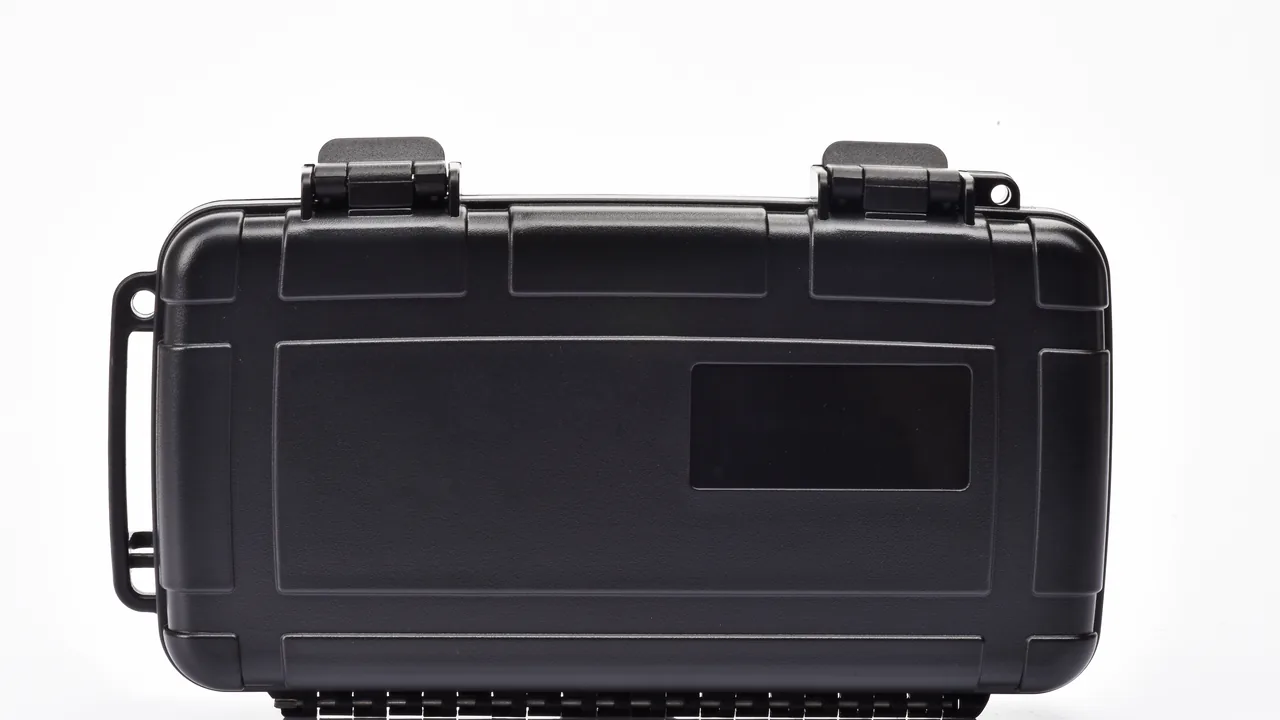
Fertilizer spreaders are core implements on modern farms, used to broadcast granular fertilizer, organic amendments and blended nutrients across fields with speed and uniformity. Their critical spare parts, however, face far more complex damage risks during factory dispatch, dealer transfers and cross-border ocean shipping than ordinary agricultural components. Spinner disc blades stay in long-term contact with chloride- and sulphate-bearing fertilizer granules; metering-valve springs are highly prone to stress corrosion in humid conditions; stainless steel outlets, while inherently corrosion resistant, easily pick up dents and scratches during rough handling; and weighing sensors together with electronic metering modules remain extremely sensitive to moisture and vibration. Approaching the problem from a manufacturer's perspective, JUNZHIJIA has engineered a transport-protection program built around corrosion-resistant liners, compression-resistant structures, IP67 sealing and cushioned compartmentalization, helping OEMs, spare-parts traders and end users drive transit loss to a minimum. The protection logic for spreader spares shares much with the planter and seeder parts cases, the manure spreader parts cases, the irrigation pump cases and the sprayer boom component cases, all organized around the three main lines of corrosion resistance, compression resistance and moisture control, while this article focuses on spinner discs and metering valves with more targeted solutions.
Why Transport Protection Matters for Fertilizer Spreader Parts
After assembly, the spinner discs, metering valves, outlets and sensors of a fertilizer spreader are frequently shipped as loose parts, service kits or repair packages rather than as a complete machine. Unlike a finished implement, these spares lack the integrated protection of the host frame, and their exposed metal surfaces confront moisture, salt spray, compression and jolting directly in transit. Many spare-parts traders report that a batch of spinner disc blades, after road transport through the southern plum-rain season, showed dotted rust at the blade roots the moment the carton was opened. Others have found metering-valve springs with attenuated elasticity on arrival, the cause being prolonged condensation clinging inside the shipping box. The trouble is even greater with sensor-type precision electronics: once dampness induces zero-point drift, the installed spreader delivers severely uneven application rates, and the rework cost far exceeds the price of one protective case. Equipping spreader spares with a dedicated case is therefore not a luxury but a fundamental step in safeguarding delivery pass rate and brand reputation. The same reasoning applies broadly across the agricultural machinery parts cases family, where transport protection is treated as part of product quality rather than packaging afterthought. From a commercial standpoint, the math is compelling: a single rejected spring or ruined sensor can trigger a return shipment, a replacement air-freight and a dealer complaint that costs far more than a properly specified case. For seasonal businesses like spreading, a delayed part can also mean a missed application window, so protection is really about uptime as much as about the hardware itself. JUNZHIJIA therefore treats the case as an extension of the product, engineered against the same duty cycle the spreader will face in the field. It is equally important to recognise that transit damage is often deferred rather than immediate. Rust bloom, fretting wear and insulation degradation do not always announce themselves when the lid comes off; they surface weeks or months later, once the machine is running, at which point responsibility is hard to assign and the warranty cost is high. OEMs that fold spare-parts packaging into their outgoing quality system consistently report lower field failure rates than those that protect only the assembled implement. A spreader spare commonly passes through three to five handling events, two or three transfers and one long-haul leg between the production line and the end user, and every handover is a window of risk. Addressing structure, sealing and cushioning once, at packing, is far cheaper than investigating claims afterwards.
Corrosion Risk on Spinner Disc Blades
The spinner disc is the working heart of a fertilizer spreader, relying on a high-speed rotating plate and blades to cast material evenly across the field. Blades are usually made of carbon steel or stainless steel, often with a sprayed-plastic or galvanized surface. The problem is that fertilizer dust rich in nitrogen, potassium and chlorine readily remains trapped in the gaps of the disc after operation. If this residue is not thoroughly cleaned before packing, it forms localized electrolytes inside the closed transport case when humidity rises, triggering crevice corrosion. Especially inside ocean containers, the day-night temperature swing produces persistent condensation that wets the blade-root welds and rivets, allowing corrosion to develop rapidly within weeks. Ordinary cartons or wooden boxes cannot block water vapor and may even accelerate rust by absorbing moisture. JUNZHIJIA recommends cleaning and oil-sealing the blades before shipment, then placing them in individually compartmented cases with corrosion-resistant liners to cut the corrosion chain at its source. In orchard equipment transport, the orchard sprayer parts cases adopt the same compartment isolation to deal with chemical-agent residue, and the approach is highly consistent with the spinner-blade treatment here, all emphasizing a progressive protection of clean first, isolate second and seal third. For bulk spares with many blades, a multi-layer foam grid can raise loading density without increasing case volume, balancing protection with logistics economy. Blade material also dictates different treatment. On a galvanized blade, once the coating is scratched the zinc and the carbon-steel substrate form a galvanic couple and corrosion proceeds faster than on bare steel, so such blades must occupy separate cavities and never be stacked against one another. A stainless blade resists bulk corrosion, yet the passive film in the weld heat-affected zone is thinner, and pitting can still occur after coastal storage, which is why VCI paper coverage remains worthwhile. JUNZHIJIA normally recommends a non-woven separator between blades: it prevents direct metal-to-metal contact and absorbs surface moisture at negligible cost. Blades are also balanced before dispatch, and an impact that distorts one will destroy that balance, causing disc vibration and shortening bearing life once installed, so each cavity must follow the blade contour and leave no freedom to shift.
Failure Modes of Metering-Valve Springs
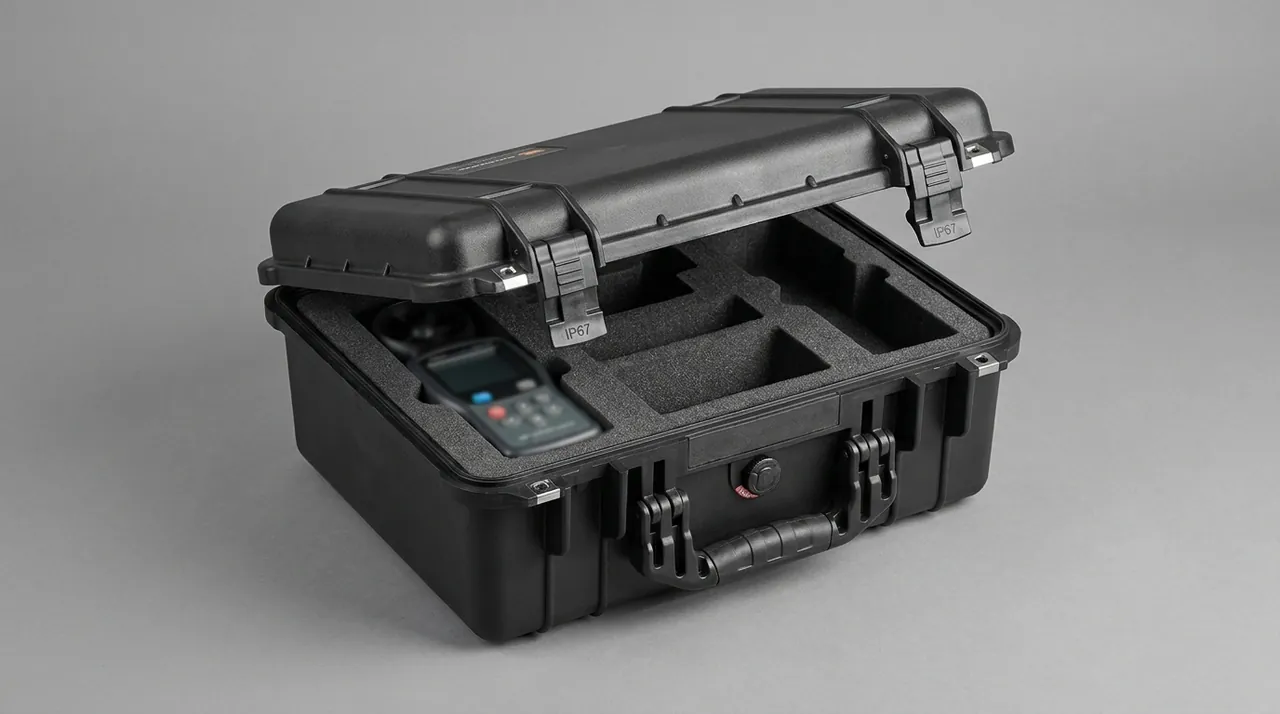
The metering valve governs the discharge rate of a spreader, and its core actuator is a set of high-precision compression and return springs. With thin wire diameter and evident stress concentration, spring steel is extremely susceptible to stress-corrosion cracking in salt-spray and condensation environments; even without visible rust spots, its elastic modulus may quietly decline. A more hidden risk comes from transit vibration: if a spring collides directly with the hard case wall, fretting wear develops between coils, and on arrival a bench test reveals weak rebound. JUNZHIJIA cases use independent tubular locating slots wrapped in soft foam to isolate and fix each spring, preventing mutual friction and axial movement, while the low-humidity interior markedly lowers electrochemical corrosion probability. During the design stage, engineers also evaluate the natural frequency of the spring assembly against the expected transport vibration spectrum so that resonance bands are avoided, a discipline shared with the sensor transport cases where fragile elements must survive random road input. The combination of physical isolation and environmental control is what keeps delivered springs performing within specification. One practical caution: spring assemblies are often shipped pre-compressed and retained with a tie, and that pre-load should not be released to save space. At free length the coils contact over a smaller area, the assembly swings more freely, and impact or misalignment becomes more likely. JUNZHIJIA therefore machines a tie channel and an end stop into the liner so the spring pack, complete with its bracket, seats as one rigid unit and the bracket cannot bend. Stainless springs should also be kept away from galvanized parts, because the two metals form a potential difference in damp air that accelerates attack on the less noble side. Different materials are accordingly given separate cavities, and the liner is marked with material and orientation so field staff can reinstate parts exactly as they were packed.
Impact and Scratch Risks for Stainless Outlets
Stainless steel outlets are themselves corrosion resistant, yet that does not mean they can travel unpacked. Outlets are mostly thin-wall drawn or welded structures with sharp edges and tight geometric tolerances; a collision with other metal parts during handling leaves dents and scratches at best and flange-face deformation with seal failure at worst. Moreover, if the polished inner wall of an outlet is finely scored by trapped grit under compression, those micro-grooves become starting points for material buildup and caking during long-term use, undermining discharge uniformity. JUNZHIJIA builds custom-shaped foam cavities for the outlet so it hangs fixed at the case center with cushioning clearance on every side. Even if the case suffers a short forklift impact, the energy is absorbed by the foam and the geometric accuracy of the outlet is fully preserved. This principle is echoed in the precision instrument cases, where suspended mounting rather than surface contact is the rule for anything with a critical dimension. Outlet adjusters, gates and handwheels usually ship separately from the body, and if these loose items rattle inside the cavity they will strike the polished bore. JUNZHIJIA gathers the adjustment hardware into a separate soft-lined pocket held down by an elastic strap so the kinematic parts stay motionless in transit. On a flanged outlet, the bolt-hole pattern is itself a datum that deserves protection, so the cavity suspends the flange face upward rather than letting the hole edges take the load, which is what allows the outlet to align cleanly at assembly. Experience shows that once a thin-wall outlet develops ovality, field correction is practically impossible and the part is simply replaced, so fixation accuracy in transit effectively determines assembly efficiency at the other end.
Moisture Threats to Sensors and Electronic Modules
Modern spreaders commonly carry load cells, speed sensors and flow-metering modules, and these electronics demand a far stricter transit environment than mechanical parts. Once a strain gauge or signal connector gets damp, insulation resistance drops and the unit shows reading jumps or even locks up after installation; circuit boards in metering modules, if kept in high humidity for long, suffer migratory corrosion at solder joints. Ordinary shipping boxes can see interior relative humidity rise above ninety percent during the rainy season or ocean voyage, enough to cause irreversible damage. JUNZHIJIA cases fit the electronics compartment with a desiccant bay and humidity indicator card, and together with IP67 sealing keep the interior relative humidity within a safe band so sensors are ready to install on opening. In the sensor transport cases program, the same desiccant-plus-indicator method is standard, and antistatic foam can be added for electrostatic-sensitive items so the whole package meets precision-electronics handling rules. Static, not only moisture, is an unseen threat: in dry conditions foam and plastic rubbing together can generate thousands of volts, enough to puncture a sensor signal chip, and this class of failure rarely shows up during incoming inspection, appearing only after installation. JUNZHIJIA therefore specifies antistatic foam in electronics cavities and bonds the cavity to a metal insert so charge has a path to drain. Cables on connectorised sensors are coiled and restrained instead of being left to hang, which prevents connector deformation under load. Where calibration reference is required, a separate dry, clean cavity can hold the shim so it never sits against metal parts and drifts.
Stacking Pressure and Vibration in Transit
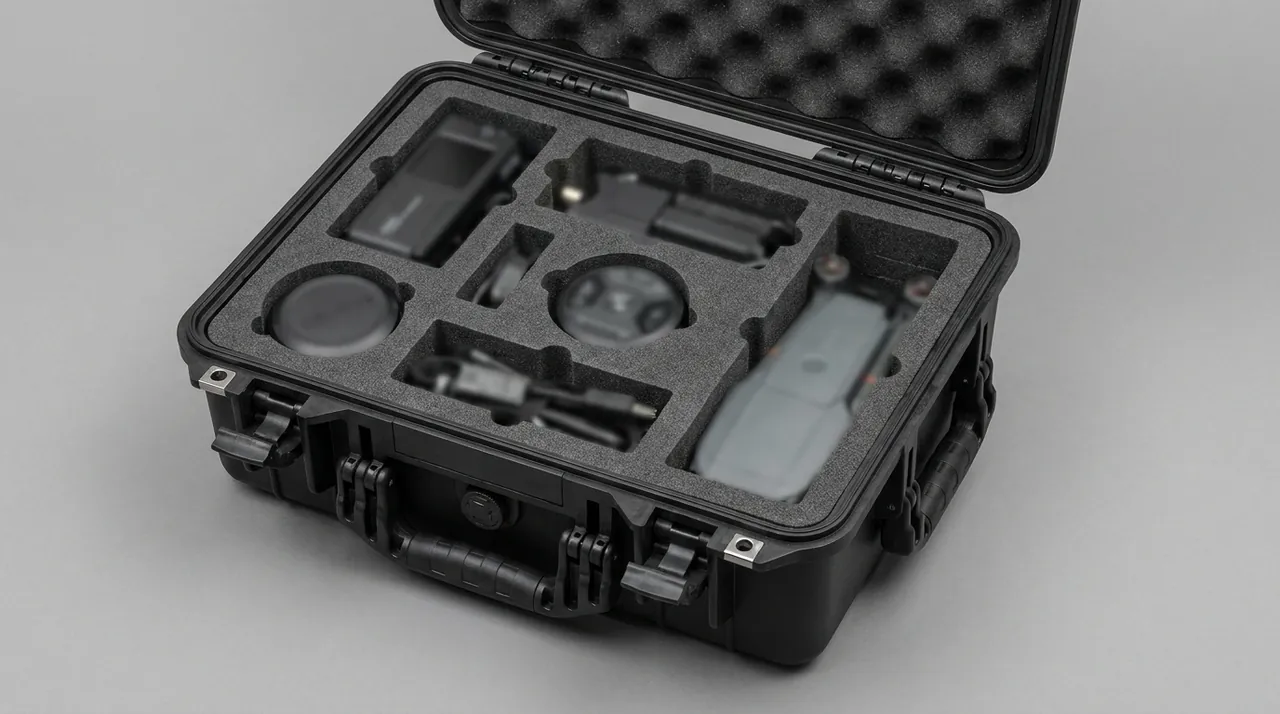
Spreader spares rarely travel alone; they usually enter containers, trucks or warehouse racks as stacked batches. The bottom case must bear the weight of several cases above, and without enough compression resistance the shell collapses inward onto the contents. At the same time, random road vibration, railway transfer shock and the instantaneous acceleration of port lifting all transmit through the case to the precision parts. JUNZHIJIA sets reinforcing ribs and support columns at the four walls and corners to raise overall stack-load capacity; the internal compartment structure itself acts as internal bracing, distributing load evenly and avoiding local crush. The compression and stacking philosophy is consistent with the requirements of heavy-duty cases. In real logistics the cases often ride on pallets as a whole, so JUNZHIJIA also designs case length-to-width ratios around the customer's pallet size, making single-pallet stacking neat and symmetric to reduce side-tilt and drop risk from eccentric loading. This system view from single-case compression to whole-pallet stability is exactly where a manufacturer's perspective differs from simply selling a box. Vibration control also has to consider resonance. Every combination of part and liner has a natural frequency, and when the excitation frequency of the transport vehicle approaches it the amplitude is amplified several times over, so a part can fatigue through repeated flexing even if the shell arrives intact. JUNZHIJIA uses sweep testing on a vibration table during the design phase to locate the weak bands, then flattens the resonance peak by adjusting foam hardness and adding a damping layer. A large, thin component such as a spinner disc normally needs a centre support column so it cannot rise and fall like a drumhead. These measures look minor individually, yet together they determine the dimensional stability of the part after a long haul.
Corrosion-Resistant Liner Design
Targeting the corrosion susceptibility of spreader spares, JUNZHIJIA adopts corrosion-resistant composite liners inside the case, typically a combination of modified engineering-plastic inner tray, EVA cushion layer and vapor-phase inhibitor paper. The plastic tray neither absorbs moisture nor reacts with fertilizer residue, isolating metal parts from the case environment at the source; the EVA layer supplies elastic buffering; the VCI paper slowly releases corrosion inhibitors in the closed space, forming a molecular-level protection film on the spares. This multi-layer liner solves both the blade corrosion problem and the spring anti-wear need, and the principle is aligned with the design concept of corrosion-resistant enclosures. When selecting materials, JUNZHIJIA weighs the acid-alkali tendency of the fertilizer residue: for acidic compound-fertilizer spares the inner tray prefers acid-resistant modified engineering plastic, while for alkaline lime-material spares sealing and drying are strengthened. This media-specific customization lets one case adapt to spares from different spreader models, raising the versatility and turnaround efficiency of service kits. Cleanliness of the liner itself also matters. If the liner material contains plasticisers or sulphides, it will slowly outgas in a hot, closed environment and react with metal surfaces, producing the phenomenon known as plastic-induced rusting. The engineering plastic and EVA JUNZHIJIA uses are screened for volatile emissions so that no corrosive species are released after ageing at seventy degrees Celsius. For returnable cases used repeatedly, JUNZHIJIA advises checking the liner surface for adsorbed fertilizer dust after every recovery cycle, washing with clean water where necessary and drying it thoroughly before the next trip, so residue never accumulates into a persistent corrosion source.
Compression-Resistant Structure and Reinforcing Ribs
Cases stay under load throughout the transport chain, so JUNZHIJIA uses thickened walls and a grid of reinforcing ribs to boost rigidity. Ribs run along the main force directions of the shell, spreading external pressure across the whole surface and avoiding stress concentration at a single corner. For scenarios carrying heavier stainless outlets and spinner discs, load-bearing cross members can be added at the case bottom to markedly raise single-case stack load. After structural simulation and physical stack testing, shell deflection under rated stack height stays within an acceptable range and the interior spares are never compressed. This structural thinking also serves other heavy agricultural spares, and readers can contrast it with the overall scheme of agricultural machinery parts cases. Importantly, ribs are integrated during molding rather than glued on, so they cannot delaminate under repeated impact, a detail that separates durable cases from decorative ones. Stack strength is temperature dependent as well: inside a summer container the air can exceed sixty degrees Celsius, at which point the modulus of the engineering plastic falls and real load capacity drops twenty to thirty percent below the ambient test figure. JUNZHIJIA applies its safety factor at the worst-case temperature rather than estimating from room-temperature data. A constant load also induces creep, with deflection accumulating slowly over time, so for orders that will sit in storage for months JUNZHIJIA recommends reducing pallet height or adding interlayer boards, weighing instantaneous strength and long-term stability together so a case does not slowly settle after a season on the rack.
IP67 Sealing Against Humidity
Moisture is the greatest enemy of spreader electronics and springs, and JUNZHIJIA cases come standard with IP67 sealing: a food-grade silicone gasket around the lid, pressed by latch closures, keeps the whole case watertight under short immersion and high-pressure washing. For high-humidity scenarios such as cross-border ocean shipping and outdoor storage, the seal blocks salt spray and rain, fundamentally suppressing the formation of condensation. It must be stressed that sealing performance depends on gasket material and assembly workmanship; JUNZHIJIA chooses food-grade silicone and strictly controls the molding gap so every case meets the design grade. For the meaning of the rating, see the IP67 protective case selection guide and the IP67 versus IP65 junction box comparison. JUNZHIJIA can also provide different seal grades by transport mode: domestic road spares may use IP65 to cut cost, while export ocean orders always come standard with IP67, matching protection spend to risk level so customers never overpay for unnecessary grade nor downgrade at a critical point. Pressure equalisation is another easily overlooked detail. A fully sealed case carried from low-altitude plains to a plateau, or simply through a day-night temperature swing at sea, develops a pressure differential that can draw moist air in the instant the lid is opened. For long-haul or cross-climate orders JUNZHIJIA can fit a breathable waterproof membrane valve that admits gas slowly while blocking liquid water and dust, releasing the differential gently. For short domestic transfers, a customer who prefers no additional port can instead tune gasket compression to leave a minimal breathing path. The right choice depends on the specific route and destination, and JUNZHIJIA engineers include a recommendation alongside the quotation.
EVA Cushioning and Compartmentalized Layout
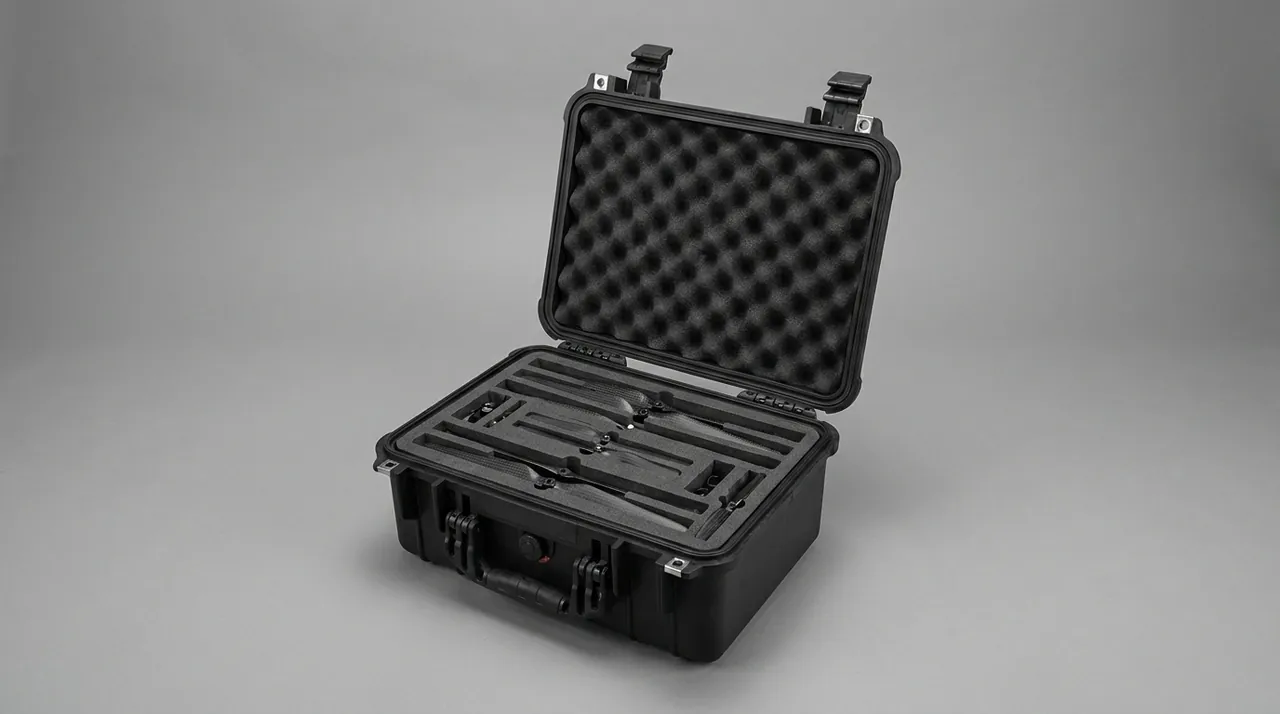
Compartmentalization and cushioning are the core of precision spare transport. Based on the three-dimensional drawings provided by the customer, JUNZHIJIA uses CNC routing or thermoforming to make EVA liners, cutting custom cavities for spinner blades, metering valves and sensors so each part hangs fixed and does not touch another. The compartment design prevents inter-part collision and also makes packing and counting efficient; when a repair kit is delivered the user confirms completeness at a glance. EVA itself has good resilience and creep resistance, recovering shape under long stacking, making it the preferred buffer for agricultural spare transport. The related custom process is described in the EVA foam insert custom process and the foam insert case notes. Before tooling, JUNZHIJIA builds a part model from 3D scan or customer drawings and simulates displacement under transport shock, deciding foam hardness and cavity clearance so the part never touches the wall even in the worst attitude, a simulation step that markedly lowers trial-fit rework. Clearance values have to be matched to the part: a rigid component tolerates a tighter gap that limits travel, whereas a flexible or thin-wall part needs a more generous allowance so the foam's own compression force cannot deform it. JUNZHIJIA generally holds clearance between two and five percent of the part's largest dimension and verifies it by physical trial. For service kits opened and closed frequently, the cavity edge carries a finger cut-out or pull tab so a technician can lift the part out without a tool, avoiding the screwdriver prying that scratches both liner and component.
VCI Paper and Desiccant Combination
Sealing alone is insufficient for extreme humidity, so JUNZHIJIA offers VCI paper plus silica desiccant as an option. The VCI paper releases inhibitors that evenly cover metal surfaces in the closed space, especially effective for stress-sensitive spring steel; the desiccant actively absorbs residual moisture, and together they push the interior dew point even lower. For spares in long-term storage or cross-equator ocean shipping, this combination drives rust risk to a very low level. Note that desiccant has an absorption ceiling, so before long-haul transport the quantity should be set by voyage length, with replacement or addition as needed. The corrosion-resistant packaging thinking also references corrosion-resistant enclosures and salt-spray test requirements, ensuring the liner system is validated against the same environmental benchmarks used for the metal parts themselves. In practice JUNZHIJIA batches desiccant by climate route and by case volume, so a small sensor-only pouch is not over-engineered with industrial quantities of silica, while a full disc-and-valve kit bound for a tropical port receives proportionally more. This graduated approach keeps unit cost predictable and avoids the failure mode of under-protection that appears only after a claim, a balance that experienced spare-parts managers quickly learn to value when comparing quotes that look similar on paper but differ sharply in real-world performance. VCI paper works over a limited distance, roughly thirty centimetres, so a large case needs several placements rather than a single sheet in one corner, and an interlayer sheet between stacked levels helps the inhibitor reach every cavity evenly. Compatibility also varies by metal: copper, copper alloys and zinc coatings require multi-metal grades, because amine-based formulations can attack non-ferrous surfaces. JUNZHIJIA selects the grade to suit the material mix in the kit and prints the consumable replacement interval on the packing list so long-term storage is maintained on a fixed schedule.
Custom Sizing and Part-Fixation Solutions
Spreader spares come in many sizes, and standard cases often fail to fit perfectly. JUNZHIJIA provides a full chain from sizing design to molding: engineers first plan the compartment layout from the parts list and assembly relationship, then make a sample case for customer trial fitting, and only after confirmation move to batch production. For outlets with long shafts or odd-shaped discs, JUNZHIJIA can design adjustable locating blocks and strap fixation to stop parts sliding inside the cavity. The custom plan balances protection with space utilization so one case holds more SKUs and lowers logistics cost. Users wanting the full picture can refer to the OEM custom protective cases collaboration model and the custom foam inserts service note. JUNZHIJIA supports the whole cycle from low-volume trial to high-volume delivery and can build a dedicated spare-protection archive for long-term clients, letting repeat orders be called up directly without repeated prototyping time and expense. The archive also records the exact foam density and cavity geometry used, so a future engineering change to the spreader can be reflected in the liner with minimal rework, keeping the case in step with the product through its whole service life rather than becoming obsolete at the first design revision. On cost, JUNZHIJIA offers tiered solutions: heavy, geometrically simple items such as discs and outlets can use die-cut foam with dividers, while high-precision valves and sensors get fully routed EVA with an antistatic layer. Because each part in one order is protected according to its own risk level, total packaging cost typically falls by ten to twenty percent while the critical items keep the highest grade. JUNZHIJIA can also bundle maintenance tools and wear parts into a field service kit, colour-coded and labelled by model, which simplifies both dealer inventory management and job-site retrieval.
Ocean Freight and Warehouse Humidity Control
Export spreader spares often endure dozens of days at sea, and the container interior experiences significant temperature-humidity cycling across the voyage; the day-night difference induces condensation, the main cause of rust. JUNZHIJIA recommends placing sufficient desiccant and a humidity indicator card in export orders, so on arrival the card color shows at once whether moisture ever entered. Meanwhile the case exterior should resist ultraviolet light and salt spray for deck stacking or port open-air staging. For the shipping scenario, further read the outdoor case sea-freight guide and the export packaging compliance guide to protect parts while meeting destination-country customs requirements. JUNZHIJIA also adjusts desiccant ratio by destination climate belt in export orders: equatorial high-heat-high-humidity destinations get extra desiccant, while dry-cold regions get a moderate reduction to control cost, a calibrated rather than one-size approach. Salt spray deserves equal attention. Where a container is stacked on deck and the case exterior is under-specified, salt attack accelerates corrosion of latches and hinges, degrading both the opening feel and the gasket compression that sealing depends on. JUNZHIJIA therefore specifies stainless or passivated hardware for export orders and validates it with salt-spray testing before assembly. Where a consignment will sit in open port storage for a while, an outer cover or a raised pallet keeps the case base out of standing water and mud, simple measures that noticeably extend how many trips a case can make.
Loading, Stacking and Handling Precautions
Even with a quality case, wrong loading still causes loss. JUNZHIJIA advises: before packing, confirm spares are cleaned, oil-sealed and fully cooled; each part must sit in its cavity, never loosely stacked; when stacking multiple cases align them with the reinforcing-rib direction to avoid eccentric loading; when using a forklift insert both forks evenly and never lift with a single fork. In transit avoid mixing with strong-acid or strong-alkali cargo to prevent vapor attacking seals. For electrostatic-sensitive sensors, antistatic foam can be added inside the liner, and the relevant precision-electronics protection can be cross-checked with the sensor transport cases program and the precision instrument cases guidelines. JUNZHIJIA also suggests attaching a parts list and moisture-tip card inside the lid so warehouse and field staff identify contents quickly and avoid mistaken opening that lets humidity in. A few handling details are regularly overlooked. Forklift operators should keep lift height moderate, since a case raised too high may topple with serious consequences. Loading in rain requires a canopy or tarpaulin, otherwise water can briefly enter past the latch line. A case should never be inverted or laid on its side, because that transfers to the cushioning foam a load the structure was designed to carry. For larger cases that must be craned, JUNZHIJIA can mould lifting points into the corners with load markings, so slings do not crush the walls. In mixed loads, confirm the weight and centre of gravity of each case first: heavy cases low and near the axle, light cases above and strapped down, which limits the mutual impact caused by load shift on the road.
Acceptance Criteria and Receiving Inspection
Receiving is the last link of the protection chain. JUNZHIJIA suggests recording the humidity indicator card state first on opening, then checking each spare's appearance and quantity. For spinner blades, focus on welds and roots for rust spots; for metering springs, a simple compression test confirms rebound; for sensors, measure insulation resistance and record the initial reading. If seal failure or liner damage is found, photograph and retain evidence and contact the supplier promptly. JUNZHIJIA performs water-ingress and stack sampling on outgoing cases to keep delivery quality stable, and users can self-verify sealing by the IP67 certification verification method, gaining the initiative in batch acceptance. A short incoming checklist laminated to the lid helps new receivers apply the same standard every time, reducing human error at the busiest unloading moment. Acceptance criteria should ideally be written into the purchase contract or the shipping documents in advance, stating the permitted colour change on the humidity indicator card, the maximum allowable shell deflection and the acceptable cosmetic grade for the spares, so neither side has to argue from memory after delivery. On larger orders, sampling beats full inspection: open a random selection of cases per batch for verification and deliver the rest still sealed to the user. JUNZHIJIA also recommends keeping a photographic record by batch, capturing case exterior, indicator card and part condition, so that if a quality dispute does arise later the evidence can be compared and traced quickly. In years of agricultural spare-parts supply this practice has repeatedly shortened claim resolution from weeks to days.
JUNZHIJIA Manufacturing Capability and Custom Process
JUNZHIJIA, manufactured by Kexin New Materials (Guangdong) Co., Ltd., has long focused on custom production of IP67 waterproof cases, EVA foam cases, precision-instrument cases and heavy-equipment cases. For fertilizer spreader spares, JUNZHIJIA has formed a standard workflow from risk analysis, structural design and liner tooling to batch delivery, and can provide salt-spray test reports and transport-vibration test data on request. Whether it is an OEM companion spare kit or a trader's repair set, JUNZHIJIA delivers an integrated plan that balances protection, cost and efficiency from a manufacturer's perspective. To evaluate specific spare packaging needs, plan together with the agricultural machinery parts cases and related spreader-equipment protection articles; JUNZHIJIA engineers also provide a risk self-check list at first contact to help clients locate the most critical protection pain points quickly. Years of accumulated experience in agricultural spares let JUNZHIJIA propose differentiated protection combinations for different fertilizer types and transport radii, so every case spends its budget exactly where it is needed. The company also maintains a reference library of spreader geometries, so a new variant of an existing model is usually a liner revision rather than a ground-up project, and the customer keeps the tooling record for future repeat runs. Salt-spray reports, water-ingress records and transport-vibration data are available on request, giving procurement teams the documentation they need for internal approval and for customs or customer audits in export markets.
Frequently Asked Questions
Q: Why do spinner disc blades rust so easily in transport? A: Spinner disc blades rust easily because their working environment is inherently corrosive. During operation, fertilizer granules rich in nitrogen, potassium and chlorine remain trapped in the disc gaps. If this residue is not thoroughly cleaned before packing, it forms localized electrolytes inside the closed transport case when humidity rises, triggering crevice corrosion. Added to this, the day-night temperature swing on road or sea voyages produces condensation that wets the blade-root welds and rivets for long periods, letting rust develop within weeks. Ordinary cartons and wooden boxes not only fail to block water vapor but actually accelerate metal corrosion by absorbing moisture. The correct approach is to clean and oil-seal the blades before shipment and place them in a dedicated case with a corrosion-resistant liner and desiccant, cutting the corrosion chain at its source rather than relying on the blade's own coating to survive a damp box. Material choice changes the risk profile further. On galvanized blades a scratch exposes a zinc-to-steel couple and corrosion runs faster than on bare steel, so such blades need separate cavities and must never be stacked face to face. Stainless blades resist bulk rust but their weld heat-affected zones have a thinner passive film and can pit after coastal storage, which is why VCI paper coverage is still worthwhile. A non-woven separator between blades is a cheap addition that stops metal-to-metal contact and absorbs surface moisture, and because blades are balanced before dispatch, any impact that distorts one will also destroy its balance.
Q: What hidden damage can metering-valve springs suffer in transit? A: Metering-valve springs are among the most transit-sensitive parts of a spreader, and their hidden damage falls into three types. First is stress corrosion: with thin wire and evident stress concentration, spring steel quietly loses elastic modulus in salt spray and condensation even without visible rust. Second is fretting wear: if a spring collides with the hard case wall, friction between coils develops and on arrival the bench test reveals weak rebound. Third is plastic deformation: if the case lacks compression resistance and is crushed by stacking, the spring is flattened and loses its free length. JUNZHIJIA isolates and fixes each spring in an independent tubular slot wrapped in soft foam, and the low-humidity interior markedly lowers all three risks, ensuring delivered springs perform within specification and install without surprise rework on the assembly line. One further caution concerns pre-loaded assemblies, which are normally shipped compressed and held by a tie. Releasing that pre-load to save space is a mistake: at free length the coils contact over a smaller area and the pack swings more freely, so impact or misalignment becomes more likely. JUNZHIJIA machines a tie channel and an end stop into the liner instead. Stainless springs should also stay clear of galvanized parts, since the two metals form a potential difference in damp air.
Q: Do stainless steel outlets really need a dedicated case? A: Many users assume stainless steel is corrosion resistant so the outlet can travel unpacked, but this view is mistaken. Stainless outlets are mostly thin-wall drawn or welded structures with sharp edges and tight tolerances; colliding with other metal during rough handling leaves dents and scratches, and in severe cases the flange face deforms and seals poorly. Furthermore, if the polished inner wall is finely scored by trapped grit under compression, those micro-grooves become starting points for material buildup during use, undermining discharge uniformity. JUNZHIJIA builds a custom-shaped foam cavity that suspends the outlet at the case center with cushioning clearance on every side, so even a short forklift impact is absorbed by foam and the geometry is fully preserved. A professional case is therefore necessary for stainless parts as well, protecting both appearance and functional accuracy through the whole logistics chain. Two further points are easy to miss. Adjusters, gates and handwheels usually ship separately from the body, and if they rattle loose inside the cavity they will strike the polished bore, so JUNZHIJIA gathers them into a soft-lined pocket held by an elastic strap. On flanged outlets the bolt-hole pattern is a datum in its own right, and suspending the flange face upward keeps the hole edges free of load so alignment at assembly stays clean.
Q: How are sensors and metering modules kept from getting damp? A: Sensors and electronic metering modules are extremely humidity sensitive; once damp, strain-gauge insulation resistance drops and the unit shows reading jumps or locks up, while circuit solder joints suffer migratory corrosion. Ordinary boxes can see interior relative humidity exceed ninety percent in rainy season or ocean transit, enough for irreversible damage. JUNZHIJIA fits the electronics compartment with a desiccant bay and humidity indicator card, and with IP67 sealing keeps the interior relative humidity within a safe band; the card color on arrival shows at once whether moisture ever entered. For electrostatic-sensitive items, antistatic foam can be added to the liner. The whole approach matches precision-instrument protection rules, ensuring sensors are ready to install the moment the case is opened rather than requiring a drying and recalibration step that delays the season. Static deserves as much attention as moisture. In dry conditions foam and plastic rubbing together can generate thousands of volts, enough to puncture a sensor signal chip, and this class of failure usually passes incoming inspection and appears only after installation. JUNZHIJIA therefore specifies antistatic foam in electronics cavities and bonds the cavity to a metal insert so charge has a drain path. Cables on connectorised sensors are coiled and restrained rather than left hanging, which prevents connector deformation under load.
Q: What practical value does IP67 sealing add for spreader spares? A: IP67 sealing matters because it cuts off the path of humidity and salt spray. A food-grade silicone gasket around the lid, pressed by latch closures, keeps the case watertight under short immersion and high-pressure washing. For high-humidity ocean shipping and outdoor storage, the seal blocks salt spray and rain, fundamentally suppressing condensation formation. Sealing performance depends on gasket material and assembly workmanship, so JUNZHIJIA uses food-grade silicone and controls the molding gap strictly. Users can self-verify by water-ingress testing referenced in the IP67 certification verification guide, and can compare the IP67 versus IP65 junction box article to understand why the higher grade is specified for export spreader spares where the cost premium is justified by avoided rust claims. Two refinements are worth knowing. First, pressure equalisation: a fully sealed case carried from low-altitude plains to a plateau, or simply through a day-night temperature swing at sea, builds a differential that can draw moist air in the instant the lid opens, and a breathable waterproof membrane valve releases it gently while still blocking liquid water and dust. Second, gasket compression must be set so it stays effective across the temperature range the case will actually see, not only at room temperature.
Q: Can several different spare types ship in one case? A: Yes, and JUNZHIJIA achieves multi-SKU shipping in one case precisely through compartmentalization. Engineers plan the liner layout from the parts list, cutting custom cavities for blades, valves, outlets and sensors so each part hangs fixed and does not touch another, preventing collision while easing counting. Mixed shipping raises single-case loading rate and lowers logistics cost, provided the layout is sensible: heavy parts at the bottom, precision parts on top with extra cushioning. JUNZHIJIA makes a sample case for trial fitting before batch production, ensuring mixed loading still meets protection standards. The OEM custom protective cases collaboration model describes how such multi-part kits are scoped, tooled and delivered without compromising any individual component's safety in the shared environment. Clearance values must be matched to each part as well. A rigid component tolerates a tighter gap that limits travel, whereas a flexible or thin-wall part needs a more generous allowance so the foam's own compression force cannot deform it; JUNZHIJIA generally works between two and five percent of the part's largest dimension and verifies the result by physical trial. For kits opened and closed often, the cavity edge carries a finger cut-out or pull tab so a technician can lift parts out without a tool, avoiding the screwdriver prying that scratches both liner and component. A parts list and colour-coded labels further speed counting at the dealer counter.
Q: What if the desiccant runs out on a long ocean voyage? A: A long ocean voyage across dozens of days brings intense temperature-humidity cycling, and desiccant does have an absorption ceiling. JUNZHIJIA recommends estimating moisture load by voyage length, adding sufficient silica desiccant at packing and placing a humidity indicator card; on arrival the card color shows whether replacement is needed. For equatorial routes, overlay VCI paper whose inhibitor molecules evenly coat metal surfaces, especially effective for spring steel. If the voyage exceeds desiccant capacity, ventilate and replenish at a transit port or on arrival. The corrosion-resistant enclosure and salt-spray test requirements offer benchmarking for liner systems, so the desiccant plan is validated against the same environmental standards applied to the metal parts rather than guessed from generic rules. Placement matters as much as quantity. VCI paper works over a limited distance of roughly thirty centimetres, so a large case needs several sheets rather than one in a corner, and an interlayer sheet between stacked levels helps the inhibitor reach every cavity evenly. Compatibility varies by metal too: copper, copper alloys and zinc coatings require multi-metal grades, because amine-based formulations can attack non-ferrous surfaces. JUNZHIJIA selects the grade to suit the material mix and prints the consumable replacement interval on the packing list, so long-term storage stays on a fixed maintenance schedule.
Q: How do I judge whether a delivered case is qualified? A: Start by inspecting the outer case for broken latches, hinges or obvious dents, then open it and read the humidity indicator card; if it has changed color, moisture entered and electronics and springs need close checking. Next verify each spare's appearance and quantity: look for rust at blade welds, compression-test metering springs for rebound, and measure sensor insulation resistance while recording the initial reading. Photograph and retain evidence if seal failure or liner damage appears. JUNZHIJIA performs outgoing water-ingress and stack sampling, and you can re-test sealing by the IP67 certification verification method. Acceptance criteria should ideally be written into the purchase contract in advance, stating the permitted colour change on the indicator card, the maximum allowable shell deflection and the acceptable cosmetic grade for the spares, so neither side has to argue from memory after delivery. On larger orders, sampling beats full inspection: open a random selection per batch and deliver the rest still sealed. Keeping a photographic record by batch lets any later dispute be traced quickly. Related reading: IP67 protective case, sensor transport cases, agricultural machinery parts cases.