

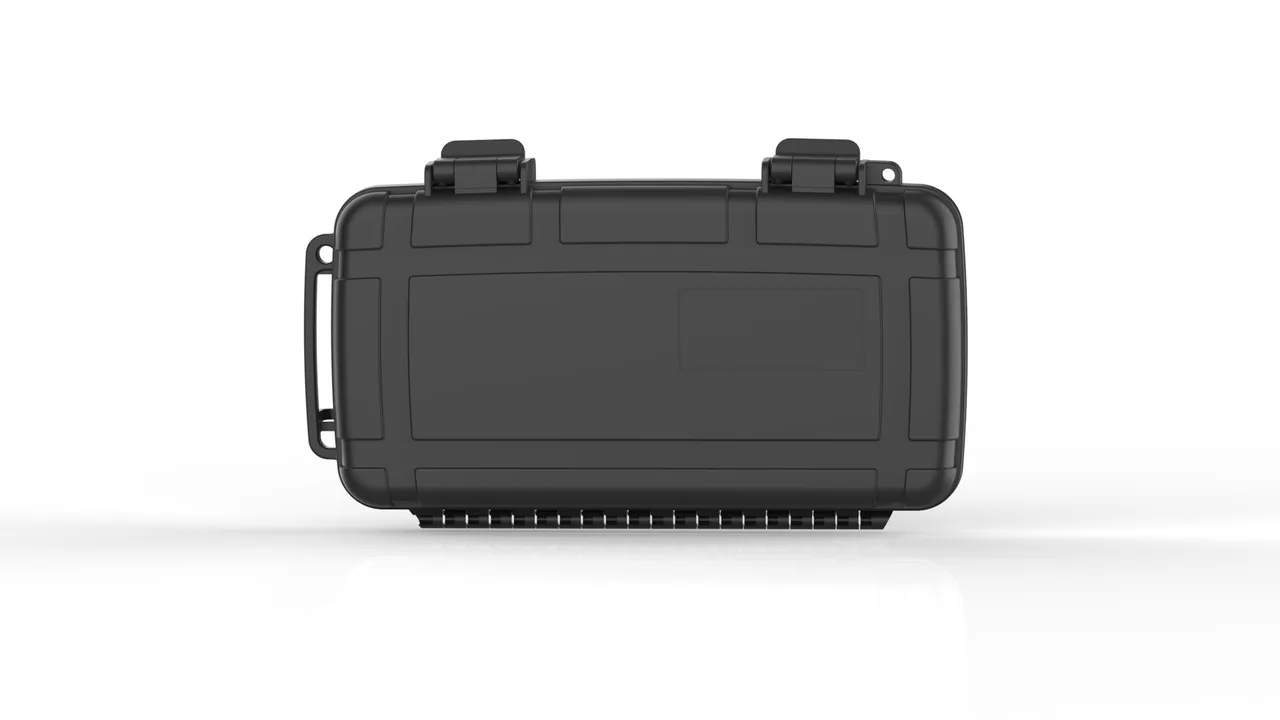
Across modern agriculture, hillside orchards and large-scale farms, the centrifugal pump and the sprinkler unit are among the most frequently relocated, seasonally stored and cross-border exported pieces of equipment. Whether it is a complete pump station, a mobile sprinkler cart, or a split set of motor, control box and nozzle assemblies, every one of these components faces a combination of vibration, impact, moisture and dust during long-haul transport and on-site handling. As a protective-case manufacturer, JUNZHIJIA (legal maker: Kexin New Materials (Guangdong) Co., Ltd.) has served pump, agricultural-machinery and control-equipment plants for years on both in-plant circulation and overseas export. Written from the maker's perspective, this article systematically reviews the failure mechanisms of impeller dynamic balance, mechanical-seal faces, fragile sprinkler nozzles and control-box electronics during transit, then presents the corresponding protective-case solutions.
From a whole-life cost view, a well-designed case usually pays for itself on the very first relocation. The cost of an emergency pump-station repair in the field, the downtime lost while an impeller is re-balanced, and the material cost of replacing oxidised terminals all far exceed the price of the case itself. When a unit is relocated seasonally and across regions, a reusable plastic shell also spreads its cost over many trips, widening the gap against a single-use wooden crate that is discarded after arrival. This is why more and more agricultural-machinery distributors now list a protective case as standard equipment shipped with the pump rather than an optional extra.
Why Irrigation Pumps Need a Dedicated Transport Case
A centrifugal pump or sprinkler unit is not simply a heavy casting of iron or steel. Inside, it carries rotating parts that are highly sensitive to balance and fit accuracy, sealing interfaces that demand extreme surface finish, and electrical elements that are extremely sensitive to humidity. Ordinary wooden crates or simple foam wrapping often allow movement caused by poor fixation, then suffer drops and compression during repeated loading, and finally absorb moisture and rust in a shipping container or open storage yard. A purpose-built irrigation pump case must simultaneously achieve separated compartments, cushioning, IP67 waterproofing and scratch-proof lining. This is a natural extension of the precision-instrument case design logic. The logistics profile also varies with unit form. A complete pump station is normally lifted and pallet-stacked as one case, so impacts concentrate at the base and lifting points; a mobile sprinkler cart carries its own wheels and drawbar and tends to roll and yaw in transit, needing extra wheel grooves and a drawbar cradle; split export sets travel as multiple cases in one container, where case-to-case compression and rubbing become the dominant damage source. JUNZHIJIA confirms the logistics profile during scheme review, then decides shell wall thickness, liner density and bracket configuration, rather than forcing one structure to serve every scenario. For broader agricultural-machinery protection ideas, see Agricultural Machinery Parts Case and Agriculture Spray Equipment Case.
A well-designed case does more than simply "put the equipment inside". It resolves the vibration, humidity, dust and human handling errors of transit one by one through structure and material, so the unit arrives ready to put into service immediately. For an irrigation contractor, that means no on-site impeller re-balancing, no seal replacement, no control-box drying and no nozzle unclogging before the season starts. The case is therefore not a packing cost but a part of the equipment's delivered quality, protecting the maker's reputation as much as the steel itself.
Transport Risk to Centrifugal Impeller Dynamic Balance
The core of a centrifugal pump lies in the dynamic balance of its impeller. Before leaving the factory, the impeller is carefully corrected so that residual unbalance stays within a very small tolerance, ensuring smooth, low-noise running at high speed. Yet the bumps, tilts and drop shocks of transport can make the impeller strike the case wall or other parts, causing local blade deformation or loss of balancing weight. A more hidden risk is the tiny displacement of the shaft bore under side load: invisible in the warehouse, it later appears as abnormal vibration, early bearing wear or even shaft breakage. Therefore the case must give the impeller an isolated, suspended cradle so impact energy is absorbed by the liner rather than transferred to the impeller itself.
In JUNZHIJIA's project experience, impeller damage rarely comes from a single heavy crash; it is more often the cumulative result of many moderate jolts. The dominant frequency of long-haul road transport sits between a few hertz and several tens of hertz, which can coincide with the natural frequency of some small and medium impellers. If the cradle is too rigid and lacks elastic give, resonance amplifies a tiny unbalance into a visible bounce. We normally use a dual-density EVA combination: a hard lower layer for location and a soft upper layer for energy absorption, so that whichever direction the force comes from, a flexible buffer intervenes before any metal-to-metal contact. The cradle edges are rounded to prevent sharp corners from abrading the impeller's outer coating during vibration.
Impact and Scratch Protection for Mechanical-Seal Faces
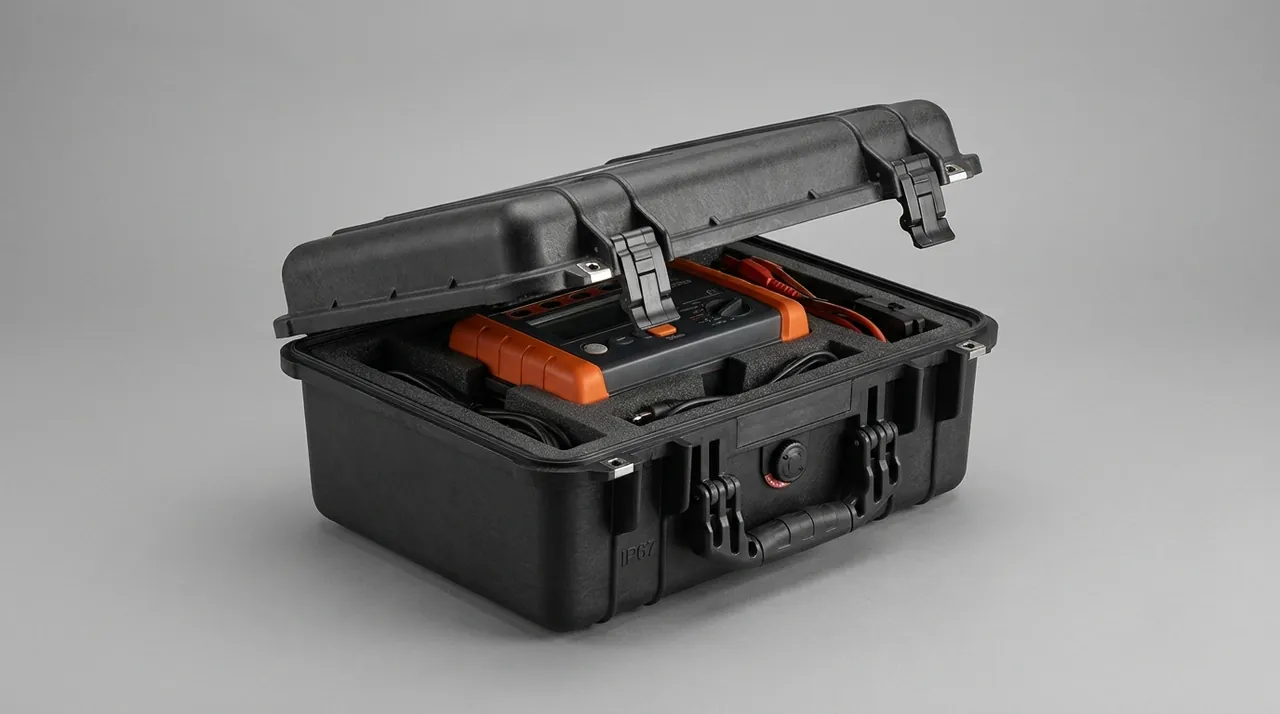
The mechanical seal is one of the most vulnerable points during transit. The mating faces of the rotating and stationary rings are lapped to a very high finish; a hairline scratch is enough to cause medium leakage after start-up. If the pump is inverted, the seal cavity floods, or a hard object presses directly on the seal cover, this precision plane can be ruined. JUNZHIJIA's solution adds a hard guard and a soft pressure strip around the seal so the face always stays suspended and protected, while a blanking cap seals the pump opening to stop dust and rain entering the cavity. For general packing of pump and valve parts, read Pump Valve Parts Case.
For cartridge-type mechanical seals, where the rotating ring, stationary ring and spring are pre-assembled as one unit, the greater transit risk is axial compression and radial impact. JUNZHIJIA adds a locating clamp outside the seal chamber to limit relative movement of shaft-mounted parts, preventing the spring from loosening under long vibration. If the pump must travel with liquid or stay under pressure for storage, the seal chamber should retain the specified process fluid and fit a leak-proof blind cap to avoid dry running and air entry that causes oxidation. On arrival, first visually inspect the seal face for foreign-object marks, then manually rotate the shaft to feel whether turning is even; only after confirming no abnormality should you fill with water and test, keeping potential leakage risks before start-up rather than after.
Fragile Protection for Sprinkler Nozzles and Spray Heads
The nozzles, spray heads and atomiser discs of a sprinkler unit are usually made of brass, engineering plastic or ceramic: finely structured, thin-walled and protruding, making them classic fragile parts. During strapping, circulation and stacking, a nozzle under pressure or crushed by heavy items easily develops cracks, deformation or clogged orifices, directly hurting irrigation uniformity. The case should give each nozzle a custom-cut EVA liner slot so every head has its own "seat", touching neither its neighbours nor external pressure. Detachable heads on split sprinkler carts should be stored in a separate compartment from the control box to avoid metal-on-plastic scratches. Related sprinkler protection is in Sprinkler System Case.
The suction pipe, foot valve and strainer on the intake side are low-cost items, yet they are often crushed or clogged when stacked under load or mixed with a bolt box. JUNZHIJIA advises placing the foot valve and strainer in a dedicated shallow tray so the original opening shape is not squeezed out of round, and never stacking heavy parts directly above them. From suction pipe to sprinkler head, every stage of an irrigation pump set then has its own compartment and cushioning arrangement.
Cleaning and plugging the nozzles before transit is often overlooked. Residual scale, sand or fertiliser crystals that harden inside the orifice are hard to clean on arrival and permanently change the spray angle. JUNZHIJIA recommends blowing the nozzle interior with compressed air before leaving the factory, then plugging the inlet and outlet with soft caps, and only then placing it in its own liner cell. For rotating sprinkler heads, the internal spring and bearing are dust-sensitive, so the liner cell should be semi-enclosed, exposing only the handle area for easy picking. Through the four steps of "clean, plug, separate, soft-wrap", the nozzle can be installed directly on arrival without on-site repair of every single piece, saving both time and labour.
Moisture Control and Vibration Isolation for Control-Box Electronics
Irrigation sites are full of mud, dew and high humidity, while the sprinkler unit's control box integrates a frequency inverter, contactors, PLC modules and terminals that are very sensitive to moisture and salt mist. If the box gets damp in transit, terminal oxidation causes poor contact and board condensation may trigger short circuits. JUNZHIJIA uses a moisture-resistant pearl-cotton liner and a desiccant bay in the electronic compartment, with a sealing gasket on the lid interior so the control box sits in a relatively dry micro-environment. Buffer blocks on the four corners absorb transport vibration. More electronic-protection ideas appear in Outdoor Case Protect Electronics.
Beyond moisture and cushioning, the cables and connectors of the control box also need fixing inside the case. Loose cables not only wear their jackets under vibration but can also tug terminals and cause cold solder joints. JUNZHIJIA reserves a cable-management channel and hook-and-loop straps in the electronic bay so excess harness is coiled and stored, and plugs insert into dedicated protective socket caps, preventing metal pins from bending or getting dirty in transit. For control boxes with an HMI touch screen, the liner leaves a pressure-free cavity directly in front of the screen with soft foam edging, stopping the panel from cracking under compression or impact. From terminals and cables to the display, every weak point of the control box is brought within the protection scope.
Rust Prevention for Inlet Section and Pump Body
Centrifugal pumps and sprinkler units contact water media for long periods. If residual water remains on the inlet section, flange faces and bolt holes after production, the high humidity and salt mist of ocean freight can grow rust that affects sealing fit and delivery appearance. The case should blow-dry the internal cavity before the pump is placed, then apply VCI vapor-corrosion-inhibitor film or rust-proof paper on flange faces; a VCI bag inside the case gives the metal surface passivation in the sealed space. For units exported to coastal or tropical regions, combine desiccant with a humidity indicator card for arrival inspection. Related water-treatment equipment protection is in Water Treatment Equipment Case.
It must be stressed that rust prevention is far more than simply dropping a desiccant bag into the case. JUNZHIJIA designs layered protection according to the metal and the voyage length: bare carbon-steel surfaces are first wrapped in VCI vapor-inhibitor film so corrosion-inhibiting molecules deposit evenly as a monomolecular shield inside the sealed space; stainless and cast-iron faces are paired with anti-rust paper and neutral desiccant to avoid pitting from alkaline or acidic residues. For coated pump bodies, a non-woven isolation layer is added at liner contact points to stop plasticiser bleed from long-compressed EVA staining the paint. Only by doing "dry, isolate, inhibit" together can the metal keep its original colour and fit accuracy after a cross-ocean journey.
JUNZHIJIA Compartment and Liner Design
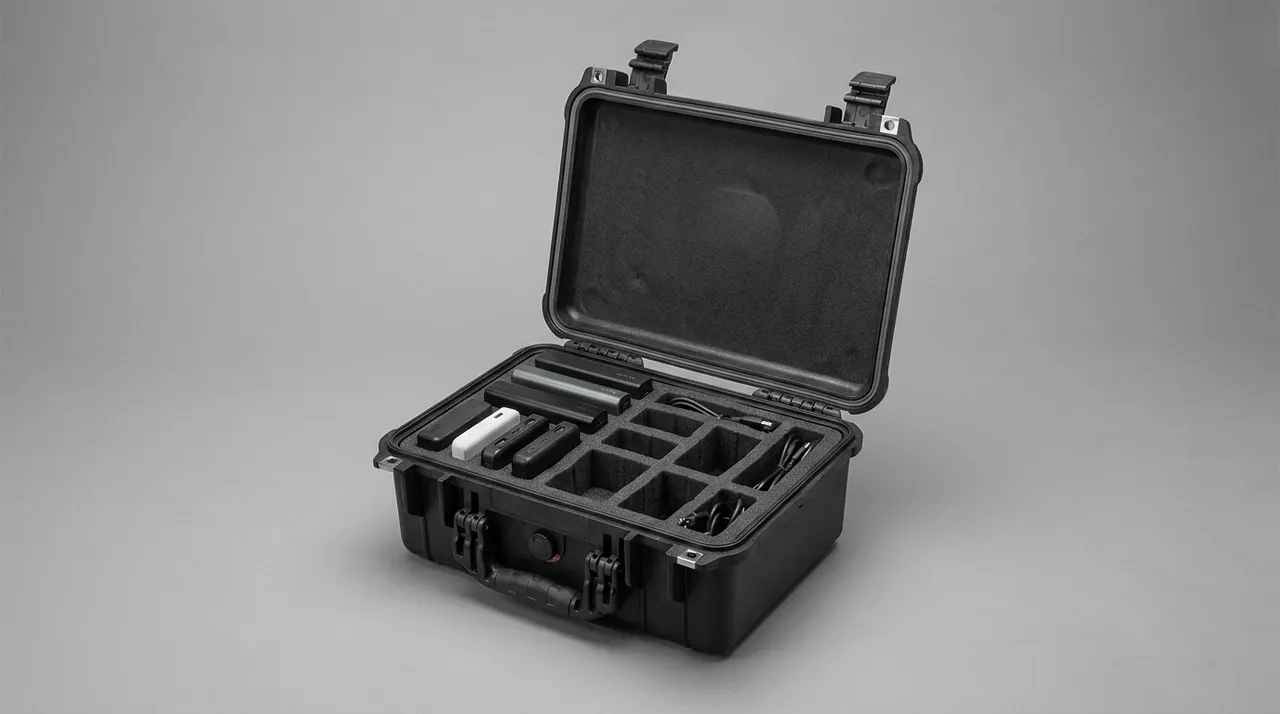
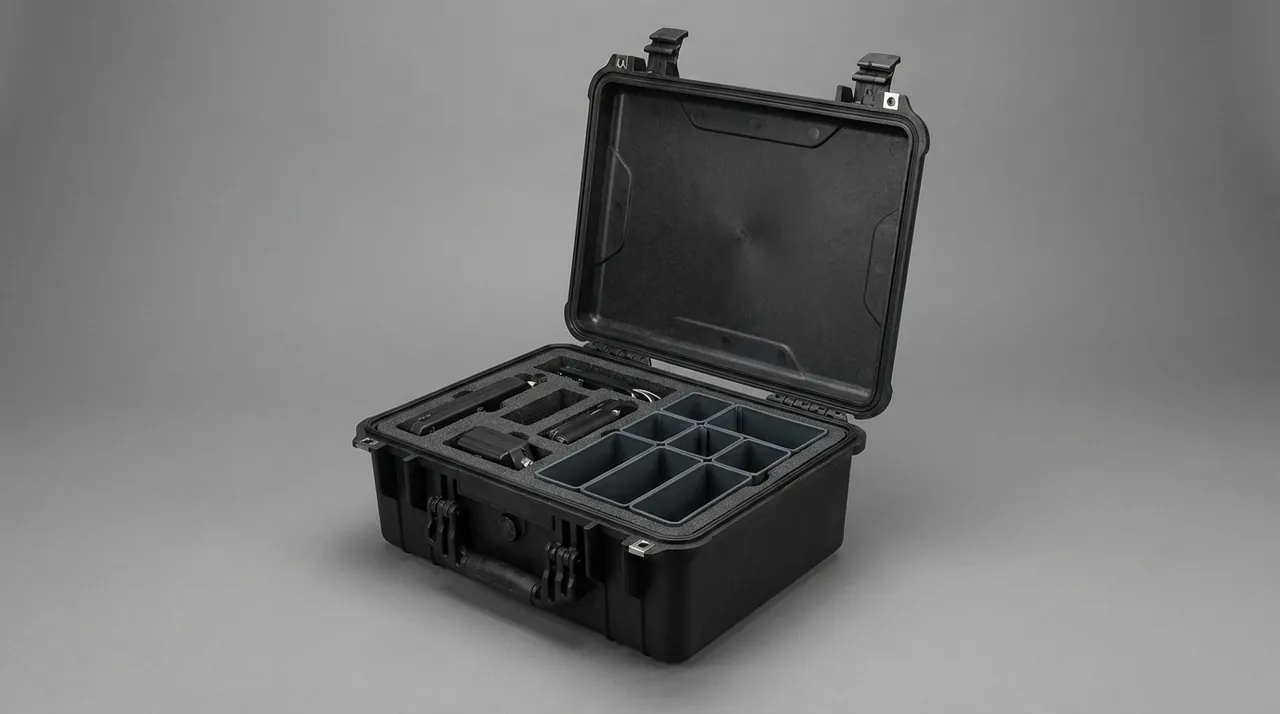
Addressing the different protection needs above, JUNZHIJIA adopts a "one case, multiple compartments" structure: the pump body and impeller sit in the load-bearing main compartment, fixed with high-density EVA and custom-cut slots; the mechanical-seal guard occupies its own cell, free from pressure; nozzles go into a small fragile-parts bay wrapped in soft rebound material; the control box enters a sealed, moisture-proof electronic bay. Reinforcement ribs and partitions between compartments stop hard parts from shifting and make on-site picking by checklist easy. This compartment logic also fits other spraying equipment such as Orchard Sprayer Parts Case and Sprayer Boom Component Case.
Beyond compartment separation, liner material choice is equally critical. JUNZHIJIA commonly combines three liner types: high-density EVA for load-bearing location, cut to millimetre accuracy so the pump flange keeps an even gap from the wall; rebound PU foam for soft wrapping of fragile nozzles, recovering slowly under pressure without permanent deformation; and anti-static foam for the electronic bay, handling both moisture and discharge. For customers who change models often, we also supply modular dividers and hook-and-loop straps so the interior can be rebuilt on site without a new mould. This "rigid-soft combined, rebuild on demand" lining system lets one case fit several irrigation models, cutting spare-box and inventory pressure.
IP67 Waterproofing and Sealing Structure
Irrigation equipment may meet rain, road splash and yard flooding both in the field and during transit. JUNZHIJIA cases use integrally moulded engineering-plastic shells with embedded sealing gaskets and compression latches, reaching IP67 dust-tight and short-time immersion protection. The continuous seal lip around the lid forms an unbroken watertight line when closed, stopping rain seeping through gaps; some models add a pressure-equalisation valve that auto-adjusts to altitude or temperature pressure differences, preventing the gasket from being sucked open by negative pressure. For differences among IP67 and adjacent ratings, read IP67 Protective Case and IP65 IP66 IP67 Difference.
True IP67 is more than a rating label; it is a system from structure to process. The shell parting line is controlled to minimal flash so it cannot become a water path; the gasket uses EPDM rubber that resists hardening and cracking under UV, ozone and thermal cycling; latch compression is calculated so all four corners lock evenly rather than one side bearing load. JUNZHIJIA immersion-tests every batch, submerging the closed case to a specified depth for a set time, then opening to check the inner wall stays dry. Only zero-water-ingress units are released. This "design, material, process, inspection" closed loop is what keeps an irrigation unit dry through rain-soaked yards and sea crossings.
Buffering and Anti-Static for Electronic Parts
The circuit boards and connectors inside the control box are sensitive to electrostatic discharge (ESD); during dry-season road transport, friction on the case can accumulate static charge. JUNZHIJIA lines the electronic compartment with anti-static foam or conductive cloth, and seals the control box in an anti-static bag before placement, lowering the risk of static breakdown in transit. At the same time the cushion must provide enough thickness on all three axes, so whichever attitude the case falls in, the electronics never hit the hard shell directly. This thinking matches the vibration-isolation logic of Precision Instrument Case. For field crews who open the case repeatedly, the liner is also shaped so the control box lifts out without twisting, reducing the chance of a drop during routine handling at the irrigation site.
Condensation Control and Humidity Management
During transport, day-night temperature swings and the humid cycle inside a container cause condensation on the case interior walls, which may then drip onto the control box and seal faces. JUNZHIJIA places a desiccant bay in the electronic compartment, reserves an air channel inside the case, and selects a breathable yet water-impermeable moisture liner to minimise condensation risk. For standby units in long-term storage, periodically check the humidity indicator card and replace the desiccant. For in-case condensation control, see Condensation Control in Cases.
Condensation is essentially "temperature dropping below the dew point". When a case moves from a dry inland area to a warm humid port, the inner wall temperature lags behind the outside air and water vapour condenses on the cold surface. Sealing alone cannot remove the temperature difference, so JUNZHIJIA uses a "absorb plus guide" strategy: calcium-chloride or silica desiccant in the electronic bay actively lowers the absolute humidity below the dew point of any condition; meanwhile a micro-porous breathable layer on the wall guides any accidental droplets to a bottom channel, keeping them away from the control box top. On arrival, the warehouse staff only needs to read the humidity card colour to judge whether the whole voyage stayed within a safe humidity range, saving the cost of opening and inspecting every single case.
Heavy-Load Support and Bracket Fixation
A complete centrifugal pump and motor are often considerable in weight; if the case bottom lacks support, continuous vibration over long distances can deform the shell or even break the handle. JUNZHIJIA's load plan includes thickened wall ribs, metal backing plates at force points, and lockable straps and locating pins so the pump stays motionless inside. The bracket contact surface uses anti-slip, wear-resistant material that protects the paint and prevents sliding. For wheeled mobile sprinkler carts, seat the wheels in shaped grooves and lock them with pressure bars. More heavy-load scenarios are in Heavy Duty Case.
The core of load design is turning "point load" into "surface support". Pump self-weight usually concentrates at the base and flange bosses; if only soft foam supports the bottom, long stacking makes the foam creep and collapse, sinking and tilting the unit inside. JUNZHIJIA embeds glass-fibre reinforced base plates or aluminium backing at the force zones, spreading local pressure across the whole case floor, then uses stop blocks to constrain horizontal movement. For large units beyond manual handling weight, the shell exterior reserves forklift slots and lifting-ring interfaces so the whole case can be handled mechanically, protecting both the equipment and the operators. In practice we also mark the centre-of-gravity symbol and maximum stack layers on the wall, letting the logistics chain operate safely without opening the case.
Vibration and Drop Testing Correspondence
To verify a protection scheme, JUNZHIJIA runs vibration, drop and stacking tests referencing general transport-packaging standards: a vibration table simulates road and rail long-haul spectra to confirm zero part displacement after hours of random vibration; drop tests from a specified height onto different faces, edges and corners check shell and liner protection of critical parts; stacking tests verify the bottom case does not deform when fully loaded. These tests quantify delivery reliability. Related test standards appear in Transport Vibration Testing Cases.
The test plan is tailored to the actual route. A unit shipped only by domestic express faces milder spectra than one sent by sea plus inland trucking across continents, so the drop height, vibration intensity and duration are set from the customer's declared logistics chain rather than a generic template. We instrument the critical parts with accelerometers during the test to record the g-level they actually experience, then compare it with the fragility threshold of the impeller, seal and control board. Only when the measured g stays below threshold across all orientations is the liner scheme approved. This data-driven loop turns "it looks protected" into "it is proven protected", and gives the customer a test report to share with their own quality and insurance teams.
Warehouse Stacking and Pallet Planning
During off-season farm storage or export consolidation, cases are often stacked in multiple layers. JUNZHIJIA cases have locating ribs and anti-slip feet on top so stacked units overlap without slipping; the outer wall marks maximum stack layers and centre-of-gravity direction to guide orderly stacking. For wheeled or irregular units, lay them flat with side blocks to avoid toppling from high centre of gravity. Stacking and humidity management can be planned together with Warehouse Stacking Moisture Cases.
Stacking safety depends not only on case strength but also on the floor and pallet condition. Soft soil or uneven pallets put asymmetric load on the bottom case, causing hidden creep over time. JUNZHIJIA recommends placing cases on flat wooden or plastic pallets, aligning them so load faces coincide, and covering the top layer with a rain tarp to stop capillary water ingress during open-yard storage. For long-term warehousing, quarterly sample one case, open it and read the desiccant and humidity card, confirming the gasket has not aged or failed, so that when the season arrives the unit is still as dry and intact as on the day it left the factory.
Customs Export and Compliance Packaging
Irrigation pump export often involves wooden-packaging quarantine, battery and electrical compliance, and shipping-mark requirements. JUNZHIJIA cases are mainly plastic shells, avoiding the fumigation limits of wooden packaging; if the unit's control box carries specific electronic modules, compliance labels and a customs packing list can be placed inside for port inspection. For ocean freight, add a waterproof outer bag and strapping, and mark "fragile", "keep dry" and "this way up" prominently. For export compliance, see Export Packaging Compliance Cases.
Beyond the case itself, the documentation pocket matters. JUNZHIJIA can embed a sealed document pouch on the lid interior holding the packing list, commercial invoice copy, certificate of origin and the electronic-module compliance declaration, so the papers travel with the unit and survive rain and handling. For destinations that require IP or safety marks on the product, the case exterior can carry a scannable label linking to the certificate, speeding port clearance. Good compliance packaging reduces the chance of holds that delay delivery to the end farmer or distributor, and it protects the maker from costly return or re-export when a shipment is rejected at the border.
Selection and Customisation Workflow
For a custom irrigation pump case, JUNZHIJIA usually starts from a measurement list: the customer provides pump type, impeller diameter, seal style, nozzle count and control-box size; the engineering team outputs a compartment layout and liner-cut drawing, then opens a mould or uses modular liner combinations after confirmation. Small batches can use a universal case with shaped foam for fast delivery; large batches deserve an integrally moulded shell for consistency. For lead time and MOQ, check Protective Case MOQ and Lead Time. Similar agricultural customisation logic is in Planter Seeder Parts Case and Fertilizer Spreader Parts Case.
To make selection clearer, JUNZHIJIA advises customers to prepare a "protection priority list" at the quotation stage: which parts must never take load (impeller, seal face), which fear moisture (control box), which are fragile (nozzles), and the expected transport mode (road, rail or sea) plus stack layers. This information directly decides shell wall thickness, liner density and whether a pressure valve is needed. We also offer a sample-case trial service: the customer ships one real unit through a logistics loop, then we fine-tune slots and cushioning from the actual feedback, upgrading the scheme from "experience judgement" to "measured verification" and significantly lowering the risk of rework and claims after bulk delivery.
Frequently Asked Questions
Q: Why does a centrifugal impeller show abnormal vibration after transport? A: Before leaving the factory, a centrifugal impeller is dynamically balanced so residual unbalance stays minimal. During transit, collisions, drops or prolonged side loads can deform a blade locally, shed a balancing weight or shift the shaft bore microscopically, destroying that original balance. Once installed, the symptom is intensified vibration, rising noise and accelerated bearing wear. It is important to understand that this damage rarely shows as an obvious fault during transport itself; it emerges only after weeks of running, when fault-finding on site becomes expensive and disruptive to the irrigation schedule, and when the pump may already have damaged its own bearings. A dedicated case with an isolated suspended cradle and high-density cushioning liner prevents external force from reaching the impeller directly, addressing the risk at its root rather than after the fact. As an extra safeguard, rotate the shaft by hand on arrival and run a short no-load trial, comparing the vibration reading against the factory figure and re-balancing whenever it drifts outside the permitted band.
Q: What does a mechanical seal fear most during shipping? A: The lapped faces of a mechanical seal demand extreme surface finish, so the worst enemies are direct scratches from hard objects, water entering the seal cavity to cause rust, and pressure on the seal cover when the pump is inverted. Even a micron-level scratch will let medium leak along the face after start-up, and because the leak is slow it can go unnoticed until the pump has already lost performance and the surrounding bearing housing has been contaminated. Transit protection needs three measures: a hard guard plus soft strip around the seal so it stays suspended; a blanking cap closing the pump opening against dust and rain; and the whole pump fixed by shaped liner so no displacement or knock occurs. In addition, a cartridge seal needs a locating clamp to limit axial compression so the spring cannot work loose over long hours of vibration. Treating the seal as a protected, isolated cell is the only reliable way to deliver it scratch-free and ready to run.
Q: Why store sprinkler nozzles in a separate compartment? A: Sprinkler nozzles, spray heads and atomiser discs are usually brass, engineering plastic or ceramic: thin-walled, finely structured and protruding, which makes them classic fragile parts. Mixed with hard metal items like the pump body or flanges, the mutual squeezing and sliding in transit cause clogged orifices, cracks or deformation that directly reduce irrigation uniformity. A separate compartment with custom-cut soft EVA liner gives every nozzle its own seat, touching neither neighbours nor external pressure. Before shipment, blow the nozzle interior clean with compressed air and plug the inlet and outlet with soft caps, so scale, sand and fertiliser crystals cannot harden inside the orifice and permanently alter the spray angle. For rotating heads the internal spring and bearing are dust-sensitive, so the liner cell should be semi-enclosed, exposing only the handle area for easy picking while keeping dust out. Detachable heads on split carts should also be kept away from the control box so metal edges cannot scratch the plastic spray components during handling and vibration.
Q: How do you keep the control box dry and condensation-free? A: The control box holds an inverter, PLC and terminals that hate moisture. Day-night temperature swings and humid container cycles condense water on case walls that may drip onto electronics. The method is to place a desiccant bay and humidity indicator card in the electronic compartment, wrap the control box in an anti-static bag, then seat it in a sealed moisture-proof liner that forms a relatively dry micro-environment. Buffer blocks at the four corners absorb vibration, while a cable channel and hook-and-loop straps hold the surplus harness so plugs cannot bend their pins under load; for a unit with a touch screen, leave a pressure-free cavity in front of the panel with soft foam edging. Condensation is really a dew-point problem, so desiccant must actively pull the absolute humidity below the dew point of the coldest leg of the journey. For long storage, replace desiccant periodically and read the indicator card on arrival; if it shows high humidity, re-bake the electronics and run an insulation test before installation to avoid hidden faults appearing only after commissioning.
Q: Is an IP67 case really necessary for irrigation equipment? A: It is highly worthwhile. Irrigation gear regularly meets rain, splash and yard flooding in fields, on roads and in freight yards; an ordinary case with gap seepage can short the control box and rust metal parts. IP67, through an integrally moulded shell with embedded gasket and compression latches, achieves dust-tight and short-time immersion protection; with a pressure-equalisation valve it also handles temperature and altitude pressure differences, stopping the gasket from being sucked open by negative pressure. Equally important, the rating is not just a label: the shell parting line must be kept to minimal flash so it cannot form a water path, the gasket should use EPDM that resists hardening under UV and ozone, and latch compression must lock all four corners evenly rather than loading one side. Each batch should also pass an immersion sample test, with only zero-ingress units released for shipment to the customer. For sprinkler units on ocean export and open-yard transfer, that combination of structure, material and inspection keeps both electronics and machined surfaces dry through the whole journey.
Q: How do you fix a wheeled mobile sprinkler cart? A: A wheeled unit has a high centre of gravity and rolls easily, so use dual "locate and lock" fixation. First seat the wheels in shaped bottom grooves of the case, then lock them with pressure bars and straps to stop rolling and sliding in transit; if the whole unit is heavy, add metal backing plates at force points and thicken wall ribs. When stacked for storage, lay it flat with side blocks so the high centre of gravity cannot topple it. For a cart with a drawbar, also provide a cradle and tie-down points for the bar itself, so it cannot swing and strike the case wall under vibration, and reserve forklift slots and lifting-ring interfaces on the exterior for mechanical handling of the whole case. Heavy units should follow the load-bearing approach of a heavy-duty case, where reinforcement and locating hardware share the dynamic loads of rough handling. Their walls should also carry the centre-of-gravity symbol and maximum stack layers, so the logistics chain can operate correctly without opening the case at all.
Q: How can I tell if a case was damp on arrival? A: Put a humidity indicator card and desiccant in the electronic compartment; on opening, read the card colour. If it has changed, the cavity was once highly humid, so check terminal oxidation on the control box and rust on seal faces, and confirm the VCI bag and blanking caps were intact, along with any sign that the impeller cradle has shifted from its seat during the journey. If dampness is found, replace desiccant, re-bake the electronics and perform an insulation test before deciding whether to install, avoiding running the unit in a degraded state where a fault surfaces only after the irrigation season has started. Keeping a simple arrival checklist with photos also helps claim transport insurance if water damage is discovered after a long sea voyage, because the carrier will ask for evidence of the condition at hand-over. For standby units left in storage rather than installed, sample one case each quarter to read the desiccant and gasket condition, so the set is still factory-dry when it is finally needed in the field.
Q: What compliance points matter for exporting irrigation pumps? A: First, wooden-packaging quarantine: prefer a plastic-shell case to avoid fumigation limits. Second, if the control box carries electronic modules, attach compliance labels and a customs packing list inside. For ocean freight, add a waterproof outer bag and strapping, and mark "fragile", "keep dry" and "this way up" so handlers can see the requirement without opening anything. Also confirm the destination's certification requirements for electrical products and reserve a document pocket inside the case for easy port inspection and customs clearance. A sealed pouch on the lid interior can hold the packing list, commercial invoice copy, certificate of origin and the electronic-module compliance declaration, so the papers travel with the unit and survive rain and repeated handling. That reduces the chance of holds caused by missing documents or incorrect product marks, and protects the maker from costly return or re-export when a shipment is rejected at the border after a long voyage. Checking these points at quotation stage rather than at the port keeps the delivery schedule intact for the end farmer.
Q: What is the normal workflow for a custom irrigation pump case? A: The workflow is: the customer provides a measurement list (pump type, impeller diameter, seal style, nozzle count, control-box size); the engineering team outputs a compartment layout and liner-cut drawing; after both sides confirm, small batches can use a universal case with shaped foam for fast delivery, while large batches deserve an integrally moulded shell for consistency; finally vibration, drop and stacking tests verify the result before any volume shipment is released. Lead time and MOQ vary with shell process, so discuss early rather than after the prototype is approved. To lower the risk of rework after bulk delivery, JUNZHIJIA also offers a sample-case trial: the customer ships one real unit through a live logistics loop, and we then fine-tune slot depth, cushion thickness and locating positions from the actual feedback, upgrading the scheme from experience judgement to measured verification before mass production begins. Related reading: Protective Case MOQ and Lead Time, Sprayer Boom Component Case, Water Treatment Equipment Case.