

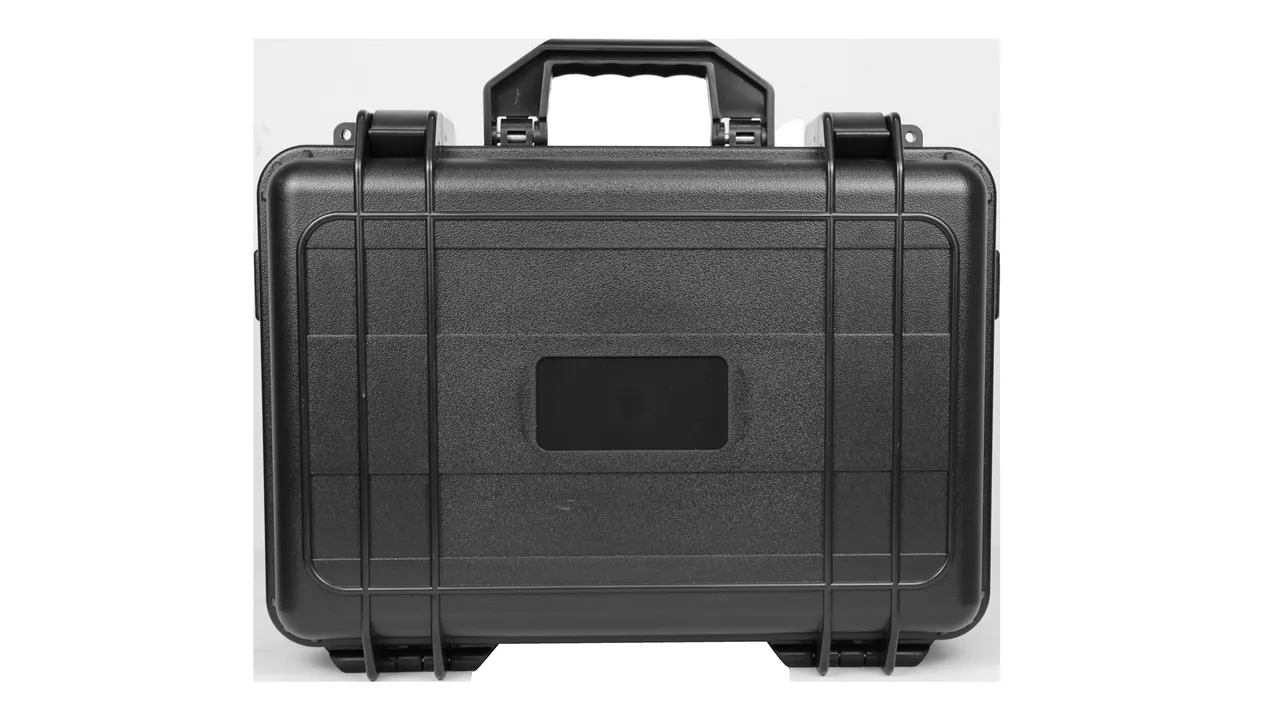
Manure spreaders are the workhorses that move bedded-pack manure, compost, digestate and bagged organic fertiliser from the yard to the field, and on the surface they look like the crudest machines on any farm. Their real wear, however, happens out of sight. Spreading-disc blades sit permanently in manure with a moisture content that often exceeds seventy percent, so once the coating is breached the steel underneath starts to rust quickly. Metering augers push material loaded with sand, bedding fragments and unrotted fibre, and their outer flight edges are abraded thinner with every tonne. Chain drives run in a fog of slurry splash, where grease emulsifies and links elongate. Gearboxes carry an offset load on their output shafts and eventually weep past the oil seal or growl on a bearing. Writing as the case manufacturer, JUNZHIJIA approaches these high-wear assemblies from the production floor, building custom cases organised around corrosion-resistant liners, heavy-load support structures, sealed bearing protection and IP67 sealing so that OEMs, farm-machinery dealers and large livestock operations can push arrival damage and downstream rework to a minimum. The protection logic for spreader spares runs close to the fertilizer spreader parts cases, the tractor implement transport cases, the feed mixer parts cases and the wider agricultural machinery parts cases family, all built on the same three lines of corrosion resistance, load capacity and moisture control, while this article concentrates on the spreading-disc system and the metering auger and works through the details that actually decide whether a part survives the journey.
Why Manure Spreader Parts Need Dedicated Protection
Transit damage to manure spreader spares differs in kind, not merely in degree, from damage to ordinary implement parts, and the difference comes down to one word: media. A fertiliser spreader throws dry granules; a manure spreader conveys a viscous slurry that is frequently more than seventy percent water, and after a factory test run every machined surface carries an organic film that cannot simply be wiped away. That film contains ammonia nitrogen, sulphides and organic acids, which together form a ready-made electrolyte. Once a spare carrying this residue is closed inside a case, condensation driven by the day-night temperature swing keeps the electrolyte active, and even a three-week sea passage is long enough to pit cast iron. The second difference is mass. A spreading-disc assembly, a metering auger and a gearbox are all heavy items, often several tens of kilograms each, and the case structure has to carry loads far above anything a precision-electronics case is designed for. The third difference is cross-contamination. Manure residue carries a strong odour and a heavy microbial load, and if it is packed beside sensors, wiring harnesses or clean fasteners the result is contamination that is difficult to remove and impossible to sell. The packaging logic that suits a fertiliser spreader, built around dry granular residue, therefore does not transfer, and a manure-spreader programme has to be rebuilt around cleaning, zoned isolation, heavy-load support and anti-mould treatment. One further planning point deserves stating early: manure spreaders are seasonal machines, worked hard in spring and autumn and stored for long stretches in winter or the rainy season, so spares often sit on a shelf for months before they are fitted. A transport case for them must therefore satisfy two quite different duty cycles at once, since a long sea voyage tests foam energy absorption and shell rigidity while long-term static storage tests gasket ageing and desiccant capacity. JUNZHIJIA asks customers for the expected storage period and location before quoting, then sets the sealing grade and rust-prevention consumable budget accordingly, rather than applying a single generic configuration to every order.
Corrosion Mechanisms on Spreading Disc Blades
The spreading disc is the part that does the actual work, relying on hardened blades bolted to a vertical or horizontal rotor to fling slurry tangentially across the field. Blades are usually forged carbon steel with a zinc or powder coating, though some machines use abrasion-resistant grades. Corrosion almost always starts at one of three places. The first is around the blade fixing bolts, where drilling burrs break the coating and manure collects to form a crevice cell. The second is the mating face between blade and disc plate, where a thin organic film is trapped, cannot evaporate, and stays oxygen-starved and wet longer than the exposed surfaces, so it actually corrodes faster than the visible side. The third is the outer wear band, where sand grinds through the coating and exposes bare steel that then forms a galvanic couple with the neighbouring zinc. JUNZHIJIA's sequence is straightforward: strip the organic residue from both faces with a pressure wash and neutral detergent, blow dry, apply a thin oil film, wrap in vapour-phase inhibitor material, and seat the blade in its own cavity. Each blade gets a dedicated slot and blades are never stacked, because stacking not only scratches the coating at the edges but also traps an undrainable gap between the plates. The cavity floor carries shallow drainage grooves so that any condensation that does form collects at the low point rather than against the blade. Reconditioned blades that already show pitting are placed in separate, clearly labelled cavities so that new and used stock can never be confused at the dealer counter.
Metering Auger Flight Wear and Shaft Protection
The metering auger is the metering heart of a manure spreader: a centre shaft, continuous or interrupted helical flights, an end bearing housing and a drive flange, pushing material from the hopper to the spreading discs at a controlled rate. Its wear mechanism differs from that of the disc blades. The flight edge runs with only a small clearance above the hopper floor, and the material being conveyed is squeezed between the two, so sand and small stones act as an abrasive that steadily shaves the outer diameter. As the diameter shrinks the conveying efficiency falls, and on the spreader it shows up as a thin, pulsing pattern of application and an overall drop in spreading rate, long before anything looks broken. At the same time the centre shaft carries combined bending and torsion over a long span, so if it travels supported only at its ends, or takes a lateral knock during handling, its straightness drifts out of tolerance and the auger begins to swing and scrub the hopper wall once installed. Protecting an auger therefore means protecting two distinct things: the flight outside diameter and the straightness of the centre shaft. JUNZHIJIA designs multi-point cradles for auger-type parts, placing three or four EVA saddles along the axis, each machined as a half-round that matches the shaft diameter so the contact is a surface rather than a line. That distinction matters because line contact concentrates the load, crushes the foam locally and lets the shaft settle; surface contact spreads it. The flights themselves are then covered by a contoured foam shell so the sharp outer edges neither press against the case wall nor touch any neighbouring component. On large-diameter augers with wide flight spacing, thin separators are inserted between consecutive flights so that a free flight end cannot oscillate in transit and strike the adjacent auger.

Chain Drive Lubrication and Contamination
Manure spreaders commonly use chain drives to take power from the gearbox to the conveyor slats or the metering auger, and in service those chains are permanently exposed to slurry splash. The grease emulsifies, is squeezed out of the pin-and-bushing clearance, and the chain gradually elongates. When the chain finally reaches the workshop for replacement, technicians routinely find several different pitch sizes tangled together in one cardboard box, knotted, kinked and awkward to uncoil, with pins bent from being forced apart. The chain cavity JUNZHIJIA designs works to three rules: coil without kinking, separate by pitch, and keep the oil film in place. Each chain is coiled into a ring at its natural diameter, secured with a degradable tie and dropped into its own round pocket sized slightly larger than that natural coil so the chain stays relaxed rather than being forced into a tight bend. Where an order includes several pitch sizes, pockets are divided by foam walls. A sheet of VCI film covers the compartment so the oil already on the chain and the vapour-phase atmosphere work together to keep the surface moist rather than red with rust after months in store. Connecting links, pins and spring clips are the small parts that always go missing, so they are collected in a shallow pocket with an elastic retainer, and a parts diagram is mounted inside the lid so that everything can be returned to the right pocket on site. Where sprockets ship with the chain, the tooth flanks need protection too, and the cavity is cut as a tooth-form pocket so each tooth lands in a prepared recess instead of taking a point load that chips the tip.
Gearbox and Bearing Seal Protection
The gearbox is the most valuable and the most transit-sensitive assembly in a manure-spreader parts order, because its gear pairs and bearings tolerate contamination poorly. Two things decide whether it arrives healthy: the integrity of the seals and the way the output shaft is restrained. A gearbox that is free to roll inside the case, or that takes an impact, will have its output shaft levered sideways, which wears the seal lip off-centre and produces a weep at the joint face. And if the interior of the case is humid, the air exchange at the breather will carry moisture into the gearbox, emulsifying the oil and setting up pitting on the gear flanks. JUNZHIJIA answers both with a shaft-end restraint plus breather protection arrangement. First, the case interior is cut as a recessed cradle shaped to the gearbox housing, lined with high-density EVA and fitted with locating bosses, so once seated the unit cannot slide. Second, removable axial clamps are fitted at both the output and input shaft ends, using soft polyurethane pads that stop axial movement without marking the journal or the splines. Breather protection comes from the enclosure itself: desiccant and a VCI emitter sit in the cavity, and the case is sealed to IP67, so the gearbox spends the whole journey in a low-humidity, dust-free microclimate. Where a gearbox is shipped with oil already charged, the cavity provides expansion volume and the unit is held shaft-end up, with the wall clearly marked so nobody lays it down and lets oil run into the breather passage. JUNZHIJIA can also leave the nameplate window clear rather than covering it with foam, because a nameplate worn illegible in transit creates a model-verification problem at the receiving bench that takes far longer to resolve than the part is worth.
Heavy-Load Support and Shell Strength
Manure-spreader spares are distributed very unevenly by weight: a spreading-disc assembly, a metering auger and a gearbox together weigh several times what a same-size electronics case would ever be asked to carry. Reuse a shell designed for the lighter duty and the base will flex elastically under the short, sharp impulse of a forklift set-down, the liner will shift with it, and a heavy component can end up bearing on the case wall. JUNZHIJIA applies three structural measures for heavy loads. First, base wall thickness is increased and the grid of reinforcing ribs is tightened, with ribs running across the short span so the section modulus of the floor rises substantially. Second, removable load-bearing beams or a sub-pallet can be fitted at the base so that the weight of a heavy part is transferred into the side walls and corner columns rather than concentrated in one area of the floor. Third, the liner is given a rigid support skeleton beneath the heavy item, converting a point load into a distributed one. The structural reasoning matches heavy-equipment case practice, and readers can compare the heavy-duty case load philosophy and the case wall thickness and strength discussion. Beyond the structure itself, the layering has to be tuned. It is a mistake to put soft foam at every level under a heavy part, because under sustained vibration the foam compacts progressively, the part settles, and the location it was given disappears; the correct arrangement is a rigid skeleton carrying load and limiting movement, with soft foam used only for energy absorption and metal-to-metal isolation. JUNZHIJIA verifies this on sample cases using the real parts or ballast weights, running stack and drop trials to confirm that shell deflection and liner displacement both stay inside the allowance before tooling is released. Structural ribs on these cases are moulded into the shell rather than bonded on, so repeated impact cannot delaminate them, a distinction that separates a case that lasts several seasons from one that looks right in a brochure and fails in the yard.
IP67 Sealing, Moisture and Mould Control
Moisture is the most common enemy of manure-spreader spares, and organic residue makes the problem worse: that residue carries its own water, supports mould growth in humid conditions, and the organic acids produced by mould attack metal while leaving the gasket surface tacky and aged. JUNZHIJIA answers on two levels. The first is sealing. The case is built to IP67, with an ageing-resistant silicone gasket around the lid and cam latches that press it into a continuous sealing line, blocking high-pressure washdown and short immersion and physically cutting off the entry path for rain and external vapour. The design considerations behind that rating are set out in the IP67 protective case selection guide and the IP67 versus IP65 junction box comparison. The second level is interior management: silica desiccant and a humidity indicator card control the internal atmosphere, with antistatic provision for any electronics travelling in the same order, keeping relative humidity inside a safe band for the whole journey. For reconditioned parts that arrive heavily soiled, JUNZHIJIA recommends an additional deodorising and sanitising step before packing, such as wiping the metal with diluted neutral disinfectant and drying it thoroughly, so that organic residue does not become a mould source inside a closed case. It is worth remembering that a sealed case is not permanently dry. Every opening admits a fresh charge of humid air, so for returnable cases that are opened repeatedly, desiccant should be renewed on the same schedule, and that instruction belongs in the kit's operating note rather than in someone's memory. Where a consignment will sit outdoors through a rainy season, the shell exterior should also resist ultraviolet light and salt spray, as discussed in the outdoor case rain and humidity and condensation control in cases articles.
Transport Vibration and Resonance Avoidance
The main threat that road transport poses to heavy spreader parts is not a single drop but hours of random vibration, plus amplification at whatever frequency the assembly happens to resonate. Truck body vibration concentrates its energy in a few bands, and if the natural frequency of the part-and-liner system falls inside one of them, the amplitude is multiplied several times over. The shell can arrive perfectly intact while the part inside has suffered fatigue from repeated flexing, loosened fasteners or taken alternating stress along a shaft. JUNZHIJIA runs swept-sine testing during the design phase, exciting the assembly from low to high frequency to locate the response peaks, then flattens those peaks along three routes: changing foam density to shift system stiffness, adding a damping layer to dissipate energy, and adding a mid-span support to raise local stiffness. Mid-span support matters most for slender items such as metering augers, whose first bending mode sits at a comparatively low frequency and therefore overlaps the excitation band of a truck suspension. For spreading-disc assemblies the concern is drumhead vibration of the plate, which needs a centre support column or extra restraint near the blade roots to stop the plate rising and falling. The relevant test methods and acceptance criteria are covered in transport vibration testing and vibration test and transport resonance. One counter-intuitive point is worth carrying into any specification: softer cushioning is not automatically safer. Foam creeps and compacts under sustained vibration, the part loosens in its pocket and begins to collide with its neighbours, so JUNZHIJIA holds to the rule of rigid skeleton for restraint and soft foam for absorption rather than simply thickening the soft layer.
VCI Rust Prevention with Desiccant
For spares that will cross an ocean or sit in store across a season, sealing alone will not hold corrosion back, so JUNZHIJIA normally supplies vapour-phase inhibitor (VCI) materials together with desiccant. VCI paper or film slowly releases inhibitor molecules into the closed volume, forming a monomolecular adsorption layer on metal surfaces, and it is especially effective on the places that oil cannot reliably reach, such as blade bolt holes, chain pins and shaft journals. The desiccant then absorbs residual moisture to push the interior dew point lower again, and the two together keep carbon steel free of visible rust through a hot, humid sea passage, as explained in the corrosion-resistant enclosure and metal toolbox rust prevention notes. Three details cause most of the field failures. The first is effective radius: VCI works over roughly thirty centimetres, so a large case needs emitters at several positions, and an interlayer sheet between stacked levels helps the inhibitor reach every cavity evenly. The second is material compatibility: copper and copper alloys, and zinc coatings, require multi-metal VCI grades, because amine-based formulations can attack non-ferrous surfaces, while rubber seals and polycarbonate windows should be kept out of direct long-term contact with VCI paper and isolated instead. The third is consumable budgeting and replacement. Desiccant has a finite absorption capacity, so the quantity should be calculated from voyage length, destination climate band and how often the case will be opened, and the replacement interval should be printed on the packing list so that long-term storage follows a fixed maintenance schedule rather than an improvised one. JUNZHIJIA can supply salt-spray and humidity-ageing data to support the procurement case internally.

Compartment Layout and Load Fixation
Compartmentalisation is the skeleton of any manure-spreader protection programme. Working from the customer's parts list, 3D drawings or measured dimensions, JUNZHIJIA divides the interior into four functional zones: a heavy zone, a long-part zone, a small-parts zone and a consumables zone. The heavy zone sits on the case floor near the geometric centre so the centre of gravity stays as low as possible. The long-part zone runs along the long edge, using multi-point cradles to limit deflection. The small-parts zone is placed against the inside of the lid so it is reachable the moment the case opens. The consumables zone takes bolt kits, seals, clips and hand tools so they never scratch machined surfaces. A spreading-disc assembly is a flat, large-diameter item and suits a single broad cavity to itself; a metering auger is a slender item and belongs along the long axis; a gearbox has a high centre of gravity and should sit in a corner with three-axis restraint. Laying the case out this way lets one shell satisfy the mechanical needs of different components simultaneously, instead of making every part conform to a single cushioning philosophy. Fixation is matched to the part in the same way: disc assemblies use a central clamp plate with perimeter stops, augers use band clamps, gearboxes use a recessed cradle with an axial clamp. All restraints are made removable so that parts can be taken out and returned without losing their location, which matters particularly for dealer stock cases that turn over repeatedly. The OEM custom protective cases collaboration model and the EVA foam insert custom process note describe how these layouts are scoped and tooled. Clearance is set per part as well, generally between two and five percent of the largest dimension, and verified by a physical trial fit rather than by calculation alone.
Ocean Freight and Long-Term Storage
Export manure spreaders and their spares go mainly to livestock-intensive regions, and voyages of thirty days or more subject a container interior to severe temperature and humidity cycling, with condensation the leading cause of rust. JUNZHIJIA's standard export programme includes desiccant sized to the destination climate band, a humidity indicator card placed where it can be read immediately on opening, oil film plus VCI on all exposed metal, and stainless or passivated hardware on latches and hinges validated by salt-spray testing. For consignments that will be stacked on deck or staged in the open at a port, an outer cover or a raised pallet keeps the case base out of standing water; the export packaging compliance and case warehouse storage rules notes cover the surrounding requirements. Long-term storage brings a different risk, namely static creep. Under a constant stacking load the shell deforms slowly over time, and the rate accelerates in a hot warehouse, so for orders that will sit for more than six months JUNZHIJIA recommends reducing pallet height or adding interlayer boards to route the load into the pallet frame. During extended storage the humidity indicator card should be checked quarterly and desiccant renewed as needed; VCI protection typically holds for twelve to twenty-four months, after which fresh inhibitor material must be added or the surfaces are effectively exposed again. Reconditioned parts returning to store deserve particular care, because unless the part itself is thoroughly dry before packing, the case will lock moisture in and create a more aggressive environment than open storage would.
Field Use and Maintenance Integration
A case proves its worth in the yard, so JUNZHIJIA designs for the way farms and service depots actually work. Large livestock operations rarely have a dedicated spare-parts store; cases live in an implement shed or on an open platform, and whoever opens one has slurry and mud on their hands. That setting demands a shell surface that wipes clean, latches that open one-handed and a liner that does not hold onto contamination. For these environments JUNZHIJIA recommends an easier-clean liner finish and adds finger cut-outs at cavity edges so a technician can lift a part without reaching for a screwdriver that would scratch both liner and component. For mobile kits that ride on a service truck, drop and tip-over resistance matter too, which is normally handled by thickened corners and non-slip feet, as described in the case anti-slip feet and toolbox internal compartment design articles. On the maintenance side, JUNZHIJIA suggests packing fast-moving consumables such as seals, circlips, chain links, desiccant and VCI sheets as separate labelled units with their replacement intervals marked, so a farm can restock from the label instead of calling the factory. For OEM companion kits, contents can be split into colour-coded sub-packs keyed to first service, intermediate service and major service, so a technician opens only what the job requires and the rest stays sealed. None of this is strictly a case-structure question, yet it determines whether correct practice survives contact with a busy Monday morning, and correct practice is what makes protection durable.
Receiving Inspection and Troubleshooting
Receiving is the last link in the protection chain and the one most often skipped. JUNZHIJIA suggests four steps. Look at the outside first, checking latches, hinges and walls for cracks or obvious deformation. Then open the case and read the humidity indicator card to see whether moisture entered at any point. Then verify quantity and condition item by item: on spreading-disc blades, look for rust around the fixing holes and along the wear band; on metering augers, check the flight edges for impact damage and roll-over and check the centre shaft for visible bend by laying a straight edge against it; on gearboxes, look for weeping at the seal, impact marks on the shaft ends and confirm the unit is still shaft-end up as the cavity markings require. Finally, record what you found and photograph the case exterior, indicator card and part condition by batch, so that any later dispute can be traced quickly. If seal failure is suspected, the user can run a static water test following the IP67 certification verification method. JUNZHIJIA performs water-ingress and stack sampling on outgoing cases and ships a sampling record with each order, closing the loop between production and receipt. In practice the acceptance criteria should be written into the purchase contract or the shipping documents in advance, fixing the colour-change limit on the indicator card, the tolerable shell deflection and the cosmetic standard the parts must meet, so neither side has to argue from memory. On larger orders, sampling a percentage of cases beats full inspection, with the remainder delivered still sealed.
JUNZHIJIA Manufacturing Capability and Custom Process
JUNZHIJIA, manufactured by Kexin New Materials (Guangdong) Co., Ltd., has long specialised in custom production of IP67 waterproof cases, EVA foam cases, precision-instrument cases and heavy-equipment cases, and has built a substantial library of agricultural spare-parts programmes graded by media, weight and transport mode. For manure spreader spares the company runs a standard workflow covering risk analysis, structural design, liner tooling, sample trial fitting and batch delivery, and can supply salt-spray reports, transport-vibration data and water-ingress records on request. Whether the requirement is an OEM companion kit, a dealer repair set or a mobile work case for a large livestock operation, JUNZHIJIA delivers an integrated plan balancing protection, cost and handling efficiency from the manufacturer's side of the drawing. When scoping a specific part, it helps to plan alongside the agricultural machinery parts cases and livestock farming equipment cases programmes, and to review the slurry and chemical handling experience set out in the agriculture spray equipment case material. JUNZHIJIA engineers provide a risk self-check list at first contact to help a customer locate the most critical pain point quickly, and for established supply relationships the company keeps a dedicated protection archive recording liner density, cavity geometry and consumable allowances. When the machine is revised, only the liner needs local adjustment rather than a fresh tooling project, which shortens lead time and keeps the case synchronised with the product through its service life instead of becoming obsolete at the first design change.
FAQ
Q: Why do manure spreader disc blades rust more readily in transit than fertiliser spreader blades? A: The difference lies in the residue, not the steel. A fertiliser spreader throws dry granules, so what remains is crystallised salt; a manure spreader handles slurry that is often more than seventy percent water, and it leaves an organic film on the blade that ordinary wiping cannot remove. That film carries ammonia nitrogen, sulphides and organic acids, which together form an electrolyte once humidity rises inside a closed case. The residue that matters most is not on the exposed face but in the places that cannot dry, such as the joint between blade and disc plate and the area around the fixing bolts, where trapped moisture keeps the corrosion cell active for weeks. There is also a galvanic effect: once sand grinds through the coating on the outer wear band, the exposed carbon steel couples with the neighbouring zinc and corrodes faster than bare steel would. The remedy is a sequence rather than a single product: pressure wash with neutral detergent, blow dry, apply a thin oil film, wrap in VCI material, and seat each blade in its own cavity with no stacking, which cuts the chain at cleaning, isolation and sealing at the same time.
Q: How worn can a metering auger flight get before it must be replaced? A: The decision criterion is not how rusty the flight looks but how the outer diameter has changed relative to the hopper floor clearance. On a new machine that clearance is small, so material is held between the flight edge and the floor and pushed forward. Once sand and small stones have abraded the outer edge, the diameter shrinks, the clearance opens, and material slips back through the gap instead of being conveyed. On the machine this appears as a reduced spreading rate, a pulsing pattern of application and poor distribution uniformity, and it happens while the flight still looks structurally sound. The accepted practice is to measure the outer diameter at intervals and compare it with the replacement limit set for that model, planning a change as the limit approaches rather than waiting for a hole or a fracture. Transport therefore has one job above all others: preserve the original flight diameter and the straightness of the centre shaft. JUNZHIJIA cradles augers at three or four points, each machined as a half-round matching the shaft diameter so the load is spread over a surface rather than a line and the foam cannot be crushed into a settlement, while a contoured foam shell covers the flights so their sharp edges touch neither the case wall nor an adjacent auger.
Q: Why does a chain drive need protection during shipping rather than only in service? A: Because chain degradation starts accumulating before the machine ever runs. A new chain leaves the factory with a film of grease on it, and if it rubs against cardboard, hessian or bare steel parts during transport that film is removed and the exposed pins oxidise quickly into a hard red rust. That rust does nothing to lubricate; once the chain is in service it acts as an abrasive between pin and bushing, so pitch elongation accelerates and the drive begins to jump teeth, climb the sprocket or ultimately break. Separately, when chains of different pitches are packed loose together they tangle and kink, and forcing them apart bends pins and distorts link plates in a way that cannot be corrected later. The chain cavity JUNZHIJIA builds works to three rules. Coil without kinking: each chain is coiled at its natural diameter, tied and placed in a round pocket slightly larger than that coil so it stays relaxed. Separate by pitch: multi-pitch orders are divided by foam walls. Keep the oil film in place: a VCI sheet covers the compartment so the existing grease and the vapour-phase atmosphere together keep the chain moist rather than rusted after months in store, with connecting links and pins retained separately so they cannot be lost.
Q: What is the most common gearbox damage in transit and how is it prevented? A: The most frequent damage is not a dented housing but an output shaft levered sideways, which wears the seal lip off-centre, followed by moisture entering through the breather and emulsifying the oil. A gearbox that rolls freely inside a case, or takes an impact, loads its shaft extensions in bending, and the seal lip then runs eccentrically against the journal; by the time the unit is unpacked the joint face is already weeping. Humidity works more slowly but just as surely: as the case interior cycles in temperature, the breather inhales and exhales, drawing moisture-laden air into the housing until the oil turns milky, loses lubricity and allows pitting on the gear flanks. JUNZHIJIA's arrangement addresses both with shaft-end restraint and breather protection. The interior is cut as a recessed cradle matched to the housing and lined with high-density EVA plus locating bosses so the unit cannot slide. Removable axial clamps at the output and input shaft ends use soft polyurethane pads that stop axial movement without marking journals or splines. Desiccant and a VCI emitter in the cavity, combined with IP67 sealing, keep the unit in a low-humidity, dust-free microclimate. Where oil is charged before shipment, expansion volume is provided and the unit is held shaft-end up with the required orientation marked on the wall.
Q: What practical value does IP67 sealing add for heavy manure spreader spares? A: The value shows up in three ways. First, it blocks external water. Spares are commonly moved through implement sheds, open platforms or flatbed trucks, and in a rainy season or during washdown, water inside a case will start rust on cast iron and chain components within days; an IP67 enclosure resists short immersion and spray and physically closes that route. Second, it lowers internal humidity. Once sealed and combined with desiccant and an indicator card, the interior stays in a safe humidity band, so the electrolyte left behind by organic residue cannot keep working, which markedly extends the protection already provided by the oil film on machined surfaces. Third, it slows mould growth. Manure residue carries its own moisture and microbial load, mould flourishes in humid conditions, and the organic acids it produces attack metal while leaving the gasket tacky and aged; a dry sealed environment suppresses that process. Two cautions apply. A sealed case is not permanently dry, since every opening admits fresh humid air, so returnable cases need desiccant renewed on schedule. And reconditioned parts should be cleaned, sanitised and fully dried before packing. JUNZHIJIA can also supply different sealing grades by transport mode, so domestic road shipments can use a lower grade to control cost while export sea freight is always built to IP67 with a water-ingress record.
Q: How many parts fit in one case, and does a dedicated case waste space? A: Capacity depends on how the parts are arranged, not only on case volume, and that is precisely what compartmentalisation solves. Weight is distributed very unevenly in a manure-spreader order: a spreading-disc assembly, a metering auger and a gearbox together weigh several times what a same-size electronics case would carry, so JUNZHIJIA divides the interior into functional zones. The heavy zone sits on the floor near the geometric centre to hold the centre of gravity low. The long-part zone runs along the long edge with multi-point cradles that limit deflection. The small-parts zone sits against the inside of the lid so it is reachable as soon as the case opens. The consumables zone takes bolt kits, seals, clips and hand tools so they cannot scratch machined surfaces. A disc assembly is flat and large in diameter and takes a broad cavity of its own; an auger is slender and lies along the long axis; a gearbox has a high centre of gravity and sits in a corner under three-axis restraint. Laid out this way, a single case typically carries a complete wear-parts set including discs, auger, chains, sprockets, seals and consumables, while the improved volumetric efficiency means fewer cases per pallet, so total logistics cost falls below that of separate packing. The OEM custom protective cases note describes how the layout is confirmed before tooling.
Q: Why must heavy parts sit on a rigid support rather than on thick soft foam? A: Because soft foam creeps and compacts under sustained load and long vibration, and that is a property of the material rather than a quality defect. In the first days the foam appears to cradle the part perfectly, but as the journey lengthens and temperatures rise the foam thins, the part settles slowly inside its cavity, and the clearance that was designed to be zero reopens, allowing contact with neighbouring parts or with the case wall. The more insidious effect is local: the part may rest on one small area of foam, which then collapses permanently under static load and does not recover when the case is opened, so the pocket no longer locates anything. The correct arrangement is a rigid skeleton carrying the weight and limiting movement, with soft foam providing energy absorption and isolation only, each doing its own job. JUNZHIJIA routes a heavy part's load through a support skeleton or sub-pallet, spreading a point load into a distributed one that is then carried by the side walls and corner columns rather than by one area of the floor. Sample cases are verified with real parts or ballast under stack and drop trials to confirm shell deflection and liner displacement remain within allowance, and this practice mirrors heavy-duty case engineering rather than consumer packaging.
Q: How should desiccant and VCI consumables be sized for an export sea shipment? A: Size the desiccant by voyage, tune the ratio by climate band, and choose the VCI grade by metal mix. Desiccant has a defined absorption capacity, so start from the internal volume of the case, the number of days in transit and the temperature and humidity expected at the destination, and calculate the required quantity in grams rather than scattering in a few sachets by habit. Cross-equator routes with large day-night swings generate more condensation and should be given a margin above the estimate, while shipments to dry, cold regions can be trimmed to control cost. VCI protection typically holds for twelve to twenty-four months on carbon steel and works over roughly thirty centimetres, so a large case needs several emitters and an interlayer sheet between stacked levels so the inhibitor reaches every cavity evenly. Compatibility is the detail most often missed. Copper, copper alloys and zinc coatings require multi-metal VCI grades, because amine-based formulations can attack non-ferrous surfaces, and rubber seals and polycarbonate windows should be isolated rather than left in long direct contact with VCI paper. The replacement interval and inspection points should be printed on the packing list so that long-term storage follows a fixed schedule, and JUNZHIJIA can provide salt-spray and humidity-ageing data to support the specification internally.
Q: Can a worn liner or gasket be replaced on its own, or is the whole case scrapped? A: Work through four steps. Inspect the outside first, checking latches, hinges and walls for cracks, fractures or obvious deformation and looking for impact marks at the corners, since those outward signs usually indicate that something inside took a shock. Then open the case and read the humidity indicator card before touching anything: a colour change means moisture entered at some point, so cast iron and chain-drive parts deserve closer examination. Then check quantity and condition item by item. On spreading-disc blades, look for rust around the fixing bolt holes and along the outer wear band, and for rolled or chipped edges. On metering augers, check the flight edges for impact damage and check the centre shaft for visible bend by laying a straight edge along it and watching the gap. On gearboxes, look for weeping at the seal, impact marks on the shaft ends and whether the unit is still oriented as the cavity markings require. Finally, photograph the case exterior, the indicator card and the parts by batch and keep the record, so that any later quality dispute can be traced and compared quickly. If sealing is in doubt, run a static water test following the IP67 verification method. Related reading: IP67 protective case, heavy-duty case, agricultural machinery parts cases.