

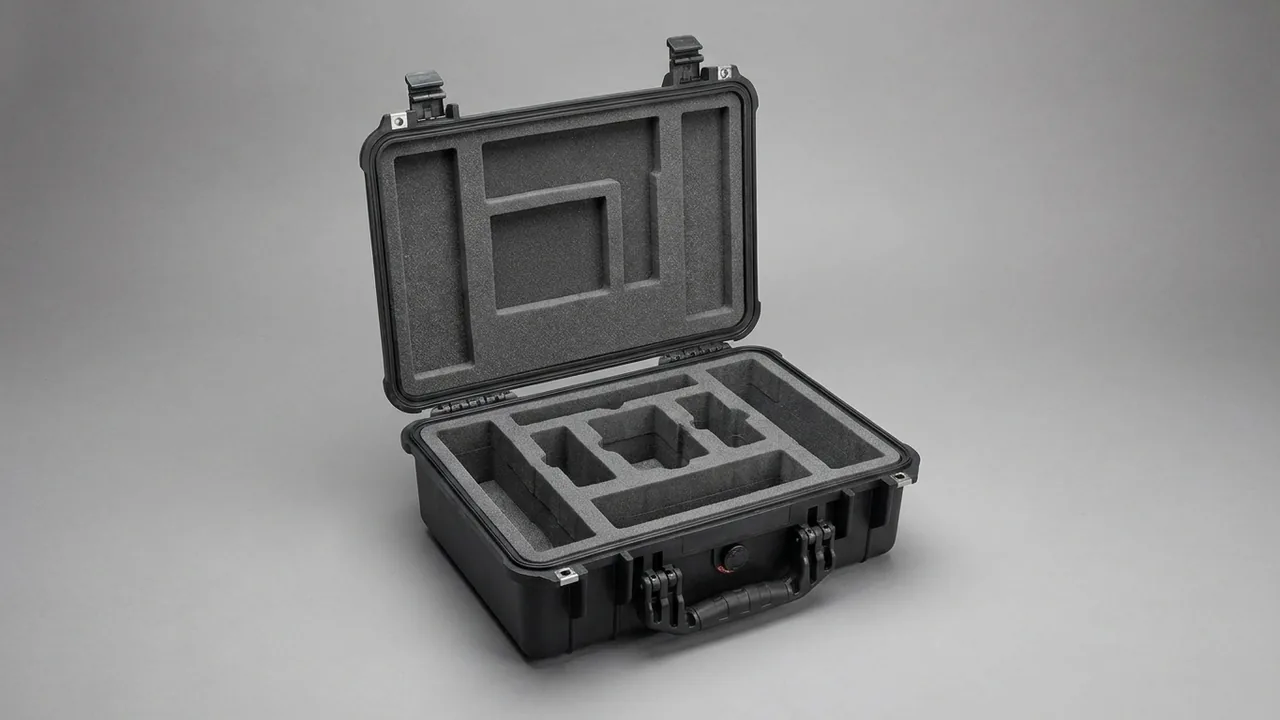
Vacuum insulation components, cryogenic valves and Dewar assemblies for deep-cold storage tanks operate in the temperature range of liquid nitrogen, liquid oxygen and liquid hydrogen, and the difficulty is never simply that they dislike cold. Once an insulation surface inside a vacuum annulus is touched by grease, moisture or particulate, the outgassing load and the heat leak both rise after pump-down. Once a globe valve or safety valve seat takes a handling dent, the result after reinstallation is internal leakage. Once a Dewar neck tube is bent, both the heat loss and the vacuum hold time degrade noticeably. The working line for a cryogenic tank component case is therefore cleanliness and low outgassing on the vacuum insulation surface, zero-dent seats, and dew point and condensation control, built on a low-bleed low-hygroscopic liner that locates each item in its own cavity, combined with IP67 sealing and a pressure equalisation valve, and with the low-temperature resilience of both liner and gasket verified. The sections below move from failure mechanism through compartment layout, material choice and test method to delivery acceptance.
In air separation plant turnarounds, liquid hydrogen and liquid oxygen tank inspections and hospital liquid oxygen Dewar replenishment, insulation blankets, support rings, pump-down seal tubes, valve bodies and valve trim move repeatedly between the unit area, the vacuum workshop and the spare store. A cryogenic globe valve with a bellows extension can weigh tens of kilograms, its seat is either a soft seat or a metal hard seat, and any radial load can distort it. A multilayer insulation blanket is a laminate of aluminised film and spacer, and one crushed fold leaves a permanent mark on the insulation face. A plain timber crate offers neither drying nor a low-bleed liner, so the crew ends up re-cleaning the part on arrival and the turnaround window stretches. Putting cryogenic components into a case engineering programme moves heat-leak and internal-leak risk back into the logistics step at low cost. General cold-region practice is covered in extreme temperature case selection; this article deals only with what is specific to tank internals and valve trim.
Table of Contents
- 1. Three Failure Mechanisms in Cryogenic Tank Component Transit
- 2. Compartment Layout for Vacuum Insulation Components
- 3. Zero-Dent Packing for Cryogenic Valve Seats
- 4. Dewar Component and Neck Tube Protection
- 5. Cryogenic Piping and Vacuum-Jacketed Line Protection
- 6. Cleanliness and Low Outgassing on Insulation Surfaces
- 7. Dew Point and Condensation Control
- 8. Sealing and Pressure Equalisation (IP67, GB/T 4208)
- 9. Low-Temperature Resilience and Liner Material Selection
- 10. Vibration, Drop and Environmental Test Methods
- 11. Lifting, Packing and Securing Procedure
- 12. Documentation and Cryogenic Project Delivery
- 13. Sizing and Configuration Reference
- 14. Applications, Maintenance and Service Life
- Frequently Asked Questions
- Conclusion and Related Reading
1. Three Failure Mechanisms in Cryogenic Tank Component Transit
The first mechanism is lost toughness and lost resilience at low temperature. Austenitic stainless steel, aluminium alloy and qualified low-temperature steel are tough at ambient, but a micro-crack, a score or a stress concentration introduced in transit can grow once the part is back in deep-cold service. The more common hidden problem sits inside the case: gasket, foam liner, strap and shim all pass through a glass transition, lose elasticity, and the lid loses its closing force while the liner loses its cushion. The outcome is a case that passed inspection at ambient and fails on site in winter. Material selection must therefore ask for the embrittlement temperature and the low-temperature compression set, not just ambient density and hardness.
The second mechanism is contamination of the vacuum insulation face. The insulation performance of a vacuum annulus depends on a low-emissivity surface and a low residual gas pressure. Any grease, fingerprint, water film or particle raises surface emissivity and adds an outgassing source, so pump-down takes longer and the vacuum holds for a shorter time. Packing inside a controlled area, using powder-free gloves and lint-free cloth, and specifying a low-VOC low-bleed liner are therefore mandatory rather than optional.
The third mechanism is dew point and condensation. Residual water or humid air carried into the case at ambient will condense, and may freeze, during temperature swings in transit and the subsequent pump-down. Ice expands inside small passages, valve cavities and annulus ports, so it can either block a channel or crack a thin wall. The countermeasures are dry purging, an adequate desiccant charge, a humidity indicator card, and a pressure equalisation valve that removes the breathing effect caused by temperature change. The three mechanisms are coupled, and treating any one alone does not close the loop.
2. Compartment Layout for Vacuum Insulation Components
The vacuum insulation family includes multilayer insulation blankets, insulation support rings, pump-down seal tubes, getter or adsorbent boxes, vacuum gauge ports and insulation wrapping tape. Their shared weakness is a surface rather than a body: aluminised film and glass-fibre spacer fear folding, rubbing and compression. The compartment idea is to create three families of seat, one per geometry.
A rolled blanket hangs on a vertical core, with both ends of the core carried on soft saddles so the aluminised faces never rub against one another. A flat insulation pack is held between plates, with the clamping force set to the point where it neither slips nor marks, and a lint-free separator film between plate and blanket. A slender seal tube or gauge port sits in its own vertical slot with a protective cap, so it cannot bend in transit. An adsorbent box is a live hygroscopic item, so it stays in its sealed bag until the moment of packing and is kept in a separate compartment from the desiccant so it cannot saturate early.
For cleanliness-sensitive insulation faces the liner is low-outgassing cross-linked polyethylene or silicone foam, and the surface must not shed. Cavities are CNC-milled to the measured contour, with fit judged by a part that slides home under hand pressure and does not rattle. A record-card pocket on the case side lets the receiving crew check humidity and particle results at a glance. Where several sizes travel together, a modular tray route is preferred: prove the fit and the load path on trays first, then scale. Process detail is in custom foam insert process and the material comparison is in case foam material comparison.
| Component | Geometry | Protection priority | Compartment treatment |
|---|---|---|---|
| --- | --- | --- | --- |
| Multilayer insulation blanket, rolled | Flexible roll | No folding, no face-to-face rub | Vertical core on soft saddles |
| Flat insulation pack | Thin plate | No compression mark, no contamination | Plate clamp plus lint-free film |
| Pump-down seal tube | Slender tube | No bending, no impact | Dedicated slot plus end cap |
| Adsorbent box | Live hygroscopic item | No early moisture pickup | Sealed until packing |
| Vacuum gauge port | Precision port | No contamination, no impact | Separate cavity plus dust cap |
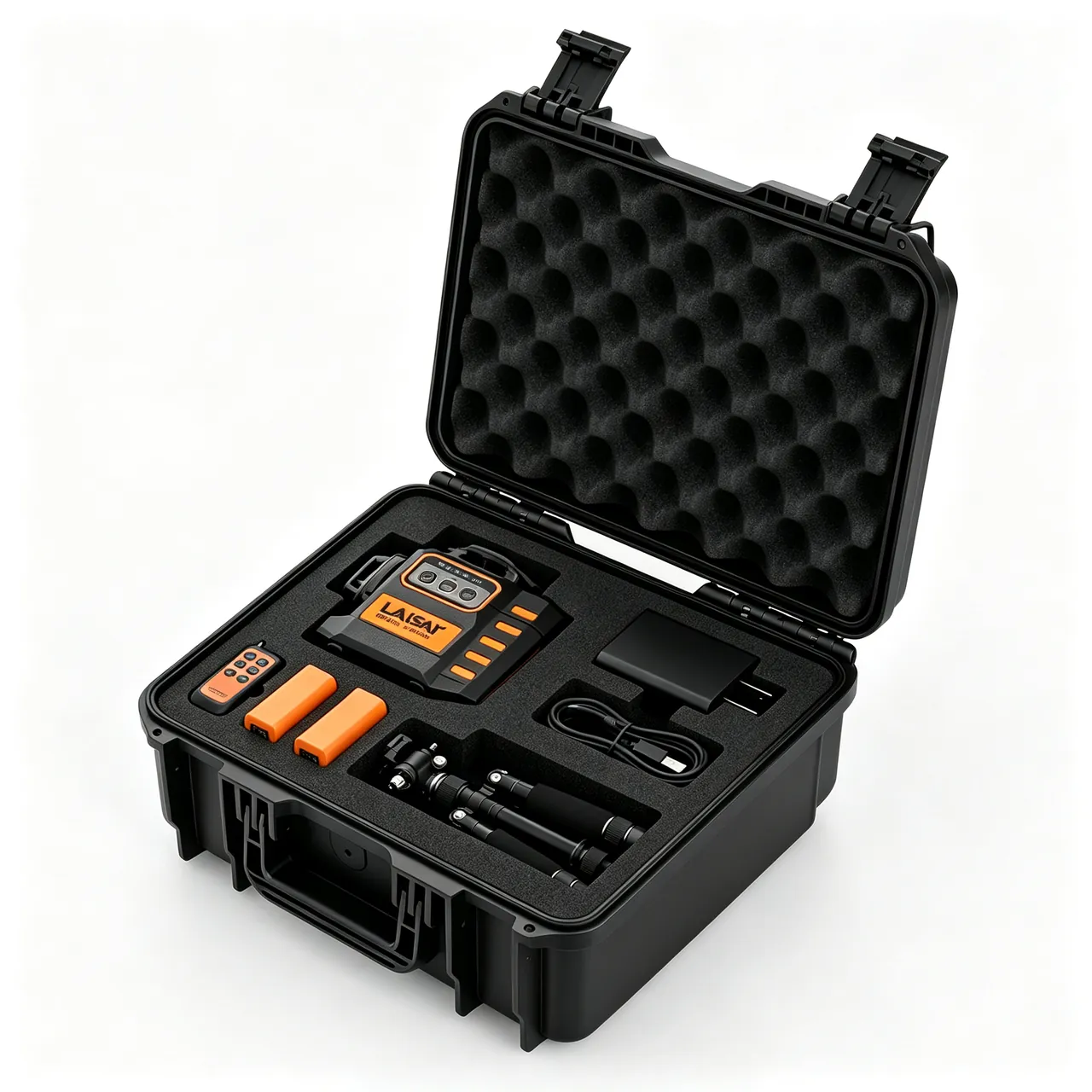
A second benefit of compartment layout is picking discipline. A tank turnaround often replaces dozens of tagged items at once, and a case that mixes insulation goods with valve goods invites the crew to rummage, which is exactly how blankets get creased and slender parts get bent. Tagging each cavity and printing a tag map inside the lid compresses find, verify and refit into one motion, and it also makes the leftover and to-order reconciliation at the end of the outage straightforward.
3. Zero-Dent Packing for Cryogenic Valve Seats
Cryogenic globe valves, throttle valves and safety valves on a tank piping system are critical items. The globe valve seat pair is usually polychlorotrifluoroethylene or modified PTFE soft seat, sometimes a metal hard seat, while a safety valve carries a pilot arrangement, a spring and a setpoint. The first packing objective is a seat with zero dents: any point contact against a hard object, and any oval distortion caused by assembly stress, will show up as internal leakage after reinstallation.
The method has three layers. The first covers the seat directly: wrap in lint-free soft film, add a rigid guard ring, and place a soft pad where the ring meets the flange face. The second protects the stem and the guide surface: a stem must never see a side load, so the valve is located by an axial support, and the stem is never used as a lifting point or a prop. The third covers the spring and the setpoint mechanism. A spring-loaded safety valve shipped locked can lose spring tension or drift off setpoint, so a transport lock or a reduced-pressure shipping state is used as the maker requires, and the case is marked to keep spring-loaded items upright.
Residual media in the valve cavity need the same attention. Water, oil or process fluid can freeze, and it can be incompatible with the cryogenic medium, so the cavity is drained, blown dry and given a vapour-phase corrosion inhibitor. Flange faces and threaded ports are closed with plugs or dust caps, and the plug material is chosen so it does not form an unfavourable galvanic pair with the body. When several valve sizes travel together, the body, the trim and the accessories belong in three separate cavities, so a handwheel or other protrusion cannot press on a seat. The compartment logic overlaps with refinery valve component cases, but cryogenic valves lean far harder on dryness and low-temperature resilience, so the two should not share one cavity drawing.
4. Dewar Component and Neck Tube Protection
A Dewar achieves insulation through an inner vessel, an outer vessel and a vacuum annulus. The neck tube is the slender thin-wall tube that suspends the inner vessel from the outer one and simultaneously carries insulation duty and structural duty. Three risks dominate in transit: a bent neck tube that pushes the inner vessel off centre, a micro-leak in the annulus after an impact, and a damaged or blocked pump-down port or relief port.
Neck tube protection rests on axial restraint, radial support and an evenly distributed ring. In the case, a soft saddle under the inner vessel base and a clamp around the neck form two support points, the clamp is lined with soft material and limits radial displacement, and the Dewar stays upright or in whatever attitude the maker permits. A long side-lying period is prohibited, because it puts the neck in bending, offsets the inner vessel, and loads the level gauge and the dip tube. The pump-down port, the relief port and the valve connection each get a cap, and the lid carries an incompressible clearance so a loaded lid cannot press on a fitting.
Cleanliness and dryness are equally part of Dewar packing. The neck and annulus openings are plugged immediately after assembly so moisture and particles cannot enter. The case carries desiccant and a humidity indicator card, and where necessary a dry nitrogen charge plus a pressure equalisation valve, so a temperature swing in transit does not set up a pressure-driven breath against the annulus. For a high-turnover item such as a hospital liquid oxygen Dewar, the case should open and close comfortably for one person and may be offered with casters and a handle. Practices for the valve are described in case pressure equalisation valve and the closure structure in toolbox hinge latch seal.
5. Cryogenic Piping and Vacuum-Jacketed Line Protection
Cryogenic piping covers stainless bellows, vacuum-jacketed lines, insulated elbows and flange assemblies. These are the classic slender-body plus precision-face combination: the pipe body fears bending and impact, the flange seat at the end fears a score and contamination, and the corrugations fear fatigue after repeated flexing.
There are four packing rules. First, the cavity is cut to the maker's minimum bend radius, and small-radius coiling inside the case is prohibited; a bent line is supported along its true three-dimensional form so no span is left free to resonate. Second, the flange seat is protected on its own with a soft flange cap and a dust plug, and a metal seat such as a lens ring or a knife-edge flange gets an additional rigid guard ring. Third, the bellows section is axially restrained and radially carried on soft saddles, so vibration cannot drive it into repeated extension and compression. Fourth, the bore is charged with dry nitrogen or dried air and the ends are plugged, bringing the dew point to the figure the pipe installation requires.
A vacuum-jacketed line carries one further requirement. The inner wall of the annulus and the insulation layer are themselves a vacuum insulation surface, so grease and particulate are equally unacceptable. The line goes into its case soon after the closing weld, rather than sitting exposed on the shop floor, and it is never dragged, because a score on the outer tube becomes a corrosion initiation site. A piping case should carry longitudinal stiffeners and certified lift points, and long items are marked per GB/T 191 with this way up, keep dry and centre of gravity, so the receiving crew and the crane operator can read the intent. The general marking and stacking framework is in transport packaging marks and stacking.
6. Cleanliness and Low Outgassing on Insulation Surfaces
Vacuum systems are unforgiving about contamination, and the criterion differs completely from ambient equipment: it is not that no dirt is visible, it is that the outgassing rate is low enough. The usual material screening reference is ASTM E595, with its total mass loss and collected volatile condensable materials limits, while particle and cleanliness classification commonly follows IEST-STD-CC1246D. Together they constrain every exposed material inside the case. For stainless and aluminium insulation surfaces, lubricants and corrosion inhibitors that contain silicone oil or sulphur-bearing extreme-pressure additives are also excluded.
Cleanliness control at the operating level has four parts. The first is environment: the final loading and lid closing should happen inside a controlled area wherever the schedule allows. The second is people: powder-free nitrile or lint-free gloves, with bare-hand contact on an insulation face prohibited. The third is tools and wiping: lint-free cloth and an approved solvent, wiped in one direction so particles are not pushed into an annulus opening. The fourth is segregation: grease-bearing items, magnetic parts and mercury instruments never share a case with vacuum insulation parts, which removes both cross-contamination and compatibility risk.
The liner itself should be a low-VOC, low-bleed, low-hygroscopic formulation so it does not become an outgassing source, and the internal coating should be fully cured so no solvent residue is released over months in storage. On arrival, a cleanliness wipe or a particle check card shows whether the transit environment was contaminated, and the particle count becomes one of the release criteria before refitting. It is worth stating plainly that cost rises steeply with cleanliness class, so the requirement should be graded by how sensitive the surface actually is, rather than set at the highest class for every item.
7. Dew Point and Condensation Control
The aim of condensation control is to hold the dew point of the air inside the case below the lowest surface temperature the component can see during transport and storage, so liquid water never gets a chance to form. The route has four steps: dry the part, dry the gas, add desiccant, and monitor humidity.
Drying the part means draining thoroughly after cleaning and blowing blind holes, valve cavities, annulus openings and bellows sections with dry air or dry nitrogen until the outlet dew point is stable and within target. Drying the gas means charging cleanliness-sensitive items with dry nitrogen at a slight positive pressure, which both resists moisture ingress and reduces particle settlement. Desiccant is dosed from case volume, seal class and transit duration, using a low-dust form such as a bagged silica gel or molecular sieve so powder cannot contaminate the part, and it is fixed in place rather than resting against the component. Monitoring means a humidity indicator card or a readable humidity recorder inside the case, read at opening, with a drying pass before refitting if the reading is out of limit.
The breathing effect caused by temperature swing is the common trap in cold service. Once the case is sealed, a day-night differential or a cold leg at altitude drops the internal pressure, external moisture is drawn in, and the lid can become hard to open because it is held by suction. The remedy is a pressure equalisation valve with an ePTFE membrane, which equalises pressure while blocking liquid water and particulate, together with a dry staging rack at the cold store so the case is not left in a condensing environment.
8. Sealing and Pressure Equalisation (IP67, GB/T 4208)
The seal has to satisfy two conditions at once: dust and water exclusion, and continued sealing at low temperature. The shell and lid sealing target is IP67 as defined in GB/T 4208 and IEC 60529, which is a reasonable baseline for a maintenance environment with wash-down water or brief immersion. Where the case will stand outdoors for long periods, the answer is a rain hood and a scheduled service plan rather than a raised sealing claim.
The key selection figures for the gasket are low-temperature compression set and resilience. EPDM and silicone both behave better in the cold than ordinary nitrile, and silicone stays soft at lower temperatures, though abrasion and oil resistance need to be traded off against the duty. Compression should be checked in two states, ambient and cold: a preload that is adequate at ambient will allow a local gap and a leak if resilience collapses in the cold. Latches and hinges are distributed at multiple points so the closing pressure is even around the ring. The material trade-off is set out in case seal materials and the structural baseline in IP67 protective case.
Before release a sealing check is worth running: draw samples from the lot for a spray test, add a short dunk test where the schedule allows, and record ambient temperature, humidity and duration. For a cryogenic project, add a low-temperature preconditioning retest, in which the case is held cold, then opened immediately so gasket resilience and lid opening force are checked before any hardening or adhesion can be hidden. Writing that retest into the acceptance sheet finds problems earlier than comparing ambient figures alone.
9. Low-Temperature Resilience and Liner Material Selection
How a liner behaves in the cold decides whether the case can serve in a cold region at all. Polymers have a glass transition temperature, below which they move from the rubbery state to the glassy state and become hard, brittle and much less resilient. The common foams differ widely. Ordinary polyethylene foam stiffens markedly in deep cold, cross-linked polyethylene and EVA have a lower embrittlement temperature, polyurethane foam keeps good resilience but needs attention to moisture pickup and ageing, and silicone foam covers a lower range with low outgassing at a higher cost.
Four figures are worth collecting at selection: embrittlement temperature, low-temperature compression set, low-temperature resilience, and the outgassing and hygroscopic data that matter for vacuum compatibility. Ambient density and hardness alone will not predict cold cushioning. Where a case is opened and closed repeatedly in the cold, the liner-to-part contact face should also be assessed for adhesion at low temperature, and a low-friction wear layer added to the cavity surface if needed.
| Material | Cold resilience | Outgassing and moisture | Relative cost | Typical use |
|---|---|---|---|---|
| --- | --- | --- | --- | --- |
| Cross-linked PE foam | Medium, stiffens when cold | Low | Medium | General cold-duty transit case |
| EVA foam | Medium to good | Low | Medium | Cavity location for precision parts |
| Polyurethane foam | Good | Medium, needs moisture control | Medium | Cushioning-first mid-cold duty |
| Silicone foam | Good, lower range covered | Very low | High | Deep-cold and clean-sensitive parts |
| EPDM sponge | Good | Low | Medium | Gaskets and soft supports |
The table is an empirical comparison and the actual figures should come from the supplier's cold test data. For a volume order, ask for cold data from the same production lot rather than a generic catalogue sheet, because foam formulation and density drift translate directly into cold resilience.
10. Vibration, Drop and Environmental Test Methods
The vibration sensitivity of tank components comes from three directions: relative motion of valve trim and spring, cantilever vibration of bellows and long pipe runs, and flutter of thin insulation sheet. The packaging design should therefore use environmental test methods as an input rather than a final check. The usual references are the national transport packaging series GB/T 4857, the ISTA procedures of the International Safe Transit Association, and the ASTM D4169 distribution cycle simulation, which together cover stacking, vibration, shock and drop.
For the environmental methods themselves, procedures in MIL-STD-810H covering vibration, shock and temperature-humidity can be used to construct a random vibration spectrum, a sine sweep and drop conditions. It must be stated explicitly that referring to these methods is only a method basis for simulating the transport environment and constitutes no military certification; delivery documents say so, which prevents misunderstanding during a procurement audit. For a cryogenic project it is worth adding combined conditions, cold then vibration and cold then drop, because gasket and liner resilience after cold exposure differs from the ambient state and the cold-first order exposes the real risk. Procedure and pass criteria are covered in ISTA transport testing procedure and MIL-STD-810H compliance.
Isolation measures include a 10 to 20 mm cushion between cavity and component with distributed support so there is no single-point load, multi-point soft saddles on long pipe so the span is shortened and the natural frequency raised, a limit block on a spring-loaded safety valve, and an isolation pad under the case floor with no rigid divider bolted straight through. Post-test judgement looks beyond the shell and liner: stem straightness, flange face flatness and permanent deformation of the bellows section are all part of the record.
11. Lifting, Packing and Securing Procedure
Packing itself is where many defects are introduced, so the sequence should be written as a travelling document and the crew trained against it. Preparation means checking the component list and the unit tag, confirming the liner is dry, clean and free of debris, and confirming the desiccant is within its shelf life. Cleaning means wiping and purging to the sensitivity of the part while wearing the specified gloves, so no second contamination is introduced. Location means loading to the cavity marking, heavy before light and large before small, never stacking one component on another, with flange faces and seats up or facing the protected side. Securing means fitting bars, straps and limit blocks in the designed position, padding the strap contact face, and tightening to the point of no movement and no distortion. Drying and closing means adding desiccant and the humidity indicator card, re-checking the dew point record, and closing the lid in a diagonal latch sequence. Dispatch means marking name, mass, centre of gravity, this way up and keep dry per GB/T 191 and GB/T 13384.
Lifting deserves its own paragraph, because a tank component case can easily weigh several hundred kilograms. The case should have four certified lift points or be integrated with a pallet, with lift point capacity checked against a safety factor of at least 1.5. A forklift must never press directly on the case side wall or the liner area, and a valve stem, a pipe stub or a neck tube is never a lifting attachment. A heavy case can carry case wheels and trolley handle for short shop moves, but a long journey still places the whole case on a pallet with an overall strap, so the casters do not take lateral shock.
12. Documentation and Cryogenic Project Delivery
Buyers of cryogenic tank components are usually energy and gas engineering companies with strict document requirements. The pack released with each lot should include the liner material data sheet with cold resilience or embrittlement temperature plus outgassing and hygroscopic figures, material certificates for metal fittings, low-temperature compression set data for the gaskets, sealing test records covering spray or dunk plus the low-temperature preconditioning retest, drop and vibration records that cite the MIL-STD-810H method and state that no military certification is claimed, drying and dew point records, the humidity indicator card configuration, and the packing work instruction.
Two cooperation models are available per project: OEM, in which the case is built to the customer drawing with nominated gaskets and the customer brand, and ODM, in which the liner cavity design, material selection and test plan are developed together. For a cryogenic programme JUNZHIJIA can match the gasket and desiccant specification to the component type, so a later spare replacement does not depend on the original case supplier. Pre-shipment sampling is best done with AQL together with a five-line risk checklist covering structure, material, sealing, dryness and documentation; the general framework is in custom case acceptance and AQL and the tooling economics of a first small batch in custom case mold cost analysis.
13. Sizing and Configuration Reference
Selection fixes the component class first, then the case structure, the liner material and the seal class. The table below sets out the usual configuration for common tank components.
| Component class | Typical mass | Suggested structure | Suggested liner | Key acceptance item |
|---|---|---|---|---|
| --- | --- | --- | --- | --- |
| Multilayer insulation blanket, rolled | 5 to 30 kg | Vertical core case | Cross-linked PE or silicone foam | No face rub, no crease |
| Cryogenic globe valve DN15 to DN80 | 10 to 80 kg | Split heavy-duty case | Cross-linked PE plus soft film | No seat dent, no stem side load |
| Spring-loaded safety valve | 5 to 40 kg | Split case with limit block | EVA foam | No setpoint shift, block fitted |
| Dewar assembly | 10 to 60 kg | Upright clamp case | Silicone foam with soft clamp lining | Neck not bent, caps complete |
| Vacuum-jacketed line and bellows | 20 to 120 kg | Long-item case with stiffeners | EVA multi-point saddles | Bend radius met, flange face sound |
| Adsorbent box and gauge port | Under 5 kg | Small divided case | Cross-linked PE foam | Not saturated, no particle load |
The item most often overlooked is the match between case mass and the handling equipment on site. Cryogenic maintenance often happens on an elevated platform or inside a cramped pump house, and an over-heavy case cannot be served by a small hoist, which pushes the crew towards manual handling and raises the chance of impact. Working back from the available hoist capacity and the gangway width to a maximum case mass, and then deciding whether to split or combine, is a better route. The unpacking sequence should also be reviewed together with the turnaround work order, so the case is opened in the order the work actually proceeds.
14. Applications, Maintenance and Service Life
In an air separation plant the cryogenic valves and piping components inside and outside the cold box are often replaced together in one turnaround window, and a tag-preloaded compartment case compresses find, verify and refit into a single motion. In liquid hydrogen and liquid oxygen tank inspection, the cleanliness of the vacuum insulation components and the pump-down piping decides whether the refit succeeds, and the low outgassing and drying capability of the case translates directly into pump-down hours. Hospital liquid oxygen and laboratory Dewar replenishment runs at high frequency over short distances, so the case is judged on easy opening, impact resistance and cold gasket resilience.
On maintenance, a fixed routine after each trip is worth adopting: inspect the liner for compression marks, shedding and moisture; inspect the gasket for cold hardening, cracking and permanent set; replace desiccant and the humidity indicator card; re-check latch and hinge torque; and log the route and the temperature and humidity exposure. Gasket and liner are consumables and are better replaced preventively by trip count or calendar interval than after a leak appears. Cleaning and care practice is in how to clean protective case.
Service life depends on trip frequency, storage environment and handling discipline. An outdoor site with strong ultraviolet and salt fog ages a case far faster than a temperature-controlled indoor spare store, and a cold region adds a further test of liner flexibility and gasket resilience. A lot ledger recording trip count, desiccant change date and inspection result, with a withdrawal criterion built along the lines of protective case service life, keeps a damaged case out of the next turnaround.
Frequently Asked Questions
Q: How does a cryogenic tank component case differ from an LNG plant equipment case? A: Both need sealing and dryness, but the cargo differs. An LNG plant equipment case carries cryogenic pump rotors and plate-fin exchanger plates, so its core problem is locating a slender rotor and a thin plate, keeping fin passages clear and preventing trapped-water icing. A cryogenic tank component case carries tank internals instead: multilayer insulation and support rings from the vacuum insulation layer, globe and safety valves, Dewar inner vessels and neck tubes, vacuum-jacketed lines and bellows. Its failure points are a contaminated insulation face driving outgassing load up, a dented seat producing internal leakage, and a bent neck tube or bellows section causing fatigue. The tank case therefore leans on face-contact cleanliness, radial load isolation and a cavity that enforces the minimum bend radius, while the pump and exchanger case leans on suspension, vertical slots and fin-passage blow-down. Purchase specifications should be written per sensitive surface rather than sharing one cavity drawing.
Q: Why can ordinary foam not be used as a liner for vacuum insulation components? A: Ordinary foam fails in two ways. The first is outgassing and moisture pickup. A vacuum insulation face demands a very low outgassing rate, and ordinary foam that carries low-molecular volatiles or an open-cell hygroscopic structure will release water vapour and organics throughout the pump-down, extending pump-down time and shortening the vacuum hold time, and in deep cold it can deposit condensable material directly on the surface. The second is cold behaviour. Ordinary foam passes through its glass transition, loses cushioning and can crack and shed particles; once debris reaches an annulus opening it is very hard to remove. A low-VOC, low-bleed, low-hygroscopic formulation with verified cold resilience is therefore required, such as a clean-grade cross-linked polyethylene or silicone foam with a non-shedding surface and a burr-free cavity. Where compatibility is uncertain, request the material data sheet, check total mass loss and condensable volatiles against the ASTM E595 approach, and prove it on a small trial batch before committing to volume tooling.
Q: What harms a cryogenic valve seat most in transit? A: Three things: point contact, oval distortion and residual media. Point contact means the seat pressed directly against a hard object, such as the adjacent body flange edge, a handwheel or a tool, which leaves a dent in a soft seat and becomes a leak path after reinstallation. Oval distortion comes from assembly stress, for instance forcing a body into an over-tight cavity, cinching a strap across the middle of the body, or using the stem as a load-bearing prop. Residual media covers water, oil and process fluid, which can freeze and can be incompatible with the cryogenic medium, so the cavity is drained and blown dry before packing. The countermeasures are a lint-free soft film plus a rigid guard ring over the seat, axial location of the stem with no side load permitted, plugs or dust caps on flanges and threaded ports, and a transport lock on a spring-loaded safety valve with the case marked keep upright. Acceptance includes a visual check of every seat for abnormal reflection or a dent, with a soft probe used to confirm there is no step.
Q: Why must a Dewar be shipped upright? A: The neck tube is the load-bearing member of a Dewar, slender and thin-walled, joining the inner vessel to the outer vessel while carrying both suspension and insulation duty. In a side-lying position the neck sees bending, and even without an immediate crack this offsets the inner vessel from the outer one, so the annulus clearance becomes uneven, heat leak rises locally, and the level gauge and dip tube take load and distort. A side-lying position also lets the inner vessel strike the outer vessel under transport vibration, which can shock the vacuum annulus into a micro-leak that cannot be repaired on site and forces the unit back for a re-pump. Packing therefore uses a soft saddle under the inner vessel base plus a neck clamp as two support points, with a soft lining in the clamp to limit radial displacement, and the case stays upright with an anti-tip structure. If the maker permits a specific tilt angle, record it in the documents with the matching fixture, and avoid holding the extreme attitude for a long period.
Q: How is dew point control put into practice in a cryogenic case? A: Four steps. Dry the part first: drain thoroughly after cleaning, then blow blind holes, valve cavities, annulus openings and bellows sections with dry air or dry nitrogen until the outlet dew point is stable and within target. Charge a dry gas second: a cleanliness-sensitive part receives dry nitrogen at a slight positive pressure, which resists moisture and reduces particle settlement. Dose desiccant third: calculate the charge from case volume, seal class and transit days, use a low-dust bagged form, fix it in position and keep it off the component. Monitor fourth: place a humidity indicator card or a readable humidity recorder inside and read it at opening, applying a drying pass before refitting if it is out of limit. A pressure equalisation valve with an ePTFE membrane is also required, because without it the day-night differential and cold altitude legs draw external moisture in and the lid can be held shut by suction. All drying and dew point records are filed with the lot.
Q: Do gaskets and foam actually fail at low temperature? A: Yes, and it is the most common hidden failure on a cryogenic project. The low-temperature compression set and the glass transition temperature of the gasket and the foam decide whether they can still seal and cushion in a cold region. With the wrong choice, preload looks ample at ambient, but in the cold the material hardens, resilience falls away, the lid opens a local gap and a leak path appears, while the foam turns brittle, cracks under impact and sheds debris that both removes cushioning and adds contamination. Selection should ask for embrittlement temperature, low-temperature compression set and cold resilience data, and compression should be checked in both ambient and cold states. Structurally, multiple evenly spaced latches keep the closing pressure even around the ring rather than over-compressing one point. A low-temperature preconditioning retest before release, in which the case is opened cold and checked for resilience and opening force, catches the problem that a hardened or adhered gasket would otherwise hide.
Q: What lead time and minimum order apply to a cryogenic liner? A: The route usually has three steps. First a three-dimensional survey or scan establishes the roll diameter of the insulation blanket, the body flange envelope and stem length of the valve, the neck tube diameter of the Dewar, and the true routing and minimum bend radius of the piping. A CNC toolpath is then generated and the liner machined, and finally the real components are loaded for a fit check and a cold resilience confirmation. First-article timing typically runs from a few days to two weeks, moving towards the upper end when the cavity form is complex or the shop is loaded. Volume timing then follows tooling and order size. Minimum quantity depends on the cooperation model: both ODM and OEM routes can be negotiated to a low entry point, and a sample case can be accepted at the trial stage, while a dedicated shell mould for an unusual pipe fitting carries a one-off tooling cost. The prudent sequence is to prove compartment fit and load path on a modular tray, confirming that the blanket does not crease, the stem sees no side load and the bend radius is met, before committing to volume tooling.
Q: How is a batch of cryogenic tank component cases accepted? A: Work the risk checklist item by item with AQL sampling. On structure, confirm the compartments separate insulation goods from valve goods, the frame carries load, lift points and casters are sound, and a Dewar case has an anti-tip feature. On material, check the liner cold data sheet, metal fitting certificates and gasket compression set data. On sealing, confirm the declared IP67 grade and run a spray sample, adding a low-temperature preconditioning retest on a cryogenic project. On cleanliness, check the liner for shedding, the cavities for burrs, and that grease-bearing items are segregated from vacuum insulation parts. On dryness, confirm desiccant within shelf life, the humidity card present, dew point records complete and no residual water on sampling. On documentation, check that drop and vibration records cite the MIL-STD-810H method and state that no military certification is claimed.
Conclusion and Related Reading
A cryogenic tank component earns its value through low heat leak and zero internal leakage, and those are exactly what contamination, a seat dent and a bent neck tube destroy. Compartment location, insulation-face cleanliness, zero-dent seats, dew point control and cold resilience data are the practical route to a shorter turnaround. JUNZHIJIA builds these to the real size spectrum of tank internals.
Related Reading