

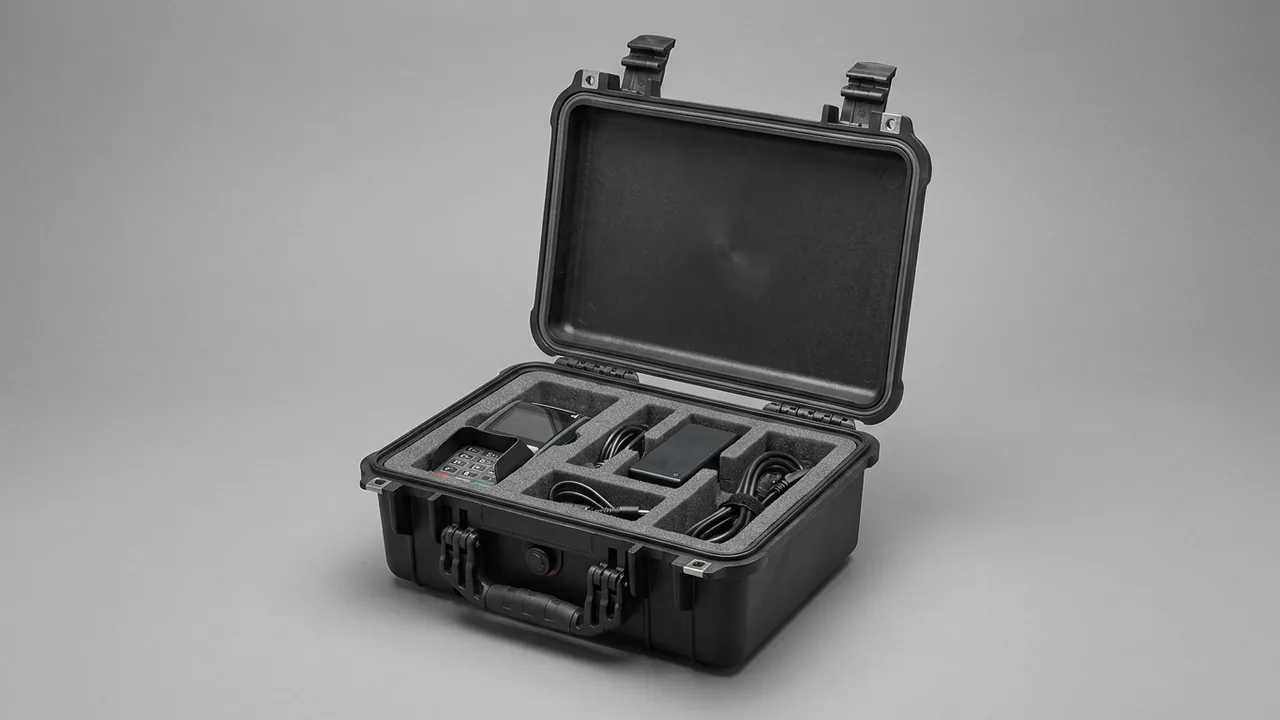
LNG plant cryo pumps (submerged and high-pressure) and heat exchangers (plate-fin, spiral-wound) run in liquefied natural gas near minus 160 degrees Celsius. Their wetted parts are mostly austenitic stainless steel and low-temperature steel, extremely sensitive to cold brittleness, corrosion and cleanliness. If such parts suffer impact micro-cracks in transit, or trapped water freezes and cracks them, or sand and grease enter, the result after reinstall ranges from efficiency loss to low-temperature brittle fracture and leakage. The conclusion up front: an LNG equipment case should run on the main line of impact protection related to cold brittleness, trapped-water icing prevention and contamination control, using austenitic-stainless-friendly low-residue liners with IP67 sealing, explosion-proof static control and strict humidity control, and CNC compartment liners shaped to the real contour so precision plates and impellers are located alone, oil ports plugged and arrive clean. The sections below move from cold-brittle specificity, split structure, low-temperature material to delivery, ending with a selection and acceptance checklist.
During turnarounds and spare rotation at LNG terminals, liquefaction plants and floating units, cryo pump impellers, shafts and exchanger plates move many times between unit area, cold box and workshop. A cryo pump rotor easily exceeds tens of kilograms, and its impeller blade clearance and seat tolerate no dent; a plate-fin exchanger plate is extremely thin and its fins fear impact and blockage. Plain wooden crates or bare cradles give no humidity or trapped-water control and no sour-spray barrier, so icing or contamination on arrival directly lengthens reinstall. Bringing LNG equipment spares into a case engineering program is key to cutting shutdown duration and safety risk, and the case belongs in the LNG turnaround spare specification so arrival cleanliness is controlled from the source.
Table of Contents
- 1. Cold-Brittle Specificity of LNG Low-Temperature Equipment Transit
- 2. Split Box and Compartment Design for Cryo Pump and Exchanger
- 3. Low-Temperature Material and Austenitic Stainless Friendly Protection
- 4. Explosion-Proof and Static Control
- 5. Trapped-Water Icing Prevention and Humidity Control
- 6. Sealing for Coastal Terminal Duty
- 7. Qualification Against Drop and Flutter
- 8. Salt Fog and Fin-Passage Cleanliness
- 9. Packing After Blow-Down
- 10. Cold-Region Transport and Storage
- 11. Documentation and Terminal Delivery
- 12. LNG Case Sizing and Selection Table
- 13. Terminal and Cold-Box Applications
- 14. Service Life in Cryogenic Service
- Frequently Asked Questions
1. Cold-Brittle Specificity of LNG Low-Temperature Equipment Transit
LNG equipment transit specificity comes from the triple overlap of low temperature, cleanliness and flammability. Low temperature: the part material is tough austenitic stainless or low-temperature steel, but rough handling that causes micro-cracks during transit can let cold brittleness grow once the part sits at minus 162 C. Cleanliness: plate-fin exchanger fins are micron-scale, and any grease, sand or trapped water blocks or ices them. Flammability: LNG vapor is combustible, so case opening must avoid static spark. Together they mean an LNG equipment case cannot copy a general equipment case, and the protection logic must restart from temperature, cleanliness and static electricity.
Another specific point is that cryo pump and exchanger should ship in separate boxes and compartments: the pump rotor is heavy and fears impact and corrosion; the exchanger plate is thin and fears blockage and moisture. Shared transit neither serves each protection focus nor helps single-case weight and field handling. For low-temperature petrochemical thinking see pump valve parts case selection and the same-batch refinery valve case. After splitting, two pick lists by tag number raise turnaround efficiency and cut mix-up errors.
2. Split Box and Compartment Design for Cryo Pump and Exchanger
The cryo pump box centers on heavy impact protection plus corrosion resistance: an aluminum-frame or steel-plastic heavy shell with a contour cradle milled to the measured rotor and impeller, the impeller wrapped in soft film against blade bruise, the shaft on multi-cradle support. The exchanger box centers on blockage-proof moisture-proof plus shock isolation: a modified PP or aluminum shell with vertical plate slots separating each plate, fin surfaces under soft film, buffer between cavities, and plugged dust caps on ports.
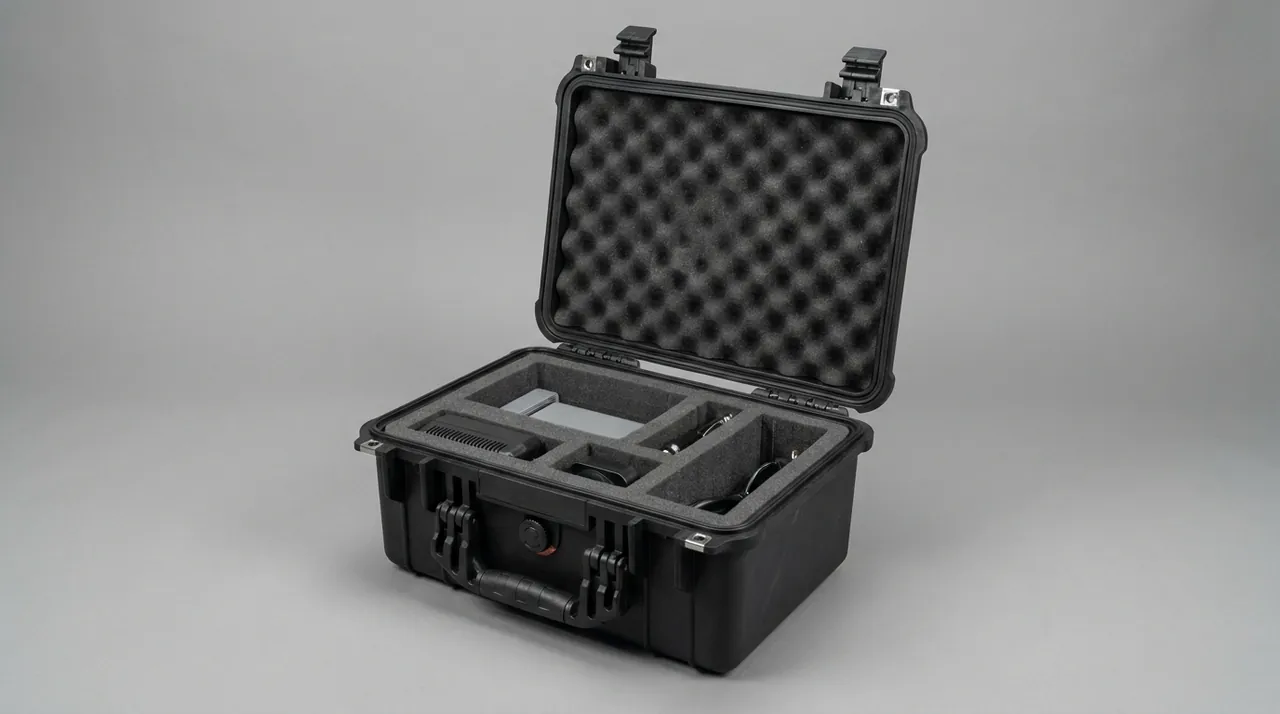
Split boxes clarify the protection focus, control single-case weight and let crews take only what they need. A long-shaft cryo pump can fix the shaft in the pump box or a standalone vertical slot. The liner process matches EVA foam insert custom process; low-temperature material comparison is in case foam material comparison, preferring low-residue, anti-static cross-linked PE. Standardize case size for cold-box area and container stacking so re-binding on transfer is reduced and forklift work stays uniform.
3. Low-Temperature Material and Austenitic Stainless Friendly Protection
LNG equipment is unusual because the part is often the more corrosion-resistant body in the case. A cryo pump impeller and shaft are austenitic stainless or a low-temperature alloy, and a plate-fin exchanger core is brazed aluminium, so the risk is not that the part corrodes but that the case introduces something that makes it corrode. The case applies NACE MR0175 / ISO 15156 wherever a fitting can see sour atmosphere, choosing austenitic stainless or a qualified low-temperature steel for brackets, dividers and fasteners so no ordinary high-strength item can rust in salt fog and deposit iron oxide on a finished surface. Two mechanisms deserve specific attention. Brazed aluminium cores are attacked by mercury even in trace amounts, so a stored or repaired exchanger core must never share a case with a mercury-bearing instrument. Austenitic stainless can suffer chloride stress corrosion if left wet with sea salt under a wrapping, which is an argument for drying and sealing rather than for more padding. Shell coating follows a polyurethane over a zinc-rich epoxy primer, hours to first red rust recorded under GB/T 10125, and the foam is a low-bleed, low-VOC anti-static grade.
4. Explosion-Proof and Static Control
LNG vapour is flammable, so case work beside a cold box or on a jetty is hazardous-area work, and the design follows the intent of GB 3836 together with ATEX 2014/34/EU. The liner is conductive foam held in the static-dissipative band, so a charge on a wrapped impeller or a plastic-capped nozzle can move rather than build. A bonded copper or treated-steel terminal with a wrist-strap interface lets the fitter discharge before the latch is touched, and latches and hinges are made from brass or treated steel to keep contact spark risk low. Cavity edges accept a brass or nylon drift, which matters because a stainless impeller is never freed with a steel hammer. A shielded pocket keeps an inventory or temperature tag quiet during transit. The scheme is described in ESD shield case design, and every statement stays descriptive because a case is not powered equipment, which keeps a terminal audit factual.
5. Trapped-Water Icing Prevention and Humidity Control
The most expensive thing an LNG case can deliver is water. A part that leaves the workshop dry can pick up moisture on a humid day, and once it is installed and chilled to minus 162 C that water freezes, expands and can crack a thin plate, distort a brazed passage or close a clearance. The packing premise is therefore total dryness rather than mere protection: after cleaning, every oil passage and fin channel is drained and blown clear with dry air or nitrogen, a generous desiccant charge and a humidity card go into the case, and relative humidity is pulled as low as the seal allows. Any visible droplet or pooled liquid is removed before the lid closes, and a plate-fin core has its nozzles plugged immediately after blow-down so damp air cannot be re-absorbed. A dew-point or humidity reading recorded at packing gives the receiving terminal a figure to compare on arrival, which turns an invisible risk into a logged one.
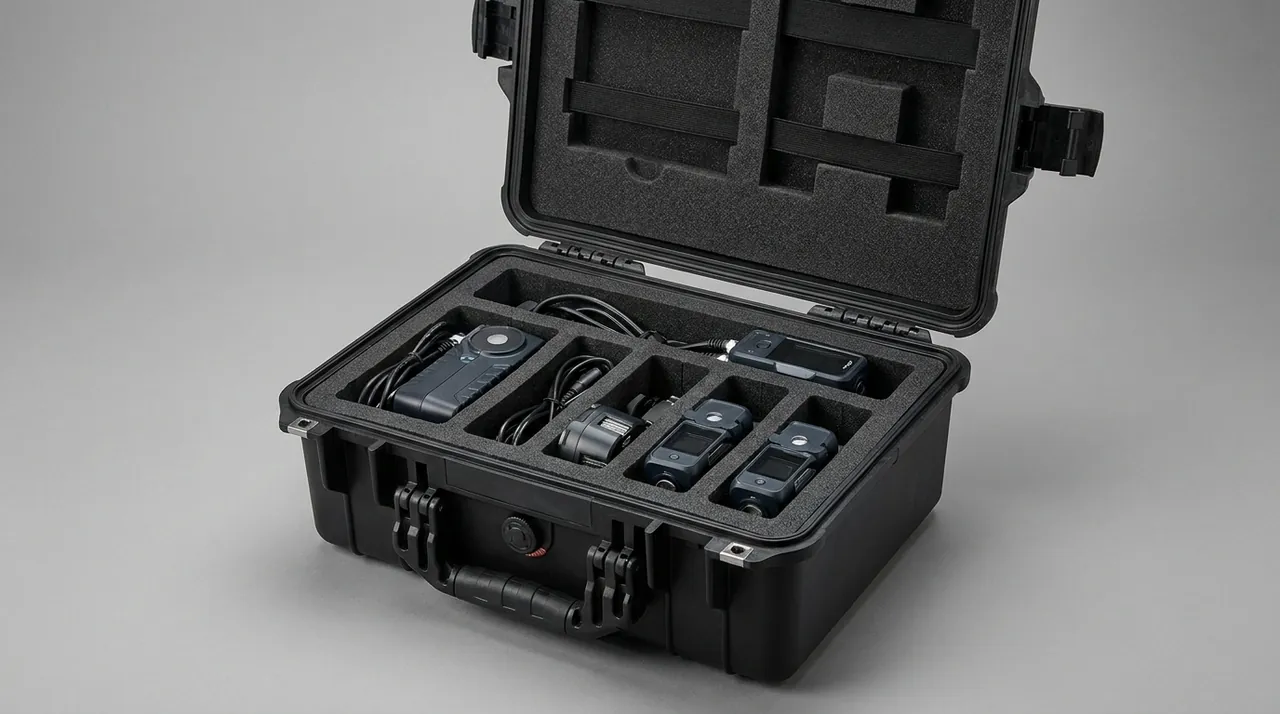
Liner material should be low-hygroscopic and low-powdering so it does not release its own moisture; the case seals to IP67 with a desiccant mesh pocket in the lid. For cases staged outdoors in cold regions, shell and liner should withstand low temperature (e.g. remain soft at minus 40 C) so foam does not harden and lose cushion. Read the humidity card at opening; if over limit, dry before install. The heavy structure can borrow the rugged scheme from drilling rig component case. A dedicated dry rack in the cold-box area is advised for uniform humidity control before transfer, removing the icing hazard at the source.
6. Sealing for Coastal Terminal Duty
Rain, seawater spray and wash-down are routine at an LNG terminal, so the case is sealed to IP67 under GB/T 4208 / IEC 60529, with a moulded EPDM or silicone gasket set into a machined groove and the latches are spaced so the ring is compressed evenly, verified by spray and immersion spot checks. Coastal terminals add salt, so the case exterior is finished in polyurethane over a zinc-rich epoxy primer, with salt fog to GB/T 10125 recorded in hours to first red rust and the filter element salt-resistant and renewed to a logged interval. A closed case that flies or crosses a range also meets a pressure differential that jams the lid or deforms the gasket, so a case pressure equalization valve with an ePTFE membrane is fitted, and the membrane is checked as part of the humidity routine because a blocked membrane defeats the drying programme. Seal geometry is compared with IP67 protective case, and humidity-sensitive shipments carry a seal self-check card read on arrival.
7. Qualification Against Drop and Flutter
A cryo pump impeller and a thin exchanger plate store and transmit energy differently from a solid casting, so the design is checked against environmental test methods rather than guessed. Drop, random vibration and humidity cycling are simulated using the MIL-STD-810H method as a transport test basis only, and the case holds no military certification, a line the delivery documents repeat. Checks cover a 1.2 m corner-edge-face drop, vibration for road and air legs, and a humidity cycle. Isolation pairs a contour cradle with a 10 to 20 mm gap between cavity and shell, and a very thin plate can additionally hang on elastic suspension so it cannot flutter against its own divider. Background on the methods is in MIL-STD-810H case compliance and GB/T 4857 transport packaging; the qualification report records that method compliance is not a certification.
8. Salt Fog and Fin-Passage Cleanliness
Corrosion and cleanliness are tracked separately, because an LNG part can fail either way. On the corrosion side, metalwork and liner fittings are put through GB/T 10125 neutral salt spray with the hours to first red rust written down, and bought carbon-steel fasteners are expected to pass 240 hours. For cleanliness, the sensitive volumes are the fin channels of a plate-fin core and the internal clearances of a cryo pump, where a micron-scale passage can be blocked by a single flake of scale or a smear of grease. The interior is therefore managed to a hydraulic cleanliness figure quoting ISO 4406 bands such as 17/15/12, tighter than for general equipment, and it is verified before the lid closes.
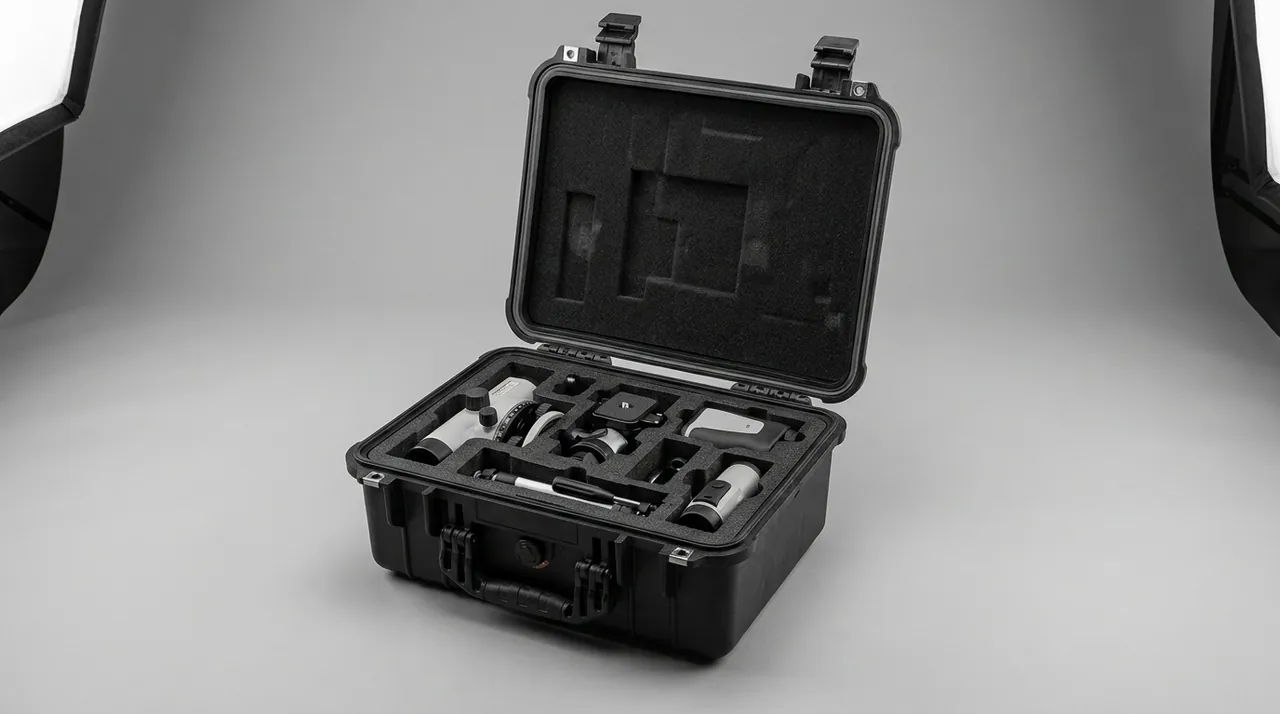
The means are straightforward: liner stock that does not shed, walls that can be wiped clean, a supplied cap or plug on every open nozzle, and a packing bay kept free of grit. A core bound for high-cleanliness service also travels with a clean indicator or particle-check card inside the case, read at opening while contamination is still easy to deal with. Process-equipment practice is compared in heat exchanger parts case. Cleanliness control and trapped-water control together are what let the core go back into the cold box without an icing event or a fin leak.
9. Packing After Blow-Down
Procedure decides whether the design survives the trip. One, verify the pick list and serials against the cavity map. Two, clean, drain and blow every oil passage and fin channel with dry air or nitrogen, and confirm that no trapped water remains. Three, remove handling prints and oil with the specified solvent. Four, wrap seats and fin faces in soft film or inhibitor paper. Five, lay each item into its own cavity, secure the end caps and straps, and shake the case for rattles. Six, add desiccant and a humidity card, then fasten the lid and record the humidity or dew-point reading. Seven, apply the packing list, serial label and explosion-proof markings. Eight, log the drop and vibration spot check. The two errors seen most often are closing the lid before the blow-down and omitting the desiccant, and both lead directly to icing or contamination on arrival. Documents travel in a waterproof pouch, and label durability is covered by case lock customization options.
The two errors that recur are closing the lid before the blow-down and shipping without desiccant, and either one produces icing or contamination at the far end. Records travel in a waterproof pouch, and the case lock customization options picked for serial and hazard marks keep them readable at a coastal terminal. Pack away from welding and grinding so no swarf reaches an open fin channel, and complete the tag read-write log before closing so nothing is missed in transit.
10. Cold-Region Transport and Storage
On the road the case is strapped to the truck so it cannot slide or be crushed; for a long haul or an export leg it is carried below deck, or under salt-fog sheeting with vent gaps. Storage in a cold region adds a requirement: the case stands on dunnage under cover, and the shell and liner are confirmed to tolerate the local minimum so neither becomes brittle. A shipment carrying a small volume of lubricant or cleaner follows ADR/IMDG hazmat transport case for marking and documents. On arrival, open and read the humidity card, look for trapped water, inspect seat faces and exchanger nozzles and take a cleanliness sample, then route findings back to the supply chain. Storage discipline is covered in protective case service life; at a peak turnaround a ledger by unit and tag number speeds picking, and a condensation cover protects cases staged in a cold area.
11. Documentation and Terminal Delivery
The document set that ships with an LNG case counts as much as the hardware. JUNZHIJIA comes from the Kexin New Materials (Guangdong) Co., Ltd. facility in Guangdong, where LNG cases are built for the cold, clean and flammable duty of cryo pumps and heat exchangers, and operates two routes: private-label OEM volume built to a customer drawing and brand, and a full ODM programme from split-box layout and austenitic-friendly liner choice through salt-spray, drop, cleanliness and humidity verification, after which the goods move into wholesale, agency and global channels. The supplier can issue, under contract, certificates covering austenitic grade and low-temperature impact, salt-fog hours, cleanliness data, static and grounding checks, IP verification and a sour-service compliance statement to NACE MR0175 / ISO 15156. Factory screening can begin from how to choose case OEM factory and identify genuine vs fake case, with the sampling rule taken from custom case acceptance AQL. Documents bind to the lot number so an audit can pull one file quickly.
12. LNG Case Sizing and Selection Table
Working LNG equipment case ranges, given as engineering values and not as mandatory standards:
| Assembly | Weight (kg) | Outer shell | Insert concept | Protection |
|---|---|---|---|---|
| --- | --- | --- | --- | --- |
| Cryo pump rotor | 20 to 80 | Aluminum frame | Contour cradle + film | IP67 |
| Impeller | 5 to 30 | Modified PP / aluminum | Vertical slot + film | IP67 |
| Exchanger plate | 1 to 15 | Modified PP | Vertical divider slot | IP67 |
| Pump shaft | 3 to 20 | Modified PP | Multi-cradle | IP67 |
| Pump + exchanger | 30 to 120 | Split heavy case | Split compartments | IP67 + EX |
Load profile by journey:
| Journey | Case loading | Cushioning | Comment |
|---|---|---|---|
| --- | --- | --- | --- |
| Turnaround transfer | Single | High | Blow water + desiccant |
| Export sea | Full lot | High | Salt tarp + humidity card |
| Workshop move | Spare | Medium | Vent gap |
| Cold storage | Spare stock | Medium | Low-temp liner |
For tooling and MOQ see custom case mold cost analysis. For multi-unit LNG plants, order a standard shell first, then liner trays matched to the equipment spectrum to cut inventory variety and pick errors.
13. Terminal and Cold-Box Applications
LNG terminal work shows three recurring patterns. In a turnaround the crew pre-loads the common cryo pump rotors and exchanger plates into split compartment cases that travel with the turnaround vehicle, so a rotor can go back into the pump as soon as the case is open and the outage is shorter. At a coastal terminal in salt-spray service, every cradle and stud follows the material rule, the frame carries a ground terminal, and cases move on export and supply legs. In a cold region the liner has to stay soft at the local minimum so the cavity does not lose its cushion, and cavity location is made more positive. In all three the lesson is the same: transit protection belongs in the turnaround and spare plan from the beginning, not in a clean-up after an icing or contamination event. Related case types appear in wellhead equipment case and refinery valve case, with heavy-duty practice cross-referenced in mining equipment parts case. A humidity life warning in the spare system turns arrival dryness into a measurable figure.
14. Service Life in Cryogenic Service
An LNG case is reused across many outages, and a fixed routine is what keeps its cost per trip down. After every use, flush out residual water and oil, inspect the gasket for crushing or hardening, fit a fresh desiccant charge and humidity card, and confirm latch and hinge tension. Any liner that has begun to shed, or whose cavity has lost shape, is replaced, and salt-spray nicks on the shell are repainted. Following how to clean protective case adds measurable life, and at a salt-spray site the interval is shortened so the conductive foam keeps its static-control property. Service life is duty-driven: heavy salt fog and direct sun cut it short, an indoor spare store extends it, and a cold region tests liner flexibility. Carry a ledger per lot with trips logged and the latest inspection result, and withdraw the case once its rated life ends or it takes structural damage. Because hinges and latches are the first to wear, the design in toolbox hinge latch seal limits how often they are serviced, and casters and lift points are re-checked quarterly for fatigue.
Frequently Asked Questions
Q: How does an LNG equipment case differ from a refinery valve case? A: Sealing, explosion-proof control and cleanliness appear in both, but the main line is different. An LNG case carries low-temperature, clean and flammable duty: the wetted parts are austenitic stainless or low-temperature steel, a plate-fin core is brazed aluminium with micron-scale fin channels, and any trapped water will freeze and expand once the unit is charged at minus 162 C while any grease or grit will block flow. Its first main line is therefore total dryness and humidity control, supported by a liner that is low-bleed and friendly to an austenitic or aluminium surface. A refinery valve case carries hot, sour and precision duty, and its first task is splitting body from actuator and managing heat and residual oil. The liners diverge too: the LNG box uses vertical dividers with soft film against blockage and moisture, while the refinery actuator box uses sealed compartments against dust. Decide first whether the part is cold and cleanliness sensitive.
Q: Why does dryness matter more than padding in an LNG case? A: LNG liquefies near minus 162 C, so a part goes from ambient to deep cold within minutes of being commissioned. If the case held trapped water, pooled liquid or simply high humidity, the part may look perfect at ambient on arrival while a film of moisture sits in a fin channel, a brazed passage or a machined clearance. On chill-down that water freezes and expands, and the result ranges from a locally blocked passage to a cracked thin plate or a distorted seal land, which means a leak and an unplanned outage. The defence is a drying routine rather than more padding: drain and blow every passage with dry air or nitrogen, add a generous desiccant charge and a humidity card, pull relative humidity as low as the seal allows, and record the reading at packing. Use a low-hygroscopic liner that cannot release its own moisture, seal to IP67, and read the humidity card at opening. This is the requirement that separates an LNG case from a general equipment case.
Q: Why does internal material still matter when the parts are already stainless? A: Austenitic stainless and low-temperature steel have good toughness at cold temperature, but the case can still do them harm. Ordinary high-strength fasteners or carbon-steel cradles corrode in salt fog and deposit iron oxide on a finished stainless or aluminium surface. Dissimilar metals in contact form a galvanic couple that accelerates pitting at exactly the places a gasket will later have to seal. A liner that bleeds corrosive or hygroscopic volatiles contaminates the surface and the internal cleanliness at the same time, and an aluminium brazed core has an additional sensitivity to mercury that rules out sharing a case with mercury-bearing instruments. Internal brackets, dividers and fasteners are therefore austenitic stainless or a qualified low-temperature steel, and the liner is low-bleed, low-VOC and anti-static. Delivery carries material and low-temperature impact reports plus a sour compliance statement to NACE MR0175 / ISO 15156, which terminal audits treat as part of material traceability.
Q: A plate-fin core is thin and delicate; how is it kept sound in transit? A: Thin plate protection rests on three methods: vertical division, soft film and blow-down. Vertical slots keep each plate separate so plates neither rub against each other nor deform under stacking. A soft film over the fin surface stops a hard object pressing into a fin channel, and a parted divider keeps one plate from leaning on the next. Before packing, dry air or nitrogen blows the fin channel clear of particulates and trapped water, and nozzles are plugged straight afterwards so damp air cannot be re-absorbed. A 10 to 20 mm buffer between cavity and shell absorbs shock, and a very thin plate can additionally hang on elastic suspension so it cannot flutter. After loading, shake the case by hand and listen for a rattle. The cavity is milled to the measured plate thickness and contour, and a high-cleanliness core travels with a clean indicator or particle-check card read at opening, so the plate goes back into service without a blockage or a leak.
Q: How is IP67 reinforced at a coastal LNG terminal? A: IP67 per GB/T 4208 / IEC 60529 covers dust-tightness and short immersion, which handles rain and seawater spray, but a coastal terminal adds salt and pressure. On the salt side, Salt also matters here: the shell is coated in polyurethane over a zinc-rich epoxy primer, GB/T 10125 salt fog being recorded in hours to first red rust, while the breathable membrane is a salt-resistant element renewed to a logged interval. On the pressure side, a case closed at ambient and opened after an air leg or a long haul develops a differential that jams the lid or splits the gasket, so the case carries a pressure equalization valve with an ePTFE membrane as standard, and a blocked membrane would also stop the drying programme from working. Add salt-fog sheeting, a realistic desiccant charge and a humidity card, with vent gaps left open in a stack. At arrival, read the humidity card, look for trapped water, then inspect seat faces and nozzles.
Q: How is the static-control chain closed on a cryogenic case? A: Three links form the chain. Start with charge: the liner is conductive foam inside the static-dissipative band, so a wrapped impeller or a capped nozzle sheds charge instead of storing it. For grounding, a bonded copper or treated-steel terminal pairs with a wrist-strap interface, applied before the latch is touched so operator and case equalise with nearby steelwork. The tool interface arranges latches, hinges and cavity edges so a stainless impeller or a plate stack is eased out with a brass or nylon drift, never a steel tool, and any tool taken to the lid has a no-spark place to rest. A shielded pocket keeps an inventory or temperature tag quiet during transit. The design answers the intent of GB 3836 and ATEX for work in a flammable-vapour area. The case is not powered apparatus, so the accompanying statement sets out design and test method and claims no equipment certification.
Q: What lead time and minimum order apply to low-temperature liners? A: A low-temperature liner set moves through four steps: scan or measure the rotor envelope and the plate stack, generate the cavity tooling path, machine the first set, then verify fit with the real parts loaded. First-article timing depends on how many separate items the map covers and how heavy the shop load is, and typically lands somewhere between several working days and two weeks. Volume timing then tracks tooling and order size. Minimum quantity is set by the cooperation model: an OEM route that applies a customer's drawing and brand to a standard shell, or an ODM route that starts at cavity design, can be negotiated down to a small first order, in some cases one sample case, whereas a dedicated shell mould attracts tooling cost analysed in the mould cost reference. Validate the split and the load path with modular trays before committing to volume tooling. For cryogenic work one further check is worth adding: load the tray, hold it at the local minimum, and confirm the cavity still locates the rotor and the plate stack before the tooling is released. That single trial is far cheaper than a liner that stiffens on its first winter journey.
Q: How is a batch of LNG cases checked before it is released to the store? A: Sample with AQL and walk the risk items in order, rather than judging by the appearance of the case. Structure first: split compartments separating the pump rotor from the exchanger plates, the frame carrying load, lift points and casters sound. Material second, confirmed from certificates for brackets, dividers and fasteners, checking austenitic stainless or qualified low-temperature steel against the sour declaration. Sealing third: confirm the declared IP grade on a case drawn from the lot, or put one through a spray-and-dunk check. Static control fourth: bonded ground terminal, dissipative liner, no-spark interface at the lid. Cleanliness fifth, against the agreed ISO 4406 figure, which is tighter here than for general equipment, plus the state of nozzles and port plugs. Dryness sixth: desiccant and humidity card present and no trapped water in any cavity. The document pack last, holding salt-spray hours, drop evidence citing MIL-STD-810H and flagged as non-military, cleanliness and material reports. Bind everything to the lot number.
Q: When does an LNG case shipment become dangerous goods? A: A dried, purged part travelling in inhibitor paper is not dangerous goods, and that is the normal shipping state for cryogenic equipment. The classification question appears when the case also contains a service lubricant, a cleaning fluid, or residual liquid that was not properly cleared before packing. If that volume brings the shipment inside the rules, ADR applies to the road legs and IMDG to the sea legs, covering classification and packaging, marking and the shipping declaration. Practically: a compliant small container fixed where it cannot reach the parts, hazard marks applied to the exterior, and the data sheet and shipping papers accompanying the consignment, with a forwarder engaged where the route requires one. Settle the companion-material list with logistics and compliance at the planning stage rather than at the port gate, and record in the contract who owns each obligation along the route. Two details catch cryogenic shipments in particular: a purging-gas cylinder travelling with the case is itself a regulated article, and a residual pool of condensate in a pump column can be classified as a liquid, so each must be declared rather than treated as part of the equipment.