

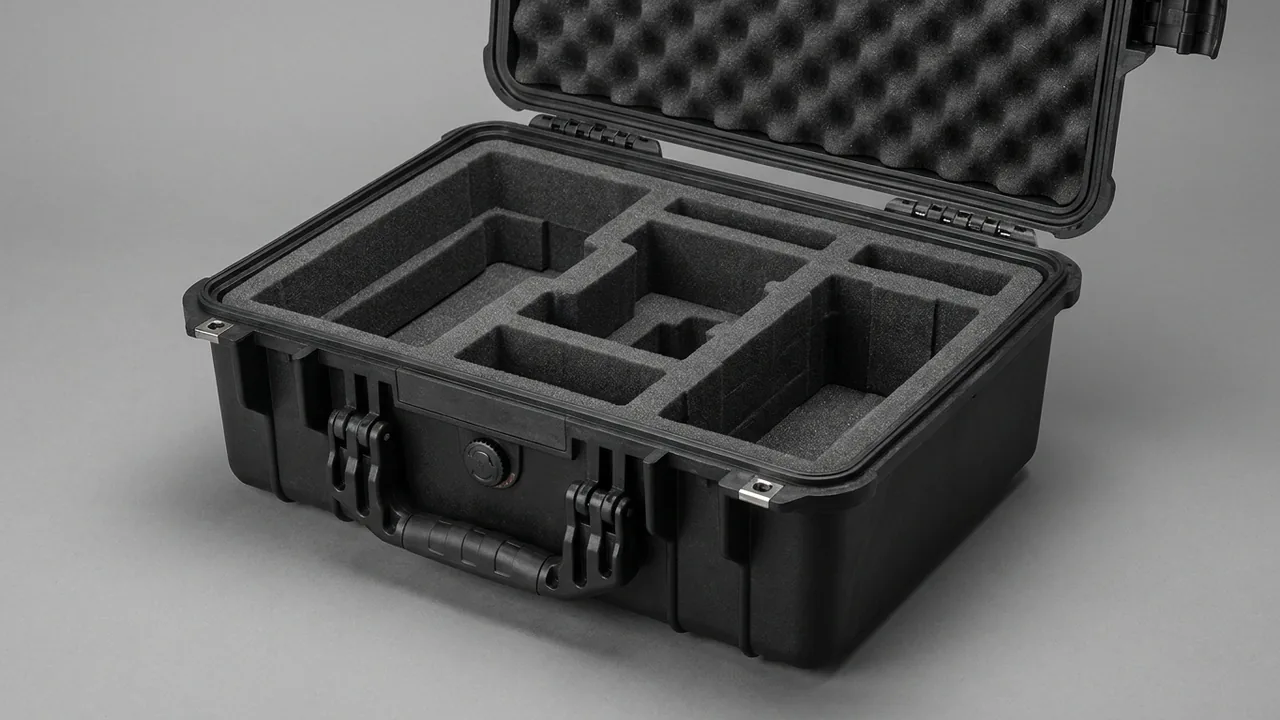
The wellhead is the throat of an oil or gas well. Components on the christmas tree - valves, flanges, chokes - and the gate valve bodies, gates, stems, seals are large, heavy and precisely matched. If these parts are bruised, deformed or contaminated with sand during transfer and lifting, the result ranges from leakage and shutdown to well-control risk. The up-front conclusion: a wellhead equipment case should treat heavy-duty impact protection as the first design target, combined with sour-service corrosion resistance, explosion-proof static control and IP67 sealing, with CNC compartment liners shaped to the real part contour so every item is located alone and never touches another. The sections that follow cover transit difficulty, the case frame and the mechanical liner, then the standards, and finish with a selection and acceptance checklist.
On land pad sites and offshore drilling platforms, christmas tree parts move from warehouse through flatbed, crane and rig floor in many stages where vibration, swing and accidental impact are hard to avoid. A gate valve body easily exceeds tens of kilograms, and its seat face and gate guide tolerate no dent at all; a flange seal groove chewed by a hard object may weep after installation. Plain wooden crates or simple cradles neither restrain heavy-part movement nor isolate sulfur-bearing salt spray, so incident probability stays high. Bringing wellhead spares into a unified case engineering program is a practical way to lower well-control risk and inventory loss, and the case should sit inside the procurement specification rather than being ordered after the fact.
Table of Contents
- 1. Unique Difficulties in Christmas Tree and Gate Valve Transit
- 2. Heavy-Duty Frame, Wheels and Lift Points
- 3. Mechanics of Impact Liners and Dividers
- 4. Explosion-Proof and Static Control
- 5. Sour-Service Corrosion Materials
- 6. Sealing for Wet Pad and Platform Duty
- 7. Drop and Vibration Qualification
- 8. Salt Fog and Bore Cleanliness
- 9. Packing and Lifting Procedure
- 10. Road, Sea and Yard Handling
- 11. Inspection Documents and Load-Bearing Delivery
- 12. Wellhead Case Sizing and Selection Table
- 13. Applications on Pads and Platforms
- 14. Upkeep and Load-Path Service Life
- Frequently Asked Questions
1. Unique Difficulties in Christmas Tree and Gate Valve Transit
Wellhead transit difficulty clusters in three words: heavy, large, precise. Heavy: a single valve body or flange often exceeds thirty kilograms, a hard test for frame and handles. Large: the outline is irregular with bosses and flange edges that a plain rectangular cavity cannot follow. Precise: seat faces, guides and threads tolerate no dent and no foreign object. Together they mean a wellhead case cannot simply copy a light instrument-case approach, and the design must restart from both load path and location.
Another difficulty is dissimilar metals in one case: a christmas tree is mostly carbon-steel body with stainless stem and copper-alloy seals, and poor liner division during shared transit may cause galvanic coupling. Then there is lifting - wellhead parts usually move by sling or lift eye, so the case must provide lift points matched to lifting gear and a load path, or a cracked case on transfer is more dangerous than a damaged part. For general valve thinking see pump valve parts case selection. Two features of wellhead hardware drive the liner layout more than anything else. The first is the ring groove. A 6BX or BX gasket seals metal-to-metal against a machined groove in a flange face, and a groove that takes an impact or picks up a burr will not hold pressure, however carefully the studs are subsequently torqued. The second is the stud set. Studs and nuts of different diameter and grade are indistinguishable in a parts bin, and a mixed set discovered at the wellsite costs a rig-floor delay. A case that gives every flange face a cleaned, parked position and every stud a labelled bin is therefore not a convenience, it is the control that keeps a second make-up from being required.
2. Heavy-Duty Frame, Wheels and Lift Points
Wellhead shells prefer aluminum-frame or steel-plastic composite heavy cases with metal-reinforced liner skeletons. The key is the load path: weight travels from part through liner to case base and ribs, then is shared by handles, latches and wheels. Handles and wheels must carry the full loaded weight with margin; heavy casters ease short pad moves, and for long haul they are removed or fixed.
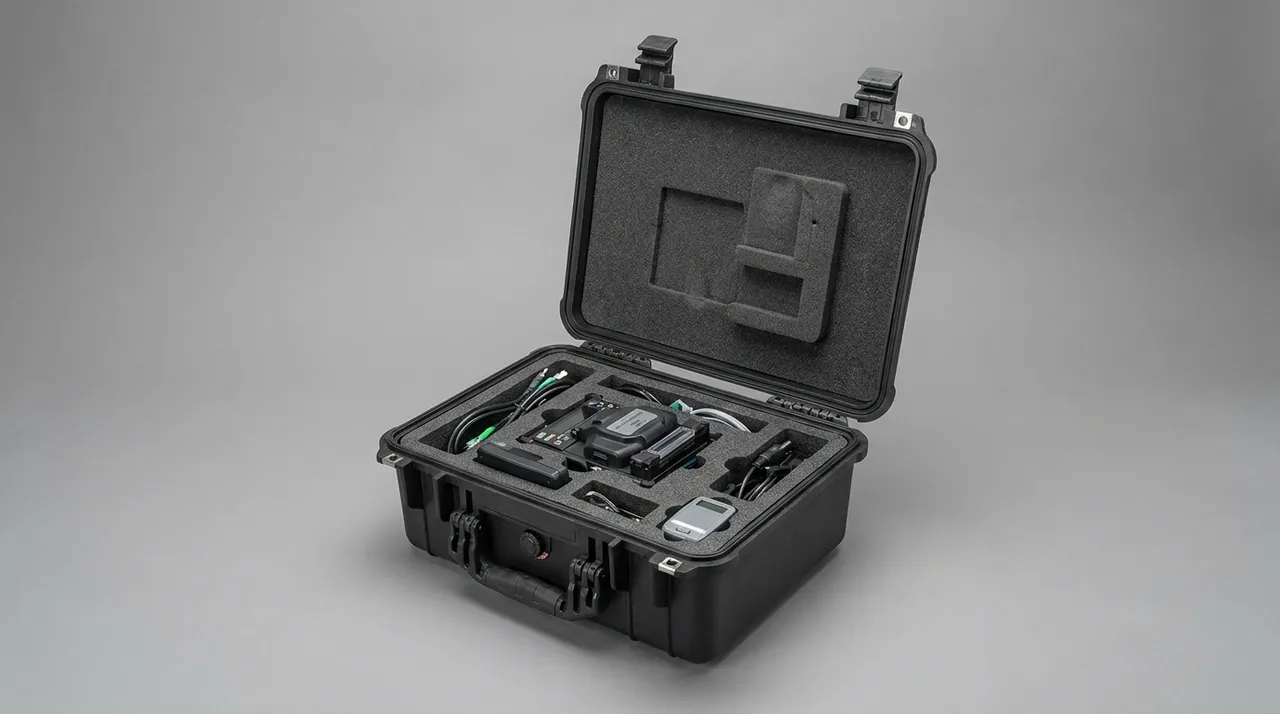
The base has forklift slots and four lift corners; lift points are calculated for total weight with a dynamic factor; latches are heavy butterfly or top-bottom types pressing the ring evenly. For very heavy full valve packs, use a split case (body and gate in separate boxes) to lower single-case weight and handling risk. In muddy fields borrow the reinforced frame and protective caster scheme from drilling rig component case. Standardize outer size for body and container stacking so re-binding on transfer is minimized.
3. Mechanics of Impact Liners and Dividers
Impact protection means "under shock the part only compresses foam, hits no hard object and never hits another part." Analyze the liner: shock energy is absorbed by foam compression, so cavity wall thickness and foam density must match part mass and expected drop height; divider walls must be thick enough that neighboring heavy parts do not touch even with slight shift. For precision faces like seat and gate guide, add a hard backing (engineering-plastic cradle) with a soft film so foam is not locally punched through.
Gate plates stand in vertical slots; slender stems use multi-cradle support; flanges use contour cradles with bolt-hole locating pins to stop rotation. All location follows measured part contour, not approximate size. The machinable foam process matches EVA foam insert custom process; material comparison is in case foam material comparison, and heavy duty prefers high-density cross-linked PE with good rebound and compression strength so the cavity does not collapse after repeated transit.
4. Explosion-Proof and Static Control
A wellhead area is a classified explosive atmosphere, and case work there happens close to a live tree, so opening and lifting are the operations the design must answer. The intent followed is that of GB 3836 and ATEX 2014/34/EU. The shell avoids sparking non-metal surfaces and provides a no-spark tool position at the lid; metal versions carry a bonded conductive path held inside the static-dissipative band. Grounding is taken by a copper or treated-steel stud, and a strap interface lets the operator bleed charge away before the lid lifts; the liner itself is conductive foam, and the latches and hinges are brass or treated steel, chosen so that contact between them cannot raise a spark. A part carrying a radio tag gets a shielded pocket. The complete approach is set out in ESD shield case design, and the wording throughout stays descriptive, because a case holds no electrical certification, which is what keeps a pad audit from becoming a compliance argument.
5. Sour-Service Corrosion Materials
Wellhead hardware is pressure-containing and usually sour, so the materials picture is wider than the case hardware itself. A tree body is normally carbon or low-alloy steel with a corrosion-resistant overlay on the sealing surfaces, the stem and seat may be stainless with a hard facing, and the studs are alloy steel heat-treated to a controlled hardness. The transit case applies NACE MR0175 / ISO 15156 to the items it contributes: cradle brackets, divider plates, ground studs and fasteners are duplex or low-carbon martensitic stainless, and any carbon-steel item carries a qualified coating. Shell finish is a an epoxy zinc-rich primer with a polyurethane finish, GB/T 10125 salt spray being used to record the hours to first red rust. Foam must resist oil and produced water and stay low in corrosive volatiles, so a low-VOC anti-static grade is chosen, and a stem or a seat land gets inhibitor paper for a passive pocket. Materials practice downstream is described in refinery pump parts case, letting one quality team audit several case types under a single rule.
6. Sealing for Wet Pad and Platform Duty
Rain, mud and seawater spray are constant for a wellhead case, so the case is sealed to IP67 under GB/T 4208 / IEC 60529; the lid is large, which means the gasket must be a continuous moulded EPDM or silicone ring seated in a machined groove and the latches are distributed so the ring is pressed evenly from end to end, verified by spray and immersion spot checks rather than by feel. A wellhead case also flies and crosses oceans: a unit closed at pad pressure and opened after an air leg develops a differential that can jam the lid or distort the gasket, and a case pressure equalization valve carrying a breathable ePTFE membrane is fitted to equalise pressure while still rejecting water and dust. Coastal and platform duty calls for a salt-resistant membrane filter on a recorded replacement interval. Seal design is compared with IP67 protective case, and platform deliveries travel with a seal self-check card read on arrival.
7. Drop and Vibration Qualification
A gate valve body of tens of kilograms stores far more kinetic energy than the case foam was ever sized for by eye, which is why the design is checked against environmental test methods. Here MIL-STD-810H serves solely as the transport test basis for those simulations; the case is not military certified, and the delivery note says so. Simulations include a 1.2 m corner-edge-face drop, vibration reflecting road and air legs, and a humidity cycle. Isolation combines a cavity cradle carrying the part with a 10 to 20 mm buffer between cavity and shell, and a lapped seat land can additionally hang on elastic suspension. The methodology is documented against MIL-STD-810H case compliance and GB/T 4857 transport packaging. Citing a standard is not the same as holding an approval, and the delivery note states that plainly.
8. Salt Fog and Bore Cleanliness
Corrosion and contamination are measured separately, because a wellhead part can fail either way. Salt-spray endurance is recorded first: hardware goes into GB/T 10125 neutral salt fog and the elapsed hours to first red rust are written down, bought carbon-steel fasteners being held to 240 hours or better. For contamination, the surfaces that matter are the flange faces, ring grooves and stem, all of which seal on a machined finish and none of which tolerate a hard particle. Interior cleanliness is therefore controlled to a hydraulic figure built on ISO 4406 bands such as 19/17/14, agreed per assembly and checked before closing.
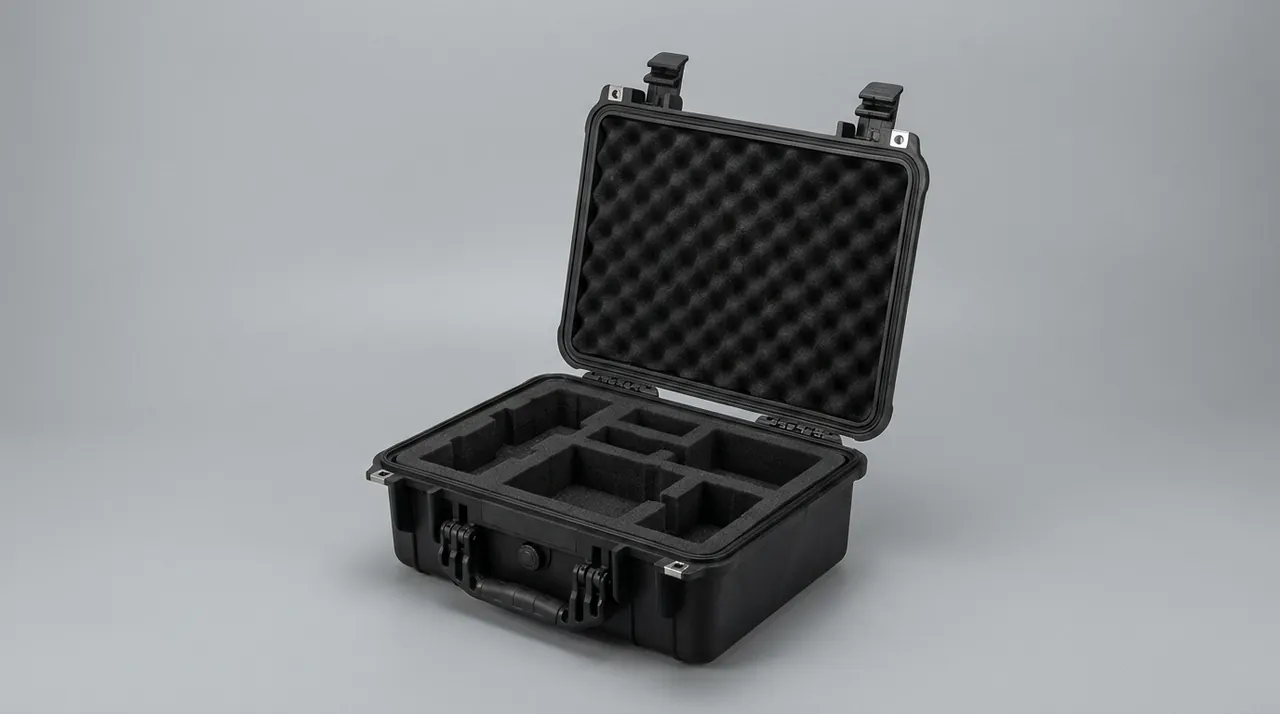
The working controls are plain: liner stock that does not shed, walls that can be wiped down, a cap or plug for every open bore, and a packing bay kept clear of grit. A valve bound for high-cleanliness service also ships with a dust and moisture tell-tale taped under the lid, read as the case is opened, while a trace is still a cheap fix. Process-equipment practice is compared in heat exchanger parts case. Corrosion control and cleanliness control together are what let the part go straight onto the well instead of being rejected at the gate. Two surfaces decide this in practice: the flange face and the ring groove. Both seal metal-to-metal, both are checked at the wellsite with a light and a straight edge, and both lose their integrity if a single hard particle is rolled across them or if a bore is left open to grit. Giving every open bore a plug or cap, and every gasket a dedicated parked position, does more for well-control readiness than any amount of additional padding.
9. Packing and Lifting Procedure
Procedure is where the design is either realised or thrown away. One, run the pick list against the serial numbers on the cavity map. Two, confirm the part is at ambient, free of standing oil and fitted with bore plugs. Three, wipe off handling prints and oil using the solvent named in the specification. Four, wrap the seat lands and ring grooves in inhibitor paper or a rust bag. Five, place each item in its own cavity, fix the end caps and straps, and shake the case to confirm nothing rattles. Six, add desiccant and a humidity card before closing, then fasten the lid. Seven, fit the packing list, the serial label and any hazard or explosion-proof markings. Eight, before lifting, verify lift-point load and record the drop and the vibration spot check. Two errors recur on pads, putting several items in one cavity and leaving the desiccant out, and both erase the value of the liner work. Documents go in a waterproof pouch and the label durability covered by case lock customization options matters in salt fog.
Two mistakes recur at the wellsite: several items pushed into one cavity to save a minute, and a long haul dispatched without desiccant. Either one cancels work the liner was designed to do. The document set travels in a waterproof pouch, and its case lock customization options selection is what keeps serial and hazard labels legible in salt fog. Pack away from welding and grinding so no swarf settles in an open cavity, and close the radio-tag read-write log before the lid goes down.
10. Road, Sea and Yard Handling
On the road the case rides strapped to the deck so it cannot shift or take a crush from a second tier, and the lift corners stay clear for the crane. At sea it rides below deck, or under a salt-fog cover with vents left open; stored outdoors it stands on dunnage beneath a cover, so water and ultraviolet light cannot age the foam. It is lifted by lift point or forklift slot, never dragged, never dropped. Where a small volume of lubricant or chemical inhibitor travels with it, ADR/IMDG hazmat transport case sets the marking and the paperwork. On arrival, open up, read the humidity card, inspect the seat lands and ring grooves, pull a cleanliness sample, and refer any finding back to the supply chain. Case service life is set out in protective case service life, and a QR code on the lid that opens the lifting and opening instructions is worth adding for crew use.
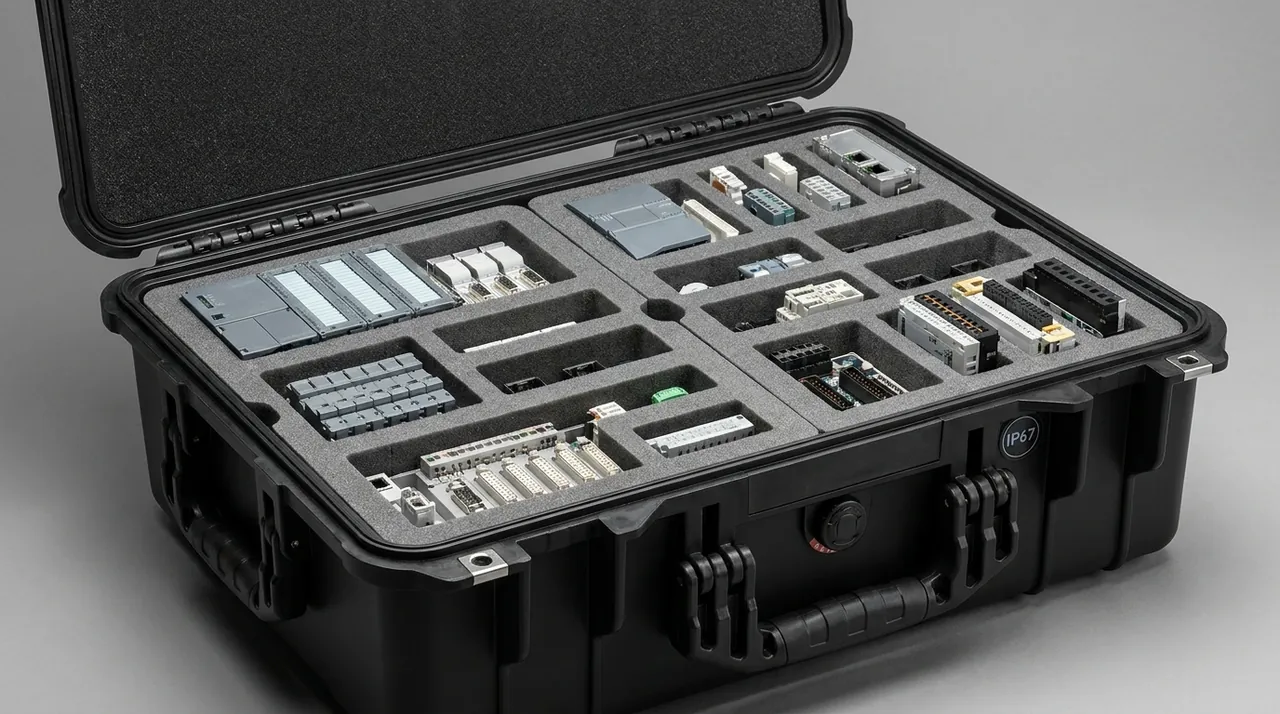
For cross-border with small lube or chemical inhibitor volumes, follow ADR/IMDG hazmat transport case marking and documents. On arrival do an opening inspection: check humidity card, seat faces and sample cleanliness, feed problems back. Good storage extends protective case service life. A companion QR code that opens lifting and opening instructions is recommended for crew use.
11. Inspection Documents and Load-Bearing Delivery
For a procurement team the document pack carries the same weight as the case. The JUNZHIJIA site operated by Kexin New Materials (Guangdong) Co., Ltd. in Guangdong builds wellhead cases around the heavy, large and precise contour of christmas tree and gate valve parts together with their sour and salt-spray duty, and offers both cooperation routes: one being an OEM arrangement that applies a customer's drawing and brand to private-label volume, or an ODM programme that starts from a load-bearing liner layout and heavy frame selection and ends with salt-spray and drop verification, organised to reach wholesale, agency and global markets. Under contract, the supplier can issue certificates covering alloy grade and hardness, salt-spray hours, cleanliness data, static and grounding checks, IP verification and a sour-service compliance statement to NACE MR0175 / ISO 15156. Supplier screening can begin from how to choose case OEM factory and identify genuine vs fake case, with the incoming sampling rule taken from custom case acceptance AQL. Records bind to the lot number so a pad audit can pull one file quickly.
12. Wellhead Case Sizing and Selection Table
Typical ranges for wellhead equipment cases are set out below as engineering values, not as mandatory figures:
| Component | Weight (kg) | Outer shell | Insert concept | Protection target |
|---|---|---|---|---|
| --- | --- | --- | --- | --- |
| Gate valve body | 30 to 80 | Aluminum frame | Contour cradle + hard back | IP67 |
| Christmas tree valve | 10 to 40 | Aluminum frame | Modular compartment | IP67 |
| Gate/stem | 2 to 15 | Modified PP | Vertical slot + cradles | IP67 |
| Flange seal | 5 to 25 | Aluminum frame | Contour cradle + pin | IP67 |
| Full valve pack | 40 to 120 | Split heavy case | Split compartments | IP67 + EX |
How the load size relates to the transport leg:
| Movement type | Load per case | Buffer level | Remark |
|---|---|---|---|
| --- | --- | --- | --- |
| Flatbed transfer | Single | High | Strap + lift corner |
| Sea export | Full lot | High | Salt tarp + desiccant |
| Platform supply | Spare | Medium | Vent gap |
| Pad storage | Buffer stock | Medium | Raised, then covered |
Tooling and minimum order are covered in custom case mold cost analysis. Where a crew runs several models, standardise the shell first and then cut liner trays to suit each valve family.
13. Applications on Pads and Platforms
On land pads a maintenance crew pre-loads the common gate valves and tree valves into heavy compartment cases that ride with the flatbed, so a valve can be lifted straight into place and the well comes back on sooner. On an offshore platform producing sour associated gas, every cradle and stud in the case matches the tree metallurgy, the frame carries a ground terminal, and the case rotates with the supply boat. In a cold field the foam stiffens at low temperature, so a soft low-temperature formulation is used and the cavity location is made more positive. The consistent lesson is that transit protection belongs in the procurement and maintenance plan from the start rather than in a repair order raised after a damaged seat. Related case types are covered in oilfield pump case and LNG plant equipment case, while heavy-duty practice is cross-referenced in mining equipment parts case. Coding the case into the crew spare system makes the right liner instant to find.
14. Upkeep and Load-Path Service Life
A wellhead case is an asset that should survive many transfers, and a maintenance routine is what makes that true. After every trip, wash out mud and oil, look at the gasket for compression set or cracking, renew the desiccant and the humidity card, and verify that latches and hinges still tension correctly. A liner that has begun to shed, or whose cavity no longer holds the part, is replaced, and coating damage on a metal shell is touched in before rust creeps under the film. Working to how to clean protective case visibly lengthens service life, and on a salt-spray platform the interval is shortened. Duty sets the lifespan: heavy salt fog and strong sun shorten it, while an indoor spare store stretches it. A ledger of lot, trips and inspection outcome shows when a case has reached end of life or taken structural damage, at which point it is withdrawn. Hinges and latches wear before anything else, so the hardware scheme in toolbox hinge latch seal keeps maintenance calls down, and lift points and casters are checked each quarter for fatigue.
Frequently Asked Questions
Q: What separates a wellhead case from a pump-parts case? A: Corrosion, explosion-proof control and sealing appear in both, but the centre of gravity is different. A wellhead case carries christmas tree and gate valve parts that are heavy, large and precise: a single body often exceeds thirty kilograms, the outline carries flange bosses and ring grooves, and the seat lands and stem tolerate no dent at all, so the first target is heavy-duty impact protection through an aluminium or steel-plastic heavy frame, lift corners, casters and load-bearing liners that convert shock into controlled foam compression. A pump case carries slender plungers and precision valve packs, and its centre of gravity is compartment isolation plus bending control on long thin parts. The liners diverge accordingly, contour cradles with a hard backing for wellhead, V-cradles for pump work. Judge by part mass and outline first, then choose frame and liner, because a pump case would let a valve body shift and a wellhead case would let a plunger bend.
Q: How does a heavy gate valve body stay put inside the case? A: Three features do the work: a contour cradle, multi-point strapping and a locating pin. The cradle is milled to the measured body so the centre of gravity rests on foam rather than hanging, and its walls are thick enough that a neighbouring part cannot touch even after a slight shift. Heavy webbing straps pass through fixed rings inside the case to restrain sideways and vertical movement, and a pin through a flange bolt hole stops the body rotating. A 10 to 20 mm buffer between cavity and shell absorbs the residual energy of a drop. Split gates ride in vertical slots and slender stems get multi-cradle support. Once loaded, rock the case by hand and listen for any rattle; there should be none. Density and wall thickness are matched to part mass and expected drop height, and heavy duty prefers high-density cross-linked PE with good rebound and compression strength, so a cavity does not collapse after repeated transfers.
Q: Why does sour wellhead service still drive the case hardware specification? A: Hydrogen sulfide is present in most wellhead streams, and the failure it drives, sulfide stress cracking, arrives without visible warning: a high-strength component under tensile load can fracture while its surface still looks sound, and hydrogen-induced cracking follows the same logic. NACE MR0175 / ISO 15156 exists to remove that risk at the specification stage, fixing limits on hardness, strength, microstructure and heat treatment for anything entering sour service, and it is the reference most operators and contractors work to. A transit case contains no pressure, which makes the trap easy to miss: a bracket, a divider plate or a lift fastener that would be fine on a dry shelf can corrode in humid sour air, and the resulting oxide then reaches a stem, a seat land or a ring groove that has to seal metal-to-metal. Internal metalwork is therefore duplex or low-carbon martensitic stainless, with qualified coating on carbon steel. The material compliance statement is a mandatory line in most wellhead supplier qualification reviews and cannot be waived at the gate.
Q: How is IP67 reinforced when wellhead parts travel by sea? A: IP67 to GB/T 4208 / IEC 60529 gives dust-tightness and short immersion, adequate for rain and mud, but a sea leg adds salt and pressure. On the salt side, external metalwork is finished in an epoxy zinc-rich primer under a polyurethane topcoat, salt-spray endurance to GB/T 10125 being reported in hours to red rust, and a salt-resistant filter element renews to a logged interval. On the pressure side, a case closed on a pad and opened after a flight or a long haul meets a differential that seizes the lid or deforms the gasket, so the unit is built with a pressure equalization valve (ePTFE membrane) as a mandatory fitting rather than an accessory. A wellhead case has a large lid, so the gasket ring has to be pressed evenly from end to end, which is why spray and immersion checks are run on a sampled case instead of assumed. Add salt-fog cover, a full desiccant charge and a humidity card, with vent gaps left in a stack.
Q: Where should desiccant sit inside a wellhead case? A: Any sour, humid or sea-going duty justifies desiccant and a humidity card in a wellhead case. The desiccant holds relative humidity low enough that condensation cannot form on a machined seat land or a ring groove, which is where corrosion would begin, and the humidity card is the cheap evidence that the gasket held. Renewal follows duty. A sealed case in an indoor spare store can be checked every few months; a case opened at each transfer on a wet pad should be renewed each time; a long sea leg is treated as one interval. Keep the desiccant in a lid mesh pocket, physically clear of the parts, so its dust never lands on a sealing face. Vapour-phase inhibitor paper can be used alongside it, and the two mechanisms work together, though VCI does not dry the air and cannot take the place of desiccant. A colour change on the card means the part was exposed to moisture and must be dried before it goes onto the well.
Q: How is the static-control chain closed on a wellhead case? A: Three links make the chain, and a missing link breaks it. The liner is conductive foam carried within the static-dissipative band, so charge on a part or on its wrapping can travel instead of building up. The ground link is a bonded copper or treated-steel stud with a strap interface, touched before the lid is opened so operator and case come to the same potential as nearby steelwork, which matters when a tree is live a few metres away. Latches, hinges and cavity edges are arranged so a seat cage lifts out on a brass or nylon drift, never on a steel hammer, and anything carried to the lid has a no-spark spot to set down. A shielded pocket keeps an inventory tag unread until the case is opened. The design follows the intent of GB 3836 and ATEX for hazardous-area work. A case is not powered apparatus, so the note issued with it stays on design and test method and makes no certification claim, which is what a platform HSE auditor wants to read.
Q: What lead time and minimum order apply to load-bearing liners? A: A load-bearing liner for wellhead hardware passes four stages before volume: measure or scan the real part, plot the tooling route for the cavity, cut the first liner, then re-check fit and load the real assembly. First samples generally take between a few days and two weeks, depending on the number of separate items in the cavity map and how heavy the shop load is at the time. Volume lead time then follows tooling and order size. Minimum order quantity depends on the cooperation model: an OEM programme that applies a customer drawing and brand to a standard shell, or an ODM programme that begins at liner design, can usually be negotiated to a low minimum, in some cases a single sample case, while a dedicated shell mould carries tooling cost covered in the mould cost reference. A sensible sequence is to validate the cavity and the load path with modular trays first, then commit to volume tooling.
Q: How is a batch of wellhead cases checked before it enters the store? A: Check against the risk classes and sample with AQL rather than trusting how heavy the case feels. Structure comes first: each body, gate, stem and gasket in its own cavity, dissimilar metals separated, frame and lift corners rated for the loaded weight, casters sound. Material is second, read off the certificates for brackets, dividers and lift fasteners, together with the sour-service declaration. Sealing follows, evidenced by IP verification or a spray-and-dunk check on a case pulled from the batch. Static control needs a bonded ground stud, a conductive liner and a lid face that cannot spark. Cleanliness is checked to the agreed ISO 4406 figure, with particular attention to bore plugs and flange protection. The paperwork closes the loop: salt-spray hours, drop data citing MIL-STD-810H and flagged as non-military, plus cleanliness and material reports. Tie every record to the lot number, and require a defective unit to be put right and re-inspected before it is stored.
Q: Does a wellhead case shipment ever count as dangerous goods? A: A wellhead case normally travels dry, with gasket and seat land wrapped in inhibitor paper, and in that condition the shipment is not dangerous goods. The classification question appears only when the case also contains a service lubricant, a corrosion inhibitor or a cleaning fluid, or when a valve goes back still wet with produced fluid. If the combined volume can fall under the rules, road movements answer to ADR and sea movements to IMDG, which between them set how the consignment is classed, packed, marked and declared. What works is a compliant small container fixed in a cavity where it cannot foul the parts, with the correct hazard marks on the case exterior and the data sheet and shipping papers riding with the consignment. Where the route calls for it, a hazardous-goods forwarder handles the leg. Agree the list of companion materials with logistics and compliance during planning rather than at the port gate, and write into the contract who carries each obligation along the route.