

A fishmeal plant turns whole fish, heads, shells, bones and aquatic by-products into high-protein feed. Material is crushed, cooked in a screw cooker, pressed to separate oil and press liquor, dried, then cooled, milled, screened and de-ironed into meal. The critical parts live in a wet, hot, salty and odorous environment. Cooker screws and screen cylinders rotate in slurry at 85 to 100 degrees Celsius. Press screws carry high compressive load. Dryer discs and tube bundles run for days on steam at 90 to 120 degrees Celsius. Fans and cyclone bodies face abrasive dust and salt-laden air at once.
These parts come off the line periodically for repair, travelling by coastal road, port storage and ocean container or by interprovincial road. Screws and tube bundles are long shafts that bend easily. Screen cylinders and filter plates are thin perforated parts that crush and distort. A stainless surface contaminated by carbon steel or left in salty moisture pits quickly. JUNZHIJIA's position: a fishmeal equipment case must engineer salt-fog corrosion resistance, hygiene and odour control, shaft anti-bending and thin-wall anti-crushing at the same time. It is not packaging; it is a mobile operating environment that carries a part through the maintenance window. The sections below break down cookers, presses, dryers and air systems with parameters ready for a purchase specification.
Table of Contents
- Fishmeal Lines: The Transport Challenge from Cooking to Pressing to Drying
- Cookers: Protecting Screws, Screen Cylinders and Jackets from Corrosion and Deformation
- Press Parts: Structural Protection for Screws, Screens and Cones
- Dryers (Disc and Tube Bundle): Protecting Discs, Bundles and Shafts
- Pneumatic Conveying and Dust Collection: Impellers, Cyclones and Ducts
- Case Materials: Copolymer PP, Glass-Filled PP and 316L/Duplex Steel
- Compartments and Cushion Liners: EPE, EVA, IXPE and PE Combined
- Sealing Systems: IP65 and IP67 Under Salt Fog
- Latches, Hinges and Stacking Load: Structural Checks for Heavy Cases
- Temperature, Humidity, Salt Fog and Odour: Triple Control
- Hygiene and Odour Protection: Washable, Disinfectable, Non-Adsorbing Design
- Transport Test Validation and Acceptance Criteria
- Selection Checklist, Customization, Tooling and OEM/ODM
- Frequently Asked Questions FAQ
- Conclusion and Related Reading
Fishmeal Lines: The Transport Challenge from Cooking to Pressing to Drying
In wet rendering, crushed material is cooked at 85 to 100 degrees Celsius for 15 to 30 minutes, releasing oil and coagulating protein. A twin-screw press then applies 3 to 6 MPa, lowering the cake to 45 to 55 percent moisture, and a disc or tube bundle dryer on saturated steam at 0.6 to 1.0 MPa drops it to 8 to 12 percent. Parts fall into three families: abrasion-resistant parts that touch slurry, heat transfer parts such as discs and bundles, and air and dust parts such as impellers. The failure mechanisms differ completely, so protection must be designed separately.
A maintenance window is typically only 24 to 72 hours, so spares must arrive beforehand. Relative humidity in the sea leg stays above 85 percent for weeks while deck storage exposes the case to salt aerosol. The case must answer not whether the part fits, but whether it can be installed the moment it is opened. See Desalination Plant Component Cases and Feed Pellet Mill Component Cases.
| Part | Typical size and weight | Sensitive area | Main transport failure mode |
|---|---|---|---|
| --- | --- | --- | --- |
| Cooker screw shaft | 300-600 mm dia x 3000-8000 mm, 400-1800 kg | Screw flights, journals, seal seats | Shaft bending, flight impact, journal rust |
| Cooker screen cylinder | 400-800 mm dia x 2000-6000 mm, 150-600 kg | Perforated face, flanges, rings | Ovalisation, burred holes, flange distortion |
| Press screw / cone | 200-450 mm dia x 1500-4000 mm, 300-1200 kg | Screw edges, cone face, splines | Edge chipping, cone scoring, spline seizure |
| Disc dryer disc | 1200-2400 mm dia, 80-350 kg each | Disc face, weld bevel, centre bore | Warping, bevel impact, bore distortion |
| Tube bundle dryer bundle | 800-1600 mm dia x 2000-6000 mm, 600-2500 kg | Tube ends, tubesheet, baffles | Tube end impact, tubesheet distortion |
Cookers: Protecting Screws, Screen Cylinders and Jackets from Corrosion and Deformation
A cooker has a steam-jacketed shell, an internal screw shaft, an outer screen cylinder and end seals. The screw conveys and agitates, and the clearance between flight edge and screen wall is only 5 to 15 mm, a channel that is both conveying path and wear path. Flight wear may be hardfaced, tungsten-carbide sprayed or solid duplex steel, and the perforated screen cylinder sets the running clearance by its roundness.
The screw shaft is a slender shaft whose worst enemy in transit is self-weight bending. For a simply supported beam under uniform load, deflection scales with the fourth power of span, so halving the span cuts deflection to one sixteenth. Practice is three supports up to 4 m, four from 4 to 6 m and five above 6 m, with no single span over 2000 mm. Support blocks sit on a non-functional middle section, clear of hardfaced flights and ground journals, using polyurethane or EVA at Shore A 50 to 60.
| Failure mode | Main cause | Recommended protection |
|---|---|---|
| --- | --- | --- |
| Screw shaft bending | Excessive span, single-point loading | Four to five saddle supports, span up to 2000 mm |
| Hardface chipping | Flights touching the base or wall | 15-20 mm EVA stops, flights never load-bearing |
| Screen cylinder ovalisation | Side squeeze, no internal support | Two to four internal rings, PU outer collar |
| Burr scoring | Screening rubbing against metal | Separate compartment, PE wrap plus 5 mm IXPE |
| Journal seizure | Humid sea freight, no vapour protection | VCI film, desiccant, indicator card |
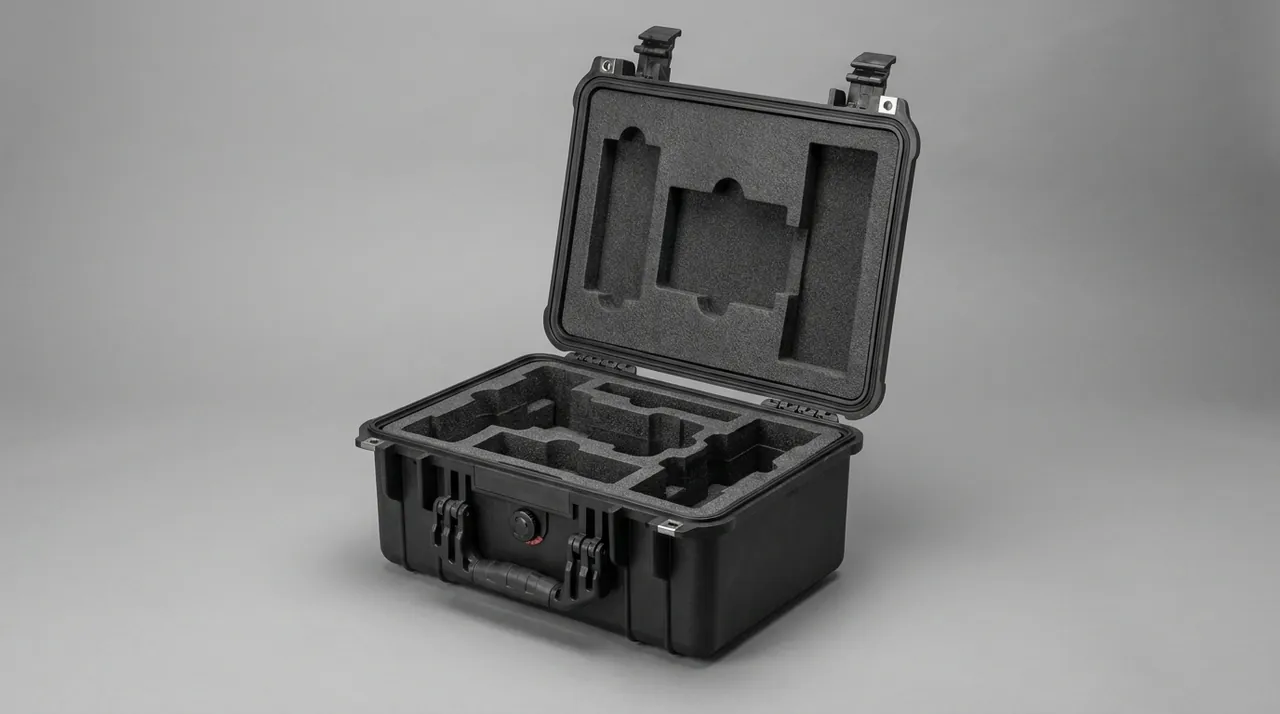
Internal support of the screen cylinder is the most overlooked step. An empty cylinder ovalises under side squeeze and stacking load, and once roundness is out of tolerance the clearance disappears locally, causing galling that wears through fast. Place two to four removable support rings inside, slightly under the bore and covered in 3 mm IXPE, and close both flanges so no debris enters. Cylinder and screw in one case must be separated by a hard divider. For the same thin-walled logic, see Vibrating Screen Component Cases.
Press Parts: Structural Protection for Screws, Screens and Cones
The twin-screw press is the hardest working machine on the line. Under 3 to 6 MPa the screw rubs continuously against the screen basket, and once the screw edge wears past tolerance pressing efficiency collapses. The cone and discharge-end mating face set the compression ratio, and cone scoring leaks material. Press screws are commonly cast in duplex stainless or high-chrome alloy with hardfaced edges, and the splined shaft end couples to the gearbox.
The rule is simple: edges must not bear load, cone faces must not touch, and splines must not be exposed. The screw edge is held by EVA tooth-form blocks matched to the pitch, so load lands on the shaft body rather than the edge tip. The cone carries a soft sleeve and the splined end a dedicated cap with anti-rust grease. Screens and filter plates must lie flat and be separated plate by plate; inserting them upright crushes the holes.
| Check | Recommended value | Note | |
|---|---|---|---|
| --- | --- | --- | |
| Screw supports | Three up to 3 m; four from 3 to 4 m | Span up to 1500 mm | |
| Edge clamping | Tooth-form EVA, wrap angle at least 120 degrees | Edge tip never touches a hard face | |
| Cone protection | 2 mm soft PU sleeve plus non-woven wrap | Prevents scoring and pitting | |
| Plate stacking | 3 mm EPE between plates, up to 15 layers | Flatness up to 0.5 mm/m | Press liquor and fish oil leave a sticky film that absorbs moisture and oxidises into coke. Before packing, parts go through alkali wash, hot water rinse, blow dry and rust prevention. For parts touching feed, the rust preventive must be food grade or washable. The logic is close to Oil Press Equipment Component Cases. |
Dryers (Disc and Tube Bundle): Protecting Discs, Bundles and Shafts
A disc dryer threads hollow discs onto a central shaft, and scraper blades turn the product as it falls disc to disc. A single disc can be 1200 to 2400 mm across, and the face is the heat transfer surface with flatness usually held to 1 mm/m. Discs are large thin plates that warp easily during lifting and stacking, and once flatness fails the scraper clearance becomes uneven.
A tube bundle dryer expands or welds hundreds of tubes into two tubesheets. Tube end expansions are the thinnest and most stress-concentrated points, so a point impact can cock a tube end and start a leak. The tubesheet is large and weak in bending, so side squeeze distorts it. Protection centres on keeping end faces true, limiting the whole bundle and preventing resonance.
| Parameter | Recommended value | Purpose |
|---|---|---|
| --- | --- | --- |
| Disc support | V-shaped timber cradles plus 10 mm EVA, four points | Control disc warping |
| Disc stacking | 5 mm EPE between discs, hard divider per layer | Spread stacking pressure |
| Tube end protection | 8 mm EVA face pad plus end cap | Point impact and rust |
| Bundle support | Two to four saddles, span up to 1800 mm | Control deflection |
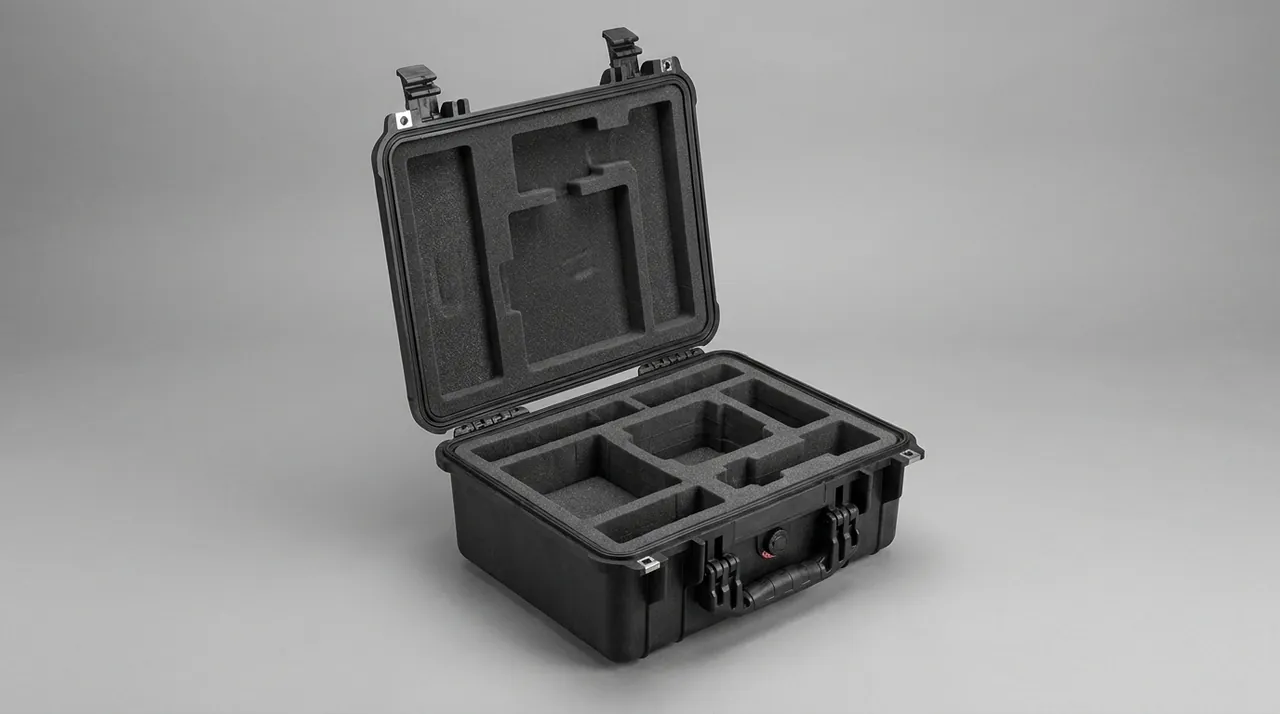
Boxing the tube ends cannot be a cloth over the face: the expanded joints are a thin-wall, stress-concentrated zone where one edge impact starts a leak. Use an 8 mm EVA face pad with matched holes over the tubesheet, then a rigid end cap located by a support shaft so it cannot shift. When a centre shaft ships with a bundle, the shaft must never rest on the tubesheet. The heat transfer rules match Heat Exchanger Component Cases.
Pneumatic Conveying and Dust Collection: Impellers, Cyclones and Ducts
The conveying system moves milled meal to silos, while the dust system handles odorous vapour and dust from cooking, drying and milling. Fan impellers run in dusty air and their leading edges erode, and once a balancing face is dented the installed vibration exceeds limits. Cyclone walls thin under abrasion and corrosion, and ducts and silencers carry many thin walls and flanges.
The impeller is centre-of-gravity sensitive, so the priority is shape and balance retention. It must lie flat, blades must not bear load, the hub sits on a central support and the rim is held by an EVA collar. Cyclones and ducts ovalise and dent at flanges, so internal support rings and outer foam collars are used together.
Conveying and dust parts usually carry flanged connections and instrument ports, and a dented sealing face leaks air and dust. Use reusable clip-on flange covers and threaded port protectors. Parts from odorous vapour lines retain sulphur and amine residues, so they need deodorising wash before packing. This experience extends to Dust Collector Component Cases.
| Part | Main risk | Protection measure |
|---|---|---|
| --- | --- | --- |
| Fan impeller | Impact on eroded blade faces, imbalance | Lie flat, hub support, EVA rim collar |
| Cyclone separator | Volute ovalisation, flange distortion | Support rings, flange covers, side stops |
| Duct / elbow | Port curling, internal scoring | Port rings, soft inner film, layered packing |
| Bag filter cage | Bending, weld cracking | Multi-point support, no side squeeze |
Case Materials: Copolymer PP, Glass-Filled PP and 316L/Duplex Steel
A fishmeal equipment case serves in high humidity, salt, organic acid and trace hydrogen sulphide, and metal components suffer first. The case material must combine low-temperature toughness, chemical resistance, salt-fog resistance and useful specific strength, so the choice follows the project climate and transport mode.
| Material | Density g/cm3 | Tensile strength | Low-temperature behaviour | Suitable use | |
|---|---|---|---|---|---|
| --- | --- | --- | --- | --- | |
| Copolymer PP | 0.90-0.91 | 25-30 MPa | Usable to -20 degrees Celsius | Ambient turnaround, light spares | |
| PP plus EPDM modification | 0.91 | 22-28 MPa | No brittle fracture to -30 degrees Celsius | Northern winter, cold storage | |
| PP-GF20 / GF30 | 1.04-1.12 | 55-80 MPa | Reasonable toughness to -30 degrees Celsius | Heavy shaft and bundle cases | The metal components and fasteners inside the case are the real weak point under salt fog. Carbon steel bolts rust within months on the coast, and the rust water stains stainless surfaces and triggers pitting. Switch every exposed fastener, hinge pin and latch spring to 316 stainless steel, and where a loaded member lacks strength use 316L or 2205 duplex steel. Insulate aluminium from stainless steel to stop galvanic corrosion. |
Case structure follows thin faces with thick ribs and rounded corners: walls of 5 to 6 mm for bending stiffness, rib roots thickened to 7 to 9 mm to avoid sink marks, a load-bearing base of 6 to 8 mm with a grid of ribs, and outer corners at R 8 mm or more. Glass-filled PP demands attention to weld-line strength, so gates avoid latch and hinge seats. On outdoor ageing see UV Ageing Test for Cases.
Compartments and Cushion Liners: EPE, EVA, IXPE and PE Combined
A cushion liner does two jobs: location and energy absorption. Location keeps the part from moving under vibration; absorption cuts shock acceleration to what the part can survive. Fishmeal parts range from a several-hundred-kilogram shaft to a single filter plate, so hard dividers plus layered cushioning are the baseline.
| Material | Density kg/m3 | 25 percent compression strength | Rebound behaviour | Role it should take | |
|---|---|---|---|---|---|
| --- | --- | --- | --- | --- | |
| EPE pearl foam | 25-35 | 60-120 kPa | High rebound, reusable | Bulk filling, interlayer separation | |
| EVA | 60-120 | 150-400 kPa | Strong absorption, tear resistant | Edge clamps, journal locating blocks | |
| IXPE | 33-100 | 100-250 kPa | Fine, mark free | Ground faces, bundle wall contact | Build the liner from the part outward: a 3 to 5 mm IXPE skin in contact, a carved 10 to 20 mm EVA locating layer, a 30 to 50 mm EPE or moulded PU carrying layer, and a rigid honeycomb or plywood divider board resting on the base. That board severs the displacement path between cavities, so two parts can never chase each other. For a full comparison see Internal Foam Types for Cases. |
Sealing Systems: IP65 and IP67 Under Salt Fog
IEC 60529 and GB/T 4208 describe enclosure protection with two digits. The first digit 6 means dust tight; the second 5 means protected against water jets and 7 means protected against temporary immersion, typically 1 m for 30 minutes. The sensible landing points for fishmeal spare cases are IP65, covering rain, floor washing and short storms, and IP67, covering dock flooding, bilge seepage and full-case washing. A rating is not a label number; it is six details added together.
- Gasket groove section: A dovetail or trapezoidal groove is preferred, with gasket compression at 25 to 35 percent. Too little compression leaks; too much deforms permanently.
- Gasket material: EPDM resists weather and water vapour for coastal use. Silicone handles -60 to 200 degrees Celsius near steam lines, and foamed silicone has low closing force for large lids.
- Corners and joints: Corners must be moulded and vulcanised as one piece. Use a 45 degree mitre only where unavoidable, with extra fixings within 30 mm either side.
- Parting line flatness: The lid-to-body mating face should be flat to 0.3 mm per 300 mm, or the gasket cannot seat.
- Latch spacing: Keep spacing along the long side at 120 mm or less and corners at 60 mm or less, so the gasket ring is evenly compressed.
- Pressure equalisation valve: Above 3 to 5 kPa the gasket is pushed open or sucked in. Use a valve with a hydrophobic membrane, mounted mid-height on a side wall, clear of the water pool and spray path.
Acceptance can use a pressure decay screen at 20 kPa held for 60 seconds, then a spray or immersion check at the rated level. For long sea voyages re-check the gasket on the cycle in Seal Ageing and Replacement; valve details are in Pressure Equalisation Valve.
Latches, Hinges and Stacking Load: Structural Checks for Heavy Cases
A tube bundle or long shaft case can reach 800 to 1500 kg. If latches and hinges are not checked against load they pop open under long vibration and the lid lifts to let rain in. Latches should be 316 stainless over-centre types fixed through moulded-in nuts, never self-tapping screws alone. Hinges use a metal pin with a PA bush and should reach 10000 cycles without looseness.
Stacking load is fundamentally the axial stability of the case posts. Making posts a closed section or lining them with steel tube raises buckling capacity sharply, while the lid locks to the body through ribs so stacking force does not press on the lid centre. Very long shaft and bundle cases should not be multi-layer stacked; if unavoidable, add locating platforms at both ends so the upper case lands on end supports. See Stackability and Pallet Planning.
| Check | Recommended value | Note |
|---|---|---|
| --- | --- | --- |
| Static stacking | At least 5 layers, at least 1200 kg per case | 24 hours at 25 degrees Celsius, deformation up to 2 mm |
| Dynamic stacking in transit | 3 layers | Load spectrum per ISTA 3E or GB/T 4857.3 |
| Latch count | At least 3 long side, 2 short side | Even gasket compression |
| Hinge cycle life | At least 10000 cycles | No fracture, no axial play |
| Lifting points | 4 lugs, safety factor at least 4 | Lift force never through a fragile face |
| Fork pockets | Clear height 90-120 mm | Forks must not hit the base or contents |
Temperature, Humidity, Salt Fog and Odour: Triple Control
Fishmeal spares face three overlapping risks in transit: metal corrosion, internal condensation and odour build-up.
The most dangerous effect at sea is not constant humidity but the breathing driven by the day-night temperature swing. By day the air inside expands and escapes; at night it cools, contracts and draws damp air back in, condensing the cavity. The answer is two-pronged: a VCI film forms a molecular protective layer, desiccant absorbs residual moisture and a pressure equalisation valve gives a controlled breathing path. Size desiccant at roughly 30 to 50 g of montmorillonite per 0.1 m3 of net volume, taking the upper figure on humid routes, and place a humidity indicator card inside. A colour change at opening means condensation occurred and the metal needs re-inspection.
| Scenario | Main risk | Protection measure |
|---|---|---|
| --- | --- | --- |
| Climate-controlled store (15-30 degrees Celsius, RH up to 60 percent) | Low | Routine dust and moisture control |
| Coastal plant (RH at or above 75 percent, salt aerosol) | Medium to high | EPDM gaskets, 316 fasteners, 480 h salt fog |
| Ocean container (daily swing above 20 degrees Celsius, cabin RH to 95 percent) | High | VCI film, desiccant, pressure equalisation valve |
| Cold region (-30 degrees Celsius) | Low-temperature embrittlement | Case material modified to -30 degrees Celsius |
Salt fog testing follows GB/T 10125 neutral salt fog: carbon steel fasteners at 240 hours, coastal and deck-stored cases at 480 hours or more, and duplex steel parts at 720 hours. See Salt Spray Test Hours for Cases. Salt fog duration is a design verification condition, not a service life promise.
Hygiene and Odour Protection: Washable, Disinfectable, Non-Adsorbing Design
Fishmeal parts touch high-protein material directly or indirectly, so the case must address hygiene, not just impact. Three requirements apply: full washability, disinfectability and no odour adsorption.
Washability means no cleaning dead corners. Compartments and dividers should lift out as one piece, and the base needs R 10 mm or larger fillets, a drainage slope and a drain plug so no liquid pools. If liner foam is soaked in fish oil it keeps releasing rancid odour and becomes a microbial habitat, so parts in close contact with product should use a replaceable cradle rather than a single carved foam block.
Disinfectability means the material tolerates cleaning agents and heat. With 70 percent alcohol, hypochlorite solution and hot water below 80 degrees Celsius in common use, the case should be an alkali- and chlorine-resistant copolymer PP or PP-GF. Avoid PC parts that stress-crack in chloride service, and use EPDM or silicone gaskets rather than natural rubber that ages and goes tacky.
Non-adsorbing means a dense surface. Open-cell foam adsorbs sulphur and amine odour molecules, so use a dense plastic inner liner and reserve foam for structural location only, with sealed edges. After washing, air-dry naturally and add a reusable activated carbon odour pack in a separate compartment from metal parts.
Hygienic packaging for aquatic and food parts follows the same logic as Aquaculture Equipment Cases: cleanliness, washability and corrosion inhibition together.
| Hygiene item | Recommended requirement | Verification |
|---|---|---|
| --- | --- | --- |
| Cavity material | Copolymer PP or PP-GF, no regrind | Material certificate plus batch sample |
| Drainage | Fillets plus drain plug, no dead corners | Visual plus fill test |
| Cleaner compatibility | Resists 70 percent alcohol and hypochlorite | 24 hour soak, no cracking |
| Replaceable liner | Cradle type, avoids scrapping the case | Fit and removal demonstration |
Transport Test Validation and Acceptance Criteria
However good the design, an unverified case is a paper design. Validate fishmeal spares with a four-part combination of vibration, shock, stacking and temperature-humidity preconditioning, using a full case loaded with the real part.
| Test item | Reference method | Criteria |
|---|---|---|
| --- | --- | --- |
| Random vibration | ASTM D4169 / ISTA 3E | No part movement or mutual impact, no cracking |
| Sine sweep | GB/T 4857.10 | Resonance amplification up to 2, no fatigue |
| Drop (corner, edge, face) | GB/T 4857.5 | Case does not rupture, latches do not release |
| Stacking | GB/T 4857.3 | Deformation up to 2 mm after 24 hours |
| Temperature-humidity preconditioning | GB/T 4857.2 | No condensation, indicator card unchanged |
| Neutral salt fog | GB/T 10125 | No red rust on metal at 480 hours |
Test order matters: precondition first, then vibration, then drop, exposing the worst combination of weakened wet strength followed by impact. For long shaft cases, check the mid-shaft accelerometer response against resonance bands. See ISTA Transport Testing Procedure.
For batch delivery, 100 percent inspection is neither economic nor necessary. Use GB/T 2828.1 counting sampling at general inspection level II, with AQL 2.5 for appearance defects and AQL 1.5 for functional defects.
Opening inspection follows a fixed list: check the outer case for damage and damp marks, read the humidity indicator card, check the part number against the packing list, then inspect surfaces and key dimensions. See Custom Case Acceptance AQL. Any failed item should pause acceptance of the whole batch and trigger a trace back.
| Group | Check item | Criteria |
|---|---|---|
| --- | --- | --- |
| Appearance | No sink marks, flash or cracks | No visible defect at 300 mm |
| Dimensions | Overall size, cavity compartments | Plus or minus 2 mm or 0.3 percent |
| Function | Gasket compression, latch pull, valve airflow | 25 to 35 percent; latch holds at 800 N |
| Structure | Sampling of stacking and drop | Per the criteria table above |
| Documents | Packing list, certificate, test report, drawing | Complete and matching the goods |
Selection Checklist, Customization, Tooling and OEM/ODM
Condensing the findings into a tick-box table shortens specification writing considerably.
One general rule applies: fix what must not be touched first, then the cushioning; fix what must not bend first, then the support; and only then consider appearance and cost.
| Part type | Case material | Liner scheme | Sealing | Stacking | Special requirement |
|---|---|---|---|---|---|
| --- | --- | --- | --- | --- | --- |
| Cooker screw shaft (up to 1800 kg) | PP-GF30 long case | EVA tooth stops plus PU saddles | IP65 | Single layer preferred | Four-point support, deflection up to L/5000 |
| Cooker screen cylinder | Copolymer PP | Internal rings plus PU outer collar | IP66 | 4 layers | Roundness retention, hole protection |
| Press screw / cone | PP-GF20 | EVA edge blocks plus soft PU cone sleeve | IP67 | 3 layers | Cone anti-scoring, spline cap |
| Press screen / filter plates | Copolymer PP | 3 mm EPE per plate plus hard divider | IP65 | 5 layers | Lay flat, limit layer count |
| Dryer disc | PP-GF20 | V-shaped timber cradle plus 10 mm EVA | IP65 | 4 layers | Warp control, centre bore sleeve |
| Tube bundle dryer bundle | PP-GF30 | Tube end EVA pad plus end cap | IP67 | 3 layers | True end faces, whole-bundle strapping |
Non-standard parts have no off-the-shelf case, so the process must be rigorous. JUNZHIJIA splits it into six milestones: part survey by STEP model or 3D scan for centre of gravity, fragile faces and lifting points; protection concept design for cushioning layers, compartment count, sealing level and stack height; structural design and DFM review for draft, wall uniformity and latch seat strength; prototype validation by drop, vibration and spray screening to freeze dimensions; tooling trials with T1 confirming dimensions and assembly; and mass production with first-article approval.
Minimum order quantity and delivery schedule both follow the degree of structural change. Adapting an existing tool and swapping only the liner can start at a few hundred pieces, while a new heavy shaft case needs a slot reserved for tool design and trial shots. In ODM work the customer may supply only the part and its application and the manufacturer completes the case design; in OEM work the case is built and branded to the customer drawing and standard. Drawing ownership, tooling ownership and patent clauses should be fixed in the contract, as outlined in OEM/ODM Custom Protective Case Service Models.
These products are manufactured by Guangdong Kexin New Materials Co., Ltd., covering part survey, sealing design, tooling and manufacture, and case documentation and test reports.
Frequently Asked Questions FAQ
Q: Why is bending the main risk for a long cooker screw, and how is the case designed against it?
A: The key is not wall thickness but support layout, because deflection under uniform load scales with the fourth power of span, so halving the span cuts deflection to one sixteenth. Practice is three supports up to 4 m, four from 4 to 6 m and five above 6 m, with no single span over 2000 mm. Support blocks use polyurethane or EVA at Shore A 50 to 60 and sit on a non-functional middle section, clear of hardfaced flights and ground journals. The case gains overall stiffness from a hybrid structure of longitudinal aluminium profiles clad with PP-GF panels, so it does not twist during lifting. Limit transit deflection to 0.3 mm per metre and L/5000, then verify on a shaker that the mid-shaft response never falls in a resonance amplification band. Record the support positions on the case drawing and on the packing list so the return leg uses the same spacing. Sight the support saddles against the drawing before the case is closed and sealed.
Q: How do you choose between 316L and 2205 duplex stainless steel for fishmeal parts?
A: Judge by chloride level, temperature and load together. Grade 316L, with a pitting resistance equivalent around 18, works in ambient chloride service and costs less, so it suits case fasteners, exposed hinges and structural parts carrying no high stress. Grade 2205 duplex has a PRE at or above 34 and roughly twice the yield strength of 316L, and resists pitting and stress corrosion cracking far better where chloride, trace hydrogen sulphide and elevated temperature overlap, making it right for press screws and long shaft supports that both carry load and touch salt. Also respect fabrication: duplex steel needs a controlled ferrite-austenite balance and controlled welding heat input, so 316L procedures cannot be copied across. If a part already carries a coating or hardfacing, transport protection shifts to coating integrity, and the case should keep hard contact blocks away from that face. Where both grades appear on one assembly, mark the material clearly on the case so no part is swapped during a site repair.
Q: Shipping to Southeast Asia, how do you stop salt fog and humidity from causing rework?
A: Handle external salt and internal condensation together. For external salt, switch case metal and fasteners to 316 stainless, use EPDM gaskets and require 480 hours of GB/T 10125 neutral salt fog with no red rust on exposed metal. For internal condensation, wrap metal working faces in VCI film, size montmorillonite desiccant at 30 to 50 g per 0.1 m3 of internal net volume taking the upper figure on hot humid routes, and fit a pressure equalisation valve so the case breathes under control. Put a humidity indicator card inside and have the site read it first; a colour change means condensation occurred and the metal needs re-inspection. Avoid the container door and roof drip zones when loading, leave a ventilation gap between case and container wall, and keep the case off the hold floor where water collects. Log the container number against each batch so any damaged unit can be traced to its voyage. Rainy loading days raise the desiccant figure, so check the weather window before packing.
Q: Why do thin perforated parts like screen cylinders and filter plates fail in transit?
A: Because they fail by distortion rather than fracture, and distortion is often missed at opening. A screen cylinder ovalises under side squeeze and stacking load, and once roundness is out of tolerance the clearance to the screw disappears locally, causing galling that wears through fast. Filter plates pressed in a stack have their holes crushed, cutting flow area permanently and without repair. Protection centres on internal support, external limitation and a capped layer count: place two to four removable support rings inside the cylinder to hold roundness and cover both flanges, and separate plates with 3 mm EPE, lay them flat and keep any stack to 15 pieces or fewer. Thin parts must ship in a separate compartment from heavy parts, with hard dividers cutting the displacement path. Measure roundness and flatness again at opening and record the readings on the incoming inspection sheet. Never fit a distorted screen cylinder or a crushed filter plate, because the damage is invisible once the machine is assembled and running.
Q: How should EPE, EVA and IXPE foam be combined?
A: Assign three roles: contact, location and carrying. The contact layer touching the part uses 3 to 5 mm IXPE, fine and mark-free, suitable for ground journals and bundle walls. The locating layer uses 10 to 20 mm EVA carved or die-cut to the outline; it has high compression strength and resists tearing, locking the part in place. The carrying layer uses 30 to 50 mm EPE or a moulded PU cradle to absorb high-energy shock. Add a hard divider of PP honeycomb or plywood between cavities. Never use one material throughout: pure EPE is too soft to locate, pure EVA is too stiff to compress under small shocks, and pure IXPE is too thin. When different metals share a case, add an insulating divider to prevent galvanic corrosion, keep 3 to 5 mm of clearance, and label each foam layer with its material and thickness. Tagging each foam layer keeps its replacement matched to the original design, so a rebuilt liner behaves like the first one.
Q: Why does hygiene and odour control matter for fishmeal equipment packaging?
A: Because these parts touch high-protein feed material, so packaging residue becomes a contamination source. Open-cell foam soaked in fish oil and press liquor keeps releasing rancid odour and becomes a microbial habitat, and after weeks sealed inside a case it contaminates the site at opening. Parts in close contact with product should use a replaceable cradle structure rather than a single carved foam block. The base needs R 10 mm or larger fillets and a drain plug so no liquid pools, and the cavity material should be alkali- and chlorine-resistant copolymer PP or PP-GF, avoiding PC parts that stress-crack in chloride service. Clean with 70 percent alcohol or hypochlorite solution, air-dry before packing, and optionally add a reusable activated carbon odour pack in a separate compartment from metal. Record the cleaning method on the case label so the receiving plant repeats the same routine on every return. A laminated washing card travels inside the case so the same routine is repeated every time.
Q: Can non-standard parts be customised without drawings, and how long does tooling take?
A: Yes. Without drawings, a 3D scan produces a point cloud that is reverse-engineered into a STEP model, alongside measurements of centre of gravity, lifting points and fragile faces; for hot parts also confirm the surface temperature history so no heat-sensitive liner is chosen. The workflow is protection concept and structural design, then a hand sample or prototype case for drop, vibration and spray screening, then freeze dimensions and cut the tool. Scheduling depends on how much of the structure is new: the quickest route keeps the current tool and reworks only the liner, whereas a fresh heavy shaft case needs a window for tool design, machining and trial shots. Expect the design freeze, prototype screening, mould trial and first-article approval to run as separate gates, each needing sign-off, because compressing them into one step is the usual cause of late structural changes. Ask for the prototype screening report before releasing the tool cut, since that is the cheapest point to change a design.
Q: How do you accept a batch of protective cases and how much do you inspect?
A: Use GB/T 2828.1 counting sampling at general inspection level II, with AQL 2.5 for appearance defects and AQL 1.5 for functional defects, reading sample size from the tables for the batch. Inspection falls into four groups: appearance for sink marks, flash and cracks; dimensions for overall size and cavity compartments, with tolerance at plus or minus 2 mm or 0.3 percent, whichever is greater; function for gasket compression of 25 to 35 percent, latch pull holding at 800 N and valve airflow; and documents covering the packing list, material certificate, test report and case drawing. Structural items such as stacking and drop are sampled per batch rather than run on every case. Any failed functional item should hold the whole batch and trigger a trace back, never release just the faulty units, and keep the acceptance record bound to the batch number for later traceability.
Conclusion and Related Reading
Downtime on a fishmeal line is measured in hours, so avoiding one site rework outweighs the case price. JUNZHIJIA supports cooker, press, dryer and air-system parts with survey, sealing design and OEM/ODM.
Related Reading