

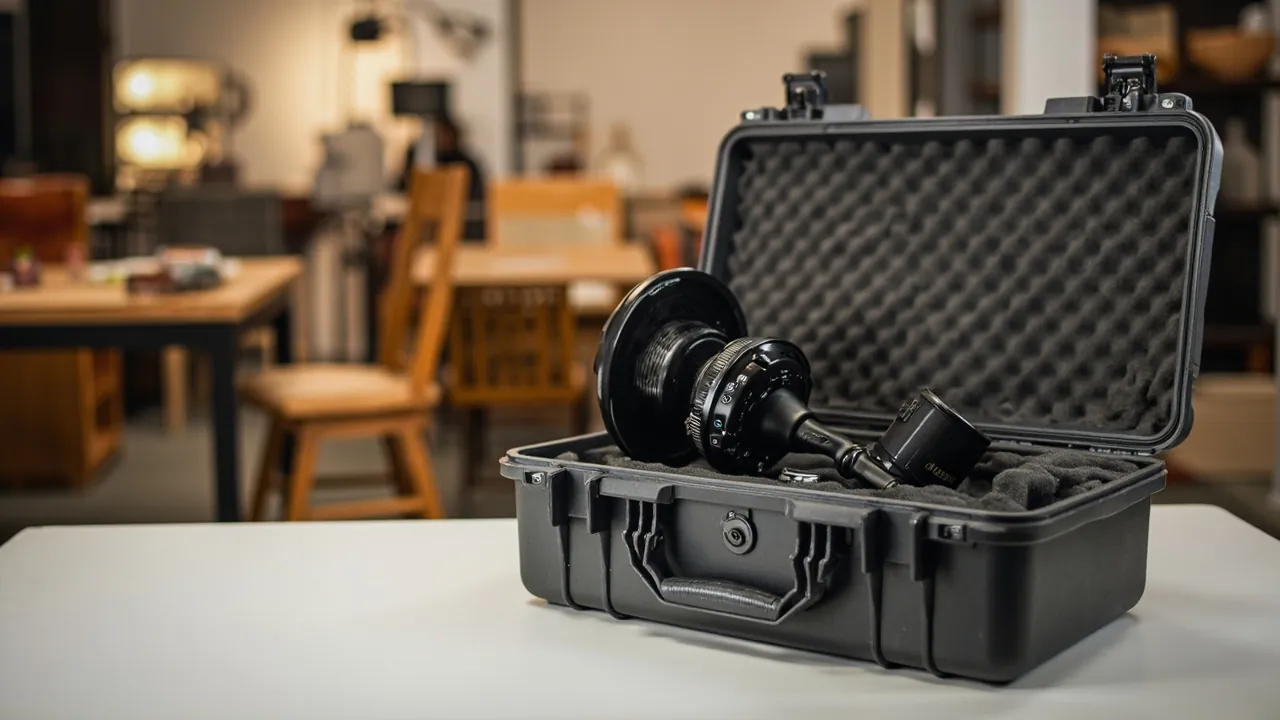
Eighty percent of damage to high-end furniture in transit is not caused by dropping it. It is caused by humidity, point loading and impact on edges and corners. Solid wood fails because of moisture content: timber absorbs and desorbs water as relative humidity changes, its dimensions follow, and rapid humidity swings cause panel splitting, loose joinery, lifting veneer and cracked lacquer. Upholstered furniture fails because of fabric and filling: snagging, soiling, mould from damp, and permanent compression set in the filling. Stone and glass tops fail because of point loading: a single localised load is enough to propagate a crack. All three share one property: they may be completely invisible on arrival and only appear over the following one to three months, by which time attributing responsibility and claiming are both extremely difficult. JUNZHJIA supplies furniture-outline-and-centre-of-gravity-specific six-face protection schemes, corner and edge protection systems, full-face support pallets and OEM/ODM programmes for high-end furniture.
The high-end furniture industry has one more decisive property: unit values are very high, items cannot be batch-replaced, and the delivery point is a customer's home rather than a warehouse. A custom solid-wood dining table or a designer sofa may be worth as much as dozens of ordinary pieces. It is usually made to measure for one specific space, so both dimensions and material selection are irreplaceable. And the delivery point is typically a finished residence, hotel suite or show apartment, where any damage is immediately visible to the client and where touch-up and repair are extremely difficult to arrange remotely. The design goal of a furniture transport case is therefore not to get the goods there, but to make the case open-to-install, and install-without-defect.
This article is written for packaging, quality and logistics engineers at high-end furniture manufacturers, custom furniture studios, upholstered furniture plants, international moving and fine-art logistics providers, and hotel and property project procurement teams. It works through protection by material type. All figures are typical industry values or empirical ranges; the governing inputs are the product technical documentation, material standards, destination-country regulations and the customer's acceptance specification.
Table of Contents
- 1. Core Risks in High-End Furniture Transport: Humidity, Point Loading and Edges
- 2. Solid Wood, Upholstered and Custom Furniture: Critical Areas and Failure Modes
- 3. Solid Wood Furniture: Moisture Equilibrium and the Physics of RH Control
- 4. Upholstered Furniture: Fabric, Filling and Exposed Hardware
- 5. Stone, Glass and Metal-Finished Furniture
- 6. Corner Protection, Edge Protection and the Six-Face System
- 7. Choosing a Case Structure: Timber, Plastic and Hybrid Options
- 8. Furniture-to-Case Selection Matrix
- 9. Insert and Cushioning Materials Compared
- 10. Sealing, Moisture Control and IP Ratings: IEC 60529 and GB/T 4208
- 11. Transport Test Basis and Standard Packing Workflow
- 12. International Moving and Export Projects: Timber Packaging, Compliance and the Container Environment
- 13. Arrival Acceptance, Pre-Installation Storage and OEM/ODM Customisation
- Frequently Asked Questions
- Conclusion and Further Reading
1. Core Risks in High-End Furniture Transport: Humidity, Point Loading and Edges
To understand furniture protection, first abandon the instinct to think only about drops and replace it with three more accurate views.
The first view: furniture is a combination of materials that breathe. Solid timber, engineered board, leather, fabric, foam, stone, glass, metal and adhesives are combined in one piece, and they respond to humidity in completely different ways. Timber swells as it absorbs moisture and shrinks as it dries, with markedly different movement tangentially and radially and almost none longitudinally. Leather and fabric absorb moisture but change dimension little. Stone and glass barely respond to humidity at all. Metals expand thermally at rates that differ from everything around them. When humidity or temperature changes rapidly, different parts of one piece change at different rates and stress develops at the interfaces. That stress eventually shows up as panel splitting, lifting veneer, misaligned joints, cracked lacquer and loosened hardware.
The second view: furniture is loaded at many points, and point loading is fatal. Furniture is large and geometrically complex, so it is easy for a single unsupported point to take the load: one leg pressing on the case floor, one drawer runner against a side wall, a marble top resting only on four corners. For rigid materials such as stone, glass, hard veneer and cured lacquer, point loading concentrates stress, and for brittle stone containing natural microcracks a single point load is enough to propagate a crack. The core of furniture protection is therefore not making the case stiffer but turning concentrated force into distributed force, using full-face support, continuous battens and shape-matched inserts so that load is spread over the largest possible area.
The third view: edges and corners are the most vulnerable, the most commonly damaged and the hardest areas to repair. A table corner, cabinet corner, chair back top, worktop edge, drawer front edge: each combines three properties, namely it protrudes, it is hard, and it is easily struck. When struck, the damage pattern is typically a broken lacquer film plus a compressed substrate, and on high-end pieces the finish is often built up over several stages of primer, topcoat, polishing or open-pore finishing, so local repair produces visible colour and gloss differences. Corner and edge protection is therefore the single highest-return element in a furniture transport case.
Four design principles follow.
First, control the rate of environmental change rather than only its absolute value. For timber, relative humidity jumping from 50 to 75 percent is more dangerous than sitting steadily at 65 percent. The goal of a packaging scheme is to slow the rate of humidity change, not simply to be as dry or as sealed as possible.
Second, make the loaded area as large as possible. Heavy items such as stone tops, large solid slabs and sofa sets need full-face or continuous support. Point contact and four-corner support only are not acceptable.
Third, edges and hardware must have clearance or protection. A corner protector is not a wrapping; it must form a layer capable of absorbing impact. Hardware such as handles, hinges and decorative fittings needs a clearance cavity so it does not take load.
Fourth, open-to-install means the design endpoint is the customer's premises. That also means considering how the case can be opened without damaging the furniture, for example avoiding the use of a utility knife directly on stretch film sitting against a lacquered surface, how the packaging material will be recovered, and how the furniture will be stored temporarily in the client's home before installation.
A common misconception assumes vacuum packing is safer. For solid wood and upholstered furniture, packaging that is fully sealed with uncontrolled internal humidity can be actively harmful: water released by the timber has nowhere to go, internal humidity can reach local saturation as the temperature falls overnight, and condensation follows, after which upholstery and leather grow mould. Sealing must be used together with desiccant and a humidity indicator card, never on its own.
2. Solid Wood, Upholstered and Custom Furniture: Critical Areas and Failure Modes
| Furniture type | Critical areas | Primary failure modes | Trigger | Priority countermeasure |
|---|---|---|---|---|
| --- | --- | --- | --- | --- |
| Solid wood dining table or slab | Top glue joints, end grain, lacquer film, leg joints | Panel splitting, end cracking, warping, lacquer cracking | Rapid humidity change, point load, sunlight, heat | Full-face support plus RH buffering plus corner protectors plus light exclusion |
| Solid wood case goods (wardrobe, sideboard) | Carcass frame, doors, back panel, drawers | Frame distortion, door warping, loose hardware | Humidity change, stacking load, twisting during handling | Upright support plus diagonal bracing plus hardware clearance |
| Mortise-and-tenon or traditional pieces | Joints, carved parts | Joint loosening, carved element fracture | Impact, twisting, vibration | Independent support plus rigid overall fixing plus no twisting |
| Veneered and thin-wood furniture | Veneer layer, edge banding | Veneer lifting, edge banding detachment | Rapid humidity change, heat, local pressure | RH buffering plus no local pressure plus heat exclusion |
| Upholstered sofa | Fabric, seat filling, timber frame | Snagging and soiling, filling collapse, frame distortion | Friction, liquid, long compression, handling loads | Non-woven wrap plus full-face pallet plus uncompressed filling |
| Leather furniture | Leather surface, stitching | Mould spots, colour bleeding, scratches, seam failure | High humidity, water marks, hard-object friction | Breathable wrap plus humidity control plus moisture barrier |
| Stone top (marble, sintered stone) | Top panel, edges, corners | Cracking, edge chipping, staining | Point load, bending, acid or alkaline contact | Upright or full-face support plus edge protectors plus stain prevention |
| Glass furniture components | Glass panel, edges, holes | Edge chipping, cracking, spontaneous breakage | Point contact, edge loading, thermal shock | Upright transport plus edge protectors plus clearance |
| Metal-finished parts | Plated, brushed or powder-coated surface, welds | Scratching, fingerprint corrosion, pitting | Friction, perspiration, chlorides | Film covering plus individual wrapping plus dryness |
| Hardware and decorative fittings | Handles, hinges, runners, mouldings | Impact damage, deformation, loss | Protruding load, removal and loss | Clearance cavity plus separate compartments plus separate packing if removed |
| Fully custom built-in pieces | Faces that mate with the site | Damage to mating faces, distortion preventing fit | Impact, humidity distortion | Priority protection for mating faces plus locating supports |
These eleven failure classes reduce to one sentence: solid wood fears humidity, upholstery fears soiling and compression, stone and glass fear point loading, metal finishes fear friction, and hardware fears impact and loss. The five problems need entirely different solutions, which is why a high-end furniture case must be designed part by part, layer by layer and material by material.
3. Solid Wood Furniture: Moisture Equilibrium and the Physics of RH Control
To understand why solid wood is so humidity-sensitive, start with a basic property of timber: wood exchanges water with its surroundings until it reaches equilibrium moisture content.
What equilibrium moisture content means. At a given temperature and relative humidity, timber eventually settles at a stable moisture content, known as the equilibrium moisture content. Higher ambient humidity gives higher equilibrium moisture content, and raising the temperature slightly lowers it at the same relative humidity. This means a piece of furniture built and equilibrated in a humid southern climate will gradually lose moisture and shrink when shipped to a dry northern climate, and vice versa. Shrinking and swelling are natural processes, but a rapid rate of change concentrates stress and produces defects.
One point deserves emphasis: the difference between the climate where the furniture is made and the climate where it is delivered is the leading cause of solid-wood cracking in transit, and the risk is directly related to shipping distance, season and transport mode, including whether the container is climate-controlled. The applicable moisture content range and target values follow the product standard, the timber species and the manufacturer's process documentation.
Why a rapid change is more dangerous than an extreme value. The surface and core of a timber section change moisture content at different rates. When the environment changes abruptly the surface responds first and the core lags, creating a moisture gradient and internal stress. When the surface is in tension or shear above the transverse strength of the wood, surface checking or end splitting occurs. Consequently:
- in a drying environment the furniture loses moisture and shrinks, the surface goes into tension, and surface checks and end splits are likely;
- in a humidifying environment the furniture absorbs moisture and swells, the surface goes into compression, and veneer lifting and lacquer cracking are likely;
- in an environment of repeated swings, both types of damage may appear together.
The directional nature of timber movement. Shrinkage and swelling differ greatly by direction: tangential movement is largest, radial is intermediate, and longitudinal is smallest. The same board therefore changes dimension differently in different directions, and where the joinery does not account for this, steps and splits appear at joints. For transport this means glued-up panels and wide surfaces, such as a single-slab table top, are the most humidity-sensitive items, because the accumulated dimensional change across a wide face is the greatest.
How to control the transport and storage environment. Standard practice is:
- Hold relative humidity in a band. Furniture transport and storage commonly targets 45 to 60 percent relative humidity and 15 to 25 degrees Celsius, as empirical industry values, with specific limits following the manufacturer's process documentation.
- Slow the rate of change. Use packaging materials with moisture-buffering capacity, such as unbleached paper materials, wood-fibre board or dedicated humidity-regulating materials, to form a buffer layer so that conditions around the furniture lag behind the outside environment.
- Avoid condensation. Use barrier film and desiccant inside the container or case to prevent surface condensation when the temperature falls at night.
- Avoid direct sunlight and heat. Direct sun raises local temperature quickly, drops local moisture content sharply and creates stress. Container deck temperatures can be substantially above ambient, so stowage position and shading reduce the risk.
- Control moisture content before packing. Furniture should be at a stable moisture content at packing, not packed immediately after lacquering or cleaning. Specific moisture content test methods and limits follow the product standard and the manufacturer's process documentation.
A practical observation: most solid-wood cracking disputes arise one to three months after arrival. Storage conditions after receipt and management of the settling-in period matter as much as the transport itself. Delivery documentation should therefore advise letting furniture stand in the destination environment before installation and explain what to avoid during that period.
4. Upholstered Furniture: Fabric, Filling and Exposed Hardware
The protection logic for upholstered furniture, meaning sofas, upholstered beds, upholstered chairs and headboards, is entirely different from solid wood. Its main surfaces are flexible and porous, and its main damage comes from soiling, friction and prolonged compression.
Four damage mechanisms for fabric. The first is snagging and pilling: knit, pile and jacquard fabrics catch on rough surfaces or metal edges and pull fibres into irrecoverable snags. The second is scratching and indent marks: leather and microfibre surfaces mark when rubbed by hard objects and take on indentations that recover slowly under prolonged pressure. The third is soiling: dust, grease, perspiration and migratable constituents from packaging materials all soil fabric, most visibly on light colours. The fourth is damp and mould: fabric and filling in hot, humid conditions support mould growth, producing spots and odour, and mould on light textiles and leather is practically impossible to remove.
Additional risks for leather. Leather is highly moisture-sensitive. Water marks leave dark stains through colour bleeding, damp conditions encourage mould, and prolonged exposure to humidity that is too high or too low makes leather harden or become tacky. Leather is also sensitive to oils and certain solvents, and migratable constituents in packaging materials can discolour it. Leather furniture should therefore be packed to be breathable but moisture-protected: avoid direct water contact, but also avoid long-term wrapping in fully impermeable plastic film, which condenses moisture on its inner face as temperature changes. Specific leather care and storage conditions follow the material supplier's instructions.
Why filling hates prolonged compression. Seat and back filling is typically high-resilience foam, latex or feather and blend. All of these take a compression set under prolonged load: foam cells lose resilience and feathers compact. If a seat cushion sits under load throughout transport and storage, for example with goods stacked on top or with cushions stood on edge and stacked, local collapse appears and shows as uneven seating and a visible dip. A key protection point for upholstered furniture is therefore to give the filling room: do not stack weight on cushions, do not stack sofas on one another, and do not cinch cushions tightly with straps.
Exposed hardware and decorative parts. Protruding items such as handles, decorative studs, metal legs, rivets and mouldings take load first in transit. Remove detachable hardware, such as decorative handles and removable metal legs, pack it separately and label the installation position. For items that cannot be removed, provide a clearance cavity or soft wrapping so they take no load.
The layering of upholstered packing. Standard practice is three layers. Wrap the whole piece in non-woven or soft covering material to prevent snagging and soiling. Pad protruding parts, edges and arms with soft cushioning. Then secure the piece in a case or on a full-face pallet. The inner covering material must be non-shedding, free of oil, free of sharp edges and free of migratable constituents. Foam materials containing plasticisers can leave marks on leather and light-coloured fabric over long contact, so compatibility should be verified beforehand.
5. Stone, Glass and Metal-Finished Furniture
These three material families behave quite differently from those discussed so far, and their protection centres on point loading and surface integrity.
Stone tops: brittle, containing natural microcracks, and vulnerable to localised loading. Natural marble, granite and sintered stone are different materials but share transport requirements:
- Avoid point loading. Stone is brittle and natural stone contains microcracks and colour veins. A single localised load can concentrate stress at a crack tip and propagate it. Stone tops must therefore be supported across the whole face or along continuous battens, never on four corners or a few points only.
- Avoid bending. Large thin panels, such as a 20 mm marble top, bend under their own weight or under stacking, and prolonged bending can cause permanent deformation and internal damage. Use a flat full-face pallet and, where necessary, continuous battens underneath to limit deflection.
- Protect edges and corners. Stone chips on impact, and chipping is practically unrepairable. Fit edge protectors and corner protectors.
- Prevent soiling and staining. Marble and some stones absorb water, and oils, coloured liquids and acids cause staining and etching, with marble being particularly acid-sensitive. Packaging materials must be oil-free and must not release coloured substances, and stone must not share a case with chemicals.
- Avoid unsupported upright transport. Unlike glass, a stone top carried upright with support only at the base bends under its own weight. Where upright transport is necessary, use a frame matched to the panel size so the back face is supported across its area.
Glass components: the edge is the weakest part. Glass in furniture includes table tops, cabinet doors, shelves and mirrors. The key points are:
- Transport upright. Glass is strongest standing upright and is more likely to break when laid flat because of bending and point contact. This is a basic principle of glass transport.
- Protect edges and holes. Glass edges are the lowest-strength region and drilled holes for hardware are also stress concentrations. Fit edge protectors and keep the area around holes unloaded.
- Avoid point contact. Glass must not touch hard objects at a point; use soft material across the full face.
- Avoid sudden temperature change. Glass is thermally sensitive and rapid change creates thermal stress. Avoid direct sunlight and hot environments.
- Mark clearly as fragile and this way up.
Metal-finished parts: the surface is the value. Plating, brushing, powder coating and anodising are the visible face of the furniture, and the protection points are friction and chemical contamination:
- friction causes scratches, most visible when a rub crosses the brushing direction;
- salt and acidity in perspiration cause pitting, so handling should use gloves;
- chlorides, from coastal environments and saline sea freight, accelerate pitting on stainless steel and corrosion of plated layers;
- packaging materials must be free of sulphides and migratable plasticisers, which can discolour plated surfaces.
The interface problem in mixed-material furniture. High-end furniture often combines stone, glass, metal and timber in one piece. Different materials have different coefficients of thermal expansion and different hygroscopic swelling, so at an interface the adhesive or connector carries additional stress when temperature or humidity changes rapidly. Such pieces should therefore avoid severe temperature and humidity swings, and the packing design should allow a modest amount of movement between materials.
6. Corner Protection, Edge Protection and the Six-Face System
Corner and edge protection is the highest-return element in a furniture case and deserves its own section.
Why corners are weakest. Three factors combine. A corner protrudes, so it contacts the outside world first. The material is cut at a corner, so the continuity that provides support is lost and impact resistance falls. And the lacquer film and edge banding at a corner are often already the weak link. The consequence is the most serious kind of damage: a broken finish plus a compressed substrate, which cannot be perfectly repaired on site.
The concept of a six-face system. Furniture protection should be considered across six faces, top, bottom, front, back, left and right, and twelve edges, rather than as simple wrapping:
| Protection layer | Protects | Typical method | Key requirement |
|---|---|---|---|
| --- | --- | --- | --- |
| Inner contact layer | Lacquer, fabric, finish | Non-woven, soft foam film, EPE | Non-shedding, oil-free, no migratable constituents |
| Middle cushioning layer | Edges, corners, protruding parts | Corner protectors, edge battens, soft pads | Absorbs impact, does not detach, leaves no adhesive mark |
| Load-bearing layer | Top, base, large faces | Full-face pallet, continuous battens | Flat, even load distribution |
| Restraint layer | Overall location | Locating blocks, straps, support frames | Controlled travel, no crushing of surfaces |
| Outer case layer | Overall and climate | Timber, plastic, hybrid | Compression strength, rain protection, liftable |
| Marking layer | Information | This way up, fragile, keep dry, centre of gravity | Clear, weather-resistant, matched to the packing list |
Corner protector design points. An effective corner protector must satisfy four conditions:
- Sufficient thickness. It must genuinely absorb impact energy; a very thin protector only conceals the corner.
- Shape-matched. It must match the corner geometry, whether square, radiused or chamfered, otherwise it creates point contact at the tip.
- No adhesive residue. The fixing method, whether self-adhesive, strapping or clip-on, must not leave adhesive or indent marks on the finish.
- Does not hide inspection surfaces. Protectors should be quick to remove and inspect after unpacking.
Edge protection and the continuous-run principle. For long edges, such as the top edge of a long dining table or the vertical edge of a cabinet, use continuous edge battens rather than segmented pieces, because segmented protection leaves gaps at each junction where impact can still do damage. The batten must also have enough section, avoiding a token thin layer.
The relationship between corners and centre of gravity. A furniture piece's centre of gravity determines the load direction during handling. Tall case goods with a high centre of gravity tip easily and damage top corners. Pieces with an offset centre of gravity, such as a sideboard with drawers at one end, load one end more heavily when tilted. Corner protection should therefore follow the centre of gravity analysis: corners in the direction of the centre of gravity and in the toppling direction deserve reinforcement.
Hardware clearance. Handles, hinges and decorative studs that take load directly pass force into the furniture body. Three approaches exist: remove detachable hardware and pack it separately; provide clearance so the insert forms a cavity and the hardware sits free; or wrap locally where removal and clearance are both impossible, adding soft material plus an outer protective block. Priority is removal first, clearance second, local wrapping third.
Design for easy opening. Because delivery happens in the client's home, the design should also consider opening convenience and safety. Do not put installation staff in a position where they must run a utility knife along stretch film sitting against a lacquered or leather surface. Prefer a layer-separable design in which the outer case can be removed whole before the inner layers are released. Corner and edge protectors should be designed to come off as complete sheets rather than being peeled away piece by piece.
7. Choosing a Case Structure: Timber, Plastic and Hybrid Options
The case form depends on the furniture type, the transport route, the need for returnable re-use and the applicable compliance requirements.
Timber cases. Timber is the traditional choice in furniture, with the advantages of flexible size, high load capacity, suitability for very large and very heavy pieces such as a full sofa set, a complete wardrobe or a slab table, and low initial cost. The disadvantages are equally clear. Inner surfaces may carry nail heads, splinters and burrs, which are a direct risk to lacquer and leather. Timber absorbs moisture and then becomes an internal moisture source. Export timber packaging must meet the heat-treatment or fumigation requirements of International Standards for Phytosanitary Measures No. 15, known as ISPM 15, and carry the corresponding mark. And timber cases are poor for repeated round trips and disassembly.
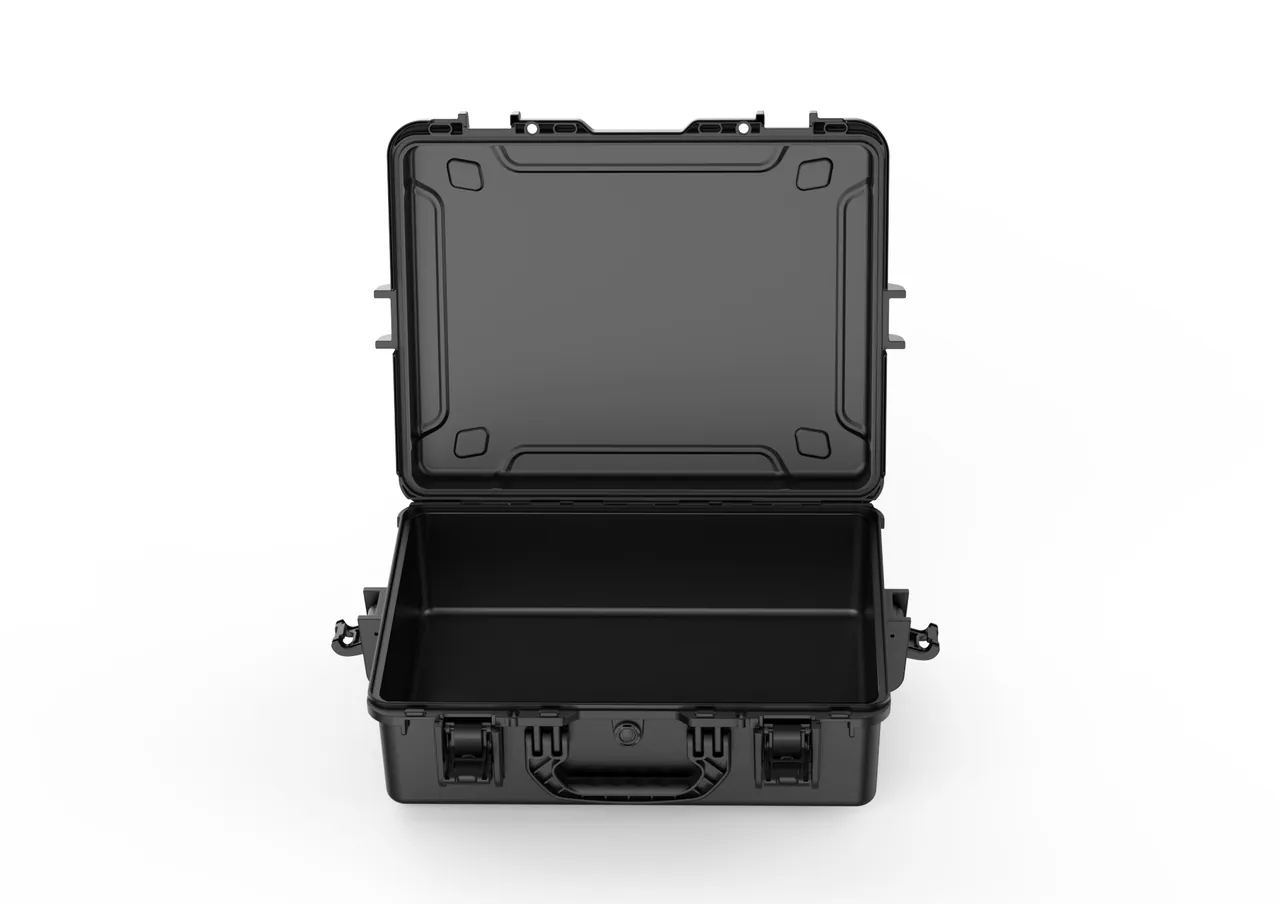
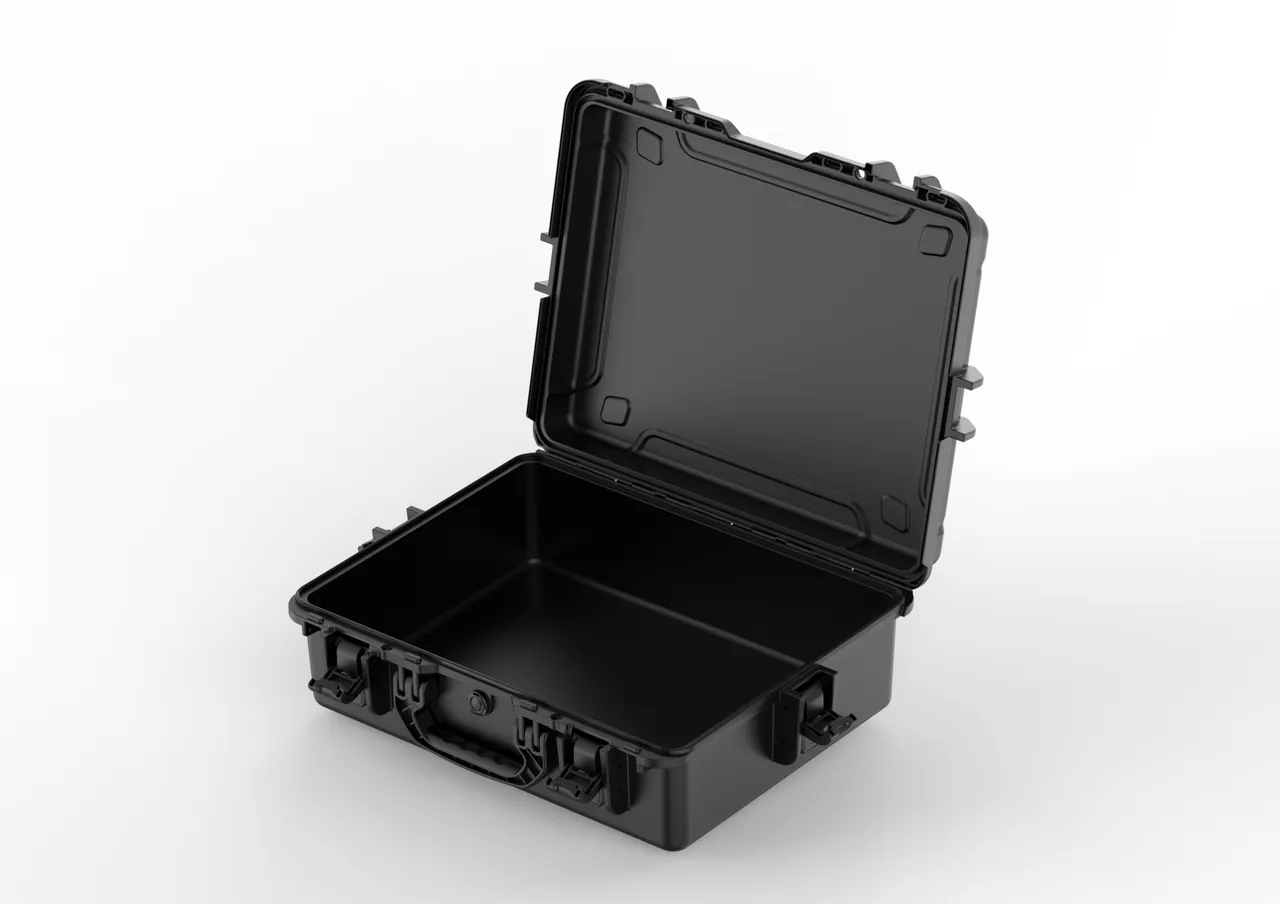
Plastic transport cases. Plastic cases, in HDPE or PP for example, offer smooth non-shedding inner surfaces, controllable sealing and moisture protection, replaceable seals and suitability for repeated round trips, and they fall outside timber packaging quarantine requirements. The disadvantages are higher tooling cost, limits on very large sizes and, in some destination countries, environmental and recyclability requirements for plastic packaging. For high-end furniture, plastic cases suit repeat-use scenarios particularly well, such as showroom touring, show-apartment rotation and designer exhibition circuits.
Hybrid options: plastic case plus timber or plastic pallet plus custom insert. This is currently the more pragmatic compromise. The plastic case handles moisture protection, non-shedding and returnability. The pallet, in timber or plastic, handles load bearing and fork access. The custom insert handles shape matching and point loading. One point must be stressed: whatever the case material, the outcome for furniture is decided by the insert, because the insert determines whether load is evenly distributed, whether edges are protected and whether humidity change is buffered.
Very large furniture. Complete wardrobes, full sofa sets and large conference tables usually cannot use a complete case. Standard practice is:
- Full-face pallet plus frame, using the pallet as a base and building a frame enclosure with longitudinal and transverse bracing to prevent lateral movement;
- Local reinforcement at corners, top edges and hardware positions;
- Overall wrapping in barrier film or a rain sheet, with desiccant;
- Lifting and forking markings, making the lifting points and fork positions explicit and prohibiting lifting from the furniture body itself.
Is more sealing always better? It depends. For stone, glass and metal-finished parts, sealing helps exclude moisture and contaminants. For solid wood and upholstery, full sealing with uncontrolled internal humidity carries risk. A practical approach is zoning: high-barrier inner packaging for stone, glass and metal parts; moisture-buffering inner layers for solid wood and upholstery; and the whole assembly placed in a case with basic sealing, supported by desiccant and a humidity indicator card. The specific scheme should follow the material combination, the transport route and the storage period.
8. Furniture-to-Case Selection Matrix
| Furniture type | Typical weight | Insert and protection approach | Case form | Moisture control | Key constraint |
|---|---|---|---|---|---|
| --- | --- | --- | --- | --- | --- |
| Solid wood dining or slab table | 30–150 kg | Full-face top support plus continuous battens plus four corner protectors | Timber or hybrid case with pallet | RH buffer layer plus desiccant plus indicator card | No point loads, no direct sunlight |
| Solid wood wardrobe or sideboard | 40–150 kg | Upright support plus diagonal bracing plus hardware clearance | Frame or timber case | RH buffering plus moisture exclusion | Anti-topple, no twisting |
| Mortise-and-tenon or traditional piece | 20–100 kg | Rigid overall fixing plus independent support at joints | Timber case with frame | RH buffering | No twisting, no local loading |
| Veneered or thin-wood furniture | 20–80 kg | Soft wrapping plus avoidance of local pressure | Timber or hybrid case | RH buffering plus heat exclusion | Prevent veneer lifting and edge banding detachment |
| Upholstered sofa (three-seat or larger) | 50–150 kg | Non-woven wrap plus full-face pallet plus uncompressed filling | Pallet or frame case | Breathable wrap plus humidity control | No stacking on cushions, no cinching |
| Leather sofa or upholstered bed | 40–120 kg | Breathable soft wrap plus moisture barrier | Pallet or hybrid case | Breathable plus humidity control | Prevent mould, water marks and discolouration |
| Stone top | 30–150 kg | Full-face pallet plus continuous battens plus edge protectors | Timber case with full-face pallet | High-barrier inner pack plus desiccant | No point loads, no bending |
| Glass furniture component | 5–40 kg | Upright frame plus edge protectors plus soft separation | Upright case or frame | High barrier plus desiccant | Never laid flat, no edge loading |
| Metal-finished part | 5–50 kg | Film covering plus individual soft wrapping | Compartment or frame case | Dryness plus chloride exclusion | Prevent friction, perspiration and scratches |
| Hardware and decorative fittings | Under 5 kg | Removed and packed separately plus compartments and labels | Compartment box | Dryness | Prevent loss and deformation |
| Fully custom or built-in piece | 30–200 kg | Priority protection for mating faces plus locating supports | Custom frame case | RH buffering plus moisture protection | Zero damage to mating faces |
Three empirical rules apply. First, every large flat or slab component must be supported across the face or along continuous battens; point contact and four-corner support only are not acceptable. Second, wherever hardware protrudes, prefer removal over protection. Third, wherever an export project includes timber packaging, confirm the ISPM 15 treatment and marking requirements in advance.
9. Insert and Cushioning Materials Compared
| Material or structure | Typical density | Load and cushioning behaviour | Surface and moisture behaviour | Suited to | Notes |
|---|---|---|---|---|---|
| --- | --- | --- | --- | --- | --- |
| EVA (medium to high density) | 60–120 kg/m³ | Good load bearing, moderate cushioning | Closed cell, non-shedding | Corner protectors, edge battens, locating blocks | Softens slightly when hot |
| Low-rebound EVA or memory foam | 40–90 kg/m³ | Good vibration absorption | Closed cell | Hardware clearance, protruding part cushioning | Needs structural parts to bear load |
| PU foam | 25–60 kg/m³ | Medium to low load bearing | Open cell, may absorb moisture | Internal filling, edge cushioning | May collapse under long compression |
| EPE pearl foam | 20–40 kg/m³ | Good cushioning, low load bearing | Closed cell, soft | Outer layer over lacquer and finishes | Not for carrying heavy items on its own |
| XPE or IXPE | 30–80 kg/m³ | Low load bearing | Closed cell, flat surface | Interlayer pads, face separation | Not for load bearing |
| Structural foam (cross-linked PVC or PE) | 60–300 kg/m³ | High load bearing, low deformation | Closed cell, machinable | Load blocks, locating seats | Contact face needs a soft overlay |
| Non-woven or fleece | — | No load bearing | Extremely soft, breathable, anti-snag | Fabric, leather and lacquer contact layer | Needs mould control and cleanliness |
| Corrugated or honeycomb board | — | Medium | Flat, can absorb moisture | Large-face separation, interlayer pads | Absorbs moisture, needs protection |
| Wood-fibre board or humidity-regulating paper | — | Low | Moisture-buffering capacity | Inner buffer layer for solid wood | Confirm cleanliness and absence of contaminants |
| Foil laminate barrier film | — | No load bearing | High barrier, low moisture transmission | Inner packing for stone, glass, metal | Requires desiccant |
| Custom foam insert (poured or machined) | 20–60 kg/m³ | Shape-matched, good cushioning | Closed cell | Irregular pieces, carved elements | Confirm material compatibility |
Selection logic: zone by material, layer by function. Insert selection for furniture follows a functional split. The contact layer must be soft and non-shedding. The cushioning layer must absorb impact. The load-bearing layer must be flat and stiff. The humidity-regulating layer must buffer moisture change. The barrier layer must exclude moisture. One piece of furniture often needs several materials at once: a full-face pallet for the top as the load-bearing layer, continuous battens at the edges as cushioning, non-woven against the lacquer as the contact layer, a humidity-regulating material inside as the buffer, and barrier film with desiccant in the outer case as the barrier.
Material compatibility: a high-incidence problem specific to furniture. Packaging material contamination of furniture has three typical forms. Plasticiser migration, where soft PVC or plasticiser-containing foam left in long contact with lacquer or leather leaves oily marks or a tacky surface. Sulphide contamination, where sulphides released by certain rubber materials discolour silver finishes and some plated layers. And shedding and fibre, where low-density open-cell foam and poor-quality non-woven shed particles that lodge in carved recesses or soil fabric. For high-end furniture, request composition and migration data for packaging materials and verify compatibility on critical areas. See case foam material comparison and EVA foam insert custom process.
Volatile emissions from new furniture. Newly manufactured furniture, particularly pieces containing engineered board, adhesives and lacquer, releases volatile organic compounds. Inside a fully sealed case these concentrations rise, potentially affecting plated hardware, leather surfaces and some plastic parts, and producing strong odour at unpacking. Allow adequate ventilation and curing before packing, with specific durations following the process documentation; allow some ventilation during the storage phase; and ventilate after unpacking before installation. Requirements relating to indoor air quality and hazardous substance limits follow the product standard and the applicable mandatory provisions.
10. Sealing, Moisture Control and IP Ratings: IEC 60529 and GB/T 4208
The moisture-control performance of a furniture case determines the condition on arrival of solid wood, upholstery and metal finishes.
What the IP code means. The IP code defined in IEC 60529 consists of two digits, the first for dust protection (0–6) and the second for water protection (0–9K). The equivalent Chinese standard is GB/T 4208. Common configurations for furniture cases are:
- IP54: limited dust protection and splash resistance, suited to short domestic legs, box-van transport and indoor transfer storage;
- IP65: dust-tight and resistant to water jets, suited to most furniture in domestic and near-sea transport and to covered platform storage;
- IP67: dust-tight and resistant to temporary immersion, typically 1 m for 30 minutes, suited to sea freight, open or semi-open storage and high-humidity, high-salinity regions;
- IP68: continuous immersion, needed only in extreme scenarios such as a storage yard that may flood.
For how to choose, see choosing the IP rating of a waterproof case and IP67 protective case design points.
Key point one: an IP rating verifies that external water does not enter. It does not mean condensation cannot form inside. A sealed case cannot easily vent internal moisture across a day-night temperature swing, so condensation may form on stone surfaces, metal finishes and glass. For furniture, condensation causes pitting and loss of gloss on metal, and can be absorbed by solid wood and upholstery to cause local swelling and mould. Combine sealing with desiccant and a humidity indicator card, and fit a pressure equalisation valve where routes have large temperature swings or goods are stored in the open.
Key point two: moisture control is not only about excluding external water; it is also about controlling internal moisture sources. Timber case components, timber pallets, paper fillers, undried cleaning residue and newly manufactured upholstery materials are all internal moisture sources. Confirm furniture is fully dry before packing, avoiding the most common error of putting damp furniture into a sealed case. A timber case that is not dry before use is itself a source that keeps releasing water.
How to size desiccant. Desiccant quantity should be calculated from free volume inside the case, the hygroscopicity of packing materials, transit days and target humidity. A furniture case is unusual in having many internal moisture sources: timber pallets and case components, paper separation material and upholstery filling are all appreciably hygroscopic and continuously consume desiccant capacity. Desiccant quantities for furniture cases are therefore usually substantially higher than for a metal parts case of the same volume, and a 30 to 45 day sea route requires more still. For high-value solid wood and leather furniture, add a humidity indicator card so the peak humidity history can be read at unpacking.
Seals and latches. Seal profiles are commonly silicone, EPDM or foamed TPE, and the section must match the case groove. Latch count should match lid stiffness; lids longer than 800 mm generally warrant three or more latches. Seals are consumable and belong on the spare-parts list with defined replacement criteria; see case hinge, latch and seal selection and protective case service life evaluation.
Where flame-retardant material applies. UL94 is a plastics flammability classification that evaluates the case plastic, insert foam and seal material themselves; it is not a fire certification for a machine or a packaging system. Note that a UL94 rating must always be stated together with material and thickness, because the same material can achieve different ratings at different thicknesses. Where the customer requires flame retardance, for example in hotel or public building projects, specify the material and thickness combination at the enquiry stage.
11. Transport Test Basis and Standard Packing Workflow
Test basis. Verification of a furniture transport case typically draws on four families of standards. These sit at a different level from the furniture's own performance and safety standards, such as the product and test method standards for wood furniture, metal furniture and upholstered furniture, and the two should not be confused.
ISTA. The International Safe Transit Association programme is graded by pack form and weight. Furniture commonly uses ISTA 2A for a single pack and ISTA 3A for parcel delivery, with unitised loads referencing ISTA 3E and less-than-truckload shipments referencing ISTA 3B. Its value lies in sequencing: preconditioning, then impact or drop, then vibration, then re-inspection. See understanding ISTA transport test procedures.
GB/T 4857. The Chinese series of basic test methods for transport packages covers vibration, impact, stacking and drop, and is widely cited in domestic tendering and acceptance. See applying GB/T 4857 to transport packaging.
ASTM D4169. This standard assigns test intensity from a distribution cycle and is often used for packaging verification into North America. See ASTM D4169 distribution cycle testing.
MIL-STD-810H. Frequently cited for its vibration, shock, temperature-humidity and salt-fog environmental test methods. Note clearly that MIL-STD-810H is used here as a source of environmental test methods and does not mean the product holds any military certification. See MIL-STD-810H environmental compliance note.
| Test type | Common standard | Example parameters | Meaning for furniture transport |
|---|---|---|---|
| --- | --- | --- | --- |
| Random vibration | ISTA 3A/3E / ASTM D4169 | Power spectral density, duration | Verifies insert location and that hardware has not loosened |
| Impact or drop | GB/T 4857 / ISTA | Drop height, peak acceleration | Verifies corner, edge and top edge protection |
| Stacking | GB/T 4857.3 | Load, time, temperature and humidity | Verifies case strength and upholstery resistance to collapse |
| Incline or tip-over | ISTA incline test procedures | Incline angle, number of cycles | Verifies anti-topple design for tall case goods |
| Temperature-humidity cycling | MIL-STD-810H method 507 | Temperature range, cycle count | Verifies RH buffering and condensation risk |
| Salt fog | ISO 9227 / ASTM B117 | Concentration, duration | Verifies metal-finished parts and hardware |
| Water ingress | IEC 60529 / GB/T 4208 | IP rating, test duration | Verifies case sealing effectiveness |
| Flammability (material) | UL94 | Rating at a given material and thickness | Verifies case plastic and insert material |
Acceptance at arrival, by unpacking inspection. Verification for furniture should be judged by installability and absence of visible defects, and checks should be carried out in sequence: whether the case and corner protectors are intact with no through damage or rain staining; whether the humidity indicator card is within the acceptable band; whether stone and glass show cracking, chipping or staining and whether edges are bruised; whether lacquer and finishes show scratches, indent marks or colour variation viewed under side lighting, in natural or raking light since fine scratches are invisible under direct frontal light; whether upholstery fabric shows snags, stains or indent marks and whether cushions have collapsed; whether leather shows water marks or mould; whether metal finishes show rubbing or fingerprint corrosion; whether hardware is complete and undeformed, counting separately packed items against the list; and whether solid wood parts show new cracks, misaligned joints or panel splitting.
Inspection experience: scratches and indent marks in furniture lacquer must be checked under side lighting. Viewing directly into the light source conceals a large number of fine scratches, and this is a common cause of arrival disputes. Carry out the unpacking inspection in a well-lit area where raking light is possible, and photograph the critical areas: tops, faces and edges.
Standard packing workflow.
- Verify and prepare. Check model, quantity, accessories and drawings; confirm the furniture is at stable moisture content with a clean, dry surface; confirm detachable hardware has been removed, separately packed and labelled.
- Inner wrap. Wrap the whole piece in non-woven or soft covering, prioritising lacquer, fabric and leather contact faces. The covering material must not shed and must be free of oil and migratable constituents.
- Middle cushioning. Fit corner protectors and continuous edge battens. Add soft pads or clearance cavities at protruding parts, carved elements and hardware positions. Corner protectors must be shape-matched, thick enough and free of adhesive residue.
- Lay the load-bearing layer. Place a full-face pallet or continuous battens under large faces, including tops, bases and side panels, confirming flatness and even loading. Point contact and four-corner support only are not acceptable.
- Seat the furniture. Place to the designed posture, upright for solid wood case goods and either upright or fully flat for stone and glass, without dragging or dropping, and confirm the centre of gravity falls within the support footprint.
- Restrain and limit. Fit locating blocks and straps with soft pads where straps bear on finished surfaces so nothing is crushed. Confirm hand pressure produces controlled movement only, within the design limit or an empirical 2 mm.
- Control moisture and seal. Size desiccant from volume, transit days and internal moisture sources, and add a humidity indicator card. Where barrier film is used, confirm the seal is intact. Close the case and check seals and latches.
- Mark and record. Apply this-way-up, fragile, keep-dry, do-not-invert, centre-of-gravity and lifting markings. Photograph the packed case including corner protectors, support arrangements and inner wrapping, file the images, and enclose the packing list and an unpacking guide.
The value of an unpacking guide. Because furniture is delivered into a client's home, enclose a short unpacking guide stating the opening sequence, the direction in which corner protectors are removed, the areas where a utility knife must not be run, and the recommendation to let the piece settle before installation. A single sheet of paper costs almost nothing and substantially reduces on-site damage and complaints.
12. International Moving and Export Projects: Timber Packaging, Compliance and the Container Environment
A large share of high-end furniture demand comes from international moving, hotel and property export projects and overseas deliveries by designer brands, so timber packaging compliance and the container environment must be addressed.
ISPM 15 and timber packaging. Timber packaging material used for export, including timber cases, timber pallets, timber blocks and timber bracing, must meet the requirements of International Standards for Phytosanitary Measures No. 15, normally by heat treatment or fumigation, and must carry a recognisable mark. Specific requirements and marking formats follow the destination country's phytosanitary rules and the carrier's requirements; no compliance conclusion is offered here. Note that using a plastic case avoids the timber packaging quarantine requirement, but where a timber pallet is used with it, that pallet is also timber packaging and must comply.
Quarantine and compliance for the furniture itself. Furniture, especially solid wood pieces, may fall under phytosanitary requirements, timber origin documentation or endangered species controls in some destination countries, for example where particular timber species are used. This is a trade compliance matter that should be handled according to destination country legislation, contract terms and professional customs advice; no judgement is offered here. In practice, confirm the destination requirements with the client at the quotation stage.
The container environment: the largest hidden risk in furniture export. A sea container experiences severe temperature and humidity swings during a voyage. In daytime the internal temperature can be substantially above ambient, most notably on deck, and after the night-time temperature drop internal relative humidity approaches saturation, so water vapour condenses on cargo surfaces and on the container ceiling, the phenomenon commonly called container rain. For furniture this causes three kinds of damage: moisture uptake and end cracking in solid wood, mould on upholstery and leather, and pitting and loss of gloss on metal finishes. Countermeasures include:
- Barrier film wrapping of high-value pieces to exclude external moisture;
- Adequate desiccant sized from container volume, voyage days and cargo hygroscopicity, dispersed rather than concentrated in one place;
- Control of internal moisture sources, confirming cases and pallets are dry, furniture surfaces carry no residual water and paper material has been moisture-proofed;
- Stowage position, choosing positions away from the top layer and the doors where possible, reducing temperature swings and moisture ingress when the doors are opened;
- Humidity recording, placing a humidity indicator card or recording hygrometer in the case for high-value cargo to provide evidence for later tracing.
Multi-leg transport and the last mile. International furniture delivery typically runs: factory loading, port, sea freight, destination port, customs clearance, trunk haulage, and finally home delivery and carrying up to the room. The final leg is often the most problematic: the lift may be too small and stairs are required, corridors may be narrow and necessitate tilting, and other trades may be working on site creating impact risk. The case design should therefore treat last-leg handleability as a requirement: sensible handle positions, a removable outer frame, corner protectors that come off in one piece, and clear handling instructions. For oversized pieces that cannot fit in a lift, plan the hoisting method in advance and mark the lifting points on the case.
Repeat-use scenarios. For showroom touring, show-apartment rotation and designer exhibition circuits, use a plastic case or plastic case with custom insert and establish re-use criteria covering case deformation, seal failure, insert collapse and corner protector condition. In repeat-use scenarios, cleaning the insert matters too: furniture is contamination-sensitive, so dust, fibre and packaging debris left from the previous shipment must be removed before reuse, otherwise it will soil the next piece. For cleaning and maintenance methods see protective case cleaning and maintenance.
13. Arrival Acceptance, Pre-Installation Storage and OEM/ODM Customisation
The last mile of furniture transport happens at the client's premises, so arrival acceptance, pre-installation storage and the customisation capability of the packaging supplier together determine the customer experience.
Four levels of arrival acceptance. The first is outer packaging acceptance: whether the case and corner protectors are intact, whether there is rain staining or through damage, and whether the humidity indicator card is acceptable. The second is unpacking inspection, as described in section 11, checking lacquer and finishes under side lighting, stone and glass edges, fabric and leather, metal finishes and hardware completeness. The third is dimensional and assembly acceptance: for custom and built-in pieces, confirm the fit to site dimensions, such as carcass gaps, worktop cut-out positions and hardware fixing holes. The fourth is settling in: let the furniture stand in the destination environment for a period before installation or use so its moisture content reaches a new equilibrium with the surroundings. The specific duration follows the product process documentation and project requirements; no numeric conclusion is offered here.
Pre-installation storage requirements. Furniture often cannot be installed immediately on arrival and must be stored on site or in a temporary warehouse for days to weeks. Storage conditions matter as much as transport:
- Environment: avoid high temperature, high humidity, direct sunlight and air conditioning blowing directly onto the piece; do not store in a room where wet trades such as tiling or painting have just finished, because humidity there is usually substantially elevated;
- Posture: keep the designed transport posture, avoiding prolonged side or inverted storage;
- Off the floor: place the piece off the floor so moisture cannot rise from the slab;
- No stacking: do not stack furniture on furniture and do not place anything on seat cushions;
- Keep packed: keep packaging intact until installation, opening only locally for inspection when necessary.
OEM/ODM customisation points. High-end furniture transport cases form a category of one-off customisation, complex geometry, small batch and mixed materials. Procurement strategy should be built around a common pallet, custom insert and modular corner protection: a small number of standard pallet and case sizes cover most furniture; inserts are customised to the furniture outline, accepting drawings, 3D data or physical samples; corner and edge protectors are modular by size series and can be combined. This spreads tooling cost across projects; see case mould cost analysis. JUNZHJIA's standard approach for furniture is: accept drawings, 3D data or physical samples, produce a six-face protection and insert proposal, confirm with a first-article trial fit, then run production with sampling and supply supporting test documentation.
Five dimensions for evaluating a supplier. Engineering capability, meaning the ability to produce a six-face protection proposal from the furniture outline, centre of gravity and material combination, to run a first-article trial fit and to propose full-face support for irregular pieces. Materials and process, meaning insert density and batch consistency, whether overlay materials shed or contain migratable constituents, the fit accuracy of corner and edge protectors, and ISPM 15 compliance for timber. Test capability, meaning the ability to supply vibration, drop, stacking, incline or tip-over, water-ingress and salt-fog records. Delivery and capacity, meaning peak-season flexibility and lead-time reliability, since furniture projects usually have fixed delivery milestones. Quality system, meaning sampling rules and non-conformance handling, summarised in custom case acceptance and AQL sampling.
Enquiry checklist. A practical enquiry should include: furniture model and external dimensions with 3D data or photographs; weight and centre of gravity; material composition and surface treatment, including timber species, fabric type, stone type and metal finishing process; a list of critical areas such as tops, edges, hardware and carved elements; whether hardware is detachable; transport mode and route, including whether the last leg involves stairs; storage period and environment; whether repeated round trips are needed; target IP rating and moisture control requirements; whether ISPM 15 timber packaging is required; test requirements; marking and unpacking guide requirements; and project quantities with delivery milestones. For supplier selection see how to choose a protective case OEM factory.
Frequently Asked Questions
Q: Why does moisture control matter more than impact resistance for high-end furniture?
A: Because most furniture damage comes from the way materials respond to environmental change rather than from a single impact. Solid wood absorbs and desorbs moisture as relative humidity changes, and its dimensions follow: it swells as humidity rises and shrinks as humidity falls, with markedly different movement tangentially and radially. When the environment changes quickly, the surface and core develop a moisture gradient and internal stress, which eventually shows as panel splitting, end cracking, veneer lifting and lacquer cracking. These failures are typically invisible on arrival and only appear one to three months later, by which time attributing responsibility and claiming are extremely difficult. Upholstery and leather also fear moisture: high humidity produces mould and colour bleeding, and mould is practically impossible to remove from light textiles and leather. Container transport adds container rain, in which day-night temperature swings cause water vapour to condense. Impact protection matters too, but mechanical impact is a probabilistic event while humidity is certain: if the environment moves, the material responds. Moisture control is therefore the first priority.
Q: Why is solid wood so sensitive to relative humidity change, and what range should be maintained?
A: The root cause is that timber exchanges water with its surroundings until it reaches equilibrium moisture content. At a given temperature and humidity the timber settles at a stable moisture content; higher ambient humidity gives higher equilibrium moisture content and the wood swells, and lower humidity reverses it. Crucially, timber movement is strongly directional: tangential movement is largest, radial is intermediate and longitudinal is minimal, so glued-up panels and wide surfaces show the greatest accumulated dimensional change. The danger is not the absolute humidity but the rate of change: when it changes abruptly the surface responds first and the core lags, creating a moisture gradient and internal stress that causes cracking once transverse strength is exceeded. Furniture transport and storage therefore commonly target 45 to 60 percent relative humidity and 15 to 25 degrees Celsius as empirical industry values, with more attention to slowing the rate of change than to chasing an extreme value. Practical means include moisture-buffering inner layers, barrier film with desiccant, and avoiding direct sunlight and heat. Specific equilibrium moisture content ranges and limits follow the product standard, timber species and manufacturer's process documentation.
Q: Why should upholstered and leather furniture not be tightly wrapped in ordinary plastic film for long periods?
A: Because fully sealed, non-breathable packaging causes damage in two ways. First, when temperature changes, water vapour on the wrapped surface condenses on the inner face of the film, and once absorbed by fabric or leather it causes mould spots, water marks and colour bleeding, and leather becomes hard or tacky. Second, migratable constituents in some plastic films and soft plasticiser-containing materials transfer to fabric or leather over long contact, leaving oily marks or a tacky, discoloured surface. Leather is extremely moisture-sensitive: water marks leave dark stains that are hard to remove, and mould on light textiles is practically irreversible. The correct approach for upholstery and leather is therefore breathable but moisture-protected: wrap the piece overall in breathable non-shedding material such as non-woven, place it in a case with moisture-control capability supported by desiccant and a humidity indicator card, and add localised barrier film only where contamination risk is high. Never seal the whole piece hermetically. Obtain composition and migration data for covering materials and verify compatibility first.
Q: Should stone tops and glass components be laid flat or carried upright?
A: The principles differ. For glass components the basic rule is upright transport: glass is strongest standing upright, and when laid flat it is more likely to break through bending under its own weight and point contact. Use an upright frame, fit edge protectors, keep the area around drilled holes unloaded, and avoid point contact and thermal shock. Stone tops need a distinction. Marble, granite and sintered stone are brittle materials that may contain internal microcracks, and their greatest risk is point loading and bending. If carried flat, they must be supported on a full-face pallet with good flatness and, where necessary, continuous battens underneath to limit deflection, and must never rest on four corners or a few points only. If upright transport is necessary, use a frame matched to the panel size so the back face is supported across its area, because otherwise self-weight creates bending stress. Whichever posture is used, protect edges and corners, since chipping is practically unrepairable, and prevent soiling and staining, since marble is water-absorbent and acid-sensitive and oils and coloured liquids cause staining, so packaging materials must be oil-free and must not release coloured substances.
Q: Why is corner protection the highest-return element in furniture transport?
A: Because corners combine three properties at once, namely they protrude, they are hard, and they are easily struck, and the resulting damage is the hardest to repair. A corner contacts the outside world first, the material is cut there so the continuity that provides support is lost and impact resistance falls, and the lacquer film and edge banding at a corner are often already the weak link. When struck, the typical damage is a broken finish plus a compressed substrate, and on high-end pieces the finish is often built up over several stages of primer, topcoat and polishing or open-pore finishing, so local repair produces visible colour and gloss differences that cannot be reconciled with an undamaged surface. Chipped stone edges and bruised cabinet door corners are similarly in the category of requiring a replacement part or the whole piece to be reworked. Corner and edge protection therefore accounts for a small share of cost while avoiding the most expensive rework. An effective corner protector must be thick enough to absorb impact, shape-matched to the corner, free of adhesive residue and indent marks, and quick to remove for inspection after unpacking.
Q: Why do sofa cushions seem to collapse progressively in transit?
A: Because filling materials take a compression set under prolonged load. High-resilience foam, latex and feather or blend fillings cannot fully recover after sustained compression, so resilience falls and the result is uneven seating and a visible dip. Several poor practices often occur together: stacking sofas on one another, placing other goods on top of cushions, or cinching cushions tightly with straps to reduce volume. All of these leave the filling compressed for a long period, and the longer the compression and the higher the temperature, the more pronounced the permanent set. The correct approach is to give the filling room: support the sofa base on a full-face pallet, place nothing on top of the cushions, do not stack sofas on each other but fix each piece separately, and when strapping, avoid the cushion area, use wide webbing and add soft pads. Where compression is unavoidable for transport efficiency, control the compression ratio and duration and allow adequate recovery time after arrival.
Q: What should be considered for timber packaging on furniture exports?
A: The core issues are the requirements of International Standards for Phytosanitary Measures No. 15, known as ISPM 15, and control of the container environment. ISPM 15 applies to timber packaging material, including timber cases, pallets, blocks and bracing, and normally requires heat treatment or fumigation with a recognisable mark. Three points matter. Using a plastic case avoids the timber packaging quarantine requirement, but where a timber pallet is used with it, that pallet is also timber packaging and must comply. Furniture itself, especially solid wood, may fall under phytosanitary requirements, timber origin documentation or endangered species controls in some destination countries, which is a trade compliance matter to confirm with the client at the quotation stage. And container rain is the largest hidden risk in furniture export, since day-night temperature swings condense water vapour on cargo and on the container ceiling, causing moisture uptake and cracking in solid wood, mould on upholstery and leather, and pitting on metal finishes. Countermeasures are barrier film wrapping, adequate and well-dispersed desiccant, control of internal moisture sources with dry cases and pallets, sensible stowage positions, and humidity indicator cards for high-value cargo. Specific compliance requirements follow destination country rules and carrier requirements; no compliance conclusion is offered here.
Q: Can furniture be installed immediately on arrival, and what should be considered before installation?
A: It is better not to install immediately. Let the furniture stand in the destination environment for a period first so its moisture content reaches a new equilibrium with the surroundings. Climatic conditions at the place of manufacture and the destination often differ, and the piece has already been through one environmental change during transport. If it is installed immediately and then sits under air conditioning, against an external wall, or in a room where wet trades have just finished, its moisture content will continue to change in the new environment and may produce cracking, warping or misaligned joints. Six points apply to pre-installation storage. On environment, avoid high temperature, high humidity, direct sunlight and air conditioning blowing directly on the piece, and do not store in a room where tiling or painting has just been completed, since humidity there is usually significantly elevated. On posture, keep the designed transport posture and avoid prolonged side or inverted storage. Keep the piece off the floor so ground moisture cannot rise. Do not stack furniture on furniture and place nothing on seat cushions. Keep packaging intact until installation, opening only locally for inspection. And keep upholstery and leather away from chemicals and cleaning agents. The specific settling period follows the product process documentation and project requirements, and no numeric conclusion is offered here. Write these requirements into the delivery documentation so the client and the installation team can follow them.
Q: How do I judge whether a furniture transport case can keep being reused?
A: Establish explicit re-use criteria and a log. Check six items: whether the case and pallet have cracks, deformation or through damage, focusing on the base, corners and fork positions; whether seals are hardened, cracked, debonded or permanently flattened; whether latches and hinges close and carry load reliably; whether inserts have collapsed, fractured, shed their overlay or lost compartments, since a collapsed insert changes the load distribution and turns full-face support into point contact; whether corner and edge protectors are complete and well fitted, because these wear fastest in a furniture protection system and must be replaced as soon as they detach; and the condition of castors and the telescopic handle. Any failed item should be replaced before reuse. Two additional requirements apply in furniture reuse. First, the insert and case interior must be thoroughly cleaned before reuse to remove dust, fibre and packaging debris from the previous shipment, because furniture is extremely contamination-sensitive and debris will soil the next piece. Second, a case previously used for oil- or chemical-containing goods must not be used for furniture directly, but only after cleaning and confirmation that no residue, odour or stain remains. A log recording case number, trip count, inspection records and previous cargo is the lowest-cost and most effective management tool.
Conclusion and Further Reading
Designing a transport case for high-end furniture is fundamentally a problem of managing how materials respond. Solid wood absorbs and desorbs moisture with the environment. Upholstery fabric and leather fear soiling and damp. Stone and glass fear point loading. Metal finishes fear friction. Hardware fears impact and loss. What these failures share is that they may be invisible on arrival and only emerge over time, by which point the piece is in the client's home and rework and claims are extremely costly. An effective scheme is therefore not a bigger and thicker case but one that assigns load bearing, isolation, cushioning, moisture control and contamination control to the right structures, while treating the final home-delivery leg and the pre-installation settling period as part of the design.
The path to implementation compresses into five steps: zone the protection requirements by material, define the load path through full-face or continuous support, handle edges and hardware with protectors and clearance cavities, control humidity with a moisture-buffering inner layer, barrier film, desiccant and a humidity indicator card, and close the loop with transport testing and a side-lit unpacking inspection. Following these five steps markedly improves the odds of open-to-install and install-without-defect. Where a six-face protection and insert proposal is needed for specific furniture outlines, material combinations and transport routes, provide drawings, 3D data or physical samples to JUNZHJIA and request a drawing plus a first-article trial fit.
Further Reading