

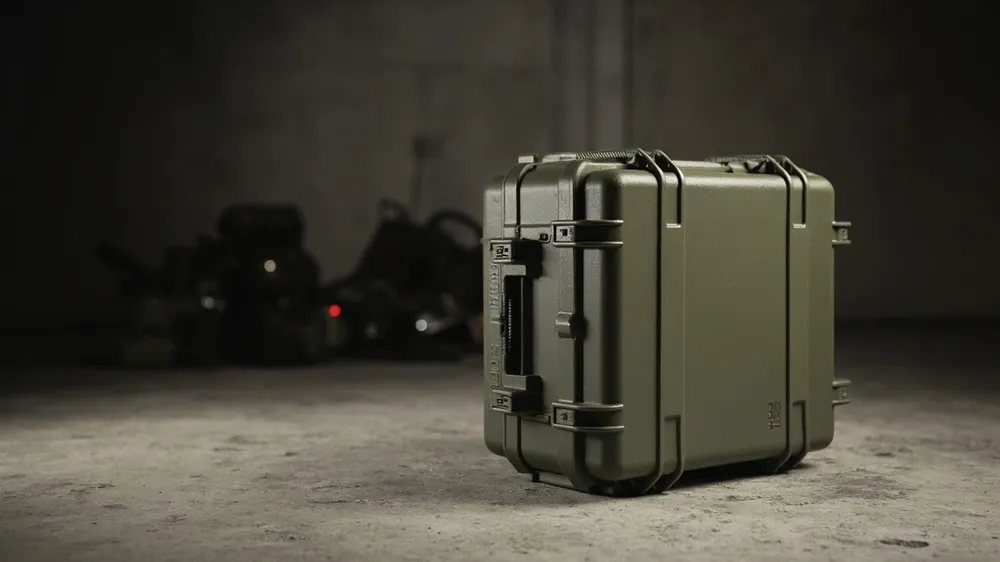
A tactical case is not a plain shell in olive paint. It carries radios, optics, batteries and sensors through dust, vibration and rough handling, and often must open in seconds. Military and security buyers care less about "looks tough" than about "gear intact every opening, with data to prove it". This guide sets out what a tactical case must deliver and how a buyer verifies a supplier actually does it.
The Harsh Duty of a Tactical Case
Versus an ordinary tool case, the tactical case meets harsher duty:
- Dust and mud: field exposure; the seal must truly block fine particles.
- Constant vibration: vehicle, aircraft, hiking; liner must stay fixed.
- Rough handling: thrown, dragged, stacked; corners and latches take the first load.
- Fast access: opening to retrieval counted in seconds.
These set the priority: corner protection > latch durability > liner fixation > shell rigidity.
Six Hard Specs
| Spec | Tactical delivers | Look-alike cuts | Verify |
|---|---|---|---|
| Corner guards | Metal / thickened wrap | Thin square corner | Corner covered? |
| Latch class | Metal pin, lockable | All-plastic loose | Cycle life, metal pin |
| Liner density | High-density EVA carved | Low density loose | Weigh, press |
| Sealing | One-piece gasket, real IP | Segmented gasket | Gasket, ask report |
| Shell material | PP / weatherable grade | Recycled brittle | Grade, see virgin vs recycled |
| Certification | IP / drop / vibration reports | No data | Ask for reports |
For shell strength see wall thickness and structural design; for latch life see hinge and latch durability design.
Corners and Latches: Where to Spend
In the field the first damage hits corners and latches. A square thin shell cracks on one drop; a metal-cornered case routes impact away. Latches need a metal pivot and preferably a padlock or TSA option, see TSA lock and airline travel cases. Buyers should demand fatigue data from the supplier.
Liner: Gear That Does Not Rattle in Transit
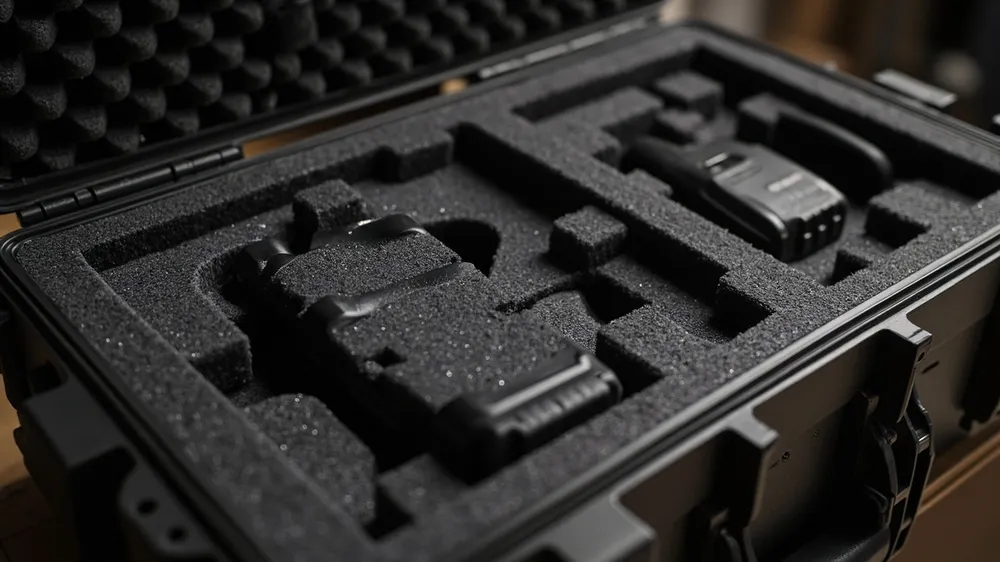
Radios, batteries and optics differ in shape; the liner contours each. Points:
- Independent bays: one cavity per item, no collision.
- Cable channels: separate routes, no crush or bend.
- High density: foam dense enough to hold under long vibration, see EVA thermoformed liner process.
- Reconfigurable: liner recut when gear iterates, see foam relining and recutting.
Material and Weatherability
Tactical cases live outdoors for years; material must weather: UV, temperature swing, salt spray. Trade-offs in polycarbonate material and aluminium vs plastic case; weathering in UV outdoor weathering and salt spray corrosion test; cold in cold-temperature brittleness.
Sealing, Dust and Water
Dust is tested more often than water. Sealing relies on a one-piece gasket and even compression; the IP system in IP69K vs IP67; condensation in condensation control; gasket ageing in gasket ageing and replacement.
Transport and Stacking
Tactical cases ship and stack in sets. Stack limit and moisture in warehouse stacking and moisture; vehicle vibration in transport vibration testing; air carry if involved in TSA lock airline cases.
Customisation Checklist
| Element | State | If missed |
|---|---|---|
| Gear list | Each size, weight, fragile point | Liner unfit |
| Duty | Temp, humidity, water? | Wrong material |
| Lock | Padlock / TSA? | Security mismatch |
| Cert | Target IP / drop class | No data at acceptance |
| Volume | First and annual | Higher unit price |
For requirements and negotiation see how to write a case RFQ and how to negotiate case price; for factory capability see drone case manufacturing factory.
Pitfall List
First, judge by olive paint — colour is not capability. Second, no corner guard — square thin shell cracks. Third, latch with no metal pin — loosens in thousands of cycles. Fourth, low-density liner — gear collides in vibration. Fifth, no certification — no basis at acceptance. Sixth, recycled shell — see virgin vs recycled.
In Summary
The capability order for a tactical case is: corner guards, latch durability, liner fixation, shell rigidity, certification on file. To choose it, write gear list, duty, lock and cert class as verifiable clauses, then ask the supplier to evidence each — corner wrapped, latch with metal pin and fatigue data, liner dense enough, gasket one-piece, IP/drop/vibration reports present. Do this and the case moves from "looks olive" to "gear intact every opening". For systematic material and weathering trade-offs cross-read aluminium vs plastic case and UV outdoor weathering; for supplier audit see drone case manufacturing factory.
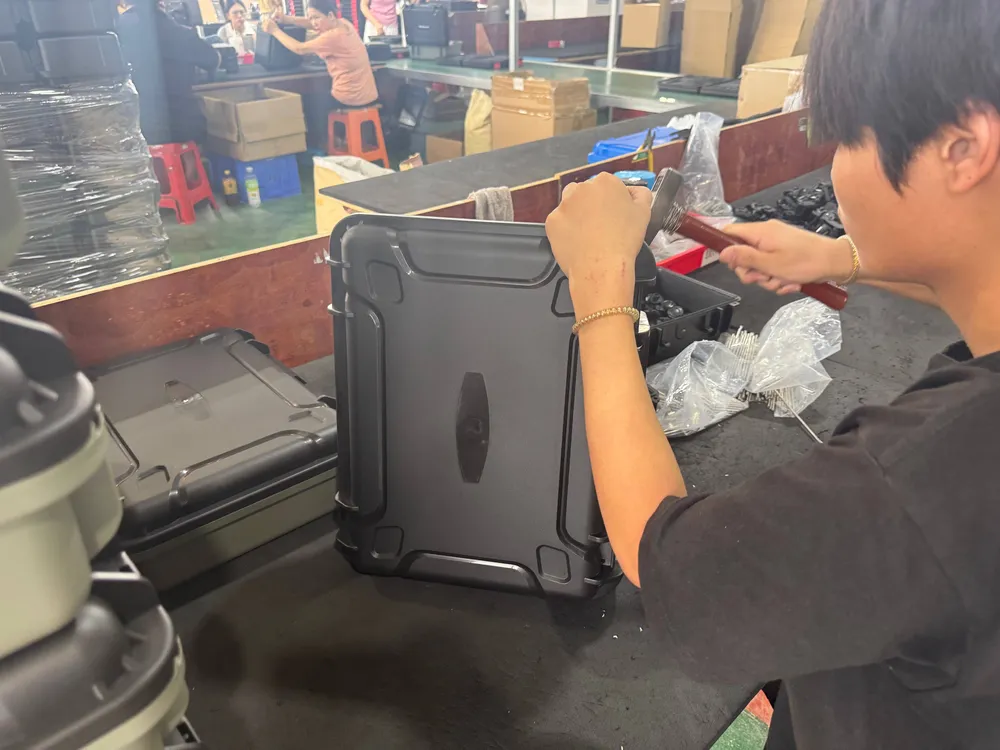
For specific gear liners see drone case foam insert design; for shell structure see wall thickness and structural design.