

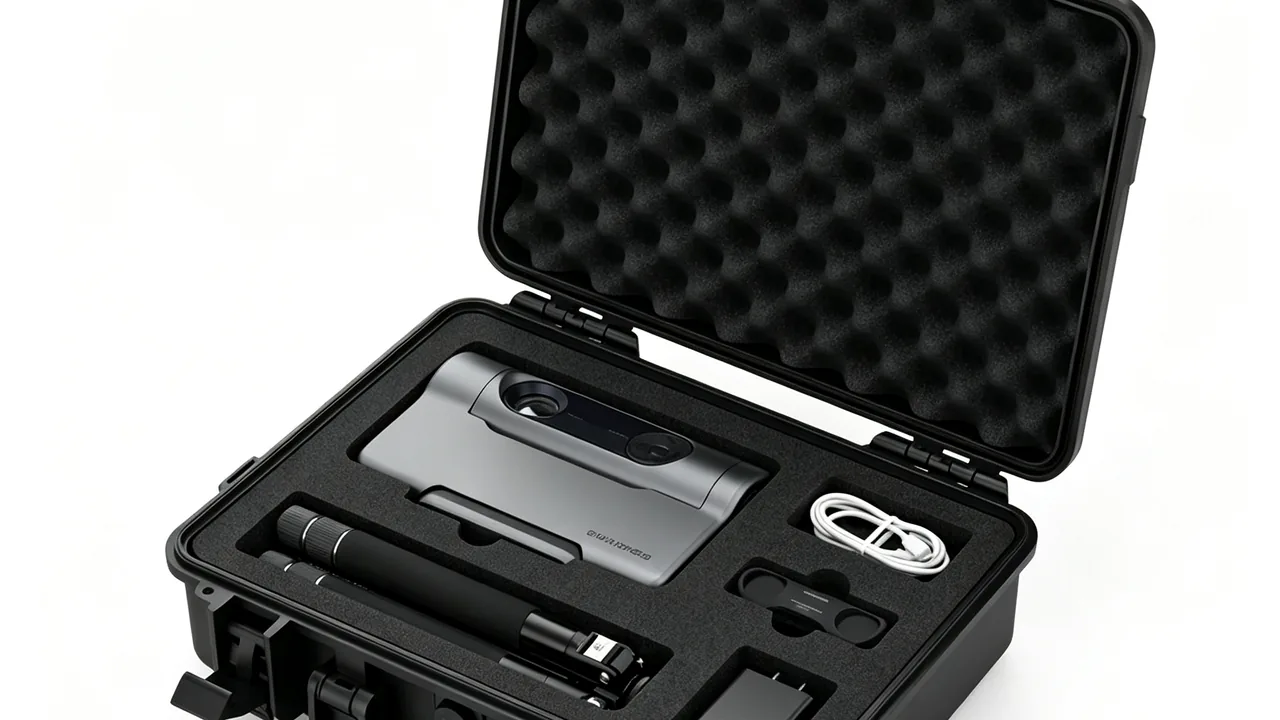
A peristaltic pump pushes fluid by rollers on the rotor alternately occluding the hose, squeezing the media into bead-like slugs forward. Because only the hose contacts the media, it is widely used in dosing, laboratory transfer, filling-line metering, blood and biological handling, and food-beverage batching, with flow accuracy often within plus or minus one to five percent. That accuracy depends on one premise: the hose keeps its original wall thickness, roundness and resilience. Once the hose creeps thin, gets an inner crease or turns oval, the flow curve drifts at once; once the roller outer cylinder is nicked, pulsation rises sharply and hose wear accelerates; once the pump-head cover seal face deforms, media leaks and contaminates the head cavity. JUNZHIJIA's conclusion is that peristaltic pump cases must follow three hard rules: form-holding priority for the hose, absolute no-touch for the roller cylindrical face, and independent load bearing for the cover seal face, while placing food and medical grade hose in a verifiable clean sealed cavity, because any deformation or contamination here changes metering accuracy and compliance qualification, not just appearance.
The most misjudged loss on site is treating "new hose but inaccurate flow" as a batch quality problem. The reality often happens before opening: the hose is coiled into a roughly 20 cm circle in a corner of an ordinary case, and after weeks a non-recoverable crease forms on the inner bend; rollers passing the crease cannot fully occlude the wall, each squeeze rebounds differently and pulsation rises; or several hoses are bundled with wrap film, the strap point flattens the wall, and that section cracks earlier. Rotor rollers are more hidden: the outer circle is the working face deciding pulsation and hose life, with cylindricity in microns; two rollers rolling free in the case and knocking each other leave invisible dents that prematurely break the hose. Cover and clamp seal faces also fear pressure; stacking weight beyond flatness tolerance leaks at run. These failures look normal on arrival, so this article proceeds by hose posture, roller no-touch, cover seal, clean compliance, anti-static and acceptance release.
Table of Contents
- Failure Distribution and Transport Risk of Peristaltic Pump Parts
- Hose Creep: Placement Posture and Support Design
- Crease and Ovalisation: Form-Holding Packaging of Hose
- Food and Medical Grade Hose: Cleanliness and Compliance
- Rotor and Rollers: No-Touch Rules for Cylindrical Face and Bearing
- Pump Head Cover, Clamp and Seals: Geometric Precision
- Pump Body, Fitting and Threaded Interface
- Drive and Control Electronics: Anti-Vibration, Anti-Moisture, Anti-Static
- Cleanliness Grade Mapping and Clean Packaging
- Hose Aging Inhibition: Ozone, UV and Temperature-Humidity
- Liner Material and Compartment Structure
- Case Sealing, Desiccant and Stacking
- OEM/ODM Support, Marks and Spare Release Checklist
- Frequently Asked Questions FAQ
- Conclusion and Related Reading
Failure Distribution and Transport Risk of Peristaltic Pump Parts
A peristaltic pump looks simple: one hose in the head arc slot, a rotor driving two to six rollers over it, forming a continuous occlusion wave. Because it is simple, its performance is almost entirely decided by a few geometry values: hose inside and outside diameter, wall, hardness and rebound; roller outer diameter, cylindricity and surface finish; cover and clamp occlusion of the hose. Any transport damage finally lands on these geometry values.
From arrival-defect statistics, the highest creep share is the hose: crease, ovalisation, local wall thinning, port deformation, inner contamination. Next are roller-related: cylindrical-face dent, roller bearing dust seizure, roller-shaft fit rust. Third is the head assembly: cover flatness out of tolerance, clamp deformation, seal-face bruise, adjusting-bolt bend. Fourth is drive and control: motor bearing shock, encoder or board moisture and static damage.
These damages have different run consequences, so protection priority differs. Hose failure is "gradual": it does not stop at once but drifts accuracy daily, often traced only after batch scrap. Roller failure is "sudden": one dent can halve hose life. Cover seal failure is "leakage": media enters the head cavity and corrodes bearing and body. Electronic failure is "hidden": it may appear only at energising after months in humidity. Designing packing per sensitive item is the line between direct installation and rework.
Also, peristaltic spares are often small-batch, multi-spec, frequent-turn: one machine may pair three hose inside diameters with two heads. Mixed specs raise cross-contamination and mismatch risk, especially when food grade and ordinary industrial hose mix; once mixed, the food part can hardly claim compliance. So compartment design must also carry "compliance isolation", not just collision avoidance.
Hose Creep: Placement Posture and Support Design
The hose is the only part that must "keep deforming and recovering"; its performance relies on elastic recovery. In packed state, any constant deformation causes creep: too-small bend radius compresses inside and stretches outside, failing full rebound and turning the wall oval or collapsed; over-tight strapping flattens the section and permanently thins the compressed wall; long vertical hang with free lower end stretches axially and slowly changes inside diameter along length.
So hose posture design follows "deformation as small as possible and in the working direction". Ideally the hose stands at near working bend radius, keeping the head arc-slot curvature, a large near-circular bend rather than a forced small coil. Engineering practice: packed bend radius at least ten times hose outside diameter and never less than the allowed minimum; for wall thickness over 10 mm, use a larger radius because thick wall compresses more at small radius.
For support, use "segmented cradling" not "single-point hang". Set a groove board matching hose outside diameter so the hose is evenly supported along its whole length; both-end fittings are fixed in soft seats to avoid long-term port deformation. Forbid coiling the hose like a spring, strapping or filming at any mid point, or single-hook hanging. If coiling is forced by space, use a large core of at least twenty times hose outside diameter with a soft sleeve outside to stop upper spares pressing the coil.
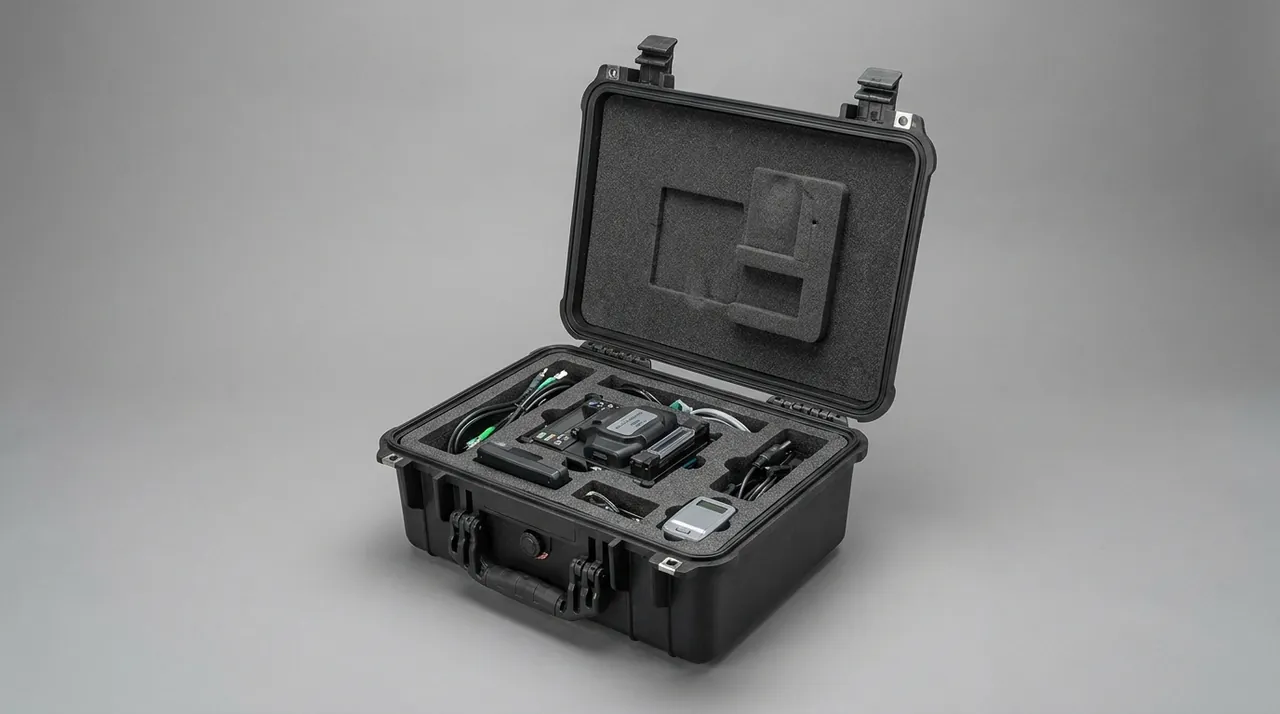
Temperature accelerates creep. Silicone and EPDM creep slowly at normal temperature, but a summer container can exceed 60 degrees C, causing far more permanent deformation at the same radius. So hose cases for long sea routes need insulation and the hose placed in the lower, thermally stable zone away from the wall. After arrival, do not install at once; let it relax freely 4 to 24 hours at working temperature and observe full rebound, especially for thick-wall hose. The figure below shows the upright form-holding tray slotted by hose outside diameter.
Crease and Ovalisation: Form-Holding Packaging of Hose
Crease and ovalisation are two faces of one problem. Crease is a sharp bend from too-small local radius, at coil inner side, strap point and contact with other spares; ovalisation is whole-section distortion from long side pressure. Both make rollers fail to occlude: at a crease the wall folds and occludes incompletely, causing backflow; at ovalisation more stroke is needed and local stress rises, wearing the long-axis ends.
Judging deformation is not by eye alone. Three simple arrival checks: first, free-state recovery, lay the hose unconstrained on a flat bench for half an hour, a normal hose returns to round section and straight or large-arc shape, residual bend or flat section fails; second, end roundness, measure outside diameter at two directions 90 degrees apart with caliper, deviation over 0.2 mm experience threshold isolates the part; third, bore check, pass a gauge of 90 percent of inside diameter through, smooth passage means no local collapse.
Packaging against crease and ovalisation lets all contact be by "face" not "point" or "line". The hose body sits in a matched groove or half-round cradle; adjacent hoses get soft separators; the hose never shares a cell with metal, tools or clamps. For factory-paired whole rolls, use a lined cylindrical pack, inside diameter 15 to 20 mm over hose outside diameter, with soft end caps, both anti-crease and dust-proof.
Mixed specs also need mismatch solving. Different inside diameters look subtly different; confusion directly hits flow calibration. Recommend each hose in a resealable clean bag labelled with inside and outside diameter, wall, material, batch and head model; the matched set for one head stays in one cell. The label also carries storage condition and suggested use period so warehouse staff can do first-in-first-out without opening.
Food and Medical Grade Hose: Cleanliness and Compliance
Hose for food, beverage, dairy, pharmaceutical and biological use is food-contact or medical material, and its compliance can be broken at packing. For food contact, China mainly uses GB 4806 series, with general rules and sub-standards for rubber and plastic stating raw material, additive and migration limits; export markets use U.S. FDA 21 CFR 177 for resins and polymers, EU regulations, and USP Class VI or ISO 10993 biocompatibility; these target the hose itself, but packing material and environment also affect the verdict.
Four concrete risks. First, packing-material migration: plasticiser-bearing soft PVC film, recycled paper and some inks release small molecules adsorbed by silicone surface, possibly failing migration tests. Second, particle contamination: ordinary open-cell foam, paper dust and corrugated edges shed fibres and particles on the inner wall, hard to clean. Third, cross-contamination: food hose stored with industrial hose or chemical-used old hose lowers the whole compliance grade. Fourth, bioburden rise: undried hose in humid sealed environment grows microbes, harming sterile process.
The response is "compliance isolation plus clean encapsulation". The hose is blown dry with oil-free air or cleaned, then put in a food or medical grade clean bag with migration and biocompatibility proof, then in an independent case cell with closed-cell, low-outgassing, non-migrating liner, never sharing with industrial parts. The case marks "food contact" versus "industrial" and ships material proof, migration report and cleanliness record. Cold-chain or low-temperature food hose also needs low-temperature brittle care, referencing cold chain food case; dairy and beverage line fittings can unify clean standard with dairy processing parts case.
Note that food hose compliance files are issued per batch; packing must keep batch traceable. Mixing different batches in one cell with one file breaks the chain, and even qualified hose needs re-sampling.
Rotor and Rollers: No-Touch Rules for Cylindrical Face and Bearing
The rotor is the only "hard-on-soft" part: it actively occludes the hose, so the roller outer cylinder needs extreme dimensional and surface quality. Roller cylindricity, runout and roughness directly decide whether each occlusion is consistent; inconsistency raises pulsation and shortens hose life. The typical transport harm to rollers is two words: knock.
Once the outer circle gets a dent or burr, it forms a concentrated crease band on the hose that fatigues and cracks there soon; a burr also cuts the wall. So rollers must be fixed with "cylindrical face suspended, located only by end face or shaft hole". Feasible: an arc groove matching roller outside diameter in the liner with soft groove face, or a saddle holding both shaft journals with the outer circle fully clear. For high-precision heads, prefer the latter: rollers insert in location seats by journal, outer circle suspended, no contact on the working face.
Three absolute forbiddens. First, stacking several rollers in one layer, where rolling and knocking are almost certain. Second, filming rollers with bearings and bolts, the strap landing exactly on the cylindrical face. Third, pressing the outer circle with hard liner that becomes a grinding medium under high-frequency vibration. Roller bearings are precision and dust-sensitive; pack separately and open only before assembly; the bearing inner and journal fit must not get solid-filled rust preventive that changes fit clearance.
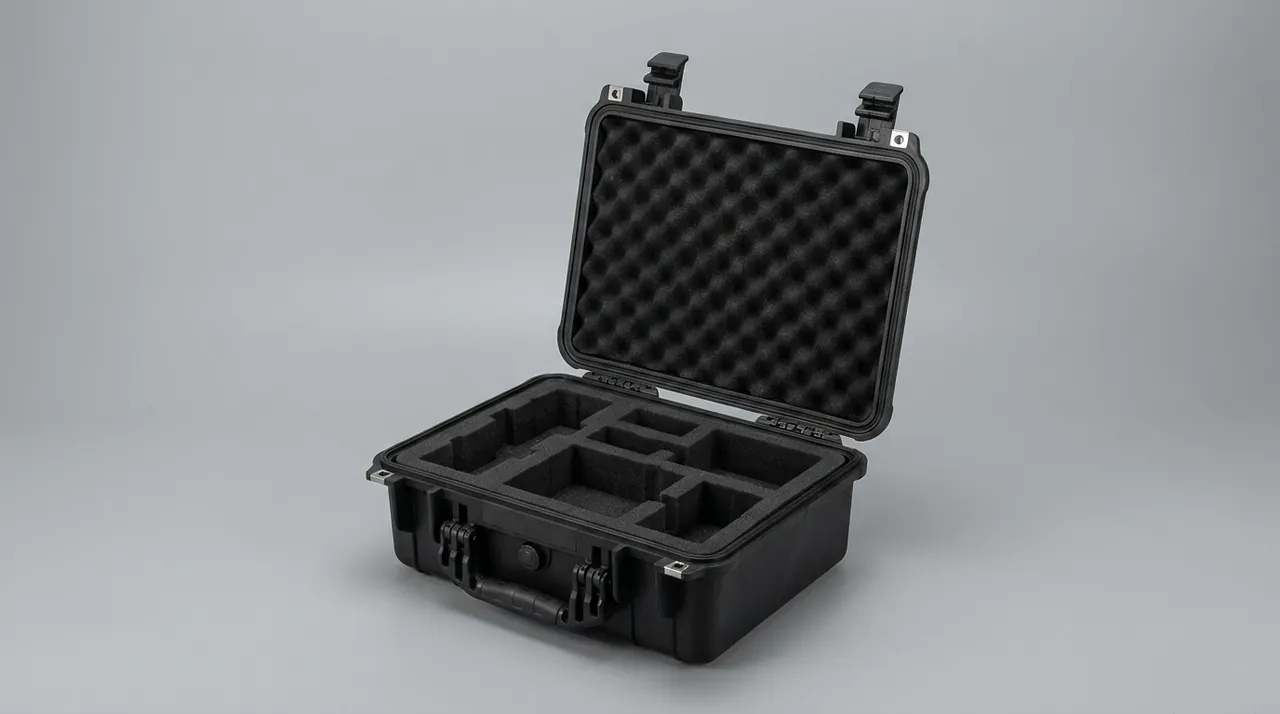
Roller-shaft fit also needs rust proofing. Roller shaft and bearing seat are stainless or coated steel; sea salt spray pits the bare surface, and pitting on the fit causes micro-motion wear and destroys axial position. Use vapour-phase inhibitor on bare metal with desiccant controlling cavity humidity; avoid long contact of coated parts with rubber because some rubber additives discolour coating. Roller sets are paired at factory by count and angle; keep the set and mark order to avoid pulsation error from wrong assembly. The figure below shows the journal-saddle cradle that suspends the roller working face.
Pump Head Cover, Clamp and Seals: Geometric Precision
The pump head cover and clamp press the hose into the head arc slot, providing occlusion constraint. The cover flatness, clamp roundness and thread precision together decide whether hose occlusion is uniform. These parts are rigid but uneven in wall, with both large planes and thin clips, so in transport they fear "point load" and "stack pressure".
Stacking is the most common cover damage. Several covers stacked directly let upper edges form line contact on the lower plane, leaving marks in weeks; if the cover has a locating pin or adjusting bolt, pressure concentrates on a smaller area and flatness fails fast. Correctly, separate covers with a hard separator equal to or larger than the seal face, thickness at least 3 mm with chamfer, so force passes by face not line; covers are best single-layer, and if multi-layer, each layer needs a separator and limited total height.
Clamp and adjuster protection focuses on thread and thin wall. The adjuster thread gets a cap to avoid damage that prevents screwing; the clamp opening and jaw are thin elastic structures, never pried open or flattened, with a soft inner spacer keeping original opening. All hose-contact pressure faces stay clean, never with metal parts or shedding paper fill. No oil or particle on the pressure face, or it presses into the hose surface.
Cover parts also meet case load cooperation. They are flat, large-area, light each, but many stacked weigh much. Liner design puts them in the lower-middle on a rigid tray, never suspended; if with hose, the cover must sit above the hose with a hard separator, never pressing the hose. The case latch and hinge need even clamp force, detailed in toolbox hinge latch and seal, especially adjustable preload to avoid concentrating on the cover edge.
Pump Body, Fitting and Threaded Interface
Pump body, flange seat, quick coupling and hose fitting are flow interface parts; their failure is at the mating face not the shape. Flange face flatness, quick-coupling jaw size and thread form completeness, any out of tolerance causes run leakage, and leakage in food and pharma is a serious event.
Flange faces must be "isolated face to face" not "contacted face to face". Insert a hard separator between two flanges, diameter covering the whole seal face and exceeding by over 5 mm to avoid edge cutting; if the flange has a boss seal, the separator relieves the boss so it bears no load. Never stack two flanges directly, because vibration causes fretting wear and a ring scratch hard to judge yet enough to break seal.
Quick-coupling jaw and elastic claw fear hard squeeze or foreign insertion. Pack the coupling at free state, protect the claw inside with a soft plug or dedicated sleeve, never plug couplings into each other to save space because that keeps the claw tensioned and relaxed. Threaded interfaces all use thread caps or soft plugs, anti-knock and anti-dust; for cleanliness-required interfaces, the plug is non-shedding and assembled or removed in clean environment.
Mixed-material interfaces also need galvanic and chemical care. Stainless coupling with aluminium body forms a galvanic pair in humidity, aluminium as anode corrodes; copper alloy with ammonia-residue hose may stress-corrosion crack. Separate cells or insulating diaphragm avoid this at low cost. Case sealing and moisture should match the route, referencing case seal materials for strip material and compression; for long-turn storage, reference protective case service life for seal and liner aging criteria and periodic case assessment.
Drive and Control Electronics: Anti-Vibration, Anti-Moisture, Anti-Static
Modern peristaltic drives range from simple AC motors to stepper, servo and brushless DC, with controllers of board, encoder, driver and display. Metering accuracy finally rests on speed stability, which rests on encoder signal and controller algorithm, so electronic transport protection is as important as the hose.
First risk is vibration and shock. Motor bearing gets a dent under axial shock, raising noise and vibration and hurting speed steadiness; the encoder is a precision optic or magnetic part whose eccentric code disc causes count error; large board components and connectors may fatigue solder under continuous vibration. So drive and controller packing uses "rigid constraint plus layered cushion", transferring weight through structure to the case frame, not through cushion absorbing shock repeatedly. Heavy drives are best separate or on a rigid tray with limit blocks, not sharing a cell with light parts.
Second risk is moisture. Board, connector and display grow dendrites and leak under electrochemical migration in humidity; container condensation especially hurts untreated boards. Control: cut moisture source, control cavity humidity, avoid temperature shock; dry electronics before packing, 50 to 80 g desiccant per cubic metre, case seal grade matching outer waterproof, and on long routes a pressure equalisation valve to avoid breathing-in moisture. Battery modules need separate transport compliance, not mixed with ordinary spares.
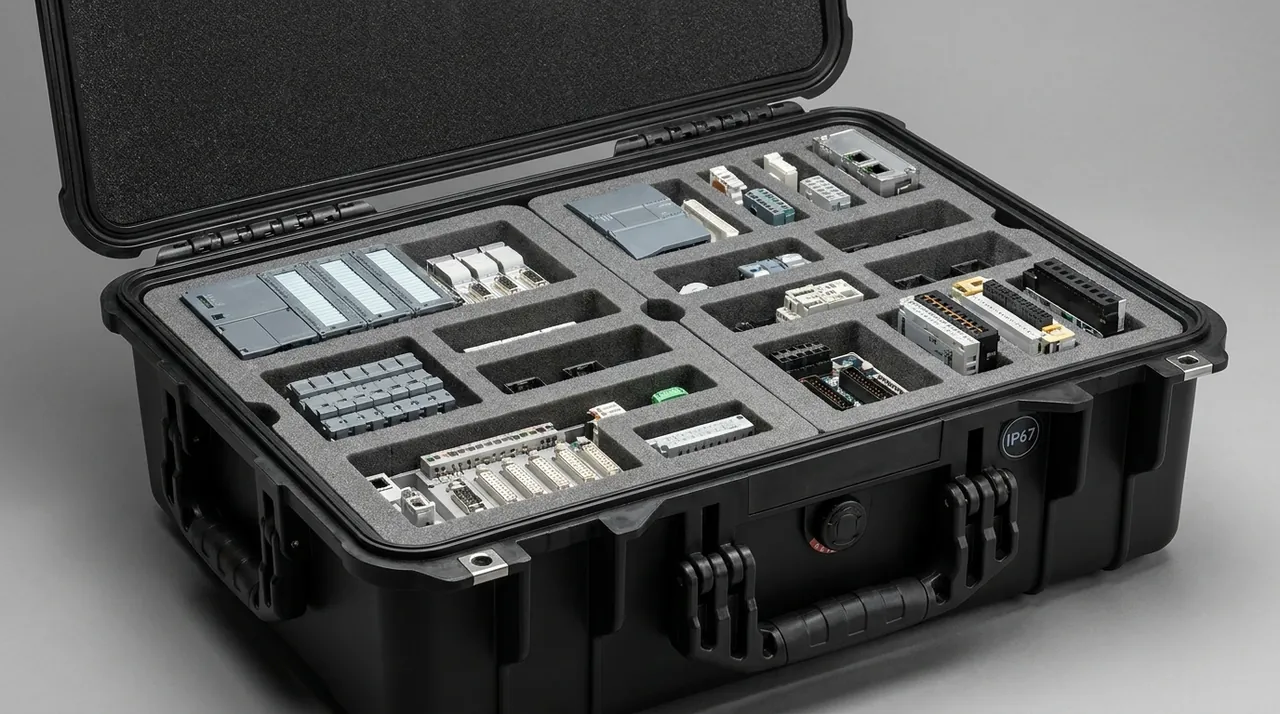
Third risk is static. ESD can destroy encoder chip and driver in milliseconds, sometimes as "soft breakdown" that passes arrival test but fails weeks later. Anti-static packing core is surface resistance; static-dissipative material usually 10^6 to 10^9 ohms, bleeding charge slowly without a shorting conductive path. Boards go in anti-static shield bags in dissipative liner cells; operators wear ground wrist straps and assemble in one anti-static zone. This matches ESD shield case: shield blocks field, dissipative bleeds slowly, neither replaces the other. The figure below shows the anti-static compartment for drive and encoder modules.
Cleanliness Grade Mapping and Clean Packaging
Peristaltic spares often serve lines sensitive to particles and microbes, so clean packing is not optional. Cleanliness grade internationally uses ISO 14644 by particle count per volume per size; food and pharma also add GMP and GB 14881 hygiene. For spare packing, define three numbers: encapsulation environment grade, inner-material cleanliness and shedding, and allowed exposure time after opening.
Practically, ordinary industrial head structures can be packed in normal environment; food-grade hose and flow fittings better in ISO 14644 Class 7 or better; hose and fittings for sterile or biological process better in Class 5 or better with double-bag design, the outer bag removed before entering the clean zone. Whatever the grade, inner material meets low-shed, low-outgas, no-migration basics; ordinary bubble film and corrugated are unfit for direct contact with clean parts.
Clean packing depends on a complete operation chain, not one bag. Fix five actions: confirm particle and humidity of part and liner before encapsulation; keep positive pressure and record grade in the environment; exhaust but not vacuum the inner bag to avoid negative-pressure collapse of the hose; layer outer and inner bags, the outer bearing transport contamination; label seal date, grade and suggested open deadline. After arrival, set max exposure from open to assembly and assemble in clean zone; over-limit parts are re-cleaned or downgraded.
The case clean state also depends on whether the case itself blocks transport particles and moisture. Case IP grade, seal structure and latch preload together decide whether the clean cavity holds, with selection and verification in IP67 protective case. JUNZHIJIA can organise encapsulation by the customer-specified grade and ship environment record and liner list for supplier audit.
Hose Aging Inhibition: Ozone, UV and Temperature-Humidity
Hose aging in storage and transport often decides life earlier than run wear. Rubber and TPE age by oxidation, ozone attack, UV degradation and hydrolysis. Ozone from motor commutator spark, welding and some air purifiers generates fine cracks along stress on stretched elastomer; UV breaks polymer chains and powders the surface; heat accelerates all; moisture especially hurts polyurethane by hydrolysis, dropping tensile strength.
Material sensitivity differs, so packing is set per material. Silicone tolerates ozone and UV relatively well but has high surface resistance, easily static-adsorbing particles, and high permeability, so avoid odour or migrating material in the same cell; EPDM resists ozone well but mineral oil poorly, keep away from oil; fluoroelastomer resists ozone, oil and chemical and humidity but costs more; polyurethane has best wear but fears hydrolysis, needing full drying; plasticiser PVC must avoid plasticiser migration. The table below gives hose material focus.
| Hose Material | Temp and Hardness | Aging Sensitive | Pack Control |
|---|---|---|---|
| --- | --- | --- | --- |
| Platinum-cured silicone | Wide temp, low hardness, good rebound | Static dust, UV, odour | Anti-static clean bag, dark, separate cell |
| EPDM | Medium temp, stable hardness | Mineral oil, slight ozone | Avoid oil, no oil parts in cell |
| Fluoroelastomer | High temp, strong chemical | Cost, strong alkali and ketone | Dark and dust-free, separate, no squeeze |
| Polyurethane | Best wear, higher hardness | Hydrolysis, humidity, heat | Strong desiccant, humidity control, short store |
| Soft PVC | Low temp, hardness varies | Plasticiser migration, light aging | Not with food grade, dark, avoid heat |
Temperature-humidity control is common. Recommended storage is 15 to 25 C, relative humidity below 65 percent, away from ozone devices and strong light. Shelf life by experience: silicone about 5 years, EPDM about 8, fluoroelastomer about 10; polyurethane under 3 years in humid areas. Over-limit hose is sampled for hardness, tensile and bore before use. Long-stored cases should follow how to clean protective case to clear dust and organics that promote aging. The table below compares liner and compartment options.
| Liner Form | Form Hold | Anti-Static | Shed | For Part |
|---|---|---|---|---|
| --- | --- | --- | --- | --- |
| Groove board with half-round | Excellent | Conductive coat optional | Low | Whole hose upright |
| Journal saddle | Excellent | N/A | Very low | Roller outer face suspended |
| Anti-static EVA cell | Good | Yes | Low | Drive, encoder, controller |
| Hard separator with pad | Good | Treatable | Medium | Head cover, flange, fitting |
| Clean bag with thermo tray | Excellent | Shield optional | Very low | Food and sterile hose |
Liner Material and Compartment Structure
Peristaltic spare liner has a constraint unlike other equipment cases: it must serve both "hose form-holding" and "electronic anti-static", two opposite needs. The hose needs low-pressure large-area soft support; electronics need rigid constraint and static bleed; putting both in one cavity only compromises, leaving the hose pressed and electronics unshielded. So step one is always compartment, step two is material.
Compartments follow "sensitive item" not "part size". Hose in its own cell on groove board or core, walls without rigid press; rollers and bearings in their own cell with journal saddle suspending the face; cover and flange in their own cell with hard separators; drive and control in their own cell with anti-static liner and shield bag. Cells must be separated by rigid partitions not foam glue, because ship roll and hard braking shift glued partitions and break the cavity, failing protection.
Liner material is judged on three axes: form-holding need (groove board and half-round), anti-static need (conductive filler, confirm surface resistance band), clean need (closed-cell low-outgas, no paper or recycle). Material comparison and selection are in case foam material comparison; custom liner tooling and sampling are in custom foam inserts guide.
More cells raise volume and cost, so allocate by value and risk. Experience: give limited custom liner budget first to three part families: the high-value deformation-sensitive roller rotor set, the food or sterile hose that decides compliance, and the controller module hard to judge on site once wet or static hit. Ordinary structures and standard fasteners can use standard cells without per-part tooling. If a case holds more than three hose specs, use a removable divider system by spec with enough pick space to avoid finger-squeeze damage when picking.
Case Sealing, Desiccant and Stacking
The peristaltic case seal target is set by the most sensitive part, usually electronics and food hose. Dust grade follows IEC 60529 or GB/T 4208; electronics and clean hose cells need at least IP6X full dust proof; overall water grade by route, inland turn IP splash, sea and outdoor IP65 and above, high humidity or short wading IP66 to IP67. Higher grade needs more seal compression, latch preload and case rigidity designed together, not just a higher label.
Desiccant is set with cavity volume, target humidity, transit time and seal grade. Practice is 50 to 80 g silica per cubic metre; smaller and better-sealed cavities take the lower end; sea over 60 days or very humid ports take the upper end and consider one replacement at destination. Desiccant is bagged and labelled with date, amount, suggested replace date and owner. If the case is fully sealed with large temperature swing, fit a pressure equalisation valve to avoid breathing-in moisture as temperature drops; its principle and selection are in case pressure equalisation valve.
Stacking and handling also affect inner protection. Rated stack load is at least single mass times safety factor 1.5, with upper cargo and container ballast; the heaviest part (usually drive or motor) sits at the bottom near the load structure, hose and electronics on top, to avoid heavy parts pressing down in vibration. The case side marks centre of gravity, up and stack limit; fork and lift avoid tine hitting the side. Over-stacking creeps the lower case and presses inner hose and cover, the most common "compliant pack broken by site operation".
OEM/ODM Support, Marks and Spare Release Checklist
Peristaltic brands and models vary highly; one machine's head and hose often come from different suppliers with tight dimension chains. So "by model match" is basic: liner slotted by actual hose outside diameter and bend radius, roller saddle located by journal diameter and roller width, cover separator by seal face size. Generic foam rarely meets all, usually pressing hose, topping roller, stacking cover.
Custom implementation in four steps. First, collect the list: hose spec and count, head and roller model, drive and control outline, and customer clean grade and food-contact needs. Second, confirm key dimensions and posture, issue liner structure and do single-part trial fit, focusing on whether the hose keeps large-radius bend, the roller face is fully suspended, and picking needs force. Third, finalise the case and do transport test or equivalent verification. Fourth, form the document pack of packing drawing, liner list, clean record and batch traceability for supplier audit and arrival acceptance. JUNZHIJIA, as a case brand, handles liner design, sample fit and batch supply, supports OEM/ODM and provides matching clean-grade encapsulation for food and sterile hose; this series is manufactured by Kexin New Materials (Guangdong) Co., Ltd. Custom process and factory audit are in how to choose case OEM factory.
Pack marks follow GB/T 191 and GB/T 13384: at least up, moisture, dark, no-stack or stack limit, centre of gravity and lift point, with food and industrial parts marked separately. Multi-spec hose also marks inside diameter, wall and batch to avoid unidentified opening. Arrival release uses sampling acceptance; appearance, geometry and document merge into one list, with sampling level and judgement in custom case acceptance AQL. Core release items:
- Case state: no dent, break or water, latch closed, seal strip intact and not permanently flat.
- Hose posture: upright or large-radius bend, no small-coil mark, round section after relax, gauge passes.
- Hose document: material proof, food-contact or biocompatibility report, batch and clean record complete and matched.
- Roller rotor: outer face no scratch, dent or burr, journal and bearing no rust or dust, set order and mark consistent.
- Head cover: seal face clean no dent, flatness sampled pass, adjust thread smooth.
- Fitting and flange: claw at original opening, thread cap complete, seal face no scratch.
- Electronics: anti-static bag intact, shield undamaged, desiccant not saturated, self-test and encoder signal normal.
- Environment record: desiccant date, clean date and open-limit record complete.
Any failure isolates and traces the same batch. Hose and seals with unrecoverable deformation, plasticiser adsorption or microbial contamination have no reliable site recovery and no re-issued compliance, so replacement is the only correct handling.
Frequently Asked Questions FAQ
Q: Why can peristaltic hose not be coiled into a small circle for transport?
A: Hose performance relies on elastic recovery, and a small coil keeps the wall in far-beyond-design bend. At small radius the inner wall compresses and the outer stretches, neither fully rebounding; the section turns oval or locally collapsed. For the pump, rollers over the oval segment cannot fully occlude, each rebound differs and pulsation rises, drifting accuracy; the inner bend also forms a crease that starts fatigue cracking. Practice keeps packed bend radius at least ten times hose outside diameter, larger for thick wall; if coiling is forced, use a core of at least twenty times outside diameter with a soft sleeve outside to stop upper spares pressing the coil. Safer is to keep the hose upright at near head arc-slot curvature, both ends in soft seats, spreading self-weight and bend stress along the full length. After arrival, let the hose relax at working temperature before installation so any incomplete rebound is found before the line is commissioned, because a hose that does not return to round will never meter within its stated tolerance.
Q: Can rotor rollers be stacked in one layer?
A: No, especially for high-precision heads. The roller outer cylinder is the working face occluding the hose, with cylindricity and finish in microns; every knock leaves a dent or burr there. Stacked rollers roll and knock exactly on that face; after mounting the hose fatigues and cracks at the dent, and a burr cuts the wall. Correctly suspend the face, supporting by both-end journals in location seats, or rest the outer circle in a soft arc groove whose face is soft enough not to grind. Also forbid filming rollers with bolts or clamps, and forbid hard liner pressing the outer circle. Roller bearings pack separately and open before assembly; roller sets are factory-paired by count and angle, kept as a set with order marked, because wrong assembly changes pulsation and shortens hose life even when no part is visibly broken, and identifying the mispaired roller after installation is difficult without the original packing labels.
Q: What documents does food-grade hose compliance need?
A: At least three. First, material and compliance declaration: China issues food-contact conformity by GB 4806 series; export uses U.S. FDA 21 CFR 177, EU rules, and for medical USP Class VI or ISO 10993 biocompatibility. Second, batch traceability: material batch, production date and linked test report number, matching the bag label. Third, clean and pack record: encapsulation grade, inner material, seal date and suggested open deadline. Note compliance targets the part finally contacting food or fluid; if the inner bag has plasticiser or migrating additive, migration may fail, so the bag material also needs proof. Mixing batches with one file breaks traceability at packing, and even qualified hose then needs re-sampling, so keep one document set per batch and per bag throughout the chain and store the papers with the case rather than loose in a separate shipment. JUNZHIJIA keeps the declaration, batch proof and clean-pack record in one file set per shipment so the compliance chain stays unbroken from the factory to the customer's receiving inspection.
Q: Why stress ozone and light avoidance for long hose storage?
A: Because ozone and UV are two big accelerators of elastomer aging, and the damage is usually unseen at factory inspection. Ozone generates fine cracks along stress on stretched or compressed rubber, microscopic at first then through-wall over time; UV breaks polymer chains, powdering and whitening the surface and losing elasticity. Ozone sources are motor commutator spark, welding, some air purifiers and high-voltage equipment, so keep hose away; light avoidance uses opaque bags and no strong warehouse light. Also control temperature and humidity, recommended 15 to 25 C and relative humidity below 65 percent, with shelf life by material: silicone about 5 years, EPDM about 8, fluoroelastomer about 10, polyurethane under 3 years in humid areas. Over-limit hose is sampled for hardness, tensile and bore before use, because aged hose swells or cracks in service and contaminates the product stream. JUNZHIJIA labels the storage temperature and humidity window on the outer case and records the pack date, so the remaining shelf life can be tracked through the distribution chain.
Q: What does a bruised pump-head cover seal face cause?
A: The direct result is run leakage, and in food and pharma leakage is a stop-event. The cover seal face presses the hose or head cavity; once flatness is out, pressure distributes unevenly: under-pressed spots form leak paths, over-pressed spots over-flatten the hose and accelerate fatigue there. Leaked media into the head cavity then corrodes bearing and body, a repair cost far above one cover. The bruise mainly comes from stacking: upper edges form line contact on the lower plane, leaving marks in weeks. Correctly separate covers with a hard separator equal to or larger than the seal face, chamfered and single-layer; covers with pin or bolt avoid protruding load, and avoid shedding paper fill that also contaminates the hose. Inspect the seal face for press marks before the head is assembled, because a bruise that passes a quick look often leaks only after the first high-pressure cycle. JUNZHIJIA adds a flatness check of the cover seal face to the incoming inspection checklist so this hidden defect is caught before the head is assembled.
Q: Do drive and controller need anti-static packing?
A: Yes, and this damage is most easily missed. ESD can destroy encoder chip, driver and interface in an instant; some is soft breakdown that passes arrival test but drifts or alarms weeks later, hard to troubleshoot. Anti-static core is surface resistance; static-dissipative material is usually 10^6 to 10^9 ohms, bleeding charge slowly without a shorting path; for external field, add a metallised shield bag, and shield and dissipative are not interchangeable. Practically, boards and encoder modules go in shield bags then in dissipative liner cells, not with hose or foam debris that build static; unpack, test and assemble in one anti-static zone with grounded wrist straps and equipotential bench and floor. The controller module that suffers static hit may pass test yet fail after weeks of operation, so the packing step is cheaper insurance than a returned drive. JUNZHIJIA supplies the anti-static bag, dissipative liner and grounding note as a matched set so the protection is consistent from packing to the customer's bench.
Q: How long can a clean-packed hose stay open after bag opening?
A: It depends on clean grade and environment, but shorter is better and it must be written in the work instruction, not judged by feel. Practice sets a max exposure from open to assembly complete: ordinary food grade within 8 hours, higher clean cells within 24 hours, sterile hose used immediately. Over-limit parts are not used at the original grade; either re-clean and re-encapsulate in specified environment, or downgrade to a position insensitive to particles and microbes. The judge is measured, not the clock: use a particle counter in the assembly zone or per-batch surface particle test. Clean state decays from the open instant, so desiccant, seal grade and pressure equalisation during transport must be confirmed together with the assigned grade, and the open-deadline label should travel with the bag rather than be discarded at unpacking. JUNZHIJIA prints the open-deadline label on the bag and the work instruction, and treats any exceeded part as re-clean or downgrade rather than direct use, keeping the declared grade honest.
Q: How to verify peristaltic spare case transport protection?
A: Use physical plus test verification, not appearance only. Physical: pack real hose, rollers, cover and electronics by the plan, run one real route, then open and check hose section rebound, gauge pass, roller face and journal, cover flatness and electronic self-test; this finds structure defects most directly. Test can reference ISTA whole-case performance or ASTM D4169 distribution cycle; domestic uses GB/T 4857 vibration, shock, stack and drop; air also cares about low-pressure effect on sealed cavity. For rust concern, sample by GB/T 10125 neutral salt spray. If MIL-STD-810H method is specified as environmental basis, state in the report that this is a method reference only and constitutes no military certification, so the compliance claim stays accurate and no misleading military certification is implied to the customer.
Conclusion and Related Reading
The hard part of peristaltic spare cases is holding three boundaries: hose needs large-radius rebound support, roller face touches nothing, electronics need static bleed. JUNZHIJIA designs by sensitive-item compartment with clean pack and equalisation valve for verifiable protection.
Related Reading