

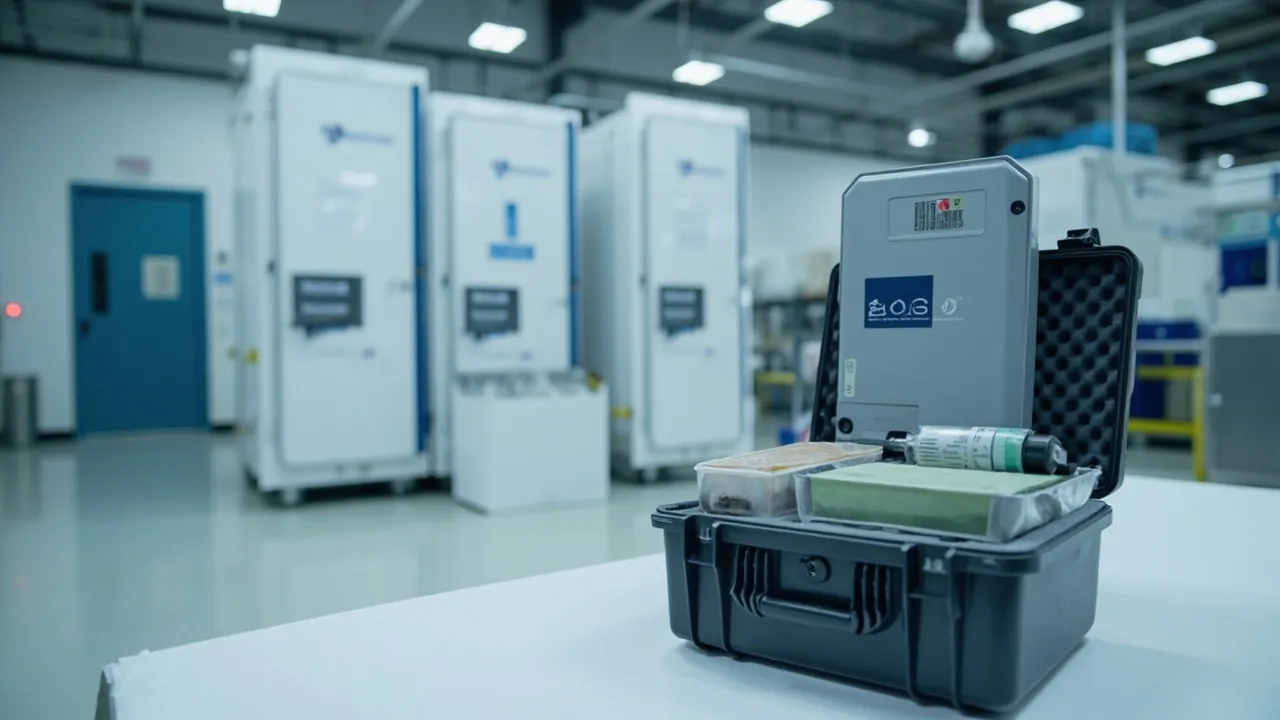
The governing metric for a pharmaceutical cold-chain case is not how many hours of hold time it claims. It is whether the temperature at every point inside the payload space can be proven to have stayed within the specified range across the worst conditions of the entire route. Two words in that sentence carry the weight: every point and proven. The first points to thermal uniformity. Temperatures near the lid, against a wall, directly above a coolant pack and at the centre of the load can differ by several degrees, so a single probe reading flatters the design rather than validating it. The second points to qualification and data. A cold chain with no temperature record, no validation report and no deviation handling procedure is, for regulatory review and batch release purposes, equivalent to no cold chain at all. For drugs, vaccines, blood products and biologics, a temperature excursion is not merely product loss; it can trigger batch destruction, returns, and a formal compliance record event.
So why do organisations keep repeating the same cold-chain packaging mistakes? Because pharmaceutical cold-chain packaging only counts as compliant when three chains hold simultaneously: the thermal chain (coolant and insulation), the sealing and mechanical chain (the case does not crack, leak or take on water), and the compliance chain (validation, records, deviations and release). If any one fails, excellence in the other two cannot rescue the shipment. This article is written for logistics and QA staff at pharmaceutical manufacturers, pharmaceutical distributors, biologics and vaccine producers, third-party pharmaceutical logistics providers, and packaging and supply-chain engineers at export trading firms. It sets out practical methods, parameter ranges and standards references for each element. All figures are typical industry values or empirical ranges; the governing inputs are the product stability data, the approved registration conditions, the customer quality agreement and destination regulations. JUNZHJIA supplies model-specific custom inserts, coolant-retention structures, sealing and pressure-equalisation configurations, OEM and ODM programmes, and supporting test documentation for pharmaceutical cold-chain cases.
Table of Contents
- 1. Why Pharmaceutical Cold Chain Requires Three Chains to Hold at Once
- 2. 2-8°C, -20°C and -70°C: Temperature Bands and Failure Modes Compared
- 3. Insulated Structure Design: Case, Insulation Layer and Coolant Configuration
- 4. Phase-Change Coolant: Why It Is More Controllable Than Ice Packs
- 5. Validation and Transport Qualification: GB/T 22918, GB/T 34399, GDP and WHO Guidance
- 6. Temperature Monitoring and the Data Chain: Loggers, Indicators and Deviation Handling
- 7. Primary and Secondary Packaging: Vials, Prefilled Syringes and Biologic Bags
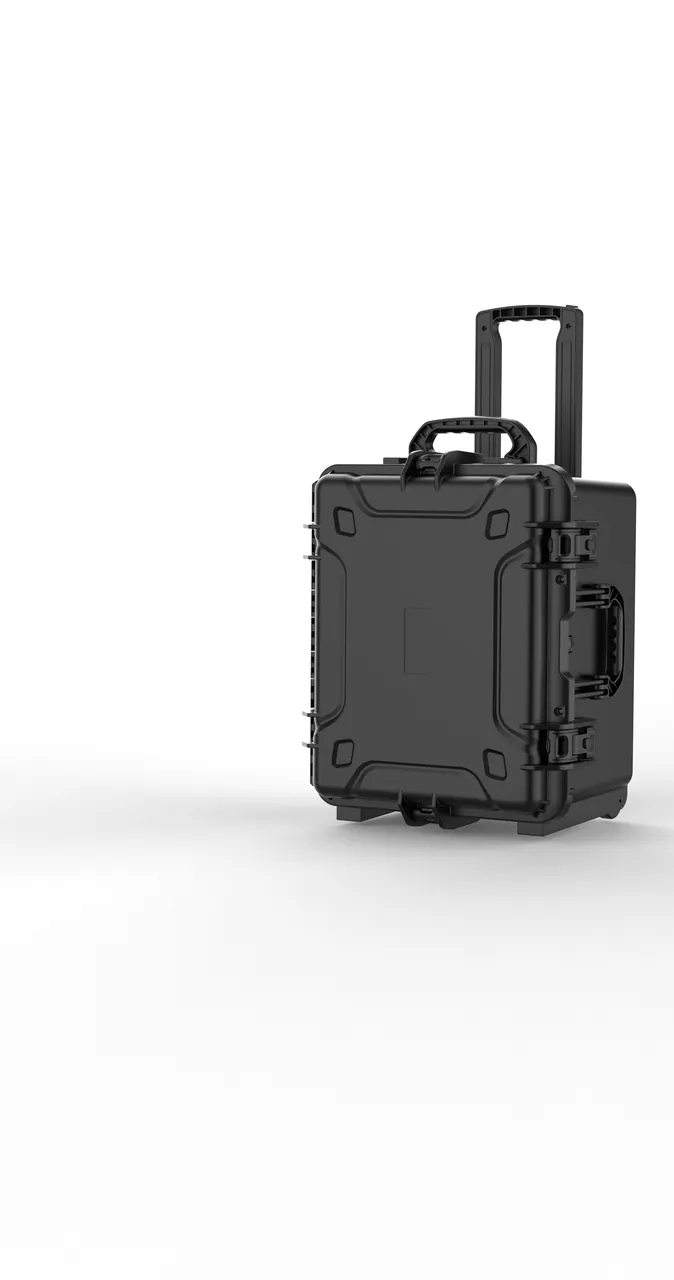
- 8. Inserts, Vibration Control and Leak Containment: Breakage Is the Number One Killer
- 9. Dry Ice and Deep-Frozen Transport: UN 1845, IATA and ADR Boundaries
- 10. Sealing, IP Ratings and Pressure Equalisation: IEC 60529 and GB/T 4208
- 11. Transport Test Basis: ISTA 7D, GB/T 4857, ASTM D4169 and MIL-STD-810H
- 12. Packing SOP and Pre-Dispatch Inspection
- 13. Air and Sea Export, Returnable Re-Use and OEM/ODM Customisation
- Frequently Asked Questions
- Conclusion and Further Reading
1. Why Pharmaceutical Cold Chain Requires Three Chains to Hold at Once
Treating a pharmaceutical cold-chain case as a cool box with a few ice packs is where most field failures begin. The real design object is three chains that must hold at the same time.
The thermal chain. This describes the case's ability to hold temperature over time, and it is governed by four variables: the insulation performance of the case, meaning thermal conductivity together with structural thermal bridging; the phase-change temperature and total latent heat of the coolant; the ambient temperature profile, which is a curve over time rather than a single number; and the load factor together with the way the load is arranged. Of these four, the ambient profile is the one most often wrongly simplified. A summer shipment from a hot southern hub to a dry inland city, a winter shipment from a cold northern city to a mild plateau city, an airfreight routing with one transit stop, and two hours of unshaded exposure on an airport apron are four different ambient profiles. Replacing all of them with a single figure such as "35°C maximum" is a common root cause of validation failure.
The sealing and mechanical chain. A cold-chain case experiences three classes of mechanical action in transit: handling drops and stacking pressure; vehicle vibration and start-stop shock; and squeeze loads during palletised handling. If the case develops a crack, a latch releases, or the gasket shifts, warm humid air enters continuously, coolant consumption accelerates, and the internal temperature can be lost within hours. From the outside, this often presents only as "the latch feels a bit loose." Breakage is the single biggest killer in pharmaceutical cold chain, and it is precisely the risk that a discussion focused on hold time tends to bury.
The compliance chain. A correct temperature is not enough; it must be proven. That requires thermal mapping and hold-time confirmation before shipment, a calibrated recording device inside the load with a suitable logging interval, and a defined procedure at destination for reading the data, making the disposition decision, investigating deviations and retaining records for audit.
A useful field habit: put your hold-time test results and your damage-rate statistics on the same weekly report. In most cold-chain excursion events the direct cause is not insufficient coolant but a sealing failure or a loading error that changed coolant consumption. Optimising coolant without also optimising case structure is usually a poor return on effort.
The priority order is therefore: secure mechanical integrity and sealing first, then optimise hold time, then close the loop with validation and records. Reverse the order and you end up with a validated 48-hour claim that fails after 12 hours in the field.
2. 2-8°C, -20°C and -70°C: Temperature Bands and Failure Modes Compared
The temperature bands used for pharmaceutical products are not a technical option that a packaging supplier may define. They are a legal constraint set by approved registration conditions, stability data and the product label. The packaging task is to reduce excursion risk to an acceptable level within a given band.
| Band | Typical products | Transport limits | Coolant type | Dominant failure mode | Key packaging constraint |
|---|---|---|---|---|---|
| --- | --- | --- | --- | --- | --- |
| Controlled room (<=25°C or <=30°C) | Most oral solid dosage forms | Per label, often <=25°C | Usually no active coolant | Heat-accelerated degradation | Sun shading, thermal separation, ventilation |
| Cool (<=20°C) | Some APIs and finished products | <=20°C | Seasonal coolant | Summer excursion | Season-switch procedure |
| Refrigerated 2-8°C | Vaccines, insulin, monoclonal antibodies, blood products | 2-8°C, must not freeze | PCM with transition near 5°C | Freeze damage, excursion | Anti-freeze design, thermal uniformity |
| Frozen near -20°C | Some plasma products, reagents | -25 to -15°C | Dry ice or -20°C PCM | Upward temperature drift, dry ice exhaustion | Coolant capacity and replenishment plan |
| Deep frozen near -70°C | Special biologics, cell products | -80 to -60°C | Dry ice with replenishment, or dry-shipper nitrogen | Rapid sublimation, seal rupture from pressure | Vent path, air-transport compliance |
Three traps deserve separate attention.
First, the lower limit of the 2-8°C band is routinely neglected. Most teams focus on not exceeding the upper limit. But vaccines with aluminium adjuvants and many protein formulations undergo irreversible structural change on freezing, and freeze damage cannot be reliably screened out of a batch by any downstream test. Refrigerated packaging must therefore be freeze-protected: coolant must not touch the product directly, there must be a separator plate or air gap in between, the phase-change temperature should sit clearly above 0°C, and the minimum separation distance between coolant and product should be written into the specification.
Second, coolant exhaustion in deep-frozen transport is an irreversible curve. Dry ice sublimates continuously, and at some point the internal temperature begins to drift upward quickly, after which recovery is difficult. A deep-frozen plan must therefore contain a capacity margin, defined replenishment nodes along the route, and an alarm threshold for upward drift; it is not enough to calculate how many kilograms of dry ice to load at the start.
Third, band switching causes plan drift. The same drug needs different packaging in summer and winter, yet many organisations use one configuration all year. The correct approach is a seasonal configuration matrix: take the ambient temperature profile as the input, produce summer, winter and shoulder-season coolant configurations for each band, and run a simplified re-confirmation at each switch point.
3. Insulated Structure Design: Case, Insulation Layer and Coolant Configuration
An insulated structure can be read as four layers: outer shell, insulation, inner liner, and coolant cavity.
Outer shell. The shell carries mechanical protection and sealing. Common materials are polypropylene copolymer, ABS or composite lay-ups, and three requirements apply: no brittle fracture at low temperature, which matters greatly for deep-frozen duty where ordinary polypropylene becomes notably brittle below about -40°C; resistance to repeated opening and closing plus stacking; and provision for integrating gaskets and latches. Where flammability needs to be characterised, the UL94 material flammability test methods are a common reference, but note that UL94 characterises a material, not the finished case.
Insulation layer. Three approaches dominate. Polyurethane foam offers low thermal conductivity and good structural integrity and is the most common choice. Vacuum insulation panels offer the lowest conductivity, with typical values in the range of 0.004 to 0.008 W/(m·K), but they are expensive, easily punctured and prone to edge thermal bridging, so they are usually combined with polyurethane. Expanded polystyrene is the cheapest option but has lower strength and durability and is mostly used in single-trip cold chain. The classic insulation design error is ignoring thermal bridges: hinges, latches, trolley handles, castors and the lid-to-body joint are all paths that carry heat around the insulation. Assess the whole-case equivalent heat transfer coefficient rather than the conductivity of the panel material alone.
Inner liner and coolant cavity. The liner does two jobs: it creates a separate coolant cavity that physically isolates coolant from product so that direct contact cannot cause local freezing, and it creates the retention structure that stops the load moving, colliding and being squeezed. Coolant cavity placement directly determines thermal uniformity. A common approach places coolant on the four sides and the top, with none or very little at the bottom, so that cold air sinking under natural convection produces a relatively stable field.
The effect of load factor. Air inside the case is a good conductor of heat, but too much air means the coolant must also chill that air, while too little air means the payload's own heat capacity becomes the dominant load. Empirically, a load factor between 60 and 85 percent of net internal volume is a reasonable working range, and it must be confirmed by test. An empty case and a half-full case behave completely differently from a full one, so validation must be run separately at minimum and maximum load.
How to estimate hold time. Do not work backwards from wall thickness. Use this sequence instead: estimate total heat load from the case's equivalent heat transfer coefficient, the temperature differential and the target duration; estimate the coolant mass required from the specific latent heat of the coolant and an efficiency factor, which in practice must be discounted substantially because of unused corners and convective losses; apply a safety factor, suggested at 1.3 to 2.0 depending on route complexity and risk class; and then test it. Everything must land on measured data. That requirement is what separates pharmaceutical cold chain from ordinary insulated boxes.
4. Phase-Change Coolant: Why It Is More Controllable Than Ice Packs
The core problem with ice packs is that their transition temperature is pinned near the water-ice point. For a 2-8°C product, a 0°C plateau guarantees some region inside the case will drop below 2°C, and melting ice produces free liquid water that can contaminate both the payload and the outer packaging if the pack is breached. Phase-change materials are engineered so that the transition temperature can be specified, creating a stable temperature plateau inside the target band.
| Coolant type | Typical transition | Stability | Reusable | Main risk | Suitable duty |
|---|---|---|---|---|---|
| --- | --- | --- | --- | --- | --- |
| Water ice pack | 0°C | Poor, prone to subcooling | Partly | Local freezing, leakage | Short haul, non-pharmaceutical |
| Gel pack | About 0°C or slightly below | Moderate | Yes | Plateau drift, leakage | Short-haul refrigerated |
| 5°C PCM | About 4-6°C | Good | Yes, with cycle limit | Incorrect conditioning temperature | 2-8°C pharmaceuticals |
| 10°C PCM | About 8-12°C | Good | Yes | Insufficient capacity in hot season | Controlled room upper-limit control |
| -21°C PCM | About -23 to -18°C | Good | Yes | Over-cooling | Plasma, reagents |
| Dry ice | Sublimes near -78.5°C | Very cold, drifts over time | Single trip | Sublimation, pressure rupture, transport compliance | Below -60°C deep frozen |
Four critical control points for PCM.
First, conditioning must be complete. Loading PCM that has not fully transitioned means a large part of its latent heat is unavailable. Specify the conditioning temperature and minimum soak time, and verify by sampling, for example by temperature check or by inspecting the crystallised state.
Second, orientation must match the transition behaviour. PCM is thermally most stable at its face during transition, so the large face should point towards the payload rather than a corner.
Third, PCM must be restrained. Movement in transit changes the temperature field and can bring coolant into direct contact with product. Custom inserts that hold both coolant position and payload position are the right answer; the tooling approach is the same as ordinary custom foam insert design, except that material rebound and stiffening at low temperature must be considered separately.
Fourth, PCM has a service life. Repeated cycling fatigues the enclosure and can cause separation or leakage of the contents, so keep a cycle count and define a replacement criterion. For a comparison of insert and fill materials by resilience and moisture uptake, see case foam material comparison; note that this reference is written around ambient applications and low-temperature behaviour must be confirmed separately.
On thermal uniformity. Whatever coolant is used, accept that a gradient exists. The workable engineering answer is to place nine to fifteen probes during validation, covering upper, middle and lower layers plus centre and corner positions, confirm that the coldest point stays above the lower limit and the warmest point below the upper limit, and then define an approved loading zone in the validation report. Product may only be placed in the sub-volume that passed. This single control does more to reduce real risk than any material upgrade.
5. Validation and Transport Qualification: GB/T 22918, GB/T 34399, GDP and WHO Guidance
Validation in pharmaceutical cold chain is not a one-off type test. It is a system covering design, qualification, routine use and deviation handling.
Standards and guidance. References commonly used in China include standards for temperature-controlled transport technical requirements, such as GB/T 22918, standards for cold-chain logistics operation for pharmaceutical products, such as GB/T 28842, and the technical specification for performance qualification of temperature-controlled facilities and equipment in pharmaceutical product cold-chain logistics, such as GB/T 34399, which gives methods for validation items, probe placement, acceptance criteria and re-qualification intervals. Internationally, the EU Guidelines on Good Distribution Practice and the World Health Organization model guidance on the storage and transport of time- and temperature-sensitive pharmaceutical products, WHO Technical Report Series No. 961 Annex 9, are the two most widely cited framework documents, with the good storage and distribution practice chapter of the United States Pharmacopeia, USP <1079>, also frequently referenced by exporters. Which of these applies depends on the registration territory, the customer quality agreement and the regulator. This article does not make a compliance determination.
Three levels of qualification.
- Design qualification. Confirm that the case type, insulation structure, coolant configuration and loading method match the intended route. The key output is a design input list that states the ambient temperature profile, duration, temperature limits, load range and transport mode.
- Performance qualification. In a controlled chamber, run thermal mapping and hold-time tests under worst-case conditions, normally in both a high-temperature direction, for example 30-40°C, and a low-temperature direction, for example -10 to 0°C, and at both minimum and maximum load. Running a low-temperature test for a summer route, or a high-temperature test for a winter route, is meaningless. The worst-case direction must not be inverted.
- Transport qualification. Place recording devices in real shipments and use actual data to confirm the performance qualification conclusions. This step is often skipped, yet it is the only one that catches genuine risks such as transit-hub sun exposure, apron dwell and uncontrolled vehicle compartments.
| Qualification level | Purpose | Key inputs | Typical outputs | Common error |
|---|---|---|---|---|
| --- | --- | --- | --- | --- |
| Design qualification | Match design to requirement | Band, duration, ambient profile, load | Design input list, layout drawing | Single ambient temperature instead of a profile |
| Performance qualification | Establish capability limits | Worst-case temperature, extreme loads | Thermal map, hold-time curve | Testing only one load condition |
| Transport qualification | Prove the real route | Actual routing, season, transits | Measured profile, deviation log | One run only, no seasonal coverage |
| Re-qualification | Confirm no drift | Change register, interval | Re-qualification report | Never retesting despite changes |
On re-qualification intervals. A common practice is periodic retesting, for example annually or biennially, plus triggered re-qualification after significant change: a change of case type or insulation structure, a change of coolant supplier or transition temperature, a change in loading method, a change of route or carrier, and any unexplained temperature excursion. A route that has produced an excursion must be re-qualified, not merely closed out with a deviation report.
On 2-8°C specifically. Beyond the standard items, validate three extras: that the coldest point stays above the lower limit to prevent freezing; the warm-up caused by door-open operations, typically five to fifteen minutes of product access at destination; and the rate of upward temperature drift after power loss or premature coolant exhaustion. The third item is what allows an informed decision about emergency transfer during an excursion.
6. Temperature Monitoring and the Data Chain: Loggers, Indicators and Deviation Handling
The value of monitoring is not that a logger exists. It is that the data can support a release decision.
Selecting the recording device. Six parameters matter: measurement range and accuracy, with 2-8°C duty typically requiring better than plus or minus 0.5°C; logging interval matched to route length, commonly five to fifteen minutes for refrigerated pharmaceuticals; memory capacity; battery performance at low temperature, since cold causes premature battery failure and this is the leading cause of data loss in deep-frozen shipments; exportability and tamper resistance of the data; and a valid calibration certificate with traceability and a defined recalibration interval. Devices used for quality release must be within their calibration validity.
Probe placement. Use at least two probes. One sits at the centre of the payload or against the product itself, representing the temperature the product actually experienced and serving as the core basis for release. The other sits at the worst position inside the case, typically a corner remote from the coolant or the upper region near the lid or door, to capture the extreme. For deep-frozen or dry-ice duty, add a third probe near the coolant to judge remaining capacity and anticipate the onset of upward drift. The most common error is a single probe placed next to the coolant. It produces an attractive curve that says nothing about the product, which makes it invalid data.
The role of indicators. Temperature indicators, freeze indicators and time-temperature cumulative indicators provide rapid on-site visibility and complement rather than replace a logger. Freeze indicators are especially valuable for 2-8°C vaccine shipments because freeze damage is completely invisible on arrival. When choosing indicators, confirm the trigger threshold and response characteristics, and evaluate reliability as part of validation.
Data chain integrity. A complete chain from dispatch to release includes: packing records with time, personnel, coolant batch and PCM conditioning data; dispatch records with carrier, route and pallet identifier; in-transit data as the raw logger file; arrival records with receipt time, opening time, indicator status and inspection notes; and the release decision stating whether all temperatures stayed within range, whether any brief deviation resulted from door opening or power loss, and who made the call. Raw data must be retained as-is. Do not keep only an exported summary chart, because charts lose interval detail and short excursions.
Deviation handling. When an excursion appears, work through this order: establish the magnitude, duration and location of the deviation; assess the product temperature sensitivity data, since many products have existing excursion evaluation studies or stability support; open a formal deviation investigation under the quality system and decide release, quarantine, return or destruction; and feed the root cause back into the packaging plan by adding coolant margin, changing the loading method or changing the carrier. That fourth step is the one most often skipped and the most valuable for long-term improvement. Where the case itself was damaged in transit, the inspection criteria in protective case service life assessment are a useful reference for case and gasket degradation.
7. Primary and Secondary Packaging: Vials, Prefilled Syringes and Biologic Bags
Pharmaceutical cold-chain packaging is a multi-level system, and the cold-chain case is only one level. Understanding each level's duty is the prerequisite for design.
- Primary packaging: the container in direct contact with the drug, such as a vial, ampoule, prefilled syringe, infusion bag or cryovial. Its integrity is guaranteed by the drug manufacturer. The cold-chain case's job is to prevent mechanical and thermal damage to it.
- Secondary packaging: grouping individual primary units into a bundle, such as a carton, blister, tray with shrink film, or compartmented plastic tray. This level carries cushioning, retention and labelling.
- Tertiary packaging: the outer case and cold-chain case, carrying thermal hold, mechanical protection, sealing and transport marking.
- Transport unit: pallet, sleeve, thermal cover, active temperature-controlled container.
For terminally sterilised medical devices, an international framework exists for packaging materials and processes, such as the ISO 11607 series covering sterile barrier systems and packaging processes. Packaging validation for drugs and biologics should be set by the registration batch, stability data and customer quality agreement. This article does not cover regulatory determination for primary drug packaging and discusses only the duty boundary of the cold-chain case as tertiary packaging.
Differential treatment for four common payload types.
| Payload | Mechanical weak point | Thermal sensitivity | Key packaging measure |
|---|---|---|---|
| --- | --- | --- | --- |
| Glass vial | Body, neck, stopper | Freezing can loosen or rupture the stopper | Compartmented insert, individual location, no glass-to-glass contact |
| Prefilled syringe | Barrel, cap, plunger rod | Freezing, stopper displacement | Axial restraint, cap protection, no stacking load |
| Infusion or biologic bag | Port, tube connector, seam weld | Freezing, squeeze-induced micro-leak | Suspended bag, relieved port cavity, no heavy load |
| Cryovial | Cap seal, wall | Repeated freeze-thaw | Continuous low temperature, vibration control to prevent cap loosening |
A specific detail: glass breakage is usually not a drop but a mutual collision. Vibration gives adjacent containers slight relative displacement, micro-cracks accumulate over time, and the container may look intact on arrival yet fracture on standing or in use. The point of a compartmented insert is therefore that each unit is individually located and touches nothing else, not that the row is packed tight. A tightly packed row actually transmits vibration synchronously. On tooling for such inserts, see EVA foam insert custom process; EVA stiffens at low temperature, so deep-frozen duty requires separate confirmation.
8. Inserts, Vibration Control and Leak Containment: Breakage Is the Number One Killer
If temperature is the visible metric of cold chain, breakage is the hidden killer. The reason is simple: a temperature logger records the shape of a curve, not whether the case has already lost its sealing capability.
Three sources of mechanical risk.
- Handling drops: manual carrying, conveyor drops, forklift operations. For a refrigerated case, a drop damages the payload and can also crack the shell or release a latch, accelerating coolant consumption.
- Stacking pressure: cold-chain freight is often palletised and stacked, so the bottom case carries a sustained load. At low temperature, polymer modulus rises and toughness falls, so compression behaviour differs from ambient, and stacking calculations must use low-temperature performance data.
- Cumulative vibration: prolonged road vibration affects glass containers, cryovial caps and gaskets, and because it is a low-amplitude, long-duration mechanism, it tends to show up on arrival as micro-cracks or loosened components.
Vibration design principles. There is one key difference from ordinary equipment cases: do not use high-rebound materials. High-rebound foam returns energy to the payload during vibration, which is especially harmful to glass. Use low-rebound, low-amplitude, surface-contact support instead; the principle is set out in cushion liner and case base interaction. The payload and the coolant must also be restrained separately. Coolant displacement not only changes the thermal field, it can strike the payload directly.
Leak containment. Three leak classes need separate treatment: coolant enclosure failure releasing water or phase-change material; payload leakage, for example a breached infusion bag; and external water ingress. The first requires a dedicated coolant cavity with a sealed liner; the second requires individual compartments with space to contain liquid; the third is a case sealing issue. One important warning: if dry ice and a sealed case are combined, a vent path is mandatory. Sublimating dry ice produces a large volume of gas, internal pressure rises quickly, and a fully sealed case may suffer seal failure or rupture. Venting for deep-frozen cases is not optional.
Structural reinforcement points for cold-chain cases.
- Thicken or rib the base and corners, which are the primary impact zones;
- Choose latches that still open and close reliably at low temperature and avoid materials that embrittle in the cold;
- Use metal pivot pins or reinforced structures for hinges so that plastic hinges do not snap at low temperature;
- Evaluate gasket elasticity at low temperature. Silicone retains rebound better than most TPE foams in the cold, and selection guidance is set out in case hinge, latch and seal selection;
- If the case will be lifted as a unit, provide defined lifting points and a restrained frame so that lifting loads do not act directly on the walls.
9. Dry Ice and Deep-Frozen Transport: UN 1845, IATA and ADR Boundaries
Transport at around -70°C normally uses dry ice, solid carbon dioxide, as the coolant, which brings the cold-chain problem inside the scope of dangerous goods transport. The boundary must be stated clearly to avoid compliance exposure.
Properties and transport classification. Dry ice is normally classified as UN 1845, carbon dioxide, solid, and is managed under the International Air Transport Association Dangerous Goods Regulations, the United Nations Model Regulations on the Transport of Dangerous Goods, and regional rules such as ADR in Europe. Core requirements generally include: packaging must be able to vent gas, and fully sealed containers are prohibited; packages must be marked with the correct transport name and UN number; the net quantity of dry ice per package must not exceed a specified limit; and air shipments require declaration. The specific packing requirements, net quantity limits, declaration and marking rules differ by mode, carrier and routing, and must be confirmed by qualified personnel against the current edition of the applicable rules. This article is not a compliance determination. General design thinking for dangerous goods packaging is covered in hazmat transport packaging requirements.
Design points for dry-ice cases.
- Vent path: provide a one-way vent or vent port in the body or lid, positioned to avoid liquid ingress, and route it so that the vent itself does not become a large heat leak.
- Coolant position: dry ice usually sits above the payload to exploit sinking cold air, but it must be separated from the payload to avoid localised over-cooling through direct contact.
- Capacity margin: sublimation rate depends on insulation performance, ambient temperature, loading arrangement and case sealing, so the achievable hold time is usually noticeably shorter than the theoretical calculation and must be measured.
- Drift monitoring: use multiple probes, with at least one near the dry ice to indicate remaining capacity and one at the payload centre to indicate product temperature.
- Personnel protection: packing operations must prevent cold burns and oxygen displacement in carbon dioxide accumulation zones, and the work area must be ventilated.
Additional notes on dry-shipper nitrogen. When a dry-shipper vessel is used, the vessel itself falls under pressure vessel rules, and transport requirements differ from an ordinary cold-chain case, so confirm the vessel is within its inspection validity. Retention requirements for the cryovials inside are also stricter, because vibration in a liquid nitrogen environment can loosen vial caps and lead to cross-contamination or leakage.
Combined requirements for airfreight cold chain. Airfreight is characterised by many handover points, repeated loading and unloading, severe apron temperature and humidity exposure, which in summer can far exceed ambient air temperature, and cargo compartment temperatures outside the shipper's control. Three additional considerations apply: configure coolant on the basis of the shortest achievable transit time with a contingency margin; mark the case clearly so the carrier can identify and prioritise it; and perform a dedicated risk assessment of transit nodes. In airfreight the thermal risk usually sits not in the flight itself but in the pre-departure and transit waiting periods.
10. Sealing, IP Ratings and Pressure Equalisation: IEC 60529 and GB/T 4208
What an IP code means. The IP code defined in IEC 60529 has two digits: the first covers protection against solid foreign objects, 0 to 6, and the second covers water, 0 to 9K. China's equivalent standard is GB/T 4208. Typical cold-chain choices:
- IP54: limited dust protection and splash resistance, suitable for covered short-haul transport;
- IP65: dust-tight and resistant to water jets, suitable for most covered transport and normal warehousing;
- IP67: dust-tight and protected against short immersion, typically 1 metre for 30 minutes, suitable for open-air transhipment, rainy regions, sea freight and air cargo terminal exposure;
- IP68: continuous immersion, needed only in extreme duty.
The cold-chain paradox: the better the seal, the more you need pressure equalisation. This is a genuine engineering conflict. A cold-chain case experiences significant temperature change in transit: the interior is cold while the exterior is warm, or in deep-frozen duty the interior drifts upward from -70°C. Temperature change alters internal gas pressure, and a sealed case therefore carries a pressure differential. Three consequences follow: the case becomes hard to open, sometimes requiring tools; the gasket is drawn inward and deforms, permanently degrading sealing performance over time; and users leave a latch open for convenience, defeating the seal entirely. The answer is a pressure equalisation valve that passes gas but not liquid, allowing the case to equalise without drawing in water or dust. The principle is described in case pressure equalisation valve.
On the distinction between waterproofing and condensation: an IP rating verifies that external water does not enter. It does not mean condensation will not form inside. A sealed case cannot easily expel internal moisture across a day-night temperature cycle, and for cold-chain cases the result is frost on the liner or moisture uptake by the insert, both of which degrade thermal performance. Treat sealing, desiccant and humidity indication as a combined package, and evaluate liner frosting risk during validation.
Gaskets at low temperature. Material choice matters more in cold chain than at ambient. Silicone retains useful elasticity below -40°C and is the first choice for low temperature. EPDM loses elasticity more noticeably in the cold. TPE foam performs well at ambient but carries higher risk of compression set at low temperature. The gasket profile must match the case groove and the compression ratio should be confirmed by design. For ageing mechanisms and replacement criteria, see case seal materials and selection.
A boundary note on active temperature-controlled units. If a cold-chain solution uses a powered cooling or heating unit, meaning an active temperature-controlled container, that unit normally falls within the scope of medical electrical equipment, and its basic safety and essential performance have to satisfy the general requirements of the GB 9706 series and the relevant particular standards. It must be stressed that hold-time, thermal mapping and transport validation of a cold-chain case, and the electrical safety and electromagnetic compatibility validation required by the GB 9706 series, are two independent evaluation systems. A passive insulated case using only phase-change materials or dry ice is not medical electrical equipment, but it still requires thermal validation. Applicability is governed by the product registration conditions and the customer quality agreement.
Cleanliness and disinfection. Because cold-chain cases carry pharmaceuticals, liners and inserts are often disinfected periodically. That imposes two material requirements: resistance to common disinfectants, such as 75 percent ethanol, chlorine-based agents and hydrogen peroxide products, without accelerated ageing; and no residual odour or migratable constituents after disinfection. Chlorine-based disinfectants carry corrosion risk for stainless steel and some metal parts, so compatibility must be confirmed where metal components are present. Everyday care guidance is in how to clean a protective case.
11. Transport Test Basis: ISTA 7D, GB/T 4857, ASTM D4169 and MIL-STD-810H
"We tested the hold time" is not an acceptable qualification statement. An acceptable statement is "it passed this test sequence under this standard, judged against this set of criteria."
ISTA programmes. The International Safe Transit Association defines test procedures graded by package format and duty. There are dedicated procedures for temperature-controlled transport packaging, for example the ISTA 7D series, used to evaluate the thermal performance of insulated packaging across a simulated distribution cycle, while mechanical performance can reference ISTA 3A for parcels, ISTA 3B for less-than-truckload and ISTA 3E for unitised loads. The value of ISTA lies in sequencing: preconditioning, shock, vibration, temperature and humidity, then re-inspection, forming a complete chain. See ISTA transport testing procedure explained.
GB/T 4857 series. China's basic test methods for transport packages cover vibration, shock, stacking, drop and compression as separate items, and this family has the highest citation rate in domestic tender and acceptance documents. Application guidance is in GB/T 4857 transport packaging application.
ASTM D4169. This standard assigns test intensity by distribution cycle and is frequently used for packaging validation for North American export markets. See ASTM D4169 distribution cycle testing.
MIL-STD-810H. Its vibration, shock, temperature and humidity, salt fog and low-temperature methods are often cited for environmental test design. It must be stated clearly: citing MIL-STD-810H is a reference to environmental test methods only and does not mean the product has obtained any military certification. See MIL-STD-810H environmental test compliance.
| Test type | Common standard | Example parameters | Significance for pharmaceutical cold chain |
|---|---|---|---|
| --- | --- | --- | --- |
| Thermal performance, simulated distribution | ISTA 7D series | Ambient profile, duration, load | Directly validates hold time and thermal map |
| Thermal mapping and hold time | Company validation protocol, GB/T 34399 methods | Probe count, logging interval, limits | Establishes approved loading zone and extremes |
| Random vibration | ISTA 3A/3B/3E, ASTM D4169 | Power spectral density, duration | Checks glass containers, vial caps and gaskets |
| Shock and drop | GB/T 4857, ISTA | Drop height, peak acceleration | Checks breakage resistance and latch reliability |
| Stacking | GB/T 4857.3 | Load, duration, temperature and humidity | Checks compression strength at low temperature |
| Temperature and humidity cycling | MIL-STD-810H method 507 | Temperature range, cycle count | Checks condensation, liner frosting and sealing |
| Low-temperature test | MIL-STD-810H method 502 | Low temperature value, duration | Checks material embrittlement and gasket elasticity |
| Water ingress | IEC 60529 / GB/T 4208 | IPX5 / IPX7 | Checks open-air transhipment and terminal exposure |
On acceptance criteria. Criteria must be led by functional indicators: whether temperature stayed within limits throughout, whether the coldest point stayed above the lower limit, whether the case remained sealed, and whether the payload remained intact. Intact appearance is not a pass criterion. The contract technical annex should specify test items, standard numbers, sample quantities, load conditions, acceptance criteria, the report issuer, and responsibilities for corrective action and retest in the event of failure.
12. Packing SOP and Pre-Dispatch Inspection
- Confirm the plan: verify temperature band, destination, expected transit time, seasonal configuration, summer, winter or shoulder, and load, then confirm the correct coolant configuration is being used.
- Prepare the coolant: condition PCM to the specified temperature and record both conditioning temperature and soak time, or weigh dry ice and record the mass; confirm each coolant enclosure is intact with no leakage or bulging.
- Inspect the case: check for cracks and deformation; check the gasket for hardening, cracking or debonding; confirm latches and hinges function; confirm the liner is clean and odour-free; confirm the pressure equalisation valve is clear, if fitted.
- Pre-condition the payload: confirm the product has been brought to the target band before loading; verify batch number, quantity and expiry; inspect primary and secondary packaging.
- Load: place and restrain coolant first, then place and restrain the payload; confirm a separator exists between coolant and product; confirm the payload sits within the validated approved loading zone; keep the door-open time as short as practical and record it, since prolonged opening significantly increases the initial heat load.
- Place recording devices: install calibrated loggers according to the probe plan, confirm interval and capacity settings, confirm start time, and place temperature and freeze indicators in visible positions inside and outside the case.
- Seal and close: confirm the gasket is seated with no trapped foreign matter; close latches evenly; where a security seal or single-use tie is used, record the seal number.
- Mark and document: apply markings for temperature sensitive, this way up, do not expose to direct sun, and do not place near coolant; place shipping documents, the logger configuration sheet, the cold-chain handover form and the relevant SOP extract in a waterproof document pouch fixed inside the lid.
- Handover and record: at handover, record the time, the status of external temperature indicators, the seal number and photographs of the case condition, and file the packing photographs.
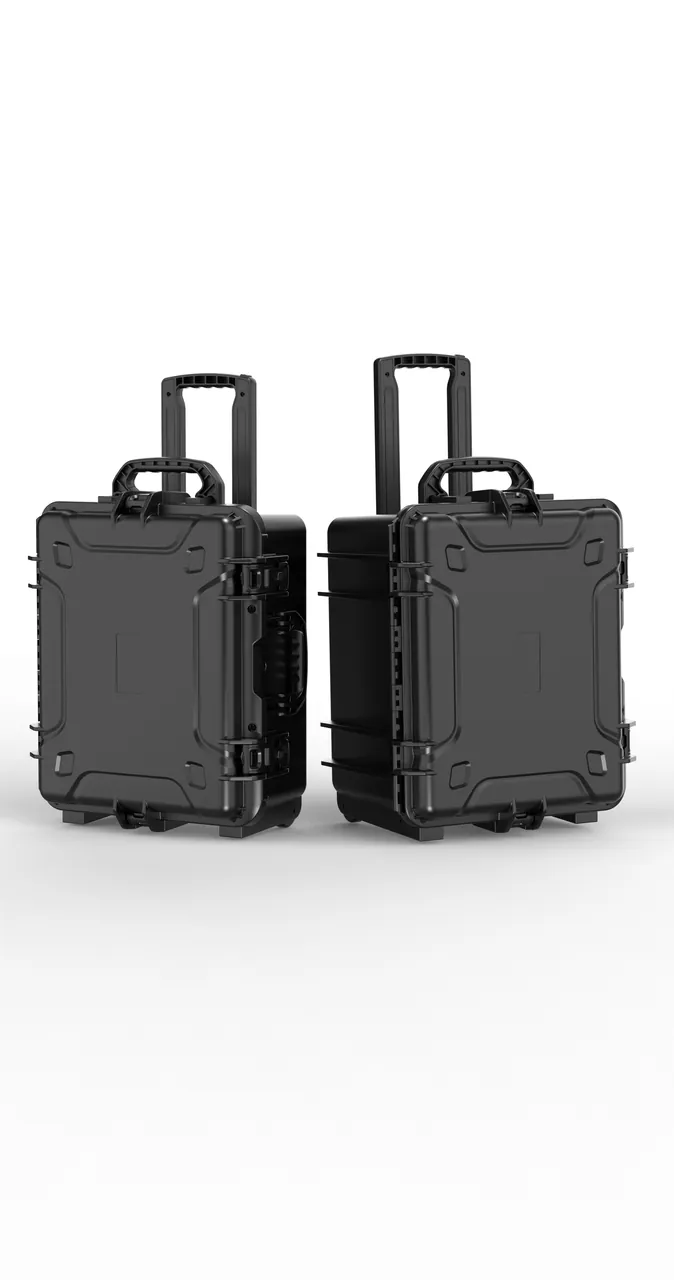
Pre-dispatch checklist, to be signed item by item.
- Temperature band and seasonal configuration match;
- Coolant configured per plan and conditioning or weighing complete;
- Logger calibrated, started and interval correct;
- Indicators placed and within validity;
- Gasket and latches inspected and accepted;
- Payload inside the approved loading zone and restrained;
- Vent path clear and unobstructed for dry-ice duty;
- Handover documents and seal number recorded.
Arrival inspection points. On arrival, immediately read and save the raw logger data before opening the case for any length of time; check freeze indicator and temperature indicator status; inspect the case exterior and sealing; record the opening time and ambient temperature; confirm payload integrity and primary packaging condition. Reading the data before deciding to open the case is the critical sequence in cold-chain handover.
13. Air and Sea Export, Returnable Re-Use and OEM/ODM Customisation
Five key variables in export routes. First, route duration is long, so coolant must be sized for the longest credible transit time plus a contingency margin, not the average. Second, the shipment may cross climate zones and encounter both hot and cold extremes, so the plan must cover both directions. Third, there are many transhipment points, and each one is an opportunity for opening, moving and exposure, so case structural strength and latch reliability directly determine risk. Fourth, airfreight apron exposure and uncontrolled cargo compartment temperatures require dedicated assessment. Fifth, wooden export packaging must meet ISPM 15 heat treatment or fumigation requirements; plastic cases avoid this issue but raise questions about destination-country requirements for packaging materials and recyclability.
Returnable re-use and criteria. Pharmaceutical cold-chain cases are typically reusable, and six checks are recommended before reissue: cracks, deformation and delamination in the case, with particular attention to corners and base; gasket hardening, cracking, debonding or permanent compression set; latches and hinges that close reliably with even load distribution around the perimeter; insulation that has taken on moisture, swelled or been damaged, since damp insulation loses performance markedly; coolant cavity and insert damage, contamination or shedding; and a clear pressure equalisation valve. Any failed item means replacement before reissue. One specific warning: a case previously used for chemical reagents, diagnostic specimens or biological materials must be cleaned and assessed for residues before being used for pharmaceuticals, with all inserts and gaskets replaced where necessary. Keeping a register of case serial number, cycle count, each use, temperature excursion events and inspection results is the cheapest and most effective management control available.
OEM and ODM customisation. Pharmaceutical cold-chain cases sit in a category where the temperature band is fixed, payload specifications are diverse and validation requirements are high. A sensible procurement strategy is built around "standardised case, customised insert and coolant cavity": cover mainstream loads with two to four standard case sizes, then adapt specific payloads and bands with custom inserts, spreading tooling cost across many SKUs. For tooling cost structure, see custom case mould cost analysis.
Six dimensions for evaluating a supplier.
- Thermal engineering: can they produce coolant sizing calculations and a thermal mapping validation plan from an ambient profile and target duration, rather than supplying only a box?
- Materials and low-temperature performance: insulation batch consistency, gasket elasticity at low temperature, insert stiffening behaviour in the cold, and disinfectant resistance.
- Validation and test capability: can they provide records for thermal mapping, hold time, vibration, drop, stacking, water ingress and pressure equalisation?
- Compliance support: can they supply material declarations, non-migrating constituent statements, and documentation supporting transport marking and dangerous goods, dry ice, requirements?
- Capacity and delivery flexibility: supply elasticity and schedule reliability during peak seasons such as influenza campaigns and centralised procurement delivery windows.
- Quality system and sampling rules: defined sampling rules and nonconforming product handling, along the lines of the sampling logic in custom case acceptance and AQL sampling.
Enquiry checklist. A practical enquiry should include payload specification and quantity, total case weight and volume, target band with limits, ambient temperature profile and maximum transit time, transport mode and routing including transhipment, seasonal switching needs, minimum and maximum load, whether a dry-ice vent design is required, disinfection method, marking and documentation requirements, annual volume and delivery cadence, and validation documentation expectations. The more complete the input, the closer the proposal comes to something that can be put into service directly. For supplier selection method, see how to choose a protective case OEM factory.
JUNZHJIA's standard approach for pharmaceutical cold-chain cases is: confirm the temperature band and transport route, produce the case structure, insulation, coolant cavity and insert proposal, run a first-article trial assembly with preliminary thermal mapping, move to volume production with sampling inspection, and supply material declarations and test documentation alongside. For customers with recurring demand, a payload file can be established so that repeat orders for the same specification re-use the approved configuration directly.
Frequently Asked Questions
Q: How long can a 2-8°C pharmaceutical cold-chain case hold temperature, and how is that duration determined?
A: Hold time is not an inherent product number. It is determined by the case's insulation performance, the coolant's phase-change temperature and latent heat, the ambient temperature profile, the load factor and the number of times the case is opened. The same case might hold 48 hours in a constant 25°C environment, yet only 12 hours under 40°C direct sun with two transhipment openings. The correct method is therefore to define your maximum transit time including contingency margin and your worst-case ambient profile first, then ask the supplier for measured data under exactly those conditions, and write into the contract that the coldest point must stay above the lower limit and the warmest point below the upper limit for not less than a stated number of hours under that profile and load. Also confirm which load condition the data refers to, because many advertised durations only hold at full load; at half load the proportion of air rises, the coolant must also chill that air, and the practical duration drops noticeably. Validate both minimum and maximum load and adopt the worse result as the basis. Finally, deduct the door-open working time at destination, which is often overlooked in validation.
Q: Why must a pharmaceutical cold-chain case be temperature-validated instead of simply judged by insulation thickness?
A: Because insulation performance is a whole-system property, not a panel property. Thickness describes only the insulation layer, while heat has many paths around it. Hinges, latches, handles and castors are classic thermal bridges; the lid-to-body joint is an infiltration path; an under-compressed gasket forms a convection channel; and liner-to-shell joints create local conduction. Once these paths are summed, the equivalent heat transfer coefficient of the whole case can be substantially higher than the panel figure. A second reason is thermal uniformity: temperatures at different positions inside the case can differ by several degrees, with the door-side region and the volume directly above the coolant representing the two extremes, so a single probe cannot prove that the location where the product actually sits is compliant. Thermal mapping is required to establish an approved loading zone. Third, validation must cover extremes: high and low temperature directions tested separately, and minimum and maximum load tested separately, to establish the capability boundary. Without these elements, a thicker case is merely "apparently insulated" and cannot support batch release or regulatory review.
Q: What is the essential difference between a phase-change coolant and an ordinary ice pack?
A: The essential difference is the controllability and stability of the transition temperature. An ice pack transitions near the water-ice point, which means that for 2-8°C pharmaceutical transport the coolant surface must be below 0°C, creating a freeze risk for product near it; melting ice also produces free liquid water, which contaminates other contents and outer packaging if the enclosure is breached. A phase-change material can be engineered to a specified transition temperature. A 5°C PCM, for example, holds the case in a 4-6°C range during transition, which avoids freezing while creating a relatively flat thermal plateau. PCMs are also normally enclosed in sealed pouches or rigid trays, so the transition produces no free liquid. Three control points matter. Conditioning must be complete, because a partially transitioned PCM has much less usable latent heat. Orientation matters, because the large face is thermally most stable during transition and should face the payload. And restraint is essential, because movement in transit changes the thermal field and can bring coolant into contact with product. PCMs have a service life; repeated cycling fatigues the enclosure, so keep a cycle count and define a replacement criterion.
Q: What does dry-ice transport require, and can a fully sealed case be used?
A: A fully sealed case must not be used, and this is the most important structural constraint in dry-ice transport. Dry ice sublimates continuously at ambient temperature, and one kilogram can produce several hundred litres of gas, so internal pressure in a fully sealed case rises rapidly. The result can be lid deformation, gasket failure, latches springing open or even case rupture, which is a serious safety hazard. Dry-ice cases must therefore have a vent path, typically a one-way vent or a labyrinth vent port positioned to prevent liquid or dust ingress. Beyond structure, dry ice is normally classified as UN 1845, carbon dioxide, solid, under dangerous goods rules and must be managed under the IATA Dangerous Goods Regulations or the applicable road transport rules, covering packaging requirements, marking, net quantity per package, declaration and personnel training. Requirements for net quantity limits, declaration method and marking content differ between transport modes, carriers and routings, so the current edition of the applicable rules governs and must be confirmed by qualified personnel. This article describes structural design principles and the compliance boundary only and is not a compliance determination. Packing operations must also prevent cold burns and keep the work area ventilated to avoid oxygen deficiency.
Q: Where should temperature loggers be placed inside the case, and how many probes are enough?
A: At least two probes, and their positional logic must differ. The first should sit at the payload centre or against the product itself, representing the temperature the product actually experienced; this is the core basis for release. The second should sit at the worst position inside the case, typically a corner far from the coolant or the upper region near the door or lid, to capture the extreme. For deep-frozen or dry-ice duty, add a third probe near the coolant to judge remaining capacity and anticipate the onset of upward drift. The common error is a single probe placed next to the coolant: the resulting curve looks excellent but says nothing about product temperature, which makes it invalid data. Three further points apply. Check battery performance at low temperature, because cold causes premature failure and this is the leading cause of missing data in deep-frozen shipments. Match the logging interval to route length, commonly five to fifteen minutes for refrigerated pharmaceuticals. And ensure the device is within calibration validity and can export tamper-resistant raw data at destination. Raw data should be retained as-is; do not keep only an exported summary chart, because charts lose short excursions and interval detail.
Q: Can a cold-chain case be reused, and how do I decide whether it is still serviceable?
A: Reuse is acceptable, but it requires defined criteria and specific attention to the hidden risk of prior use. Six checks apply to the case itself: cracks, deformation and delamination with particular attention to corners and base; gasket hardening, cracking, debonding or permanent compression set; latches and hinges that close reliably with even perimeter load distribution; insulation that has taken on moisture, swollen or been damaged, since damp insulation loses performance markedly; coolant cavity and insert damage, contamination or shedding; and a clear pressure equalisation valve. Any failed item means replacement before reissue. On prior-use risk, a case previously used for chemical reagents, diagnostic specimens, biological materials or other potential contaminants may still carry adsorbed residues in its liner and gasket even after the surfaces appear clean, and these can slowly release and contaminate pharmaceuticals or impair sealing. A dedicated-use principle with separate tracks by application is therefore recommended. The most effective control is a register recording case serial number, cycle count, each use, temperature excursion events and inspection results. It is inexpensive and directly actionable.
Q: What extra considerations apply to airfreight of pharmaceutical cold chain?
A: The risk structure in airfreight differs markedly, and the high-risk points usually sit not in the flight itself but in pre-departure waiting and transhipment. Four points. First, apron exposure: summer apron surface temperatures can far exceed ambient air temperature, and the waiting time before loading is not under the shipper's control, so coolant must be sized for maximum exposure time rather than flight time, with a contingency margin. Second, loading and temperature control: cargo compartment temperatures are not controlled by the shipper and vary between aircraft types, so confirm case performance across the applicable compartment range. Third, dry-ice requirements: air transport of dry ice carries net quantity limits per package, venting requirements and declaration requirements that must be confirmed against the current rules, along with any additional carrier-specific requirements. Fourth, transhipment: each transit involves inspection, movement and reloading, so case structural strength and latch reliability directly determine risk; assess transit nodes specifically and prefer direct or minimum-transit routings. Clear, prominent temperature-sensitive marking on the outside of the case helps carriers identify and prioritise it.
Q: What documents and data should I request from a supplier when buying pharmaceutical cold-chain cases?
A: Request four categories and fix the responsibility boundary in the contract technical annex. First, structural and material documentation: case structural drawings, insulation type and thermal conductivity, gasket material and low-temperature performance, insert material and cold stiffening behaviour, disinfectant resistance, and declarations regarding relevant material safety requirements. Second, performance validation documentation: thermal mapping reports including probe layout, ambient profile and load conditions; hold-time test reports; and mechanical test reports for vibration, drop, stacking and water ingress, each stating standard number, test conditions and acceptance criteria. Third, compliance and transport documentation: packaging and marking support for dry-ice transport, dangerous goods declaration support, and recycling and environmental statements where required by the destination country. Fourth, quality and delivery documentation: sampling rules and nonconforming product handling, batch consistency statements, warranty terms and spare part supply commitments. Also confirm whether the supplier can produce an insert proposal from 3D data or physical tooling patterns with a first-article trial assembly, and how quickly a new proposal can be issued when payload specifications change. The more complete the documentation, the smaller the room for dispute if a quality event occurs.
Q: We handle several temperature bands and many payload types. How do we keep the packaging programme from becoming unmanageable?
A: The core approach is "separate tracks by band, standardise cases, customise inserts, consolidate into a single configuration card". First, separate tracks by band: controlled room or cool, 2-8°C, -20°C and -70°C, each with its own cases, coolant and documentation, never mixed, and with mandatory re-assessment if a deep-frozen case is repurposed for refrigerated duty. Second, standardise cases into two to four sizes covering most loads, spreading tooling cost. Third, customise inserts by payload specification while keeping the internal cavity common so inserts are interchangeable, which reduces switching and inventory cost. Fourth, turn each combination of band, case type and payload into a configuration card stating coolant type and quantity, conditioning parameters, load range, logger probe plan, and marking and document list, and require the packing line to work from the card rather than from experience. Fifth, define seasonal switching rules with explicit dates and switching criteria, and run a simplified confirmation at each switch. Sixth, consolidate all temperature excursion events and case damage events into a single table and review it periodically to identify systemic issues.
Conclusion and Further Reading
A pharmaceutical cold-chain case is essentially a controlled physical structure traded for provable thermal compliance. It is constrained by three chains at once: the thermal chain sets the capability boundary, the sealing and mechanical chain determines whether that capability survives the whole route, and the compliance chain determines whether it is accepted by the quality system and the regulator. Remove any one and a thicker case with more coolant still does not constitute a compliant pharmaceutical cold-chain package.
The implementation path compresses into five steps: determine the product temperature band and registration conditions; define the ambient temperature profile, transit duration and load range; design the insulation structure and coolant configuration for the worst case; establish the capability boundary and approved loading zone through thermal mapping and hold-time validation; and close the loop with temperature records, indicators, deviation handling and re-qualification. Follow these five steps and cold-chain management moves from experience-based to evidence-based.
If you need an integrated proposal covering case structure, coolant cavity and inserts for a specific payload size, target band and transport route, provide the payload specification, temperature limits, maximum transit time, ambient temperature profile and transport mode to JUNZHJIA, and we will produce a model-specific drawing package and arrange a first-article trial assembly with preliminary thermal mapping.
Further Reading