

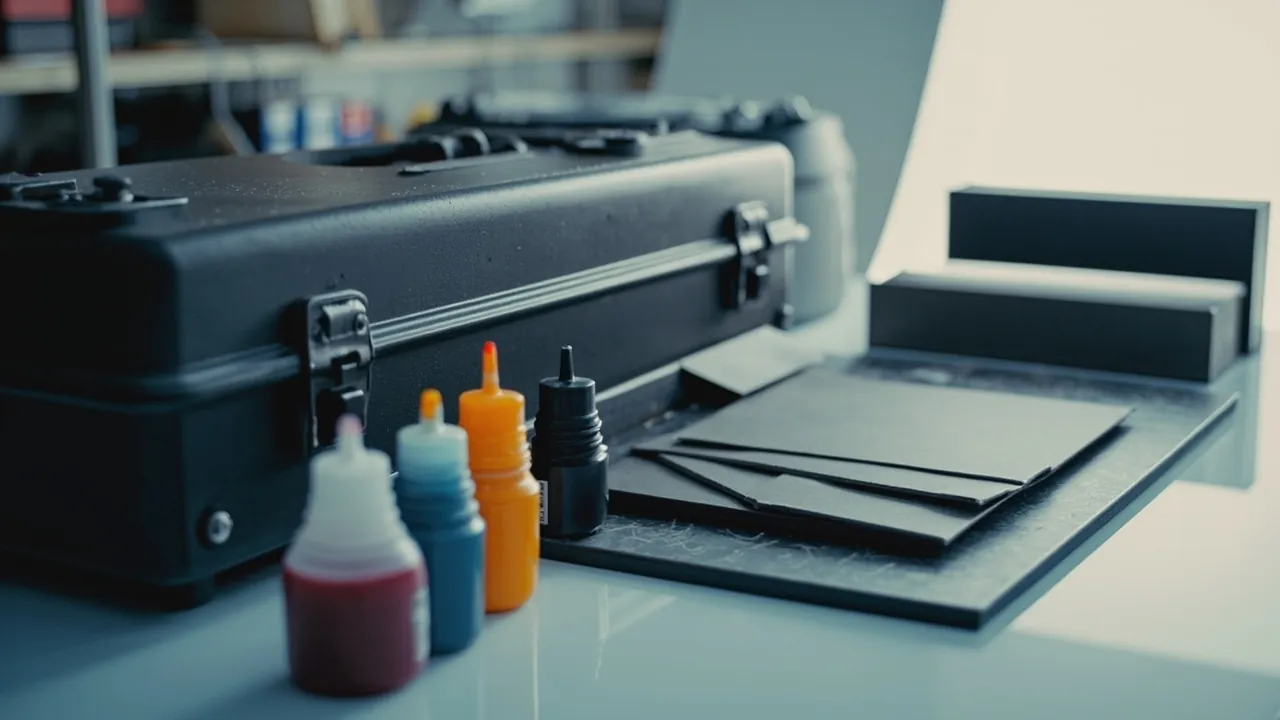
Printing ink and printing plates are the two most polarised cargo types in the printing industry. Ink is a liquid chemical whose protection centres on leak prevention, volatile control and flammability risk; plates are precision thin-wall items or coated rolls whose protection centres on scratch prevention, compression prevention and light and moisture exclusion. The selection logic for printing ink and plate cases must therefore follow three threads: liquid-tight containment, material compatibility, and compression and light protection — one case design cannot serve every printing material. Ink is complicated because it carries three risk attributes at once. Leakage risk arises from cover seal failure, shell deformation from impact and tipping, and leaked ink both contaminates other cargo and creates slip and cleaning costs. Volatilisation and flammability risk arises because solvent-based inks contain organic solvents with comparatively low flash points, and the vapour they release can reach flammable concentration in poorly ventilated enclosed spaces. Compliance risk arises because solvent-based inks are commonly classified as dangerous goods, subject to dedicated transport regulations with strict packaging and documentation requirements. Plates are fragile in a different dimension: CTP plate aluminium substrate is typically only a fraction of a millimetre thick with an extremely thin coating, so any bending or scratching scraps the plate; flexographic plates are vulnerable to compression and heat; and the chrome layer on a gravure cylinder cannot be repaired once knocked.
The pain points are characteristic. Ink container leakage is the most common incident. On 20 litre pails and 200 litre drums, the most vulnerable locations are the cover and the bung sealing face. Stacking load deforms the cover, vibration gradually loosens it, and impact dents the shell and squeezes the sealing face. Once leaked, ink penetrates pallets and cases, contaminates adjacent cargo, and leaves stains on warehouse floors that are difficult to remove; solvent-based ink also loses flash point margin as it volatilises and contaminates the air. Cross-contamination from mixed loading is the second high-frequency problem: if inks of different colours or different systems, such as solvent-based and water-based, leak inside the same case and mix, the whole batch may be downgraded or scrapped, and ink leaking onto plates contaminates the coating and scraps them. Compression and scratching of plates is the third problem: a CTP plate stored upright without support bows, stacking too many sheets crushes the coating, and contact with a hard object scratches the photosensitive layer; a flexographic plate takes a permanent indentation under pressure that prints as deformed dots; and a gravure cylinder takes a dent that appears as a repeating defect on the print. Light and moisture are the fourth problem: CTP plates are sensitive to visible light and unexposed stock must be kept dark, while both the aluminium substrate and the coating absorb moisture, changing coating performance over long exposure. Storage compliance is also a practical issue: ink stores typically carry specific ventilation, explosion protection, static control and fire compartmentation requirements, and case materials and structures must be compatible with them.
This article sets out protection logic in the order of ink containers, plates and plate stock, and auxiliary printing materials, focusing on four schemes: liquid-tight containment and secondary containment, the dangerous goods regulatory boundary, material compatibility, and plate compression and light protection. It includes an ink-type protection table, containment configuration guidance, transport test items and acceptance criteria. JUNZHJIA serves ink manufacturers, printing material distributors, printing companies and plate suppliers with liquid-tight case design, secondary containment structures, custom inserts, media-matched materials and seals, and OEM/ODM volume delivery, manufactured and shipped worldwide by Kexin New Materials (Guangdong) Co., Ltd.
Table of Contents
- 1. Why Printing Ink and Plates Need Purpose-Built Cases
- 2. Risk Profile for Ink and Plates: Leakage, Volatilisation and Compression
- 3. Protecting Ink Containers: Metal Pails, Drums and Liner Packs
- 4. Solvent-Based Ink: VOC, Flash Point and Flammability Risk
- 5. Dangerous Goods Framework: the GB 30000 Series and the ADR/IMDG Context
- 6. Water-Based, UV and Food-Contact Inks: Differing Protection Needs
- 7. Protecting Plates and Plate Stock: CTP, Flexo and Gravure Cylinders
- 8. Leak Prevention: Secondary Containment, Absorbents and Liquid-Tight Structure
- 9. Sealing Class and Material Compatibility: IEC 60529 and GB/T 4208
- 10. Static Control and VOC Emission Control
- 11. Custom Inserts: Container Bays, Plate Bays and Divider Schemes
- 12. Transport Testing: ISTA, GB/T 4857 and ASTM D4169
- 13. Marking, SDS and Compliance Documentation
- 14. Procurement Acceptance, AQL and Specification Selection Table
- 15. Export, Storage and Compliance Management Points
- Frequently Asked Questions
- Conclusion & Related Reading
1. Why Printing Ink and Plates Need Purpose-Built Cases
Printing industry material management has a distinctive characteristic: ink and plates are two entirely separate material chains that nevertheless meet in the same warehouse and often on the same delivery run. Understanding that is the starting point for every design decision in this article.
Ink is fundamentally a chemical in a container. Whether solvent-based, water-based or UV, the object being protected is not the ink itself but the container and its sealing structure. The ink does not degrade from being transported, but the container does: an impact dent in the shell squeezes the bung sealing face, the cover gradually loosens under vibration, stacking load deforms the cover, and rising temperature increases internal vapour pressure and adds load to the seal. Once the seal fails, the consequences compound — contamination of other cargo, contamination of the storage environment, slip risk, material loss, and for solvent-based products the possible accumulation of flammable vapour. The primary function of an ink transport case is containment, not impact resistance.
Plates are fundamentally precision thin-wall or coated items. A CTP plate is an aluminium substrate carrying an extremely thin photosensitive or thermal coating, with substrate thickness typically only a fraction of a millimetre. A flexographic plate is a photopolymer plate whose thickness ranges from one to several millimetres. A gravure cylinder is a steel body plated with copper and then chrome. What these share is that the functional surface is extremely thin, extremely soft and extremely easily damaged, and the damage is not repairable. The function of a plate transport case is zero-contact protection and deformation prevention.
The two must be isolated within the same logistics chain. This is the most frequently overlooked design point. Ink is a liquid and plates are solids vulnerable to contamination. Ink may leak, and a plate contaminated by ink is scrap. Ink, especially solvent-based, volatilises, and the vapour may affect plate coatings. Ink and plates should in principle not travel in the same case; where they must ship in the same consignment, the scheme should use separate cases with separate compartments and liquid-tight isolation, so that even a leak cannot reach the plates.
Compliance is an unavoidable constraint on ink transport. Solvent-based inks are commonly classified as dangerous goods, and their transport packaging, marking, documentation and carrier qualification are all subject to dedicated regulations. The role of a protective case within that framework is outer transport protection and secondary containment, and it cannot replace the dangerous goods packaging required by regulation. This boundary must be stated at the scheme design stage to avoid any compliance misunderstanding. The framework is set out in ADR and IMDG hazmat transport case compliance.
In summary, the core requirements for a printing ink and plate case are liquid-tight leak prevention and secondary containment capability, a material system compatible with the ink and its solvents, and a zero-contact, deformation-preventing insert for plates. A general selection framework is set out in the Instrument case selection guide.
2. Risk Profile for Ink and Plates: Leakage, Volatilisation and Compression
Ink and plate logistics has its own shape: goods move from the ink plant or plate supplier through regional warehouses and distributors to the printing company, or within a printing company from the material store to the press, with many stages, mixed batches and frequent temperature and humidity variation.
| Chain stage | Dominant stress | Typical consequence | Protection focus |
|---|---|---|---|
| --- | --- | --- | --- |
| Ink plant and plate plant dispatch | Vibration, stacking, temperature change | Loose covers, damp or compressed plates | Cover protection, liquid-tight containment, plate light and moisture exclusion |
| Trunk transport | Sustained vibration, occasional shock, temperature swing | Shell dents, seal damage, vapour pressure change | Compartmented fixing, buffers, venting and pressure considerations |
| Regional warehouse and distributor storage | Sustained static load, humidity, temperature | Accumulated leakage, lost labels, coating degradation | Secondary containment, static verification, environmental control |
| Printing company material store | Mixed storage, repeated retrieval, dust | Cross-contamination, plate scratching | Segregated storage, isolated bays, position marking |
| Export and cross-border delivery | Sea-freight humidity and heat, repeated handling, regulatory variation | Leakage, corrosion, non-compliance | IP67 plus containment plus documentation checks |
Leakage is the primary risk and it is cumulative. A small seep in a single shipment may go unnoticed, but in a batch storage environment it accumulates into a visible contamination problem. Solvent-based seepage also builds flammable vapour in enclosed spaces, which is the key safety hazard. The objective of leak prevention is therefore not only to reduce the probability of leakage but also to limit its consequences when it occurs — which is exactly what secondary containment is for.
The relationship between volatilisation and temperature needs specific understanding. The vapour pressure of a liquid in a closed container rises with temperature, and high temperatures in transport or storage — a summer vehicle body or a shipping container can be significantly hotter than ambient — increase internal pressure and place greater demands on the seal. Rising temperature also accelerates solvent evaporation, raising the concentration of flammable components in the vapour space. Solvent-based ink should therefore be kept away from high temperatures, and the case scheme should consider a sensible venting and pressure relief path; pressure relief itself is the responsibility of the compliant packaging, and a protective case should not become a sealed pressure vessel.
Stacking load is the principal cause of cover damage. Ink containers are typically cylindrical or square in section with limited top and bottom structural strength. In a multi-tier stack, the static load on the bottom container slowly deforms the cover and squeezes the bung gasket. The deformation is gradual and not obvious in the short term, but sealing performance falls continuously. Stacking must therefore rely on the case structure and pallet load capacity, not on the container's own compression strength.
Plate damage follows a completely different mechanism. The main damage to CTP plates is bowing and surface scratching: a plate stored upright for long periods without support bows under its own weight, too many sheets stacked flat crush and damage the coating of the lower sheets, and contact with a hard or rough surface scratches the photosensitive layer. The main damage to flexographic plates is permanent indentation and heat ageing: the resin layer takes an indentation under pressure and high temperature accelerates resin ageing. The main damage to gravure cylinders is coating impact damage: the chrome layer is hard but brittle, and an impact leaves a dent that appears as a constant-position repeating defect on the print. Light exclusion is a shared requirement for all plate stock: unexposed CTP plates are sensitive to visible light and need effective light-blocking packaging.
3. Protecting Ink Containers: Metal Pails, Drums and Liner Packs
Ink containers come in many forms, and the protection scheme must be designed separately for each type and size.
Metal pails such as 20 and 25 litre square pails are the most common format in printing companies. They offer moderate volume and efficient stacking, but the cover and bung sealing face are pressure-sensitive. Failure modes include cover deformation from stacking, cover loosening from vibration, shell denting from impact, where the dent squeezes the sealing face, and handle or lug damage from handling. Protection requires a protective cover over the lid with no direct load from above, dividers between pails so shells cannot strike each other, a pallet and case combination carrying the stacking load, and a liquid-tight base with absorbent material inside the case.
Metal drums such as the 200 litre standard drum are used for bulk ink and solvent. Their structure is stronger, but they are heavy and handling depends on forklifts and lifting gear. Failure modes include shell denting and cover deformation from forklift impact or a drop, bung sealing face damage from improper opening and closing, and shell corrosion in long damp storage. Protection requires load-bearing protection at the base and top, so that the cover does not carry load directly; disciplined forklift practice; corrosion protection; and moisture protection for long storage.
Plastic containers in HDPE and PP at 5, 10 and 20 litres are common for water-based inks and some auxiliary materials. They have good chemical resistance and low weight, but lower rigidity, easy deformation under load and greater temperature sensitivity, softening when hot and embrittling when cold. Failure modes include deformation under load causing seal failure, cracking on drop, and temperature-driven deformation and embrittlement. Protection requires avoiding stacking load directly on the container, avoiding high temperatures, and drop protection in cold-transport scenarios.
Liner packs such as 5, 10 and 20 litre liner bags and bag-in-box constructions are an important modern format, with an outer carton or plastic case and an inner flexible bag with a dispensing fitment. Their characteristic failures are puncturing of the liner and failure of the dispensing fitment seal. Protection requires an outer case rigid enough that the liner is not compressed, a protective cover over the fitment, no contact with sharp objects, and sufficient liner slack that the contents weight does not act directly on the seams.
Small-volume samples and auxiliaries below one litre, in bottles and cans, are numerous, low in unit value and very prone to leakage. Protection requires a grid insert fixing each item individually, absorbent material between layers, and a liquid-tight base across the whole case.
| Container type | Main failure mode | Protection strategy | Critical prohibitions |
|---|---|---|---|
| --- | --- | --- | --- |
| Metal pail (20-25 litre) | Cover deformation, loosening, shell denting | Cover protected from load, compartment fixing, pallet load bearing, liquid-tight base | No direct load on the cover |
| Metal drum (200 litre) | Shell denting, seal face damage, corrosion | Base and top protection, disciplined forklift practice, rust prevention | No forklift contact with the shell |
| Plastic container (5-20 litre) | Deformation under load, drop cracking, cold embrittlement | No load, no high temperature, cold drop protection | No stacking load, no direct sun |
| Liner packs and bag-in-box | Liner puncture, fitment failure | Rigid outer, fitment protection, no sharp objects | No direct load on the liner |
| Small bottles and cans | Leakage, mutual impact | Grid fixing, interlayer absorbent, liquid-tight base | No bulk co-shipping |
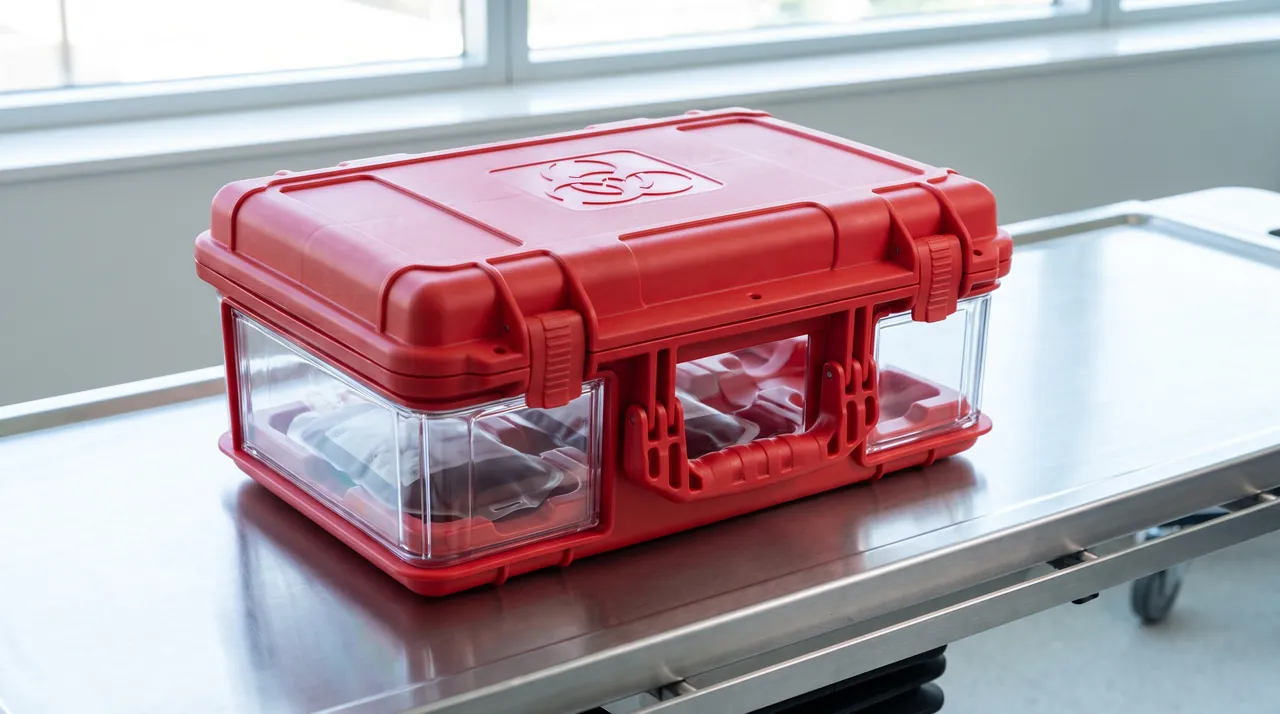
4. Solvent-Based Ink: VOC, Flash Point and Flammability Risk
Understanding volatilisation and flammability risk is the precondition for understanding solvent-based ink transport requirements. This section discusses mechanisms and engineering boundaries and does not describe any non-compliant practice.
What VOC means and why it is controlled. Volatile organic compounds are organic compounds that evaporate readily at normal temperature and pressure. The organic solvents commonly used in solvent-based inks include esters, alcohols, ketones and aromatic hydrocarbons, all of which have comparatively low boiling points and evaporate easily. Volatilisation has three direct consequences. Material loss: evaporation changes ink viscosity and colour strength, affecting press performance. Occupational health and atmospheric emissions: the volatiles are emissions requiring control, and there are national standard limits on the volatile organic compound content of ink products. Flammability risk: flammable vapour mixed with air can form a combustible atmosphere.
Flash point is the core parameter for judging flammability risk. Flash point is the lowest temperature at which, under specified test conditions, the vapour released by a liquid forms a mixture with air that will flash on application of an ignition source. The lower the flash point, the more readily the liquid forms flammable vapour at normal temperature and the higher the fire hazard. The flash point of a solvent-based ink depends on the composition and proportion of its solvent system, so the hazardous properties of different ink products can vary widely and must be taken from the safety data sheet of the actual product, never inferred from the general category of ink.
Classification and transport requirements. China's chemical classification and labelling system is based on the GB 30000 series, Rules for classification and labelling of chemicals, aligned with the United Nations Globally Harmonized System. Flammable liquids have their own classification standard within that series. For ink classified as dangerous goods, transport must satisfy a set of requirements: use of compliant transport packaging, normally packaging that has passed the relevant performance tests; correct package marking and labels; accompanying documentation including the safety data sheet; and carriage by a qualified operator following the prescribed route and method. International transport brings in further rule sets — ADR for road, IMDG for sea and the IATA Dangerous Goods Regulations for air — whose classification criteria, packaging requirements and documentation requirements differ.
Where a protective case sits in this framework. This must be stated clearly: a protective case is an outer transport protection and secondary containment facility, not dangerous goods packaging in the regulatory sense. Its functions are to provide mechanical protection that reduces the probability of container damage, to limit the spread of a leak if one occurs, to fix and segregate containers, and to facilitate handling and stacking. It cannot replace the specification packaging, marking and documentation required by regulation, and it does not exempt anyone from any transport compliance requirement. Where dangerous goods are involved, carriage must be performed by a suitably qualified operator under the applicable regulations, and the packaging scheme and documentation should be subject to compliance review.
| Risk dimension | Key parameters | Information source | Engineering response |
|---|---|---|---|
| --- | --- | --- | --- |
| Flammability | Flash point, boiling point, explosive limits | Product SDS | Avoid high temperature, ventilate, compliant packaging and carriage |
| Volatilisation loss | VOC content, vapour pressure | Product SDS and product standard | Sealed containers, temperature control, short exposure |
| Classification and packaging | Dangerous goods class, packing group | SDS and applicable regulations | Specification packaging, complete marking and documentation |
| Environmental impact | Spill response requirements | SDS and environmental requirements | Secondary containment, absorbents, spill kit |
| Occupational health | Exposure limits | SDS | Ventilation, protective equipment, disciplined procedure |
Three principles must be emphasised. First, any scheme involving dangerous goods transport must be based on the measured data in the product SDS and on the applicable regulations, never on general experience. Second, packaging and marking must meet regulatory requirements and carriage must be performed by a qualified operator. Third, the design objective of a protective case is to reduce mechanical risk and limit the spread of leakage; it is an outer protection and containment measure that adds to, rather than substitutes for, regulatory packaging requirements. The compliance framework is set out in ADR and IMDG hazmat transport case compliance.
5. Dangerous Goods Framework: the GB 30000 Series and the ADR/IMDG Context
This section provides a macro view of the compliance framework so that procurement and logistics staff can identify constraints at the scheme design stage. Specific classification and packaging requirements must be taken from the product SDS and the applicable regulation texts and confirmed by qualified personnel and the carrier.
The domestic framework. China's hazardous chemicals management system operates on several levels. Classification and labelling is based on the GB 30000 series, aligned with the GHS. Dangerous goods transport involves the dangerous goods list, packaging requirements, marking and labelling requirements, operator qualification and operating rules. For ink products, whether a product is classified as dangerous goods and which class and packing group it falls into depends on physical and chemical parameters such as flash point, initial boiling point and vapour pressure, and must be determined product by product. Different ink products from the same manufacturer may fall into different classes, and some products may not be classified as dangerous goods at all.
The international framework. Cross-border transport brings in different rule sets: ADR for European road transport of dangerous goods, IMDG for sea transport and the IATA Dangerous Goods Regulations for air. These rules broadly align with the United Nations Model Regulations on classification criteria but differ in packaging requirements, marking methods, documentation requirements and exemptions. Export projects should verify the specific requirements of the destination country and mode of transport item by item.
Practical effects on the case scheme. The compliance framework affects case design in four ways. Dimensions and load capacity: the case must suit the dimensions and weight of the regulatory packaging, and space savings must not be achieved by using a case that cannot meet stacking strength requirements. Visibility of marking and labels: dangerous goods marks and labels must remain clearly visible, so the case design must not obscure or impede them, and a defined position must be provided for accompanying documents. Secondary containment capacity: the containment structure must be able to hold the quantity that may leak, and the common industry practice is to provide containment capacity at least equal to the volume of the largest single container with a margin; the actual figure should be established together with the compliance requirements. Material compatibility: case and containment materials must be compatible with the ink and its solvents, so that corrosion of the material does not destroy protection and containment performance.
| Transport mode | Main rule set | Key packaging concerns | Verification points |
|---|---|---|---|
| --- | --- | --- | --- |
| Domestic road | Dangerous goods transport rules | Specification packaging, marking and labels, operator qualification | Packaging compliance, complete documentation, containment capacity |
| International road | ADR | Classification criteria, packaging performance, marking method | Verify applicable clauses item by item |
| Sea | IMDG | Packaging performance, stowage, segregation | In-container fixing and segregation |
| Air | IATA Dangerous Goods Regulations | Stricter quantity limits and packaging | Consider exemption or alternative transport first |
| Storage | Hazardous chemical storage rules | Ventilation, explosion protection, static control, fire compartmentation | Case material and structural compatibility |
Three reminders on the compliance boundary. First, the protective cases discussed in this article are outer transport protection and secondary containment facilities and do not constitute dangerous goods packaging in the regulatory sense. Second, where dangerous goods are involved, compliant packaging, marking and documentation must be used and carriage must be performed by a qualified operator. Third, any scheme should undergo compliance review before implementation; this section is intended only to help identify constraints at the design stage.
6. Water-Based, UV and Food-Contact Inks: Differing Protection Needs
The different ink systems differ markedly in their protection requirements and must be handled by class.
Solvent-based inks require sealing, high-temperature avoidance, leak prevention and compliance. Case materials must be compatible with the solvent system, because some solvents soften or permeate ordinary plastics, so material selection must be checked individually and confirmed by immersion testing where necessary. Seal material compatibility also matters: ordinary nitrile rubber has limited resistance to some solvents and may swell, harden or lose elasticity, so a more chemically resistant compound should be selected against the actual medium. Selection methods are in Choosing seal materials for protective cases.
Water-based inks require freeze protection, skinning prevention and contamination control. Water-based systems can freeze at low temperature, and the freeze-thaw cycle can break emulsion stability and spoil the ink; at high temperature and in open conditions they skin over as water evaporates. Cases for water-based ink should therefore consider temperature insulation and swing control, and containers must be well sealed. Flammability risk is clearly lower than for solvent-based systems, but the contamination and cleaning cost after a leak is just as significant.
UV inks require light exclusion and high-temperature avoidance. UV inks contain photoinitiators, and exposure to ultraviolet or strong visible light can trigger partial curing, changing viscosity and forming skin. Containers and transport cases for UV ink should therefore block light, and because UV inks are usually higher in viscosity and more temperature-sensitive, high temperatures should be avoided. Some components of UV ink may irritate skin, so handling protection and spill response must follow the SDS.
Food-contact inks carry the highest protection requirements. Inks used for food packaging printing must satisfy food-contact material compliance requirements, and China operates a national standard system for food-contact materials and articles. Packaging and transport must avoid contact with anything that could cause migration contamination. Protection points: packaging materials themselves must meet no-migration and no-odour requirements; ordinary industrial inks, solvents and other chemicals must never be co-loaded; case and insert must be kept clean; and compliance declarations must accompany the shipment. Relevant environmental control thinking for cold-chain and food-contact scenarios is covered in Cold-chain and food-grade protective cases.
Auxiliary materials such as varnish, thinner, wash solvent and anti-set-off agent are frequently underestimated. Thinners and wash solvents often contain a higher proportion of solvent than the ink itself, and their hazardous properties are frequently greater, so they must be assessed and protected separately against their own SDS and must never be co-loaded with ordinary printing materials.
| Ink type | Main risk | Protection core | Critical prohibitions |
|---|---|---|---|
| --- | --- | --- | --- |
| Solvent-based ink | Leakage, volatilisation, flammability, compatibility | Sealing plus high-temperature avoidance plus containment plus compliance | No high temperature, no co-loading with oxidisers |
| Water-based ink | Freezing, skinning, contamination | Temperature control plus sealing plus cleanliness | No freezing, no open containers |
| UV ink | Light curing, high temperature, skin irritation | Light exclusion plus high-temperature avoidance | No ultraviolet or strong light exposure |
| Food-contact ink | Migration contamination, odour | Compliant materials plus cleanliness plus isolation | No co-loading with industrial chemicals |
| Thinners and wash solvents | High volatility, flammability | Separate SDS-based assessment and protection | No co-loading with plates |
7. Protecting Plates and Plate Stock: CTP, Flexo and Gravure Cylinders
Printing plates carry print quality directly, and their protection logic is entirely different from ink.
CTP plates are the dominant plate format. Their structure is an aluminium substrate with an extremely thin photosensitive or thermal coating. Key characteristics: substrate thickness is typically only a fraction of a millimetre, so stiffness is limited and the plate bows easily; the coating is extremely thin and sensitive, so a scratch scraps it; unexposed stock is sensitive to visible light and must be kept dark; and both substrate and coating absorb moisture, so long exposure changes performance. Failure modes are bowing, from upright storage without support or careless handling; coating scratching, from contact with hard or rough surfaces; coating compression damage, from over-stacking; moisture uptake, which changes coating performance; and exposure, from a light-blocking pack that has failed. Protection requires flat storage on a large flat support with the tier count limited by plate specification and pack strength, soft interleaves between plates, a light-blocking wrap over the whole pack using opaque or specified packaging, moisture-proof sealing with desiccant, and edge protection against impact.
Flexographic plates are thicker, from one to several millimetres, and have some flexibility, but they have their own weak points: permanent indentation under pressure, because the resin layer deforms plastically and prints as distorted dots and uneven density; heat ageing, which softens and deforms the resin; and ozone and ultraviolet ageing, causing surface tackiness and cracking. Protection requires avoidance of any sustained pressure, so the plate must not be fixed by clamping; light and heat exclusion; large flat support; and distance from ozone sources such as motors, high-voltage equipment and copiers.
Gravure cylinders are heavy precision items. Their structure is steel body, copper plating and chrome plating, with the cells engraved in the copper and the chrome providing wear resistance. Failure modes are coating impact damage, producing a dent that appears as a constant-position repeating defect on the print and cannot be repaired; coating scratching; cylinder bowing; and corrosion of unplated areas. Protection requires a soft cover over the cylinder face, equally spaced rigid support at the shaft ends, removal of rolling freedom, a dedicated cavity and corrosion protection. Gravure cylinders are heavy, so case load bearing and lifting schemes need dedicated design.
Flexo sleeves and semi-finished plate stock follow the same principles as flexographic plates, but a sleeve is a hollow cylinder whose interior deforms easily under load, so internal support or a rigid outer sleeve is required.
| Plate type | Main failure mode | Protection strategy | Critical prohibitions |
|---|---|---|---|
| --- | --- | --- | --- |
| CTP plate | Bowing, coating scratch, compression, moisture, exposure | Flat support plus soft interleaves plus light and moisture barrier plus edge protection | No upright bowing, no heavy stacking, no light exposure |
| Flexographic plate | Permanent indentation, heat ageing, ozone ageing | No sustained pressure, light and heat exclusion, flat support | No clamping, no high temperature |
| Flexo sleeve | Internal deformation under load | Internal support or rigid outer sleeve | No load on the sleeve body |
| Gravure cylinder | Coating impact, scratching, bowing, corrosion | Soft cover plus equally spaced shaft support plus rust prevention | No load on the coating, no rolling |
| Semi-finished plate stock | Same sensitivities as finished plates | Protection to the same standard as finished plates | No simplified packaging |

8. Leak Prevention: Secondary Containment, Absorbents and Liquid-Tight Structure
Leak prevention is the capability that distinguishes an ink case from other industrial cases, and this section gives workable engineering practice.
Layer one: the liquid-tight base. The case base should be liquid-tight, meaning no leakage path at joints and corners, achieved either by a one-piece moulded base or by sealing the joints. Its function is to confine any leak inside the case, preventing seepage that contaminates the vehicle and the warehouse floor. Design points: base depth should accommodate the expected leak volume plus the volume occupied by absorbent material; base corners should be easy to clean; and any drain or clean-out should be convenient to operate, for example with a removable plug.
Layer two: secondary containment capacity. Containment capacity is the volume the case can hold if a container leaks. The common industry practice is to provide capacity at least equal to the volume of the largest single container with an appropriate margin. Note that the capacity calculation must account for the space taken by absorbent material, because the absorbent takes up part of the volume while absorbing liquid. The specific requirement should be established together with the compliance requirements.
Layer three: absorbent material. Laying absorbent material in the base — pads, mats, granules or dedicated absorbent sheeting — absorbs seepage and splashes, preventing liquid from moving freely inside the case and spreading contamination. Selection points: the chemical compatibility of the absorbent must match the ink, so a solvent-resistant absorbent should be chosen for solvent-based ink and a general-purpose absorbent for water-based ink, and the absorbent itself must not react with the ink or release contaminants. The empirical practice for quantity is to cover the base area with a margin, so that unexpected splashes can also be absorbed.
Layer four: container fixing and segregation. A grid insert or divider structure fixes each container in its own position. This prevents containers from striking each other in transit, which is the main cause of shell dents and seal failure; ensures a leak from one container does not spread to adjacent containers; and makes counting and retrieval easier. Divider design should consider retrieval convenience, so that fixing does not make stocktaking harder. Compartmenting options are covered in Removable divider systems.
Layer five: cover protection. The cover and bung sealing face are the most vulnerable points. Measures include a rigid protective cover or load-spreading plate above the lid so stacking load does not act directly on it, a buffer layer between lid and protective cover to absorb vibration, and dedicated protection for lids with dispensing fitments or vent structures.
| Containment layer | Function | Design points | Verification method |
|---|---|---|---|
| --- | --- | --- | --- |
| Liquid-tight base | Confine leakage inside the case | One-piece or sealed joints, adequate depth | Water-holding test or simulated leak test |
| Secondary containment capacity | Hold leaked liquid | At least the largest single container volume with margin, net of absorbent | Capacity calculation review plus measurement |
| Absorbent material | Absorb seepage and splash | Chemical compatibility, adequate coverage, no reaction or release | Compatibility immersion test |
| Container fixing and segregation | Prevent impact and spread | Grid insert, individual bays, easy retrieval | Post-vibration displacement measurement |
| Cover protection | Prevent stacking load on the lid | Rigid protective cover plus buffer, fitment protection | Static load test plus drop test |
On spill response resources, organisations transporting and storing ink should provide spill response materials — absorbents, containment tools, collection containers, personal protective equipment — in accordance with applicable regulations and internal procedures, and should define and rehearse a spill response process. The containment design of a protective case is a delay-and-limit measure and cannot substitute for emergency preparedness or regulatory compliance.
9. Sealing Class and Material Compatibility: IEC 60529 and GB/T 4208
Sealing class and material compatibility are the two hard technical dimensions of an ink and plate case.
On sealing class. Ingress protection is defined by IEC 60529 internationally and GB/T 4208 nationally, using IP followed by two digits. For ink and plate cases the suggested classes are as follows. IP54 suits short-haul, environmentally controlled scenarios and is not recommended for sea freight or long-term storage. IP65 is the recommended starting class, providing dust protection and water-jet protection for domestic transport and normal warehousing. IP66 suits transfer scenarios subject to washdown or strong spray. IP67 suits export sea freight, long-term storage and plate stock and precision cylinders, which are vulnerable to moisture. IP68 is used only where a specific immersion risk exists.
A boundary that must be made explicit: an IP rating is a measure of the case's own ability to resist ingress of external water and particles. It is not a measure of a container's ability to seal its own contents, and it does not replace dangerous goods packaging requirements. An IP65 case keeps rain out, but it will not stop an ink pail inside from leaking; limiting the spread of a leak depends on secondary containment and liquid-tight structure. Likewise, IP67 does not mean explosion-proof or vapour-proof; flammable gas control belongs to packaging sealing, ventilation and operating procedure.
On material compatibility, this is the most easily overlooked and most serious technical point in ink applications. Materials requiring compatibility checks include the following.
| Contact location | Object to check | Compatibility risk | Verification method |
|---|---|---|---|
| --- | --- | --- | --- |
| Case and base material | Ink and its solvents | Softening, swelling, cracking, permeation | Immersion test plus weight and dimension change measurement |
| Seals | Solvents and additives | Swelling, hardening, loss of elasticity, seal failure | Immersion test plus compression set assessment |
| Absorbent material | Solvent system | Dissolution, reaction, loss of function | Compatibility test |
| Insert material | Ink, especially after a leak | Swelling, powdering, loss of support | Immersion test |
| Label and marking materials | Solvent vapour | Detachment, blurring, loss of legibility | Vapour atmosphere exposure test |
General material selection principles: for solvent-based ink, prefer materials with better chemical resistance, such as specific grades of PP and HDPE, fluoropolymers and matching seals, confirmed by testing; for water-based ink, ordinary PP and HDPE are usually acceptable, but the effect of additives still needs attention; for UV ink and products containing special additives, pay particular attention to the attack of photoinitiators and monomers on the material. Any compatibility judgement must rest on test results and must not be inferred from a broad material family. Where a customer requires a combustion performance specification, materials can be selected and verified against the UL94 classification, with verification on the actual part.
On seal replaceability: in ink applications seals are consumable items whose ageing is accelerated by continuous solvent contact, so seals must be replaceable, and replacement must not depend on special tools or a complex process. Structural points are covered in Case hinge, latch and seal structure and Choosing seal materials for protective cases.
10. Static Control and VOC Emission Control
Static control and VOC control carry both safety and environmental significance in solvent-based ink applications.
Where static comes from and why it matters. Static is generated mainly by friction, separation and flow. In ink transport and storage, the processes that can generate static include friction between plastic cases and pallets, separation of stretch film from a case, movement of absorbent material, and sloshing of solvent inside a container. The energy of a static discharge is small, but in a space containing flammable vapour it is sufficient to act as an ignition source. Working and storage areas for solvent-based ink therefore normally require earthing, static control and ventilation, with the specific practice following the applicable safety standards and company procedures.
What the case scheme can contribute. A protective case scheme can support static control in three ways: material selection, choosing materials with moderate surface resistivity that do not accumulate high static charge; earthing convenience, with case structure allowing earthing to be applied when required, for example through a reserved earthing connection point; and reduced friction and separation, through sensible insert and fixing design that limits relative movement of materials in transit. It should be noted that a protective case is not itself an explosion protection measure; flammable gas control belongs to the overall operational safety system and should be designed by qualified personnel against the applicable standards.
On VOC emission control, the main directions are container sealing, which reduces the source of emission and is one of the purposes of leak prevention design; temperature control, since lower temperature significantly reduces evaporation rate and container internal pressure; ventilation design, with working and storage spaces provided with ventilation commensurate with the risk; and materials management, reducing open-container time, closing containers promptly and disposing of wash waste properly. From a product perspective, national standards limit the volatile organic compound content of ink products, and low-VOC and water-based systems are replacing some solvent-based products, which is one direction of structural adjustment in the printing industry. Procurement and logistics staff should understand the system type of the products involved when selecting a protection scheme, so that the protection level can be set accordingly.
On workplace protection, contact with ink, especially solvent-based and UV ink, may cause skin irritation or sensitisation, so operators should wear protective equipment as required by the SDS, and workplaces should have emergency washing facilities. These belong to operational safety, but they directly affect convenience requirements for the case design, such as whether a separate compartment is needed for protective equipment and spill response materials.
11. Custom Inserts: Container Bays, Plate Bays and Divider Schemes
The insert is the execution layer of ink and plate protection, and the scheme varies widely with container and plate form.
Container bay inserts (grid type): individual bays are set to the container diameter and section shape, each with its own locating structure such as a circular ring, square location or four-corner location. Key points: bay size should fit the container with the right clearance, since too tight impedes retrieval and too loose removes fixing; space should be left between the bay floor and the base for absorbent material; and space should be reserved above the lid for the protective cover.
Plate bay inserts (flat type): a flat support surface is set to the plate dimensions, plates are separated by soft interleaves, and the tier count is limited by plate thickness and pack strength. Key points: the support surface must mate completely to avoid point support bowing the plate; all four edges need protection from impact; and the whole pack needs space for the light-blocking wrap.
Cylinder bay inserts (contoured support type): for gravure cylinders and similar rolls, a contoured saddle plus rigid shaft-end support plus rolling restraint. The points match those for other roll items and are covered in Cushion liner design for protective cases.
Mixed isolation schemes: where a customer needs ink and plates in the same consignment, the scheme should use separate cases, or separate compartments with liquid-tight dividers. The function of a liquid-tight divider is that even if the ink side leaks, nothing reaches the plate side. Key points: divider height should exceed the containment liquid level; the divider-to-case joint should be sealed; and the two sides should each have their own access opening to avoid cross-handling.
Insert material compatibility requirements: insert materials that may contact ink must pass a compatibility test, while those that contact plates must be dust-free, free of plasticiser migration and non-scratching. Material comparisons are in Case foam material comparison, and the customisation workflow in EVA foam insert custom process.
| Cargo type | Insert scheme | Key design parameters | Additional measures |
|---|---|---|---|
| --- | --- | --- | --- |
| 20-25 litre pails | Grid container bay insert | Bay clearance, cover protection space | Liquid-tight base plus absorbent |
| 200 litre drums | Base location plus upper restraint | Base locating ring, upper clamping method | Cover load protection |
| 5-20 litre plastic containers | Divided locating insert | Bay size, no-load design | Temperature control plus buffers |
| CTP and flexographic plates | Flat plate bay insert | Support completeness, tier count | Light-blocking wrap plus desiccant |
| Gravure cylinders | Contoured support insert | Saddle wrap angle, shaft support position | Soft cover plus rust prevention |
| Mixed ink and plates | Liquid-tight divider scheme | Divider height, sealing method | Separate access openings |
12. Transport Testing: ISTA, GB/T 4857 and ASTM D4169
Ink and plate packaging schemes should be validated against citable standards. Note that the testing described here concerns the performance of the protective case and outer packaging; where dangerous goods are involved, the regulatory packaging has its own performance test requirements, and the two must not be confused.
The ISTA series is graded by transport form and weight: the 1 series covers non-simulation performance tests, the 2 series partial simulation, the 3 series general simulation with temperature and humidity conditioning, and the 6 series carrier-specific programmes. For palletised ink containers and mixed case groups, ISTA 3E for unitised loads is closest to the real scenario, while 2A and 3A suit individual small packs. The procedure is explained in ISTA transport testing procedures.
The GB/T 4857 series comprises the basic test methods for transport packages in China, covering vibration, impact, stacking and drop. For ink and plates the most important items are vibration, stacking and drop testing: vibration testing assesses cover loosening and container displacement risk, stacking testing assesses cover deformation under load, and drop testing assesses the integrity of container and case after an accidental drop. Details are in GB/T 4857 transport packaging tests.
ASTM D4169 combines a test sequence from distribution cycle and assurance level and suits sea freight and multimodal transport. See ASTM D4169 distribution cycle testing.
| System | Emphasis | Application to ink and plates | Common procedures |
|---|---|---|---|
| --- | --- | --- | --- |
| ISTA | General simulation and carrier-specific | Export case groups, palletised ink containers | 3E, 3A, 2A |
| GB/T 4857 | Domestic road and rail | Domestic distributor and printing company transfers | Vibration, stacking, drop series |
| ASTM D4169 | Multimodal distribution cycle | Overseas projects, sea-land transport | DC12, DC13 and similar |
Dedicated verification beyond the standard tests should include the following. Leak verification: load containers in the actual configuration, with simulated liquid or actual liquid as safety conditions permit, and after vibration and drop testing open the case to check whether containers have leaked, whether liquid is present in the base and whether containment capacity is sufficient. Testing must be carried out in a location meeting the applicable safety requirements. Compatibility verification: immersion and vapour exposure testing on case material, seals, absorbent and insert, measuring weight change, dimensional change and mechanical property change against service requirements. Static stacking verification: convert the real tier count and storage period into a static load, hold it for the specified duration, and check cover deformation, seal condition and permanent deformation of the case structure. Plate-specific verification: after vibration and stacking, check plates for bowing, coating scratches and moisture, and gravure cylinders for coating integrity after drop and vibration; imaging plates and cylinder faces before packing gives a baseline for comparison. Temperature cycling verification: simulate the temperature variation of transport and storage, including high and low temperatures, to assess the effect of internal pressure change on seals, the freezing risk for water-based ink and the embrittlement risk for materials at low temperature; see Wide-temperature protective case solutions.
Where a customer asks to cite MIL-STD-810H, it can be used as a methodological basis for designing environmental test conditions such as high-temperature storage, low-temperature storage, humid-heat cycling and vibration endurance, but it must be stated that this is a test-method standard and is not equivalent to military certification; no military certification claim may be made. Related notes are in MIL-STD-810H environmental test basis.
On package marking, the general requirements of GB/T 191 for pictorial marking of packages and GB/T 6388 for consignment marking can be followed, showing keep-dry, do-not-stack, this-way-up, centre-of-gravity and lifting-position symbols. For ink, this-way-up and do-not-stack are especially important; for plates, keep-dry and do-not-stack are equally critical. Where dangerous goods are involved, the applicable dangerous goods marks and labels must also be applied and must not be obscured by the case structure.
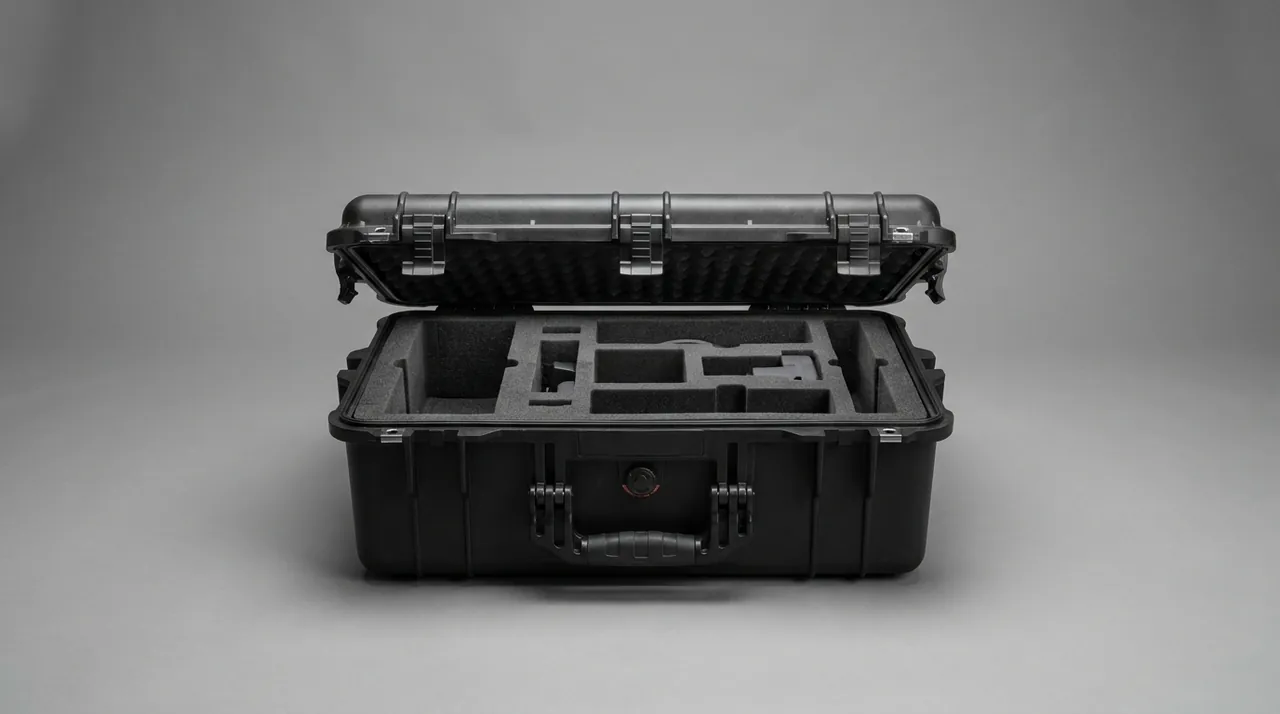
13. Marking, SDS and Compliance Documentation
Marking and documentation for ink and plates serve both compliance and efficiency.
Recommended external marking includes the following. Cargo information: product name and type, batch number, net content and gross weight, production date and quantity. Handling symbols: keep-dry, do-not-stack, this-way-up, do-not-roll and centre-of-gravity. Dangerous goods marks, where applicable, applied as required by the applicable regulations in a prominent position that is not obscured. Inspection and compliance marking: certificate of conformity, inspection stamp and the customer's designated material code. Traceability code: a QR or barcode linking production batch, inspection record, shipping batch and arrival record. Emergency information panel: a reserved position for emergency contact and response guidance, in line with company procedures and regulatory requirements.
Recommended accompanying documentation includes the following. Safety data sheet: mandatory with chemical shipments or as required by regulation, and the version must be current and valid. Packing list: itemised product name, specification, batch, quantity and position in the case. Quality documentation: inspection report, certificate of conformity and any required compliance declaration such as documentation for food-contact use. Transport documentation, where applicable, as required by the applicable dangerous goods regulations. Document storage: the document storage position must be protected from moisture and from solvent vapour attack, so that documents do not become unusable in transit. A separate document pouch on the outside of the case, or a dry document compartment inside isolated from the cargo, is recommended.
Recommended internal marking: label each bay with the corresponding container or plate information for fast counting and retrieval. For mixed consignments, the interior should clearly distinguish the ink side from the plate side to prevent cross-handling and contamination.
On the timing of compliance documentation review, it is advisable to complete a compliance review at the scheme design stage, covering whether the product's dangerous goods classification is established, whether the applicable regulatory requirements have been identified, whether packaging marking and documentation requirements have been addressed, and whether the carrier's qualification meets requirements. Addressing these elements at the design stage avoids finding out shortly before shipment that the scheme does not meet requirements and having to rework it. The framework is set out in ADR and IMDG hazmat transport case compliance.
14. Procurement Acceptance, AQL and Specification Selection Table
When ink and plate cases are bought in volume, acceptance criteria must be written into the contract. Acceptance concentrates on liquid tightness, containment capacity, material compatibility and the effectiveness of plate protection.
Recommended incoming inspection items. First, appearance and dimensions: case dimensions and insert bay dimensions against drawing; no cracks, sinks or flash; no leakage path at the base-to-body joint. Second, liquid tightness verification: carry out a water-holding or simulated leak test by the agreed method, confirming no seepage from the base after the specified holding time. Third, containment capacity verification: review the containment volume against drawing and confirm that, net of the volume occupied by absorbent material, it is not below the agreed figure. Fourth, material compatibility documentation: obtain compatibility test reports or material certificates confirming that case, seals, absorbent and insert materials are all compatible with the intended medium. Fifth, sealing and dust exclusion: sampling against the agreed class; full-perimeter seal contact check; confirmation that seals are replaceable. Sixth, structural strength: a sampled static load test at a multiple of the rated load held for the specified duration, confirming no permanent deformation or cracking, plus a sampled corner or simulated drop test. Seventh, insert fit: trial fit with the actual item or a gauge, confirming no interference, no point support and smooth retrieval, and for plates confirming complete support contact and no contact between the coating and hard material. Eighth, marking and documents: content, position and durability of marking; whether dangerous goods marks can be applied clearly without being obscured; completeness of supplied documents.
AQL sampling: sample size and acceptance criteria follow lot size, inspection level and AQL value. For the ink and plate industry, critical defects such as case seepage, insufficient containment capacity, seal failure, material incompatibility with the medium, an insert that brings plate coating into contact with hard material, a static load out-of-tolerance result or a non-replaceable seal should take a tighter AQL, while minor defects such as colour variation, slight flow marks or font differences take a looser AQL. Methods and sampling tables are in Protective case acceptance and AQL sampling.
Specification selection table:
| Cargo class | Suggested case type | Insert and containment scheme | Suggested class | Suggested transport test |
|---|---|---|---|---|
| --- | --- | --- | --- | --- |
| 20-25 litre ink pails | Liquid-tight pail case | Grid bays plus liquid-tight base plus absorbent | IP65 | ISTA 2A plus leak verification plus stacking |
| 200 litre ink drums | Heavy-duty liquid-tight case | Base location plus cover protection plus containment capacity | IP65 | ISTA 3E plus static load plus drop |
| 5-20 litre plastic containers | Divided container case | Divided location plus no-load design plus buffers | IP65 | ISTA 2A plus drop |
| Thinners and wash solvents | Dedicated liquid-tight case | SDS-based assessment plus dedicated bays plus containment | IP65/IP67 | ISTA 2A plus leak verification |
| CTP and flexographic plates | Flat plate case | Flat support plus soft interleaves plus light-blocking wrap | IP67 | ISTA 2A plus stacking plus moisture |
| Gravure cylinders | Dedicated long roll case | Contoured support plus rigid shaft support plus soft cover | IP65/IP67 | ISTA 2A plus drop plus vibration |
| Food-contact ink | Compliant clean case | Compliant materials plus clean insert plus isolation | IP67 | ISTA 2A plus leak verification |
| Mixed ink and plates | Liquid-tight divider case | Liquid-tight divider compartments plus separate openings | IP67 | ISTA 2A plus leak verification |
JUNZHJIA provides full custom delivery capability in ink, printing material and plate applications: case and insert development against container and plate specifications, case material and seal selection matched to the medium, liquid-tight base and secondary containment structure design matched to protection requirements, reserved marking and document positions to meet compliance requirements, and OEM/ODM manufacturing with stable volume supply. Kexin New Materials (Guangdong) Co., Ltd. operates a complete chain from tooling development and rotational or injection moulding through insert machining and case assembly, serving ink manufacturers, printing material distributors, printing companies and plate suppliers. For a first engagement, a small sample batch with physical trial fitting, including liquid tightness verification, is recommended before moving to volume supply. Evaluation points for a contract manufacturing partner are covered in How to choose a case OEM factory.
15. Export, Storage and Compliance Management Points
Export and storage of ink and plates carry specific requirements, summarised here.
Four priorities for export. First, upfront compliance verification: cross-border transport brings in different rule sets, with ADR for road, IMDG for sea and IATA for air, and they differ in classification criteria, packaging requirements, marking method, documentation requirements and exemptions. Complete the compliance check for the destination country and mode of transport at the quotation stage to avoid refusal or detention. Second, moisture and heat control: sea containers produce condensation as they cross climate zones, and container internal temperatures can be significantly above ambient. For ink, heat raises internal pressure and evaporation rate; for plates, moisture and heat both change coating performance. Specify at least IP67 with a pressure equalisation valve and increased desiccant, and keep plates light-protected and moisture-protected. Third, structural strength for repeated handling: export cargo passes through factory loading, port storage, vessel loading, discharge and inland transport, so design to a more severe distribution cycle and validate to ISTA 3E or the relevant ASTM D4169 cycle, reinforcing corners, lifting points and the base. Fourth, documentation and marking: accompanying documents must be complete and current, dangerous goods marks and labels must be applied as required and not obscured, and destination countries may impose additional labelling language and documentation requirements that must be verified item by item.
Four priorities for storage. First, segregated storage by class: ink, especially solvent-based, and plates should be stored in separate areas; different ink systems should be stored separately; and oxidisers, acids and other incompatible substances must not be stored in the same area as ink. Second, ventilation, explosion protection, static control and fire compartmentation, in accordance with the applicable hazardous chemical storage rules and company procedures, designed by qualified personnel; a protective case is not an explosion protection measure. Third, temperature and humidity control: ink storage should avoid high temperature and direct sunlight; plate storage should be dark, moisture-protected and temperature-stable; loggers should be installed and records kept. Fourth, reusable case maintenance and life management: establish an inspection regime for returnable cases, checking on each return for residue in the liquid-tight base, seal ageing, whether absorbent needs replacing and whether the insert has been attacked by solvent. Service life assessment is covered in Protective case service life assessment, and cleaning methods in How to clean a protective case.
On spill response preparedness, organisations transporting and storing ink should provide absorbents, containment tools, collection containers and personal protective equipment in accordance with applicable regulations and internal procedures, define a spill response process and rehearse it. The containment design of a protective case can only delay and limit the spread of a leak; it cannot replace emergency preparedness and compliance management.
Frequently Asked Questions
Q: How does an ink transport case differ from an ordinary protective case?
A: The core difference is the object being protected. An ordinary protective case protects the solid items inside it, and its design focuses on impact, vibration and moisture. An ink transport case is really protecting the sealing condition of the container, because the ink does not degrade from being transported but the container does: an impact dent squeezes the bung sealing face, vibration gradually loosens the cover, stacking load deforms the cover, and heat raises internal pressure. The core capability of an ink case is therefore liquid tightness and containment: a one-piece or joint-sealed liquid-tight base, secondary containment capacity that meets requirements, chemically compatible absorbent laid in the base, and container fixing that keeps stacking load off the cover. In addition, the case and seal materials must be compatible with the ink and its solvents, and this must be confirmed by immersion testing rather than inferred from a broad material family.
Q: Can a protective case replace dangerous goods transport packaging?
A: No, and this compliance boundary must be made explicit. Where an ink is classified as dangerous goods, its transport must use packaging meeting the applicable regulatory requirements, normally packaging that has passed the specified performance tests; carry correct package marks and labels; be accompanied by complete documentation; and be carried by a qualified operator using the prescribed method. The protective cases discussed in this article are outer transport protection and secondary containment facilities. Their functions are to provide mechanical protection that reduces the probability of container damage, to limit the spread of a leak if one occurs, to fix and segregate containers, and to facilitate handling and stacking. They add to regulatory packaging requirements rather than substituting for them, and they do not exempt anyone from any transport compliance requirement. A compliance review should be completed at the scheme design stage to establish the product's dangerous goods classification, the applicable regulations, and the packaging and documentation requirements, with carrier qualification included in the assessment, so that non-compliance is not discovered just before shipment.
Q: How should ink container leakage be prevented and handled?
A: Prevention works on both design and management. On design: make the case base liquid-tight so a leak is confined inside; provide secondary containment capacity that meets requirements; lay absorbent material compatible with the medium in the base; use a grid insert to fix each container in its own position so containers cannot strike each other in transit; and provide a rigid protective cover with a buffer above the lid so stacking load does not act on it. On management: discipline handling to avoid impact and drops; control stack tiers and verify statically at the actual tier count; avoid high temperatures; and check cover seal condition periodically. On response: provide absorbents, containment tools, collection containers and personal protective equipment in accordance with applicable regulations and internal procedures, and define and rehearse a spill response process. Note that the containment design of a protective case can only delay and limit the spread of a leak and cannot replace emergency preparedness or compliance management; response to a hazardous chemical spill must follow the SDS and the applicable procedures.
Q: How should case materials be selected, and why is compatibility so important?
A: Because ink, especially solvent-based, attacks incompatible materials, so that the case can still look intact while its function has already failed. Materials requiring compatibility checks include the case and base material, where the risks are softening, swelling, cracking and permeation; seals, where the risks are swelling, hardening and loss of elasticity leading to seal failure; absorbent material, where the risks are dissolution, reaction and loss of absorbency; insert material, where the risks are swelling, powdering and loss of support; and label and marking materials, where the risks are detachment, blurring and loss of legibility. The selection principles are: for solvent-based ink, prefer materials with better chemical resistance, such as specific grades of PP and HDPE with matching chemically resistant seals; for water-based ink, ordinary PP and HDPE are usually acceptable but additive effects still need attention; for UV ink and products with special additives, pay particular attention to attack by photoinitiators and monomers. The key point is that any compatibility judgement must rest on immersion and vapour exposure test results and must not be inferred from a broad material family, because different grades and additive systems can behave very differently.
Q: What should be considered when transporting CTP plates and flexographic plates?
A: CTP plates have four key considerations. Flat support: the plate must be laid on a large flat support surface and must not be stored upright or on point supports, otherwise it bows under its own weight. No compression: tier count is limited by plate specification and pack strength, and soft interleaves separate the plates. Light exclusion: unexposed plates are sensitive to visible light, so the whole pack needs a light-blocking wrap that must not be breached. Moisture exclusion: both the aluminium substrate and the coating absorb moisture, so moisture-proof sealing with desiccant is required. Flexographic plates have two key considerations: avoidance of any sustained pressure, because the photopolymer layer deforms plastically and takes a permanent indentation that prints as distorted dots and uneven density, which is why the plate must not be fixed by clamping; and light and heat exclusion, because heat accelerates resin ageing and softening while ultraviolet and ozone cause surface tackiness and cracking, so storage should be away from ultraviolet sources and ozone sources such as motors and high-voltage equipment. Flexo sleeves also need attention to internal deformation under load, requiring internal support or a rigid outer sleeve.
Q: How should the flammability risk of solvent-based ink be understood?
A: It needs to be understood in terms of both mechanism and boundary. Mechanistically, the organic solvents in solvent-based ink have comparatively low boiling points and evaporate readily, and the vapour they release mixed with air can form a combustible atmosphere. Flash point is the core parameter for judging this risk, and the lower the flash point, the more readily flammable vapour forms at normal temperature. The hazardous properties of different ink products can therefore vary widely and must be taken from the measured data in the product safety data sheet, never inferred from the general category of ink — different products from the same manufacturer may fall into different classes, and some may not be classified as dangerous goods at all. On the boundary, three points need stating. First, any scheme involving dangerous goods transport must be based on SDS data and the applicable regulations. Second, packaging, marking and carriage must meet regulatory requirements and be performed by a qualified operator. Third, a protective case is not itself an explosion protection measure; flammable gas control belongs to the overall operational safety system, covering ventilation, static control, earthing, fire compartmentation and operating procedure, and should be designed by qualified personnel against the applicable standards. What a protective case can do is reduce mechanical damage and leakage probability and limit the spread of a leak through containment.
Q: Can ink and printing plates be shipped in the same case?
A: In principle this is not advisable, and if they must ship in the same consignment, liquid-tight isolation is essential. There are three reasons. First, ink is a liquid and plates are solids vulnerable to contamination, and a plate contaminated by ink, especially on the photosensitive coating or in the cells, is effectively scrap. Second, ink, especially solvent-based, volatilises, and the vapour may affect plate coating performance inside an enclosed space. Third, leakage is highly mobile and will seep and contaminate adjacent cargo. Separate cases are therefore the recommended approach. Where loading efficiency or a customer requirement makes a shared case unavoidable, use a scheme with separate compartments and a liquid-tight divider: the divider height should exceed the containment liquid level, the divider-to-case joint should be sealed, each side should have its own access opening to avoid cross-handling, and each side should have its own independent leak prevention and absorbent provision. Internal marking of a mixed case should clearly distinguish the ink side from the plate side so that the operator cannot confuse them.
Q: What additional issues apply to exporting ink?
A: Five main points. First, upfront compliance verification: cross-border transport brings in different rule sets, with ADR for road, IMDG for sea and the IATA Dangerous Goods Regulations for air, differing in classification criteria, packaging requirements, marking method, documentation and exemptions, so complete the compliance check for the destination and mode of transport at the quotation stage to avoid refusal or detention. Second, moisture and heat control: sea containers produce condensation as they cross climate zones, and container internal temperatures can be significantly above ambient, raising internal pressure and evaporation rate for ink and changing coating performance for plates, so specify at least IP67 with a pressure equalisation valve and increased desiccant. Third, structural strength for repeated handling: export cargo passes through factory loading, port storage, vessel loading, discharge and inland transport, so design to a more severe distribution cycle and validate to ISTA 3E or the relevant ASTM D4169 cycle. Fourth, documentation and marking: accompanying documents must be complete and current, dangerous goods marks and labels must be applied as required and not obscured by the case structure, and destination countries may impose additional labelling language requirements. Fifth, carrier qualification: dangerous goods carriage must be performed by a suitably qualified operator under the applicable regulations, and this should be confirmed at the logistics planning stage.
Conclusion & Related Reading
The core of a printing ink and plate case is protecting two entirely different cargo types with two different logics, while guaranteeing that the two never cross-contaminate. For ink, what is protected is the sealing condition of the container: a liquid-tight base confines a leak inside the case, secondary containment capacity holds the volume that may leak, a chemically compatible absorbent takes up seepage and splash, a grid insert prevents containers striking each other, and a rigid cover protector keeps stacking load off the sealing face. For plates, what is protected is an extremely thin functional surface: CTP plates need flat support, soft interleaves, light exclusion and moisture exclusion; flexographic plates need freedom from sustained pressure and distance from heat and ozone sources; and gravure cylinders need a soft cover, equally spaced rigid shaft support and rust prevention. What connects the two is the technical thread of material compatibility — case, seals, absorbent and insert must all be compatible with the media they contact, and every judgement must rest on test results. And the compliance boundary must be understood clearly: a protective case is an outer transport protection and secondary containment facility, does not constitute dangerous goods packaging in the regulatory sense, and cannot substitute for compliance requirements.
For ink manufacturers, printing material distributors, printing companies and plate suppliers, a sensible sequence is: first classify by cargo attribute, with ink assessed by system and SDS and plates by type and sensitive factor; then define case structure, containment scheme, sealing class and material system for each class; then develop inserts for the main specifications and physically trial fit them with liquid tightness verification; then validate with ISTA, GB/T 4857 or ASTM D4169 vibration, stacking, drop and leak testing; and finally write acceptance criteria, the marking system, the document list and compliance verification points into procurement and logistics processes. JUNZHJIA supports this from structural design, material selection and sample development through volume supply, with Kexin New Materials (Guangdong) Co., Ltd. manufacturing and delivering to customer specifications and medium characteristics, so that ink and plates remain under control from production and storage through transport and press.
Related Reading