

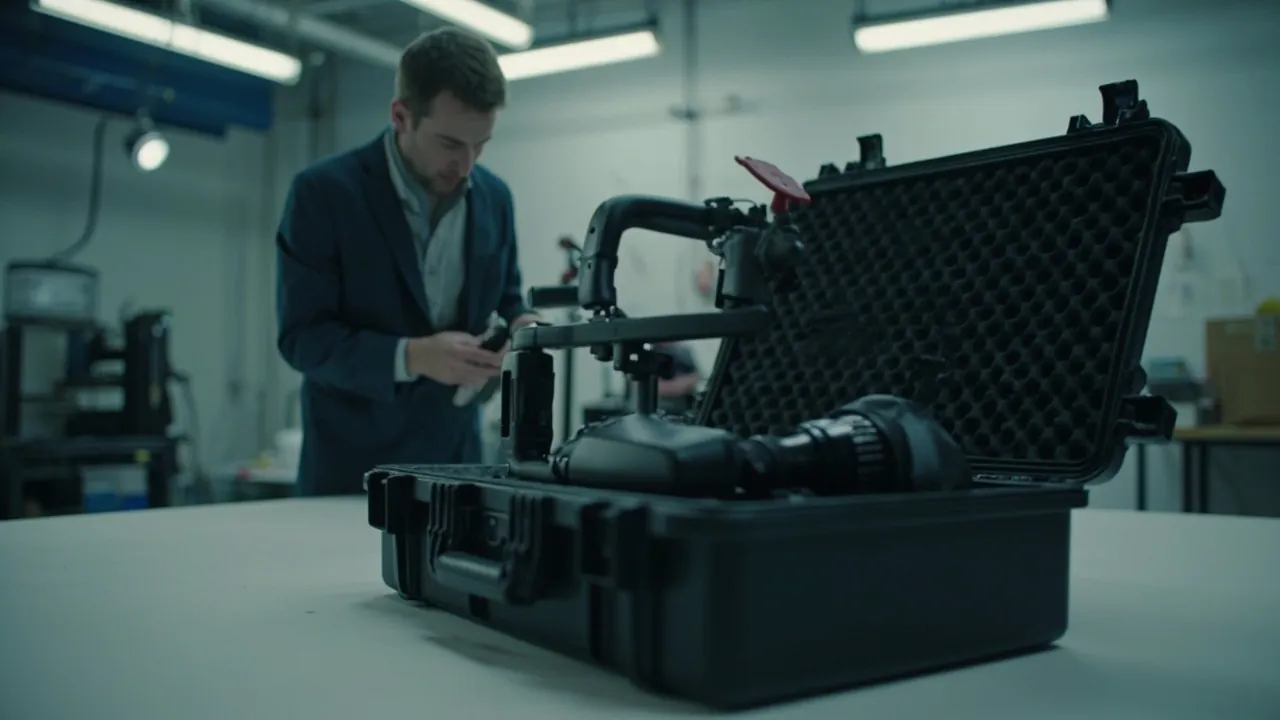
Aluminium extrusion dies are a textbook example of a small, expensive, high-precision industrial tool that hates being knocked about. A port-hole die set can take weeks to manufacture, its bearing lands are toleranced in hundredths of a millimetre, and the die steel itself is hard and relatively brittle. The conclusion up front: the job of an aluminium extrusion die case is not to hold the die. It is to hold three lines at once during transport and storage. The bearing lands must not be scored or chipped, the portholes and welding chamber must not deform, and a die still carrying residual heat must never be sealed into a closed case. The practical answer is a profile-cut locating insert, end faces that never touch each other, and a measurable temperature release line. The shell should be rated at least IP65, and IP67 is recommended for ocean-freight export or long-term storage.
The reality in an extrusion plant is usually messier. Dies come off the nitriding furnace or preheat oven still warm, they shuttle constantly between the die store and the press, and they get repacked for repair, inter-plant transfer and export. The common habit is a wooden pallet, some stretch film and a scrap of old foam. The result shows up at the first die repair, when the bearing land turns out to be covered in impact marks, or the porthole bridge is visibly bent. These defects usually only surface in production as surface streaks, dimensional drift or weld-line defects, and the troubleshooting cost dwarfs the packaging cost. This article works backwards from failure modes to packaging design, and gives usable guidance on shell selection, insert structure, temperature control, vibration verification and incoming inspection for die management, extrusion process, equipment engineering and procurement teams.
Table of Contents
- 1. Why Aluminium Extrusion Dies Need Dedicated Cases
- 2. Where Extrusion Dies Fail: Bearing Lands, Port-Hole Bridges and Welding Chambers
- 3. Stems, Container Liners and Associated Components
- 4. Packing Hot Dies: Residual Heat, Insulation and the Temperature Release Line
- 5. Impact and Deformation: Backers, Flow Plates and Support Rings
- 6. Case Shell Selection: IP Rating, Material and Load Capacity
- 7. Insert Design: Profile Location, Compartments and Contact Surface Control
- 8. Moisture and Rust Control: Desiccants, VCI and Aluminium Compatibility
- 9. Vibration and Shock: ISTA, ASTM D4169 and GB/T 4857 in Practice
- 10. Surface Condition and Cleanliness: Bearing Land Scoring and Particulate Control
- 11. Heavy Handling: Lifting, Forklift Use and Safety Marking
- 12. Incoming Inspection, Traceability and AQL Sampling
- 13. Custom Workflow, OEM/ODM Delivery and Common Misconceptions
- Frequently Asked Questions
- Conclusion & Related Reading
1. Why Aluminium Extrusion Dies Need Dedicated Cases
Extrusion is the classic case of the die deciding the product. On the same press, with the same billet and the same process settings, a change of die produces a completely different profile. Conversely, once the bearing land condition on a given die shifts, profile surface quality and dimensional accuracy drift immediately. That gives extrusion dies a special place in plant assets: unit cost is significant, lead time is moderate but repair lead time is long, substitutability is poor, and condition sensitivity is extreme.
From a protection engineering standpoint, extrusion dies and their associated components share three characteristics.
- The bearing land is a functional optical surface. The bearing controls metal flow and profile surface quality. Its length is measured in millimetres, its surface roughness requirement is severe, and it is usually nitrided or coated. Any score, chip or burr is reproduced directly on the profile as a streak, a scratch line or a dimensional excursion.
- The structure contains many thin walls and cantilevers. Port-hole bridges, mandrels, flow plates and support rings have limited wall thickness and poor impact resistance. A drop that looks unremarkable can bend a bridge or partially collapse a welding chamber.
- The material is hard and brittle. Extrusion dies are typically made from H13-class hot work tool steel. After hardening and tempering the hardness is high and toughness is comparatively limited, so point impact readily produces microcracks. Those microcracks then propagate through subsequent high-temperature, high-pressure extrusion cycles and eventually cause a full die fracture.
The value of a dedicated case is therefore that it keeps mechanical, humidity and temperature loads during transport and storage simultaneously inside the die's acceptable range. This follows the sensitivity-tiered logic in the instrument case selection guide, with the difference that extrusion dies concentrate their sensitivity in the bearing surface and the thin-walled structure.
There is also a dimension that is easily overlooked: condition traceability. Extrusion dies circulate between plants and between repair subcontractors. If the case cannot record which die, which revision, at what time, packed by whom and in what condition, die management degenerates into workshop folklore. That is why a dedicated case must be designed together with labels, packing lists and an inspection routine, not in isolation.
2. Where Extrusion Dies Fail: Bearing Lands, Port-Hole Bridges and Welding Chambers
Extrusion dies come in many types. Flat dies, port-hole die sets, spreader dies, semi-hollow dies and piercing dies differ substantially in structure, but the distribution of transport damage follows clear patterns.
| Location | Structure / material | Typical transport failure | Insert countermeasure |
|---|---|---|---|
| --- | --- | --- | --- |
| Bearing land | Functional surface, nitrided or coated, very fine roughness | Scoring, chipping, burrs, coating loss | End face never touches another hard object, soft facing at the front |
| Port-hole bridge / mandrel | Thin-walled cantilever under high temperature and pressure | Bending, microcracking, fracture | Profile support block under the bridge, never unsupported |
| Welding chamber | Cavity whose internal surface quality drives weld quality | Local collapse, internal scoring | Internal support core or full wrap |
| Die ring / bolster | Annular pressure part with precision mating faces | Crushed mating face, chipped end face | Annular locating groove, lint-free separator between end faces |
| Flow plate / portholes | Many bores, thin walls | Deformed bore edges, chipped edges | Bore plugs, full profile wrap |
| Support ring / spacer ring | Thin-walled ring, ovalises easily | Oval deformation, scored end face | Internal or external restraint against radial squeeze |
| Fasteners and pins | Small parts, easy to lose | Loss, damaged threads | Individual sealed bags plus thread caps |
The critical rule: die end faces must be separated, never hard against hard. The top and bottom faces of an extrusion die usually carry the bearing lands, the porthole openings and the mating surfaces all at once. If two dies sit face to face, any small relative movement in transit becomes mutual abrasion. The most reliable field method is therefore one die per compartment, a rigid divider or thick foam separator between end faces, and profile-cut grooves that surround the die radially.
For a port-hole die set, consisting of an upper die, a lower die and a backer, whether to ship it assembled is a plant decision. Shipping assembled protects the mating faces against each other and saves realignment at the press, but the assembly is heavier and the insert design is more complex. If the set is shipped disassembled, every sub-component must be located independently, and there must be a separator between the upper and lower die. Never save space by assuming the parts will simply sit in the right relative position.
For the structured design method behind cushioning layers, the cushion liner design guide sets out multi-point support and energy dissipation paths, while the case foam material comparison gives the mechanical curves and compression set data needed for a selection review.
3. Stems, Container Liners and Associated Components
Extrusion die cases often ship or return for repair together with stems, container liners and die holders, and these have a different protection logic from the die itself.
- Stems. A stem is a long, heavy part whose main risks are bending and crushing at the end face. Ship it horizontally on multiple supports, with supports near both ends and additional points in the middle. Support spacing should generally not exceed 15 to 20 times the stem diameter. Protect the end face that mates with the pressure plate using a sleeve or soft pad.
- Container liners. A large-diameter thin-wall cylinder whose main risks are ovalisation and internal scoring. Use combined internal and external restraint: a removable internal support ring to resist radial contraction, profile clamping bands outside to limit radial expansion, and a protective ring at each end face.
- Die holders and pressure plates. Heavy pressure parts with good inherent stiffness but precision mating faces. The priority is zero impact damage and zero corrosion on the mating faces, with a lint-free separator between them.
- Backers and support rings. Thin-walled rings ovalise easily. They must be located independently, and stacking several without separators is never acceptable.
- Heating elements and thermocouples. Fragile and easily damaged. They must have their own compartments and must never share a compartment with heavy metal parts.
Rule of thumb: for parts with a high length-to-diameter ratio, solve support before you solve filling. Packing a case full of foam will not stop a long stem bending under vibration. What works is the position and number of support points.
For very long components, such as a stem over 1.8 m, a single case is often uneconomic. Three options exist. First, a long case with a multi-point support beam, reinforced with longitudinal ribs and metal edge wrapping. Second, split cases joined on site. Third, a heavy-duty long case fitted with castors and a handle for frequent in-plant movement. If the castor option is used, confirm the rated load of the wheel and handle assembly against the floor conditions. The structural form is described in case wheels and trolley handle configuration.
4. Packing Hot Dies: Residual Heat, Insulation and the Temperature Release Line
Extrusion dies retain significant heat after use, and they are also warm after nitriding or preheating. Sealing a warm die straight into a closed case is the most common and most easily overlooked packaging error in the extrusion industry.
The harm is compound.
- The insert material softens. EVA foam softens under sustained heat and takes a compression set. PE foam has a lower softening point still, and PU foam can collapse under prolonged heat exposure. Once the insert loses stiffness, location control is gone.
- Condensation forms inside the closed volume. Heat plus residual moisture inside a sealed cavity produce condensation on the die surface, especially on bearing lands and mating faces, directly triggering corrosion and oxidation.
- Coatings and nitrided layers are affected by heat. Some surface treatments are not stable at elevated temperature, and repeated heating can reduce surface hardness or affect dimensional stability.
The practical answer is to establish a measurable temperature release line.
| Die condition | Treatment | Check before packing | Risk if skipped |
|---|---|---|---|
| --- | --- | --- | --- |
| Straight off the press | Natural cooling, avoid stacking | Surface temperature no more than ambient plus 15 C | Softened insert, condensation, corrosion |
| After nitriding or preheating | Zone cooling to near ambient | No local hot spots | Local stress, insert collapse |
| Returned from die repair, ambient | Pack directly | Surface clean, no residual aluminium | Residual aluminium scoring the bearing land |
| Coating not fully cured | Cure per the process schedule | Coating hard dry, not tacky | Coating sticking and peeling |
Temperature sign-off must be recorded. Write onto the packing route card: measurement locations, for example the die ring outer diameter and the upper die face, the instrument such as an infrared or contact thermometer, the release threshold, and the person signing off. One release line on a card with a signature works far better than repeating "wait until it cools" ten times at the shift briefing.
If the production rhythm genuinely does not allow full cooling, switch to a heat-tolerant insert such as certain XPE cross-linked foams or EPP, or use a composite structure with a thermal barrier board that keeps heat away from the insert, and increase desiccant quantity slightly to absorb the humidity swing caused by the temperature change. The design approach is covered in the extreme temperature case design discussion.
5. Impact and Deformation: Backers, Flow Plates and Support Rings
Die accessories are numerous and varied in shape, and they are the items most likely to be packed casually. Grouping them by protection logic simplifies insert design considerably.
Group one: annular parts (backers, support rings, spacer rings, pressure rings). The main risks are ovalisation and end face scoring. The design principle is internal or external restraint, end face isolation, and no stacking without separators. When several rings of the same size travel in one case, every ring needs a separator, and a stack of more than three should be replaced by a layered tray structure.
Group two: plate parts (flow plates, die holders, pressure plates). The main risks are face impact and warping. Put a lint-free separator between faces, use a rigid divider between stacked plates, and give the bottom plate full-area support.
Group three: bored parts (port-hole dies, multi-cavity dies). Bore edges are usually the weakest feature, and point impact chips them. Plug the bores or wrap the whole die in a profile block so that bore edges never become a load path.
Group four: threaded and shaft-fit parts. Fit thread caps and protective sleeves. Never share a compartment with hard heavy parts.
Group five: heating elements, thermocouples and sensors. Brittle, easily damaged, and some are static sensitive. They need their own compartments. Where static-sensitive components are present, the zoning and grounding advice in ESD shield case design applies.
Design note: think about inserts in terms of load paths, not in terms of filling space. Every transport impact sends energy along the path from shell to insert to part. The insert's job is to place a controllable attenuation stage in that path and to route the load into the part's stiffest region.
6. Case Shell Selection: IP Rating, Material and Load Capacity
The shell underpins everything else. Selection must lock down ingress protection, material, hinge and latch style, sealing method and load capacity, not just dimensions.
Ingress protection follows IEC 60529, the international standard for degrees of protection provided by enclosures, and its Chinese equivalent GB/T 4208. The commonly used ratings are shown below.
| Rating | Dust | Water | Typical scenario | Recommendation |
|---|---|---|---|---|
| --- | --- | --- | --- | --- |
| IP54 | Limited dust protection | Splash resistant | Die store shuttling, dry covered warehouse | Not recommended for inter-regional freight |
| IP65 | Dust tight | Water jet resistant | Normal road and rail freight, indoor storage | Minimum threshold for extrusion die cases |
| IP67 | Dust tight | Temporary immersion (1 m / 30 min) | Ocean freight, open transhipment, wet regions | Recommended for export and outsourced repair |
| IP68 | Dust tight | Continuous immersion by agreement | Special conditions | Usually over-specified |
Note: an IP rating covers solids and water only. It does not cover shock, vibration, temperature or static. Whether a die survives after the case is dropped depends on insert and structural design, and should be verified as a combined sealing and shock structure where relevant.
Three material families dominate.
- One-piece injection-moulded PP or PE cases. Good sealing, chemical resistance and low weight. Suited to small and medium dies and precision accessories. Tooling cost is higher and very large sizes are limited.
- Copolymer polypropylene panel with aluminium frame. Flexible dimensions, high strength and available in extra-long sizes. Suited to stems, long dies and die holders. Sealing relies on a gasket compressed by latches.
- Rotomoulded LLDPE cases. Best impact resistance, large sizes available, and a metal internal skeleton can be added. Suited to heavy dies or parts requiring lifting. The trade-off is weight and volumetric cost.
For flame behaviour, if the case is stored in an area with fire-risk requirements, require a UL94 vertical burn rating such as UL94 V-0 and obtain the material certificate. This is not a claim that the case is explosion-proof or fireproof; it only reduces the material's own flammability risk.
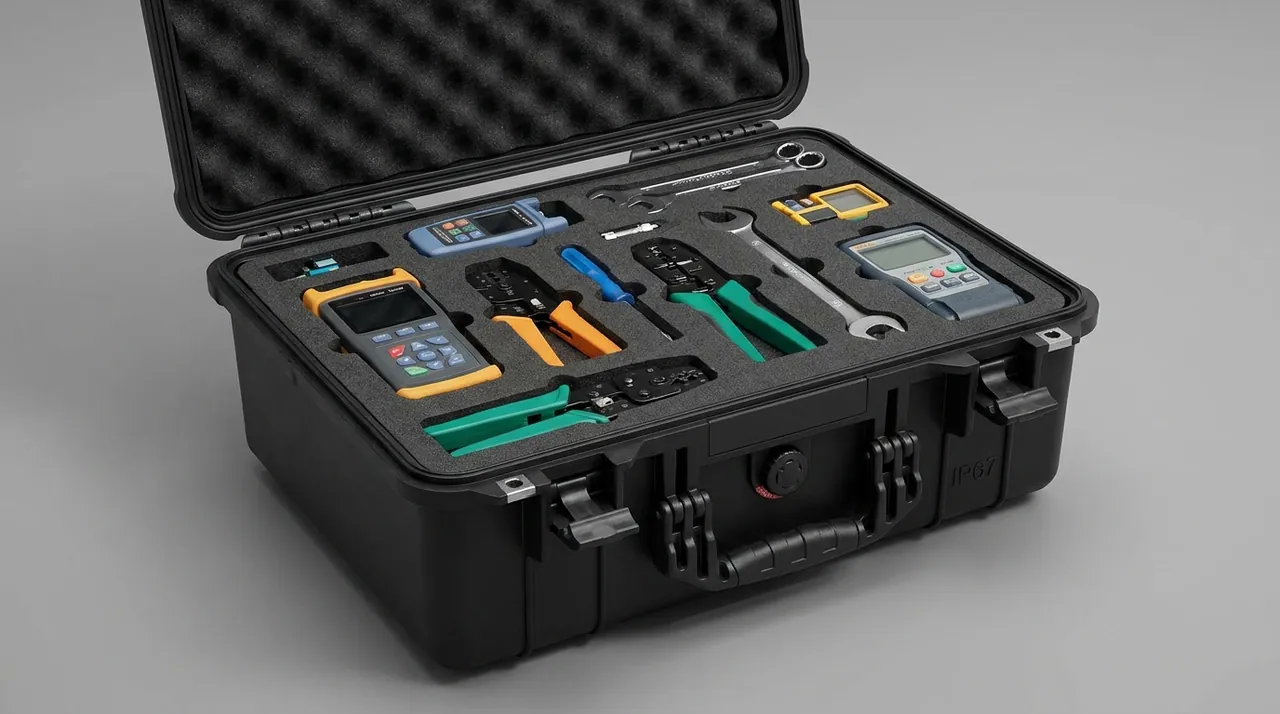
Structure and hardware are the weak links in service life. Selection and fatigue testing guidance for hinges, latches and gaskets is in toolbox hinge, latch and seal. For heavy die cases, JUNZHJIA uses metal corner guards, reinforcing ribs and replaceable gaskets, fatigue-tests hinges and latches against open-close cycles, and can supply material and test documentation so die management teams can run incoming acceptance and periodic checks.
7. Insert Design: Profile Location, Compartments and Contact Surface Control
The insert is the last deceleration zone in the protection system and carries most of the value of a custom case. The workflow for extrusion die cases is as follows.
- Build the component list. Record dies and accessories, weight, envelope dimensions, centre of gravity, sensitive faces (bearing lands, porthole openings, mating end faces, threads) and permitted contact areas.
- Fix the shipping attitude. Keep the bearing end face inward and away from other hard objects. Long stems lie horizontally on multi-point supports. Rings should be loaded through their end faces, not their outer diameter.
- Divide the insert into compartments. One part per compartment, heavy parts never on top of light ones, hard parts never on soft ones. Leave 1 to 2 mm assembly clearance per compartment, since too tight damages parts during handling and too loose allows movement.
- Design location and restraint features. Use steps, bosses, profile pockets, clamping bars and straps to restrain the part in all three axes, so that it does not fall out if inverted and does not move when shaken.
- Control contact surfaces. Line every contact point against a bearing land or mating face with lint-free cloth, PE film or felt. Separate aluminium from steel, and stainless from carbon steel, to avoid galvanic corrosion and hardness-differential scoring.
- Leave ergonomic allowance. Add handle slots or tipping chamfers to heavy parts so nobody levers them out with a screwdriver or a brass bar. The levering action itself is a high-probability damage source.
The insert material comparison follows.
| Material | Density range | Cushioning | Formability | Durability | Typical parts |
|---|---|---|---|---|---|
| --- | --- | --- | --- | --- | --- |
| EVA foam | 60 to 120 kg/m3 | Excellent | CNC cut, bondable | Excellent | Die bodies, precision accessories |
| PE foam | 25 to 45 kg/m3 | Good | Easy to cut | Fair | Large pads, void fill |
| PU foam | 30 to 80 kg/m3 | Excellent | One-shot moulded | Fair | Complex shapes, full wrap |
| XPE cross-linked foam | 30 to 60 kg/m3 | Good | Thermoformable | Good | Thin-wall parts, thermal barrier layer |
| EPP foam | 30 to 60 kg/m3 | Excellent | Moulded | Excellent | Repeated shuttling, heat-tolerant use |
| Plywood / composite core | Not applicable | Poor | Machined | Excellent | Heavy die load-bearing cradles |
JUNZHJIA custom inserts typically combine a structural core with CNC-cut foam. Heavy dies are carried by a plywood or composite cradle, while low-rebound foam faces the bearing lands and mating faces to control contact stress. Relief grooves are cut at the bearing land and porthole positions so those faces stay suspended and unloaded. This separation of load bearing from cushioning, together with deliberate relief at functional faces, is the main difference between extrusion die inserts and general industrial inserts. The full process path from drawing to finished insert is described in EVA foam insert custom process and the custom foam inserts guide.
8. Moisture and Rust Control: Desiccants, VCI and Aluminium Compatibility
Extrusion die steel corrodes during long storage, particularly on the die ring outer diameter, the bolster mating faces and any un-nitrided region. Humidity control has two main threads: reduce the initial moisture content inside the case, and block external moisture from entering.
Specific measures:
- Desiccant selection and quantity. Montmorillonite, silica gel and molecular sieve desiccants are common. Size the quantity from free volume inside the case, transit duration and target humidity. A common rule of thumb is 1 to 2 kg of high-efficiency desiccant per cubic metre of free volume, doubled for long ocean voyages.
- Humidity indicator cards. Place a card where it can be read easily on opening, as acceptance evidence. A target of 60 percent relative humidity or below at opening is typical, and 50 percent or below for precision dies.
- The boundary for vapour phase corrosion inhibitors. VCI works well on die steel, both carbon and alloy tool steel, but compatibility with aluminium and aluminium alloys, and with assemblies carrying aluminium accessories, must be confirmed separately. Extrusion plants often ship aluminium flow parts and aluminium spacer blocks in the same case as steel dies. In that situation prefer a desiccant-plus-sealing route, or wrap the aluminium parts individually before using VCI.
- Surface preparation. Coat the die ring outer diameter and bolster mating faces with a compatible rust-preventive grease before dispatch or storage. Nitrided surfaces and bearing lands must not be coated with anything that could affect later use; rely on dry sealing instead.
- Sealing and pressure differential management. The gasket keeps the case airtight, but pressure differences across climate zones or on air freight make the case breathe. Fit a pressure equalization valve; selection guidance is in pressure equalization valve configuration. This avoids both a hard-to-open case and a crushed gasket.
- Isolation requirements. For export, timber must meet fumigation and moisture content requirements so that extractives and moisture from the wood do not affect the die or the aluminium parts.
More desiccant is not better. Excessive desiccant drives internal humidity very low, which can cause over-drying, shrinkage or cracking of rubber seals and some coatings inside the case. Build differentiated schemes by material and distribute desiccant across zones inside the case.
9. Vibration and Shock: ISTA, ASTM D4169 and GB/T 4857 in Practice
Transport vibration energy comes mainly from road excitation and handling drops. The first is long-duration, low-amplitude vibration, a fatigue-type load. The second is short-duration, high-amplitude shock, a strength-type load. Packaging must handle both.
Three test families are commonly combined.
- ISTA series. ISTA 1 series, non-simulation integrity tests, works as a pass-fail check before dispatch. ISTA 3 series, general simulation performance tests, includes temperature and humidity conditioning, random vibration, drop and shock, and comes closer to the real distribution environment. ISTA 3A is often the overseas buyer's acceptance basis. Method selection is detailed in ISTA transport testing procedure.
- ASTM D4169. This standard uses the distribution cycle as its framework and selects a test sequence and assurance level per transport mode. Long-haul movements combining air and road commonly use DC 13 or DC 18 sequences. See ASTM D4169 distribution cycle testing.
- GB/T 4857 series. The basic test methods for transport packages in China, covering stacking, vibration, shock and drop. It is the most frequently cited basis in Chinese tender documents. Key points are collected in GB/T 4857 transport packaging.
MIL-STD-810H is often cited as a source of environmental test methods, for example Method 514 vibration, Method 516 shock and Method 507 humidity. It must be stated clearly that citing MIL-STD-810H methods only standardizes test conditions and levels. It does not mean the product holds any military certification, and it does not mean all test items were passed. Wording boundaries are covered in MIL-STD-810H compliance notes.
For extrusion die cases, the recommended verification package is as follows.
- Random vibration to ISTA 3 or GB/T 4857.23, watching for insert displacement, any contact between die and case wall, and growth of indentation marks in the profile grooves.
- Drop testing with corner, edge and face each dropped once before opening. Heavy die cases should add an edge drop, since it is the most severe test of shell and insert.
- Stacking and compression using a static load estimated from die store stack height and duration, confirming the case does not collapse and the insert does not take a set.
- Humidity and temperature cycling to simulate an ocean container, followed by vibration and drop.
- Post-test inspection: visual plus magnifier check on bearing lands, flatness spot checks on die end faces, and visual plus feeler gauge checks on port-hole bridges.
Rule of thumb: for die-class parts, permanent insert deformation after drop testing should stay within 10 percent of original thickness. For thin-walled cantilevers such as port-hole bridges, no visible permanent deflection should appear.
10. Surface Condition and Cleanliness: Bearing Land Scoring and Particulate Control
Extrusion die bearing lands are extremely sensitive to surface condition, and particulate contamination is one of the main sources of scoring. Although ISO 4406, the standard for solid particulate contamination levels in hydraulic fluid, is aimed at fluid in service, it is meaningful in a packaging context: particles, fibres and dust inside the case that settle on a bearing land or migrate into a mating face are effectively pre-installed abrasive.
Workable cleanliness measures:
- Choose low-outgassing, non-shedding closed-cell foam. Never use foam that has already degraded, which both loses cushioning and continuously releases particles into the case.
- Clean insert cavities with lint-free cloth and isopropyl alcohol before packing, and let them dry naturally.
- Fit a soft facing over the bearing end face, using lint-free cloth, PE film or a dedicated protective sleeve, so it never rubs directly against the insert.
- Double-pack dies: PE bag for dust, then the insert for shock, secured with a tie at the opening.
- Unpack in a clean area rather than beside the press.
- Returned dies must be fully cleaned of residual aluminium before packing. Aluminium debris is softer than die steel but has sharp edges, and it is a common cause of bearing land scoring.
Routine cleaning and maintenance of the case itself is covered in how to clean a protective case. For dies held in long-term storage, set up a routine of periodic opening, inspection and desiccant replacement, typically at 3 to 6 month intervals.

11. Heavy Handling: Lifting, Forklift Use and Safety Marking
Extrusion die cases are generally heavy. A large port-hole die set plus its case can weigh several hundred kilograms. A packaging design that is not developed together with the lifting plan simply transfers safety risk onto the people doing the work.
Design and marking points:
- Centre-of-gravity marking. Mark the centre of gravity and the lifting points on the outside of the case with a durable label, so the load does not swing after take-up. A die is usually bottom-heavy near the die ring, and any case holding asymmetric heavy parts must be marked individually.
- Lifting points and rigging. Lifting points must be specified by the structural design. Never sling from hinges, latches or handles. Handles are for manual carrying, not for lifting. Mark lifting points and carrying points distinctly.
- Forklift operation. Provide forklift pockets or a pallet base, and mark the entry direction and pocket depth. Never let a forklift enter from the side or at an angle, because a fork tip can punch through the wall and reach the die.
- Stacking and securing. Mark the maximum stack height. When stacking multiple cases, secure them with straps or stretch film and prevent lateral slip during transport.
- Die store shuttling. For high-frequency in-plant movement, a heavy-duty case with castors reduces manual carrying and repeated forklift work. The rated load of wheels and handle must match the total case weight.
- Job briefing. Lifting work must follow the site's crane operating procedure, with a technical briefing covering the load, lifting points, signalman instructions and exclusion zone.
Safety note: the liftability of a packaging case must be guaranteed by structural design and verified by load testing. It cannot be assumed because the case looks sturdy. For very heavy cases, write the rated load at each lifting point and the verification method into the procurement technical requirement.
12. Incoming Inspection, Traceability and AQL Sampling
The value of a die case is proven at incoming inspection. Three items should be written into the purchase contract.
- Arrival visual check. No case damage, no water ingress traces, gasket intact, humidity indicator card showing normal, seal numbers consecutive.
- Opening and sampling. Determine the sampling plan under GB/T 2828.1, the counting sampling inspection procedure, and judge the lot against an AQL value. The method and typical values are covered in custom case acceptance and AQL sampling.
- Die condition confirmation. Check bearing lands, porthole openings, mating end faces and coatings item by item, recording deviations against the dispatch record.
A suggested sampling checklist:
| Check item | Method | Acceptance basis | Action on failure |
|---|---|---|---|
| --- | --- | --- | --- |
| Case appearance and seal | Visual plus seal number check | No damage, no water ingress | Isolate the whole case, open and inspect contents |
| Internal humidity | Humidity indicator card | Relative humidity 60 percent or below, 50 percent for precision dies | Replace desiccant and recheck |
| Insert integrity | Visual and hand check | No powdering, no collapse, no displacement | Replace insert |
| Bearing land surface | Visual plus magnifier under grazing light | No scoring, no chipping, no burrs | Return and trigger analysis |
| Die end face flatness | Surface plate with feeler gauge, or dial indicator | Within drawing tolerance | Repair or claim |
| Port-hole bridge and welding chamber | Visual plus feeler gauge | No visible deflection, no cracks | Scrap and claim |
| Mating faces and threads | Visual plus gauges | No crushing, no rust marks | Recheck and assess usability |
| Labels and documents | Cross-check die number, revision, quality certificate | Information consistent and traceable | Reissue documents |
Die numbering and revision management is the core of this work. Use a weather-resistant tag on every case showing die number and revision, the profile code it serves, the press it belongs to, quantity, manufacture or repair date, packing date, a unique case number and a QR code. For an extrusion plant, the value of dies that can be found, matched and traced usually pays for itself during a single unexpected stoppage caused by loading the wrong die.
13. Custom Workflow, OEM/ODM Delivery and Common Misconceptions
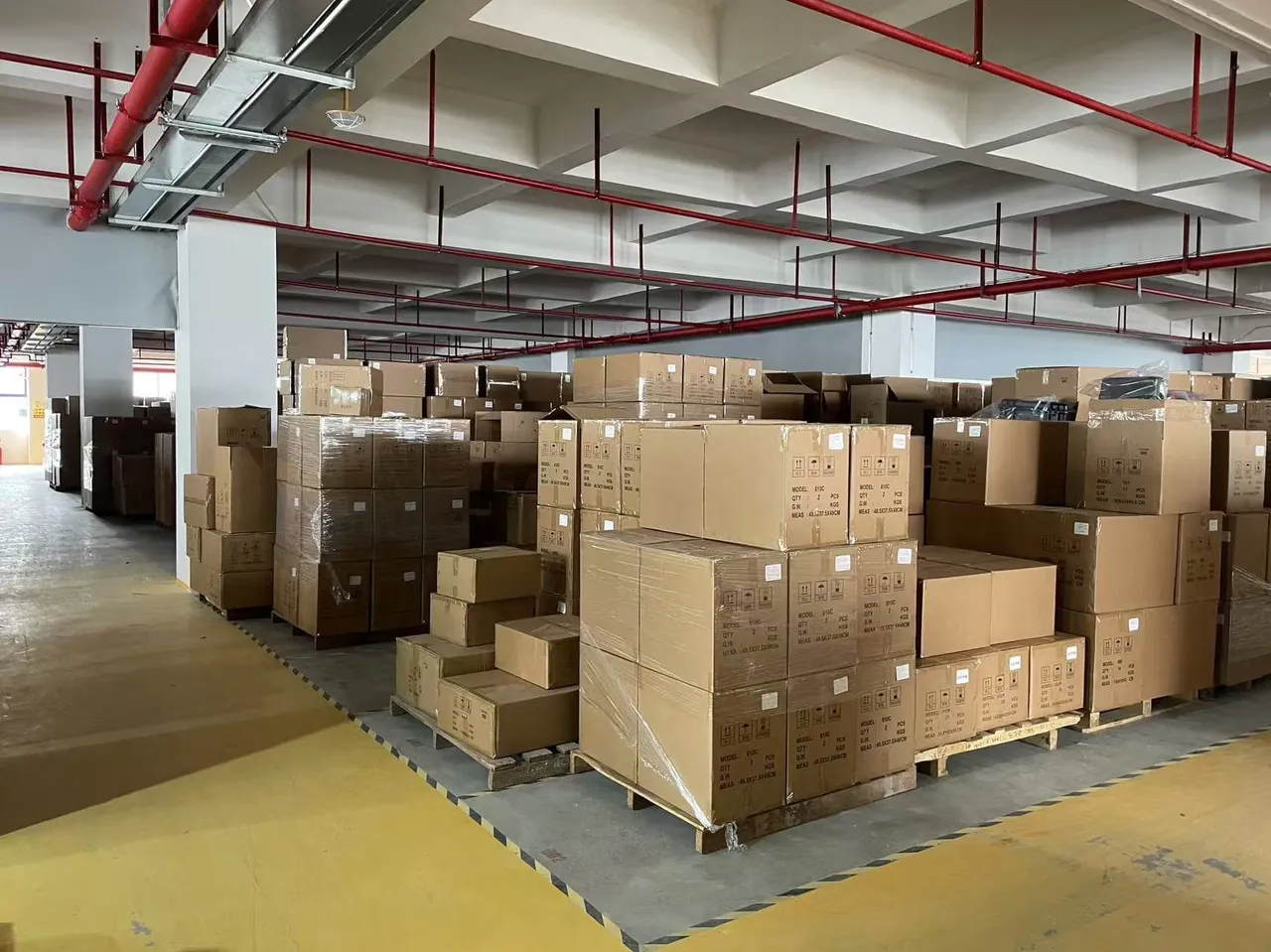
For die makers, repair subcontractors and extrusion groups that need volume supply, the packaging scheme should be managed inside the supplier system rather than bought ad hoc per order. JUNZHJIA, manufactured by Kexin New Material (Guangdong) Co., Ltd., serves wholesale, distribution and OEM/ODM customers worldwide and provides end-to-end support from shell selection and insert customization to document delivery. The typical workflow is as follows.
- Requirement capture. The customer supplies die drawings or samples, a packing list, transport modes (sea, air, road), target-market regulatory requirements, annual volume and batch rhythm.
- Concept design. Output shell specification, material, protection rating, hardware configuration, insert layering drawing and a 3D assembly view.
- Sample approval. Build the first case and insert so the customer can load the dies and verify handling convenience and restraint performance.
- Test verification. Run vibration, drop, stacking and humidity-temperature cycling as agreed, and issue test records.
- Production and quality control. Sample by batch and retain the first article plus process records.
- Document delivery. Provide material certificates, protection rating statements, test records, packing drawings and label templates.
- Continuous improvement. Adjust inserts and hardware based on field feedback, with version-controlled drawings.
When choosing a supplier, the evaluation dimensions in how to choose a protective case OEM factory are useful. Focus on three things: the ability to build non-standard sizes and high-load structures, the ability to provide verifiable test records, and relevant industry delivery experience. For tooling amortization, minimum order quantity and lead-time structure, see custom case mould cost analysis. Users should also manage packaging assets over their service life, because both case and insert age; use protective case service life management to build a periodic inspection schedule, typically a full assessment at 3 to 5 years or after 200 or more open-close cycles.
Common misconceptions:
- Misconception 1: a heavier case is a better case. Case self-weight eats into payload and increases handling risk. Split the roles: the shell resists compression, the insert absorbs energy.
- Misconception 2: a fully stuffed insert is stable. Interference packing makes dies hard to remove and crushes bearing lands. Assembly clearance plus restraint geometry is more reliable than cramming.
- Misconception 3: IP67 solves everything. IP covers only dust and water, not shock, vibration, static, temperature or humidity cycling.
- Misconception 4: pack a warm die straight away. Softened insert, lost location and condensation inside a sealed cavity are three overlapping risks.
- Misconception 5: two dies face to face saves space. Small relative movement produces mutual abrasion, and bearing land damage is irreversible.
- Misconception 6: treating MIL-STD-810H as a certification. It is a source of test methods, not a certificate, and the wording must be precise.
- Misconception 7: an insert designed once lasts forever. Die models and revisions change, so insert drawings must be version-controlled.
Frequently Asked Questions
Q: Why do aluminium extrusion die cases need IP65 or IP67? Would a wooden crate with foam not do?
A: A wooden crate with foam can work for dry, short-distance movement with covered storage, but the real circulation pattern for extrusion dies is far more demanding. Cross-plant transfers, outsourced die repair, ocean-freight export and open transhipment all expose the packaging to conditions that wood cannot reliably handle in terms of sealing, weather resistance and compression consistency. Ingress protection is defined by IEC 60529 and GB/T 4208. IP65 means dust tight and resistant to water jets, while IP67 adds temporary immersion. Choosing IP65 or above solves three practical problems: rust on mating faces caused by monsoon rain and container condensation, high-pressure washdown or standing water during transhipment, and seal reliability after repeated opening and closing. More importantly, a sealable case combined with desiccant and a humidity indicator card turns internal humidity into a verifiable acceptance metric, which a wooden crate cannot deliver. Once a die corrodes, mating faces may need re-grinding, which can disturb the dimensional chain. Export timber also brings fumigation and moisture content issues. On a lifecycle basis, injection-moulded or panel-and-frame cases usually win.
Q: What is the most common mistake when packing an extrusion die?
A: The most common mistake is placing two dies face to face. The top and bottom faces of an extrusion die usually carry the bearing lands, the porthole openings and the mating surfaces all at once. Once two end faces sit against each other, small relative movement in transit becomes mutual abrasion. A bearing land covered in impact marks or scratches then shows up in service as profile surface streaks, dimensional drift or weld-line defects, and that kind of damage is generally irreversible and requires a full die repair. The correct approach is one die per compartment, a rigid divider or thick foam separator between end faces, profile-cut grooves restraining the die radially, and relief pockets at the bearing land so the functional face stays suspended and unloaded. The second common mistake is packing a warm die immediately, which softens the insert and forms condensation inside the sealed cavity. The third is leaving port-hole bridges and mandrels unsupported, since thin-walled cantilevers develop permanent deflection under vibration.
Q: After a die comes off the press or out of the nitriding furnace, how long should I wait before packing it?
A: Use a temperature criterion rather than a time criterion. Time depends heavily on ambient temperature, ventilation, die mass and structure, and the natural cooling rate in the same shop can easily differ by a factor of two between winter and summer, so a rule such as waiting two hours cannot deliver consistency. The recommended approach is to define a measurable release line, for example a surface temperature no more than 15 C above ambient, together with explicit measurement locations such as the die ring outer diameter and the upper die face, the instrument such as an infrared or contact thermometer, and the person recording and signing off. This keeps the insert from softening under heat and prevents heat plus residual moisture from forming condensation inside a sealed cavity. If the production rhythm genuinely does not allow full cooling, switch to a heat-tolerant insert such as certain XPE cross-linked foams or EPP, or use a composite structure with a thermal barrier board that keeps heat away from the insert, and increase desiccant quantity accordingly.
Q: How do I stop long parts such as stems from bending in transit?
A: The key is controlling support points and span. Use three to five support points, with both ends as mandatory supports and intermediate points added according to length-to-diameter ratio. Support spacing should generally not exceed 15 to 20 times the stem diameter, so that no long unsupported span remains. EVA in the 60 to 90 kg/m3 density range works well for support blocks, because it provides enough stiffness to restrain the part without crushing the surface. Line every contact surface with a lint-free separator, and keep contact away from mating faces and threads. Load the stem horizontally rather than letting it cantilever vertically for long periods. After transport, re-check straightness against the dispatch record. As a rule of thumb, the change in straightness after drop and vibration testing should stay within half the drawing tolerance. Before packing, record initial deflection at several reference points using a taut line, then re-measure on arrival. That is the cheapest and most direct evidence of whether transport caused bending. For very long parts, use a long case with a multi-point support beam, or split cases.
Q: Can vapour phase corrosion inhibitor be used inside a die case?
A: It depends on the materials involved. VCI releases corrosion-inhibiting molecules into a closed volume to create a protective atmosphere, and it works well on die steel, both carbon and alloy tool steel, making it a viable option for long-term die storage. Compatibility with aluminium and aluminium alloys must be confirmed separately, however, because some VCI chemistries react with aluminium surfaces and cause discolouration. Extrusion plants frequently ship aluminium flow parts and aluminium spacer blocks in the same case as steel dies. In that situation the safer route is to control humidity with desiccant and sealing, coat steel contact faces with a compatible rust-preventive grease, and wrap aluminium parts individually before they go into the case. If VCI must be used in a case containing aluminium, obtain compatibility data for that specific formulation from the supplier, and run a coupon test to confirm no discolouration before scaling up. Remember also that VCI protects a closed volume only. Once the case is opened, the protective atmosphere is lost, so desiccant should remain the primary humidity control measure.
Q: Does a packaging case need explosion-proof certification?
A: No, and it should not be required. A protective case is an outer packaging container, not electrical or mechanical equipment for explosive atmospheres, so the corresponding equipment certification systems do not apply. Packing an extrusion die in an IP67 case creates no explosion protection certification effect. Conversely, the fact that the die serves a production area does not imply that the packaging needs such certification. The correct approach is to define the boundary: the case is opened and handed over in the die store, the maintenance shop or the plant periphery, and the case itself never works while energized or in operation. If handling inside an area with special requirements is unavoidable, follow the site's hot work, static and area management rules and avoid dragging metal parts across the floor, which can produce sparks. If the contents are returned parts carrying oil, residual aluminium or cleaning solvent, handle them under the relevant dangerous goods packaging requirements, with draining and cleaning first, and mark the contents and any precautions on the case.
Q: How do I choose insert material, and what is the difference between EVA and PU foam?
A: EVA is a closed-cell, CNC-machinable foam with a wide density range, commonly 60 to 120 kg/m3. It offers tunable stiffness, good weather resistance and low shedding, making it the first choice for locating compartments and load-bearing restraint in die inserts. PU foam is usually one-shot moulded, and its rebound behaviour favours absorbing higher-frequency vibration energy, which suits wrapping complex shapes and precision contact zones, though durability is only fair and long-term compression can cause collapse. The usual engineering combination is a structural core for load bearing, high-density EVA to control contact stress, and a low-rebound foam to absorb vibration, which balances restraint and cushioning. EPP foam holds temperature resistance and rebound retention well, suiting applications that shuttle repeatedly or take warm parts, though moulding constraints limit geometry and cost is higher. XPE cross-linked foam thermoforms well and suits thermal barrier layers on thin-wall parts. Also confirm the material contains no sulphur, no chlorine and no recycled content, and check compatibility with die coatings, nitrided layers and aluminium parts.
Q: Which standards should packaging validation cite, and how do I explain them to a customer?
A: Organize the answer along three lines: transport performance, environment and materials. For transport performance, the ISTA series, such as the ISTA 3A general simulation performance test, and ASTM D4169 with its distribution cycle sequences are common, while Chinese tenders usually cite GB/T 4857, where GB/T 4857.23 corresponds to random vibration testing. For environmental conditions, cite MIL-STD-810H method numbers and levels, such as vibration, shock and humidity, but always state that this is only a source of test methods and does not represent military certification or full item pass. At material level, UL94 covers case flame ratings, ISO 9227 neutral salt spray covers metal hardware corrosion performance, and IEC 60529 with GB/T 4208 covers ingress protection. Write these citations into the technical requirement and require the supplier to provide test records and material certificates so acceptance has a basis. Also convert the standard citations into explicit inspection actions, such as insert displacement checks, bearing land rechecks on opening and end face flatness spot checks.
Q: Does a die case need traceability labels, and what is a practical approach?
A: It very much does, and more so than a general spare-part case. The core management difficulty with extrusion dies is revision control. After several repairs, the bearing dimensions, porthole geometry and applicable profile may all have changed, and if the case carries no revision marking the shop can easily load the wrong die. A wrong die means a whole batch of scrap. Fit every case with a weather-resistant tag showing at least the die number and revision, the profile code it serves, the press it belongs to, quantity, manufacture or repair date, packing date, a unique case number and a QR code. Fix the tag where it will not wear, and avoid the gasket or the opening seam. Place a packing list in a moisture-barrier bag inside the case plus a copy of the quality certificate, and keep the case number visible outside so records can be cross-checked without opening. Combined with an AQL sampling system, inspection records can be bound to the case number, forming a complete chain from die to case to batch to inspection record, which makes it possible to pin down the problem batch quickly after an unexpected stoppage.
Conclusion & Related Reading
The essence of an aluminium extrusion die case is translating three characteristics, namely a bearing land that is a functional optical surface, a structure full of thin walls and cantilevers, and a material that is hard and brittle, into executable structural and insert language. Use profile location and end face relief to handle bearing land impact damage. Use bridge support and structural cradle load bearing to handle thin-wall deformation. Use a measurable temperature release line to handle residual heat at packing. Use desiccant and sealing to handle mating face corrosion. Use revision-controlled labels to handle die traceability. Do all five and the three high-frequency losses, namely bearing land scoring, port-hole bridge deflection and mating face corrosion, fall systematically.
Write the protection rating, insert configuration, test basis and acceptance method into the procurement technical requirement, and require the supplier to provide material certificates and test records. JUNZHJIA, manufactured by Kexin New Material (Guangdong) Co., Ltd., serves wholesale, distribution and OEM/ODM customers worldwide and supports non-standard case design, die-specific insert customization and volume delivery, with inspection and packing documents per project, so that extrusion plants can bring packaging into the die management system instead of leaving it as evidence for a post-incident investigation.
Related Reading