

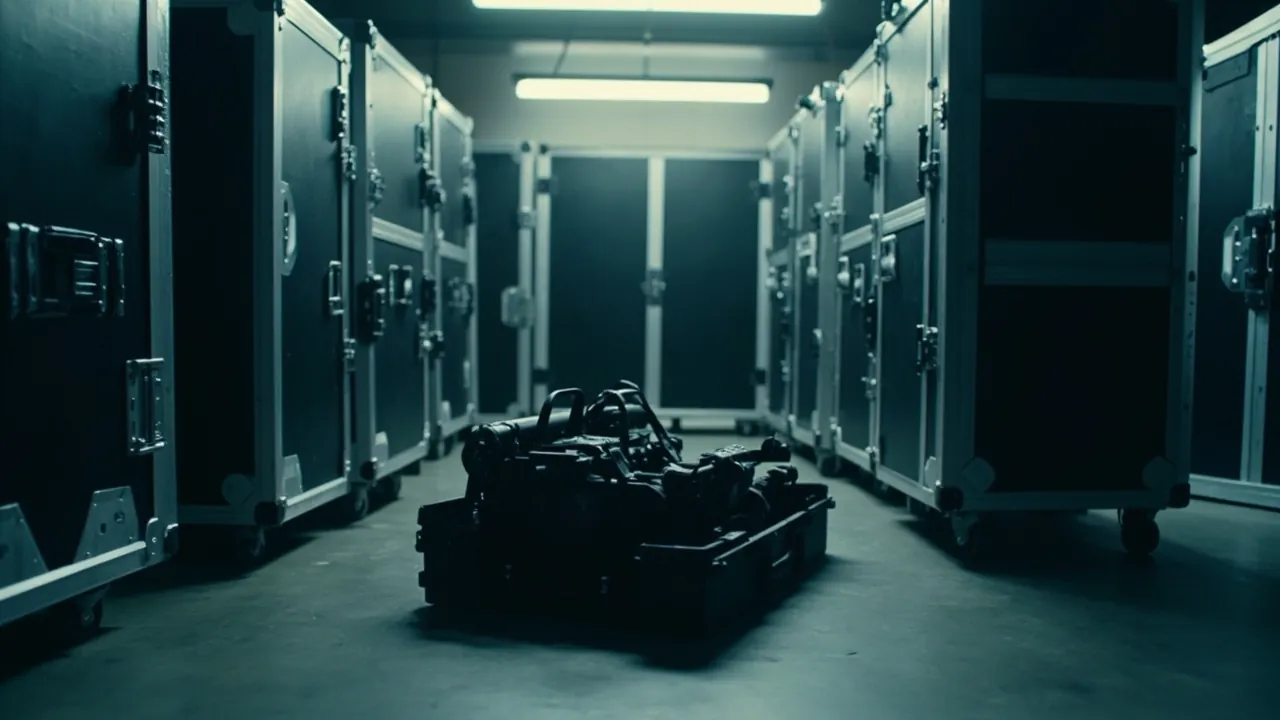
A cash-in-transit case is not simply a strong box. It is a verifiable handover instrument. Its value is not measured by how much currency it holds, but by whether the receiving party can confirm - without opening it - that the case has not been opened, substituted, or swapped since it was sealed. That single requirement forces three hard constraints onto the design: physical resistance to forced opening, an irreversible record of any opening, and a structure that supports dual-control handover documentation. A heavily reinforced box with no evidence trail provides almost no protection inside a real cash-handling control system.
Buyers in this category face a recurring problem. Transit cases look nearly identical, spec sheets all claim "high-impact engineering polymer" and "pry-resistant lock", yet quoted prices differ by a factor of three or more. The differences hide in places that are hard to see: whether the lid-to-body joint uses a continuous tongue-and-groove with a labyrinth seal path, whether the seal aperture is a one-way channel that resists reverse extraction, and whether the case reserves a permanent position for a unique serial plate and a tracking label. This article breaks the cash-in-transit case down by engineering subsystem, then provides selection tables, acceptance criteria, and lifecycle inspection methods for bank cash centres, CIT operators, retail cash-collection departments, and third-party vaults.
Table of Contents
- 1. Protection Objectives: Anti-Robbery, Tamper-Evident, Handover-Ready
- 2. Typical Structure and Material Configuration
- 3. Tamper-Evident Design: One-Time Seals, Lead Seals and Serial Management
- 4. Structural Strength and Attack Resistance: Writing Verifiable Specifications
- 5. Sealing and Ingress Protection: IEC 60529 and GB/T 4208 in Transit Context
- 6. Locks and Opening Control: Dual Control and Key Management
- 7. Inserts and Compartments: Notes, Coin Bags and Documentation Layers
- 8. Chain of Custody: Dual Verification, Seal Numbers and Timestamps
- 9. Tracking and In-Transit Visibility: Barcodes, RFID and Positioning Tags
- 10. Environmental Reliability Testing: Drop, Vibration and Temperature Evidence
- 11. Size Series and Load Selection: Working Backwards from Vehicle Capacity
- 12. OEM/ODM Customisation and Prototyping Essentials
- 13. Acceptance, Inspection and Lifecycle Maintenance
- 14. Procurement Decision Checklist: From Requirement to Volume Delivery
- Frequently Asked Questions
- Conclusion and Related Reading
1. Protection Objectives: Anti-Robbery, Tamper-Evident, Handover-Ready
The risk model for cash in transit splits into four distinct categories. Each demands a different design response, and conflating them produces misallocated cost.
Category one: violent seizure. This occurs at predictable exposure points - branch doorways, loading docks, basement garage lift lobbies, vehicle tailgates. The countermeasure is reducing exposure time and improving carrying efficiency. In case design this translates to well-positioned handles, a predictable centre of gravity, and a form that one person can carry steadily and that is difficult to snatch. No case material eliminates this risk. What a case can do is deny an attacker a second grabbing point.
Category two: internal fraud. This is the most persistent and least visible risk in cash operations. Typical methods include skimming (removing notes and restoring the appearance), substitution (replacing bundled notes with lower-value bundles), and whole-case swapping (replacing a case with an identical-looking empty or low-value case). The first two are countered by seal integrity. The third is countered by unique identity plus serialised documentation.
Category three: handover dispute. When cash passes from courier to teller or vault officer, any shortfall becomes a question of where responsibility lies. The case contributes here by ensuring that the seal number is unique, has been transcribed onto the handover document, and is cut in full view of both parties. This is a design requirement: the seal aperture must be visible, photographable, and reachable with one hand.
Category four: transport environment. Heat, rain, vibration, stacking compression. This category has a mature standards framework - it is exactly what IEC 60529, GB/T 4208 and the ISTA series address, and it is the easiest category to verify through supplier test documentation.
Key point: discussing "high protection level" without separating these four categories is unproductive. A transit case specification should be written line by line against risk type, each line carrying a verifiable acceptance method.
Within this framework, JUNZHJIA supplies transit case designs for financial cash-collection operations that treat a permanent serial plate position, a one-way seal channel, and dual lock positions as standard rather than optional - because if any of these three is missing, no downstream procedural fix can restore the evidence chain.
2. Typical Structure and Material Configuration
A qualified transit case decomposes into six subsystems. Understanding these six is far more useful than comparing total case weight.
(1) Body shell. Mainstream materials are copolymer polypropylene, modified ABS, or glass-fibre-reinforced composite. The selection criterion is the balance between impact resistance and low-temperature embrittlement. Pure ABS becomes noticeably more brittle in cold conditions and can crack from a single drop during winter open-air loading. Copolymer PP has better low-temperature toughness but slightly lower rigidity, usually compensated by additional wall thickness and ribbing. Glass-fibre composite costs more and is used where weight and stiffness are both critical.
(2) Lid and hinge system. Hinges are the most frequently overlooked failure point. Transit case hinges normally use a through metal pin shaft with integrally moulded hinge bosses, avoiding self-tapping screws driven directly into polymer. If the hinge pin can be extracted from outside, the entire seal system becomes meaningless. This must be physically checked during acceptance.
(3) Locks and latches. The common configuration is two independent lock positions with a central latch, or a lock plus a one-time seal. Lock types are covered in section 6.
(4) Seal geometry. The lid-to-body joint normally uses a continuous tongue-and-groove with an elastomeric gasket. Even when no IP rating is required, retaining the tongue-and-groove is advisable because it simultaneously provides dust exclusion, splash resistance, and resistance to inserted pry tools.
(5) Inserts and compartments. These determine whether contents shift in transit. Shifting changes the centre of gravity abruptly and is a hidden contributor to carrying accidents.
(6) External identity and tracking positions. Serial plate, barcode or RFID label position, seal-number registration area, and optional warning markings.
| Subsystem | Typical material or structure | Main failure mode | Acceptance focus |
|---|---|---|---|
| --- | --- | --- | --- |
| Body shell | Copolymer PP / modified ABS / glass-fibre composite | Cold-drop cracking, stacking deformation | Cracks after drop test, joint deformation |
| Hinge system | Through metal pin, integral bosses | Pin extractable, boss pull-out | Manual pin extraction attempt, loaded open-close cycles |
| Locks and latches | Dual lock positions, central latch, one-way seal channel | Latch pried open, seal channel reversible | Pry-bar attempt, reverse seal insertion test |
| Seal geometry | Continuous tongue-and-groove, elastomeric gasket | Gasket detachment, joint misalignment | Visual continuity when closed, gasket pull-out force |
| Inserts | EVA, PE foam, dividers | Insert collapse, content migration | Compartment integrity after loaded vibration |
| Identity and tracking | Serial plate, label position | Plate removable, serial replaceable | Plate fixing method, serial uniqueness |
3. Tamper-Evident Design: One-Time Seals, Lead Seals and Serial Management
Tamper-evident and tamper-resistant are different properties and must be separated in procurement documents. Tamper-resistant means "cannot be opened". Tamper-evident means "if it was opened, that will be obvious". Cash transit requires both, because even the strongest case will legitimately be opened for counting, loading, and return-leg clearing - and every legitimate opening must leave a record.
Security seal classes and selection:
| Seal type | Application method | Unique numbering | Typical strength | Suitable scenario |
|---|---|---|---|---|
| --- | --- | --- | --- | --- |
| Plastic pull-tight seal | Threaded through channel, pulled and locked | Laser-marked | Moderate, cuttable | Daily retail deposit collection |
| Wire lead seal | Threaded through hasp, lead block compressed | Stamped | High, requires cutters | Vault transfers, intercity transit |
| Cable seal | Cable threaded, aluminium ferrule crimped | Laser or stamped | High, tensile resistant | Large-value transit, valuables |
| Bolt seal | Bolt inserted and locked | Laser-marked | Very high, requires hydraulic cutter | Cross-border or long-haul high value |
| Electronic seal | Electronic lock plus logging chip | Digital ID plus timestamp | High, communicable | Operations requiring electronic audit |
Serial management is the soul of the tamper-evident system. The seal itself does not prevent tampering. The one-to-one correspondence between seal number and handover documentation does. Practical measures:
- Seal issuance register. Seals arrive in rolls or boxes; record the start and end numbers at issue. Voided seals must be retained and the reason recorded, preventing the "void in advance, reuse later" method.
- Two persons present at application. One applies, one transcribes and reads back the number, both sign the handover document.
- Photographic record of the number. Capture the seal number and case number in a single frame with a timestamp, filed with the handover record. This is the decisive evidence when a dispute arises.
- Receiving-party verification sequence. Body-before-number, seal number before cut. Verify: case number, seal number, seal integrity (no cut marks, no compression marks, no re-crimped ferrule), lid joint closure - and only then cut the seal.
- Quarantine procedure for anomalous seals. If anything is abnormal, do not cut on site. Transfer the entire case to the security department for opening under surveillance with documentation.
Seal-to-case interface design. The seal aperture must be a one-way channel: easy to insert, resistant to reverse extraction. The channel bore must match the selected seal diameter; if oversized, the seal can wobble and a break point becomes invisible. The aperture should sit on an externally visible face and align naturally once the lid is closed, so the operator does not partially open the lid in order to thread the seal. For a deeper analysis of seal materials and failure mechanisms, see seal materials and case sealing components.
JUNZHJIA moulds the seal channel integrally so that hole geometry is fixed at tooling stage, avoiding the burrs and dimensional scatter of post-machined drilling. For operations requiring wire lead seals, the design can reserve metal crimp space and locally reinforce wall thickness to prevent the polymer cracking during crimping.
4. Structural Strength and Attack Resistance: Writing Verifiable Specifications
"High strength" cannot be accepted or rejected. A specification must translate strength requirements into executable, reproducible test conditions and pass-fail criteria.
At minimum, specify the following five items.
(1) Loaded-state definition. State the contents and mass used in testing. A common error is performing drop tests on empty cases, which produces results with no reference value. Specify 100 percent of rated load, with weights shaped and distributed to mimic actual note bundles.
(2) Drop height and attitude. Cash cases behave more like manually handled containers than parcels, so the handling-drop conditions in the GB/T 4857 series and ISTA procedures are usually closer to reality than international parcel criteria. A practical approach: full load dropped from 1.0 to 1.2 m onto each of nine attitudes - three corners, three edges, three faces. Pass criteria: no shell cracks, no significant joint misalignment, locks still operable, seal channel not deformed beyond the point of accepting a seal.
(3) Stacking load. Specify warehouse stacking tiers and per-case mass, and convert to stacking load. A 24 to 72 hour static load test is acceptable; judge deformation and whether latch engagement still functions.
(4) Handle and grip strength. Transits often fail at the handle. Specify a static pull at twice rated load held for one minute, plus pull fatigue cycles. Judge no pull-out and no cracking at the articulation.
(5) Hinge and latch pry resistance. Either specify a pry insertion point and torque, or use a qualitative criterion such as "full function retained after 30 seconds of manual prying". This item resists full standardisation, but merely writing it into the specification filters out a large number of low-quality suppliers.
Note: MIL-STD-810H can be referenced as a source of environmental test methods and procedures, but it is a US military environmental test method standard, not a military certification. The claim "certified to MIL-STD-810H" is inaccurate; the correct wording is "tested in accordance with the relevant methods of MIL-STD-810H". For method and clause interpretation, see MIL-STD-810H environmental testing explained.
5. Sealing and Ingress Protection: IEC 60529 and GB/T 4208 in Transit Context
Whether a transit case needs an IP rating depends on whether any leg of the route is exposed to open air.
- Fully enclosed handover (vault to armoured vehicle to branch inner counter): dust protection (IP5X) and splash resistance suffice; the priority is keeping dust out of lock mechanisms.
- Short open-air loading (branch doorway, garage entrance): IP54 to IP55 recommended, covering rain and ground splash.
- Motorcycle or open-vehicle delivery: IP65 or above to withstand sustained rainfall.
- Over-water or extreme environments: IP66 or IP67, with buoyancy and drainage also assessed.
IEC 60529 and China's GB/T 4208 (Degrees of protection provided by enclosures, IP code) correspond technically. The first characteristic digit denotes protection against solid foreign objects, the second against water. Note carefully: an IP rating says nothing about impact resistance, corrosion resistance, or pressure conditions beyond continuous immersion. Equating IP67 with "drop-proof" is a common misconception. For a full interpretation of the IP code and frequent misreadings, see IP ratings and waterproof case selection.
Transit cases impose one additional sealing constraint: sealing must not be bought at the cost of opening speed. These cases may be opened dozens of times per day. An over-compressed gasket pushes operators to force the lid, which damages the tongue-and-groove. The engineering balance is to use a low compression set silicone or EPDM gasket at a sensible compression ratio (typically 20 to 30 percent), combined with a pressure equalisation valve to prevent temperature differentials creating negative internal pressure that makes the lid hard to open. Valve principles and selection are covered in the role of pressure equalisation valves.
6. Locks and Opening Control: Dual Control and Key Management
Locks are the only component operated by a person every single time, and therefore the highest-failure component.
Mechanical key locks. Advantages are high reliability, no battery dependence, and low cost. Disadvantages are key management complexity, duplication, and loss risk. Suitable for fixed routes with fixed personnel. Specify at least a five-pin cylinder with an anti-drill plate and a keyway that cannot be easily duplicated, and use different key cuts per case so that one key cannot open the entire fleet.
Combination locks. Typically three or four mechanical dials. No key to carry, but once the combination is shared, individual accountability is lost, and mechanical dials are vulnerable to feel-based trial. Suitable where internal staff turnover is low and case counts are small.
Electronic locks. Support multiple users, time windows, and exported unlock logs that integrate with a management platform. Disadvantages are battery dependence, moisture sensitivity, and higher cost. Suitable for high-value operations requiring electronic audit.
Making dual control actually effective. Genuine dual control is not "two locks engaged". It is two locks whose keys are held by different people, so that neither can open the case alone. The common error is issuing both keys to the same custodian, which reduces dual locks to a single lock in control terms. Implementation points:
- The case provides two independent lock positions, and lifting the lid requires both to be released (that is, locks in series logic, not parallel).
- Keys are carried by two people in different roles, never stored in the same key cabinet.
- Handover records state which lock was opened by whom, rather than a generic "case opened".
- On shift change or staff departure, rekey the affected locks or withdraw the affected case from high-risk routes.
For a detailed comparison of lock types, pry resistance levels and customisation options, see case lock customisation options.
7. Inserts and Compartments: Notes, Coin Bags and Documentation Layers
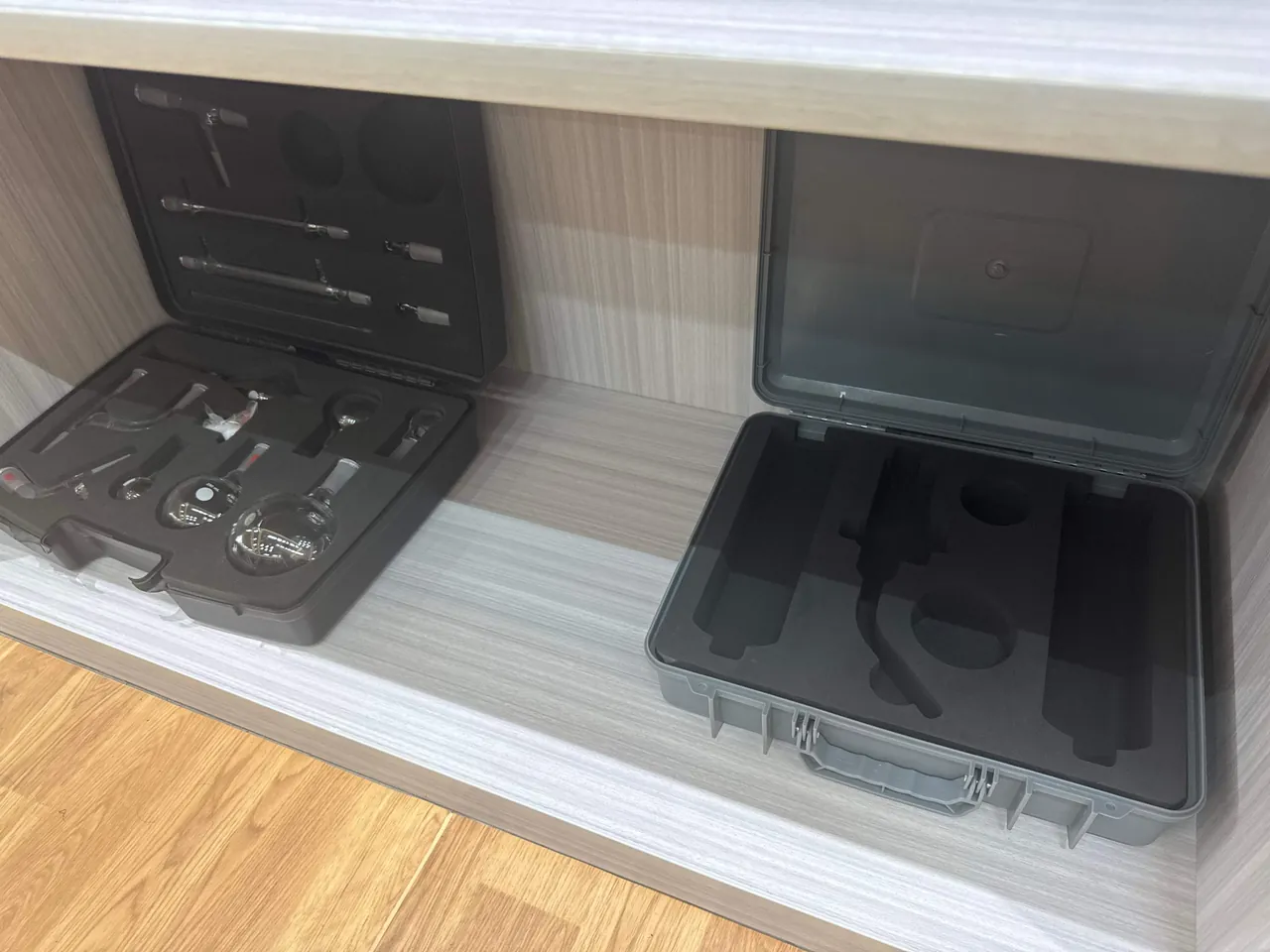
Insert design is routinely underestimated. Much of the centre-of-gravity movement during manual handling comes from content migration. The goal of an insert is that every item holds its position in transit, does not press on its neighbour, and can be removed without disturbing anything else.
Comparison of common insert approaches:
| Insert approach | Forming method | Retention | Removal speed | Suitable contents |
|---|---|---|---|---|
| --- | --- | --- | --- | --- |
| Flat base, no insert | None | Poor, free sliding | High | Large bulk items |
| Slotted divider panels | Panel-and-slot | Moderate, planar zoning | High | Bundled notes, documents |
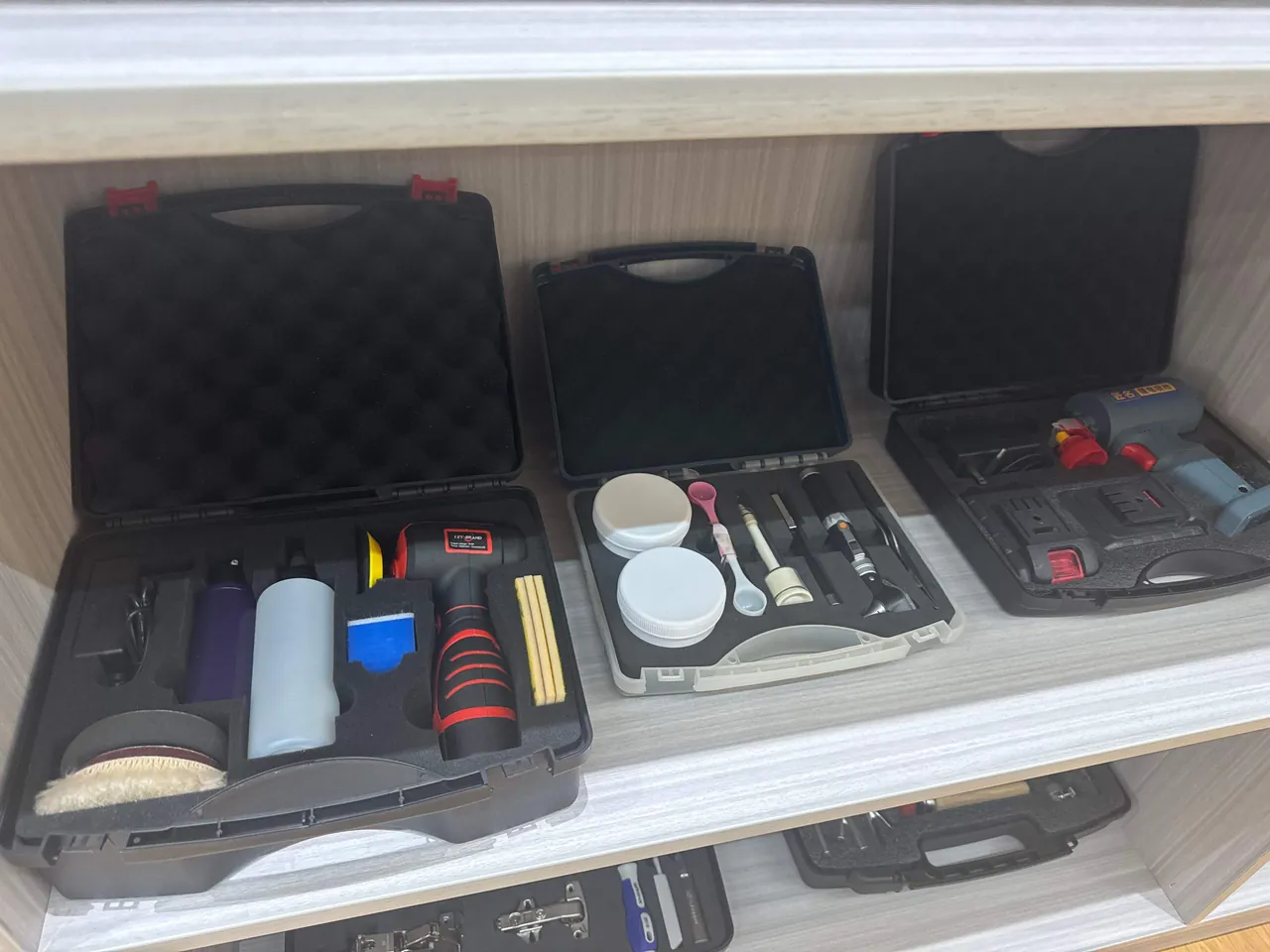
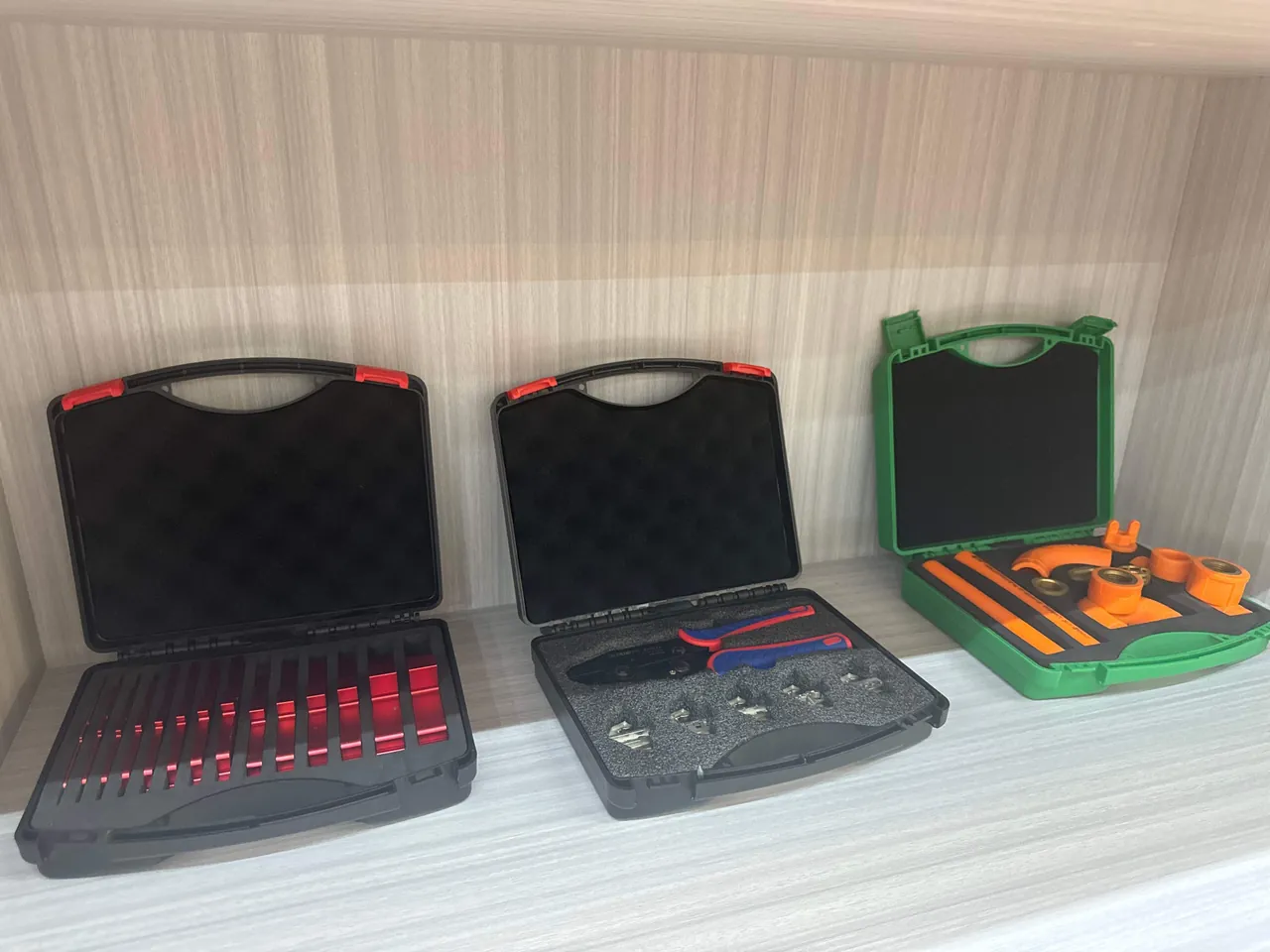
| CNC-cut EVA insert | Moulded or CNC cut | Good, per-item fit | Moderate | Cassettes, sealed packets, stamps |
| Layered PE foam | Multi-layer cavity stack | Good, excellent cushioning | Moderate | Coin bags, coin rolls |
| Composite (EVA plus PE) | Layered combination | Excellent | Moderate | Mixed contents |
Zoning logic for note bundles. Use three levels: currency, denomination, bundle unit. Cavity dimensions should follow actual bundle size, with tolerance within about +2 mm. Cavities that are too loose allow bundles to spread in transit; too tight and operators damage the insert to extract contents. When an insert is found "broken by the operator" on site, the design is usually too tight.
Coin bags and rolls. Coin is dense and heavy per unit volume, so base support matters most. Add a reinforcement plate beneath the coin zone to prevent localised pressure deforming the case floor. Cavity depth should exceed bag thickness so that upper layers do not compress lower ones.
Documentation and packet layers. Provide a separate shallow upper tray for handover forms, seal stubs, and sealed packets. Its purpose is to let the handover action proceed without disturbing the currency zone, reducing exposure time and operator error.
Insert material, forming process and tolerance control strongly influence retention. Related process detail is available in custom foam insert design guide and EVA foam insert custom process.
8. Chain of Custody: Dual Verification, Seal Numbers and Timestamps
Chain of custody is what separates a cash transit case from an ordinary tool case. Losing a tool case costs the contents. A cash case with an unclear handover costs an entire chain of accountability.
Standard handover nodes and required actions:
| Handover node | Sending party action | Receiving party action | Record elements |
|---|---|---|---|
| --- | --- | --- | --- |
| Vault dispatch | Dual count, seal application, number transcription | - | Case number, seal number, amount, time, two signatures |
| Vehicle loading | Verify seal integrity, load and secure | Driver confirms count | Case list, departure time |
| Branch delivery | Deliver and verify seal face to face | Verify number and integrity, sign | Case number, seal number, arrival time, both signatures |
| On-site de-sealing | Cut in receiver's line of sight | Confirm seal not substituted | Cut time, retain cut seal |
| Return empty case | Apply empty seal or log as opened | Verify empty state | Empty seal number or "opened" status |
| Vault reconciliation | - | Count and post | Discrepancy record and escalation path |
The three-match principle. Every handover node must complete three checks, none optional:
- Match count - case quantity agrees with the manifest;
- Match number - both case number and seal number agree with documents;
- Match seal - the seal is visually intact, with no re-crimping, no cut-and-rethread evidence.
Why timestamps matter. Disputes over cash discrepancies hinge on which leg the problem occurred in, and segmenting requires accurate time at each node. Handover times should be system-generated or taken from a common time source, avoiding handwritten entries that contradict each other.
Exception handling path. Write into policy in advance: for an anomalous seal, a mismatched seal number, a damaged case, or a quantity discrepancy, who decides, where the case is opened, whether police are notified, and how long surveillance footage is retained. This section often determines the eventual loss far more than the case hardware does.
9. Tracking and In-Transit Visibility: Barcodes, RFID and Positioning Tags
Traceability depends on the marking on the case and the durability of the tag. The transit environment is hostile to labels: abrasion, compression, rain and cleaning agents all accelerate failure.
Marking technology comparison:
| Technology | Read method | Environmental tolerance | Cost | Typical use |
|---|---|---|---|---|
| --- | --- | --- | --- | --- |
| Laser-engraved serial | Visual | Very high, case lifetime | Low | Permanent case identity |
| 1D or 2D barcode label | Optical scan | Moderate, wears | Low | Daily stocktaking |
| Passive RFID tag | RF bulk read | Moderate to high, soil tolerant | Moderate | Whole-vehicle batch verification |
| Active RFID or BLE tag | Active broadcast | Moderate, battery dependent | Moderate to high | In-transit visibility |
| GNSS positioning module | Satellite fix | Moderate, battery and signal dependent | High | High-value large transit |
Implementation points:
- Dual redundant identity. Laser-engraved case number (non-removable) plus barcode label (scannable). If the label wears, the number can still be read visually, so identity is not lost.
- Keep labels out of wear zones. Avoid the base, the area around handles, and stacking contact faces. Prefer a recessed side face.
- RFID versus dense media. Currency inside a case is a dense dielectric and significantly affects RF reads. Use metal-tolerant tags facing outward, or a gate-style read tunnel for batch stocktaking.
- Positioning module mounting. Place the module in a dedicated reinforced bay so that daily drops do not damage it or eject the battery. It should also be not directly removable by anyone opening the case, otherwise tracking fails exactly when it matters.
- Bind data to the case. Tracking data only has value when bound to a case number. Any tag replacement must be logged with the old tag number and the reason.
To be explicit: tracking technology does not replace seals and dual verification. Tracking tells you where the case is. The seal tells you whether it was disturbed. Dual verification tells you who disturbed it and when. The three are complementary.
10. Environmental Reliability Testing: Drop, Vibration and Temperature Evidence
Reliability verification should cover four test categories, each with a stated basis and pass criteria.
(1) Handling drop and stacking. Reference the GB/T 4857 series (basic tests for transport packages) and the ISTA series for handling and stacking methods. The dominant transit case scenario is manual handling drop, so attitudes must include corners, edges and faces. For the correspondence between ISTA and GB/T 4857 and how to choose, see transport packaging test procedures explained and GB/T 4857 transport package testing. Where a full distribution cycle must be covered (storage, sorting, transport, last-mile handling), see ASTM D4169 distribution cycle testing.
(2) Vibration. Transit cases experience random vibration in vehicles. Specify conditions per ISTA or GB/T 4857 random vibration spectra, with duration set to the longest single-leg transit time plus at least 50 percent margin. Pass criteria: inserts not collapsed, contents not migrated, seal channel not worn, locks not loosened.
(3) Temperature and damp heat. Cases may see summer vehicle-interior temperatures (experience values can exceed 60 C) and winter lows below -20 C. Perform high-temperature storage, low-temperature storage, thermal cycling and damp heat tests, referencing the corresponding MIL-STD-810H methods as an environmental test basis (not a military certification). Focus judgement on polymer embrittlement, gasket compression set, label detachment, and change in lock operating force.
(4) Rain and immersion. This corresponds to IP verification under the relevant IEC 60529 / GB/T 4208 conditions. After testing, allow the case to stand and check whether water has collected inside the lock mechanisms and hinges, which are the most commonly overlooked water-trapping locations.
| Test category | Suggested basis | Key judgement |
|---|---|---|
| --- | --- | --- |
| Drop | GB/T 4857 series / ISTA | No cracks, joint not misaligned, locks operable |
| Stacking | GB/T 4857 series | Acceptable deformation, latch engagement normal |
| Vibration | ISTA random vibration spectrum | Inserts intact, contents not migrated |
| Temperature / damp heat | Relevant MIL-STD-810H methods (environmental basis) | Polymer not embrittled, gasket not permanently deformed |
| Water and dust | IEC 60529 / GB/T 4208 | Target IP achieved, no internal standing water |
11. Size Series and Load Selection: Working Backwards from Vehicle Capacity
Transit case selection should proceed from carrying capacity backwards, not by choosing from an existing size list.
Step one: determine currency volume and mass per task. Weight estimation must distinguish denomination and form. A practical approach is to estimate mass and volume per bundle unit (for the same denomination and note count, bundle volume is essentially constant) and multiply by quantity.
Step two: determine the per-person carrying limit. This is the binding constraint. Consider carrying distance, whether steps are involved, and whether one hand must remain free. Keep loaded mass within the range a person can carry steadily. It is better to use two cases than one overweight case, because an overweight case sharply increases both drop and snatch risk.
Step three: determine vehicle and shelving dimensions. Case external form should match the module of vehicle racks and vault shelving to reduce wasted space and unstable stacking.
Step four: determine stacking tiers and compression demand. If three-tier stacking is required, the bottom case carries two case loads above it, requiring greater wall thickness or additional ribbing.
Step five: verify handles and wheel sets. For large, heavy cases, specify reinforced telescopic handles and abrasion-resistant wheels to reduce manual carrying distance and drop probability. Wheel and handle selection is covered in case wheels and trolley handles.
Experience-based correspondence between application and configuration:
| Application | Suggested volume band | Suggested configuration | Note |
|---|---|---|---|
| --- | --- | --- | --- |
| Retail daily deposit | Small | Single lock plus one-time seal | Portability priority, hand-carried |
| Branch cash loading and return | Medium | Dual lock positions plus compartmented insert | Must match cassette format |
| Inter-branch transfer | Medium to large | Dual lock, lead seal, wheels and handle | Balance load and handling |
| Vault transfer | Large | Dual lock, lead seal, reinforced base | Stacking stability priority |
| Large-value valuables | Medium, high protection | Dual lock, bolt seal, positioning | Tracking and audit priority |
Pallet and rack integration. Where cases go onto pallets or racks, specify the pallet module and the locating feature on the case base, so that braking does not cause sliding. Consider anti-slip ribs on the base or retaining edges on the rack.
12. OEM/ODM Customisation and Prototyping Essentials
Customisation is usually required for three reasons: matching existing cassette or packet dimensions, fixing the serial plate and seal positions, and integrating with an existing tracking system.
A seven-step customisation process:
- Requirement capture. Contents, maximum case mass, external dimension limits, stacking tiers, IP requirement, seal type, lock type, marking requirements.
- Design proposal. Structural concept, material recommendation, insert layout drawing and 3D form.
- Prototype build. Build a fully functional prototype including locks fitted, seal channel present, and insert formed - not a visual model only.
- Functional verification. Run drop, stacking, handle pull and open-close cycle tests against the criteria in section 4.
- Field trial. Run at least one full shift in live use and observe where operators actually struggle. Many problems are only visible to real users.
- Corrective action and design freeze. Record all changes, produce final drawings and a retained sample.
- Volume production and first-article approval. Inspect the first batch using a sampling scheme such as protective case acceptance sampling.
The four most common prototyping problems:
- Seal channel to lid alignment: whether it aligns naturally when closed, or whether the lid must be forced to thread a seal.
- Insert tolerance: CNC-cut insert tolerance stacking against moulded case tolerance can make some cavities too tight.
- Lock mounting strength: whether the lock position has sufficient local wall thickness and reinforcement.
- Handle load path: whether the handle is mounted on a thin wall, causing the wall to flex outward under full load.
JUNZHJIA, the brand of Kexin New Materials (Guangdong) Co., Ltd., provides integrated capability from structural design and tooling development through insert forming. For CIT operators the company can deliver cases with unique serial plates, one-way seal channels and dual lock positions matched to an existing case-number system, and can support prototyping, functional verification and volume delivery, providing inspection and test documentation as required by the customer. To assess tooling investment and amortisation, see custom case mould cost analysis; for supplier evaluation criteria, see how to choose a case OEM factory.
13. Acceptance, Inspection and Lifecycle Maintenance
A transit case is a high-frequency working tool whose reliability degrades with use. A disciplined inspection regime is more effective than buying the highest specification once.
Incoming acceptance points:
| Check item | Method | Judgement |
|---|---|---|
| --- | --- | --- |
| Appearance | Visual, whole case | No cracks, no sink marks, no burrs |
| Dimensions | Sampled measurement | Within drawing tolerance |
| Serial | Cross-check | Matches order, unique |
| Locks | Operate each one | Smooth, no binding, correct key cut |
| Sealing | Visual joint plus sampled water test | Joint continuous, target IP achieved |
| Insert | Loaded trial fit | Contents fit, removal smooth |
| Seal fit | Insert each seal | Inserts freely, resists reverse pull |
| Accessories | Checklist | Complete quantity |
Daily inspection (per shift or before each use):
- Any new cracks or significant dents on the shell;
- Hinges loose or noisy;
- Locks operating smoothly, keys worn;
- Gasket detached or hardened with compression marks;
- Insert damaged or cavities deformed;
- Serial plate legible and not obscured;
- Seal channel free of debris, wear not enlarged.
Periodic maintenance (monthly or quarterly):
- Clean the gasket and check elasticity (visual and by hand for hardening);
- Tighten hinge and lock fasteners (avoid over-torque that cracks polymer);
- Check handle and wheel wear;
- Verify tracking tags and replace failed ones with a logged record;
- Isolate faulty cases, tag them, and route to repair or scrap.
Suggested scrap criteria. Scrap rather than continue using a case with any of: through-cracks or large structural deformation, joint worn so the lid will not seal, hinge boss pulled out or cracked, lock mounting position damaged beyond repair, or seal channel worn until a seal can be freely removed. Cleaning and maintenance methods are covered in how to clean a protective case and protective case service life assessment. When purchasing, also guard against counterfeit and refurbished cases; identification points are in identifying genuine versus counterfeit cases.
14. Procurement Decision Checklist: From Requirement to Volume Delivery
The following checklist can be used directly as the technical requirement section of a transit case procurement document.
1. Functional requirements
- Contents and rated mass per case;
- Whether dual control is required;
- Whether a one-time seal, lead seal or bolt seal is required;
- Whether positioning or electronic tagging is required.
2. Structure and materials
- Shell material and colour;
- Wall thickness and reinforcement requirements;
- Hinge type (specify through metal pin);
- Handle type and quantity (including whether wheels and telescopic handles are required).
3. Sealing and protection
- Target IP rating and corresponding test basis;
- Whether a pressure equalisation valve is required;
- Gasket material requirements.
4. Insert
- Zoning method and cavity count;
- Insert material (EVA, PE, composite);
- Tolerance requirements and removal clearance.
5. Marking and tracking
- Case numbering rule and engraving method;
- Label type and mounting position;
- Seal number registration area requirement.
6. Verification and documentation
- Drop, stacking, vibration, temperature and water test requirements;
- Inspection documents and reports to be supplied;
- Sampling scheme and pass criteria.
7. Delivery and service
- First-article approval requirement;
- Packaging and shipping method;
- Warranty period and spare parts supply;
- Consistency assurance for repeat orders (retained sample control).
Practical note: writing the seal channel, the serial plate and the lock mounting strength into the requirement document usually filters out most suppliers without financial security experience at the prototype stage.
Frequently Asked Questions
Q: What actually separates a cash-in-transit case from an ordinary protective case?
A: The difference lies in three layers. First, evidence-chain design: a cash transit case must provide a permanent serial plate position and a one-way seal channel so that "was this opened" can be verified externally, whereas an ordinary protective case only needs to protect contents from damage. Second, opening control logic: transit cases normally require two lock positions in series, with keys held by different people, while ordinary cases are designed for convenience of opening. Third, handover support: transit cases must support one-to-one mapping between seal numbers and handover documents, retention of cut seals, and an escalation path for anomalies - all procedural features that the case hardware must enable. An ordinary protective case with better material and higher strength still cannot be used for cash transit if it lacks a fixed serial position and a one-way seal channel. Conversely, a transit case may not outperform a dedicated waterproof case in long-duration immersion, so selection should follow the actual scenario rather than a single headline rating.
Q: What does a one-time seal actually prevent? What if someone cuts it and fits an identical seal with the same number?
A: A one-time seal prevents "open and restore" operations by using irreversible locking - pull-tight seals cannot be backed out, crimped ferrules cannot be reopened - so an inspection can reveal the trace. Against cut-and-replace, protection depends on two mechanisms. First, number uniqueness: legitimate seals carry continuous unique numbers, so a duplicate or a gap in a number range signals an anomalous seal source. Second, a seal issuance register: seals are issued in numbered blocks and logged, and voided seals must be retained, so a matching number still has to be explained. Seals alone therefore cannot eliminate fraud; the effective combination is seal plus serial register plus two persons present plus on-the-spot photography. For higher-risk routes, specify metal crimp or electronically logged seals to raise the barrier to imitation and reuse further.
Q: What IP rating does a transit case need?
A: It depends on exposure along the route, and higher is not automatically better. Fully enclosed handover chains (vault to armoured vehicle to branch inner counter) generally need only dust exclusion and splash resistance. Short open-air loading at branch doorways or garage entrances suggests IP54 to IP55. Delivery using open vehicles suggests IP65 or above. Where sustained rainfall or washdown occurs, IP66 or IP67 may be appropriate. Note that an IP rating describes only the ingress of solid objects and water; it does not cover impact, compression or corrosion resistance, so IP67 cannot substitute for a strength requirement. Also, tighter sealing makes the lid harder to open, and transit cases are opened many times daily - an unnecessarily high sealing class can push operators into forcing the lid and damaging the joint. Choose the class that matches the scenario, and pair it with a pressure equalisation valve to improve the opening experience.
Q: How do I know whether dual control is genuinely effective?
A: Two conditions matter: series logic and key separation. Series logic means the lid cannot be lifted unless both locks are released, so neither party can open the case alone. If the case is designed so that each lock secures one side and releasing one allows the lid to be partly lifted, dual locks provide no control benefit. Key separation means the two keys are carried by two people in different roles, never stored in the same cabinet and never held by one person on another's behalf. In addition, handover records must state which lock was opened by whom rather than a generic "case opened", otherwise nothing can be reconstructed afterwards. On staff changes, rekey the affected locks or move the case off high-risk routes. Finally, dual control must be paired with seals: dual locks prevent unauthorised opening, and the seal makes even authorised opening a matter of record. Neither replaces the other.
Q: Why can't I just carve cavities into a single block of foam for the insert?
A: Because cash demands positional stability far more than cushioning. Cavities carved into a single soft foam block tend to have soft walls and generous dimensions, so contents migrate gradually under vibration, shifting the centre of gravity and increasing drop risk during handling. Extraction also tends to disturb neighbouring items, increasing operator exposure time and the risk of picking up the wrong item. A proper design uses per-item fitted cavities sized to actual bundle dimensions, with cavity walls providing some structural support, typically achieved with EVA or a composite construction. The coin zone additionally needs a base reinforcement plate to carry concentrated load. Tolerances matter as much as material: loose cavities allow migration, while tight cavities push operators to force contents out and destroy the insert. Run a loaded trial fit and vibration verification at prototype stage with real bundles rather than judging by feel.
Q: Is fitting a positioning module to a transit case worthwhile?
A: Yes, but be clear about what it solves and what it does not. A positioning module answers "where is the case" and "has it left the route", which has direct value in vehicle hijack response and case recovery. It cannot answer "was currency removed", which is the job of the seal and dual verification. Three engineering points matter: the module should sit in a dedicated reinforced bay so daily drops do not damage it or eject the battery; it should be designed so that anyone opening the case cannot simply remove it, otherwise it will be stripped at the critical moment; and it must be bound to the case number and integrated into a platform, with tag replacement logged. Also assess battery life, signal shadowing in basements and metal vehicle bodies, and the recharge or replacement procedure, otherwise you end up with modules fitted but long since flat. Positioning is one link in a tracking system, not a substitute for seals and handover discipline.
Q: Can I perform drop testing on an empty case?
A: No. Empty-case drop testing has almost no reference value. With no internal mass, the case has little inertia and the drop response is dominated by elastic deformation of the shell, whereas the real risk comes from impact transfer through the internal load to the base, walls and handles. Under a loaded drop, the inertia of the contents applies a large instantaneous force that can crack the base, collapse the insert, or pull out the handle. Load to 100 percent of rated mass, with weights sized and distributed to approximate actual bundles - for example, heavy items stacked to the real height. Cover corner, edge and face attitudes. Pass criteria should assess both structure (cracks, joint misalignment) and function (locks still operable, seal still threadable).
Q: How often should transit cases be replaced?
A: There is no universal interval. Use condition-based judgement as the primary criterion, with age as a secondary input. The decisive factors are usage frequency and handling intensity: a case opened dozens of times per day and lifted in and out of vehicles wears its hinges and locks far faster than a low-frequency unit. Define scrap criteria: through-cracks or large structural deformation, joint wear preventing sealing, hinge boss pulled out or cracked, lock mounting damaged beyond repair, or a seal channel worn until a seal can be freely removed. Maintain an inspection log recording every repair and part replacement, and use that data to derive a sensible service interval for that batch. For cases on high-risk routes, consider scheduled forced rotation rather than relying purely on condition assessment.
Q: How can I tell whether a supplier really understands financial cash logistics?
A: Four details give a good indication. First, whether they ask about seal type and serial management. If the conversation is only about material and strength and never about how seals are numbered and logged, the supplier lacks transit experience. Second, whether the seal channel is integrally moulded. Post-machined drilling brings burrs and dimensional scatter and is typical of low-grade supply. Third, whether the lock mounting positions are locally reinforced. Locks are the highest-frequency operating component; insufficient mounting strength leads to early loosening. Fourth, whether they are willing to run loaded drop and open-close cycle verification at prototype stage and can provide records. It is also reasonable to ask how serial uniqueness is guaranteed and how the serial plate is fixed, since adhesive plates are easily peeled and swapped. Suppliers with genuine financial security experience tend to answer these questions specifically and without hesitation.
Conclusion and Related Reading
The engineering essence of a cash-in-transit case is putting physical protection, evidence retention and process control into the same box. Physical protection determines whether the case survives violence and vibration. Evidence retention determines whether the facts can be reconstructed afterwards. Process control determines whether daily use will be circumvented because "it is too much hassle". If any one of the three is missing, the value of the other two drops sharply. The correct procurement sequence is therefore: define risk types and handover flow first; translate the flow requirements into structural requirements (fixed serial position, one-way seal channel, dual locks in series, compartmented insert); and only then decide material and strength.
Four practical rules summarise the approach. Write the specification line by line against risk, and turn abstract requirements into reproducible tests. Bring numbering and seals into policy, not just into the purchase order. Put dual verification on the handover form rather than in verbal instruction. Keep inspection in a log rather than waiting for an incident. Done this way, the cost difference between case grades becomes a small share of the overall control system, while the auditability it delivers is irreplaceable.
JUNZHJIA supplies cash-in-transit cases to bank cash centres, CIT operators, retail cash-collection departments and third-party vaults, supporting unique serial plates, one-way seal channels, dual lock position structures, and EVA, PE or composite compartmented inserts, with test and inspection documentation matched to the customer's scenario and OEM/ODM service available by model.
Related Reading