

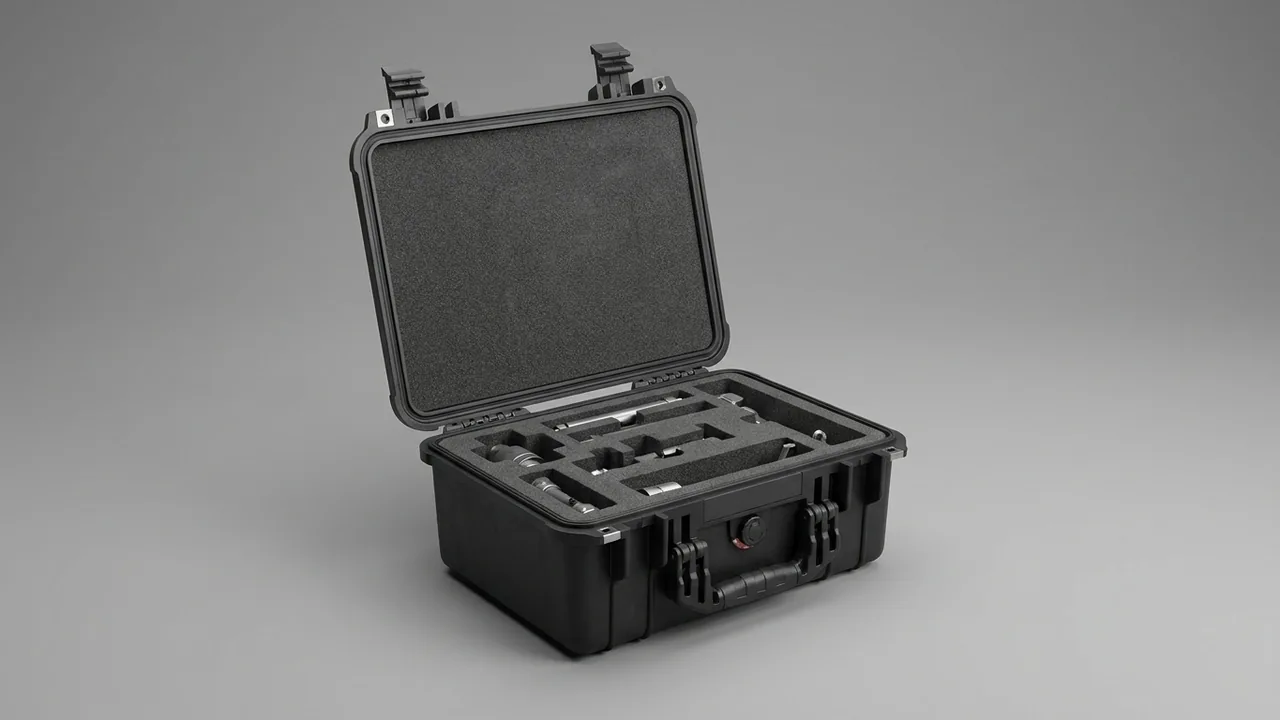
The cold trap, vacuum pump, vacuum valve group and vacuum gauge tube of a freeze dryer, also called a vacuum freeze dryer, are the core parts that guarantee sterility and moisture of the product. Their inner walls are polished and sealing faces precise, so in transit they most fear vibration causing micro cracks at welds, scratches on sealing faces and rising vacuum leak rate. The core conclusion: a protective case for freeze dryer cold traps and vacuum systems must put vibration protection as the first priority while maintaining a sterile barrier and clean state, so as to support the reliability of pharmaceutical and biologic freeze-drying processes. This article follows the thread of freeze dryer case, vacuum freeze dryer case, cold trap shipping case, vacuum component case and pharma equipment case to explain selection, insert, seal and verification for cold traps, vacuum pumps and valves, for equipment makers, pharma engineering teams and maintenance providers.
Freeze line spares often move as loose items such as cold trap catchers, Roots or vane vacuum pumps, angle valves and purge valves. These parts are expensive, have long lead times, and once the vacuum system exceeds leak rate, a whole freeze batch may lose activity. Ordinary wooden boxes or bare transport let vibration and dust lengthen later pumping time, worsen ultimate vacuum, or even force factory repair. Designing the case as a mobile clean cabin for vacuum parts is a key link in freeze operation cost control and compliance.
Table of Contents
- Transport difficulties of cold trap and vacuum parts
- Core demand of sterility and contamination control
- Cold trap condenser protection design
- Vacuum pump and valve group protection
- Main body material and temperature resistance
- Insert cushion and vibration structure
- Sealing and vacuum holding ability
- Cleanliness standard basis
- Temperature humidity and freeze prevention
- Handling stacking and fixation
- Transport environmental test verification
- Receiving inspection and AQL sampling
- Cleaning and sterilization maintenance
- OEM/ODM and global supply
- Typical application scenarios
- Selection self-check list
Transport difficulties of cold trap and vacuum parts
The cold trap inner wall is mostly 316L stainless polished surface that catches sublimated water vapor; if scratched or with residue, it hurts catch efficiency and may hide microbes. Vacuum pump rotors and vanes are extremely sensitive to metal chips; transit vibration that shifts internals or lets dust in directly raises ultimate vacuum and noise. The sealing face of a vacuum valve, such as FKM or metal knife edge, once bruised by hard objects, causes excess leak after reinstall, forcing the whole line to re-leak-test.
Also, vacuum gauge tubes and ionization gauges are fragile glass or ceramic; ordinary cushion is not enough and they break. Therefore the protection logic of the pharma machinery parts case must upgrade for freeze parts to vibration-first plus vacuum holding, essentially different from a common tool case that only talks impact resistance.
From quality view, the post-transit state of the vacuum system should be verifiable: arrival requires pumping to an agreed leak rate for release. The case must create an undisturbed part state, reducing site re-check workload, also the traceability demand of pharma audits on the supply chain.
Core demand of sterility and contamination control
Freeze products are mostly injectable sterile drugs or biologics; the cold trap and vacuum path, though not directly contacting product, are an extension of the sterile system. If inner surfaces catch dust or absorb moisture in transit, post-install CIP/SIP may fail to fully remove it, becoming a cross-contamination source. The case acts as a sterile barrier: wipeable sterilizable inner bay, low-outgassing non-shedding liner, double seal at the mouth.
At standard level, hygienic grade anchors to GMP, ISO 14644 cleanliness and the food additive hygiene logic of GB 50687; transport reliability uses GB/T 4857, ISTA and ASTM D4169 for quantification. It should be pointed out that this article applies the military standard MIL-STD-810H as the method basis for temperature, humidity, vibration and shock environment tests, yet the equipment itself is not military certified.
For cold traps linked to the product vapor path, also note surface particulate and microbial limits, borrowing the clean transfer experience of the aseptic filling case to avoid liner extractables contaminating the vacuum path, protecting the sterile baseline of freeze process.
Cold trap condenser protection design
Cold trap transport centers on protecting the polished inner wall and refrigerant pipe welds. The liner uses CNC carved EVA grids, the trap lying down with inlet, outlet and drain capped by dust-free sleeves, forbidding foam to press the polished face directly. The trap is heavy, so use 45 to 60 kg/m³ closed-cell PE foam for main support, with a soft layer at contact to spread pressure and avoid inner-wall collision from sinking in transit.
Refrigerant pipe joints get protective caps and fixation to prevent knock deformation. If the trap carries a built-in compressor, also consider center of gravity and transport posture, with straps for secondary fixation inside. Borrow the cavity design of the custom foam inserts guide: lock on placement, removal without wall scrape.
Build the cold trap liner as a lift-out cassette so the vacuum bay can be wiped or autoclaved while the foam block itself stays dry; a liner that cannot be pulled out holds condensate under the foam and never dries between shipments. Lay a sheet of lint-free, low-particle paper between the polished shell and the foam pocket to take up the last of that condensate along with any free iron that would otherwise stain the 316L face. For long-idle traps, drain refrigerant before transport and seal joints per maker instruction, lowering transport risk and compliance burden.
Vacuum pump and valve group protection
Vacuum pumps, vane or Roots, need protection from rotor shift and dust. Practice: lay the pump down supported by stepped foam, cap the inlet with dust-moisture cover and mark upward; if oiled, per maker whether to drain or keep and tighten the oil plug against leak; long transport suggests draining then nitrogen purge and seal, re-oil on arrival. Protect the motor junction box with a cover.
The sealing face of vacuum valves, angle, butterfly, purge, is the focus: FKM sealed valves wrap the plate in soft foam, metal knife-edge valves must never be pressed and get a separate hard bay. Fix the stem in a cable tray against whipping. The structure references the precision valve placement thinking of the environmental chamber case.
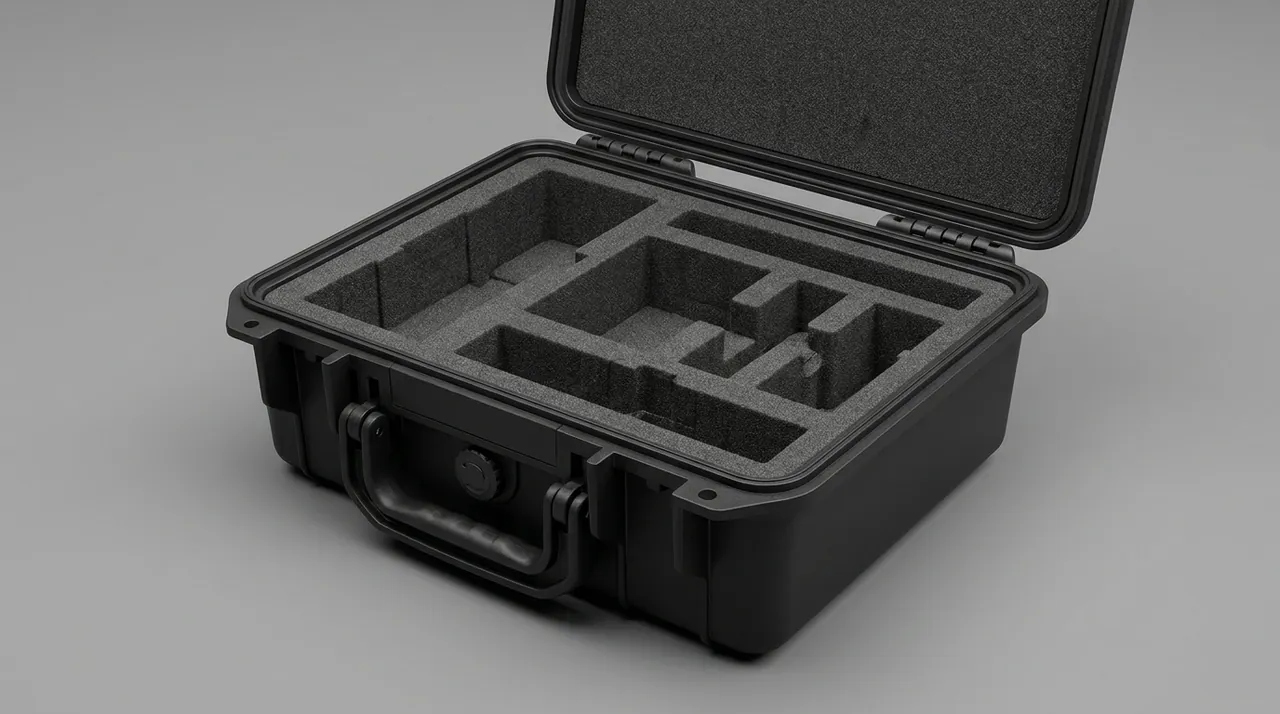
Vacuum gauge tubes and ionization gauges are fragile, needing an independent small bay with a hard shell sleeve, forbidding co-cavity with metal parts. Each block of the foam set is built as a swappable cell, so a gauge bay that has taken moisture or shed particles can be pulled and renewed without scrapping the trap pocket beside it. Foam destined for a vacuum path has to pass volatile and extractable screening, because everything downstream of the cold trap works to a near-zero outgassing budget.
Main body material and temperature resistance
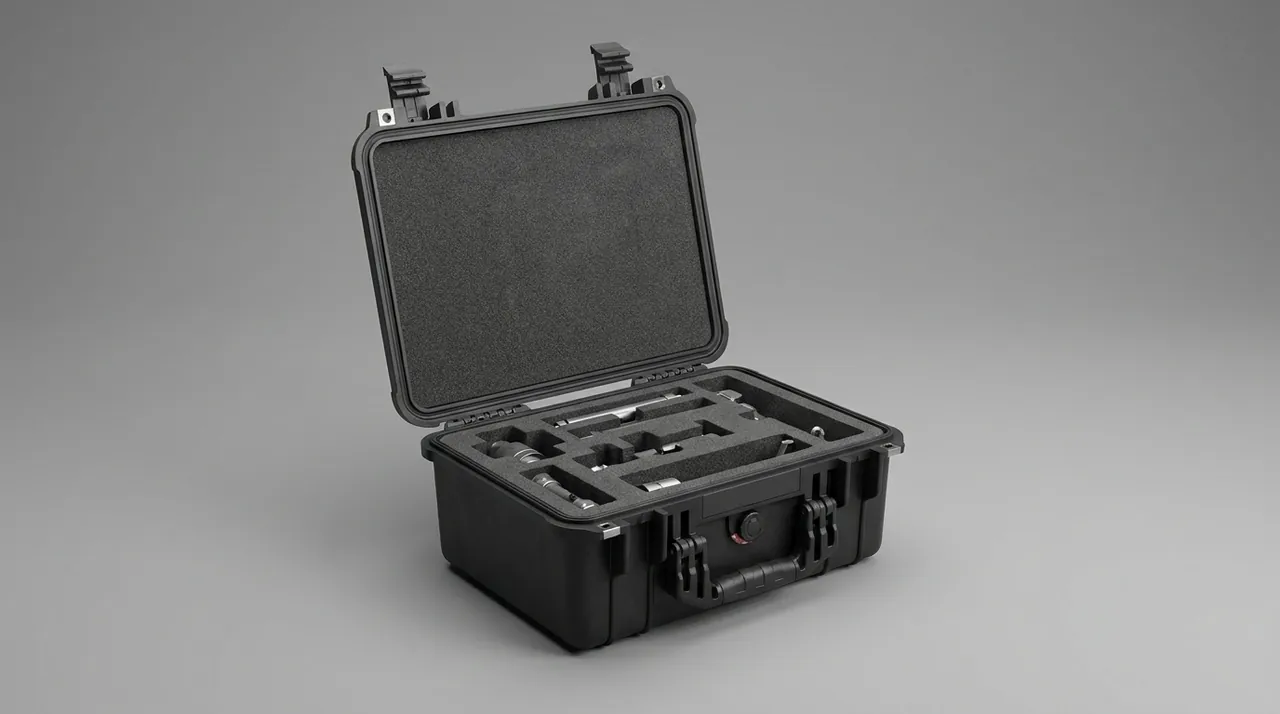
Freeze parts may face low-temperature storage and cross-border temperature swings, so the case needs temperature resistance and rigidity. Modified PP injection cases are dimensionally stable and easy-wipe in normal and cold ranges, suited to cold trap catchers and valves. Where a Roots or vane pump needs a large void, rotomoulded shells take impact well but their inner face must be finished smooth, since condensate clings to a textured wall. An aluminium frame with engineering plastic panels stays stiff while keeping the weight down, which suits a precision gauge or an ionisation tube that travels by air.
Every surface the trap sees must be virgin compound, declared on a material certificate, and the outside should carry a non-porous finish that survives the sporicidal agents used in a sterile suite. Hinge bodies and latch pivots should be passivated stainless with a covered pin, following the hygienic hardware approach of case hinge latch seal. Cross-border wooden skids must meet ISPM 15 treatment with the IPPC mark.
The table compares three bodies in the freeze scenario for weighing by part mass and temperature zone.
| Shell | Use | Thermal | Clean | Shock | Note |
|---|---|---|---|---|---|
| --- | --- | --- | --- | --- | --- |
| Modified PP molded | Cold trap, valve | Medium | Excellent | Medium | Grid custom |
| PP/PE rotomolded | Large vacuum pump | Medium | Good | High | Liner smooth |
| Aluminum framed | Precision gauge, air | Good | Excellent | High | Latch passivated |
Insert cushion and vibration structure
Vibration comes first for freeze hardware, so the foam set carries the load in stages. A cold trap or a pump body rests in high-density closed-cell PE that takes the mass and stops it moving, while a gauge tube or a valve trim ring sits on a softer graded layer that spreads contact pressure instead of pinching it. Every item gets its own machined pocket in a lift-out block: the trap in one cavity, the pump in another, the gauges in a third. The heaviest item always rides at the bottom of the bay and the lighter parts go above it.
The key to vibration control is limiting displacement: leave a small gap between liner module and wall with strap fixation against whole-module slide on hard braking; foam density hard enough to suppress high-frequency vibration transfer yet soft enough to avoid local bruise. Cables and stems go in trays forbidding whip. The thinking sees the gradient cushion of the cushion liner case.
Pocket zoning doubles as a records tool: print or laser the trap serial and the valve tag beside each recess so that an operator can match hardware to its paperwork the moment the lid opens. On a manifold order carrying several valve sizes, separate pockets also stop a larger body pressing a smaller trim oval, which is how a group of valves arrives with a leak rate that will not pass at first installation and forces the whole line to be re-leak-tested.
Sealing and vacuum holding ability
Freeze parts most fear dust and moisture on opening. Two seals are fitted: a foamed silicone primary seal on the lid edge and a latch-compressed secondary seal, both targeting IP67 rating by IEC 60529 and GB/T 4208 for dust tight and short dip protection. High cleanliness batches add a one-time dust cover or sterile breather bag inside.
The seal tolerates 75 percent ethanol and peracetic acid without releasing contaminants; it is replaceable. Beyond dust, air tightness slows inner micro-environment change during temperature swings, buying buffer for vacuum parts. On seal selection see the IP67 protective case.
Put it in the file plainly: an IP number describes how well the shell keeps dust and water out and says nothing about sterility. What the case buys is a lower chance of particles and vapour reaching the trap on the road, while the sterile release of the vacuum path still belongs to the plant CIP/SIP cycle, and quality documents should never blur road protection into sterile packaging. On a pump or a cold trap the same tight seal also holds back ambient moisture, which shortens the drying and evacuation time once the part is mounted.
Cleanliness standard basis
Freeze cold traps and vacuum paths are an extension of the sterile system, with compliance anchoring to GMP, ISO 14644 cleanliness, GB 14881 and GB 50687. Transport reliability references GB/T 4857, ISTA 3 and ASTM D4169 for vibration drop stacking quantification. MIL-STD-810H is only a methodological basis for environmental tests, not military certification.
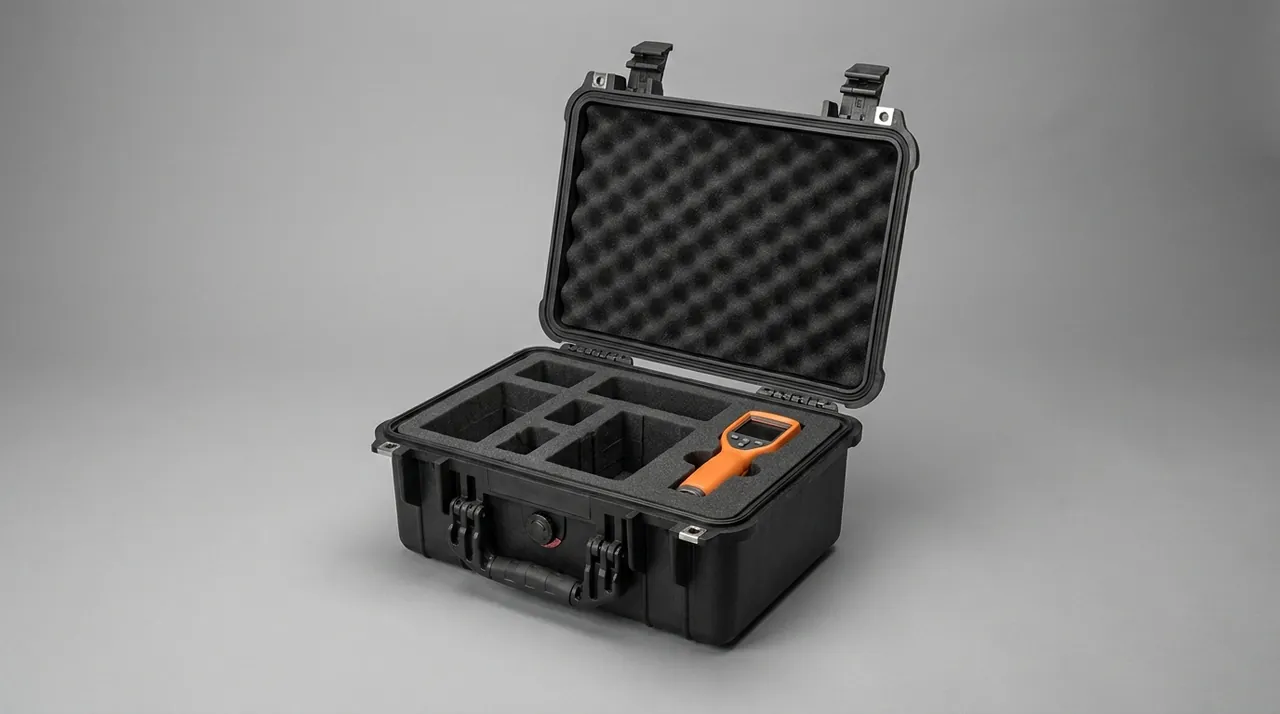
In deployment, set box-opening-ready-for-entry as the goal: the part leaving the case meets the minimum requirement for pre-entry treatment into the clean zone. The inner bay and liner are wipeable or irradiable in clean environment, hinges and latches avoid flaking coatings. Structure borrows the low-outgassing easy-clean requirement of the cleanroom equipment case.
For vacuum path parts, the liner must not absorb or release particles or volatiles that disturb pumping verification, critical when selecting foam. Surface particulate and microbial limit checks can follow the hygiene logic of GB 14881 at intake, shortening reprocessing time.
Temperature humidity and freeze prevention
Freeze parts are double sensitive to temperature and humidity: a trap with residual liquid cracks under low-temperature transport; pump oil emulsifies with condensate; gauges drift when damp. Countermeasures: a temperature humidity logger with alarm inside; a desiccant bay between layers for humidity; a low-conductivity or insulated inner body to slow temperature change. For cold-chain links, borrow the cold accumulation of the cold chain food case, but vacuum oil fears freezing, so prioritize temperature control.
Before transport, drain trap residual liquid and seal joints per maker; pump oil per requirement drained and nitrogen sealed. Before opening, rest the case in a clean buffer room until temperatures equalize to prevent sudden sweat. The transit log is archived with the case as environment proof; for critical parts a Bluetooth logger that exports CSV supports trend study and pulls transport validation into the supply chain.
Handling stacking and fixation
A cold trap that has just come off a lyophiliser is heavy for its size and its polished bore scratches on contact, so the crate carries the standard handling pictograms plus a centre-of-gravity symbol, because a loaded vacuum case tips easily when a forklift lifts it on an off-centre sling. Never stand a pump case on top of a trap case; the tier limit is taken from the compression load measured in the GB/T 4857.3 stacking test and then reduced by a working safety factor. Give the foam block a few millimetres of free movement against the shell, then strap the block down so a hard brake cannot walk the whole insert, trap, pump and all, towards the lid. When a trap, a valve group and a gauge set travel together, the heavy trap rides on the floor of the bay, the valves sit in the middle tier and the fragile tubes go on top, each behind its own divider; every trap is laid horizontally with the flange faces turned upward and blanked.
Gauge tubes and ionisation heads that fly are the parts most exposed to cabin altitude, so fit a case pressure equalization valve: without one, the pressure drop across the shell can pull unfiltered air past the gasket or bow the foam until it presses on a glass envelope. A trap moved between two buildings on one site sees no such gradient, yet a forklift or a goods lift still delivers a sharp jolt, so the foam has to hold the body rigidly and the crew should still look at each latch and at how the trap sits in its pocket before the case leaves the bay.
Transport environmental test verification
Reliability has to be measured before the drawing is frozen. Borrow the MIL-STD-810H sequence as a test method only, never as a claim of military qualification: a random vibration sweep, a free-fall series, thermal cycling between hot and cold extremes and a damp heat soak, then the ISTA 3E/3H profiles or the ASTM D4169 assurance level agreed with the customer laid over the top. What the report has to demonstrate is that no foam pocket has opened up, the polished trap bore carries no contact mark, the seating face of every vacuum valve is unbruised, the gauge envelope is intact and the bay is still clean when the lid is lifted.
The sample chosen for the test is the heaviest and most fragile build the factory expects to ship, loaded to capacity with a trap, a pump and a valve group in the positions that put the most stress on the foam. Afterwards the units are pulled and graded against the custom case acceptance AQL for both cosmetic and functional defects. Where the customer is a pharmaceutical manufacturer, the transport protocol can be folded into the packaging qualification and the CIP/SIP validation, so the two evidence trails close as a single loop.
A test report is evidence that the design is sound; it does not manage an individual shipment. Even an approved pattern still travels with a logger and still gets a check when the lid comes off. The test method itself is set out in the GB/T 4857 transport packaging test.
Receiving inspection and AQL sampling
The unloading bay is the final chance to catch a problem before vacuum hardware goes into a clean area. Keep the routine fixed: bring the case into a controlled buffer, look at the shell and the gasket line for any breach, then read the papers that travelled with it, the material certificate, the test report and the temperature and humidity log, and only afterwards study and wipe the surfaces. A cold trap is swabbed along its polished bore with a developer wipe or checked with a particle counter, and every vacuum valve is examined at the seating face for a bruise or a bright score.
Sampling follows an AQL plan that puts the tightest limit on critical defects. The reprocessing rule in the protective case cleaning method governs what happens next: once foam has shed or a bay has been contaminated, the pocket is renewed and the question of whether the trap or the valve was touched is written up. Opening sheets, photographs and dispositions are all retained.
Vacuum parts get functional recheck on opening: pump manual turn, valve plate rebound, gauge appearance. Isolate anomalies and notify the shipper using transport records to trace, avoiding injured parts installed causing freeze line re-check. For critical traps, pump to leak rate on arrival as release evidence.
Cleaning and sterilization maintenance
Every reusable case needs a written cleaning and sterilisation procedure. Start with the vacuum bay itself: wipe the polished bore and the gasket groove with a lint-free cloth dampened in 75 percent ethanol or another disinfectant approved for the area, and work from the closed end of the trap towards the flange so that residue is never carried back onto a polished face. A stubborn film of dried product comes away with a medical-grade cleaner; aromatic and chlorinated solvents are ruled out because they attack the silicone foam and the gasket, as set out in the protective case cleaning maintenance note. Foam pockets are renewed on a contamination cycle rather than a calendar, with washable blocks dried in a low-temperature oven and non-washable blocks exchanged at the interval the supplier sets, because a damp block lying beside a cold trap becomes a growth site.
How often the case is serviced is tied to how often it travels. A case in weekly rotation should get a visual and seal inspection each month and a full seal test each quarter, while a case that has sat idle is re-cleaned and its desiccant renewed before it is packed again. Hinge pins and latch pivots are greased with the lubricant named in the same maintenance note so that they neither seize nor drop metal debris into the bay. Open a file per case and log the cleaning date, the person responsible and the batch of the foam set, and judge service life against the published experience figure for protective case service life, scrapping the shell or renewing the liner when that life is reached.
Let the disinfectant flash off completely before the case is closed. Chlorine-based agents are the ones to watch, because free chloride attacks the passive film on 316L and leaves pitting that shows up later as a leak, so finish with a purified-water rinse and air dry the bay with the lid open in a clean area rather than leaving a film behind. Leave a trap to dry in its pocket only when the foam is already dry, or moisture will settle underneath and wait for the next shipment.
OEM/ODM and global supply
Cold trap diameters, vacuum port positions and valve footprints vary so much between lyophiliser brands that a catalogue liner fits almost nothing. JUNZHIJIA builds to the drawing: measurement starts from the customer's own 3D models of the trap and the vacuum assembly, a matching set of pockets is machined from those files, and a placement sheet naming each component and its bay is packed in the lid. Cases are supplied under OEM/ODM programmes and through overseas agency wholesale, with material and vacuum-component protection test documents issued against the purchase contract.
An equipment builder uses the OEM channel to put the case into the machine spare kit, so the lyophiliser and its protected spares leave the works together. A service organisation uses ODM to standardise a single case across the valve and gauge models it services most, which trims the number of stock lines it has to hold. Global supply means a plant overseas can order the same foam block that came with the original case, keeping transport conditions identical. The design flow follows the custom foam inserts guide and the guidance on how to choose a case OEM factory.
At contract level, specify material grade, cleanliness and vacuum protection grade commitment, test document list and non-conformance handling, turning hygienic vibration-safe transport into a written guarantee, the focus of pharma supplier audits.
Typical application scenarios
- Pharma freeze line spare: cold trap catchers and vacuum valves sit in cases, swap on stoppage, shortening MTTR.
- Freeze line retrofit: old line vacuum pumps move cross-site with in-case placement avoiding secondary damage.
- Vacuum part return service: gauges and valves use the same case both ways for comparable state.
- Overseas project shipment: cold trap spares exported with machines use aluminum frame cases with desiccant and logger.
- GMP audit companion: complete material and vacuum protection files let the case stand as visible evidence of a controlled supply chain.
The worth of the case is not only that nothing arrives broken, but that the trap and its vacuum partners stay in a known clean and vibration-controlled state for the whole journey, which supports both freeze process reliability and the compliance story.
Selection self-check list
Before fixing a freeze dryer parts case, check item by item: whether the part contains a vacuum path and the contact surface meets GB 4806 and cleanliness; whether the liner takes vibration protection first with independent zoned washable cells; whether the seal reaches IP67 and tolerates disinfectant; whether temperature humidity logging and desiccant are configured; whether body material declares and avoids recycled mix; whether random vibration and drop verification passed; whether material and vacuum protection test files travel with the shipment; whether foam renewal and the tooling schedule fit the maintenance window; whether any timber in the consignment holds ISPM 15 treatment; and whether the supplier truly runs OEM/ODM with a worldwide spares channel.
Working through those ten points against the standards above is what locks a usable cold trap and vacuum component case. Where the choice is unclear, borrow the clean transfer experience of the lab equipment case.
FAQ
Q: Why must freeze dryer cold trap transport take vibration protection first? A: The cold trap inner wall is a 316L polished surface that catches sublimated water vapor; once transit vibration makes the inner wall collide with the case wall causing scratches or micro weld cracks, it lowers catch efficiency and may hide microbes that CIP/SIP can hardly fully remove. Worse, if the trap carries refrigerant pipes, vibration may cause fatigue micro cracks at welds, leading to refrigerant leak or vacuum path contamination on arrival, putting a whole freeze batch at risk of losing activity. Therefore a freeze parts case must put vibration first, using high-density PE foam to hard-support the trap, a soft layer to spread pressure, and strap fixation between liner module and wall to limit displacement and suppress high-frequency vibration transfer. This is essentially different from a common tool case that only talks impact, because freeze system failure is often not a visible hole but an invisible leak rate rise and worsened ultimate vacuum. Post-transit pumping to an agreed leak rate is the release gate, and the case creates that undisturbed part state, also the traceability demand of pharma audits.
Q: Does a vacuum pump need oil drained for long transport? A: It depends on maker instruction and transport duration, but draining then nitrogen purge and seal is usually advised, with re-oil on arrival, because oil in a vane or Roots pump during long cross-border transport faces temperature swings and bumps, easily leaking from the oil plug or breather to contaminate the case and other parts, and condensate mixing emulsifies the oil and worsens ultimate vacuum on arrival. If the maker allows keeping oil, tighten the oil plug, add a sealed cap and absorbent cotton underneath, and mark the outer case contains oil upward. Whether drained or not, cap the inlet with dust-moisture cover and mark upward to stop metal chips and moisture entering and scoring the rotor vanes. Protect the motor junction box with a cover. Long transport drain and seal also cuts weight and flammable compliance burden. On arrival, re-oil per maker, manually turn to confirm no jam, then pump to leak rate as install release evidence; this flow belongs in the maintenance SOP and supplier acceptance file.
Q: How to protect vacuum valve sealing faces in transit? A: Vacuum valve groups such as angle, butterfly and purge valves have sealing faces that decide leak rate, so transport protection differs by material. FKM sealed valves wrap the plate in soft foam to avoid bruise or permanent deformation from hard-object knocks; metal knife-edge valves such as CF flanges must never be pressed and need a separate hard bay with the plate at micro-open or maker specified posture fixed by a stop block, forbidding foam to press the knife edge. Fix the stem in a cable tray to stop whipping against the body. Cap all valve inlets with dust-free sleeves and mark them. The whole liner is modular, valves in independent small bays not co-cavity with metal pumps, for replacing one contaminated cell. Foam must be low outgassing and non-shedding with volatile tests, because the vacuum system tolerates zero extractables, and liner release of particles directly raises arrival leak rate. After opening, visually check the sealing face for bruise, then reinstall and do helium or pressure leak test to ensure first-time pass.
Q: Does a freeze parts case need temperature control or cooling? A: Prioritize temperature control, avoid active cooling. Freeze parts like a trap with residual liquid crack under low temperature; pump oil emulsifies with condensate; gauges drift when damp, so the transport goal is slow temperature change and humidity control rather than active cooling. In practice, put a temperature humidity logger with alarm inside, a desiccant bay between layers for humidity, and a low-conductivity or insulated inner body to slow sudden temperature change; before transport drain trap residual liquid and seal joints per maker, pump oil per requirement drained and nitrogen sealed. Only on very short cold-chain linked legs reference the cold accumulation of the cold chain food case, and electronics and oil parts fear freezing. Before opening, let the case stand in the buffer room until the shell and the surrounding air reach the same temperature, so that the trap does not sweat the moment the lid is lifted. Logger data archives with the case as environment evidence; high value parts use a Bluetooth logger exporting CSV for trend analysis, extending transport validation into the supply chain, a link in freeze process reliability management.
Q: How to treat wooden skids for cross-border freeze part shipment? A: If the case interior or outer skid uses wood, it must be treated per ISPM 15 the International Standard for Phytosanitary Measures, usually methyl bromide fumigation or heat treatment with the IPPC mark stating treatment and country code, or destination customs may reject or destroy the whole wood packaging. A shell moulded from plastic, or framed in aluminium, is already outside that rule; it is the solid-wood outer crate that brings the duty back, so its certificate belongs in the transport file beside the material declaration, where a pharma supply chain audit will look for it as a biosafety item, and a stamp that is hidden behind a stacking batten is read at the frontier as no treatment at all. When the cargo is a high value trap or pump, an all-plastic shell or an aluminium frame removes the wood question altogether and trims both weight and freight. Where mass makes a wooden skid unavoidable, insist on bark-free timber with legible marks and photograph the pieces before they are closed in. Wood compliance can look like a formality, yet at the border it decides whether a consignment clears or is destroyed whole, and freeze spares have long lead times, so a single rejected shipment hits production hard and should never be left to chance.
Q: How to accept a delivered freeze dryer case? A: Before the case enters the clean zone, run a fixed opening routine. In a clean buffer, first look at the outer case and seal for any breach, then check the documents that came with it: material certificate, test report and temperature humidity record, and only then inspect the surface by eye and by wipe. Cold traps are checked with a developer wipe or a particle counter on the inner wall, while vacuum valves are examined for bruise on the sealing face. Apply AQL with strict critical defect limits, graded by the custom case acceptance AQL. Vacuum parts get a functional check on opening: turn the pump by hand, confirm the valve plate rebounds and the gauge looks intact. If the liner sheds or is contaminated, replace it and judge whether the part was touched, then keep every opening record, photo and disposition. For critical traps, pump to the agreed leak rate on arrival as the release proof; isolate any anomaly and tell the shipper using the transit record to trace, so injured parts never reach the freeze line and force a re-check. Moving acceptance beyond a surface glance to a triple check of document, surface and function is the evidence chain pharma supplier audits expect.
Q: What is the lead time for OEM custom freeze parts cases? A: The schedule is driven by how long the cold trap and valve pockets take to develop. The supplier starts from the customer's 3D models, machines a fitted foam cavity and then samples it; a simple valve grid can be sampled within a few working days, a cavity that has to support a lying cold trap and an isolated gauge bay takes longer, and a fresh aluminium frame tool is the longest item on the list. With years of pharma freeze support behind it, JUNZHIJIA works through OEM/ODM and worldwide agency wholesale, and issues material and vacuum-component protection test documents against the contract, fixing material grade, cleanliness and vacuum protection grade, the test list and the non-conformance route. Equipment builders should place the case in the machine project plan early so that an unfinished liner never holds up a lyophiliser shipment, and service organisations that hold standard valve and gauge cases for the models they see most can shorten the wait during an unplanned stop. Ask about foam spare repeatability as well as the lead time itself, because a plant that can reorder the same block years later is what keeps transport conditions constant across a fleet, and a supplier able to do that shows genuine global spares capability when a line is down.
Q: Can the case serve as a sterile holding cabinet for freeze parts? A: Not equivalent, and the difference matters here. The case is a mobile clean cabin and a barrier against shock and contamination on the road; an IP figure only says how well the shell excludes dust and water, not how sterile it is. Once the lid is open, a cold trap or a valve still has to go through the plant CIP/SIP route before it can be mounted. Where a case is held inside the plant for a short wait it must satisfy conditions: the bay can be wiped and disinfected, the foam set lifts out for separate treatment, the shell is labelled to a fixed location, and the room already meets the required cleanliness class. For anything longer a validated clean cabinet is the right home, with the case returning to transport duties. The quality manual has to draw that line so nobody on the floor treats road protection as sterile packaging, and where a trap sits in the product vapour path the contact layer should be food grade PE or medical silicone.
Conclusion and further reading
Freeze dryer cold traps and vacuum systems are a pre-link of freeze process reliability: right material, vibration protection first, a held seal and kept records drive contamination, impact and leak rate risk to the minimum. JUNZHIJIA builds such cases to technical parameters and supports OEM/ODM, worldwide agency wholesale and material plus vacuum-component protection test documents.
Related reading